“Heimat und Reich” Münster Tinnie 1933 – Early Third Reich
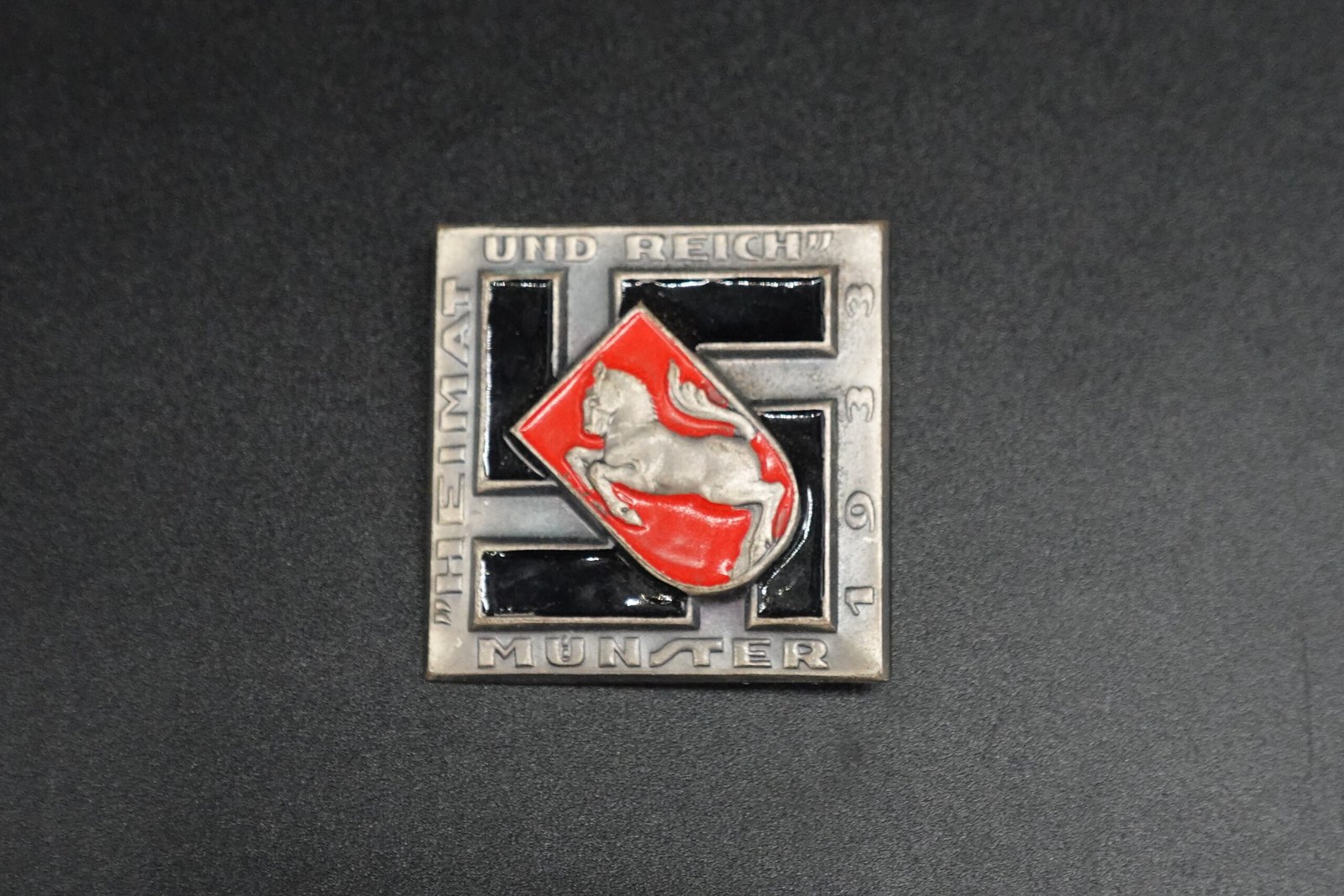
Original “Heimat und Reich” tinnie (badge) from Münster, dated 1933.
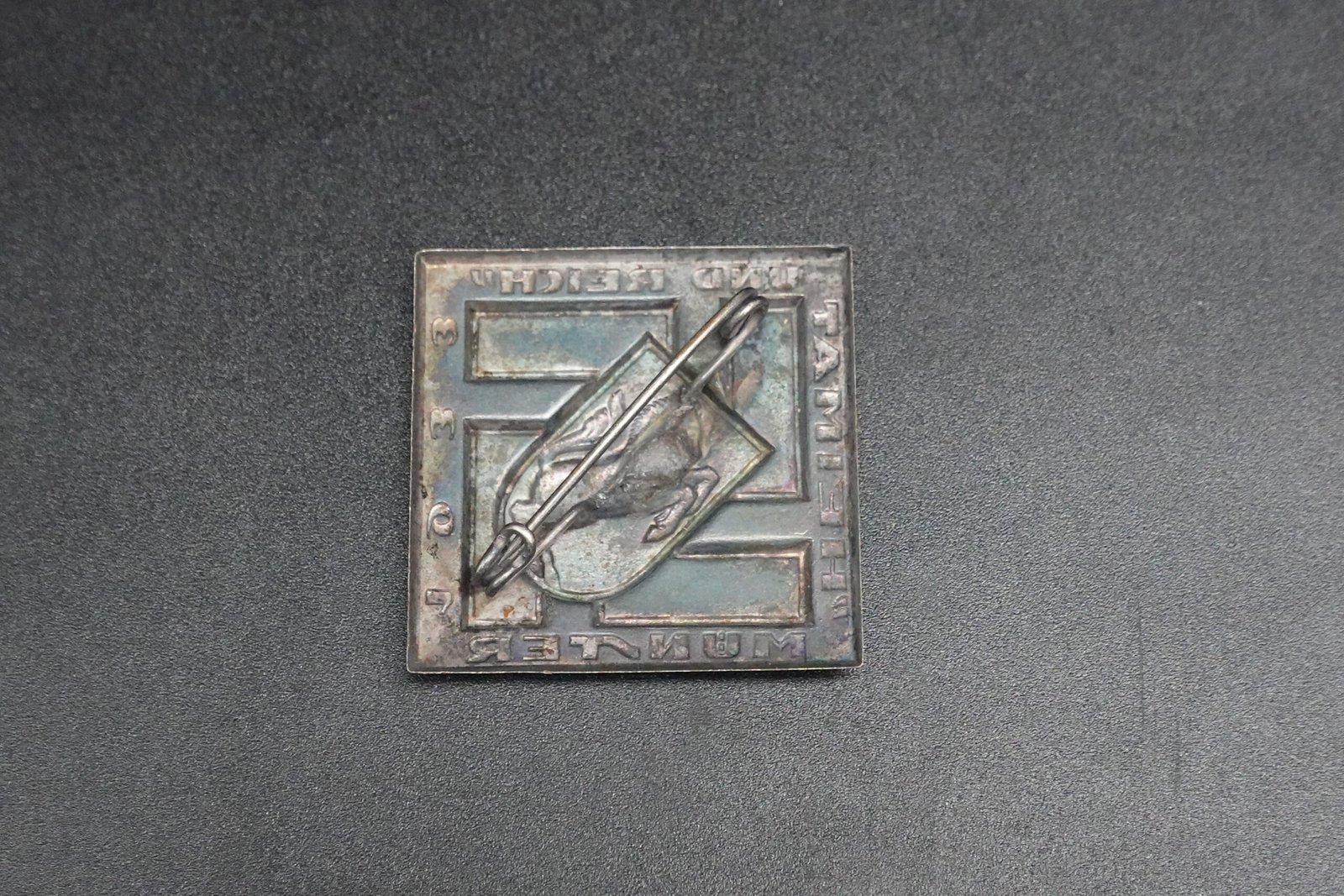
Die-stamped, silvered metal construction with red and black painted finish, measuring approximately 50 × 50 mm, with vertical pinback to the reverse.
The badge features the inscription “Heimat und Reich 1933 Münster” and incorporates the Westphalian horse within a central shield. The piece retains strong detail and contrast, with typical age-related wear to the painted surfaces (see images).
Large and visually striking example from the early period of the Third Reich. Tinnies of this type were commonly produced for regional events, gatherings, or propaganda-related activities tied to the rapid political consolidation of 1933.
A desirable and collectible early piece, especially with clear regional attribution to Münster.
Wolfgang Historica is a trusted seller with years of experience and consistently positive reviews. We are always interested in purchasing collections or unique objects and also offer a professional consignment service. Buy with confidence.
Historical Description
The slogan “Heimat und Reich” (“Homeland and Reich”) was used in the early years of Nazi Germany to promote unity between regional identity (Heimat) and the centralized national state (Reich). In 1933, following the Nazi rise to power, numerous local events and rallies were organized across Germany to reinforce this ideological message.
Badges such as this example—often referred to as tinnies—were produced for these events and typically featured regional symbols. In this case, the Westphalian horse represents Münster and the surrounding region, linking local heritage to national political messaging.
While not all such badges were exclusively issued by the Hitlerjugend, they were frequently worn at youth, party, or civic events and reflect the broader mobilization of society during this early period.
Today, early-dated (1933) regional tinnies are valued for their historical context and as artifacts of the transition period during the establishment of the regime.