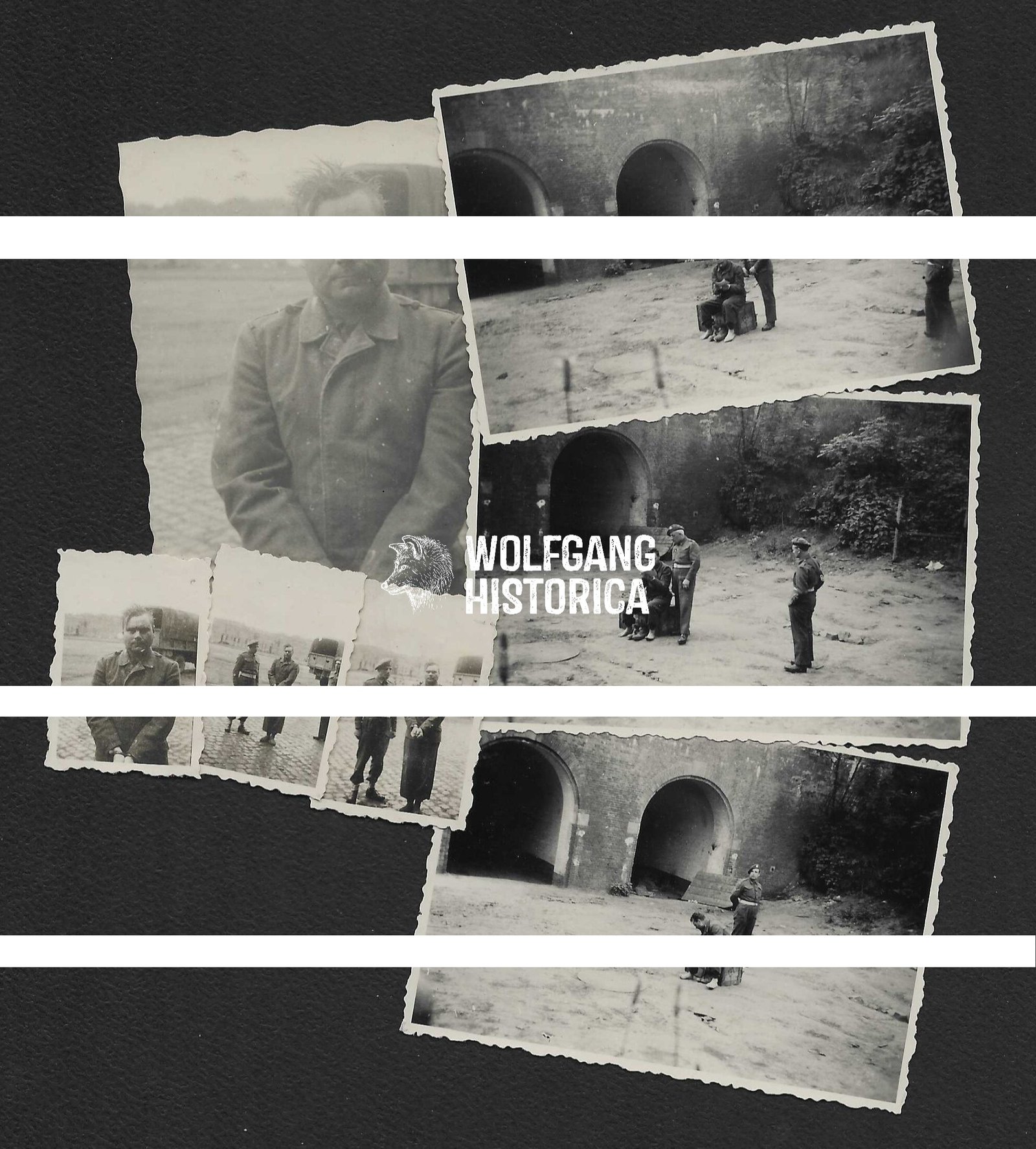
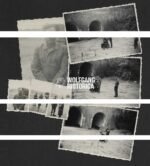
Original WWII photograph group depicting Josef Kramer, photographed in British custody in 1945 shortly after his capture.
Kramer (1906–1945) was an SS-Hauptsturmführer and commandant of several concentration camps, including Auschwitz-Birkenau and later Bergen-Belsen. He became widely known as the “Beast of Belsen” due to his role in the extreme conditions and mass deaths at the camp.
The group comprises multiple original period prints showing Kramer under guard, including:
- Close-up portrait views
- Seated and standing custody scenes
- British personnel supervising
- An outdoor setting with distinctive brick archways, likely a detention or processing facility
These photographs correspond to documented post-capture imagery of Kramer; however, the present prints are previously unpublished examples, significantly enhancing their rarity and desirability.
Condition:
All photographs are original period prints, exhibiting typical age-related wear including minor creasing, edge wear, and handling marks. Overall well-preserved, with a consistent and untouched appearance.
Format & Dimensions:
- 3 photographs: 8.2 × 5.8 cm
- 1 photograph: 8.4 × 6.3 cm
- 3 photographs: 3.8 × 2.5 cm
A rare and historically significant photographic group, directly associated with one of the most notorious concentration camp commandants and the immediate aftermath of liberation and arrest.