Infantry Assault Badge in Silver – “2” Marked Assmann & Söhne – Zinc Construction – Near Mint Condition
€180,00
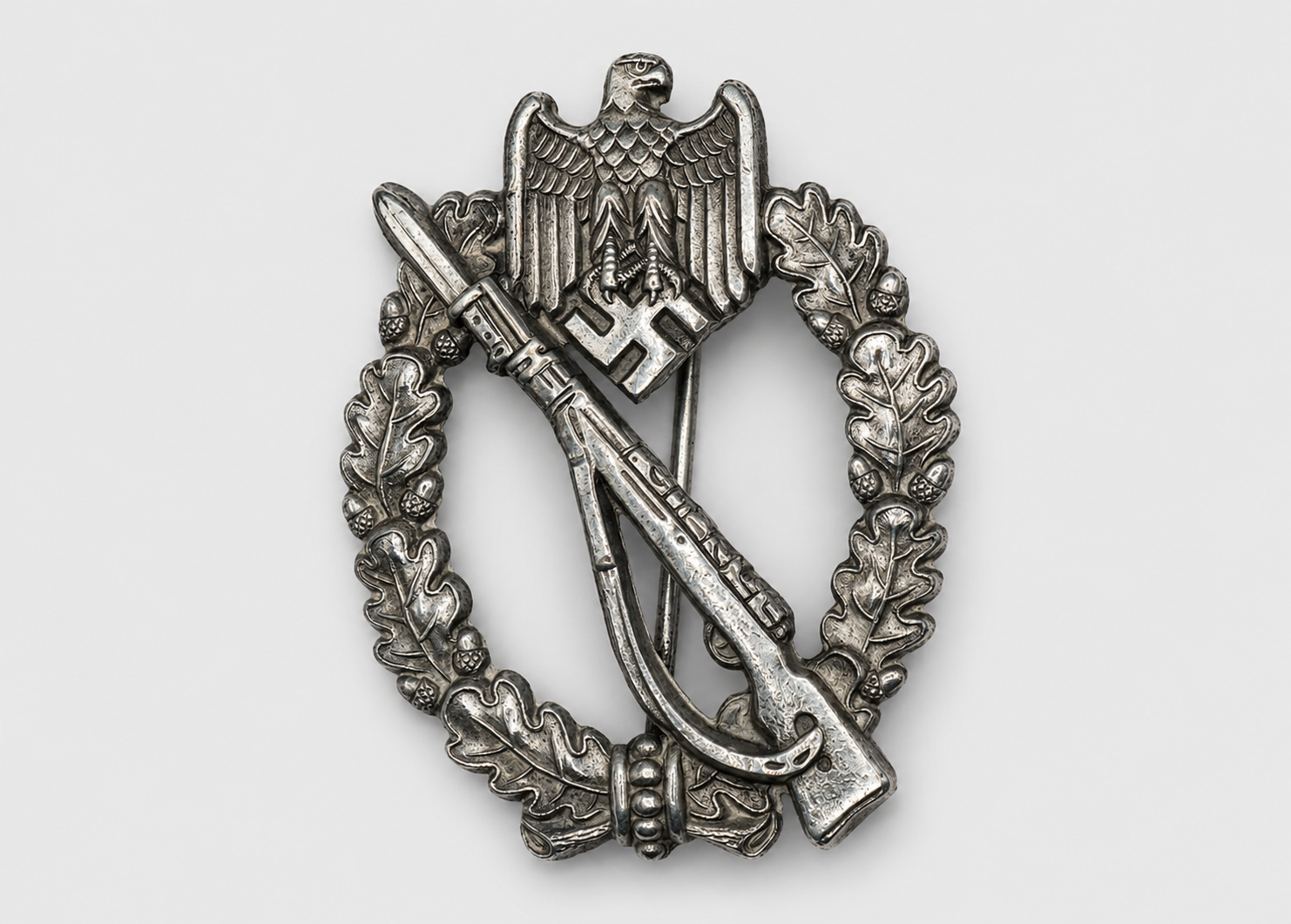
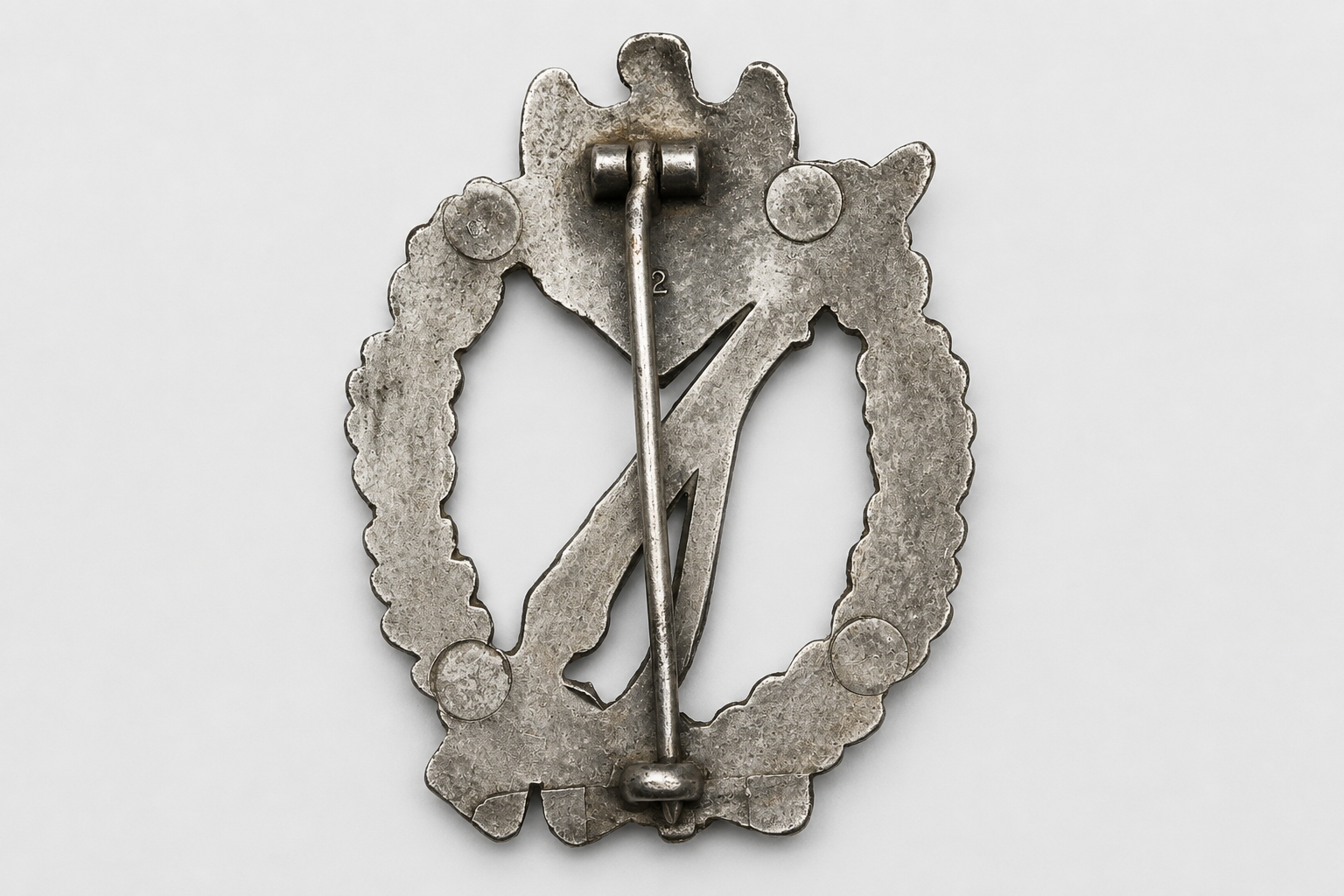
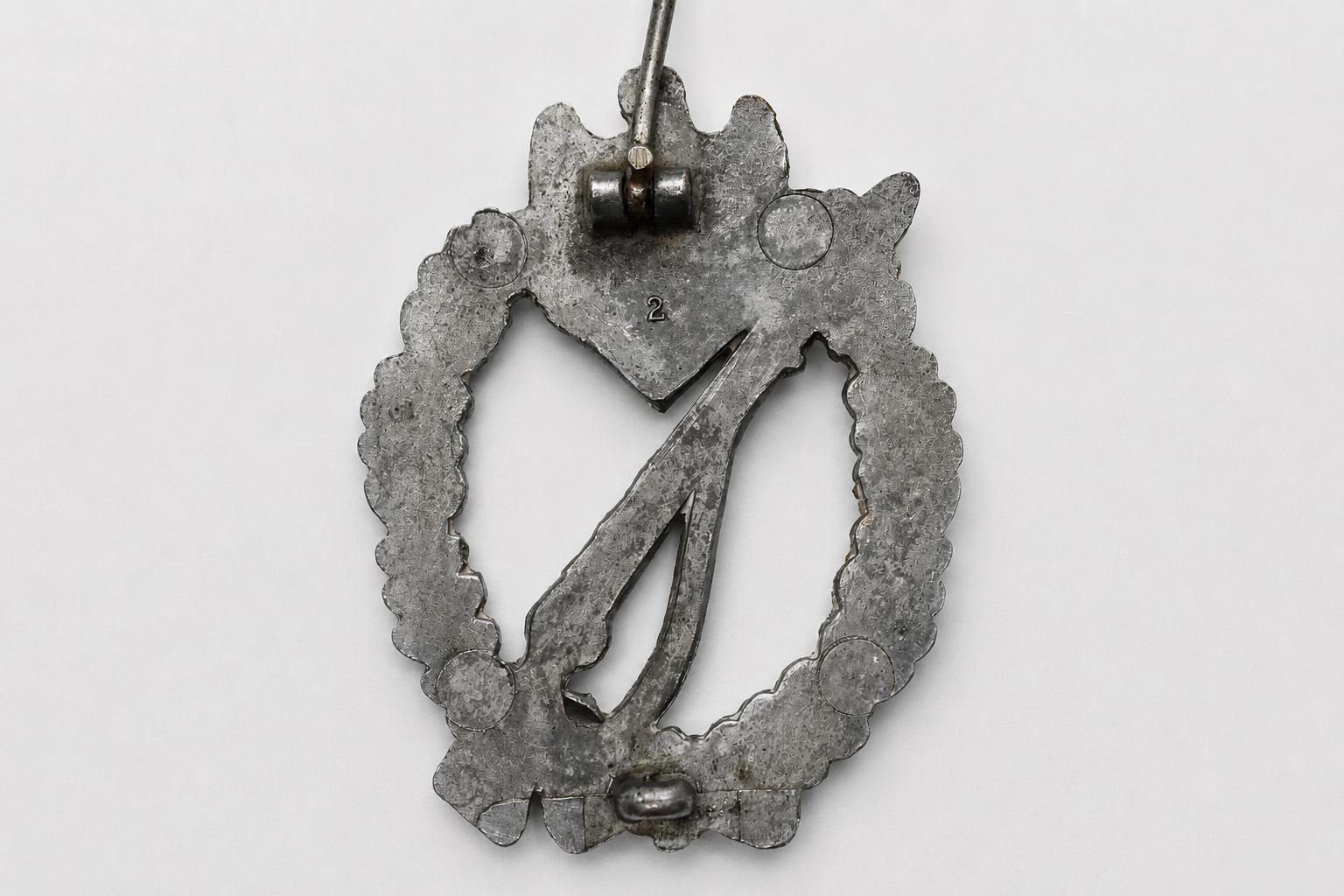
Original WWII German Infanterie Sturmabzeichen in Silber (Infantry Assault Badge in Silver), manufactured by Assmann & Söhne, Lüdenscheid, and reverse marked with the distinctive “2” and Kokarde maker markings.
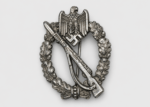
This is a very attractive wartime example produced in Feinzink (fine zinc) construction. The badge retains nearly all of its original silver finish, giving it exceptional visual appeal rarely encountered on zinc examples. The detailing to the wreath, rifle, and eagle remains extremely crisp and well defined.
The reverse setup is fully intact with its original hinge, pin, and catch assembly. The maker marking “2” is clearly visible beneath the hinge area.
A superb collector example in outstanding preserved condition.
The Infanterie Sturmabzeichen (Infantry Assault Badge) was instituted on 20 December 1939 and awarded to German infantry soldiers who participated in frontline assault combat and infantry attacks.
To qualify, recipients typically had to participate in several infantry assaults, counterattacks, reconnaissance operations, or close combat engagements while serving in infantry formations.
The badge design features the Karabiner 98k rifle with fixed bayonet surrounded by an oakleaf wreath and topped by the national eagle. The silver grade was awarded to standard infantry personnel, while a bronze version existed for motorized infantry troops.
This particular example was manufactured by Assmann & Söhne of Lüdenscheid, one of the best-known and most respected wartime badge manufacturers. Assmann pieces are highly appreciated among collectors for their quality manufacturing and recognizable design characteristics.
Late-war zinc examples retaining nearly complete original silvering are becoming increasingly difficult to encounter, especially in such excellent preserved condition.