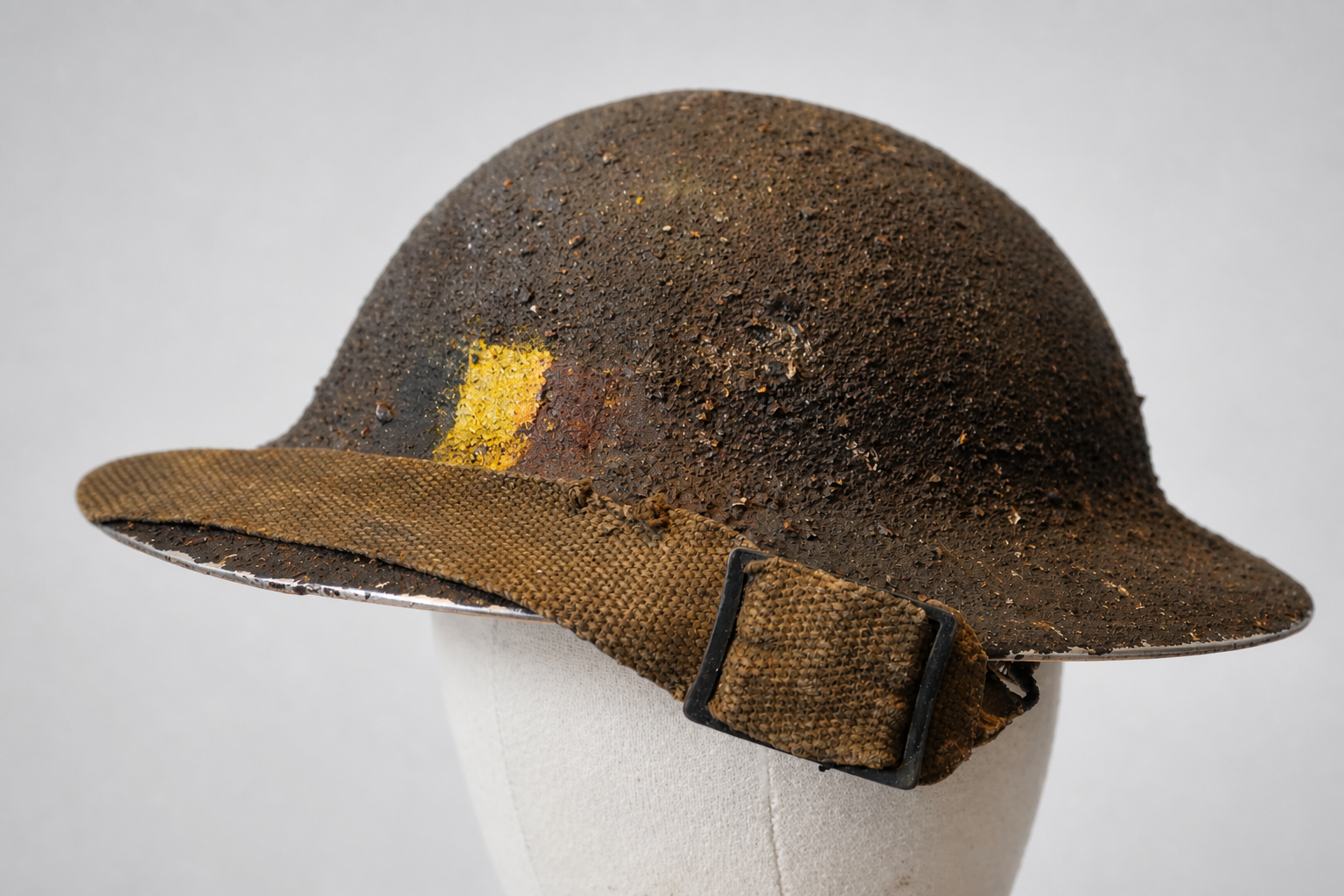
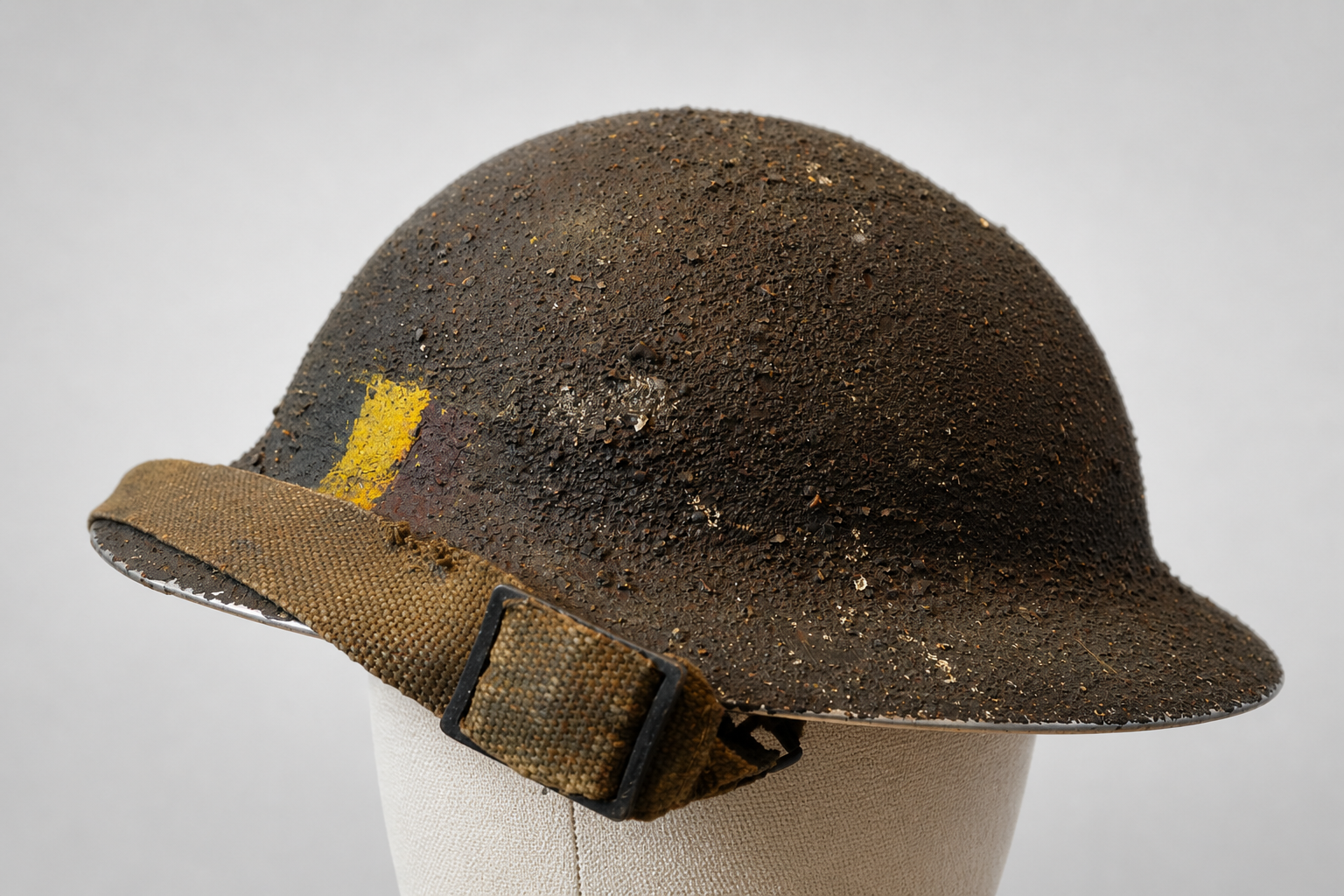
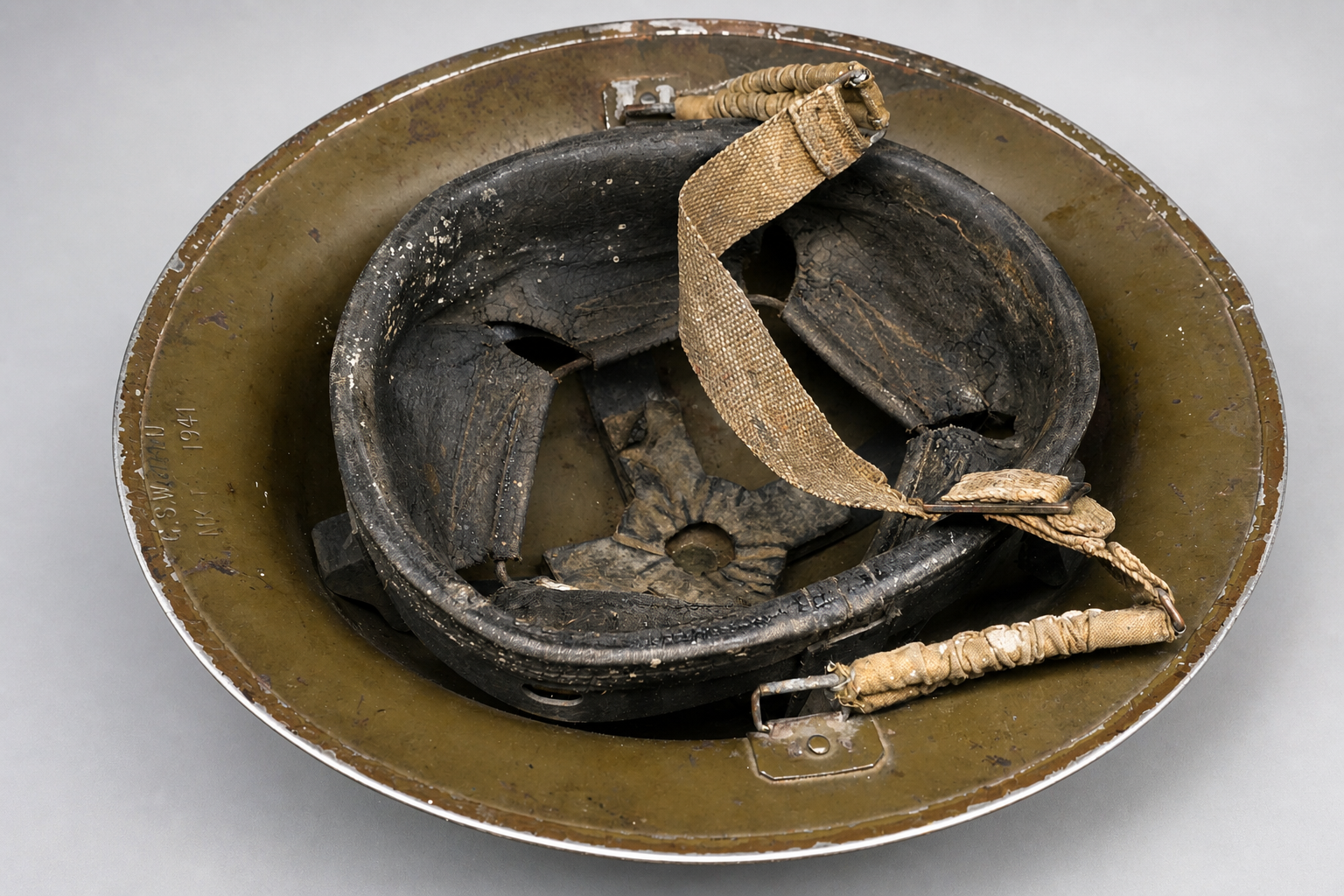
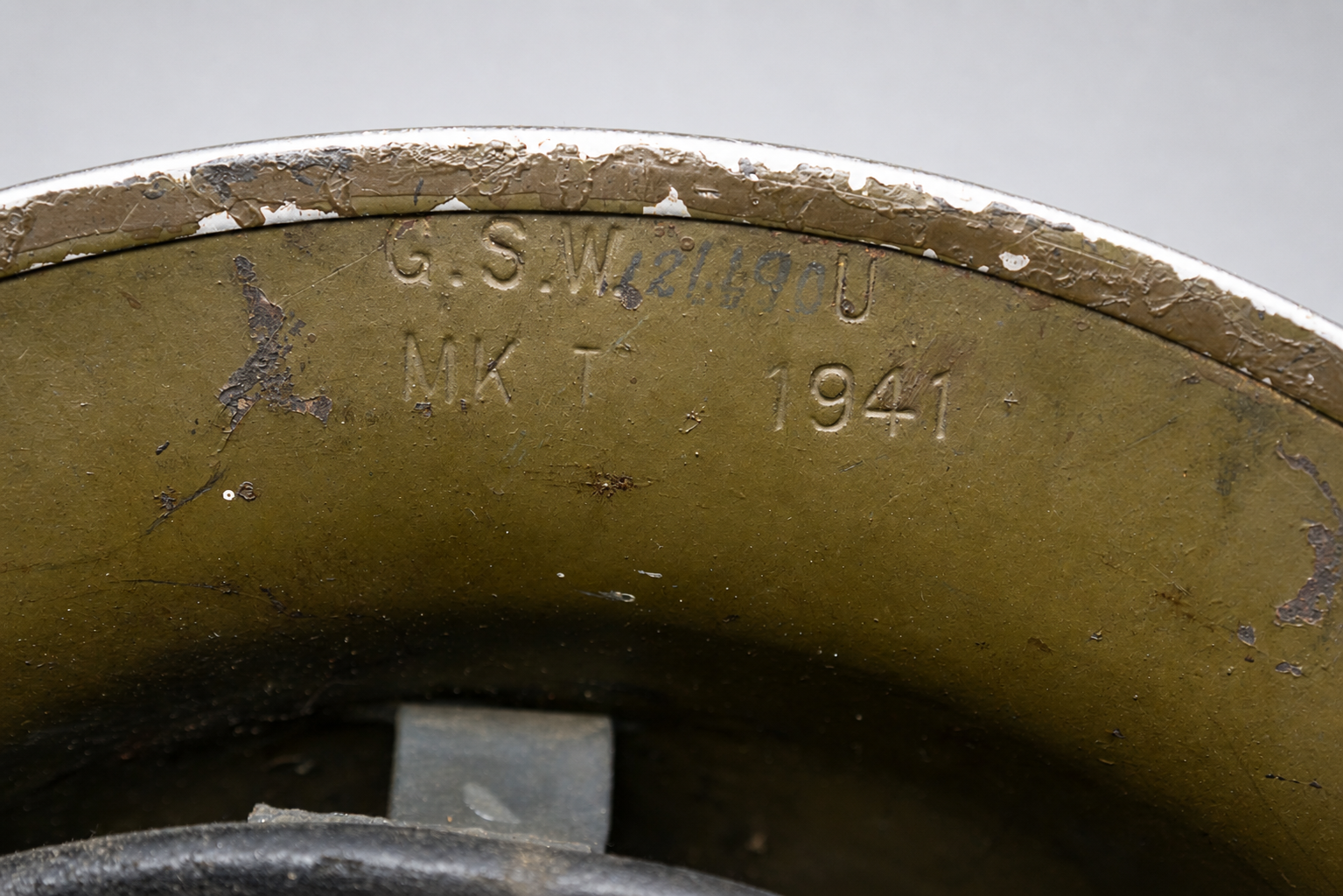
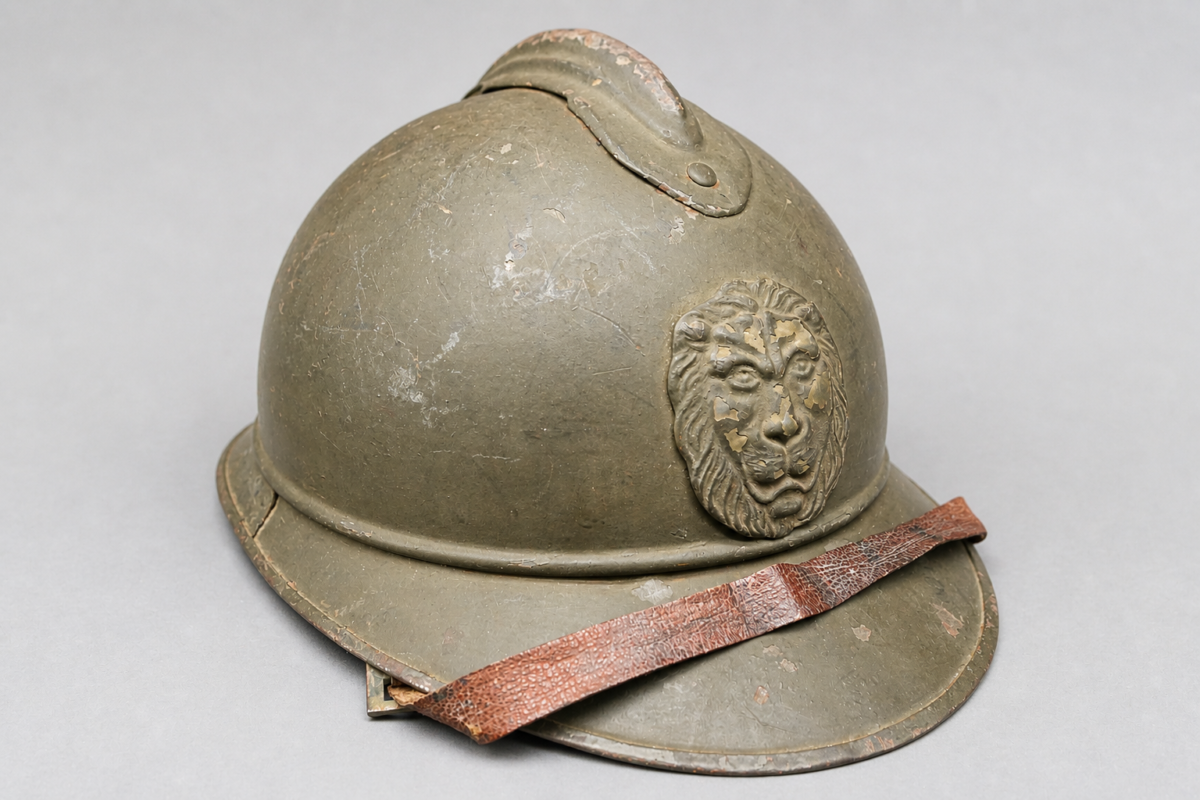
Original WWII Canadian Mk II steel combat helmet, manufactured in 1941 by G.S.W. (General Steel Wares in Toronto). The helmet retains an exceptional untouched combat-used appearance with a heavily textured rough camouflage finish, often referred to by collectors as a “concrete” or anti-glare finish. These field-applied coatings were created by mixing sand or granular material into the paint to reduce reflections and improve camouflage in combat conditions.
The shell is clearly maker marked and dated: G.S.W. Mk T 1941
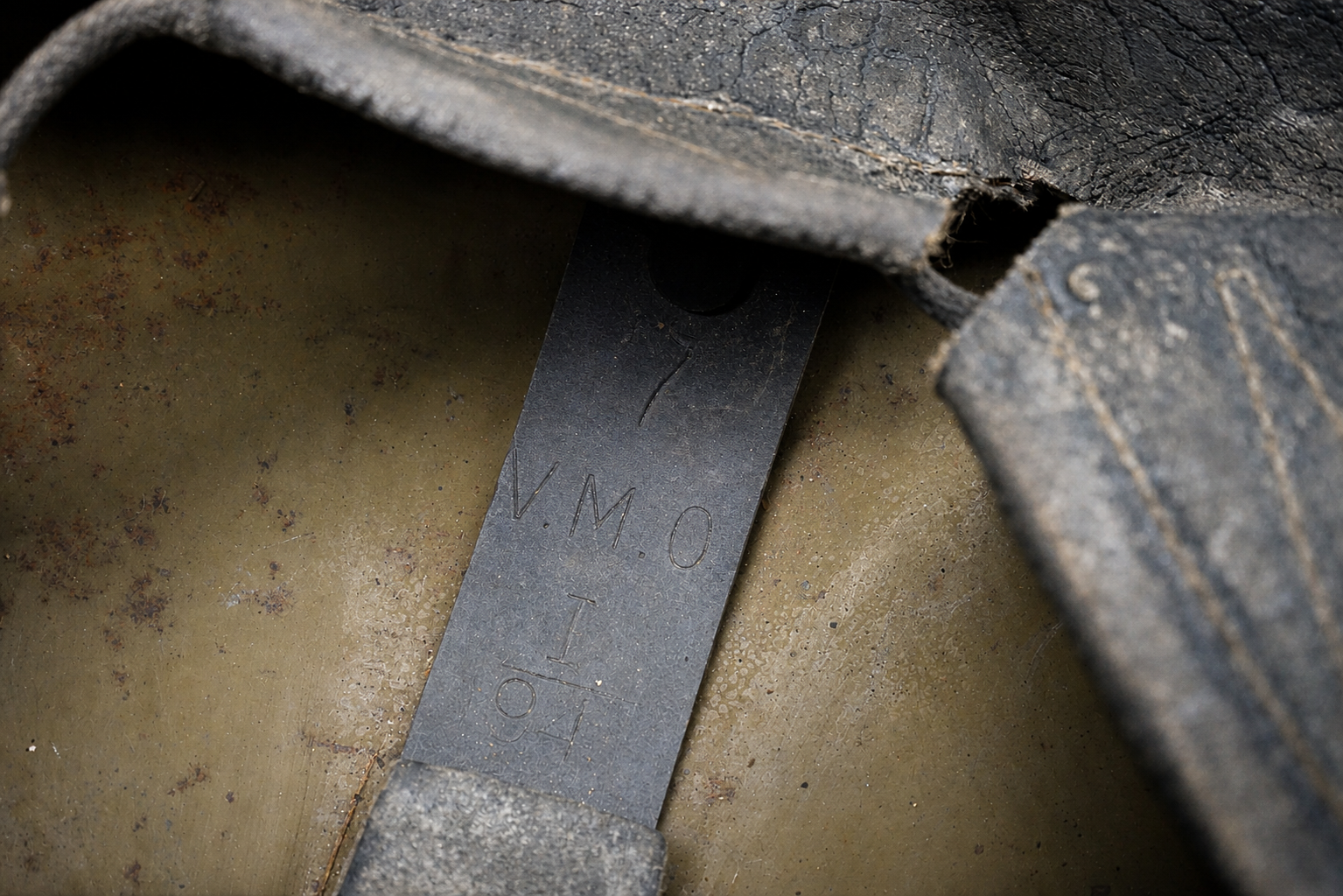
The interior still retains its original wartime liner, though heavily worn and fragile from age and use. Interior liner markings visible including “V.M.C.” (Viceroy Manufacturing Company) and size/manufacturing codes. The helmet also retains its period web chinstrap.
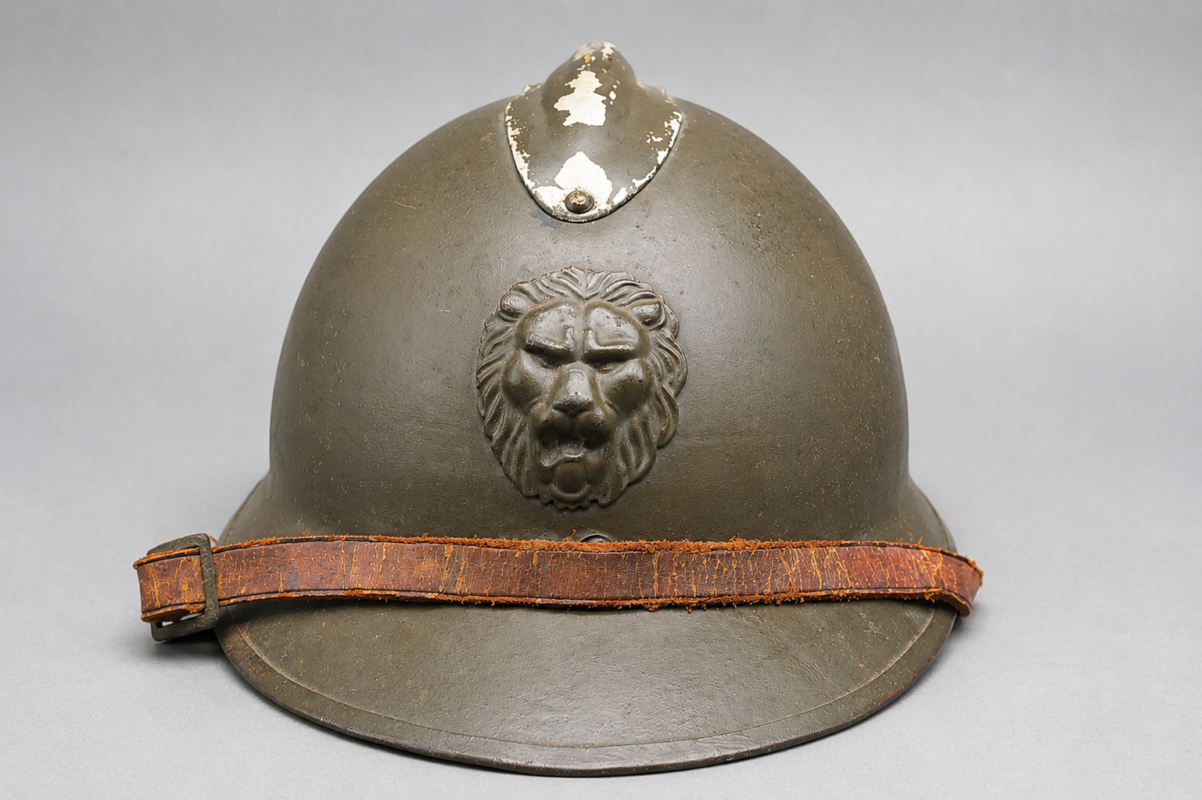
Of particular interest is the worn painted insignia to the front, either appearing to be the REME insignia or resemble a Belgian tricolor marking, suggesting possible Belgian wartime or postwar reissue or continued service after liberation. Britain supplied large amounts of military equipment to Belgium during and after WWII, making such reuse entirely plausible.
The exterior finish has aged into a very dark brown-black tone with heavy patina and surface texture throughout, giving the helmet a superb battlefield relic appearance while still remaining structurally solid.
A highly displayable and untouched example of a wartime British combat helmet with strong character and excellent visual appeal.