WH Soldbuch to schwere Panzerjäger-Abteilung 616 (Jagdpanther Unit) – Panzerwart II
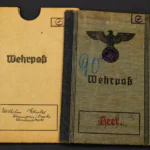
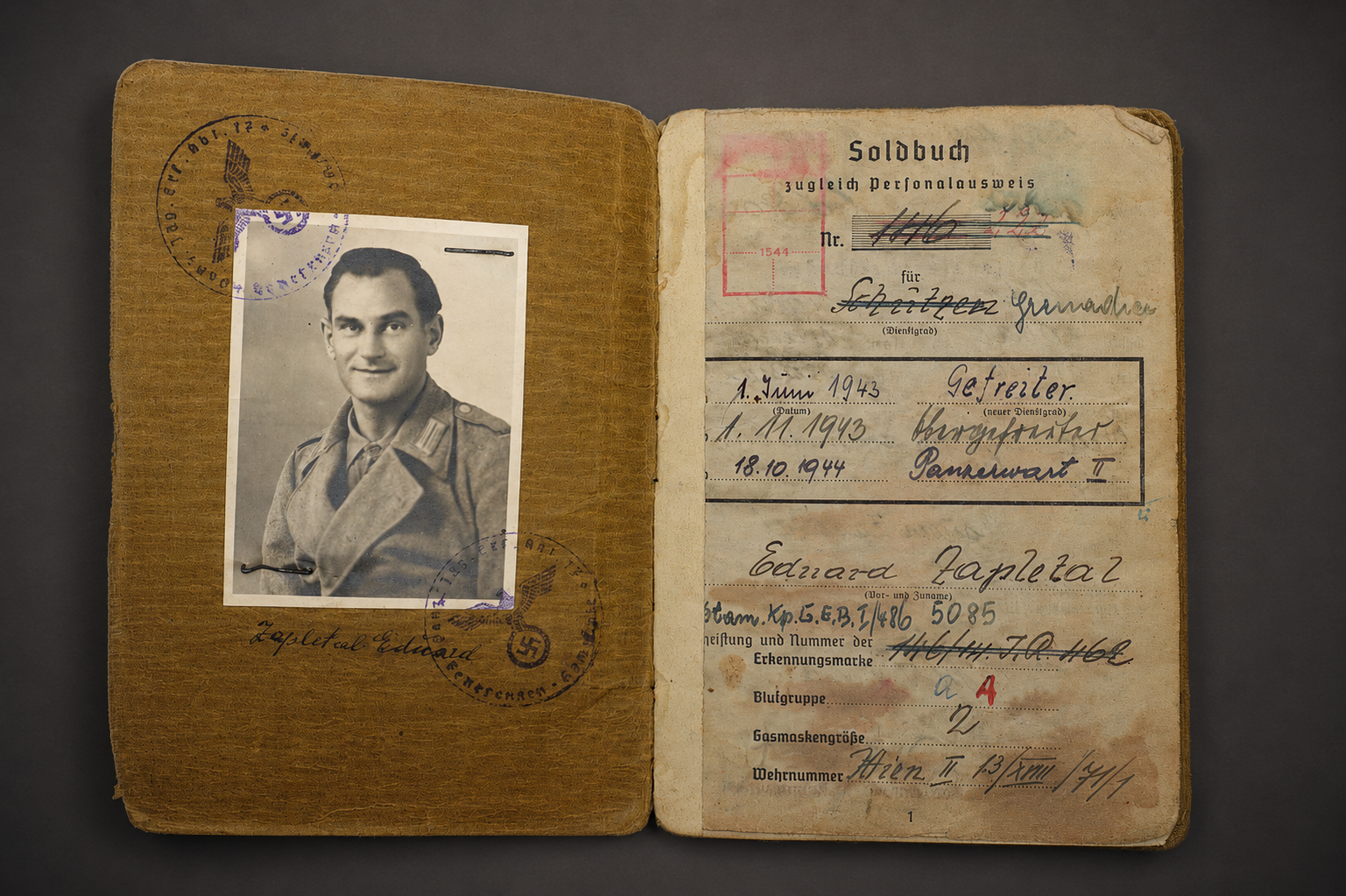
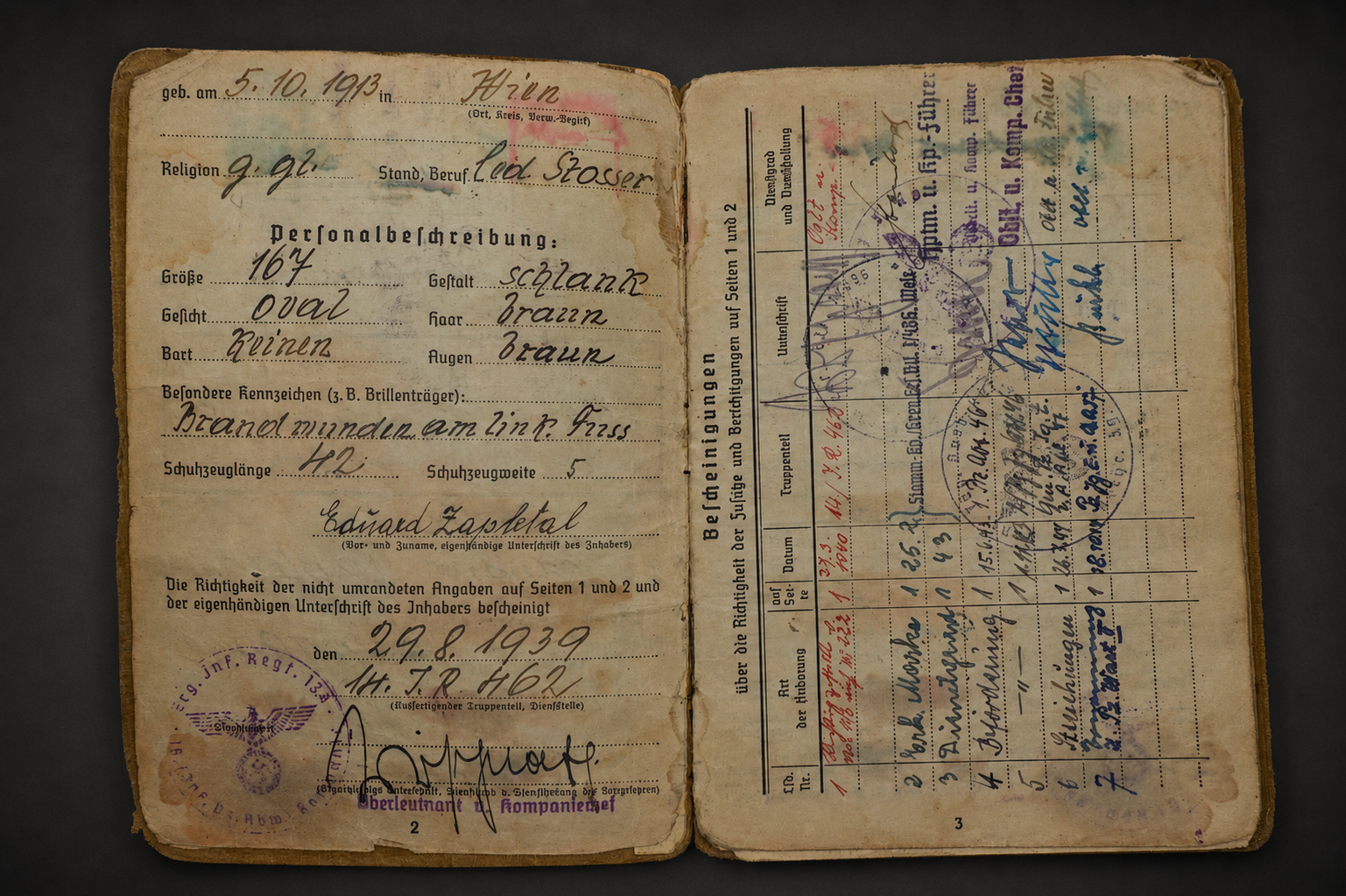
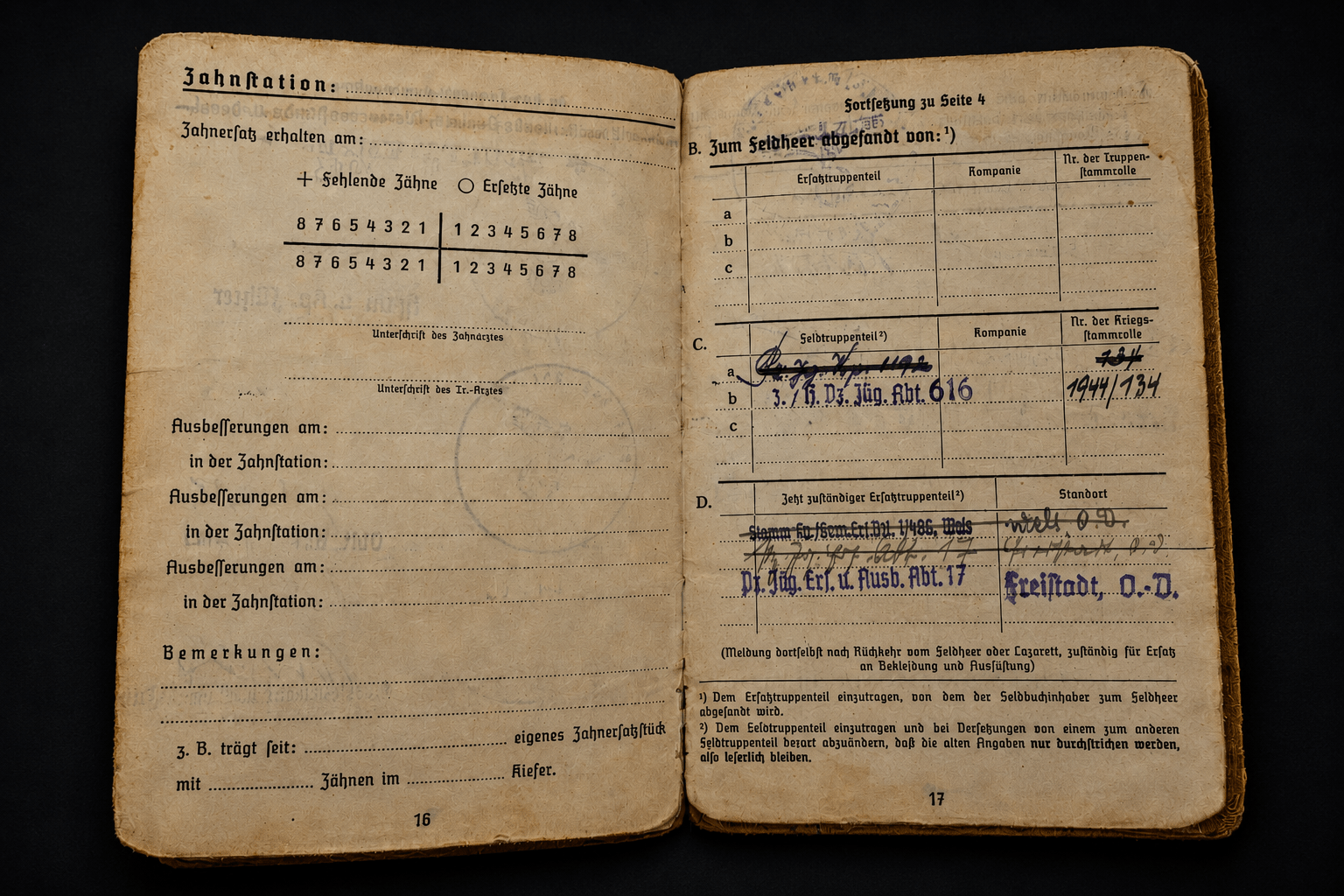
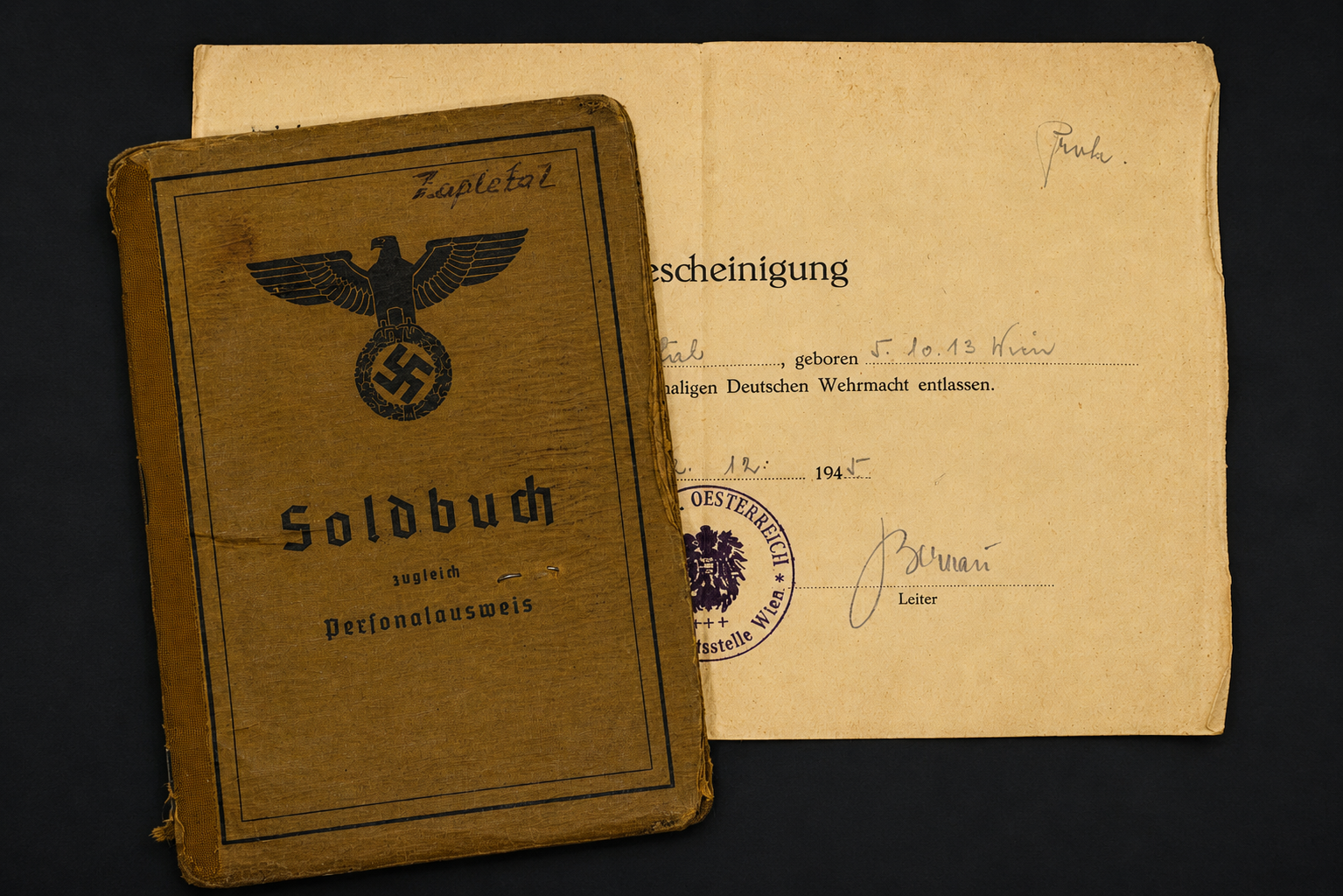
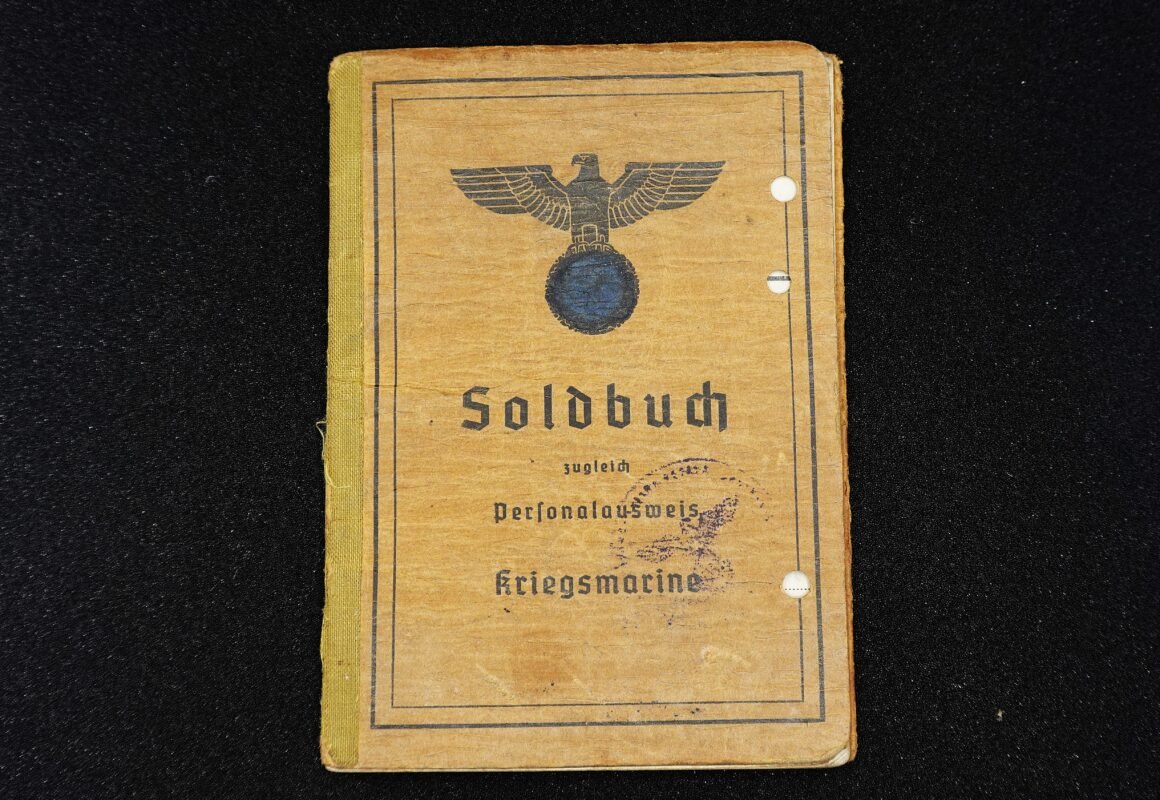
Original and extensively filled Wehrmacht Soldbuch grouping belonging to Austrian soldier Eduard Zapletal, born 5 October 1913 in Vienna, who ultimately served with the renowned schwere Panzerjäger-Abteilung 616, a late-war heavy tank destroyer battalion equipped with Jagdpanther and Bergepanther vehicles.
A highly desirable and historically significant late-war Panzerjäger Soldbuch featuring:
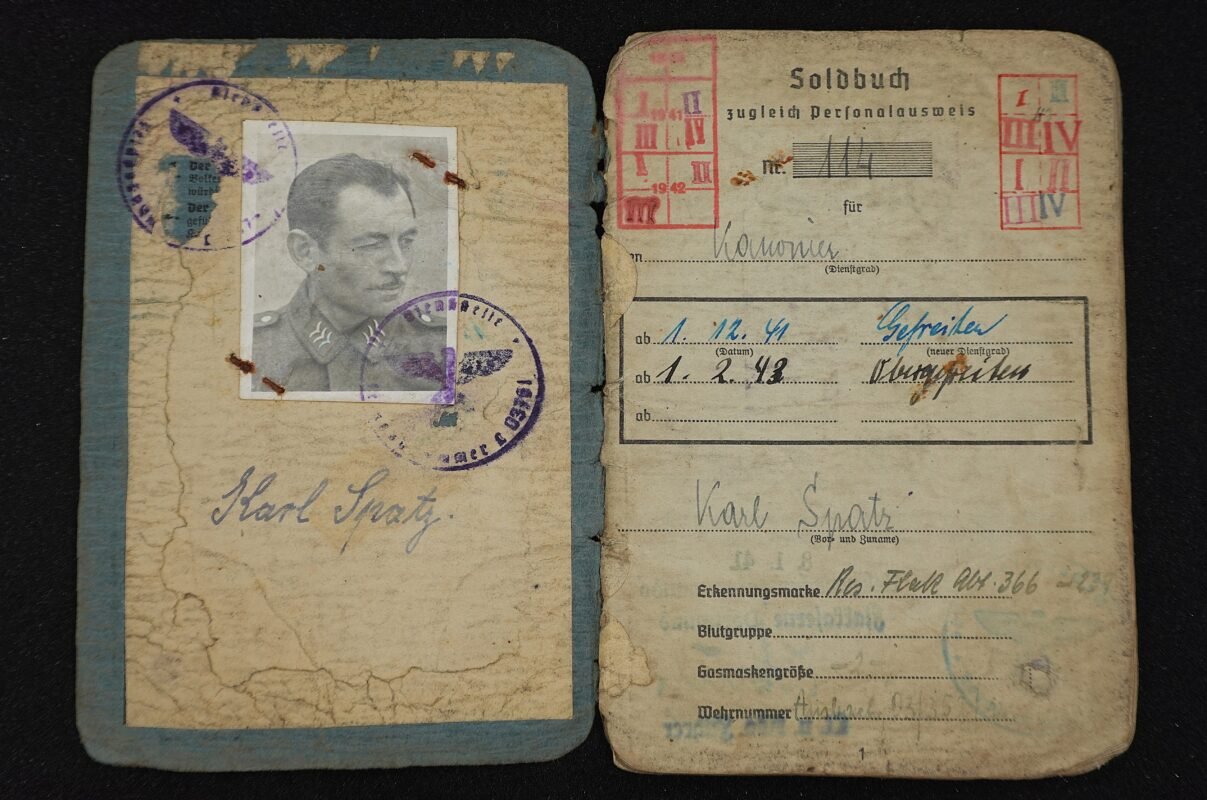
- Original portrait photograph in Stug uniform
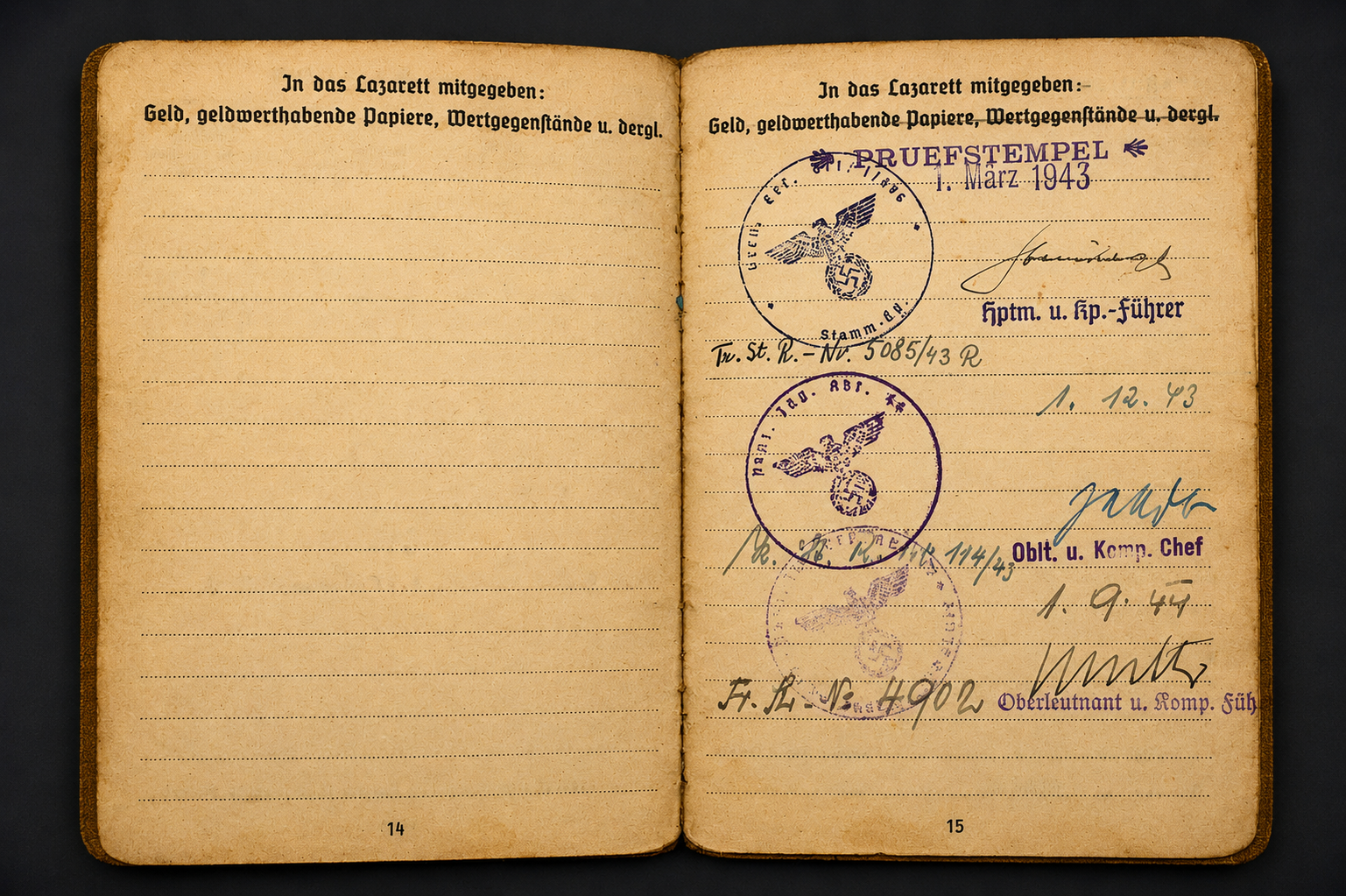
- Extensive wartime entries, stamps and unit transfers
- Promotion entries up to Panzerwart II
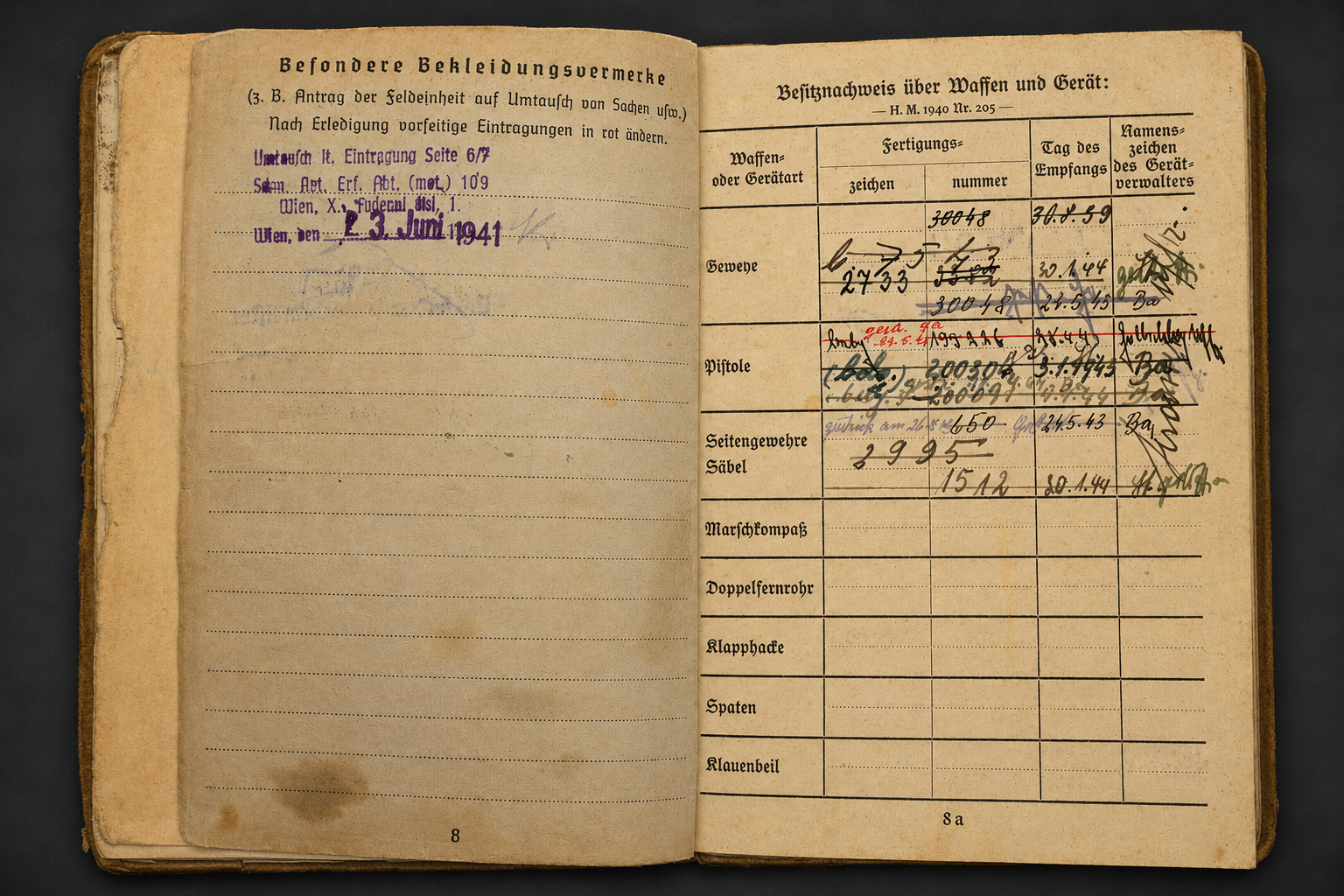
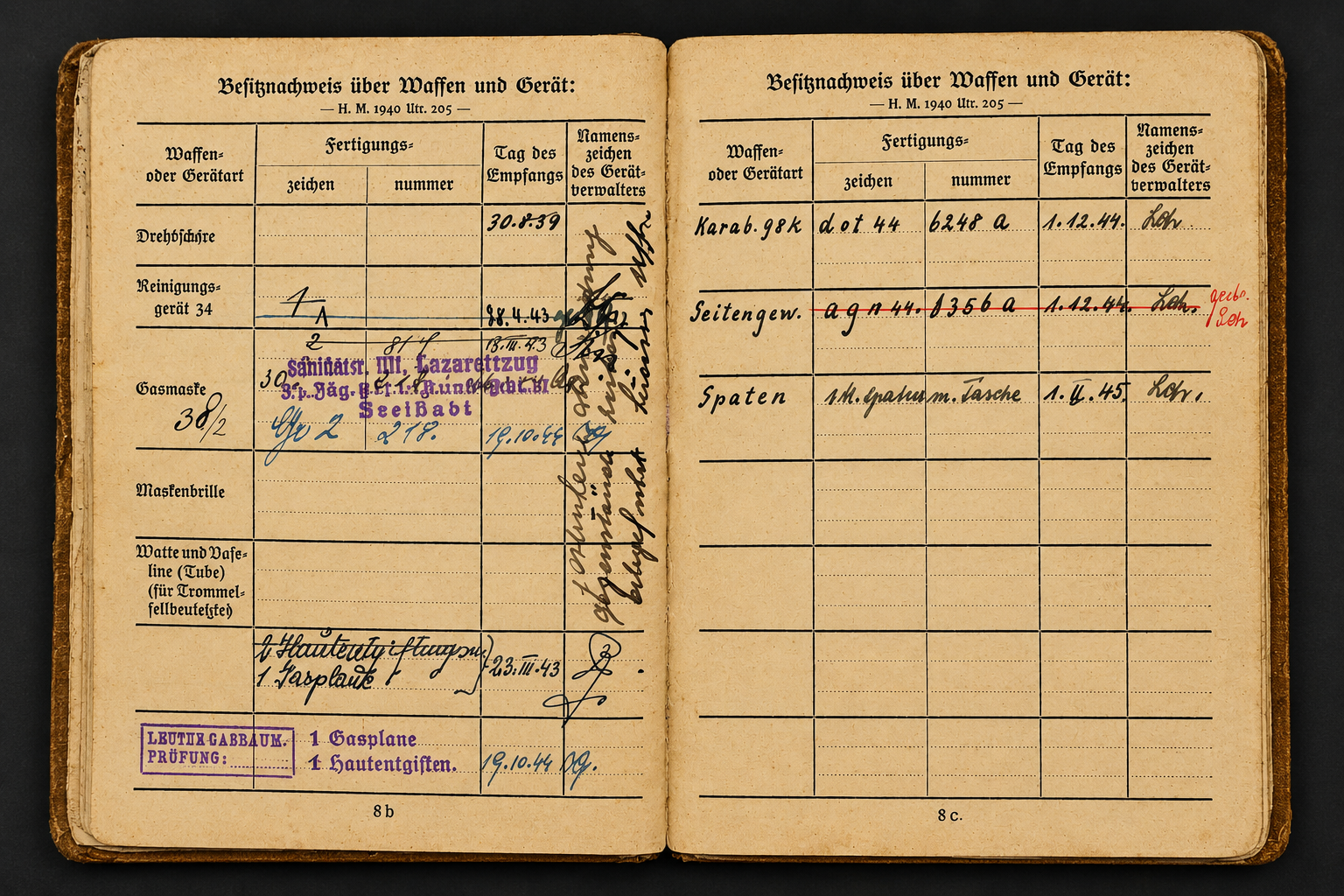
- Multiple interesting weapon issue entries
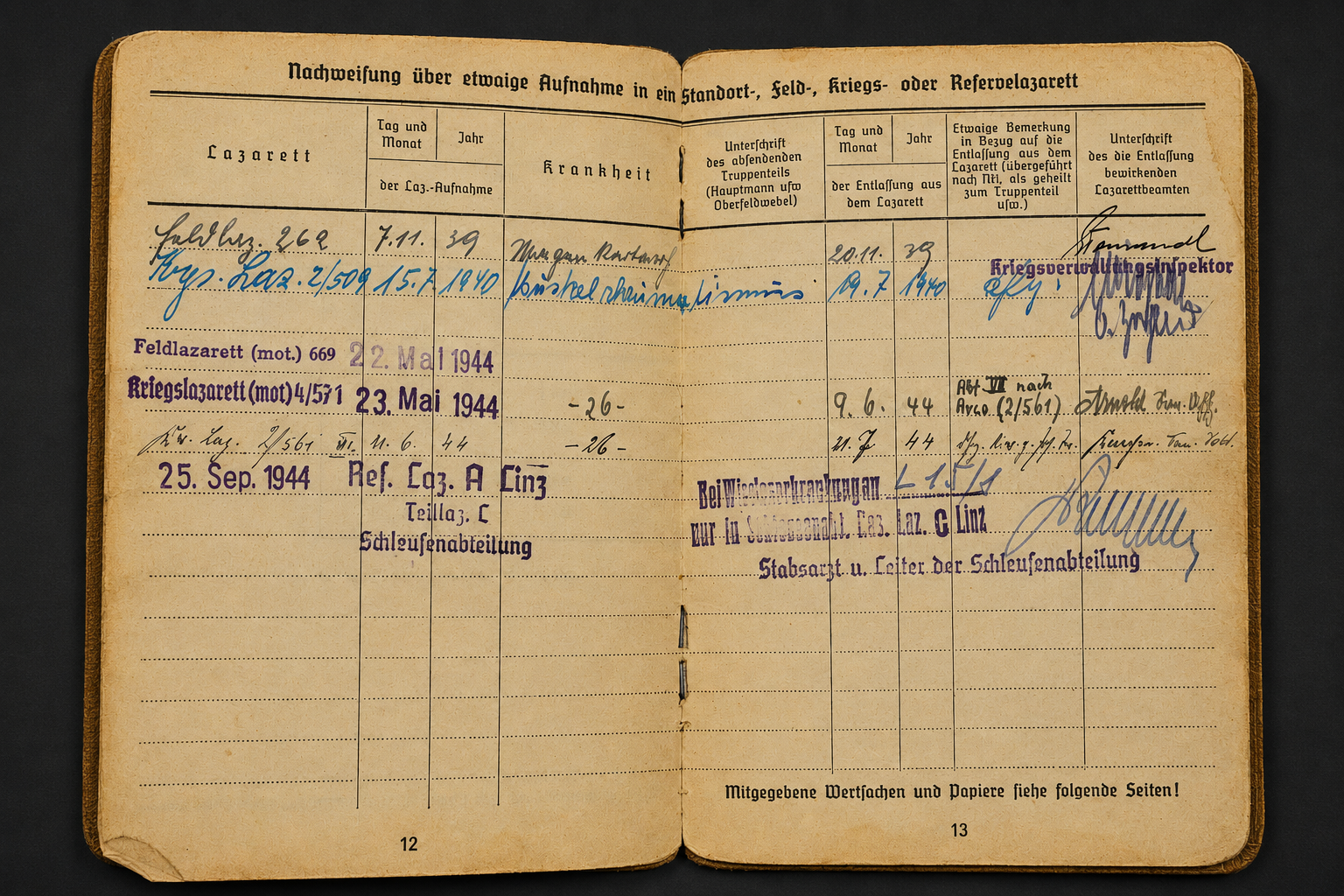
- Several hospital and recovery entries
- Included Austrian postwar discharge/demobilization document
Documented units include:
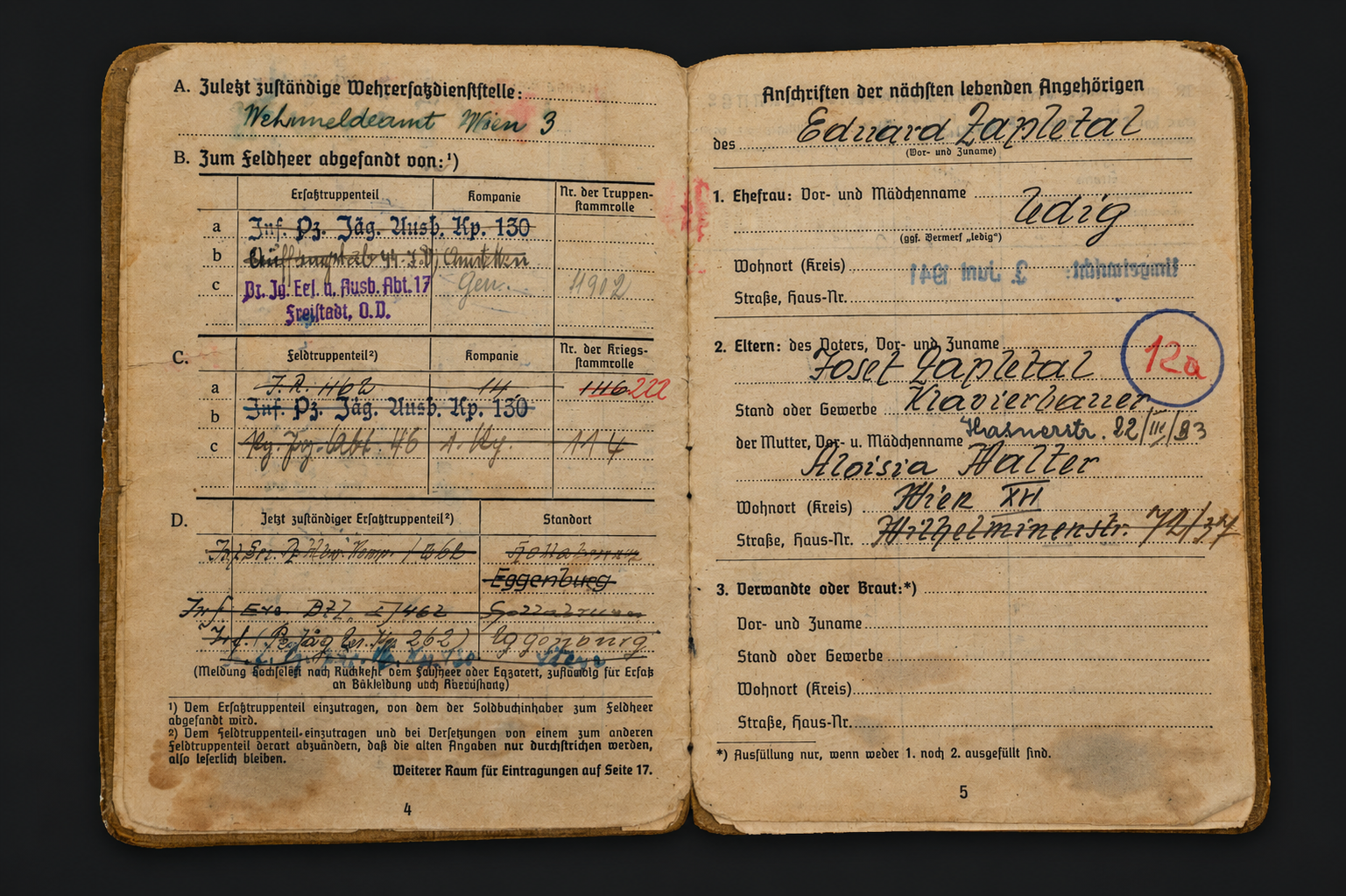
- Infanterie-Regiment 462
- Infanterie-Panzerjäger-Ausbildungs-Kompanie 130
- Panzerjäger-Abteilung 46
- Panzerjäger-Kompanie 1192
- schwere Panzerjäger-Abteilung 616 (final combat unit)
The Soldbuch clearly reflects long wartime service from early infantry formations into specialized anti-tank and armored destroyer units during the final phase of the war.
Particularly notable is the final assignment to s.Pz.Jg.Abt. 616, one of the Wehrmacht’s heavy tank destroyer battalions equipped with the formidable Jagdpanther tank destroyer — widely regarded as one of the most effective armored fighting vehicles fielded by Germany during WWII.
The grouping remains in authentic wartime condition with strong field-used character, period wear, staining and extensive handwritten entries throughout. A superb researchable Panzerjäger Soldbuch with excellent display appeal and highly collectible late-war armored-unit associations.
€375,00
In stock
In stock
Details
Statement
Wolfgang Historica is a trusted seller with years of experience and consistently positive reviews. We are always interested in purchasing collections or unique objects and also offer a professional consignment service. Buy with confidence.
Historical Description
Eduard Zapletal served in the Wehrmacht from the early war years through the collapsing final phase of the Third Reich, with his Soldbuch documenting a transition from infantry service into increasingly specialized anti-tank formations.
His early wartime service included:
- Infanterie-Regiment 462
- Infanterie-Panzerjäger-Ausbildungs-Kompanie 130
These units provided infantry and anti-tank training during a period when the German Army was rapidly expanding and adapting to mechanized warfare.
Later entries place him within:
- Panzerjäger-Abteilung 46
- Panzerjäger-Kompanie 1192
before eventual assignment to the highly significant:
schwere Panzerjäger-Abteilung 616
This battalion operated the feared Jagdpanther heavy tank destroyer, combining the powerful 8.8 cm Pak 43 gun with the chassis and mobility of the Panther tank. The battalion also utilized Bergepanther armored recovery vehicles to support field operations and vehicle retrieval.
By the later stages of the war, units such as s.Pz.Jg.Abt. 616 were heavily committed against advancing Allied armored formations and often fought under extremely difficult conditions with limited fuel, replacement parts and manpower.
The Soldbuch further records Zapletal’s promotion to Panzerwart II, indicating duties connected to armored vehicle maintenance, servicing or technical support — a critical role within late-war Panzerjäger formations operating increasingly complex armored vehicles.
Additional hospital and convalescence entries document repeated wartime medical treatment, illustrating the physical strain and dangers associated with prolonged front-line service.
The included Austrian postwar release document adds another layer of historical interest, documenting the soldier’s formal discharge following the collapse of Nazi Germany and the re-establishment of Austrian civil administration in 1945.
A very desirable and historically important Soldbuch grouping connected to one of Germany’s late-war Jagdpanther-equipped heavy tank destroyer battalions.