Wehrpass & Porcelain Medaillon – Panzer Regiment 25 – KIA June 1941 during Operation Barbarossa
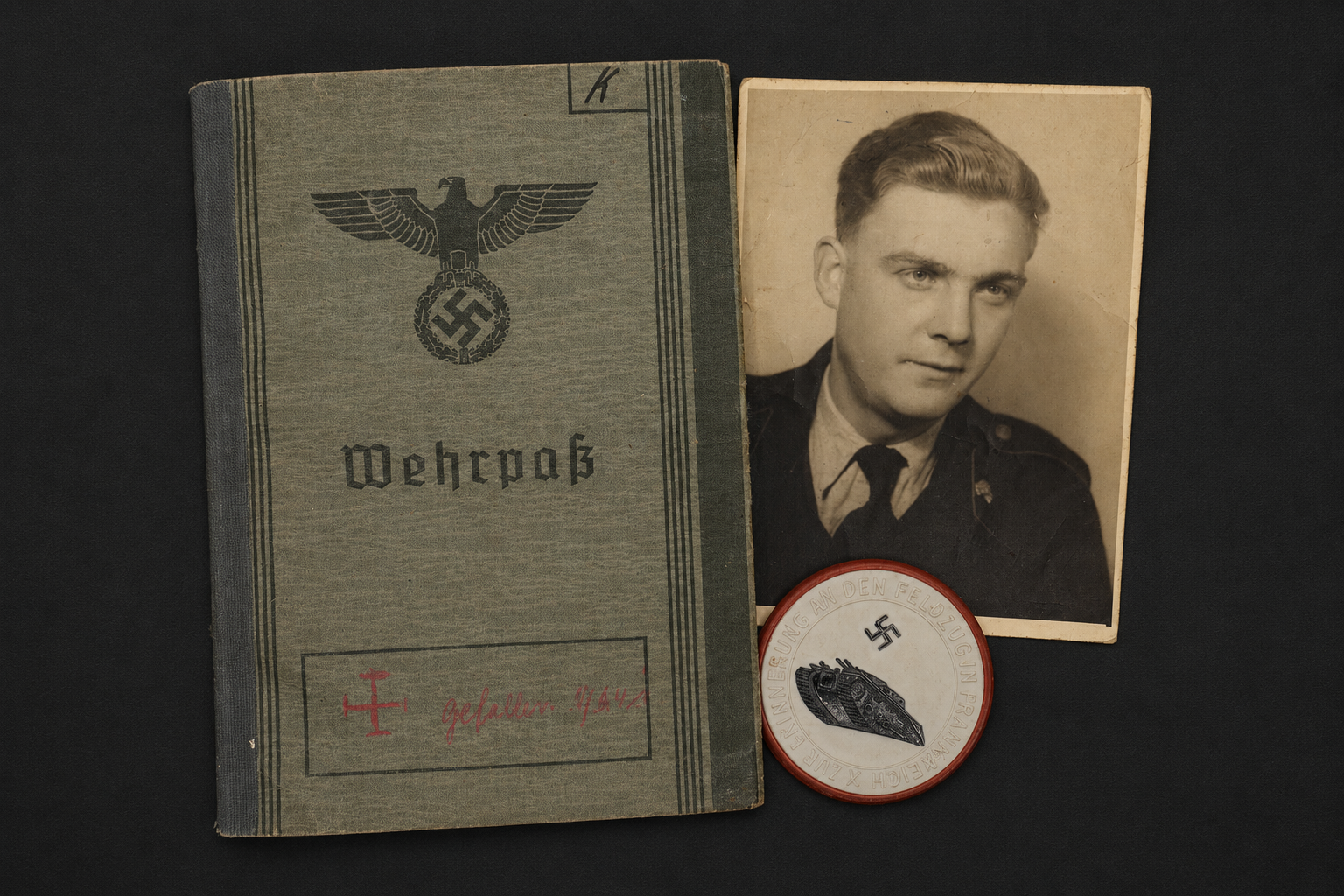
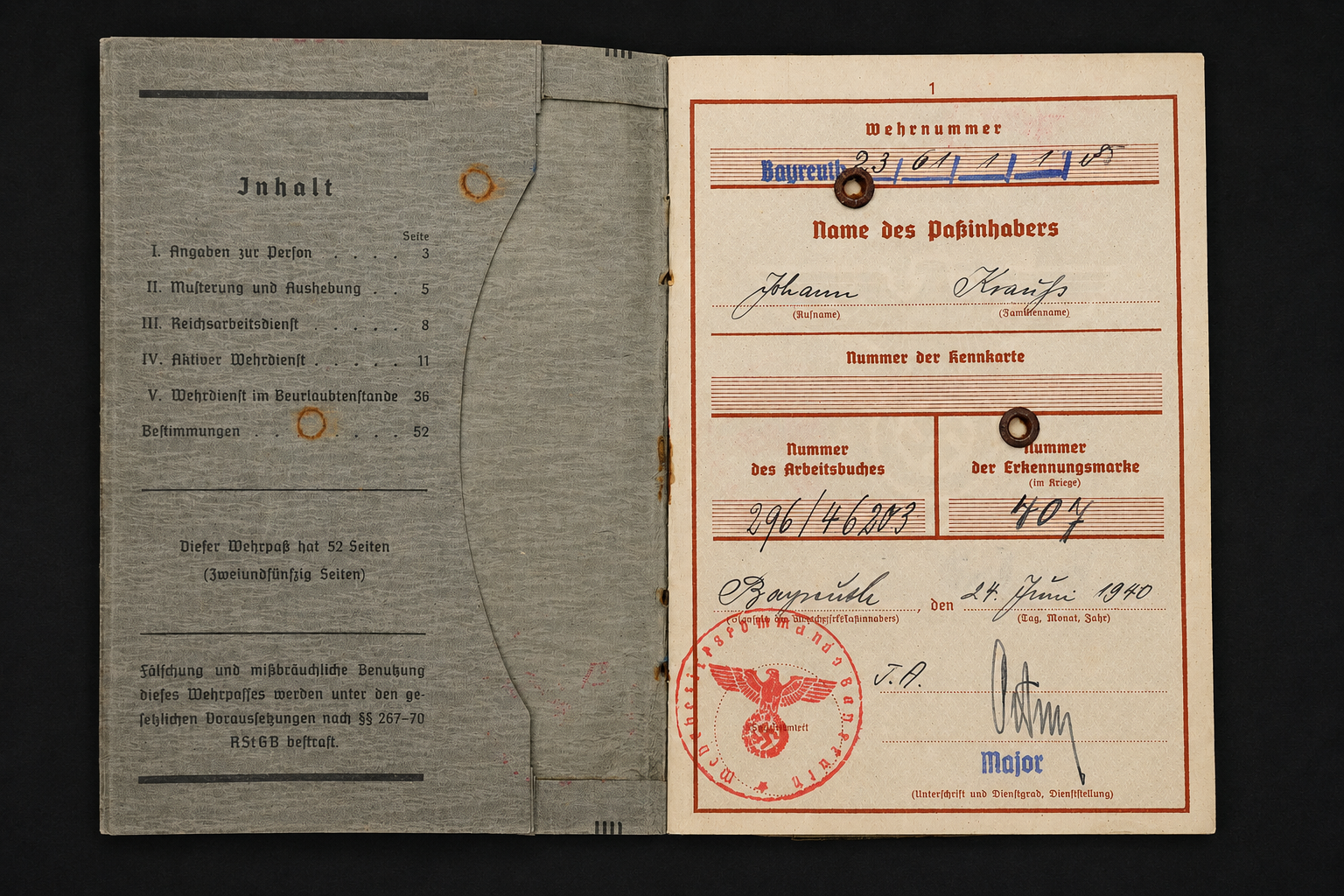
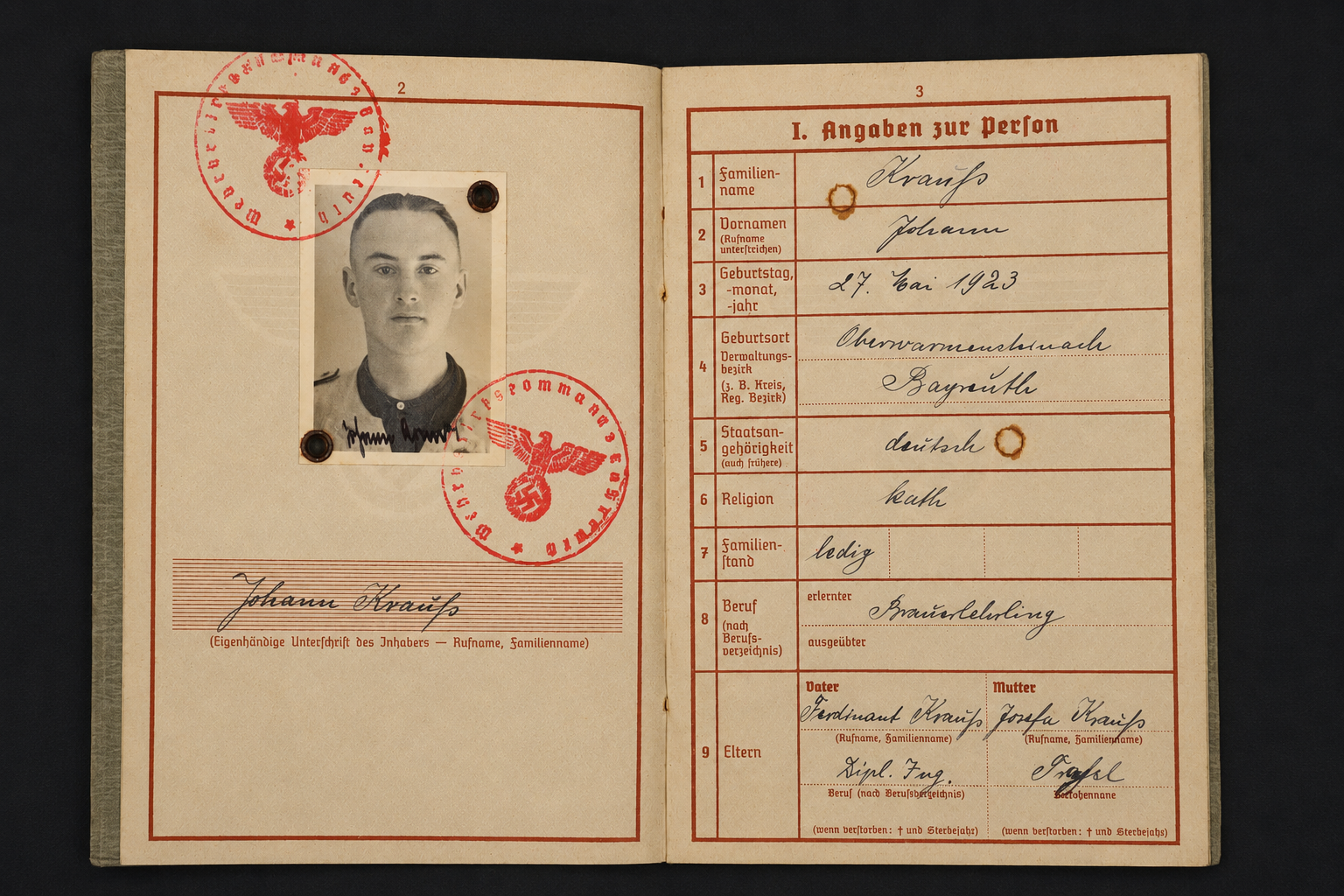
Excellent and highly personal original WWII Wehrpass, Photo and Porcelain token belonging to Johann Knauß, a young German Panzer soldier who served in Panzer-Regiment 25 and was killed in action during the opening days of Operation Barbarossa in June 1941.
The grouping consists of his original Wehrpass with portrait photograph, wartime entries detailing his campaigns in France and the Soviet Union, together with period personal photographs and an interesting Paris souvenir medallion likely acquired during occupation service in France.
Particularly desirable is the clear documentation of his death during the rapid armored advance into Soviet territory in June 1941.
Included in the grouping:
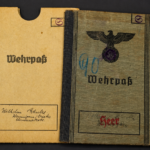
Original Wehrpass with portrait photograph
Additional wartime portrait photograph
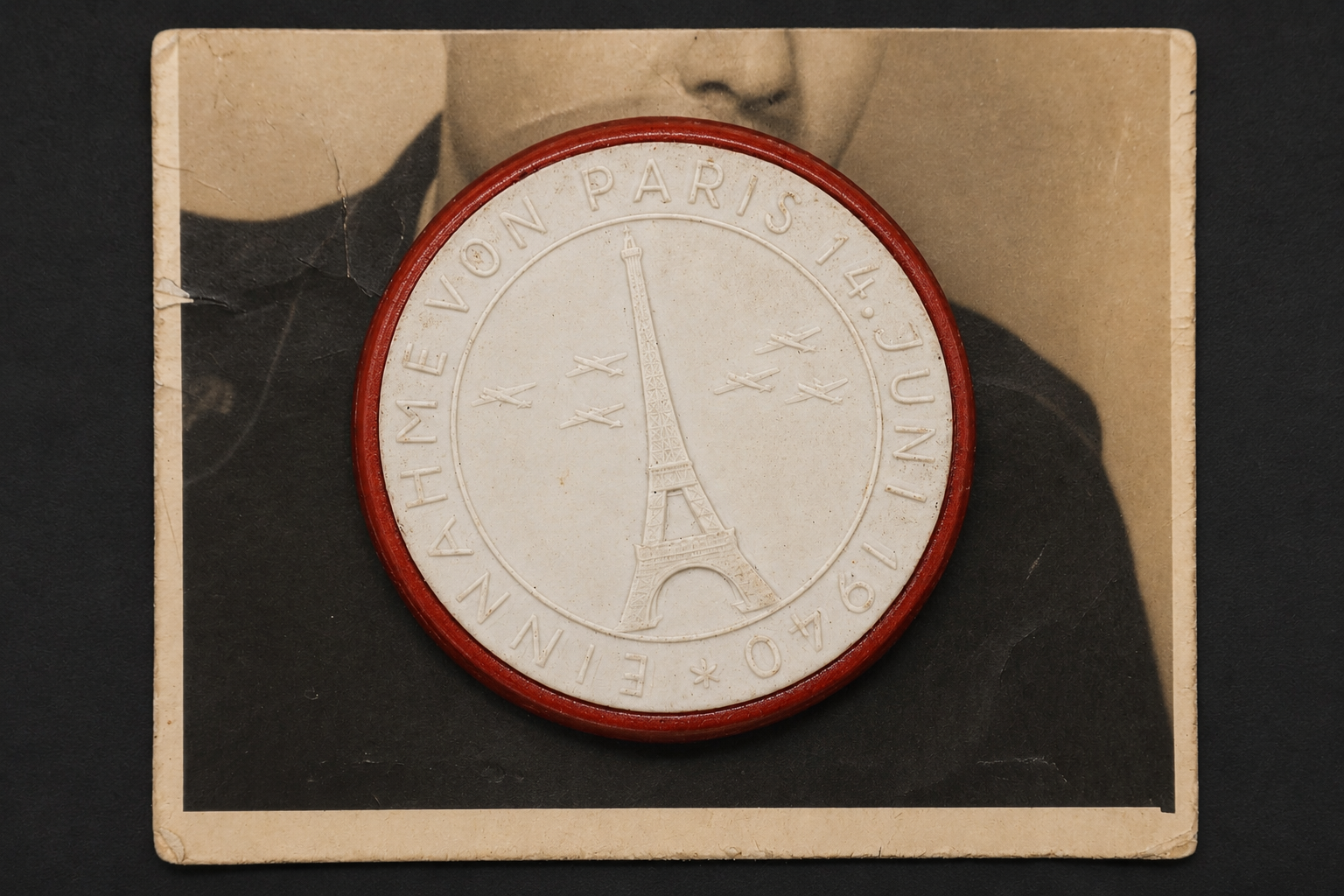
Paris occupation souvenir porcelain medallion/token: “Zur Erinnering an den Feldzug in Frankreich / Einnahme von Paris 14. Juni 1940“
Documented Units:
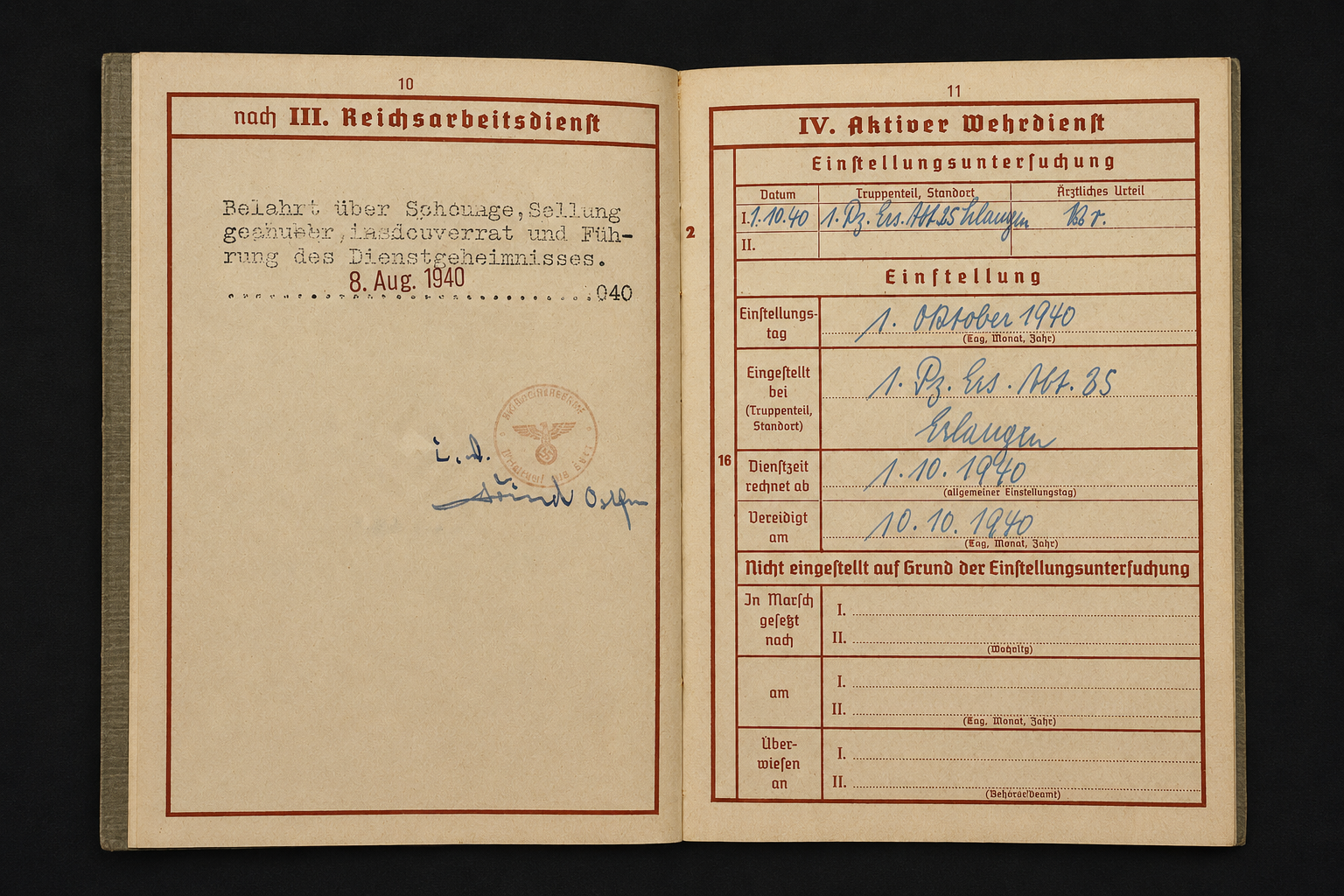
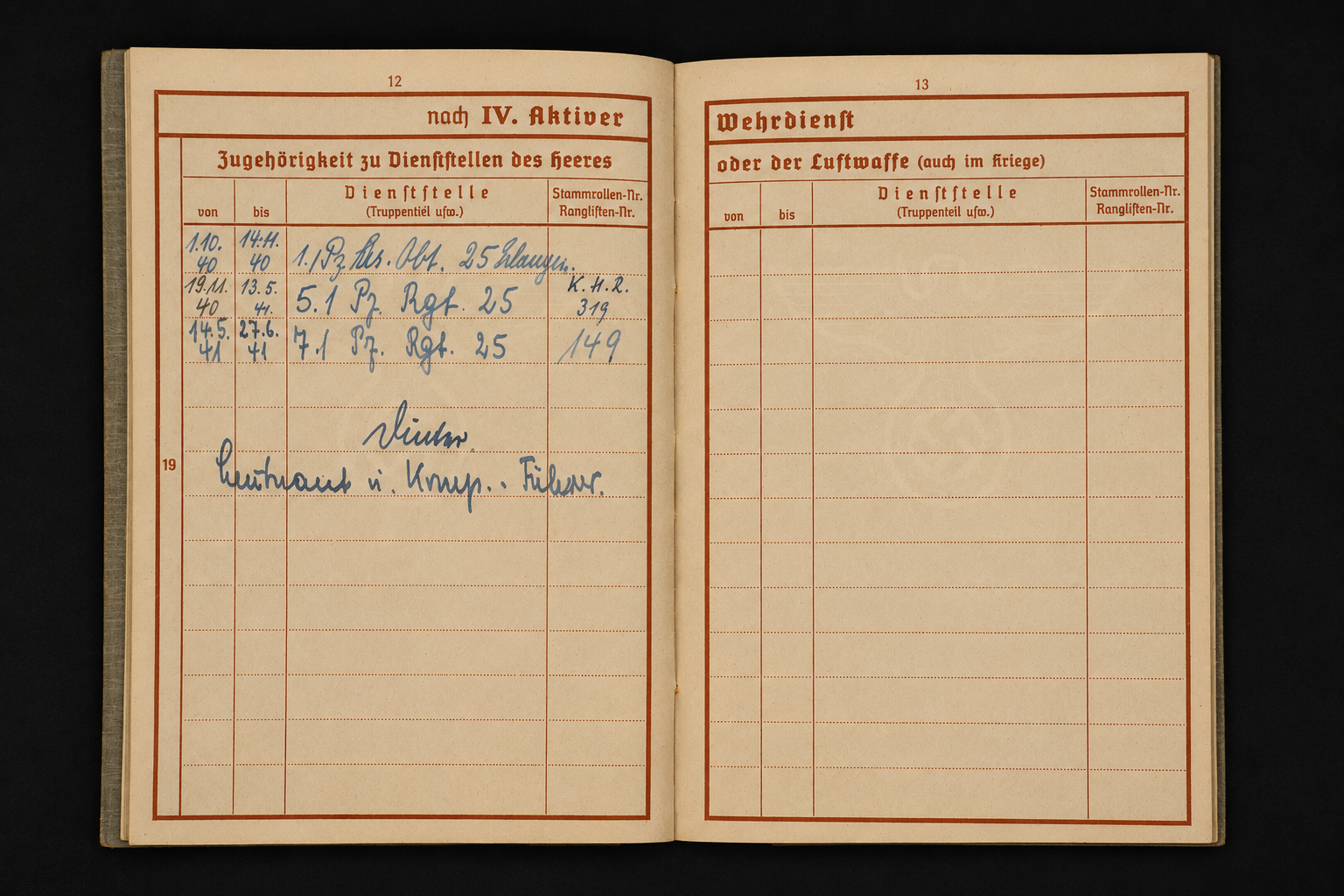
1./Panzer-Ersatz-Abteilung 25, Erlangen
5./ Panzer-Regiment 25
Later: 7./ Panzer-Regiment 25
Notable Details:
Entered Wehrmacht service:
1 October 1940
Participated in:
Occupation service in France
Fought during:
Operation Barbarossa
Wehrpass records combat actions during the opening invasion battles in the Soviet Union
Killed near:
Grodno
27 June 1941
Original red handwritten “gefallen 1941” notation on Wehrpass cover
Recorded Weapons Training Includes:
Gewehr 98
Pistole 08
MG34
MG37(t)
KwK 38(t)
KwK 30
Maschinenpistole
A very personal early-war Panzer soldier grouping connected to the dramatic opening phase of the German invasion of the Soviet Union.
Wolfgang Historica is a trusted seller with years of experience and consistently positive reviews. We are always interested in purchasing collections or unique objects and also offer a professional consignment service. Buy with confidence.
Historical Description
Johann Knauß was born on 27 May 1923 in Oberwarmsenbach near Bayreuth, Germany. By profession he was a brewer apprentice (“Brauerlehrling”) before entering Wehrmacht service on 1 October 1940 with Panzer-Ersatz-Abteilung 25 in Erlangen.
Following his initial training, he was assigned to Panzer-Regiment 25, one of the armored regiments of the 7. Panzer-Division, the famous division once commanded by General Erwin Rommel during the 1940 campaign in France.
The Wehrpass records Knauß’s service during the occupation period in France following the 1940 campaign. Included in the grouping is a Paris souvenir medallion marked “Zur Erinnering an den Feldzug in Frankreich / Einnahme von Paris 14. Juni 1940” almost certainly obtained during this period of occupation duty.
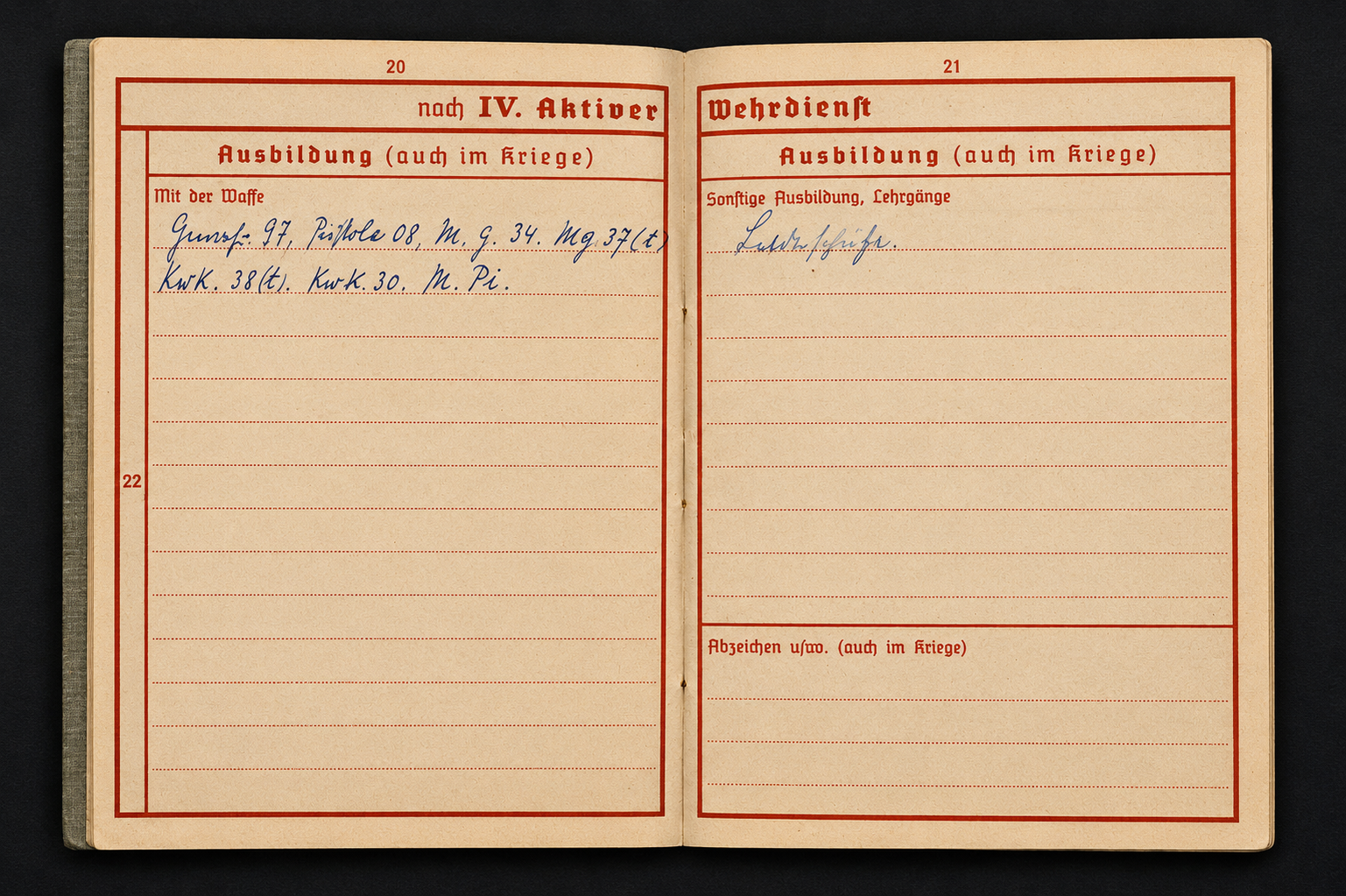
His military training reflects the mechanized and technical nature of Germany’s Panzer forces. Entries show qualification on multiple weapons systems including the:
MG34 machine gun
Pistole 08
Gewehr 98
Czech-origin MG37(t)
KwK 38(t) tank gun
KwK 30 autocannon
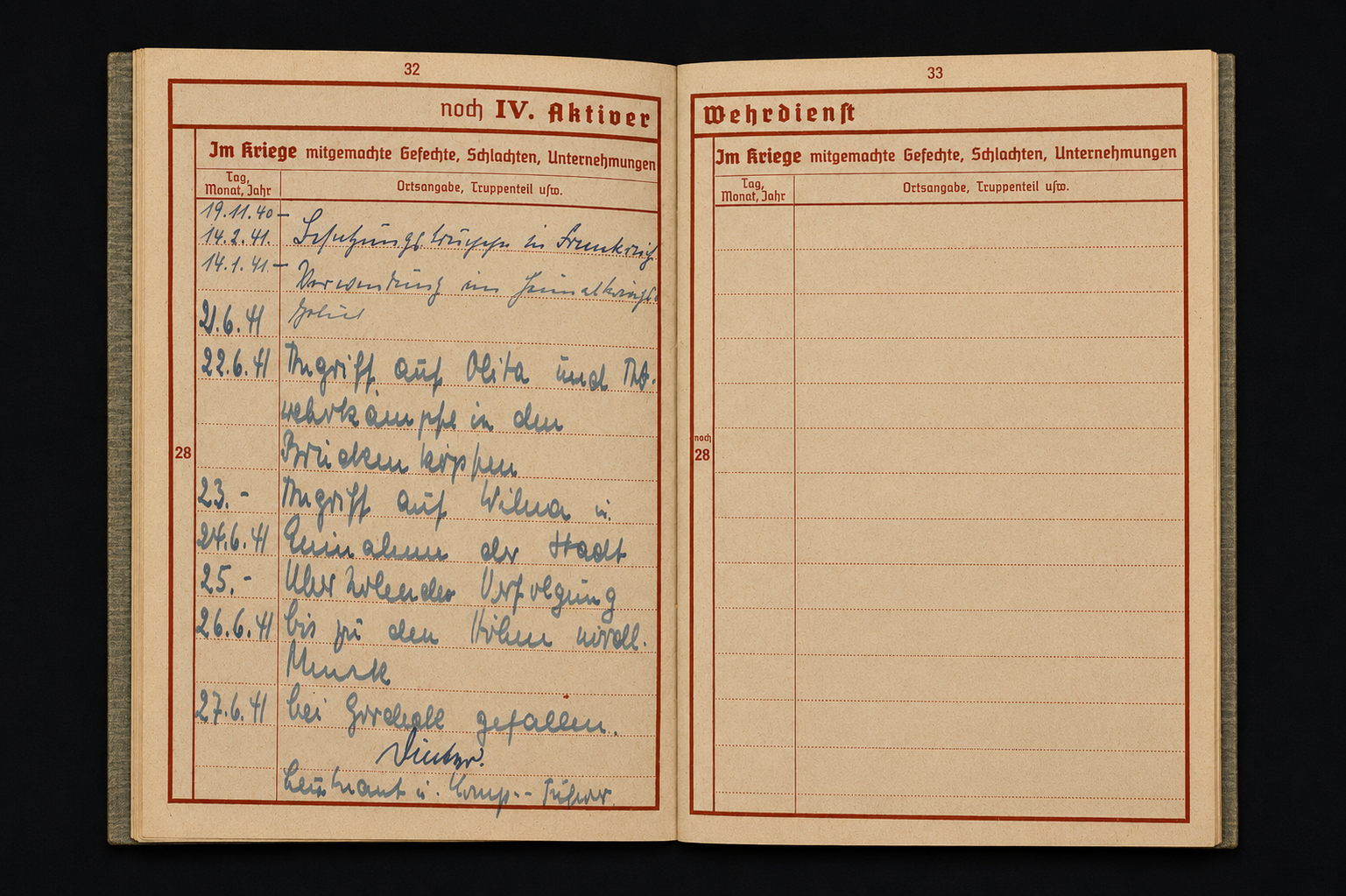
The Wehrpass contains particularly interesting combat entries documenting the opening days of Operation Barbarossa, the German invasion of the Soviet Union launched on 22 June 1941.
Recorded actions include:
Crossing operations at the Soviet border
Assaults through the Białystok region
Rapid armored advances toward Grodno
One entry specifically notes combat around the forests near Białystok and attacks toward Vilna during the first days of the invasion.
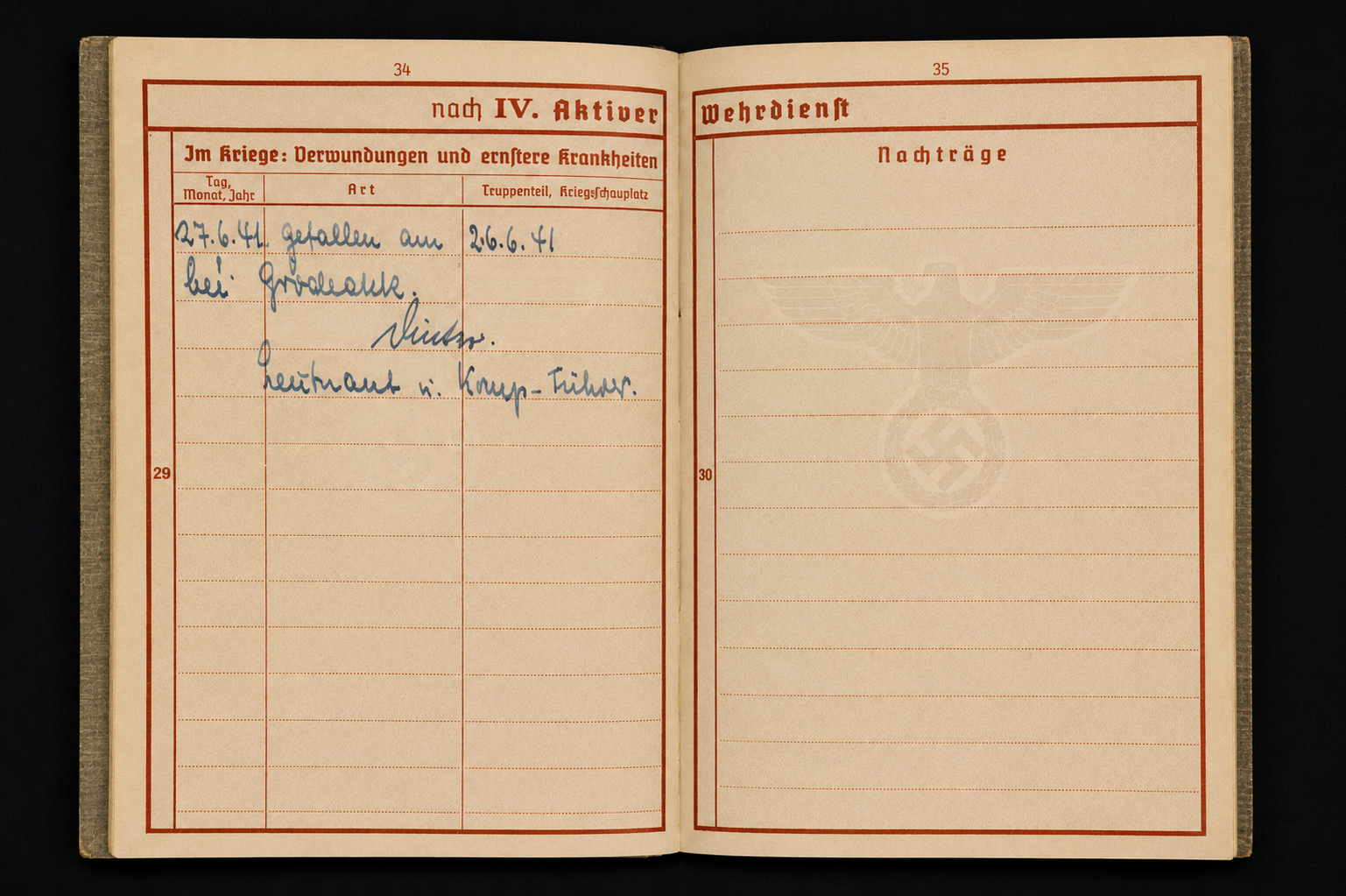
On 27 June 1941, only days after the invasion began, Johann Knauß was killed in action near Grodno during the fast-moving armored battles that characterized the opening encirclement operations against Soviet forces.
The Wehrpass records:
“bei Grodno gefallen”
“fallen near Grodno”
At the time of his death, Knauß was only 18 years old.
This grouping is an excellent and very personal representation of a young German Panzer soldier whose military career spanned the occupation of France and the opening phase of the war against the Soviet Union, ending during the violent first week of Operation Barbarossa.