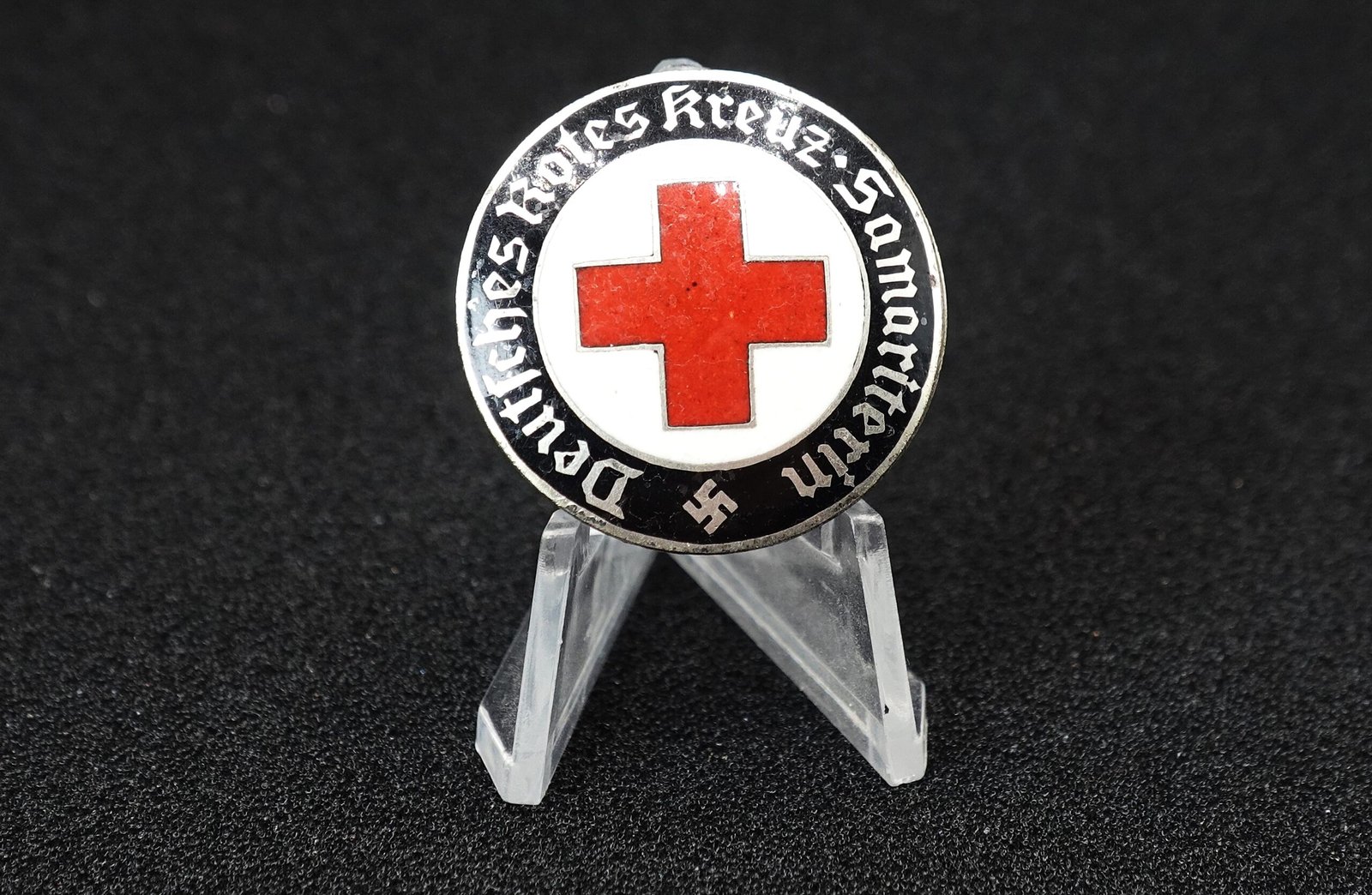
A fine and original early pre-war Deutsches Rotes Kreuz (German Red Cross) Samariterin badge, manufactured in silver-plated tombac with beautifully preserved red and white vitreous enamel.
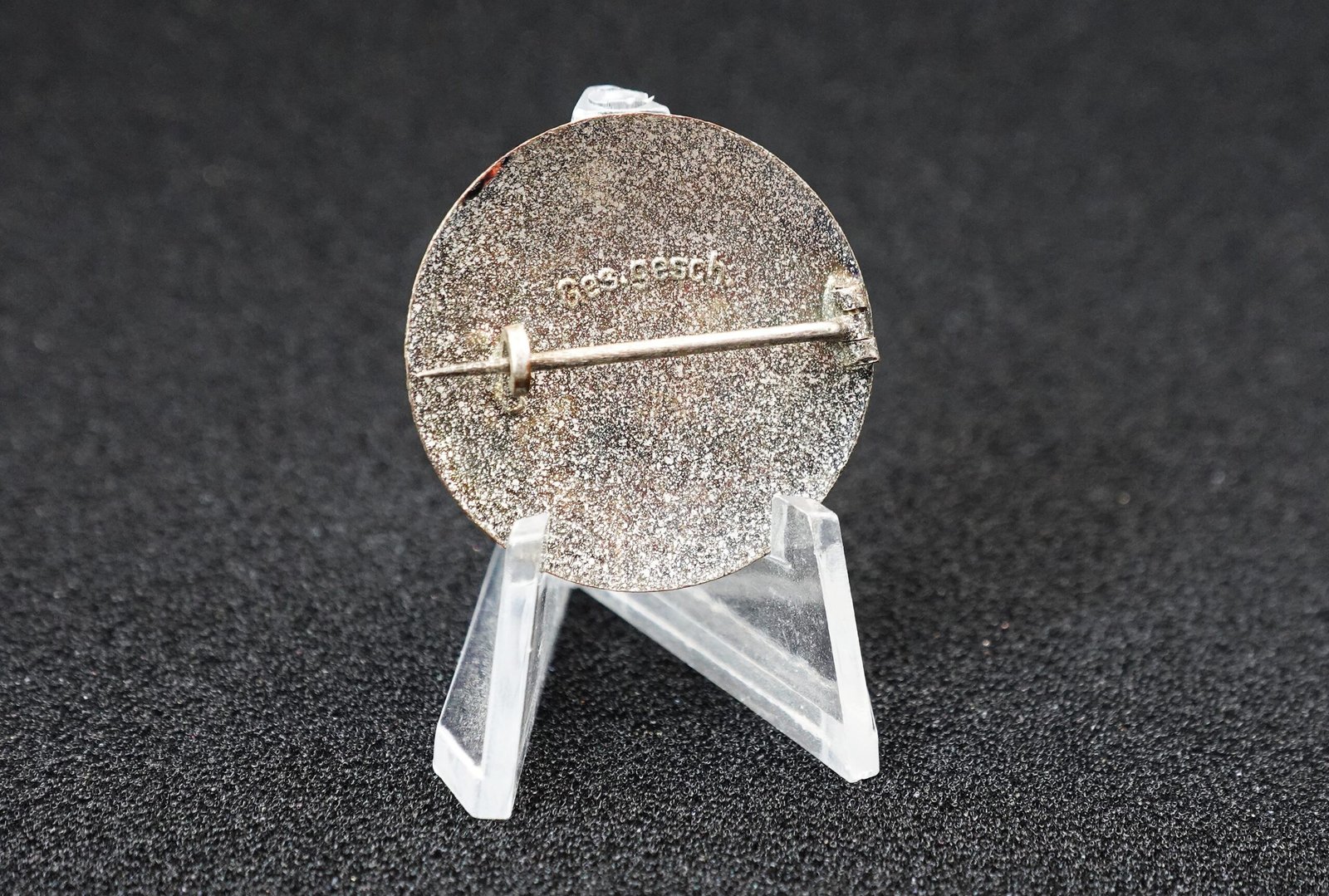
The obverse features the iconic red cross within a white enamel field, surrounded by the inscription “Deutsches Rotes Kreuz Samariterin” in Gothic lettering. The reverse retains its original Ges. Gesch. marking and early directly soldered pin construction, both characteristics of desirable early production examples.
This example remains in excellent collector condition with vibrant enamel, attractive untouched patina and a fully functional pin assembly. An increasingly difficult badge to locate in such honest, original condition.
A desirable addition to any DRK, medical, or Third Reich organization collection.
Wolfgang Historica is a trusted seller with years of experience and consistently positive reviews. We are always interested in purchasing collections or unique objects and also offer a professional consignment service. Buy with confidence.
Historical Description
The Samariterin badge was worn by qualified female members of the Deutsches Rotes Kreuz (German Red Cross) who had completed Samariter (first aid and medical assistance) training. These women served in a wide variety of roles including first aid stations, hospitals, public health services, disaster relief and wartime medical support.
During the 1930s the German Red Cross underwent extensive reorganization, eventually becoming integrated into the National Socialist state structure while continuing its humanitarian medical responsibilities. Female Samariterinnen formed an important part of this organization, assisting both civilian and military medical services before and during the Second World War.
Early examples such as this were produced in silver-plated tombac with high-quality fired enamel and feature the desirable early directly soldered pin assembly. Later wartime production often shifted toward simpler construction methods and less expensive materials.
The “Ges. Gesch.” marking on the reverse stands for Gesetzlich Geschützt (“Legally Protected”), indicating that the badge’s design was legally registered rather than identifying a specific manufacturer.