



Shop
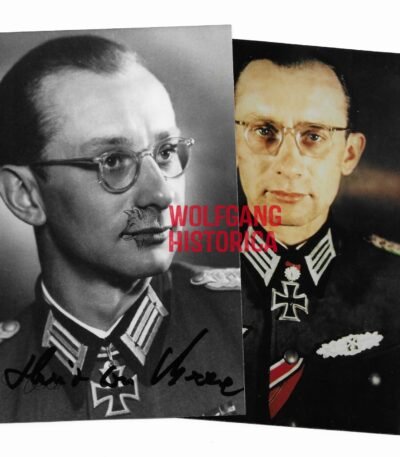
Heinz von Brese – Panzer-Grenadier-Regiment 108 (Eichenlaub)
€25,00Original Postwar Signature on a Postwar Photo of Heinz von Brese. Major Heinz von Brese-Winiary (13.01.1914 † 03.12.1995) earned the Deutsches Kreuz in Gold on December 24, 1941 as Oberleutnant with the Infanterie-Regiment 10, the Ritterkreuz on May 15, 1943 as Major und Führer of II. Bataillon/ Panzer-Grenadier-Regiment 108 of the 14. Panzer-Division and the Eichenlaub on April 6, 1944 as Major und Führer of II. Bataillon/ Panzer-Grenadier-Regiment 108 of the 14. Panzer-Division. Good condition.
Provenance: This signature comes from one of the largest postwar signature collection I’ve ever commissioned. This collection was started by a Waffen-SS Veteran, Werner H., in the 1950’s until he passed away.
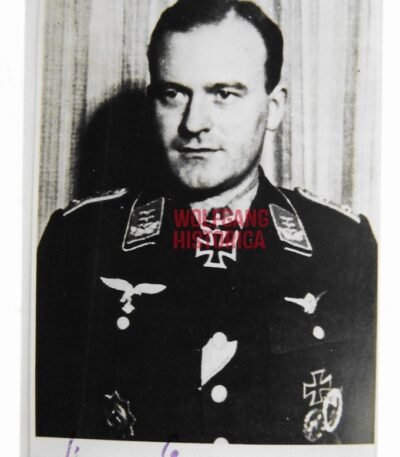
Hermann Eggers – Flak-Regiment 64
€25,00Original Postwar Signature on a Postwar Photo of Hermann Eggers. Hauptmann Hermann Eggers (25.10.1914 † 22.04.2006) earned the Ritterkreuz on August 21, 1942 as Hauptmann und Batteriechef of the 3. Batterie/ Flak-Regiment 64. Good condition.
Ritterkreuz: “His inspiring personal bravery and skillful leadership ensured that his Batterie also achieved great successes during the war against the Soviet Union. While serving with a Vorausabteilung on the Kertsch peninsula the Batterie decisively contributed to the smashing of the Bolshevik counterattack on the 09.05.1942. In doing so it heavily facilitated the further battles of the Vorausabteilung and opened the way to Kertsch itself. This great success is in no small part thanks to the unconditional devotion to duty and exemplary decisiveness of the Batterie commander, who was heavily wounded for the second time in this war during the breakthrough of the Parpatsch position.” (Source: Traces of War)
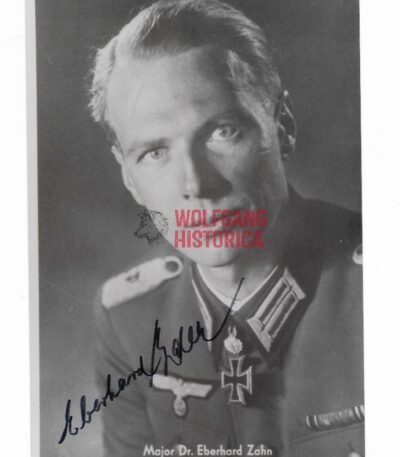
Dr. Eberhard Zahn – Panzerjäger-Abteilung 33 (Eichenlaub)
€25,00Original Postwar Signature on a Postwar Photo of Dr. Eberhard Zahn. Oberstleutnant Dr. Eberhard Zahn (02.01.1910 † 07.02.2010) earned the Ritterkreuz on June 30, 1941 as Leutnant und Zugführer of the 2. Kompanie/ Panzerjäger-Abteilung 33 of the 15. Panzer-Division and the Eichenlaub on March 6, 1943 as Hauptmann und Kompaniechef of the 2. Kompanie/ Panzerjäger-Abteilung 33. Good condition. Postcardsize.
Knight’s Cross: Awarding for his resiliency in battle during the British Operation Battleaxe. With his 5cm Pak he defeated a British armoured attack and destroyed 6 enemy tanks. When his gun was knocked out he continued to fight on as an infantryman, and despite being captured he refused to give up and managed to escape and return to German lines.
Oakleaves: “…At the start of July 1942 the south wing of [Zahn’s] Division was hit by an armoured surprise attack. Since one of the Kompanie commanders became a casualty in the bitter fighting, Hauptmann Zahn (at the time still an Oberleutnant and the Abteilung adjutant) rushed forward, saved his heavily wounded comrade under heavy fire and then took over leadership of the Kompanie. He then brought the attack to a halt with only 3 guns that were available.” (Source: Traces of War)
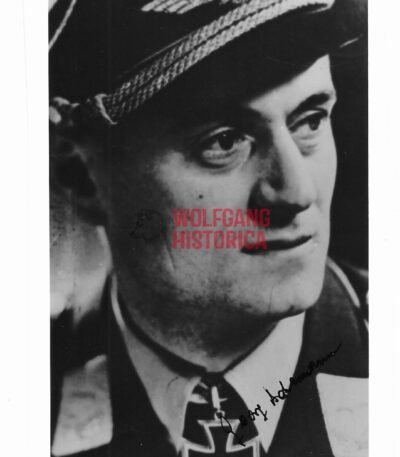
Georg Ackermann – Kampfgeschwader 53 “Legion Condor”
€25,00Original Postwar Signature on a Postwar Photo of Georg Ackermann. Leutnant Georg Ackermann (12.03.1918 † 16.12.2007) earned the Ritterkreuz on February 28, 1945 as Leutnant und Staffelkapitän u. Techn.Offz. of the 5. Staffel/ Kampfgeschwader 53 “Legion Condor”. Good condition. Postcardsize.
Awarded in recognition of his flying achievements over the course of 336 bomber sorties (including 286 in the East). 14 of these were He 111 V-1 delivery sorties.
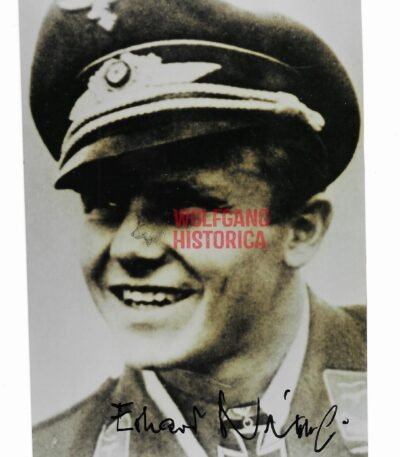
Erhard Nippa – Kampfgeschwader 10
€25,00Original Postwar Signature on a Postwar Photo of Erhard Nippa. Oberleutnant Erhard Nippa (07.02.1922 † 27.06.2003) earned the Deutsches Kreuz in Gold on April 29, 1943 and the Ritterkreuz on March 26, 1944 as Oberleutnant und Flugzeugführer in the 15. Staffel/ schweres Kampfgeschwader 10. Good condition. Postcardsize.
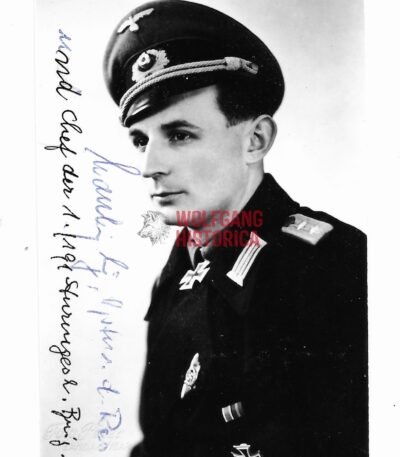
Ludwig Laubmeier – Sturmgeschütz-Abteilung 191
€25,00Original Postwar Signature on a Postwar Photo of Ludwig Laubmeier. Oberleutnant Ludwig Laubmeier (30.01.1919 † 09.12.2010) earned the Ritterkreuz on October 4, 1944 as Oberleutnant und Kompaniechef of the 1. Batterie/ Sturmgeschütz-Abteilung 191. Good condition. Size: 8,2×11,7cm.
Knight’s Cross: “During the fighting in the Crimea in early 1944 the Sturmgeschütz-Brigade 191 played a particularly important role as the fire brigade of the V. Armee-Korps. It contributed greatly to the German defense both during the retreat battles through the Ukraine as well as near Sevastopol itself. In this latter capacity the 1. Batterie, under the command of Oberleutnant Laubmeier, played a major role in covering the German evacuation of Crimea beginning on the 09.05.1944, fighting near the fort “Maxim Gorky”.
On the 12.05.1944 the Soviets succeeded in achieving a dangerous penetration in this area. Laubmeier hastily gathered up some Grenadiers and the last Sturmgeschütze of his Batterie and with this force launched a counterthrust, which succeeded in preventing an enemy breakthrough from developing. Laubmeier was heavily wounded during this battle and evacuated shortly afterwards.
For his accomplishments in this capacity, as well as reaching a personal total of 38 enemy tanks destroyed, Laubmeier would be decorated with the Knight’s Cross.”
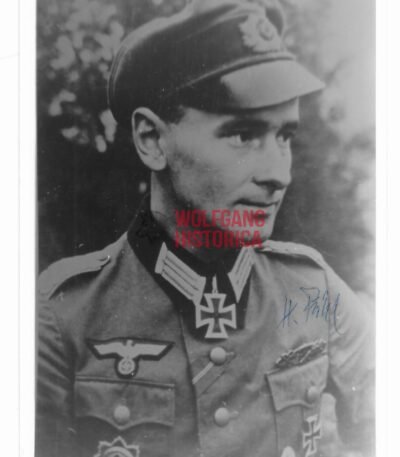
Heinrich Ruhl – Divisions-Füsilier-Bataillon 122 (122.Inf.Div.)
€25,00Original Postwar Signature on a Postwar Photo of Heinrich Ruhl. Major Heinrich Ruhl (31.08.1915 † 01.12.2015) earned the Ritterkreuz on September 21, 1944 as Major und Kommandeur of the Divisions-Füsilier-Bataillon 122 of the 122. Infanterie-Division and the Eichenlaub on March 16, 1945 as Major und Kommandeur of the Divisions-Füsilier-Bataillon 122 of the 122. Infanterie-Division. Good condition. Postcardsize.
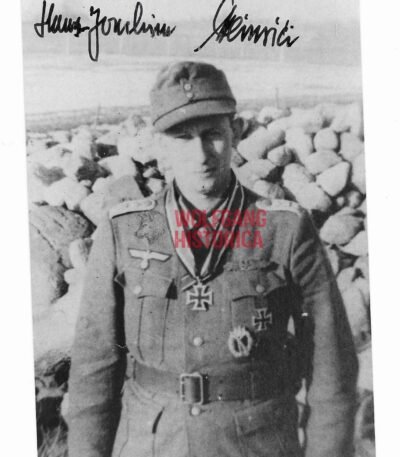
Hans-Joachim Heinrici – Grenadier-Regiment 431 (131.Inf.Div.)
€25,00Original Postwar Signature on a Postwar Photo of Hans-Joachim Heinrici. Hauptmann Hans-Joachim Heinrici (16.04.1918 † 08.10.2011) earned the Ritterkreuz on February 14, 1945 as Hauptmann und Führer of the II. Bataillon/ Grenadier-Regiment 431 of the 131. Infanterie-Division. Good condition. Postcardsize.
Knight’s Cross earned for: “Fighter of our Army — Broke the Russian encirclement ring with his Bataillon: Hauptmann Heinrici, Bataillon commander of a Lower Saxonian Infanterie-Division, was pushed back by strong enemy forces during his Division’s advance towards the west (south of Liebstadt). He was unable to make contact with his Division. Oriented as to the situation via radio, he made the decision to break the Russian encirclement ring with his Bataillon and force a union with the Division. A great example of bravery to his men, he led his Bataillon as a cohesive unit with all weapons and transportable wounded in a seven-day march through the enemy ring. He repeatedly attacked enemy units, smashed them and inflicted heavy losses. After reaching friendly lines the Bataillon was immediately deployed in the sector of an unfamiliar Division, where it distinguished itself brilliantly during four days of offensive and defensive actions under the command of Hauptmann Heinrici. His decisiveness and outstanding bravery meant that his Bataillon was able to force a decision even in the worst of combat situations and repel the Russian attacks.” (Source: Traces of War)

Robert Freiherr von Prochazka – Werfer-Regiment 55
€25,00Original Postwar Signature on a Postwar Photo of Robert Freiherr von Prochazka. Major Robert Freiherr von Prochazka (06.12.1916 † 20.02.2014) earned the Ritterkreuz on December 19, 1943 as Hauptmann und Kommandeur of the III. Abteilung/ Werfer-Regiment 55. Good condition. Postcardsize.
Knight’s Cross recommendation: “On the 14.11.1943 the Soviets launched a major attack against the sector of the 76. Infanterie-Division (located between Petrowo and Losowatka), and it was not long before the front of this Division became breached in several places. The Soviet aim was to break through in the direction of the city of Krivoi Rog, which was about 90 km away. However they were eventually stopped after gaining about 10 kilometres, not least due to the efforts of Hauptmann Prochazka. In this time Prochazka successfully managed to hinder the Soviet forces through well-laid fire from his Batterien, which struck a number of identified Soviet assembly areas with particularly devastating volleys.” (Source: Traces of War)
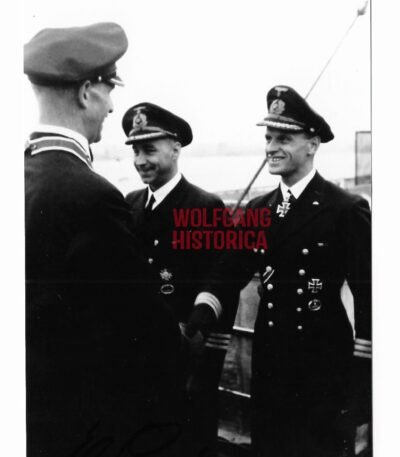
Carl-August Landfermann – U-181
€25,00Original Postwar Signature on a Postwar Photo of Carl-August Landfermann. Käpitanleutnant (Ing.) Carl-August Landfermann (14.07.1914 † 18.11.2003) earned the Ritterkreuz on October 27, 1943 as Oberleutnant (Ing.) und Leitender Ingenieur of Uboot “U-181”. Good condition. Postcardsize.
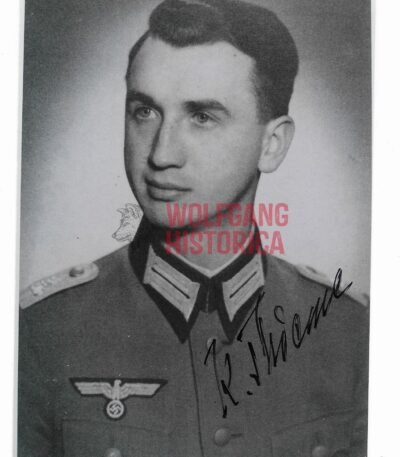
Karl Thieme – Panzergrenadier-Regiment 110 & 111 (Swords)
€25,00Postwar Signature on a Postwar Photo of Karl Thieme. Karl Thieme (28.05.1914 † 06.06.2004) earned the Ritterkreuz on October 30, 1943 as Hauptmann und Kommandeur in the I. Bataillon/ Panzergrenadier-Regiment 110, the Eichenlaub on October 23, 1944 as Major und Führer of the Panzergrenadier-Regiment 111 and the Schwertern on May 9, 1945 as Oberstleutnant und Kommandeur of the Panzergrenadier-Regiment 110 of the 11. Panzer-Division. Good condition. Measuring: Postcardsize.
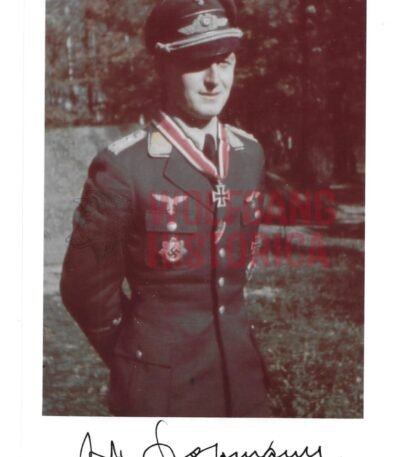
Walter Grasemann – Kampfgeschwader 27 “Boelcke”
€25,00Postwar Signature on a Postwar Photo of Walter Grasemann. Hauptmann Walter Grasemann (03.07.1917 † 26.11.2007) earned the Deutsches Kreuz in Gold on March 19, 1942 as Leutnant in the III. Gruppe/ Kampfgeschwader 27 and the Ritterkreuz on October 9, 1943 as Oberleutnant und Staffelkapitän in the 9. Staffel/ Kampfgeschwader 27. Good condition. Measuring: Postcardsize.
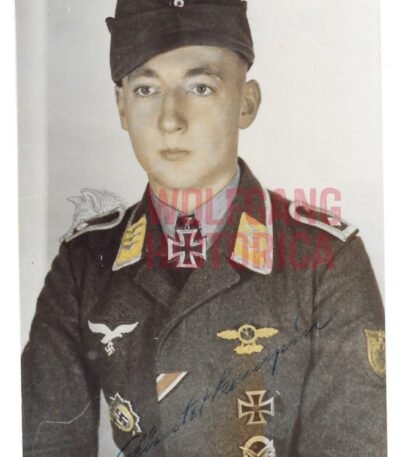
Günter Kempin – Kampfgeschwader 27 “Boelcke”
€25,00Postwar Signature on a Postwar Photo of Günter Kempin. Feldwebel Günter Kempin (02.12.1920 † 12.08.1998) earned the Deutsches Kreuz in Gold on June 17, 1943 as Unteroffizier in the 1. Staffel/ Kampfgeschwader 27 “Boelcke” and the Ritterkreuz on April 17, 1945 as Feldwebel und Flugzeugführer in the 14. Staffel/ Kampfgeschwader 27 “Boelcke”. Good condition. Measuring: 8,8×13 cm.
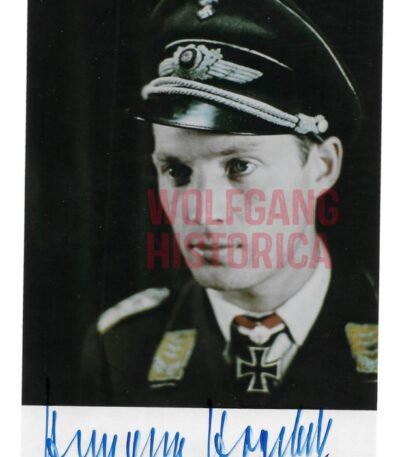
Hermann Hogeback – Lehrgeschwader 1 & Kampfgeschwader 6 (Swords)
€25,00Postwar Signature on a Postwar Photo of Hermann Hogeback. Oberstleutnant Hermann Hogeback (25.08.1914 † 15.02.2004) earned the Deutsches Kreuz in Gold on September 24, 1942, the Ritterkreuz on September 8, 1941 as Oberleutnant und Staffelkapitän of the 9. Staffel/ Lehrgeschwader 1, the Eichenlaub on February 19, 1943 as Hauptmann und Kommandeur of the III. Gruppe/ Kampfgeschwader 6 and the Schwertern on January 26, 1945 as Oberstleutnant und Kommodore of Kampfgeschwader 6. Good condition. Measuring: Postcardsize.
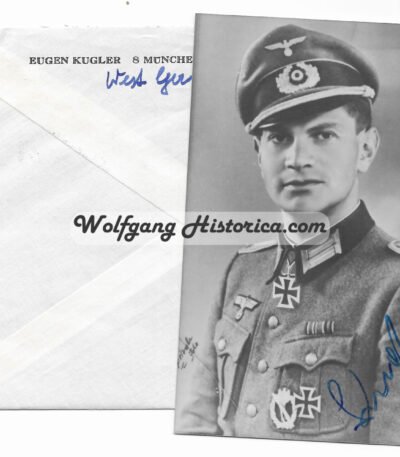
Eugen Kugler – Grenadier-Regiment 19
€25,00Original Postwar Signature on a Postwar Photocopy of Eugen Kugler. Hauptmann Eugen Kugler (26.08.1918 † 09.06.1995) earned the Ritterkreuz on April 5, 1945 as Hauptmann und Führer in the 1. Kompanie/ Grenadier-Regiment 19 of the 7. Infanterie-Division. Good Condition. Measuring: 7,7×12,7cm. Comes with an extra enveloppe.
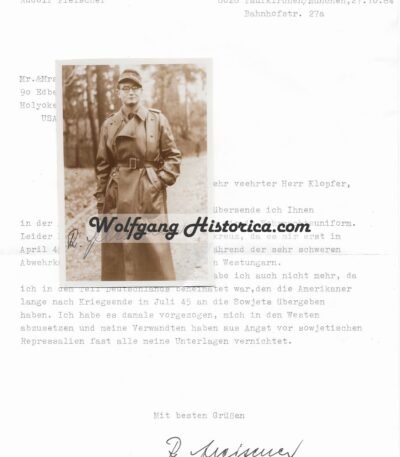
Rudolf Fleischer – Heeres-Flak-Abteilung 314
€25,00Original Postwar Signature on a Postwar Photocopy of Rudolf Fleischer. Major Rudolf Fleischer (21.07.1915 † 13.12.1991) earned the Deutsches Kreuz in Gold on March 9, 1945 as Major und Kommandeur of the Heeres-Flak-Abteilung 314 and the Ritterkreuz on May 9, 1945 as Major und Kommandeur of the Heeres-Flak-Abteilung 314 of the 18. Panzer-Grenadier-Division. Good condition. Measuring: 7,6×11,2cm. Comes with an extra signed letter.
Knight’s Cross: ““In the evening hours of the 27.03.1945 the enemy penetrated into Nyirad with strong infantry and tank forces. To prevent a further advance of the enemy towards the south, which would lead them into the flank of the divisions of the IV. SS-Panzer-Korps and the Kavallerie-Korps, friendly infantry were dispatched to the southern edge of the woods south of Nyirad. Major Fleischer and his weak Heeres-Flak-Art. Abt. 314 had the mission of guarding against broken-through enemy tanks coming in from the north from their own positions along both sides of the road at Ujderogs. They were to later pull back alongside the friendly infantry. But following the retreat of the friendly infantry Major Fleischer decided to continue to hold his positions on his own initiative, despite the lack of infantry support and the toughly prosecuted enemy attacks. Through his outstanding personal bravery he inspired his men to hold on time and again. His unit ultimately destroyed 3 enemy tanks and 2 enemy battalions. By this he enabled the divisions of the IV. SS-Panzer-Korps and the Kavallerie-Korps to withdraw. I recommend Major Fleischer for the award of the Knight’s Cross to the Iron Cross.”
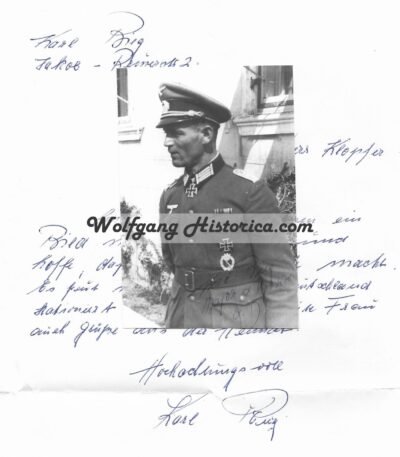
Karl Bieg – Grenadier-Regiment 868
€25,00Original Postwar Signature on a Postwar Photocopy of Karl Bieg. Major Karl Bieg (13.09.1909 † 12.10.1993) earned the Ritterkreuz on September 17, 1943 as Hauptmann und Führer of the II. Bataillon/ Grenadier-Regiment 868 of the 355. Infanterie-Division. Good condition. Measuring: 7,8×11,5cm. Comes with an extra signed letter.
Knight’s Cross: “During the heavy fighting south of Kharkov Hauptmann Bieg managed to repulse the attacks by overwhelmingly vast enemy forces over the course of 15 consecutive major battle days. Despite being painfully wounded he remained with his Grenadiers and stood steadfast alongside them even though they were all being threatened by the Bolsheviks from the sides and rear. In the following days he and his brave unit fought their way through the enemy encirclement ring and occupied new blocking positions to the rear, once again holding these successfully against all the enemy’s furious attacks.”
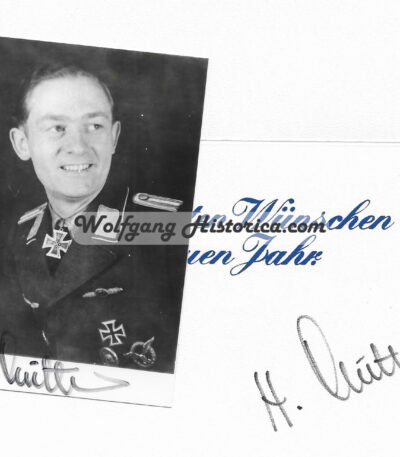
Johannes “Hanns” Lutter – Schnellkampfgeschwader 210
€25,00Original Postwar Signature on a Postwar Photocopy of Johannes “Hanns” Lutter. Hauptmann Johannes “Hanns” Lutter (17.12.1912 † 13.03.2004) earned the Deutsches Kreuz in Gold on August 21, 1942 as Leutnant in the 4. Staffel/ Zerstörergeschwader 1 and the Ritterkreuz on October 5, 1941 as Oberfeldwebel und Flugzeugführer of in the II. Gruppe/ Schnellkampfgeschwader 210 . Good condition. Measuring: 7,1×10,4cm. Comes with an extra signed card.
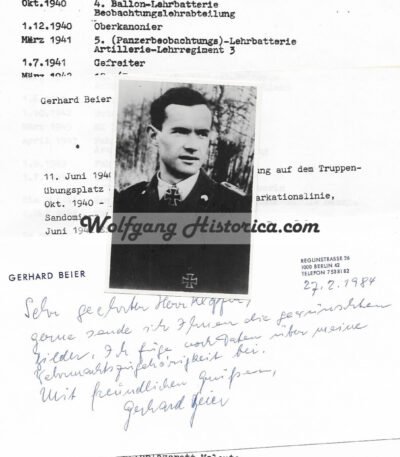
Gerhard Beier – Panzerjäger-Kompanie 1193
€25,00Original Postwar Signature on a Postwar Photo of Gerhard Beier. Leutnant Gerhard Beier (11.12.1919 † 17.11.2005) earned the Ritterkreuz on March 17, 1945 as Leutnant und Führer of the Panzerjäger-Kompanie 1193 of the 93. Infanterie-Division. Good condition. Measuring: 7×10,2cm. Comes with an extra signed letter.
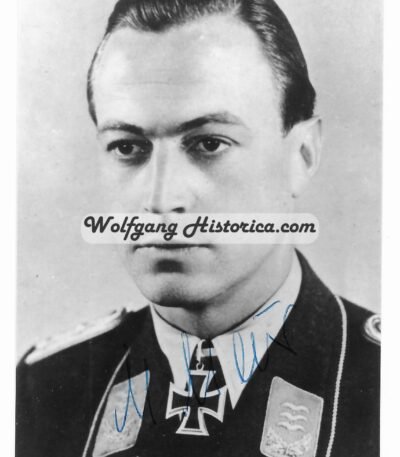
Hellmut Hauser – Kampfgeschwader 51 “Edelweiss”
€25,00Original Postwar Signature on a Postwar Photocopy of Hellmut Hauser. Major Hellmuth Hauser (24.02.1916 † 05.09.2004) earned the Deutsches Kreuz in Gold on September 9, 1942 as Hauptmann of the 5. Staffel/ Kampfgeschwader 51 “Edelweiss” and the Ritterkreuz on December 23, 1942 as Hauptmann und Staffelkapitän of the I. Gruppe/ Kampfgeschwader 51 “Edelweiss”. Good condition. Measuring: 8,9×12,7cm.
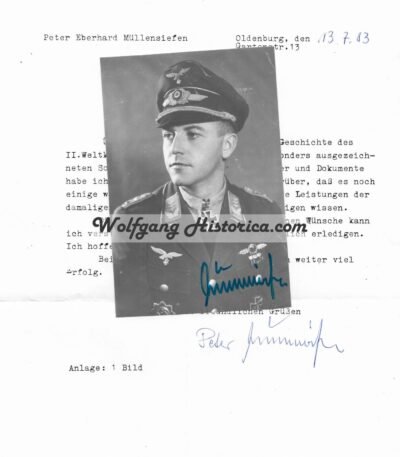
Peter-Eberhard Müllensiefen – Aufklärungsgruppe 31
€25,00Original Postwar Signature on a Postwar Photo of Peter-Eberhard Müllensiefen. Hauptmann Peter-Eberhard Müllensiefen (05.08.1912 † 18.02.2004) earned the Deutsches Kreuz in Gold on April 17, 1943 as Hauptmann in the 4. Staffel/ Aufklärungsgruppe 23 and the Ritterkreuz on October 31, 1944 as Hauptmann und Staffelkapitän of the 1. Staffel/ Aufklärungsgruppe 31. Good condition. Measuring: 8,6×12,8cm. Comes with an extra signed letter.
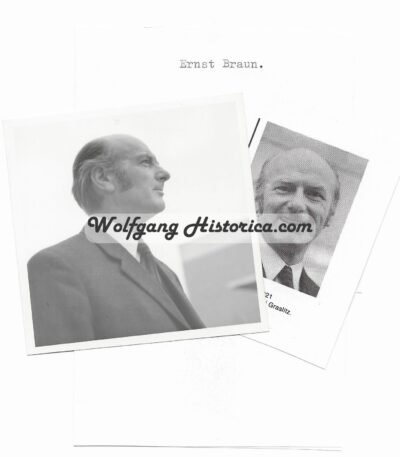
Ernst Braun – SS-Aufklärungs-Abteilung
€25,00Original Postwar Signature on a Original Photo (Postwar) of Ernst Braun. Ernst Braun (26.04.1921 † ) served with a SS-Aufklärungs-Abteilung and also is the author of “Die Verlorene Haufe“. Good condition. Measuring 8x8cm. Signed on the reverse.
Arno Taulien – Panzer-Regiment 6 (3. Panzer-Division)
€25,00Original Postwar Signature on a Postwar Photo of Arno Taulien. Hauptmann Arno Taulien (15.04.1919 † 19.09.1989) earned the Ritterkreuz on October 18, 1943 as Oberleutnant and Chef of the 7. Kompanie/ Panzer-Regiment 6 of the 3. Panzer-Division. Good condition. Measuring: 8×11,5 cm.
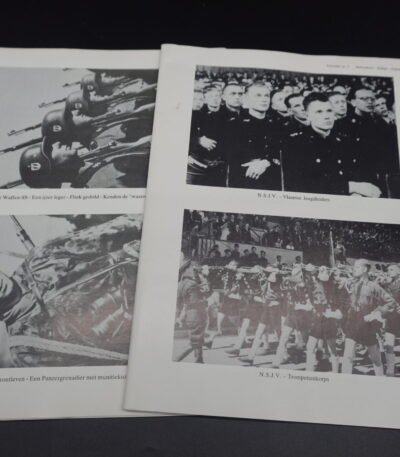
2x Photo Parts of Vlaanderen in Uniform (“Parts to make VIU Part 8”)
€22,50Original 2x Photo Parts of Vlaanderen in Uniform (“Parts to make VIU Part 8”)
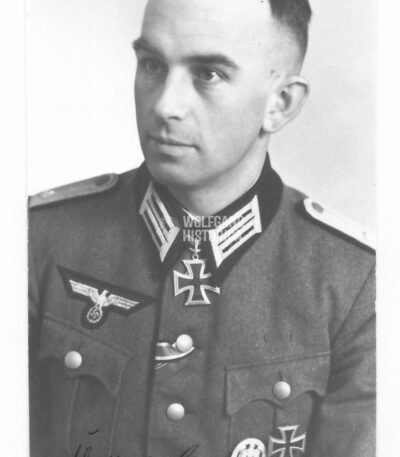
Christoph Duncker – Pionier-Bataillon 58 (58. Infanterie-Division)
€22,50Original Postwar Signature on a Postwar Photo of Christoph Duncker. Major Christoph Duncker (10.12.1914 in Heilbronn am Neckar † 07.06.1998 in Tübingen) earned the Ritterkreuz on November 21, 1942 as Leutnant und Führer of the 2. Kompanie/ Pionier-Bataillon 58 of the 58. Infanterie-Division.
Provenance: This signature comes from one of the largest postwar signature collection I’ve ever commissioned. This collection was started by a Waffen-SS Veteran, Werner H., in the 1950’s until he passed away.
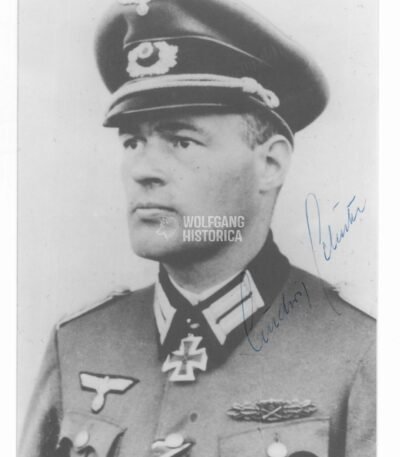
Ludwig Schütte – Divisions-Füsilier-Bataillon 131
€22,50Original Postwar Signature on a Postwar Photo of Ludwig Schütte. Major Ludwig Schütte (23.05.1912 in Bremen † 13.04.1993 in Hamburg) earned the Deutsches Kreuz in Gold on December 26, 1942 with Grenadier-Regiment 432 and the Ritterkreuz on February 23, 1944 as Major und Kommandeur of the Divisions-Füsilier-Bataillon 131 of the 131. Infanterie-Division.
Provenance: This signature comes from one of the largest postwar signature collection I’ve ever commissioned. This collection was started by a Waffen-SS Veteran, Werner H., in the 1950’s until he passed away.
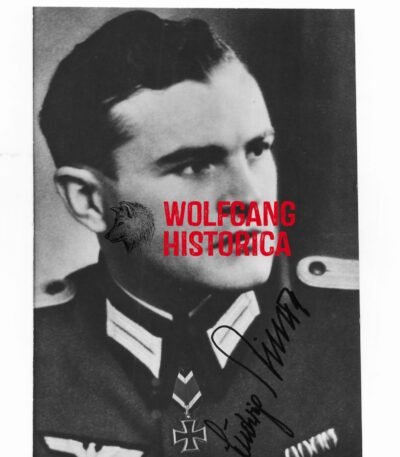
Ludwig Simon – Panzergrenadier-Regiment 35 (15.Pz.Gren.Div.)
€22,50Original Postwar Signature on a Postwar Photo of Ludwig Simon. Leutnant d.R. Ludwig Simon (09.05.1920 † 25.03.2007) earned the Ritterkreuz on March 5, 1945 as Leutnant und Führer of the 2. Kompanie/ Panzergrenadier-Regiment 35 of the 25. Panzergrenadier-Division.
Provenance: This signature comes from one of the largest postwar signature collection I’ve ever commissioned. This collection was started by a Waffen-SS Veteran, Werner H., in the 1950’s until he passed away.
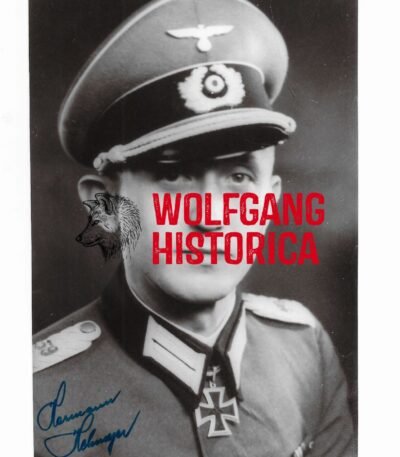
Hermann Hehmeyer – Grenadier-Regiment 216 (86. Infanterie-Division)
€22,50Original Postwar Signature on a Postwar Photo of Hermann Hehmeyer. Hauptmann Hermann Hehmeyer (12.10.1909 † 29.01.1998) earned the Ritterkreuz on December 10, 1942 as Hauptmann und Kommandeur of the III. Bataillon/ Grenadier-Regiment 216 of the 86. Infanterie-Division.
Provenance: This signature comes from one of the largest postwar signature collection I’ve ever commissioned. This collection was started by a Waffen-SS Veteran, Werner H., in the 1950’s until he passed away.
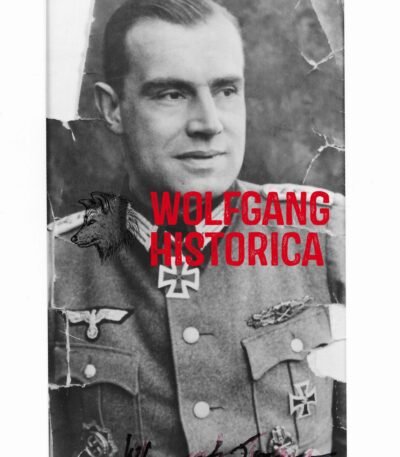
Helmut Köhler – Panzer-Aufklärungs-Abteilung 1
€22,50Original Postwar Signature on a Postwar Photo of Dr.jur. Helmut Köhler. Hauptmann Helmut Köhler (11.03.1912 † 04.06.1994) earned the Ritterkreuz on November 3, 1944 as Hauptmann und Führer of Panzer-Aufklärungs-Abteilung 1 of the 1. Panzer-Division.
Provenance: This signature comes from one of the largest postwar signature collection I’ve ever commissioned. This collection was started by a Waffen-SS Veteran, Werner H., in the 1950’s until he passed away.
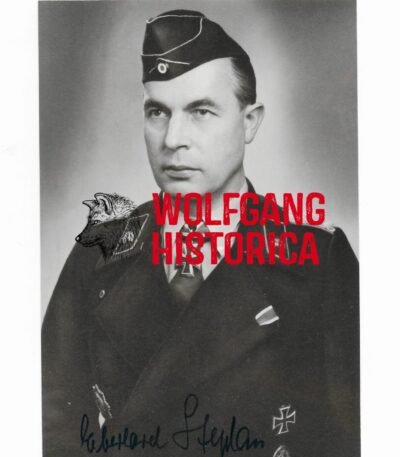
Eberhard Stephan – Panzer-Aufklärungs-Abteilung 116
€22,50Original Postwar Signature of Eberhard Stephan. Major Eberhard Stephan (17.07.1910 † 22.10.2008) earned the Ritterkreuz on January 12, 1945 as Major und Kommandeur of the Panzer-Aufklärungs-Abteilung 116 of the 116. Panzer-Division. Postcardsize.
Provenance: This signature comes from one of the largest postwar signature collection I’ve ever commissioned. This collection was started by a Waffen-SS Veteran, Werner H., in the 1950’s until he passed away.
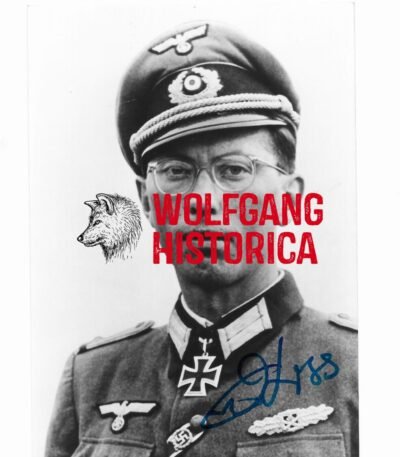
Erhard Liss – Sturm-Regiment 83 (78. Volks-Sturm-Division)
€22,50Original Postwar Signature on a Postwar Photo of Erhard Liss. Hauptmann Erhard Liss (14.10.1921 † 09.02.2002) earned the Ritterkreuz des Eisernen Kreuzes on April 30, 1945 as Hauptmann und Chef of the 5. Kompanie/ Sturm-Regiment 83 of the 78. Volks-Sturm-Division.
Provenance: This signature comes from one of the largest postwar signature collection I’ve ever commissioned. This collection was started by a Waffen-SS Veteran, Werner H., in the 1950’s until he passed away.
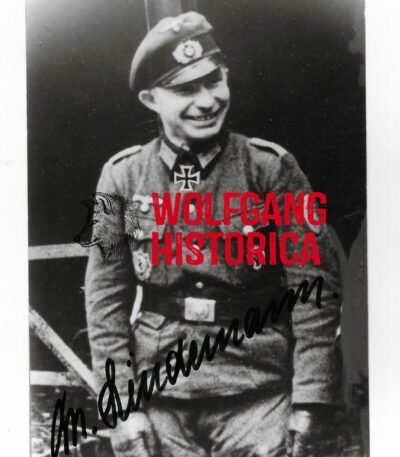
Max Lindemann – Grenadier-Regiment 48 (12. Volksgrenadier-Division)
€22,50Original Postwar Signature on a Postwar Paper Photo of Max Lindemann. Rittmeister Max Lindemann (12.02.1909 † 25.04.1999) earned the Deutsches Kreuz in Gold on March 23, 1944 with Füsilier-Bataillon 12 and the Ritterkreuz on March 11, 1945 as Rittmeister und Führer of I. Bataillon/ Grenadier-Regiment 48 of the 12. Volksgrenadier-Division.
Provenance: This signature comes from one of the largest postwar signature collection I’ve ever commissioned. This collection was started by a Waffen-SS Veteran, Werner H., in the 1950’s until he passed away.
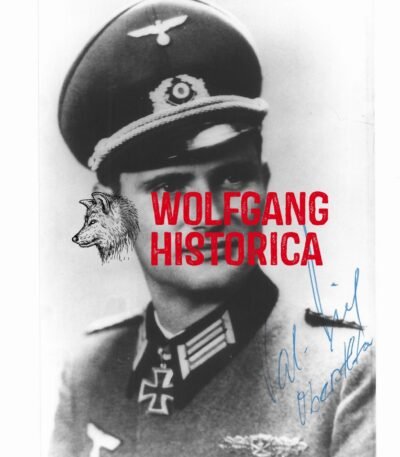
Valentin Dietz – Jäger-Regiment 204 (97. Jäger-Division)
€22,50Original Postwar Signature on a Postwar Photo of Valentin Dietz. Oberstleutnant Valentin Dietz (12.11.1912 † 06.07.1989) earned the Deutsches Kreuz in Gold on October 27, 1942 with 1. Kompanie/ Jäger-Regiment 204 and Ritterkreuz on December 30, 1943 as Hauptmann und Führer of the I. Bataillon/ Jäger-Regiment 204 of the 97. Jäger-Division.
Knigh’s Cross: “On the southern sector of the eastern front the I. and II. Bataillonen of the Jäger-Regiment 204 under Hauptmann Dietz and Hauptmann Widner have achieved outstanding defensive successes in hard combat against a far numerically superior enemy. They did this via their own exemplary conduct.”
Provenance: This signature comes from one of the largest postwar signature collection I’ve ever commissioned. This collection was started by a Waffen-SS Veteran, Werner H., in the 1950’s until he passed away.
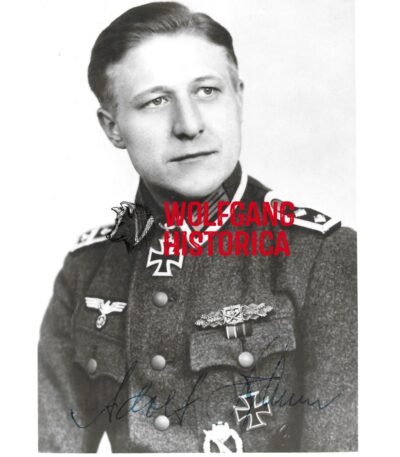
Adolf Baum – Divisions-Füsilier-Bataillon 197 (197. Infanterie-Division)
€22,50Original Postwar Signature on a Postwar Photo of Adolf Baum. Oberfeldwebel Adolf Baum (19.03.1914 † 15.09.2003) earned the Ritterkreuz on March 26, 1944 as Oberfeldwebel und Zugführer of the 1. Kompanie/ Divisions-Füsilier-Bataillon 197 of the 197. Infanterie-Division.
Provenance: This signature comes from one of the largest postwar signature collection I’ve ever commissioned. This collection was started by a Waffen-SS Veteran, Werner H., in the 1950’s until he passed away.
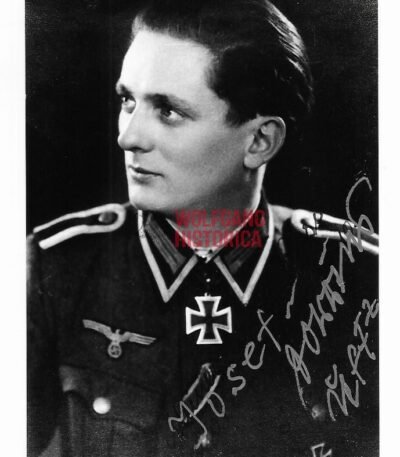
Josef Dörries – Grenadier-Regiment 87 (36.Inf.Div.)
€22,50Original Postwar Signature on a Postwar Photo of Josef Dörries. Unteroffizier Josef Dörries (07.06.1923 † 09.07.2007) earned the Ritterkreuz on April 5, 1944 as Unteroffizier und Gruppenführer of 6. Kompanie/ Grenadier-Regiment 87 of the 36. Infanterie-Division. Good Condition. Measuring: Postcardsize.
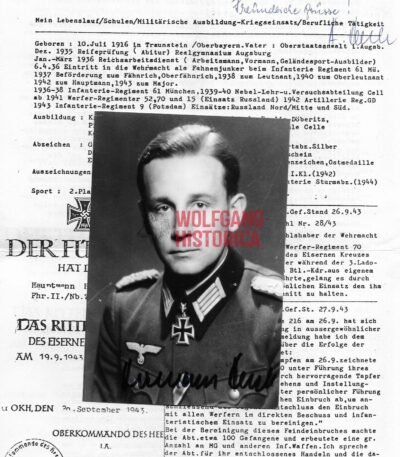
Hermann Henle – Werfer-Regiment 70
€22,50Original Postwar Signature on a Postwar Photo of Hermann Henle. Major Hermann Henle (10.07.1916 † 16.03.2008) earned the Ritterkreuz on September 19, 1943 as Hauptmann und Führer of the II. Abteilung/ Werfer-Regiment 70. Good condition. Postcardsize.
Johannes Schmidt – Panzer-Regiment 27
€22,50Original Postwar Signature of Dipl.-Ing. Johannes Schmidt. Dipl.-Ing. Johannes Schmidt (30.09.1899 † 10.11.1987) earned the Deutsches Kreuz in Gold and Ritterkreuz on October 15, 1942 as Oberstleutnant and Kommandeur of the III. Abteilung/ Panzer-Regiment 27 of the 19. Panzer-Division. Measuring 7,5×11,5 cm.
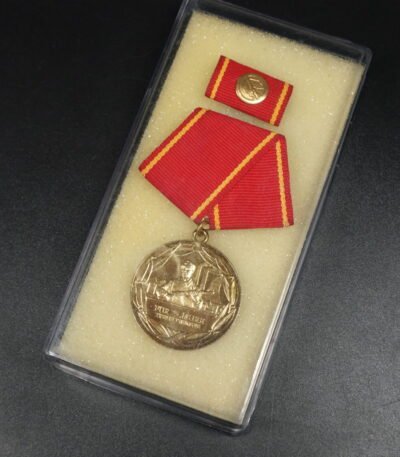
Medal for Faithful Service in the Combat Groups of the Working Class – Gold (20 Years)
€22,00The Medal for Faithful Service in the Combat Groups of the Working Class – Gold (20 Years) is a higher-grade long-service decoration of the German Democratic Republic (DDR), awarded to members of the Kampfgruppen der Arbeiterklasse for two decades of loyal service.
This version is the post-1978 type, distinguished by the gold circular device on the ribbon, indicating the 20-year service level.
Description
-
Country: German Democratic Republic (East Germany)
-
Organization: Kampfgruppen der Arbeiterklasse
-
Class: Gold – 20 Years
-
Period: Post-1978 issue
-
Material: Gold-colored metal
Design:
-
Obverse features DDR state and militia symbolism
-
Reverse bears inscription referring to faithful service (treue Dienste)
-
Standard Kampfgruppen medal design
Ribbon:
-
Red-toned ribbon with distinguishing gold circular device
-
Device signifies 20 years of service
-
Characteristic of later (post-1978) awards
Historical Context
The Kampfgruppen der Arbeiterklasse were a key paramilitary organization composed of civilian workers tasked with protecting industrial and political infrastructure in East Germany.
In 1978, a revised system introduced service indicators on the ribbon, such as the gold circular device for 20 years. This allowed for clearer visual distinction between long-service levels.
The 20-year gold medal reflects long-term dedication, reliability, and loyalty, placing the recipient among the more experienced members of the organization.
A desirable later-issue DDR medal, especially attractive for collectors focusing on variant ribbon devices and long-service awards.
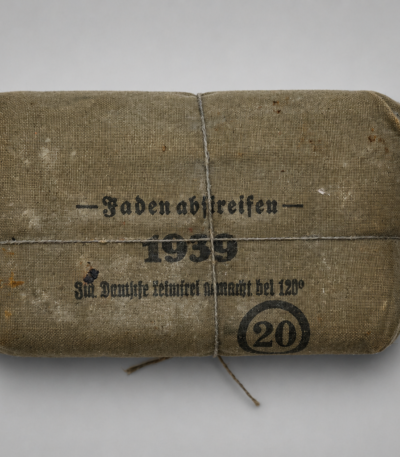
WWII Wehrmacht Verbandpäckchen / First Aid Bandage Pack – 1939 Dated
€20,00Original Second World War German Wehrmacht Verbandpäckchen (field dressing / first aid bandage pack), still retaining its original wartime canvas wrapping and period markings.
This example is clearly 1939 dated, making it an early-war production piece. The exterior retains several visible manufacturer and medical acceptance markings, including:
- “1939” date stamp
- Size marking “20”
- Maker-marked example, produced by Hartmann & Co., Ges. m. b. H., Wien.
- Period German medical supply markings
- Original wartime wrapping cord still present
The package remains unopened and untouched, preserving its original field-issued appearance. Interestingly, traces of what appear to be old blood staining are visible on the exterior wrapping, adding to the authentic battlefield-used character of the piece.
Condition shows honest wartime age, storage wear, staining, and handling exactly as photographed. An untouched and authentic early-war example with excellent display character.
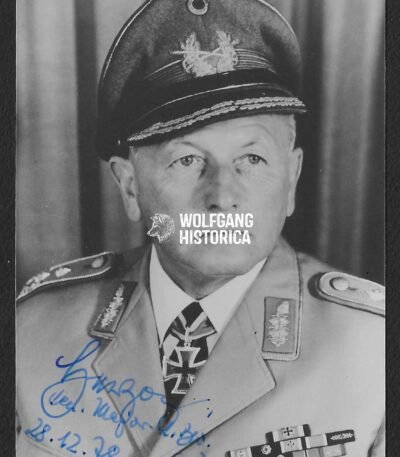
Karl Herzog – Heeres-Sturm-Pionier-Brigade 627
€20,00Original Postwar Signature on a Postwar Photo of Karl Herzog. Oberstleutnant Karl Herzog (06.07.1906 in Nuremberg † 25.01.1998 in Münich) earned the Ritterkreuz des Eisernen Kreuzes on April 17, 1945 as Oberstleutnant und Kommandeur of the Heeres-Sturm-Pionier-Brigade 627.
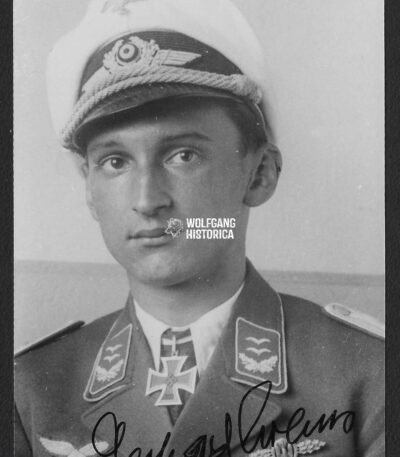
Gerhard Krems – Kampfgeschwader 27 “Boelcke”
€20,00Original Postwar Signature on a Postwar Photo of Gerhard Krems. Oberleutnant Gerhard Krems (04.05.1920 in Dresden † 12.02.2017 in Berlin) earned the Ritterkreuz des Eisernen Kreuzes on May 25, 1942 as Oberleutnant und Flugzeugführer in the 2. Staffel/ Kampfgeschwader 27 “Boelcke”. Condition as seen. Postcardsize.
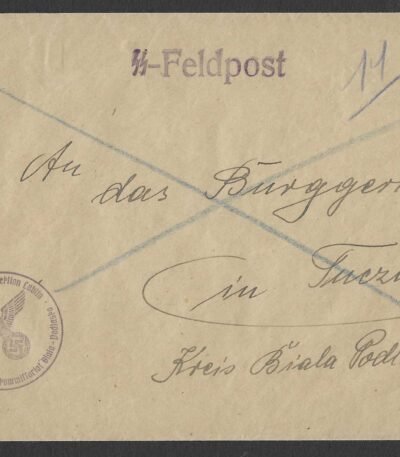
Feldpost cover of the Sicherheitspolizei-Kriminaldirektion Lublin
€20,00Original Feldpost cover of the Sicherheitspolizei-Kriminaldirektion Lublin. Empty. Condition as seen.
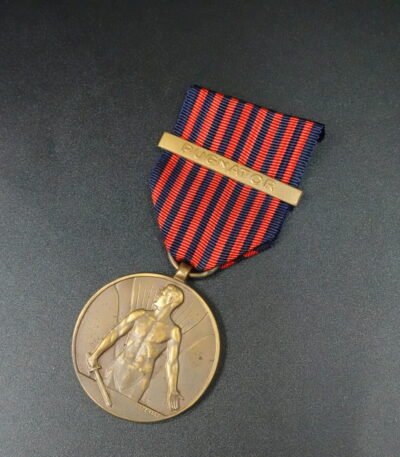
Belgian War Volunteer Combatant Medal 1940–1945 (Medaille v.d. Strijdende Oorlogsvrijwilliger)
€20,00Original Belgian War Volunteer Combatant Medal (Médaille du Volontaire de Guerre Combattant / Medaille van strijdende Oorlogsvrijwilliger) with “Pugnator” Clasp.
A highly collectible Belgian WWII medal, especially valued for its “Pugnator” combat distinction, making it more desirable among volunteer service decorations.
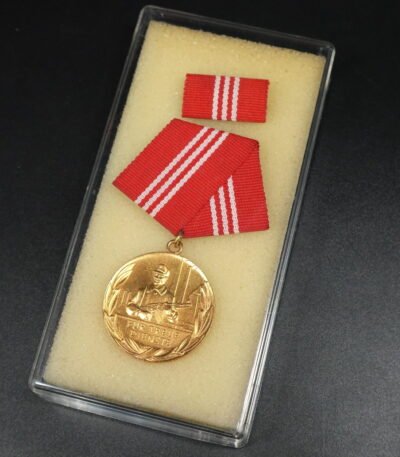
DDR Medal for Faithful Service in the Combat Groups of the Working Class – Gold
€20,00The Medal for Faithful Service in the Combat Groups of the Working Class – Gold is the highest class of this DDR long-service decoration, awarded to members of the Kampfgruppen der Arbeiterklasse, the paramilitary workers’ militia of East Germany.
This gold class medal recognizes long-term dedication, loyalty, and exemplary service, representing the top tier within the Kampfgruppen long-service award system.
Description
-
Country: German Democratic Republic (East Germany)
-
Organization: Kampfgruppen der Arbeiterklasse (Combat Groups of the Working Class)
-
Class: Gold
-
Type: Long Service Award
Design:
-
Obverse typically features DDR state and militia symbolism
-
Reverse bears inscription referring to faithful service (treue Dienste)
-
Identical design across all classes, distinguished by gold finish
Historical Context
The Kampfgruppen der Arbeiterklasse were an important paramilitary force composed of civilian workers, responsible for protecting key industries and supporting internal security during the Cold War.
The gold class medal was awarded to members who completed extended and exemplary service, demonstrating exceptional commitment and reliability within the organization.
Condition: As seen in the images.
A top-tier DDR decoration, highly desirable for collectors of East German militaria and Cold War history.
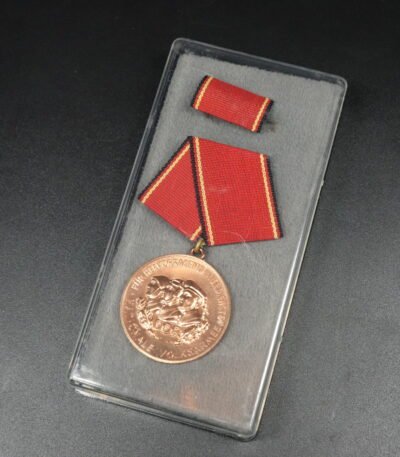
DDR Merit Medal of the National People’s Army – Bronze
€20,00The Merit Medal of the National People’s Army – Bronze is an official decoration of the German Democratic Republic (DDR), awarded to members of the National People’s Army (NVA) for meritorious service and notable achievements.
This bronze class medal represents the entry level within the merit award system, recognizing dedication, performance, and contribution to military duties.
Design & Details
Obverse:
-
Profiles of three servicemen: a soldier, airman, and sailor, symbolizing the land, air, and naval forces
-
Inscription: “FÜR HERVORRAGENDE VERDIENSTE” (For Outstanding Merit)
-
Lower inscription: “NATIONALE VOLKSARMEE”
-
“DDR” beneath the figures
-
Flanked by oak leaves with acorns, symbolizing strength and endurance
Reverse:
-
State coat of arms of the DDR
-
Inscription:
“FÜR DEN SCHUTZ DER ARBEITER- UND-BAUERN-MACHT”
(For the protection of the workers’ and farmers’ power) -
Surrounded by a laurel wreath, representing honor and achievement
Historical Context
The National People’s Army (NVA) was the armed force of East Germany, playing a central role in the Warsaw Pact during the Cold War.
The bronze class medal was awarded to soldiers and personnel who demonstrated commendable service, discipline, and reliability, forming the foundation of the NVA merit award hierarchy (Bronze, Silver, Gold).
Condition: As seen in the images.
A solid and historically relevant DDR military decoration, ideal for collectors of NVA and Cold War memorabilia.
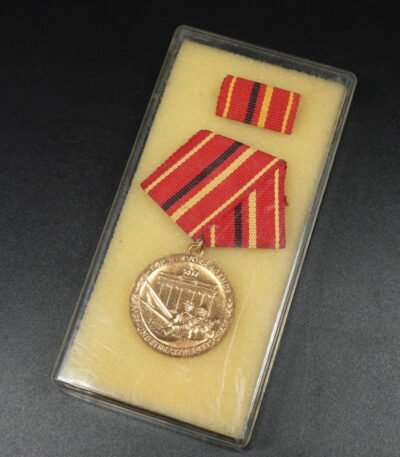
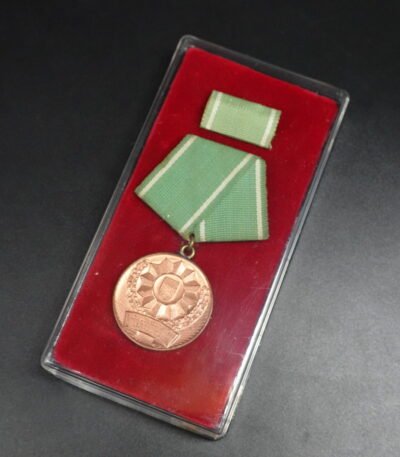
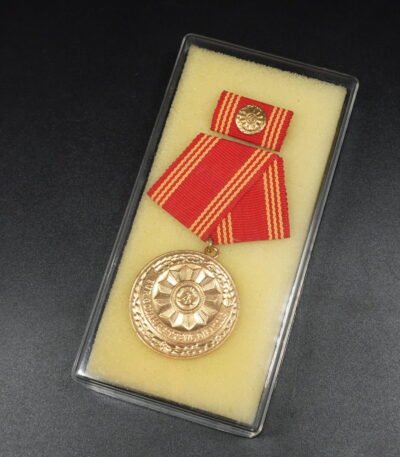
DDR Merit Medal of the Combat Groups of the Working Class – Gold
€20,00Note: It is possible you will receive a different backing in the casing, since this is a general stock image I took of the medal but sometimes the backing may vary.
DDR Medal for Faithful Service in the Armed Organs of the Ministry of the Interior (30 Years)
€20,00The Medal for Faithful Service in the Armed Organs of the Ministry of the Interior (MdI) – 30 Years is one of the highest long-service decorations awarded in the German Democratic Republic (DDR).
It was granted to members of the armed organs of the Ministry of the Interior in recognition of an exceptional 30 years of loyal and dedicated service, reflecting a full career within East Germany’s internal security system.
Description
-
Country: German Democratic Republic (East Germany)
-
Institution: Ministry of the Interior (Ministerium des Innern – MdI)
-
Class: 30 Years (XXX)
-
Material: Gold-colored metal
Design:
-
Obverse typically features the national emblem of the DDR
-
Reverse bears inscription for faithful service
-
Commonly includes a “30” clasp or device on the ribbon indicating years of service
Ribbon:
- Often fitted with a numeral device (30)
Historical Context
The armed organs of the MdI included key institutions such as the Volkspolizei and other internal security forces responsible for maintaining order and enforcing state authority during the Cold War.
The 30-year medal represents one of the highest possible service recognitions, awarded only to personnel who completed decades of continuous service, demonstrating exceptional loyalty, discipline, and commitment to the state.
Condition: As seen in the images.
A top-tier DDR decoration, highly desirable for advanced collectors of East German militaria and Ministry of the Interior awards.