Belgian M1935 Officer’s Tunic – 12e Linieregiment (Infantry)

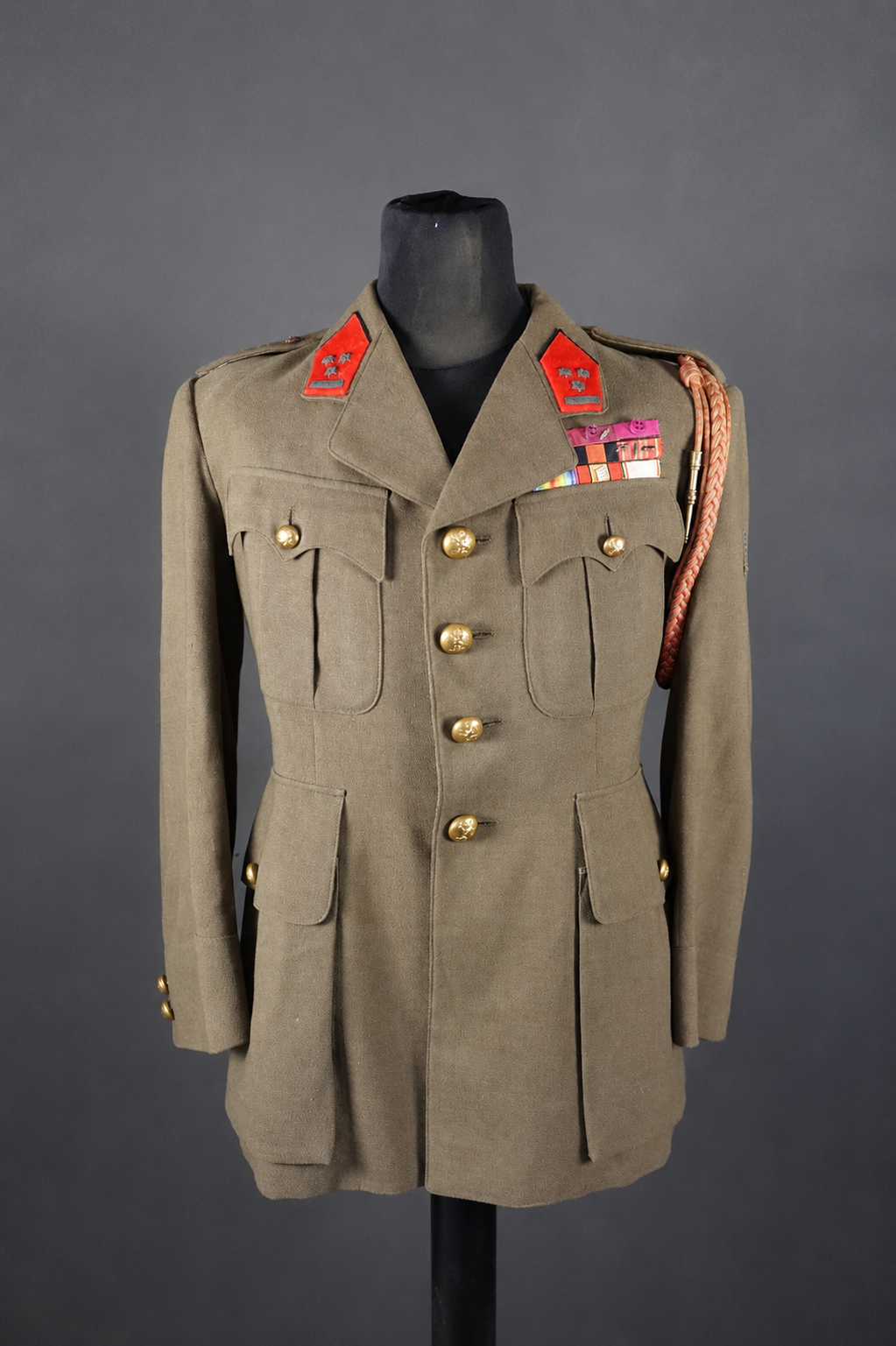
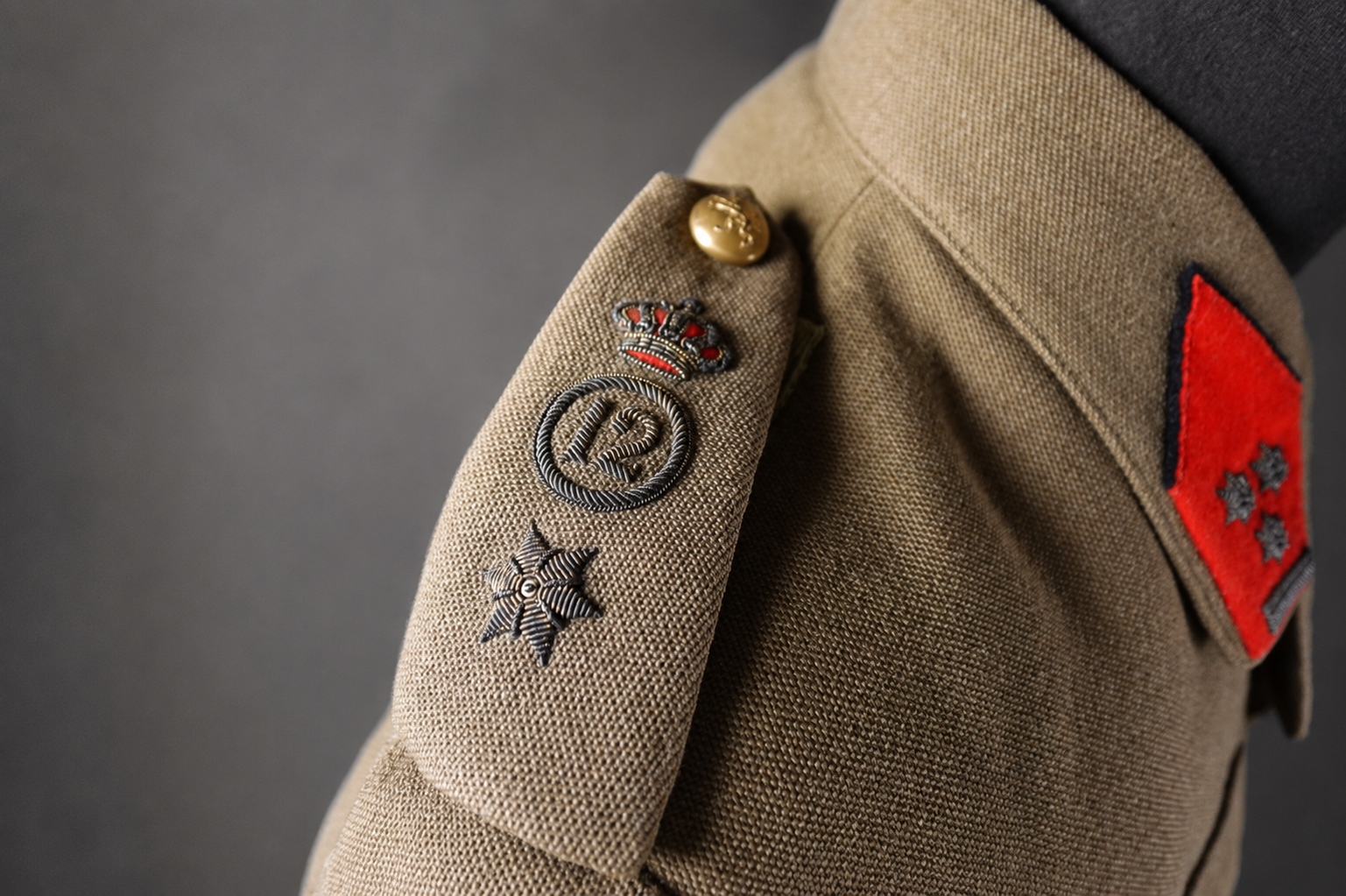
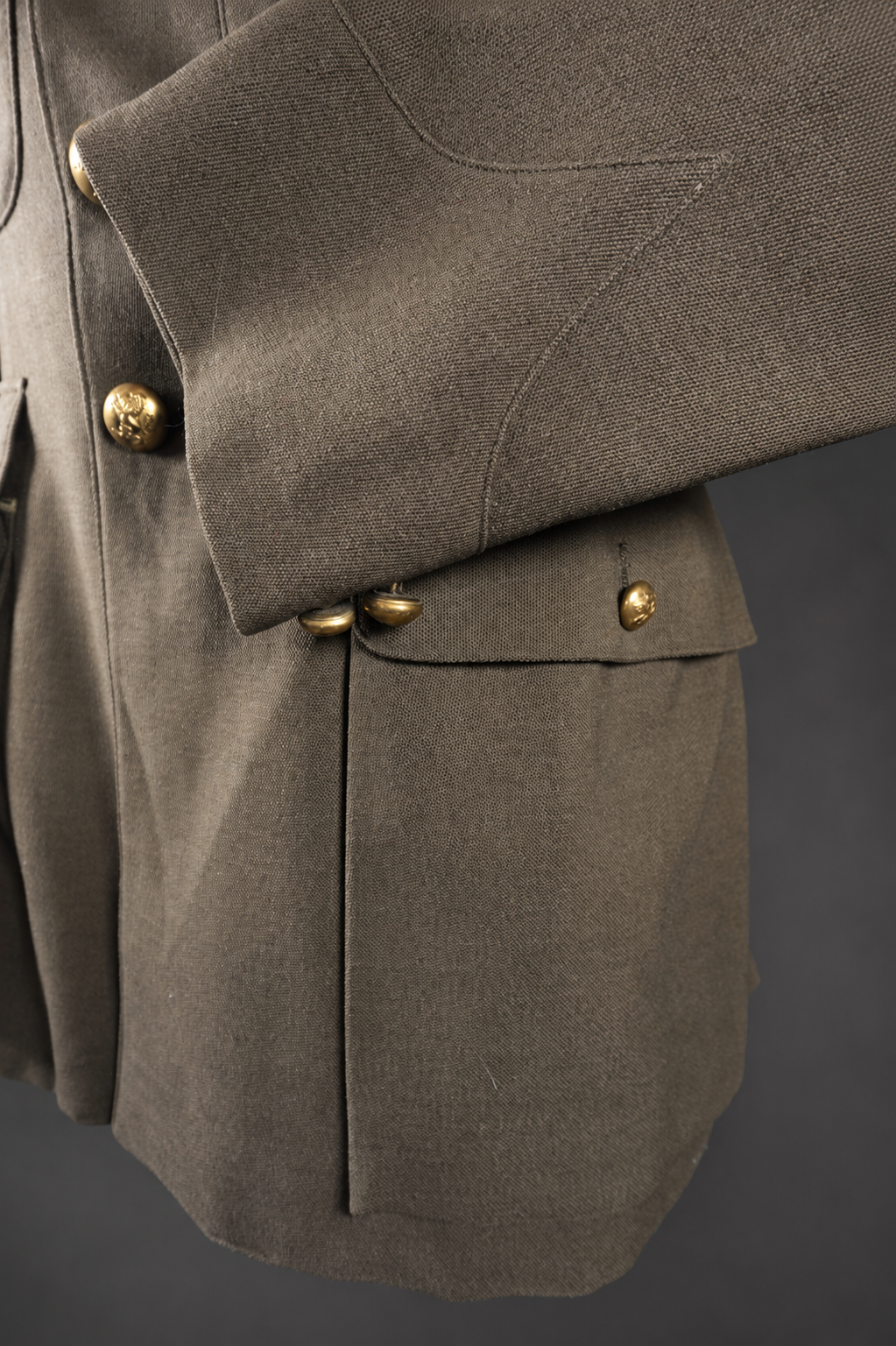
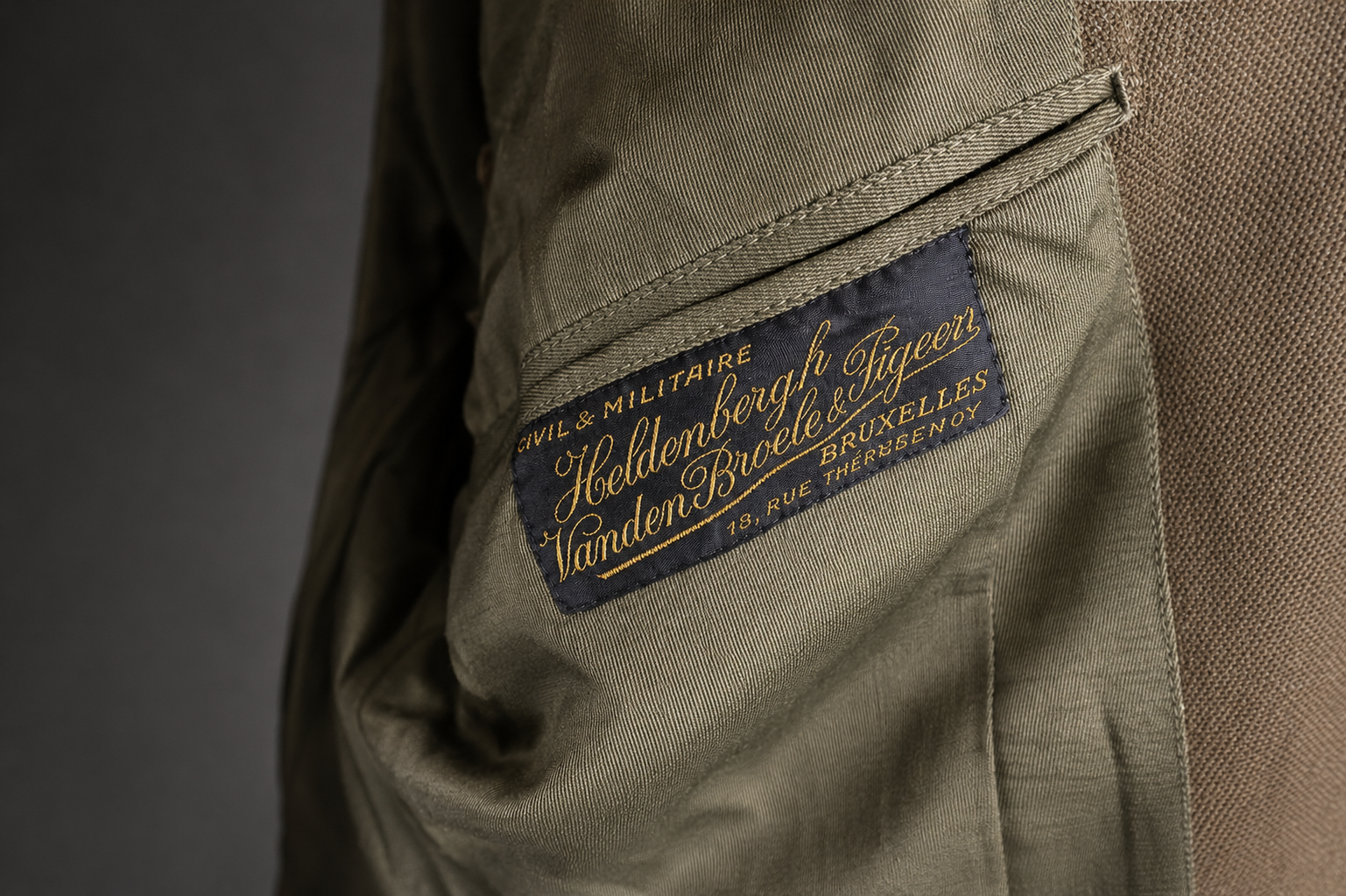
Interesting and research-worthy Belgian Model 1935 officer’s tunic, fitted with shoulder boards of the 12th Line Regiment (12e Linieregiment). The tunic displays a remarkable combination of pre-war, wartime, and post-war elements, illustrating the continued use and adaptation of Belgian military uniforms throughout and after the Second World War.

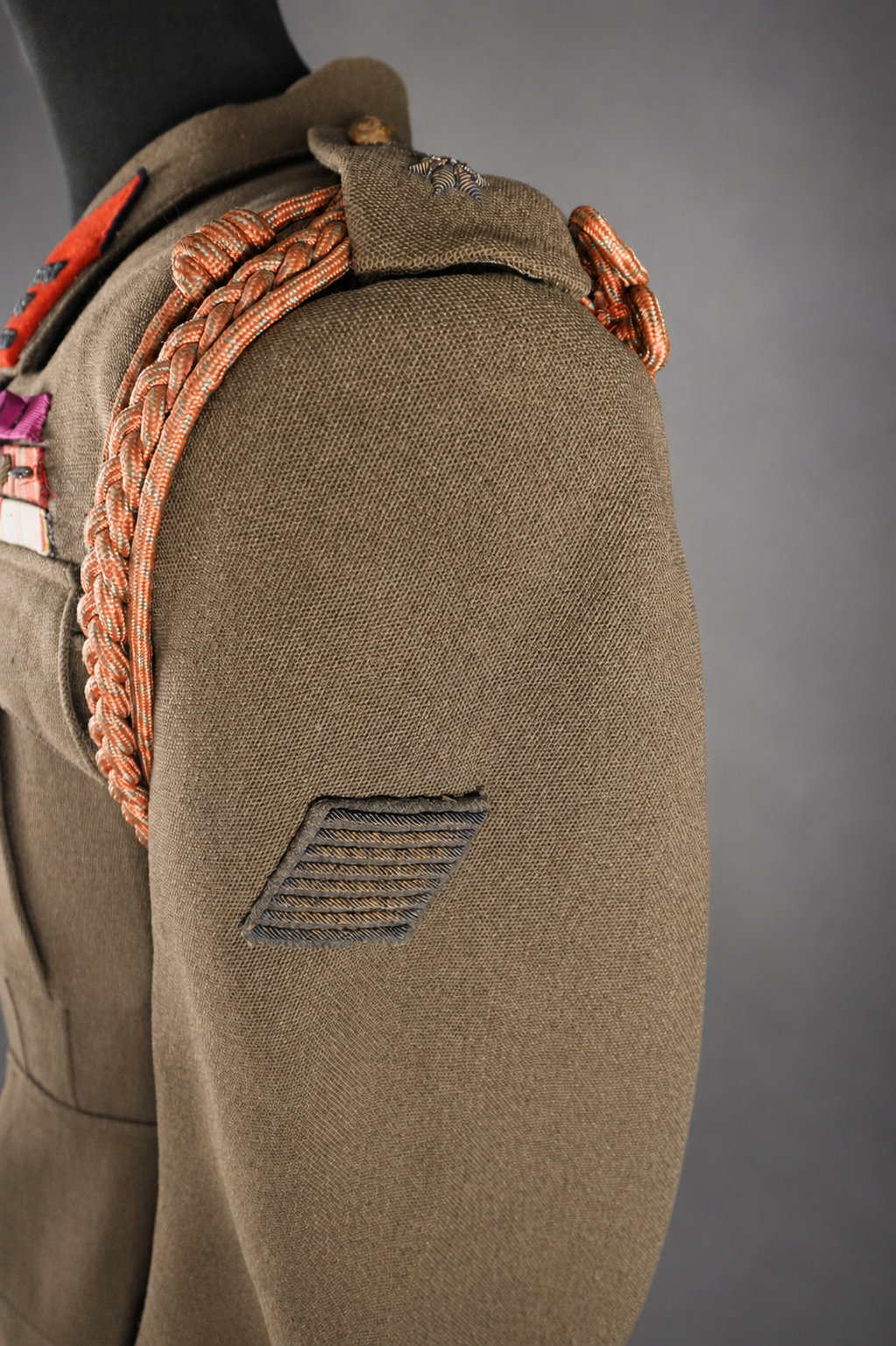
Most striking are the eight gold front stripes on the lower sleeve, indicating four years of frontline service during the First World War. Such a distinction would only have been awarded to a veteran with extensive active front service between 1914–1918.

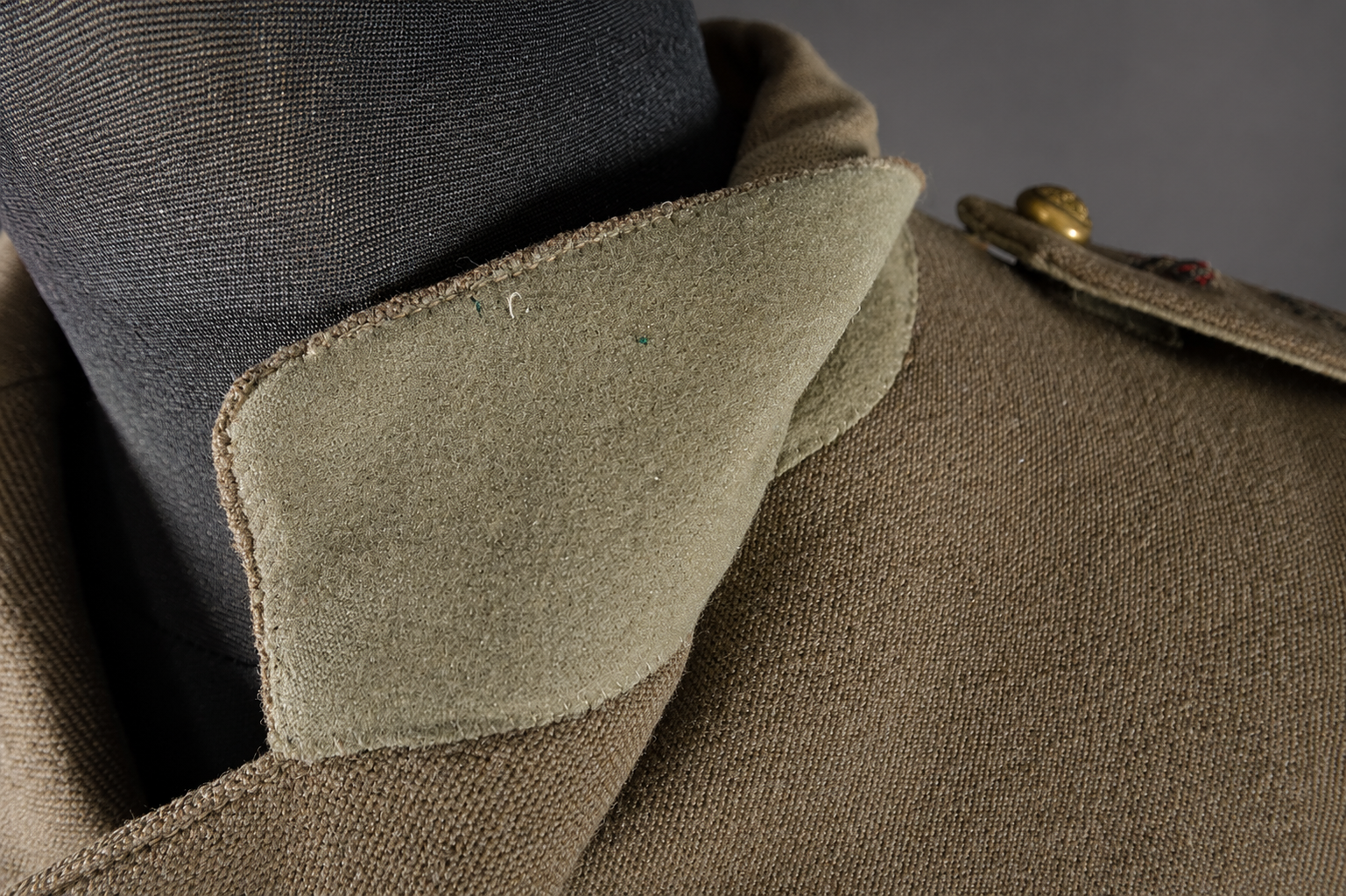
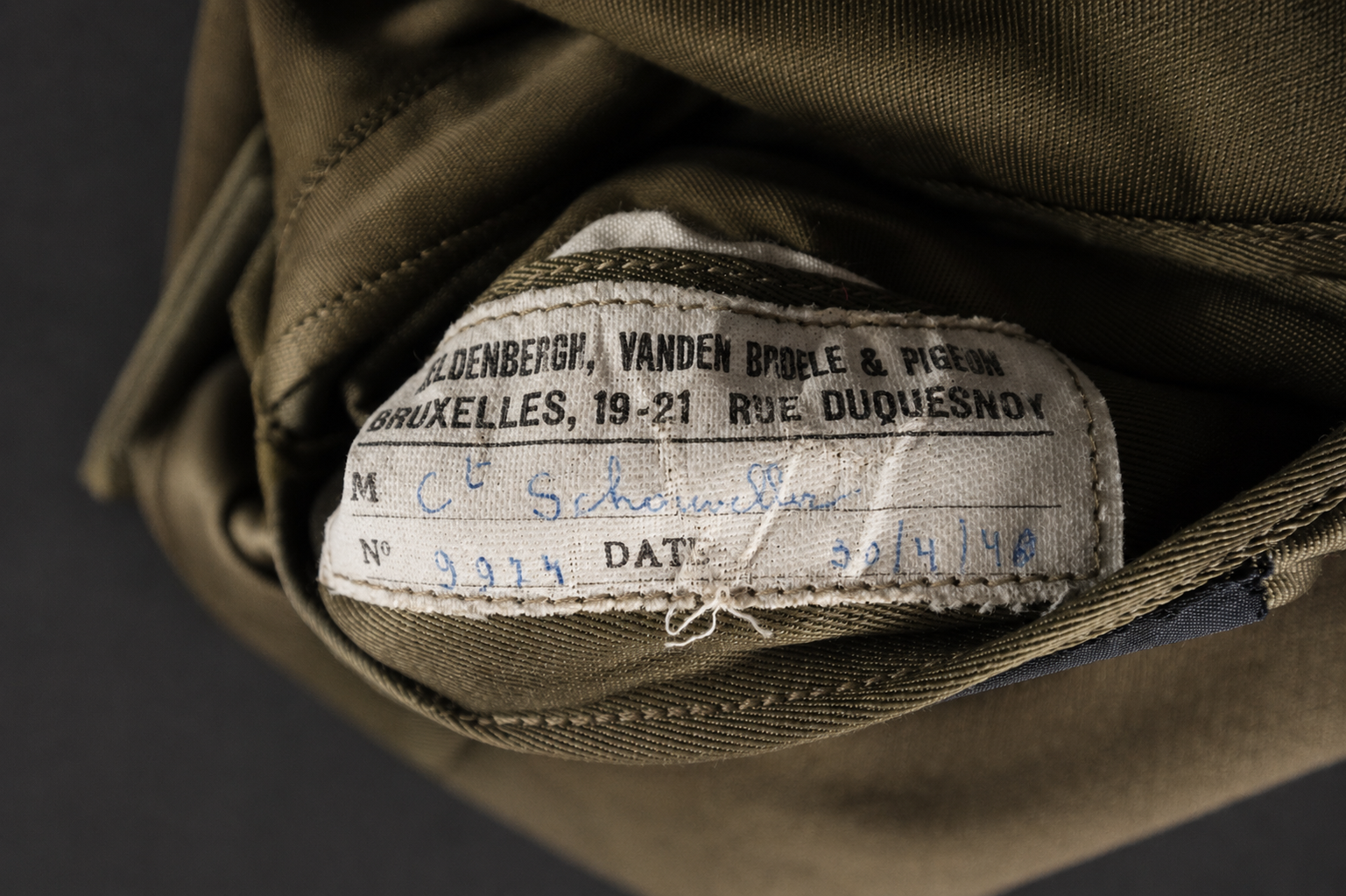
Inside the tunic is a name label dated 1940, reading — as far as currently decipherable — “Schouveller.” Research in Belgian military annuaries reveals a likely candidate: Schouveller R.V.J., Infantryman, born 15 October 1901.

This immediately creates a historical inconsistency, as an individual born in 1901 could not realistically have accumulated four years of effective frontline service during the First World War, and therefore would not qualify for eight front stripes. Furthermore, Schouveller appears associated with the Chasseurs Ardennais (Ardense Jagers) in period records.

Several plausible explanations exist:

  • The tunic may originally have belonged to Schouveller and later reused by an older First World War veteran during or after 1940.
  • The uniform could have been privately acquired or reused following mobilization, demobilization, or captivity circumstances.
  • The handwritten name may have been misread, requiring further archival comparison with similar surnames.

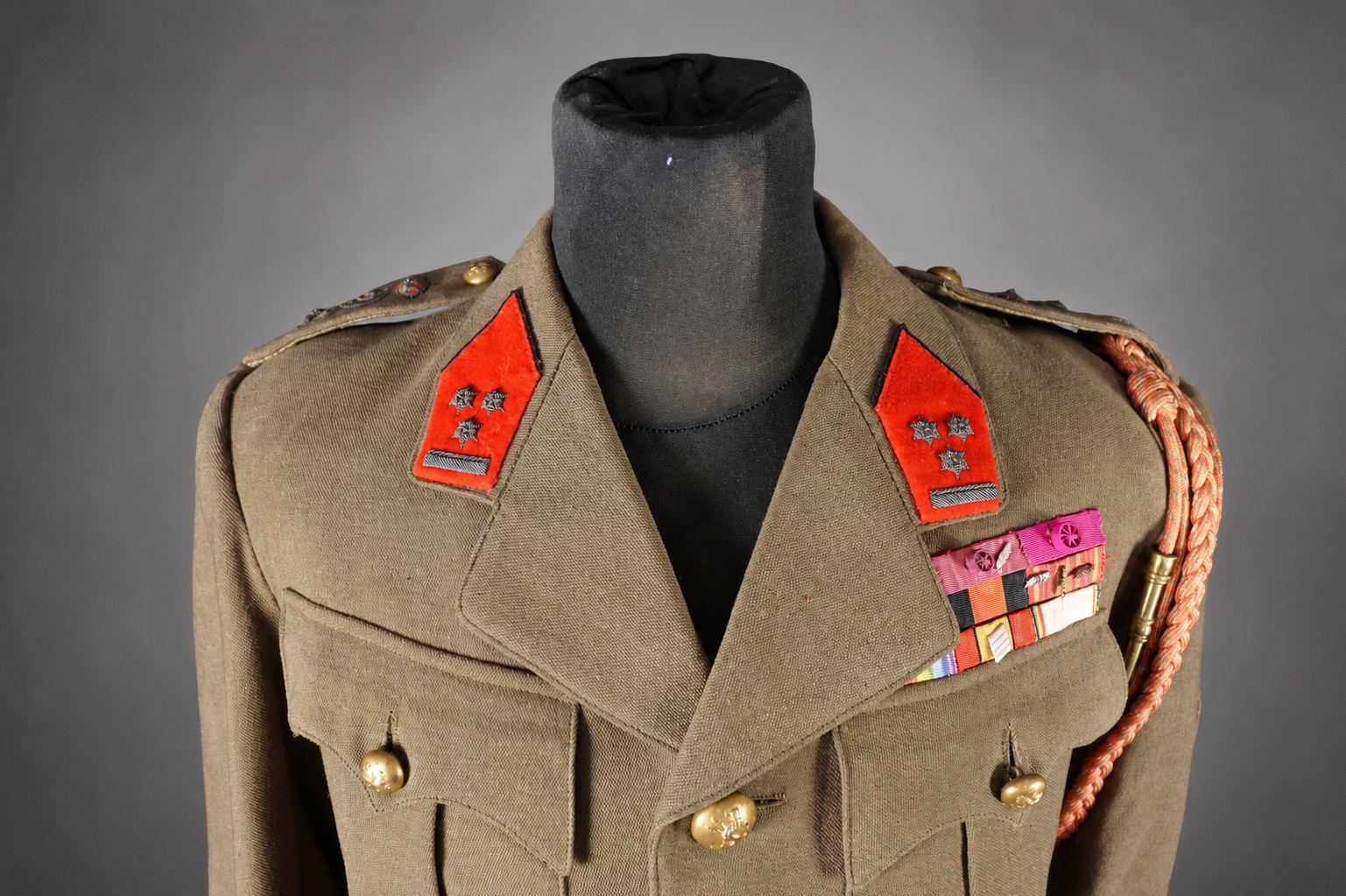
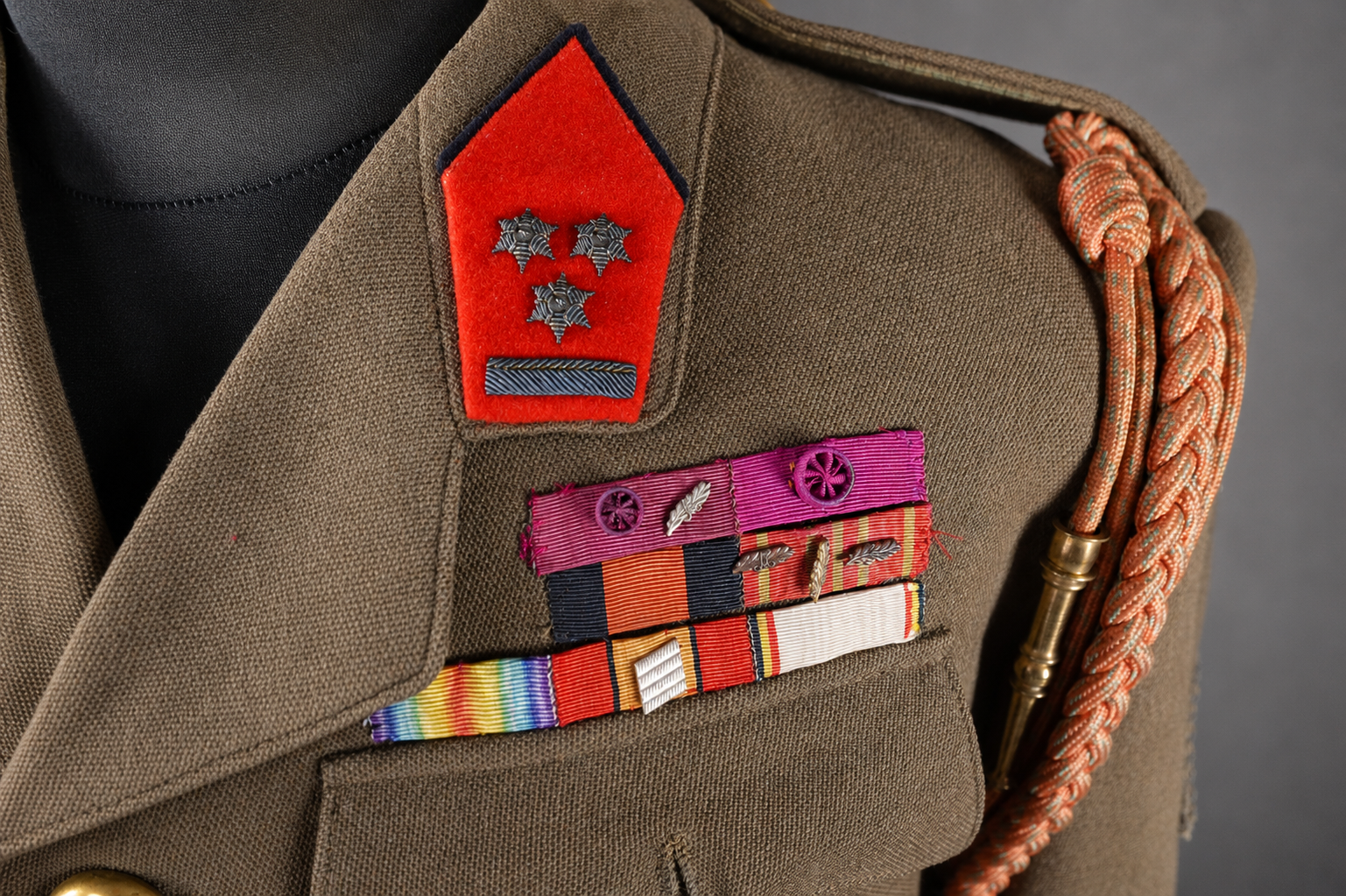
The tunic is decorated with numerous award ribbons connected to both World Wars, including:

  • Leopold Order with Palm
  • Fire Cross (Vuurkruis)
  • War Cross with Palms
  • Victory Medal
  • Iron Medal with four stripes
  • Belgian Centenary of National Independence Medal 1830–1930

The uniform is additionally fitted with the Fourragère / Vuurkoord, further enhancing its visual and historical appeal.

Rank insignia indicate Captain-Commandant, though these are clearly early post-war additions — entirely consistent with Belgian military practice, as pre-war uniforms were frequently reused and updated after 1945. The shoulder boards themselves also appear to be early post-war manufacture.

An especially interesting aspect is the historical connection between the 12th Line Regiment and the Chasseurs Ardennais, strengthening the possibility that the tunic reflects a transitional or reused service garment rather than a straightforward single-period issue.

Overall, this is a highly attractive and historically layered Belgian officer’s tunic with excellent research potential, illustrating the complex continuity between First World War veterans, the 1940 campaign, and post-war Belgian military service.

450,00

In stock

In stock

Product total
Options total
Grand total
SKU: 252263

Details

ConflictWorld War I, World War II
CountryBelgium

Statement

Wolfgang Historica is a trusted seller with years of experience and consistently positive reviews. We are always interested in purchasing collections or unique objects and also offer a professional consignment service. Buy with confidence.

Historical Description

Interesting and research-worthy Belgian Model 1935 officer’s tunic, fitted with shoulder boards of the 12th Line Regiment (12e Linieregiment). The tunic displays a remarkable combination of pre-war, wartime, and post-war elements, illustrating the continued use and adaptation of Belgian military uniforms throughout and after the Second World War.

Most striking are the eight gold front stripes on the lower sleeve, indicating four years of frontline service during the First World War. Such a distinction would only have been awarded to a veteran with extensive active front service between 1914–1918.

Inside the tunic is a name label dated 1940, reading — as far as currently decipherable — “Schouveller.” Research in Belgian military annuaries reveals a likely candidate: Schouveller R.V.J., Infantryman, born 15 October 1901.

This immediately creates a historical inconsistency, as an individual born in 1901 could not realistically have accumulated four years of effective frontline service during the First World War, and therefore would not qualify for eight front stripes. Furthermore, Schouveller appears associated with the Chasseurs Ardennais (Ardense Jagers) in period records.

Several plausible explanations exist:

  • The tunic may originally have belonged to Schouveller and later reused by an older First World War veteran during or after 1940.
  • The uniform could have been privately acquired or reused following mobilization, demobilization, or captivity circumstances.
  • The handwritten name may have been misread, requiring further archival comparison with similar surnames.

The tunic is decorated with numerous award ribbons connected to both World Wars, including:

  • Leopold Order with Palm
  • Fire Cross (Vuurkruis)
  • War Cross with Palms
  • Victory Medal
  • Iron Medal with four stripes
  • Belgian Centenary of National Independence Medal 1830–1930

The uniform is additionally fitted with the Fourragère / Vuurkoord, further enhancing its visual and historical appeal.

Rank insignia indicate Captain-Commandant, though these are clearly early post-war additions — entirely consistent with Belgian military practice, as pre-war uniforms were frequently reused and updated after 1945. The shoulder boards themselves also appear to be early post-war manufacture.

An especially interesting aspect is the historical connection between the 12th Line Regiment and the Chasseurs Ardennais, strengthening the possibility that the tunic reflects a transitional or reused service garment rather than a straightforward single-period issue.

Overall, this is a highly attractive and historically layered Belgian officer’s tunic with excellent research potential, illustrating the complex continuity between First World War veterans, the 1940 campaign, and post-war Belgian military service.