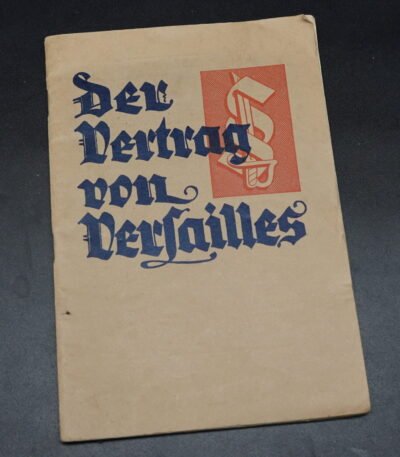
Flemish HJ-Vlaanderen “Germaansche Jeugd” Booklet – WWII Collaboration Youth Publication

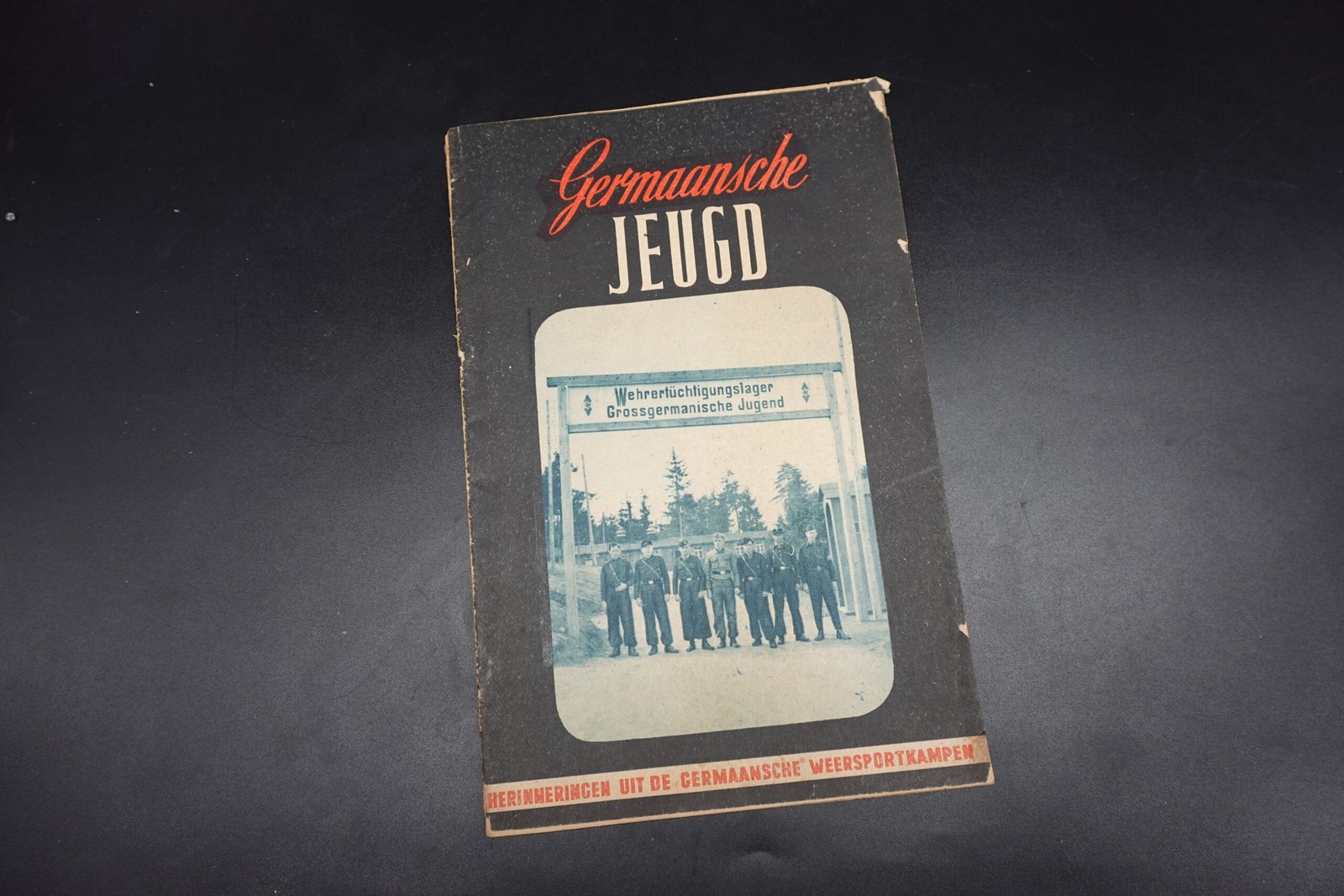
Original Flemish collaboration-era booklet titled “Germaansche Jeugd”, associated with the Hitlerjugend Vlaanderen (HJ-Vlaanderen).

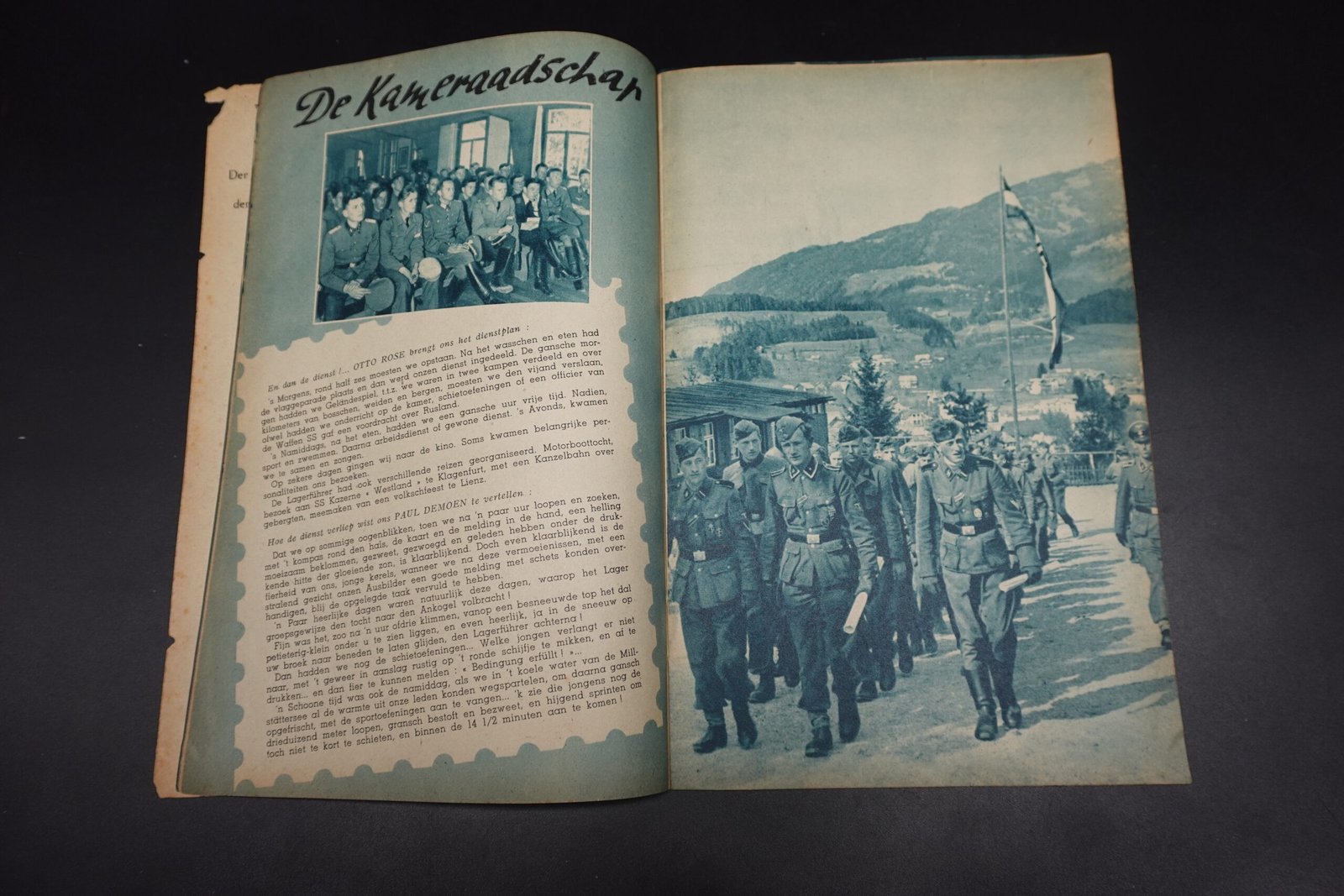
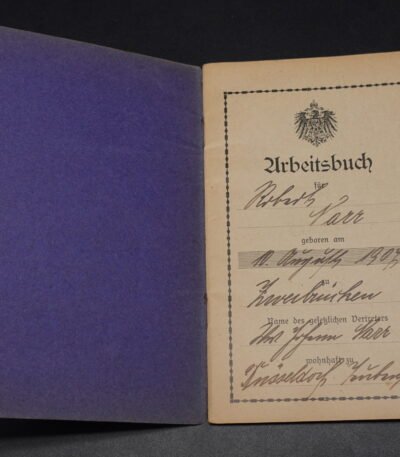
Softcover booklet. Complete example; however, the front and rear covers are loose. Overall condition shows typical wear consistent with wartime paper items (please refer to images).

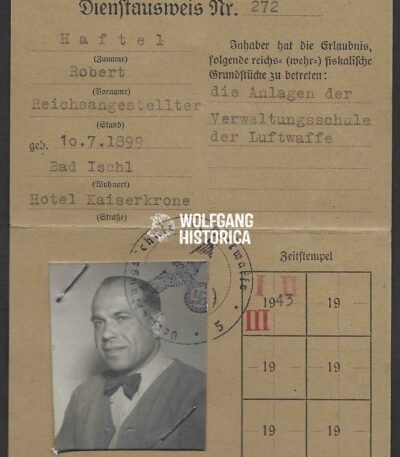
Notably, the photographed page includes an image of Tony Van Dyck, identifiable as the first Waffen-SS officer pictured on the left.

A scarce and desirable piece of Flemish WWII collaboration material, of particular interest to collectors of youth organizations, Waffen-SS-related history, and occupation-era printed ephemera.

75,00

In stock

In stock

Product total
Options total
Grand total
SKU: VC000024

Details

ClassificationFlemish Collaboration
ConflictWorld War II
CountryBelgium

Statement

Wolfgang Historica is a trusted seller with years of experience and consistently positive reviews. We are always interested in purchasing collections or unique objects and also offer a professional consignment service. Buy with confidence.

Historical Description

During the German occupation of Belgium following the German invasion of Belgium, youth movements were reorganized along ideological lines aligned with Nazi Germany. In Flanders, the Hitlerjugend Vlaanderen functioned as the local counterpart to the German Hitlerjugend, aiming to indoctrinate and mobilize young people within a National Socialist framework.

Publications such as “Germaansche Jeugd” were part of this effort, promoting concepts of shared “Germanic” identity, discipline, and loyalty to the broader ideological goals of the movement. These booklets often combined imagery, profiles, and messaging designed to present role models and encourage participation, including references to Flemish volunteers serving in German formations such as the Waffen-SS.

Today, surviving examples provide insight into the mechanisms of youth indoctrination and propaganda in occupied Europe, as well as the ways in which local collaborationist structures adapted and promoted Nazi ideology among younger generations.