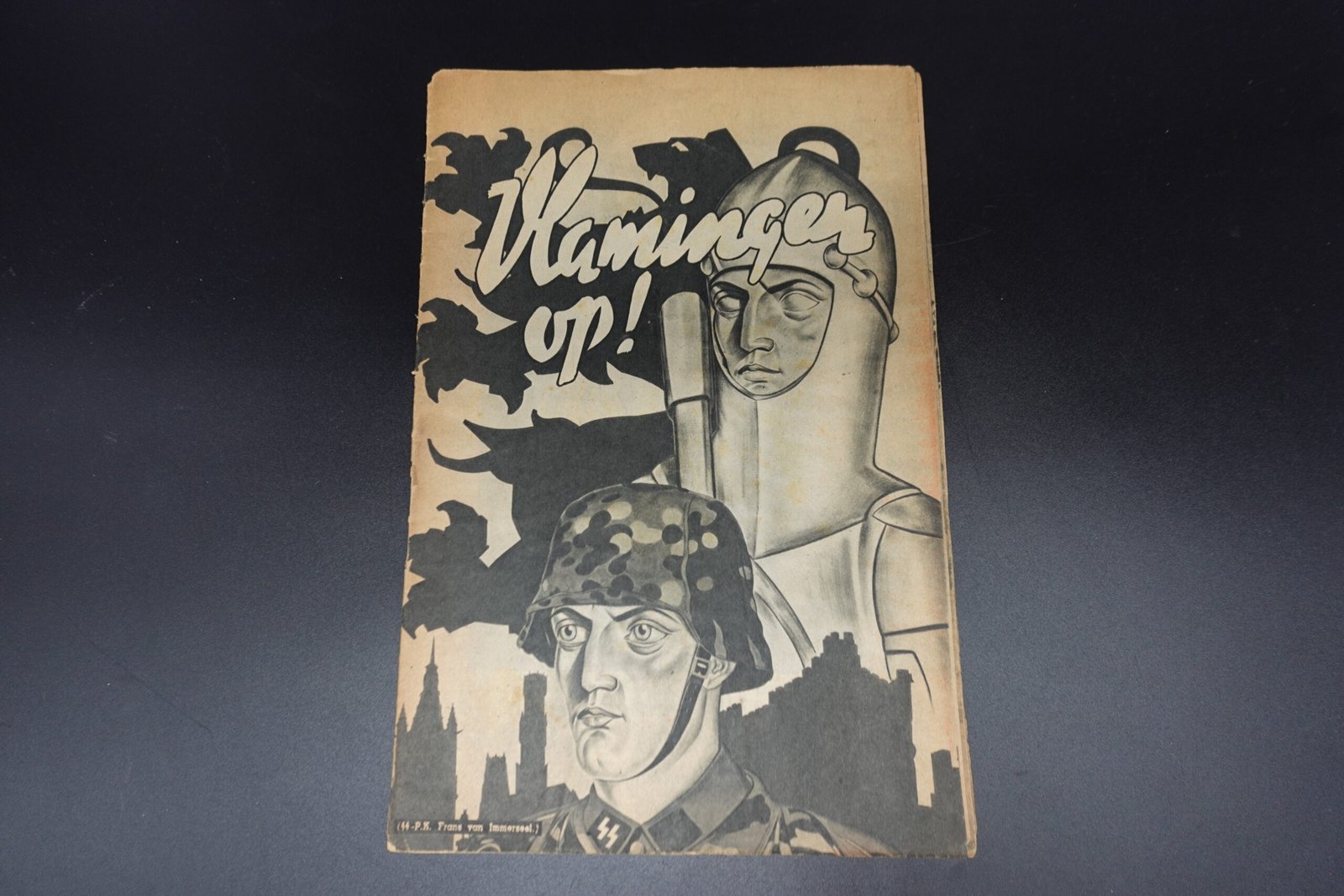
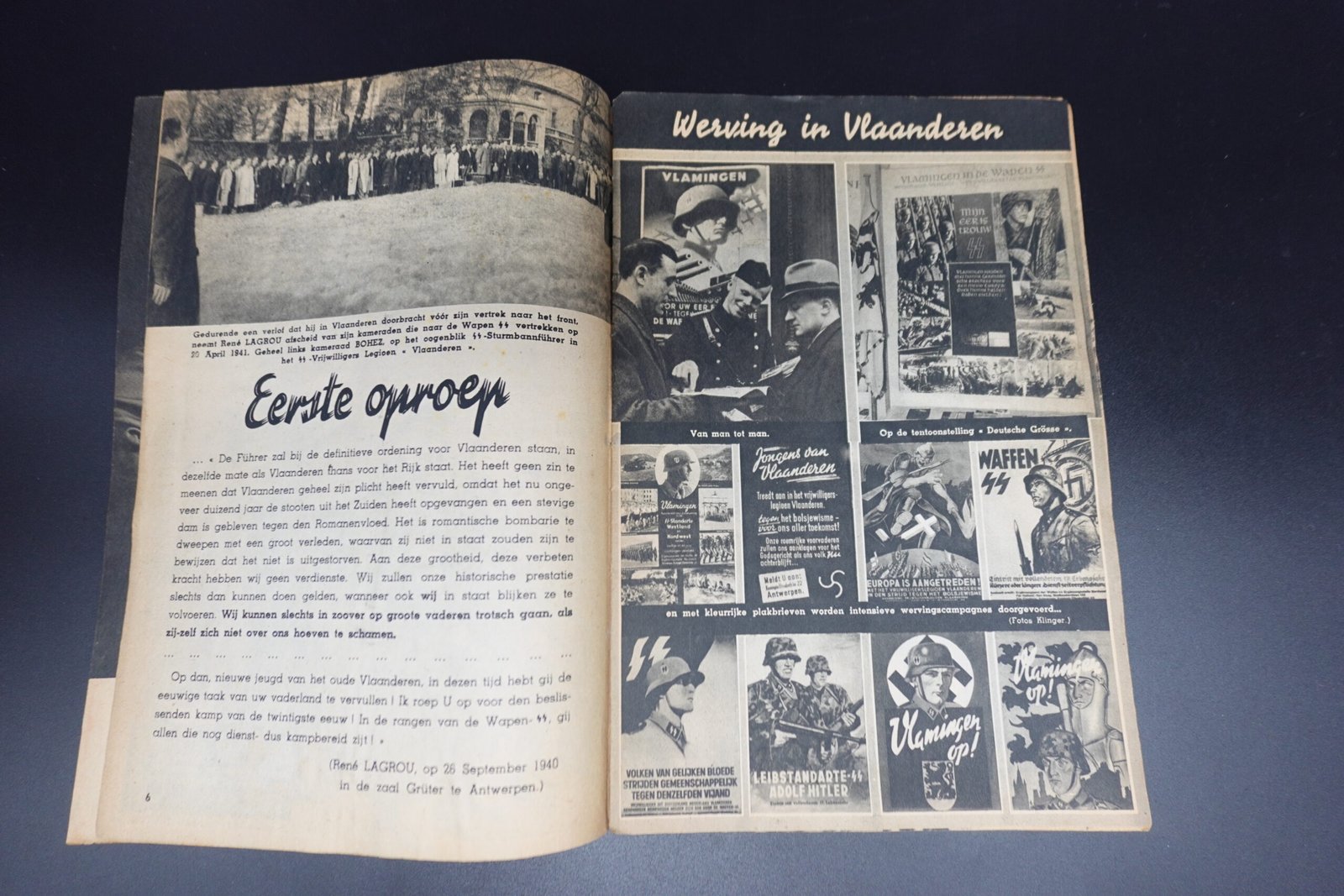
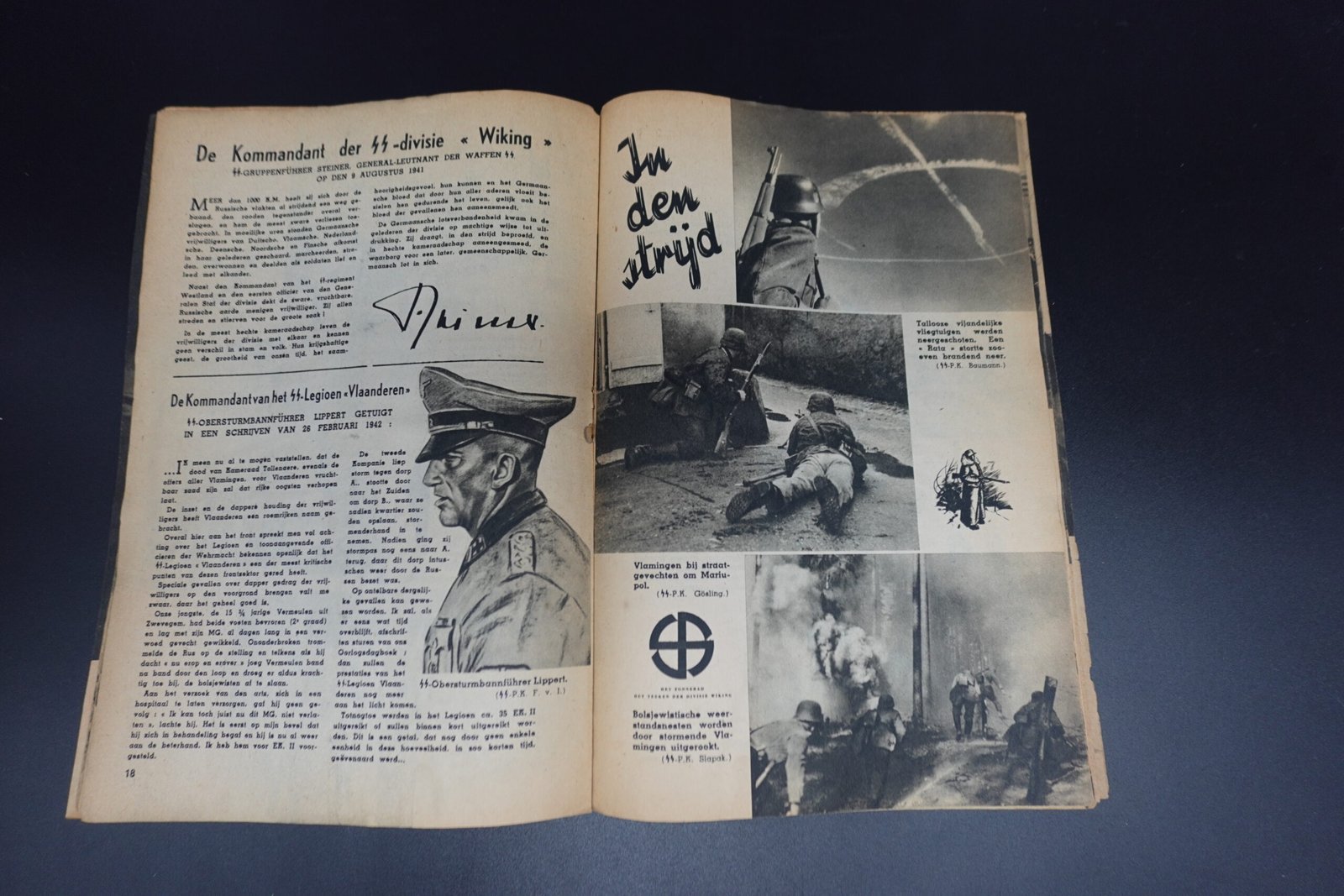
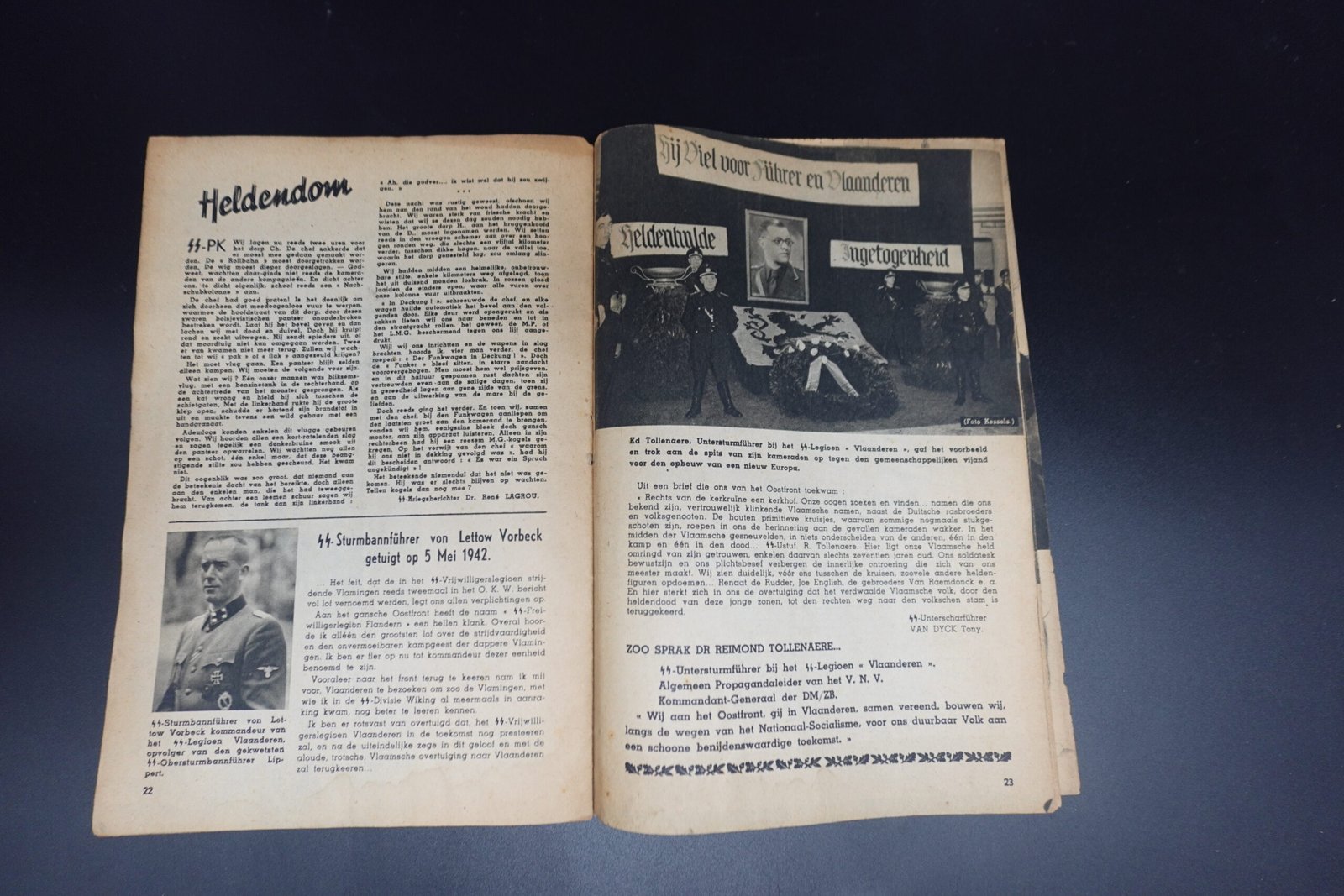
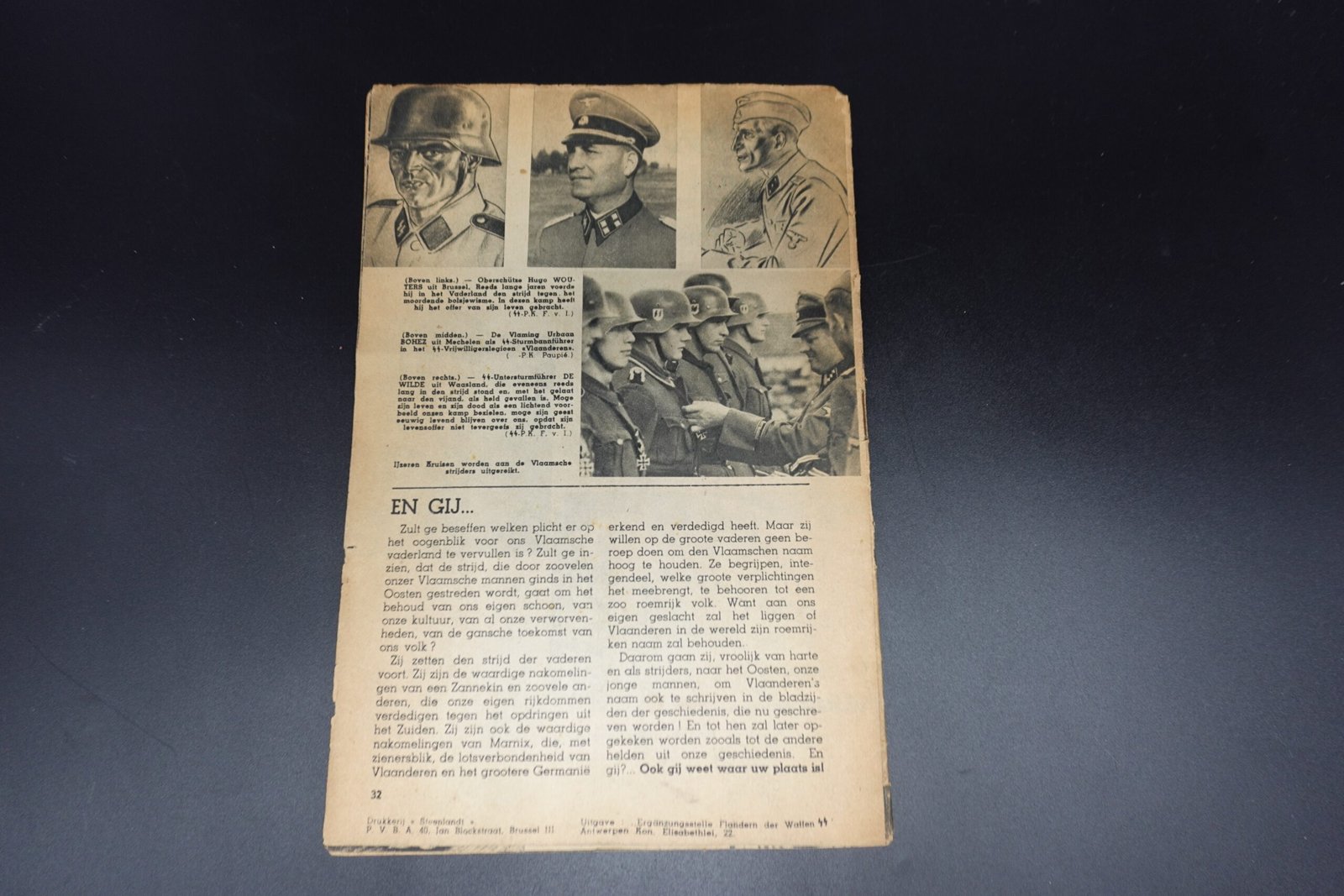
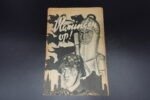
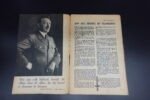
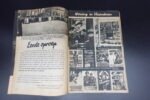
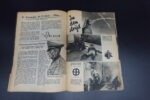
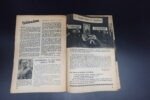
Original WWII-era Flemish Waffen-SS recruitment brochure titled“Vlamingen op!”, issued by the Ergänzungsstelle der Waffen-SS and printed by Drukkerij Steenlandt in Brussels.
Softcover format. This is a complete example and remains in overall nice condition, showing typical signs of age and handling consistent with wartime paper ephemera. The brochure reflects period printing quality and carries historical significance as a piece of wartime propaganda aimed at Flemish volunteers.
A scarce and collectible item for historians and collectors of WWII militaria, particularly those focused on Flemish collaboration and Waffen-SS recruitment materials.
The brochure “Vlamingen op!” (“Flemings, arise!”) was produced during the German occupation of Belgium in the Second World War, following the German invasion of Belgium. After Belgium’s capitulation, the occupying authorities sought to recruit volunteers from Flanders into German military formations, particularly the Waffen-SS.
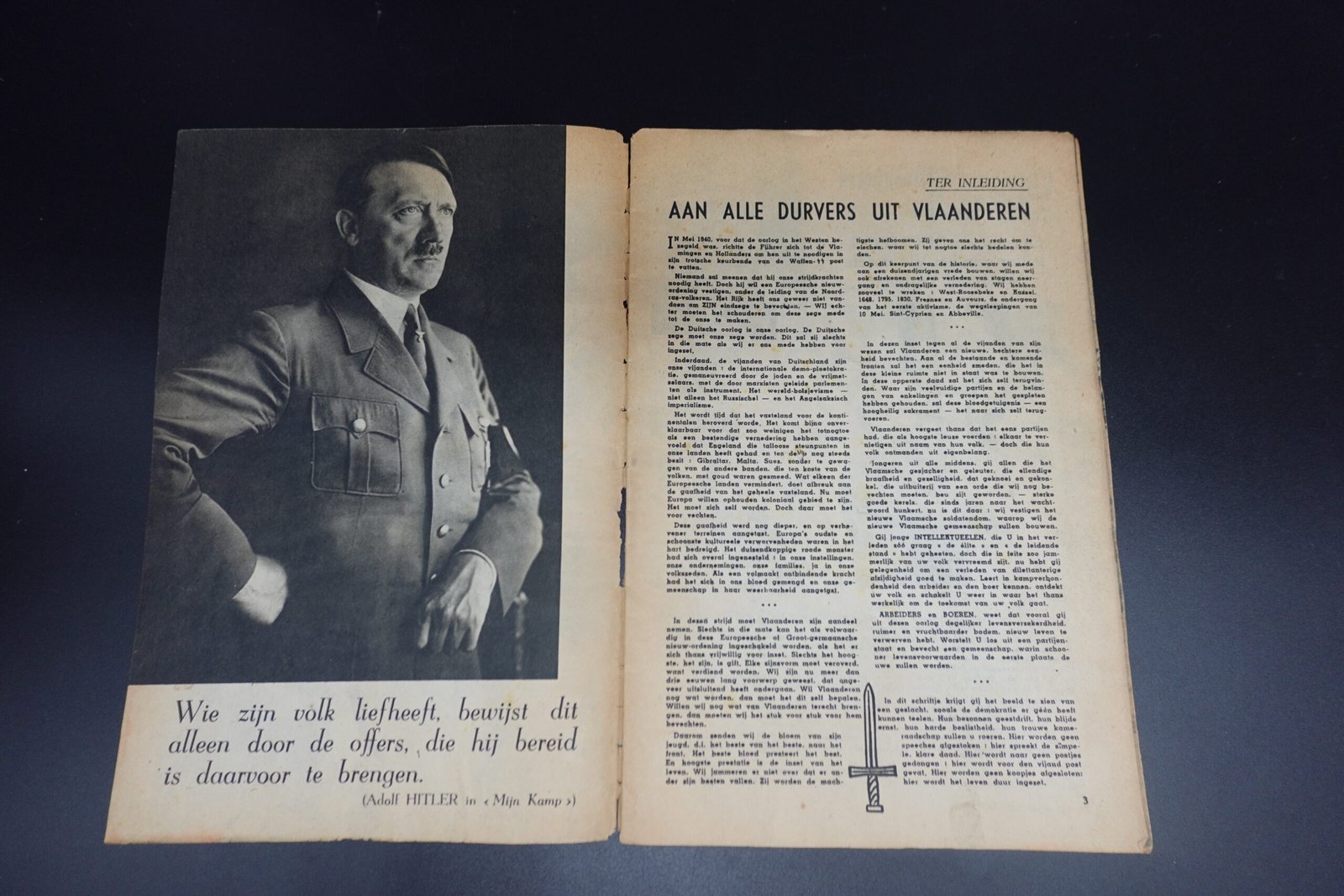
Flemish collaborationist movements—most notably the Vlaams Nationaal Verbond—played a role in encouraging enlistment by promoting anti-communism, Flemish nationalism, and the idea of a “New Europe” under German leadership. Publications such as “Vlamingen op!” were part of a broader propaganda effort designed to appeal to these sentiments and to present service in the Waffen-SS as both an ideological and patriotic duty.
Printed in Brussels by Drukkerij Steenlandt and distributed through Waffen-SS recruitment offices (Ergänzungsstelle), such brochures combined political messaging with imagery and rhetoric aimed at mobilizing Flemish men for the Eastern Front. Today, these items are studied as primary-source material illustrating occupation-era propaganda and the mechanisms of recruitment within German-controlled Europe.