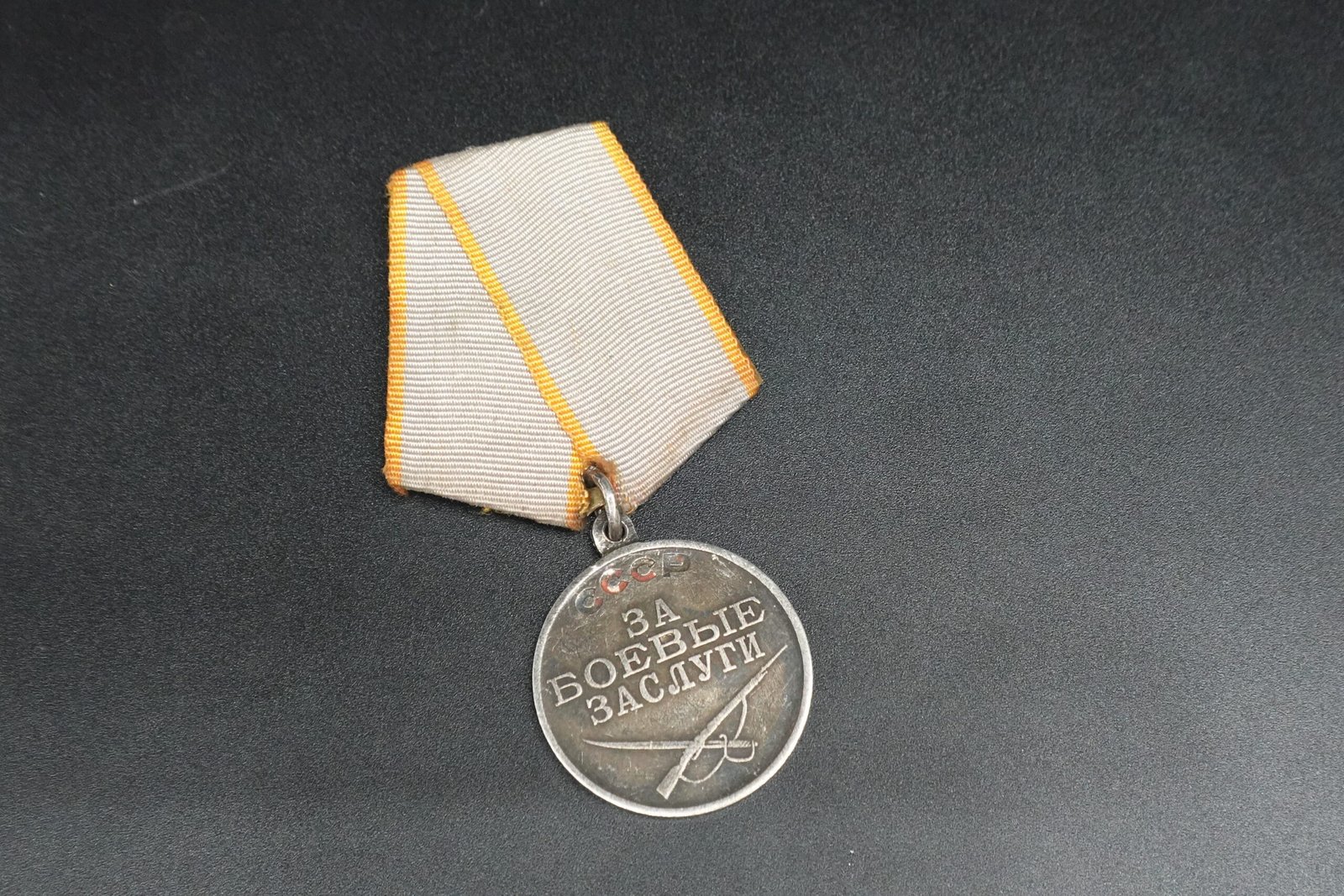
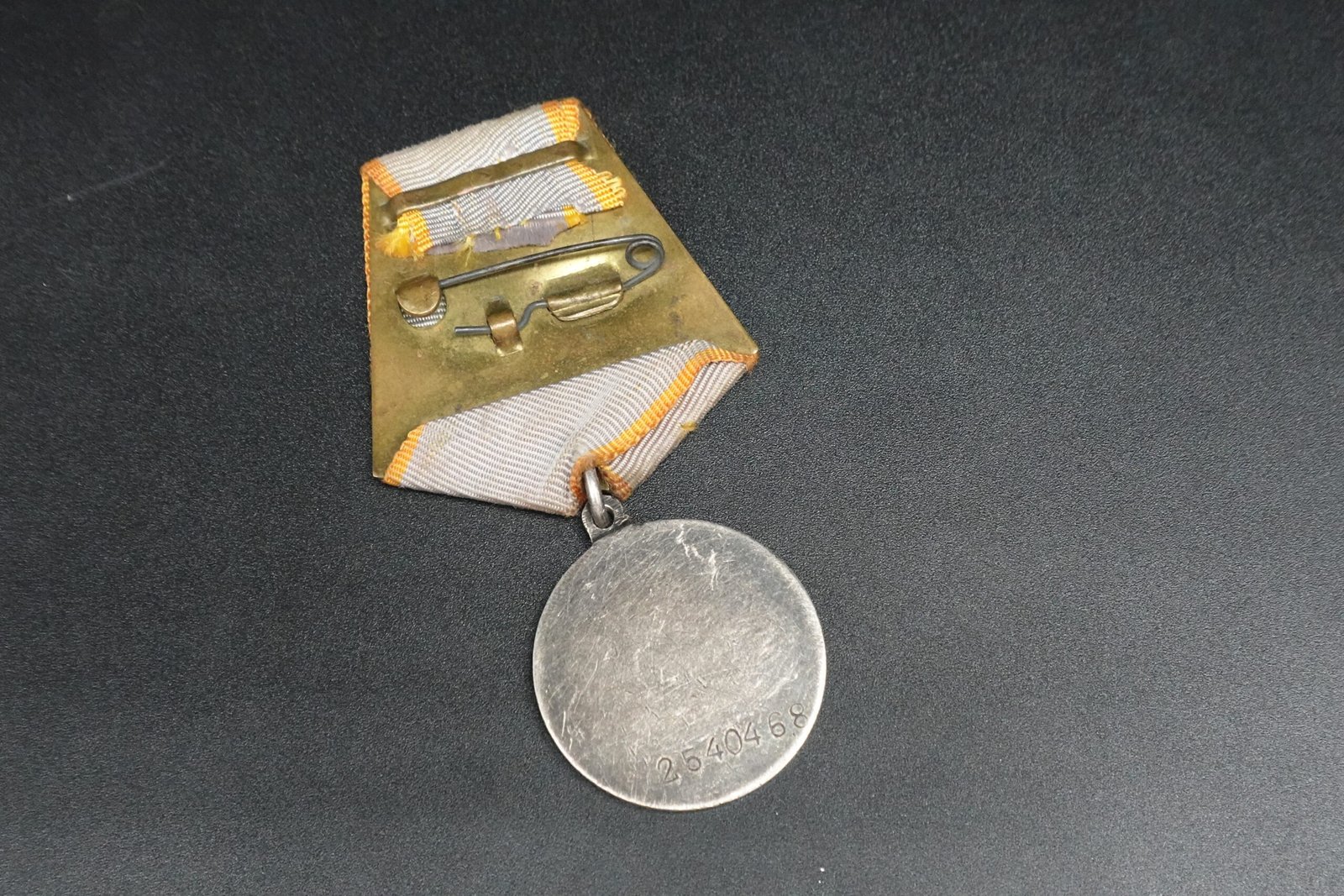
The Medal “For Battle Merit” (Russian: «Медаль «За боевые заслуги»») was established on 17 October 1938 as one of the earliest Soviet decorations recognizing individual merit in military service. It was intended to reward not only acts of bravery in combat but also broader contributions to the effectiveness and readiness of the Soviet armed forces.
The medal could be awarded to members of the Red Army, Soviet Navy, border troops, and internal security forces, as well as to other citizens of the USSR and, in some cases, to individuals from allied states. It recognized skilled, initiative-driven, and courageous actions in combat that contributed directly to the successful completion of military objectives. In addition, it was awarded for vigilant defense of state borders, excellence in political and combat training, the development or implementation of new military techniques, and for maintaining a high level of combat readiness within units. The decoration could also acknowledge other distinguished service achievements during military duty.
Early awards of the medal were closely tied to pre-war border conflicts. During the Battle of Lake Khasan in August 1938, more than 1,000 Soviet soldiers were decorated for their actions. The following year, during the Battles of Khalkhin Gol, approximately 3,000 additional servicemen received the medal.
Its significance expanded greatly during the Second World War, known in the Soviet Union as the Great Patriotic War, when it became one of the most widely awarded decorations for merit. Approximately 3.3 million medals were issued during the war alone, reflecting its role in recognizing both frontline bravery and essential support functions. By the end of 1986, total awards had reached roughly 5 million, underscoring its importance as a key symbol of sustained and effective military service in the Soviet system.
In the official order of wear, the medal was positioned on the left side of the chest among other Soviet decorations, reflecting its status as a widely conferred but respected award for merit rather than a high-order decoration for exceptional heroism.