WWII German “Eismeerfront 1942–1943” Commemorative Badge / Tinnie with Leather Hanger
IN STOCK
€155,00
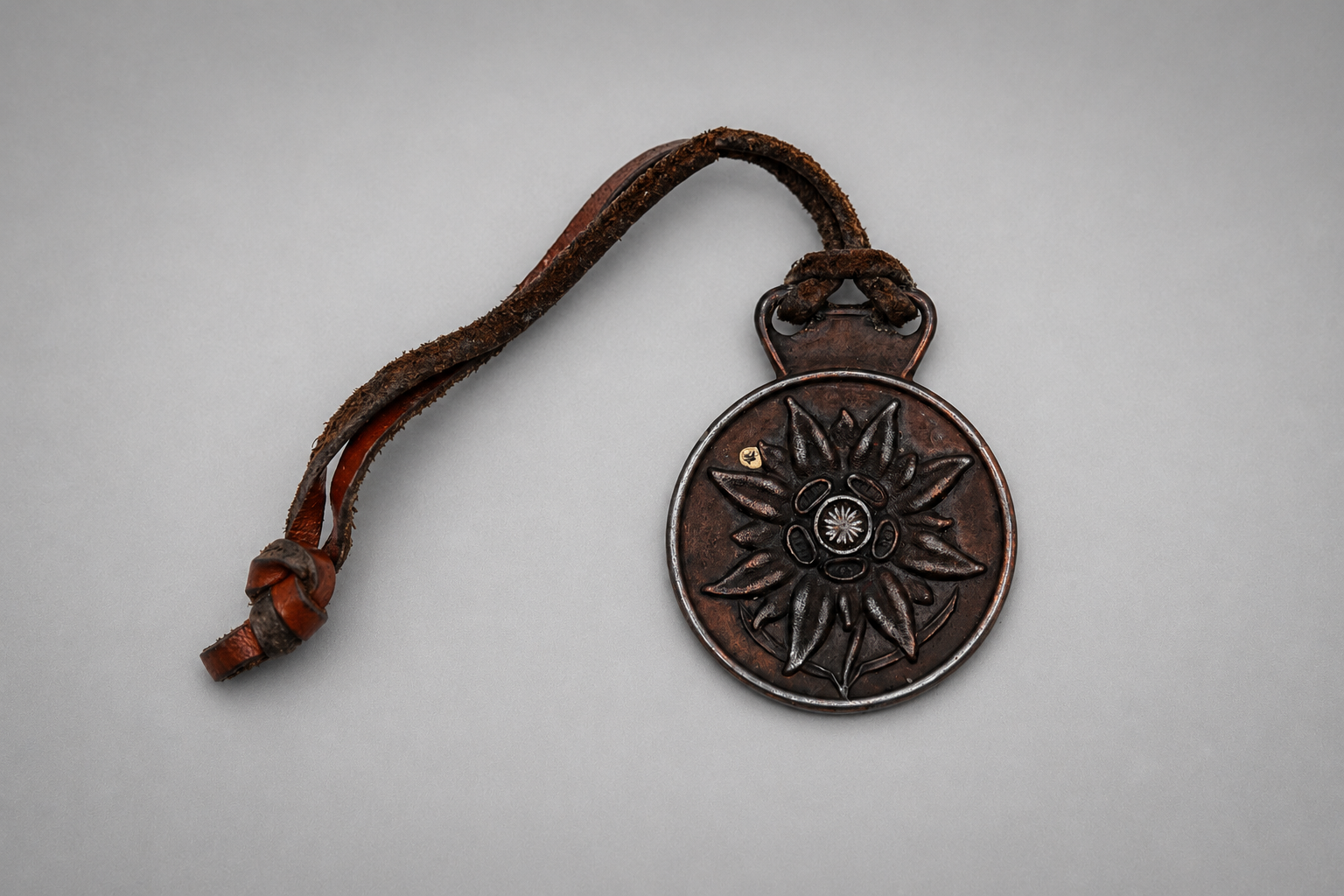
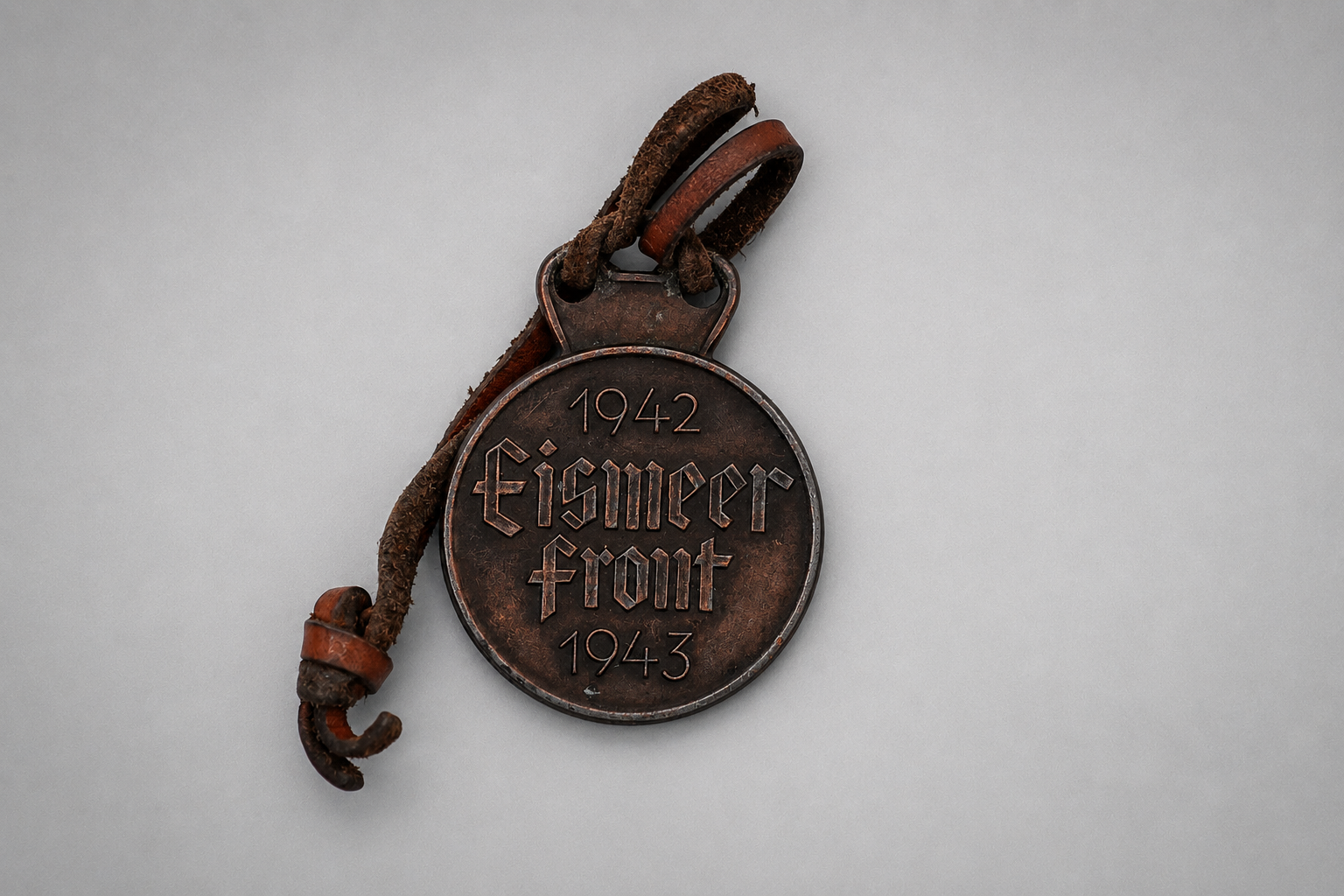
Original Second World War German commemorative badge / tinnie marked: “Eismeerfront 1942–1943”. A very interesting wartime remembrance piece connected to service on the harsh Arctic Front (Eismeerfront), the northernmost combat theater of the German-Soviet War centered around northern Finland, Lapland, and the Arctic region near Murmansk.
The badge features:
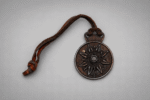
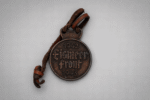
Front with gothic-style “Eismeerfront 1942–1943” inscription
Reverse with prominent edelweiss-style design, strongly associated with German mountain and northern troops
Original leather hanger / suspension strap still attached
Attractive untouched darkened wartime patina throughout
Constructed in lightweight wartime metal with a suspension loop and period leather attachment, likely intended for wear on personal equipment, a vehicle interior, or as a commemorative keepsake by veterans serving in the Arctic theater.
The Eismeerfront was one of the most brutal operational environments of WWII, with German and Finnish troops facing extreme cold, snow, isolation, and continuous fighting against Soviet forces in the far north.
The piece remains in very good untouched condition showing honest age and wear. The leather hanger displays expected age hardening and surface wear consistent with wartime use and storage. Condition exactly as shown in the photographs.
In stock
IN STOCK
Can't find what you're looking for?
Tell us which item you're searching for. Submit a Collector Request and we'll be able to keep your interests in mind when suitable pieces become available.