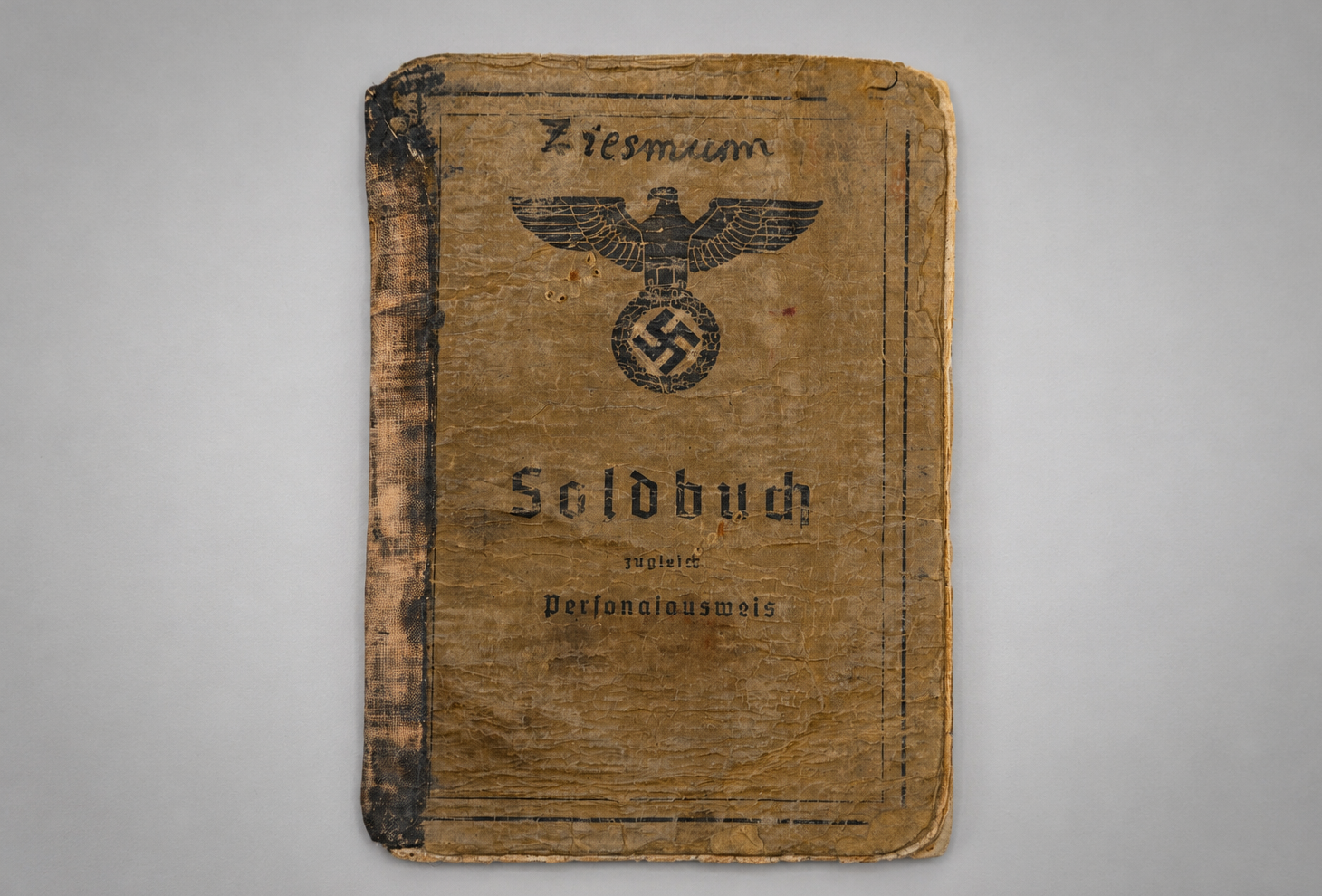
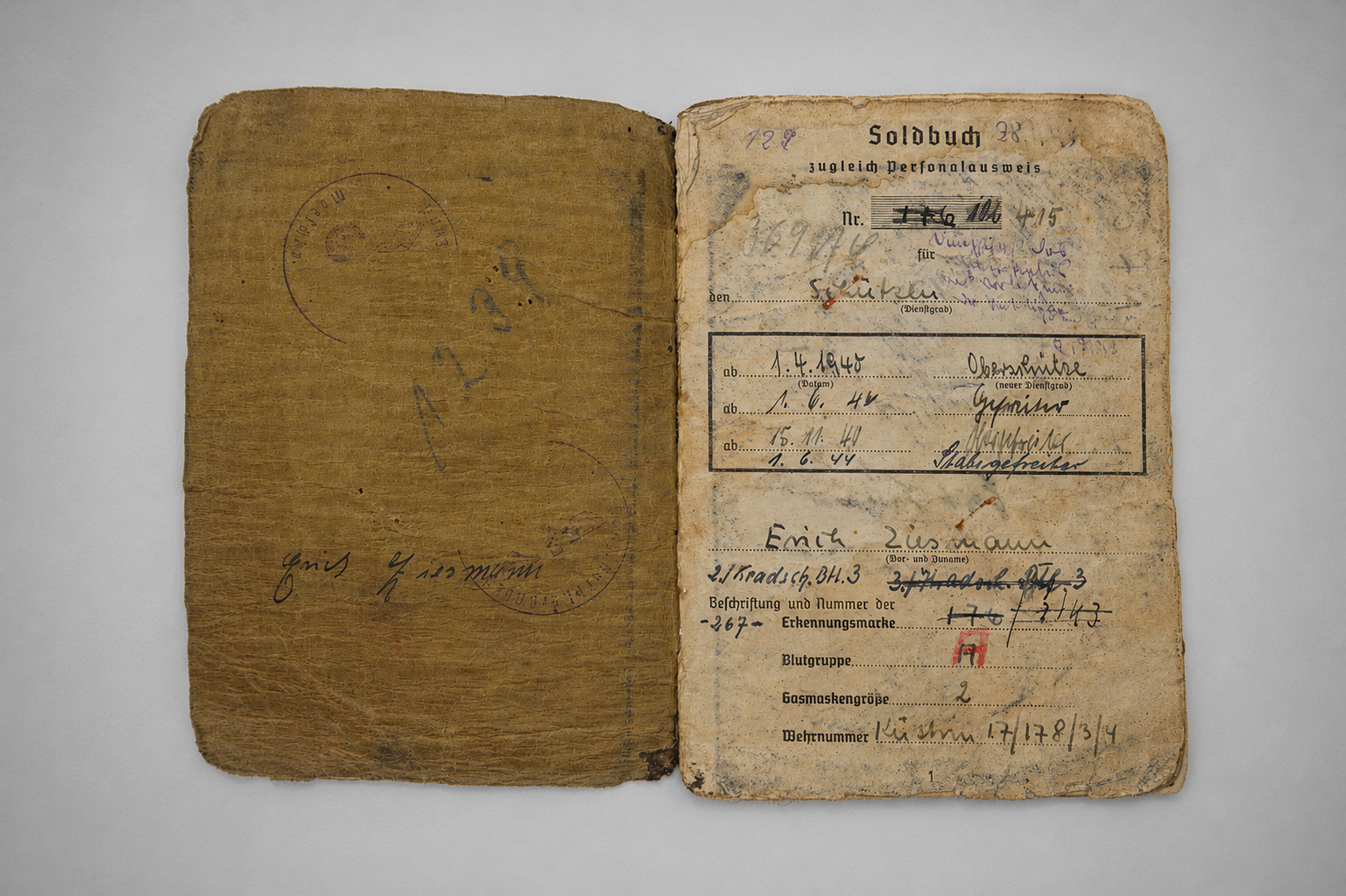
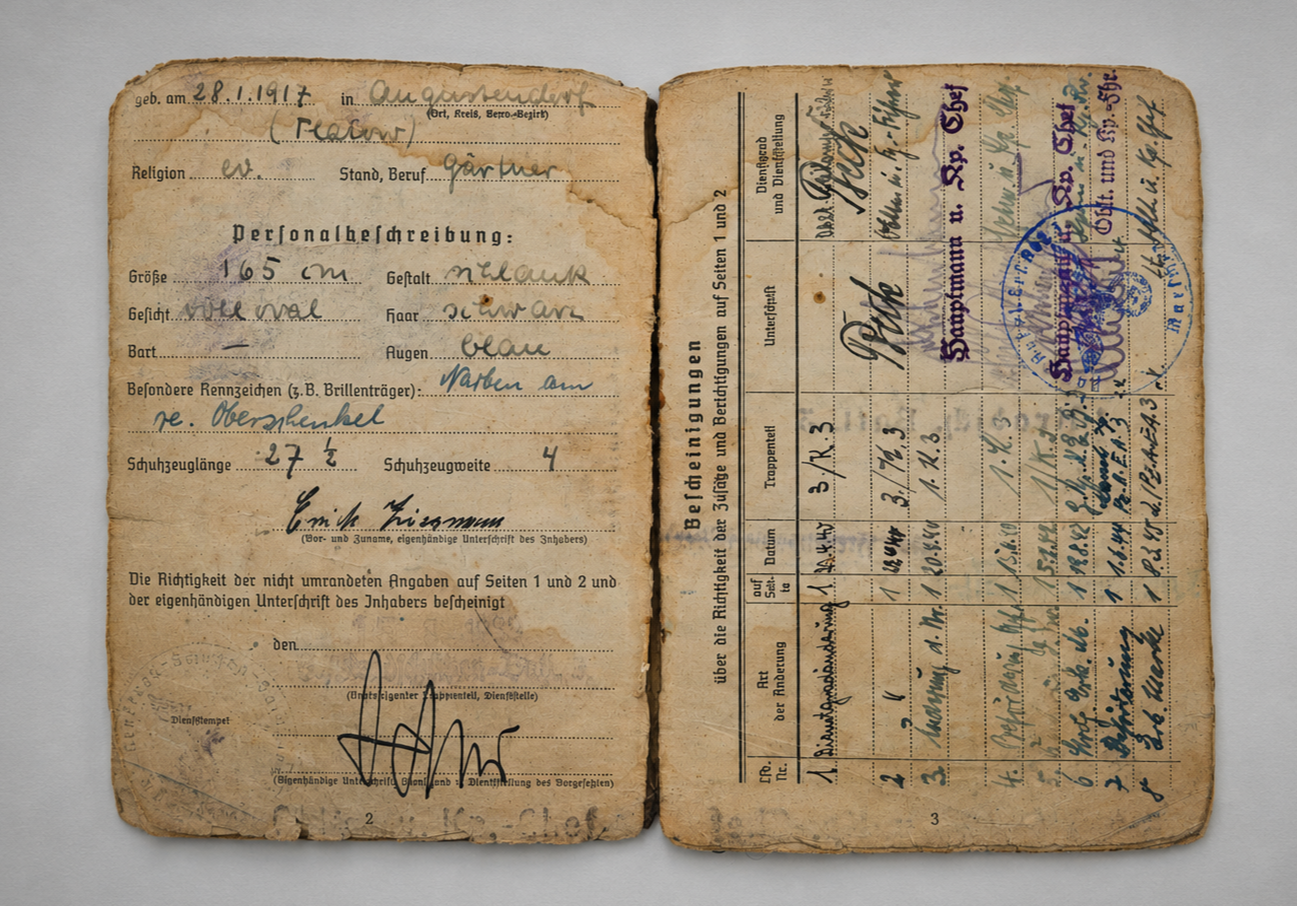
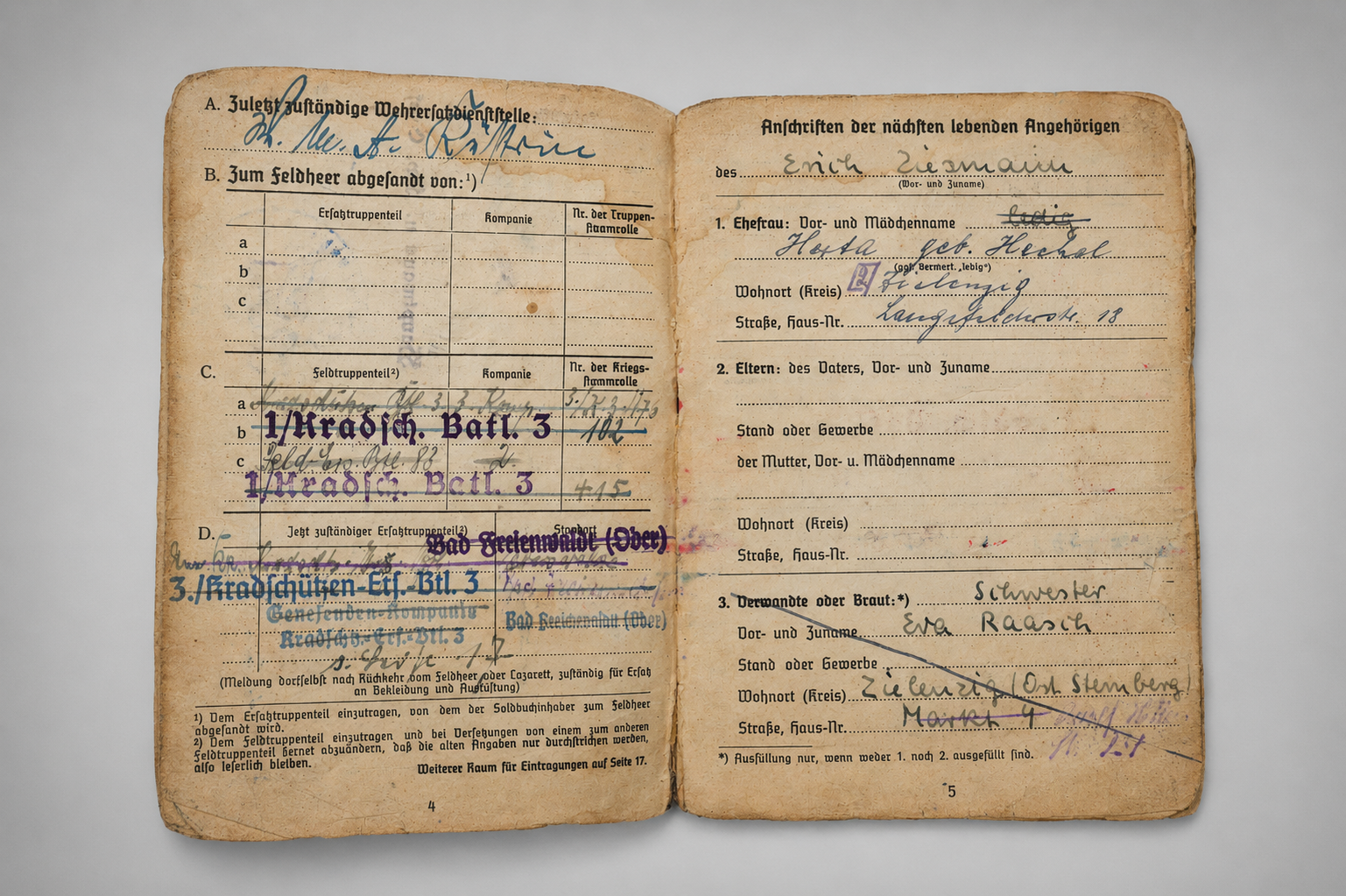
Original and heavily field-used Second World War German Soldbuch issued to Erich Ziesmann, born 28 January 1917, a veteran of the famed 3. Panzer-Division who served within the division’s motorcycle and reconnaissance elements including Kradschützen-Bataillon 3, Panzer-Aufklärungs-Abteilung 3, and later Feld-Ersatz-Bataillon 83.
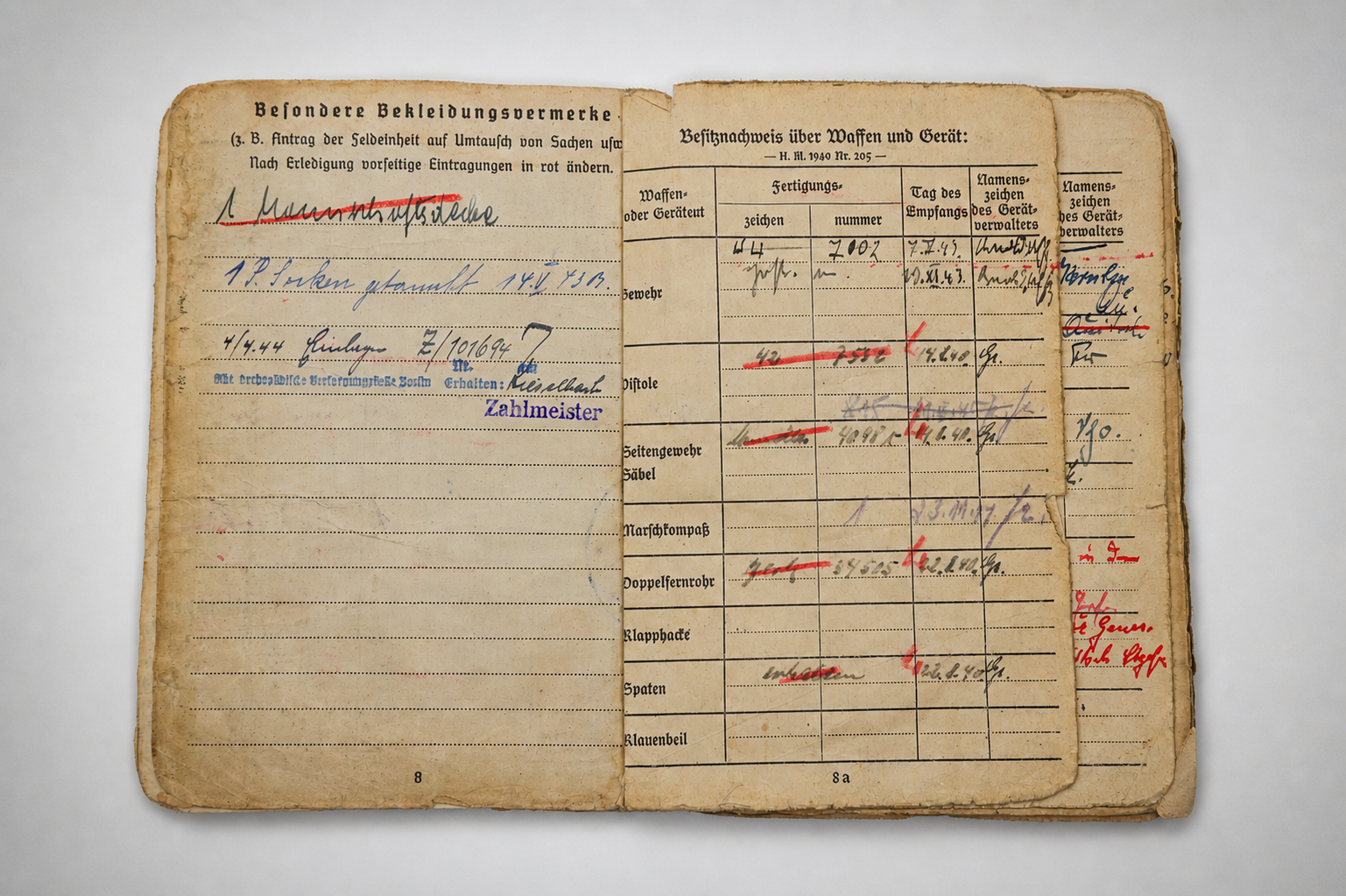
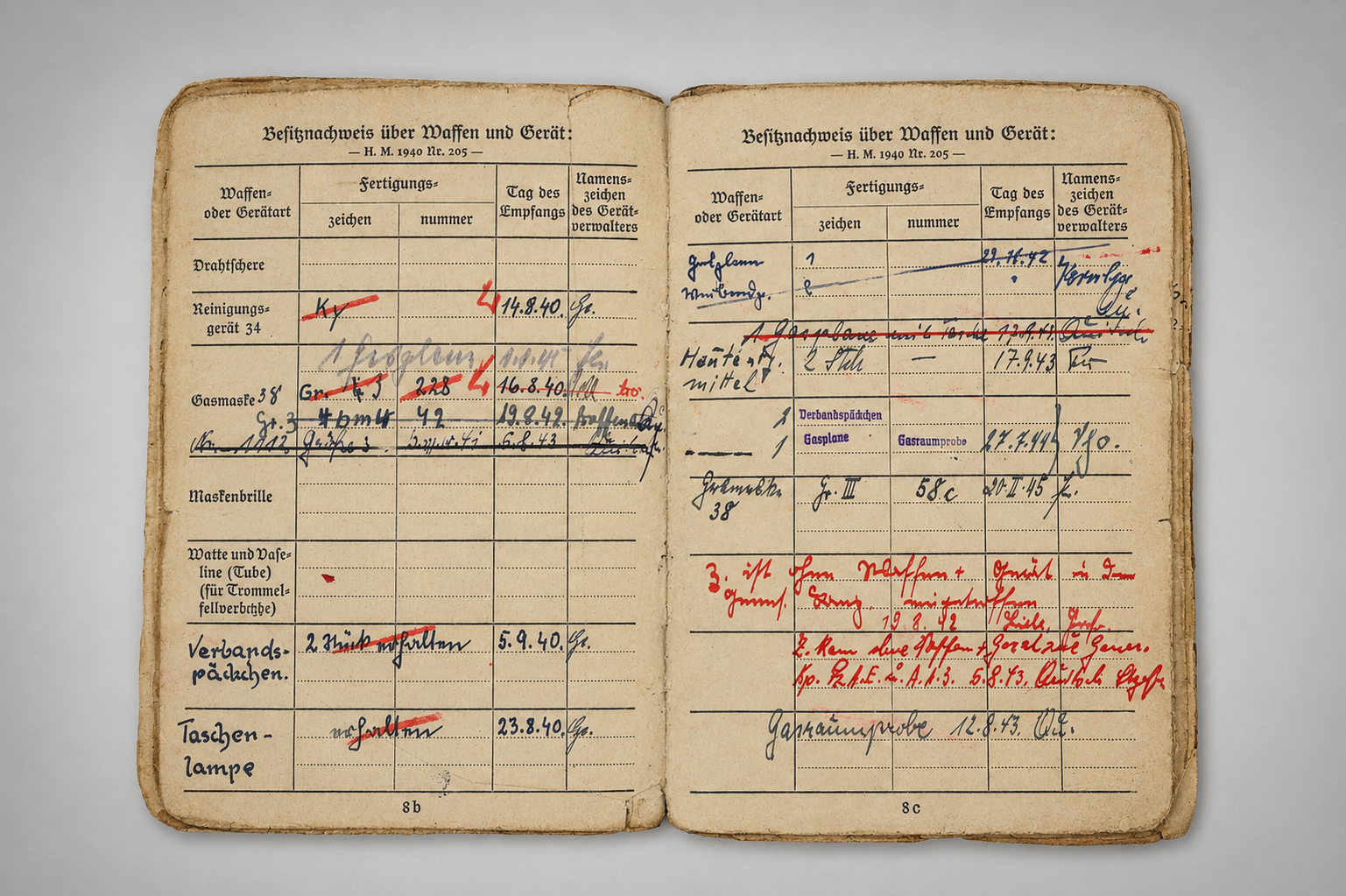
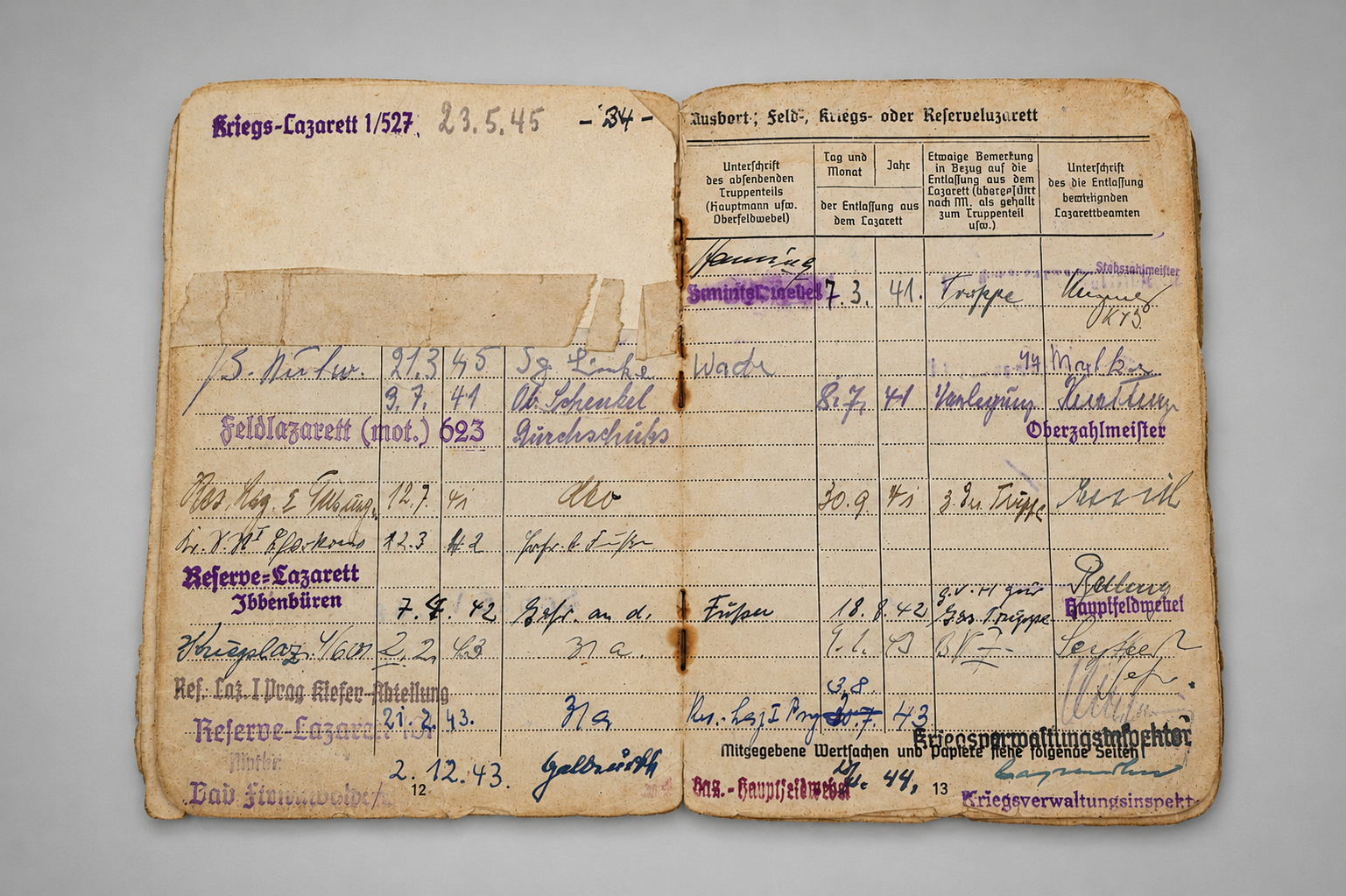
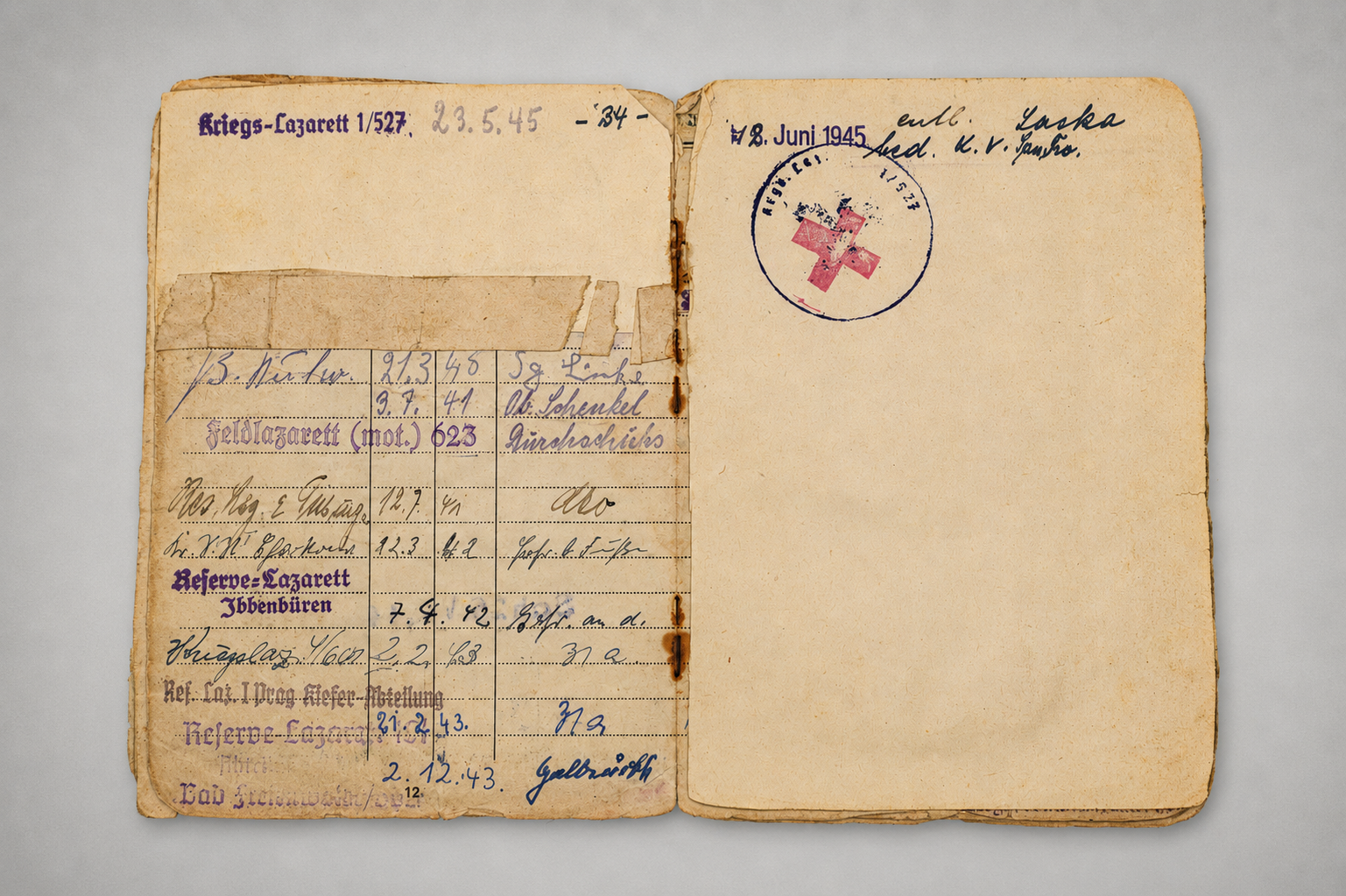
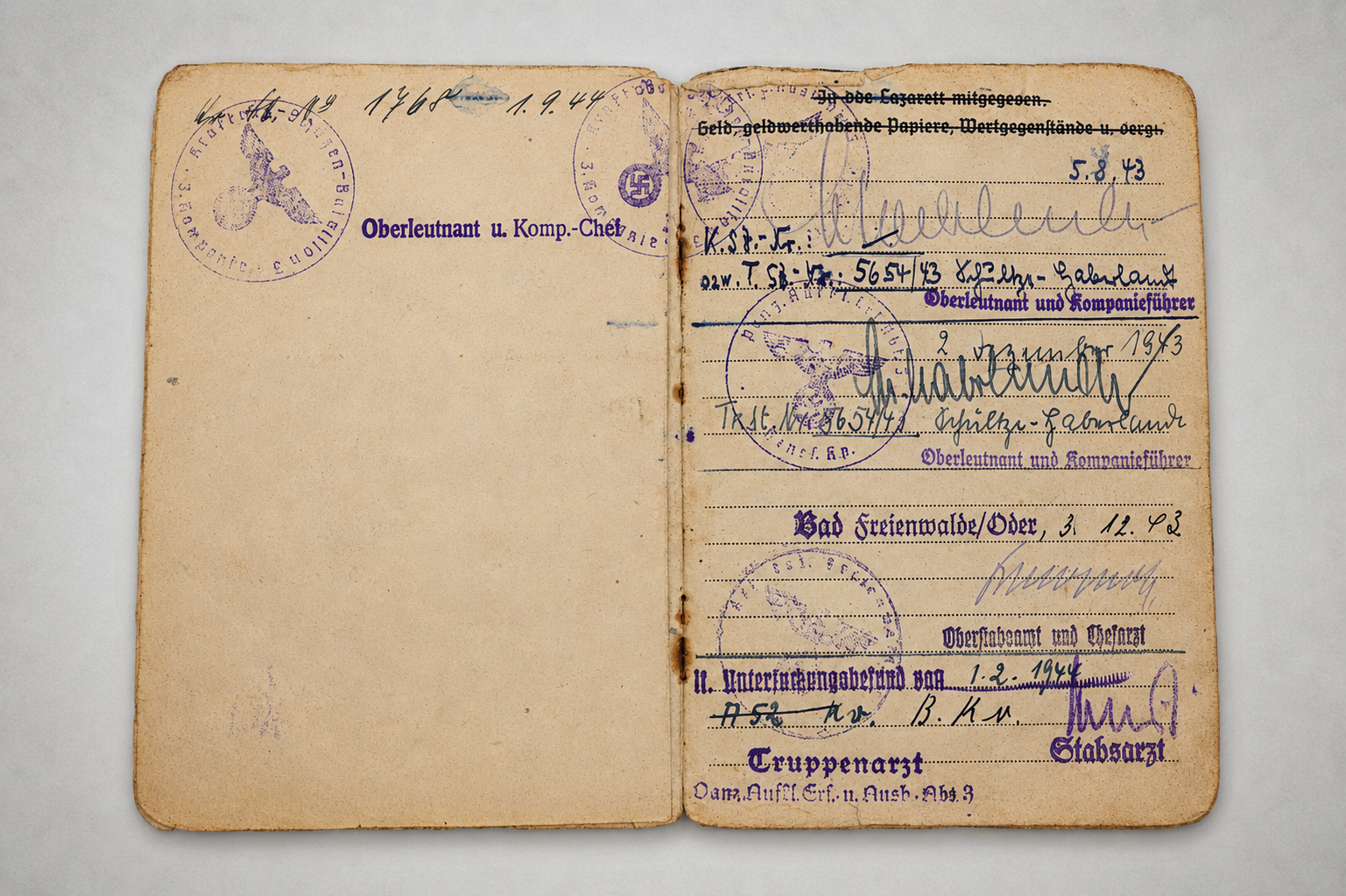
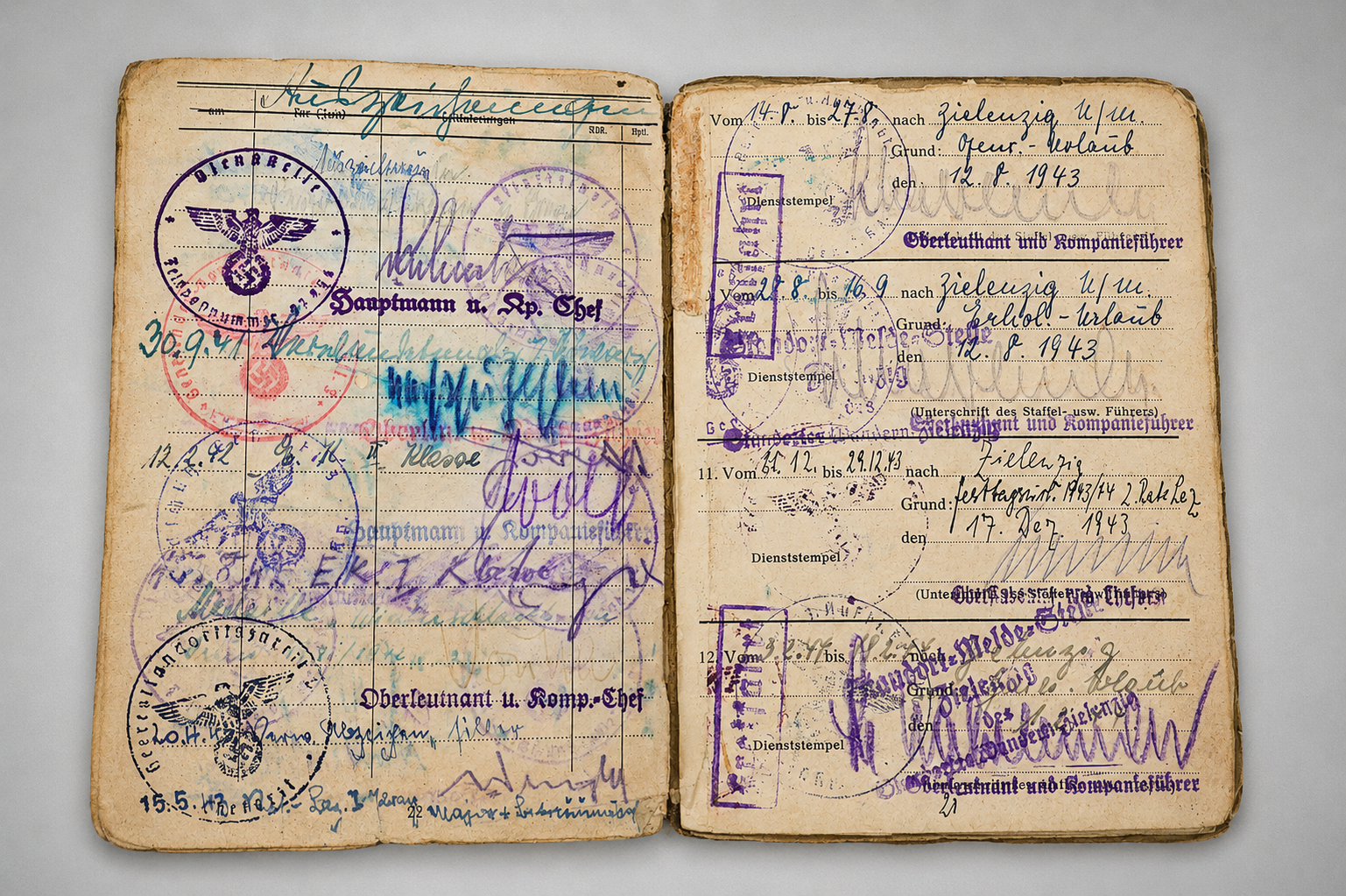
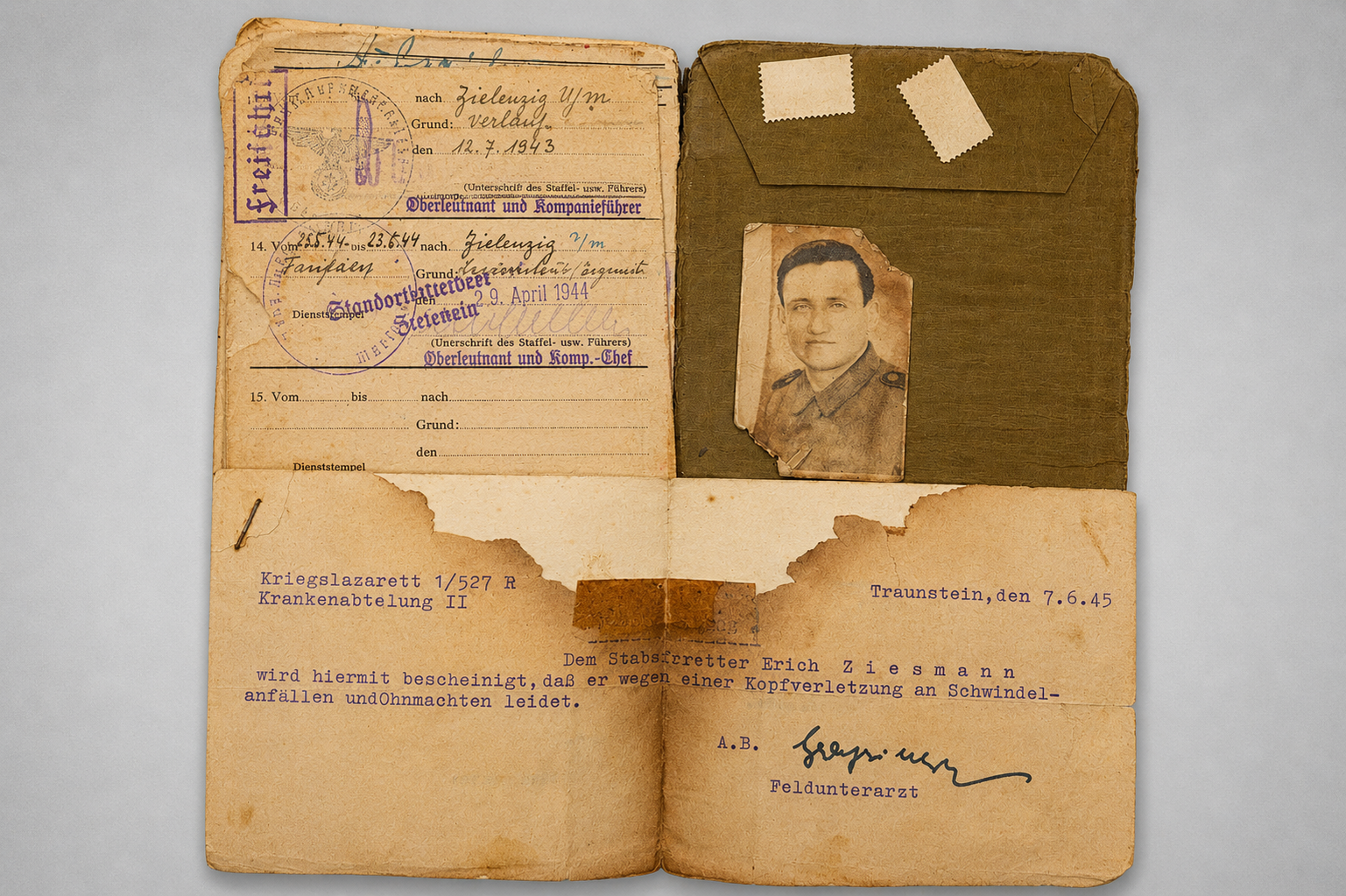
The Soldbuch is a highly interesting combat example showing extensive wartime wear, numerous official entries, unit stamps, leave entries, hospital/lazaret records, and long-term front service from 1940 through the final phase of the war in 1945.
Ziesmann ultimately reached the rank of Stabsgefreiter and served as part of one of Germany’s most active Panzer formations on the Eastern Front. His service history strongly indicates participation in major campaigns and battles involving the 3. Panzer-Division, including:
- The 1940 Western Campaign (Belgium & France)
- Operation Barbarossa
- Kiev encirclement operations
- Advance toward Moscow / Tula
- Winter fighting 1941/42
- Kharkov sector
- Caucasus campaign
- Likely the Battle of Kursk
- Later retreat battles through Ukraine
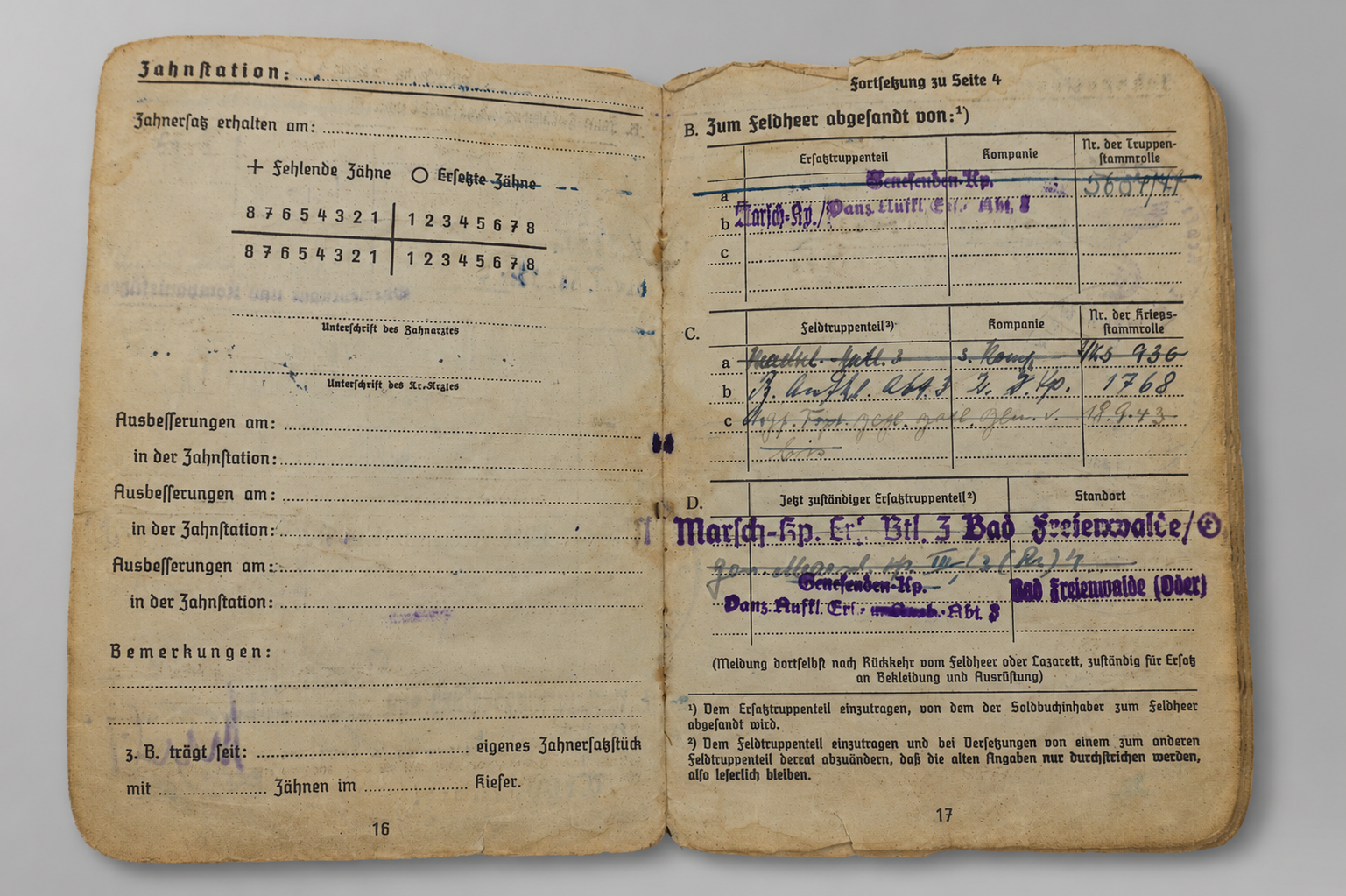
The Soldbuch records service with:
- Kradschützen-Bataillon 3
- Feld-Ersatz-Bataillon 83
- Panzer-Aufklärungs-Abteilung 3
- Bad Freienwalde (Oder) replacement formations
Particularly desirable is the impressive award combination attributed to Ziesmann:
- Eisernes Kreuz II. Klasse
- Eisernes Kreuz I. Klasse (entry appears present but originality should be evaluated by buyer)
- Panzerkampfabzeichen in Bronze
- Winterschlacht im Osten 1941/42
- Verwundetenabzeichen in Schwarz
- Verwundetenabzeichen in Silber
The Bronze Panzer Assault Badge is especially fitting for his role within motorcycle/reconnaissance formations attached to armored operations, while the Black and Silver Wound Badges indicate repeated combat wounds and prolonged frontline exposure.
The Soldbuch also contains numerous lazaret and medical entries, including references to:
- Kriegs-Lazarett 1/527
- Feldlazarett (mot.) 693
- Reserve-Lazarett Ibbenbüren
- additional wartime hospitalizations extending into 1945
The original portrait photo has been removed. However, there appears to still be a period photograph present in the rear of the Soldbuch, although the identity cannot be verified with certainty.
Condition is as seen in the photographs, showing heavy wartime use, age, staining, wear, and handling consistent with prolonged frontline service.
An excellent and authentic Eastern Front Panzer-related Soldbuch with strong combat history, desirable units, multiple decorations, extensive field use, and clear connection to the legendary 3. Panzer-Division. A very attractive and researchable Wehrmacht document grouping to a long-serving armored reconnaissance veteran.