WWII Soldbuch to Obergefreiter of Pionier-Bataillon 1176 – KVK2 mit Schwertern & Ruhrkessel History
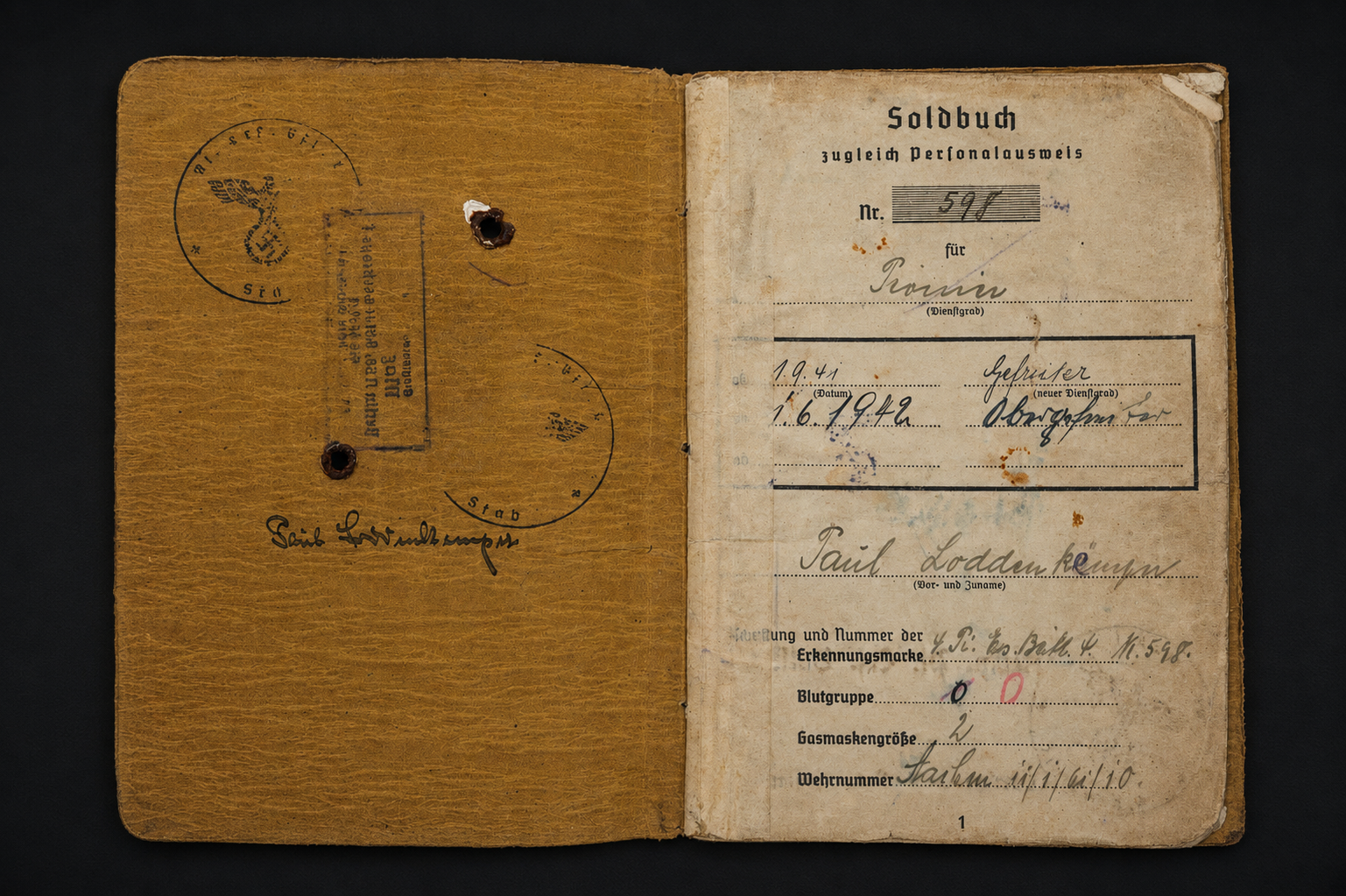
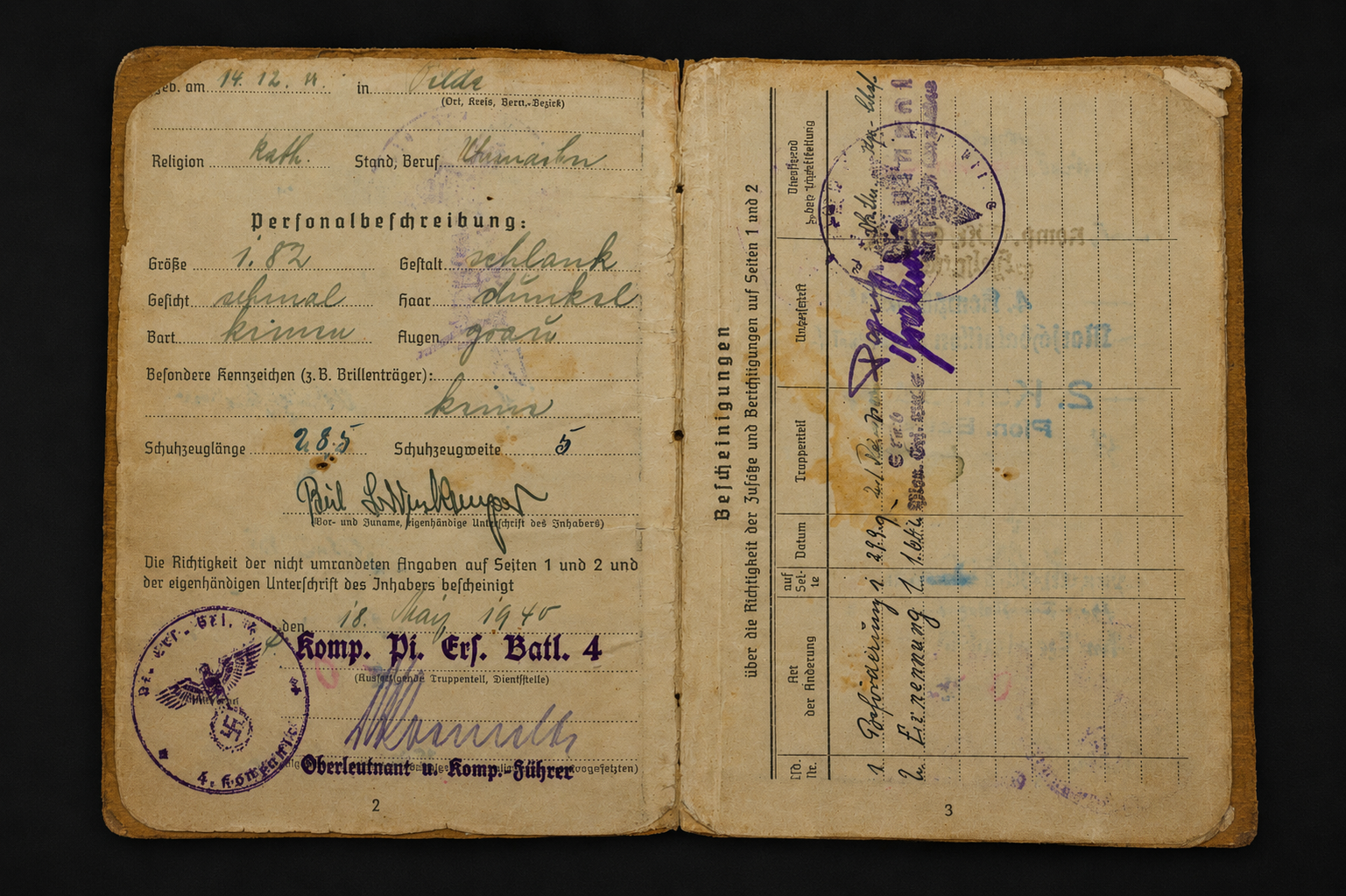
Interesting and combat-used WWII German Soldbuch issued to Paul Loddenkämper, born 14.12.1911 in Velde. The Soldbuch documents long wartime service within various Pionier replacement and frontline units, ending with service in the late-war Pionier-Bataillon 1176.
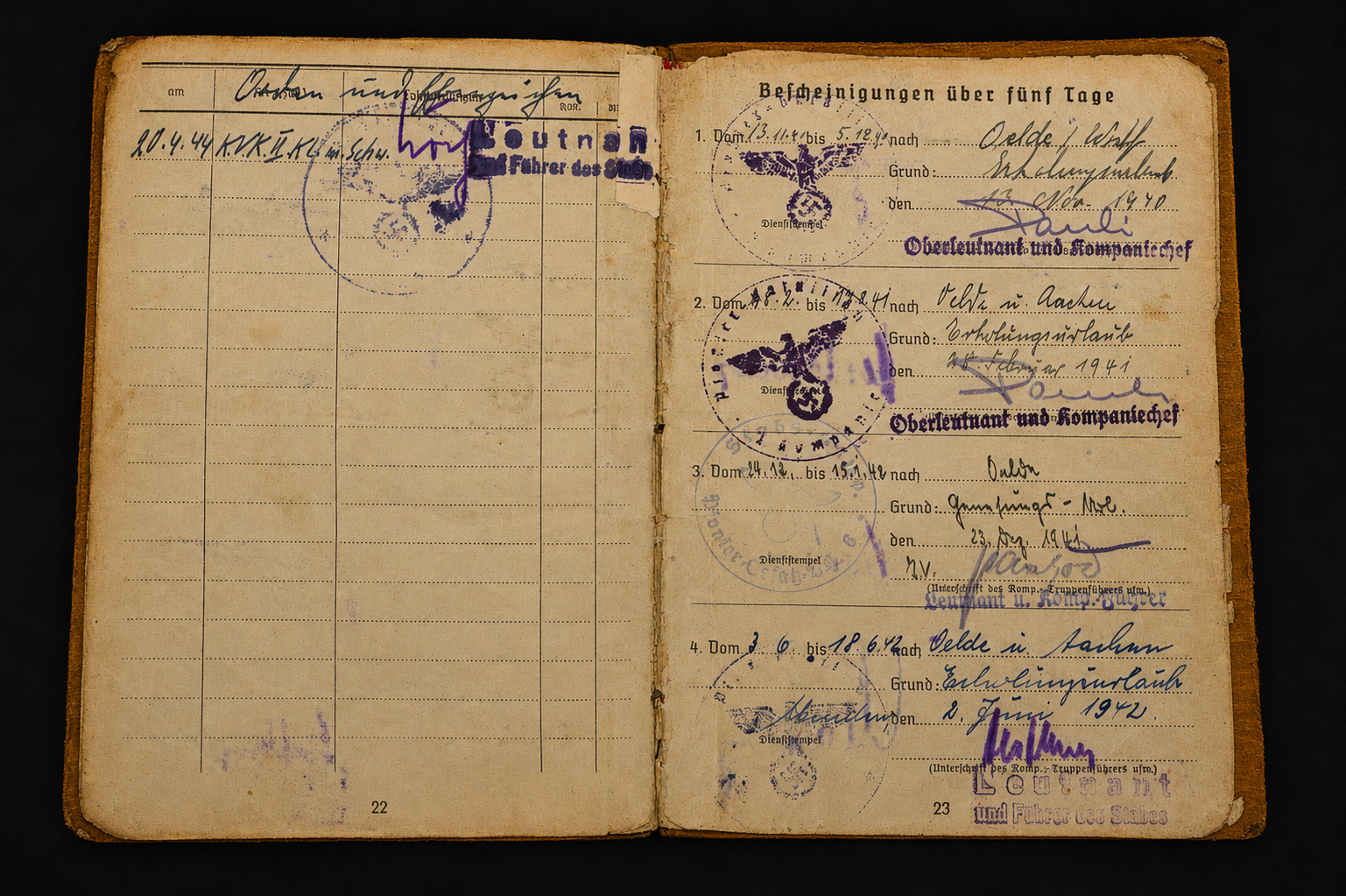
The holder was promoted from Gefreiter to Obergefreiter on 1.6.1942 and was awarded the Kriegsverdienstkreuz 2. Klasse mit Schwertern (KVK2 mit Schwertern) on 20.4.1944.
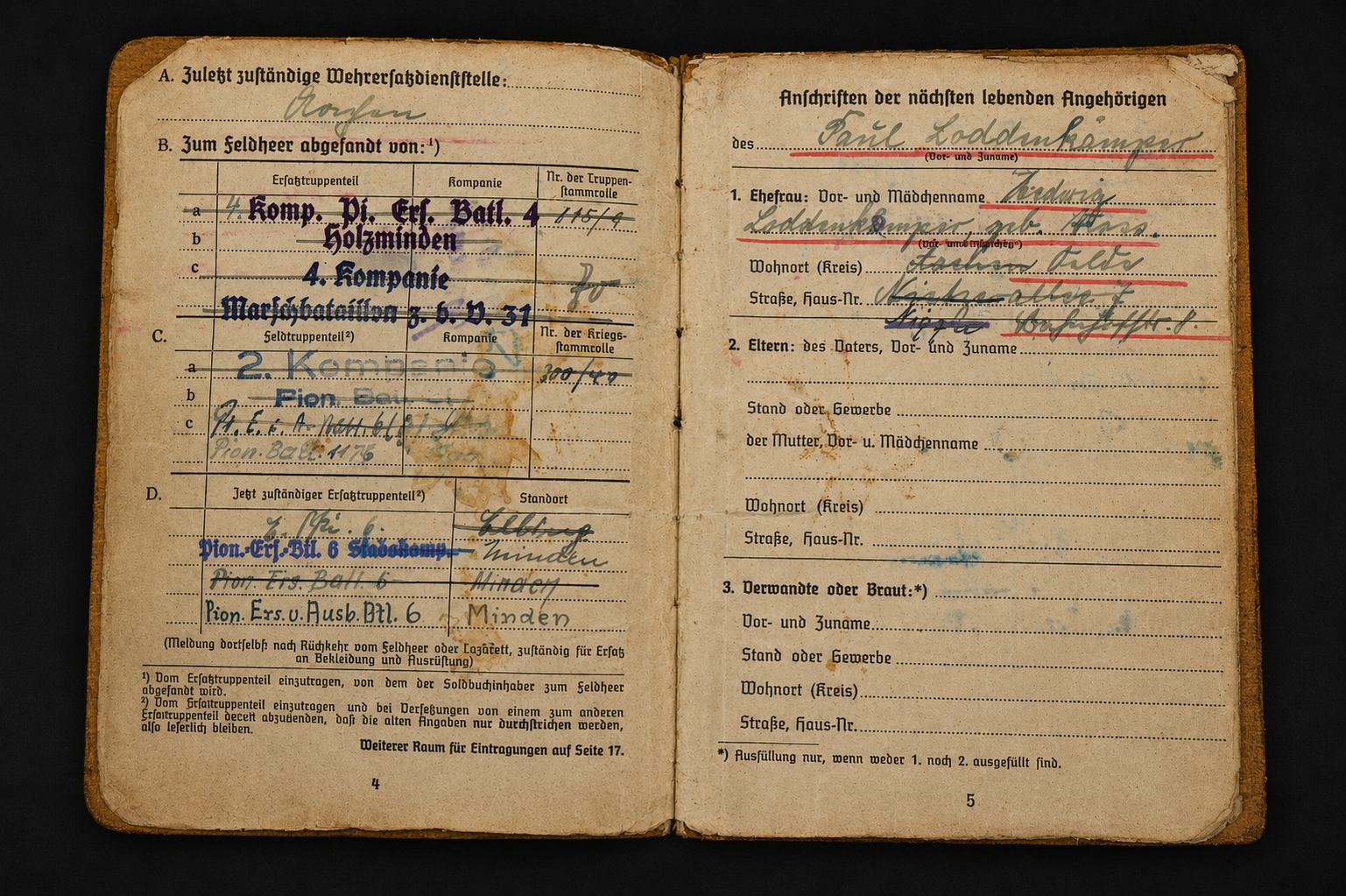
Particularly interesting is the final unit entry for Pionier-Bataillon 1176, a late-war battalion formed on 25 October 1944 on the Lower Rhine (Niederrhein) from Walküre units of Division Nr. 176, including elements of Pionier-Ersatz- und Ausbildungs-Bataillon 6 and 26. The battalion served with the 176. Infanterie-Division and fought defensive battles along the Maas near Maasbracht before being forced back behind the Roer in December 1944.
The unit subsequently participated in severe retreat fighting through: Erkelenz, Waldniel, Viersen, Mönchengladbach, St. Tönis and Krefeld
before retreating into the Duisburg bridgehead and finally behind the Rhine, where the surviving remnants were ultimately trapped in the Ruhr Pocket (Ruhrkessel) and surrendered into American captivity.
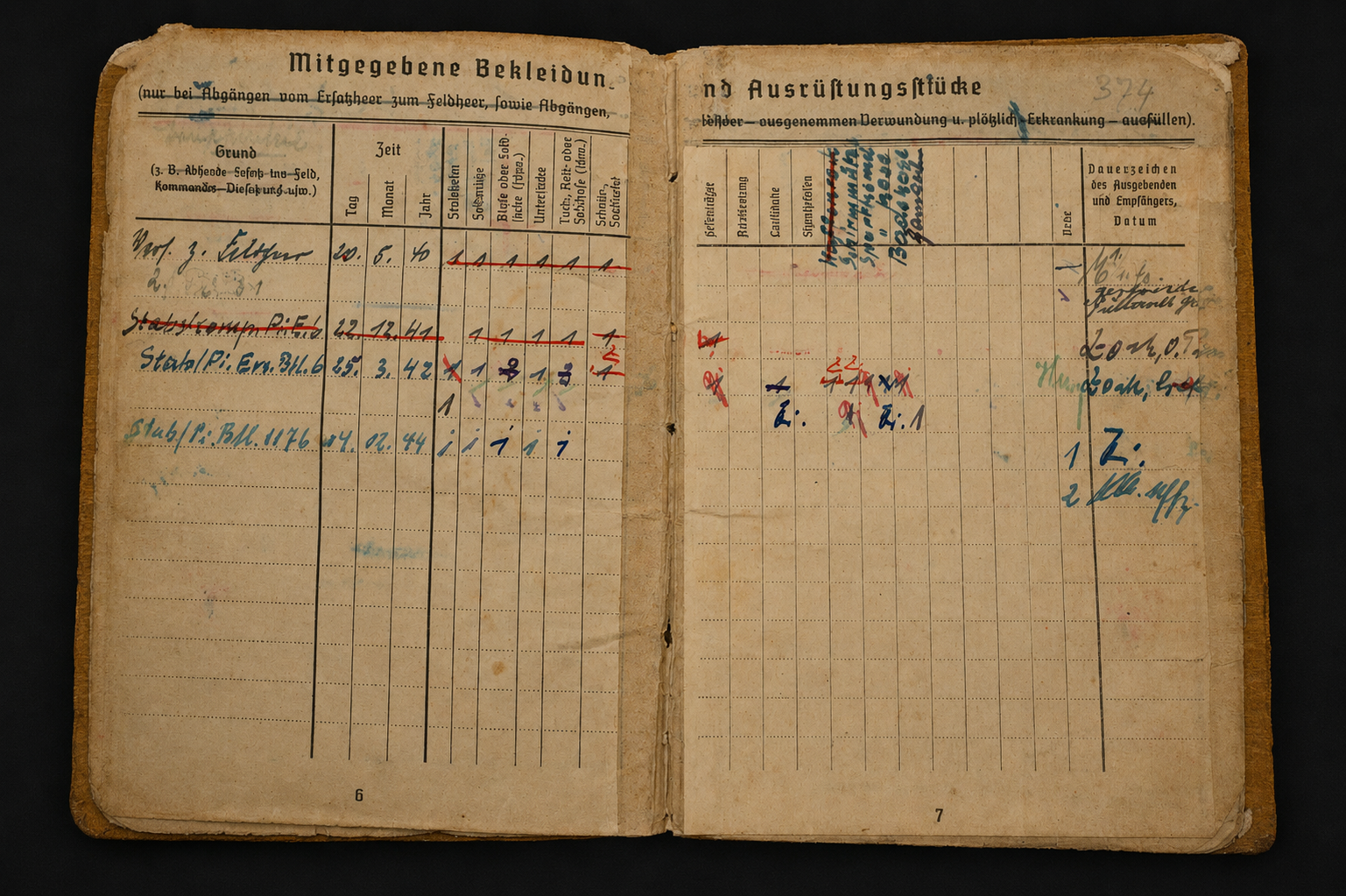
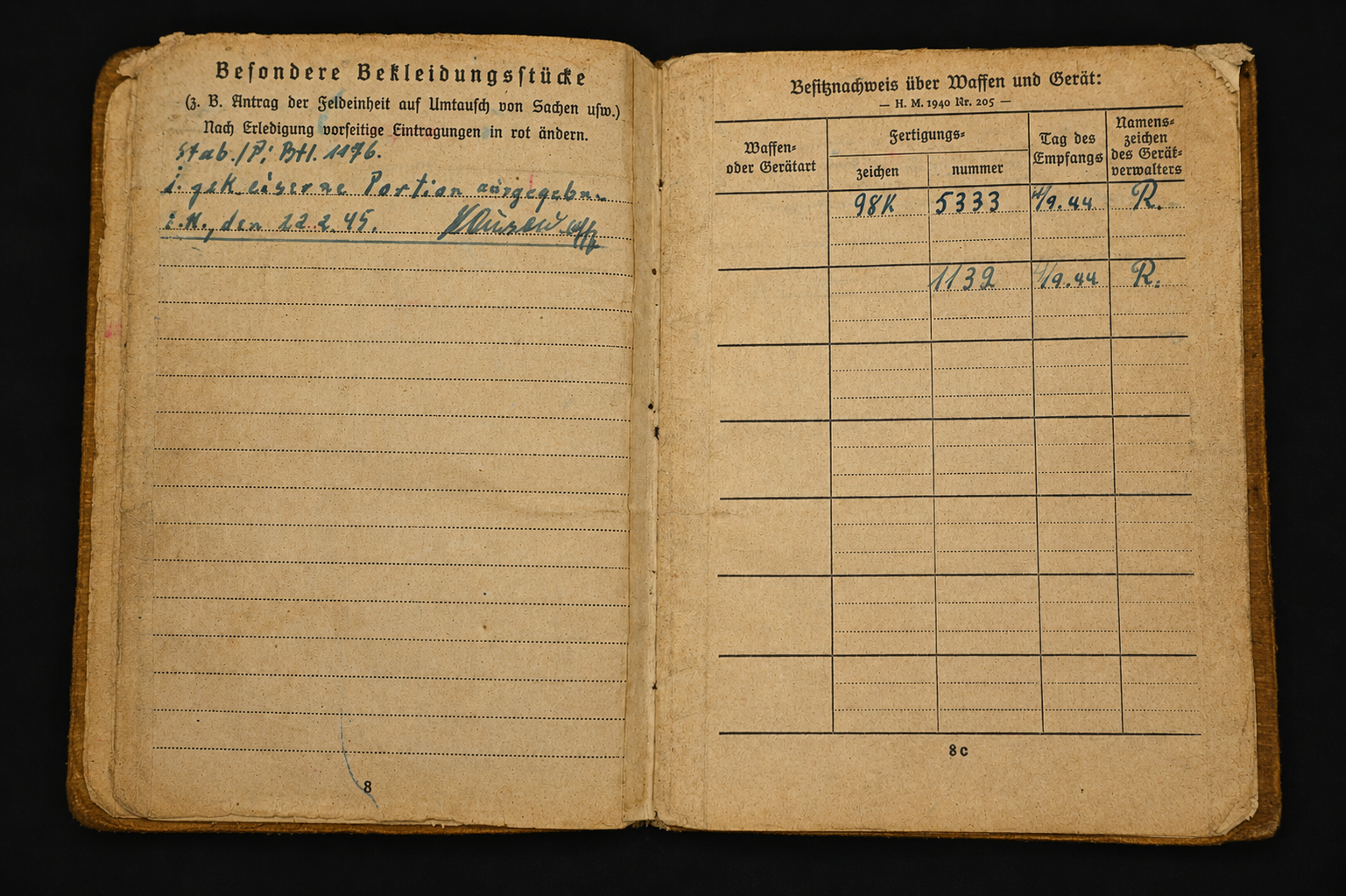
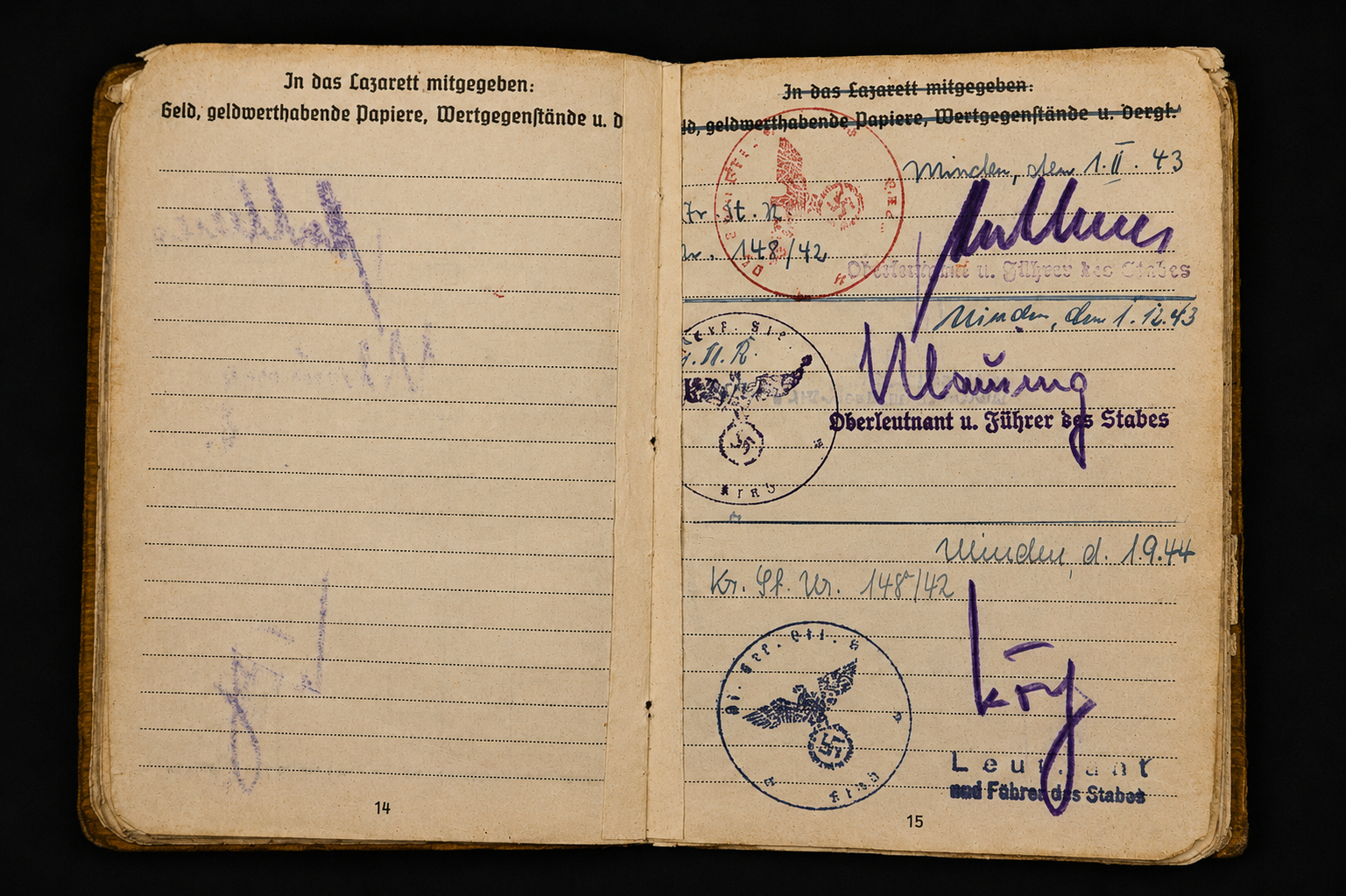
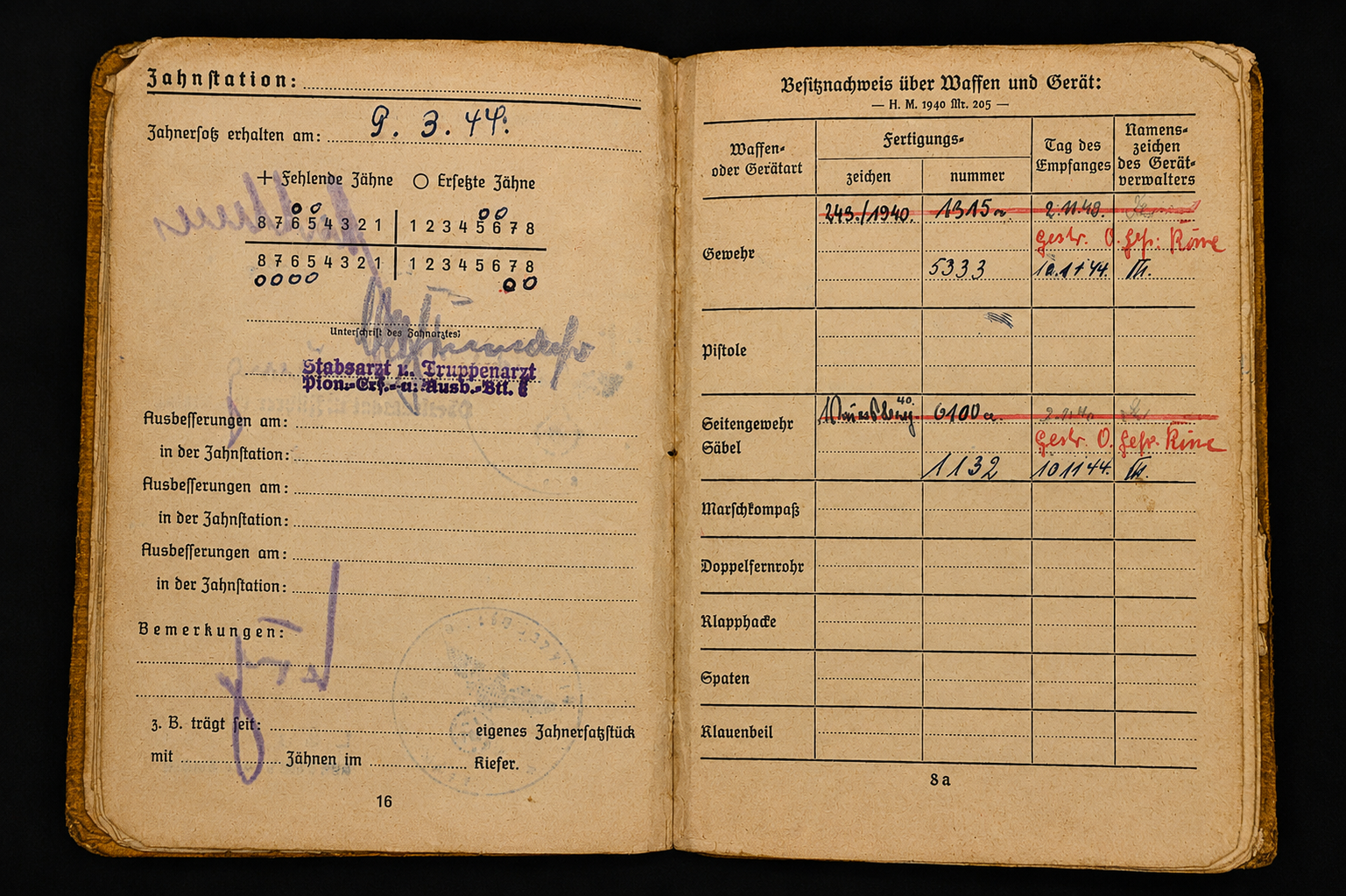
The Soldbuch itself shows heavy wartime use and contains numerous entries, unit stamps, signatures, and field-related annotations throughout. Recorded units include:
- Pionier-Bataillon 31 (?)
- Pionier-Ersatz- und Ausbildungs-Bataillon 6, Minden
- Pionier-Bataillon 1176
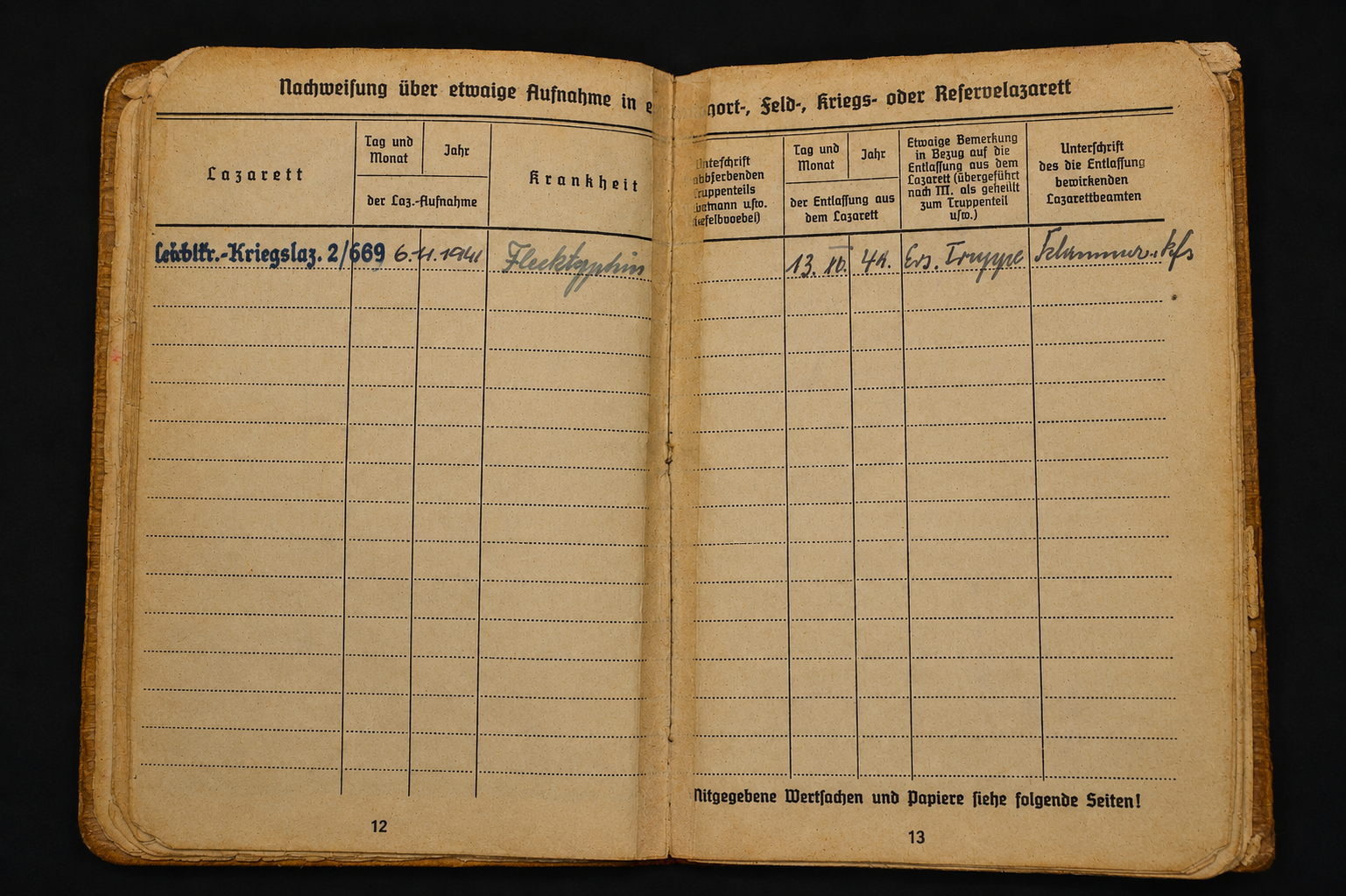
A documented Kriegslazarett entry records hospitalization for Flecktyphus (Typhus) in 1941.
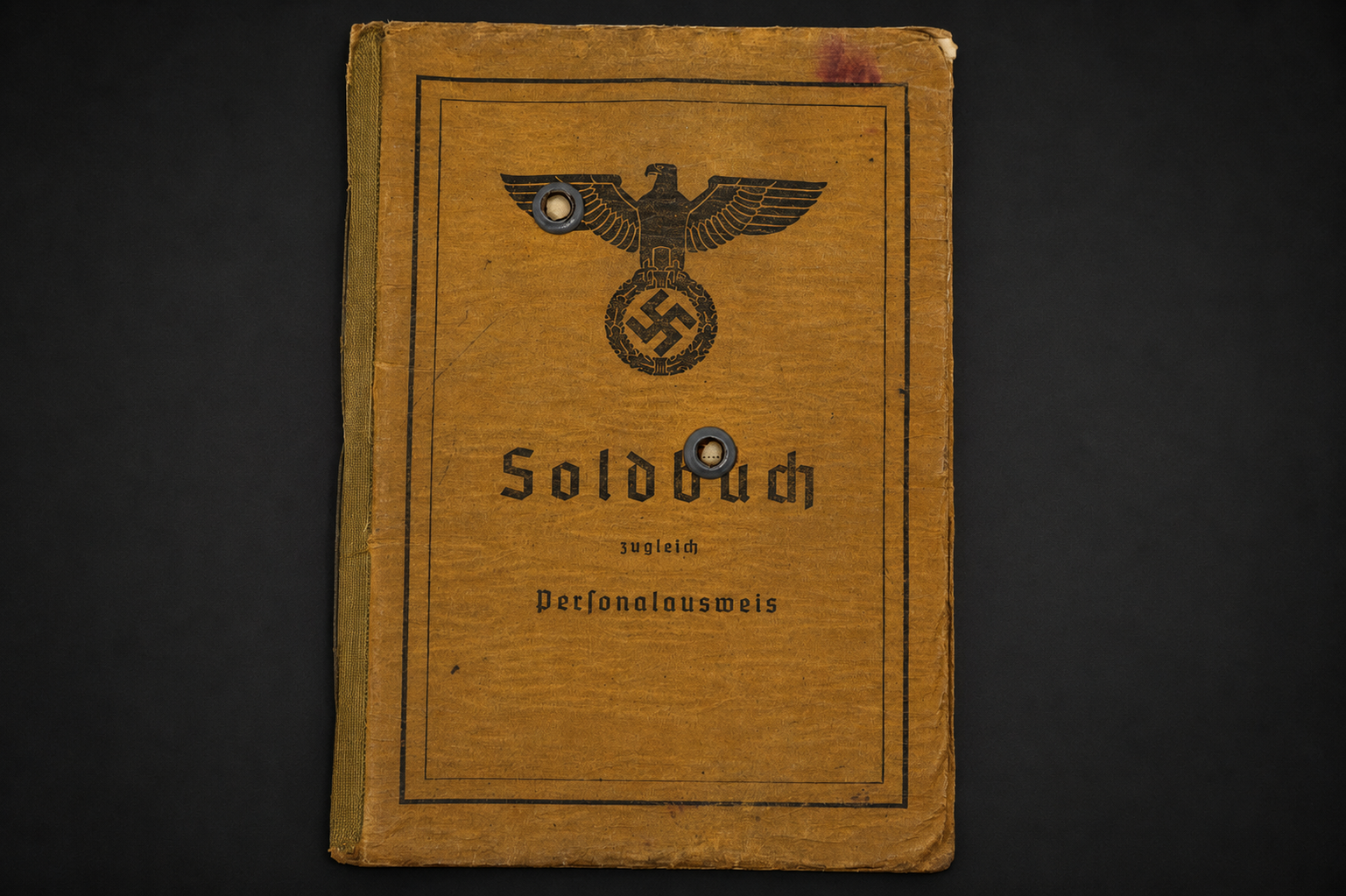
Condition is heavily worn but original and untouched, showing clear evidence of prolonged wartime field carry. The cover displays age wear, staining, and edge damage, while the interior remains well preserved overall with strong readability and attractive wartime entries throughout. Photo was removed from the Soldbuch.
A very researchable and historically interesting original WWII Pionier Soldbuch tied to the desperate late-war fighting of Pionier-Bataillon 1176 and the final collapse within the Ruhrkessel.
€110,00
In stock
In stock
Details
Statement
Wolfgang Historica is a trusted seller with years of experience and consistently positive reviews. We are always interested in purchasing collections or unique objects and also offer a professional consignment service. Buy with confidence.
Historical Description
Interesting and combat-used WWII German Soldbuch issued to Paul Loddenkämper, born 14.12.1911 in Velde. The Soldbuch documents long wartime service within various Pionier replacement and frontline units, ending with service in the late-war Pionier-Bataillon 1176.
The holder was promoted from Gefreiter to Obergefreiter on 1.6.1942 and was awarded the Kriegsverdienstkreuz 2. Klasse mit Schwertern (KVK2 mit Schwertern) on 20.4.1944.
Particularly interesting is the final unit entry for Pionier-Bataillon 1176, a late-war battalion formed on 25 October 1944 on the Lower Rhine (Niederrhein) from Walküre units of Division Nr. 176, including elements of Pionier-Ersatz- und Ausbildungs-Bataillon 6 and 26. The battalion served with the 176. Infanterie-Division and fought defensive battles along the Maas near Maasbracht before being forced back behind the Roer in December 1944.
The unit subsequently participated in severe retreat fighting through: Erkelenz, Waldniel, Viersen, Mönchengladbach, St. Tönis and Krefeld
before retreating into the Duisburg bridgehead and finally behind the Rhine, where the surviving remnants were ultimately trapped in the Ruhr Pocket (Ruhrkessel) and surrendered into American captivity.
The Soldbuch itself shows heavy wartime use and contains numerous entries, unit stamps, signatures, and field-related annotations throughout. Recorded units include:
- Pionier-Bataillon 31 (?)
- Pionier-Ersatz- und Ausbildungs-Bataillon 6, Minden
- Pionier-Bataillon 1176
A documented Kriegslazarett entry records hospitalization for Flecktyphus (Typhus) in 1941.
Condition is heavily worn but original and untouched, showing clear evidence of prolonged wartime field carry. The cover displays age wear, staining, and edge damage, while the interior remains well preserved overall with strong readability and attractive wartime entries throughout. Photo was removed from the Soldbuch.
A very researchable and historically interesting original WWII Pionier Soldbuch tied to the desperate late-war fighting of Pionier-Bataillon 1176 and the final collapse within the Ruhrkessel.