DRK Schwesternhelferin Verwendungsbuch & Ausweis – Reserve-Lazarett Detmold
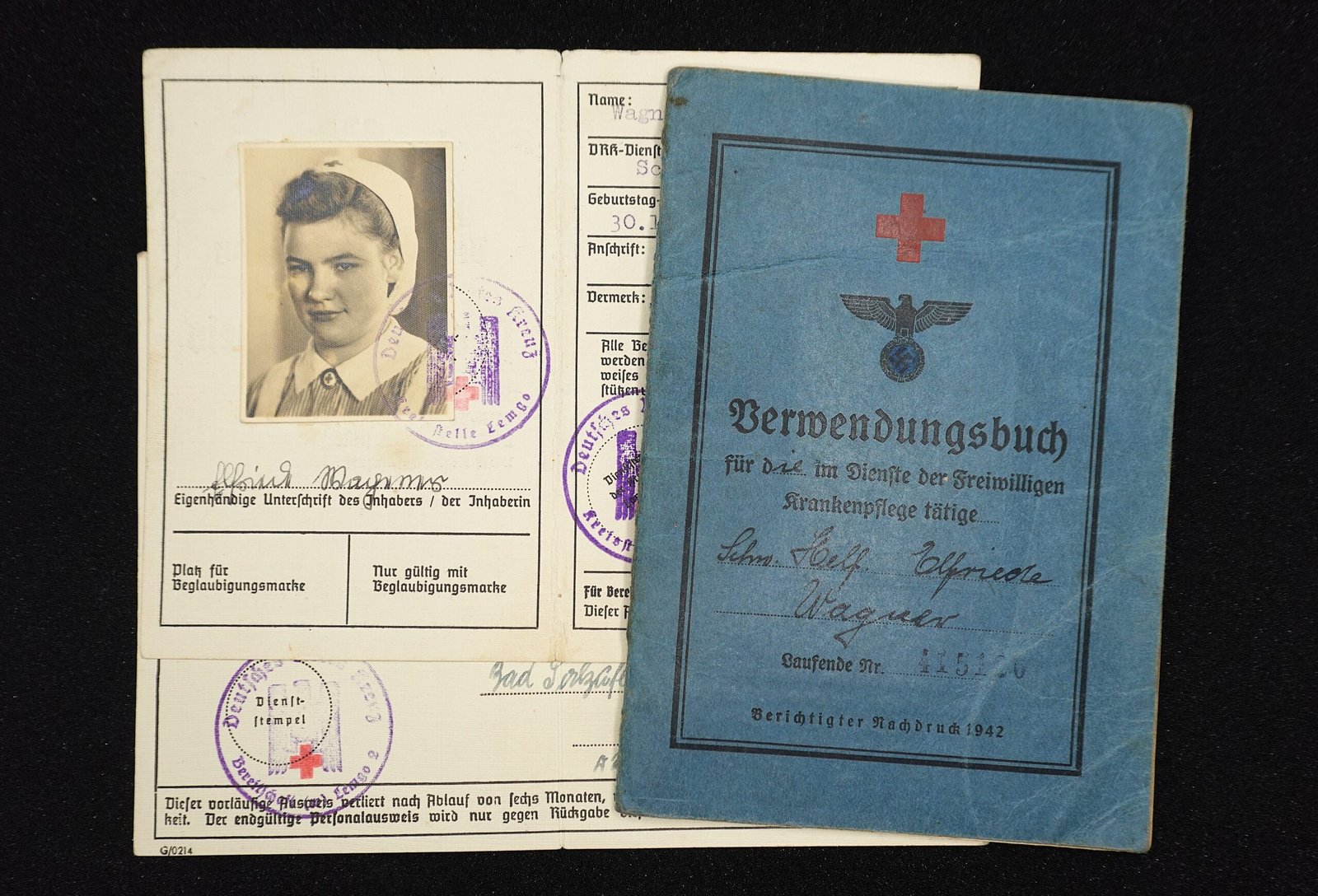
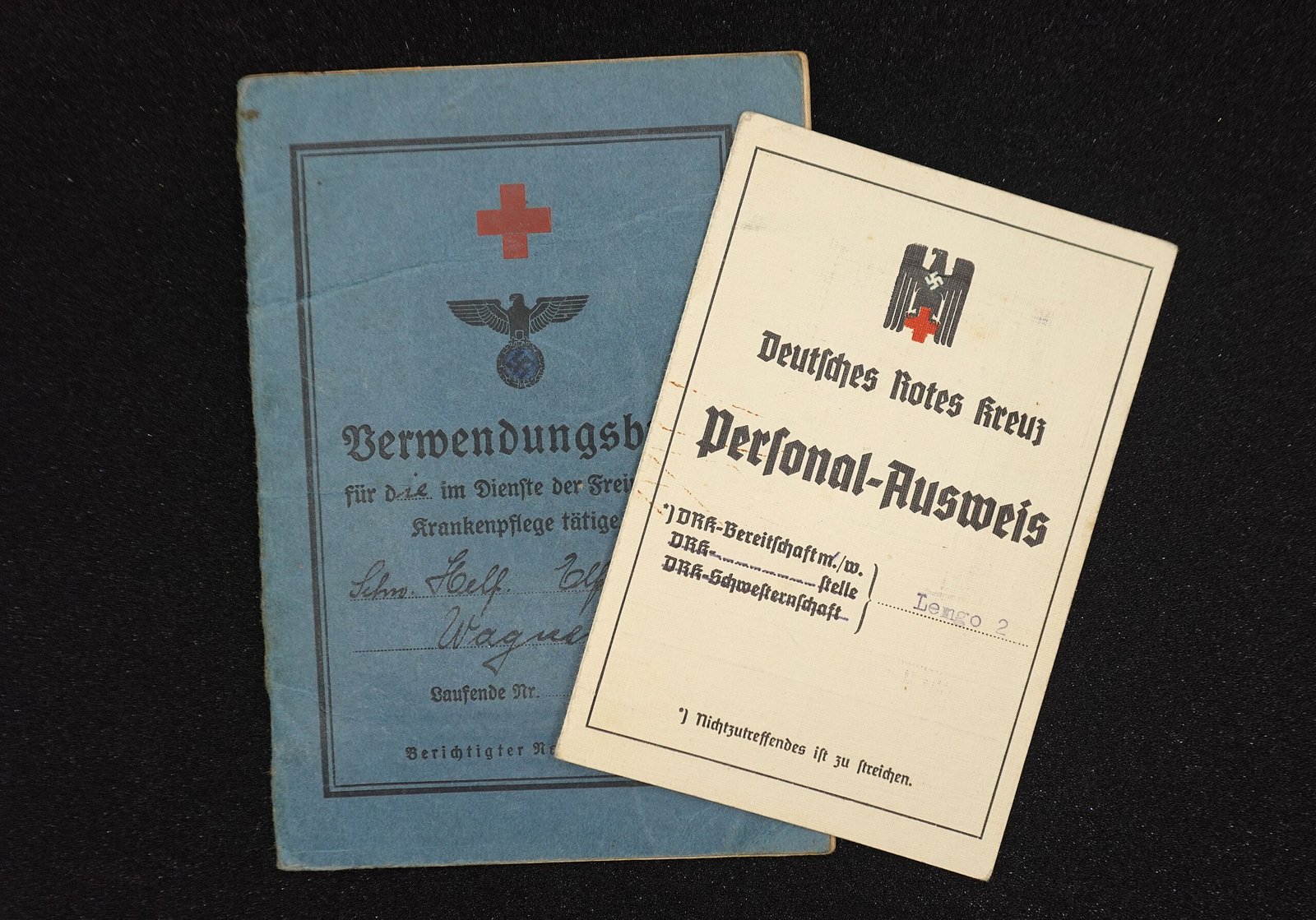
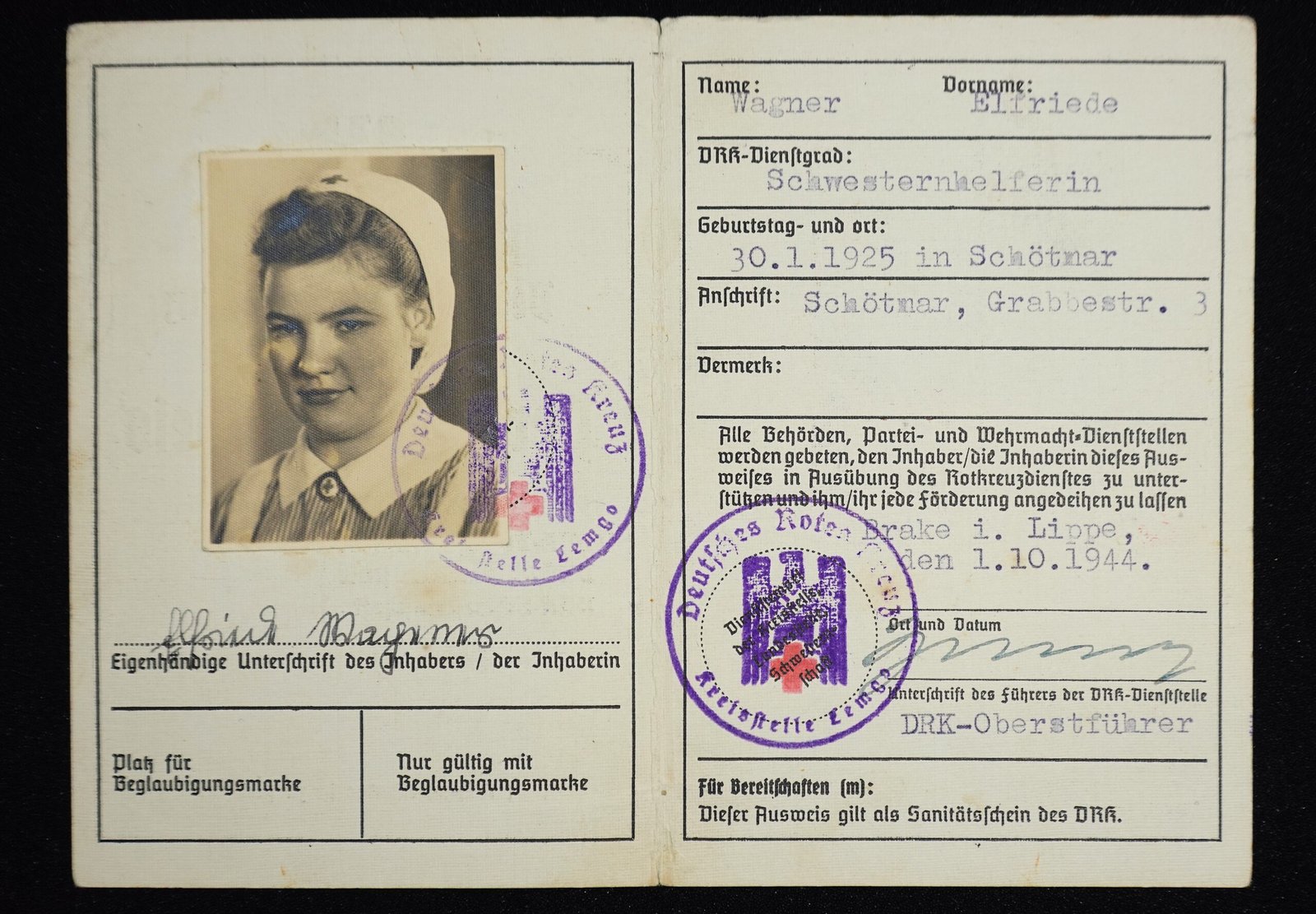
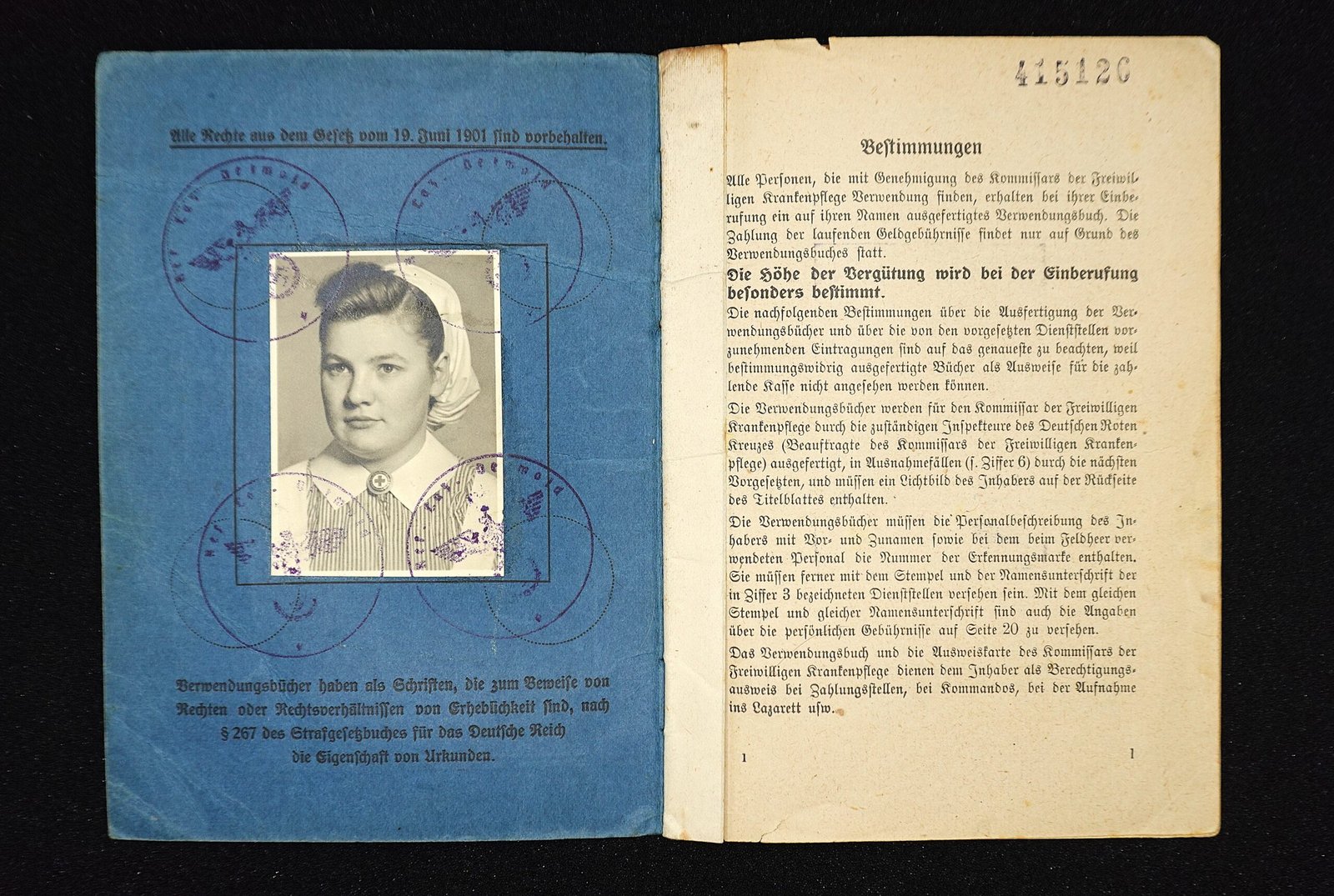
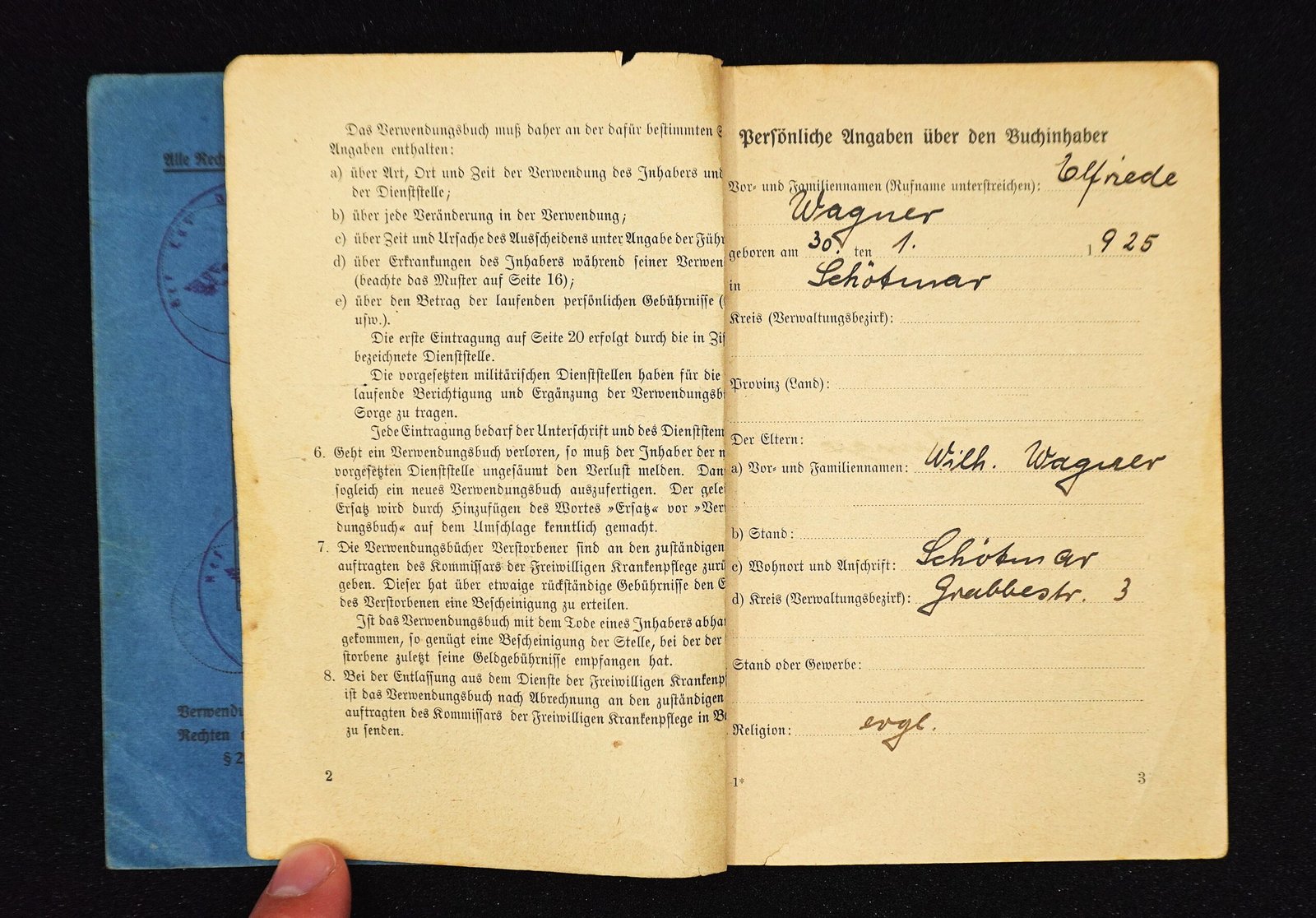
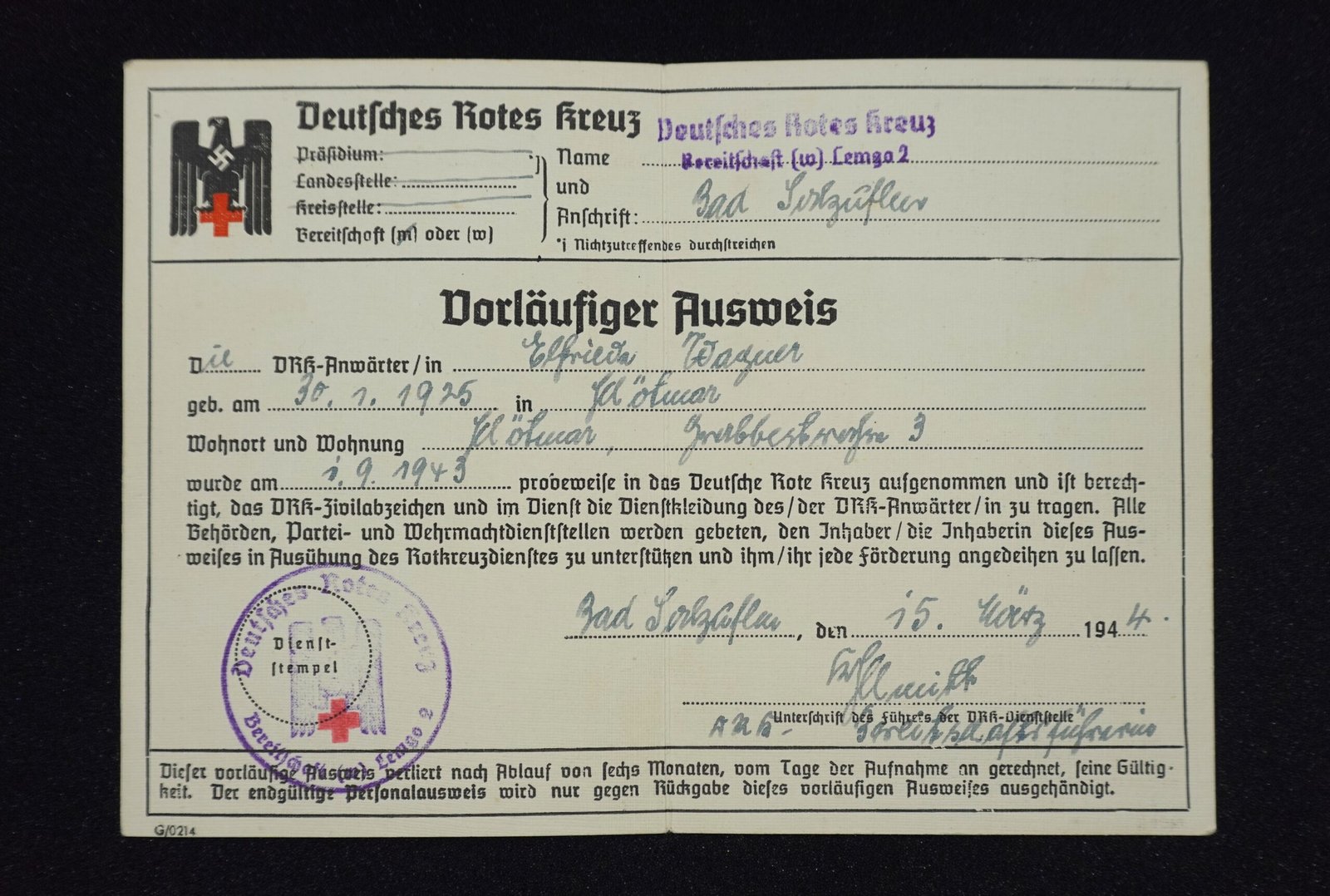
An original and complete Deutsches Rotes Kreuz (DRK) Schwesternhelferin document grouping belonging to Elfriede Wagner, consisting of her Verwendungsbuch (Service Book), matching Personal-Ausweis, and the scarce Vorläufiger Ausweis (Temporary Identity Card).
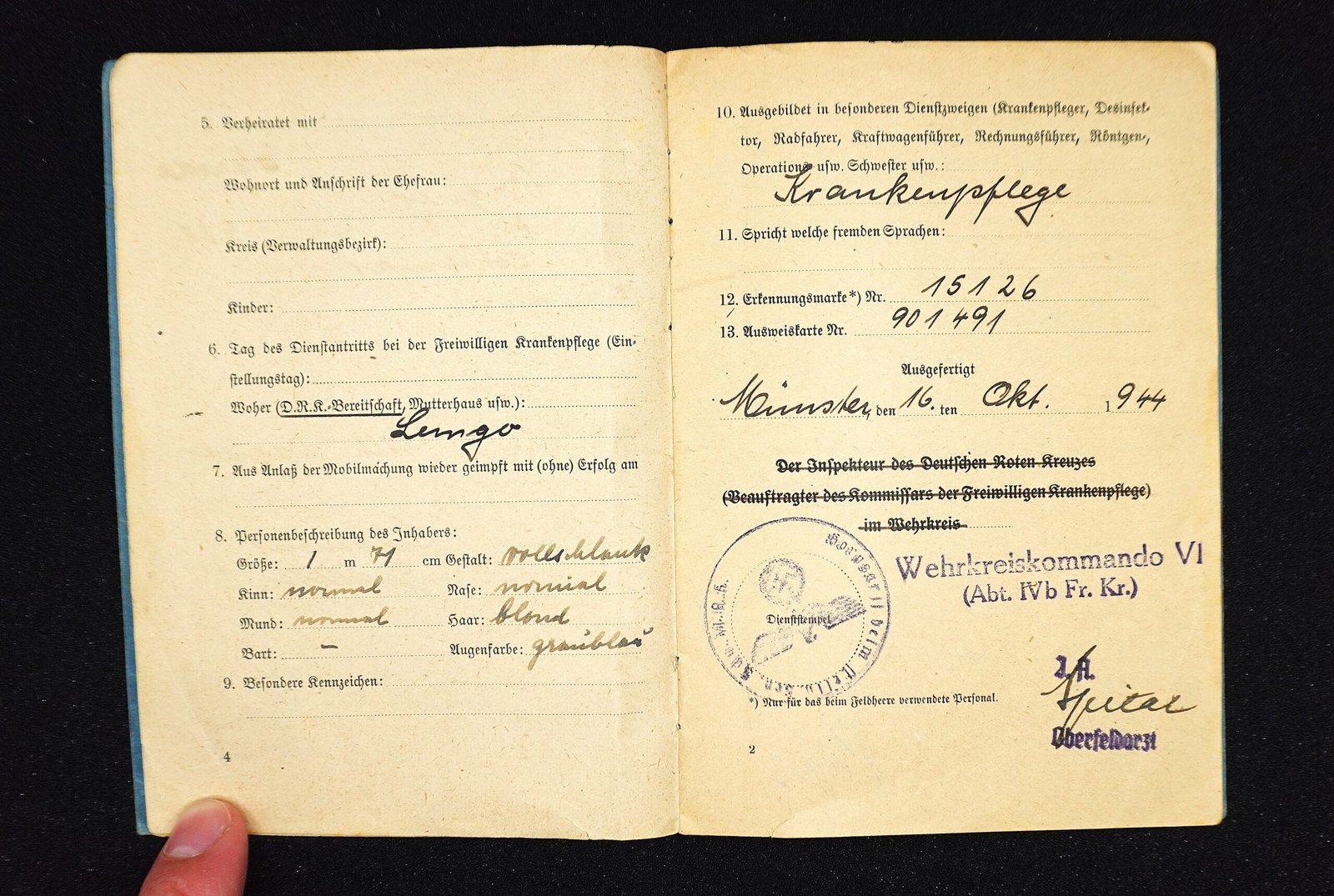
The grouping contains two original portrait photographs, multiple official DRK ink stamps, Wehrkreis VI markings, and handwritten service entries documenting her wartime medical service.
Elfriede Wagner was born on 30 January 1925 in Schötmar (Lippe) and served as a Schwesternhelferin (Nurse’s Assistant) attached to the DRK Bereitschaft Lemgo 2. Her official Personal-Ausweis was issued in Brake (Lippe) on 1 October 1944, while the temporary identity card records her admission into the German Red Cross on 9 September 1943.
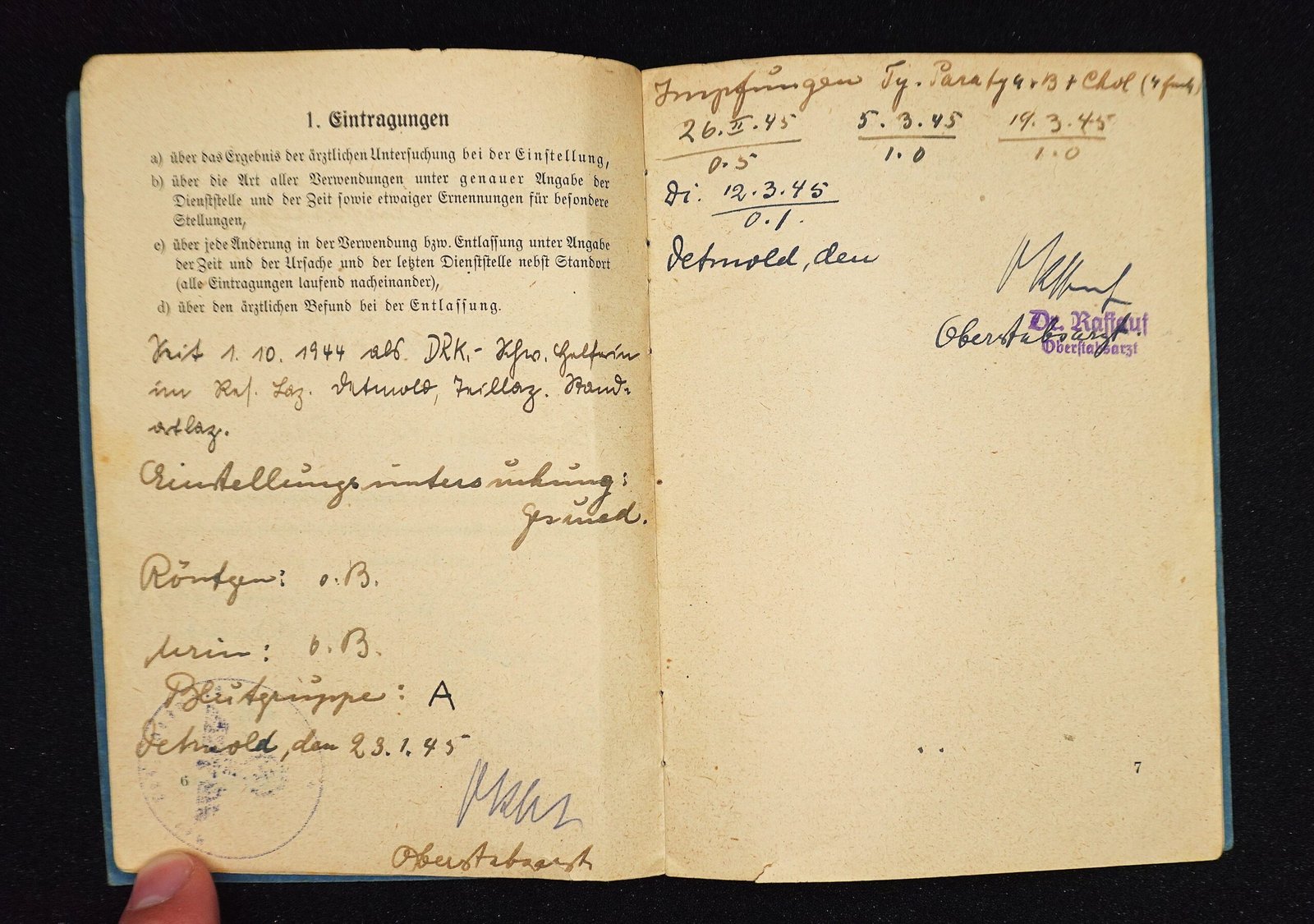
The Verwendungsbuch records her qualification in Krankenpflege (Nursing Care) and documents her later assignment beginning 1 October 1944 to the Reserve-Lazarett Detmold, where she served as a DRK nurse’s assistant. The booklet also contains vaccination entries from early 1945, together with medical examination records and official Wehrkreis VI inspection stamps.
A desirable and complete DRK medical personnel grouping with excellent display value.
€130,00
Out of stock
Out of stock
Details
| Conflict | World War II |
|---|---|
| Country | Germany (Third Reich) |
Statement
Wolfgang Historica is a trusted seller with years of experience and consistently positive reviews. We are always interested in purchasing collections or unique objects and also offer a professional consignment service. Buy with confidence.
Historical Description
During the Second World War, the Deutsches Rotes Kreuz (German Red Cross) relied heavily upon Schwesternhelferinnen, young women trained to assist professional nurses in military hospitals, reserve hospitals, and casualty clearing stations throughout Germany and occupied Europe.
Unlike fully qualified nurses, Schwesternhelferinnen received accelerated medical instruction enabling them to care for wounded soldiers under the supervision of trained nursing staff and military physicians. Their duties included patient care, dressing wounds, assisting with operations, distributing medication, maintaining medical records, and supporting hospital administration.
Every volunteer received a Verwendungsbuch, documenting identity, qualifications, postings, vaccinations, medical examinations, and service history. Initially, new members often received a Vorläufiger Ausweis (Temporary Identity Card) while awaiting issuance of their permanent Personal-Ausweis, making surviving matched sets such as this considerably more desirable.