

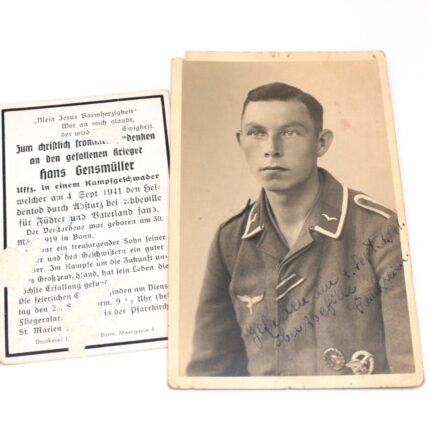
Studioportrait & Death Card – Kampfgeschwader 2
€30,00Original death of Johann “Hans” Gensmüller, who was Killed in Action in a plane crash while serving with the 4. Staffel/ Kampfgeschwader 2. Comes with a studioportrait in which he’s wearing the first pattern Verwundetenabzeichen in Schwarz and Beobachterabzeichen! Condition as seen.
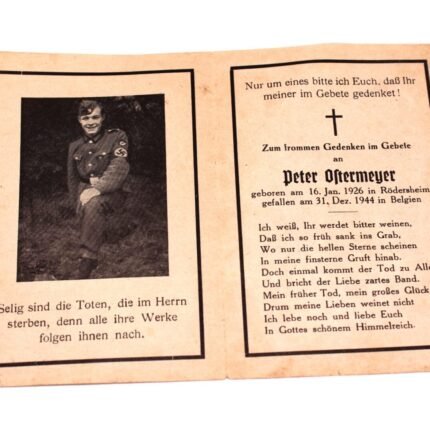

Battle of the Bulge Death Card – December 1944
€25,00Original death card of Peter Ostermeyer who was Killed in Action on December 31, 1944 during the Battle of the Bulge. He lies buried in Recogne-Bastogne.
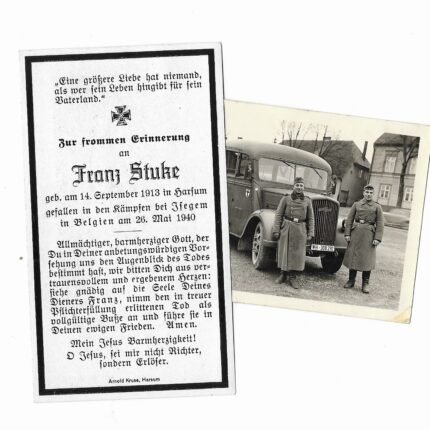
Izegem, Belgium – May ’40 Death Card (Buried Lommel)
€0,01Original scarce Death Card for a German soldier KIA in Belgium during May 1940. Schütze Franz Stuke served with the 10. Kompanie/ Infanterie-Regiment 59 of the 19. Infanterie-Division when he was KIA on May 26, 1940 in Izegem, West-Flanders, Belgium by “A.G. Rücken, Brust und Bein”. There’s no photo on the death card. Comes with an extra photo. Can’t say if it belongs together, but it came together.
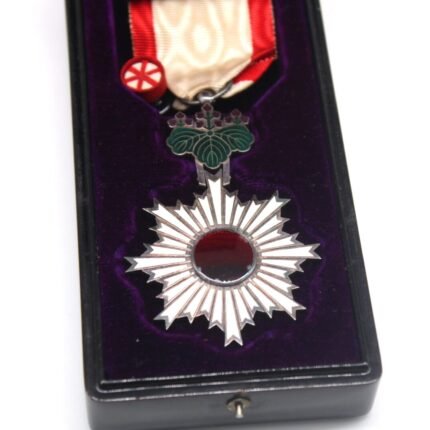
Order of the Rising Sun 6th Class (Cased) (Showa)
€0,01Original Order of the Rising Sun 6th Class. The Order of the Rising Sun (旭日章, Kyokujitsu-shō) is a Japanese order, established in 1875 by Emperor Meiji. The Order was the first national decoration awarded by the Japanese government, created on 10 April 1875 by decree of the Council of State. The badge features rays of sunlight from the rising sun. The design of the Rising Sun symbolizes energy as powerful as the rising sun in parallel with the “rising sun” concept of Japan (“Land of the Rising Sun”). The order is awarded to those who have made distinguished achievements in international relations, promotion of Japanese culture, advancements in their field, development in welfare or preservation of the environment. Prior to the end of World War II, it was also awarded for exemplary military service.
Original medal with matching box and rosette, with silver lettering (Showa – World War II attributed), in very good condition.
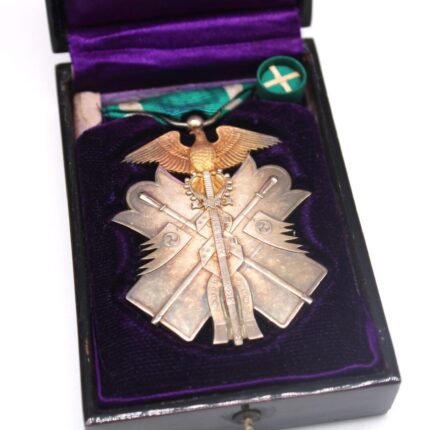
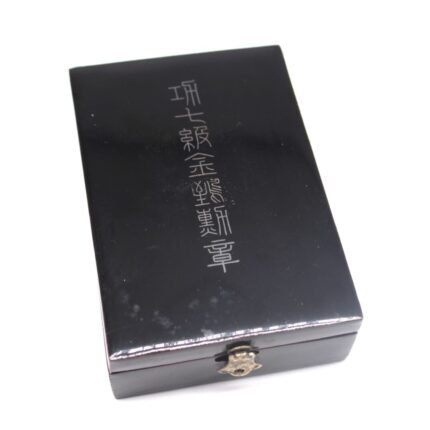
Order of the Golden Kite 7th Class (Cased)
€0,01Original Order of the Golden Kite 7th Class. The Order of the Golden Kite (金鵄勲章(きんしくんしょう) was an exclusively military award, abolished in 1947, conferred for bravery, leadership or command in battle. It ranked just below the Order of the Chrysanthemum in precedence and was the military equivalent of the Order of the Paulownia Flowers. The order consisted of seven classes. Enlisted rank soldiers were eligible for the 7th–5th classes, non-commissioned officers were eligible for the 6th–4th classes, junior officers for the 5th–3rd classes, field grade officers for the 4th–2nd classes and general officers for the 3rd-1st classes.
Original medal with rosette in overall good condition with matching case with silver lettering (Showa – World War II).
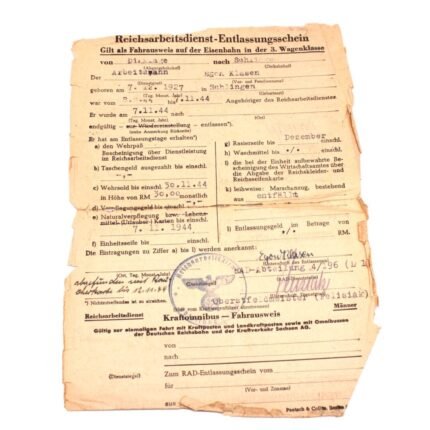
Reichsarbeitsdienst-Entlassungsschein
€5,00Original Reichsarbeitsdienst-Entlassungsschein from 1944, RAD-Abteilung 4/196. Condition as seen.
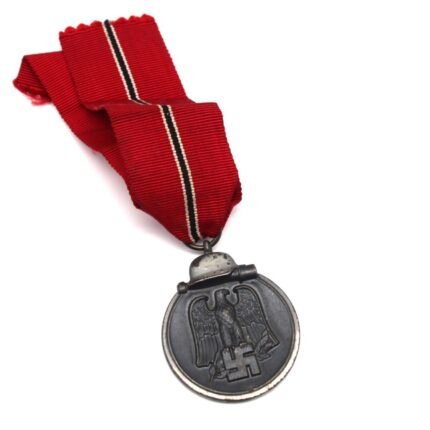
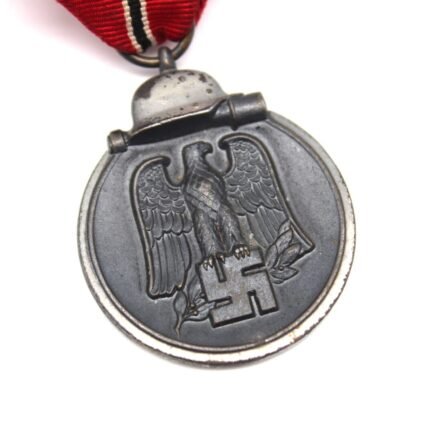
Winterschlacht im Osten 1941/42 (Ostmedaille)
€0,01Original Winterschlacht im Osten 1941/42 (Winter War Medal) (‘Ostmedaille’) for service during the harsh winter of 1941/1942. Not visible maker marked. Good condition.
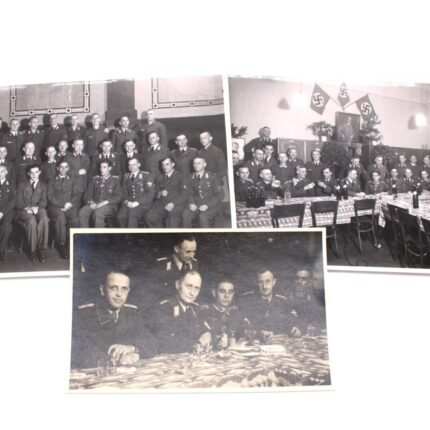
3x Photographs Unknown Ritterkreuzträger
€0,01Original 3x Wartime Photographs (1x Postcardsize, 2x Bigger size) featuring an unknown Ritterkreuzträger. Condition as seen.

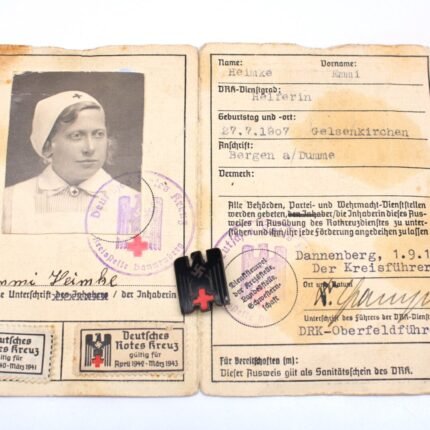
DRK Personal-Ausweis + DRK Membership Pin
€95,00Original DRK Personal-Ausweis and DRK Membership Pin. Condition as seen.

Sturmabzeichen Doc – Gebirgs-Pio.Btl.54 (1.Geb.Div.)
€0,01Original award document of Gefreiter Josef Staudinger, who served with the 3. Kompanie/ Gebirgs-Pionier-Bataillon 54 of the 1. Gebirgs-Division, for the Allgemeines-Sturmabzeichen (General Assault Badge) on July 15, 1941 for 3 assault days during his service! Document was signed by Generalmajor Hubert Lanz (RK+EL). Has been folded in the past. Condition as seen!
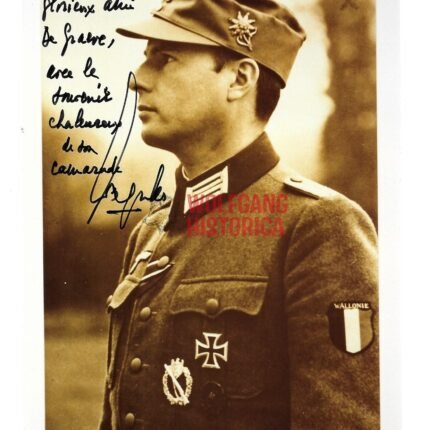
Leon Degrelle – 28. SS-Freiwilligen-Panzer-Grenadier-Division “Wallonië”
€0,01Original Scarce Postwar Signature on a Postwar Photo of Leon Degrelle. SS-Standartenführer Leon Degrelle (15.06.1906 † 31.03.1994) earned the Ritterkreuz on February 20, 1944 as SS-Hauptsturmführer und Führer of the 5. SS-Freiwilligen-Sturmbrigade “Wallonien”, the Eichenlaub on August 27, 1944 as SS-Sturmbannführer und Kommandeur of the 28. SS-Freiwilligen-Grenadier-Division “Wallonien” and Nahkampfspange in Gold on September 14, 1944. Good condition.
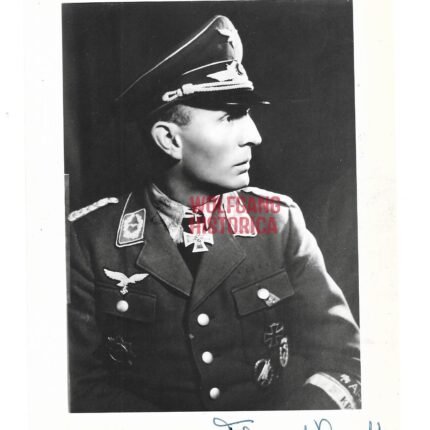
Friedrich August Freiherr von der Heydte – Carentan & Operation Stösser
€0,01Original Scarce Postwar Signature on a Postwar Photo of Friedrich von der Heydte. Friedrich August Freiherr von der Heydte (30 March 1907 – 7 July 1994) was a German paratroop officer during World War II who later served in the armed forces of West Germany, achieving the rank of General. Following the war, Heydte pursued academic, political and military career, as a Catholic-conservative professor of political science. In 1962, Heydte was involved in the Spiegel scandal.
Heydte took part in the invasion of Poland and the Battle of France as a junior commander. In May 1940, he was transferred to Luftwaffe’s parachute arm; he commanded a battalion during the Battle of Crete in May 1941. In July 1942 Heydte was sent to Libya as commander of the Fallschirm-Lehrbataillon, part of the Ramcke Parachute Brigade. Heydte was an officer in the Ramcke Brigade in North Africa until February 1943 when he and several other officers were transferred to France to form the nucleus of the new 2nd Fallschirmjäger Division under command of major-general H.B. Ramcke. He was posted as an operations officer in the divisional HQ.
After the fall of Sicily during the summer of 1943, the Germans grew wary of a potential Italian defection to the Allies. To counter this event the 2nd Fallschirmjäger Division was transferred from France to Rome on 6 August. Heydte gained audience with Pope Pius XII and befriended the Pope’s “Throne Assistant”, the Theologian Alois Hudal, who would later become a key person in helping Nazi war criminals evade the courts of justice during the post-war war-crime trials. The division participated in taking Rome under German control as part of the German Operation Achse.
Heydte was given command of a regiment of the 2nd Fallschirmjäger Division in January 1944. By the time of Operation Overlord, the 6th Fallschirmjäger Regiment had been detached to the 91st Luftlande Infantry Division. Heydte’s unit took part in the Battle of Carentan, Operation Lüttich, and in fighting against the Allied forces in Operation Market Garden. (Source: Wikipedia)
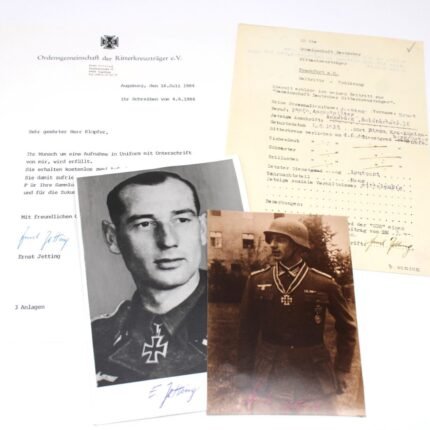
Set of Ernst Jetting – Grenadier-Regiment 29 (RK)
€95,00Original (document from after war!) Gemeinschaft Deutscher Ritterkreuzträger (GdR) Membership application of Ernst Jetting. Leutnant Ernst Jetting (01.08.1915 † 24.12.1999) earned the Ritterkreuz on June 4, 1944 as Oberfeldwebel in the 1. Kompanie/ Grenadier-Regiment 29 of the 3. Panzer-Grenadier-Division. Good Condition. Also signed by him!
Comes with a letter of Jetting and two postwar signed photographs!
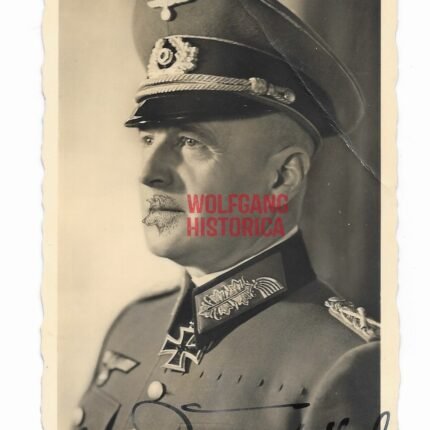
Walther von Brauchitsch – Generalfeldmarschall (Wartime Signed)
€0,01Original Wartime Signature on a Postcard of Walther von Brauchitsch. Generalfeldmarschall Walther von Brauchitsch (04.10.1881 † 18.10.1948) earned the Ritterkreuz des Eisernen Kreuzes on September 30, 1939 as Generaloberst u. Oberbefehlshaber des Heeres. Condition as seen. Postcardsize.
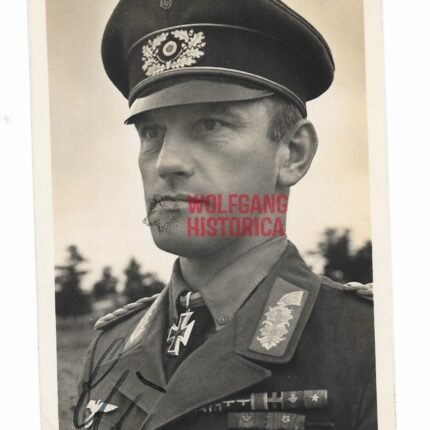

Alfred Gause – Panzergruppe “Afrika” (Stabschef of Erwin Rommel)
€0,01Original Wartime Signature on a Postcard of Alfred Gause. Generalleutnant Alfred Gause (14.02.1896 † 30.09.1967) earned the Ritterkreuz on December 13, 1941 as Generalmajor und Stabschef of the Generalstab d. Panzergruppe “Afrika”. Served as Rommel’s Chief of Staff. Good condition. Postcardsize.
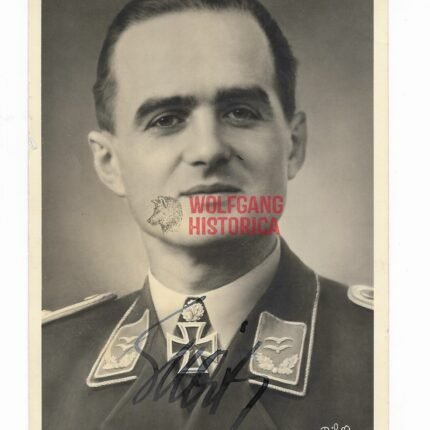
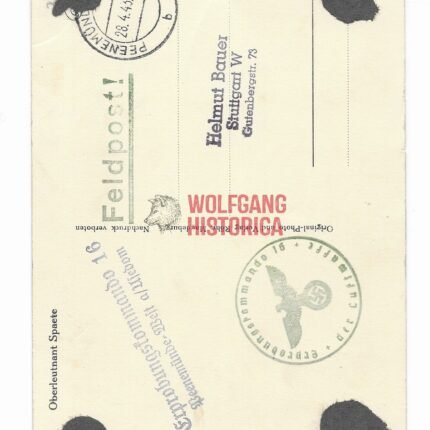
Wolfgang Späte – Jagdgeschwader 54 (Eichenlaub) (Wartime Signed)
€0,01Original Wartime Signature on a Postcard of Wolfgang Späte. Major Wolfgang Späte (08.09.1911 † 30.04.1997) earned the Ritterkreuz on October 5, 1941 as Oberleutnant und Flugzeugführer in the 5. Staffel/ Jagdgeschwader 54 and the Eichenlaub on April 23, 1942 as Oberleutnant und Staffelkapitän of the 5. Staffel/ Jagdgeschwader 54. He’s credited with 99 aerial victories. Condition as seen. Measuring: Postcardsize.
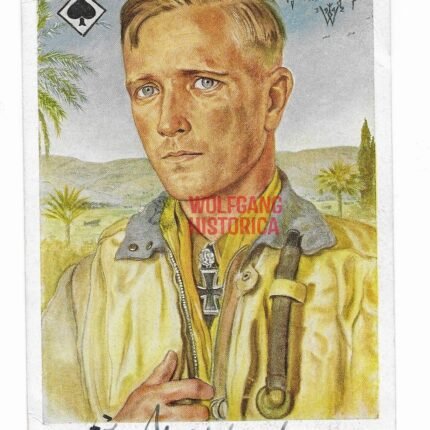
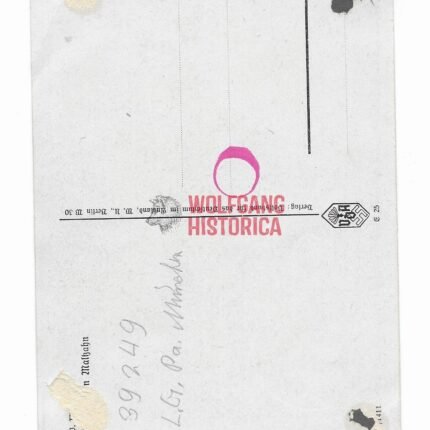
Günther Freiherr von Maltzahn – Jagdgeschwader 53 (Eichenlaub) (Wartime Signed)
€0,01Original Wartime Signature on a Postcard of Günther Freiherr von Maltzahn. Oberst Günther Freiherr von Maltzahn (20.10.1910 † 24.06.1953) earned the Ritterkreuz on December 30, 1940 as Major und Gruppenkommandeur of the II. Gruppe/ Jagdgeschwader 53 and the Eichenlaub on July 24, 1941 as Major und Geschwaderkommodore of the Jagdgeschwader 53. He’s credited with 68 aerial victories. Condition as seen. Measuring: Postcardsize.
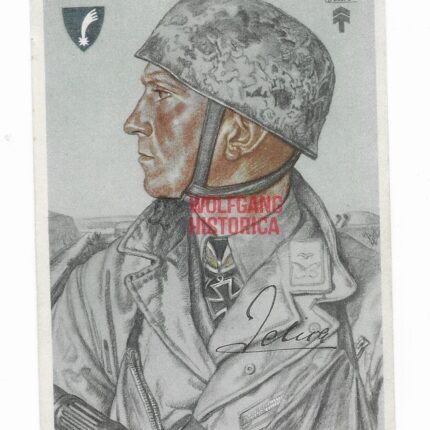
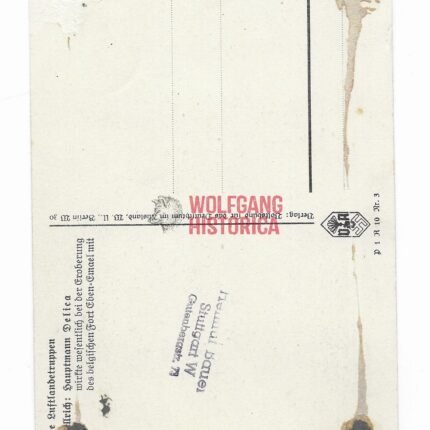
Egon Delica – Sturmgruppe Granit (Eben Emael, 1940) (Wartime Signed)
€0,01Original Wartime Signature of Egon Delica, who was leader of Trupp 1 in Sturmgruppe Granit. The Sturmgrupe Granit (Granite) was the assault group that famously captured the Belgian Eben-Emael fort on 10 May 1940 led by Oberleutnant Rudolf Witzig. It was 86 men strong and was carried in 11 gliders. Egon Delica earned the Ritterkreuz (Knight’s Cross) for his actions.
Glider 1 / 1 Trupp – Objective 18 (Casemate Maastrich 2)
Leutnant Egon Delica
Feldwebel Hans Nidermeier
Feldwebel Gerhard Raschke (pilot)
Richard Drucks
Ludwig Gräf
Willi Krämer
Heinrich List
Richard Tucke
Poscardsize. Good Condition.


Hanns-Heinrich Lohmann – “Norge” & “De Ruyter” (Oakleaves)
€0,01Original Postwar Signature on a Postwar Photo of Hanns-Heinrich Lohmann. SS-Obersturmbannführer Hanns-Heinrich Lohmann (24.04.1911 † 25.05.1995) earned the Deutsches Kreuz in Gold on March 11, 1943 with SS-Infanterie-Regiment “Nordland”, the Ritterkreuz on March 12, 1944 as SS-Sturmbannführer und Kommandeur of the III. Bataillon/ SS-Panzer-Grenadier-Regiment 23 “Norge” of the 11. SS-Freiwilligen-Panzergrenadier-Division “Nordland“ and the Eichenlaub on May 9, 1945 as SS-Obersturmbannführer und Führer of the SS-Panzer-Grenadier-Regiment 49 “De Ruyter” of the 23. SS-Panzer-Grenadier-Division “Nederland”. Good condition. Measuring: 9,4×14,1cm. Signed on front and back.
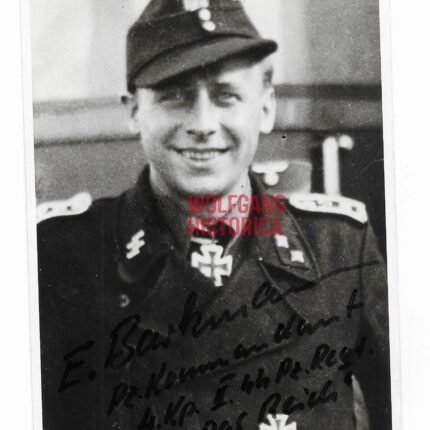
Ernst Barkmann – SS-Panzer-Regiment 2 “Das Reich”
€0,01Original Postwar Signature on a Postwar Photo of Ernst Barkmann. SS-Oberscharführer Ernst Barkmann (25.08.1919 † 27.06.2009) earned the Ritterkreuz on August 27, 1944 as SS-Unterscharführer und Panzerkommandant in the 4. Kompanie/ SS-Panzer-Regiment 2 of the 2. SS-Panzer-Division “Das Reich”. Good condition. Measuring: Postcardsize.
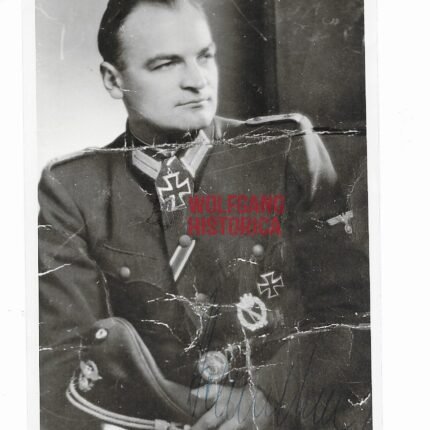
Helmut Kinz – Waffen-Gebirgs-Aufklärungs-Abteilung 13 “Handschar”
€0,01Original Scarce Postwar Signature on a Postwar Photo of Helmut Kinz. SS-Sturmbannführer und Major der Schutzpolizei Helmut Kinz (01.12.1915 † 19.10.1985) earned the Ritterkreuz on May 3, 1945 as SS-Sturmbannführer und Kommandeur of the Waffen-Gebirgs-Aufklärungs-Abteilung 13 of the 13. Waffen-Gebirgs-Division der SS “Handschar”. Good condition. Measuring: 9,1×12,7cm.

EK2 Award Doc: Gebirgsjäger-Regiment 143 (6.Geb.Div) (1945!)
€0,01Award document of Obergefreiter Berger, who served with the Stabskompanie/ Gebirgsjäger-Regiment 143 of the 6. Gebirgs-Division for the Eisernes Kreuz 2. Klasse (Iron Cross 2nd Class) for his service on April 20, 1945 (!) Document was signed by Oberst Wilhelm Rademacher (DKIG). Has been folded several times in the past. Condition as seen.
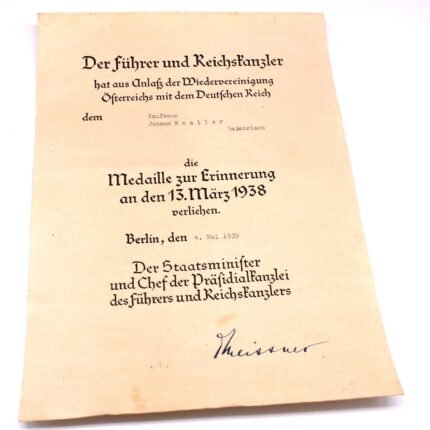
Anschlußmedaille Österreich 1938 Award Document
€0,01Original Award document for the Medaille zur Erinnerung an den 13. März 1938. Condition as seen.
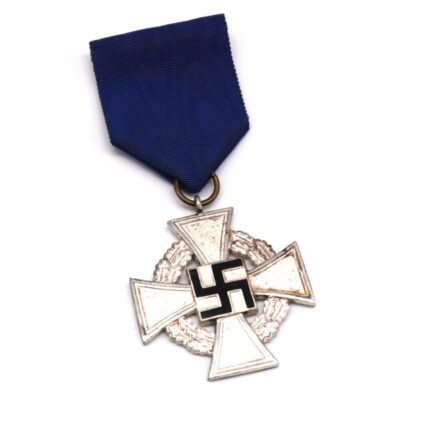
Treuedienst-Ehrenzeichen 2. Stufe für 25 Jahre
€20,00Original Treuedienst-Ehrenzeichen 2. Stufe für 25 Jahre (25 Years Loyal Service Award). Condition as seen.
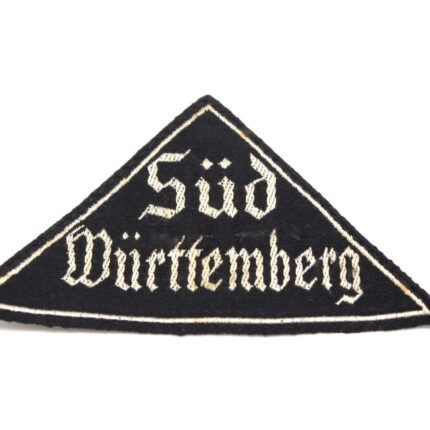
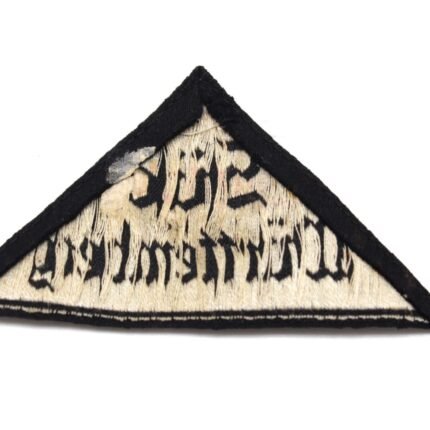
BDM District-Triangle “Süd Württemberg”
€0,01Bund Deutscher Mädel ‘Gebietsdreieck’ (District-Triangle) for “Süd Württemberg”. Good condition.
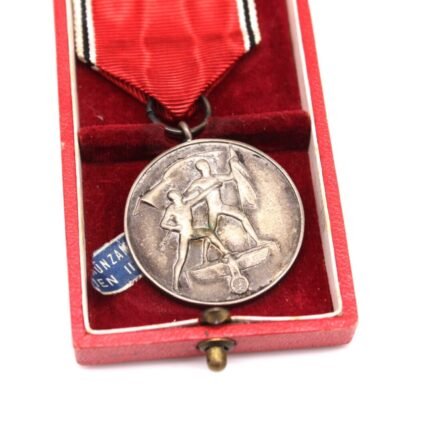
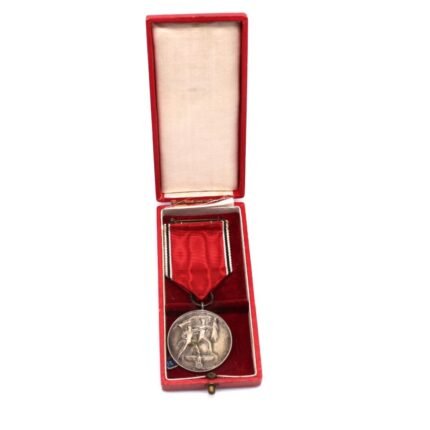
Anschlußmedaille Österreich 1938 (Cased)
€120,00Original Medaille zur Erinnerung an den 13. März 1938. Complete with casing and box maker marked with Hauptmünzamt Wien (sticker torn as can be seen). Condition as seen.
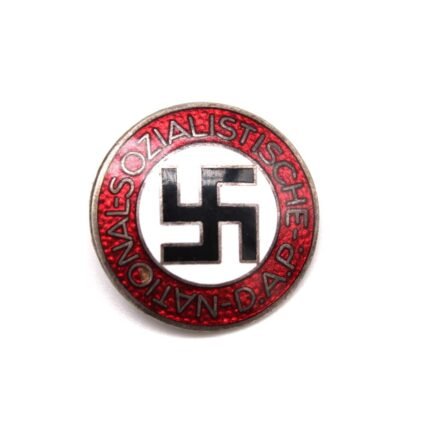
Order of the Sacred Treasure 7th Class (Cased)
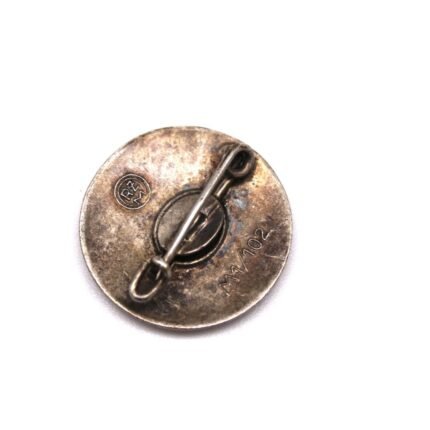
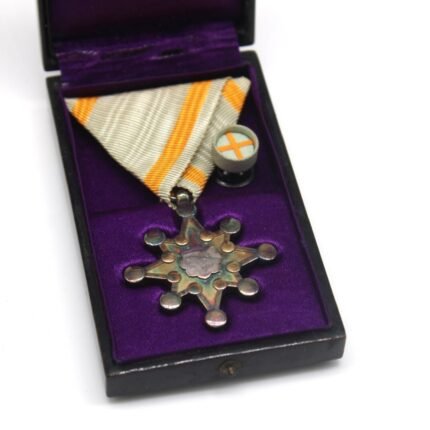
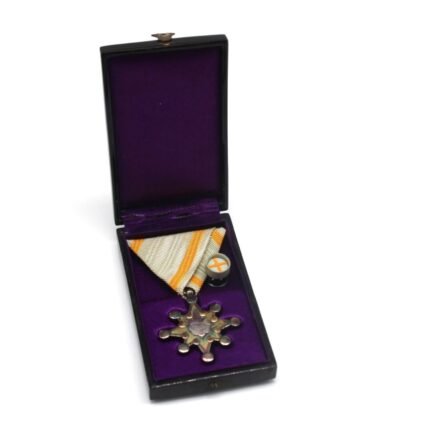
€0,01Order of the Sacred Treasure 7th Class. Original medal with matching casing, with silver or faded golden lettering, in overall good condition.
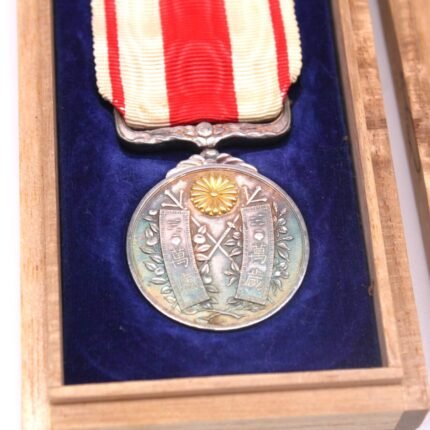
Taisho Enthronement Commemorative Medal (Cased)
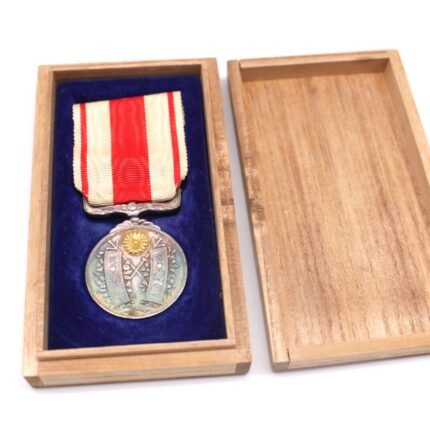
€0,01The Taisho Enthronement Commemorative Medal was created to celebrate the ascension of the Taisho Emperor to the throne, who did so upon the death of his father in 1912. The enthronement ceremonies, however, were held in 1915. The medal was issued to people throughout the country who participated in the celebration ceremonies. It was issued in a men’s and a women’s version.
Original medal with matching wooden case, with golden lettering, in good condition.
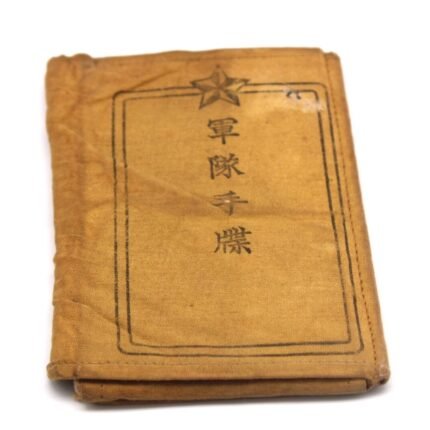

Taisho era Soldier’s Paybook (ID) – 21st Field Artillery Regiment
€0,01This type of Paybook (Identity Booklet for Soldiers) was used during 1912-1930. This I.D. belonged to Fukukichi Suzuki. He served with the 1st Company of the 21st Field Artillery Regiment of the 15th Division (codename Festival Division (祭兵団, Sai Heidan)). During his service he was promoted to Artillery Superior Private. He received an award on June 10, 1919 but difficult to make out which. He did also receive the Good Conduct certificate on November 30, 1920. He mostly took part in training and excersises after World War I.
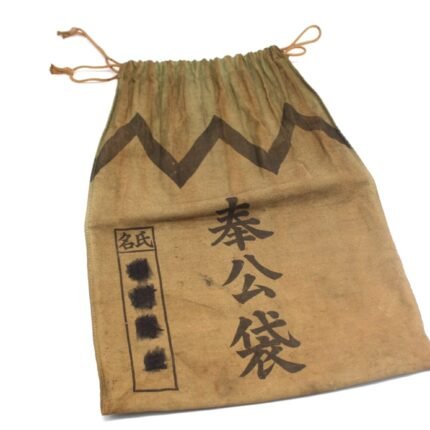
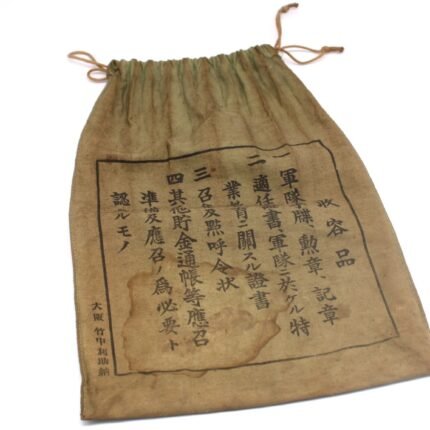
Soldier’s Public Service Bag “Hoko Bukuro”
€45,00Japanese Soldier’s Public Service Bag (奉公袋, hōkō-bukuro), in which a soldier carried everything related to his service, from his call-up letter and qualifications to decorations and campaign medals. Soldier’s name is blackened out. Measurements: 33×22.5 cm.
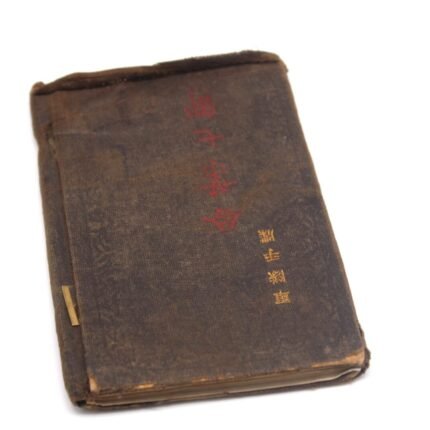
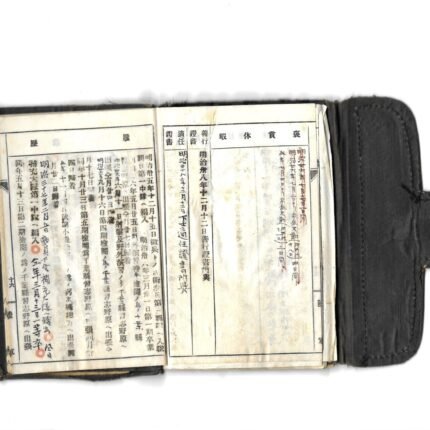
Russo-Japanese War Soldier’s Paybook (ID) – Imperial Guard
€0,01This type of Paybook (Identity Booklet for Soldiers) was used during 1897-1907 ( the Boxer Rebellion & Russo-Japanese War ). This I.D. belonged to Aiba Shichirō. He served with the Imperial Guard Division in the 2nd Company of the 3rd Infantry Regiment. Several records indicate he earned the Certificate of Good Deeds, awarded on December 12, Meiji 38, and the Certificate of Eligibility to be promoted to Corporal on December 12, Meiji 38. Some of his history includes he was being incorporated into the 1st Battalion of the Supplementary Corps and was promoted from Private Second Class to the First Class at the same time. He mostly took part in excersises.
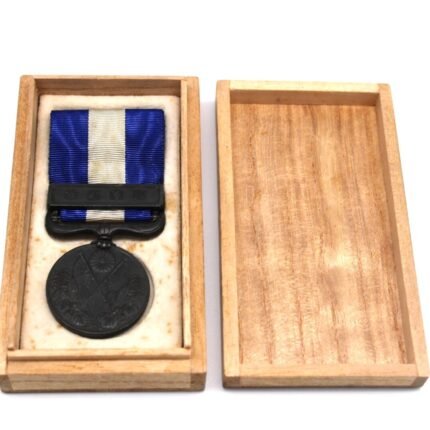
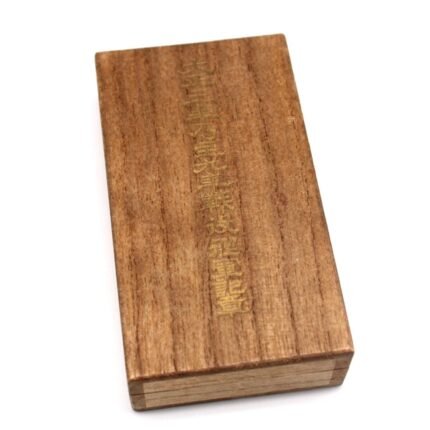
1914-1920 Campaign Military Medal of Honor (Cased)
€0,011914-1920 Campaign Military Medal of Honor (“Campaign Medal / War Medal”). Japanese participation in World War I was commemorated by a Military Medal of Honor created on November 6, 1915 by Imperial Edict No. 203. However Japan stayed longer in World War I than anticipated as they also took part in the Siberian Intervention. So two very similar medals were issued, one for service in 1914-15 and the other for the period 1914-20. If a person earned both they could only wear the latter.
Original medal in overall good condition with matching wooden case with golden lettering.
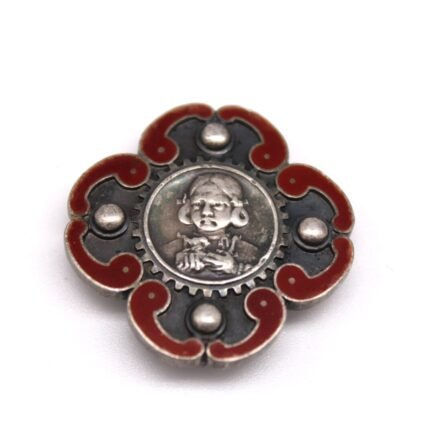
Military Industry ‘Labor Badge’
€0,01Original Military Industry ‘Labor Badge’ in good condition. Inscribed on reverse: 勤労章. Diameter 28 mm.
This badge was awarded to those who have demonstrated extraordinary labour integrity, excellence, sacrifice and achievement in the munitions industry, including workers injured or killed in Allied bombing raids on Japanese (munition) factories and plants. There are two variants (1) Smaller ‘Labor Badge’ (awarded by the local government) and a (2) Larger ‘Labor Merit Badge’ (national award). Newsreel of Labor (Merit) Badge awardings (click)!
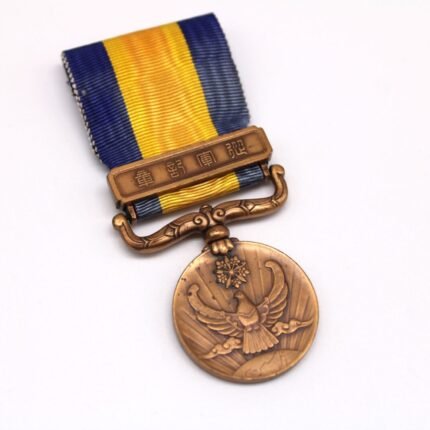
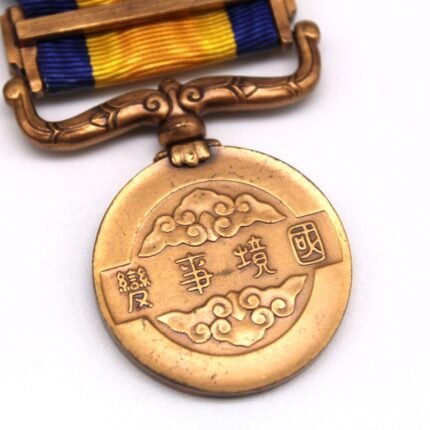
The Nomonhan Incident War Medal (Battles of Khalkhin Gol)
€0,01The Border Incident Military Medal of Honor also known as The Nomonhan Incident War Medal was a Manchurian award (puppet state of Japan) and was awarded to Japanese soldiers that took part in the Nomonhan Incident better known as the Battles of Khalkhin Gol. On the reverse is written “Border Incident”. Original medal in very good condition.
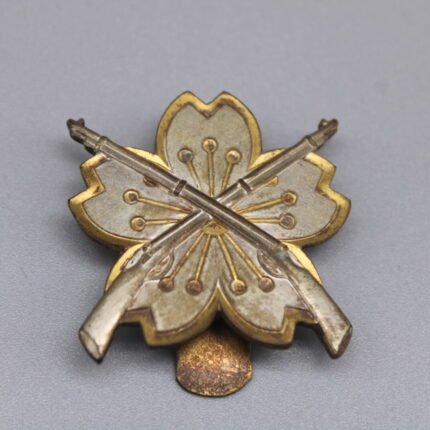
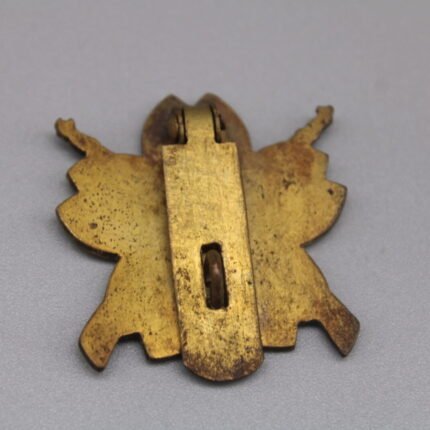
IJA Marksmanship Badge – 1st Class Marksmen
€0,01Imperial Japanese Army Markmanship Badge, most likely Special Badge (Model 2.1.2) = Bronze Rifles & Blossom with Silver Rim & Stamen. Overall almost perfect condition. Condition as seen.
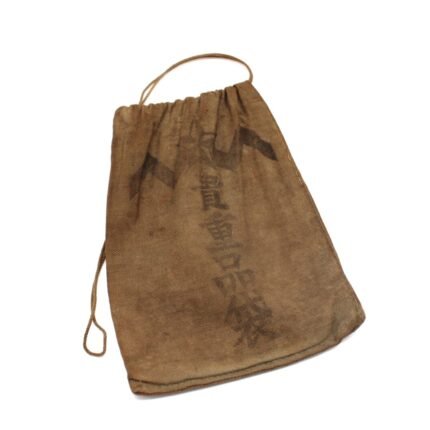
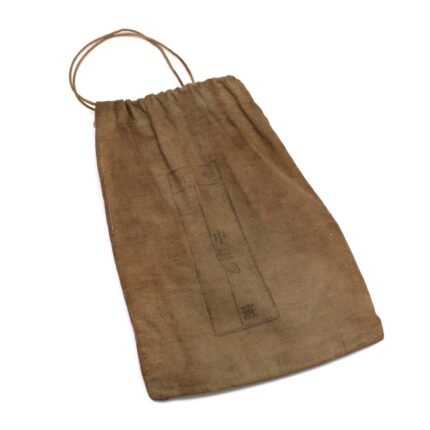
Soldier’s Valuables Bag “Kichohinbukuro”
€0,01Soldier’s Valuables Bag (貴重品袋, Kichohinbukuro) in which a soldier carried his valuables. Measurements: 11.5cm x 15cm.
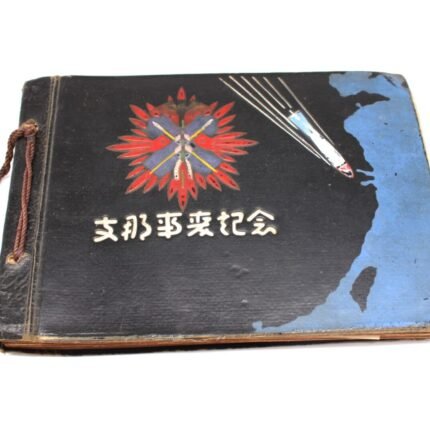
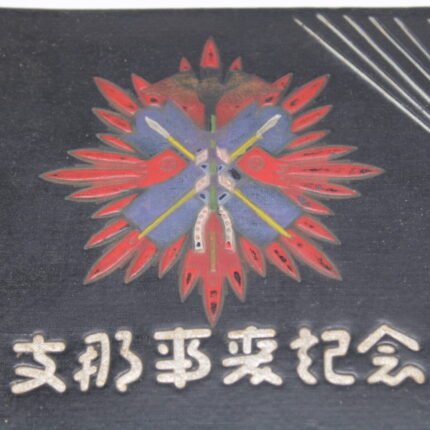
Imperial Japanese Army Photoalbum
€180,00Stunning photoalbum with front artwork depicting the Golden Kite and a dromb dropping on China. Filled with various photographs. Some may be missing. 65 photographs.
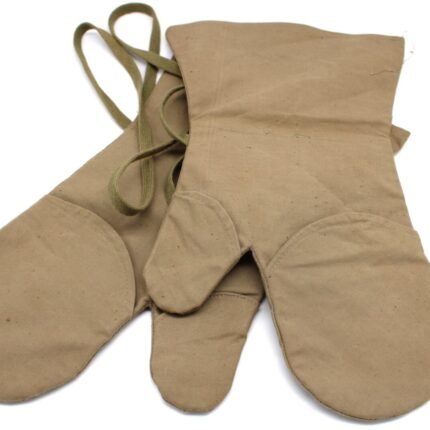
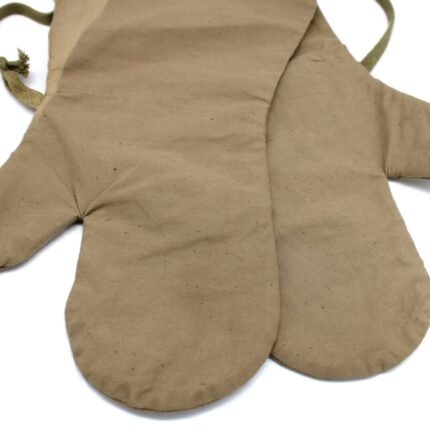
Imperial Japanese Army Soldier’s Mosquito Mittens / Gloves
€35,00Original Imperial Japanese Army Soldier’s Mosquito Mittens / Gloves. Matching pair, still tied together. Stamped. Very good condition.
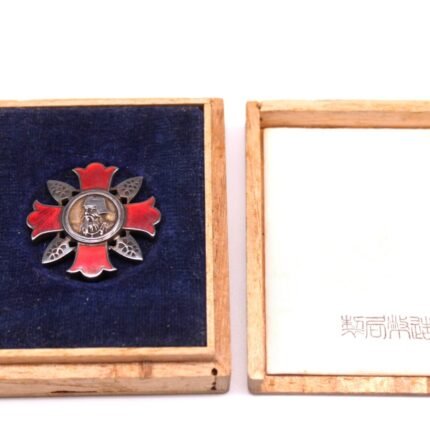
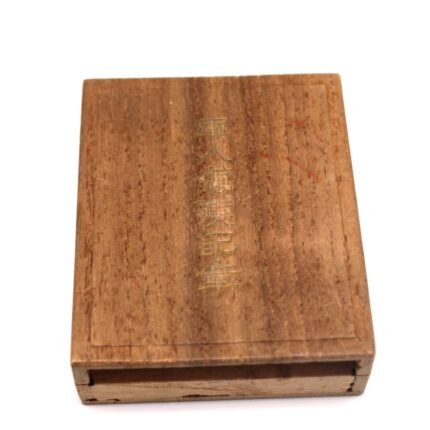
Wound Badge – Combat Injury (Sensho) (Cased)
€0,01Japanese Wound Badge – Type 4.1. (Model 1938, Sensho), which means this type of wound badge was awarded for suffering a combat injury! Overall good condition. Original badge with matching wooden case. The box is missing one end!
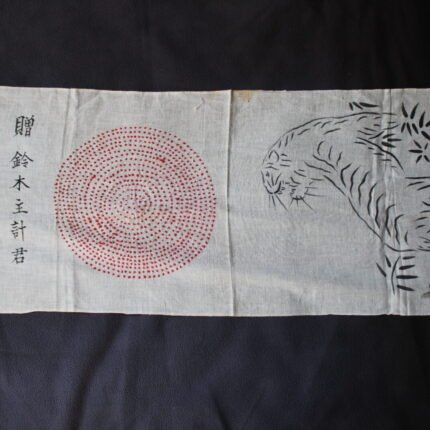
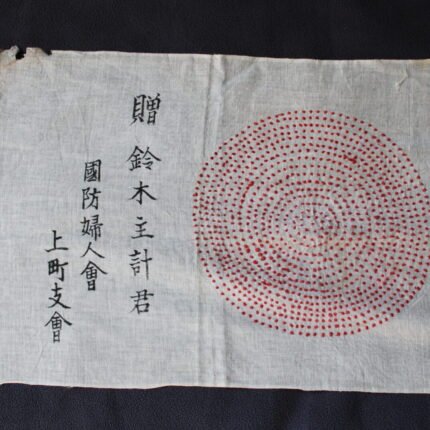
Senninbari with Tiger Art (Thousand Stitch Belt)
€250,00Original Senninbari (Thousand Stitch Belt) with Tiger art! The writings says: “Gift to Kazue-kun, Japan’s National Women’s Association, Kami Machi Branch”. Measuring 92x34cm.
A senninbari (千人針, “thousand person stitches) or one thousand stitch is a belt or strip of cloth stitched 1000 times and given as a Shinto amulet by Japanese women to soldiers going away to war. Senninbari were decorated with 1000 knots or stitches, and each stitch was normally made by a different woman. Senninbari were typically 15 centimetres (5.9 in) wide and ranged from 90 centimetres (3.0 ft) to 120 centimetres (3.9 ft) or more in length. Each end of the belt could feature strings, snaps or buttons that allowed it to be fastened around the waist; examples lacking these were often tucked into the waist. Other variations were never worn, but may have been folded and placed inside helmet liners, pockets or packs.
In general, senninbari and later varieties one thousand stitch belts were believed to confer courage, good luck and immunity from injury (especially bullets) to their wearers. Some Japanese soldiers rejected the belief that the senninbari could protect them from harm, instead believing that the amulet would allow them to inflict the greatest damage upon the enemy before offering their own lives up in battle. Others in the military wore the senninbari as a memento and a keepsake of the women who had given it to them. (Source: Wikipedia)

Armband “Deutsche Wehrmacht”
€0,01Yellow cotton armband “Deutsche Wehrmacht” denoting service in the Wehrmacht for non-military personnel. Good condition.
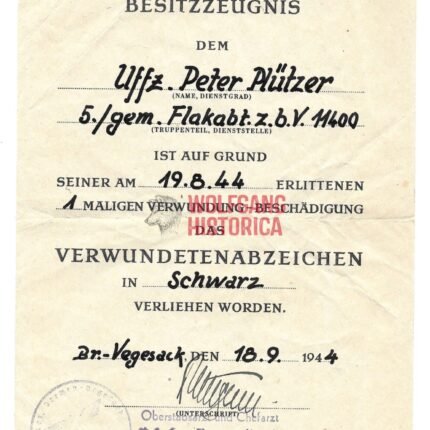
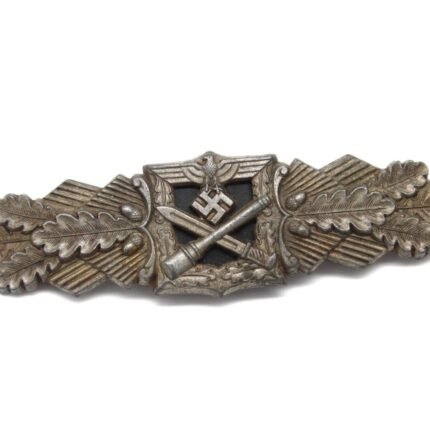
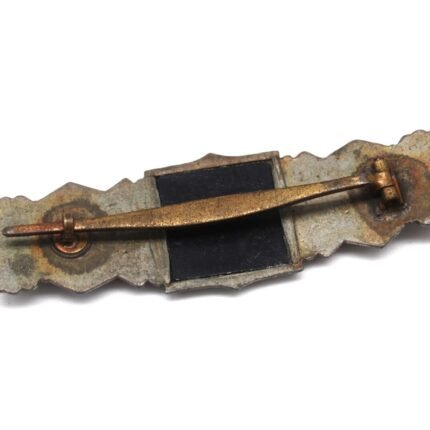
Nahkampfspange in Bronze – F&BL
€0,01Original Nahkampfspange in Bronze (Close Combat Badge in Bronze). Maker marked Funcke & Brüninghaus, Lüdenscheid. Plaque may have been pasted in? Priced accordingly. Condition as seen.
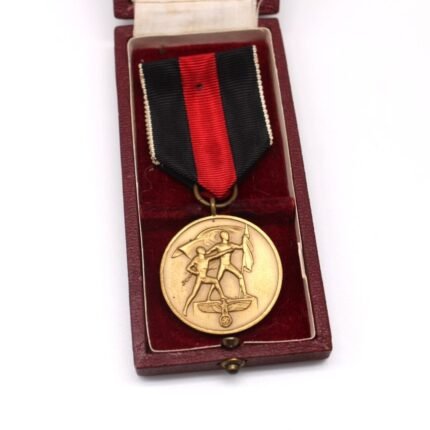
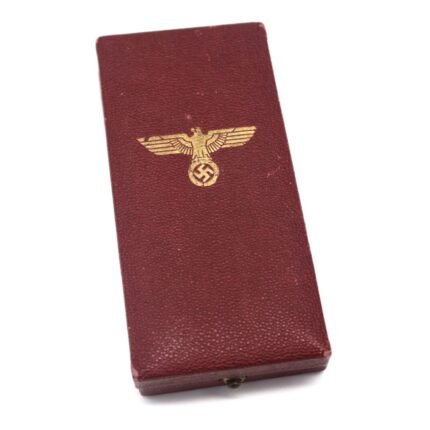
Medaille zur Erinnerung an den 1. Oktober 1938 (Cased)
€110,00Original Medaille zur Erinnerung an den 1. Oktober 1938 (1 October 1938 Medal also known as Sudetenland Medal) with Casing. There once was a plaque added to it. Good condition.
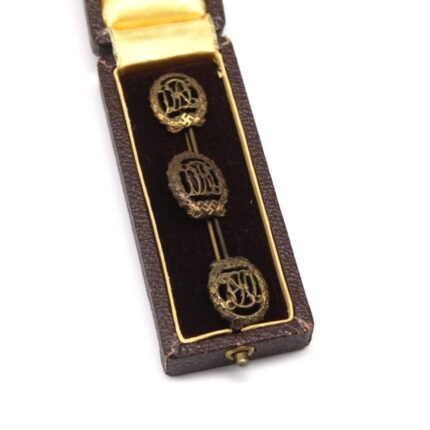
DRL-Abzeichen Mini Pins Set
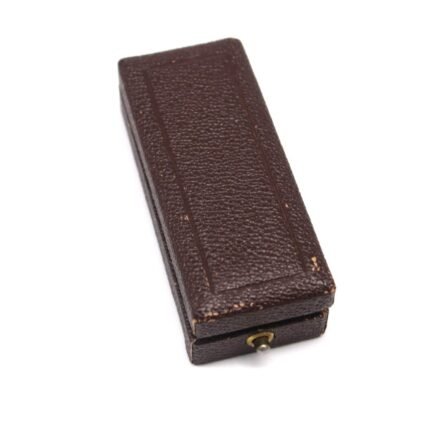
€0,01Original Set of Mini DRL-Abzeichen Pins with casing. Pins are maker marked on the reverse. Condition as seen.