


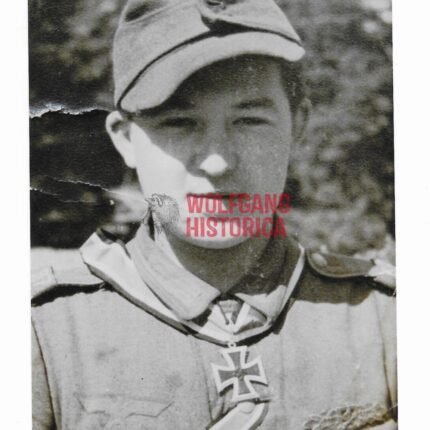
Kurt Bischof – Grenadier-Regiment 337 (208.Inf.Div.)
€0,01Original Postwar Signature on a Postwar Photo of Kurt Bischof. Obergefreiter Kurt Bischof (16.12.1924 † 11.01.2013) earned the Ritterkreuz on April 14, 1945 as Obergefreiter und Melder in the 5. Kompanie/ Grenadier-Regiment 337 of the 208. Infanterie-Division. Good condition. Postcardsize.
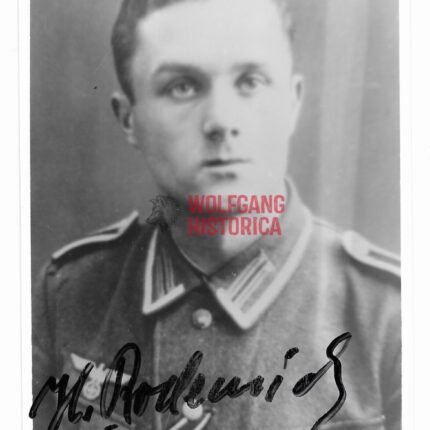
Heinrich Rodemich – Grenadier-Regiment 988 (276.Volks-Gren.Div.)
€20,00Original Postwar Signature on a Postwar Photo of Heinrich Rodemich. Feldwebel Heinrich Rodemich (24.12.1919 † 04.10.2007) earned the Ritterkreuz on May 11, 1945 as Feldwebel und Zugführer in the 7. Kompanie/ Grenadier-Regiment 988 of the 276. Volks-Grenadier-Division. Good condition. Postcardsize. His KC is not an official but recognized by OdR.
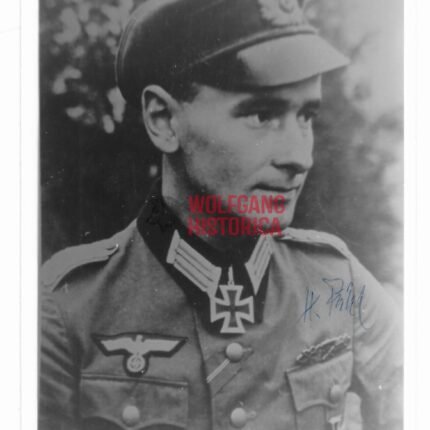
Heinrich Ruhl – Divisions-Füsilier-Bataillon 122 (122.Inf.Div.)
€25,00Original Postwar Signature on a Postwar Photo of Heinrich Ruhl. Major Heinrich Ruhl (31.08.1915 † 01.12.2015) earned the Ritterkreuz on September 21, 1944 as Major und Kommandeur of the Divisions-Füsilier-Bataillon 122 of the 122. Infanterie-Division and the Eichenlaub on March 16, 1945 as Major und Kommandeur of the Divisions-Füsilier-Bataillon 122 of the 122. Infanterie-Division. Good condition. Postcardsize.

Helmut Wandmaker – Grenadier-Regiment 76 (Nahkampfspange in Gold)
€0,01Original Postwar Signature on a Postwar Photo of Helmut Wandmaker. Major Helmut Wandmaker (09.11.1916 † 19.07.2007) earned the Deutsches Kreuz in Gold on June 1, 1944, the Ritterkreuz on April 5, 1945 as Major und Kommandeur of the II. Bataillon/ Grenadier-Regiment 76 of the 20. Panzer-Grenadier-Division and the Nahkampfspange in Gold on April 7, 1945. Good condition. Postcardsize.

Gerhard Flechsig – Panzer-Grenadier-Regiment 12 (4.Pz.Div.)
€25,00Original Postwar Signature on a Postwar Photo of Gerhard Flechsig. Oberleutnant Gerhard Flechsig (20.11.1919 † 17.05.2008) earned the Ritterkreuz on November 18, 1944 as Feldwebel und Zugführer of the Stabskompanie/ Panzer-Grenadier-Regiment 12 of the 4. Panzer-Division. Good condition. Postcardsize.
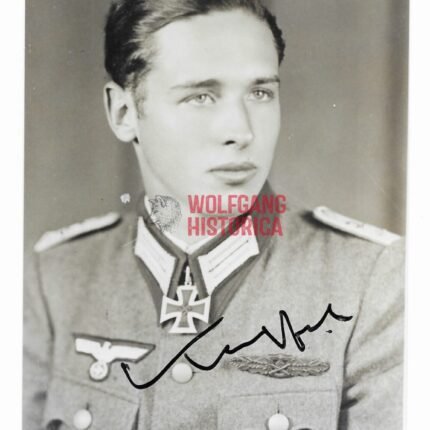
Paul-Georg Kleffel – Panzer-Aufklärungs-Abteilung 3 (3.Pz.Div.)
€20,00Original Postwar Signature on a Postwar Photo of Paul-Georg Kleffel. Hauptmann Paul-Georg Kleffel (07.09.1920 † 09.02.2020) earned the Deutsches Kreuz in Gold on November 16, 1943 as Oberleutnant in the 4. Kompanie/ Panzer-Aufklärungs-Abteilung 3 and the Ritterkreuz on May 4, 1944 as Oberleutnant und Kompaniechef of the 4. Kompanie/ Panzer-Aufklärungs-Abteilung 3 of the 3. Panzer-Division. Good condition. Postcardsize.
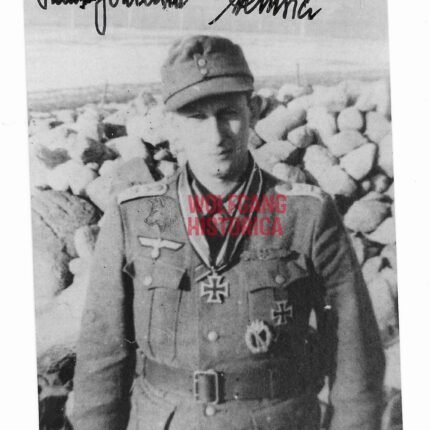
Hans-Joachim Heinrici – Grenadier-Regiment 431 (131.Inf.Div.)
€25,00Original Postwar Signature on a Postwar Photo of Hans-Joachim Heinrici. Hauptmann Hans-Joachim Heinrici (16.04.1918 † 08.10.2011) earned the Ritterkreuz on February 14, 1945 as Hauptmann und Führer of the II. Bataillon/ Grenadier-Regiment 431 of the 131. Infanterie-Division. Good condition. Postcardsize.
Knight’s Cross earned for: “Fighter of our Army — Broke the Russian encirclement ring with his Bataillon: Hauptmann Heinrici, Bataillon commander of a Lower Saxonian Infanterie-Division, was pushed back by strong enemy forces during his Division’s advance towards the west (south of Liebstadt). He was unable to make contact with his Division. Oriented as to the situation via radio, he made the decision to break the Russian encirclement ring with his Bataillon and force a union with the Division. A great example of bravery to his men, he led his Bataillon as a cohesive unit with all weapons and transportable wounded in a seven-day march through the enemy ring. He repeatedly attacked enemy units, smashed them and inflicted heavy losses. After reaching friendly lines the Bataillon was immediately deployed in the sector of an unfamiliar Division, where it distinguished itself brilliantly during four days of offensive and defensive actions under the command of Hauptmann Heinrici. His decisiveness and outstanding bravery meant that his Bataillon was able to force a decision even in the worst of combat situations and repel the Russian attacks.” (Source: Traces of War)

Hans Mehrle – Grenadier-Regiment 380 (215.Inf.Div.)
€20,00Original Postwar Signature on a Postwar Photo of Hans Mehrle. Oberleutnant Hans Mehrle (15.04.1922 † 12.04.2008) earned the Ritterkreuz on April 15, 1944 as Oberleutnant und Regiments-Adjutant of the Grenadier-Regiment 380 of the 215. Infanterie-Division. Good condition. Postcardsize.

Theodor Kroj – Grenadier-Regiment 87 (36.Inf.Div.)
€20,00Original Postwar Signature on a Postwar Photo of Theodor Kroj. Hauptmann Theodor Kroj (01.09.1918 † 03.04.2012) earned the Ritterkreuz on November 24, 1943 as Hauptmann und Führer of the II. Bataillon/ Grenadier-Regiment 87 of the 36. Infanterie-Division. Good condition. Postcardsize.
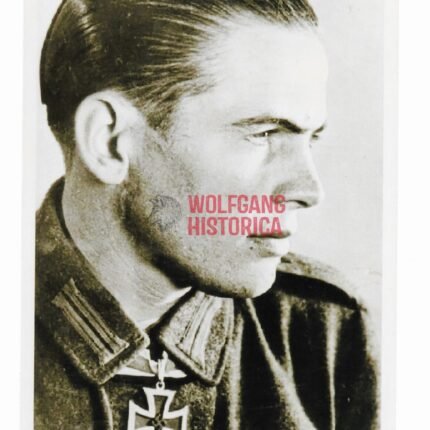
Max Zastrow – Pionier-Bataillon 81 (45.Inf.Div.)
€20,00Original Postwar Signature on a Postwar Photo of Max Zastrow. Gefreiter Max Zastrow (12.10.1922 † 01.11.2014) earned the Ritterkreuz on March 6, 1944 as Gefreiter und MG-Schütze in the 2. Kompanie/ Pionier-Bataillon 81 of the 45. Infanterie-Division. Good condition. Postcardsize.
The Führer has awarded the Knight’s Cross of the Iron Cross to Max Zastrow (a 22-year old Gefreiter from Vienna and flamethrower operator in a Linz Pionier-Bataillon) in recognition of his heroic actions at the front.
At the start of February 1944 the Soviets succeeded in penetrating the lines of a weak friendly flanking screen using their own numerically superior forces in an attack from the direction of Schazilki. They also created a bridgehead on the northern bank of the Beresina river. Thus, on the 06.02.1944, a friendly assault troop operation was set into motion. The objective of this attack was to recapture the main trench position of the enemy bridgehead (located along a strongly fortified railroad embankment), which would remove the danger of this bridgehead being used as a viable base for future Soviet offensive operations.
During the course of this attack the assault troop to which Gefreiter Zastrow belonged came under coordinated fire by all weapons of the foremost Bolshevik bunkers and MG nests. Then, at the decisive moment, Gefreiter Zastrow’s flamethrower malfunctioned. In this critical moment for the whole assault troop, Gefreiter Zastrow decided to toss aside his flamethrower and eliminate a commanding enemy MG position with a box of grenades that he dragged up to throwing range. A heavy firefight followed, and although he himself became wounded in the process he managed to eliminate this Bolshevik MG nest with 16 hand grenades. He then went into position once again and eliminated a neighbouring enemy strongpoint with well-directed rifle fire (despite coming under heavy fire himself once again). By doing so he facilitated the approach of his assault troop against an enemy bunker, and once it had been stormed the final attack objective was attained.
The independent and fearless intervention of Gefreiter Zastrow on this day was decisive for the success that was achieved.”

Konrad Zecherle – Panzer-Aufklärungs-Abteilung 90
€25,00Original Postwar Signature on a Postwar Photo of Konrad Zecherle (later renamed Konrad Rittmeyer). Rittmeister Konrad Zecherle (16.02.1919 † 07.03.2009) earned the Ritterkreuz on May 10, 1943 as Leutnant und Zugführer in the 1. Kompanie/ Panzer-Aufklärungs-Abteilung 90 of the 90. leichte Afrika-Division. Good condition. Bit smaller as postcardsize.
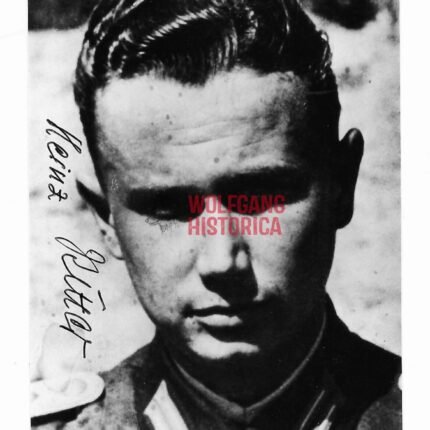
Heinz Ritter – Grenadier-Regiment 44 (11.Inf.Div.)
€20,00Original Postwar Signature on a Postwar Photo of Heinz Ritter. Major Heinz Ritter (26.05.1917 † 10.03.2010) earned the Ritterkreuz on April 20, 1945 as Hauptmann und Kommandeur of the II. Bataillon/ Grenadier-Regiment 70 of the 11. Infanterie-Division. Good condition. Bit smaller as postcardsize.
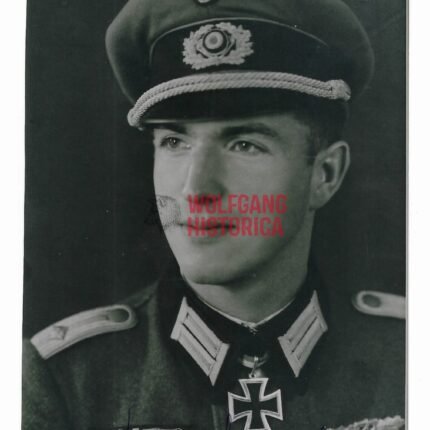
Karl-Heinz Becker – Jäger-Regiment 228
€20,00Original Postwar Signature on a Postwar Photo of Karl-Heinz Becker. Oberleutnant Karl-Heinz Becker (02.10.1920 † 26.02.2016) earned the Ritterkreuz on March 20, 1944 as Leutnantn und Führer of the 2. Kompanie/ Jäger-Regiment 228 of the 101. Jäger-Division. Good condition. Postcardsize.
“On the 20.03.1944 the Führer and Supreme Commander of the Wehrmacht awarded the Knight’s Cross of the Iron Cross to Leutnant d.R. Karl-Heinz Becker, commander of 2./Jäger-Regiment 228, as the 16th soldier of the Division to be so honoured. Leutnant Becker, Kompanie commander of 2./Jäger-Regiment 228, has repeatedly distinguished himself through his flexible leadership and exemplary devotion to duty. On the 24.01.1944 he would distinguish himself through extraordinary bravery as both a leader and fighter.
On this day Leutnant Becker and his Kompanie took part in Jäger-Regiment 228’s attack against Konjuschewka. As he and his men were approaching the village’s southwestern edge he identified a primary resistance nest around a haystack at the village edge. Acting swiftly, he drove his Kompanie forward in short, swift bounds and broke into the enemy strongpoint. In the bitter struggle which followed he and his Kompanie smashed this cornerstone of the enemy defense. In the process 3 anti-tank guns and 2 heavy machine-guns were knocked out, and the garrison itself was wiped out in melee combat. After eliminating this resistance nest, he and his Kompanie thrust through the village from south to north. In doing so they smashed the entire enemy defensive position along the western edge of Konjuschewka. In this latter stage of the battle another 3 anti-tank guns and several MGs were put out of action.
At this stage Leutnant Becker received the mission of penetrating deeper into the village and reaching its opposite edge. Here he would hold his position and wait for further orders in order to allow the follow-up Bataillon to conduct an orderly regrouping within Konjuschewka. Following hard street and house combat, in which Becker personally eliminated several resistance nests with his machine-pistol, he reached the ordered objective. However strong enemy forces continued to hold out in the northern part of Konjuschewka. From here they plastered heavy fire onto both the following elements of I. Bataillon and II. Bataillon, forcing them to periodically take cover.
The enemy’s firepower suddenly received a substantial boost in the form of an additional enemy battery. Consisting of 3 artillery pieces (12.2 cm calibre), it fired into our Kompanien from a point about 1 km east of Konjuschewka. The enemy, who had hitherto only been able desperately defend in the northern part of the village, now found new courage from this artillery fire and even launched an energetic counterthrust. A threatening crisis for the Bataillon now began to emerge. The enemy started to regain ground.
At this point Leutnant Becker made a bold decision: he would go against his orders to hold the village edge. Instead, undeterred by the heavy and direct artillery fire, he would swiftly gather up the two nearest squads of his Kompanie and charge straight towards the enemy’s battery position. Personally intervening in the resultant close combat in a decisive manner, he and his men engaged the gun crews, killing some and forcing the remainder to flee. As a result the battery was eliminated, and with it the last buttress for the hostile resistance in Konjeschewka. The backbone of the enemy’s defense was broken, and the remaining elements of the Bataillon proceeded to capture the entire village within a short time. II. Bataillon was then able to prosecute its own attack unhindered.”
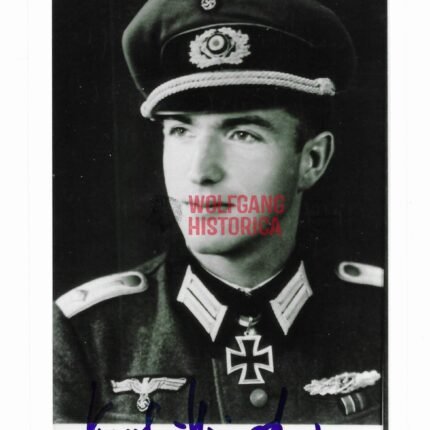
Karl-Heinz Becker – Jäger-Regiment 228
€20,00Original Postwar Signature on a Postwar Photo of Karl-Heinz Becker. Oberleutnant Karl-Heinz Becker (02.10.1920 † 26.02.2016) earned the Ritterkreuz on March 20, 1944 as Leutnant und Führer of the 2. Kompanie/ Jäger-Regiment 228 of the 101. Jäger-Division. Good condition. Postcardsize.
“On the 20.03.1944 the Führer and Supreme Commander of the Wehrmacht awarded the Knight’s Cross of the Iron Cross to Leutnant d.R. Karl-Heinz Becker, commander of 2./Jäger-Regiment 228, as the 16th soldier of the Division to be so honoured. Leutnant Becker, Kompanie commander of 2./Jäger-Regiment 228, has repeatedly distinguished himself through his flexible leadership and exemplary devotion to duty. On the 24.01.1944 he would distinguish himself through extraordinary bravery as both a leader and fighter.
On this day Leutnant Becker and his Kompanie took part in Jäger-Regiment 228’s attack against Konjuschewka. As he and his men were approaching the village’s southwestern edge he identified a primary resistance nest around a haystack at the village edge. Acting swiftly, he drove his Kompanie forward in short, swift bounds and broke into the enemy strongpoint. In the bitter struggle which followed he and his Kompanie smashed this cornerstone of the enemy defense. In the process 3 anti-tank guns and 2 heavy machine-guns were knocked out, and the garrison itself was wiped out in melee combat. After eliminating this resistance nest, he and his Kompanie thrust through the village from south to north. In doing so they smashed the entire enemy defensive position along the western edge of Konjuschewka. In this latter stage of the battle another 3 anti-tank guns and several MGs were put out of action.
At this stage Leutnant Becker received the mission of penetrating deeper into the village and reaching its opposite edge. Here he would hold his position and wait for further orders in order to allow the follow-up Bataillon to conduct an orderly regrouping within Konjuschewka. Following hard street and house combat, in which Becker personally eliminated several resistance nests with his machine-pistol, he reached the ordered objective. However strong enemy forces continued to hold out in the northern part of Konjuschewka. From here they plastered heavy fire onto both the following elements of I. Bataillon and II. Bataillon, forcing them to periodically take cover.
The enemy’s firepower suddenly received a substantial boost in the form of an additional enemy battery. Consisting of 3 artillery pieces (12.2 cm calibre), it fired into our Kompanien from a point about 1 km east of Konjuschewka. The enemy, who had hitherto only been able desperately defend in the northern part of the village, now found new courage from this artillery fire and even launched an energetic counterthrust. A threatening crisis for the Bataillon now began to emerge. The enemy started to regain ground.
At this point Leutnant Becker made a bold decision: he would go against his orders to hold the village edge. Instead, undeterred by the heavy and direct artillery fire, he would swiftly gather up the two nearest squads of his Kompanie and charge straight towards the enemy’s battery position. Personally intervening in the resultant close combat in a decisive manner, he and his men engaged the gun crews, killing some and forcing the remainder to flee. As a result the battery was eliminated, and with it the last buttress for the hostile resistance in Konjeschewka. The backbone of the enemy’s defense was broken, and the remaining elements of the Bataillon proceeded to capture the entire village within a short time. II. Bataillon was then able to prosecute its own attack unhindered.”
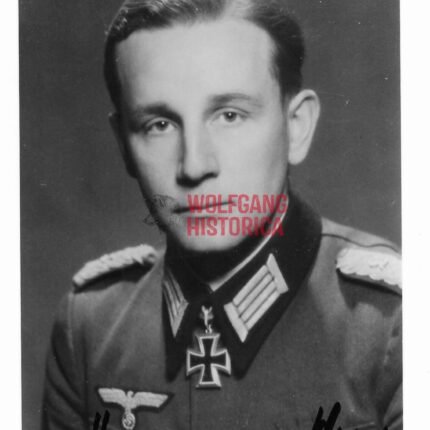
Hermann Henle – Werfer-Regiment 70
€15,00Original Postwar Signature on a Postwar Photo of Hermann Henle. Major Hermann Henle (10.07.1916 † 16.03.2008) earned the Ritterkreuz on September 19, 1943 as Hauptmann und Führer of the II. Abteilung/ Werfer-Regiment 70. Good condition. Postcardsize.
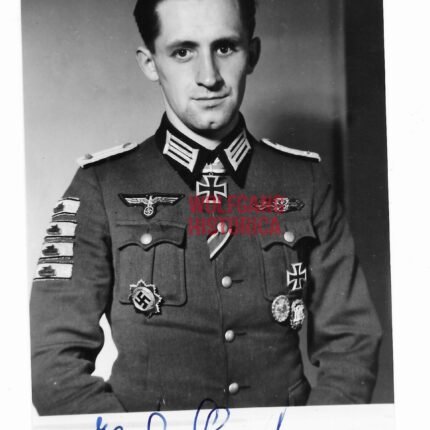
Hans-Georg Borck – Panzer-Pionier-Bataillon 209
€0,01Original Postwar Signature on a Postwar Photo of Hans-Georg Borck. Hauptmann Hans-Georg Borck (24.09.1921 † 08.05.2011) earned the Ritterkreuz on December 23, 1943 as Oberleutnant und Chef of the 3. Kompanie/ Panzer-Pionier-Bataillon 209 of the 11. Panzer-Division. Good condition. Postcardsize.
Knight’s Cross recommendation: “Then the 29.10.1943 came. A few days beforehand I had taken over a reinforced Panzergrenadier-Bataillon (the I./111 in the so-called Ghost Division under General von Wietersheim) from a badly wounded Rittmeister, and right away I had to endure days of heavy defensive combat with this unit, with many tanks being destroyed in our sector.
On the left wing of the Bataillon the frontline jumped about 800 metres to the rear, and the result was that we had to defend a village with a totally open left flank. Reinforcements were promised, and these arrived on the evening of the 28.10.1943 in the form of an additional Kompanie. During the night I guided this unit into its new positions on our left wing.
In the morning hours of the next day, the Russians attacked. In the days before they had always come from the front with tanks, but now they only attacked with strong infantry forces into the threatened left wing. Without either issuing or receiving fire themselves they succeeded in occupying the positions on the left wing. By doing so they acquired a field of fire that would enable them to fire upon the entire frontline sector once it got light. This produced a very critical situation, especially since hardly anyone had noticed the very drastic change in the disposition of forces.
I therefore only had the option of ordering an immediate withdrawal behind a protective railway embankment, although the ammunition and equipment would have to be left behind. This would at least allow us to utilize the cover of darkness while moving across 600 metres of open fields.
In order to distract the enemy, I personally led a counterthrust while armed with an MG atop of a Sturmgeschütz even though we only had 8 main gun rounds and a case of MG ammunition. With this one vehicle we succeeded in preventing the enemy from making a further advance, but above all we stopped them from conducting aimed fire. We held out until we could assume that the unit had reached the protective railway embankment, then we moved to pull back ourselves. Unfortunately I fell off the vehicle as the Sturmgeschütz drove over a trench, and I stood suddenly alone about 100 metres in front of the advancing Russians.
On the way to the German lines I managed to eliminate a tank in close combat together with some other stragglers, but in the process I was badly wounded and only reached friendly lines hours later with the last of my strength. I later learned that the German Sturmgeschütz was knocked out on the way back. Thus, out of the 5 men who carried out the counterthrust, I was the only one to come back, and in a heavily wounded state no less.”
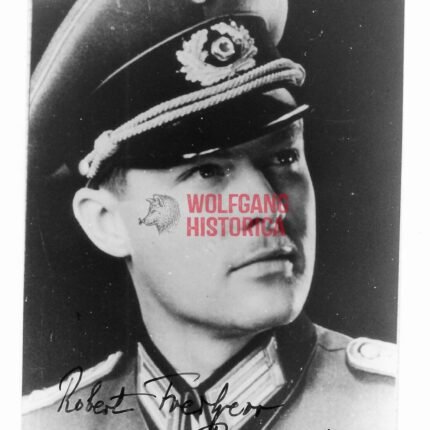
Robert Freiherr von Prochazka – Werfer-Regiment 55
€0,01Original Postwar Signature on a Postwar Photo of Robert Freiherr von Prochazka. Major Robert Freiherr von Prochazka (06.12.1916 † 20.02.2014) earned the Ritterkreuz on December 19, 1943 as Hauptmann und Kommandeur of the III. Abteilung/ Werfer-Regiment 55. Good condition. Postcardsize.
Knight’s Cross recommendation: “On the 14.11.1943 the Soviets launched a major attack against the sector of the 76. Infanterie-Division (located between Petrowo and Losowatka), and it was not long before the front of this Division became breached in several places. The Soviet aim was to break through in the direction of the city of Krivoi Rog, which was about 90 km away. However they were eventually stopped after gaining about 10 kilometres, not least due to the efforts of Hauptmann Prochazka. In this time Prochazka successfully managed to hinder the Soviet forces through well-laid fire from his Batterien, which struck a number of identified Soviet assembly areas with particularly devastating volleys.” (Source: Traces of War)

Robert Freiherr von Prochazka – Werfer-Regiment 55
€25,00Original Postwar Signature on a Postwar Photo of Robert Freiherr von Prochazka. Major Robert Freiherr von Prochazka (06.12.1916 † 20.02.2014) earned the Ritterkreuz on December 19, 1943 as Hauptmann und Kommandeur of the III. Abteilung/ Werfer-Regiment 55. Good condition. Postcardsize.
Knight’s Cross recommendation: “On the 14.11.1943 the Soviets launched a major attack against the sector of the 76. Infanterie-Division (located between Petrowo and Losowatka), and it was not long before the front of this Division became breached in several places. The Soviet aim was to break through in the direction of the city of Krivoi Rog, which was about 90 km away. However they were eventually stopped after gaining about 10 kilometres, not least due to the efforts of Hauptmann Prochazka. In this time Prochazka successfully managed to hinder the Soviet forces through well-laid fire from his Batterien, which struck a number of identified Soviet assembly areas with particularly devastating volleys.” (Source: Traces of War)
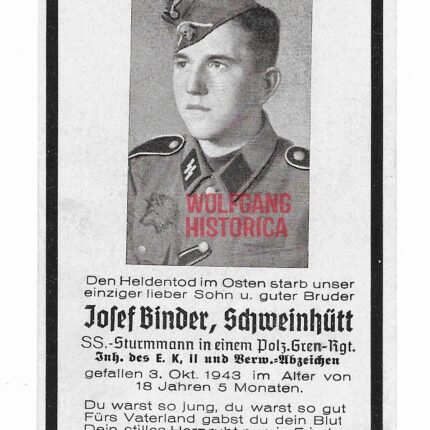
Waffen-SS Death Card – SS-Polizei
€0,01Waffen-SS Death card for SS-Sturmmann Josef Binder, who was Killed in Action on October 3, 1943 on the Eastern Front. He earned the EK2 & Verwundetenabzeichen. He served with the 9. Kompanie/ SS-Polizei-Schützen-Regiment 1.
Illustration of his death registation card (not part of sale).
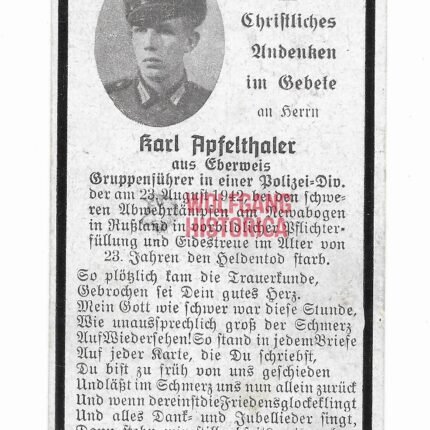
Waffen-SS Death Card – SS-Polizei
€45,00Waffen-SS Death card for Gefreiter der SS-Polizei Karl Apfelthaler, who was Killed in Action on August 23, 1942 on the Eastern Front. He served with the 2. Kompanie/ SS-Polizei-Schützen-Regiment 1.
Illustration of his death registation card (not part of sale).
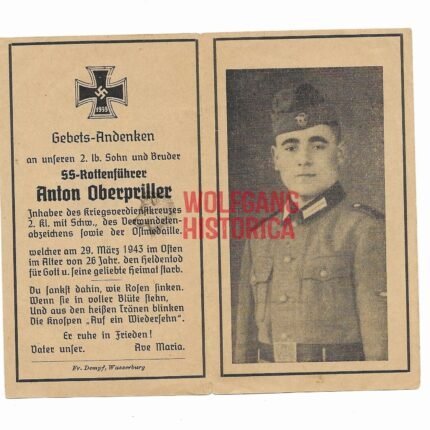
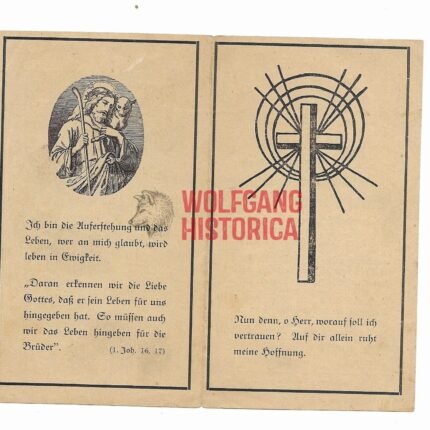
Waffen-SS Death Card – SS-Polizei
€0,01Waffen-SS Death card for SS-Rottenführer Anton Oberpriller, who was Killed in Action on March 29, 1943 on the Eastern Front. He earned the KVK2X, Verwundetenabzeichen & Ostmedaille. He served with the 12. Kompanie/ SS-Polizei-Schützen-Regiment 2.
Illustration of his death registation card (not part of sale).
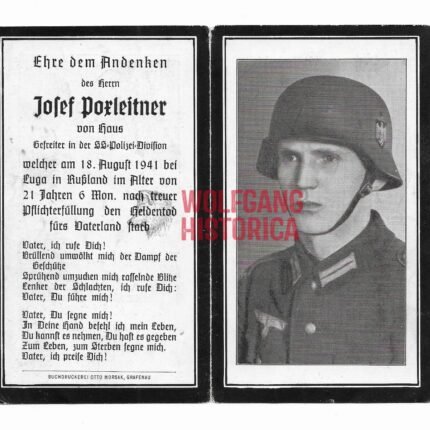
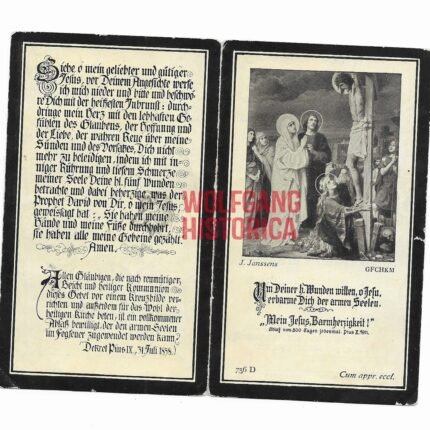
Waffen-SS Death Card – SS-Polizei
€45,00Waffen-SS Death card for Gefreiter der SS-Polizei Josef Porleitner, who was Killed in Action on August 18, 1941 on the Eastern Front. He served with the 6. Kompanie/ SS-Polizei-Schützen-Regiment 1.
Illustration of his death registation card (not part of sale).
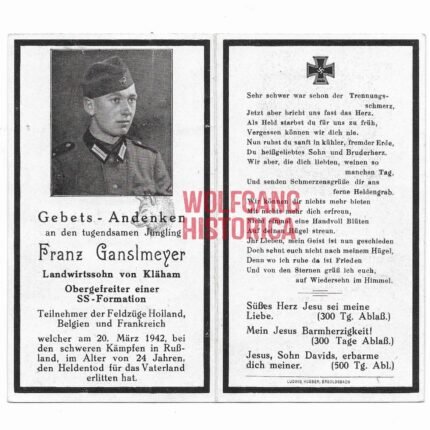
Waffen-SS Death Card – SS-Polizei
€0,01Waffen-SS Death card for Obergefreiter der SS-Polizei Franz Ganslmeyer, who was Killed in Action on March 20, 1942on the Eastern Front. He served with the Stab II./ SS-Polizei-Schützen-Regiment 3.
Illustration of his death registation card (not part of sale).
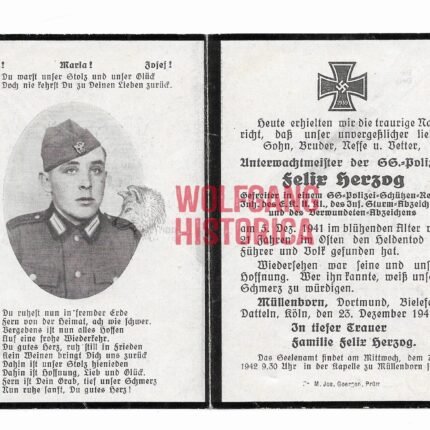
Waffen-SS Death Card – SS-Polizei
€45,00Waffen-SS Death card for Unterwachtmeister der SS-Polizei Felix Herzog, who was Killed in Action on December 5, 1941 on the Eastern Front. He earned the EK2, Infanterie-Sturmabzeichen & Verwundetenabzeichen! He served with the 9. Kompanie/ SS-Polizei-Schützen-Regiment 3.
Illustration of his death registation card (not part of sale).
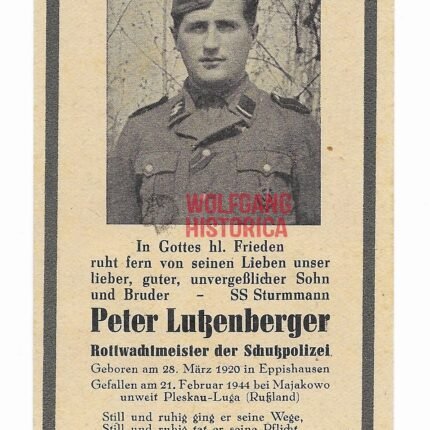
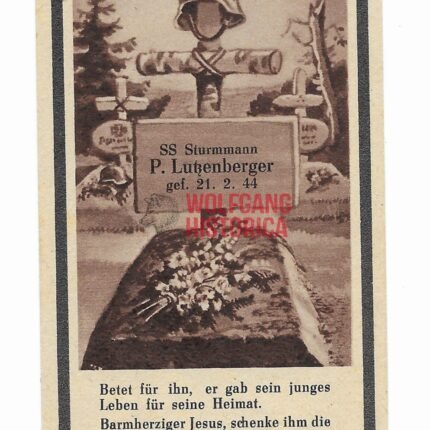
Waffen-SS Death Card – KIA Pleskau 1944 – Beautiful Photo!
€55,00Waffen-SS Death card for SS-Sturmmann Peter Lutzenberger, who was Killed in Action on February 21, 1944 in Majakowo, Russia. Top Photo!
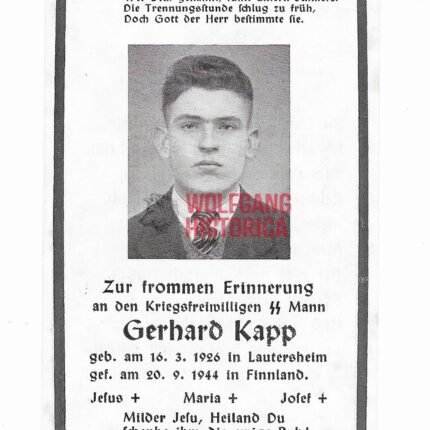
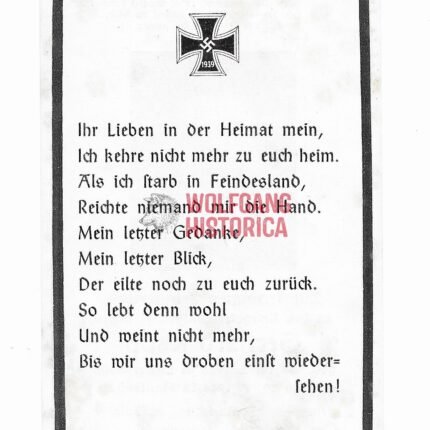
Waffen-SS Death Card – KIA in Finland
€0,01Waffen-SS Death card for SS-Mann Gerhard Kapp, who was Killed in Action on September 20, 1944 in Finland.

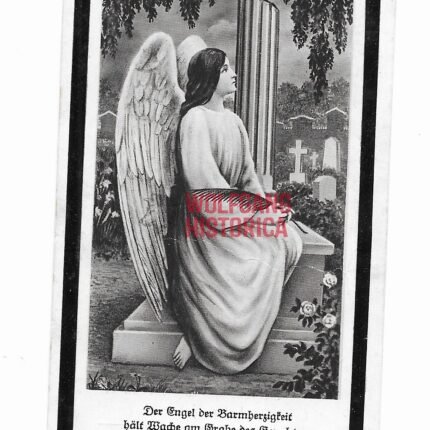
Waffen-SS Death Card – “Totenkopf” + TOP PHOTO !
€0,01Waffen-SS Death card for SS-Rottenführer Johann Sailer, who was Killed in Action on August 6, 1941 on the Eastern Front. He earned the Verwundetenabzeichen. He served with the 5. Kompanie/ SS-Totenkopf-Infanterie-Regiment 1.
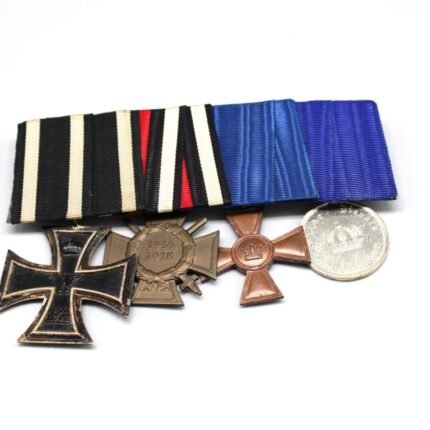
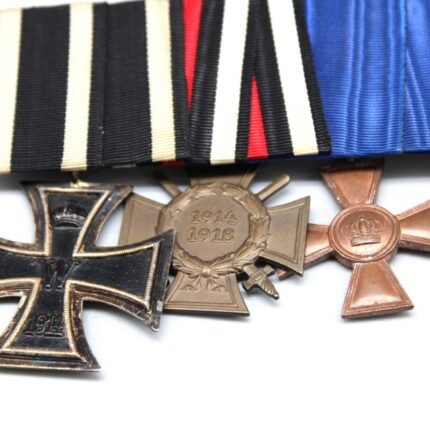
Medal Bar: EK2 (1914), Ehrenkreuz, Preussische DA 9 & 15 Jahre
€110,00Medal Bar: Eisernes Kreuz 2. Klasse (1914) (1914 Iron Cross 2nd Class), 1914-1918 Ehrenkreuz (1914-1918 Honor Cross), preußische Dienstauszeichnung 1. Klasse 1913 für 15 Jahre (Long Service Award 1st Class (1913 issue)) and preußische Dienstauszeichnung 3. Klasse 1913 für 9 Jahre (Long Service Award 3rd Class (1913 issue)). Good condition.
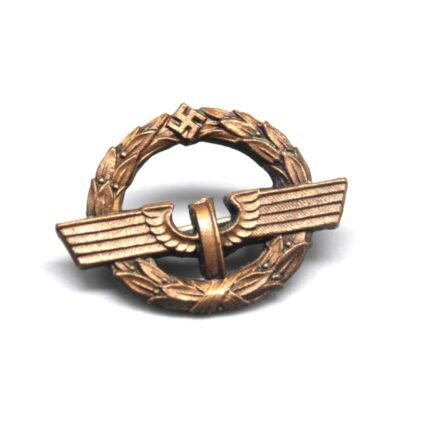
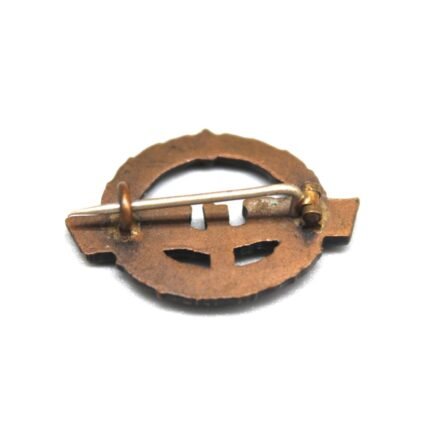
Dienstnadel für Eisenbahnerinnen in Bronze
€0,01Rare Dienstnadel für Eisenbahnerinnen in Bronze (Service badge for Female Railway-personnel in Bronze). Good condition.
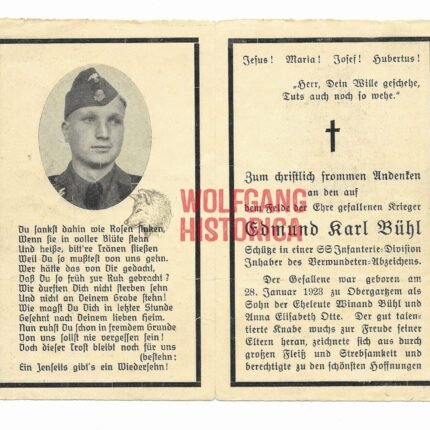
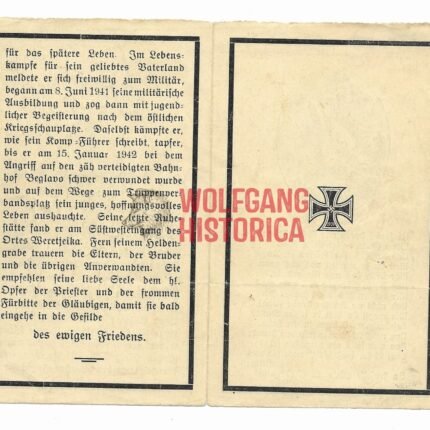
Waffen-SS Death Card – KIA Beglavo
€0,01Waffen-SS Death card for SS-Schütze Edmund Karl Bühl, who was Killed in Action on January 15, 1942 on the Eastern Front. He earned the Verwundetenabzeichen.
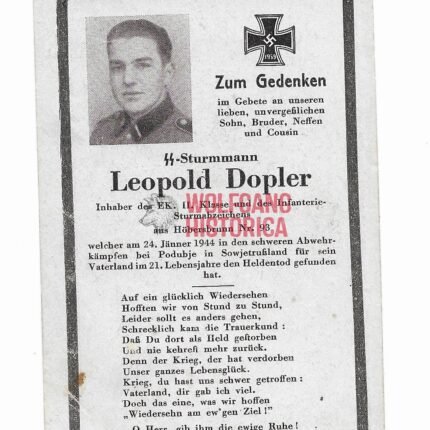
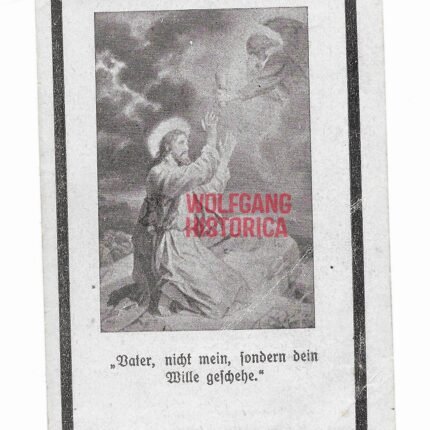
Waffen-SS Death Card – KIA Podubje
€50,00Waffen-SS Death card for SS-Sturmmann Leopold Dopler, who was Killed in Action on January 24, 1944 on the Eastern Front. He earned the Eisernes Kreuz 2. Klasse & Infanterie-Sturmabzeichen.
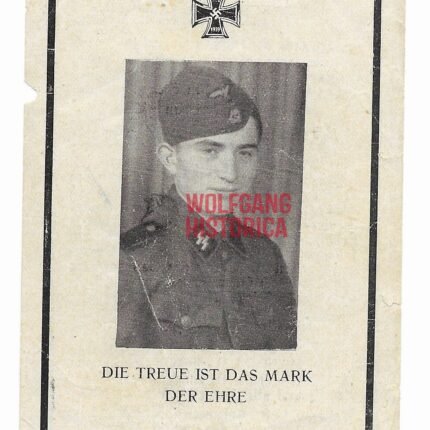
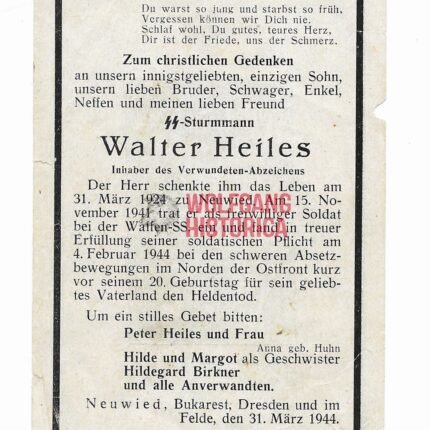
Waffen-SS Death Card – KIA Nowgorod area
€50,00Waffen-SS Death card for SS-Sturmmann Walter Heiles, who was Killed in Action on February 4, 1944 on the Eastern Front. He earned the Verwundetenabzeichen.
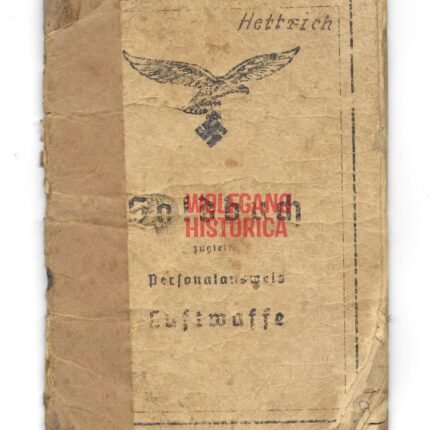
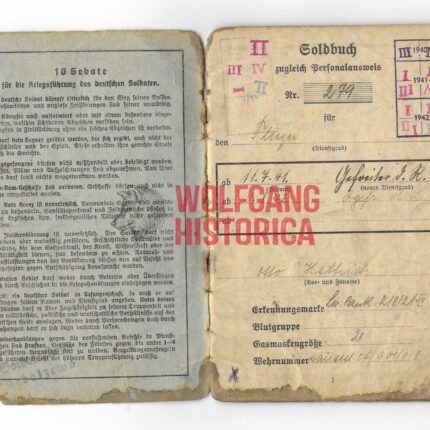
KIA Soldbuch of Luftwaffen Bau Soldier (KIA in Sewastopol)
€0,01Original Soldbuch of Obergefreiter Otto Hettrich who was Killed in Action. Obergefreiter Otto Hettrich born on November 11, 1904 in Altenkirchen served with the Luftwaffen-Bau-Kompanie 2/8/XII, from 25.11.1942 to 29.1.42 with z.b.V. Kompanie der Bataillon 8/XII, 30.1.43 to 14.6.43 Luftwaffen-Bau-Kompanie 2/8/XII and 15.6.43-8.5.44 with Luftwaffen-Bau-Kompanie 2/8/XII (motorisiert). He was Killed in Action on May 8, 1944 near Chersones, Sewastopol, Krim by a Bomb. He was buried at the Fliegerhorst Chersones. During his service, he earned the Winterschlacht im Osten 1941/42. Soldbuch was wartime repaired. Never had a photo in it. IMHO blood stained.
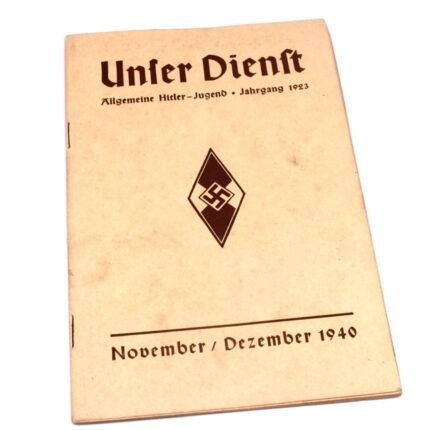
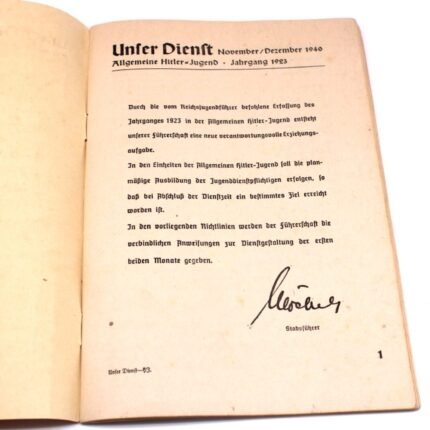
Unser Dienst – Hitler-Jugend – November & Dezember 1940
€15,00Unser Dienst – Hitler-Jugend – November & Dezember 1940.
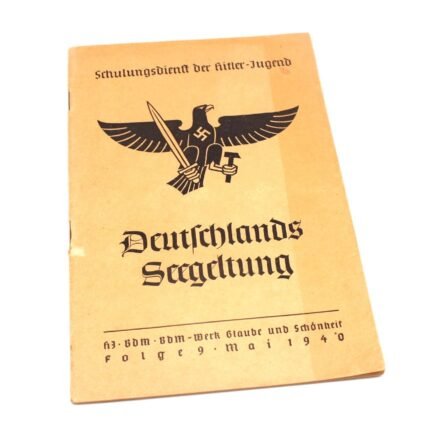

Deutschlands Seegeltung – Schulungsdienst der Hitler-Jugend
€15,00Deutschlands Seegeltung – Schulungsdienst der Hitler-Jugend. Folge 9, Mai 1940.

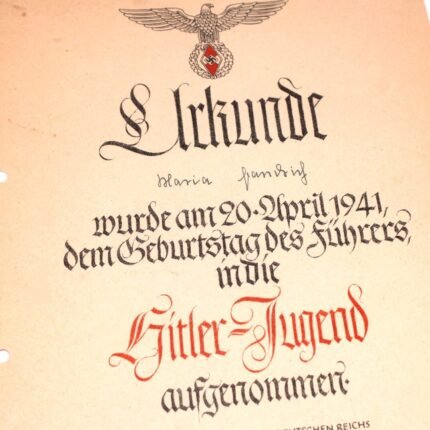
Award Certificate: In der Hitlerjugend Aufgenommen (1941)
€0,01Award Certificate: In der Hitlerjugend Aufgenommen am Geburtstag des Führers (20. April 1941). A4-Size. Condition as seen.
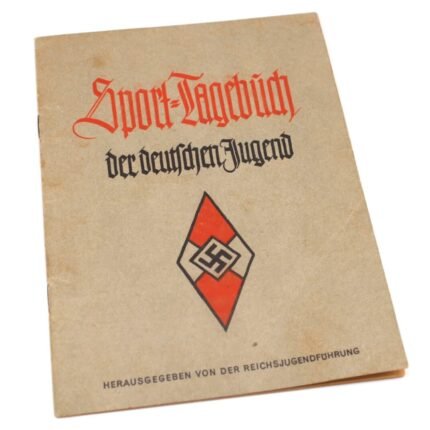
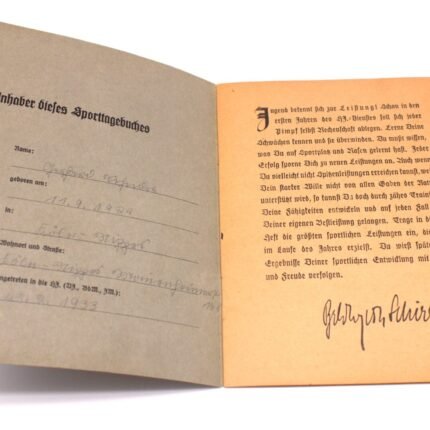
Sport-Tagebuch der deutschen Jugend
€0,01Sport-Tagebuch der deutschen Jugend. Filled in. Condition as seen.
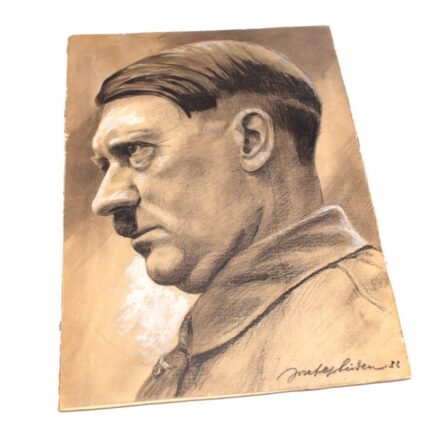
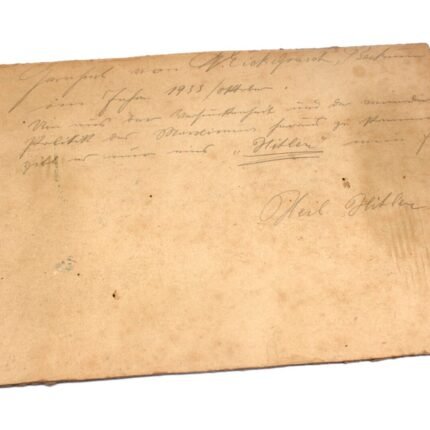
Drawing of Adolf Hitler
€0,01Drawing of Adolf Hitler (print). Likely gifted to someone, writing on reverse. A4-size, hard carton. Condition as seen.
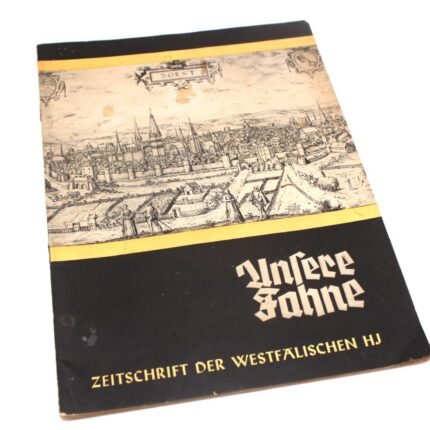
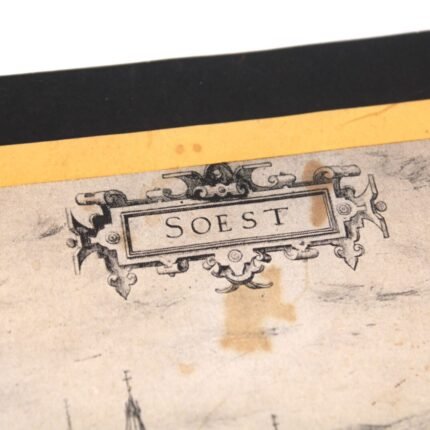
Unsere Fahne – Zeitschrift der Westfalischen HJ
€75,00Original magazine “Unsere Fahne – Zeitschrift der Westfalischen HJ“. Issue: 6. Jahrgang, Nummer 5, Mai 1939. Condition as seen.
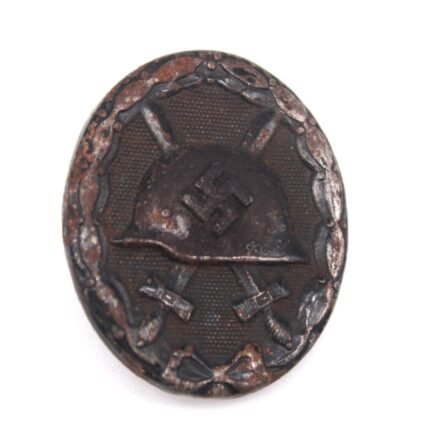
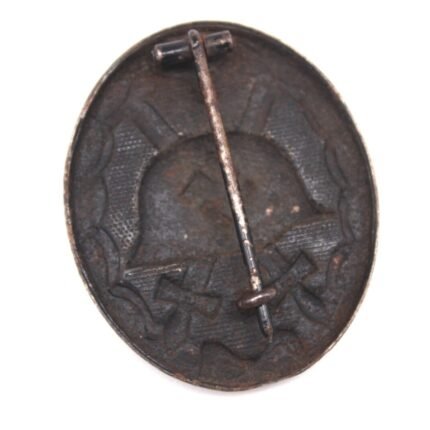
Verwundetenabzeichen in Schwarz – Unmarked
€0,01Original Verwundetenabzeichen in Schwarz (Wound Badge in Black), Unmarked. Condition as seen.
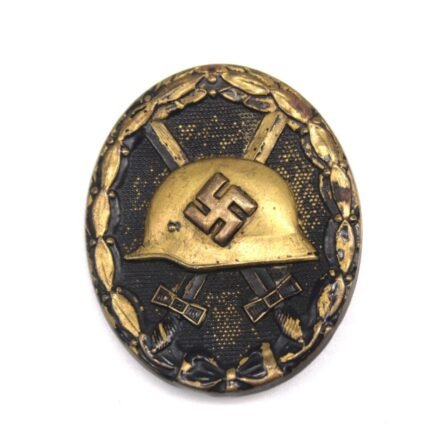
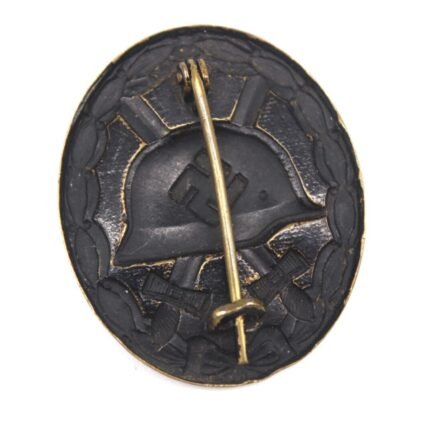
Verwundetenabzeichen in Schwarz – Unmarked
€30,00Original Verwundetenabzeichen in Schwarz (Wound Badge in Black), Unmarked. Condition as seen.
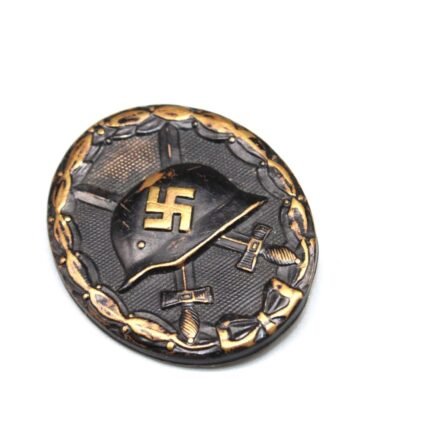
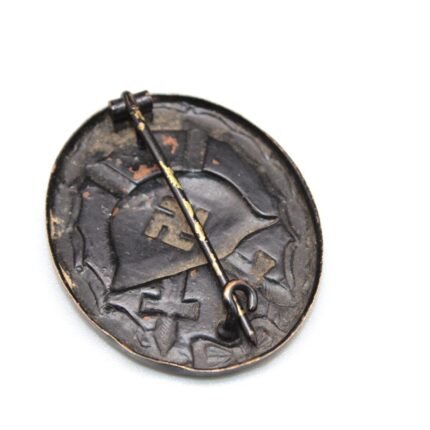
Verwundetenabzeichen in Schwarz – Unmarked
€37,50Original Verwundetenabzeichen in Schwarz (Wound Badge in Black), Unmarked. Condition as seen.
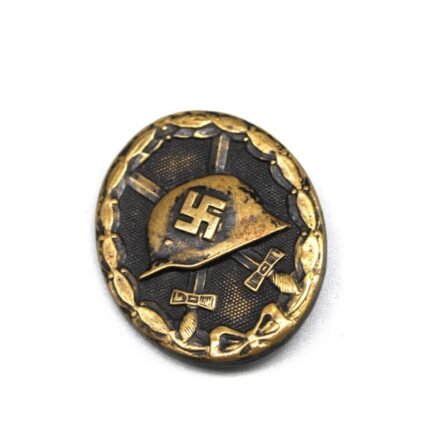
Verwundetenabzeichen in Schwarz – “107” Carl Wild
€45,00Original Verwundetenabzeichen in Schwarz (Wound Badge in Black), maker marked “107” – Carl Wild, Hamburg. Condition as seen.
Eisernes Kreuz 2. Klasse – Unmarked
€80,00Original Eisernes Kreuz 2. Klasse (Iron Cross 2nd Class). Unmarked.
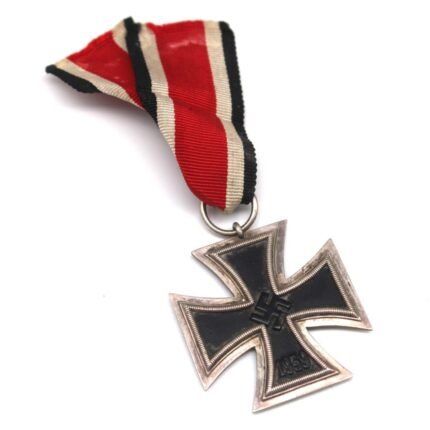
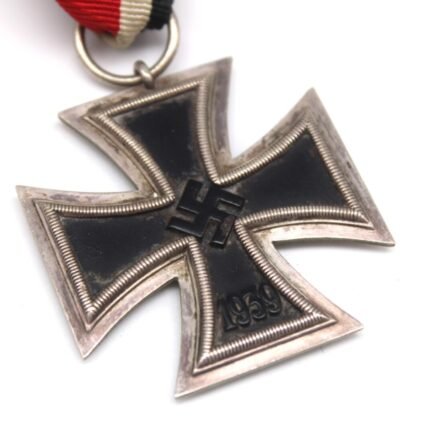
Eisernes Kreuz 2. Klasse – Unmarked (“60”)
€80,00Original Eisernes Kreuz 2. Klasse (Iron Cross 2nd Class). Unmarked but may be attributed to “60” – Katz & Doehle.
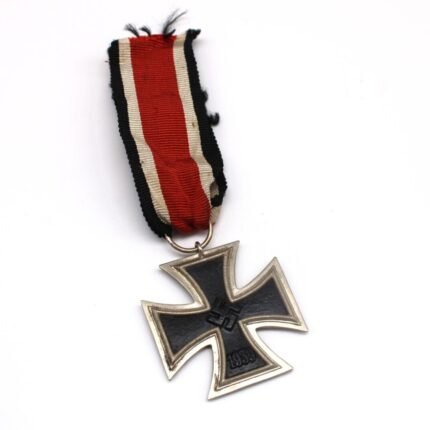
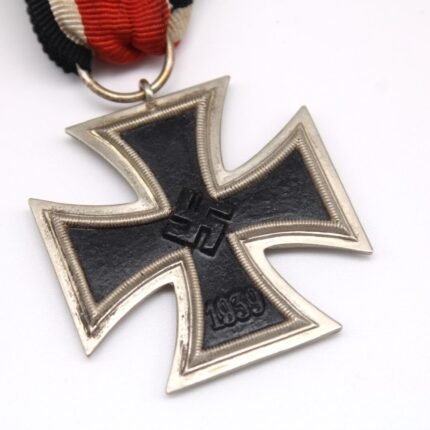
Eisernes Kreuz 2. Klasse – Marked “25”
€140,00Original Eisernes Kreuz 2. Klasse (Iron Cross 2nd Class) marked with “25” in the ring. 25 = Firma Arbeitsgemeinschaft der Graveur-, Gold- und Silberschmiedeinnungen, Hanau am Main. Good condition.
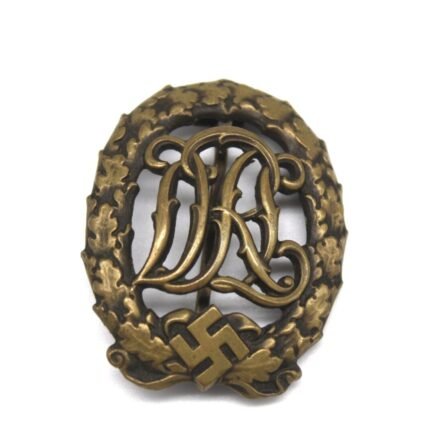
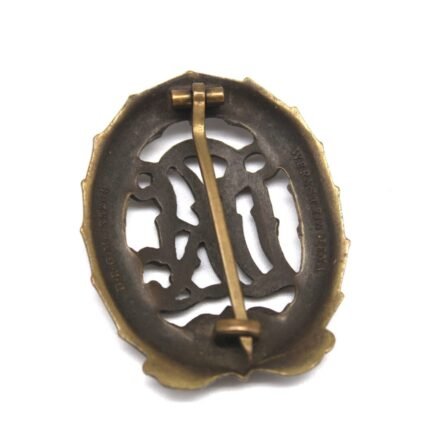
DRL-Sportabzeichen in Bronze
€40,00DRL-Sportabzeichen in Bronze (DRL-Sportsbadge in Bronze). Maker marked: Wernstein, Jena and D.R.G.M. 35269.
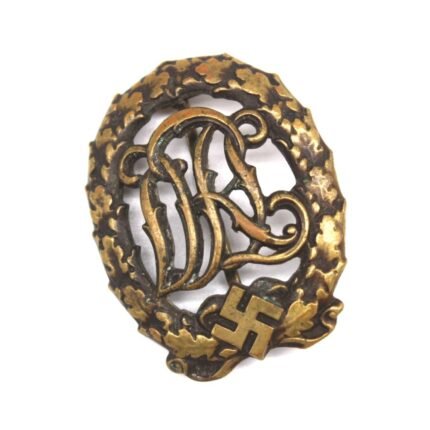
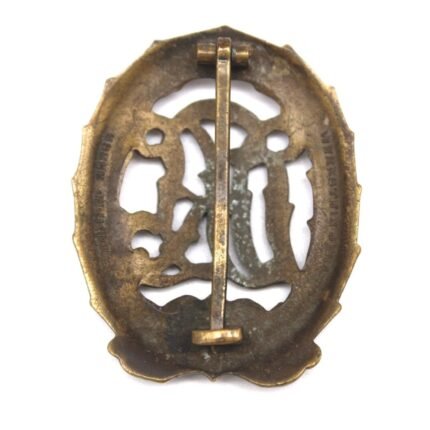
DRL-Sportabzeichen in Bronze
€40,00DRL-Sportabzeichen in Bronze (DRL-Sportsbadge in Bronze). Maker marked: Wernstein, Jena and D.R.G.M. 35269.