


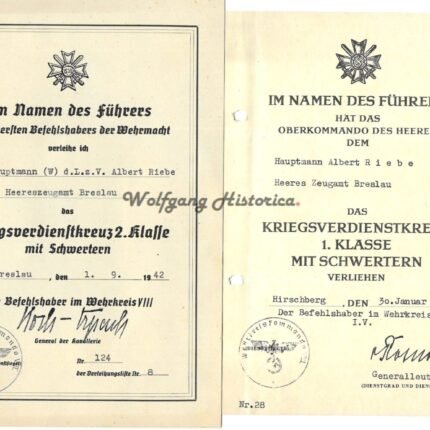
War Merit Cross 2nd Class & War Merit Cross 1st Class Set – Hauptmann with Heereszeugamt Breslau
€120,00Award document set for the Kriegsverdienstkreuz 2. Klasse mit Schwertern (War Merit Cross 2nd Class with Swords) & Kriegsverdienstkreuz 1. Klasse mit Schwertern (War Merit Cross 1st Class with Swords) of Hauptmann Albert Breslau, who earned them for his service on September 1, 1942 and January 30, 1945 while serving with Heeres-Zeugamt Breslau in Wehrkreis VIII! Both stamped signatures.
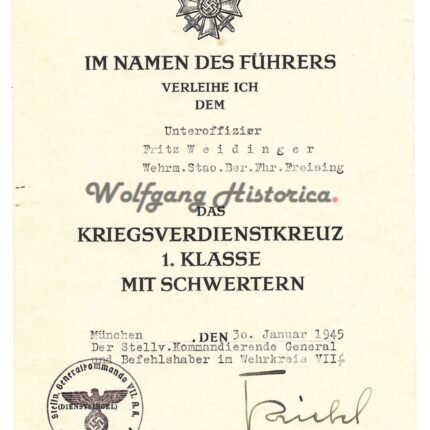
KVK1 Award Document – München (Signed by Karl Kriebel, active against 20 July Plotters)
€0,01Award document for the Kriegsverdienstkreuz 1. Klasse mit Schwertern (War Merit Cross 1st Class with Swords) of Unteroffizier Fritz Weidinger, who earned it for his service on January 30, 1945 while serving with Wehrm.Stao.Ber.Fhr.Freising in München of Wehrkreis VII! Signed by General der Infanterie Karl Kriebel (Knight’s Cross, active against the 20 July plotters).

War Merit Cross 2nd Class Award Document – Münster, Wehrkreis VI variant (Mattenklott)
€0,01Award document for the Kriegsverdienstkreuz 2. Klasse mit Schwertern (War Merit Cross 2nd Class with Swords) of Luftwaffengefreiten Werner Schicke, who earned it for his service on Januar 30, 1943 while serving with Wehrkreis VI in Münster! Beautiful Münster variant of General der Infanterie Franz Mattenklott, signed by an unknown Hauptmann.

War Merit Cross 2nd Class Award Document – Münster, Wehrkreis VI variant (Mattenklott)
€45,00Award document for the Kriegsverdienstkreuz 2. Klasse mit Schwertern (War Merit Cross 2nd Class with Swords) of Angestellten Wilhelm Hellbach, who earned it for his service on September 1, 1944 while serving with Wehrkreis VI in Münster! Beautiful Münster variant of General der Infanterie Franz Mattenklott, signed by an unknown Hauptmann.
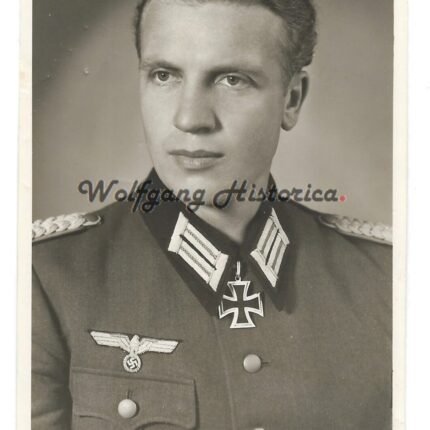
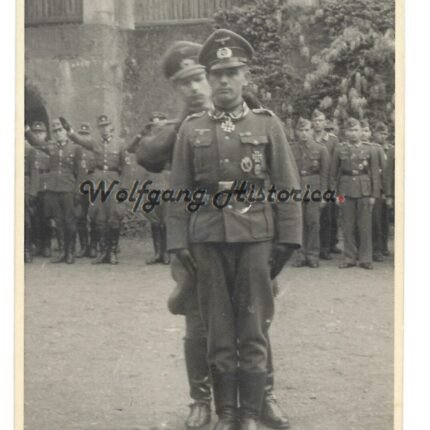
Walter Christian Müller – Panzerjäger-Abteilung 389 (RK)
€95,00Original Wartime Photograph with (likely his late ?) Postwar Signature (on front) of Walter Christian Müller. Hauptmann Walter Christian Müller (22.11.1914 † 22.09.2003) earned the Ritterkreuz on July 27, 1944 as Hauptmann und Kommandeur of the Panzerjäger-Abteilung 389 of the 389. Infanterie-Division. Good condition. Postcardsize.
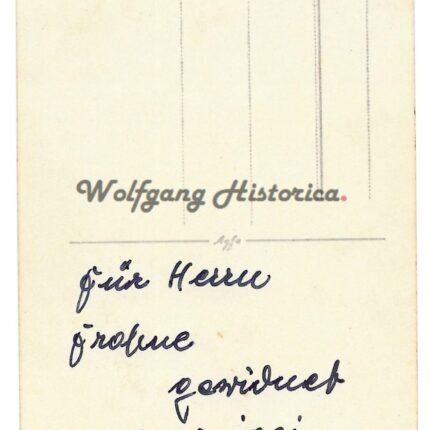
Josef Krings – Grenadier-Regiment 412 (RK)
€90,00Original Wartime Photograph with Postwar Signature (on reverse) of Josef Krings. Oberfeldwebel Josef Krings (16.04.1918 † 03.03.2010) earned the Ritterkreuz on May 4, 1944 as Oberfeldwebel und Kompanie-Truppführer of the 2. Kompanie/ Grenadier-Regiment 412. Good condition. Postcardsize.


Johann Zemsky – Sturzkampfgeschwader 1 (Oakleaves)
€100,00Original Wartime Photograph of Johann Zemsky. Hauptmann Johann Zemsky (11.04.1909 † 28.08.1942) earned the Ritterkreuz on February 4, 1942 as Hauptmann und Gruppenkommandeur of the II. Gruppe/ Sturzkampfgeschwader 1 and the Eichenlaub on September 3, 1942 as Hauptmann und Gruppenkommandeur of the II. Gruppe/ Sturzkampfgeschwader 1. Good condition. Postcardsize.
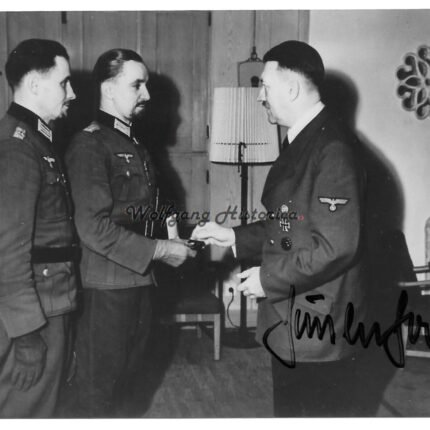
Günter Goebel – Infanterie-Regiment 208 & Kampfgruppe Goebel (Stalingrad) (Oakleaves)
€35,00Original Postwar Signature on a Postwar Photo of Günter Goebel. Oberstleutnant i.G. Günter Goebel (14.11.1917 † 04.09.1993) earned the Ritterkreuz on October 18, 1941 as Oberleutnant und Adjutant of Infanterie-Regiment 208 of the 79. Infanterie-Division and the Eichenlaub on January 18, 1943 as Hauptmann und Führer of a Kampfgruppe with the AOK6. Good condition.
“He is also known for the command of the Kampfgruppe Goebel assault on Stalingrad at the end of November 1942 around Nishij and Tschiskaja with 3,000 servicemen. With the following radio message, they became known to the staff of the 6th Army: “Battle-group Captain Goebel with 3,000 men holds the Don River bridge at (Werchne) Chir(skaya). Keep the head up, as we do”. He held, together with his Kampfgruppe, for weeks, an important bridgehead. He later became the 180th recipient of the Knight’s Cross of the Iron Cross with Oak Leaves for his bravery.”
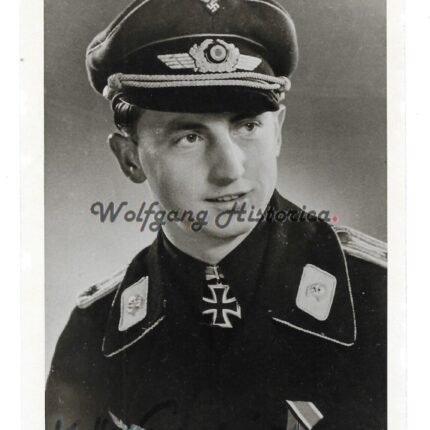
Karl-Heinz Wallhäuser – Fallschirm-Panzerjäger-Abteilung “Hermann Göring” (Jagdpanzer IV)
€45,00Original Postwar Signature on a Postwar Photo of Karl-Heinz Wallhäuser. Oberleutnant Karl-Heinz Wallhäuser (11.03.1922 † 09.06.1996) earned the Ritterkreuz on November 30, 1944 as Oberleutnant und Kompanieführer of the 1. Kompanie/ Fallschirm-Panzerjäger-Abteilung “Hermann Göring” of the Fallschirm-Panzer-Division 2 “Hermann Göring”. Good condition.
Knight’s Cross: “Karl-Heinz Wallhäuser had been assigned command of a company of Jagdpanzer IV tank destroyers when his division was transferred to the Eastern front. During the first round of fighting, on 9 August, he created the preconditions for the establishment of a new defensive line by repelling Russian advances and launching spoiling attacks of his own. His greatest success was near Studziansk, where he counterattacked and captured a Russian-held village, destroying six tanks as well as several anti-tank and infantry positions. Two of these tanks were destroyed by Wallhäuser himself despite his gunner being being put out of action in the fighting in East Prussia later on that year, on 26 October, Wallhäuser’s tank destroyers engaged a major Russian tank force and was able to drive it back to its starting line, collecting stragglers along the way. When the neighbouring unit was forced to retreat he counterattacked into the Russians’ flank, recapturing the position and inflicting approximately 300 casualties. This defensive success prevented a Russian breakthrough towards Gumbinnen, and Wallhäuser was later awarded the Knight’s Cross for this action.”
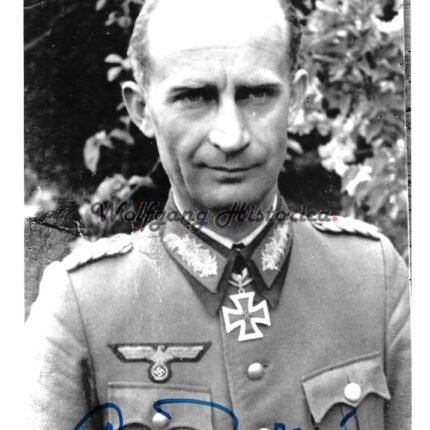
Alfred Philippi – Grenadier-Regiment 535
€30,00Original Postwar Signature on a Postwar Photo of Alfred Philippi. Generalmajor Alfred Philippi (03.08.1903 † 15.06.1994) earned the Ritterkreuz on May 14, 1944 as Oberst und Kommandeur of Grenadier-Regiment 535. Good condition. Postcardsize.
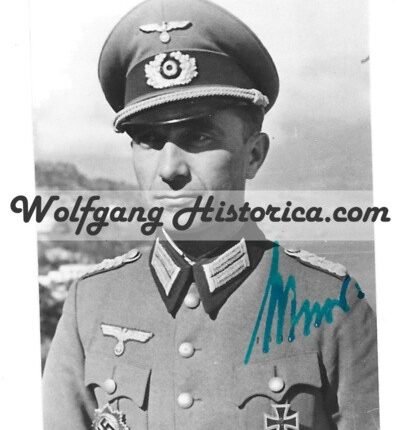
Ulrichs Ulms – Korpsgruppe von Gottberg (XII. SS-Armeekorps)
€25,00Original Postwar Signature on a Postwar Paper Photo of Ulrichs Ulms. Oberst im Generalstab Ulrich Ulms (22.08.1908 † 23.02.2000) earned the Ritterkreuz on August 12, 1944 as Oberstleutnant in Generalstab und Chef des Stabes of the Korpsgruppe von Gottberg of the XII. SS-Armeekorps. Good Condition.
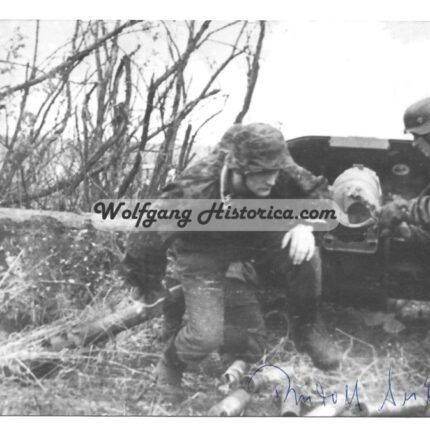
Rudolf Seitz – SS-Polizei-Panzerjäger-Abteilung 4
€0,01Original Scarce Postwar Signature on a Postwar Photo of Rudolf Seitz. SS-Untersturmführer Heinz Jürgens (11.10.1919 † 14.11.1994) earned the Ritterkreuz on October 24, 1942 as SS-Unterscharführer in the 1. Kompanie/ SS-Polizei-Panzerjäger-Abteilung 4 of the 4. SS-Polizei-Panzergrenadier-Division. Good condition. Measuring: Postcardsize. Comes with an extra letter..
Knight’s Cross: Unterscharführer Seitz received his Knight’s Cross for actions while serving with the SS-Polizei division during its battles around Leningrad. On the 19.08.1942, though he technically belonged to a Sturmgeschütz unit, Seitz was manning a Pak 36 with one other soldier, an SS-Rottenführer. On that day the Soviets attacked the blocking position Seitz and his comrade were holding. Despite being isolated and eventually surrounded by the attackers, Seitz and his comrade held their ground for a total of 8 hours (from 12:00 to 20:00) and inflicted heavy losses on the Soviets. Though their gun was ineffective against heavier tanks, Seitz still used it to good effect against less heavily armoured vehicles and infantry. As they were close to being overrun just before nightfall, they destroyed their gun and were able to exfiltrate back to German lines. It seems that their holding their positions through this difficult day was extremely useful for the rest of the Division, for Seitz would be awarded the Knight’s Cross due to his actions on that day.
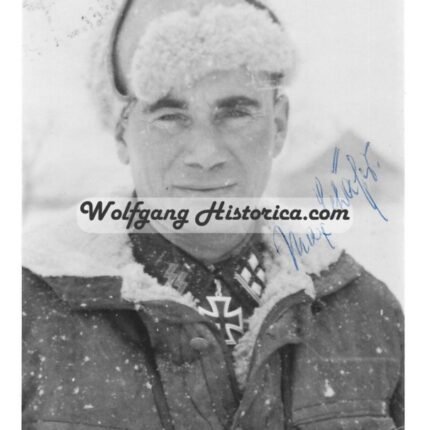
Max Schäfer – “Wiking” & III. (germanisches) Panzerkorps (Oakleaves)
€0,01Original Scarce Postwar Signature on a Postwar Photo of Max Schäfer SS-Standartenführer Max Schäfer (17.01.1907 † 06.05.1987) earned the Ritterkreuz on February 12, 1943 as SS-Sturmbannführer und Kommandeur of the SS-Panzer-Pionier-Bataillon 5 “Wiking” of the 5. SS-Panzergrenadier-Division “Wiking“ and the Eichenlaub on January 25, 1945 as SS-Standartenführer und Korpspionierführer of the III. (germanisches) Panzerkorps”. Good condition.
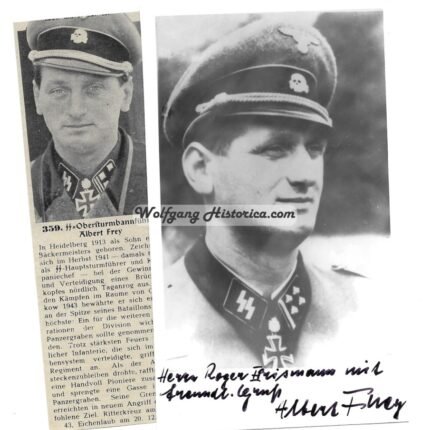
Albert Frey – SS-Panzer-Grenadier-Regiment 1 “LSSAH” (Oakleaves)
€0,01Original Postwar Signature on a Postwar Photo of Albert Frey. SS-Standartenführer Albert Frey (16.02.1913 † 01.09.2003) earned the Deutsches Kreuz in Gold on November 17, 1941 with SS-Infanterie-Regiment “Leibstandarte-SS Adolf Hitler”, the Ritterkreuz on March 3, 1943 as SS-Sturmbannführer und Kommandeur of the I. Bataillon/ SS-Panzer-Grenadier-Regiment 1 “LSSAH” and the Eichenlaub on December 29, 1943 as SS-Obersturmbannführer und Kommandeur of the SS-Panzer-Grenadier-Regiment 1 of the 1. SS-Panzer-Division “LSSAH“. Good condition. Measuring: Postcardsize. Comes with a newspaper article outcut.

Willi Fey – schwere SS-Panzer-Abteilung 502
€0,01Original Postwar Signature on a Postwar Photo of Willi Fey. SS-Oberscharführer Willi Fey (25.09.1918 † 29.04.2002) earned the Ritterkreuz on April 29, 1945 as SS-Oberscharführer und Panzerkommandant in the schwere Panzer-Abteilung 502. Good condition. Measuring: Postcardsize.
Knight’s Cross: Awarded for destroying 8 Soviet tanks during the fighting for Berlin in the time period 23.-28.04.1945. By this he raised his total of enemy tanks destroyed in close combat to 14.
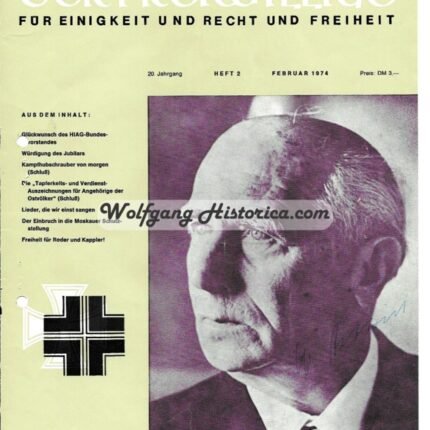
Wilhelm Bittrich – II. SS-Panzerkorps (Normandy, Market Garden) (Swords)
€90,00Original Scarce Postwar Signature on a Der Freiwilliger frontpage of Wilhelm Bittrich. Wilhelm Bittrich (26 February 1894 – 19 April 1979) was a high-ranking Waffen-SS commander of Nazi Germany. Between August 1942 and February 1943, Bittrich commanded the SS Cavalry Division Florian Geyer, in rear security operations (Bandenbekämpfung, literally: “bandit fighting”) in the Soviet Union. From July 1944 until the end of the war Bittrich commanded the 2nd SS Panzer Corps in Normandy, during Market Garden and in Hungary.
After his arrest in May 1945, Bittrich was extradited to France on charges of having ordered the execution of 17 members of the French Resistance. He was tried, convicted and sentenced to five years in prison. Following his release from prison, Bittrich became active in HIAG, a revisionist organization and a lobby group of former Waffen-SS members and served as chairman during the 1970s. He earned the Knight’s Cross of the Iron Cross with Oak Leaves and Swords.

Otto Baum – “Totenkopf” & 2. SS-Panzer-Division “Das Reich” (Swords)
€0,01Original Postwar Signature on a small Paper of Otto Baum. Otto Baum, (15 November 1911 – 18 June 1998) was a high-ranking commander (Oberführer) of the Waffen-SS during World War II. He was a recipient of the Knight’s Cross of the Iron Cross with Oak Leaves and Swords. Baum was born on 15 November 1911 in Hechingen-Stetten, a son of a merchant. From 1930 to 1932, he studied two semesters of agriculture at the University of Hohenheim. He served as a battalion commander in 3rd SS Totenkopf Infantry Regiment during the Operation Barbarossa, invasion of the Soviet Union. After recovering from severe wounds in 1943, he was promoted to regimental commander, and eventually reached the rank of SS-Oberführer. He took command of the SS Division Das Reich in July 1944, and saw action in the Falaise Pocket. (Source: Wikipedia). Good condition.
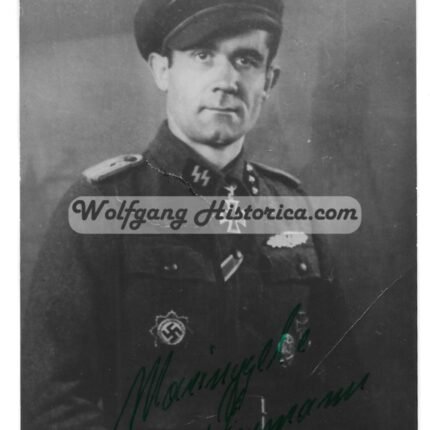
Hermann Maringgele – SS-Kavallerie-Regiment 15 “Florian Geyer” (RK+NKIG)
€0,01Original Postwar Signature on a Postwar Photo of Hermann Maringgele. SS-Untersturmführer Hermann Maringgele (29.11.1911 † 21.07.2000) earned the Nahkampfspange in Gold and the Ritterkreuz on February 21, 1945 as SS-Hauptscharführer und Zugführer in 2. Schwadron/ SS-Kavallerie-Regiment 15 of the 8. SS-Kavallerie-Division “Florian Geyer”. Good condition, except small tear in the middle. Measuring: Postcardsize. He earned the most Nahkampftage of all the bearers (84)!.
- Ritterkreuz: “SS-Hauptscharführer Maringgele demonstrated extraordinary bravery and prudence as a leader during the fighting for Fortress Budapest. Over the course of 37 assault/patrol operations, some of which were conducted far behind enemy lines, he inflicted significant losses on the enemy and obtained much valuable reconnaissance. Through his bold operations (their success made possible solely due to his leadership and personal example) Maringgele was able to firm up the front of his Regiment time and again, and their success contributed significantly to the ability of the pocket’s frontline in this area to be maintained despite the strong enemy superiority.
During the ordered breakout from the Budapest pocket Maringgele took control of a group of 60 men, and he led them deep through enemy territory in an exemplary manner. With these men he was the first soldier from the pocket to reach the German lines already on the 13.02.1945.
SS-Hauptscharführer Maringgele has been involved in well over 50 days of close combat.”

Otto Kumm – Regiment “Der Führer” & Division “Prinz Eugen” (Swords)
€75,00Original Postwar Signature on a Postwar Photo of Otto Kumm. SS-Brigadeführer Otto Kumm (01.10.1909 † 23.03.2004) earned the Ritterkreuz on February 16, 1942 as SS-Obersturmbannführer und Kommandeur of the SS-Infanterie-Regiment “Der Führer”, the Eichenlaub on April 6, 1943 as SS-Obersturmbannführer und Kommandeur of the SS-Panzer-Grenadier-Regiment 4 “Der Führer” of the 2. SS-Panzer-Division “Das Reich“ and the Schwertern on March 17, 1945 as SS-Brigadeführer und Kommandeur of 7. SS-Freiwilligen-Gebirgs-Division “Prinz Eugen”. Good condition. Measuring: Little Larger as Postcard.
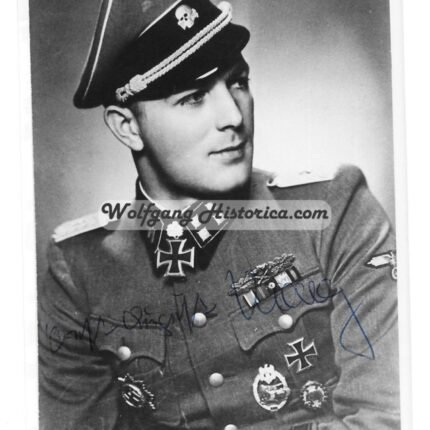
Ernst-August Krag – SS-Panzer-Aufklärungs-Abteilung 2 “Das Reich” (Oakleaves)
€0,01Original Postwar Signature on a Postwar Photo of Ernst-August Krag. SS-Sturmbannführer Ernst-August Krag (20.02.1915 † 24.05.1994) earned the Ritterkreuz on October 23, 1944 as SS-Sturmbannführer und Kommandeur of the SS-Panzer-Aufklärungs-Abteilung 2 “Das Reich” and the Eichenlaub on February 28, 1945 as SS-Sturmbannführer und Kommandeur of the SS-Panzer-Aufklärungs-Abteilung 2 “Das Reich” of the 2. SS-Panzer-Division “Das Reich”. Good condition. Measuring: Postcardsize.

Karl-Heinz Boska – SS-Panzer-Regiment 2 “Das Reich”
€75,00Original Postwar Signature on a Postwar Photo of Karl-Heinz Boska. Karl-Heinz Boska (18.10.1920 † 22.10.2004) earned the Ritterkreuz on December 16, 1943 as SS-Obersturmführer und Adjutant of the II. Abteilung/ SS-Panzer-Regiment 2 of the 2. SS-Panzer-Division “Das Reich”. Good condition. Measuring: Large size! Dedicated to former comrade!
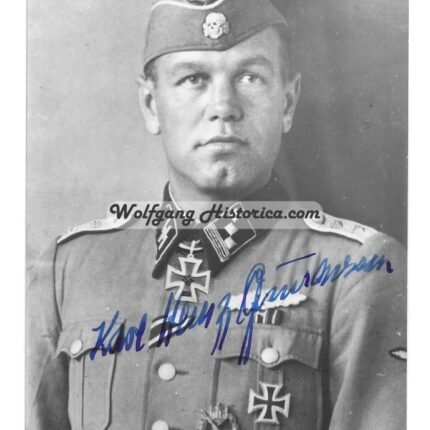
Karl-Heinz Gustavsson – SS-Flak-Abteilung 2 “Das Reich”
€0,01Original Postwar Signature on a Postwar Photo of Karl-Heinz Gustavsson. SS-Hauptsturmführer Karl-Heinz Gustavsson (10.02.1915 † 20.07.1990) earned (not official anymore) the Ritterkreuz on March 3, 1945 as SS-Hauptsturmführer und Chef of the 3. Batterie/ SS-Flak-Abteilung 2 of the 2. SS-Panzer-Division “Das Reich”. Good condition. Measuring: Postcardsize.
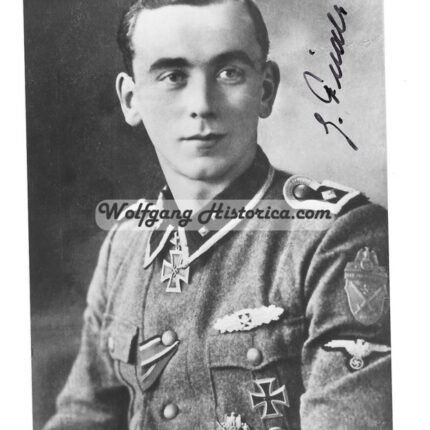
Johann Fiedler – SS-Panzer-Grenadier-Regiment 6 “Theodor Eicke”
€0,01Original Postwar Signature on a Postwar Photo of Johann Fiedler. SS-Oberscharführer Johann Fiedler (28.04.1922 † 23.09.1999) earned the Ritterkreuz on June 16, 1944 as SS-Unterscharführer und Zugführer in the 5. Kompanie/ SS-Panzer-Grenadier-Regiment 6 “Theodor Eicke” of the 3. SS-Panzer-Division “Totenkopf”. Good condition.
Knight’s Cross: “On the 26.04.1944 the SS-Panzergrenadier-Regiment 6 ‘Theodor Eicke’ attacked towards Pascani with the intent of improving its own lines. After overwhelming the first hostile trenches an enemy flanking position containing numerous bunkers that had not previously been identified made itself very uncomfortably felt. Under fire from the flanking bunkers and field positions, the friendly attack initially bogged down.
In this situation SS-Unterscharführer Fiedler led his squad into an attack against the enemy trench on his own initiative and rolled it up in bitter close combat. He eliminated the bunkers that formed part of the enemy’s defensive network with great prudence and exemplary bravado.
Through this independently conducted action Fiedler took out the enemy flanking threat, and in doing so he enabled the attack of the two forwardly deployed Bataillone to proceed. He personally captured the following:
35 prisoners, 1 anti-tank gun, 2 heavy machine-guns, 5 light machine-guns, 39 machine-pistols.
Over 40 enemy dead lay amongst the trenches and bunkers he had cleared. Through this achievement Unterscharführer Fiedler has achieved a decisive success far out of proportion to his battlefield importance.
I ask that SS-Unterscharführer Fiedler (who has already been wounded in the East a total of 9 times) be awarded the Knight’s Cross of the Iron Cross for his heroic deed and its associated success.”

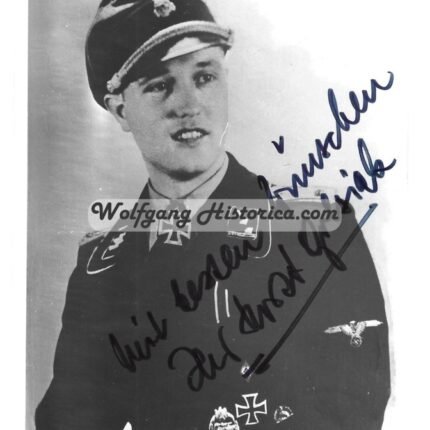
Horst Gresiak – SS-Panzer-Regiment 2 “Das Reich”
€0,01Original Postwar Signature on a Postwar Photo of Horst Gresiak. SS-Obersturmführer Horst Gresiak (17.02.1920 † 22.02.1995) earned the Ritterkreuz on January 25, 1945 as SS-Obersturmführer und Führer of the 7. Kompanie/ SS-Panzer-Regiment 2 of the 2. SS-Panzer-Division “Das Reich”. Good condition. Measuring: Postcardsize.
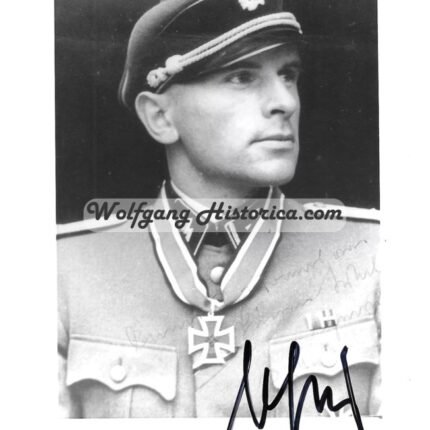
Walter Girg – SS-Jäger-Bataillon 502 & SS-Jagdverband Mitte (EL)
€50,00Original Postwar Signature on a Postwar Photo of Walter Girg. SS-Obersturmführer Walter Girg (13.08.1919 † 25.07.2010) earned the Ritterkreuz on October 4, 1944 as SS-Obersturmführer und Zugführer of the 1. Kompanie/ SS-Jäger-Bataillon 502 and the Eichenlaub on April 1, 1945 as SS-Hauptsturmführer und Führer of a Sonderkommando of SS-Jagdverband Mitte. Good condition. Measuring: Postcardsize.
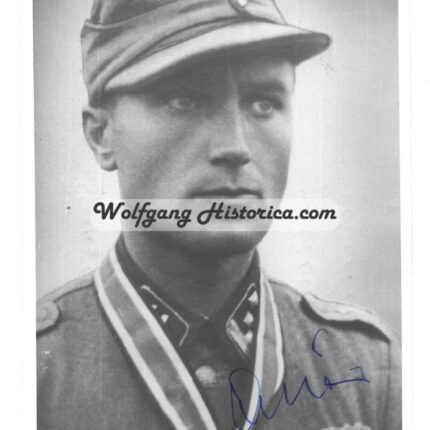
Karl Auer – SS-Panzer-Grenadier-Regiment 8 (RK+NKIG)
€85,00Original Postwar Signature on a Postwar Photo of Karl Auer. SS-Sturmbannführer Karl Auer (20.10.1916 † 31.03.1997) earned the Ritterkreuz on October 31, 1944 as SS-Hauptsturmführer und Kommandeur of the I. Bataillon/ SS-Panzer-Grenadier-Regiment 8 of the 4. SS-Polizei-Panzergrenadier-Division. He also earned the Nahkampfspange in Gold (Close Combat Badge in Gold) on March 22, 1945 as SS-Sturmbannführer und Kommandeur of the SS-Feldersatz-Bataillon 4 of the 4. SS-Polizei-Panzergrenadier-Division. Good Condition. Postcardsize.
Knight’s Cross recommendation: “On the 16.09.1944, during an attack by Kampfgruppe Prager, a Kompanie of the I./8 was sent on a flanking maneuver to the right in order to envelop the enemy’s toughly defended river position south of Sag. As the attacks from the front and left offered no promises for success, and because the terrain on the right was favourable for an attack, an additional Kompanie from the I./8 was deployed on the right to engage the enemy in their flank and rear. However the attack still only made slow initial progress in the face of tough enemy resistance. The attack was only reenergized after SS-Haupsturmführer Auer had personally taken over the main attacking Kompanie on the right. The Kompanie thrust into the flank and rear of the strongly fortified enemy river position and rolled it up from the flank.
With this the enemy’s toughly defended Timisul position, held by about 7 companies, was captured. This success was first and foremost due to the personal boldness, bravery and prudence of SS-Hauptsturmführer Auer.
On the 17.09.1944 SS-Hauptsturmführer Auer and his Bataillon thrust forwards in the area east of Temeschburg while once again under the command of Kampfgruppe Prager. This Kampfgruppe had the task of stop the enemy from linking up along the line Temeschburg—Lugoj. SS-Hauptsturmführer took up positions in the east with elements of his Bataillon to provide flank protection for the Kampfgruppe. However, following a good initial success, the enemy succeeded in using their superior forces (supported by tanks and artillery) to cut off Auer’s force from the rest of the Kampfgruppe. But Auer and his men was in turn able to withstand the enemy onslaught with exemplary bravery and perseverance. Auer went on to conduct a skillful breakout back to the Kampfgruppe during the night with only minimal friendly losses.
On the 24.09.1944 Auer and his Bataillon were employed on the left wing of the friendly attacking group in order to guard its open left flank. To this end the Bataillon dispatched elements to attack Sandra (30 km northwest of Temeschburg), however the attack bogged down west of Sandra in the face of overwhelming enemy forces. In response SS-Hauptsturmführer Auer gathered up a Kompanie and the reserve Zug on his own initiative, and with this force he led a thrust into the enemy flank and captured Sandra. The resolution and personal bravery of this Bataillon commander was decisive. He and his weak forces then held Sandra against all enemy attacks despite becoming temporarily encircled.
By doing this Auer facilitated the success of our own thrust to the north along the route Essag—Periam, which itself led to the cutting off of those Russian forces in the area southwest of the Maros (southeast of Temeschburg). Auer thus decisively contributed to the defeat of the Russian’s thrust from the southeast.”

Hans-Joachim Löser – Füsilier-Regiment 230 (Stalingrad!)
€35,00Original Postwar Signature on a Postwar Photo of Hans-Joachim Löser. Major Hans-Joachim Löser (04.04.1918 † 13.02.2001) earned the Ritterkreuz on January 20, 1943 as Hauptmann und Bataillonskommandeur of the III. Bataillon/ Füsilier-Regiment 230 of the 76. Infanterie-Division. Good Condition. Measuring: 12,6×17,8cm.
Knight’s Cross: During the fighting for the Stalingrad pocket in the winter of 1942/43, Hauptmann Löser especially distinguished himself for his defense of a German main dressing station at Rossoschka. For this he would be decorated with the Knight’s Cross. Hauptmann Löser was severely wounded during the Stalingrad siege and was evacuated on the last flight to leave Stalingrad.
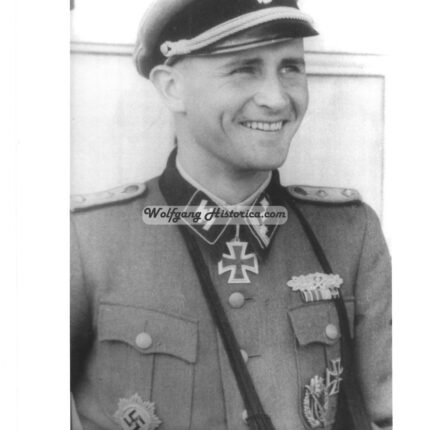
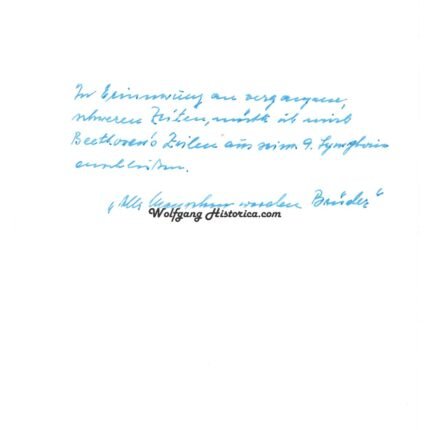
Franz Grohmann – SS-Panzergrenadier-Regiment 3 “Deutschland”
€75,00Original Postwar Signature on a Postwar Photo of Franz Grohmann. SS-Hauptsturmführer Helmut Schreiber (16.10.1919-07.04.2000) earned the Ritterkreuz on August 23, 1944, as SS-Obersturmführer und Chef of the 1. Kompanie/ SS-Panzergrenadier-Regiment 3 “Deutschland” of the 2. SS-Panzer-Division “Das Reich”. Good condition. Measuring: 17,5x24cm.
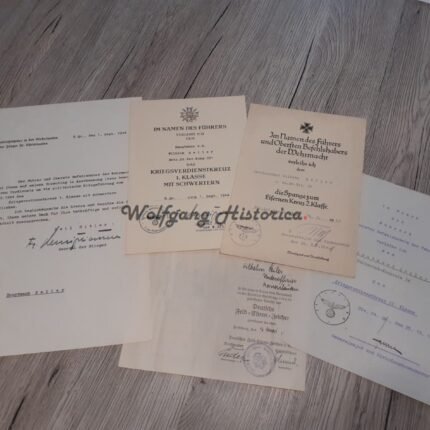
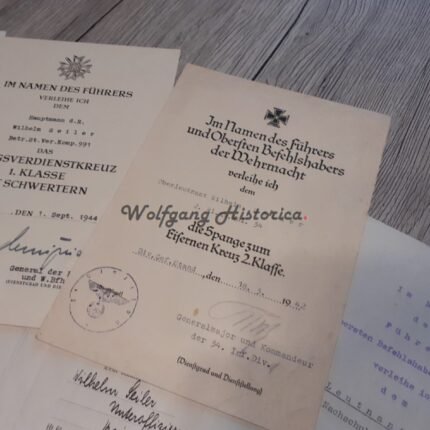
4x Award Documents: Spange zum EK2, KVK1+KVK2 & Feld-Ehrenzeichen
€0,01Interesting 4x Award documents of Hauptmann d.R. Wilhelm Seiler. Hauptmann Seiler, earned (at least) the Kriegsverdienstkreuz 2. Klasse mit Schwertern (War Merit Cross 2nd Class with Swords), the Kriegsverdienstkreuz 1. Klasse mit Schwertern ((War Merit Cross 1st Class with Swords), the Spange zum Eisernes Kreuz 2. Klasse (Clasp for the Iron Cross 2nd Class) and the Feld-Ehrenzeichen.
- Kriegsverdienstkreuz 1. Klasse mit Schwertern for his service on September 1, 1944 while serving with the Betriebstoffversorgungskompanie 991. Signed by General der Flieger und Wehrmachtbefehlshaber in den Niederlanden Friedrich Christiansen (DKIS!). Comes with an accompanying letter!
- Kriegsverdienstkreuz 2. Klasse mit Schwertern for his service on October 25, 1940 while serving with Nachschub-Kompanie 34. Signed by Generalmajor und Divisionskommandeur Werner Sanne (Knight’s Cross)! Werner Sanne was captured during the Battle of Stalingrad and died in Soviet Captivity.
- Spange zum Eisernes Kreuz 2. Klasse for his service on March 18, 1943 while serving with kl. Kraftwagen-Kolonne 34. Signed by Generalmajor und Divisionskommandeur Friedrich Fürst!
- Deutsche Feld-Ehrenzeichen
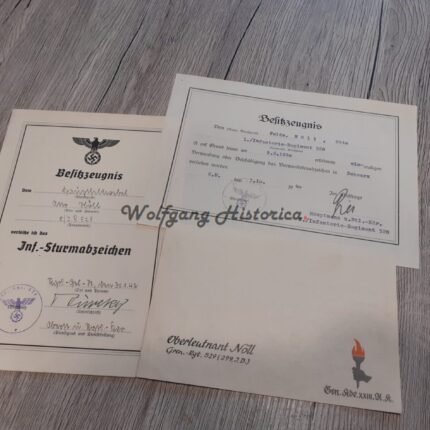
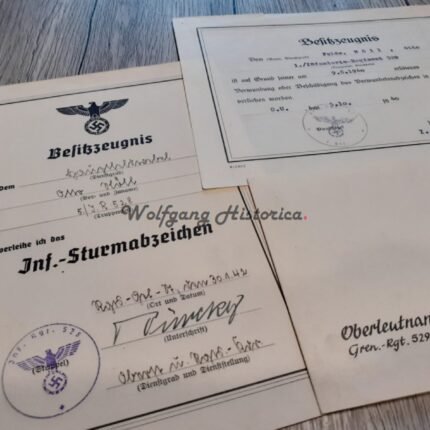
2x Award Documents: Wound Badge, Infantry Assault Badge & DKIG Congratulations Card (DKIG-Holder!)
€0,01Small but interesting Award document set which includes 2x award documents of Oberleutnant Otto Nöll, who would become a Deutsches Kreuz in Gold-träger (bearer of the German Cross in Gold), who earned his awards during the fightings on the Western & Eastern Front. He served with Infanterie-Regiment 528 & 529 of the 299. Infanterie-Division.
- Verwundetenabzeichen in Schwarz (Wound Badge in Black) for his wound sustained on June 9, 1940, which was signed by Hauptmann und Bataillonskommandeur ?. Nice early variant.
- Infanterie Sturmabzeichen (Infantry Assault Badge) for supporting 3 assaults, awarded in January 1942 and was signed by Oberst und Regiments-Kommandeur Heinrich Bürcky
(DKIG). Nice variant. - Comes with a scarce Deutsches Kreuz in Gold congratulations card!
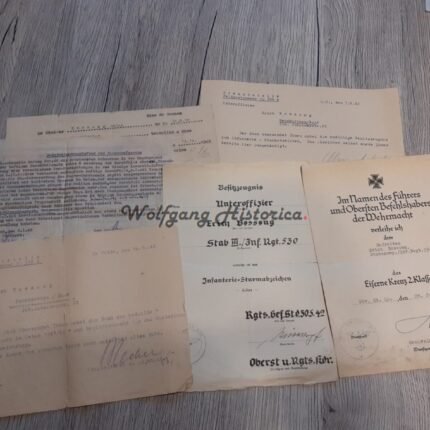
2x Award Documents: Iron Cross 2nd Class & Infantry Assault Badge (299.Inf.Div.)
€125,00Small but interesting Award document set which includes 2x award documents of Unteroffizier Erich Bossong, and a few papers, who earned his awards during his fightings on the Eastern Front. He served with Infanterie-Regiment 530 of the 299. Infanterie-Division.
- Eisernes Kreuz 2. Klasse (Iron Cross 2nd Class) for his service (heroic) on July 28, 1941, which was signed by Generalmajor und Divisionskommandeur Wilhelm Moser (Knight’s Cross, died in Soviet Captivity). Document has been folded once.
- Infanterie Sturmabzeichen (Infantry Assault Badge) for supporting 3 assaults, awarded in May 1942 and was signed by Oberst und Regiments-Kommandeur Heinrich Wittkopf (Knight’s Cross, died in Belgium in British Captivity), has been folded twice.
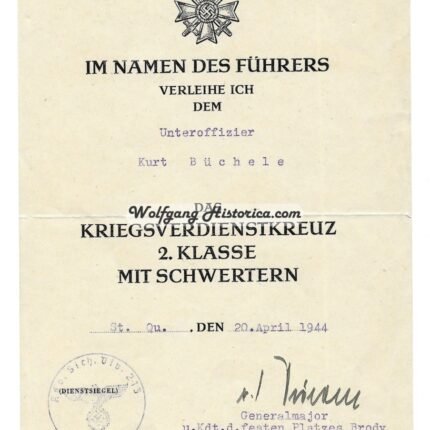
War Merit Cross 2nd Class Award Document – Festen Platzes Brody (!)
€55,00Award document for the Kriegsverdienstkreuz 2. Klasse mit Schwertern (War Merit Cross 2nd Class with Swords) of Unteroffizier Kurt Büchele, who earned it for his service on April 20, 1944 while serving with 213. Sicherungs-Division (?) at the Festen Platzes Brody! Signed by Generalmajor und Kommandant der festen Platzes Brody Arthur von Briesen.
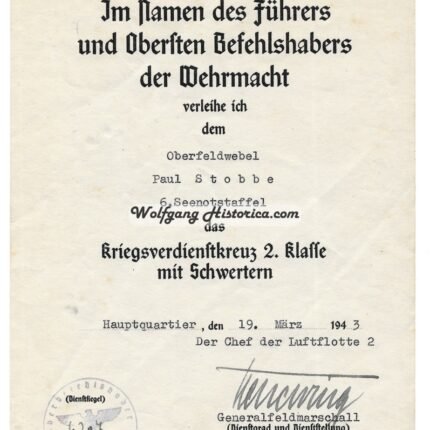
War Merit Cross 2nd Class Award Document – Seenotstaffel 6 (Italy) (Signed by Kesselring!)
€75,00Award document for the Kriegsverdienstkreuz 2. Klasse mit Schwertern (War Merit Cross 2nd Class with Swords) of Oberfeldwebel Paul Stobbe, who earned it for his service on March 19, 1943 while serving with 6. Seenotstaffel in Italy. Signed by Generalfeldmarschall und Chef der Luftflotte 2 Albert Kesselring (Knight’s Cross with Oakleaves, Swords and Diamonds!).
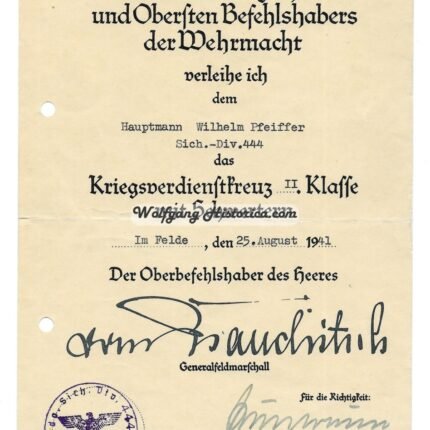
War Merit Cross 2nd Class Award Document – Officer of 444. Sicherungs-Division
€45,00Award document for the Kriegsverdienstkreuz 2. Klasse mit Schwertern (War Merit Cross 2nd Class with Swords) of Hauptmann Wilhelm Pfeiffer, who earned it for his service on August 25, 1941 while serving with 444. Sicherungs-Division. Signed by Generalleutnant und Divisionskommandeur Wilhelm Rußwurm. Nice variant with fakismile of Walther von Brauchitsch.
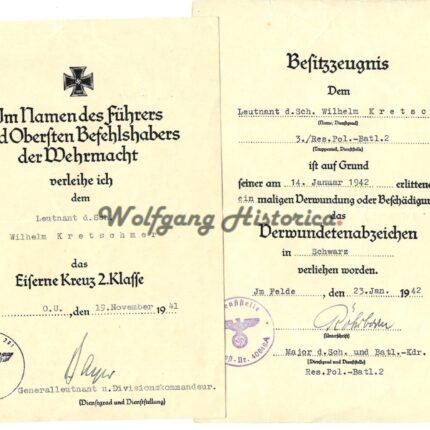
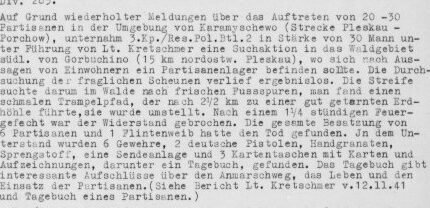
Set Iron Cross 2nd Class Award & Wound Badge Award Document – Reserve-Polizei-Bataillon 2
€200,00Set of an Award document for the Eisernes Kreuz 2. Klasse (Iron Cross 2nd Class) & Verwundetenabzeichen in Schwarz (Wound Badge in Black) of Leutnant der Schutzpolizei Wilhelm Kretschmer of the 3. Kompanie/ Reserve-Polizei-Bataillon 2 subordinated to the 281. Sicherungs-Division. He earned the Iron Cross 2nd Class in November 1941 and the Wound Badge in January 1942. Documents signed by Generalleutnant und Divisionskommandeur Friedrich Bayer (died in Soviet captivity) and Major der Schutzpolizei Röhrbein.
He likely earned it for actions on 12th November. See extra attachment!
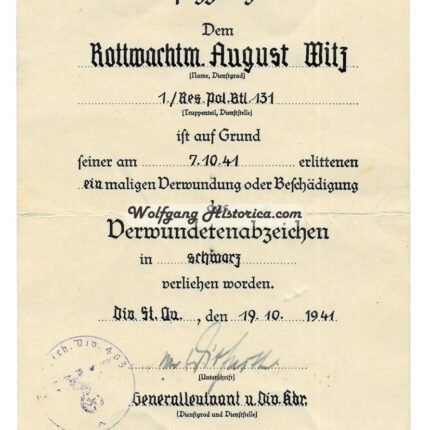
Wound Badge in Black Award Document – Reserve-Polizei-Bataillon 131 (403. Sicherungs-Division)
€85,00Award document for the Verwundetenabzeichen in Schwarz (Wound Badge in Black) of Rottwachtmeister August Witz of the 1. Kompanie/ Reserve-Polizei-Bataillon 131 subordinated to the 403. Sicherungs-Division. Earned in October 1941, Signed by Generalleutnant und Divisionskommandeur Wolfgang von Ditfurth (Hanged in 1946 by Russia for war crimes).
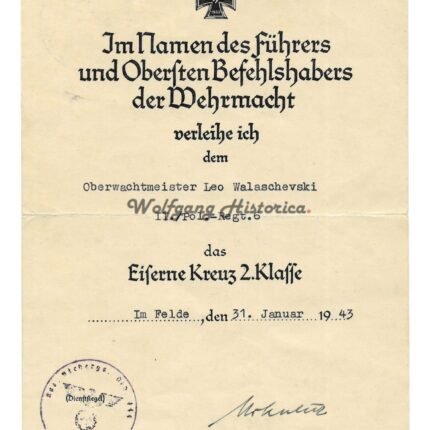
Iron Cross 2nd Class Award Document – Polizei-Regiment 6 (444. Sicherungs-Division)
€100,00Award document for the Eisernes Kreuz 2. Klasse (Iron Cross 2nd Class) of Oberwachtmeister Leo Walaschevski of the II. Bataillon/ Polizei-Regiment 6 subordinated to the 444. Sicherungs-Division. Earned in January 1943, Signed by Generalmajor und Divisionskommandeur Adalbert Mikulicz (DKIG).
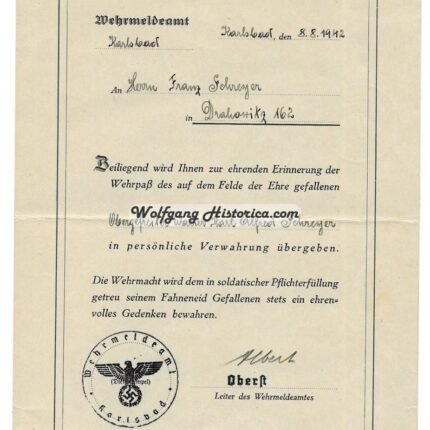
Erinnerungsstück for KIA Soldier of Karlsbad (Pionier-Bataillon 52)
€9,90Small document as Erinnerungsstück for a KIA Soldier of Karlsbad, Drakowitz. The soldier Obergefreiter Walter Karl Schreyer served with Pionier-Bataillon 52.
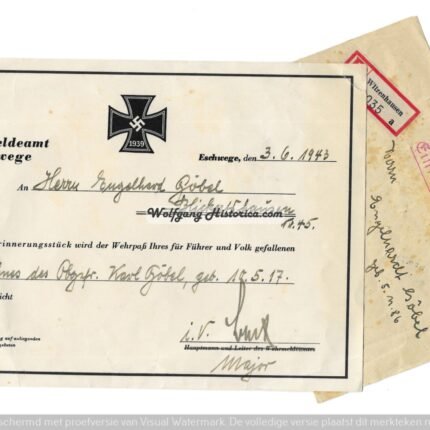
Erinnerungsstück for KIA Soldier of Eschwege
€10,00Small document as Erinnerungsstück for a KIA Soldier of Eschwege, Obergefreiter Karl Göbel?
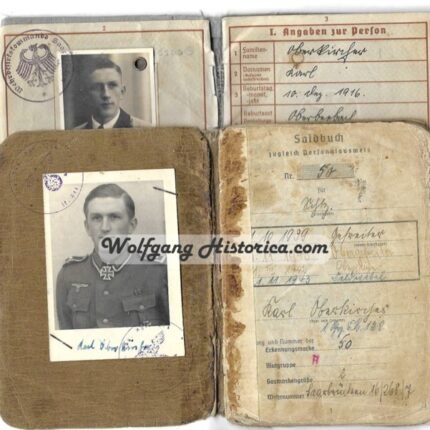
Soldbuch & Wehrpass of Ritterkreuzträger Karl Oberkircher – Gebirgs-Jäger-Regiment 218
€0,01Original Scarce Wehrpass and Soldbuch set of Ritterkreuzträger (Knight’s Cross Holder) Karl Oberkircher! Feldwebel Karl Oberkircher (10.12.1916 † 28.11.1976) earned the Ritterkreuz on October 12, 1943 as Oberjäger und Gruppenführer in the 6. Kompanie/ Gebirgs-Jäger-Regiment 218 of the 7. Gebirgs-Division. Both the Soldbuch and Wehrpass are nicely filled out and carried them both throughout the war (no zweitschrift etc.). A few loose pages and feldpostnumbers that were blackened. Awards entered in the Wehrpass: Schützenabzeichen f. M.G. 36, Infanterie-Sturmabzeichen, Eisernes Kreuz 2. Klasse,Verwundetenabzeichen in Schwarz, Eisernes Kreuz 1. Klasse, Ritterkreuz des Eisernen Kreuzes and Lapplandschild. All awards are also entered in the Soldbuch minus the Schützenabzeichen. Excellent ID Photo in the Soldbuch!
The following newspaper article describes why Oberkircher received the Knight’s Cross…
“Westmärker Receives the Knight’s Cross:
… Oberjäger Karl Oberkircher was born in Oberbexbach (Homburg District) on the 10.12.1916 as the son of miner and farmer Jakob Oberkircher. During a friendly attack in the high North he smashed a breach into an enemy bunker position whilst leading at the head of a Gebirgsjäger assault troop. Then, acting on his own initiative, he was able to roll up the position with just 3 other Gebirgsjäger. In the process he and his men eliminated 6 hostile battle positions and thereby enabled the rest of the Kompanie to capture the enemy trench network.”
This attack took place on the 08.08.1943, when the reinforced Gebirgs-Jäger-Regiment 218 attacked the so-called “Bunker Backbone”, which was located on a commanding piece of terrain. Oberkircher led an assault troop against the so-called “Sukkula” in the first stage of the attack. After overcoming the mine and wire barriers without loss, he and 4 troops attacked a bunker and knocked it out after a brief fight. At this point Oberkircher was supposed to have attacked the trench network towards the right, however he recognized that such a move would be foolish due to the fact that left-adjacent assault troop was pinned down by heavy opposing fire. He thus left part of his squad to cover the right flank and used the remainder to attack towards the left. He would be duly recognized for this feat.”
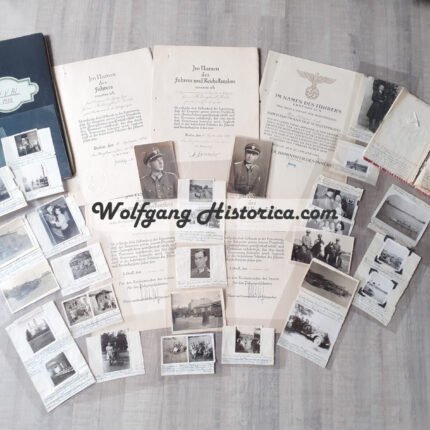
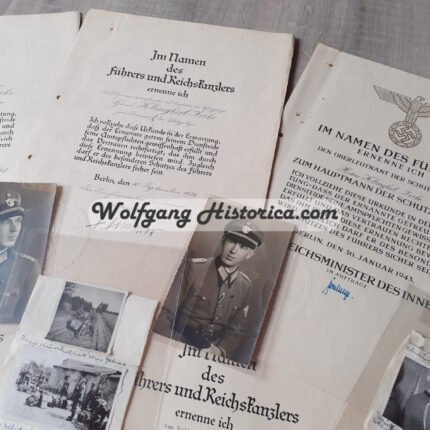
Warsaw Ghetto Uprising Set of Police Officer – Photos & Docs (Himmler Signature)
€0,01Authentic Scarce Set of Photographs, his Wife’s Diary and Promotional Documents of SS-Hauptsturmführer Hans Klingbeil-Zerbe. During the war he served with Reserve-Polizei-Bataillon 63 and I. Bataillon/ SS-Polizei-Regiment 17 als Kompaniechef (Company Commander). In March 1944, he was lastly promoted to SS-Hauptsturmführer (he was promoted to Hauptmann der Schutzpolizei before but afterwards when incorporated into the SS, he received the SS equivalent). His NSDAP-Nummer was 7.489.549 and SS-Nr. 476 907. The I. Bataillon/ SS-Polizei-Regiment 17 was active during the Warsaw Ghetto Uprising (April-May 1943) and Warsaw Uprising (August-October 1944)!
His award documents were handsigned by: Heinrich Himmler, Kurt Daluege (2x) and Joachim Petsch (2x). The set includes stunning photographs that are almost all well-documented with captions incl. names & places!
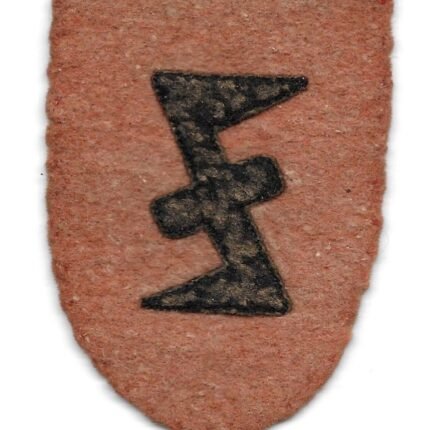
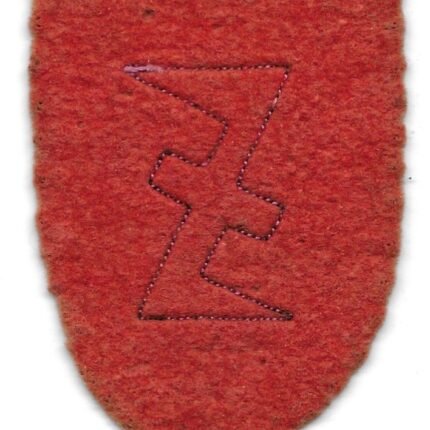
Armbadge Dietse Militie-Zwarte Brigade
€0,01Original Flemish armbadge for the Dietse Militie-Zwarte Brigade
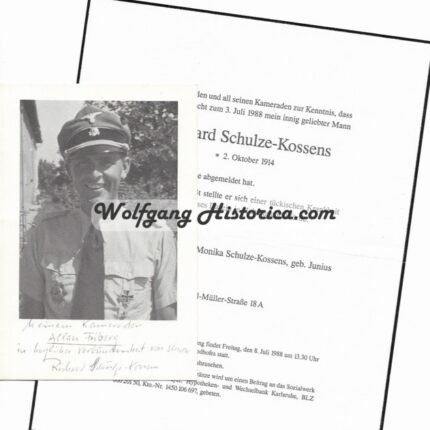
Richard Schulze-Kossens – “LSSAH”, Personal Adjutant of Adolf Hitler & “Hitlerjugend” (DKIG)
€0,01Original Scarce Postwar Signature on a Postwar Photocopy of Richard Schulze-Kossens. SS-Obersturmbannführer Richard Schulze-Kossens (02.10.1914 † 03.07.1988) earned the Deutsches Kreuz in Gold on December 26, 1941 as SS-Hauptsturmführer with the 2. Kompanie/ “Leibstandarte-SS Adolf Hitler”. He also later served as the Personal Adjutant of Adolf Hitler; the SS-Panzer-Grenadier-Regiment 25 of the 12. SS-Panzer-Division “Hitlerjugend” and as Kommandeur of 38. SS-Grenadier-Division “Nibelungen“. Good condition. Comes with original death letter.
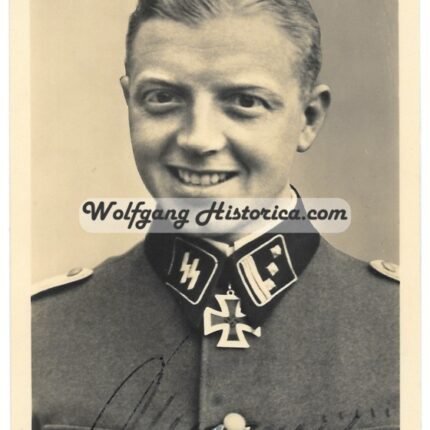
Fritz Klingenberg – SS-Kradschützen-Bataillon “Reich” (Captured Belgrade)
€0,01Original Scarce Wartime Signature on a Hoffmann Postcard of Fritz Klingenberg. SS-Standartenführer Fritz Klingenberg (17.12.1912 † 23.03.1945) earned the Ritterkreuz on May 14, 1941 as SS-Hauptsturmführer und Chef of the 2. Kompanie/ SS-Kradschützen-Bataillon of the SS-Division “Reich”. Good condition. Measuring: Postcardsize.
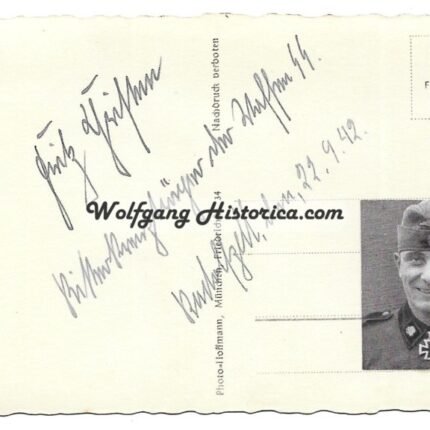
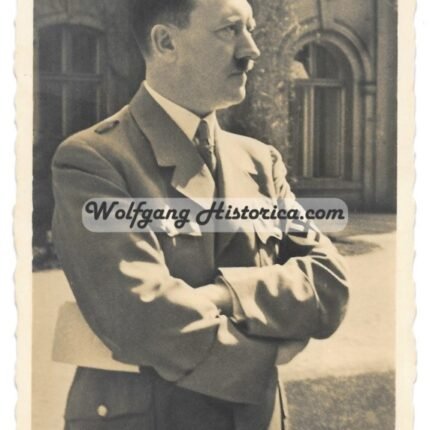
Fritz Christen – SS-Panzerjäger-Abteilung “Totenkopf”
€0,01Original Scarce Wartime Signature (on a Adolf Hitler Hoffmann Postcard) of Fritz Christen. SS-Oberscharführer Fritz Christen (29.06.1921 † 23.09.1995) earned the Ritterkreuz on October 20, 1941 as SS-Sturmmann und Richtschütze in the 2. Kompanie/ SS-Panzerjäger-Abteilung 3 of the 3. SS-Division “Totenkopf”. Good condition. Measuring: Postcardsize.

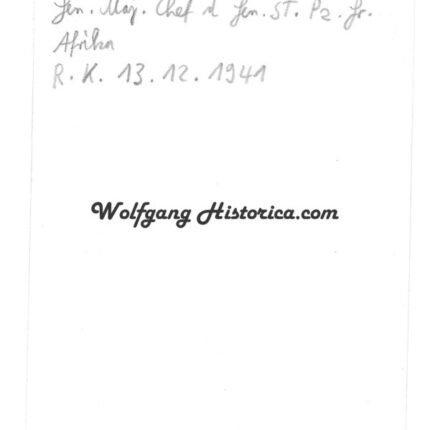
Alfred Gause – Panzergruppe “Afrika” (Stabschef of Erwin Rommel)
€225,00Original Wartime Signature on a Photograph of Alfred Gause. Generalleutnant Alfred Gause (14.02.1896 † 30.09.1967) earned the Ritterkreuz on December 13, 1941 as Generalmajor und Stabschef of the Generalstab d. Panzergruppe “Afrika”. Served as Rommel’s Chief of Staff. Good condition.
“During the Second World War he was a highly valued staff officer. Gause was initially sent to Africa with a large staff by Oberkommando des Heeres (OKH), the German Army High Command, to act as a liaison officer with the Italian high command, Comando Supremo. Gause had specific instructions not to place himself under the command of Erwin Rommel, but did so when Rommel told him categorically that the command of all troops in Africa were vested in him. This was not correct, but Gause acceded to Rommel’s authority, and served as his chief of staff. He proved invaluable to the famous desert commander, who was well known to direct his forces from the front and who frequently would lose touch with his command staff during operations. Gause spent two and a half years serving Rommel in the Afrika Korps. Though initially sent by OKH to keep an eye on the independent commander, they soon developed an excellent working relationship. In December, 1941 Gause was awarded the Knight’s Cross of the Iron Cross. In early May 1943 he was rotated into the officer reserve force, and thus was off the continent when the Axis forces in Africa surrendered. Gause rejoined Rommel in his postings in Italy and Northern France. In September 1944 he became Chief of Staff of the 6th Panzer Army, which he held through the end of November. In April he was assigned to Generalkommando II Armeekorps in Kurland (General staff of Army Corps, Kurland). Alfred Gause was captured by Soviet troops in the Courland Pocket in 1945 and was a prisoner of the Soviets until his release in 1955.” (Source: Wikipedia)
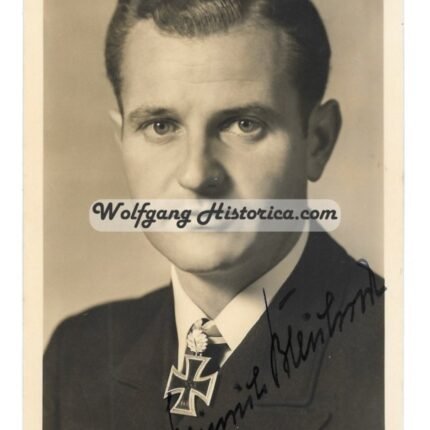
Heinrich Bleichrodt – Commander of “U-48” and “U-109” (Oakleaves)
€220,00Original Wartime Signature on a Hoffmann Postcard of Heinrich Bleichrodt. Korvettenkäpitan Heinrich Bleichrodt (21.10.1909 † 09.01.1977) earned the Ritterkreuz on October 24, 1940 as Kapitänleutnant und Kapitän of Uboot “U-48” and the Eichenlaub on September 23, 1942 as Kapitänleutnant und Kapitän of Uboot “U-109”. Creditted with sinking 25 ships. Good condition.