


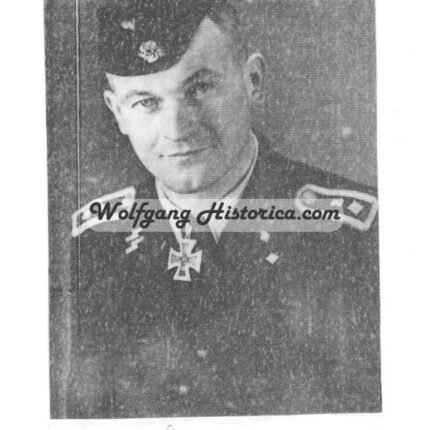
Alfred Siegling – SS-Panzer-Aufklärungs-Abteilung 2 “Das Reich”
€75,00Original Postwar Signature on a Postwar Photo of Alfred Siegling. SS-Untersturmführer Alfred Siegling (15.03.1918 † 05.09.1984) earned the Ritterkreuz on December 2, 1943 as SS-Oberscharführer und Spähtruppführer in the 1. Kompanie/ SS-Panzer-Aufklärungs-Abteilung 2 of the 2. SS-Panzer-Division “Das Reich”. Good condition. Measuring: 8,5x15cm.
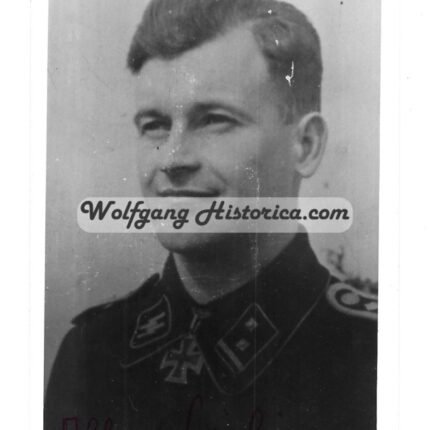
Alfred Siegling – SS-Panzer-Aufklärungs-Abteilung 2 “Das Reich”
€75,00Original Postwar Signature on a Postwar Photo of Alfred Siegling. SS-Untersturmführer Alfred Siegling (15.03.1918 † 05.09.1984) earned the Ritterkreuz on December 2, 1943 as SS-Oberscharführer und Spähtruppführer in the 1. Kompanie/ SS-Panzer-Aufklärungs-Abteilung 2 of the 2. SS-Panzer-Division “Das Reich”. Good condition. Measuring: 8,9×12,6cm.
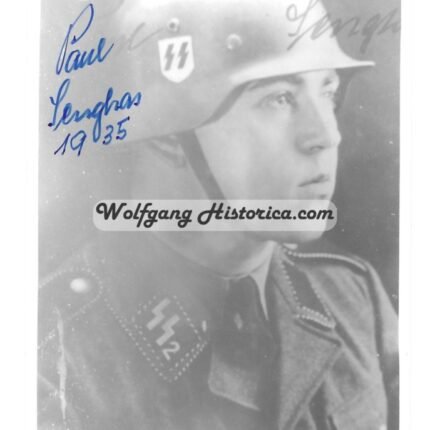
Paul Senghas – SS-Panzer-Regiment 5 “Wiking”
€0,01Original Postwar Signature on a Postwar Photo of Paul Senghas. SS-Hauptsturmführer Paul Senghas (31.01.1916 † 06.11.1996) earned the Ritterkreuz on December 11, 1944 as SS-Obersturmführer und Führer of the I. Abteilung/ SS-Panzer-Regiment 5 of the 5. SS-Panzer-Division “Wiking”. Good condition. Measuring: Postcardsize. Handwritten on the reverse.
“On the 18.08.1944 the enemy advanced towards the Warsaw-Radzymin-Wyszkow road with massive forces and strong air support. At the time the 5. SS-Panzer-Division ‘Wiking’ was located along the general line Roszcep-Trojany-Debynki. At the time SS-Obersturmführer Senghas stood as the leader of the Stabskompanie along with the supply units of the I./SS-Panzer-Regiment 5 in Zazdroso (1.5 km east of Niegow).
At 11:00 he received a message which reported the Russians as having broken through in battalion strength to a point 1 km east of the railway embankment. A wide gap existed towards the left neighbour, and there was the danger that the Russians would block the main road and thrust into the left flank of the Division. Recognizing this danger, Senghas made the decision to engage the enemy with the handful of men in the supply units at hand (despite their lack of heavy infantry weapons) and bring the Russians to a halt.
Going into position at the railway embankment, he let the Russians approach to within very close range and then smashed their attack. Reinforcements could not be brought up, and so Senghas defended with his handful of men for the remainder of that day and also the two following days, fighting off strong enemy attacks with only rifles, sub-machine guns and close combat weapons. During this time 2 Panzer IVs, which had been in the repair shop and were only conditionally operational, were brought into the fight. 2 Sherman tanks and 1 T-34 were destroyed immediately after they appeared. The Russians took heavy losses in men and ceased their attacks.
By his own initiative and personal devotion to duty, Senghas thus brought the 3 days of close combat to a conclusion. An enemy breakthrough was prevented and the danger to the left flank of the Division removed. Senghas is one of the oldest Eastern front combat veterans, who has mastered many critical situations through swift decisiveness and bold action while ruthlessly demanding the utmost of himself.”
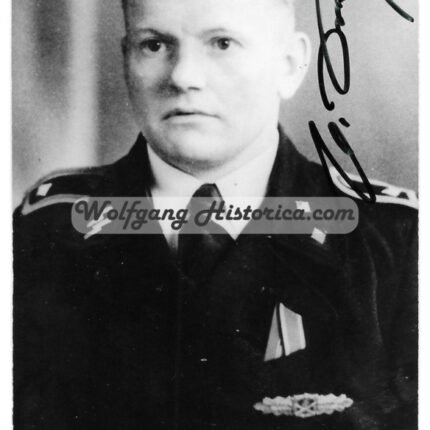
Emil Seibold – SS-Panzer-Regiment 2 “Das Reich”
€0,01Original Postwar Signature on a Postwar Photo of Emil Seibold. SS-Hauptscharführer Emil Seibold (26.02.1907 † 11.09.1990) earned the Ritterkreuz on May 6, 1945 as SS-Hauptscharführer und Zugführer in the 8. Kompanie/ SS-Panzer-Regiment 2 of the 2. SS-Panzer-Division “Das Reich”. Good condition. Measuring: Postcardsize.
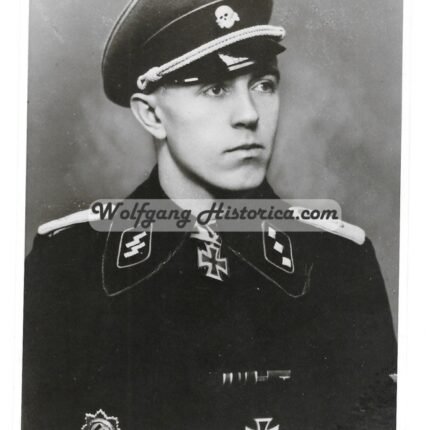

Paul Senghas – SS-Panzer-Regiment 5 “Wiking”
€50,00Original Postwar Signature on a Postwar Photo of Paul Senghas. SS-Hauptsturmführer Paul Senghas (31.01.1916 † 06.11.1996) earned the Ritterkreuz on December 11, 1944 as SS-Obersturmführer und Führer of the I. Abteilung/ SS-Panzer-Regiment 5 of the 5. SS-Panzer-Division “Wiking”. Good condition. Measuring: Postcardsize.
“On the 18.08.1944 the enemy advanced towards the Warsaw-Radzymin-Wyszkow road with massive forces and strong air support. At the time the 5. SS-Panzer-Division ‘Wiking’ was located along the general line Roszcep-Trojany-Debynki. At the time SS-Obersturmführer Senghas stood as the leader of the Stabskompanie along with the supply units of the I./SS-Panzer-Regiment 5 in Zazdroso (1.5 km east of Niegow).
At 11:00 he received a message which reported the Russians as having broken through in battalion strength to a point 1 km east of the railway embankment. A wide gap existed towards the left neighbour, and there was the danger that the Russians would block the main road and thrust into the left flank of the Division. Recognizing this danger, Senghas made the decision to engage the enemy with the handful of men in the supply units at hand (despite their lack of heavy infantry weapons) and bring the Russians to a halt.
Going into position at the railway embankment, he let the Russians approach to within very close range and then smashed their attack. Reinforcements could not be brought up, and so Senghas defended with his handful of men for the remainder of that day and also the two following days, fighting off strong enemy attacks with only rifles, sub-machine guns and close combat weapons. During this time 2 Panzer IVs, which had been in the repair shop and were only conditionally operational, were brought into the fight. 2 Sherman tanks and 1 T-34 were destroyed immediately after they appeared. The Russians took heavy losses in men and ceased their attacks.
By his own initiative and personal devotion to duty, Senghas thus brought the 3 days of close combat to a conclusion. An enemy breakthrough was prevented and the danger to the left flank of the Division removed. Senghas is one of the oldest Eastern front combat veterans, who has mastered many critical situations through swift decisiveness and bold action while ruthlessly demanding the utmost of himself.”
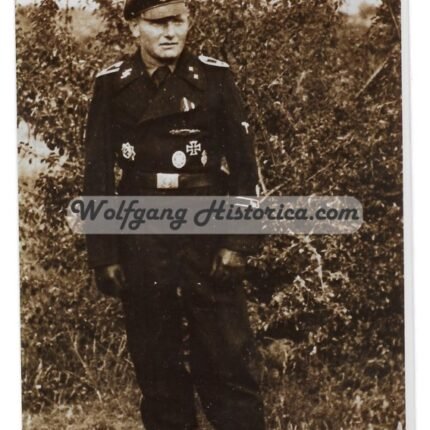
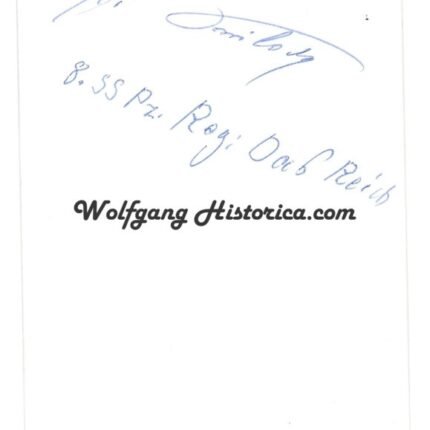
Emil Seibold – SS-Panzer-Regiment 2 “Das Reich”
€0,01Original Postwar Signature on a Postwar Photo of Emil Seibold. SS-Hauptscharführer Emil Seibold (26.02.1907 † 11.09.1990) earned the Ritterkreuz on May 6, 1945 as SS-Hauptscharführer und Zugführer in the 8. Kompanie/ SS-Panzer-Regiment 2 of the 2. SS-Panzer-Division “Das Reich”. Good condition. Measuring: Postcardsize. Signed on the reverse.
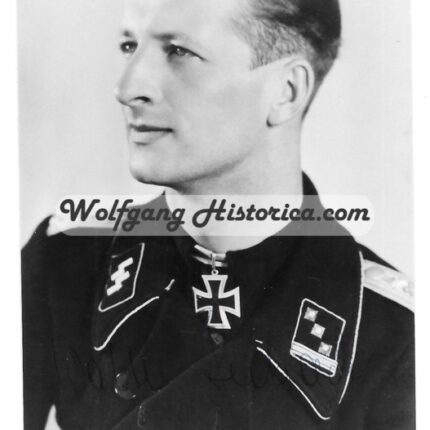
Walter Seebach – SS-Panzer-Grenadier-Regiment 24 “Danmark” (RK+NKIG)
€0,01Original Scarce Postwar Signature on a Postwar Photocopy of Walter Seebach. SS-Sturmbannführer Heinz Macher (31.12.1919 † 21.12.2001) earned the Nahkampfspange in Gold on March 16, 1944 as SS-Obersturmführer und Kompanieführer of the 5. Kompanie/ SS-Panzer-Grenadier-Regiment 24 “Danmark” and the Ritterkreuz on March 12, 1944 as SS-Obersturmführer und Kommandeur of the 5. Kompanie/ SS-Panzer-Grenadier-Regiment 24 “Danmark” of the 11. SS-Freiwilligen-Grenadier-Division “Nordland”. Good condition.

Herbert Schulze – SS-Panzer-Grenadier-Regiment 4 “Der Führer” (RK+NKIG)
€0,01Original Postwar Signature on a Postwar Photo of Herbert Schulze. SS-Sturmbannführer Herbert Schulze (01.04.1914 † 02.02.1992) earned the Ritterkreuz on December 16, 1943 as as SS-Sturmbannführer und Kommandeur of the II. Bataillon/ SS-Panzer-Grenadier-Regiment 4 “Der Führer” of the 2. SS-Panzer-Division “Das Reich”. He also the Nahkampfspange in Gold on November 9, 1943. Good condition. Measuring: Postcardsize.
Herbert Schulze – SS-Panzer-Grenadier-Regiment 4 “Der Führer” (RK+NKIG)
€0,01Original Postwar Signature on a Postwar Photo of Herbert Schulze. SS-Sturmbannführer Herbert Schulze (01.04.1914 † 02.02.1992) earned the Ritterkreuz on December 16, 1943 as as SS-Sturmbannführer und Kommandeur of the II. Bataillon/ SS-Panzer-Grenadier-Regiment 4 “Der Führer” of the 2. SS-Panzer-Division “Das Reich”. He also the Nahkampfspange in Gold on November 9, 1943. Good condition. Measuring: Postcardsize.
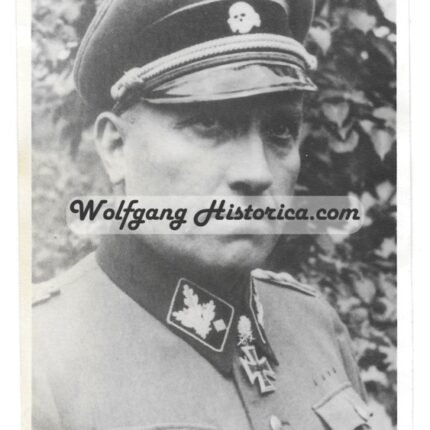
Hermann Priess – 3. SS-Panzer-Division “Totenkopf” & I. SS-Panzerkorps (Swords)
€90,00Original Postwar Signature on a Postwar Photo of Hermann Priess (24 May 1901 – 2 February 1985) was a German general in the Waffen-SS during World War II. He commanded the SS Division Totenkopf (“Death’s Head”) following the death of Theodor Eicke in February 1943. On 30 October 1944 he was appointed commander of the I. SS Panzer Corps and led it during the Battle of the Bulge. He earned the Knight’s Cross with Oakleaves and Swords. After the war, Priess was convicted of war crimes for his involvement in the Malmedy massacre, and was sentenced to 20 years imprisonment. He was released from the Landsberg Prison in 1954. Postcardsize.
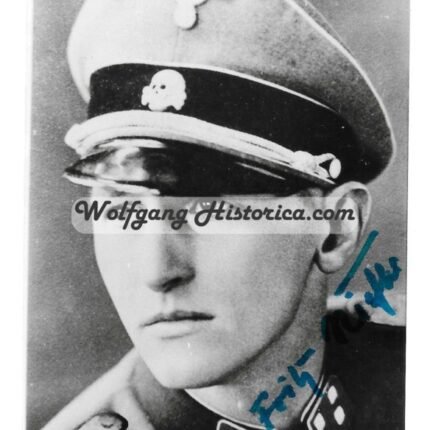
Friedrich Richter – SS-Panzer-Grenadier-Regiment 21 “Frundsberg”
€0,01Original Scarce Postwar Signature on a Postwar Photocopy of Friedrich Richter. SS-Sturmbannführer Friedrich Richter (09.05.1911 † 30.08.1989) earned the Ritterkreuz on May 9, 1945 as SS-Sturmbannführer und Kommandeur of the III. Bataillon/ SS-Panzer-Grenadier-Regiment 21 of the 10. SS-Panzer-Division “Frundsberg”. Good condition. Measuring: 8,8×12,3cm.
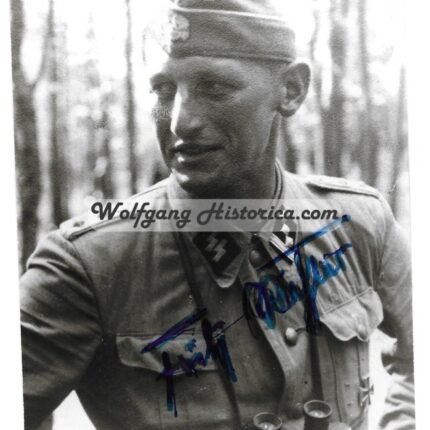
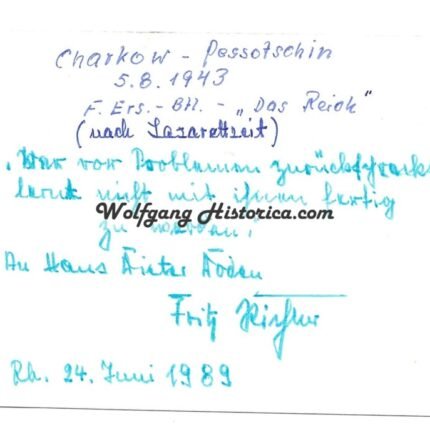
Friedrich Richter – SS-Panzer-Grenadier-Regiment 21 “Frundsberg”
€70,00Original Scarce Postwar Signature on a Postwar Photocopy of Friedrich Richter. SS-Sturmbannführer Friedrich Richter (09.05.1911 † 30.08.1989) earned the Ritterkreuz on May 9, 1945 as SS-Sturmbannführer und Kommandeur of the III. Bataillon/ SS-Panzer-Grenadier-Regiment 21 of the 10. SS-Panzer-Division “Frundsberg”. Good condition. Postcardsize.
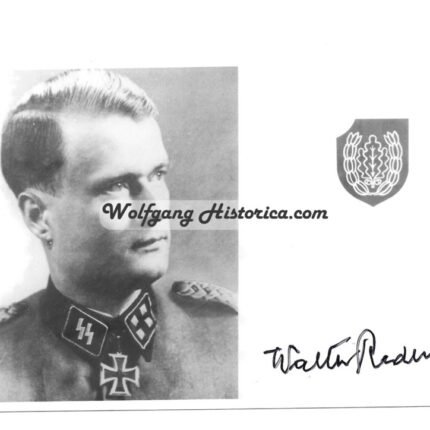
Walter Reder – SS-Panzer-Grenadier-Regiment 5 “Totenkopf”
€70,00Original Postwar Signature on a Postwar Photo of Walter Reder. SS-Sturmbannführer Walter Reder (04.02.1915 † 26.04.1991) earned the Ritterkreuz on April 3, 1943 as SS-Hauptsturmführer und Kommandeur of the I. Bataillon/ SS-Panzer-Grenadier-Regiment 5 “Totenkopf” of the 3. SS-Panzer-Division “Totenkopf“. Good condition.
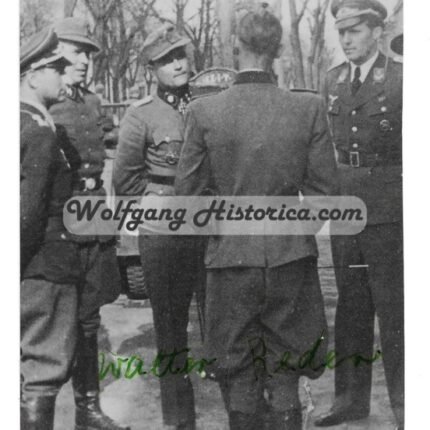
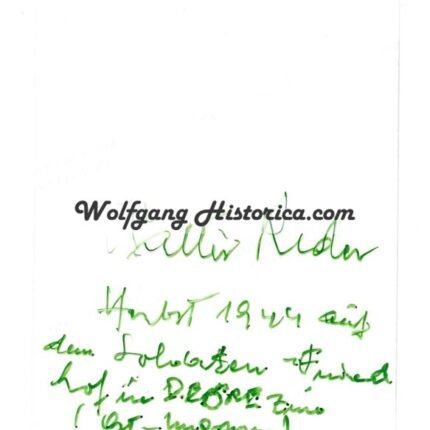
Walter Reder – SS-Panzer-Grenadier-Regiment 5 “Totenkopf”
€70,00Original Postwar Signature on a Postwar Photo of Walter Reder. SS-Sturmbannführer Walter Reder (04.02.1915 † 26.04.1991) earned the Ritterkreuz on April 3, 1943 as SS-Hauptsturmführer und Kommandeur of the I. Bataillon/ SS-Panzer-Grenadier-Regiment 5 “Totenkopf” of the 3. SS-Panzer-Division “Totenkopf“. Good condition.
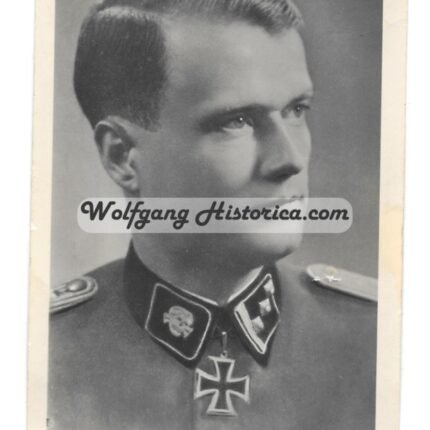
Walter Reder – SS-Panzer-Grenadier-Regiment 5 “Totenkopf”
€60,00Original Postwar Signature on a Postwar Paper, Pasted on a Photo of Walter Reder. SS-Sturmbannführer Walter Reder (04.02.1915 † 26.04.1991) earned the Ritterkreuz on April 3, 1943 as SS-Hauptsturmführer und Kommandeur of the I. Bataillon/ SS-Panzer-Grenadier-Regiment 5 “Totenkopf” of the 3. SS-Panzer-Division “Totenkopf“. Good condition.

Gustav-Peter Reber – “LSSAH” and XI. SS-Panzerkorps
€0,01Original Postwar Signature of Knight’s Cross Holder Gustav-Peter Reber. Reber earned the Deutsches Kreuz in Gold with 1. Kompanie/ SS-Panzer-Grenadier-Regiment 2 “LSSAH” and the Ritterkreuz as Cdr. of Stabsquartier/ XI. SS-Panzerkorps. Good condition. Postcardsize.
Also Führer Kampfgruppe, Kessel von Halbe. Actions in Halbe pocket ; before breakout awarded by Gruppenführer Wagner , approved by Obergruppenführer Kleinheisterkamp, K.G. XI. SS-AK. No proof possible with existing BArch documents ; according to Krätschmer (letter to von Seemen from 07.08.1980) the award was made together with the OL for Kleinheisterkamp and was announced via radio message from FHQ in Berlin to 9. Armee (Kessel von Halbe) on 28.04.1945 ; the incoming radio messages of AOK 9 from april 45 are not existing anymore ; the wireless radio connections to the Führerbunker in Berlin were interrupted since April 28th, 05.00hours in the morning ; the OdR Ordenskommission decided about this case in 1981 with the result : “RK ja, 28.4.1945” (Source: Traces of War)
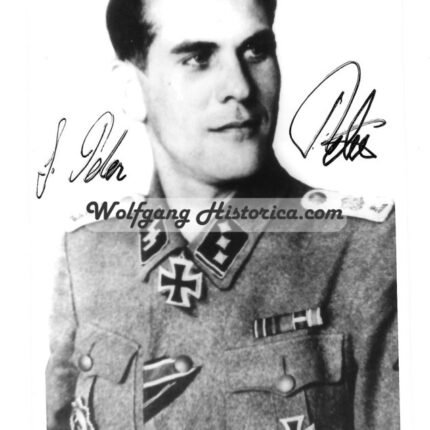
Gustav-Peter Reber – “LSSAH” and XI. SS-Panzerkorps
€40,00Original Postwar Signature of Knight’s Cross Holder Gustav-Peter Reber. Reber earned the Deutsches Kreuz in Gold with 1. Kompanie/ SS-Panzer-Grenadier-Regiment 2 “LSSAH” and the Ritterkreuz as Cdr. of Stabsquartier/ XI. SS-Panzerkorps. Good condition. Postcardsize.
Also Führer Kampfgruppe, Kessel von Halbe. Actions in Halbe pocket ; before breakout awarded by Gruppenführer Wagner , approved by Obergruppenführer Kleinheisterkamp, K.G. XI. SS-AK.
No proof possible with existing BArch documents ; according to Krätschmer (letter to von Seemen from 07.08.1980) the award was made together with the OL for Kleinheisterkamp and was announced via radio message from FHQ in Berlin to 9. Armee (Kessel von Halbe) on 28.04.1945 ; the incoming radio messages of AOK 9 from april 45 are not existing anymore ; the wireless radio connections to the Führerbunker in Berlin were interrupted since April 28th, 05.00hours in the morning ; the OdR Ordenskommission decided about this case in 1981 with the result : “RK ja, 28.4.1945” (Source: Traces of War)
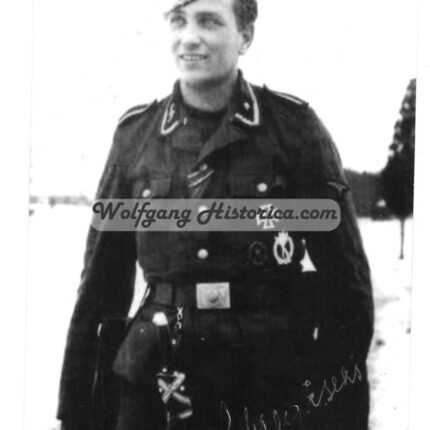
Harald Nugiseks – 20. Waffen-Grenadier-Division der SS (estnische Nr. 1)
€35,00Original Postwar Signature on a Postwar Photo of Harald Nugiseks. Waffen-Oberscharführer Harald Nugiseks (22 October 1921 – 2 January 2014) was an SS-Oberscharführer in World War II, who served in the 20. Waffen-Grenadier-Division der SS (estnische Nr. 1) of the Waffen-SS. Nugiseks is also one of the four Estonian soldiers who received the Knight’s Cross of the Iron Cross. Good condition. Postcardsize.
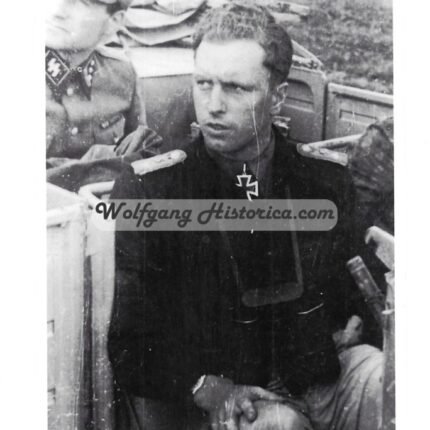
Karl Nicolussi-Leck – SS-Panzer-Regiment 5 “Wiking”
€0,01Original Postwar Signature on a Postwar Photo of Karl Nicolussi-Leck. SS-Hauptsturmführer Karl Nicolussi-Leck earned the Ritterkreuz on April 9, 1944 as SS-Obersturmführer und Chef of the 8. Kompanie/ SS-Panzer-Regiment 5 of the 5. SS-Panzer-Division “Wiking”. Good condition. Measuring 16,5x10cm.
Karl Nicolussi-Leck was the commander of a Panther company in the 5. SS-Panzer-Division “Wiking” during its efforts to relieve the trapped garrison at Kovel in March 1944. On the 27th of that month, with the German relief efforts still in progress, Nicolussi-Leck received an order to halt all offensive actions. By this point he was in radio conduct with the garrison, and felt that its relief was of the utmost importance. He thus told his radio operator to send a reply stating that he (Nicolussi-Leck) could not be found, and with that continued the push to the town. Three days later, following difficult fighting, he was able to reach the trapped garrison with seven tanks on the early morning of the 30th. By doing so he was able to substantially reinforce the garrison’s defences, and he remained with them until Kovel was finally relieved for good. His recommendation also says that he destroyed 17 tanks in the process, although it is possible this number is for the whole company. Either way, Nicolussi-Leck’s actions were judged to be worthy of the Knight’s Cross, and he received this award shortly afterwards. (Source: Traces of War)
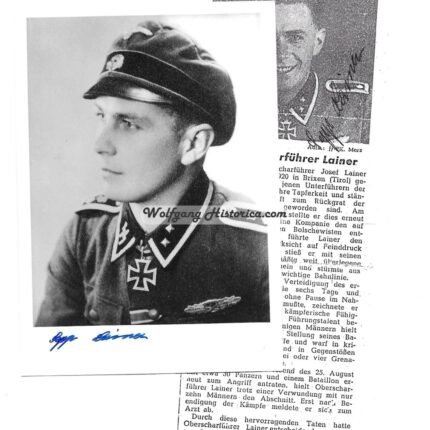
Josef “Sepp” Lainer – SS-Panzer-Grenadier-Regiment 4 “Der Führer”
€70,00Original Postwar Signature on a Postwar Photo of Josef Lainer. Josef “Sepp” Lainer (13.03.1920 † 04.09.2002) earned the Ritterkreuz on October 8, 1943 as as SS-Oberscharführer und Zugführer in the 3. Kompanie/ SS-Panzer-Grenadier-Regiment 4 “Der Führer” of the 2. SS-Panzer-Division “Das Reich”. He also the Nahkampfspange in Gold on October 15, 1943 as SS-Hauptscharführer und Zugführer in the 1. Kompanie/ SS-Panzer-Grenadier-Regiment 4 “Der Führer”. Good condition. Measuring: Postcardsize. Plus extra signed doc.
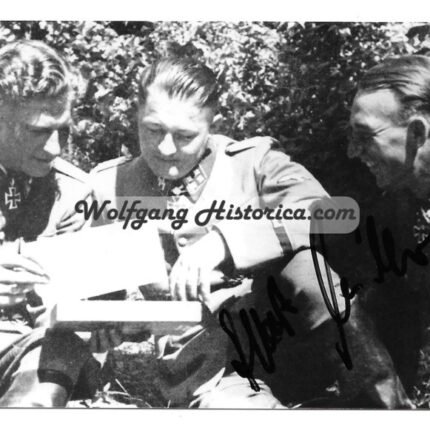
Albert Müller – SS-Panzergrenadier-Regiment “Westland”
€85,00Original Scarce Postwar Signature on a Postwar Photo of Albert Müller. SS-Hauptscharführer Albert Müller (20.09.1913 † 02.02.1993) earned the Ritterkreuz on September 4, 1943 as SS-Hauptscharführer und Pakzugführer in the 4. Kompanie/ SS-Panzergrenadier-Regiment “Westland” of the 5. SS-Panzer-Division “Wiking”. Good condition. Measuring: Postcardsize.
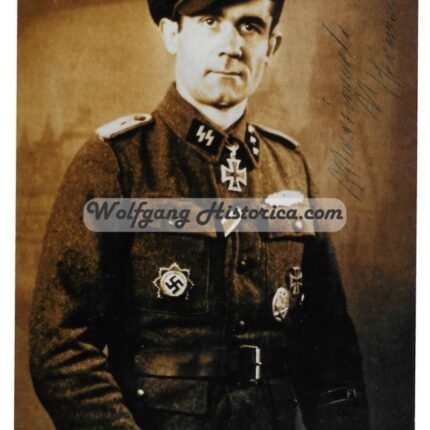
Hermann Maringgele – SS-Kavallerie-Regiment 15 “Florian Geyer” (RK+NKIG)
€90,00- Original Postwar Signature on a Postwar Photo of Hermann Maringgele. SS-Untersturmführer Hermann Maringgele (29.11.1911 † 21.07.2000) earned the Nahkampfspange in Gold and the Ritterkreuz on February 21, 1945 as SS-Hauptscharführer und Zugführer in 2. Schwadron/ SS-Kavallerie-Regiment 15 of the 8. SS-Kavallerie-Division “Florian Geyer”. Good condition. Measuring: Postcardsize. He earned the most Nahkampftage of all the bears (84).
- Ritterkreuz awarded for: “SS-Hauptscharführer Maringgele demonstrated extraordinary bravery and prudence as a leader during the fighting for Fortress Budapest. Over the course of 37 assault/patrol operations, some of which were conducted far behind enemy lines, he inflicted significant losses on the enemy and obtained much valuable reconnaissance. Through his bold operations (their success made possible solely due to his leadership and personal example) Maringgele was able to firm up the front of his Regiment time and again, and their success contributed significantly to the ability of the pocket’s frontline in this area to be maintained despite the strong enemy superiority.
During the ordered breakout from the Budapest pocket Maringgele took control of a group of 60 men, and he led them deep through enemy territory in an exemplary manner. With these men he was the first soldier from the pocket to reach the German lines already on the 13.02.1945.
SS-Hauptscharführer Maringgele has been involved in well over 50 days of close combat.”

Eberhard Heder – SS-Panzer-Pionier-Bataillon 5 “Wiking”
€50,00Original Postwar Signature on a Postwar Photo of Eberhard Heder. SS-Sturmbannführer Eberhard Heder (30.06.1918 † 18.11.2017) earned the Deutsches Kreuz in Gold on March 11, 1943 as SS-Obersturmführer with the 3. Kompanie/ SS-Pionier-Bataillon 5 “Wiking” and the Ritterkreuz on November 18, 1944 as SS-Hauptsturmführer und Führer of the SS-Panzer-Pionier-Bataillon 5 of the 5. SS-Panzer-Division “Wiking”. Good condition. Measuring: Postcardsize.
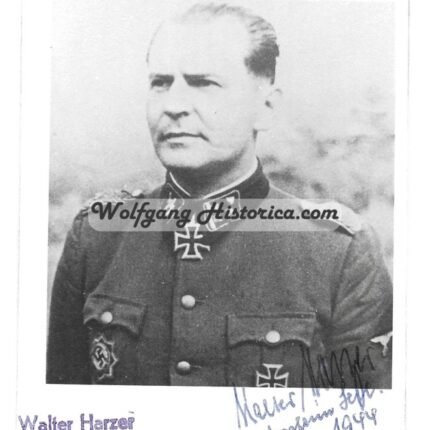
Walter Harzer – 9. SS-Panzer-Division “Hohenstaufen” (Arnhem)
€0,01Original Scarce Postwar Signature on a Postwar Photo of Walter Harzer. SS-Standartenführer Walter Harzer (29.09.1912 † 29.05.1982) earned the Ritterkreuz on September 21, 1944 as SS-Obersturmbannführer und Ia of the 9. SS-Panzer-Division “Hohenstaufen“. Harzer is famous for his role defeating the British at Arnhem! Good condition. Measuring: 10,1×12,1cm.
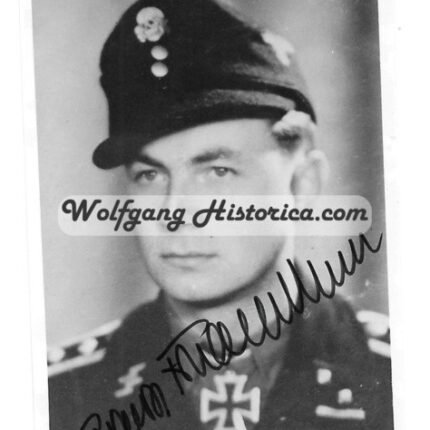
Franz Frauscher – SS-Panzer-Regiment 2 “Das Reich”
€55,00Original Postwar Signature on a Postwar Photo of Franz Frauscher. SS-Hauptscharführer Franz Frauscher (26.02.1920 † 27.06.2009) earned the Ritterkreuz on December 31, 1944 as SS-Hauptscharführer und Zugführer in the 4. Kompanie/ SS-Panzer-Regiment 2 of the 2. SS-Panzer-Division “Das Reich”. Good condition. Measuring: 7×10,2cm.
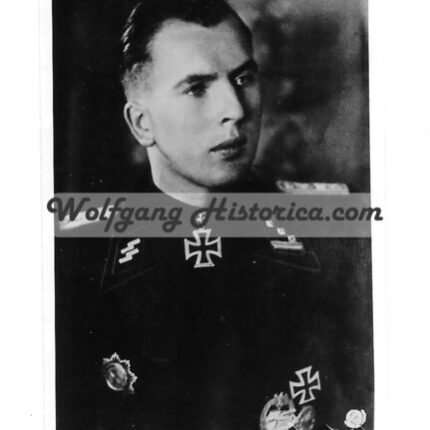
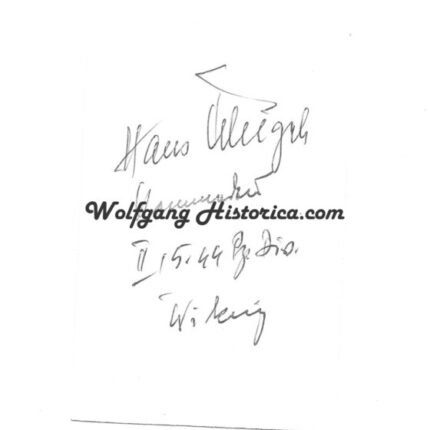
Hans Flügel – SS-Panzer-Regiment 5 “Wiking”
€0,01Original Postwar Signature on a Postwar Photo of Hans Flügel. SS-Sturmbannführer Hans Flügel (13.02.1919 † 01.03.1989) earned the Ritterkreuz on October 16, 1944 as SS-Hauptsturmführer und Führer of the II. Abteilung/ SS-Panzer-Regiment 5 of the 5. SS-Panzer-Division “Wiking”. Good condition. Measuring: 5,9×8,3cm. Signed on the reverse.
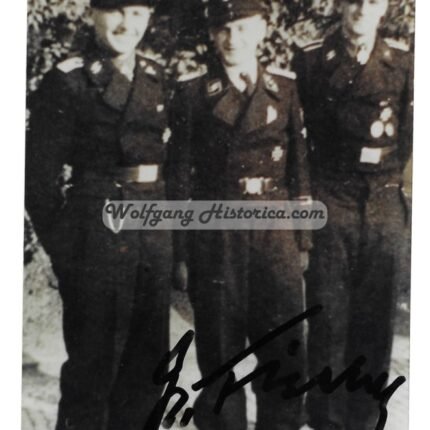
Gerhard Fischer – SS-Panzerjäger-Abteilung 5 “Wiking”
€40,00Original Postwar Signature on a Postwar Photo of Gerhard Fischer. SS-Unterscharführer Gerhard Fischer (12.11.1922 † 01.01.2013) earned the Ritterkreuz on May 4, 1944 as SS-Unterscharführer und stellvertretender Zugführer in the 3. Kompanie/ SS-Panzerjäger-Abteilung 5 of the 5. SS-Panzer-Division “Wiking”. Good condition. Measuring: Postcardsize.
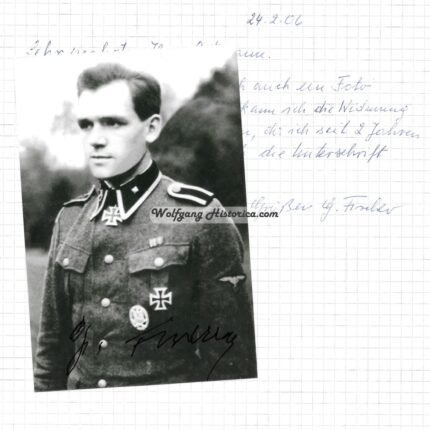
Gerhard Fischer – SS-Panzerjäger-Abteilung 5 “Wiking”
€50,00Original Postwar Signature on a Postwar Photo of Gerhard Fischer. SS-Unterscharführer Gerhard Fischer (12.11.1922 † 01.01.2013) earned the Ritterkreuz on May 4, 1944 as SS-Unterscharführer und stellvertretender Zugführer in the 3. Kompanie/ SS-Panzerjäger-Abteilung 5 of the 5. SS-Panzer-Division “Wiking”. Good condition. Measuring: Postcardsize. Plus extra letter.
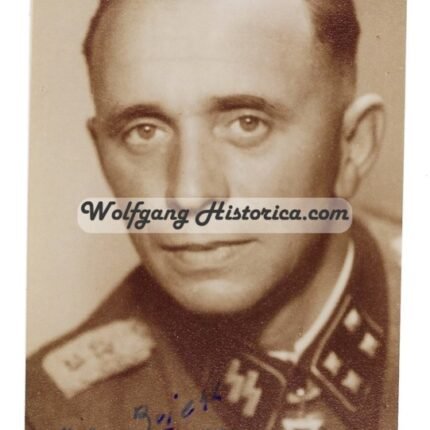
Jakob Fick – SS-Kradschützen-Regiment “Langemarck”
€75,00Original Postwar Signature on a Postwar Photo of Jakob Fick. SS-Standartenführer Jakob Fick (17.01.1912 † 22.04.2004) earned the Ritterkreuz on April 23, 1943 as SS-Sturmbannführer und Kommandeur of the Kradschützen-Regiment “Langemarck” der 2. SS-Panzer-Division “Das Reich”. Good condition.
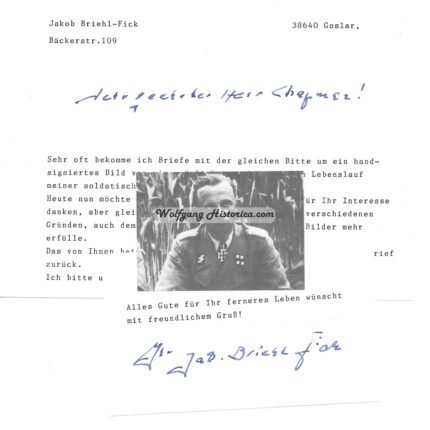
Jakob Fick – SS-Kradschützen-Regiment “Langemarck”
€40,00Original Postwar Signature on a Postwar Photo of Jakob Fick. SS-Standartenführer Jakob Fick (17.01.1912 † 22.04.2004) earned the Ritterkreuz on April 23, 1943 as SS-Sturmbannführer und Kommandeur of the Kradschützen-Regiment “Langemarck” der 2. SS-Panzer-Division “Das Reich”. Good condition.
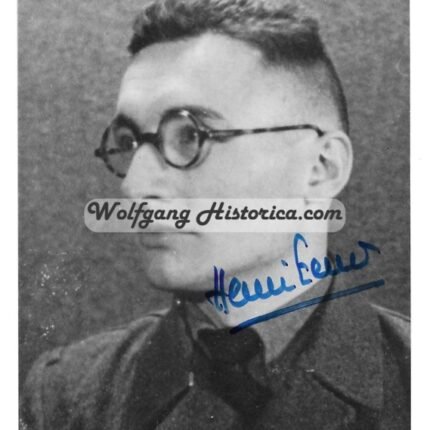
Henri Fenet – 33. SS-Freiwilligen-Grenadier-Division “Charlemagne”
€75,00Original Postwar Signature on a Postwar Photo of Henri Fenet. SS-Hauptsturmführer Henri Fenet (11.07.1919 † 14.09.2002) earned the Ritterkreuz on April 29, 1945 as SS-Hauptsturmführer und Führer of the Sturm-Bataillon der 33. SS-Freiwillige-Grenadier-Division “Charlemagne”. Henri Fenet was the sole French Waffen-SS Volunteer to be decorated with the Knight’s Cross. Good condition.
Knight’s Cross awarded for the outstanding leadership of his French volunteers during the final fighting for Berlin. Decoration presented by SS-Brigadeführer Mohnke in the Reichs Kanzlerei between 20th and 30th April 1945. Awarding has been established through research by the Ordensgemeinschaft der Ritterkreuzträger. Of the awarding is no evidence in the Bundesarchiv. (Source: Traces of War)
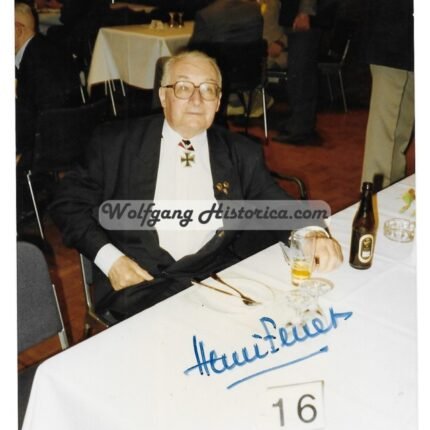
Henri Fenet – 33. SS-Freiwilligen-Grenadier-Division “Charlemagne”
€75,00Original Postwar Signature on a Postwar Photo of Henri Fenet. SS-Hauptsturmführer Henri Fenet (11.07.1919 † 14.09.2002) earned the Ritterkreuz on April 29, 1945 as SS-Hauptsturmführer und Führer of the Sturm-Bataillon der 33. SS-Freiwillige-Grenadier-Division “Charlemagne”. Henri Fenet was the sole French Waffen-SS Volunteer to be decorated with the Knight’s Cross. Good condition.
Knight’s Cross awarded for the outstanding leadership of his French volunteers during the final fighting for Berlin. Decoration presented by SS-Brigadeführer Mohnke in the Reichs Kanzlerei between 20th and 30th April 1945. Awarding has been established through research by the Ordensgemeinschaft der Ritterkreuzträger. Of the awarding is no evidence in the Bundesarchiv. (Source: Traces of War)
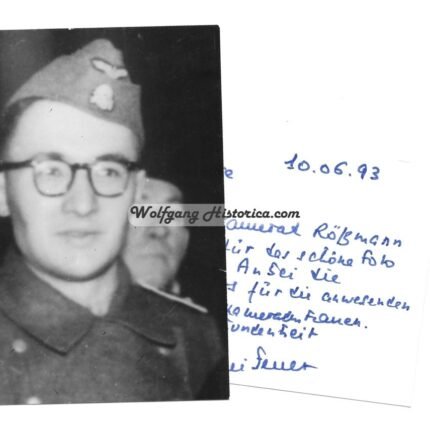
Henri Fenet – 33. SS-Freiwilligen-Grenadier-Division “Charlemagne”
€45,00Original Postwar Signature on a Postwar Paper of Henri Fenet. SS-Hauptsturmführer Henri Fenet (11.07.1919 † 14.09.2002) earned the Ritterkreuz on April 29, 1945 as SS-Hauptsturmführer und Führer of the Sturm-Bataillon der 33. SS-Freiwillige-Grenadier-Division “Charlemagne”. Henri Fenet was the sole French Waffen-SS Volunteer to be decorated with the Knight’s Cross. Good condition.
Knight’s Cross awarded for the outstanding leadership of his French volunteers during the final fighting for Berlin. Decoration presented by SS-Brigadeführer Mohnke in the Reichs Kanzlerei between 20th and 30th April 1945. Awarding has been established through research by the Ordensgemeinschaft der Ritterkreuzträger. Of the awarding is no evidence in the Bundesarchiv. (Source: Traces of War)
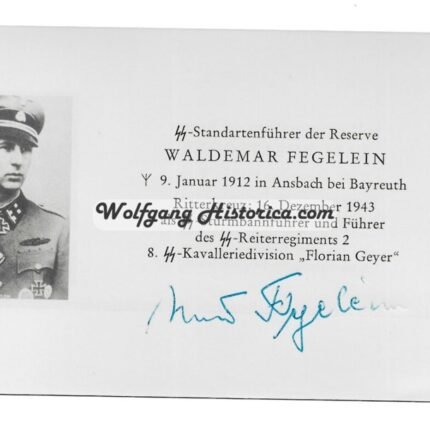
Waldemar Fegelein – SS-Reiter-Regiment 2 “Florian Geyer”
€0,01Original Postwar Signature on a Postwar Photo of Waldemar Fegelein. SS-Standartenführer Waldemar Fegelein (09.01.1912 † 20.11.2000) earned the Ritterkreuz on December 16, 1943 as SS-Sturmbannführer und Führer of the SS-Reiter-Regiment 2 of the 8. SS-Kavallerie-Division “Florian Geyer”. Good condition. Measuring: Bit smaller as Postcardsize.
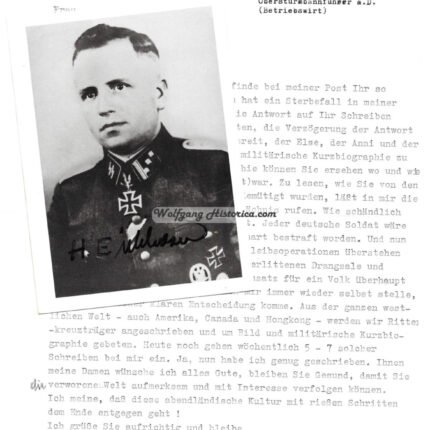
Hugo Eichhorn – SS-Panzer-Pionier-Bataillon 5 “Wiking”
€0,01Original Postwar Signature on a Postwar Photo of Hugo Eichhorn. SS-Obersturmbannführer Hugo Eichhorn (11.02.1911 † 27.05.1992) earned the Ritterkreuz on January 15, 1943 as SS-Hauptsturmführer with the Stab/ S-Panzer-Pionier-Bataillon 5 of the 5. SS-Panzer-Division “Wiking”. Good condition. Measuring: Postcardsize.
Knight’s Cross: “On the 08.01.1943 SS-Hauptsturmführer Eichhorn first defended Orlowskaja against a regimental-sized attack on his own initiative with 2 weak Kompanien. Then, in a counterthrust of his own, he smashed the enemy’s 550th Regiment. Through this Eichhorn has exhibited an example of the highest devotion to duty, and through his independent actions he once again brought the important road/railway junction firmly under friendly control. Over 700 enemy dead were counted. 5 artillery pieces, 3 heavy anti-tank guns, 1 heavy AA gun, 8 anti-tank rifles, 22 MGs, numerous small arms and 30 horse-drawn wagons were also captured.”
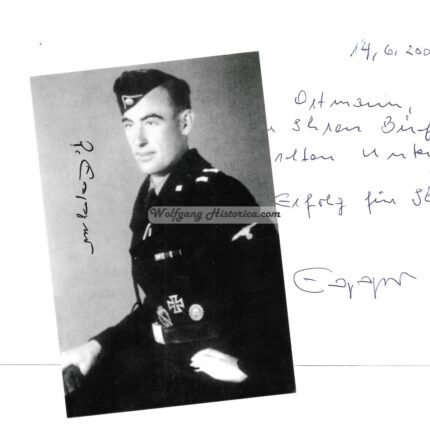
Paul Egger – schwere SS-Panzer-Abteilung 502
€0,01Original Postwar Signature on a Postwar Photo of Paul Egger. SS-Obersturmführer Paul Egger (26.11.1916 † 12.07.2007) earned the Deutsches Kreuz in Gold on December 30, 1944 and the Ritterkreuz on April 28, 1945 with 1./ schwere SS-Panzer-Abteilung 502. In 1941, he joined the Waffen-SS and became a tank commander in SS-Panzer-Regiment 2 “Das Reich” before transferring to the schwere Panzer-Abteilung 102, with which he took part in the Battle of Normandy. After its destruction, the unit was renamed to schwere SS-Panzer-Abteilung 502 and transferred to the Eastern Front, fighting around Stettin. Paul Egger recorded 113 tank kills. Good condition. Measuring: Postcardsize. With an extra signed letter.

Siegfried Brosow – SS-Pionier-Bataillon 2 “Das Reich”
€0,01Original Postwar Signature on a Postwar Photo of Siegfried Brosow. SS-Hauptsturmführer Siegfried Brosow (10.12.1918 † 18.11.2008) earned the Ritterkreuz on November 13, 1943 as SS-Hauptsturmführer und Chef of the 1. Kompanie/ SS-Pionier-Bataillon 2 of the 2. SS-Panzer-Division “Das Reich”. Good Condition. Comes with an extra letter.
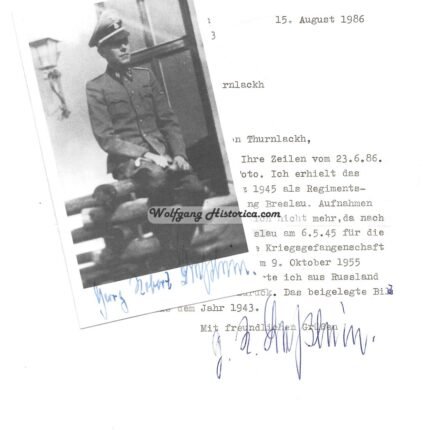
Georg Robert Besslein – SS-Festungs-Grenadier-Regiment “Besslein”
€60,00Original Postwar Signature on a Postwar Photo of Georg Robert Besslein. SS-Obersturmbannführer Georg Robert Besslein (14.12.1911 † 27.04.1993) earned the Ritterkreuz on April 30, 1945 as SS-Obersturmbannführer und Kommandeur of SS-Festungs-Grenadier-Regiment “Besslein” i.d. Festung Breslau. Good condition.
Awarded for distinguishing himself while commanding his ad-hoc Regiment during the siege of Breslau. He and his unit particularly distinguished themselves during near Peiskerwitz, the Gandau airport then the Augusta road.
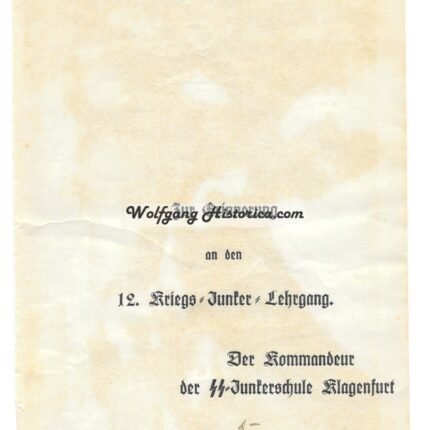
Walter Bestmann – Division “Totenkopf” & SS-Junkerschüle Klagenfurt
€0,01Original Postwar Signature on a Wartime Bookpage of Walter Bestmann. SS-Oberführer Walter Bestmann (02.10.1907 † 17.06.1958) earned the Ritterkreuz on September 28, 1941 as SS-Oberführer und Kommandeur of the SS-Aufklärungs-Abteilung of the SS-Division “Totenkopf”. Good condition.
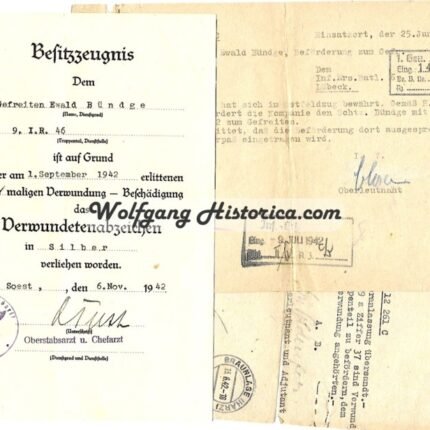
Wound Badge in Silver – Infanterie-Regiment 46 (30.Inf.Div.)
€0,01Original Award document of Gefreiter Ewald Bündge of the Infanterie-Regiment 46 (30. Infanterie-Division) for the Verwundetenabzeichen in Silber (Wound Badge in Silver) for his second wound sustained on September 1, 1942, which was signed by an unknown Oberstabsarzt u. Chefarzt in Soest, document has some wear and tears. Comes with two extra documents.
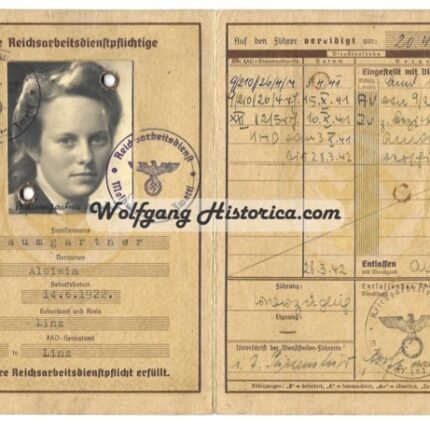
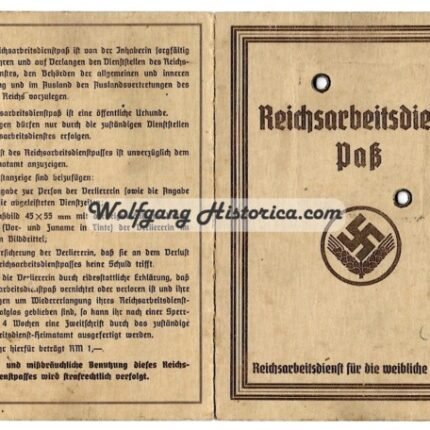
Reichsarbeitsdienst-Paß – Female from Linz
€50,00Reichsarbeitsdienst-Paß – Reichsarbeitsdienst für die weibliche Jugend, for a female named Aloisio Baumgartner, who was born in Linz. She served from 04.41 to 3.42 with the RAD. Good condition. Has punch holes.
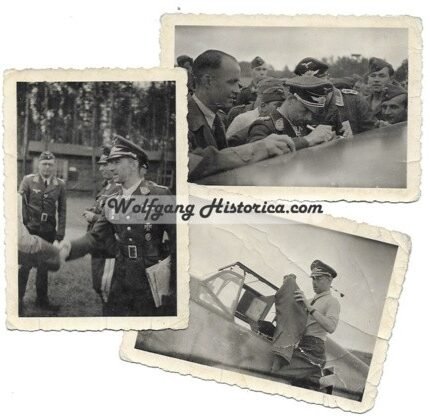
3x Photographs of Werner Mölders (KC+OL+SW+DIAMONDS)
€125,003x Authentic Wartime Photographs of Werner Mölders, who earned the Ritterkreuz mit Eichenlaub, Schwertern und Diamanten on July 15, 1941 as Geschwaderkommodore of Jagdgeschwader 51. He was Killed in Action on November 22, 1941. Mölders claimed 115 enemy aircraft shot down in roughly 330 combat missions. Good condition, minor wear. Measuring: 9×6,3cm.
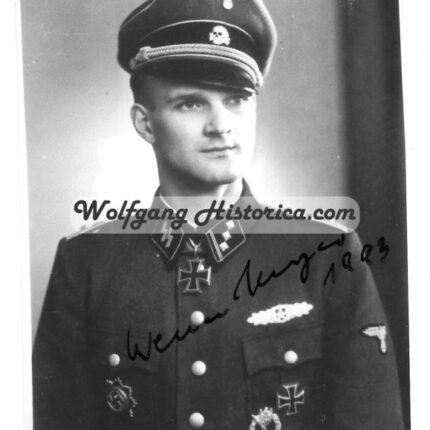
Werner Meyer – SS-Panzer-Grenadier-Regiment 9 “Germania” (RK+NKIG)
€0,01Original Postwar Signature on a Postwar Photo of Werner Meyer. SS-Hauptsturmführer Werner Meyer (18.09.1919 † 17.08.1996) earned the Ritterkreuz on May 4, 1944 as SS-Obersturmführer und Führer of the 1. Kompanie/ SS-Panzer-Grenadier-Regiment 9 “Germania” of the 5. SS-Panzer-Division “Wiking”. He also earned the Deutsches Kreuz in Gold on November 21, 1943 and Nahkampfspange in Gold on April 12, 1944 as SS-Obersturmführer und Führer of the 1. Kompanie/ SS-Panzer-Grenadier-Regiment 9 “Germania”. Measuring 8×12 cm.

Heinz Macher – SS-Panzer-Grenadier-Regiment “Deutschland” (EL+NKIG)
€0,01Original Postwar Signature on a Postwar Photo of Heinz Macher. SS-Sturmbannführer Heinz Macher (31.12.1919 † 21.12.2001) earned the Ritterkreuz on April 3, 1943 as SS-Untersturmführer und Kompanieführer of the 16. Kompanie/ SS-Panzer-Grenadier-Regiment 3 “Deutschland” and the Eichenlaub on August 19, 1944 as SS-Obersturmführer und Kompaniechef of the 16. Kompanie/ SS-Panzer-Grenadier-Regiment 3 “Deutschland” of the 2. SS-Panzer-Division “Das Reich”. Macher also earned the Nahkampfspange in Gold on October 18, 1944. Good condition. Postcardsize. Measuring: 10x7cm.
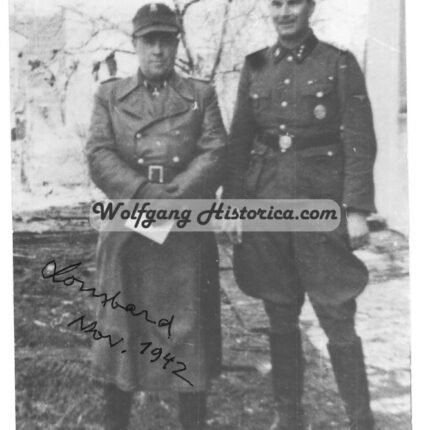
Gustav Lombard – SS-Reiter-Regiment 1
€0,01Original Postwar Signature on a Postwar Photo of Gustav Lombard. SS-Brigadeführer Gustav Lombard (10.04.1894 † 18.09.1992) earned the Ritterkreuz on March 10, 1943 as SS-Obersturmbannführer und Kommandeur of the SS-Reiter-Regiment 1 of the SS-Kavallerie-Division “Florian Geyer”. Good condition. Measuring: Postcardsize.
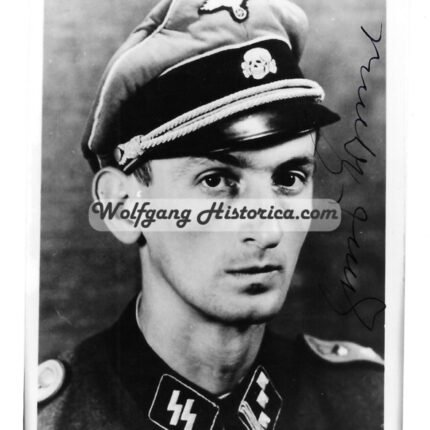
Dr. Hans Lipinski – SS-Flak-Abteilung 18 “Horst Wessel”
€50,00Original Postwar Signature on a Postwar Photo of Dr. Hans Lipinski. SS-Hauptsturmführer Dr. Hans Lipinski (20.02.1916 † 17.08.1998) earned the Ritterkreuz on January 2, 1945 as SS-Obersturmführer und Führer of the 1. Batterie/ SS-Flak-Abteilung 18 “Horst Wessel” of the 18. SS-Freiwilligen-Panzergrenadier-Division “Horst Wessel“. Good condition. Measuring: 8,5x12cm. Signed on front and reverse.
Knight’s Cross: “Early on the 10.12.1944 SS-Obersturmführer Lipinski, Batterie-Führer in the Flak-Abteilung 18, prevented a breakthrough by 22 enemy tanks into the deep flank of the IV. Panzer-Korps. At the time he was providing flank protection from the village of Szecseny. During the enemy attack he personally shot up 6 T-34s in the space of 50 minutes.
Through his brave conduct he inspired the rest of his Batterie to act likewise, despite the fact that some of them had wanted to abandon the position. This resulted in the destruction of a further 7 tanks by his men.
This deed by SS-Obersturmführer Lipinski was of decisive importance insofar as he prevented the seizure of Sczecseny (located in the deep flank of the Korps) and thereby the cutting off of several German units.
In addition to this, SS-Obersturmführer Lipinski also personally destroyed another 2 T-34s near Jaszbereny (Hungary) on the 15.11.1944.”


Dr. Hans Lipinski – SS-Flak-Abteilung 18 “Horst Wessel”
€0,01Original Postwar Signature on a Postwar Photo of Dr. Hans Lipinski. SS-Hauptsturmführer Dr. Hans Lipinski (20.02.1916 † 17.08.1998) earned the Ritterkreuz on January 2, 1945 as SS-Obersturmführer und Führer of the 1. Batterie/ SS-Flak-Abteilung 18 “Horst Wessel” of the 18. SS-Freiwilligen-Panzergrenadier-Division “Horst Wessel“. Good condition. Measuring: 8,5x12cm. Signed on the reverse.
Knight’s Cross: “Early on the 10.12.1944 SS-Obersturmführer Lipinski, Batterie-Führer in the Flak-Abteilung 18, prevented a breakthrough by 22 enemy tanks into the deep flank of the IV. Panzer-Korps. At the time he was providing flank protection from the village of Szecseny. During the enemy attack he personally shot up 6 T-34s in the space of 50 minutes.
Through his brave conduct he inspired the rest of his Batterie to act likewise, despite the fact that some of them had wanted to abandon the position. This resulted in the destruction of a further 7 tanks by his men.
This deed by SS-Obersturmführer Lipinski was of decisive importance insofar as he prevented the seizure of Sczecseny (located in the deep flank of the Korps) and thereby the cutting off of several German units.
In addition to this, SS-Obersturmführer Lipinski also personally destroyed another 2 T-34s near Jaszbereny (Hungary) on the 15.11.1944.”
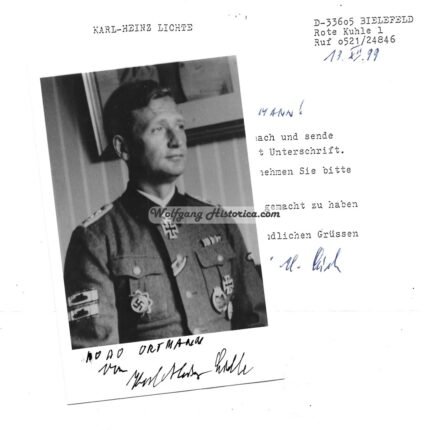
Karl-Heinz Lichte – SS-Panzer-Regiment 5 “Wiking”
€0,01Original Postwar Signature on a Postwar Photo of Karl-Heinz Lichte. SS-Hauptsturmführer Karl-Heinz Lichte (23.08.1920 † 24.01.2005) earned the Ritterkreuz on May 6, 1945 as SS-Obersturmführer und Chef of the 5. Kompanie/ SS-Panzer-Regiment 5 of the 5. SS-Panzer-Division “Wiking”. Good condition. Measuring: Postcardsize. Comes with an extra signed letter.