

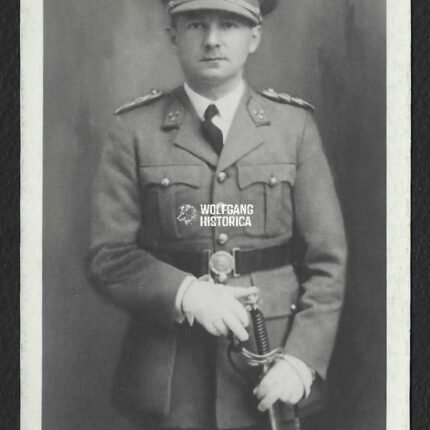
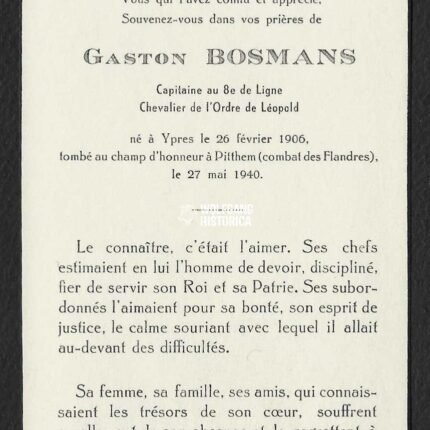
Belgian Death Card – Kapitein Gaston Bosmans (KIA May 27, 1940) – 8e Linieregiment
€25,00Original Belgian WWII death card of Kapitein Gaston Bosmans, who was Killed in Action on May 27, 1940 in Pittem. Commander of the 4th Company, 8e Linieregiment.
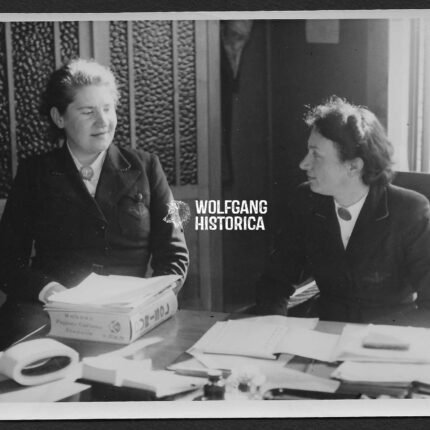
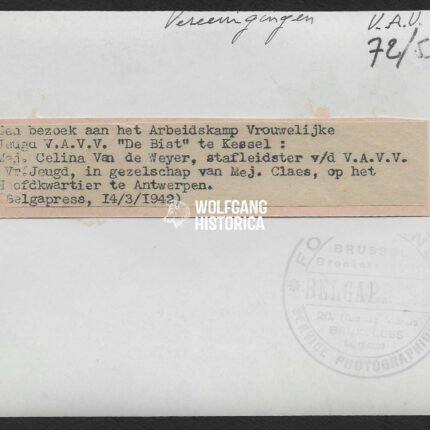
Press Photo Flemish Collaboration: Female VAVV Leaders
€130,00Original Press Photo Flemish Collaboration: VAVV Leaders te Arbeitskamp “De Bist” te Kessel. Mej. Celina vna de Weyer Stafleidsters en Mej. Claes te Antwerpen. Size: 18x13cm.
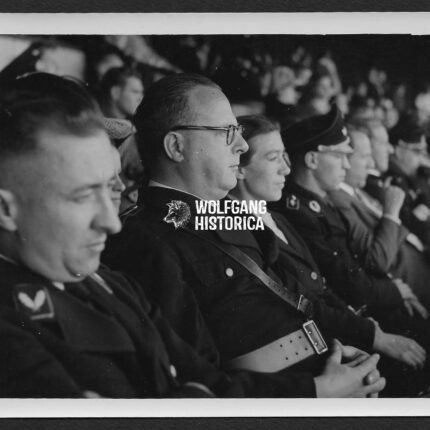
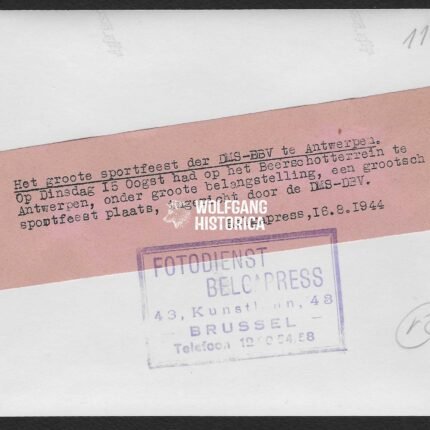
Press Photo Flemish Collaboration: VNV Leader Hendrik Elias – Beerschotterrein
€150,00Original Press Photo Flemish Collaboration: VNV Leader Hendrik Elias – Beerschotterrein. Size: 18x13cm.
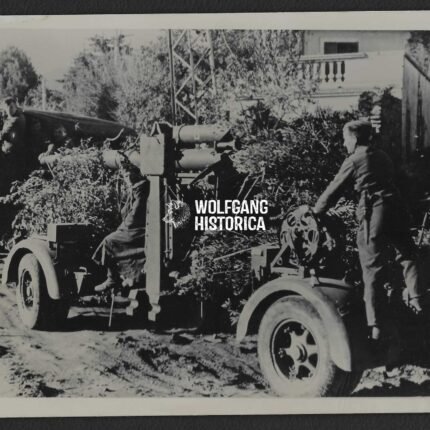
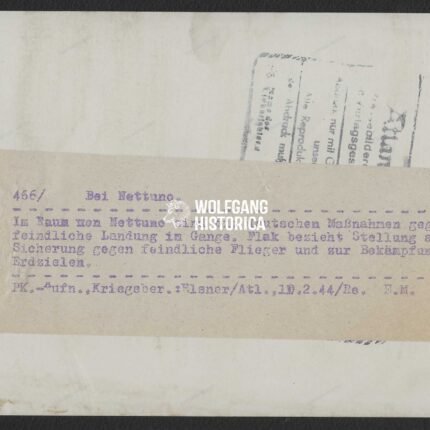
German Press Photo: Flak bei Nettuno
€30,00Original German Press Photo taken near Nettuno, Italy, Flak gun is seen. Size: 18x13cm.
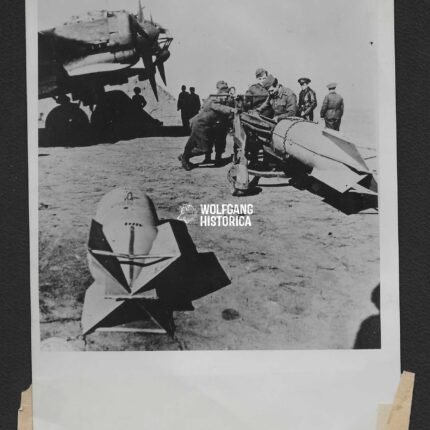
Press Photo: Legion Condor in Spain?
€30,00Original press photo – does it depict the Legion Condor in Spain? Size: 18x13cm.
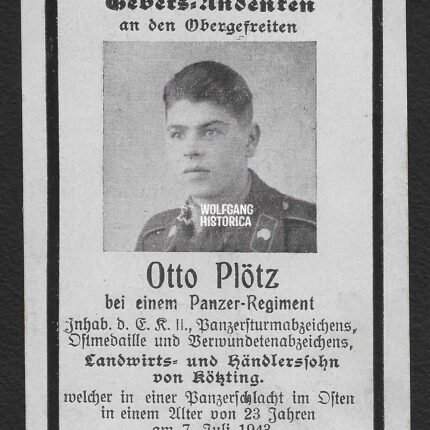
Death Card – Panzer-Regiment 3 – KIA Battle of Kursk
€25,00Original German Death Card for a soldier, serving with the Panzer-Regiment 3, who was Killed in Action during the Battle of Kursk. Condition as seen.
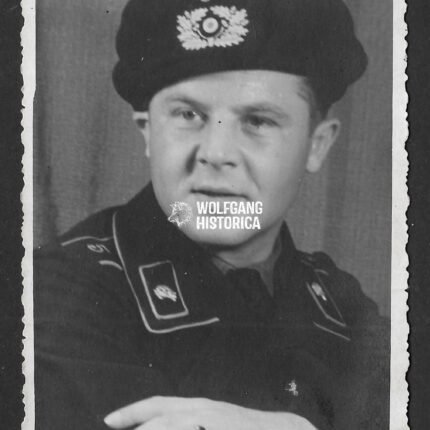
Studioportrait of Panzer soldier – Panzer-Regiment 5
€45,00Original Wehrmacht (Heer) studioportrait of a Panzer soldier wearing a Panzer Beret and Panzerwrap, numbered for Panzer-Regiment 5! Postcardsize. Condition as seen.
Panzer-Regiment 5 was part of the Deutsches Afrikakorps and capitulated in Tunis in May 1943!
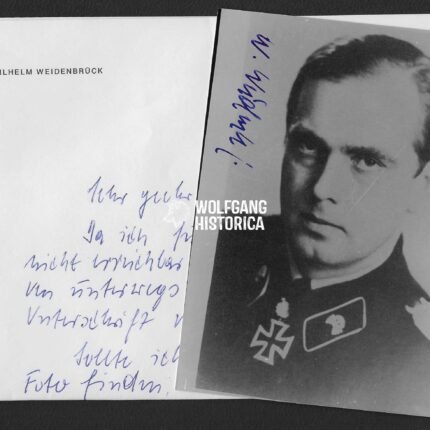
Wilhelm Weidenbrück – Panzer-Regiment 3 & Panzer-Brigade 104 (Eichenlaub)
€55,00Original Postwar Signature on a Postwar Photo plus Letter of Wilhelm Weidenbrück. Major Wilhelm Weidenbrück (05.02.1915 † 28.04.2011) earned the Deutsches Kreuz in Gold on January 2, 1942 with Panzer-Regiment 3, the Ritterkreuz on September 16,1942 as Oberleutnant und Kompaniechef of the 5. Kompanie/ Panzer-Regiment 3 of the 2. Panzer-Division and the Eichenlaub on November 16, 1944 as Major und Kommandeur of Panzer-Brigade 104. Good Condition.
Eichenlaub: Awarded for the successful employment of his brigade in the sector of 5. Jäger-Division on 30.10.1944, fighting at the Narew front at Ostenburg (Pultusk). Following a Soviet breach of the frontline west of the Pelta creek Weidenbrück’s men launched a timely counterattack that restored the old German lines, and 48 Soviet tanks were destroyed/captured in the process.
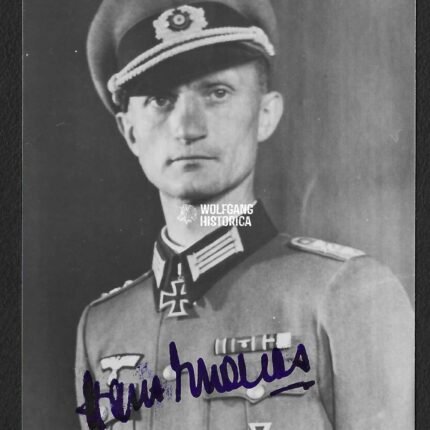
Hans Endres – Panzer-Artillerie-Regiment 74 (2. Panzer-Division)
€17,50Original Postwar Signature on a Postwar Photo of Hans Endres. Major Hans Endres (05.06.1915 † 05.10.2004) earned the Ritterkreuz des Eisernen Kreuzes on August 14, 1943 as Hauptmann und Führer of the Panzer-Artillerie-Regiment 74 of the 2. Panzer-Division.
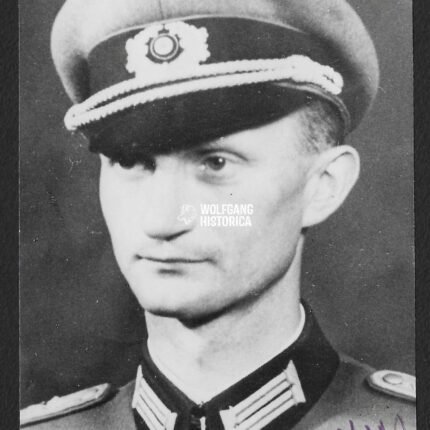
Hans Endres – Panzer-Artillerie-Regiment 74 (2. Panzer-Division)
€17,50Original Postwar Signature on a Postwar Photo of Hans Endres. Major Hans Endres (05.06.1915 † 05.10.2004) earned the Ritterkreuz des Eisernen Kreuzes on August 14, 1943 as Hauptmann und Führer of the Panzer-Artillerie-Regiment 74 of the 2. Panzer-Division.

Joachim Boosfeld – 8. SS-Kavallerie-Division “Florian Geyer” (RK+NKIG!) (A5-Size!)
€45,00Original Postwar Signature on a Postwar Photo of Joachim Boosfeld. SS-Hauptsturmführer Joachim Boosfeld (01.06.1922 † 19.06.2015) earned the Deutsches Kreuz in Gold on December 30, 1944, the Nahkampfspange in Gold on February 21, 1945 and the Ritterkreuz on February 21, 1945 as SS-Obersturmführer und Chef of 4. Schwadron/ SS-Kavallerie-Regiment 16 of the 8. SS-Kavallerie-Division “Florian Geyer”. A5 size!
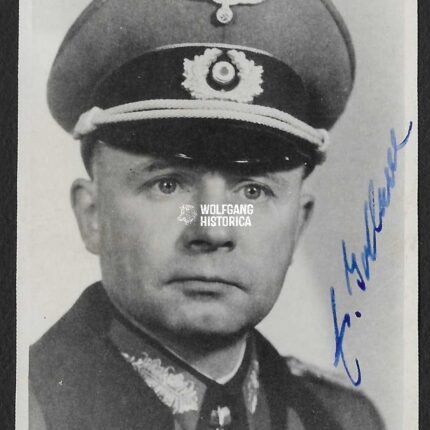
Erwin Jollasse – Schützen-Regiment 52 (18. Panzer-Division)
€40,00Original Postwar Signature on a Postwar Photo of Erwin Jollase. Generalleutnant Erwin Jollasse (08.12.1892 in Hamburg † 14.03.1987 in Tutzing) earned the Deutsches Kreuz in Gold on January 6, 1944 and the Ritterkreuz des Eisernen Kreuzes on November 2, 1941 as Oberst und Kommandeur of the Schützen-Regiment 52 of the 18. Panzer-Division. Size: 7,1×10,3cm.
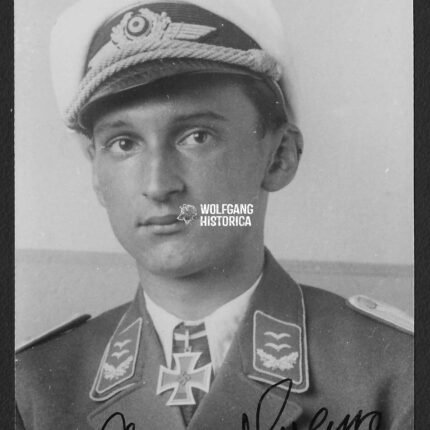
Gerhard Krems – Kampfgeschwader 27 “Boelcke”
€20,00Original Postwar Signature on a Postwar Photo of Gerhard Krems. Oberleutnant Gerhard Krems (04.05.1920 in Dresden † 12.02.2017 in Berlin) earned the Ritterkreuz des Eisernen Kreuzes on May 25, 1942 as Oberleutnant und Flugzeugführer in the 2. Staffel/ Kampfgeschwader 27 “Boelcke”. Condition as seen. Postcardsize.
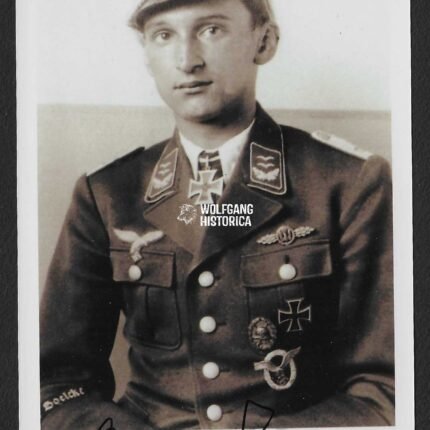
Gerhard Krems – Kampfgeschwader 27 “Boelcke”
€20,00Original Postwar Signature on a Postwar Photo of Gerhard Krems. Oberleutnant Gerhard Krems (04.05.1920 in Dresden † 12.02.2017 in Berlin) earned the Ritterkreuz des Eisernen Kreuzes on May 25, 1942 as Oberleutnant und Flugzeugführer in the 2. Staffel/ Kampfgeschwader 27 “Boelcke”. Condition as seen. Postcardsize.


Heinrich Bähr – Jagdgeschwader 51 “Mölders” (Schwertern) (Wartime Signed)
€350,00Heinrich “Pritzel” Bär (25 March 1913 † 28 April 1957) was a highly decorated German Luftwaffe fighter ace of World War II, credited with more than 200 aerial victories. Bär served with distinction on both the Eastern and Western Fronts and later commanded several notable Jagdgeschwader units.
As one of the Luftwaffe’s most successful fighter pilots, Bär earned multiple high awards for valor and leadership, including the Knight’s Cross of the Iron Cross with Oak Leaves and Swords.
Awards and Decorations
-
Knight’s Cross of the Iron Cross – 2 July 1941, as Leutnant and Flugzeugführer in 1./Jagdgeschwader 51.
-
Oak Leaves (Eichenlaub) – 14 August 1941, as Leutnant and Flugzeugführer in 1./Jagdgeschwader 51.
-
Swords (Schwerter) – 16 February 1942, as Hauptmann and Staffelkapitän of 1./Jagdgeschwader 51 “Mölders.”
-
Additional awards include the Iron Cross (1st and 2nd Class) and other Luftwaffe service decorations.
Item Details
-
Original wartime signature of Oberstleutnant Heinrich “Pritzel” Bär.
-
Signed on a wartime postcard.
-
Provenance: From the large personal collection of HJ boy Ernst Fritzsche, who collected wartime autographs and correspondence during the period.
-
Condition: Very good; postcard shows light age-related handling wear, with a bold and well-preserved signature.
Collector’s Note
Heinrich Bär ranks among the Luftwaffe’s top fighter aces and later served as a jet pilot with Jagdverband 44 under Adolf Galland. His autograph is scarce and highly sought after, particularly on period-signed wartime postcards. This example, with direct provenance to an original youth collector, represents an authentic and desirable piece of Luftwaffe history.
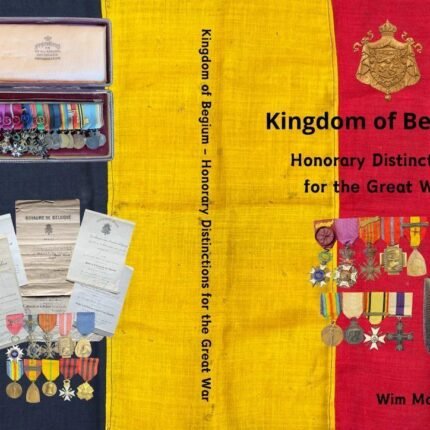
*BACK AVAILABLE / LAST CHANCE* Kingdom of Belgium – Honorary Distinctions for the Great War (Book)
€65,00Kingdom of Belgium – Honorary Distinctions for the Great War
By Wim Martens | Limited Conference Edition | 217 Pages
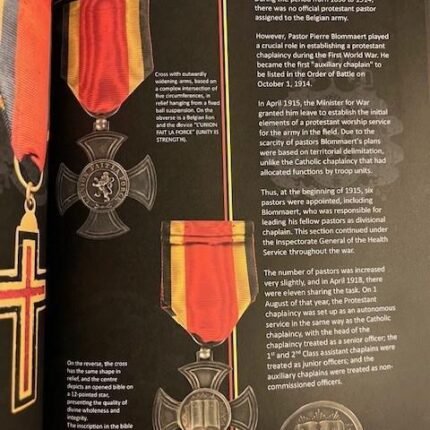
A highly sought-after reference work dedicated to Belgian First World War honors and decorations. Published to coincide with the XVII European Conference for Phaleristics in Brussels (May–June 2024), this volume provides a comprehensive and meticulously organized overview of official Belgian wartime distinctions.
Arranged chronologically by date of institution, the book presents detailed coverage of orders, medals, and decorations, including recognized variants, accompanying certificates, and period imagery of recipients. In addition, select service insignia and several unofficial yet tolerated distinctions are thoughtfully documented, offering a broader perspective valuable to collectors and historians alike.
Richly illustrated and expertly compiled, this 217-page publication serves as both a scholarly reference and a visually engaging catalog of Belgium’s Great War honors system.
Highlights:
-
Complete overview of Belgian WWI honorary distinctions
-
Chronological structure for ease of reference
-
High-quality photographs of medals, variants, and documents
-
Includes service insignia and rare unofficial distinctions
-
Features historical images of decorated individuals
-
Published for a specialized European phaleristics conference
Condition: New
Availability: Very difficult to find — especially outside specialist circles.
An essential addition to any serious phaleristics library or First World War collection.
Note: Shipping prices might not be final to some countries due weight and size!
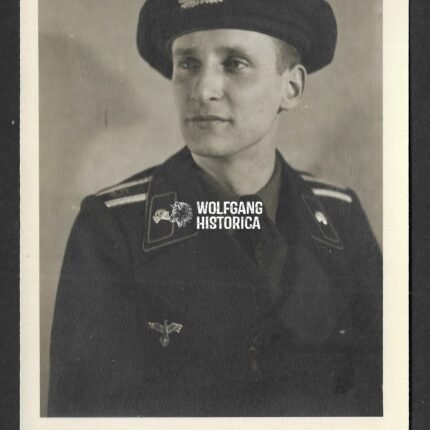
Studioportrait of Panzer Unteroffizier – Panzer-Regiment 5
€49,50Original Wehrmacht (Heer) studioportrait of a Panzer Unteroffizier wearing a Panzer Beret and Panzerwrap, numbered for Panzer-Regiment 5! Postcardsize. Condition as seen.
Panzer-Regiment 5 was part of the Deutsches Afrikakorps and capitulated in Tunis in May 1943!
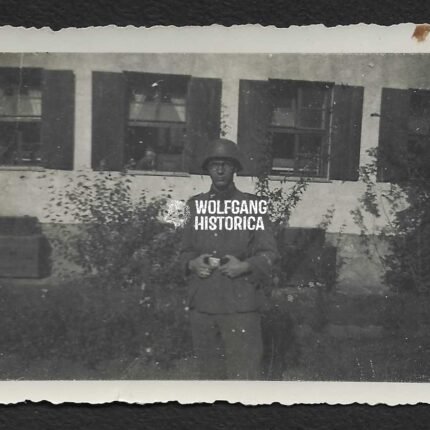
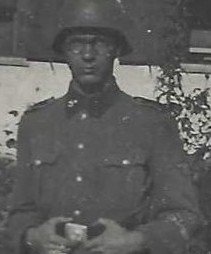
Photograph of Flemish W-SS Volunteer with Collar Tab & Leg.Flandern Cufftitle
€100,00Original photograph of a (named) Flemish Waffen-SS Volunteer, wearing the Langemarck collar tab, Freiwilligen-Legion “Flandern” cufftitle. Size: 9x6cm.
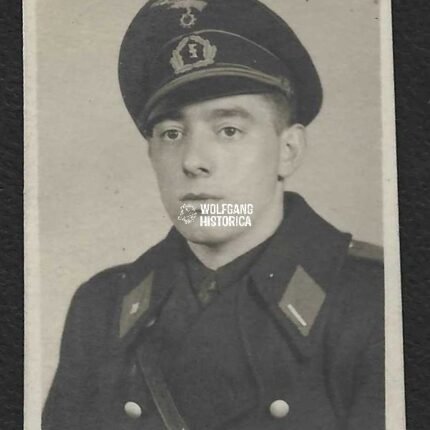
ID Photo of Vlaamse Fabriekswacht – Vlaamse Wachtbrigade
€95,00Original ID size portrait of a Vlaamse Wachtbrigade soldier. Size: 6,3×4,4cm.
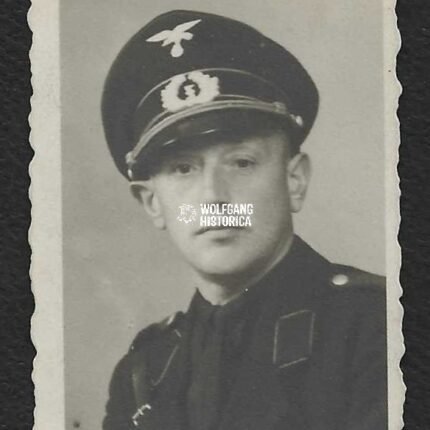
ID Photo of Vlaamse Fabriekswacht – Vlaamse Wachtbrigade
€75,00Original ID size portrait of a Vlaamse Wachtbrigade soldier. Size: 6,1×4,3cm.
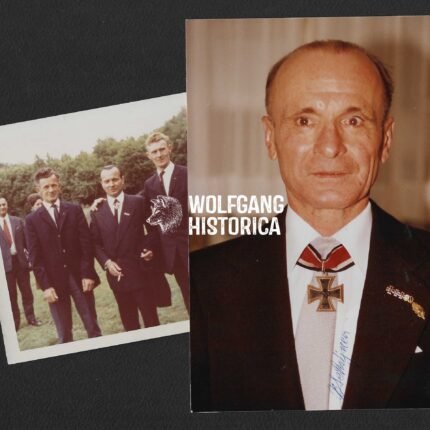
Remi Schrijnen – 6. SS-Freiwilligen-Sturmbrigade “Langemarck”
€50,00Set of Original Postwar Photo and Postwar Signature on a Postwar Photo of Remi Schrijnen. SS-Unterscharführer Remi Schrijnen (24.12.1921 † 27.07.2006) earned the Ritterkreuz on September 21, 1944 as SS-Sturmmann und Richtschütze in the 6. Kompanie/ 6. SS-Freiwilligen-Sturmbrigade “Langemarck”. Condition as seen. Smaller than postcardsize.
Knight’s Cross: “On 29.07.1944 Schrijnen was serving as the crew of a Pak 40 in the middle of a major Soviet tank/infantry attack. His position was hit by a heavy artillery barrage, with several rounds impacting just 10 metres behind the gun. Schrijnen was hit by several shell splinters, but the four other crewman all became casualties. Under the weight of the Soviet attack the order was given to withdraw. Schrijnen however disobeyed the order and remained behind to cover his comrades. Despite being wounded, exhausted and vastly outnumbered he was still able to knock out 4 T-34s and 3 IS-2s before his gun was destroyed. Later, counterattacking German forces found Schrijnen unconscious on the battlefield. He would receive the Knight’s Cross for his actions this day as well as for prior successes as an anti-tank gunner.”
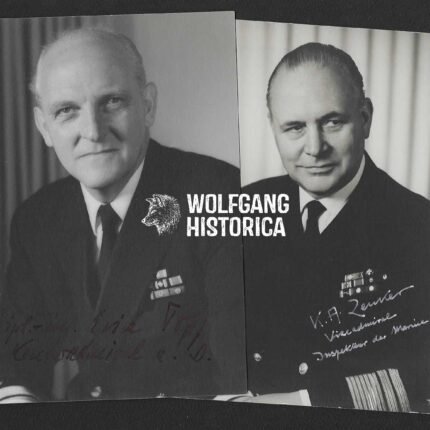
2x Postwar Signed Photos of Erich Topp & Karl-Adolf Zenker
€60,00Original Postwar Signature on a Postwar Photo of Erich Topp. Fregattenkäpitan Erich Topp (02.07.1914 † 26.12.2005) earned the Ritterkreuz des Eisernen Kreuzes on June 20, 1941 as Oberleutnant zur See und Kommandant of Uboot “U-552”, the Eichenlaub on April 11, 1942 as Kapitänleutnant und Kommandant of Uboot “U-552” and the Schwertern on August 17, 1942 as Kapitänleutnant und Kommandant of Uboot “U-552”.
Original Postwar Signature on a Postwar Photo of Karl-Adolf Zenker. Admiral Karl-Adolf Zenker (19 July 1907, Goslar † 27 October 1998, Bonn) was a German naval officer who served in both the Kriegsmarine during World War II and the Bundesmarine of postwar West Germany, where he rose to the rank of Admiral. He is best remembered as Inspector of the Navy (Inspekteur der Marine), the highest-ranking officer of the Bundesmarine.
Both A5 Size format.
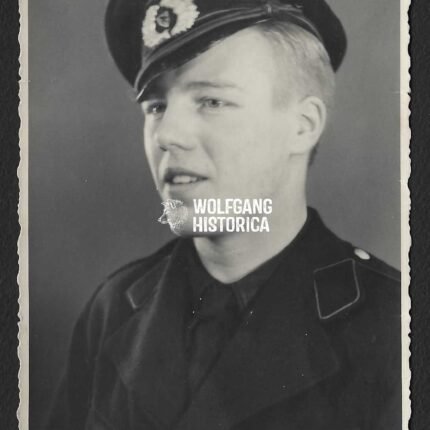
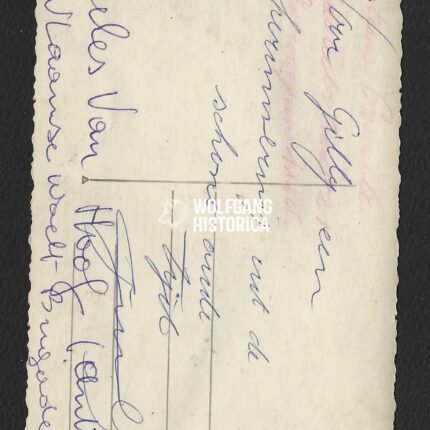
TOP Studioportrait Vlaamse Fabriekswacht – Vlaamse Wachtbrigade
€250,00Original Flemish Collaboration Studioportrait of a member of the Vlaamse Fabriekswacht – Vlaamse Wachtbrigade. Size: Postcardsize. TOP Portrait!
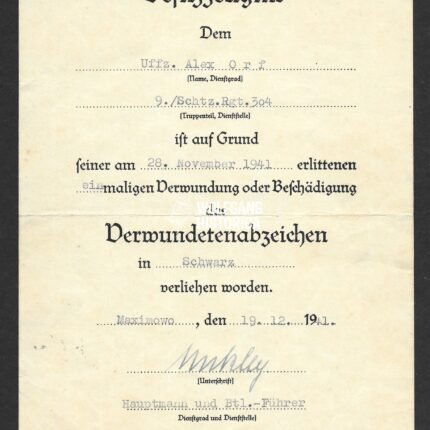
VWA Schwarz Award Doc: Schützen-Rgt. 304 (2. Panzer-Division) – Signed by Mickley!
€45,00Original Award document of Unteroffizier Alex Orf (21.4.1915 in Nordheim), who earned the Verwundetenabzeichen in Schwarz (Wound Badge in Black) for his wound sustained on November 28, 1941 while serving with the Schützen-Regiment 304 of the 2. Panzer-Division. Later, he also earned the Eisernes Kreuz 2. Klasse (intel I have, no document present). Condition as seen, has been folded in the past. Signed by Hauptmann Karl Mickley (DKIG+RK)!
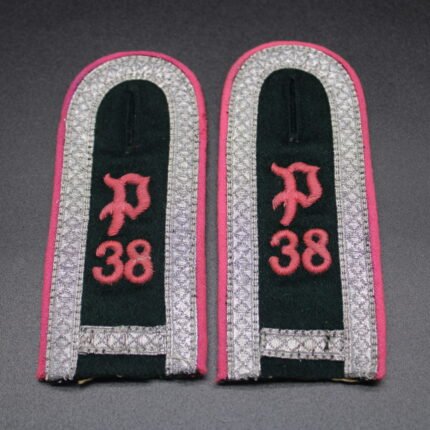
Pair of Panzerjäger-Abteilung 38 NCO Shoulderboards
€300,00Original beautiful pair of embroided shoulderboards (sewn in) for an Unteroffizier (NCO) for Panzerjäger-Abteilung 38. Comes with a photo of these type being worn. Near Mint! Excellent pair. Condition as seen.
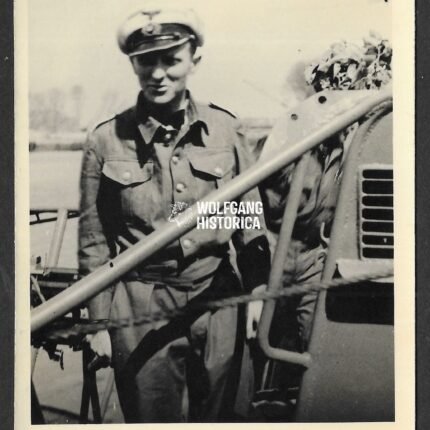
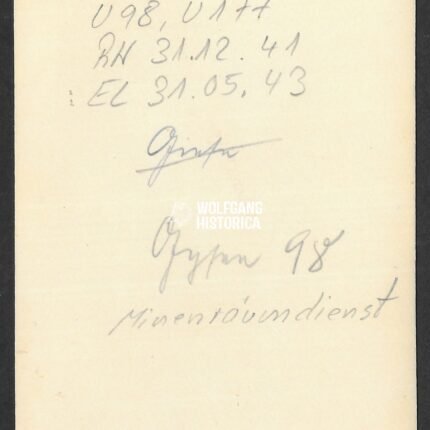
Photo of Robert Gysae – Kommandant of “U-98” & “U-177” (Eichenlaub)
€95,00Original Photo of Robert Gysae. Korvettenkäpitan Robert Gysae (04.01.1911 in Berlin-Charlottenburg † 28.04.1989 in Wilhelmshafen) earned the Ritterkreuz des Eisernen Kreuzes on December 31, 1941 as Kapitänleutnant und Kommandant of Uboot “U-98” and the Eichenlaub on May 31, 1943 as Kapitänleutnant und Kommandant of Uboot “U-177”. Postcardsize. Condition as seen.
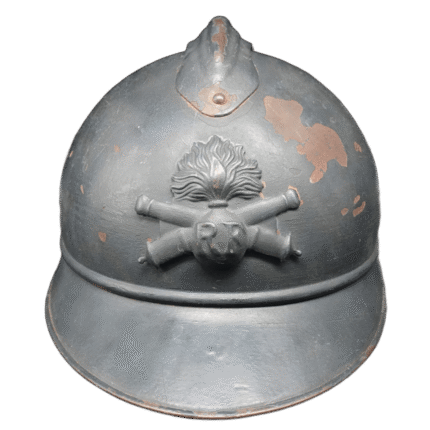
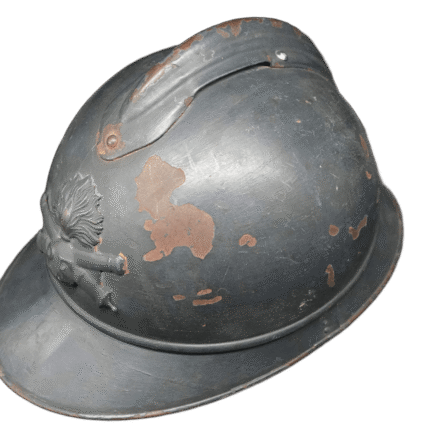
WWI French M15 Adrian Helmet – Artillery
€250,00Original French M15 Adrian World War I helmet for Artillery troops. Helmet is “horizon blue” (bleu horizon), inner helmet made with uniform leftovers! Complete with chin strap. Condition as seen.

Josef Blaho – Parade Medal Bars of the German Reich 1933–1945
Original price was: €110,00.€95,00Current price is: €95,00.In this magnificent reference work, author Josef Blaho examines the large parade medal bars of the German Reich from 1933 to 1945. The book features detailed photographic documentation of construction types and manufacturers, including original makers’ labels. A wide selection of exemplary medal bars is presented and analyzed in depth.
An essential reference for the specialized phaleristics collector.
Large format, hardcover, 424 pages with over 1,000 illustrations in color and black & white. English language.
See more on YT: https://www.youtube.com/watch?v=ULTg8Brxb1o
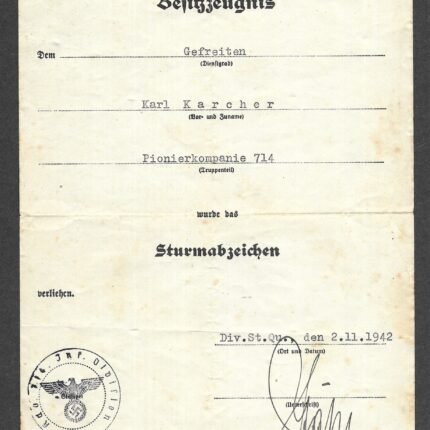
Sturmabzeichen Award Doc: Pionier-Kompanie 714 (714. Infanterie-Division)
€75,00An authentic wartime award document issued to Gefreiter Karcher, who served with Pionierkompanie 714 of the 714. Infanterie-Division (later re-designated as the 114. Jäger-Division).
-
Award: Allgemeines Sturmabzeichen (General Assault Badge)
-
Reason: For active participation in 3 infantry assaults
-
Signed by: Generalmajor Friedrich Stahl (Divisional Commander)
-
Condition: Document was folded in the past; overall condition as seen
Historical Context
The 714. Infanterie-Division was formed in 1941 and deployed primarily in the Balkans, where it took part in anti-partisan operations. In 1943, it was reorganized and renamed the 114. Jäger-Division, continuing service in Italy.
The Allgemeines Sturmabzeichen was instituted in 1940 and awarded to soldiers who participated in three or more infantry assaults, counter-attacks, or close combat actions, often highlighting the courage and frontline involvement of support troops such as pioneers.
Collector’s Note
A desirable and well-documented award paper, featuring the scarce divisional connection to both the Balkans campaign and the later Italian front. The signature of Generalmajor Friedrich Stahl further enhances the historical and collector’s value.

Archivalia 1940-1945 – Vlamingen aan het Oostfront, Vlamingen op het thuisfront
€0,01Book “Archivalia 1940-1945” – Vlamingen aan het Oostfront, Vlamingen op het thuisfront. Very good book!
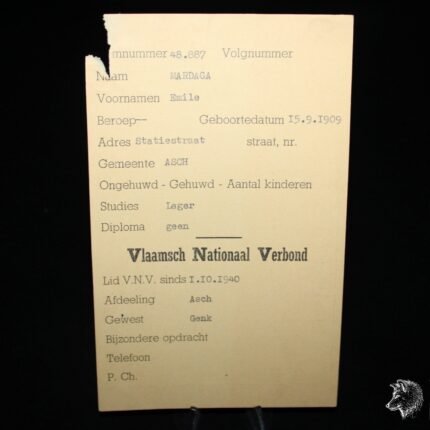
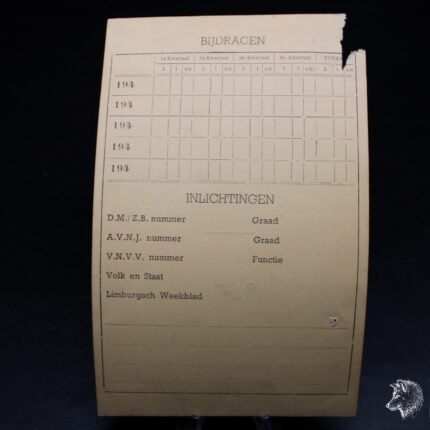
VNV (Vlaamsch Nationaal Verbond) Stamkaart
€75,00Original VNV (Vlaamsch Nationaal Verbond) Stamkaart from a member from Genk. he later joined the Waffen-SS but was discharged for being unfit. Torn in left corner, see condition.
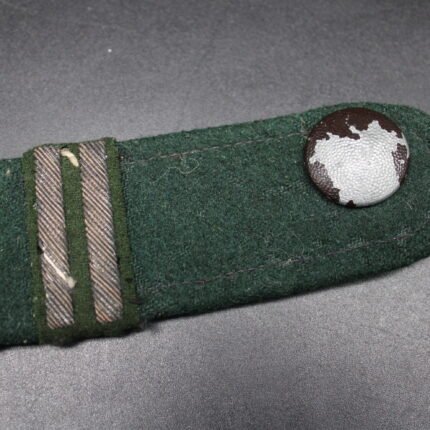
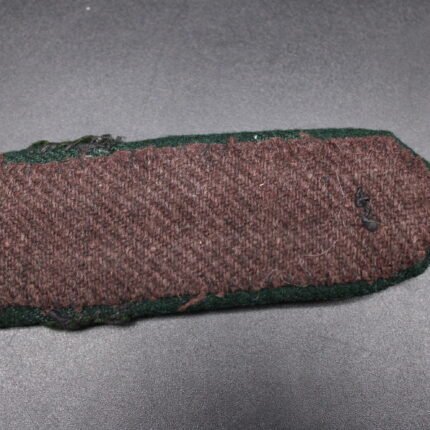
VAVV Shoulderboard – “1e Ploegleider”
€175,00Original single shoulderboard of the Vrijwillige Arbeidsdienst voor Vlaanderen (VAVV) for the rank of “1e Ploegleider”. Condition as seen.
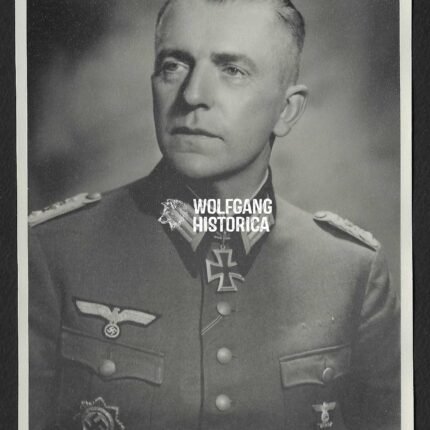
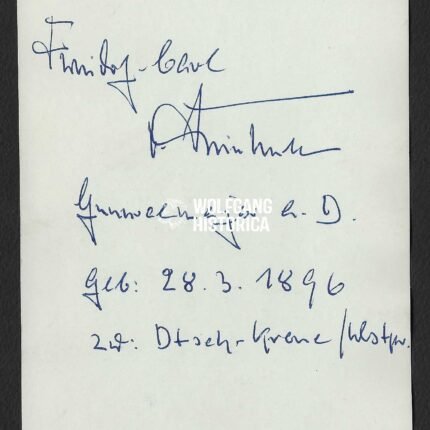
Friedrich-Carl von Steinkeller – Panzergrenadier-Regiment 7 (Kdr. of Div. “Feldherrnhalle”)
€85,00Original Postwar Signature on a Postwar Photo of Friedrich-Carl von Steinkeller. Generalmajor Friedrich-Carl von Steinkeller (28 March 1896 † 19 October 1981) was a German officer who rose to the rank of Generalmajor during the Second World War. He distinguished himself as a Panzergrenadier commander in one of the Wehrmacht’s most famous armored formations, the 7. Panzer-Division.
Awards and Decorations:
-
Knight’s Cross of the Iron Cross (Ritterkreuz des Eisernen Kreuzes) – 31 March 1943, as Oberstleutnant and Kommandeur of Panzergrenadier-Regiment 7, 7. Panzer-Division.
Career Highlights:
-
A veteran of the First World War who remained in the Reichswehr between the wars.
-
Took command of Panzergrenadier-Regiment 7 of the 7. Panzer-Division, one of the Wehrmacht’s most elite armored units, during the fighting on the Eastern Front.
-
Awarded the Knight’s Cross for his leadership and bravery in combat operations in 1943.
-
Promoted to Generalmajor before the war’s end.
-
Survived captivity and lived in West Germany until his death in 1981.
Item Details:
-
Authentic postwar signature of Generalmajor Friedrich-Carl von Steinkeller.
-
Signed on a postwar photograph.
-
Condition: Clear, well-preserved autograph.
Collector’s Note:
Von Steinkeller’s connection with the elite 7. Panzer-Division underlines the desirability of his autograph for collectors of armored warfare history. His award of the Knight’s Cross as a regimental commander adds to the appeal, making this an excellent item for a Panzer or Heer collection.
This is sold on commission.
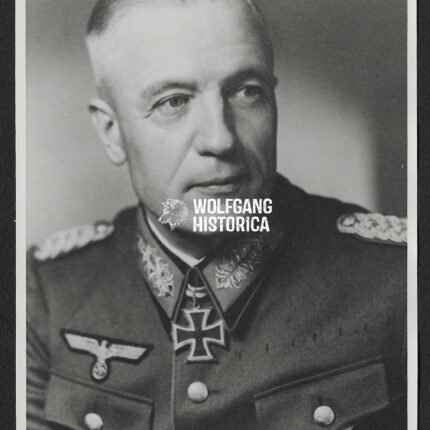
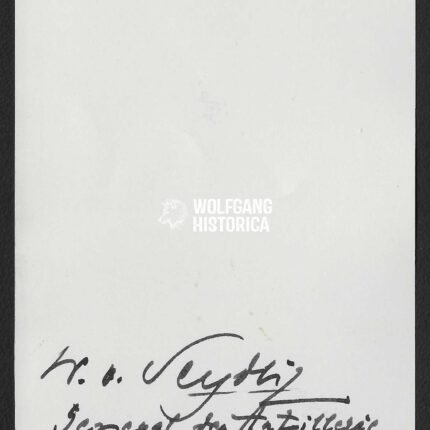
Walther von Seydlitz-Kurzbach – 12. Infanterie-Division (Battle for Stalingrad!) (Collaborated with Soviets, “Anti-Nazi Force” Plan) (Eichenlaub)
€250,00In 1950, a Soviet tribunal sentenced him to 25 years of imprisonment, but in 1955 he was released to West Germany, where in 1956, his Third Reich death sentence was nullified. However, he was despised by his former army colleagues both for his role in the Battle of Stalingrad and for his later collaboration with the Soviet Union. He was denied the restoration of his retired rank and pension by the Bundeswehr. (Read more on Walther von Seydlitz-Kurzbach (Wikipedia))
This is sold on commission.
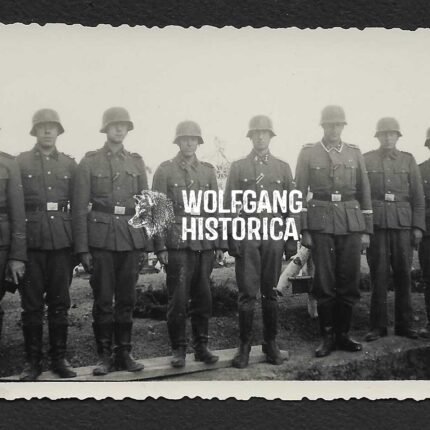
Photo of SS-Freiwilligen-Leg. “Flandern” – Officer & Spiess Kunz
€0,01Original photo of the 3. Kompanie/ SS-Freiwilligen-Legion “Flandern”, wearing the Frw.Leg.Flandern cufftitles and even some the Langemarck collar tab. Officer and Spiess Kunz visibile. Size: 11×6,8cm. Condition as seen.
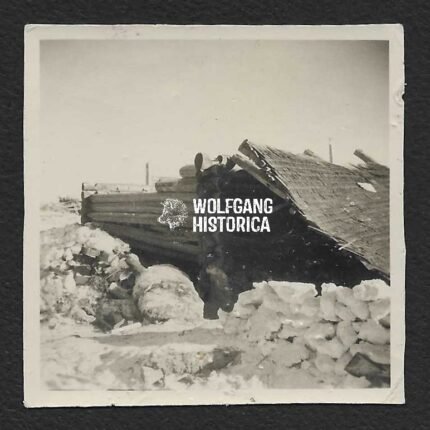
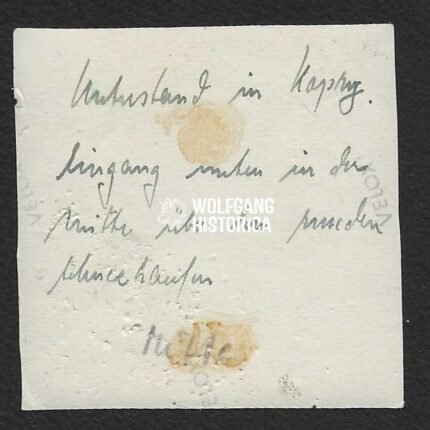
Photo of Bunker were Raimond Tollenaere was KIA
€50,00Original photo of the bunker were Flemish SS-Untersturmführer Raimond Tollenare was Killed in Action. Size: 5,8×5,8cm. Condition as seen.
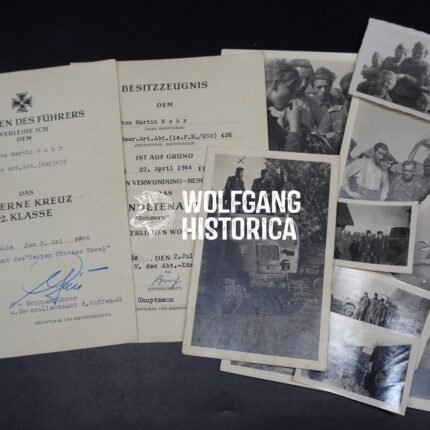
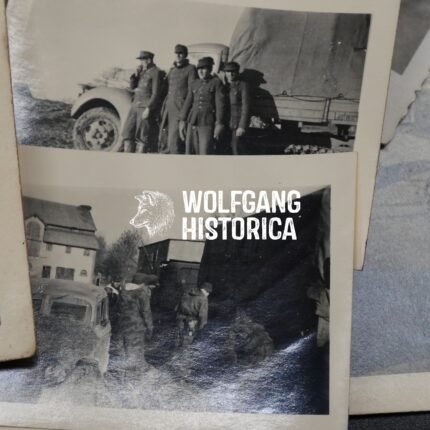
Battle of Kovel 1944 – RARE Photo & Document Set (Signed by Gille as Kdr. “Festen Platzes Kowel”!)
€650,00A historically unified and RARE frontline-issued German combat award document set belonging to Gefreiter Martin Mohr, serving in a motorized Eastern Front artillery unit equipped with RSO tractor-towed Ie.F.H. howitzers (1. Batterie/ Heeres-Artillerie-Abteilung 426).
The centerpiece EK2 award certificate for the Iron Cross 2nd Class was issued in the field on 9 May 1944 (“Im Felde”), during the height of the Battle of the Kovel Pocket, and is personally signed in ink by Herbert Gille, in his role as Commander of “Fester Platz Kowel” — the fortified defensive sector responsible for the heroic containment and breakout of encircled German forces in April–May 1944.
Accompanying it is the matching Wound Badge in Black Besitzzeugnis, issued 2 July 1944, officially documenting Mohr’s first combat wounding sustained on 22 April 1944, a date that aligns precisely with the heaviest engagements of the Kovel defensive battles under Gille’s command.
Included original period photographs further reinforce the Eastern Front provenance, showing German troops, motorized artillery vehicles, and RSO unit field conditions, forming a cohesive historical grouping.
Award documents signed by Herbert Gille are exceptionally scarce — and examples explicitly issued under “Fester Platz Kowel” authority, dated during active combat, are among the rarest battle-attributed Iron Cross documents known to survive. This is a museum-grade artifact of unquestionable historical weight and extraordinary collector significance.
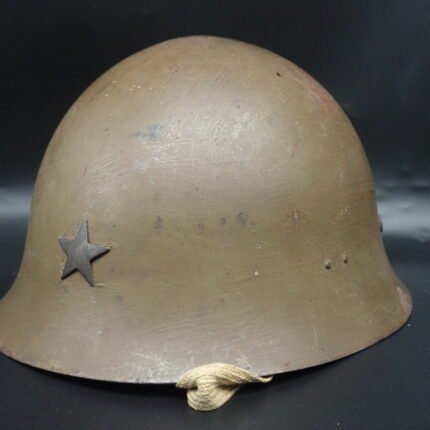
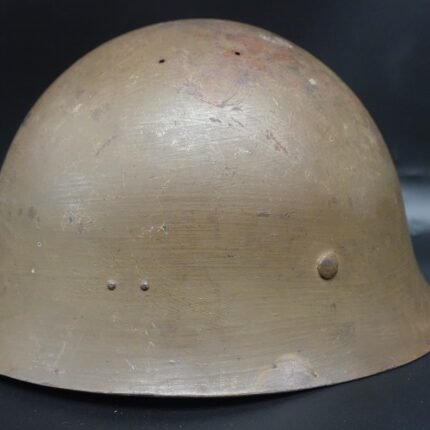
Japanese WWII Type 90 Steel Combat Helmet
€995,00Original WWII Japanese Type 90 combat helmet, which was used from 1930 to 1945 by soldiers of the Imperial Japanese Army. The helmet shell shows some signs of oxidation. In places, the underlayers of bluish paint are visible beneath the brush-applied paint.
The army star is fixed to the front part; it also serves as a rivet. On the rear inner rim of the hull, the kanji 少is stamped into the steel and painted white over it, indicating that it is a small size. Next to it, we can see the Kobe Seiko arsenal logo stamped in the steel (an S in a diamond) as well as a partially visible number.
The kanji indicating the size is also present on the leather band of the headdress. The leather helmet is in good condition. It has canvas compartments containing padding (one of the compartments is now empty) . One of them bears a Japanese army stamp indicating the production date of Showa 15 (1940).
The canvas chin strap is complete
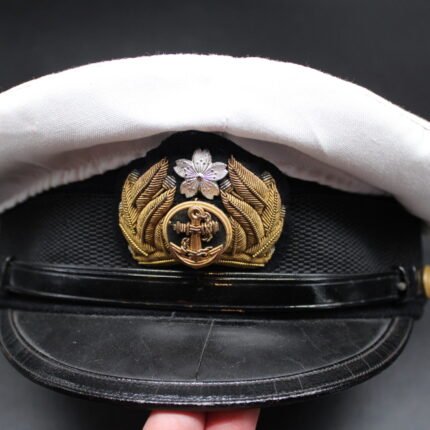
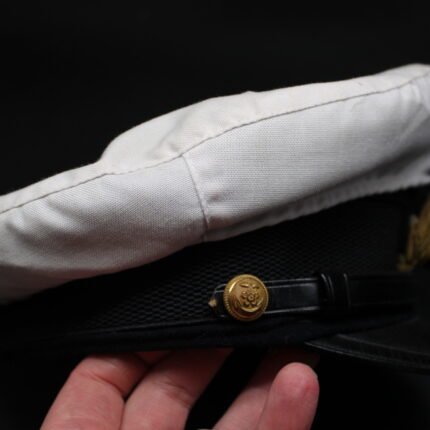
WWII Imperial Japanese Navy (IJN) Officer’s Visor Cap
€395,00A beautifully tailored Imperial Japanese Navy officer’s visor cap from the Second World War, manufactured to the high standards typical of naval uniforms of the era. Navy officer caps differed markedly from their Army counterparts, featuring deep midnight-blue wool, glossy black patent-leather elements, and the distinctive gold bullion anchor-and-cherry-blossom insignia—the long-standing emblem of the Imperial Japanese Navy.
This example is constructed from fine, dark navy wool with excellent form retention and a sharp, elegant naval profile. The front displays a crisp officer-quality bullion cap badge, richly embroidered and remaining bright with only mild toning from age. The black lacquered visor shows expected period age-crazing but is stable and fully intact. The chinstrap, side buttons, and stitching all remain original.
Inside, the cap retains its silk or rayon lining—still clean and richly colored—along with the original leather or ersatz-leather sweatband. The interior shows gentle, honest service wear but no damage, tears, or repairs. Overall, it is a remarkably well-preserved cap that clearly saw use yet was carefully stored for decades afterward.
A notable addition is the original white cotton removable over-cap, used for tropical and summer dress. This piece is often missing and greatly enhances both the completeness and display quality of the set.
Collector’s Note
Authentic Imperial Japanese Navy officer caps from WWII are significantly scarcer than Army examples due to the smaller size of the IJN and its disproportionately high wartime losses. Surviving caps—especially those in complete, undamaged condition with original insignia—are highly sought after by collectors of Axis headgear and naval militaria.
This cap’s fine construction, excellent badge, and appealing overall condition make it a standout display piece and a superb representative example of wartime naval uniform design. An exceptional addition to any advanced WWII collection.
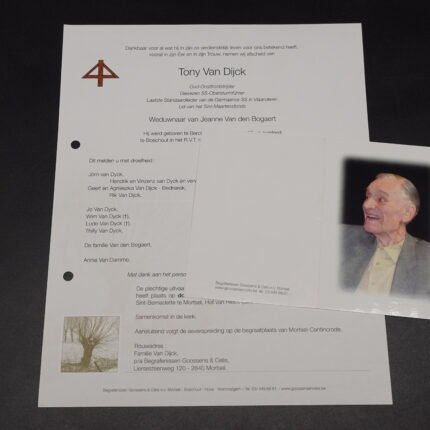
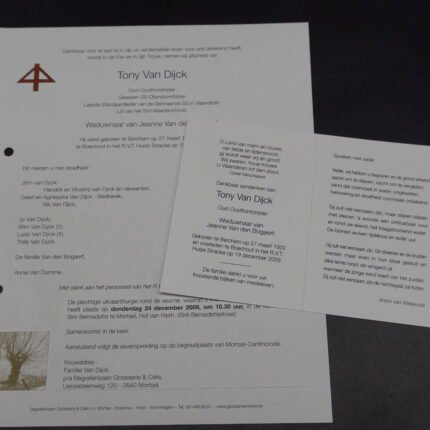
Tony van Dyck – Legion “Flandern”, “Langemarck” & Algemeene-SS Vlaanderen
€0,01Original Death Card & Death Letter of Tony van Dyck! SS-Obersturmührer Tony van Dyck (27.03.1922 Berchem † 19.12.2009 Boechout) served with the 1. Kompanie/ SS-Freiwilligen-Legion “Flandern”, became the Leader of the Algemeene-SS Vlaanderen (1. Standaard van de Germaansche SS) and eventually served with the 27. SS-Freiwilligen-Grenadier-Division “Langemarck”.
He’s highly sought after! Watch the documentary of Tony van Dyck:
HISTORIES – Tony Van Dyck, Alleen De Almachtige Zal Oordelen
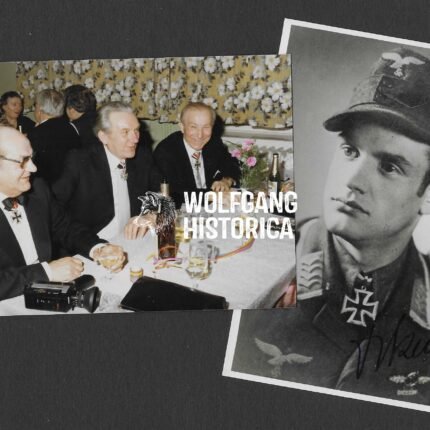
Eduard Isken – Jagdgeschwader 53
€35,00Original Postwar Signature on a Postwar Photo of Eduard Isken. Oberfeldwebel Eduard Isken (15.04.1918 † 07.01.1997) earned the Ritterkreuz on January 14, 1945 as Oberfeldwebel und Flugzeugführer of a 13. Staffel/ Jagdgeschwader 53.
Comes with extra original postwar photo of several RK-Holders at reunion!
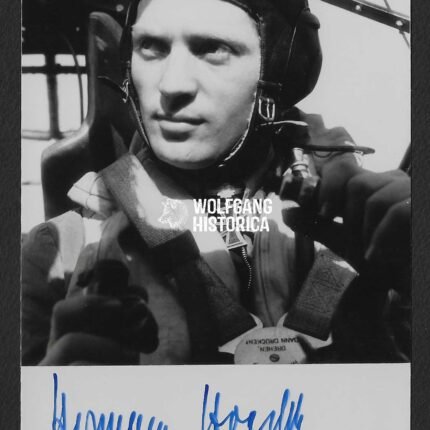
Hermann Hogeback – Lehrgeschwader 1 & Kampfgeschwader 6 (Schwertern)
€25,00Original Postwar Signature on a Postwar Photo of Hermann Hogeback. Oberstleutnant Hermann Hogeback (25.08.1914 in Idar-Oberstein † 15.02.2004 in Dötligen-Wildeshausen) earned the Deutsches Kreuz in Gold on September 24, 1942, the Ritterkreuz on September 8, 1941 as Oberleutnant und Staffelkapitän of the 9. Staffel/ Lehrgeschwader 1, the Eichenlaub on February 19, 1943 as Hauptmann und Kommandeur of the III. Gruppe/ Kampfgeschwader 6 and the Schwertern on January 26, 1945 as Oberstleutnant und Kommodore of Kampfgeschwader 6. Postcardsize.
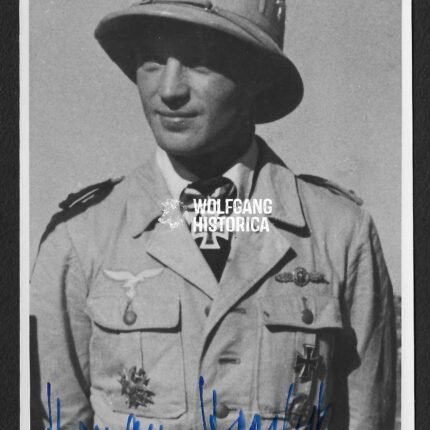
Hermann Hogeback – Lehrgeschwader 1 & Kampfgeschwader 6 (Schwertern)
€25,00Original Postwar Signature on a Postwar Photo of Hermann Hogeback. Oberstleutnant Hermann Hogeback (25.08.1914 in Idar-Oberstein † 15.02.2004 in Dötligen-Wildeshausen) earned the Deutsches Kreuz in Gold on September 24, 1942, the Ritterkreuz on September 8, 1941 as Oberleutnant und Staffelkapitän of the 9. Staffel/ Lehrgeschwader 1, the Eichenlaub on February 19, 1943 as Hauptmann und Kommandeur of the III. Gruppe/ Kampfgeschwader 6 and the Schwertern on January 26, 1945 as Oberstleutnant und Kommodore of Kampfgeschwader 6. Postcardsize.
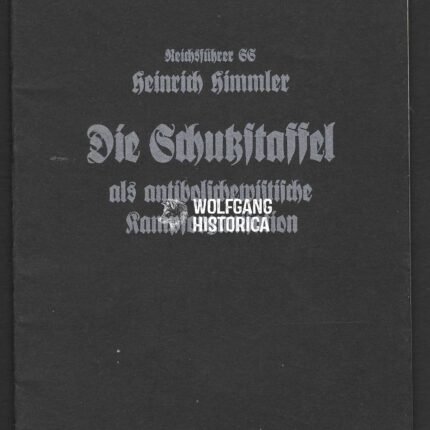
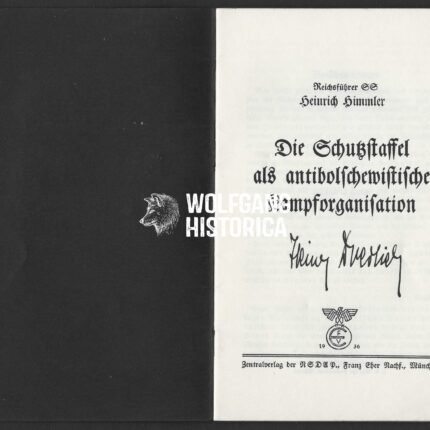
Reichsführer-SS Heinrich Himmler – Die Schutzstaffel als antibolschewistische Kampforganisation
€450,00Original Reichsführer-SS Heinrich Himmler – Die Schutzstaffel als antibolschewistische Kampforganisation, Issue from 1936, 31 pages. 19 x 12,5 cm.
Very rare to find! This is sold on commission.
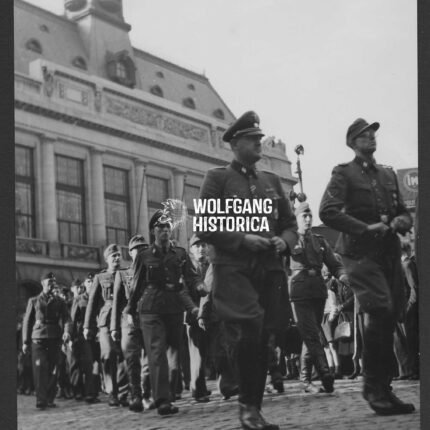
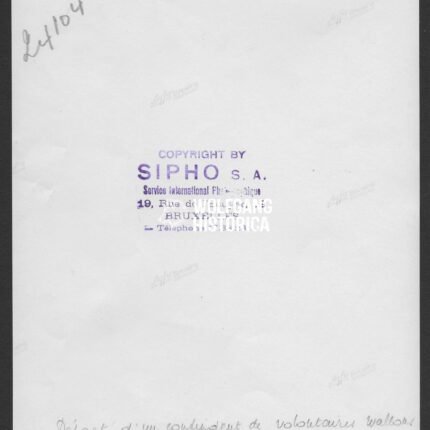
Press Photo: Departure of Walloon Volunteers for the Easterfront in Charleroi
€150,00Original photograph of the Walloon Collaboration showing the departe of Walloon volunteers in Charleroi. Schindlmayr on the front right. Size: 18×23,5cm.
This is sold on commission.
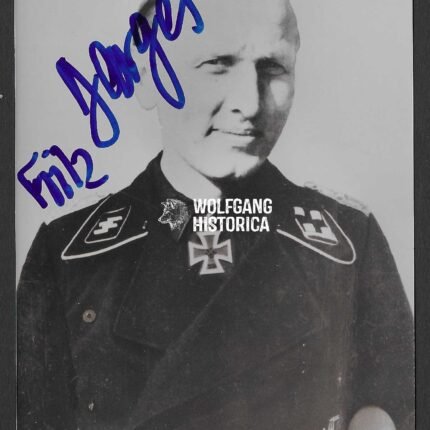
Fritz Darges – SS-Panzer-Regiment 5 “Wiking” & Personal Adjutant of Adolf Hitler
€45,00Original Postwar Signature on a Postwar Paper of Fritz Darges. SS-Obersturmbannführer Fritz Darges (08.02.1913 in Dülseberg † 25.10.2009 in Celle) earned the Ritterkreuz des Eisernen Kreuzes on April 5, 1945 as SS-Obersturmbannführer und Führer of the SS-Panzer-Regiment 5 of the 5. SS-Panzer-Division “Wiking”. Condition as seen. NOTE: The signature is written on a paper on which a photo in pasted!
He served as an Adjutant to Martin Bormann and later was a personal Adjutant to Adolf Hitler. After his death a manuscript with his memoirs was published. Read more on Fritz Darges (Wikipedia)

Walter Pitsch – SS-Flak-Abteilung “LSSAH”
€75,00Original Postwar Signature on a Postwar Photo of Walter Pitsch. SS-Hauptscharführer Walter Pitsch (13.06.1920 † 29.07.2005) earned the Ritterkreuz des Eisernen Kreuzes on May 6, 1945 as SS-Hauptscharführer und Batterieführer of the 4. Batterie/ SS-Flak-Abteilung 1 of the 1. SS-Panzer-Division “Adolf Hitler”. Condition as seen.
At the end of April 1945 Walter Pitsch took over the command of his Kompanie after all of its self-propelled 3.7 cm AA guns had been lost. During this time, in which the Kompanie was now employed in the infantry role, the unit managed to thwart an enemy penetration near the Mariazell-Hohenberg (in the Alps). Pitsch, leading at the head of the Kompanie, threw the Soviets back from their gains and held the position thereafter. The retention of this position was of great importance in covering the retreat of the Division, and Pitsch would be recommended for the Knight’s Cross in recognition of his success here. Awarded immediately by Supreme Commander of 6. Panzer-Armee (Dietrich), Southeastern Front. (Source: Traces of War)
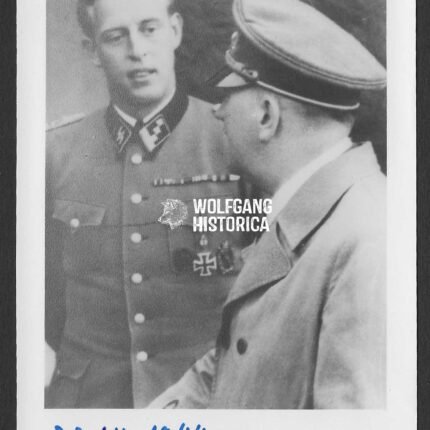
Otto Günsche – Adolf Hitler’s Personal Adjutant (WIA 20 July Plot, Führerbunker)
€0,01Original Postwar Signature on a Postwar Photo of Otto Günsche. SS-Sturmbannführer Otto Günsche (24.09.1917 † 02.10.2003) earned the Verwundetenabzeichen “20. Juli 1944” in Schwarz and was a member of the Leibstandarte-SS Adolf Hitler before he became Adolf Hitler’s personal adjutant. Condition as seen. Postcardsize.
With the end of Nazi Germany imminent, Günsche was tasked by Hitler on 30 April 1945 with ensuring the cremation of his body after his death. That afternoon, he stood guard outside the room in the Führerbunker where Hitler and Eva Braun committed suicide. After waiting a short time, Hitler’s valet, Heinz Linge, opened the study door with Martin Bormann at his side. The two men entered the study with Günsche right behind them. Günsche then left the study and announced that Hitler was dead to a group in the briefing room, which included Joseph Goebbels, General Hans Krebs, and General Wilhelm Burgdorf. Günsche had the table and chairs in the study moved out of the way and blankets were laid out on the floor. Hitler and Braun’s lifeless bodies were then wrapped in blankets. In accordance with Hitler’s prior written and verbal instructions, his and Braun’s bodies were carried up the stairs and through the bunker’s emergency exit to the garden behind the Reich Chancellery to be burned. Having ensured that the corpses were burnt using petrol supplied by Hitler’s chauffeur Erich Kempka, Günsche later left the Führerbunker after midnight on 1 May. On 2 May 1945, Günsche was taken prisoner by Soviet Red Army troops that were encircling the city and flown to Moscow for sharp interrogation by the NKVD.