

An essential and highly sought-after piece for collectors of Belgian militaria and First World War decorations.
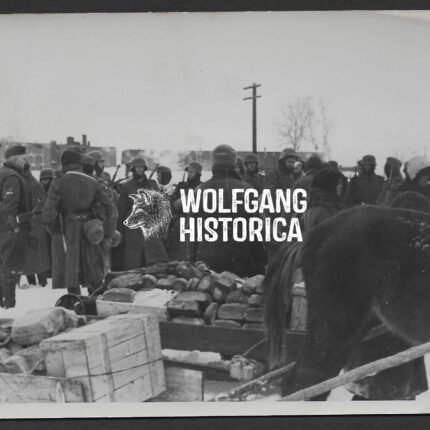
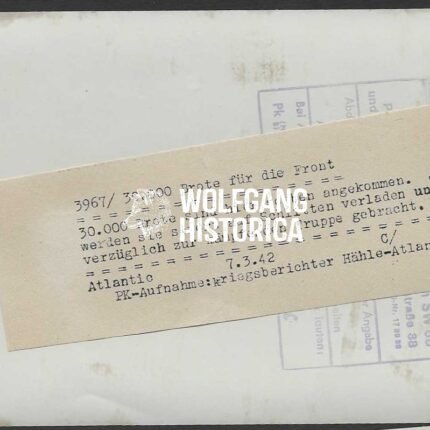
German Press Photo: 30.000 Brote für die Front
€30,00Original German Press Photo of 30.000 Brote für die Front. Size: 13x18cm. Condition as seen.
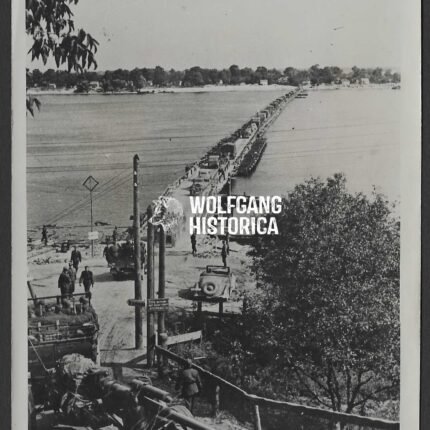
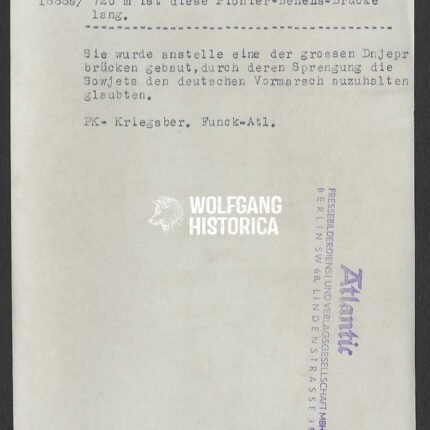
German Press Photo: 720 m ist diese Pionier-Behelfs-Brücke lang
€30,00Original German Press Photo of 720 m ist diese Pionier-Behelfs-Brücke lang. Size: 13x18cm. Condition as seen.
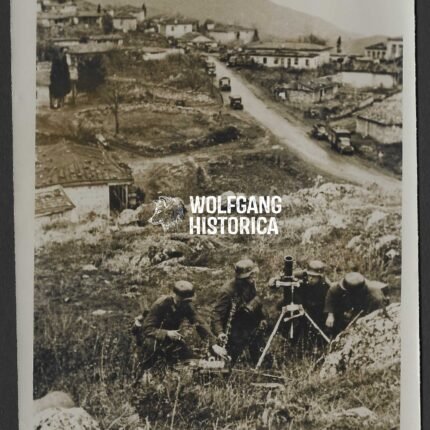
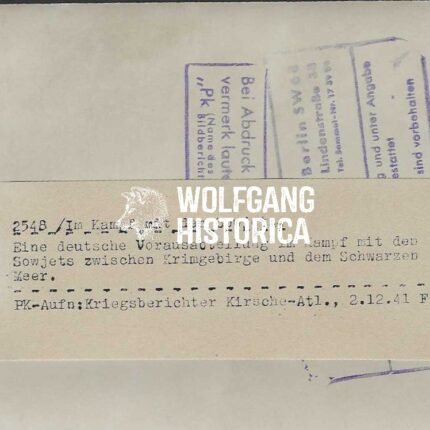
German Press Photo: Im Kampf mit dem Sowjets – Mortar Crew
€30,00Original German Press Photo of the Im Kampf mit dem Sowjets. Mortar Crew. Size: 13x18cm. Condition as seen.
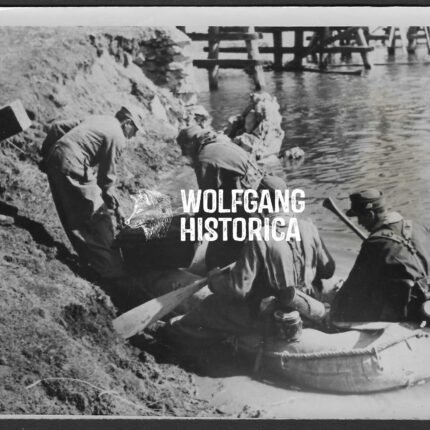
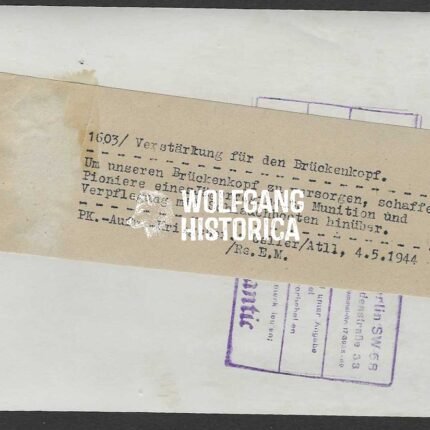
German Press Photo: Verstärkung für den Brückenkopf – Pioniere Jäger (Cap Badge!)
€40,00Original German Press Photo of the Verstärkung für den Brückenkopf. Note the Jäger insignia on their caps! Size: 13x18cm. Condition as seen.
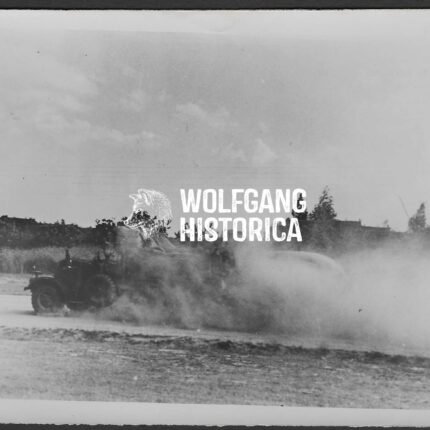
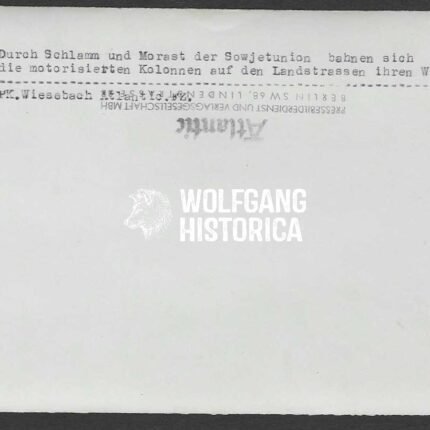
Germas Press Photo: Driving through the Sovjet-Union
€30,00Original German Press Photo of the Vormarsch durch Sowjet-Union. Size: 13x18cm. Condition as seen.
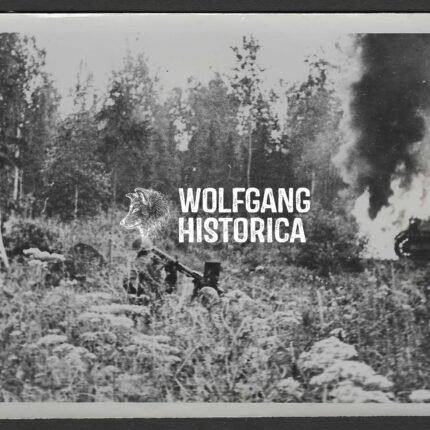
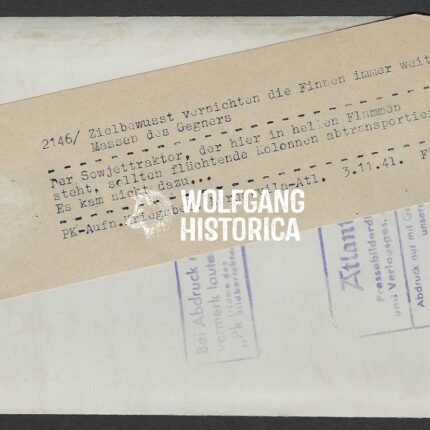
German Press Photo: Finnish Soldiers destroy a Sowjettraktor
€30,00Original German Press Photo of a “Zielbewust vernichten die Finnen immer weitere Massen des Gegners”. Size: 13x18cm. Condition as seen.
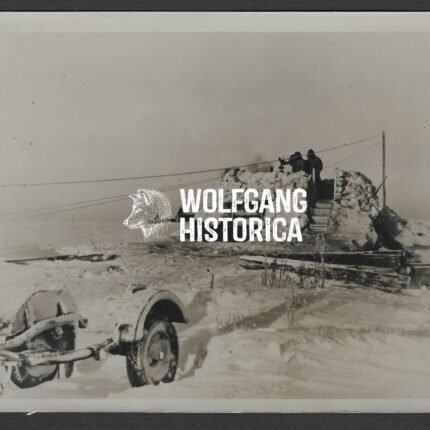
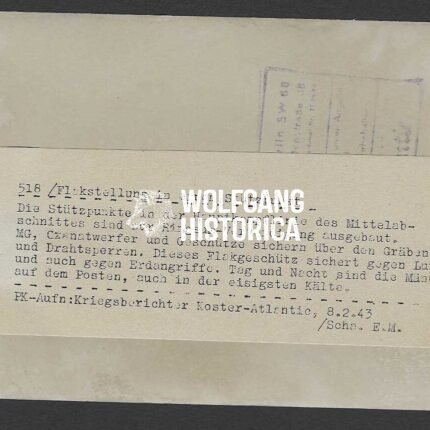
German Press Photo: Flakstellung in einem Stützpunkt
€30,00Original German Press Photo of a “Flakstellung in einem Stützpunkt”. Size: 13x18cm. Condition as seen.
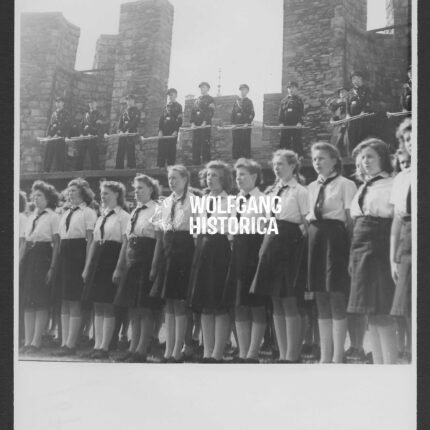
Press Photo: Hitlerjugend-Vlaanderen & BDM-Vlaanderen in Gent
€0,01Original Flemish collaboration press photo of the Hitlerjugend-Vlaanderen & BDM-Vlaanderen in Gent. Condition as seen. Size: 18x24cm.
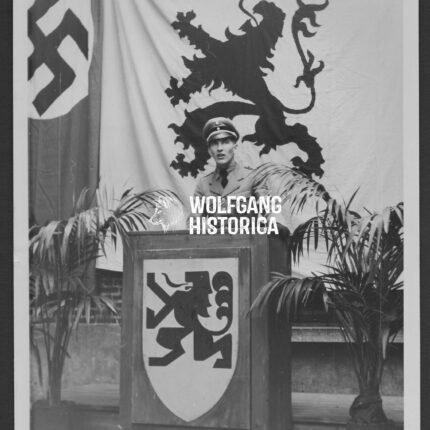
Press Photo: HJ Spokesperson of the Hitlerjugend-Vlaanderen
€0,01Original Flemish collaboration press photo of the spokesperson of the Hitlerjugend-Vlaanderen. Condition as seen. Size: 18x24cm.
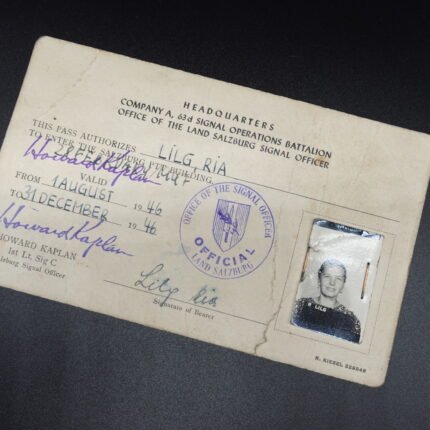
Authorization Pass from HQ, Company A, 63rd Signal Operations Battalion (Salzburg, 1946)
€20,00Original Authorization Pass from HQ, Company A, 63rd Signal Operations Battalion, Office of the Land Salzburg Signal Officer. Issued in 1943. Complete with photo. Condition as seen.
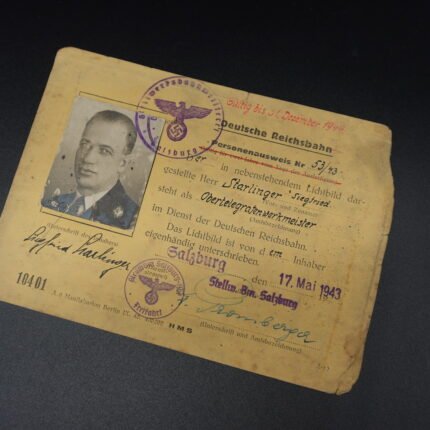
Deutsche Reichsbahn – Personenausweis (Obertelegrafenwerkmeister, Salzburg)
€35,00Original Deutsche Reichsbahn – Personenausweis from 1943 for a Obertelegrafenwerkmeister in Salzburg. Complete with photo. Issued in May 1943. Condition as seen.
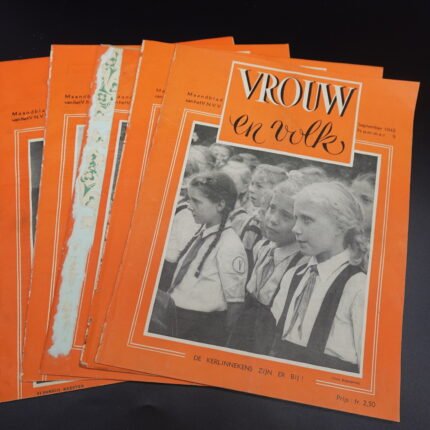
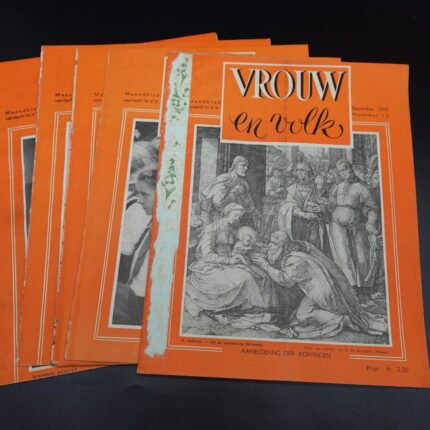
Set of 5x Flemish VNVV “Vrouw en Volk” Magazines (1943)
€0,01Original group of issues of Vrouw en Volk (1943), a scarce publication of the VNVV, the women’s branch of the Flemish VNV. Condition as illustrated. All issues are complete, though they exhibit typical wear; one cover has paper adhered to it (see second image).
Included in this lot: 1943 nos. 5, 6, 9, 11, and 12.
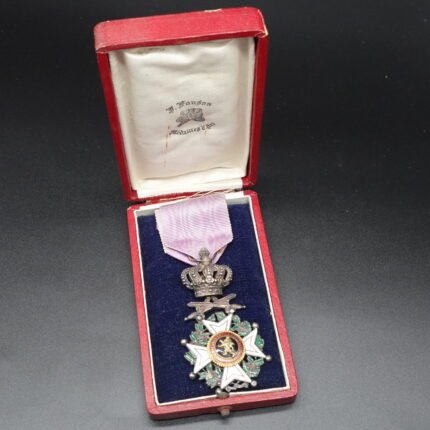
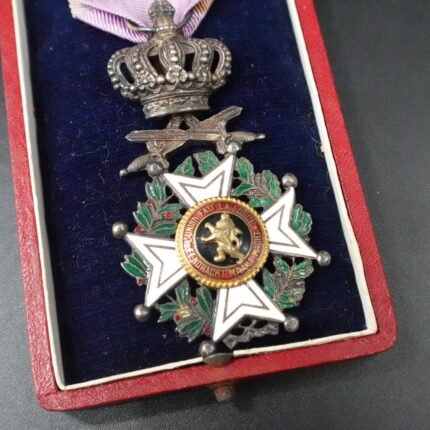
Order of Leopold (Rank of Knight) – Leopoldsorde (Rangorde Ridder) in Etui
€90,00Original Order of Leopold (Leopoldsorde / Ordre de Léopold) (Class of Knight – Rangorde v.d. Ridder) with Etui! This is the post-1952 design with bilungual motto.
The Order of Leopold is the oldest and highest national order of Belgium, established on 11 July 1832 by King Leopold I. It remains one of the three principal Belgian orders of knighthood and is awarded by Royal Decree. It recognizes exceptional service to the Belgian state, whether in military, civil, or maritime contexts.
Overview & Structure
The order is divided into three main divisions:
-
Civil Division – for civilian merit
-
Military Division – for armed forces (with crossed swords)
-
Maritime Division – for merchant navy (with anchors)
It follows a five-class system, inspired by French honors:
-
Grand Cordon
-
Grand Officer
-
Commander
-
Officer
-
Knight
Historical Background
Following Belgian independence in 1830, the newly formed nation required a national honors system. King Leopold I established the order not only for military merit, but for all forms of service to the Kingdom.
The official motto: “L’Union fait la Force / Eendracht maakt Macht” (Unity Makes Strength)
The design was approved shortly after independence and reflects strong European chivalric traditions.
Design & Insignia
Badge:
-
White-enameled Maltese cross
-
Silver (Knight) or gold (higher classes)
-
Green enamel laurel and oak wreath between the arms
-
Central medallion:
-
Obverse: Belgian lion on black enamel
-
Reverse: Monogram “LR” (Leopoldus Rex)
-
-
Red enamel ring with bilingual motto
-
Topped by a royal crown
-
May include crossed swords (military) or anchors (maritime)
Ribbon
-
Standard color: Purple
Special distinctions (rare variants):
-
⚔️ Crossed swords – wartime award
-
⭐ Gold or silver stars – mentioned in dispatches or merit
-
🌿 Palms – military wartime distinction
-
Gold borders or stripes – exceptional acts of valor
Condition: As seen in the images.
A prestigious and historically significant Belgian order, highly sought after by collectors of royal, military, and national honors.
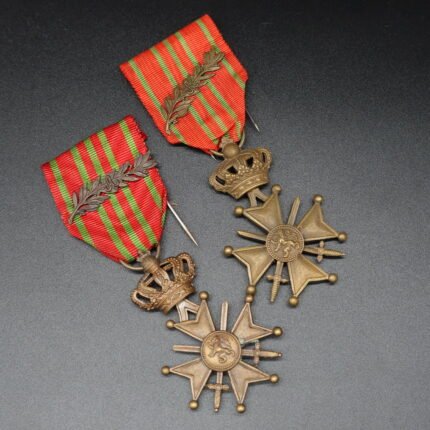
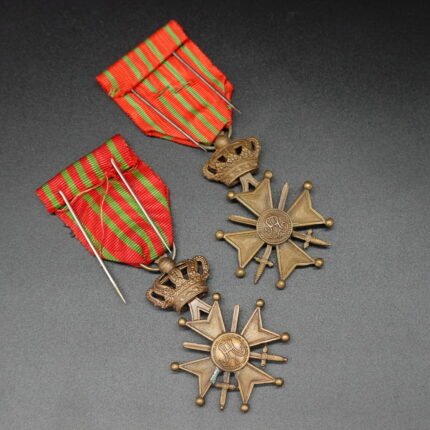
Belgian War Cross 1914–1918 (Oorlogskruis) (Price Per Piece)
€25,00Original Belgian War Cross 1914–1918 (Oorlogskruis) with Palm. The Belgian War Cross 1914–1918 (Oorlogskruis) is one of Belgium’s most prestigious First World War decorations. It was instituted by Royal Decree on 25 October 1915, inspired by the French Croix de Guerre established earlier that same year.
Awarded exclusively to individual members of the Belgian Army, Navy, and Air Force — and in exceptional cases to foreign Allied servicemen — the War Cross recognized acts of bravery in the face of the enemy.
Beyond gallantry, the decoration was also granted for:
-
Three years of front-line service (five front stripes)
-
Volunteers over 40 or under 16 years of age with at least 18 months of service
-
Escaped prisoners of war who rejoined their unit within three months
-
Soldiers unable to resume combat due to wounds sustained in action
The War Cross could be awarded posthumously. In such cases, the ribbon bears a black enamel bar. Non-commissioned officers and enlisted men who died from wounds received in combat were additionally appointed Knights of the Order of Leopold II with palm and also received the War Cross.
Citation Devices (Ribbon Distinctions)
Recipients mentioned in official dispatches could wear the following devices on the ribbon:
-
Bronze Lion – Mention in Regimental Orders
-
Silver Lion – Mention in Brigade Orders
-
Gold Lion – Mention in Divisional Orders
-
Bronze Palm – Mention in Army Orders
-
Five bronze palms replaced by one silver palm
-
Five silver palms replaced by one gold palm
These devices significantly enhance both the historical and collector value of the decoration.
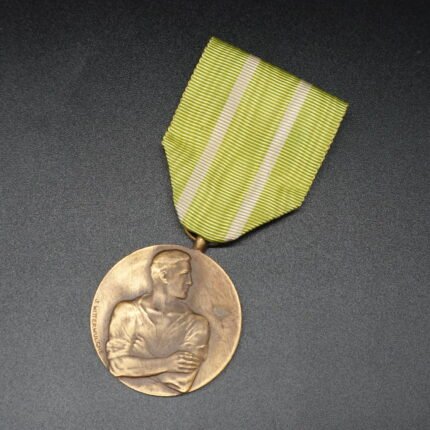
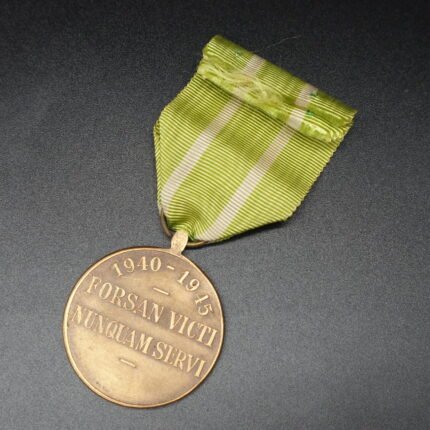
Belgian Civilian Disobedience Medal 1940–1945 (Werkweigeraarsmedaille)
€30,00Original Belgian Civilian Disobedience Medal 1940–1945 (Médaille du Réfractaire / Werkweigeraarsmedaille). This medal with green-white ribbon was awarded to civilians who for refused to work for the German occupiers.
The Civilian Disobedience Medal 1940–1945 is a Belgian war service decoration established by Royal Decree on 12 February 1951. It was awarded to Belgian civilians who refused to support the German war effort during the Second World War. This medal honors acts of civil resistance, defiance, and moral courage carried out under occupation.
Award Criteria
The medal was awarded to Belgian citizens who:
-
Refused to serve in German armed forces
-
Refused to work for the German occupiers
-
Refused to return to Germany after forced labour leave
It recognizes non-violent resistance and personal risk taken in opposition to the occupier.
Design & Characteristics
-
Material: Bronze
-
Diameter: approx. 37 mm
Obverse:
-
Torso of a civilian man with arms crossed
-
Head turned away in defiance, symbolizing resistance
- Designed by J. Witterwulghe (marked on the front of the medal)
Reverse:
-
Latin inscription: “FORSAN VICTI NUNQUAM SERVI” (“Perhaps defeated, but never slaves”)
-
Upper edge: “1940–1945”
Ribbon Variants
-
Base color: Green silk moiré
-
Two longitudinal stripes (3 mm wide), positioned near the edges
Condition: As seen in the images.
A powerful and meaningful Belgian WWII decoration, highly valued for its recognition of civil courage and resistance without weapons.
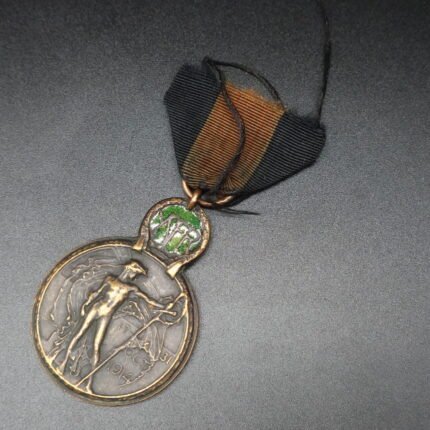
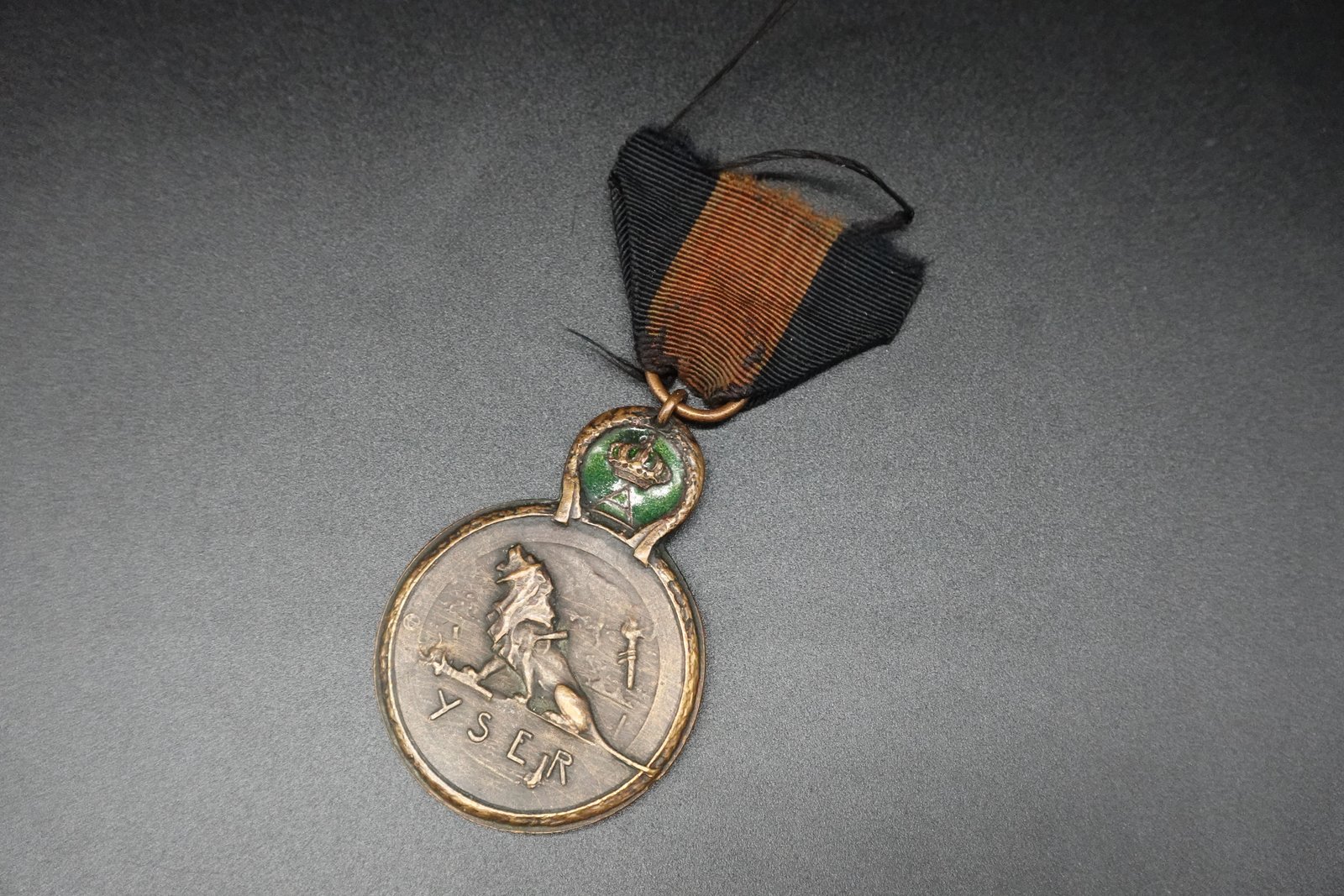
Belgian Yser Medal (Medaille van de IJzer)
€20,00Original Belgian Yser Medal (Medaille van de IJzer / Médaille de l’Yser). The Yser Medal is a Belgian World War I campaign decoration established on 18 October 1918. It was awarded for distinguished service during the Battle of the Yser (17–31 October 1914), where the Belgian Army successfully halted the German advance during the invasion of Belgium.
Award Criteria
The medal was awarded to:
-
Members of the Belgian Armed Forces who fought along the Yser River
-
Personnel who distinguished themselves during the battle
-
Allied foreign soldiers who participated in the engagement
The decoration could also be awarded posthumously.
In the official order of wear, the medal is placed immediately after the War Cross (Croix de Guerre).
Design & Characteristics
-
Material: Bronze with enamel detail
-
Diameter: approx. 35 mm
Obverse:
-
A helmeted nude figure holding a lance, symbolizing resistance and the halting of the German advance
-
Inscription: “17–31 OCT 1914”
-
Green enameled medallion with the inscription: “YSER”
Reverse:
-
A wounded Belgian lion lying on the bank of the Yser River, pierced by an arrow
-
Below: inscription “YSER”
-
Upper medallion: royal crown above the monogram “A” of King Albert I
Ribbon
-
Color: Red silk moiré
-
Edges: Wide black stripes
Symbolism:
-
Red – Blood shed during battle
-
Black – Mourning and sacrifice
Condition: As seen in the images.
A highly significant and iconic Belgian WWI decoration, representing one of the most defensive actions in Belgian military history.
Belgian War Volunteer Combatant Medal 1940–1945 (Medaille v.d. Strijdende Oorlogsvrijwilliger)
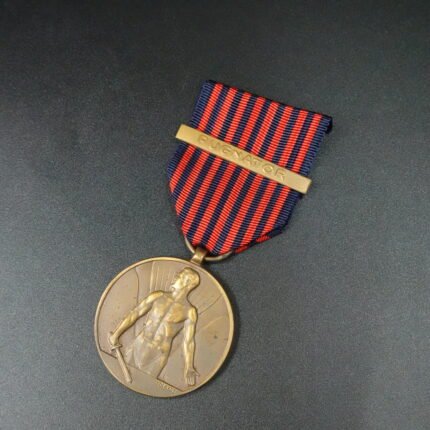
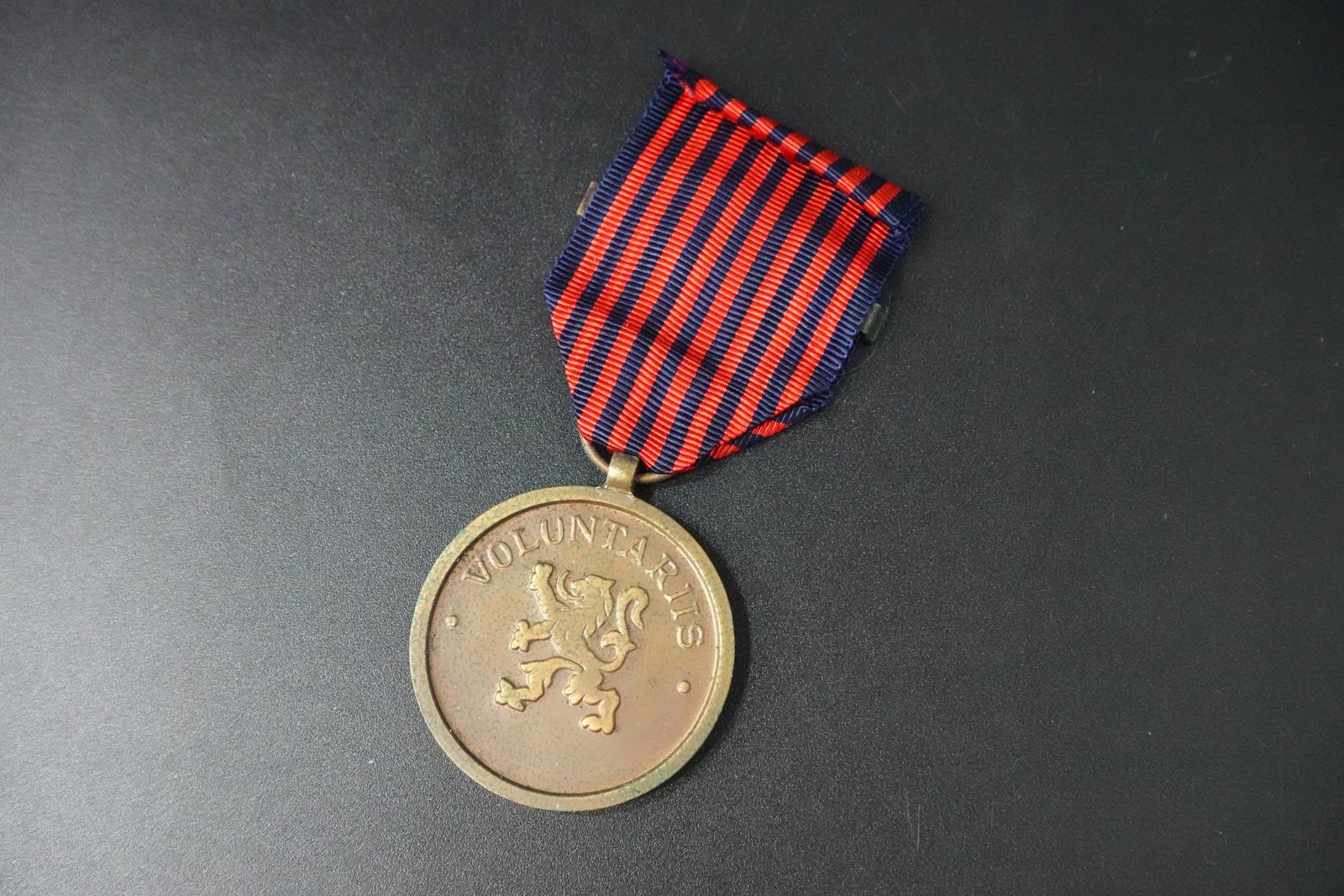
€20,00Original Belgian War Volunteer Combatant Medal (Médaille du Volontaire de Guerre Combattant / Medaille van strijdende Oorlogsvrijwilliger) with “Pugnator” Clasp. The War Volunteer Combatant Medal is a Belgian decoration established by Royal Decree on 8 April 1952, awarded to Belgian and foreign nationals who voluntarily enlisted in the Belgian Armed Forces for the duration of the war. This could be awarded to Korean War Volunteers but also retroactively to both 1st and/or the 2nd World War veterans.
The medal could also be awarded posthumously, recognizing those who made the ultimate sacrifice.
Award Criteria
The medal was granted to:
-
Belgian or foreign individuals who voluntarily enlisted
-
Personnel who committed to serve for the duration of the war (Korea, 1914-1918 and 1940–1945)
-
Combatants who actively participated in wartime operations
This version specifically recognizes combatant volunteers, distinguishing it from the general War Volunteer Medal.
Distinction: “Pugnator” Bar
The Combatant version is identical to the standard War Volunteer Medal but includes:
-
A 4 mm bronze and/or silver bar on the ribbon
-
Inscribed with “Pugnator” (Latin for “fighter” or “combatant”)
This device clearly identifies the recipient as a front-line combat volunteer.
Design & Characteristics
-
Material: Patinated bronze
-
Diameter: approx. 37 mm
Obverse:
-
Classical Belgian medal design (typically featuring national symbolism)
Reverse:
-
Central lion rampant
-
Circular Latin inscription: “VOLUNTARIIS” (To the volunteers)
Suspension:
-
Ring passing through a lateral barrel suspension
Ribbon
-
Width: approx. 38 mm
-
Composed of 15 narrow longitudinal stripes alternating:
-
Red and blue
-
-
With wider blue edge stripes (4 mm)
Condition: As seen in the images.
A highly collectible Belgian WWII medal, especially valued for its “Pugnator” combat distinction, making it more desirable among volunteer service decorations.
French Commemorative War Medal 1914–1918 (Médaille commémorative de la guerre 1914–1918)
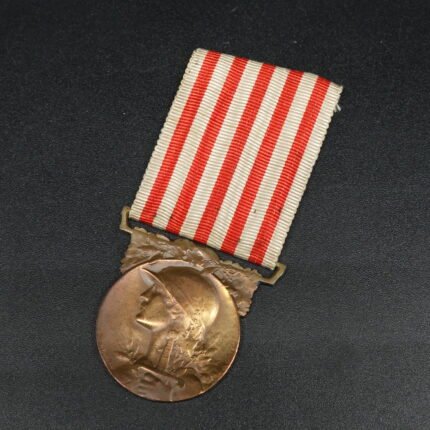
€15,00Original French Commemorative War Medal 1914–1918 (Médaille commémorative de la guerre 1914–1918). The Commemorative War Medal 1914–1918 is an official French decoration established by law on 23 June 1920, awarded to military personnel and qualifying civilians who served during the First World War.
It recognizes participation in the conflict between 2 August 1914 and 11 November 1918, regardless of length of mobilization.
Design & Characteristics
-
Material: Bronze
-
Diameter: approx. 33 mm
-
Designer: Pierre-Alexandre Morlon (selected from 73 proposals)
Obverse:
-
Profile of Minerva, symbolizing France
-
Wearing a 1915-style helmet
-
Crowned with laurel leaves and holding a sword
-
Surrounded by oak and bay leaves at the suspension
Reverse:
-
Inscription:
“GRANDE GUERRE 1914–1918” -
Encircled by:
“RÉPUBLIQUE FRANÇAISE”
Condition: As seen in the images.
A classic and widely collected First World War medal, representing the full spectrum of service in wartime France, from front-line soldiers to civilian contributors.
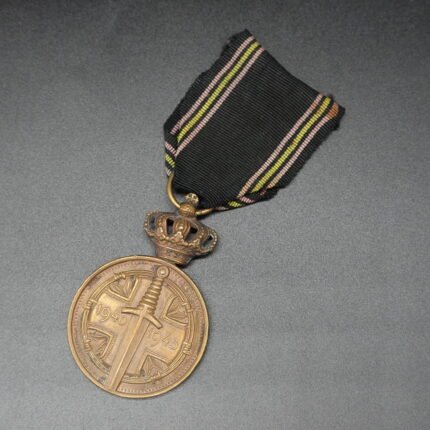
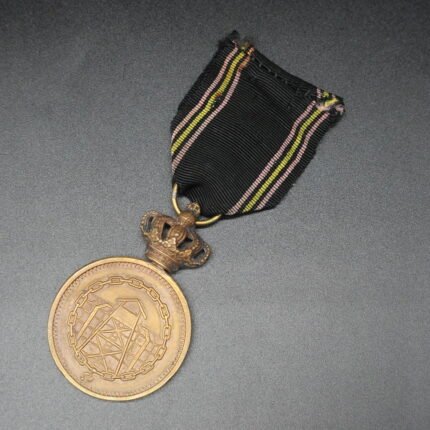
Belgian Prisoner of War Medal 1940–1945 (Krijgsgevangenenmedaille 1940–1945)
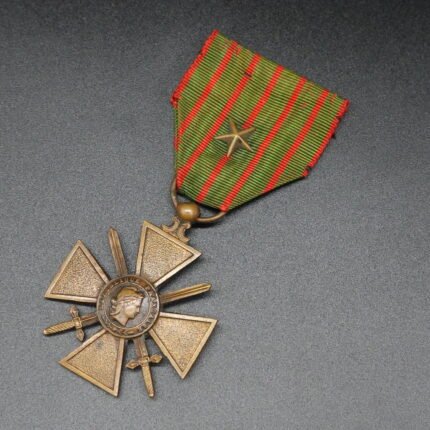
€17,50Original Belgian Prisoner of War Medal 1940–1945 (Krijgsgevangenenmedaille 1940–1945). The Prisoner of War Medal 1940–1945 is a Belgian war service decoration established by Royal Decree on 20 October 1947. It was awarded to members of the Belgian Armed Forces who were captured and held prisoner by Axis forces during the Second World War.
This medal honors the hardship, endurance, and sacrifice of those who experienced captivity during the war.
Award Criteria
The medal was awarded to:
-
Members of the Belgian Armed Forces
-
Personnel who were held as prisoners of war by Axis forces during WWII
Additional distinctions:
-
Duration of captivity could be indicated by small metal bars on the ribbon
Design & Characteristics
-
Material: Bronze
-
Diameter: approx. 38 mm
-
Total height (with crown): approx. 64 mm
Obverse:
-
A downward-pointing broadsword over a Greek cross
-
Dates “1940” and “1945” on the cross arms
-
Laurel leaves between the arms
-
Encircled by a ring of barbed wire, symbolizing imprisonment
Reverse:
-
Depiction of a guard tower and prison camp fence
-
Surrounded by a chain border, reinforcing the theme of captivity
Suspension:
-
Topped by a prominent royal crown, attached by a pin
Ribbon
-
Color: Black silk moiré
-
Edge stripes: Narrow stripes in red, black, yellow, black, red
-
Symbolism reflects Belgium and the dark experience of captivity
Condition: As seen in the images.
A powerful and historically significant Belgian WWII decoration, highly valued by collectors of prisoner-of-war and wartime hardship memorabilia.
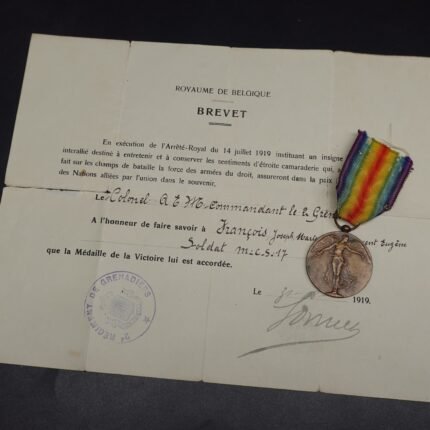
Set of Medal & Award Doc: Belgian Victory Medal 1914–1918 (2e Regiment Grenadiers – Antwerp, Ypres, Passendaele)
€30,00Set of an original Belgian Victory Medal 1914–1918 (“Overwinningsmedaille”) (Inter-Allied Victory Medal / “War for Civilization” Medal) + Oorkonde belonging to Soldier Francois of the 2e Regiment de Grenadiers which fought during the Siege of Antwerp, Battle of Ypres, Passendaele etc.
The Belgian Victory Medal 1914–1918, also known as the Inter-Allied Medal 1914–1918 or, after the reverse inscription, the “War for Civilization” Medal, is Belgium’s official Inter-Allied decoration awarded following the Allied victory in the First World War.
Established on 15 July 1919 by King Albert I of the Belgians, this prestigious medal was granted to all members of the mobilized Belgian Army who served between 1 August 1914 and 11 November 1918. Approximately 300,000 to 350,000 veterans received this decoration.
Subsequent decrees extended eligibility to participants in the African campaigns against German colonial forces, as well as civilians who contributed to the war effort, including members of the merchant navy and fishermen.
The medal was worn after the Yser Medal or the Yser Cross in the official order of precedence. In civilian dress, a small ribbon rosette in the medal’s colors was worn in the buttonhole. For formal evening wear, a miniature version of the medal was suspended from a small ribbon or chain. On military uniforms, recipients wore the ribbon bar (baton).
A highly desirable addition for collectors of World War I decorations, Belgian military history, or Inter-Allied commemorative medals.
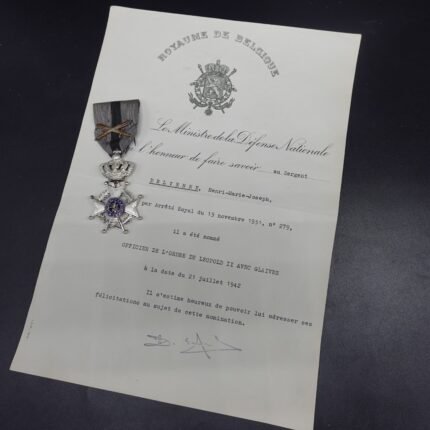
Set of Medal & Award Doc: Order of Leopold II (Rank of Knight)
€40,00Original Order of Leopold II (Rank of Knight) (Order van Leopold II (Ridder)) + Oorkonde voor Sergent Henri Delvenne (authorised 15 november 1951 n. 279 for nomination on 21 july 1942).
The Order of Leopold II is a Belgian civil order of chivalry, originally established in 1900 by King Leopold II in the Congo Free State, then his personal possession. The order’s motto, “L’Union fait la force” / “Eendracht maakt macht” (“Unity makes strength”), reflects the Belgian national ideal.
Initially awarded for services rendered to Congo and to the sovereign, the order was incorporated into the Belgian honors system after Congo became a Belgian colony in 1908. Following Congo’s independence, the Order of Leopold II remained part of the Belgian national system of honors. Today, it is one of Belgium’s three national orders, alongside the Order of the Crown and the Order of Leopold.
The Order of Leopold II is awarded to civilians and military personnel for distinguished service to the King and as a mark of his personal esteem.
Version Offered: Knight (Ridder)
-
Pre-1952 without “Eendracht maakt Macht”
-
Includes Crossed Swords!
The Knight wears the insignia on a 37 mm wide ribbon on the left breast.
Distinctive characteristics of the Knight class:
-
Cross in silvered metal (not gilded)
-
Crown suspension in silver
-
Blue ribbon with a central black stripe
-
Worn as a breast decoration
A refined and historically significant decoration, ideal for collectors of Belgian orders and colonial-era honors.
Condition: Please, see the damage to the enamel in the middle!
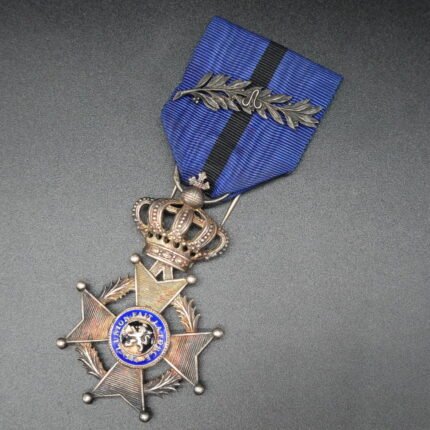
Order of Leopold II (Rank of Knight) (Order van Leopold II (Ridder))
€25,00Original Order of Leopold II (Rank of Knight) (Order van Leopold II (Ridder)). The Order of Leopold II is a Belgian civil order of chivalry, originally established in 1900 by King Leopold II in the Congo Free State, then his personal possession. The order’s motto, “L’Union fait la force” / “Eendracht maakt macht” (“Unity makes strength”), reflects the Belgian national ideal.
Initially awarded for services rendered to Congo and to the sovereign, the order was incorporated into the Belgian honors system after Congo became a Belgian colony in 1908. Following Congo’s independence, the Order of Leopold II remained part of the Belgian national system of honors. Today, it is one of Belgium’s three national orders, alongside the Order of the Crown and the Order of Leopold.
The Order of Leopold II is awarded to civilians and military personnel for distinguished service to the King and as a mark of his personal esteem.
Version Offered: Knight (Ridder)
-
Pre-1952 without “Eendracht maakt Macht”
-
Includes Palm!
The Knight wears the insignia on a 37 mm wide ribbon on the left breast.
Distinctive characteristics of the Knight class:
-
Cross in silvered metal (not gilded)
-
Crown suspension in silver
-
Blue ribbon with a central black stripe
-
Worn as a breast decoration
A refined and historically significant decoration, ideal for collectors of Belgian orders and colonial-era honors.
Condition: Please, see the damage to the enamel in the middle!
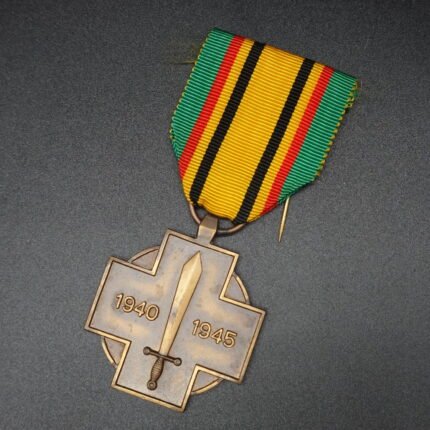
Belgian Military Combatant’s Medal 1940–1945 (Medaille van de Militaire Strijder 1940–1945)
€25,00The Military Combatant’s Medal 1940–1945 (Medaille van de Militaire Strijder 1940–1945). This is a Belgian war decoration established by Royal Decree on 19 December 1967. It was awarded to members of the Belgian Armed Forces who continued the fight against Axis forces from the United Kingdom during the Second World War.
This medal specifically honors those who served in exile and contributed to the liberation effort as part of the Allied forces.
Award Criteria
The medal was awarded to:
-
Members of the Belgian Armed Forces
-
Personnel who served and fought from the United Kingdom during WWII
It recognizes the contribution of Belgian forces who regrouped abroad and continued military operations despite the occupation of Belgium.
Design & Characteristics
-
Material: Bronze
-
Width: approx. 38 mm
Obverse:
-
Greek cross with semi-circular extensions between the arms
-
Central relief of a lion rampant, symbolizing Belgium
Reverse:
-
Vertical broadsword
-
Flanked by the dates “1940” and “1945”
Ribbon
-
Width: approx. 36 mm
-
Distinctive multicolored pattern (left to right)
The ribbon incorporates the Belgian national colors and symbolic wartime elements.
Condition: As seen in the images.
A historically important Belgian WWII decoration, especially valued for its connection to the Belgian forces in exile and Allied operations.
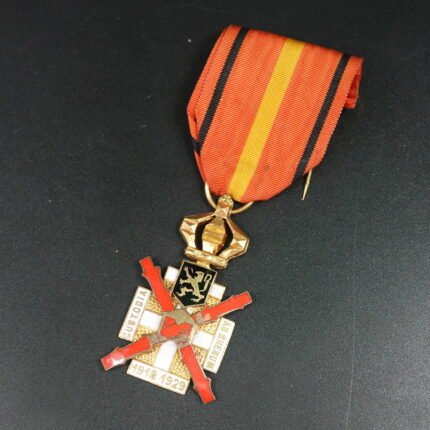
Rhine Occupation Medal 1919–1929 (Medaille van de Rijnbezetting 1919–1929)
€27,50It was issued in 1945 to Belgian military personnel who served during the occupation of the German Rhineland following the First World War.
Note: Damage to the enamel in the middle (see photo!)
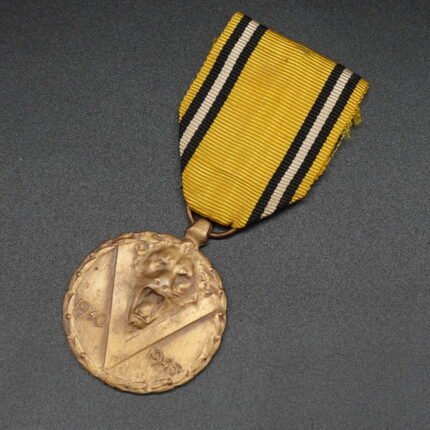
Commemorative Medal of the 1940–1945 War (Herinneringsmedaille van de Oorlog 1940–1945)
€15,00Original Commemorative Medal of the War 1940–1945 (Herinneringsmedaille van de Oorlog 1940–1945). This is an official Belgian military decoration established by Royal Decree of the Prince Regent on 16 February 1945. It was awarded to Belgian servicemen and women who served during the Second World War.
The medal was also granted to members of the Belgian Resistance, the Merchant Navy, and later to certain foreign recipients of the Belgian War Cross.
Award Criteria
This medal recognized participation and service during WWII and was awarded to:
-
Members of the Belgian Armed Forces
-
Resistance fighters
-
Personnel of the Belgian Merchant Navy supporting the Allied cause
-
Eligible foreign recipients (by later decree)
Design & Characteristics
-
Material: Bronze
-
Diameter: approx. 38 mm
Obverse:
-
Prominent “V” for Victory
-
Inside the V: a roaring Belgian lion
-
Dates “1940” (left) and “1945” (right)
-
Surrounded by a laurel wreath, symbolizing victory and honor
Reverse:
-
Bilingual inscriptions:
-
“MEDAILLE COMMEMORATIVE” (French)
-
“HERINNERINGSMEDAILLE” (Dutch)
-
-
Central text between bars:
-
“DE LA GUERRE / VAN DER OORLOG”
-
-
Center: “1940–1945”
-
Encircled by a raised border
Ribbon
-
Base color: Yellow moiré silk
-
Edges: Stripes of yellow, black, white, and black
-
Distinctive and symbolic of Belgium during WWII
Ribbon Devices
Various devices and bars could be added to the ribbon to denote specific wartime service, campaigns, or distinctions, making each medal potentially unique to the recipient’s service record.
Condition: As seen in the images.
A highly collectible and historically significant Belgian WWII decoration, ideal for collectors of resistance, military, and Allied wartime memorabilia.
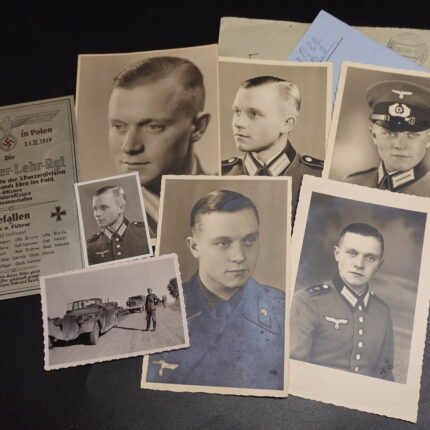
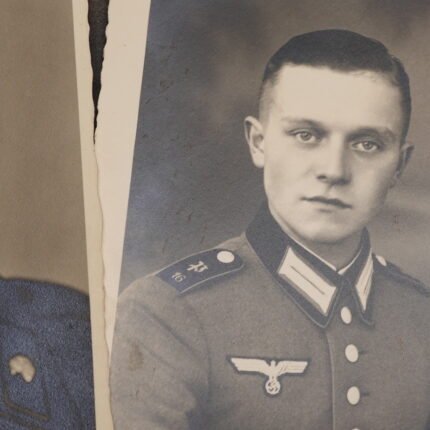
Panzer-Lehr-Rgt. Soldier Grouping – Photos, Feldpost & Aluminum Memorial Card (Rare!)
€0,01Exceptional and rarely encountered original grouping belonging to a soldier of the Panzer-Lehr-Regiment (later associated with Panzerjäger-Abteilung 16, as indicated by the shoulder boards visible in one of the portraits).
This lot includes:
-
7 original period photographs (including uniform portraits)
-
2 original Feldpost letters
-
1 aluminum (Alu) remembrance/memorial card
Such complete personal groupings from Panzer-Lehr personnel are scarce on the market, making this a highly desirable set for advanced collectors of German WWII militaria.
Condition: All items are in original, untouched condition as shown in the photos.
Offered on consignment.
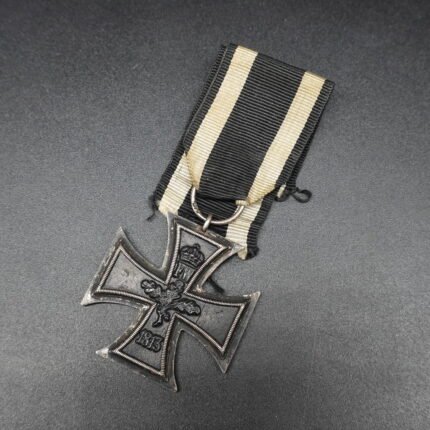
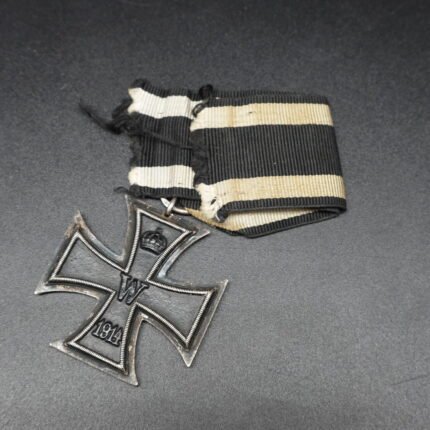
Eisernes Kreuz 2. Klasse (1914) (“K.A.G.” Marked)
€85,00Original Eisernes Kreuz 2. Klasse (1914) (Iron Cross 2nd Class – 1914) on full ribbon and maker marked “K.A.G.”. Comes with ribbon. Condition as seen.
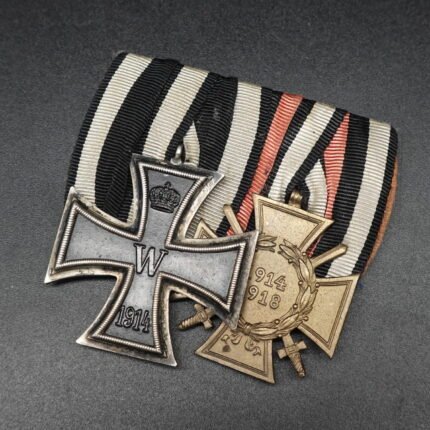
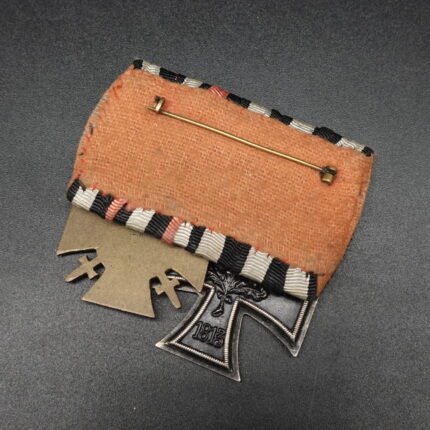
Medalbar: Eisernes Kreuz 2. Klasse (1914) & Ehrenkreuz für Frontkämpfer
€95,00Original Medalbar of the Eisernes Kreuz 2. Klasse (1914) (Iron Cross 2nd Class – 1914) and Ehrenkreuz für Frontkämpfer (Honor Cross for Combatants). Condition as seen.
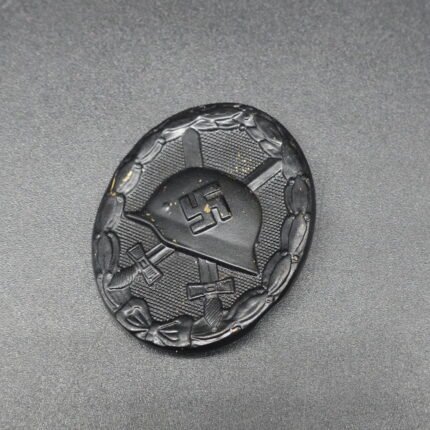
Verwundetenabzeichen in Schwarz (Unmarked)
€45,00Original Verwundetenabzeichen in Schwarz (Wound Badge in Black), unmarked. In Near Mint condition! Condition as seen.
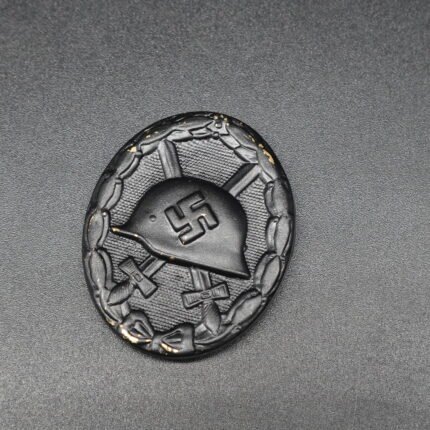
Verwundetenabzeichen in Schwarz (Unmarked)
€45,00Original Verwundetenabzeichen in Schwarz (Wound Badge in Black), unmarked. In Near Mint condition! Condition as seen.
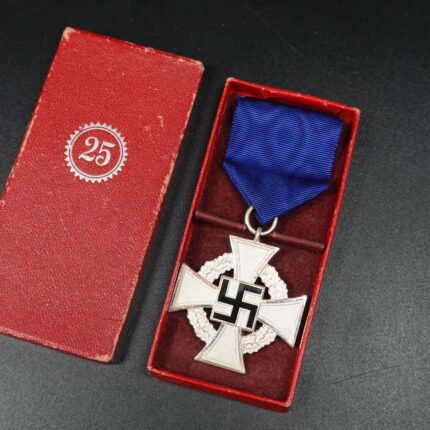
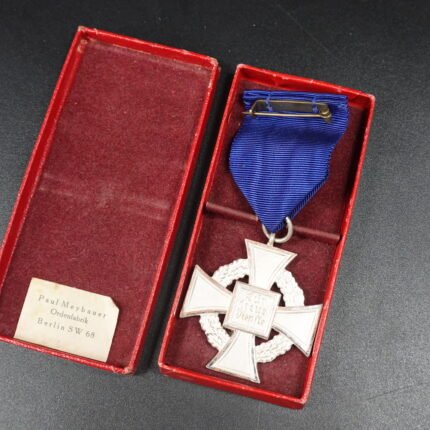
Treudienst-Ehrenzeichen für 25 Jahre (Cased, Paul Meybauer)
€65,00Original Treudienst-Ehrenzeichen für 25 Jahre (25 Years Loyal Service Award) with casing, maker marked with Paul Meybauer, Ordenfabrik, Berlin! NEAR MINT. Condition as seen.
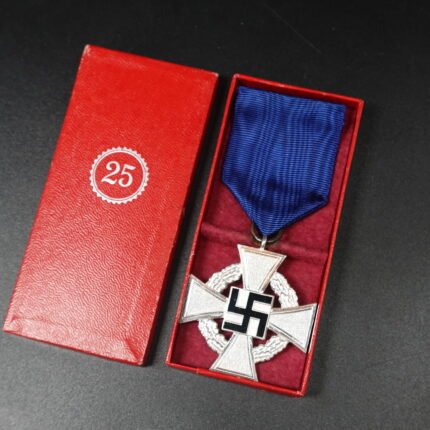
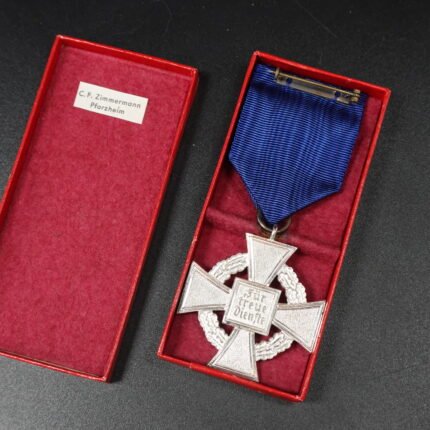
Treudienst-Ehrenzeichen für 25 Jahre (Cased, C.F. Zimmermann)
€65,00Original Treudienst-Ehrenzeichen für 25 Jahre (25 Years Loyal Service Award) with casing, maker marked with C.F. Zimmermann, Pforzheim! NEAR MINT. Condition as seen.
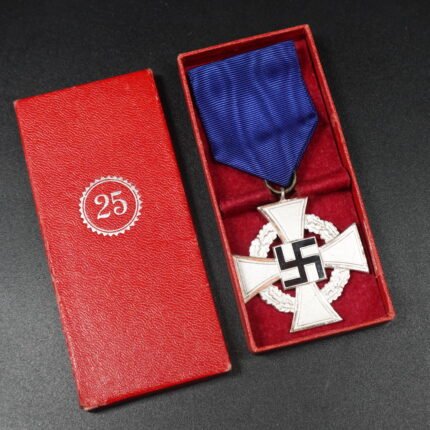
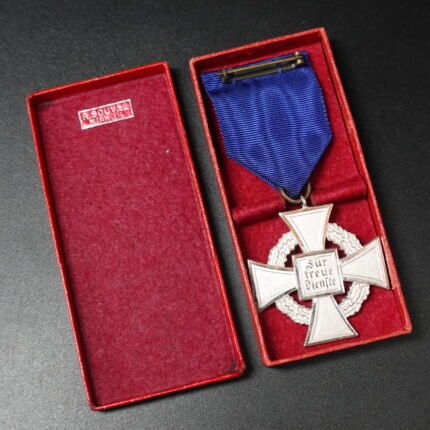
Treudienst-Ehrenzeichen für 25 Jahre (Cased, Rudolf Souval)
€65,00Original Treudienst-Ehrenzeichen für 25 Jahre (25 Years Loyal Service Award) with casing, maker marked with Rudolf Souval, Wien! NEAR MINT. Condition as seen.
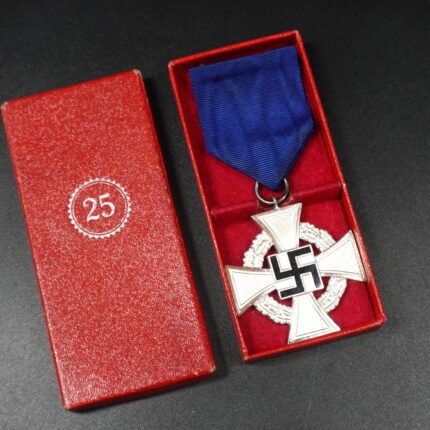
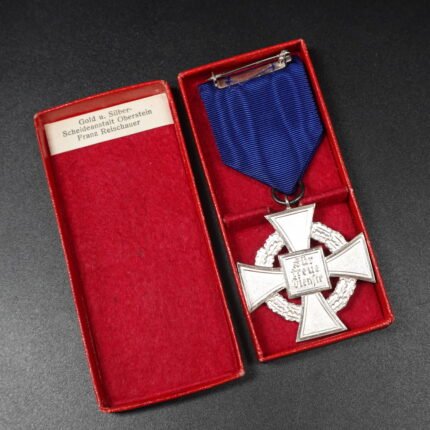
Treudienst-Ehrenzeichen für 25 Jahre (Cased, Franz Reischauer)
€65,00Original Treudienst-Ehrenzeichen für 25 Jahre (25 Years Loyal Service Award) with casing, maker marked with Gold u. Silber Scheideanstalt Oberstein Franz Reischauer! NEAR MINT. Condition as seen.
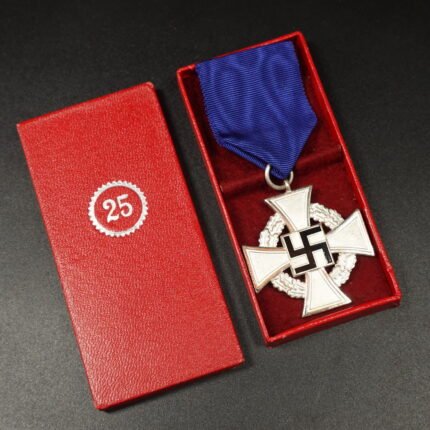
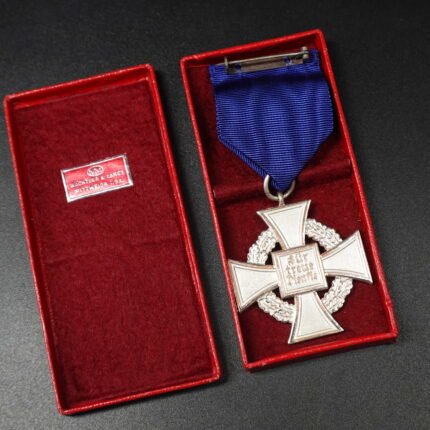
Treudienst-Ehrenzeichen für 25 Jahre (Cased, Wächtler & Lange)
€65,00Original Treudienst-Ehrenzeichen für 25 Jahre (25 Years Loyal Service Award) with casing, maker marked with Rudolf Wächtler & Lange! NEAR MINT. Condition as seen.
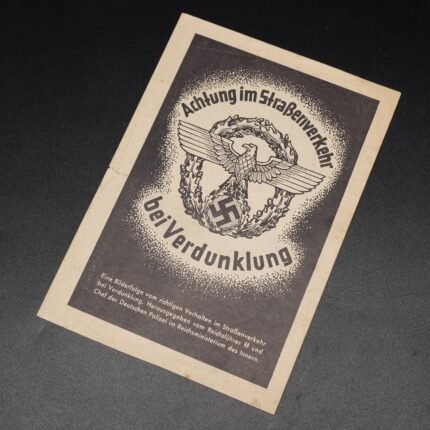
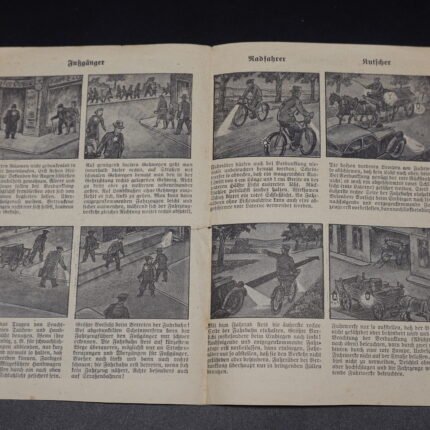
“Achtung im Straßenverkehr bei Verdunklung” Small Folder
€35,00Original Small Folder “Achtung im Straßenverkehr bei Verdunklung” , released by the Reichsführer-SS und Chef der Deutschen Polizei in Reichsministerium des Innern. Ca. Postcardsize.
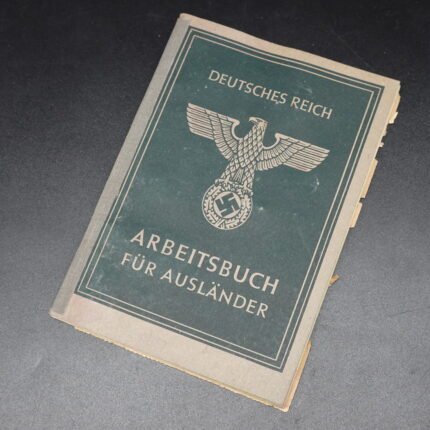
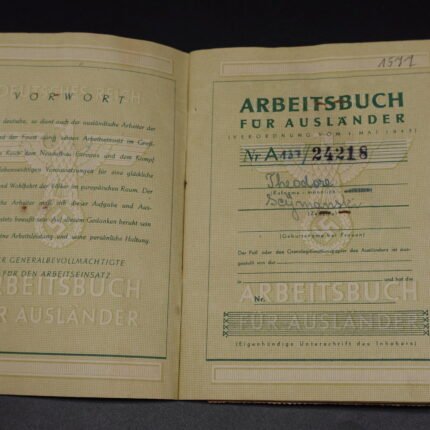
Arbeitsbuch für Ausländer (French, Working in Gelsenkirchen 1944-45)
€95,00Original Arbeitsbuch für Ausländer (Work book for Foreigners) of the Third Reich for a French man (born in France) and working in Gelsenkirchen 1944-45. Condition as seen.
This is sold on commission.
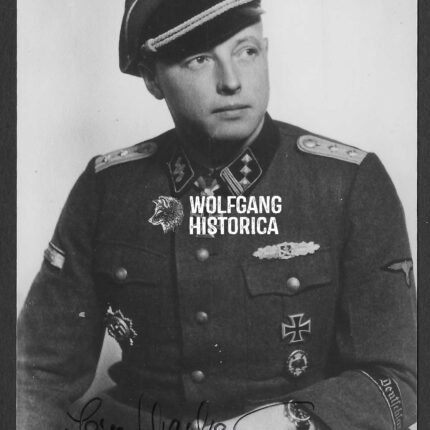
Heinz Macher – SS-Panzer-Grenadier-Regiment “Deutschland” (EL+NKIG)
€0,01Original Postwar Signature on a Postwar Photo of Heinz Macher. SS-Sturmbannführer Heinz Macher (31.12.1919 † 21.12.2001) earned the Ritterkreuz on April 3, 1943 as SS-Untersturmführer und Kompanieführer of the 16. Kompanie/ SS-Panzer-Grenadier-Regiment 3 “Deutschland” and the Eichenlaub on August 19, 1944 as SS-Obersturmführer und Kompaniechef of the 16. Kompanie/ SS-Panzer-Grenadier-Regiment 3 “Deutschland” of the 2. SS-Panzer-Division “Das Reich”. Macher also earned the Nahkampfspange in Gold on October 18, 1944. Postcardsize. Condition as seen.
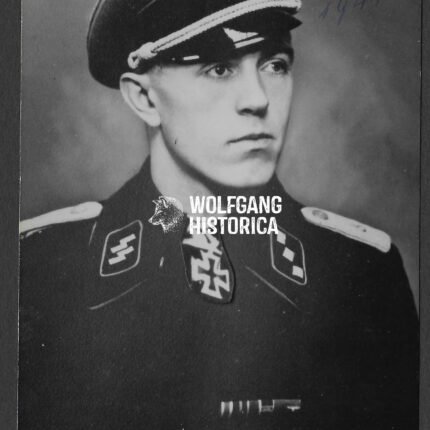
Paul Senghas – SS-Panzer-Regiment 5 “Wiking”
€0,01Original Postwar Signature on a Postwar Photo of Paul Senghas. SS-Hauptsturmführer Paul Senghas (31.01.1916 † 06.11.1996) earned the Ritterkreuz des Eisernen Kreuzes on December 11, 1944 as SS-Obersturmführer und Führer of the I. Abteilung/ SS-Panzer-Regiment 5 of the 5. SS-Panzer-Division “Wiking”. Condition as seen. Postcardsize.
“On the 18.08.1944 the enemy advanced towards the Warsaw-Radzymin-Wyszkow road with massive forces and strong air support. At the time the 5. SS-Panzer-Division ‘Wiking’ was located along the general line Roszcep-Trojany-Debynki. At the time SS-Obersturmführer Senghas stood as the leader of the Stabskompanie along with the supply units of the I./SS-Panzer-Regiment 5 in Zazdroso (1.5 km east of Niegow).
At 11:00 he received a message which reported the Russians as having broken through in battalion strength to a point 1 km east of the railway embankment. A wide gap existed towards the left neighbour, and there was the danger that the Russians would block the main road and thrust into the left flank of the Division. Recognizing this danger, Senghas made the decision to engage the enemy with the handful of men in the supply units at hand (despite their lack of heavy infantry weapons) and bring the Russians to a halt.
Going into position at the railway embankment, he let the Russians approach to within very close range and then smashed their attack. Reinforcements could not be brought up, and so Senghas defended with his handful of men for the remainder of that day and also the two following days, fighting off strong enemy attacks with only rifles, sub-machine guns and close combat weapons. During this time 2 Panzer IVs, which had been in the repair shop and were only conditionally operational, were brought into the fight. 2 Sherman tanks and 1 T-34 were destroyed immediately after they appeared. The Russians took heavy losses in men and ceased their attacks.
By his own initiative and personal devotion to duty, Senghas thus brought the 3 days of close combat to a conclusion. An enemy breakthrough was prevented and the danger to the left flank of the Division removed. Senghas is one of the oldest Eastern front combat veterans, who has mastered many critical situations through swift decisiveness and bold action while ruthlessly demanding the utmost of himself.”
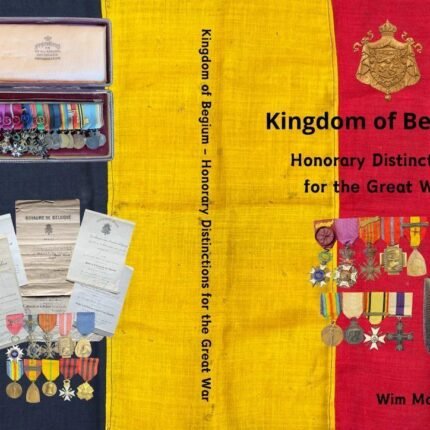
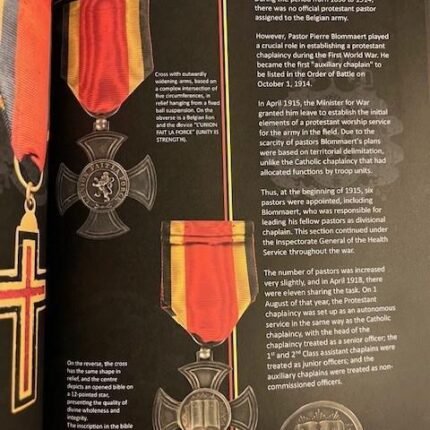
*BACK AVAILABLE / LAST CHANCE* Kingdom of Belgium – Honorary Distinctions for the Great War (Book)
€65,00Kingdom of Belgium – Honorary Distinctions for the Great War
By Wim Martens | Limited Conference Edition | 217 Pages
A highly sought-after reference work dedicated to Belgian First World War honors and decorations. Published to coincide with the XVII European Conference for Phaleristics in Brussels (May–June 2024), this volume provides a comprehensive and meticulously organized overview of official Belgian wartime distinctions.
Arranged chronologically by date of institution, the book presents detailed coverage of orders, medals, and decorations, including recognized variants, accompanying certificates, and period imagery of recipients. In addition, select service insignia and several unofficial yet tolerated distinctions are thoughtfully documented, offering a broader perspective valuable to collectors and historians alike.
Richly illustrated and expertly compiled, this 217-page publication serves as both a scholarly reference and a visually engaging catalog of Belgium’s Great War honors system.
Highlights:
-
Complete overview of Belgian WWI honorary distinctions
-
Chronological structure for ease of reference
-
High-quality photographs of medals, variants, and documents
-
Includes service insignia and rare unofficial distinctions
-
Features historical images of decorated individuals
-
Published for a specialized European phaleristics conference
Condition: New
Availability: Very difficult to find — especially outside specialist circles.
An essential addition to any serious phaleristics library or First World War collection.
Note: Shipping prices might not be final to some countries due weight and size!
Belgian Volunteer Combatant’s Medal 1914–1918 (Medaille van de Vrijwillige Strijder)
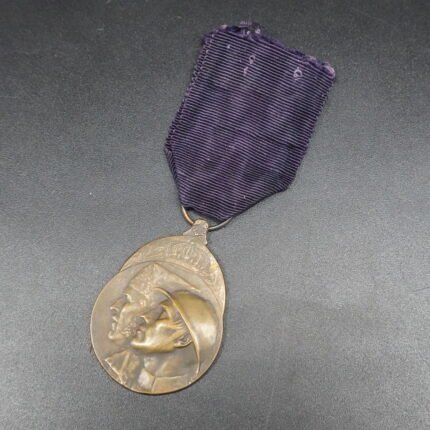
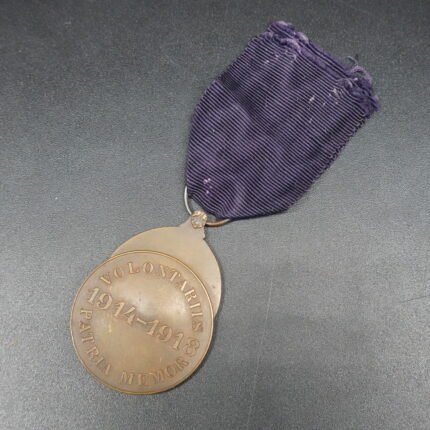
€35,00Original Volunteer Combatant’s Medal 1914–1918 (Medaille van de Vrijwillige Strijder). The Volunteer Combatant’s Medal 1914–1918 is a Belgian wartime service decoration established by Royal Decree on 17 June 1930. It was awarded to Belgian citizens and foreign nationals who voluntarily enlisted in the Belgian Armed Forces during the First World War.
This medal honors those who chose to serve of their own free will, often under extremely dangerous front-line conditions.
Award Criteria
The medal was granted to individuals who:
-
Voluntarily enlisted and served in a combat unit in a danger zone for at least 6 months
Eligibility was later extended to include:
-
Volunteers over 40 years old with at least 3 months of front-line service
-
Volunteers over 50 years old with at least 1 month of front-line service
-
Medical personnel with at least 2 years of service in non-occupied Belgium
-
Young volunteers who fled occupied territory to enlist
-
Wounded personnel
-
Posthumous awards
Design & Characteristics
-
Material: Bronze
-
Shape: Circular medal (36 mm) with a distinctive crescent-shaped upper section, giving a total height of approx. 50 mm
Obverse:
-
Foreground: head of a WWI Belgian soldier wearing a helmet, facing left
-
Background: head of an 1830 Belgian revolutionary volunteer, symbolizing continuity of national struggle
-
Upper crescent: Belgian crown above laurel branches
Reverse:
-
Latin inscription along the edge:
“VOLUNTARIIS PATRIA MEMOR”
(“The homeland remembers its volunteers”) -
Center: the dates 1914–1918
Ribbon
-
Color: Royal blue moiré silk
-
Simple and elegant, emphasizing the honor of voluntary service
Condition: As seen in the images.
A historically rich and symbolic Belgian decoration, highly desirable for collectors of First World War and volunteer service medals.
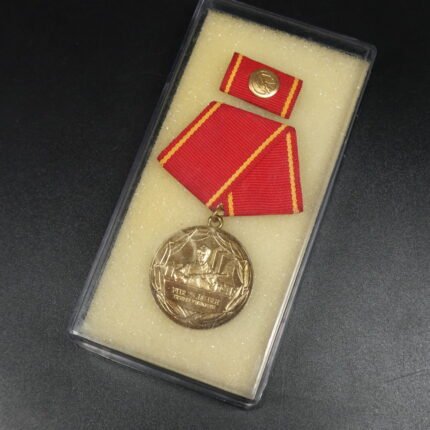
Medal for Faithful Service in the Combat Groups of the Working Class – Gold (20 Years)
€22,00The Medal for Faithful Service in the Combat Groups of the Working Class – Gold (20 Years) is a higher-grade long-service decoration of the German Democratic Republic (DDR), awarded to members of the Kampfgruppen der Arbeiterklasse for two decades of loyal service.
This version is the post-1978 type, distinguished by the gold circular device on the ribbon, indicating the 20-year service level.
Description
-
Country: German Democratic Republic (East Germany)
-
Organization: Kampfgruppen der Arbeiterklasse
-
Class: Gold – 20 Years
-
Period: Post-1978 issue
-
Material: Gold-colored metal
Design:
-
Obverse features DDR state and militia symbolism
-
Reverse bears inscription referring to faithful service (treue Dienste)
-
Standard Kampfgruppen medal design
Ribbon:
-
Red-toned ribbon with distinguishing gold circular device
-
Device signifies 20 years of service
-
Characteristic of later (post-1978) awards
Historical Context
The Kampfgruppen der Arbeiterklasse were a key paramilitary organization composed of civilian workers tasked with protecting industrial and political infrastructure in East Germany.
In 1978, a revised system introduced service indicators on the ribbon, such as the gold circular device for 20 years. This allowed for clearer visual distinction between long-service levels.
The 20-year gold medal reflects long-term dedication, reliability, and loyalty, placing the recipient among the more experienced members of the organization.
A desirable later-issue DDR medal, especially attractive for collectors focusing on variant ribbon devices and long-service awards.
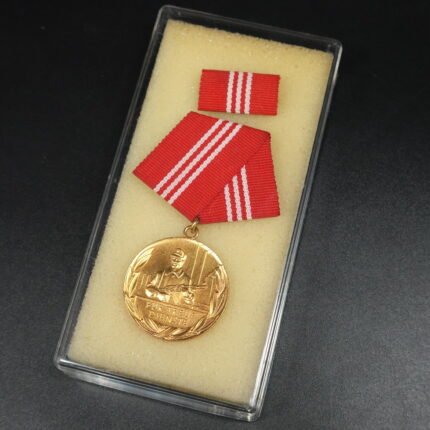
DDR Medal for Faithful Service in the Combat Groups of the Working Class – Gold
€20,00The Medal for Faithful Service in the Combat Groups of the Working Class – Gold is the highest class of this DDR long-service decoration, awarded to members of the Kampfgruppen der Arbeiterklasse, the paramilitary workers’ militia of East Germany.
This gold class medal recognizes long-term dedication, loyalty, and exemplary service, representing the top tier within the Kampfgruppen long-service award system.
Description
-
Country: German Democratic Republic (East Germany)
-
Organization: Kampfgruppen der Arbeiterklasse (Combat Groups of the Working Class)
-
Class: Gold
-
Type: Long Service Award
Design:
-
Obverse typically features DDR state and militia symbolism
-
Reverse bears inscription referring to faithful service (treue Dienste)
-
Identical design across all classes, distinguished by gold finish
Historical Context
The Kampfgruppen der Arbeiterklasse were an important paramilitary force composed of civilian workers, responsible for protecting key industries and supporting internal security during the Cold War.
The gold class medal was awarded to members who completed extended and exemplary service, demonstrating exceptional commitment and reliability within the organization.
Condition: As seen in the images.
A top-tier DDR decoration, highly desirable for collectors of East German militaria and Cold War history.
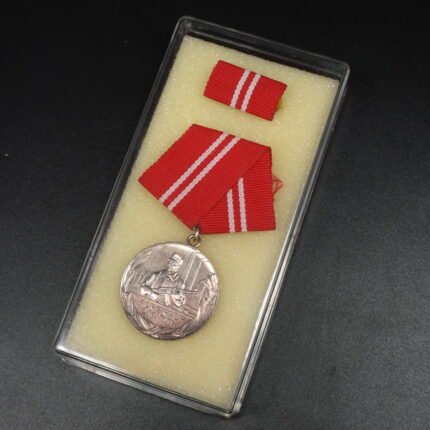
DDR Medal for Faithful Service in the Combat Groups of the Working Class – Silver
€17,00The Medal for Faithful Service in the Combat Groups of the Working Class – Silver is an official decoration of the German Democratic Republic (DDR), awarded to members of the Kampfgruppen der Arbeiterklasse, the paramilitary workers’ militia.
This silver class medal represents a higher level of long-service recognition, awarded to members who demonstrated sustained loyalty, discipline, and commitment over an extended period of service.
Description
-
Country: German Democratic Republic (East Germany)
-
Organization: Kampfgruppen der Arbeiterklasse (Combat Groups of the Working Class)
-
Class: Silver
-
Type: Long Service Award
Design:
-
Obverse typically features DDR state and militia symbolism
-
Reverse bears inscription referring to faithful service (treue Dienste)
-
Same design as the bronze class, distinguished by silver finish
Historical Context
The Kampfgruppen der Arbeiterklasse played a key role in protecting industrial infrastructure and supporting internal security within East Germany during the Cold War.
The silver class medal was awarded to personnel who showed continued dedication and reliability, representing a step above the bronze class within the long-service award hierarchy.
Condition: As seen in the images.
A desirable DDR paramilitary decoration, ideal for collectors of East German Cold War and workers’ militia memorabilia.
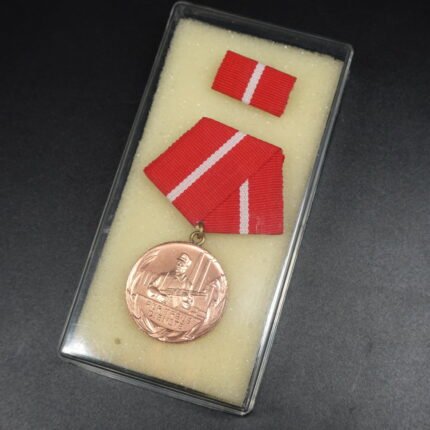
DDR Medal for Faithful Service in the Combat Groups of the Working Class – Bronze
€15,00The Medal for Faithful Service in the Combat Groups of the Working Class – Bronze is an official decoration of the German Democratic Republic (DDR), awarded to members of the Kampfgruppen der Arbeiterklasse, the paramilitary workers’ militia.
This bronze class medal represents faithful and reliable service, forming the entry-level award within the long-service recognition system of the organization.
Description
-
Country: German Democratic Republic (East Germany)
-
Organization: Kampfgruppen der Arbeiterklasse (Combat Groups of the Working Class)
-
Class: Bronze
-
Type: Long Service Award
Design:
-
Obverse typically features DDR state symbolism and militia imagery
-
Reverse bears inscription referring to faithful service (treue Dienste)
-
Standard DDR medal construction and style
Historical Context
The Kampfgruppen der Arbeiterklasse were a paramilitary force composed mainly of civilian workers, tasked with protecting factories and supporting internal security in East Germany.
The bronze class medal was awarded for initial long-service recognition, honoring members who demonstrated discipline, loyalty, and commitment to the socialist state.
Condition: As seen in the images.
A solid and historically interesting DDR medal, ideal for collectors of East German paramilitary and Cold War memorabilia.
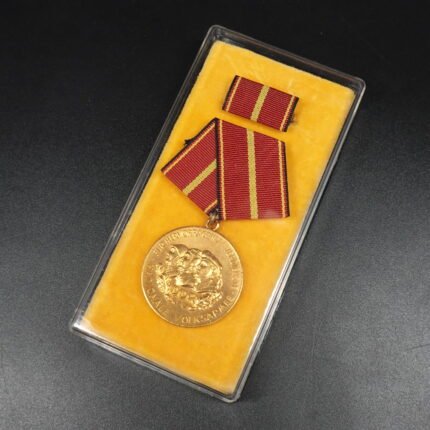
DDR Merit Medal of the National People’s Army – Gold
€30,00The Merit Medal of the National People’s Army – Gold is the highest class of this official DDR decoration, awarded to members of the Nationale Volksarmee (NVA) for outstanding merit and exceptional service.
Designed by Berlin graphic artist Paul Gensch, this medal forms part of a three-tier system (Bronze, Silver, Gold) and represents the top level of recognition within this award category.
Description
-
Country: German Democratic Republic (East Germany)
-
Branch: National People’s Army (NVA)
-
Class: Gold (Gold)
-
Diameter: approx. 35 mm
-
Material: Gilded metal
Design & Details
Obverse:
-
Profiles of a soldier, airman, and sailor, representing the land, air, and naval forces
-
Inscription: “FÜR HERVORRAGENDE VERDIENSTE” (For Outstanding Merit)
-
Lower inscription: “NATIONALE VOLKSARMEE”
-
“DDR” beneath the figures
-
Flanked by oak leaves with acorns, symbolizing strength and endurance
Reverse:
-
State coat of arms of the DDR
-
Inscription:
“FÜR DEN SCHUTZ DER ARBEITER- UND-BAUERN-MACHT”
(For the protection of the workers’ and farmers’ power) -
Surrounded by a laurel wreath, representing honor and achievement
Historical Context
The Nationale Volksarmee (NVA) was the armed forces of East Germany and a key component of the Warsaw Pact during the Cold War.
The gold class medal was awarded to personnel who demonstrated exceptional leadership, performance, and long-term contribution, placing them among the most distinguished members of the NVA.
Condition: As seen in the images.
A top-tier DDR military decoration, highly desirable for advanced collectors of NVA and Cold War militaria.
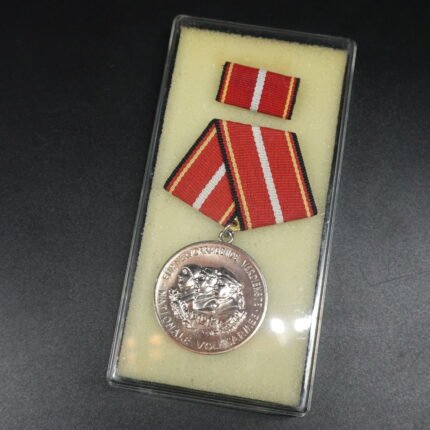
DDR Merit Medal of the National People’s Army – Silver
€25,00Design & Details
Obverse:
-
Profiles of three servicemen: a soldier, airman, and sailor, symbolizing the land, air, and naval forces
-
Inscription: “FÜR HERVORRAGENDE VERDIENSTE” (For Outstanding Merit)
-
Lower inscription: “NATIONALE VOLKSARMEE”
-
“DDR” beneath the figures
-
Flanked by oak leaves with acorns, symbolizing strength and endurance
Reverse:
-
State coat of arms of the DDR
-
Inscription:
“FÜR DEN SCHUTZ DER ARBEITER- UND-BAUERN-MACHT”
(For the protection of the workers’ and farmers’ power) -
Surrounded by a laurel wreath, representing honor and achievement
Historical Context
The Nationale Volksarmee (NVA) was the military force of East Germany and a key component of the Warsaw Pact.
This medal was awarded to personnel who demonstrated exceptional performance, discipline, and contribution to the armed forces. The silver class indicates a higher level of merit, positioned between the bronze and gold awards.