


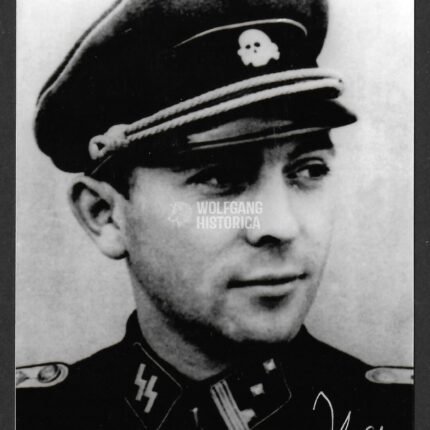
Eberhard Heder – SS-Panzer-Pionier-Bataillon 5 “Wiking”
€50,00Original Postwar Signature on a Postwar Photo of Eberhard Heder. SS-Sturmbannführer Eberhard Heder (30.06.1918 † 18.11.2017) earned the Deutsches Kreuz in Gold on March 11, 1943 as SS-Obersturmführer with the 3. Kompanie/ SS-Pionier-Bataillon 5 “Wiking” and the Ritterkreuz on November 18, 1944 as SS-Hauptsturmführer und Führer of the SS-Panzer-Pionier-Bataillon 5 of the 5. SS-Panzer-Division “Wiking”. Postcardsize. Condition as seen.

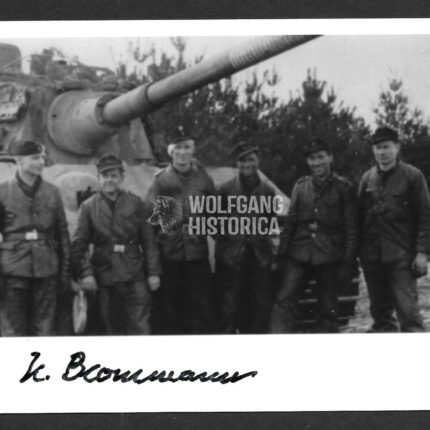
Karl Brommann – schwere SS-Panzer-Abteilung 503 (King Tiger & Battle of Berlin!)
€55,00Original Postwar Signature on a Postwar Photo of Karl Brommann. SS-Untersturmführer Karl Brommann (20.07.1920 in Neumünster † 30.06.2011 in Dithmarschen) earned the Ritterkreuz des Eisernen Kreuzes on April 29, 1945 as SS-Untersturmführer and Führer of the 1. Kompanie/ schwere SS-Panzer-Abteilung 503. Good condition. Postcardsize.
“On 14 November 1944 the unit was redesignated 503rd Heavy SS Panzer Battalion. It had a total of 39 (instead of the full complement of 45) Tiger IIs and was loaded onto trains on 27 January 1945, and sent to the Eastern Front in the Army Group Vistula sector. By 15 April 1945, the 503rd reported a total of 12 Tiger IIs, of which 10 were still operational. The 503rd ended the war fighting in the Battle of Berlin as part of Kampfgruppe Mohnke.”
Karl Brommann – schwere SS-Panzer-Abteilung 503 (King Tiger & Battle of Berlin!)
€0,01Original Postwar Signature on a Postwar Photo of Karl Brommann. SS-Untersturmführer Karl Brommann (20.07.1920 in Neumünster † 30.06.2011 in Dithmarschen) earned the Ritterkreuz des Eisernen Kreuzes on April 29, 1945 as SS-Untersturmführer and Führer of the 1. Kompanie/ schwere SS-Panzer-Abteilung 503. Good condition. Postcardsize.
“On 14 November 1944 the unit was redesignated 503rd Heavy SS Panzer Battalion. It had a total of 39 (instead of the full complement of 45) Tiger IIs and was loaded onto trains on 27 January 1945, and sent to the Eastern Front in the Army Group Vistula sector. By 15 April 1945, the 503rd reported a total of 12 Tiger IIs, of which 10 were still operational. The 503rd ended the war fighting in the Battle of Berlin as part of Kampfgruppe Mohnke.”
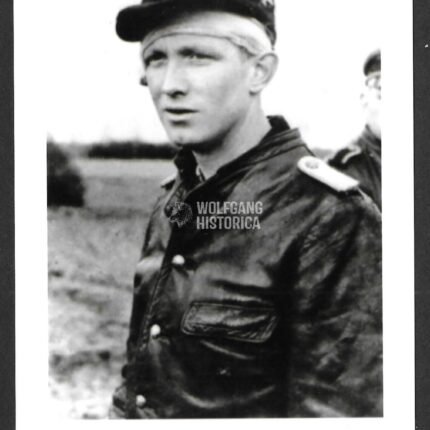
Karl Brommann – schwere SS-Panzer-Abteilung 503 (King Tiger & Battle of Berlin!)
€55,00Original Postwar Signature on a Postwar Photo of Karl Brommann. SS-Untersturmführer Karl Brommann (20.07.1920 in Neumünster † 30.06.2011 in Dithmarschen) earned the Ritterkreuz des Eisernen Kreuzes on April 29, 1945 as SS-Untersturmführer and Führer of the 1. Kompanie/ schwere SS-Panzer-Abteilung 503. Good condition. Postcardsize.
“On 14 November 1944 the unit was redesignated 503rd Heavy SS Panzer Battalion. It had a total of 39 (instead of the full complement of 45) Tiger IIs and was loaded onto trains on 27 January 1945, and sent to the Eastern Front in the Army Group Vistula sector. By 15 April 1945, the 503rd reported a total of 12 Tiger IIs, of which 10 were still operational. The 503rd ended the war fighting in the Battle of Berlin as part of Kampfgruppe Mohnke.”

Karl Brommann – schwere SS-Panzer-Abteilung 503 (King Tiger & Battle of Berlin!)
€55,00Original Postwar Signature on a Postwar Photo of Karl Brommann. SS-Untersturmführer Karl Brommann (20.07.1920 in Neumünster † 30.06.2011 in Dithmarschen) earned the Ritterkreuz des Eisernen Kreuzes on April 29, 1945 as SS-Untersturmführer and Führer of the 1. Kompanie/ schwere SS-Panzer-Abteilung 503. Good condition. Postcardsize.
“On 14 November 1944 the unit was redesignated 503rd Heavy SS Panzer Battalion. It had a total of 39 (instead of the full complement of 45) Tiger IIs and was loaded onto trains on 27 January 1945, and sent to the Eastern Front in the Army Group Vistula sector. By 15 April 1945, the 503rd reported a total of 12 Tiger IIs, of which 10 were still operational. The 503rd ended the war fighting in the Battle of Berlin as part of Kampfgruppe Mohnke.”
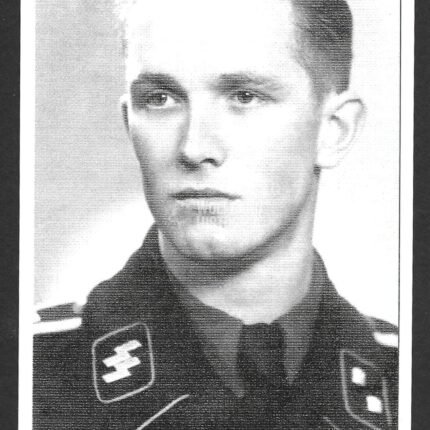
Karl Brommann – schwere SS-Panzer-Abteilung 503 (King Tiger & Battle of Berlin!)
€55,00Original Postwar Signature on a Postwar Photo of Karl Brommann. SS-Untersturmführer Karl Brommann (20.07.1920 in Neumünster † 30.06.2011 in Dithmarschen) earned the Ritterkreuz des Eisernen Kreuzes on April 29, 1945 as SS-Untersturmführer and Führer of the 1. Kompanie/ schwere SS-Panzer-Abteilung 503. Good condition. Postcardsize.
“On 14 November 1944 the unit was redesignated 503rd Heavy SS Panzer Battalion. It had a total of 39 (instead of the full complement of 45) Tiger IIs and was loaded onto trains on 27 January 1945, and sent to the Eastern Front in the Army Group Vistula sector. By 15 April 1945, the 503rd reported a total of 12 Tiger IIs, of which 10 were still operational. The 503rd ended the war fighting in the Battle of Berlin as part of Kampfgruppe Mohnke.”
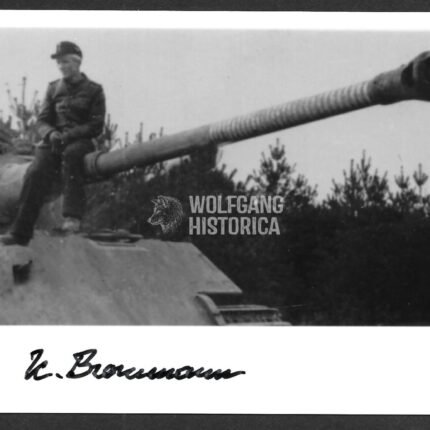
Karl Brommann – schwere SS-Panzer-Abteilung 503 (King Tiger & Battle of Berlin!)
€55,00Original Postwar Signature on a Postwar Photo of Karl Brommann. SS-Untersturmführer Karl Brommann (20.07.1920 in Neumünster † 30.06.2011 in Dithmarschen) earned the Ritterkreuz des Eisernen Kreuzes on April 29, 1945 as SS-Untersturmführer and Führer of the 1. Kompanie/ schwere SS-Panzer-Abteilung 503. Good condition. Postcardsize.
“On 14 November 1944 the unit was redesignated 503rd Heavy SS Panzer Battalion. It had a total of 39 (instead of the full complement of 45) Tiger IIs and was loaded onto trains on 27 January 1945, and sent to the Eastern Front in the Army Group Vistula sector. By 15 April 1945, the 503rd reported a total of 12 Tiger IIs, of which 10 were still operational. The 503rd ended the war fighting in the Battle of Berlin as part of Kampfgruppe Mohnke.”
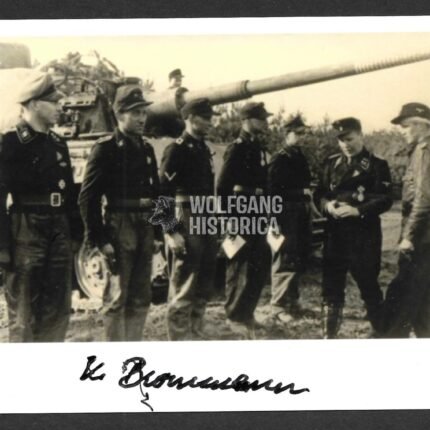
Karl Brommann – schwere SS-Panzer-Abteilung 503 (King Tiger & Battle of Berlin!)
€0,01Original Postwar Signature on a Postwar Photo of Karl Brommann. SS-Untersturmführer Karl Brommann (20.07.1920 in Neumünster † 30.06.2011 in Dithmarschen) earned the Ritterkreuz des Eisernen Kreuzes on April 29, 1945 as SS-Untersturmführer and Führer of the 1. Kompanie/ schwere SS-Panzer-Abteilung 503. Good condition. Postcardsize.
“On 14 November 1944 the unit was redesignated 503rd Heavy SS Panzer Battalion. It had a total of 39 (instead of the full complement of 45) Tiger IIs and was loaded onto trains on 27 January 1945, and sent to the Eastern Front in the Army Group Vistula sector. By 15 April 1945, the 503rd reported a total of 12 Tiger IIs, of which 10 were still operational. The 503rd ended the war fighting in the Battle of Berlin as part of Kampfgruppe Mohnke.”
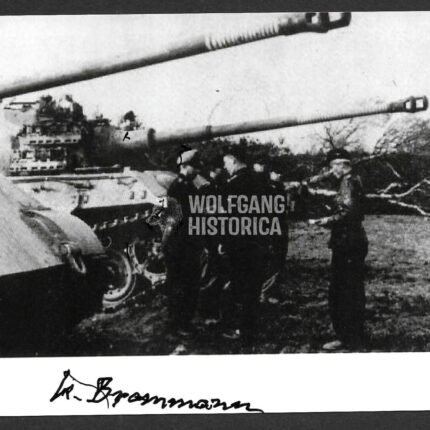
Karl Brommann – schwere SS-Panzer-Abteilung 503 (King Tiger & Battle of Berlin!)
€55,00Original Postwar Signature on a Postwar Photo of Karl Brommann. SS-Untersturmführer Karl Brommann (20.07.1920 in Neumünster † 30.06.2011 in Dithmarschen) earned the Ritterkreuz des Eisernen Kreuzes on April 29, 1945 as SS-Untersturmführer and Führer of the 1. Kompanie/ schwere SS-Panzer-Abteilung 503. Good condition. Postcardsize.
“On 14 November 1944 the unit was redesignated 503rd Heavy SS Panzer Battalion. It had a total of 39 (instead of the full complement of 45) Tiger IIs and was loaded onto trains on 27 January 1945, and sent to the Eastern Front in the Army Group Vistula sector. By 15 April 1945, the 503rd reported a total of 12 Tiger IIs, of which 10 were still operational. The 503rd ended the war fighting in the Battle of Berlin as part of Kampfgruppe Mohnke.”

Soren Kam – SS-Panzer-Grenadier-Regiment 9 “Germania”
€45,00Original Postwar Signature on a Postwar Photo of Søren Kam. SS-Obersturmführer Søren Kam (02.11.1921 † 23.03.2015) earned the Ritterkreuz des Eisernen Kreuzes on February 7, 1945 as SS-Untersturmführer und Führer of the 1. Kompanie/ SS-Panzer-Grenadier-Regiment 9 “Germania” of the 5. SS-Panzer-Division “Wiking”. Good condition. Postcardsize.
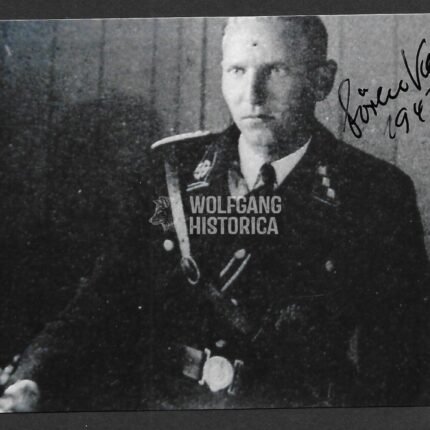
Soren Kam – SS-Panzer-Grenadier-Regiment 9 “Germania”
€45,00Original Postwar Signature on a Postwar Photo of Søren Kam. SS-Obersturmführer Søren Kam (02.11.1921 † 23.03.2015) earned the Ritterkreuz des Eisernen Kreuzes on February 7, 1945 as SS-Untersturmführer und Führer of the 1. Kompanie/ SS-Panzer-Grenadier-Regiment 9 “Germania” of the 5. SS-Panzer-Division “Wiking”. Good condition. Postcardsize.
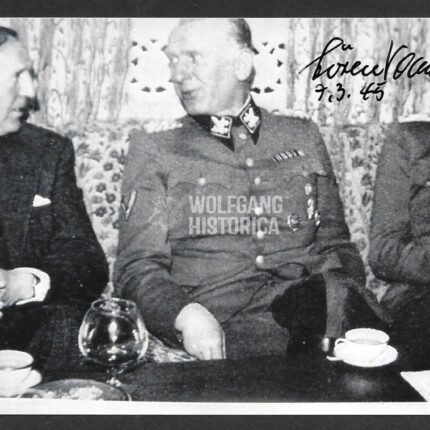
Soren Kam – SS-Panzer-Grenadier-Regiment 9 “Germania”
€0,01Original Postwar Signature on a Postwar Photo of Søren Kam. SS-Obersturmführer Søren Kam (02.11.1921 † 23.03.2015) earned the Ritterkreuz des Eisernen Kreuzes on February 7, 1945 as SS-Untersturmführer und Führer of the 1. Kompanie/ SS-Panzer-Grenadier-Regiment 9 “Germania” of the 5. SS-Panzer-Division “Wiking”. Good condition. Postcardsize.
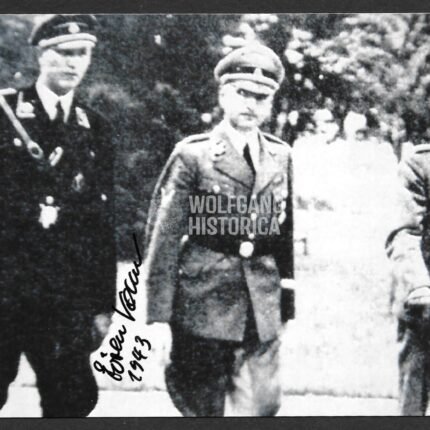
Soren Kam – SS-Panzer-Grenadier-Regiment 9 “Germania”
€0,01Original Postwar Signature on a Postwar Photo of Søren Kam. SS-Obersturmführer Søren Kam (02.11.1921 † 23.03.2015) earned the Ritterkreuz des Eisernen Kreuzes on February 7, 1945 as SS-Untersturmführer und Führer of the 1. Kompanie/ SS-Panzer-Grenadier-Regiment 9 “Germania” of the 5. SS-Panzer-Division “Wiking”. Good condition. Postcardsize.

Soren Kam – SS-Panzer-Grenadier-Regiment 9 “Germania”
€45,00Original Postwar Signature on a Postwar Photo of Søren Kam. SS-Obersturmführer Søren Kam (02.11.1921 † 23.03.2015) earned the Ritterkreuz des Eisernen Kreuzes on February 7, 1945 as SS-Untersturmführer und Führer of the 1. Kompanie/ SS-Panzer-Grenadier-Regiment 9 “Germania” of the 5. SS-Panzer-Division “Wiking”. Good condition. Postcardsize.
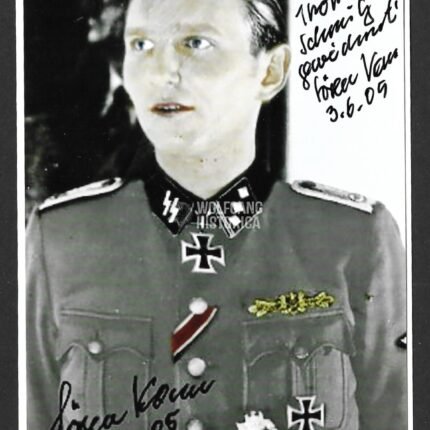
Soren Kam – SS-Panzer-Grenadier-Regiment 9 “Germania”
€45,00Original Postwar Signature on a Postwar Photo of Søren Kam. SS-Obersturmführer Søren Kam (02.11.1921 † 23.03.2015) earned the Ritterkreuz des Eisernen Kreuzes on February 7, 1945 as SS-Untersturmführer und Führer of the 1. Kompanie/ SS-Panzer-Grenadier-Regiment 9 “Germania” of the 5. SS-Panzer-Division “Wiking”. Good condition. Postcardsize.
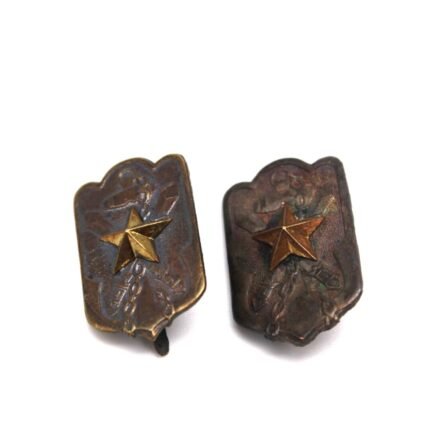
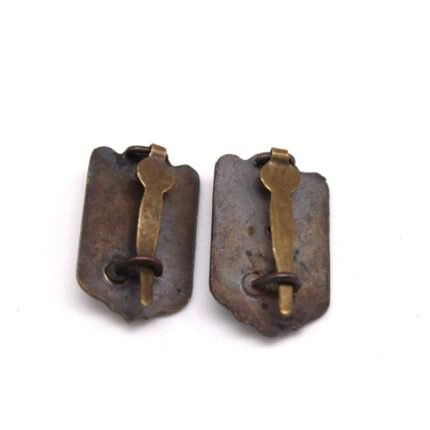
Imperial Japanese Army Military Reservist Badges (Small)
Original price was: €20,00.€10,00Current price is: €10,00.Original Imperial Japanese Army Military Reservist Badges (small variant). Condition as seen.
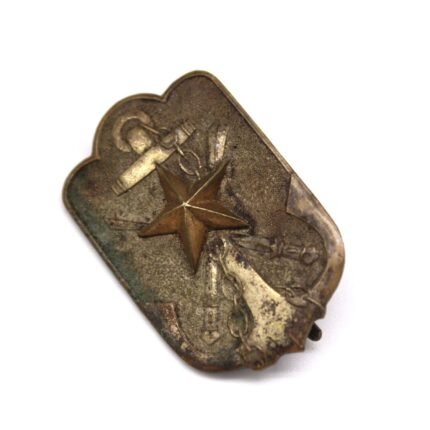
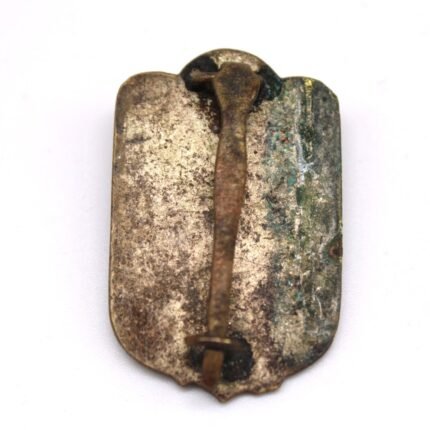
Imperial Japanese Army Military Reservist Badge
Original price was: €20,00.€10,00Current price is: €10,00.Original Imperial Japanese Army Military Reservist Badge (large variant). Condition as seen.
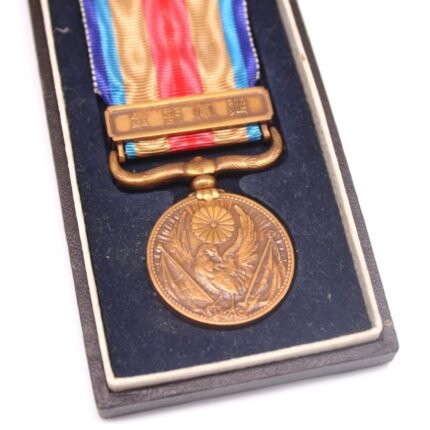
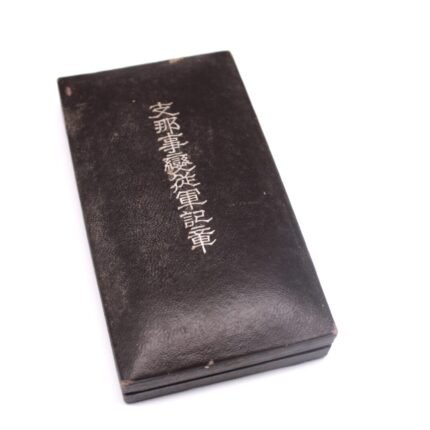
1937-45 China Incident War Medal (Cased)
€0,01Original Japanese 1937-45 China Incident War Medal with black casing with silver lettering (World War II).
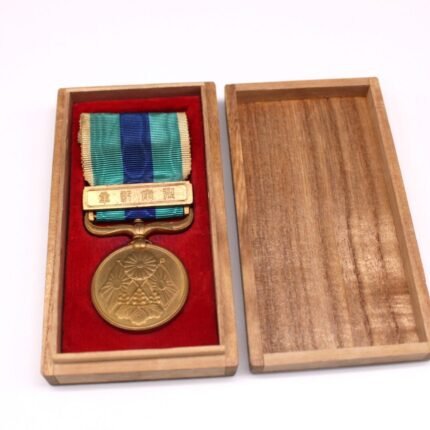
1904-1905 War Medal (Russo-Japanese War) (Cased)
€0,01The Russo-Japanese War Medal was established on March 31, 1906 by Imperial Edict No. 51 in recognition of those who served in the Russo-Japanese War during the 37th and 38th years of the Meiji period (1904–1905). The Russo-Japanese War was fought between the Russian Empire and the Empire of Japan over rival imperial ambitions in Manchuria and Korea. The major theatres of operations were the Liaodong Peninsula and Mukden in Southern Manchuria and the seas around Korea, Japan and the Yellow Sea.
Original medal in overall good condition with matching wooden case with golden lettering.
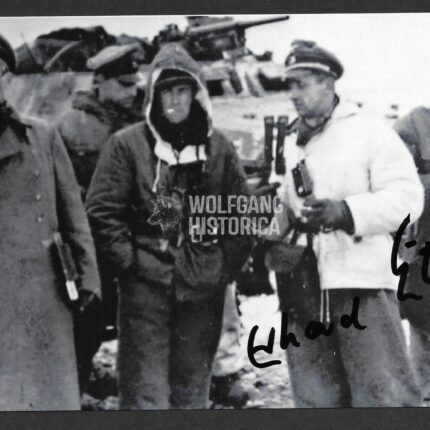
Erhard Gührs – 1. SS-Panzer-Division “LSSAH” (Normandy)
€0,01Original Postwar Signature on a Postwar Photo of Erhard Gührs. SS-Obersturmführer Erhard Gührs served with the SS-Panzer-Grenadier-Regiment 2 of the 1. SS-Panzer-Division “LSSAH”. Severely wounded in August 1944 on the Invasionsfront as Bataillonsadjutant of the SS-Panzer-Grenadier-Regiment 2. Postcardsize. Condition as seen.
On this photo, also Peiper is seen!
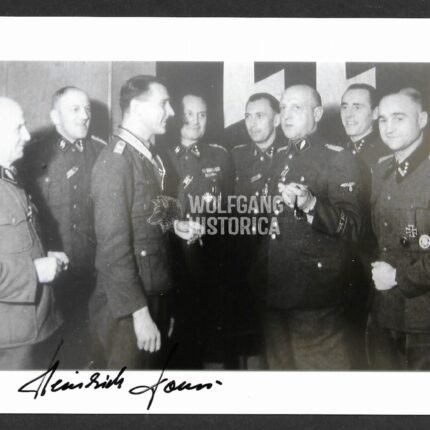
Heinrich Sonne – SS-Infanterie-Brigade 1, “Horst Wessel” & “Westfalen”
€50,00Original Postwar Signature on a Postwar Photo of Heinrich Sonne. SS-Hauptsturmführer Heinrich Sonne (23.02.1917 in Riga, Latvia † 05.09.1984 in Erftstadt) earned the Ritterkreuz des Eisernen Kreuzes on December 10, 1943 as SS-Obersturmführer und Chef of the Kradschützen-kompanie/ SS-Infanterie-Brigade 1 (mot.). He also served with the SS-Panzer-Aufklärungs-Abteilung 18 “Horst Wessel” and the SS-Panzer-Brigade “Westfalen”. Postcardsize. Condition as seen.
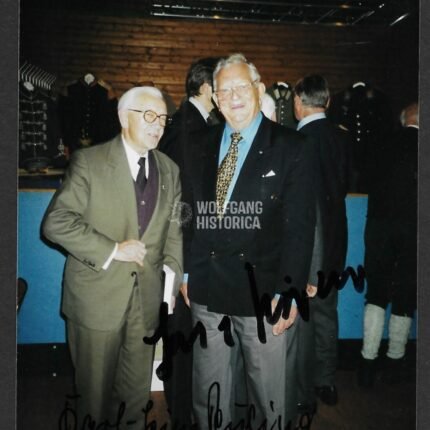
DOUBLE SIGNED: Johannes Scherg & Heinz Jürgens (RKT 4. SS-Polizei-Division)
€0,01DOUBLE SIGNED Photo of Johannes Scherg & Heinz Jürgens!
Johannes Scherg. SS-Hauptsturmführer Johannes Scherg (16.05.1918 † 22.12.1997) earned the Deutsches Kreuz in Gold with the SS-Panzer-Aufklärungs-Abteilung 2 “Das Reich” and the Ritterkreuz des Eisernen Kreuzes on October 23, 1944 with the SS-Panzer-Aufklärungs-Abteilung 4 of the 4. SS-Polizei-Grenadier-Division.
Heinz Jürgens. SS-Hauptsturmführer Heinz Jürgens (21.03.1917 † 07.07.2008) earned the Ritterkreuz des Eisernen Kreuzes on May 9, 1945 as SS-Hauptsturmführer und Kommandeur of the SS-Polizei-Panzeraufklärungs-Abteilung 4 of the 4. SS-Polizei-Panzergrenadier-Division.
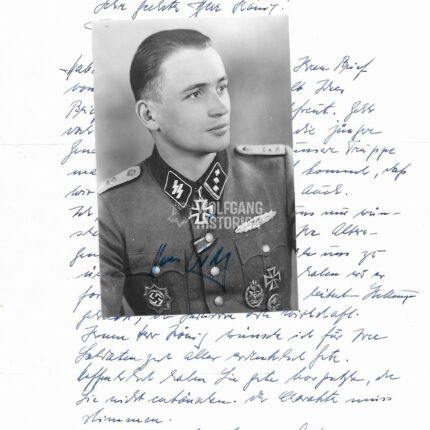
Johannes Scherg – SS-Panzer-Aufklärungs-Abteilung 4
€0,01Original Postwar Signature on a Postwar Photo & Letter of Johannes Scherg. SS-Hauptsturmführer Johannes Scherg (16.05.1918 † 22.12.1997) earned the German Cross in Gold with the SS-Panzer-Aufklärungs-Abteilung 2 “Das Reich” and the Knight’s Cross on October 23, 1944 with the SS-Panzer-Aufklärungs-Abteilung 4 of the 4. SS-Polizei-Grenadier-Division.
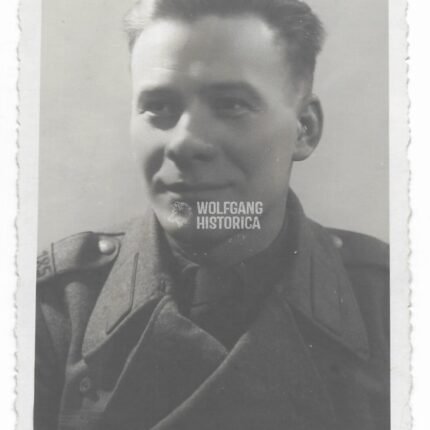
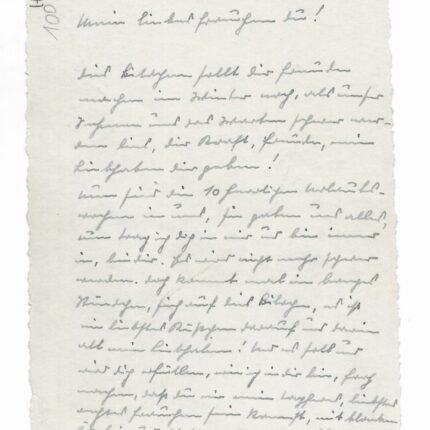
Studioportrait Soldier of Sturmgeschütz-Abteilung 185
€0,01Original Studioportrait of a soldier from Sturmgeschütz-Abteilung 185. Size: 12,5×8,5cm.
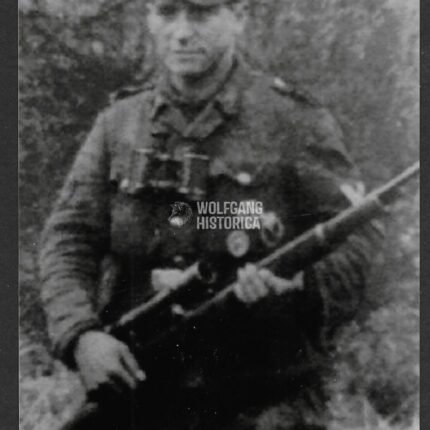

Josef “Sepp” Allerberger – Gebirgsjäger-Regiment 144 (RK + 2nd Best Sniper of German Army 257 Kills!)
€0,01Original Postwar Signature on a Postwar Photo of Josef “Sepp” Allerberger. Obergefreiter Josef “Sepp” Allerberger (24.12.1924 in Steiermark, Austria † 02.03.2010 in Wals-Siezenheim) served with the Gebirgsjäger-Regiment 144 of the 3. Gebirgs-Division. Allerberger is noted as the second best German Sniper of World War II with 257 kills. A book containing his memoirs are published in Sniper on the Eastern Front: The Memoirs of Sepp Allerberger, Knight’s Cross. (Version 1 is the uncensored and most-desirable one!).
According to his memoirs, he was awarded the Ritterkreuz des Eisernen Kreuzes on April 20, 1945 however there’s no trace or evidence (which is not uncommon near the end of the war).
Signed on the reverse (see top).
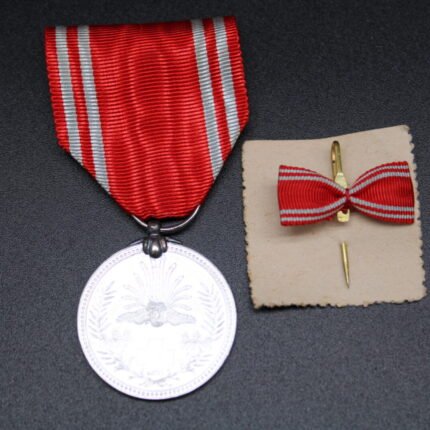
Japanese Red Cross (Showa Era) – Membership Medal
€30,00Original Japanese Red Cross (Showa Era), Membership medal. Alloy metal. Comes with a box (which I didn’t photograph as I wasn’t sure it belonged to it, however it might have been a general brown box that these were issued in).
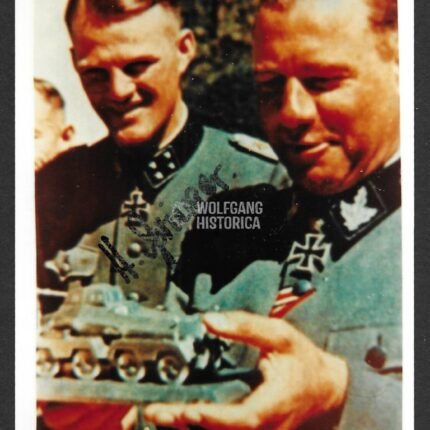
Heinrich Springer – “LSSAH” & “Hitlerjugend” Division (Normandy)
€55,00Original Postwar Signature on a Postwar Photo of Heinrich Springer. SS-Sturmbannführer Heinrich Springer (03.11.1914 † 27.10.2007) earned the Ritterkreuz des Eisernen Kreuzes on January 12, 1942 as SS-Hauptsturmführer und Führer of the 3. Kompanie/ “Leibstandarte-SS Adolf Hitler”. Good condition.
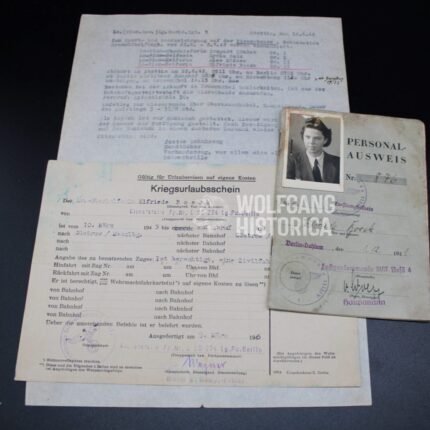
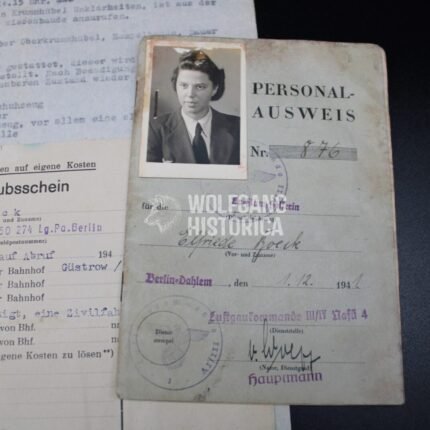
Personalausweis Luftwaffen-Oberhelferin
€0,01Original Personalausweis of Luftwaffen-Oberhelferin Boek. She served from 1941 until 1945 and was promoted to Luftwaffen-Oberhelferin after a course on May 1, 1943. Comes with two extra papers. She served with: Luftgaukommando III/IV, Luftnachrichten-Flugmelde-Regiment 93 (Berlin) and 30. schwere Flugmelde-Leitkompanie in Hornskrug/Stettin (“Stellung Stieglitz”).
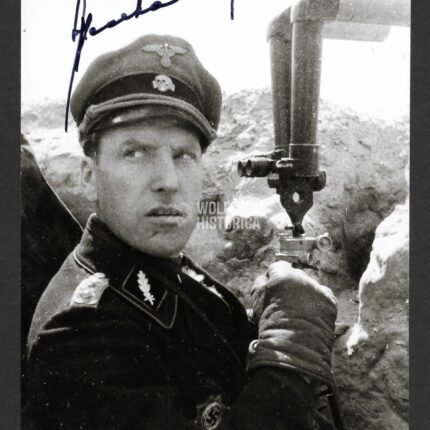
Johannes-Rudolf Mühlenkamp – 5. SS-Panzer-Division “Wiking” (Eichenlaub)
€0,01Original Postwar Signature on a Postwar Photo of Johannes-Rudolf Mühlenkamp. SS-Standartenführer Johannes-Rudolf Mühlenkamp (09.10.1910 † 23.09.1986) earned the Ritterkreuz des Eisernen Kreuzes on September 3, 1942 as SS-Sturmbannführer und Kommandeur of the SS-Panzer-Abteilung 5 “Wiking” and the Eichenlaub on September 21, 1944 als SS-Standartenführer und Führer of the 5. SS-Panzer-Division “Wiking”. Good condition. Measuring: 17,6x13cm.
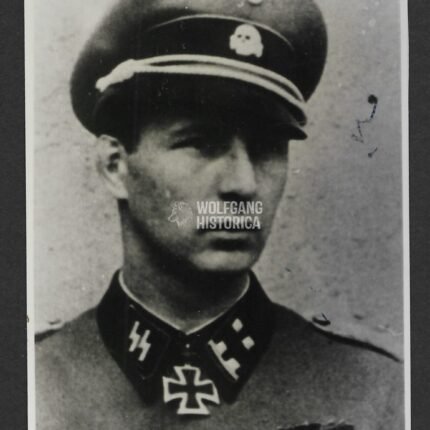
Waldemar Fegelein – SS-Reiter-Regiment 2 “Florian Geyer” (Brother of Hermann Fegelein!)
€0,01Original Postwar Signature on a Postwar Photo of Waldemar Fegelein. SS-Standartenführer Waldemar Fegelein (09.01.1912 † 20.11.2000) earned the Ritterkreuz des Eisernen Kreuzes on December 16, 1943 as SS-Sturmbannführer und Führer of the SS-Reiter-Regiment 2 of the 8. SS-Kavallerie-Division “Florian Geyer”. Brother of the executed SS-Gruppenführer Hermann Fegelein! Good condition. Postcardsize.
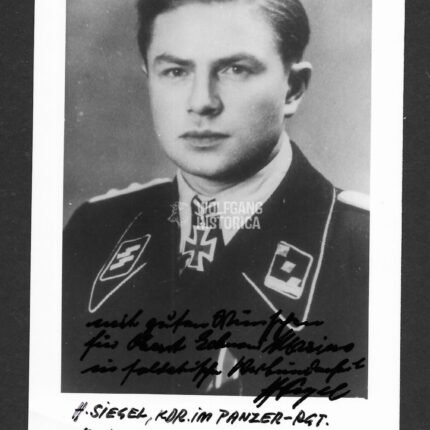
Hans Siegel – SS-Panzer-Regiment 12 “Hitlerjugend” (Normandy)
€0,01Original Postwar Signature on a Postwar Photo of Hans Siegel. SS-Sturmbannführer Hans Siegel (25.07.1918 † 18.04.2002) earned the Ritterkreuz des Eisernen Kreuzes on August 23, 1944 as SS-Hauptsturmführer und Chef of the 8. Kompanie/ SS-Panzer-Regiment 12 of the 12. SS-Panzer-Division “Hitlerjugend”.
Knight’s Cross: “Hauptsturmführer Siegel is the soul of the fighting spirit of his battalion. In the eventful offensive and defensive fighting around Caen, as company commander, he knocked out 11 of the 37 enemy tanks destroyed by his company. On 27 June 1944 (…) in a night attack, Siegel gained ground to the north and thwarted the advance of enemy armour to the south. Siegel held his positions without any infantry support and despite extremely heavy gunfire. While positioning and briefing his men, he was surprised in the dark of night by an enemy patrol. In the hand-to-hand fighting that resulted, he was stabbed in the right side. Nevertheless, he was able to repulse the enemy and hold his position. The next morning the enemy renewed their attack. Siegel fought with his tank to the last, making it possible to bring up new forces and thereby prevent a decisive British breakthrough. In so doing, Siegel’s tank was knocked out from under him for the fifth time and he suffered extremely severe burns.”

Herbert Reinecker – Waffen-SS & Creator of TV-Series “Derrick”
€35,00Original Postwar Signature on a Postwar Photo of Herbert Reinecker. Herbert Reinecker (24.12.1914 in Hagen † 27.01.2007) worked as the editor-in-chief of a book entitled Der Pimpf about the training system of the Hitler Youth. Reinecker served in a propaganda company of the Waffen-SS during World War II. In the early 1940s, Reinecker also wrote a number of plays, among them Das Dorf bei Odessa, and the novel Der Mann mit der Geige. In 1944, he wrote an award-winning screenplay, Junge Adler (Young Eagles).
After the war, he started working for radio and television. At the same time, he wrote screenplays for the series of German feature films of the 1960s that were loosely based on Edgar Wallace’s novels as well as TV adaptations of Francis Durbridge novels and plays.
In the late 1960s, Reinecker and producer Helmut Ringelmann wanted to create a truly German police detective. At first tentatively conceived as a “German Maigret”, Reinecker’s Kommissar Keller soon metamorphosed into a full-fledged character. Erik Ode was chosen to play Keller in the TV series, Der Kommissar, which was finally launched in 1969 and which became a huge success. In 1974, Reinecker and Ringelmann started a new, similar series, Derrick which was in production until 1998 with major international success.
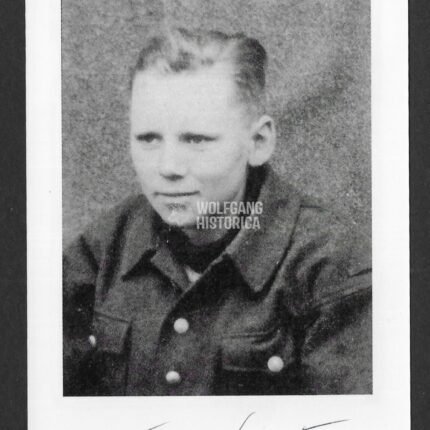
Werner Nemitz – Hitlerjugend & Werwolf
€0,01Original Postwar Signature on a Postwar Photo of Werner Nemitz. Werner Nemitz wrote the book “Hitlers allerletzte Reserve – Hitlerjungen als “Werwölfe“. Postcardsize. Condition as seen.
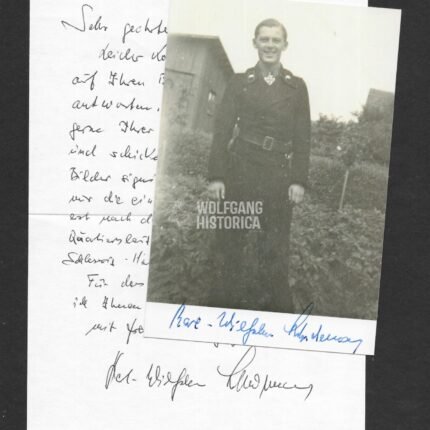
Karl-Wilhelm Lindemann – Panzer-Regiment 29 (12. Panzer-Division)
€0,01Original Postwar Signature on a Postwar Photo & Letter of Karl-Wilhelm Lindemann. Leutnant Karl-Wilhelm Lindemann (10.04.1924 † 17.11.2014) earned the Ehrenblattspange des Heeres and the Ritterkreuz des Eisernen Kreuzes on April 14, 1945 with 5. Kompanie/ Panzer-Regiment 29 of the 12. Panzer-Division. Postcardsize.
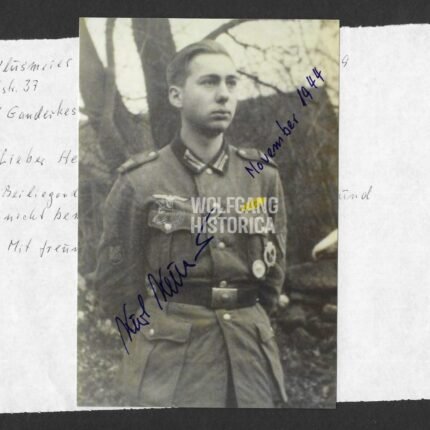
Kurt Klusmeier – Jäger-Regiment 83 (28. Jäger-Division)
€0,01Original Postwar Signature on a Postwar Photo & Letter of Kurt Klusmeier. Kurt Klusmeier (03.03.1924 † ) served with the Jäger-Regiment 83 of the 28. Jäger-Division. Author of the book: Kurt Klusmeier: Von Leningrad bis Breslau. Tagebuch eines Infanteristen von 1942 bis 1945.
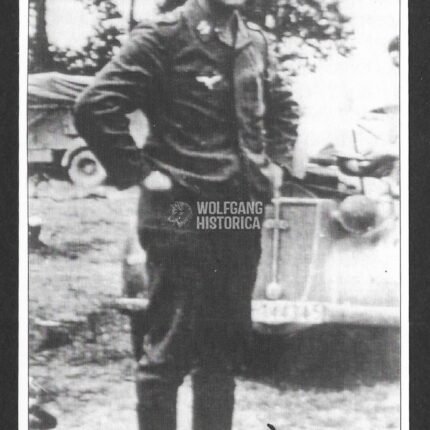
Max Schmeling – Boxer & Fallschirmjäger-Regiment 3
€0,01Original Postwar Signature on a Postwar Photo of Max Schmeling. Max Schmeling (28.09.1905 † 02.02.2005) served with the 4. Kompanie/ Fallschirmjäger-Regiment 3 and jumped in Kreta, he however broke his legs, so his frontline service was only short however Max Schmeling was also a famous German boxer who was heavyweight champion of the world between 1930 and 1932. Good condition. Postcardsize.
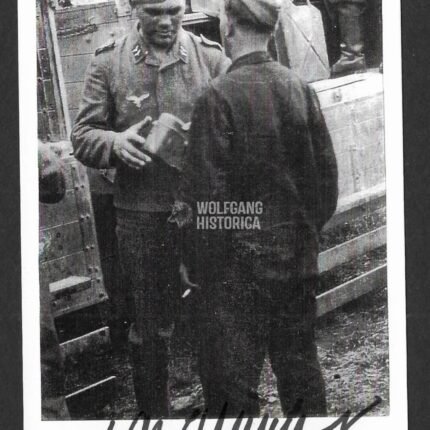
Max Schmeling – Boxer & Fallschirmjäger-Regiment 3
€0,01Original Postwar Signature on a Postwar Photo of Max Schmeling. Max Schmeling (28.09.1905 † 02.02.2005) served with the 4. Kompanie/ Fallschirmjäger-Regiment 3 and jumped in Kreta, he however broke his legs, so his frontline service was only short however Max Schmeling was also a famous German boxer who was heavyweight champion of the world between 1930 and 1932. Good condition. Postcardsize.
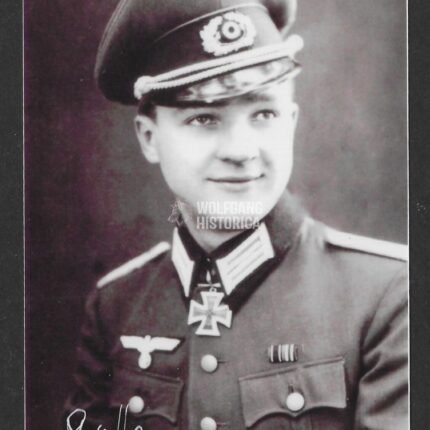
Günter Halm – Panzergrenadier-Regiment 104 (15. Panzer-Division)
€25,00Original Postwar Signature on a Postwar Photo of Günter Halm. Leutnant Günter Halm (27.08.1922 † 26.09.2017) earned the Ritterkreuz des Eisernen Kreuzes on July 29, 1942 as Grenadier und Richtschütze in the Pakzug of the Regimentsstabskompanie/ Panzergrenadier-Regiment 104 of the 15. Panzer-Division.
Knight’s Cross: “Awarded for his actions at El Alamein on the 21.07.1942. On this day his Pak was attacked by a large Allied tank force (probably the 23rd British tank brigade). The battle opened with his gun shield being badly damaged and the no. 2 loader being wounded. Another hit smashed the gun’s sights. However the gunner, Halm, did not lose his nerve as the hostile tanks got closer. With deadly precision he destroyed 7 Allied tanks in a short time, including a command tank. More tanks were destroyed by the other German defenders, with 96 allied tanks being destroyed in the battle on this day altogether.”
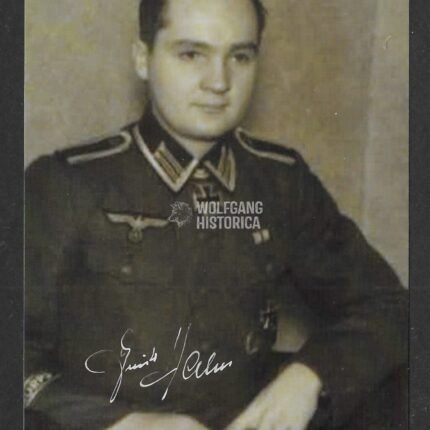
Günter Halm – Panzergrenadier-Regiment 104 (15. Panzer-Division)
€25,00Original Postwar Signature on a Postwar Photo of Günter Halm. Leutnant Günter Halm (27.08.1922 † 26.09.2017) earned the Ritterkreuz des Eisernen Kreuzes on July 29, 1942 as Grenadier und Richtschütze in the Pakzug of the Regimentsstabskompanie/ Panzergrenadier-Regiment 104 of the 15. Panzer-Division.
Knight’s Cross: “Awarded for his actions at El Alamein on the 21.07.1942. On this day his Pak was attacked by a large Allied tank force (probably the 23rd British tank brigade). The battle opened with his gun shield being badly damaged and the no. 2 loader being wounded. Another hit smashed the gun’s sights. However the gunner, Halm, did not lose his nerve as the hostile tanks got closer. With deadly precision he destroyed 7 Allied tanks in a short time, including a command tank. More tanks were destroyed by the other German defenders, with 96 allied tanks being destroyed in the battle on this day altogether.”
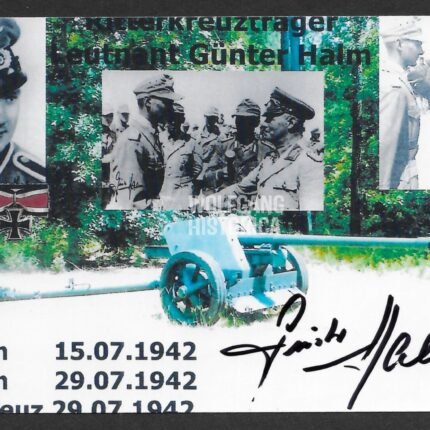
Günter Halm – Panzergrenadier-Regiment 104 (15. Panzer-Division)
€25,00Original Postwar Signature on a Postwar Photo of Günter Halm. Leutnant Günter Halm (27.08.1922 † 26.09.2017) earned the Ritterkreuz des Eisernen Kreuzes on July 29, 1942 as Grenadier und Richtschütze in the Pakzug of the Regimentsstabskompanie/ Panzergrenadier-Regiment 104 of the 15. Panzer-Division.
Knight’s Cross: “Awarded for his actions at El Alamein on the 21.07.1942. On this day his Pak was attacked by a large Allied tank force (probably the 23rd British tank brigade). The battle opened with his gun shield being badly damaged and the no. 2 loader being wounded. Another hit smashed the gun’s sights. However the gunner, Halm, did not lose his nerve as the hostile tanks got closer. With deadly precision he destroyed 7 Allied tanks in a short time, including a command tank. More tanks were destroyed by the other German defenders, with 96 allied tanks being destroyed in the battle on this day altogether.”
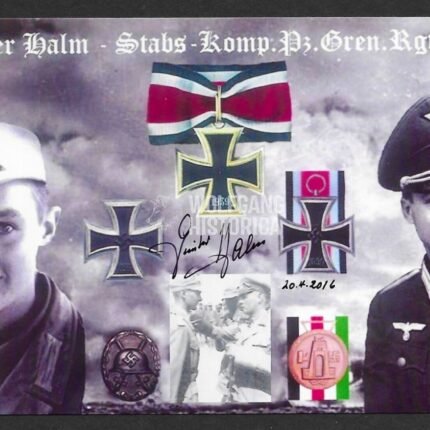
Günter Halm – Panzergrenadier-Regiment 104 (15. Panzer-Division)
€0,01Original Postwar Signature on a Postwar Photo of Günter Halm. Leutnant Günter Halm (27.08.1922 † 26.09.2017) earned the Ritterkreuz des Eisernen Kreuzes on July 29, 1942 as Grenadier und Richtschütze in the Pakzug of the Regimentsstabskompanie/ Panzergrenadier-Regiment 104 of the 15. Panzer-Division.
Knight’s Cross: “Awarded for his actions at El Alamein on the 21.07.1942. On this day his Pak was attacked by a large Allied tank force (probably the 23rd British tank brigade). The battle opened with his gun shield being badly damaged and the no. 2 loader being wounded. Another hit smashed the gun’s sights. However the gunner, Halm, did not lose his nerve as the hostile tanks got closer. With deadly precision he destroyed 7 Allied tanks in a short time, including a command tank. More tanks were destroyed by the other German defenders, with 96 allied tanks being destroyed in the battle on this day altogether.”
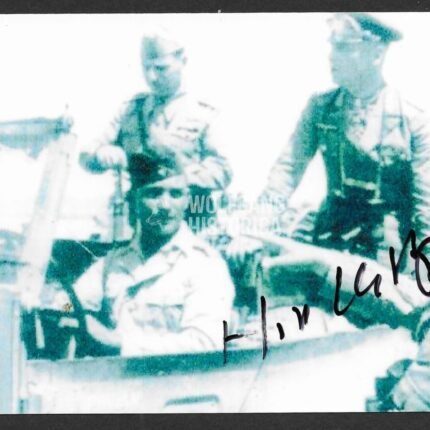
Hellmut von Leipzig – Panzer-Aufklärungs-Abteilung “Brandenburg” & Driver of Erwin Rommel !
€25,00Original Postwar Signature on a Postwar Photo of Hellmut von Leipzig. Leutnant Hellmut von Leipzig (18.07.1921 in Keetmannshop, Namibia † 24.10.2026 in Windhoek, Namibia) earned the Ritterkreuz des Eisernen Kreuzes on April 28, 1945 as Leutnant und Zugführer in the Panzer-Aufklärungs-Abteilung “Brandenburg” of the Panzergrenadier-Division “Brandenburg”. Postcardsize. Condition as seen.
Leipzig was born in South West Africa, son of a naval officer. In 1941, he volunteered for the Afrika Korps. He became driver to Generalfeldmarschall Erwin Rommel, whom Leipzig describes as “the craziest passenger ever”, because he always said “Faster!” and when encountering an enemy’s minefield, would insist on going and personally guiding Leipzig around the mines. Leipzig fought in the “Battle of Berlin”, became a POW in 1945 and spent 10 years in Soviet captivity.
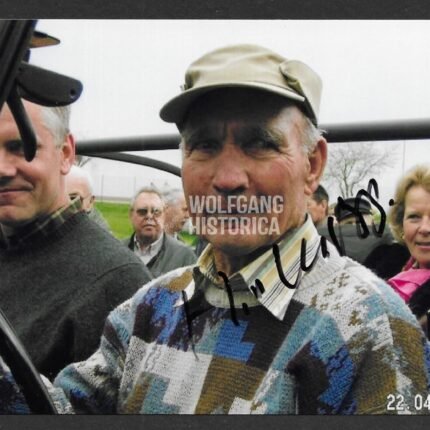
Hellmut von Leipzig – Panzer-Aufklärungs-Abteilung “Brandenburg” & Driver of Erwin Rommel !
€25,00Original Postwar Signature on a Postwar Photo of Hellmut von Leipzig. Leutnant Hellmut von Leipzig (18.07.1921 in Keetmannshop, Namibia † 24.10.2026 in Windhoek, Namibia) earned the Ritterkreuz des Eisernen Kreuzes on April 28, 1945 as Leutnant und Zugführer in the Panzer-Aufklärungs-Abteilung “Brandenburg” of the Panzergrenadier-Division “Brandenburg”. Postcardsize. Condition as seen.
Leipzig was born in South West Africa, son of a naval officer. In 1941, he volunteered for the Afrika Korps. He became driver to Generalfeldmarschall Erwin Rommel, whom Leipzig describes as “the craziest passenger ever”, because he always said “Faster!” and when encountering an enemy’s minefield, would insist on going and personally guiding Leipzig around the mines. Leipzig fought in the “Battle of Berlin”, became a POW in 1945 and spent 10 years in Soviet captivity.
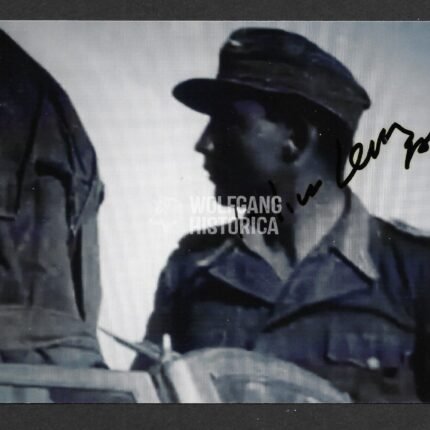
Hellmut von Leipzig – Panzer-Aufklärungs-Abteilung “Brandenburg” & Driver of Erwin Rommel !
€25,00Original Postwar Signature on a Postwar Photo of Hellmut von Leipzig. Leutnant Hellmut von Leipzig (18.07.1921 in Keetmannshop, Namibia † 24.10.2026 in Windhoek, Namibia) earned the Ritterkreuz des Eisernen Kreuzes on April 28, 1945 as Leutnant und Zugführer in the Panzer-Aufklärungs-Abteilung “Brandenburg” of the Panzergrenadier-Division “Brandenburg”. Postcardsize. Condition as seen.
Leipzig was born in South West Africa, son of a naval officer. In 1941, he volunteered for the Afrika Korps. He became driver to Generalfeldmarschall Erwin Rommel, whom Leipzig describes as “the craziest passenger ever”, because he always said “Faster!” and when encountering an enemy’s minefield, would insist on going and personally guiding Leipzig around the mines. Leipzig fought in the “Battle of Berlin”, became a POW in 1945 and spent 10 years in Soviet captivity.
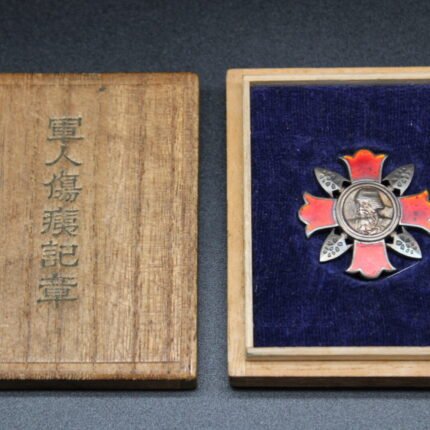
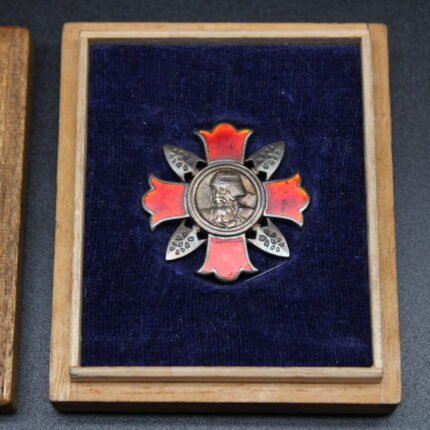
Wound Badge – Combat Injury (Sensho) (Cased)
€145,00Original Japanese Wound Badge (Model 1938, Sensho), with matching wooden case. Sensho which means this type of wound badge was awarded for suffering a combat injury. Condition as seen.
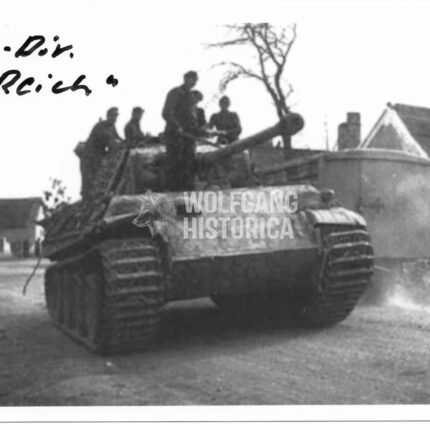
Ernst Barkmann – SS-Panzer-Regiment 2 “Das Reich” (Normandy)
€0,01Original Postwar Signature on a Postwar Photo of Ernst Barkmann. SS-Oberscharführer Ernst Barkmann (25.08.1919 in Kisdorf † 27.06.2009) earned the Ritterkreuz des Eisernen Kreuzes on August 27, 1944 as SS-Unterscharführer und Panzerkommandant in the 4. Kompanie/ SS-Panzer-Regiment 2 of the 2. SS-Panzer-Division “Das Reich”. Postcardsize. Condition as seen.
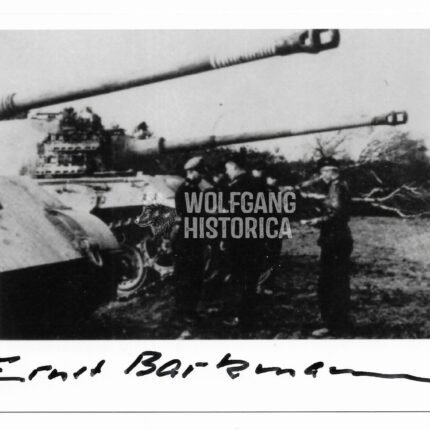
Ernst Barkmann – SS-Panzer-Regiment 2 “Das Reich” (Normandy)
€0,01Original Postwar Signature on a Postwar Photo of Ernst Barkmann. SS-Oberscharführer Ernst Barkmann (25.08.1919 in Kisdorf † 27.06.2009) earned the Ritterkreuz des Eisernen Kreuzes on August 27, 1944 as SS-Unterscharführer und Panzerkommandant in the 4. Kompanie/ SS-Panzer-Regiment 2 of the 2. SS-Panzer-Division “Das Reich”. Postcardsize. Condition as seen.
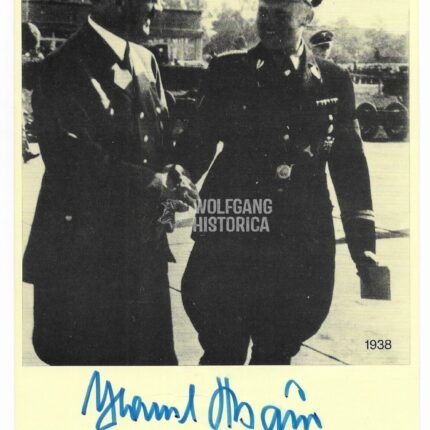
Hans Baur – Personal Pilot of Adolf Hitler
€75,00Original Postwar Signature on a Postwar Photo of Hans Baur. SS-Gruppenführer Hans Baur (14.06.1897 † 17.02.1993) was the personal pilot of Adolf Hitler before and during the war. Postcardsize. Condition as seen.