


Death Card – Obergefreiter Flak Regiment – Bastogne, Belgium
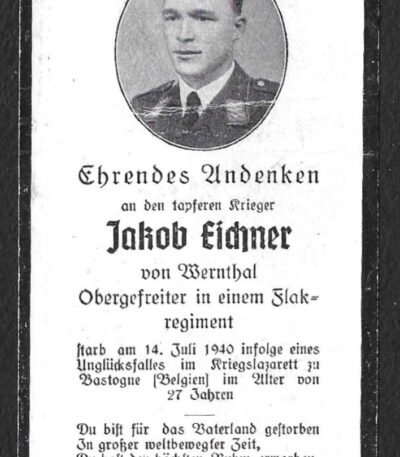
€15,00Original German WWII death card / memorial card (Sterbebild) for Obergefreiter Jakob Eichner von Wernthal, a member of a German Flak regiment.
The card commemorates Jakob Eichner von Wernthal, who died on 14 July 1940 as the result of an accident while in the Kriegslazarett in Bastogne, Belgium, at the age of 27.
The front features a photographic portrait of Eichner in uniform, accompanied by the following printed information:
Ehrendes Andenken
an den tapferen Krieger
Jakob Eichner
von Wernthal
Obergefreiter in einem Flak-regiment
starb am 14. Juli 1940 infolge eines Unglücksfalles im Kriegslazarett zu Bastogne (Belgien) im Alter von 27 Jahren.
The reverse contains the customary memorial text:
Du bist für das Vaterland gestorben
In großer weltbewegter Zeit,
Du hast den höchsten Ruhm erworben,
Die Palme der Unsterblichkeit!
Printed by Druck Udart, Pfaffenhofen.
Size: approx. 9.2 × 5.4 cm
An interesting and very early-war Flak-related casualty memorial, with a documented connection to Bastogne, Belgium, making this particularly appealing for collectors interested in the German occupation of Belgium, early WWII Flak history, and personal military documents.
Condition: Good original condition for its age, with the expected signs of handling and age. Please study the photographs carefully for the exact condition.
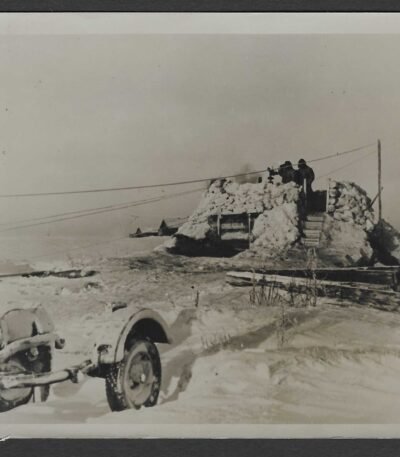
German Press Photo: Flakstellung in einem Stützpunkt
€25,00Original German Press Photo of a “Flakstellung in einem Stützpunkt”. Size: 13x18cm. Condition as seen.
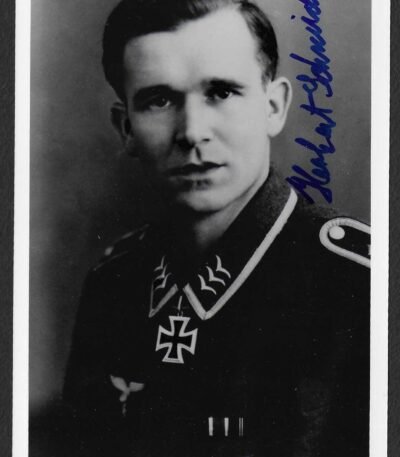
Herbert Schneider – Flak-Regiment 49
€20,00Original Postwar Signature on a Postwar Photo of Herbert Schneider. Oberwachtmeister Herbert Schneider (31.07.1915 † 01.12.2011) earned the Ritterkreuz on February 5, 1944 as Wachtmeister und Flakkampftruppführer of the 6. Batterie/ Flak-Regiment 49. Good condition. Measuring: Postcardsize.
Knight’s Cross: “During the defensive battles near Bolchow-Orel, in the summer of 1943, Wachtmeister Scheider succeeded in destroyed 25 Soviet tanks with his Flak gun. Later on during this fighting he would be heavily wounded by artillery fire on the 21.07.1943. In recognition of his achievements and devotion to duty during this time, he would receive the Knight’s Cross.”
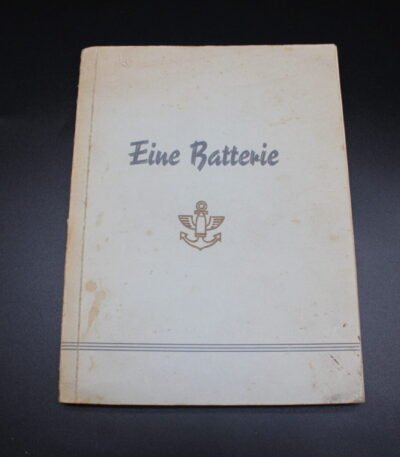
WWII Chronicle “Eine Batterie” – Batterie Krummendeich, Marine-Flak-Abteilung 294
€45,00Original WWII chronicle (Chronik) titled “Eine Batterie”, documenting Batterie Krummendeich of Marine-Flak-Abteilung 294.
Complete example. Condition is as shown in the photographs, with typical age-related wear consistent with wartime paper items.
This chronicle provides a detailed period account of a single battery within a German naval anti-aircraft unit, likely including narrative content, unit-specific information, and possibly photographs or illustrations relating to personnel and service.
A scarce and desirable piece of Kriegsmarine-related documentation, of particular interest to collectors of Flak units, coastal defense, and unit histories.
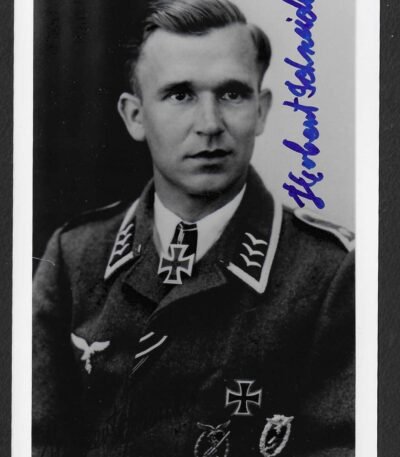
Herbert Schneider – Flak-Regiment 49
€20,00Original Postwar Signature on a Postwar Photo of Herbert Schneider. Oberwachtmeister Herbert Schneider (31.07.1915 † 01.12.2011) earned the Ritterkreuz on February 5, 1944 as Wachtmeister und Flakkampftruppführer of the 6. Batterie/ Flak-Regiment 49. Good condition. Measuring: Postcardsize.
Knight’s Cross: “During the defensive battles near Bolchow-Orel, in the summer of 1943, Wachtmeister Scheider succeeded in destroyed 25 Soviet tanks with his Flak gun. Later on during this fighting he would be heavily wounded by artillery fire on the 21.07.1943. In recognition of his achievements and devotion to duty during this time, he would receive the Knight’s Cross.”
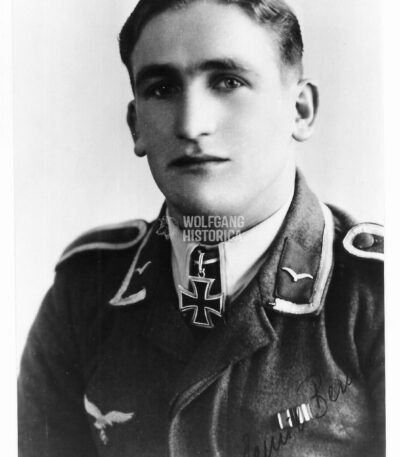
Emil Berner – Flak-Regiment 18 (Afrikakorps)
€25,00Original Postwar Signature on a Postwar Photo of Emil Berner. Unteroffizier Emil Berner (04.12.1921 † 13.06.2008) earned the Ritterkreuz des Eiseren Kreuzes on November 3, 1942 as Gefreiter der Reserve und Richtkanonier in the 3. Batterie/ Flak-Regiment 18 in North Africa.
Awarded for distinguishing himself as a Flak gunner throughout the North African campaign. During the battles of Sidi Rezeg and Bir el Hacheim (1941) he destroyed 16 enemy tanks. During the advances in the time period May-June 1942 (Tobruk—Marsa Matruk—El Alamein) he destroyed another 19 enemy tanks. He also destroyed about 200 vehicles as well as anti-tank gun batteries and MG nests. During the combat along the El Alamein front he prevented an armoured breakthrough, destroying 7 tanks at a range of 30-50 metres and shielding about 1000 prisoners from the Allies long enough for them to be taken away by German troops. He had destroyed 42 tanks altogether by the time he received the Knight’s Cross.
Provenance: This signature comes from one of the largest postwar signature collection I’ve ever commissioned. This collection was started by a Waffen-SS Veteran, Werner H., in the 1950’s until he passed away.

Sold out
Karl-Heinz Gustavsson – SS-Flak-Abteilung 2 “Das Reich”
€40,00Original Postwar Signature on a Postwar Photo of Karl-Heinz Gustavsson. SS-Hauptsturmführer Karl-Heinz Gustavsson (10.02.1915 † 20.07.1990) earned (not official anymore) the Ritterkreuz on March 3, 1945 as SS-Hauptsturmführer und Chef of the 3. Batterie/ SS-Flak-Abteilung 2 of the 2. SS-Panzer-Division “Das Reich”. Good condition. Measuring: Postcardsize.
Sold out
Wehrmacht Heer Artillerie Officer Visor Cap
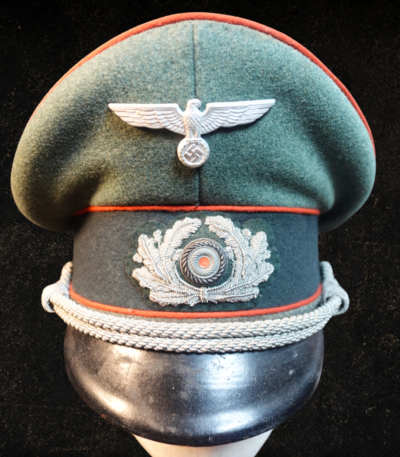
€0,01An attractive and original Wehrmacht (Heer) Artillerie Officer’s Schirmmütze, with the distinctive bright red (hochrot) Waffenfarbe denoting service with the Artillery branch. The cap displays the elegant appearance expected of privately purchased officer-quality headgear and retains excellent display appeal.
The cap features a high-quality feldgrau wool body with a dark bottle-green center band, beautifully highlighted by vivid red piping around both the crown and band. It retains its original aluminum Heer officer cap eagle, finely hand-embroidered silver bullion oak leaf wreath with metal officer cockade, silver officer chin cords, and black vulcanfiber visor. The buttons are sewn on with black thread (also used to sew on the sweat band in the middle at the back and the oak leaf wreath, this all looks period done so the extra thread might not have been cut back in the day).
The overall shape remains very attractive, with the typical saddle-form crown giving the cap excellent display characteristics. All insignia appear period-applied and match the cap well. The interior retains its original brown leather sweatband and silk lining.
Overall condition is very good, exhibiting only light age-related wear, with no significant moth damage observed to the exterior cloth. The colors remain strong, with particularly vibrant artillery piping that contrasts beautifully against the feldgrau body.
A highly desirable original Wehrmacht Heer officer’s visor cap from the Artillery branch, offering excellent display quality and representing one of the most recognizable pieces of German officer headgear from the Second World War.
Condition: Very good original condition with honest period wear. Interior shows use and age-related staining, with partial separation of the sweatband stitching. Please study the photographs carefully, as they form an integral part of the description.
Sold out
WWI Württemberg Enlisted Visor Cap – Reserve-Infanterie-Regiment 120 (Somme, Verdun, Flanderns!)
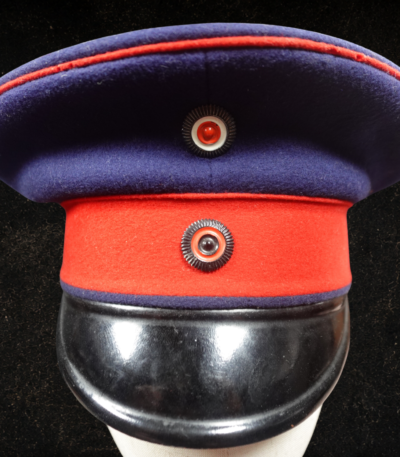
€0,01Original enlisted man’s visor cap from the Kingdom of Württemberg, attributed to Reserve Infantry Regiment No. 120, a unit with extensive and active service throughout World War 1.
The cap remains in good, color-fresh condition, with the cloth and trim retaining a pleasing and well-preserved appearance. It shows typical signs of age, including light moth damage and a few very small holes, the most noticeable being a small hole on the reverse within the red band.
Inside, the cap is clearly marked with the wearer’s name “Stemmler” alongside the regimental designation “Res. IR 120”, giving it strong historical authenticity and personal attribution.
A highly collectible and historically rich example, directly tied to a regiment that fought in many of the defining campaigns of the Great War. The named interior adds an extra layer of research potential and personal connection.
Sold out
WH Heer Infanterie Officer Schirmmütze – Infanterie-Regiment 109 – Named
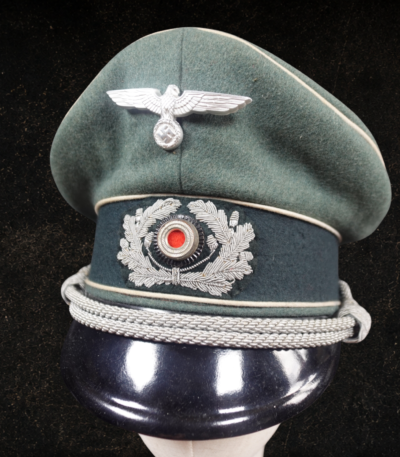
€0,01Original WWII German Heer officer’s Schirmmütze for an Infanterie officer, featuring the characteristic white Waffenfarbe piping.
A particularly attractive example in very good condition, retaining its original green-grey wool body, dark green/blue-green band, white piping, silver bullion officer’s wreath and cockade, and silver officer’s cap cords. The visor remains in excellent condition, making this a very appealing example for display or a serious Heer collection.
The interior is named and unit identified, with the marking “8. (MG) Kompanie/ Infanterie-Regiment 109”. This is an excellent original unit association. Infanterie-Regiment 109 was formed in 1936 and served as part of the 35. Infanterie-Division. Its 1939 organization included the II. Bataillon with the 5th–8th Companies, with the 8. MG-Kompanie specifically belonging to this battalion.
The regiment fought on the Western Front in 1939–40 before seeing extensive service on the Eastern Front. It was redesignated Grenadier-Regiment 109 in October 1942.
Condition: Very good overall, with only minor age/storage-related wear as shown.
A superb display-quality Heer officer’s cap with an interesting and documented unit connection.
Sold out
WH Heer Infanterie M40 Feldbluse – NCO – Combat Worn – Perfect “Kampfschwein” Tunic!
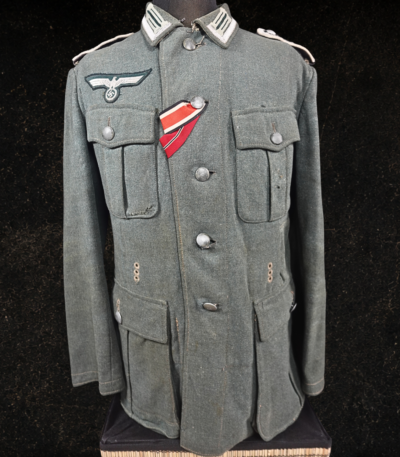
€1.250,00Original WWII German Heer M40-pattern Feldbluse, manufactured and issued for an NCO. A genuinely well-used combat tunic showing honest period wear throughout.
The Feldbluse has original insignia, including the machine-applied Heer breast eagle (this could have been changed or upgraded by the soldier once, as the eagle is an early one on green backing) and M36-style enlisted/NCO collar tabs, hand applied. It is completed with a pair of original private-purchase M36-pattern NCO shoulder boards. The tunic seems to be promoted along with the soldier.
The tunic shows numerous signs of service use, including period repairs and wear consistent with extended field use, giving it excellent character and an authentic combat-used appearance. The M40 pattern was introduced in 1940 as a development of the M36 Feldbluse, with the field-grey collar replacing the earlier dark-green collar, although M36-style modifications and components remained common on wartime tunics.
A particularly attractive example for a collection or display, with a good mannequin/display size and a very convincing period appearance.
Condition: good used/combat condition, with period repairs and wear as shown.
Sold out
Dienstauszeichnung für 12 Jahre – 12 Years of Service Award
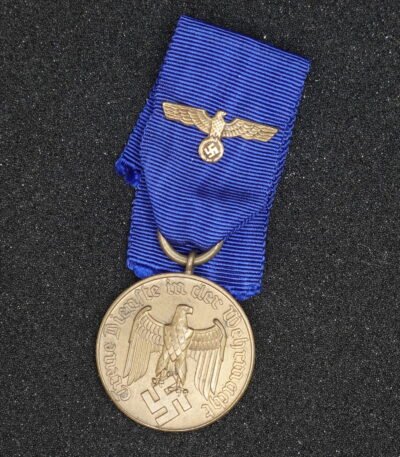
€90,00Original Wehrmacht Dienstauszeichnung für 12 Jahre (12 Years of Service Award), complete with ribbon and eagle on ribbon. Near Mint! Condition as seen.
Sold out
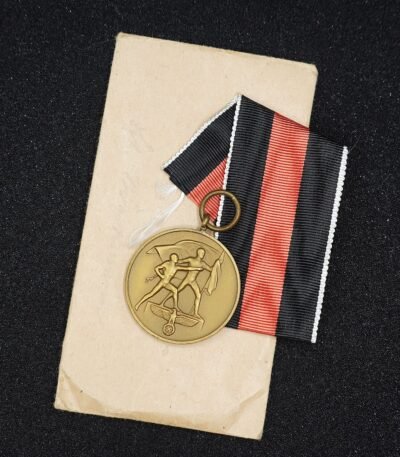
German Sudetenland Medal 1938 + Pouch Otto Fechler, Bernsbach
€85,00Original Medaille zur Erinnerung an den 1. Oktober 1938, commonly known as the Sudetenland Medal. This example is manufactured by Otto Fechler, Bernsbach and retains its original black-red-white ribbon.
Particularly desirable as it is accompanied by the original period presentation envelope, clearly marked “Otto Fechler, Bernsbach”. The medal features the standard design commemorating the incorporation of the Sudetenland into the German Reich on 1 October 1938, with the reverse bearing “1. Oktober 1938” and “Ein Volk – Ein Reich – Ein Führer.”
An attractive and complete original example, with the original ribbon and period issue envelope. Condition as shown in photographs.
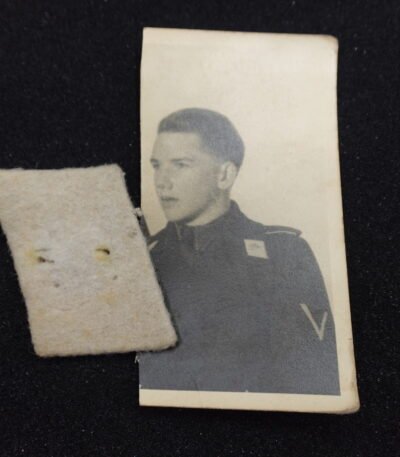
Worn “Hermann Göring” Collar Tab (Missing Skull)
€90,00Original worn “Hermann Göring” collar tab which is missing a Skull, as this was once worn by a Panzer soldier of the unit – Fallschirm-Panzer-Regiment “Hermann Göring” of the Fallschirm-Panzer-Division “Hermann Göring”. Condition as seen.
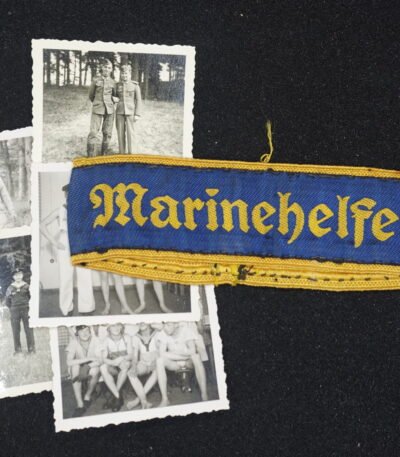
Marine-HJ Kriegsmarine Marinehelfer Cuff Title
€250,00Original WWII German Kriegsmarine “Marinehelfer” cuff title, featuring yellow woven Gothic lettering on a blue field with the distinctive gold/yellow woven border associated with the Marinehelfer rank distinction.
The cuff title is accompanied by four original period photographs, showing the young wearer in uniform and with fellow Marine-HJ personnel, providing an interesting documented grouping. The photographs give this piece considerably more historical context than a loose insignia alone.
Marinehelfer were young members of the Marine-HJ who were assigned to auxiliary service with the Kriegsmarine, particularly from 1943 onwards. They served in roles including coastal and naval anti-aircraft defence, communications and other support duties. The “Marinehelfer” cuff title was worn on the left sleeve of the uniform.
This example is the standard “Marinehelfer” version rather than “Marineoberhelfer”, and the gold/yellow edging is clearly visible. Contemporary accounts confirm that Marinehelfer cuff titles were worn on the uniform and that gold edging was associated with advancement to Marineoberhelfer.
Sold out
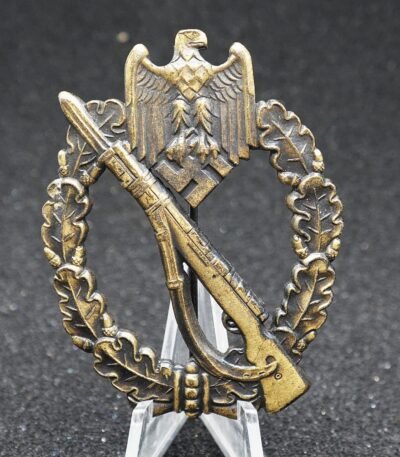
Infanterie-Sturmabzeichen in Bronze (Unmarked Paul Deumer) – NEAR MINT
€275,00Original WWII German Infanterie-Sturmabzeichen in Bronze, manufactured by Paul Deumer, Ludenscheid.
A particularly attractive example in near-mint condition, retaining a substantial amount of its original bronze finish. The badge features the characteristic Wehrmacht eagle, crossed rifle and bayonet, and oak-leaf wreath.
The reverse retains the original vertical pin and catch assembly, with the construction and finish clearly visible in the photographs.
A very nice example for the collector of German WWII combat badges and Infanterie-Sturmabzeichen, especially given the excellent remaining bronze finish.
Condition: Near mint, with excellent original bronze finish remaining. Minor age-related handling/storage marks may be present.
Sold out
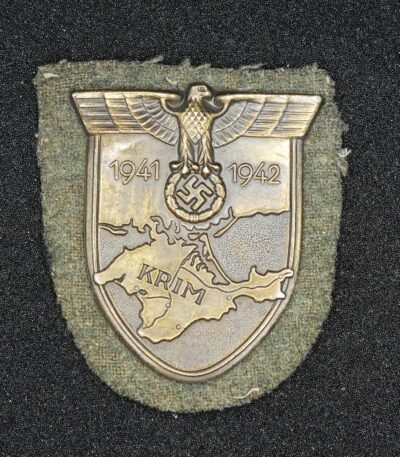
Krimschild (Crimea Shield) – J.F.S. 42
€0,01Original Krimschild (Crimea Shield), awarded to German personnel who took part in the fighting and operations in the Crimea campaign of 1941–1942.
This example is mounted on its original feldgrau uniform backing and shows clear signs of genuine period wear and use. The shield features the characteristic German eagle, the dates 1941–1942, and a map of the Crimea marked “KRIM”.
The reverse retains the original attachment system and, notably, bears the rare maker marking “J.F.S. 42”, indicating manufacture by J.F. Steinauer of Ludenscheid in 1942.
The backing has been removed from a uniform, leaving the original cut and stitching clearly visible. The shield itself shows attractive age, wear and patina consistent with a genuine field-used example.
Condition: Worn original condition, with age-related wear and patina as shown. The backing has been removed from a uniform.
A desirable original example for collectors of German WWII campaign shields, Heer uniforms and Crimea campaign militaria.
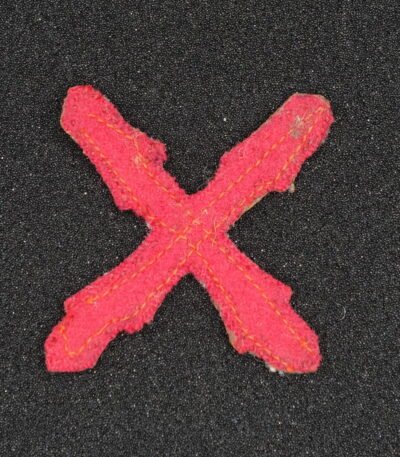
Walloon “REX” Breast Insignia
€1.100,00Original Rare Walloon “REX” Breast Insignia. Condition as seen.
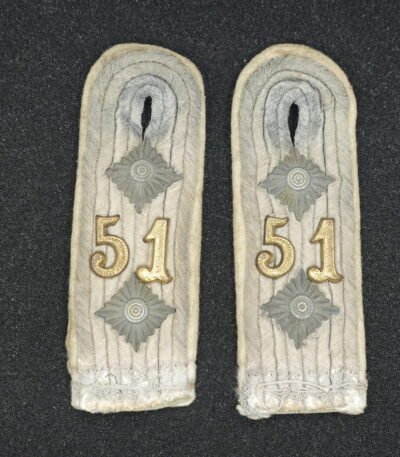
Wehrmacht Heer Infanterie Shoulderboards – Hauptmann, Infanterie-Regiment 51
€85,00A genuine pair of original Wehrmacht Heer officer shoulderboards for a Hauptmann (Captain) of Infanterie-Regiment 51 of the 18. Infanterie-Division (later 18. Panzer-Grenadier-Division).
The shoulderboards feature the characteristic white infantry branch colour, embroidered officer braid and gilt “51” regimental cyphers, together with the appropriate rank insignia. Both shoulderboards retain their original construction and stitching.
The pair is in well-worn original condition, showing age, service wear, staining, fraying and general signs of use as clearly visible in the photographs. The reverse construction and original attachment details are also present.
An authentic and attractive original pair for collectors of Wehrmacht Heer uniforms, German infantry insignia and regimental items.
Sold out
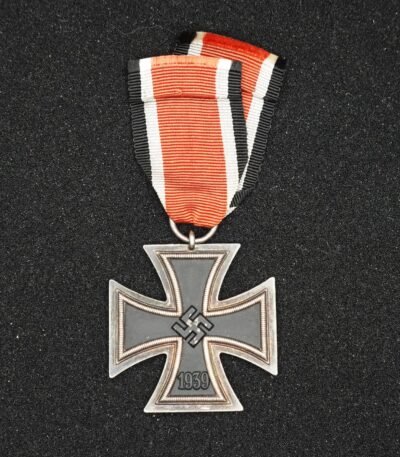
Iron Cross 2nd Class 1939 (Eisernes Kreuz II. Klasse) – Unmarked
€110,00Original WWII German Iron Cross 2nd Class (Eisernes Kreuz 2. Klasse 1939).
A classic three-piece construction example featuring a magnetic iron core with silvered frame. The cross retains an attractive untouched appearance with honest age and light wear, showing a pleasing dark core contrast against the toned frame.
The ring appears unmarked. The suspension ring remains nicely preserved and the cross presents very well overall.
Condition is very good, with crisp details to both obverse and reverse. The core finish remains strong, while the frame shows natural patina and age consistent with an original wartime piece.
Sold out
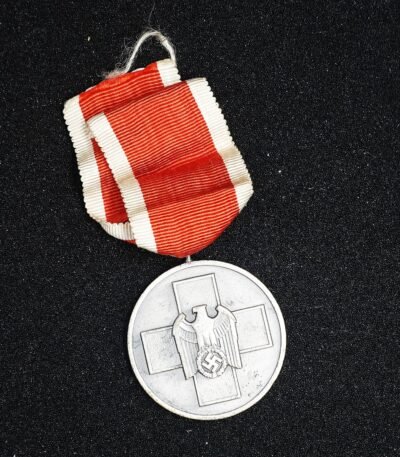
WWII German Medaille für deutsche Volkspflege – Social Welfare Medal with Ribbon
€75,00Original WWII German Medaille für deutsche Volkspflege (Medal for German Social Welfare), complete with its original ribbon.
The medal features the inscription “Medaille für deutsche Volkspflege” on the reverse, while the obverse displays a large cross with national eagle and swastika motif. The piece retains a pleasing silvered finish with honest age patina and light wear consistent with period use and storage.
Instituted to recognize contributions and service within the field of public welfare and social care, the award was presented to individuals who distinguished themselves through charitable, medical, or social service activities.
The medal remains in very good condition overall, with an attractive untouched appearance and original suspension ribbon attached.
Condition exactly as shown in the photographs.
Unknown Veteran (Unit) Pin + Nametag
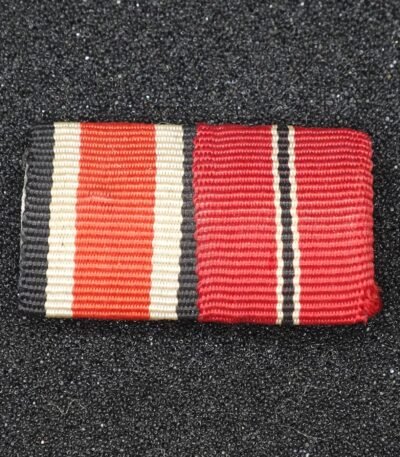
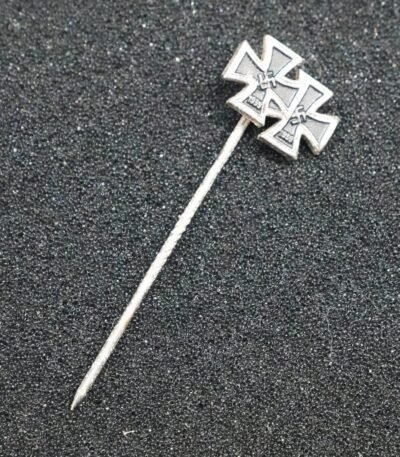
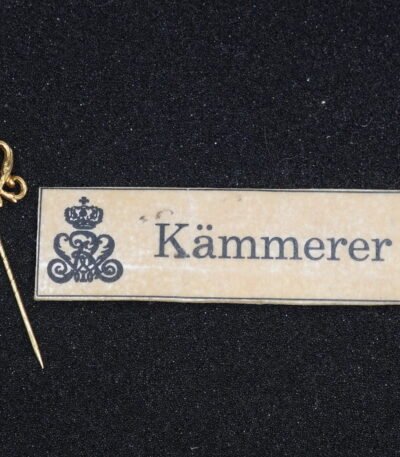
€25,00Original Unknown Veteran (Unit) Pin + Nametag. World War I unit? Condition as seen.
Sold out
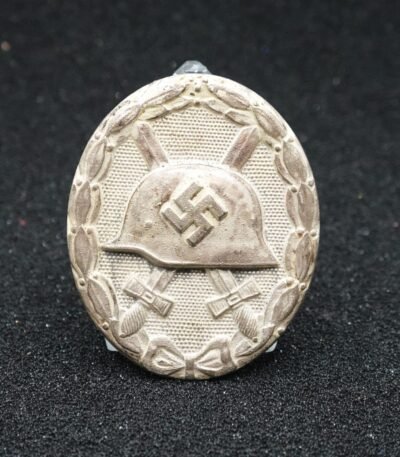
Wound Badge in Silver – “100” Rudolf Wächtler & Lange, Mittweida – Maker Marked
€0,01Original German Wound Badge in Silver (Verwundetenabzeichen in Silber), manufactured by Rudolf Wächtler & Lange, Mittweida, and maker marked “100” on the reverse at the catch.
The badge is constructed in silvered zinc and retains a significant amount of its original silver finish, giving it a very attractive appearance. The remaining finish contrasts nicely with the areas of natural age and patina developed over the years.
The “100” maker marking identifies production by Rudolf Wächtler & Lange of Mittweida. Maker-marked examples are highly desirable among collectors who specialize in manufacturer variations of the German Wound Badge.
Overall, a very attractive original example in very good condition, with plenty of original silver finish remaining.
Sold out
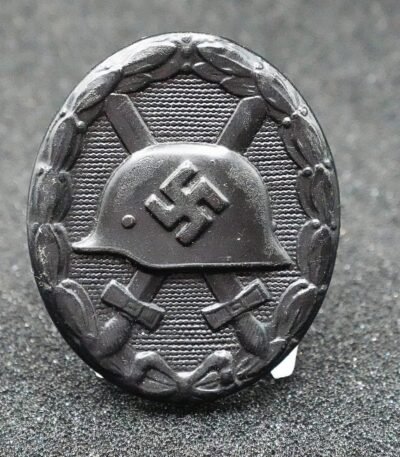
Wound Badge in Black – Alois Rettenmaier “16” – Maker Marked
€115,00Original German Wound Badge in Black (Verwundetenabzeichen in Schwarz) manufactured by Alois Rettenmaier, Schwäbisch Gmünd, maker marked “16”.
The badge is manufactured in Buntmetall and remains in mint condition, retaining its original finish and excellent overall appearance.
A particularly fine example of the black grade, ideal for collectors of German World War II awards and maker-marked Verwundetenabzeichen.
Sold out
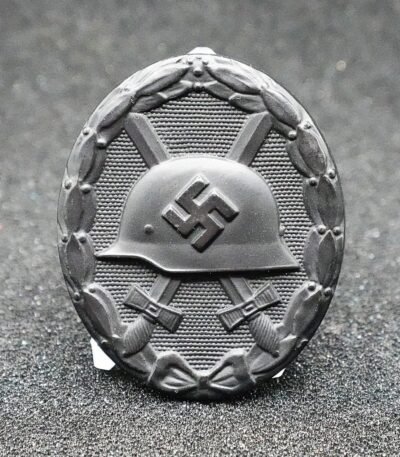
Wound Badge in Black – B.H. Mayer “26” – Maker Marked
€145,00Original German Wound Badge in Black (Verwundetenabzeichen in Schwarz) manufactured by B.H. Mayer’s Kunstprägeanstalt, Pforzheim, and maker marked “26” on the needle.
The number 26 is the recognized manufacturer code for B.H. Mayer of Pforzheim, a very hard to find maker. Maker-marked examples of the Wound Badge are considerably less frequently encountered than unmarked examples, making this an especially desirable variant for the specialist collector.
This example is in mint condition, retaining an exceptionally well-preserved original finish. The overall condition is outstanding, making this a particularly attractive example for a collection focused on German World War II awards and manufacturer variations.
Sold out
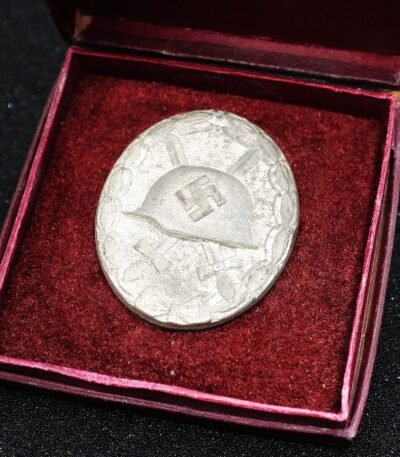
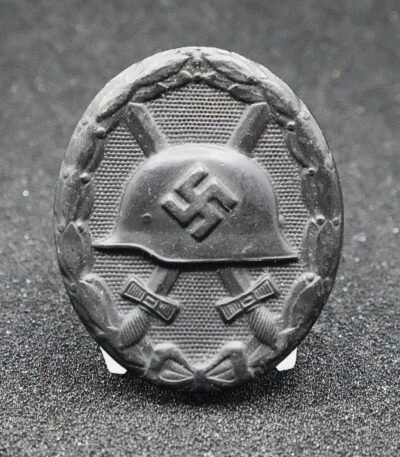
Wound Badge in Silver – “107” Carl Wild, Hamburg in Original Case
€175,00Original German Wound Badge in Silver (Verwundetenabzeichen in Silber), manufactured by Carl Wild, Hamburg, and maker marked “107” on the reverse.
The badge is constructed in zinc and retains a substantial amount of its original silver finish. The obverse displays crisp detailing to the helmet, crossed swords and surrounding wreath, with natural age-related wear consistent with an original wartime example.
The reverse is clearly maker marked “107”, identifying production by Carl Wild of Hamburg.
The badge is accompanied by an original period presentation case, featuring a dark red exterior and red velvet interior. The case shows appropriate age and storage wear but remains an attractive and desirable addition to the set.
A particularly nice complete example for collectors of maker-marked German World War II awards, with the original case making it especially appealing.
Sold out
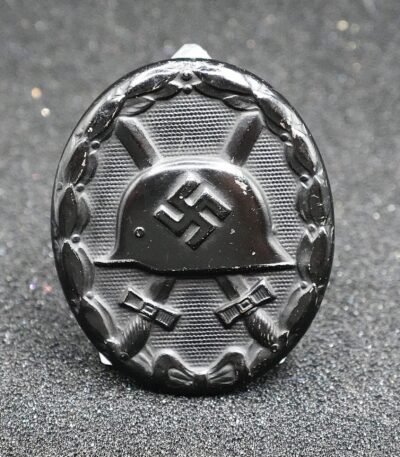
Wound Badge in Black – Alois Rettenmaier “16” – Maker Marked
€115,00Original German Wound Badge in Black (Verwundetenabzeichen in Schwarz) manufactured by Alois Rettenmaier, Schwäbisch Gmünd, maker marked “16”.
The badge is manufactured in Buntmetall and remains in mint condition, retaining its original finish and excellent overall appearance.
A particularly fine example of the black grade, ideal for collectors of German World War II awards and maker-marked Verwundetenabzeichen.
Sold out
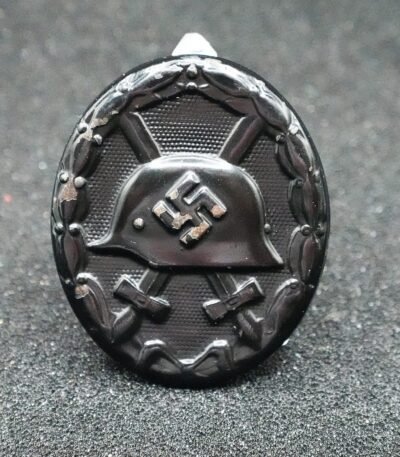
Wound Badge in Black – L/56 & 116 Funke & Brünninghaus, Lüdenscheid – Double Maker Marked
€85,00Original German Wound Badge in Black (Verwundetenabzeichen in Schwarz), double maker marked with “L/56” and “116” beneath the pin.
Both markings are attributed to Funke & Brünninghaus, Lüdenscheid, with L/56 being the firm’s LDO code and 116 its manufacturer number.
The combination of both markings on a single Wound Badge represents a rare and highly desirable manufacturer variation. Examples with the double marking are specifically described by specialist dealers as rare.
The badge is offered in condition as shown, with the original period construction and both maker markings clearly present.
A particularly interesting piece for collectors specializing in maker variations and manufacturer markings of the German World War II Verwundetenabzeichen.
Sold out
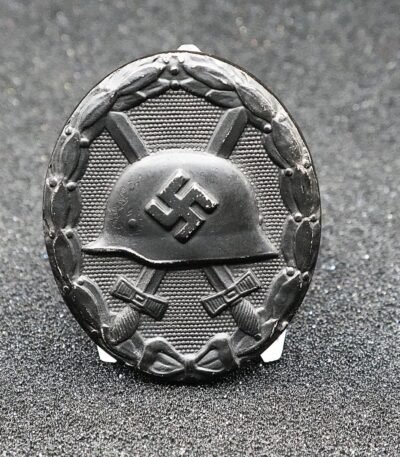
Wound Badge in Black – “107” Carl Wild, Hamburg – Maker Marked
€60,00Original German Wound Badge in Black (Verwundetenabzeichen in Schwarz), manufactured by Carl Wild of Hamburg and maker marked “107” on the reverse.
This example is constructed in blackened Buntmetall, a desirable construction variant of the 1939 pattern Wound Badge. The “107” maker mark clearly identifies production by Carl Wild, Hamburg.
An excellent addition for collectors specializing in German World War II decorations and manufacturer-marked Verwundetenabzeichen.
Sold out
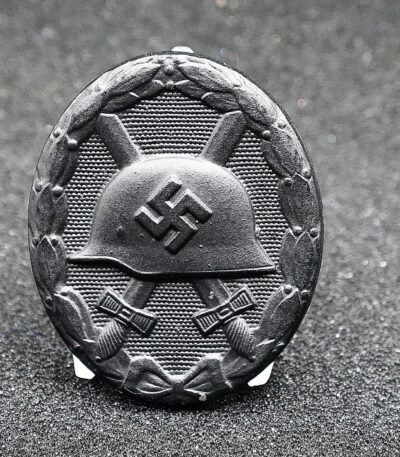
Wound Badge in Black – L/53 Hymmen & Co., Lüdenscheid – Maker Marked
€45,00Original German Wound Badge in Black (Verwundetenabzeichen in Schwarz), maker marked “L/53” on the reverse. Looks to be lacquered on the reverse? When was this done?
The L/53 maker code identifies the manufacturer as Hymmen & Co., Lüdenscheid, a recognized producer of German World War II decorations.
This example is manufactured in iron (Eisen) and features the characteristic black finish of the 1939-pattern Wound Badge.
A desirable original example for collectors specializing in maker-marked German World War II awards and manufacturer variations.
Sold out
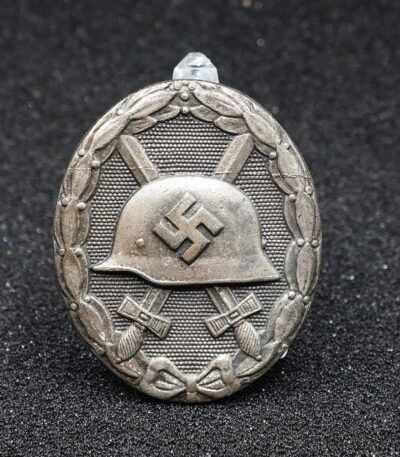
Wound Badge in Black – Unmarked
€45,00Original German Wound Badge in Black (Verwundetenabzeichen in Schwarz), produced in iron (Eisen) and remaining unmarked.
A classic wartime example of the 1939-pattern Wound Badge, featuring the characteristic blackened iron construction and original period pin-back assembly.
The badge is offered in condition as shown, with natural signs of age and wear consistent with an original wartime example.
Sold out
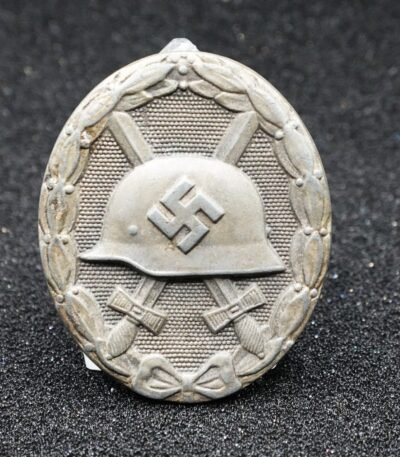
Wound Badge in Silver – L/53 Hymmen & Co., Lüdenscheid – Maker Marked
€90,00Original German Wound Badge in Silver (Verwundetenabzeichen in Silber), maker marked “L/53” on the reverse.
The L/53 maker code identifies the manufacturer as Hymmen & Co., Lüdenscheid, a recognized producer of German World War II decorations.
This example is manufactured in zinc, representing the later-war construction commonly encountered with the silver grade of the Verwundetenabzeichen.
A desirable original example for collectors specializing in maker-marked German World War II awards and manufacturer variations.
Sold out
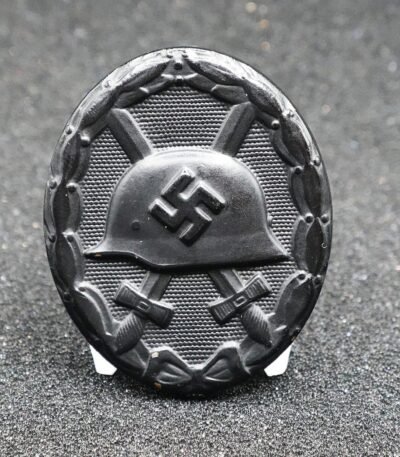
Wound Badge in Silver – L/53 Hymmen & Co., Lüdenscheid – Maker Marked
€90,00Original German Wound Badge in Silver (Verwundetenabzeichen in Silber), maker marked “L/53” on the reverse.
The L/53 maker code identifies the manufacturer as Hymmen & Co., Lüdenscheid, a recognized producer of German World War II decorations.
This example is manufactured in zinc, representing the later-war construction commonly encountered with the silver grade of the Verwundetenabzeichen.
A desirable original example for collectors specializing in maker-marked German World War II awards and manufacturer variations.
Sold out
Wound Badge in Black – Unmarked
€45,00Original German Wound Badge in Black (Verwundetenabzeichen in Schwarz), produced in iron (Eisen) and remaining unmarked.
A classic wartime example of the 1939-pattern Wound Badge, featuring the characteristic blackened iron construction and original period pin-back assembly.
The badge is offered in condition as shown, with natural signs of age and wear consistent with an original wartime example.
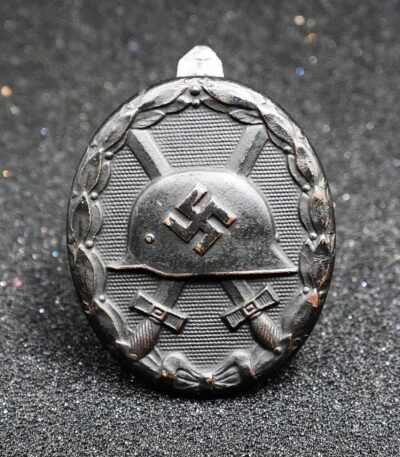
Wound Badge in Black – L/56 Funke & Brünninghaus, Lüdenscheid – Maker Marked
€80,00Original German Wound Badge in Black (Verwundetenabzeichen in Schwarz), maker marked “L/56”.
The L/56 marking identifies the manufacturer as Funke & Brünninghaus, Lüdenscheid, a well-known producer of German World War II decorations.
The badge is offered in condition as shown, retaining its original period construction and hardware. A desirable example for collectors specializing in maker-marked German World War II awards and Verwundetenabzeichen.
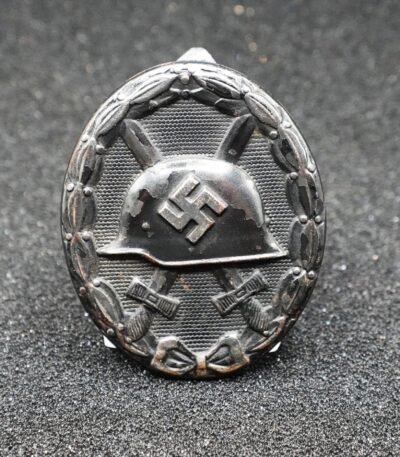
Sold out
Wound Badge in Black – L/54 Schauerte & Höhfeld, Lüdenscheid – Maker Marked
€65,00Original German Wound Badge in Black (Verwundetenabzeichen in Schwarz), maker marked “L/54” on the reverse.
The L/54 maker code identifies the manufacturer as Schauerte & Höhfeld, Lüdenscheid, a recognized producer of German World War II decorations.
This example is manufactured in iron (Eisen) and features the characteristic black finish of the 1939-pattern Wound Badge.
A desirable original example for collectors specializing in maker-marked German World War II awards and manufacturer variations.
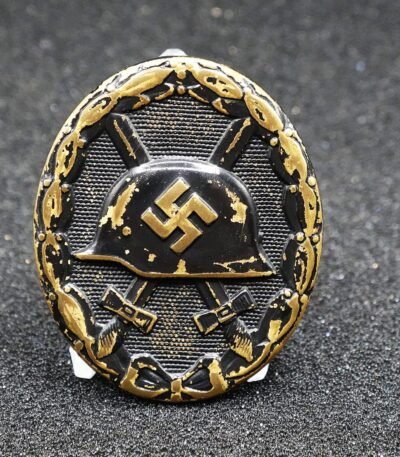
Sold out
Wound Badge in Black – Unmarked
€40,00Original German Wound Badge in Black (Verwundetenabzeichen in Schwarz), produced in iron (Eisen) and remaining unmarked.
A classic wartime example of the 1939-pattern Wound Badge, featuring the characteristic blackened iron construction and original period pin-back assembly.
The badge is offered in condition as shown, with natural signs of age and wear consistent with an original wartime example.
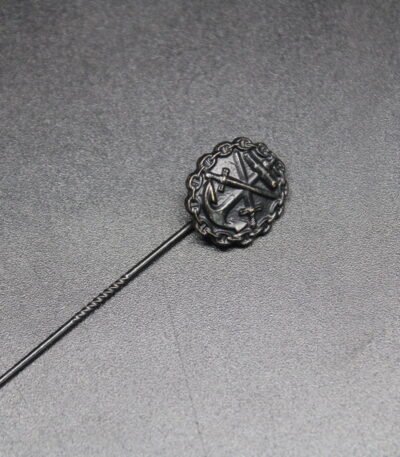
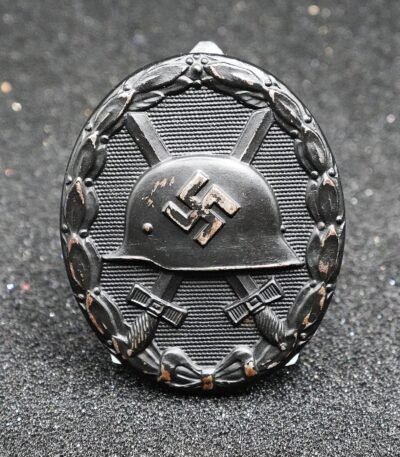
WWI Kaiserliche Marine Wound Badge in Black Stickpin
€75,00Original World War I German “Kaiserliche Marine” (Imperial Marine) Wound Badge in Black Stickpin. Condition as seen.
Sold out
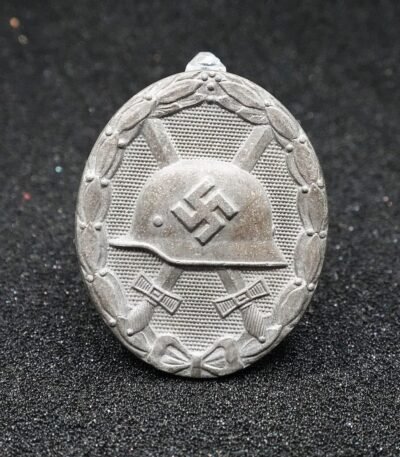
Wound Badge in Black – L/56 Funke & Brünninghaus, Lüdenscheid – Maker Marked
€80,00Original German Wound Badge in Black (Verwundetenabzeichen in Schwarz), maker marked “L/56”.
The L/56 marking identifies the manufacturer as Funke & Brünninghaus, Lüdenscheid, a well-known producer of German World War II decorations.
The badge is offered in condition as shown, retaining its original period construction and hardware. A desirable example for collectors specializing in maker-marked German World War II awards and Verwundetenabzeichen.
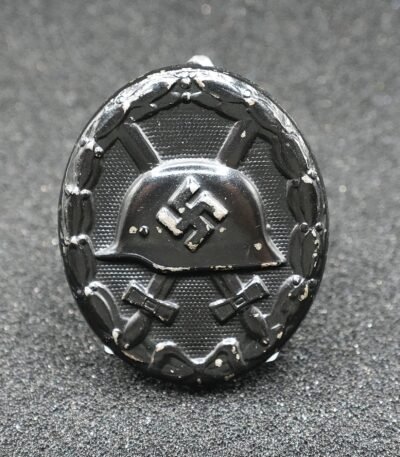
Wound Badge in Silver – L/56 Funke & Brünninghaus, Lüdenscheid – Maker Marked
€120,00Original German Wound Badge in Silver (Verwundetenabzeichen in Silber), maker marked L/56 on the reverse, indicating manufacture by Funke & Brünninghaus, Lüdenscheid.
This is the zinc version of the 1939-pattern Wound Badge in Silver. The clearly visible L/56 maker marking makes this a desirable example for collectors specializing in manufacturer variations of the Verwundetenabzeichen.
Funke & Brünninghaus examples marked L/56 are relatively scarce and hard to find, with both zinc and earlier Buntmetall examples documented.
A very nice original example of a sought-after maker-marked silver Wound Badge.
Sold out
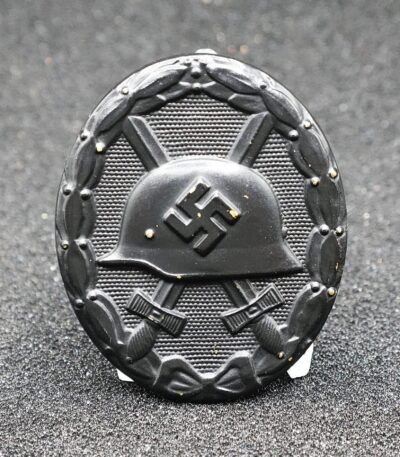
Wound Badge in Black – Unmarked
€45,00Original German Wound Badge in Black (Verwundetenabzeichen in Schwarz), produced in iron (Eisen) and remaining unmarked.
A classic wartime example of the 1939-pattern Wound Badge, featuring the characteristic blackened iron construction and original period pin-back assembly.
The badge is offered in condition as shown, with natural signs of age and wear consistent with an original wartime example.
Sold out
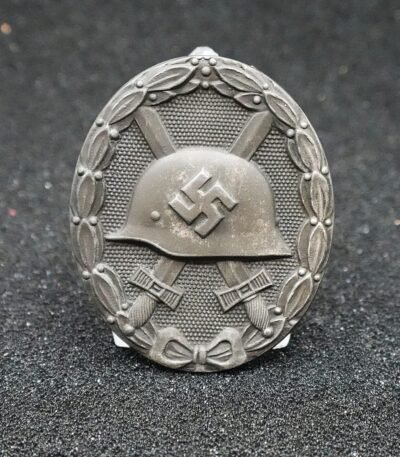
Wound Badge in Black – Unmarked
€45,00Original German Wound Badge in Black (Verwundetenabzeichen in Schwarz), produced in iron (Eisen) and remaining unmarked. Possible attributed to Adolf Besson?
A classic wartime example of the 1939-pattern Wound Badge, featuring the characteristic blackened iron construction and original period pin-back assembly.
The badge is offered in condition as shown, with natural signs of age and wear consistent with an original wartime example.
Sold out
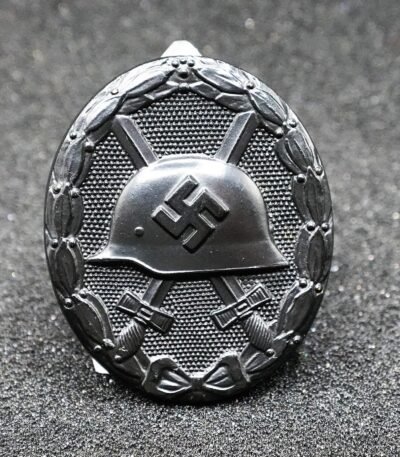
Wound Badge in Silver – L/22 Glaser & Sohn, Dresden – Maker Marked
€85,00Original German Wound Badge in Silver (Verwundetenabzeichen in Silber), maker marked L/22 on the reverse, indicating Glaser & Sohn, Dresden.
This is the second pattern Wound Badge in silver, produced in silvered zinc and fitted with its original period hardware. The clearly visible L/22 maker marking makes this a desirable example for collectors who specialize in manufacturer variations of the Verwundetenabzeichen.
Glaser & Sohn examples marked L/22 are well documented, with specialist dealers specifically identifying the marking with the Dresden manufacturer.
A very attractive and collectible maker-marked example of the silver grade.
Sold out
Wound Badge in Black – Unmarked
€45,00Original German Wound Badge in Black (Verwundetenabzeichen in Schwarz), produced in iron (Eisen) and remaining unmarked. Possible attributed to Adolf Besson?
A classic wartime example of the 1939-pattern Wound Badge, featuring the characteristic blackened iron construction and original period pin-back assembly.
The badge is offered in condition as shown, with natural signs of age and wear consistent with an original wartime example.
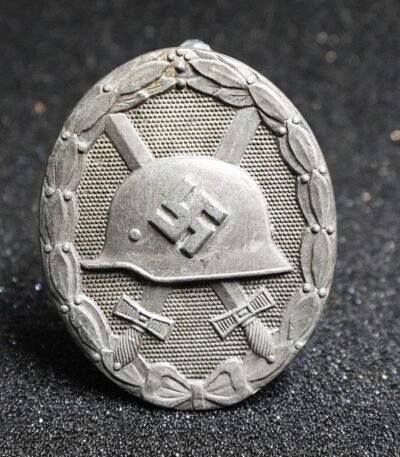
Wound Badge in Silver – L/56 Funke & Brünninghaus, Lüdenscheid – Maker Marked
€120,00Original German Wound Badge in Silver (Verwundetenabzeichen in Silber), maker marked L/56 on the reverse, indicating manufacture by Funke & Brünninghaus, Lüdenscheid.
This is the zinc version of the 1939-pattern Wound Badge in Silver. The clearly visible L/56 maker marking makes this a desirable example for collectors specializing in manufacturer variations of the Verwundetenabzeichen.
Funke & Brünninghaus examples marked L/56 are relatively scarce and hard to find, with both zinc and earlier Buntmetall examples documented.
A very nice original example of a sought-after maker-marked silver Wound Badge.
Sold out
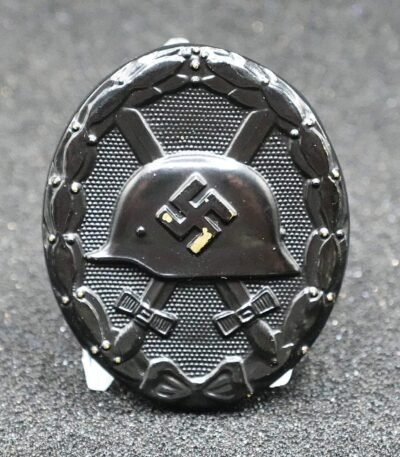
Wound Badge in Black – Unmarked
€40,00Original German Wound Badge in Black (Verwundetenabzeichen in Schwarz), produced in iron (Eisen) and remaining unmarked. The back seems to have been cleaned of the black finish to give it a complete golden look.
A classic wartime example of the 1939-pattern Wound Badge, featuring the characteristic blackened iron construction and original period pin-back assembly.
The badge is offered in condition as shown, with natural signs of age and wear consistent with an original wartime example.