

Hermann Hogeback – Lehrgeschwader 1 & Kampfgeschwader 6 (Schwertern)
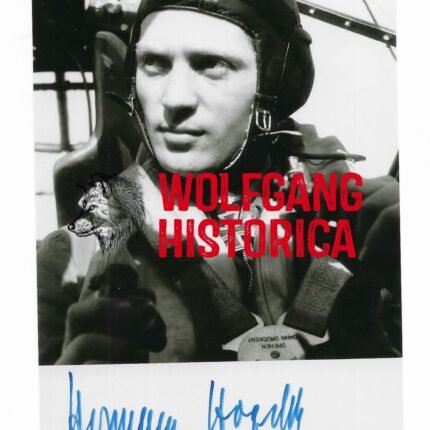
€25,00Original Postwar Signature on a Postwar Photo of Hermann Hogeback. Oberstleutnant Hermann Hogeback (25.08.1914 in Idar-Oberstein † 15.02.2004 in Dötligen-Wildeshausen) earned the Deutsches Kreuz in Gold on September 24, 1942, the Ritterkreuz on September 8, 1941 as Oberleutnant und Staffelkapitän of the 9. Staffel/ Lehrgeschwader 1, the Eichenlaub on February 19, 1943 as Hauptmann und Kommandeur of the III. Gruppe/ Kampfgeschwader 6 and the Schwertern on January 26, 1945 as Oberstleutnant und Kommodore of Kampfgeschwader 6.
Provenance: This signature comes from one of the largest postwar signature collection I’ve ever commissioned. This collection was started by a Waffen-SS Veteran, Werner H., in the 1950’s until he passed away.
Hermann Hogeback – Lehrgeschwader 1 & Kampfgeschwader 6 (Schwertern)
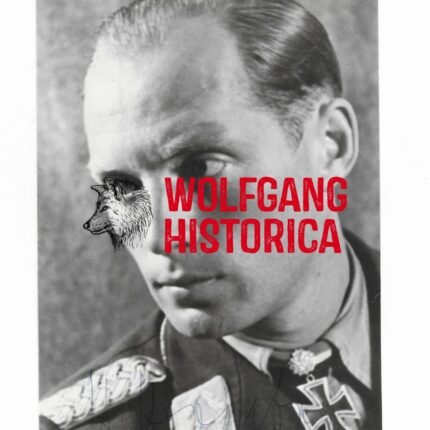
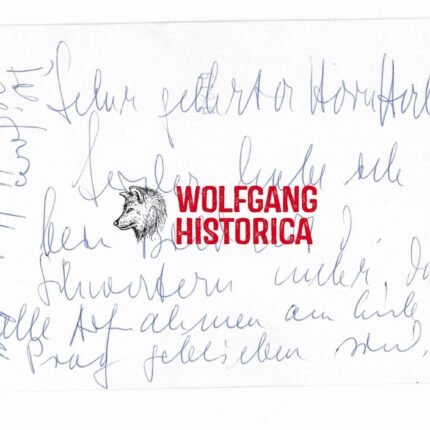
€25,00Original Postwar Signature on a Postwar Photo of Hermann Hogeback. Oberstleutnant Hermann Hogeback (25.08.1914 in Idar-Oberstein † 15.02.2004 in Dötligen-Wildeshausen) earned the Deutsches Kreuz in Gold on September 24, 1942, the Ritterkreuz on September 8, 1941 as Oberleutnant und Staffelkapitän of the 9. Staffel/ Lehrgeschwader 1, the Eichenlaub on February 19, 1943 as Hauptmann und Kommandeur of the III. Gruppe/ Kampfgeschwader 6 and the Schwertern on January 26, 1945 as Oberstleutnant und Kommodore of Kampfgeschwader 6.
Provenance: This signature comes from one of the largest postwar signature collection I’ve ever commissioned. This collection was started by a Waffen-SS Veteran, Werner H., in the 1950’s until he passed away.
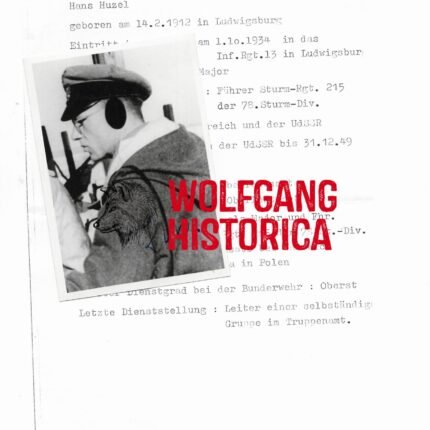
Hans Huzel – Sturm-Regiment 215 (78. Volks-Sturm-Division)
€35,00Original Postwar Signature on a Postwar Photo of Hans Huzel. Major Hans Huzel (14.02.1912 in Ludwigsburg † 24.06.1981 in Erfstadt-Lechenich) earned the Ritterkreuz des Eisernen Kreuzes on February 18, 1945 as Major und Führer of Sturm-Regiment 215 of the 78. Volks-Sturm-Division.
Provenance: This signature comes from one of the largest postwar signature collection I’ve ever commissioned. This collection was started by a Waffen-SS Veteran, Werner H., in the 1950’s until he passed away.
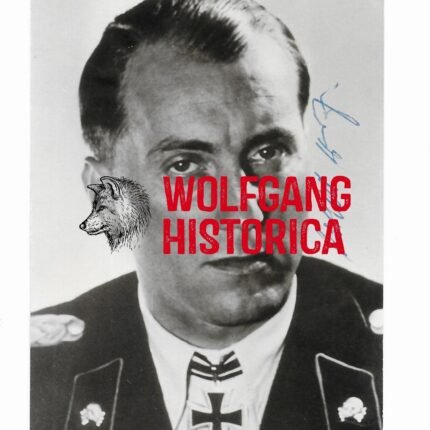
Alfred Wolf – Panzer-Regiment 23 (23. Panzer-Division)
€35,00Original Postwar Signature on a Postwar Photo of Alfred Wolf. Major Alfred Wolf (07.04.1914 in Möhringen † 04.12.2000 in Stuttgart) earned the Deutsches Kreuz in Gold on September 20, 1943 and the Ritterkreuz des Eisernen Kreuzes on April 15, 1944 as Major und Kommandeur of I. Abteilung/ Panzer-Regiment 23 of the 23. Panzer-Division.
Provenance: This signature comes from one of the largest postwar signature collection I’ve ever commissioned. This collection was started by a Waffen-SS Veteran, Werner H., in the 1950’s until he passed away.

Maximilian von Edelsheim – Radfahr-Abt. 1 & 24. Panzer-Division (Stalingrad! Battle of Berlin!) (Schwertern)
€85,00Original Postwar Signature on a Postwar Photo of Maximilian Reichsfreiherr von Edelsheim. General der Panzertruppe Maximilian von Edelsheim (06.07.1887 in Berlin † 26.04.1994 in Constance) earned the Ritterkreuz des Eisernen Kreuzes on July 30, 1941 as Oberstleutnant und Kommandeur of Radfahr-Abteilung 1 of the 1. Kavallerie-Division, the Eichenlaub on December 23, 1942 as Oberst und Kommandeur of the Panzergrenadier-Regiment 26 of the 24. Panzer-Division and the Schwertern on October 23, 1944 as Generalleutnant und Kommandeur of the 24. Panzer-Division. He earned the Eichenlaub during the Battle for Stalingrad! He was flown out of the pocket.
He negotiated the surrender of German forces to the Americans at the bridge at Tangermünde on the Elbe River on or about May 2, 1945. The German 12th Army, under General Walther Wenck had previously done a 180 degree turn away from the Western Allies, resulting from an order to relieve Berlin from the Soviet attack. Disobeying the order, Wenck fought due East, into the Spree Forest region, toward the town of Halbe and linked up with the remnants of the German 9th Army. They then reversed and went west, back to the Elbe. There, Edelsheim crossed the Elbe on a schwimmwagen and negotiated the surrender of all German forces on the West side of the Elbe to the Americans. Read more on Maximilian von Edelsheim (Wikipedia)
Provenance: This signature comes from one of the largest postwar signature collection I’ve ever commissioned. This collection was started by a Waffen-SS Veteran, Werner H., in the 1950’s until he passed away.
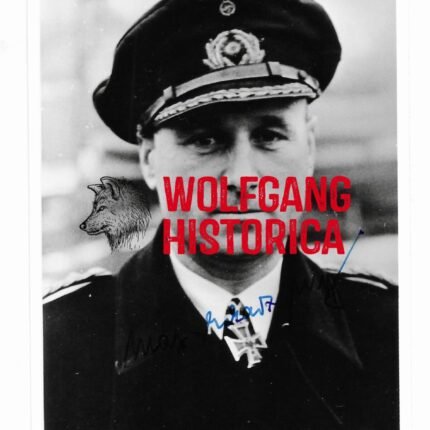
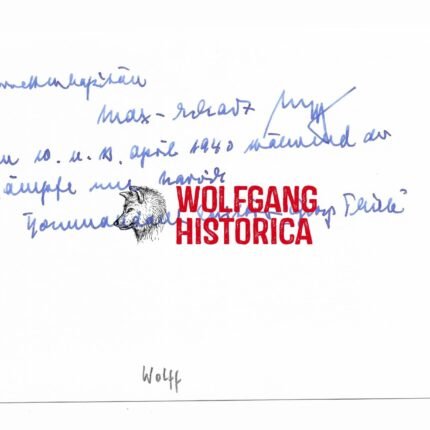
Max-Eckart Wolff – Zerstörer Z-2 “Georg Thiele” (Narvik)
€0,01Original Postwar Signature on a Postwar Photo of Max-Eckart Wolff. Korvettenkäpitan Max-Eckart Wolff (19.12.1902 in Wernigerode † 09.11.1988 in Bremen) earned the Ritterkreuz des Eisernen Kreuzes on August 4, 1940 as Korvettenkapitän und Kommandant of Zerstörer Z-2 “Georg Thiele” during the German invasion of Norway!
Korvettenkapitän Wolff distinguished himself as a destroyer captain in the battles around Narvik during the German invasion of Norway. His destroyer, “Georg Thiele”, sank the British destroyers “Hardy” and “Hunter” on the 10.04.1940. It then torpedoed another British destroyer (“Eskimo”) on the 13.04.1940. Later that day his destroyer covered the disembarkation of the crews of 3 German destroyers and was then scuttled, having been trapped by the British navy. Despite the overall German defeat during these two battles, Wolff and his crew had put up such a good account of themselves that he would be awarded the Knight’s Cross.
Provenance: This signature comes from one of the largest postwar signature collection I’ve ever commissioned. This collection was started by a Waffen-SS Veteran, Werner H., in the 1950’s until he passed away.
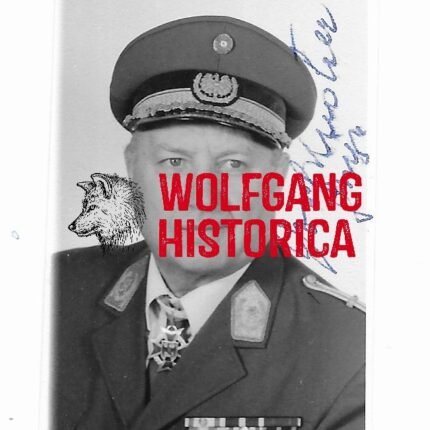
Josef Knotzer – Flughafen Horst Wiesbaden – Alarmeinheiten Wiesbaden bei Remagen
€25,00Original Postwar Signature on a Postwar Photo of Josef Knotzer. Major Josef Knotzer (09.03.1910 in Pötsching † 09.04.1997 in Eisenstadt) earned the Ritterkreuz des Eisernen Kreuzes on March 1, 1940 as Major und Kommandant of Flughafen Horst Wiesbaden and Führer der Alarmeinheiten aus dem Raum Wiesbaden bei Remagen. Small ID size.
Awarded for his leadership of the Luftgau XII’s alarm units subordinated to the 9. Panzer-Division in early 1945. He achieved a local defense success with this unit in the Rheinbreitbach – Bad Honnef area.
Provenance: This signature comes from one of the largest postwar signature collection I’ve ever commissioned. This collection was started by a Waffen-SS Veteran, Werner H., in the 1950’s until he passed away.
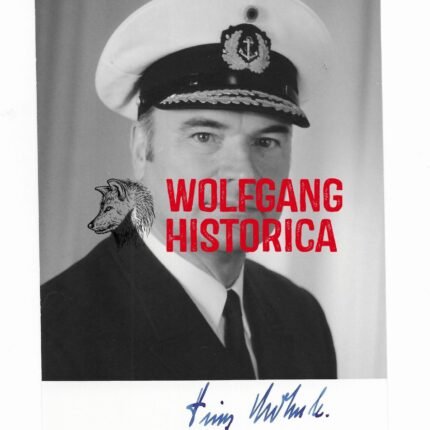
Heinz Kühnle – Kriegsmarine Officer (later Vizeadmiral of the Bundesmarine)
€25,00Original Postwar Signature on a Postwar Photo of Heinz Kühnle. Vizeadmiral (Bundesmarine) Heinz Kühnle (16.01.1915 in Duisburg † 12.10.2001) was an officer in the Kriegsmarine during World War II and later became a Vizeadmiral of the Bundesmarine.
Read more about Heinz Kühnle (Wikipedia)
Provenance: This signature comes from one of the largest postwar signature collection I’ve ever commissioned. This collection was started by a Waffen-SS Veteran, Werner H., in the 1950’s until he passed away.
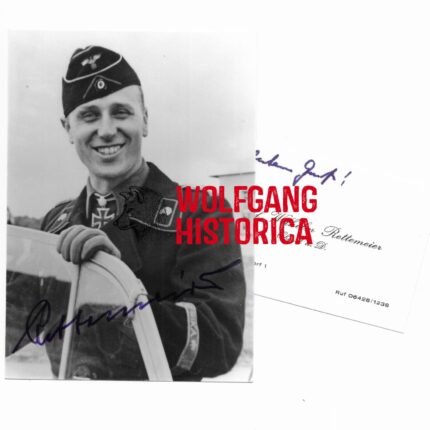
Josef-Wilhelm Rettemeier – Panzer-Abteilung 5 (Eichenlaub)
€45,00Original Postwar Signature on a Postwar Photo of Josef-Wilhelm Rettemeier. Major Josef-Wilhelm Rettemeier (17.09.1914 in Niederdollendorf † 19.12.1997 in Bad Nauheim) earned the Ritterkreuz on December 5, 1943 as Hauptmann und Kommandeur of Panzer-Abteilung 5 and the Eichenlaub on March 13, 1945 as Hauptmann und Kommandeur of Panzer-Abteilung 5.
Eichenlaub awarded for: “Panzer-Abteilung 5 was placed in support of the 267. Infanterie-Division during its defensive battle near Stary Bychoff (north of Rogatschew) on the 02.03.1944. 8 Soviet divisions were employed against this 1 German division. However the defenders prevented a breakthrough while smashing every attack by the Soviets. 20 Soviet tanks were destroyed in this battle. Rettemeier and his Panzer-Abteilung were crucial for the German victory here, and in recognition of this fact the 267. Infanterie-Division recommended him for the Oakleaves to his Knight’s Cross.”
Provenance: This signature comes from one of the largest postwar signature collection I’ve ever commissioned. This collection was started by a Waffen-SS Veteran, Werner H., in the 1950’s until he passed away.
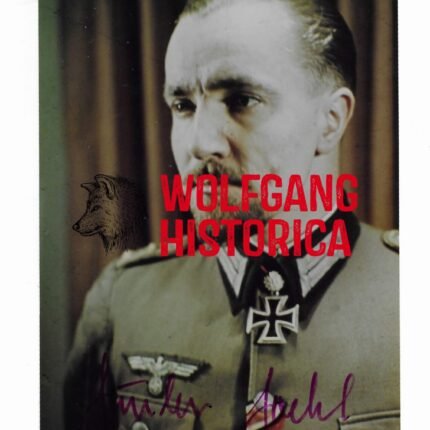
Günter Goebel – Infanterie-Regiment 208 & Kampfgruppe Goebel (Stalingrad) (Eichenlaub)
€35,00Original Postwar Signature on a Postwar Photo of Günter Goebel. Oberstleutnant i.G. Günter Goebel (14.11.1917 in Hagen † 04.09.1993 in Hagen) earned the Ritterkreuz des Eisernen Kreuzes on October 18, 1941 as Oberleutnant und Adjutant of Infanterie-Regiment 208 of the 79. Infanterie-Division and the Eichenlaub on January 18, 1943 as Hauptmann und Führer of Kampfgruppe Goebel with the Armeeoberkommando 6.
“He is also known for the command of the Kampfgruppe Goebel assault on Stalingrad at the end of November 1942 around Nishij and Tschiskaja with 3,000 servicemen. With the following radio message, they became known to the staff of the 6th Army: “Battle-group Captain Goebel with 3,000 men holds the Don River bridge at (Werchne) Chir(skaya). Keep the head up, as we do”. He held, together with his Kampfgruppe, for weeks, an important bridgehead. He later became the 180th recipient of the Knight’s Cross of the Iron Cross with Oak Leaves for his bravery.”
Provenance: This signature comes from one of the largest postwar signature collection I’ve ever commissioned. This collection was started by a Waffen-SS Veteran, Werner H., in the 1950’s until he passed away.

Eduard-Heinrich Kiver (Til Kiwe) – Panzer-Aufklärungs-Abteilung “Hermann Göring” (Africa)
€90,00Original Postwar Signature on a Postwar Photo (2x) plus Letter card of Eduard-Heinrich Kiver also known as Til Kiwe. Hauptmann Eduard-Heinrich Kiver (07.06.1915 in Aachen † 30.11.1995 in München) earned the Ritterkreuz des Eisernen Kreuzes on May 18, 1943 as Hauptmann und Chef of the 2. Kompanie/ Panzer-Aufklärungs-Abteilung “Hermann Göring”.
After the war he changed his name to Tilman Kiwe and became an actor. He acted in many military movies playing German soldiers, as the film directors felt that his personal history gave him the feel for the parts. Among his notable parts in movies, he portrays the Luftwaffe pilot Hauptmann Hellmuth Lang in “The Longest Day” and as the guard Frick in “The Great Escape”.
Provenance: This signature comes from one of the largest postwar signature collection I’ve ever commissioned. This collection was started by a Waffen-SS Veteran, Werner H., in the 1950’s until he passed away.

Otto Baum – “Totenkopf” & “Das Reich” (Schwertern)
€0,01Original Postwar Signature on a Postwar Photo of Otto Baum. SS-Oberführer Otto Kumm (15.11.1911 in Stetten † 18.06.1998 in Hechingen) earned the Ritterkreuz des Eisernen Kreuzes on May 8, 1942 as SS-Sturmbannführer und Kommandeur of the III. Bataillon/ SS-Totenkopf-Infanterie-Regiment 3, the Eichenlaub on August 22, 1943 as SS-Obersturmbannführer und Kommandeur of the SS-Panzer-Grenadier-Regiment 5 “Totenkopf” of the 3. SS-Panzergrenadier-Division “Totenkopf“ and the Schwertern on September 2, 1944 as SS-Standartenführer und Kommandeur of 2. SS-Panzer-Division “Das Reich”.
Provenance: This signature comes from one of the largest postwar signature collection I’ve ever commissioned. This collection was started by a Waffen-SS Veteran, Werner H., in the 1950’s until he passed away.

Otto Baum – “Totenkopf” & “Das Reich” (Schwertern)
€0,01Original Postwar Signature on a Postwar Photo of Otto Baum. SS-Oberführer Otto Kumm (15.11.1911 in Stetten † 18.06.1998 in Hechingen) earned the Ritterkreuz des Eisernen Kreuzes on May 8, 1942 as SS-Sturmbannführer und Kommandeur of the III. Bataillon/ SS-Totenkopf-Infanterie-Regiment 3, the Eichenlaub on August 22, 1943 as SS-Obersturmbannführer und Kommandeur of the SS-Panzer-Grenadier-Regiment 5 “Totenkopf” of the 3. SS-Panzergrenadier-Division “Totenkopf“ and the Schwertern on September 2, 1944 as SS-Standartenführer und Kommandeur of 2. SS-Panzer-Division “Das Reich”.
Provenance: This signature comes from one of the largest postwar signature collection I’ve ever commissioned. This collection was started by a Waffen-SS Veteran, Werner H., in the 1950’s until he passed away.

Walter Krupinski – Jagdgeschwader 52 (Eichenlaub)
€30,00Original Postwar Signature on a Postwar Photo of Walter Krupinski. Oberleutnant Walter Krupinski (11.11.1920 † 07.10.2000) earned the Deutsches Kreuz in Gold on October 27, 1942 as Leutnant in the 6. Staffel/ Jagdgeschwader 52, the Ritterkreuz on October 29, 1942 as Leutnant in the 6. Staffel/ Jagdgeschwader 52 and the Eichenlaub on March 2, 1944 as Oberleutnant und Staffelkapitän of the 7. Staffel/ Jagdgeschwader 52.
Walter Kupinski achieved 197 victories in over 1100 operational sorties during the Second World War.
Provenance: This signature comes from one of the largest postwar signature collection I’ve ever commissioned. This collection was started by a Waffen-SS Veteran, Werner H., in the 1950’s until he passed away.
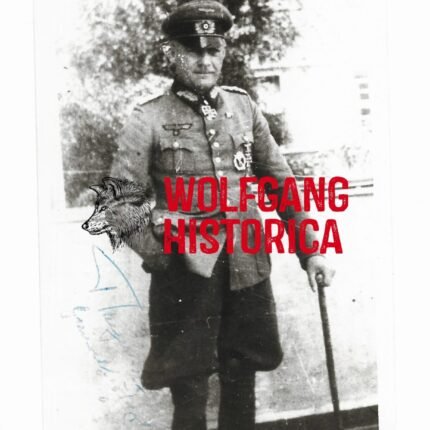
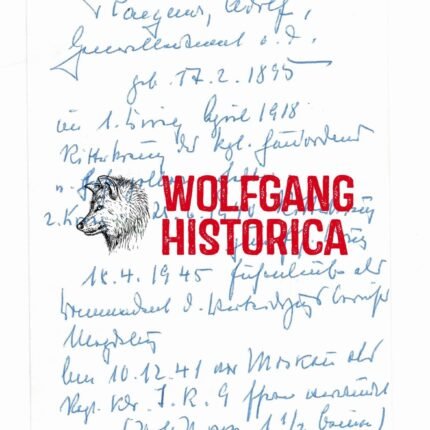
Adolf Raegener – Infanterie-Regiment 309 & Verteidigungsbereich Magdeburg (RK for Antwerp ’40) (Eichenlaub)
€85,00
Provenance: This signature comes from one of the largest postwar signature collection I’ve ever commissioned. This collection was started by a Waffen-SS Veteran, Werner H., in the 1950’s until he passed away.
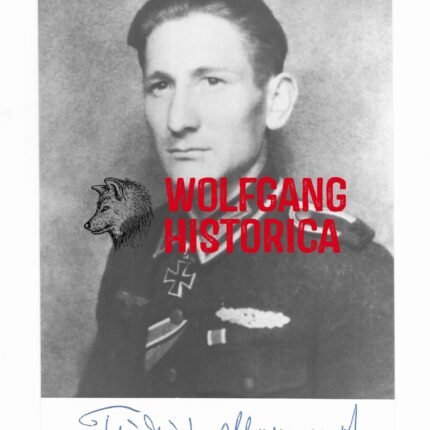
Friedrich Memmert – Pionier-Bataillon 20 (20. Panzergrenadier-Division)
€25,00Original Postwar Signature on a Postwar Photo of Friedrich Memmert. Unteroffzier Friedrich Memmert (05.02.1917 in Woquard † 12.02.2003 in Hamburg) earned the Ritterkreuz des Eisernen Kreuzes on June 9, 1944 as Unteroffizier und Zugführer of 2. Kompanie/ Pionier-Bataillon 20 of the 20. Panzergrenadier-Division.
Provenance: This signature comes from one of the largest postwar signature collection I’ve ever commissioned. This collection was started by a Waffen-SS Veteran, Werner H., in the 1950’s until he passed away.
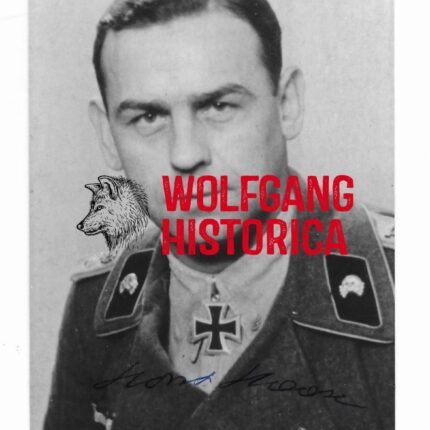
Horst Haase – Panzerjäger-Kompanie 1162 (62. Volksgrenadier-Division)
€45,00Original Postwar Signature on a Postwar Photo of Horst Haase. Oberleutnant Horst Haase (29.01.1910 in Tremessen † 07.03.1991 in Wuppertal) earned the Ritterkreuz des Eisernen Kreuzes on February 1, 1945 as Oberleutnant und Führer of Panzerjäger-Kompanie 1162 of the 62. Volksgrenadier-Division.
Provenance: This signature comes from one of the largest postwar signature collection I’ve ever commissioned. This collection was started by a Waffen-SS Veteran, Werner H., in the 1950’s until he passed away.

Walter Schmidt – SS-Panzergrenadier-Regiment “Westland” (Eichenlaub)
€0,01Original Postwar Signature on a Postwar Photo + Letter of Walter Schmidt. SS-Obersturmbannführer Walter Schmidt (28.01.1917 † 28.07.2000) earned the Ritterkreuz on August 4, 1943 as SS-Hauptsturmführer und Kommandeur of the III. Bataillon/ SS-Panzergrenadier-Regiment “Westland” and the Eichenlaub on May 14, 1944 as SS-Hauptsturmführer und und Kommandeur of the III. Bataillon/ SS-Panzergrenadier-Regiment “Westland” of the 5. SS-Panzer-Division “Wiking”.
Provenance: This signature comes from one of the largest postwar signature collection I’ve ever commissioned. This collection was started by a Waffen-SS Veteran, Werner H., in the 1950’s until he passed away.
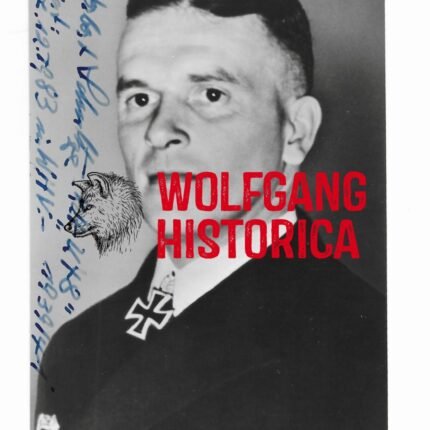
Herbert Schultze – Kommandant of “U-48” (Eichenlaub)
€0,01Original Postwar Signature on a Postwar Photo of Herbert Emil Schultze. Korvettenkäpitan Herbert Schultze (24.07.1909 in Kiel † 03.06.1987 in London, England) earned the Ritterkreuz des Eisernen Kreuzes on March 1, 1940 as Kapitänleutnant und Kommandant of Uboot “U-48” and the Eichenlaub on June 12, 1941 as Kapitänleutnant und Kommandant of Uboot “U-48”. He also earned the U-boot-Kriegsabzeichen mit Brillianten.
Provenance: This signature comes from one of the largest postwar signature collection I’ve ever commissioned. This collection was started by a Waffen-SS Veteran, Werner H., in the 1950’s until he passed away.

Georg Störck – Schützen-Regiment 394 & Führer-Begleit-Division (Eichenlaub) (Ardennes)
€55,00Original Postwar Signature on a Postwar Photo (2x) of Georg Störck. Hauptmann Georg Störck (01.04.1917 in Misdroy † 20.12.2011) earned the Ritterkreuz des Eisernen Kreuzes on September 22, 1941 as Leutnant und Führer of the Pionierzug i.d. Stabskompanie/ Schützen-Regiment 394 of the 3. Panzer-Division and the Eichenlaub on May 9, 1945 as Hauptmann und Kommandeur of the I. Bataillon/ Panzergrenadier-Regiment 209 of the Führer-Begleit-Division.
Awarded for his bravery during the Ardennes offensive, but also (and more importantly) the relief of Arnswalde (located in Pomerania) in 1945. In February of that year Störck led his reinforced SPW Bataillon (consisting of about 40 armoured halftracks plus infantry) to save the garrison of the city. The city was eventually reached after Störck’s Bataillon advanced through several Soviet blocking positions containing anti-tank guns. The result was that 1000 soldiers and 7000 civilians were rescued. Störck would be severely wounded by a headshot during the final stages of the relief, and it was left to Hauptmann Schulte to lead the relief operation in its final stages. However Störck undoubtedly had a major share in the success of the operation during his time in command, and for this he was recommended for the Oakleaves. Recommendation made by Generalmajor Remer, Kommandeur Führer-Begleit-Division on March 2nd, !945 and arrived at OKH/PA/P5 on March 9th, 1945.When counted this would have been the 880th Award. (Source: TracesofWar)
Provenance: This signature comes from one of the largest postwar signature collection I’ve ever commissioned. This collection was started by a Waffen-SS Veteran, Werner H., in the 1950’s until he passed away.

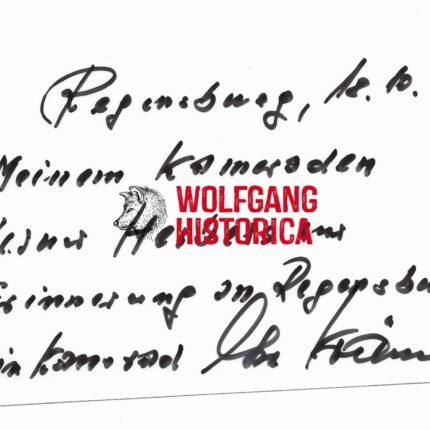
Christop Krämer – Panzergrenadier-Regiment 7 (7. Panzer-Division)
€30,00Original Postwar Signature on a Postwar Photo of Christop Krämer. Oberfeldwebel Christoph Krämer (21.08.1913 in Menden † 06.10.1990 in Brühl) earned the Deutsches Kreuz in Gold on August 7, 1943 and the Ritterkreuz des Eisernen Kreuzes on May 14, 1944 as Oberfeldwebel und Zugführer in the 5. Kompanie/ Panzergrenadier-Regiment 7 of the 7. Panzer-Division.
Provenance: This signature comes from one of the largest postwar signature collection I’ve ever commissioned. This collection was started by a Waffen-SS Veteran, Werner H., in the 1950’s until he passed away.

Gerhard Hein – Infanterie-Regiment 209 (Eichenlaub) (later with the 12. SS-Panzer-Division “Hitlerjugend”)
€0,01Original Postwar Signature on a Postwar Photo of Gerhard “Gerd” Hein. SS-Sturmbannführer & Oberstleutnant der Reserve Gerhard Hein (09.07.1916 in Klein Paniow-Rybnik † 06.06.2008 in Harrislee) earned the Ritterkreuz des Eisernen Kreuzes on September 3, 1940 as Unteroffizier und Zugführer of the 10. Kompanie/ Infanterie-Regiment 209 of the 58. Infanterie-Division and the Eichenlaub on September 6, 1942 as Leutnant und Führer of the 5. Kompanie/ Infanterie-Regiment 209 of the 58. Infanterie-Division.
He later became the Kommandeur of the SS-Panzer-Grenadier-Regiment 26 of the 12. SS-Panzer-Division “Hitlerjugend”.
Provenance: This signature comes from one of the largest postwar signature collection I’ve ever commissioned. This collection was started by a Waffen-SS Veteran, Werner H., in the 1950’s until he passed away.
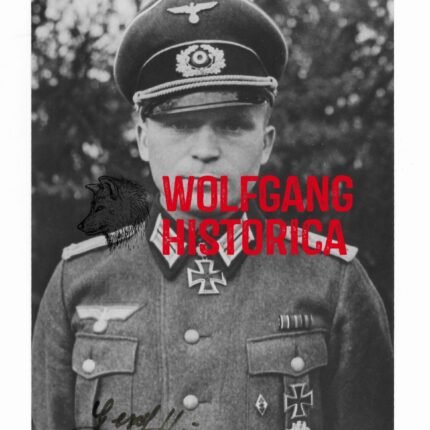
Gerhard Hein – Infanterie-Regiment 209 (Eichenlaub) (later with the 12. SS-Panzer-Division “Hitlerjugend”)
€0,01Original Postwar Signature on a Postwar Photo of Gerhard “Gerd” Hein. SS-Sturmbannführer & Oberstleutnant der Reserve Gerhard Hein (09.07.1916 in Klein Paniow-Rybnik † 06.06.2008 in Harrislee) earned the Ritterkreuz des Eisernen Kreuzes on September 3, 1940 as Unteroffizier und Zugführer of the 10. Kompanie/ Infanterie-Regiment 209 of the 58. Infanterie-Division and the Eichenlaub on September 6, 1942 as Leutnant und Führer of the 5. Kompanie/ Infanterie-Regiment 209 of the 58. Infanterie-Division.
He later became the Kommandeur of the SS-Panzer-Grenadier-Regiment 26 of the 12. SS-Panzer-Division “Hitlerjugend”.
Provenance: This signature comes from one of the largest postwar signature collection I’ve ever commissioned. This collection was started by a Waffen-SS Veteran, Werner H., in the 1950’s until he passed away.

Karl-Heinrich Höfer – Kampfgeschwader 55 (Eichenlaub)
€25,00Original Postwar Signature on a Postwar Photo of Karl-Heinrich Höfer. Major Karl-Heinrich Höfer (14.07.1911 in Oeynhausen † 02.01.1996 in Bad Oeynhausen) earned the Ritterkreuz des Eisernen Kreuzes on September 3, 1943 as Hauptmann und Kommandeur of the II. Gruppe/ Kampfgeschwader 55 and the Eichenlaub on November 18, 1944 as Major und Kommandeur of the II. Gruppe/ Kampfgeschwader 55.
Provenance: This signature comes from one of the largest postwar signature collection I’ve ever commissioned. This collection was started by a Waffen-SS Veteran, Werner H., in the 1950’s until he passed away.

Karl-Heinrich Höfer – Kampfgeschwader 55 (Eichenlaub)
€25,00Original Postwar Signature on a Postwar Photo of Karl-Heinrich Höfer. Major Karl-Heinrich Höfer (14.07.1911 in Oeynhausen † 02.01.1996 in Bad Oeynhausen) earned the Ritterkreuz des Eisernen Kreuzes on September 3, 1943 as Hauptmann und Kommandeur of the II. Gruppe/ Kampfgeschwader 55 and the Eichenlaub on November 18, 1944 as Major und Kommandeur of the II. Gruppe/ Kampfgeschwader 55.
Provenance: This signature comes from one of the largest postwar signature collection I’ve ever commissioned. This collection was started by a Waffen-SS Veteran, Werner H., in the 1950’s until he passed away.
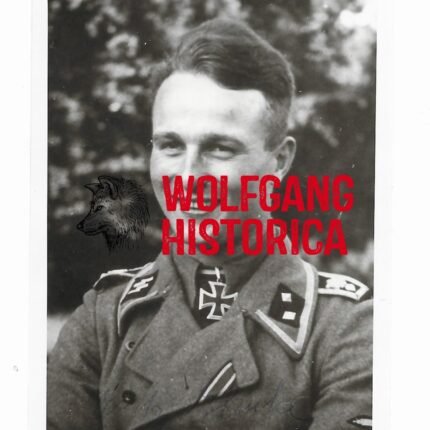
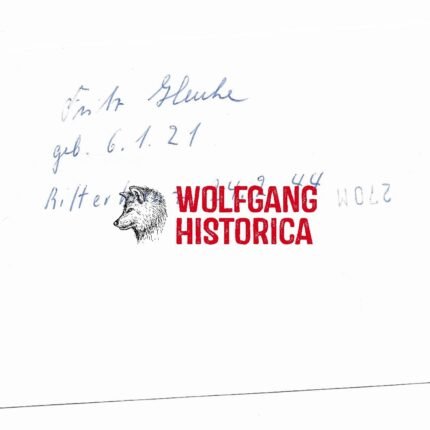
Friedrich “Fritz” Henke – SS-Sturmgeschütz-Abteilung 1 “LSSAH”
€0,01Original Postwar Signature on a Postwar Photocopy of Friedrich “Fritz” Henke. SS-Hauptscharführer Friedrich “Fritz” Henke (06.01.1921 † 15.11.1999) earned the Ritterkreuz on February 12, 1944 as SS-Oberscharführer und Zugführer in the 3. Batterie/ SS-Sturmgeschütz-Abteilung 1 “LSSAH”.
Fritz Henke was a platoon leader in the StuG battalion of the LSSAH in late 1943. Near the end of that year, on the 29.12.1943, Henke was helping protect a group of friendly infantry when a small tank attack was launched. He destroyed 2 tanks, but this initial incursion was soon followed up by a much heavier assault. Thus followed a fierce battle that lasted the whole day. On one occasion, he knocked out a Soviet command tank from which the enemy commander escaped, only to be hit by a pistol shot by Henke. By the end of the day he had destroyed a total of 21 tanks and 11 AT guns. For his notable success, without much friendly support at that, he was later presented with the Knight’s Cross. He had destroyed 38 tanks in total by this time.
Provenance: This signature comes from one of the largest postwar signature collection I’ve ever commissioned. This collection was started by a Waffen-SS Veteran, Werner H., in the 1950’s until he passed away.


Heinrich Schmelzer – SS-Pionier-Bataillon “Das Reich” (Eichenlaub + NKIG)
€0,01Original Postwar Signature on a Postwar Photo of Heinrich Schmelzer. SS-Hauptsturmführer Heinrich Schmelzer (14.03.1914 in Nesselroden † 04.07.1985 in Nesselroden) earned the Ritterkreuz on March 12, 1944 as SS-Obersturmführer und Chef of the 2. Kompanie/ SS-Pionier-Bataillon 2 “Das Reich”, the Eichenlaub on February 28, 1945 as SS-Hauptsturmführer und Chef of the 1. Kompanie/ SS-Pionier-Bataillon 2 “Das Reich” of the 2. SS-Panzer-Division “Das Reich“. He also earned the Nahkampfspange in Gold in 1945!
Provenance: This signature comes from one of the largest postwar signature collection I’ve ever commissioned. This collection was started by a Waffen-SS Veteran, Werner H., in the 1950’s until he passed away.
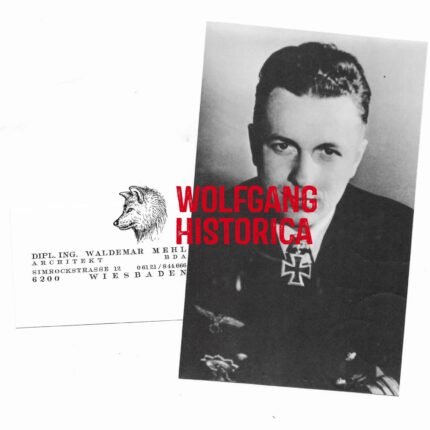
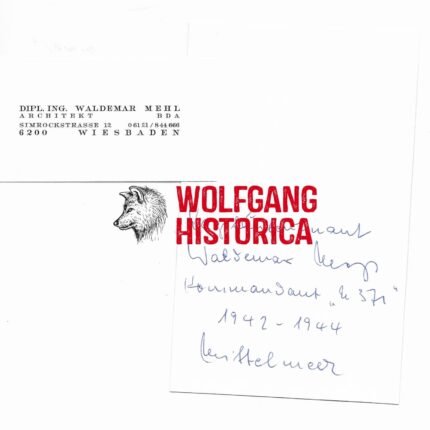
Waldemar Mehl – Kommandant of “U-371”
€0,01Original Postwar Signature on a Postwar Photo of Waldemar Mehl. Korvettenkapitän Waldemar Mehl (07.09.1914 in Grävenwiesbach † 29.03.1996 in Wiesbaden) earned the Deutsches Kreuz in Gold on November 19, 1943 and the Ritterkreuz des Eisernen Kreuzes on March 28, 1944 as Kapitänleutnant und Kommandant of U-boot “U-371”.
Provenance: This signature comes from one of the largest postwar signature collection I’ve ever commissioned. This collection was started by a Waffen-SS Veteran, Werner H., in the 1950’s until he passed away.
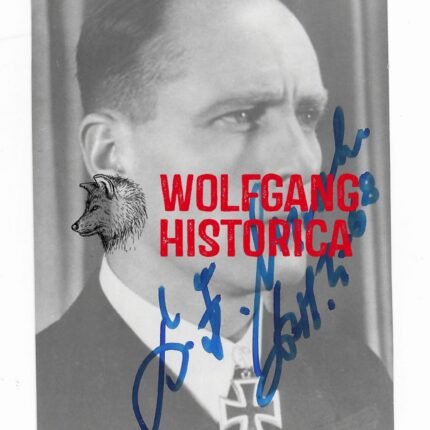
Karl-Friedrich Merten – Kommandant of “U-68” (Eichenlaub)
€0,01Original Postwar Signature on a Postwar Photo of Karl-Friedrich Merten. Kapitän zur See Karl-Friedrich Merten (15.08.1905 in Posen † 02.05.1993 in Waldshut-Tiengen) earned the Ritterkreuz des Eisernen Kreuzes on June 13, 1942 as Korvettenkapitän und Kommandant of U-boot “U-68” and the Eichenlaub on November 16, 1942 as Korvettenkapitän und Kommandant of U-boot “U-68” of the 2. Unterseebootflottille.
Knight’s Cross: Awarded for his successes during the first three patrols with U-68, during which Merten and his crew sank 11 ships with 63047 GRT. In addition they also distinguished themselves during the rescue of the crews belonging to the German blockade runner “Python” and the auxiliary cruiser “Atlantis” in November/December 1941. Oakleaves: Awarded for further successes spanning two patrols with U-68. In these two patrols alone 16 enemy vessels with 107128 GRT were sunk.
Provenance: This signature comes from one of the largest postwar signature collection I’ve ever commissioned. This collection was started by a Waffen-SS Veteran, Werner H., in the 1950’s until he passed away.
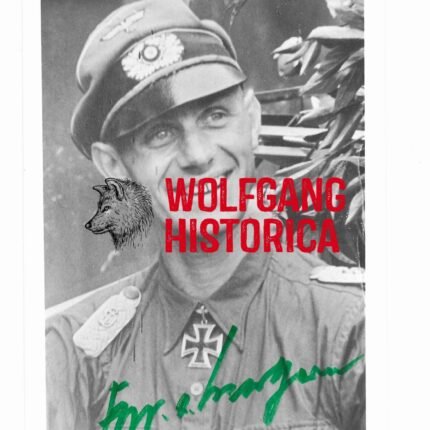
Thilo Freiherr von Werthern – Schützen-Regiment 394 (3. Panzer-Division)
€25,00Original Postwar Signature on a Postwar Photo of Thilo Freiherr von Werthern. Oberleutnant Thilo Freiherr von Werthern (24.07.1912 in Coburg † 10.01.2004 in Hamburg) earned the Ritterkreuz des Eisernen Kreuzes on September 8, 1941 as Oberleutnant und Chef of 3. Kompanie/ Schützen-Regiment 394 of the 3. Panzer-Division.
Provenance: This signature comes from one of the largest postwar signature collection I’ve ever commissioned. This collection was started by a Waffen-SS Veteran, Werner H., in the 1950’s until he passed away.
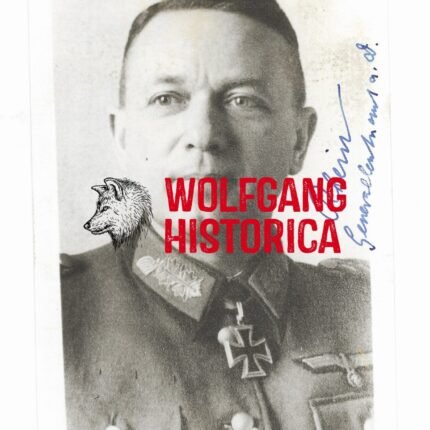
Karl-Ludwig Rhein – Infanterie-Regiment 439 (134. Infanterie-Division)
€40,00Provenance: This signature comes from one of the largest postwar signature collection I’ve ever commissioned. This collection was started by a Waffen-SS Veteran, Werner H., in the 1950’s until he passed away.
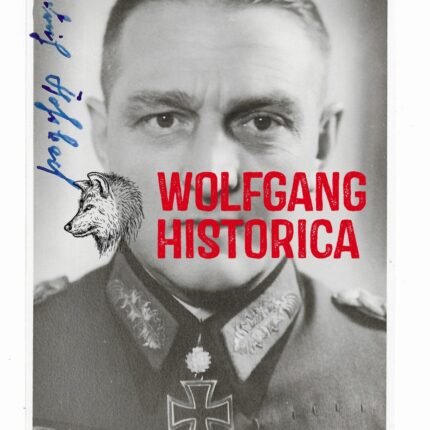
Friedrich Hoßbach – Infanterie-Regiment 82 & LVI. Panzerkorps (Eichenlaub) (Military Adjutant to Hitler in 1937)
€65,00Provenance: This signature comes from one of the largest postwar signature collection I’ve ever commissioned. This collection was started by a Waffen-SS Veteran, Werner H., in the 1950’s until he passed away.
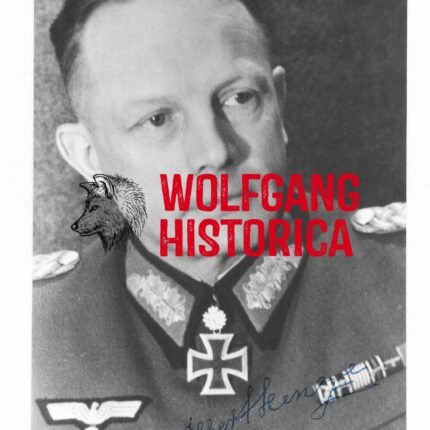
Albert Henze – Panzergrenadier-Regiment 110 & Gruppe Henze (Eichenlaub)
€55,00Provenance: This signature comes from one of the largest postwar signature collection I’ve ever commissioned. This collection was started by a Waffen-SS Veteran, Werner H., in the 1950’s until he passed away.
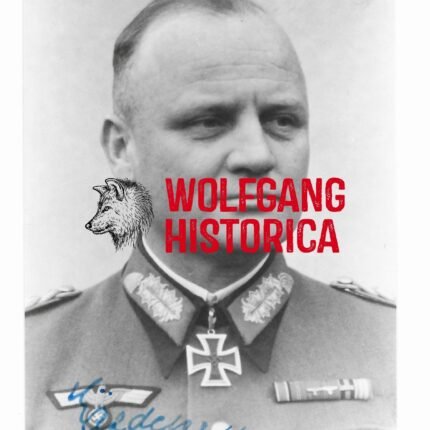
Heinrich Gaedcke – XI. Armeekorps
€45,00Read more on Heinrich Gaedcke (Wikipedia)
Provenance: This signature comes from one of the largest postwar signature collection I’ve ever commissioned. This collection was started by a Waffen-SS Veteran, Werner H., in the 1950’s until he passed away.

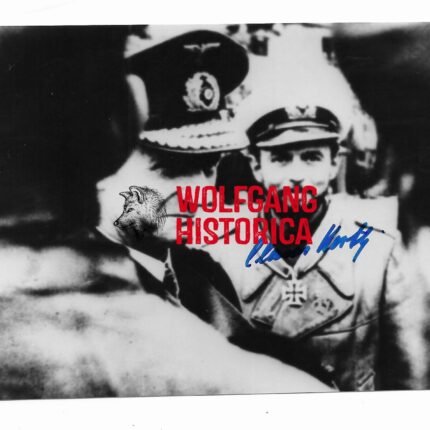
Claus Korth – Kommandant of “U-93”
€0,01Original Postwar Signature on a Postwar Photo of Claus Korth. Korvettenkäpitanleutnant Claus Korth (07.11.1911 in Berlin † 25.01.1988 in Kiel) earned the Ritterkreuz des Eisernen Kreuzes on May 29, 1941 as Kapitänleutnant und Kommandant of Uboot “U-93”.
Provenance: This signature comes from one of the largest postwar signature collection I’ve ever commissioned. This collection was started by a Waffen-SS Veteran, Werner H., in the 1950’s until he passed away.

Karl Henze – Sturzkampfgeschwader 77 (Eichenlaub)
€35,00Original Postwar Signature on a Postwar Photo of Karl Henze. Major Karl Henze (20.01.1916 in Holzminden † 25.09.1985 in Neunkirchen-Seelscheid) earned the Ritterkreuz des Eisernen Kreuzes on July 15, 1942 as Oberleutnant und Staffelkapitän of the 1. Staffel/ Sturzkampfgeschwader 77 and the Eichenlaub on May 20, 1944 as Major und Kommodore of the I. Gruppe/ Schlachtgeschwader 77.
Eichenlaub: Awarded after flying over 1000 ground attack sorties. As a Gruppe commander he particularly distinguished himself on one occasion when he rescued a wounded, downed aircrew of his unit west of Taganrok while under heavy enemy fire.
Provenance: This signature comes from one of the largest postwar signature collection I’ve ever commissioned. This collection was started by a Waffen-SS Veteran, Werner H., in the 1950’s until he passed away.

Georg Jakob – Sturzkampfgeschwader 77 & Schlachtgeschwader 10 (Eichenlaub)
€45,00Original Postwar Signature on a Postwar Photo of Georg Jakob. Major Georg Jakob (27.03.1915 in Fürth † 01.09.1991 in Meerbusch) earned the Ritterkreuz des Eisernen Kreuzes on November 24, 1941 as Oberleutnant und Staffelkapitän of the 2. Staffel/ Sturzkampfgeschwader 77 and the Eichenlaub on September 30, 1944 as Major und Kommodore of the Schlachtgeschwader 10.
Provenance: This signature comes from one of the largest postwar signature collection I’ve ever commissioned. This collection was started by a Waffen-SS Veteran, Werner H., in the 1950’s until he passed away.
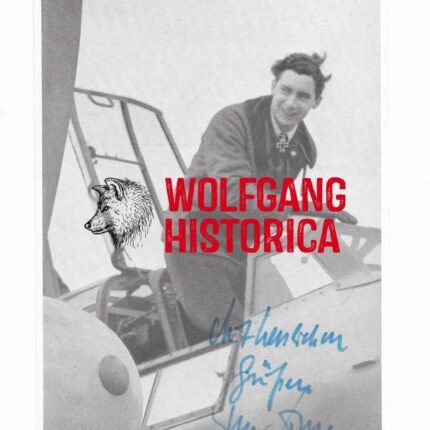
Wilhelm Johnen – Nachtjagdgeschwader 6
€75,00Original Postwar Signature on a Postwar Photo of Wilhelm “Wim” Johnen. Hauptmann Wilhelm Johnen (09.10.1921 in Homberg † 07.02.2002 in Überlingen) earned the Deutsches Kreuz in Gold on July 23, 1944 and the Ritterkreuz des Eisernen Kreuzes on October 29, 1944 as Oberleutnant und Staffelkapitän of the 8. Staffel/ Nachtjagdgeschwader 6.
In April 1944 Johnen was briefly interned in Switzerland when he force-landed in the country. It caused an international incident but he was repatriated with his crew some days later. Wilhelm Johnen was awarded the Knight’s Cross of the Iron Cross on 29 October 1944 for the destruction of 33 Royal Air Force (RAF) bombers. He ended the war with 34 aerial victories, all of these claims were made at night.. Read more about Wilhelm Johnen (Wikipedia).
Provenance: This signature comes from one of the largest postwar signature collection I’ve ever commissioned. This collection was started by a Waffen-SS Veteran, Werner H., in the 1950’s until he passed away.

Rudolf Jesse – 8. Minensuchflottille
€0,01Original Postwar Signature on a Postwar Photo of Rudolf Jesse. Oberleutnant zur See Rudolf Jesse (12.10.1908 in Zoppot † 02.04.1981 in Bremen) earned the Deutsches Kreuz in Gold on October 20, 1942 with Raumboot “R-36” and the Ritterkreuz des Eisernen Kreuzes on September 5, 1944 as Oberleutnant zur See with the 8. Minensuchflottille.
“Oberleutnant zur See der Reserve Rudolf Jesse, captain of a minesweeper, has distinguished himself through exemplary bravery in the security of our convoys in the Bay of Biscay despite the increasing enemy pressure. Jesse, born on the 12.10.1908 in Zoppot, stands as a model small boat commander characterized by boldness and imperturbability in the face of overwhelming enemy superiority. He proved himself in the Black Sea and further distinguished himself in January 1944 during the escort of a valuable convoy through the Dover Strait. Despite being under long range fire he defended against the enemy fast attack craft, shot two of these into flames and was able to preserve his own heavily damaged ship with ruthless dedication. Subsequently he participated in the escorting of 40 convoys (altogether with 100000 GRT) in an area of ocean heavily patrolled by the enemy in the Bay of Biscay. In this time, in a spectacular display of energy and devotion to duty, he saved his boat from becoming a total loss after it was set on fire by a hostile aircraft.” (Source: TracesofWar)
Provenance: This signature comes from one of the largest postwar signature collection I’ve ever commissioned. This collection was started by a Waffen-SS Veteran, Werner H., in the 1950’s until he passed away.
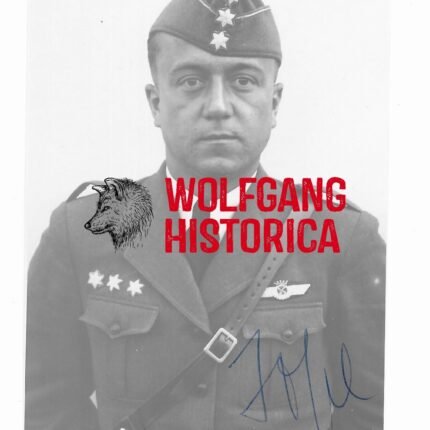
Bernhard Jope – Kampfgeschwader 40 & 100 (Eichenlaub)
€35,00Original Postwar Signature on a Postwar Photo of Bernhard Jope. Major Bernhard Jope (10.05.1914 in Leipzig † 31.07.1995 in Königstein) earned the Ritterkreuz des Eisernen Kreuzes on December 30, 1940 as Oberleutnant und Flugzeugführer in the 2. Staffel/ Kampfgeschwader 40 and the Eichenlaub on March 24, 1944 as Major und Kommodore of the Kampfgeschwader 100.
Eichenlaub: Awarded for his successes as a Geschwader commander. His unit’s greatest achievement during this time was the sinking of the Italian battleship “Roma” on the 09.09.1943 using the new “Fritz-X” glide bombs. By the 15.09.1944 Hope had personally sunk/damaged 130000 GRT worth of enemy shipping, including a battleship. Since he took over the Geschwader on the 01.09.1943, his unit had sunk/damaged a total of 300000 GRT worth of shipping, sunk the battleship “Roma”, damaged another 4 battleships, and sunk/destroyed 8 cruisers and 22 destroyers.
Provenance: This signature comes from one of the largest postwar signature collection I’ve ever commissioned. This collection was started by a Waffen-SS Veteran, Werner H., in the 1950’s until he passed away.
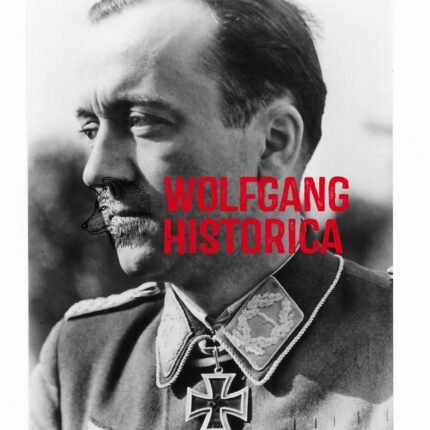
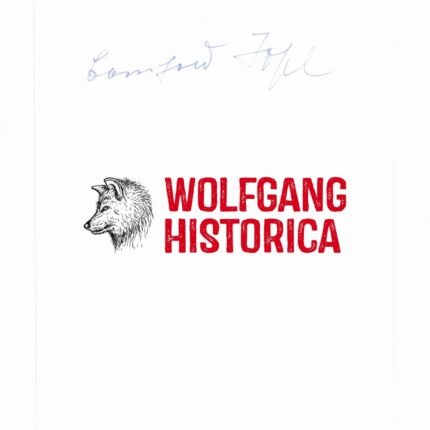
Bernhard Jope – Kampfgeschwader 40 & 100 (Eichenlaub)
€35,00Original Postwar Signature on a Postwar Photo of Bernhard Jope. Major Bernhard Jope (10.05.1914 in Leipzig † 31.07.1995 in Königstein) earned the Ritterkreuz des Eisernen Kreuzes on December 30, 1940 as Oberleutnant und Flugzeugführer in the 2. Staffel/ Kampfgeschwader 40 and the Eichenlaub on March 24, 1944 as Major und Kommodore of the Kampfgeschwader 100.
Eichenlaub: Awarded for his successes as a Geschwader commander. His unit’s greatest achievement during this time was the sinking of the Italian battleship “Roma” on the 09.09.1943 using the new “Fritz-X” glide bombs. By the 15.09.1944 Hope had personally sunk/damaged 130000 GRT worth of enemy shipping, including a battleship. Since he took over the Geschwader on the 01.09.1943, his unit had sunk/damaged a total of 300000 GRT worth of shipping, sunk the battleship “Roma”, damaged another 4 battleships, and sunk/destroyed 8 cruisers and 22 destroyers.
Provenance: This signature comes from one of the largest postwar signature collection I’ve ever commissioned. This collection was started by a Waffen-SS Veteran, Werner H., in the 1950’s until he passed away.

Horst Niemack – Aufklärungs-Abteilung 5 & Panzer-Füsilier-Regiment “Großdeutschland” (Schwertern)
€55,00Read more on Horst Niemack (Wikipedia)
Provenance: This signature comes from one of the largest postwar signature collection I’ve ever commissioned. This collection was started by a Waffen-SS Veteran, Werner H., in the 1950’s until he passed away.
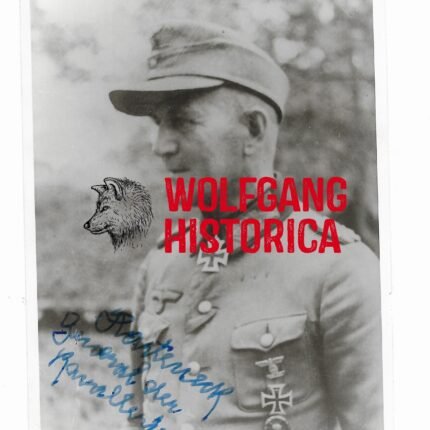
Gustav Harteneck – I. Kavallerie-Korps
€35,00Original Postwar Signature on a Postwar Photo of Gustav Harteneck. General der Kavallerie Gustav Harteneck (27.07.1892 in Landau † 13.01.1984 in Müchen) earned the Deutsches Kreuz in Gold on March 20, 1942 with Armeeoberkommando 2 and the Ritterkreuz des Eisernen Kreuzes on September 21, 1944 as General der Kavallerie und Kommandeur of the I. Kavallerie-Korps. Damages on the reverse (was pasted on paper once).
Provenance: This signature comes from one of the largest postwar signature collection I’ve ever commissioned. This collection was started by a Waffen-SS Veteran, Werner H., in the 1950’s until he passed away.
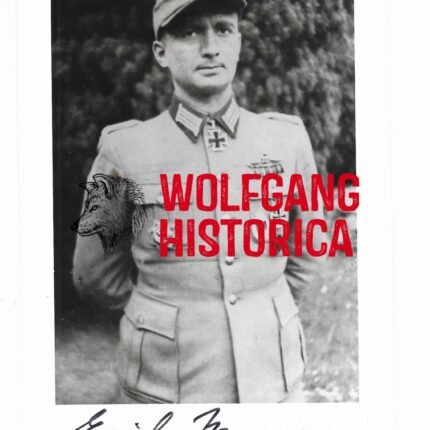
Erich Mende – Grenadier-Regiment 216 (86. Infanterie-Division)
€25,00Original Postwar Signature on a Postwar Photo of Dr.jur. Erich Mende. Major Erich Mende (28.10.1916 in Groß Strehlitz † 06.05.1998 in Bonn) earned the Ritterkreuz des Eisernen Kreuzes on February 28, 1945 as Major und Grenadier-Regiment 216 of the Grenadier-Regiment 216 of the 86. Infanterie-Division.
Read more about Erich Mende (Wikipedia)
Provenance: This signature comes from one of the largest postwar signature collection I’ve ever commissioned. This collection was started by a Waffen-SS Veteran, Werner H., in the 1950’s until he passed away.
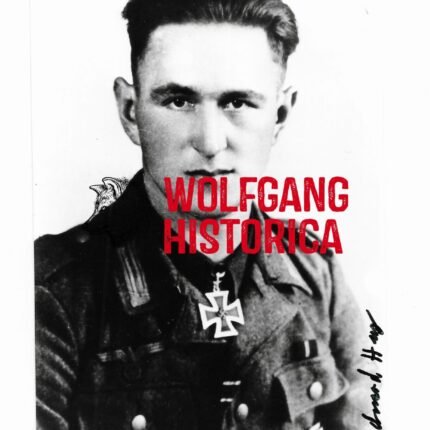
Eduard Hug – Jäger-Regiment 75 (5. Jäger-Division)
€25,00Original Postwar Signature on a Postwar Photo of Eduard Hug. Obergefreiter Eduard Hug (23.09.1921 in Hinterstraß † 24.02.2002 in Donaueschingen) earned the Ritterkreuz des Eisernen Kreuzes on September 2, 1944 as Obergefreiter und MG-Schütze in the 1. Kompanie/ Jäger-Regiment 75 of the 5. Jäger-Division.
On the 03.08.1944, during the retreat of the 5. Jäger-Division towards the Liwiec river, a German MG position was knocked out by a direct hit. This left a wide gap in the German frontline without any protection. Obergefreiter and machine-gunner Eduard Hug, positioned in a strongpoint nearby, noticed that the Soviets were breaking into this area without any opposition. He thus left the strongpoint on his own initiative and rushed to the threatened area with his MG. However by this time an enemy half-company had already approached to within a close distance, and there was no time to go into a proper firing position. As such Hug engaged the enemy troops while firing his MG from the shoulder, and was able to disperse the attackers. Now Hug moved to the knocked out strongpoint for a protracted defense, as it was vital to hold this gap in the front. The Soviets attacked him 6 times, but were repulsed each time. During their seventh attempt to overrun the strongpoint, Hug’s MG malfunctioned. Now he began throwing hand grenades at the attackers for the first time. The Soviets hesitated, and their foremost troops pulled back slightly. This brought vital seconds for Hug to get his MG back in working order, and after this he engaged the enemy once more with lethal bursts of fire. During the course of the fighting on this day he would eliminate 3 Soviet MG positions in addition to assaulting foot soldiers. It was only that night that the frontline gap was finally closed by friendly reinforcements. For his brave and outstanding actions, Eduard Hug would be awarded the Iron Cross First Class and later the Knight’s Cross.
Provenance: This signature comes from one of the largest postwar signature collection I’ve ever commissioned. This collection was started by a Waffen-SS Veteran, Werner H., in the 1950’s until he passed away.
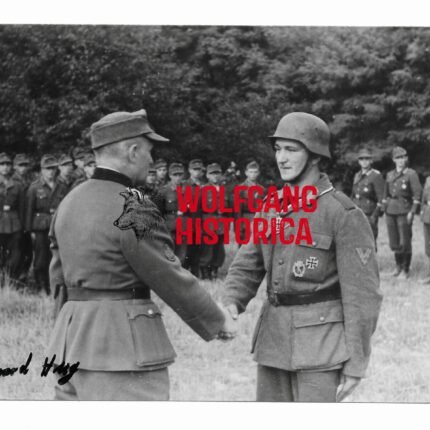
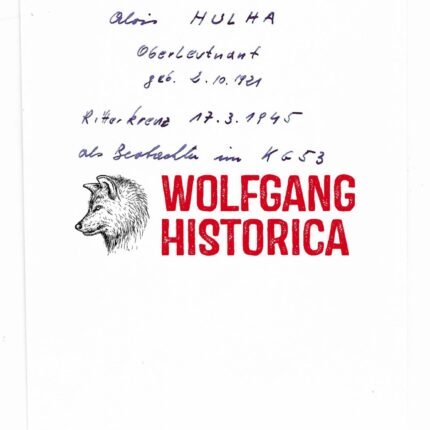
Eduard Hug – Jäger-Regiment 75 (5. Jäger-Division)
€25,00Original Postwar Signature on a Postwar Photo of Eduard Hug. Obergefreiter Eduard Hug (23.09.1921 in Hinterstraß † 24.02.2002 in Donaueschingen) earned the Ritterkreuz des Eisernen Kreuzes on September 2, 1944 as Obergefreiter und MG-Schütze in the 1. Kompanie/ Jäger-Regiment 75 of the 5. Jäger-Division.
On the 03.08.1944, during the retreat of the 5. Jäger-Division towards the Liwiec river, a German MG position was knocked out by a direct hit. This left a wide gap in the German frontline without any protection. Obergefreiter and machine-gunner Eduard Hug, positioned in a strongpoint nearby, noticed that the Soviets were breaking into this area without any opposition. He thus left the strongpoint on his own initiative and rushed to the threatened area with his MG. However by this time an enemy half-company had already approached to within a close distance, and there was no time to go into a proper firing position. As such Hug engaged the enemy troops while firing his MG from the shoulder, and was able to disperse the attackers. Now Hug moved to the knocked out strongpoint for a protracted defense, as it was vital to hold this gap in the front. The Soviets attacked him 6 times, but were repulsed each time. During their seventh attempt to overrun the strongpoint, Hug’s MG malfunctioned. Now he began throwing hand grenades at the attackers for the first time. The Soviets hesitated, and their foremost troops pulled back slightly. This brought vital seconds for Hug to get his MG back in working order, and after this he engaged the enemy once more with lethal bursts of fire. During the course of the fighting on this day he would eliminate 3 Soviet MG positions in addition to assaulting foot soldiers. It was only that night that the frontline gap was finally closed by friendly reinforcements. For his brave and outstanding actions, Eduard Hug would be awarded the Iron Cross First Class and later the Knight’s Cross.
Provenance: This signature comes from one of the largest postwar signature collection I’ve ever commissioned. This collection was started by a Waffen-SS Veteran, Werner H., in the 1950’s until he passed away.
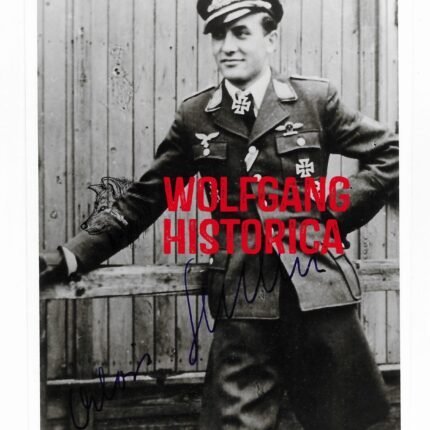
Alois Hulha – Kampfgeschwader 53 “Legion Condor”
€30,00Original Postwar Signature on a Postwar Photo of Alois Hulha. Oberleutnant Alois Hulha (02.10.1921 in Hostomitz † 07.05.1983 in Ludwigsburg) earned the Ritterkreuz des Eisernen Kreuzes on March 17, 1945 as Oberleutnant und Flugzeugführer in the 6. Staffel/ Kampfgeschwader 53 “Legion Condor”.
Provenance: This signature comes from one of the largest postwar signature collection I’ve ever commissioned. This collection was started by a Waffen-SS Veteran, Werner H., in the 1950’s until he passed away.