

Sold out
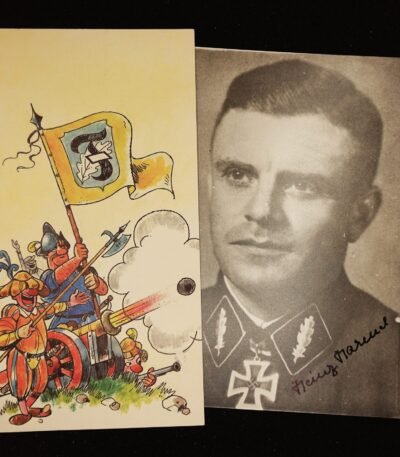
Heinz Harmel – “Deutschland” & “Frundsberg” (Schwertern) (Normandy, Nijmegen) (Larger Size!)
€155,00Original Postwar Signature on a Postwar Photo of Heinz Harmel. SS-Brigadeführer und Generalmajor der Waffen-SS Heinz Harmel (29 June 1906, Metz, Alsace-Lorraine † 2 September 2000, Krefeld) was a Waffen-SS officer who rose to the rank of SS-Brigadeführer und Generalmajor der Waffen-SS. Best known for his front-line leadership, Harmel commanded SS-Panzergrenadier-Regiment 3 “Deutschland” and later the 10. SS-Panzer-Division “Frundsberg”, earning the Ritterkreuz des Eisernen Kreuzes with Oak Leaves and Swords. Comes with a beautiful Frundsberg card!
Awards and Decorations
-
Knight’s Cross of the Iron Cross (Ritterkreuz des Eisernen Kreuzes) – 31 March 1943, as SS-Obersturmbannführer and Kommandeur SS-Panzergrenadier-Regiment 3 “Deutschland”
-
Oak Leaves (Eichenlaub, 296th Award) – 7 September 1943, as SS-Standartenführer and Kommandeur SS-Panzergrenadier-Regiment 3 “Deutschland”, 2. SS-Panzer-Division “Das Reich”
-
Swords (Schwerter, 127th Award) – 15 December 1944, as SS-Brigadeführer und Generalmajor der Waffen-SS and Kommandeur 10. SS-Panzer-Division “Frundsberg”
Career Highlights
-
Early service: Joined the Waffen-SS and quickly rose through the ranks, noted for his competence and ability to inspire troops in combat.
-
Eastern Front: Gained distinction as Kommandeur of SS-Panzergrenadier-Regiment 3 “Deutschland”, earning both the Knight’s Cross and the Oak Leaves for his leadership in heavy fighting.
-
Western Front 1944: As commander of the 10. SS-Panzer-Division “Frundsberg”, Harmel led his division in the Normandy battles, the defense of Arnhem during Operation Market Garden, and the Alsace and Ardennes campaigns.
-
End of the war: In 1945, his division fought in Saxony and Czechoslovakia. Harmel surrendered to Allied forces in May 1945 and was held as a POW.
-
Postwar life: Released after the war, Harmel lived a quiet life in Krefeld until his death in 2000 at the age of 94.
Item Details
-
Authentic postwar signature of Heinz Harmel, SS-Brigadeführer und Generalmajor der Waffen-SS.
-
Signed on a large postwar photograph. Almost A5 size.
-
Condition: Very good, clear autograph and well-preserved photo.
Collector’s Note
Heinz Harmel’s career spans some of the most decisive campaigns of WWII, from the Eastern Front to Normandy and Arnhem. His receipt of the Knight’s Cross with Oak Leaves and Swords, combined with his leadership of the 10. SS-Panzer-Division “Frundsberg”, places him among the notable Waffen-SS divisional commanders. His long postwar life and willingness to sign autographs make his signature obtainable, but pieces on large-format photos such as this are scarcer and highly desirable for collectors.
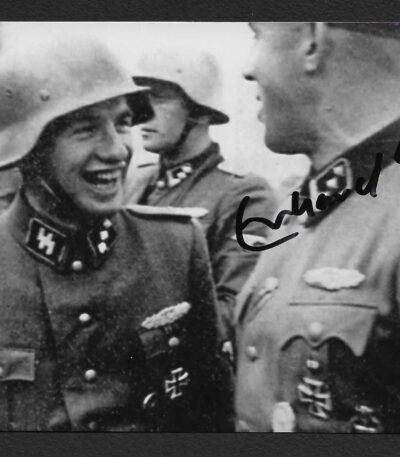
Erhard Gührs – 1. SS-Panzer-Division “LSSAH” (Normandy)
€37,50Original Postwar Signature on a Postwar Photo of Erhard Gührs. SS-Obersturmführer Erhard Gührs served with the SS-Panzer-Grenadier-Regiment 2 of the 1. SS-Panzer-Division “LSSAH”. Severely wounded in August 1944 on the Invasionsfront as Bataillonsadjutant of the SS-Panzer-Grenadier-Regiment 2. Postcardsize. Condition as seen. Postcardsize.
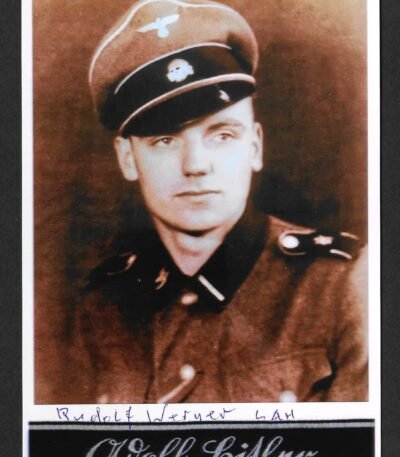
Rudolf Werner – 1. SS-Panzer-Division “LSSAH” & Wach-Bataillon “LSSAH”
€30,00Original Postwar Signature on a Postwar Photo of Rudolf Werner. SS-Sturmmann Rudolf Werner (17.07.1922-) served with the SS-Wach-Bataillon 1 & 1. SS-Panzer-Division “LSSAH” as Feldkoch than fought in the Kessel von Halbe. Good condition. Postcardsize.
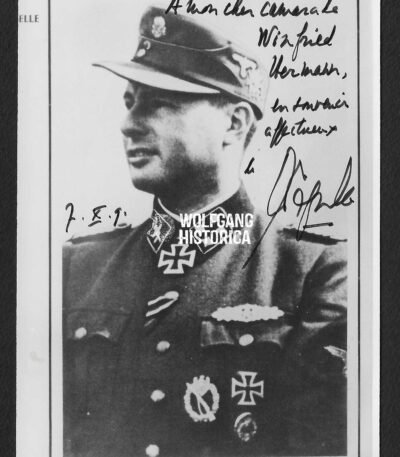
Leon Degrelle – 28. SS-Freiwilligen-Panzer-Grenadier-Division “Wallonië”
€250,00SS-Standartenführer Leon Degrelle (15 June 1906, Bouillon † 31 March 1994, Málaga) was the Belgian leader of the Rexist Movement and one of the most famous foreign volunteers to serve in the Waffen-SS during the Second World War. He rose from enlisted service to command the Walloon volunteers on the Eastern Front, eventually leading the 28. SS-Freiwilligen-Grenadier-Division “Wallonien.”
Degrelle distinguished himself in heavy fighting against Soviet forces, receiving some of the highest decorations awarded to non-German volunteers. He survived the war, escaping to Spain where he lived in exile until his death in 1994.
Awards and Decorations
-
Knight’s Cross of the Iron Cross (Ritterkreuz des Eisernen Kreuzes) – 20 February 1944, as SS-Hauptsturmführer and Führer of 5. SS-Freiwilligen-Sturmbrigade “Wallonien.”
-
Oak Leaves to the Knight’s Cross (Eichenlaub) – 27 August 1944, as SS-Sturmbannführer and Kommandeur of 28. SS-Freiwilligen-Grenadier-Division “Wallonien.”
-
Close Combat Clasp in Gold (Nahkampfspange in Gold) – 14 September 1944.
-
Additional decorations included the Iron Cross 1st and 2nd Class and Infantry Assault Badge.
Collector’s Note
Leon Degrelle remains one of the most controversial and well-known foreign volunteers of the Waffen-SS. His rise from volunteer soldier to divisional commander, along with his postwar exile and continued notoriety, makes his autograph especially rare and sought-after. This large-format signed photo is an exceptional piece for advanced collectors of Waffen-SS history, foreign volunteer units, and Knight’s Cross recipients.
Postcardsize. Sold on commission.
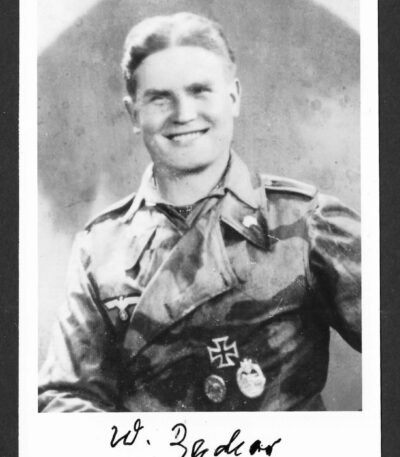
Wilhem Bachor – Panzer-Regiment 24 (24. Panzer-Division)
€45,00Original Postwar Signature on a Postwar Photo of Wilhelm “Willy” Bachor. Oberwachtmeister Wilhelm Bachor (04.05.1921 in Kelbassen † 20.03.2008 in Apolda) earned the Deutsches Kreuz in Gold on June 28, 1944 with Panzer-Regiment 24 and the Ritterkreuz des Eisernen Kreuzes on May 8 – 11, 1945 as Oberwachtmeister in the 12. Kompanie/ Panzer-Regiment 24 of the 24. Panzer-Division. He also earned the Panzerkampfabzeichen III. Stufe “50”. Condition as seen. Postcardsize.
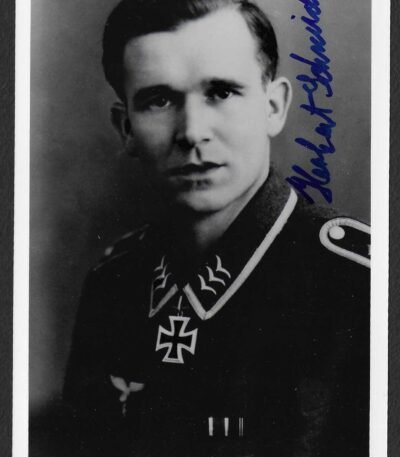
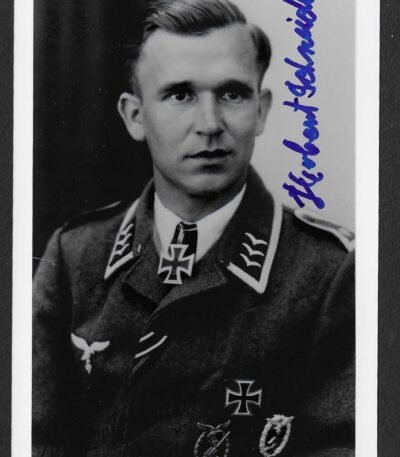
Herbert Schneider – Flak-Regiment 49
€20,00Original Postwar Signature on a Postwar Photo of Herbert Schneider. Oberwachtmeister Herbert Schneider (31.07.1915 † 01.12.2011) earned the Ritterkreuz on February 5, 1944 as Wachtmeister und Flakkampftruppführer of the 6. Batterie/ Flak-Regiment 49. Good condition. Measuring: Postcardsize.
Knight’s Cross: “During the defensive battles near Bolchow-Orel, in the summer of 1943, Wachtmeister Scheider succeeded in destroyed 25 Soviet tanks with his Flak gun. Later on during this fighting he would be heavily wounded by artillery fire on the 21.07.1943. In recognition of his achievements and devotion to duty during this time, he would receive the Knight’s Cross.”
Herbert Schneider – Flak-Regiment 49
€20,00Original Postwar Signature on a Postwar Photo of Herbert Schneider. Oberwachtmeister Herbert Schneider (31.07.1915 † 01.12.2011) earned the Ritterkreuz on February 5, 1944 as Wachtmeister und Flakkampftruppführer of the 6. Batterie/ Flak-Regiment 49. Good condition. Measuring: Postcardsize.
Knight’s Cross: “During the defensive battles near Bolchow-Orel, in the summer of 1943, Wachtmeister Scheider succeeded in destroyed 25 Soviet tanks with his Flak gun. Later on during this fighting he would be heavily wounded by artillery fire on the 21.07.1943. In recognition of his achievements and devotion to duty during this time, he would receive the Knight’s Cross.”
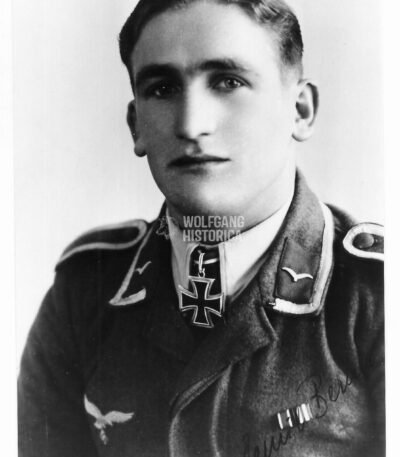
Emil Berner – Flak-Regiment 18 (Afrikakorps)
€25,00Original Postwar Signature on a Postwar Photo of Emil Berner. Unteroffizier Emil Berner (04.12.1921 † 13.06.2008) earned the Ritterkreuz des Eiseren Kreuzes on November 3, 1942 as Gefreiter der Reserve und Richtkanonier in the 3. Batterie/ Flak-Regiment 18 in North Africa.
Awarded for distinguishing himself as a Flak gunner throughout the North African campaign. During the battles of Sidi Rezeg and Bir el Hacheim (1941) he destroyed 16 enemy tanks. During the advances in the time period May-June 1942 (Tobruk—Marsa Matruk—El Alamein) he destroyed another 19 enemy tanks. He also destroyed about 200 vehicles as well as anti-tank gun batteries and MG nests. During the combat along the El Alamein front he prevented an armoured breakthrough, destroying 7 tanks at a range of 30-50 metres and shielding about 1000 prisoners from the Allies long enough for them to be taken away by German troops. He had destroyed 42 tanks altogether by the time he received the Knight’s Cross.
Provenance: This signature comes from one of the largest postwar signature collection I’ve ever commissioned. This collection was started by a Waffen-SS Veteran, Werner H., in the 1950’s until he passed away.
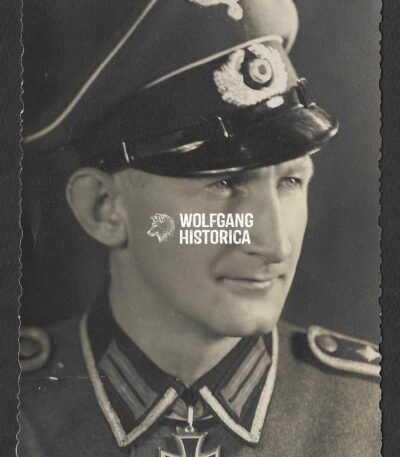
Studioportrait Ritterkreuzträger Anton Bayer – Grenadier-Regiment 19 (7. Infanterie-Division)
€150,00Original wartime studio portrait postcard-size photograph of Oberfeldwebel Anton Bayer (1914–1996), Knight’s Cross holder of Grenadier-Regiment 19 / 7. Infanterie-Division, with his original postwar autograph on the reverse.
A very attractive original portrait of Oberfeldwebel Anton Bayer, a highly decorated German Army anti-tank specialist and recipient of the Ritterkreuz des Eisernen Kreuzes.
The photograph shows Bayer in uniform wearing the Knight’s Cross of the Iron Cross, awarded to him on 5 October 1943 for his actions on the Eastern Front. He served as a Zugführer in 14.(Panzer-Jäger)/Grenadier-Regiment 19, 7. Infanterie-Division. Contemporary and specialist sources document Bayer’s Ritterkreuz award in this capacity.
Bayer had entered military service with the anti-tank company of Infanterie-Regiment 19 in 1936 and served with the regiment during the campaigns in Poland, France and the Soviet Union. Following the reorganisation of the regiment, he continued with 14. Kompanie/Grenadier-Regiment 19, later designated Grenadier-Regiment 19 “List”, of the 7. Infanterie-Division.
His Knight’s Cross was awarded following a particularly notable action on 27 August 1943. During heavy fighting, Soviet T-34 tanks broke through the German defensive positions. Bayer had prepared an anti-tank position on elevated ground, but the attacking armour quickly knocked out the available Pak guns. When the crew of the final operational gun was put out of action, Bayer personally took over the weapon and engaged the Soviet tanks.
According to the Ritterkreuz recommendation, Bayer succeeded in destroying several attacking T-34s before using his remaining ammunition to immobilise additional tanks. He then destroyed the gun to prevent its capture and fought his way back to the German lines armed only with his pistol. His actions helped prevent the Soviet armour from penetrating into the German rear and allowed his regiment to withdraw.
Bayer’s other decorations included the Eisernes Kreuz 2. Klasse, Eisernes Kreuz 1. Klasse, Infanterie-Sturmabzeichen, Ostmedaille, Nahkampfspange in Bronze and Verwundetenabzeichen.
Anton Bayer was born on 30 May 1914 and died on 7 July 1996. At the end of the war he was taken prisoner by Soviet forces on 8 May 1945 and remained in Soviet captivity until 10 April 1948.
The photograph
The item consists of an original wartime studio portrait in postcard format, showing Bayer wearing his Knight’s Cross. The reverse bears a handwritten postwar signature by Anton Bayer, making this a particularly desirable combination of an original wartime portrait and signed Ritterkreuzträger photograph.
The photograph retains its original scalloped photographic edges and shows normal age-related handling/storage wear consistent with an original period photograph.
An excellent portrait for collectors of Ritterkreuzträger, Grenadier-Regiment 19, 7. Infanterie-Division, Panzerjäger personnel and signed Wehrmacht photographs.
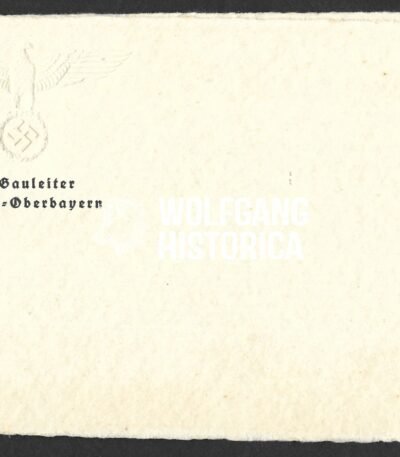
Wartime Signed New Year’s Greeting Card Signed by Gauleiter and Staatsminister Adolf Wagner
€250,00Original folding New Year’s greeting card from Adolf Wagner (1 October 1890 – 12 April 1944), Gauleiter of Munich–Upper Bavaria (München–Oberbayern) and Bavarian State Minister (Staatsminister). Wagner was one of the early members of the NSDAP and a senior political leader in Bavaria, holding the dual posts of Gauleiter and Minister of the Interior until his death in 1944.
The card bears the printed message:
“Zum Jahreswechsel sende ich Ihnen auch im Namen meiner Frau die besten Glückwünsche” (“At the turn of the year, I send you, also in the name of my wife, my best wishes”).
Signed in ink “Adolf Wagner” below the printed title Staatsminister. The cover shows the embossed eagle and swastika emblem above the printed letterhead Der Gauleiter München–Oberbayern.
Item Details
-
Original wartime New Year’s greeting card from Gauleiter and Staatsminister Adolf Wagner.
-
Signed in ink on the interior.
-
Embossed party eagle and printed heading on the front panel.
-
Format: Folding card, approx. 10 × 15 cm when closed.
-
Condition: Excellent; minimal age toning and handling wear. Signature remains bold and well preserved.
Collector’s Note
A fine and authentic example of official correspondence from Adolf Wagner, one of the highest-ranking regional leaders of the NSDAP and a key political figure in Bavaria. Such personally signed seasonal greeting cards were distributed to selected officials and associates, and examples with intact embossing and clear signatures are scarce and historically valuable.
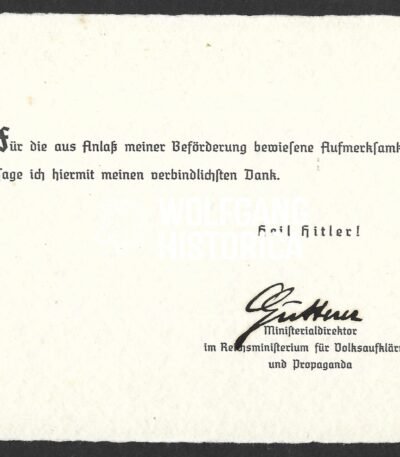
Wartime Signature on a Thank-You Card of Ministerialdirektor Leopold Gutterer
€195,00This original wartime thank-you card, personally signed by Leopold Gutterer , was issued on the occasion of his promotion within the Ministry. The printed text expresses gratitude for the attention shown upon his advancement, ending with his handwritten signature in black ink. Leopold Gutterer (25 April 1902 – 28 April 1991) was a senior official (Ministerialdirektor) in the Reich Ministry for Public Enlightenment and Propaganda (Reichsministerium für Volksaufklärung und Propaganda), serving directly under Joseph Goebbels. A long-time civil servant and National Socialist administrator, Gutterer held influential posts related to press, film, and cultural coordination during the war years.
Item Details
-
Original wartime signature of Ministerialdirektor Leopold Gutterer.
-
Issued on a printed official thank-you card marking his promotion.
-
Institution: Reich Ministry for Public Enlightenment and Propaganda, Berlin.
-
Medium: Heavy stock card with deckle edges, period typeface, and ink signature.
-
Size: Approx. 10 × 15 cm (postcard format).
-
Condition: Very good; light age-related toning and minimal edge wear. Signature remains clear and well preserved.
Collector’s Note
Authentic signed material from senior officials of the Propaganda Ministry is scarce, especially from Ministerialdirektor Leopold Gutterer. This example illustrates the formal bureaucratic correspondence and ceremonial culture within the Reich’s propaganda administration. A historically valuable document for collectors of Third Reich political and administrative ephemera.
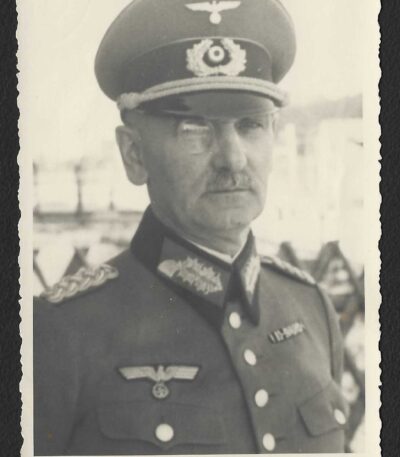
Signed Portrait Photograph of a German Heer General
€100,00Original wartime signed portrait photograph of a high-ranking German Heer General, but cannot identify him. The reverse bears a handwritten dedication and original signature, dated 1940/41, adding excellent research and historical value. The inscription appears to have been written as a personal commemorative dedication, likely presented to a subordinate, colleague, or associate during the early war years.
A desirable original signed portrait photograph with strong display appeal and excellent research potential.
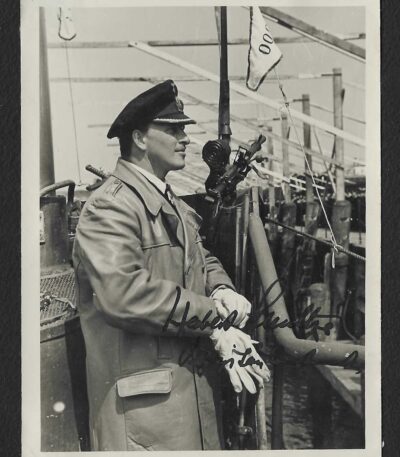
Herbert Schultze – Kommandant of U-Boot “U-48” (Eichenlaub) – Wartime Signed
€285,00Original Wartime Signature on a Wartime Photo of Herbert Emil Schultze. Korvettenkäpitan Herbert Schultze (24.07.1909 in Kiel † 03.06.1987 in London, England) earned the Ritterkreuz des Eisernen Kreuzes on March 1, 1940 as Kapitänleutnant und Kommandant of Uboot “U-48” and the Eichenlaub on June 12, 1941 as Kapitänleutnant und Kommandant of Uboot “U-48”. He also earned the U-boot-Kriegsabzeichen mit Brillianten. Postcardsize.
Provenance: From the estate of former HJ member Reinhold Brennfleck (1928–2022) from Lauda, Baden, who wrote to numerous Ritterkreuzträger in 1943–1944 requesting signatures and signed photographs, forming an exceptional wartime autograph collection.
Sold out
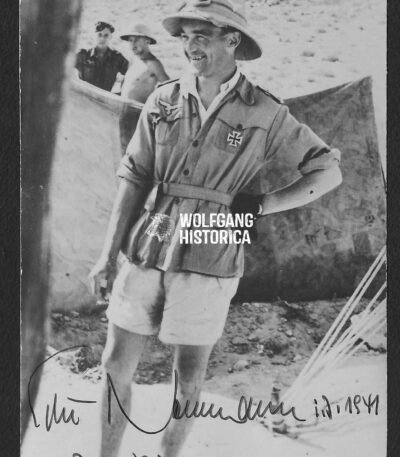
Eduard Neumann – Jagdgeschwader 27 “Afrika”
€35,00Original Postwar Signature on a Postwar Photo of Eduard Neumann. Oberst Eduard “Edu” Neumann (05.06.1911 † 09.08.2004) was a highly respected Luftwaffe fighter ace and commander of Jagdgeschwader 27 “Afrika” during the North African Campaign. He was awarded the Deutsches Kreuz in Gold on 11 May 1942 as Hauptmann and Gruppenkommandeur of I./Jagdgeschwader 27 in recognition of his outstanding leadership and combat achievements during the air war over North Africa. Under his command, I./JG 27 became one of the Luftwaffe’s most successful fighter groups, playing a key role in the desert campaign and producing renowned aces such as Hans-Joachim Marseille. Postcardsize.
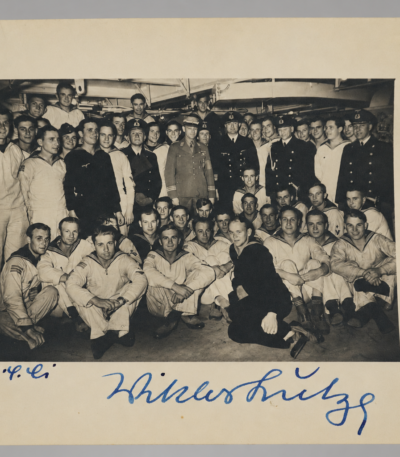
Signed Photo of SA Chief Viktor Lutze Visiting Kriegsmarine Crew – Hoffmann Press Photo
€375,00Original wartime signed photograph depicting SA-Stabschef Viktor Lutze during a visit aboard a Kriegsmarine vessel in Brest.
The image shows Lutze together with a large group of Kriegsmarine sailors and officers aboard ship. The lower front margin bears a bold original ink signature of Viktor Lutze.
Viktor Lutze became Chief of Staff of the Sturmabteilung (SA) in 1934 following the death of Ernst Röhm during the Night of the Long Knives. As leader of the SA, Lutze remained one of the highest-ranking political figures within the Third Reich and frequently appeared at official military and propaganda events throughout the war years. He died on 2 May 1943 following injuries sustained in a serious automobile accident near Potsdam.
Reverse retains the original handwritten period notation: “Besuch des Stabschef der SA Lutze an Bord im Brest.” (“Visit of SA Chief Lutze aboard ship in Brest.”)
Also visible to the reverse is the printed credit line: “Photo-Standardpresse Heinrich Hoffmann Berlin SW 68 – Nachdruck verboten”
A very interesting original Third Reich signed photograph with strong historical and display appeal, especially for collectors of SA, Kriegsmarine, political memorabilia, and wartime autographs.
Condition as seen.
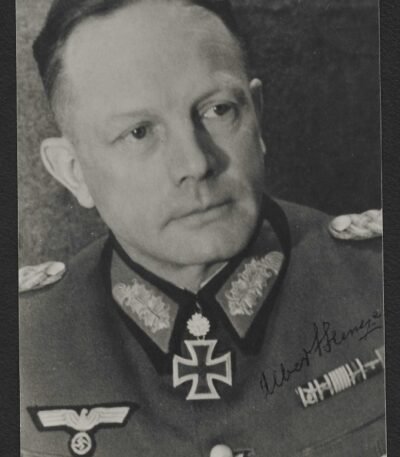
Albert Henze – Panzergrenadier-Regiment 110 & Gruppe Henze (Eichenlaub)
€55,00Original Postwar Signature on a Postwar Photo of Albert Henze. Generalleutnant Albert Henze (07.08.1894 in Kirchhain † 31.03.1979 in Ingolstadt) earned the Deutsches Kreuz in Gold on March 2, 1943 with the Panzergrenadier-Regiment 110, the Ritterkreuz des Eisernen Kreuzes on January 15, 1944 as Oberst und Kommandeur of Panzergrenadier-Regiment 110 and the 11. Panzer-Division and the Eichenlaub on January 21, 1945 as Generalmajor und Kommandeur of the Gruppe Henze / 21. Feld-Division (L). Larger then Postcardsize.
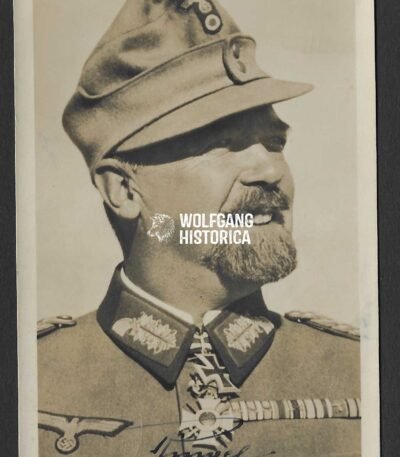
Julius Ringel – 5. Gebirgs-Division (Eichenlaub) (Wartime Signed)
€150,00Original Wartime Signature on a Postcard of Julius Ringel. General der Gebirgstruppe Julius “Papa” Ringel (16.11.1889 † 11.02.1967) was an Austrian general serving in the armed forces of Nazi Germany during the Second World War. He saw service on the Western Front, Eastern Front, and during the Balkan Campaign, and held a number of senior commands, including 3. Gebirgs-Division, 5. Gebirgs-Division, LXIX. Armeekorps, Wehrkreis XI, and Armeekorps Ringel. He earned the Ritterkreuz des Eisernen Kreuzes on June 13, 1941 as Generalmajor und Kommandeur of the 5. Gebirgs-Division, and was later awarded the Eichenlaub on October 25, 1943 as Generalleutnant und Kommandeur of the 5. Gebirgs-Division. Condition as seen. Postcard size.
This is sold on commission!
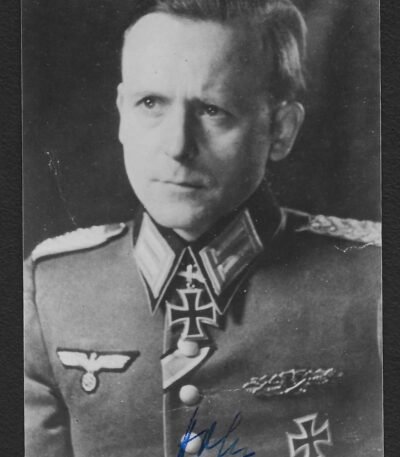
Lothar Hofer – SS-Artillerie-Regiment 54 “Nederland”
€45,00Original Postwar Signature on a Postwar Photo of Lothar Hofer. SS-Sturmbannführer Lothar Hofer (18.09.1914 † 22.01.1999) earned the Ritterkreuz on April 5, 1945 as SS-Sturmbannführer und Major der Schutzpolizei und Kommandeur of the III. Abteilung/ SS-Artillerie-Regiment 54 of the 23. SS-Freiwilligen-Panzer-Grenadier-Division “Nederland”. Good condition. Postcardsize.
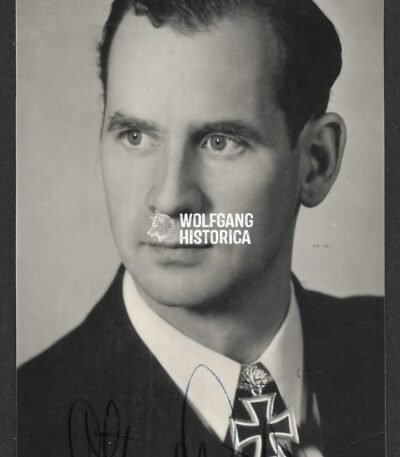
Otto von Bülow – Kommandant of “U-404” (Eichenlaub) (Wartime Signed)
€225,00Original Wartime Signature on a Postcard of Otto von Bülow. Korvettenkäpitan zur See Otto von Bülow (16.10.1911 † 05.01.2006) earned the Ritterkreuz des Eisernen Kreuzes on October 20, 1942 as Kapitänleutnant und Kommandant of U-404 and the Eichenlaub on April 26, 1943 as Kapitänleutnant und Kommandant of U-404. Good condition. Edges have been cut.
Creditted with sinking 15 ships (Read more on Otto von Bülow (Wikipedia))
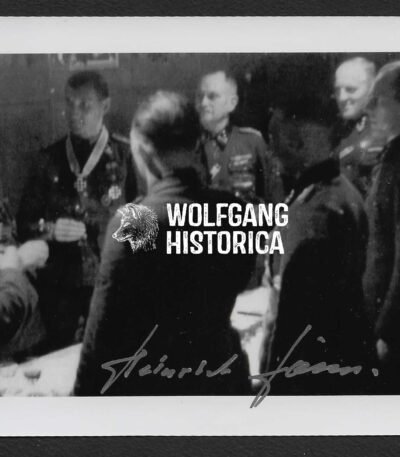
Heinrich Sonne – SS-Infanterie-Brigade 1
€47,50Original Postwar Signature on a Postwar Photo of Heinrich Sonne. SS-Hauptsturmführer Heinrich Sonne (23.02.1917 † 05.09.1984) earned the Ritterkreuz des Eisernen Kreuzes on December 10, 1943 as SS-Obersturmführer und Chef of the Kradschützen-kompanie/ SS-Infanterie-Brigade 1 (mot.). Good condition. Measuring: Postcardsize.
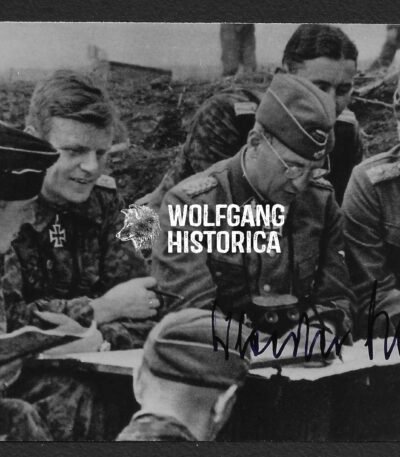
Sylvester Stadler – “Der Führer” & “Hohenstaufen” (Swords + NKIG)
€60,00Original Postwar Signature on a Postwar Photo of Sylvester Stadler. SS-Oberführer Sylvester Stadler (24.04.1911 † 25.05.1995) earned the Ritterkreuz on April 6, 1943 as SS-Sturmbannführer und Kommandeur of the II. Bataillon/ SS-Panzer-Grenadier-Regiment 4 “Der Führer”, the Eichenlaub on September 16, 1943 as SS-Obersturmbannführer und Kommandeur of the SS-Panzer-Grenadier-Regiment 4 “Der Führer” of the 2. SS-Panzer-Division “Das Reich“, the Nahkampfspange in Gold on December 12, 1943 with the SS-Panzer-Grenadier-Regiment 4 “Der Führer” and the Schwertern on May 6, 1945 as SS-Oberführer und Kommandeur of 9. SS-Panzer-Division “Hohenstaufen”.
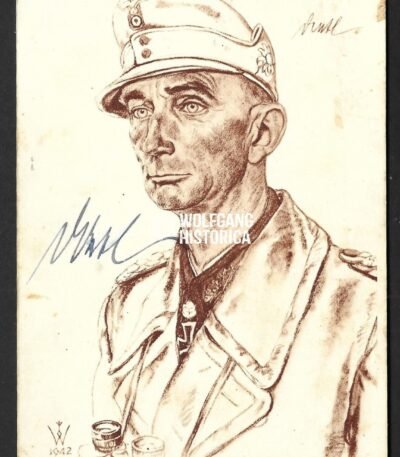
Eduard Dietl – 3.Geb.Div., Gebirgs-Korps Norwegen & 20. Gebirgsarmee (Schwertern) (Wartime Signed)
€145,00Original Wartime Signature on a Postcard of Generaloberst Eduard Dietl (21 July 1890 † 23 June 1944) was one of the most renowned commanders of the German mountain troops (Gebirgstruppe) during the Second World War. Rising from Generalleutnant to Generaloberst, he led German forces in Norway and later commanded the 20. Gebirgsarmee in the far north. He was among the earliest recipients of the Ritterkreuz des Eisernen Kreuzes and one of the very few to be awarded the Eichenlaub and Schwertern.
Item Details
-
Original wartime signature of Generaloberst Eduard Dietl.
-
Signed on a wartime postcard.
-
Condition: As seen – period ink signature, postcard stock consistent with the era.
Death
On 23 June 1944, the Ju 52 transport aircraft carrying Dietl crashed near Rettenegg, Styria, killing him along with General der Infanterie Thomas-Emil von Wickede, General der Gebirgstruppe Karl Eglseer, Generalleutnant Franz Rossi, and three others. There were no survivors.
Collector’s Note
Eduard Dietl remains one of the most iconic figures of the Gebirgstruppe and among the most decorated German commanders of WWII. His status as a Ritterkreuz mit Eichenlaub und Schwertern recipient, combined with his high command role and tragic death in 1944, makes his original wartime autograph a highly desirable and rare collectible.
Death: On 23 June 1944, the Ju 52 aircraft carrying Dietl, General der Infanterie Thomas-Emil von Wickede, General der Gebirgstruppe Karl Eglseer, Generalleutnant der Gebirgstruppe Franz Rossi and three other passengers crashed in the vicinity of the small village of Rettenegg, Styria. There were no survivors.
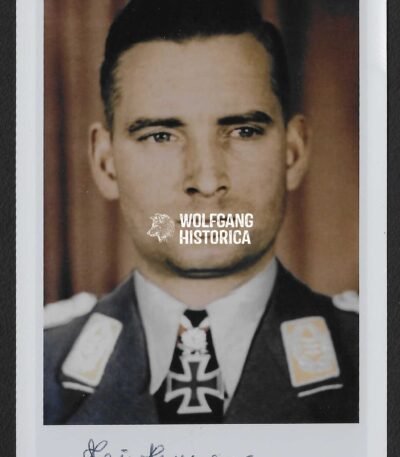
Hajo Herrmann – Kampfgeschwader 4, 30 & Jagdgeschwader 300 (Schwertern)
€25,00Original Postwar Signature on a Postwar Photo of Hans-Joachim “Hajo” Herrmann. Oberst Hajo Hermann (01.08.1913 † 05.11.2010) earned the Ritterkreuz des Eisernen Kreuzes on October 13, 1940 as Oberleutnant und Staffelkapitän of the 7. Staffel/ Kampfgeschwader 4, the Deutsches Kreuz in Gold on June 5, 1942 with Kampfgeschwader 30 “Adler”, the Eichenlaub on August 2, 1943 as Major und Kommodore of Jagdgeschwader 300 and the Schwertern on January 23, 1944 as Oberst und Inspekteur of the Deutschen Luftverteidigung. Condition as seen. Postcardsize.
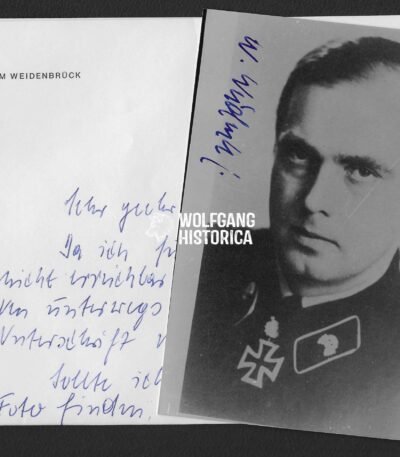
Wilhelm Weidenbrück – Panzer-Regiment 3 & Panzer-Brigade 104 (Eichenlaub)
€55,00Original Postwar Signature on a Postwar Photo plus Letter of Wilhelm Weidenbrück. Major Wilhelm Weidenbrück (05.02.1915 † 28.04.2011) earned the Deutsches Kreuz in Gold on January 2, 1942 with Panzer-Regiment 3, the Ritterkreuz on September 16,1942 as Oberleutnant und Kompaniechef of the 5. Kompanie/ Panzer-Regiment 3 of the 2. Panzer-Division and the Eichenlaub on November 16, 1944 as Major und Kommandeur of Panzer-Brigade 104. Good Condition.
Eichenlaub: Awarded for the successful employment of his brigade in the sector of 5. Jäger-Division on 30.10.1944, fighting at the Narew front at Ostenburg (Pultusk). Following a Soviet breach of the frontline west of the Pelta creek Weidenbrück’s men launched a timely counterattack that restored the old German lines, and 48 Soviet tanks were destroyed/captured in the process.
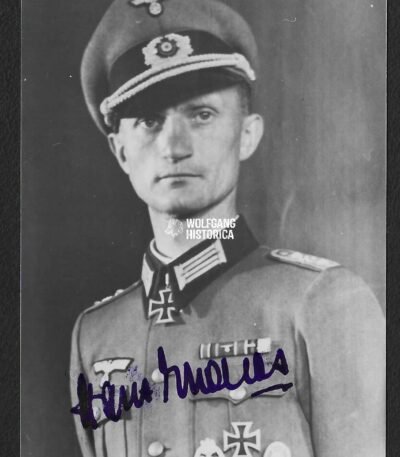
Hans Endres – Panzer-Artillerie-Regiment 74 (2. Panzer-Division)
€17,50Original Postwar Signature on a Postwar Photo of Hans Endres. Major Hans Endres (05.06.1915 † 05.10.2004) earned the Ritterkreuz des Eisernen Kreuzes on August 14, 1943 as Hauptmann und Führer of the Panzer-Artillerie-Regiment 74 of the 2. Panzer-Division.
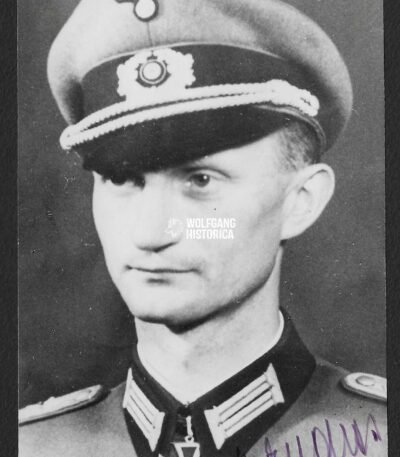
Hans Endres – Panzer-Artillerie-Regiment 74 (2. Panzer-Division)
€17,50Original Postwar Signature on a Postwar Photo of Hans Endres. Major Hans Endres (05.06.1915 † 05.10.2004) earned the Ritterkreuz des Eisernen Kreuzes on August 14, 1943 as Hauptmann und Führer of the Panzer-Artillerie-Regiment 74 of the 2. Panzer-Division.
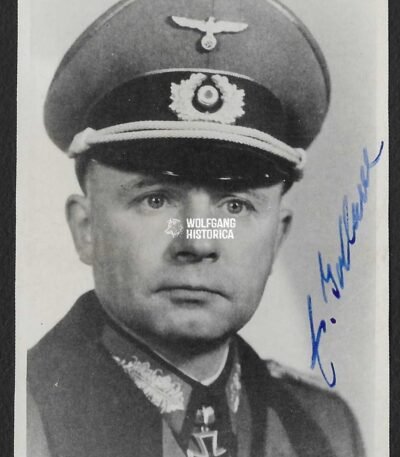
Erwin Jollasse – Schützen-Regiment 52 (18. Panzer-Division)
€40,00Original Postwar Signature on a Postwar Photo of Erwin Jollase. Generalleutnant Erwin Jollasse (08.12.1892 in Hamburg † 14.03.1987 in Tutzing) earned the Deutsches Kreuz in Gold on January 6, 1944 and the Ritterkreuz des Eisernen Kreuzes on November 2, 1941 as Oberst und Kommandeur of the Schützen-Regiment 52 of the 18. Panzer-Division. Size: 7,1×10,3cm.
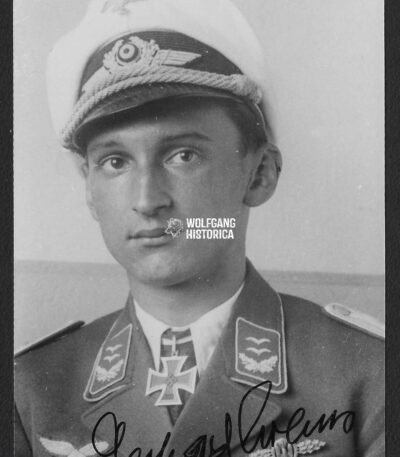
Gerhard Krems – Kampfgeschwader 27 “Boelcke”
€20,00Original Postwar Signature on a Postwar Photo of Gerhard Krems. Oberleutnant Gerhard Krems (04.05.1920 in Dresden † 12.02.2017 in Berlin) earned the Ritterkreuz des Eisernen Kreuzes on May 25, 1942 as Oberleutnant und Flugzeugführer in the 2. Staffel/ Kampfgeschwader 27 “Boelcke”. Condition as seen. Postcardsize.
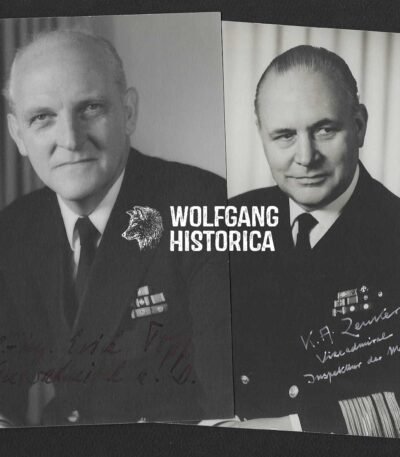
2x Postwar Signed Photos of Erich Topp & Karl-Adolf Zenker
€60,00Original Postwar Signature on a Postwar Photo of Erich Topp. Fregattenkäpitan Erich Topp (02.07.1914 † 26.12.2005) earned the Ritterkreuz des Eisernen Kreuzes on June 20, 1941 as Oberleutnant zur See und Kommandant of Uboot “U-552”, the Eichenlaub on April 11, 1942 as Kapitänleutnant und Kommandant of Uboot “U-552” and the Schwertern on August 17, 1942 as Kapitänleutnant und Kommandant of Uboot “U-552”.
Original Postwar Signature on a Postwar Photo of Karl-Adolf Zenker. Admiral Karl-Adolf Zenker (19 July 1907, Goslar † 27 October 1998, Bonn) was a German naval officer who served in both the Kriegsmarine during World War II and the Bundesmarine of postwar West Germany, where he rose to the rank of Admiral. He is best remembered as Inspector of the Navy (Inspekteur der Marine), the highest-ranking officer of the Bundesmarine.
Both A5 Size format.
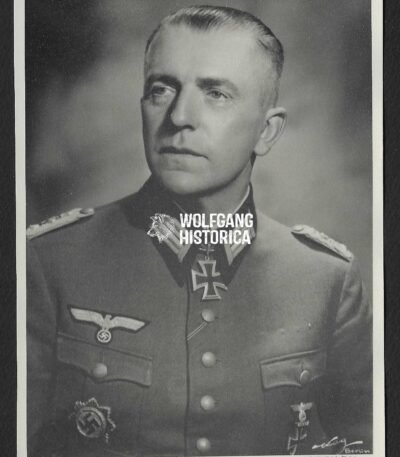
Friedrich-Carl von Steinkeller – Panzergrenadier-Regiment 7 (Kdr. of Div. “Feldherrnhalle”)
€85,00Original Postwar Signature on a Postwar Photo of Friedrich-Carl von Steinkeller. Generalmajor Friedrich-Carl von Steinkeller (28 March 1896 † 19 October 1981) was a German officer who rose to the rank of Generalmajor during the Second World War. He distinguished himself as a Panzergrenadier commander in one of the Wehrmacht’s most famous armored formations, the 7. Panzer-Division.
Awards and Decorations:
-
Knight’s Cross of the Iron Cross (Ritterkreuz des Eisernen Kreuzes) – 31 March 1943, as Oberstleutnant and Kommandeur of Panzergrenadier-Regiment 7, 7. Panzer-Division.
Career Highlights:
-
A veteran of the First World War who remained in the Reichswehr between the wars.
-
Took command of Panzergrenadier-Regiment 7 of the 7. Panzer-Division, one of the Wehrmacht’s most elite armored units, during the fighting on the Eastern Front.
-
Awarded the Knight’s Cross for his leadership and bravery in combat operations in 1943.
-
Promoted to Generalmajor before the war’s end.
-
Survived captivity and lived in West Germany until his death in 1981.
Item Details:
-
Authentic postwar signature of Generalmajor Friedrich-Carl von Steinkeller.
-
Signed on a postwar photograph.
-
Condition: Clear, well-preserved autograph.
Collector’s Note:
Von Steinkeller’s connection with the elite 7. Panzer-Division underlines the desirability of his autograph for collectors of armored warfare history. His award of the Knight’s Cross as a regimental commander adds to the appeal, making this an excellent item for a Panzer or Heer collection.
This is sold on commission.
Sold out
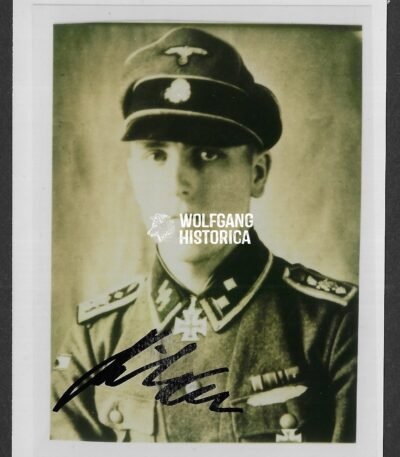
Walter Pitsch – SS-Flak-Abteilung “LSSAH”
€75,00Original Postwar Signature on a Postwar Photo of Walter Pitsch. SS-Hauptscharführer Walter Pitsch (13.06.1920 † 29.07.2005) earned the Ritterkreuz des Eisernen Kreuzes on May 6, 1945 as SS-Hauptscharführer und Batterieführer of the 4. Batterie/ SS-Flak-Abteilung 1 of the 1. SS-Panzer-Division “Adolf Hitler”. Condition as seen.
At the end of April 1945 Walter Pitsch took over the command of his Kompanie after all of its self-propelled 3.7 cm AA guns had been lost. During this time, in which the Kompanie was now employed in the infantry role, the unit managed to thwart an enemy penetration near the Mariazell-Hohenberg (in the Alps). Pitsch, leading at the head of the Kompanie, threw the Soviets back from their gains and held the position thereafter. The retention of this position was of great importance in covering the retreat of the Division, and Pitsch would be recommended for the Knight’s Cross in recognition of his success here. Awarded immediately by Supreme Commander of 6. Panzer-Armee (Dietrich), Southeastern Front. (Source: Traces of War)
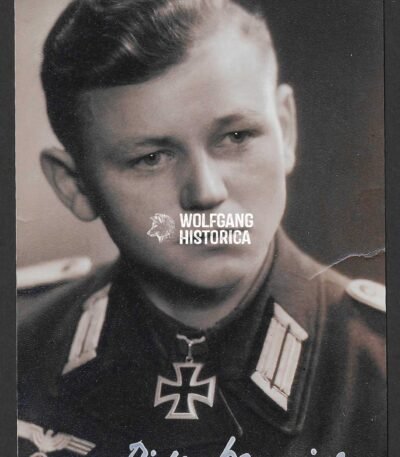
Dieter Damerius – Grenadier-Regiment 273
€17,50Original Postwar Signature on a Postwar Photo of Dieter Damerius. Leutnant Dieter Damerius (17.04.1921 † 28.12.2018) earned the Ritterkreuz on February 24, 1945 as Leutnant und Führer of the 5. Kompanie/ Grenadier-Regiment 273 of the 93. Infanterie-Division. Good condition. Postcardsize.
Sold out
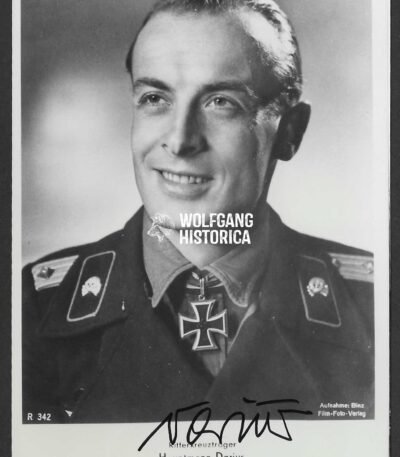
Wolfgang Darius – Panzer-Abteilung 21
€22,50Original Postwar Signature on a Postwar Photo of Wolfgang Darius. Major Wolfgang Darius (02.04.1911 in Blankenhain † 18.11.2000 in Bonn) earned the Ritterkreuz des Eisernen Kreuzes on August 22, 1943 as Hauptmann und Kommandeur of the Panzerjäger-Abteilung 21 of the 20. Panzer-Division. Postcardsize.
“During the fighting north of Orel Hauptmann Wolfgang Darius recognized the attack of a fresh enemy tank brigade into the flank of the German defensive front just in the nick of time. He threw himself against the Soviets in a bold counterthrust and destroyed 48 enemy tanks with his Abteilung.”
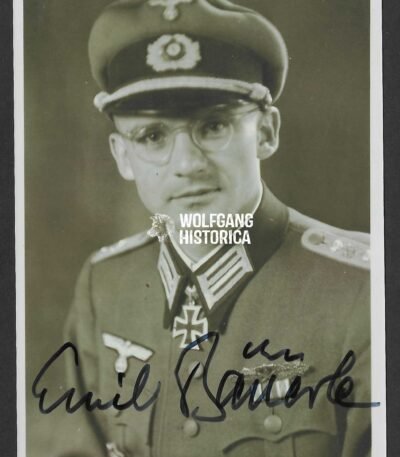
Emil Bäuerle – Jäger-Regiment 56 (5. Jäger-Division)
€20,00Original Postwar Signature on a Postwar Photo of Emil Bäuerle. Hauptmann der Reserve Emil Bäuerle (10.05.1917 in Neu-Ulm † 16.03.2007 in Neu-Ulm) earned the Ritterkreuz des Eisernen Kreuzes on May 4, 1944 as Oberleutnant und Führer of the 8. Kompanie/ Jäger-Regiment 56 of the 5. Jäger-Division. Postcardsize.
Sold out
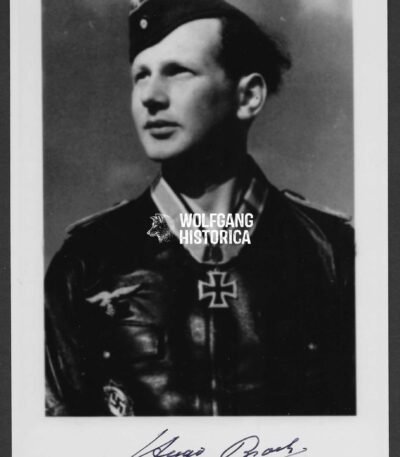
Hugo Broch – Jagdgeschwader 54 (A5 Size!)
€20,00Original Postwar Signature on a Postwar Photo of Hugo Broch. Feldwebel Hugo Broch (06.01.1922 †) earned the Deutsches Kreuz in Gold on October 17, 1943 and the Ritterkreuz des Eisernen Kreuzes on March 12, 1945 as Feldwebel in the 8. Staffel/ Jagdgeschwader 54. Condition as seen. Large Size (A5!).
Sold out
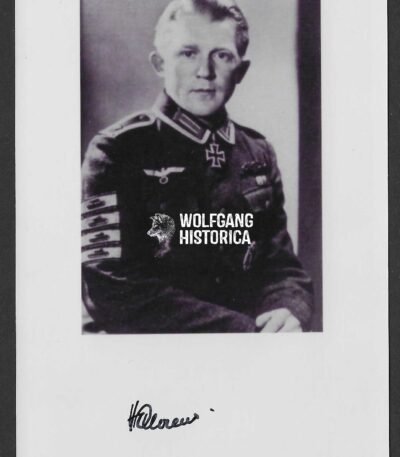
Hinrichs Ahrens – Grenadier-Regiment 1141 (561. Volksgrenadier-Division, 4x Panzervernichtungsabzeichen!)
€30,00Original Postwar Signature on a Postwar Photo of Hinrich Ahrens. Unteroffizier Hinrich Ahrens (15.03.1921 † 31.12.2009) earned the Ritterkreuz des Eisernen Kreuzes on January 9, 1945 as Unteroffizier und Zugführer in the 13. Kompanie/ Grenadier-Regiment 1141 of the 561. Volksgrenadier-Division. Postcardsize. Condition as seen. Postcardsize.
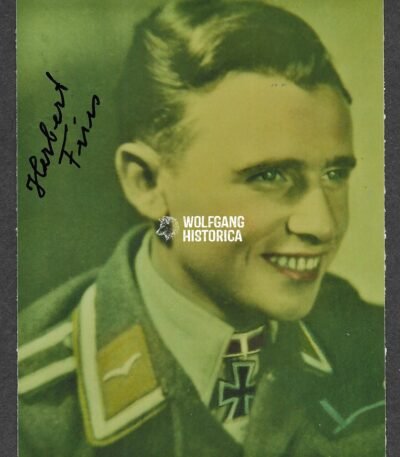
Herbert Fries – Fallschirm-Panzerjäger-Abteilung 1 (Pantherturm!)
€25,00Original Postwar Signature on a Postwar Photo of Herbert Fries. Leutnant Herbert Fries (1 March 1925, Waldmühlen – 6 January 2014, Rennerod-Emmerichenhain) was a Fallschirmjäger and one of the youngest recipients of the Ritterkreuz des Eisernen Kreuzes during the Second World War. Serving as a gunner in the 2./Fallschirm-Panzerjäger-Abteilung 1, 1. Fallschirmjäger-Division, he earned the Knight’s Cross for extraordinary anti-tank actions in Italy.
Award and Citation
-
Ritterkreuz des Eisernen Kreuzes – 5 September 1944, as Gefreiter und Geschützführer in the 2./Fallschirm-Panzerjäger-Abteilung 1
-
Citation: Recognized for his outstanding performance manning a Pantherturm defensive position on the Via Casilina near Piedimonte during the battles of May 1944.
-
21.05.1944 – Destroyed 7 Allied tanks
-
22.05.1944 – Destroyed 6 additional tanks
-
24.05.1944 – Destroyed another 7 tanks
-
Total: 20 enemy tanks destroyed in just three days, decisively slowing Allied advances.
-
-
After exhausting their position, Fries and his crew destroyed their turret (“Schlafmütze” / sleepyhead) and withdrew with the retreating German forces.
Item Details
-
Type: Original postwar signed photograph
-
Size: Little bit smaller than Postcardsize
-
Condition: As seen, well-preserved signature
Collector’s Note
Herbert Fries is remembered as one of the notable anti-tank fighters of the Luftwaffe’s ground formations. His signature is scarce compared to other Ritterkreuzträger, particularly on large-format photos such as this example. An impressive and historically rich autograph, highly desirable for collectors of Fallschirmjäger and anti-tank warfare memorabilia.
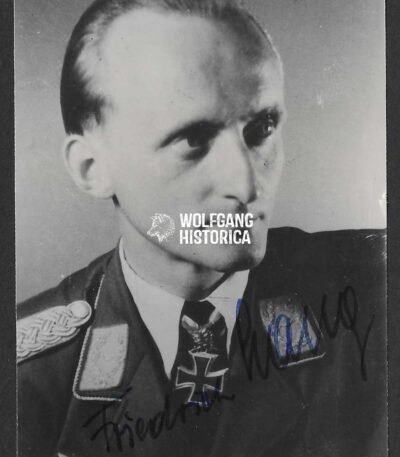
Friedrich Lang – Sturzkampfgeschwader 2 & Schlachtgeschwader 1 (Schwertern)
€35,00Original Postwar Signature on a Postwar Photo of Friedrich Lang. Major Friedrich Lang (12.01.1915 † 29.12.2003) earned the Ritterkreuz on November 23, 1941 as Oberleutnant und Flugzeugführer in the 1. Staffel/ Sturzkampfgeschwader 2 “Immelmann”, the Deutsches Kreuz in Gold on April 9, 1942, the Eichenlaub on November 21, 1942 as Hauptmann und Staffelkapitän of the 1. Staffel/ Sturzkampfgeschwader 2 “Immelmann” and the Schwertern on July 2, 1944 as Major und Kommandeur of the III. Gruppe/ Schlachtgeschwader 1. Size: 8×11,5cm. Condition as seen.
Joachim Sommer – Aufklärungsgruppe 31
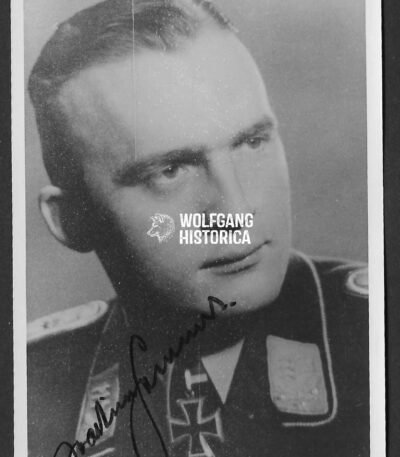
€17,50Original Postwar Signature on a Postwar Photo of Joachim Sommer. Hauptmann Joachim Sommer (14.04.1916 † 09.06.2009) earned the Ritterkreuz des Eisernen Kreuzes on November 25, 1944 as Hauptmann und Staffelkapitän of the 4. Staffel/ Aufklärungsgruppe 31. Condition as seen. Size: 8,8×12,7cm.
Paul-Georg Kleffel – Panzer-Aufklärungs-Abteilung 3 (3. Panzer-Division) (A5-Size)
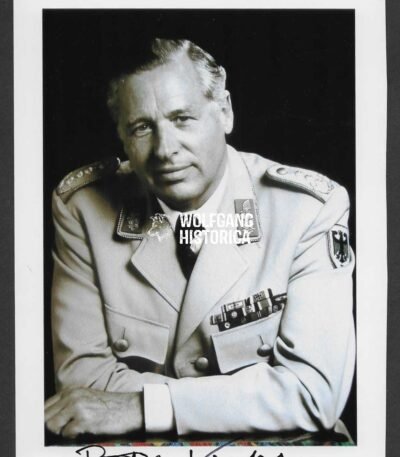
€20,00Original Postwar Signature on a Postwar Photo of Paul-Georg Kleffel. Hauptmann Paul-Georg Kleffel (07.09.1920 † 09.02.2020) earned the Deutsches Kreuz in Gold on November 16, 1943 as Oberleutnant in the 4. Kompanie/ Panzer-Aufklärungs-Abteilung 3 and the Ritterkreuz on May 4, 1944 as Oberleutnant und Kompaniechef of the 4. Kompanie/ Panzer-Aufklärungs-Abteilung 3 of the 3. Panzer-Division. Condition as seen. Large A5 size.
Johann-Alfred Klaus – Schlachtgeschwader 1
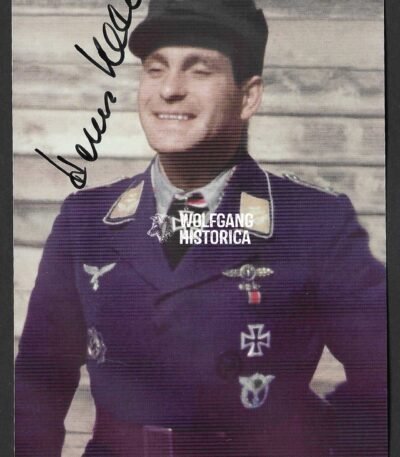
€15,00Original Postwar Signature on a Postwar Photo of Johann-Alfred “Johannes” Klaus. Oberleutnant Johann-Alfred Klaus (04.09.1918 † 07.07.2018) earned the Deutsches Kreuz in Gold on July 22, 1943 and the Ritterkreuz on March 26, 1944 as Oberleutnant und Staffelführer of the 6. Staffel/ Schlachtgeschwader 1. Good condition. Postcardsize.
Hermann Schleinhege – Jagdgeschwader 54 (97 Victories!)
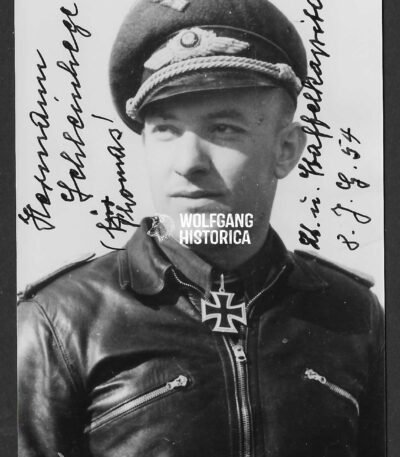
€45,00Original Postwar Signature on a Postwar Photo of Hermann Schleinhege. Leutnant Hermann Schleinhege (12.02.1916 in Essen † 11.03.2014 in Soest) earned the Deutsches Kreuz in Gold on March 20, 1944 and the Ritterkreuz des Eisernen Kreuzes on January 28, 1945 as Leutnant und Flugzeugführer in the 8. Staffel/ Jagdgeschwader 54. Schleinhege was credited with 97 aerial victories. Size: 8,9×12,9cm.
Sold out
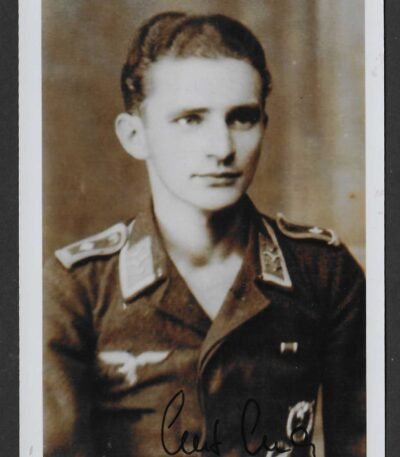
Kurt-Ernst Kunkel – Fallschirmjäger-Regiment 4
€20,00Original Postwar Signature on a Postwar Photo of Kurt-Ernst Kunkel. Leutnant Kurt-Ernst Kunkel (13.01.1923 in Weißwasser † 23.09.2012) earned the Ritterkreuz des Eisernen Kreuzes on April 30, 1945 as Leutnant und Kompaniechef of the 2. Kompanie/ Fallschirmjäger-Regiment 4 of the 1. Fallschirmjäger-Division. Postcardsize.
Sold out
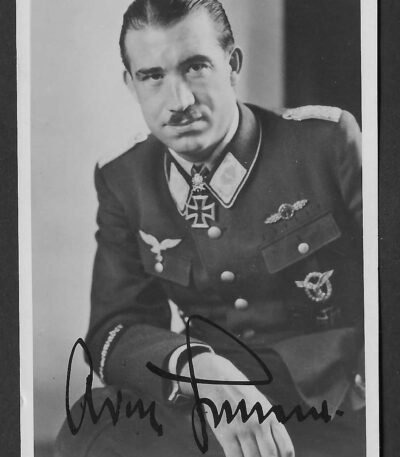
Adolf Galland – Jagdgeschwader 26 “Schlageter” (Brillanten)
€55,00Original Postwar Signature on a Postwar Photo of Adolf Galland. Generalleutnant Adolf Galland (19.03.1912 † 09.02.1996) earned the Ritterkreuz on July 29, 1940 as Major und Kommandeur of the III. Gruppe/ Jagdgeschwader 26 “Schlageter”, the Eichenlaub on September 24, 1940 as Major und Kommodore of Jagdgeschwader 26 “Schlageter”, the Schwertern on June 21, 1941 as Oberstleutnant und Kommodore of Jagdgeschwader 26 “Schlageter” and the Brillanten on January 28, 1942 as Oberst und Kommodore of Jagdgeschwader 26 “Schlageter”. Condition as seen. Size: 7,5×11,6cm.
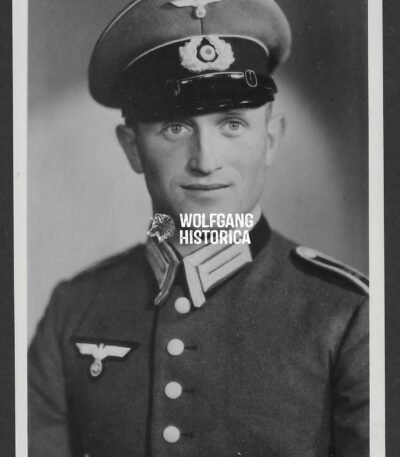
Michael Hamburger – Grenadier-Regiment 957 (363. Volksgrenadier-Division)
€20,00Original Postwar Signature on a Postwar Photo of Michael Hamburger. Feldwebel Michael Hamburger (05.09.1914 in Füssen † 12.08.1989 in Förstern) earned the Ritterkreuz des Eisernen Kreuzes on October 4, 1944 as Feldwebel und Zugführer in the 4. Kompanie/ Grenadier-Regiment 957 of the 363. Volksgrenadier-Division. Postcardsize. Condition as seen. Signed on the reverse.
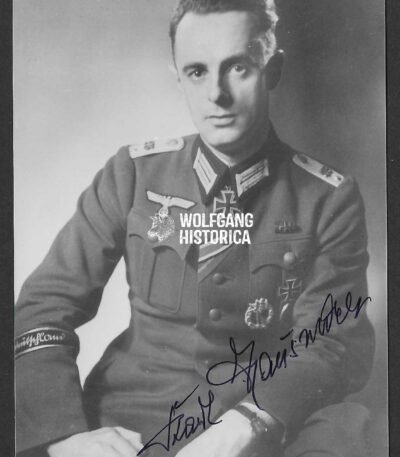
Karl Hausmann – Jäger-Regiment 28 (8.Jäg.Div) (Großdeutschland)
€25,00Original Postwar Signature on a Postwar Photo of Karl Hausmann. Oberfeldwebel Karl Hausmann (10.01.1912 † 27.07.1997) earned the Ritterkreuz on May 15, 1942 as Oberfeldwebel und Führer of the 3. Kompanie/ Jäger-Regiment 28 of the 8. Jäger-Division. Size: 8,8×12,8cm. Condition as seen.
Sold out
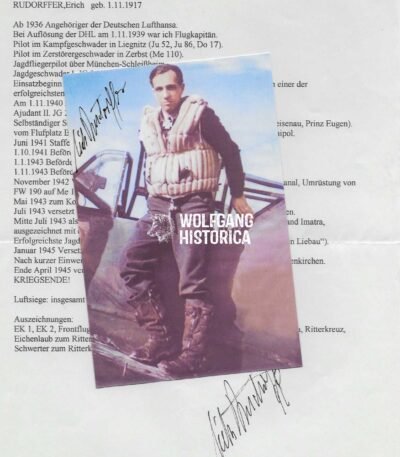
Major Erich Rudorffer – Jagdgeschwader 2 & 54 (Schwertern, 224 Victories!)
€45,00Original Postwar Signature on a Postwar Photo & Letter of Erich Rudorffer. Major Erich Rudorffer (01.11.1917 † 08.04.2016) earned the Deutsches Kreuz in Gold on December 9, 1941 as Leutnant und Flugzeugführer in the 6. Staffel/ Jagdgeschwader 2 “Richthofen”, the Ritterkreuz on May 1, 1941 as Leutnant und Flugzeugführer in the 6. Staffel/ Jagdgeschwader 2 “Richthofen”, the Eichenlaub on April 11, 1944 as Major und Kommandeur of the II. Gruppe/ Jagdgeschwader 54 “Grünherz” and the Schwertern on January 26, 1945 as Major und Kommandeur of the II. Gruppe/ Jagdgeschwader 54 “Grünherz”. Comes with a signed letter! Postcardsize.
7th highest scoring Ace of the Luftwaffe, achieving 224 victories in over 1000 operational sorties! He also flew the Messerschmitt Me-262 at the end of the war!
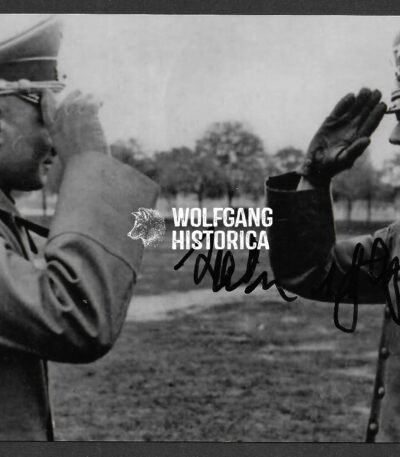
Waldemar von Gaza – Panzergrenadier-Regiment 66 (Schwertern) (A5-Size!)
€30,00Original Postwar Signature on a Postwar Photo of Waldemar von Gaza
Major Waldemar von Gaza (6 December 1917 – 13 January 2014) was a highly decorated officer of the 13. Panzer-Division, rising to command-level positions in armored infantry units on the Eastern Front. Over the course of the war, he received the Ritterkreuz des Eisernen Kreuzes with Eichenlaub and Schwertern, placing him among the most distinguished recipients of Germany’s highest battlefield awards.
Awards and Decorations
-
Ritterkreuz des Eisernen Kreuzes – 18 September 1942, as Oberleutnant und Chef 2./Panzergrenadier-Regiment 666, 13. Panzer-Division
-
Eichenlaub (Nr. 158) – 18 January 1943, as Hauptmann und Führer of a Kampfgruppe, 13. Panzer-Division
-
Schwerter (Nr. 324) – 3 October 1943, as Major und Führer of Panzergrenadier-Regiment 66, 13. Panzer-Division
-
Other awards included both classes of the Iron Cross and campaign distinctions
Service Highlights
-
Fought throughout the Eastern Front campaigns, earning distinction in combined-arms actions with armored infantry.
-
His leadership of Kampfgruppen during some of the most intense battles of 1942–43 earned him rapid recognition.
-
By 1943, he had risen to regimental command level, where he was awarded the Swords to the Knight’s Cross for continued outstanding leadership in combat.
Item Details
-
Type: Original postwar signed photograph
-
Size: Postcardsize
-
Condition: Good, as seen
Collector’s Note
Waldemar von Gaza’s decorations—Ritterkreuz, Eichenlaub, and Schwerter—mark him as one of the relatively few officers to attain this level of distinction. His signature is sought-after by collectors of panzer and Eastern Front memorabilia, with his long postwar life making his autograph available but still scarce in comparison to other triple recipients.