
33ste Linieregiment Kwartiermuts
€150,00
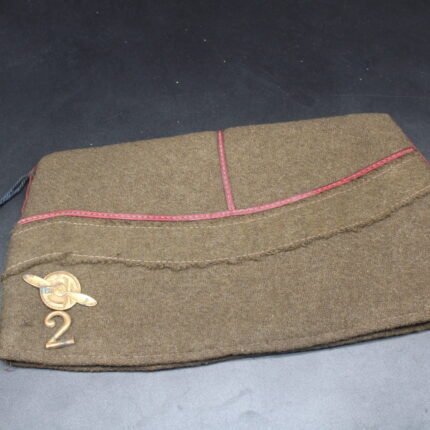
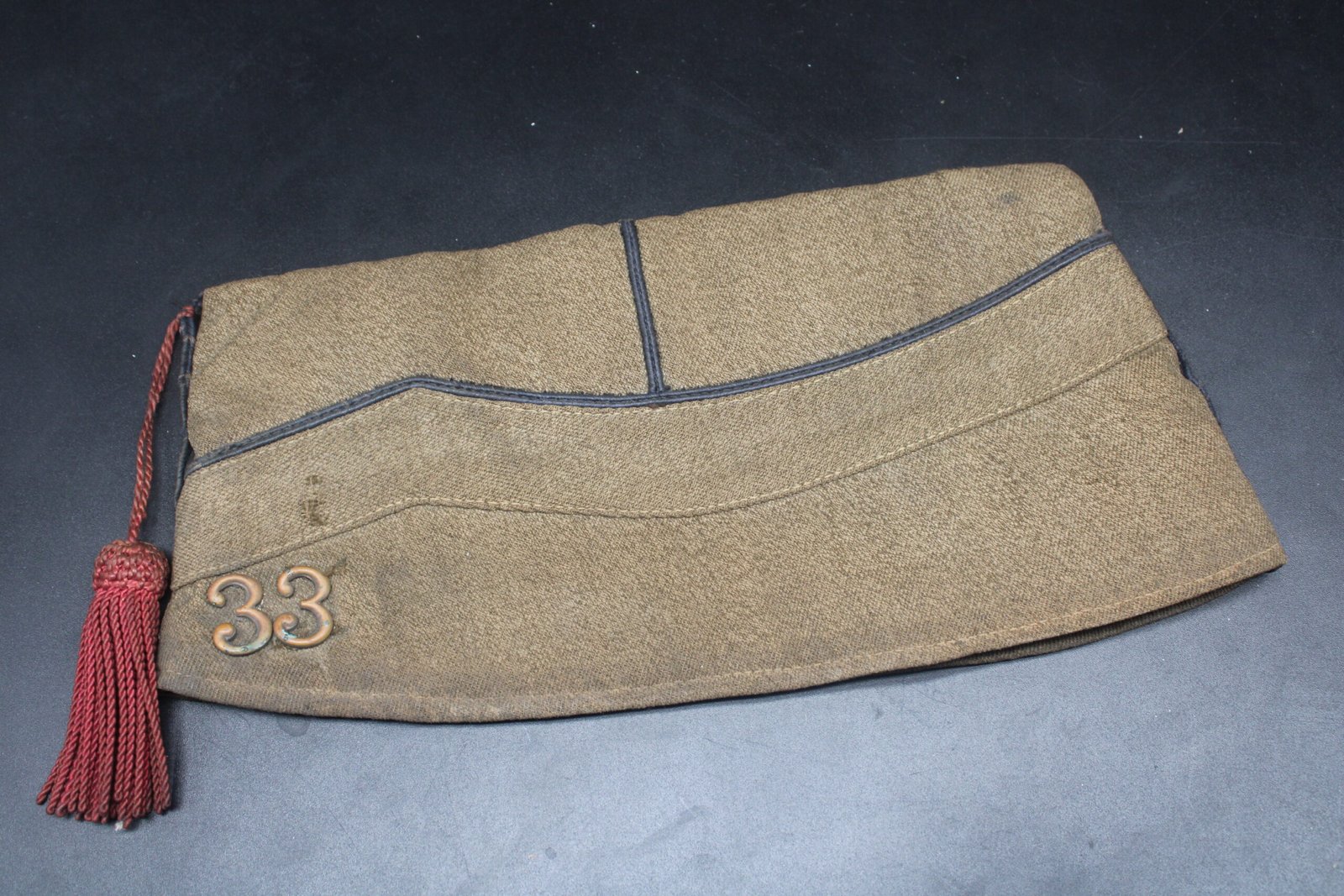
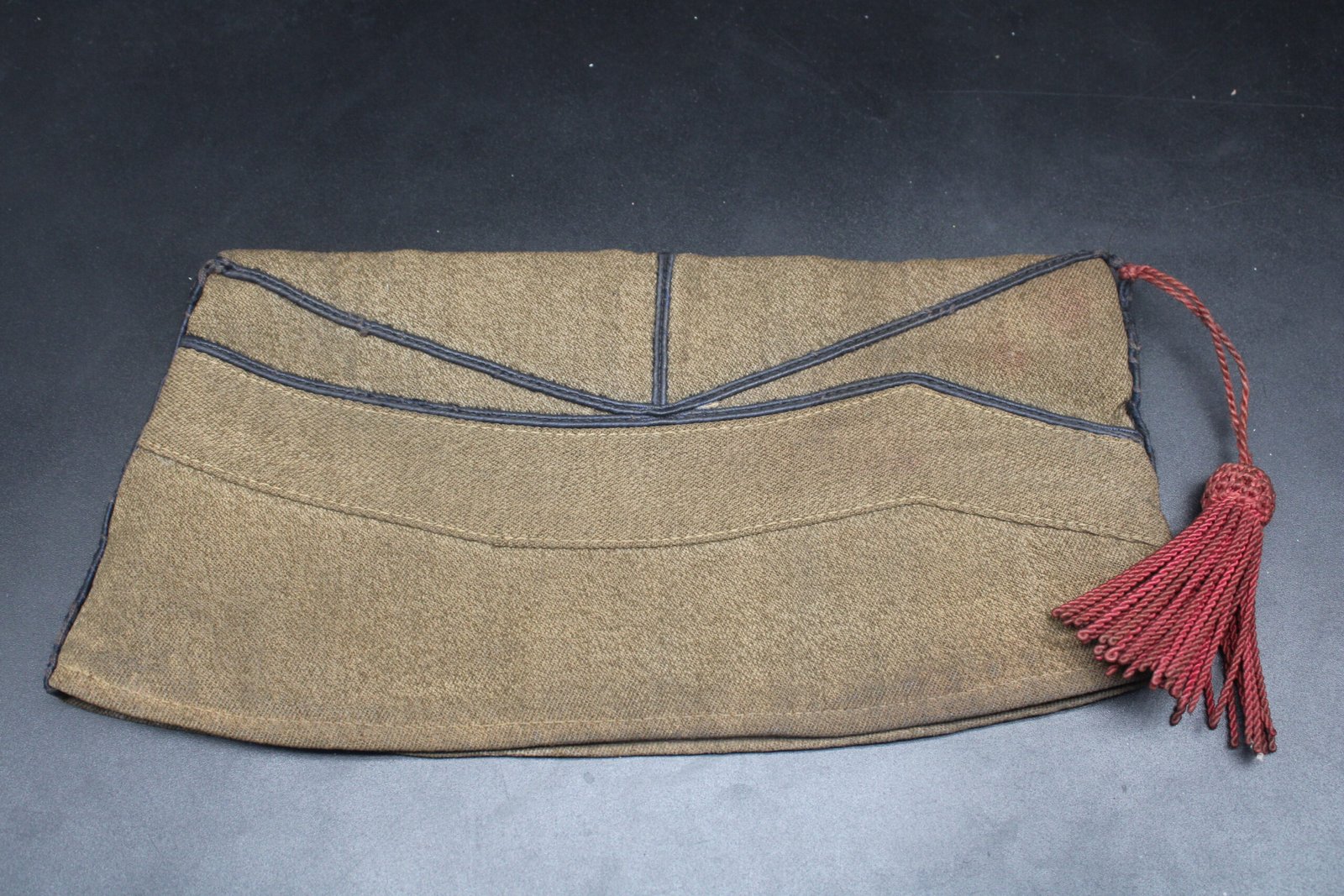
Original Belgian Army Overseas Cap “Kwartiermuts” – 33rd Line Regiment (c. 1930s)
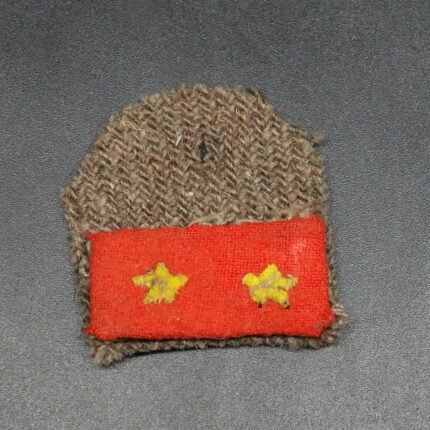
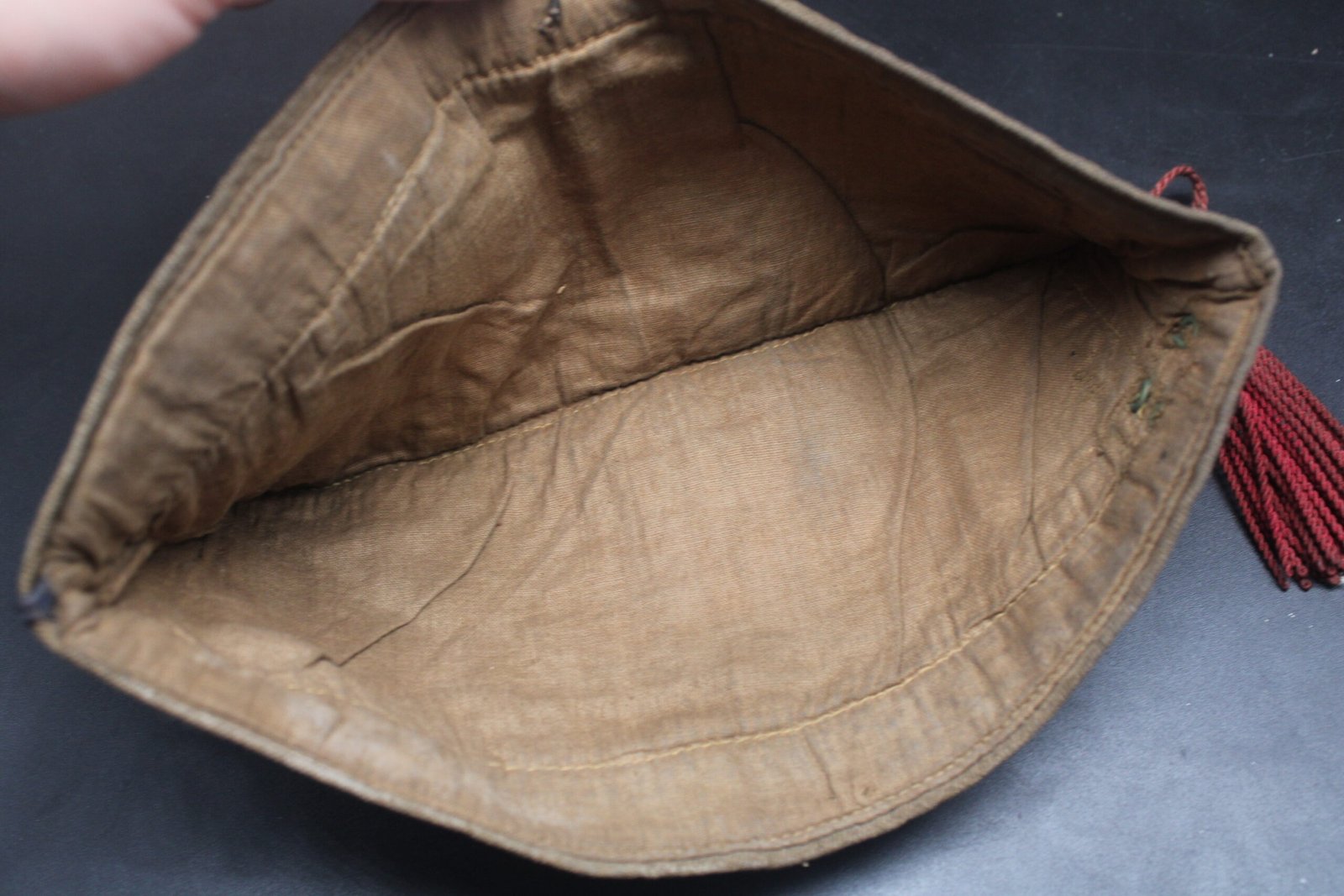
A very nice and original 1930s period Belgian Army overseas cap, known as a “Kwartiermuts”, privately tailored for a soldier of the 33rd Line Regiment.
-
Private Purchase Example: Unlike standard issue, this is a tailor-made cap, bought at a local uniform shop – a common practice among soldiers of the interwar Belgian Army.
-
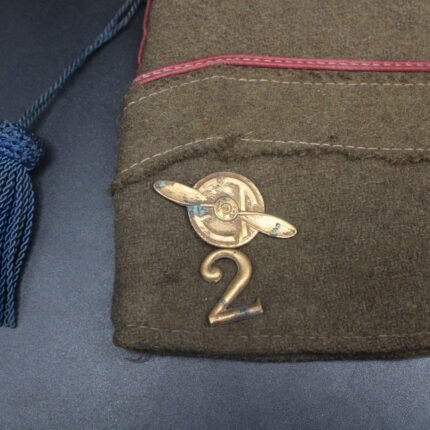
Unit Identification: The piping and regimental cyphers clearly denote service with the 33rd Linieregiment.
-
Complete Condition: Particularly desirable as this cap retains its original tassel, a feature which is often missing on surviving examples.
-
Condition: Light wear consistent with age, but overall beautifully preserved, with strong color and shape.
Historical Context
The 33rd Line Regiment (33Li)—whose branch piping and numerals this cap bears—played a notable role in Belgium’s defense during the German invasion of May 1940. Raised in October 1939 at Aalst as a duplicate of the 3rd Line Regiment, it formed part of the 13th Infantry Division, a second-reserve formation. Its ranks were largely older conscripts (classes 1928–1931) and, unlike active units, they often had outdated equipment such as the Belgian Mauser 1889 rifle and French Chauchat light machine guns.
On 10 May 1940, the day the invasion began, the regiment held positions in the Fortified Position of Antwerp (VPA) around Brasschaat, manning trenches behind the new anti-tank ditch linking the old forts. The III Battalion occupied the front line, guarding key approaches like the Bredabaan, with artillery support and additional machine-gun posts at the Schans van Drijhoek.
33Li was tasked with securing demolition points on the northern access roads and fought alongside French elements of the 7th Army moving through Brasschaat toward the Netherlands. In the days that followed, the regiment endured heavy air and artillery attacks; from 16 May German pressure mounted around the Brasschaat camp.
Despite determined resistance, the regiment—together with the division—was ordered to withdraw behind the River Scheldt and then to the Ghent–Terneuzen Canal, where it was merged into a combined formation (33/34Li). After severe bombardments and artillery fire, the line unraveled and the troops fell back westward.
On 28 May 1940, the 33Li, along with the rest of the Belgian Army, laid down arms at the general capitulation.
Collector’s Note
A fine and scarce interwar Belgian Army headdress, complete with tassel and unit insignia. These caps are much harder to find in complete condition compared to wartime German sidecaps, making this an excellent addition to any interwar or 1940 campaign collection.
Out of stock
Original Belgian Army Overseas Cap “Kwartiermuts” – 33rd Line Regiment (c. 1930s)
A very nice and original 1930s period Belgian Army overseas cap, known as a “Kwartiermuts”, privately tailored for a soldier of the 33rd Line Regiment.
-
Private Purchase Example: Unlike standard issue, this is a tailor-made cap, bought at a local uniform shop – a common practice among soldiers of the interwar Belgian Army.
-
Unit Identification: The piping and regimental cyphers clearly denote service with the 33rd Linieregiment.
-
Complete Condition: Particularly desirable as this cap retains its original tassel, a feature which is often missing on surviving examples.
-
Condition: Light wear consistent with age, but overall beautifully preserved, with strong color and shape.
Historical Context
The 33rd Line Regiment (33Li)—whose branch piping and numerals this cap bears—played a notable role in Belgium’s defense during the German invasion of May 1940. Raised in October 1939 at Aalst as a duplicate of the 3rd Line Regiment, it formed part of the 13th Infantry Division, a second-reserve formation. Its ranks were largely older conscripts (classes 1928–1931) and, unlike active units, they often had outdated equipment such as the Belgian Mauser 1889 rifle and French Chauchat light machine guns.
On 10 May 1940, the day the invasion began, the regiment held positions in the Fortified Position of Antwerp (VPA) around Brasschaat, manning trenches behind the new anti-tank ditch linking the old forts. The III Battalion occupied the front line, guarding key approaches like the Bredabaan, with artillery support and additional machine-gun posts at the Schans van Drijhoek.
33Li was tasked with securing demolition points on the northern access roads and fought alongside French elements of the 7th Army moving through Brasschaat toward the Netherlands. In the days that followed, the regiment endured heavy air and artillery attacks; from 16 May German pressure mounted around the Brasschaat camp.
Despite determined resistance, the regiment—together with the division—was ordered to withdraw behind the River Scheldt and then to the Ghent–Terneuzen Canal, where it was merged into a combined formation (33/34Li). After severe bombardments and artillery fire, the line unraveled and the troops fell back westward.
On 28 May 1940, the 33Li, along with the rest of the Belgian Army, laid down arms at the general capitulation.
Collector’s Note
A fine and scarce interwar Belgian Army headdress, complete with tassel and unit insignia. These caps are much harder to find in complete condition compared to wartime German sidecaps, making this an excellent addition to any interwar or 1940 campaign collection.