
Award Doc Group to Uffz. Karl Finkenrath (Executed for War Crimes for Executing British Paratroopers on D-Day!)
€995,00
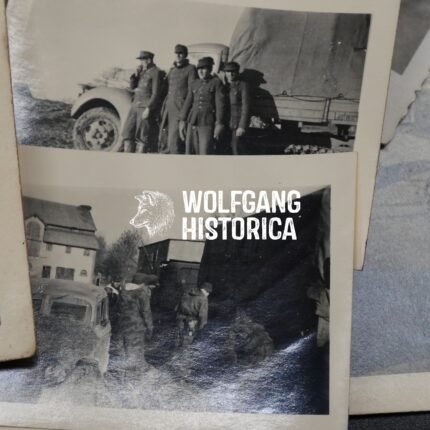
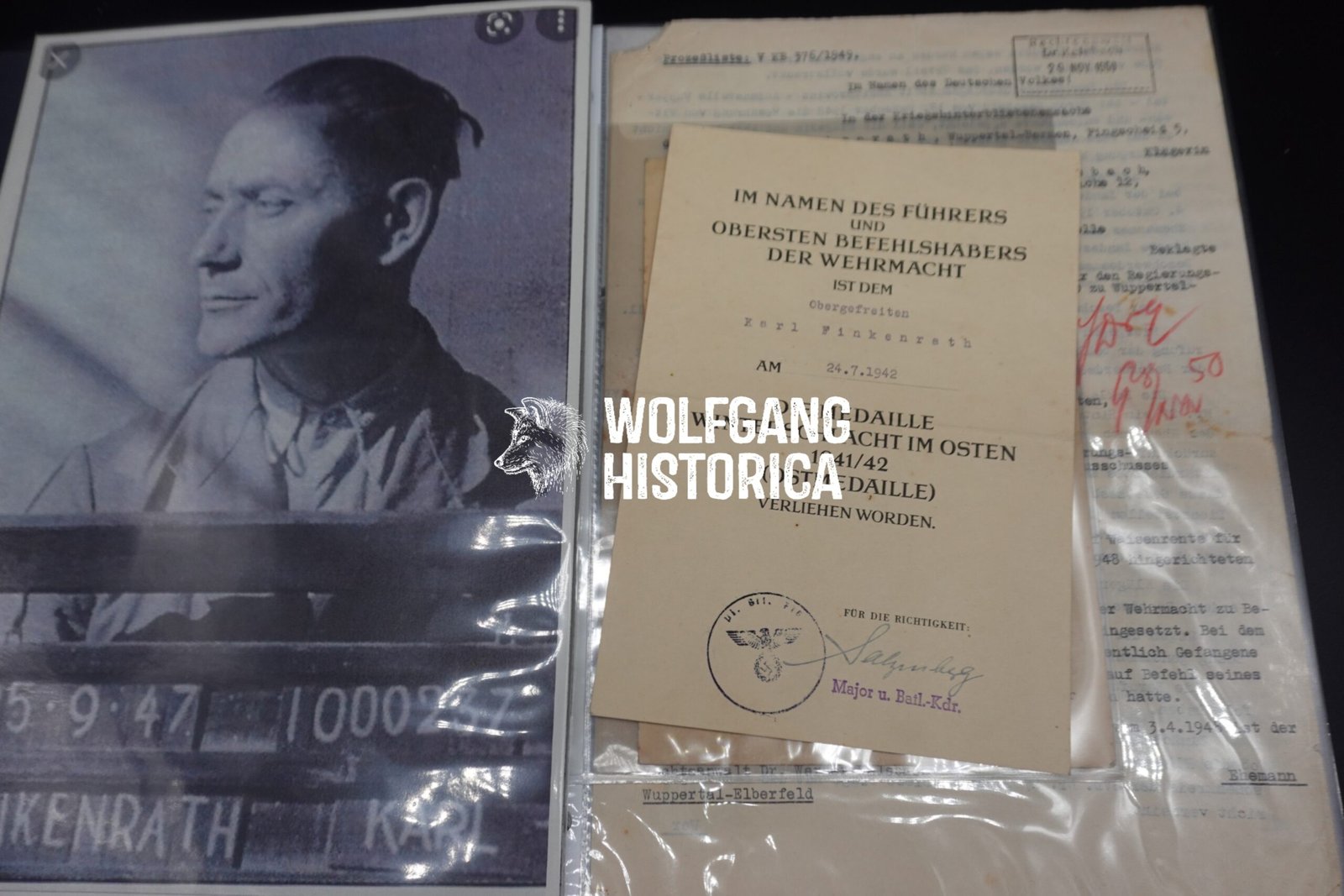
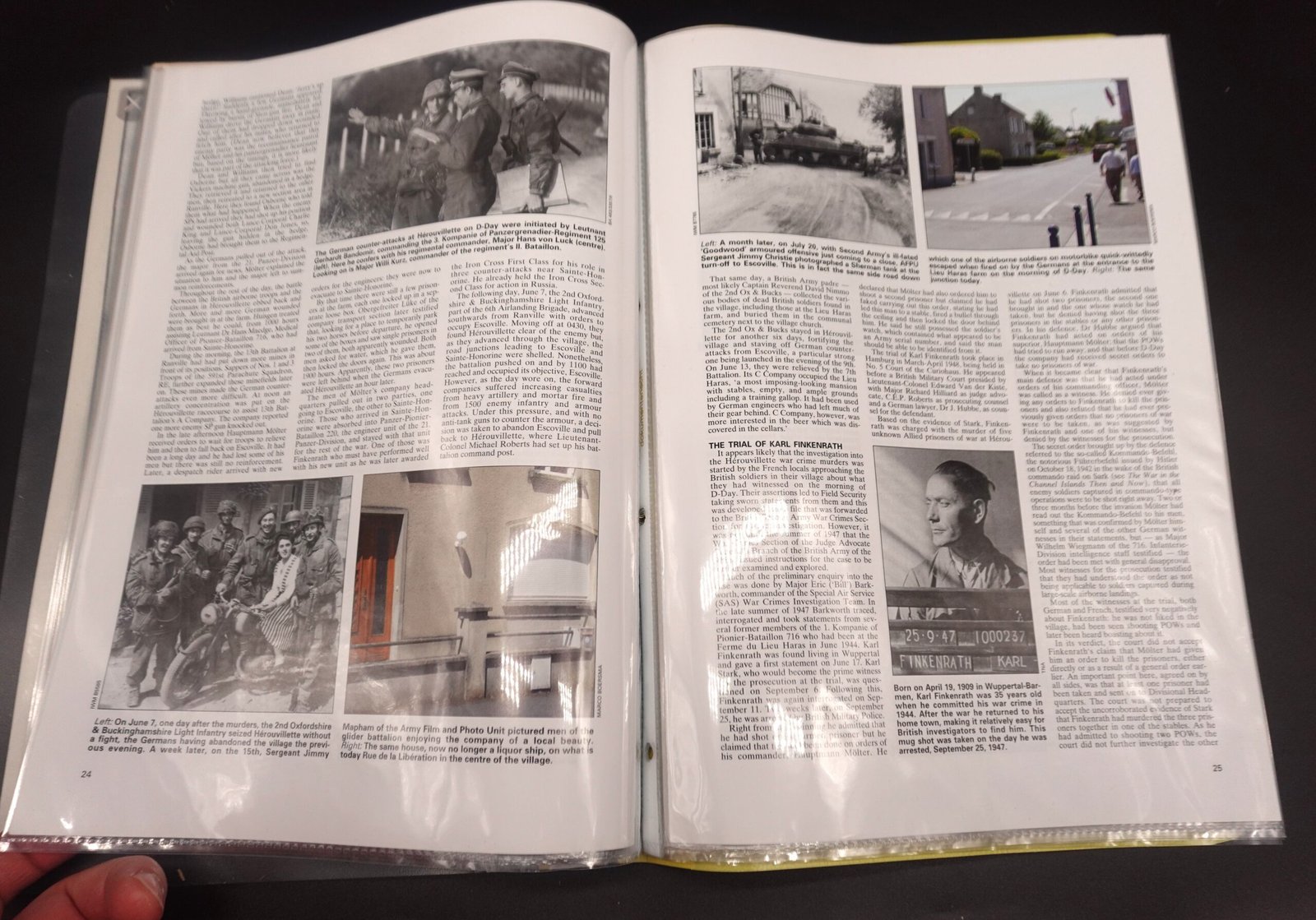
A historically significant document group belonging to Unteroffizier Karl Finkenrath, a German Army combat engineer who served on the Eastern Front in 1941–42 and later with Pionier-Bataillon 716 in Normandy during the Allied invasion in June 1944.
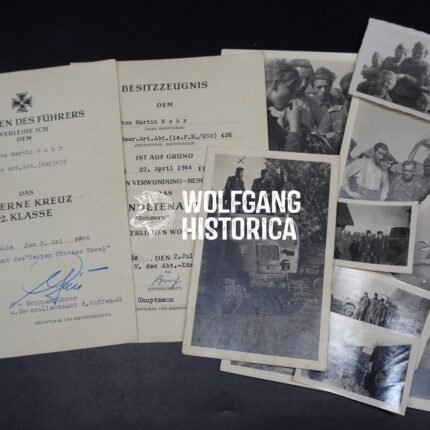
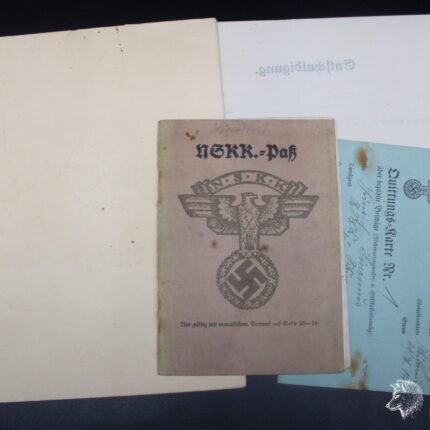
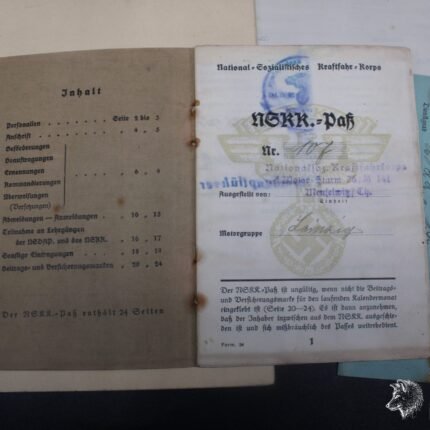
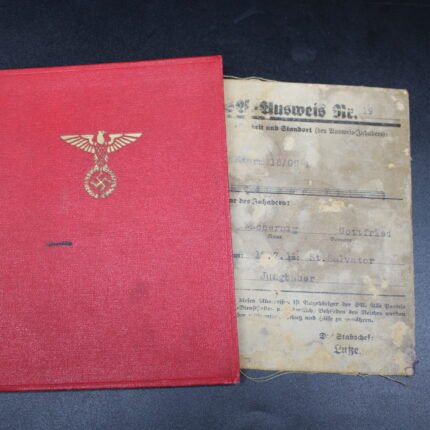
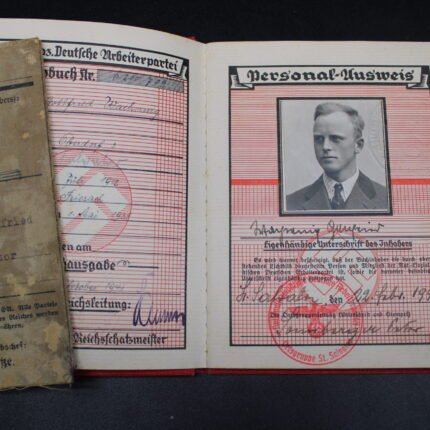
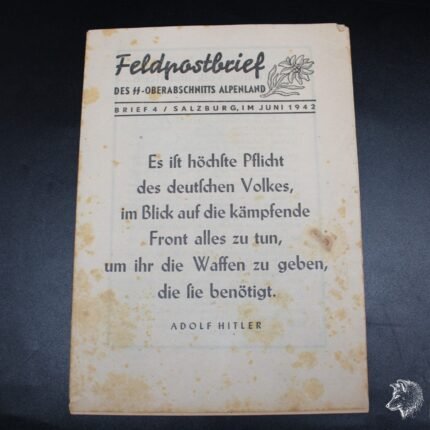
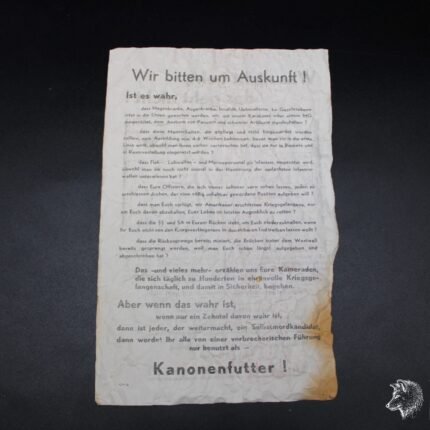
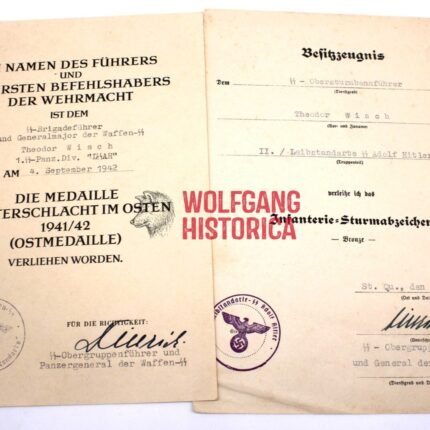
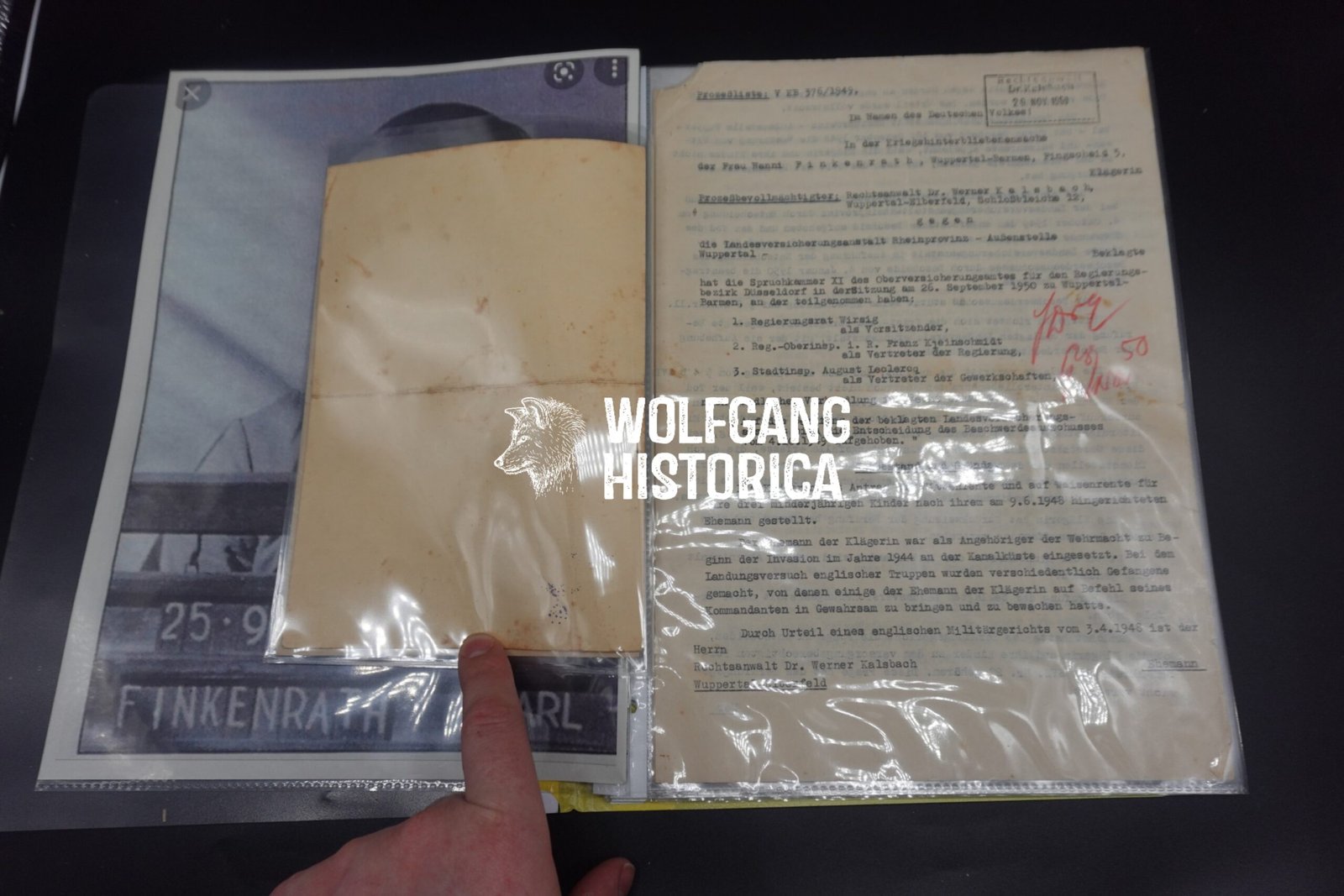
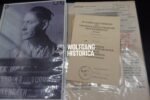
The group consists of two original wartime award documents and accompanying papers related to the trial.
Documents included
1. Eisernes Kreuz II. Klasse (Iron Cross 2nd Class)
-
Awarded: September 1941
-
Unit: 1. Kompanie / Pionier-Bataillon 253
-
Theatre: Eastern Front
2. Winterschlacht im Osten 1941/42 (Eastern Front Medal)
-
Awarded for service in winter campaign 1941–42
-
Issued later in 1944
-
Issuing unit: Pionier-Bataillon 716
This later issue document is particularly noteworthy as it was issued while Finkenrath was serving with Pionier-Bataillon 716, the engineer unit stationed in Normandy prior to the Allied invasion.
Historical Context
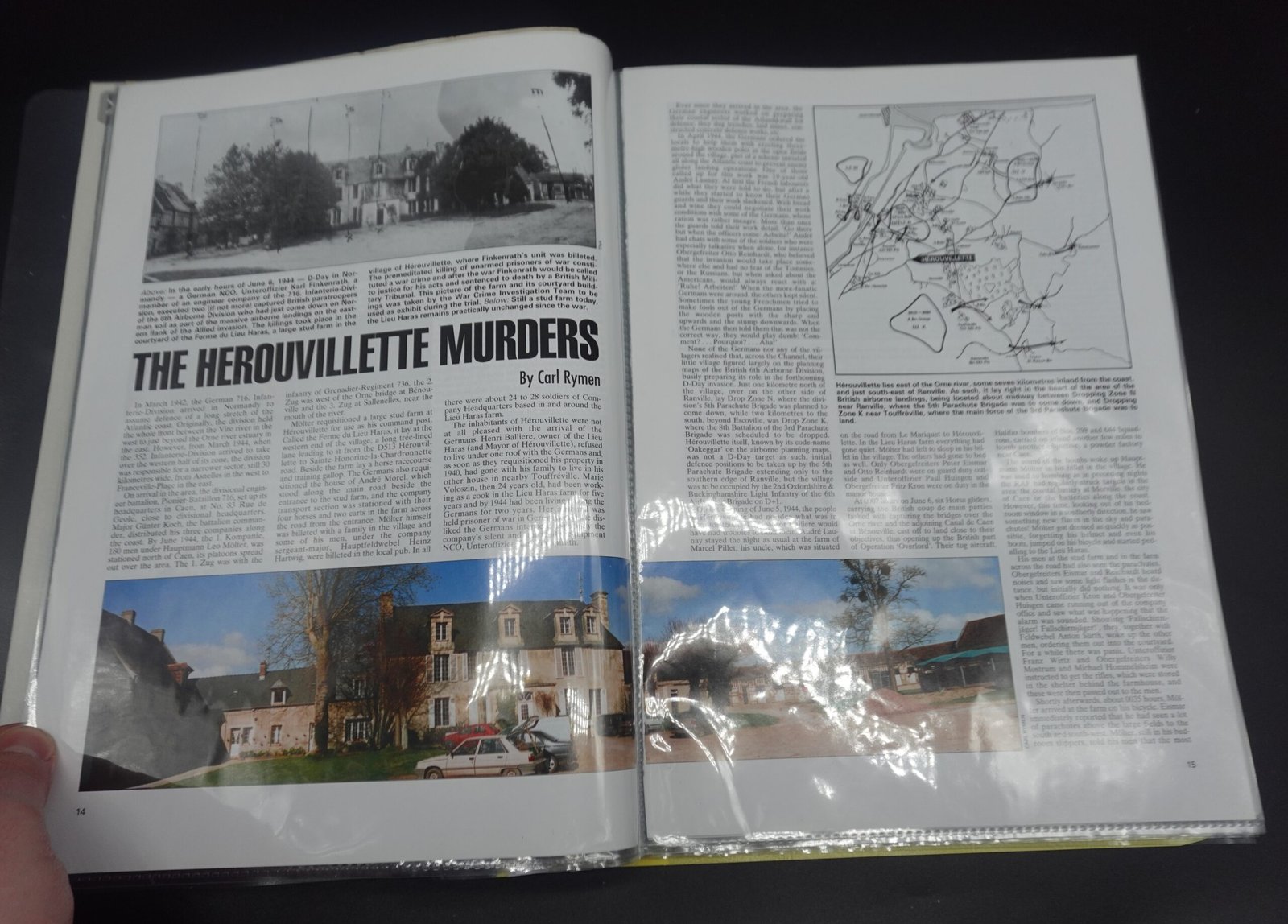
By June 1944, Finkenrath was serving as an Unteroffizier in Pionier-Bataillon 716, part of the German forces defending the Atlantic Wall in Normandy.
His unit was stationed at the Ferme du Lieu Haras in the village of Hérouvillette, east of the Orne River, in the operational area of the British airborne landings during D-Day.
War Crime Case
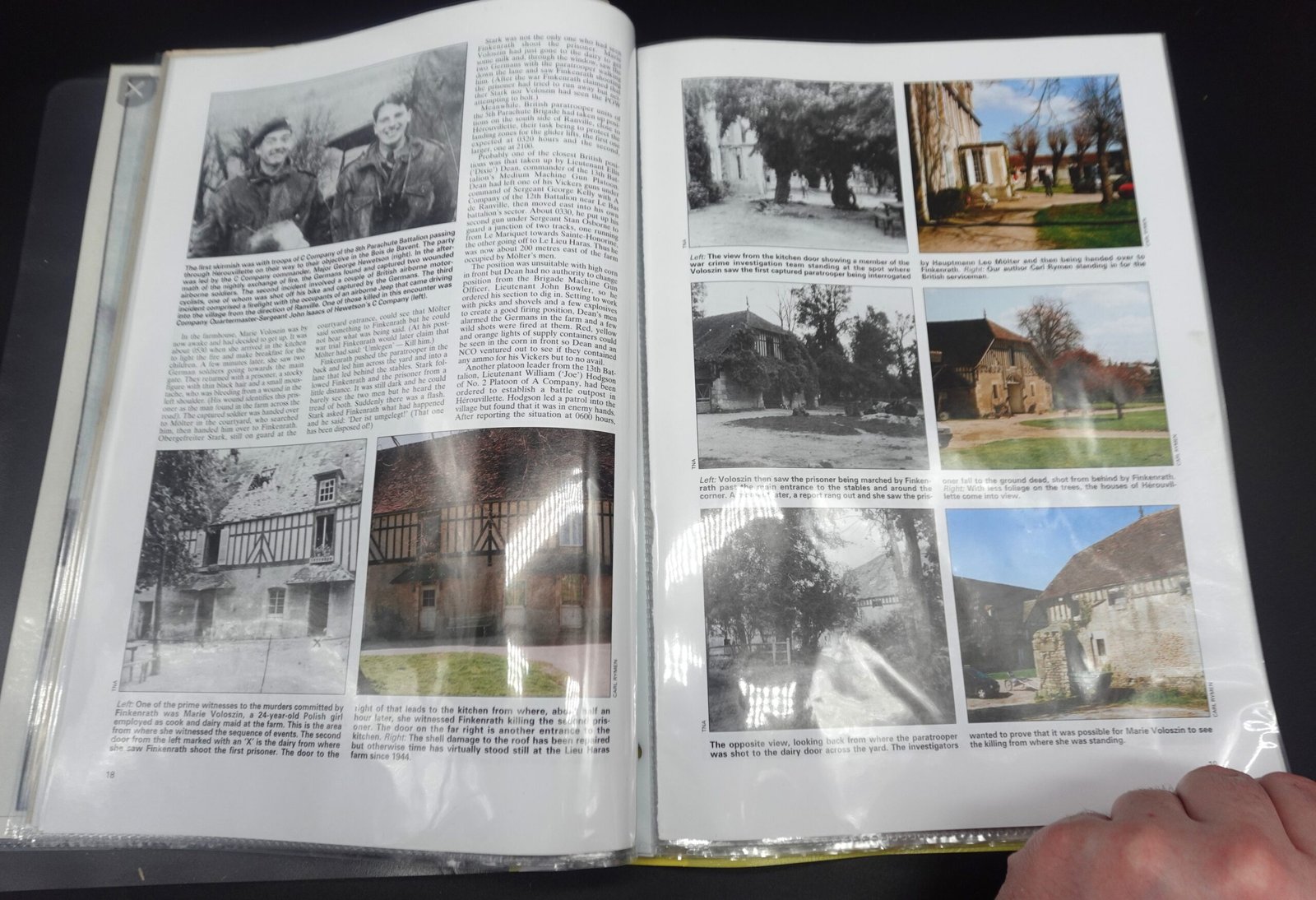
During the early hours of 6 June 1944, several British airborne soldiers from the 6th Airborne Division were captured near the farm where Finkenrath’s unit was based.
Witness testimony from both German soldiers and French civilians later established that:
-
wounded and disarmed British paratroopers were brought to the farm
-
at least two prisoners of war were deliberately shot after capture
-
the shootings occurred away from combat
These killings were later investigated by British authorities as violations of the laws of war.
Trial and Conviction
After the war, the case was investigated by the British Army’s war-crimes investigation teams.
Finkenrath was arrested in 1947 and tried by a British Military Court in Hamburg in 1948.
He admitted shooting two captured prisoners but claimed he had acted under orders from his company commander. The court rejected this defense.
He was convicted of the murder of two Allied prisoners of war and sentenced to death.
Finkenrath was executed by hanging on 9 June 1948 at Hameln Prison, one of a number of executions carried out there for war crimes after the Second World War.
Collector Interest
This document group links two major theatres of the war:
-
Eastern Front combat service (1941–42)
-
Normandy during the Allied invasion (1944)
The Winterschlacht im Osten document issued by Pionier-Bataillon 716 directly connects the group to the unit present in Hérouvillette during the opening hours of D-Day.
The later war-crimes investigation and trial provide a well-documented historical context for the individual to whom the documents were issued.
In stock
A historically significant document group belonging to Unteroffizier Karl Finkenrath, a German Army combat engineer who served on the Eastern Front in 1941–42 and later with Pionier-Bataillon 716 in Normandy during the Allied invasion in June 1944.
The group consists of two original wartime award documents and accompanying papers related to the trial.
Documents included
1. Eisernes Kreuz II. Klasse (Iron Cross 2nd Class)
-
Awarded: September 1941
-
Unit: 1. Kompanie / Pionier-Bataillon 253
-
Theatre: Eastern Front
2. Winterschlacht im Osten 1941/42 (Eastern Front Medal)
-
Awarded for service in winter campaign 1941–42
-
Issued later in 1944
-
Issuing unit: Pionier-Bataillon 716
This later issue document is particularly noteworthy as it was issued while Finkenrath was serving with Pionier-Bataillon 716, the engineer unit stationed in Normandy prior to the Allied invasion.
Historical Context
By June 1944, Finkenrath was serving as an Unteroffizier in Pionier-Bataillon 716, part of the German forces defending the Atlantic Wall in Normandy.
His unit was stationed at the Ferme du Lieu Haras in the village of Hérouvillette, east of the Orne River, in the operational area of the British airborne landings during D-Day.
War Crime Case
During the early hours of 6 June 1944, several British airborne soldiers from the 6th Airborne Division were captured near the farm where Finkenrath’s unit was based.
Witness testimony from both German soldiers and French civilians later established that:
-
wounded and disarmed British paratroopers were brought to the farm
-
at least two prisoners of war were deliberately shot after capture
-
the shootings occurred away from combat
These killings were later investigated by British authorities as violations of the laws of war.
Trial and Conviction
After the war, the case was investigated by the British Army’s war-crimes investigation teams.
Finkenrath was arrested in 1947 and tried by a British Military Court in Hamburg in 1948.
He admitted shooting two captured prisoners but claimed he had acted under orders from his company commander. The court rejected this defense.
He was convicted of the murder of two Allied prisoners of war and sentenced to death.
Finkenrath was executed by hanging on 9 June 1948 at Hameln Prison, one of a number of executions carried out there for war crimes after the Second World War.
Collector Interest
This document group links two major theatres of the war:
-
Eastern Front combat service (1941–42)
-
Normandy during the Allied invasion (1944)
The Winterschlacht im Osten document issued by Pionier-Bataillon 716 directly connects the group to the unit present in Hérouvillette during the opening hours of D-Day.
The later war-crimes investigation and trial provide a well-documented historical context for the individual to whom the documents were issued.