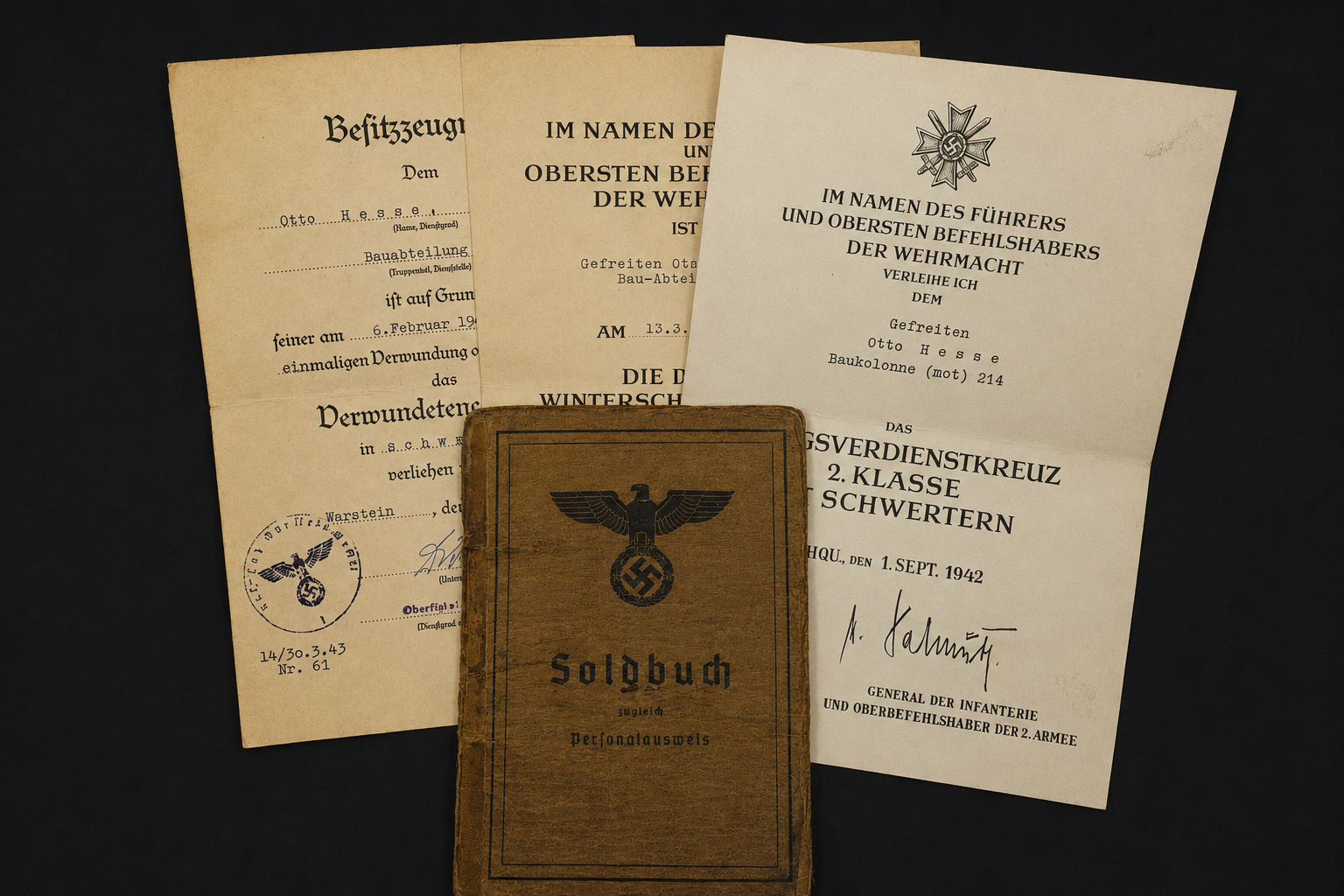
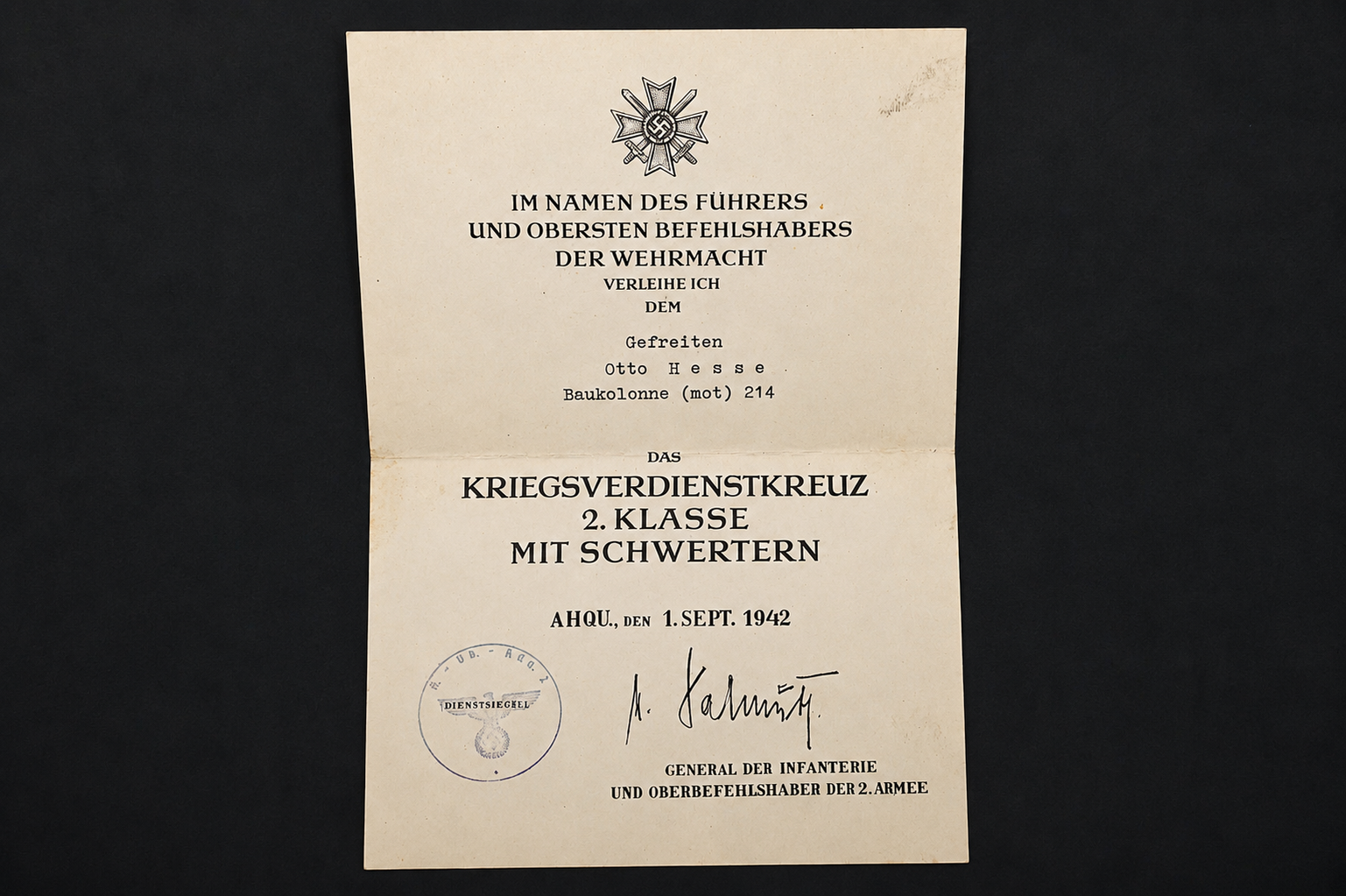
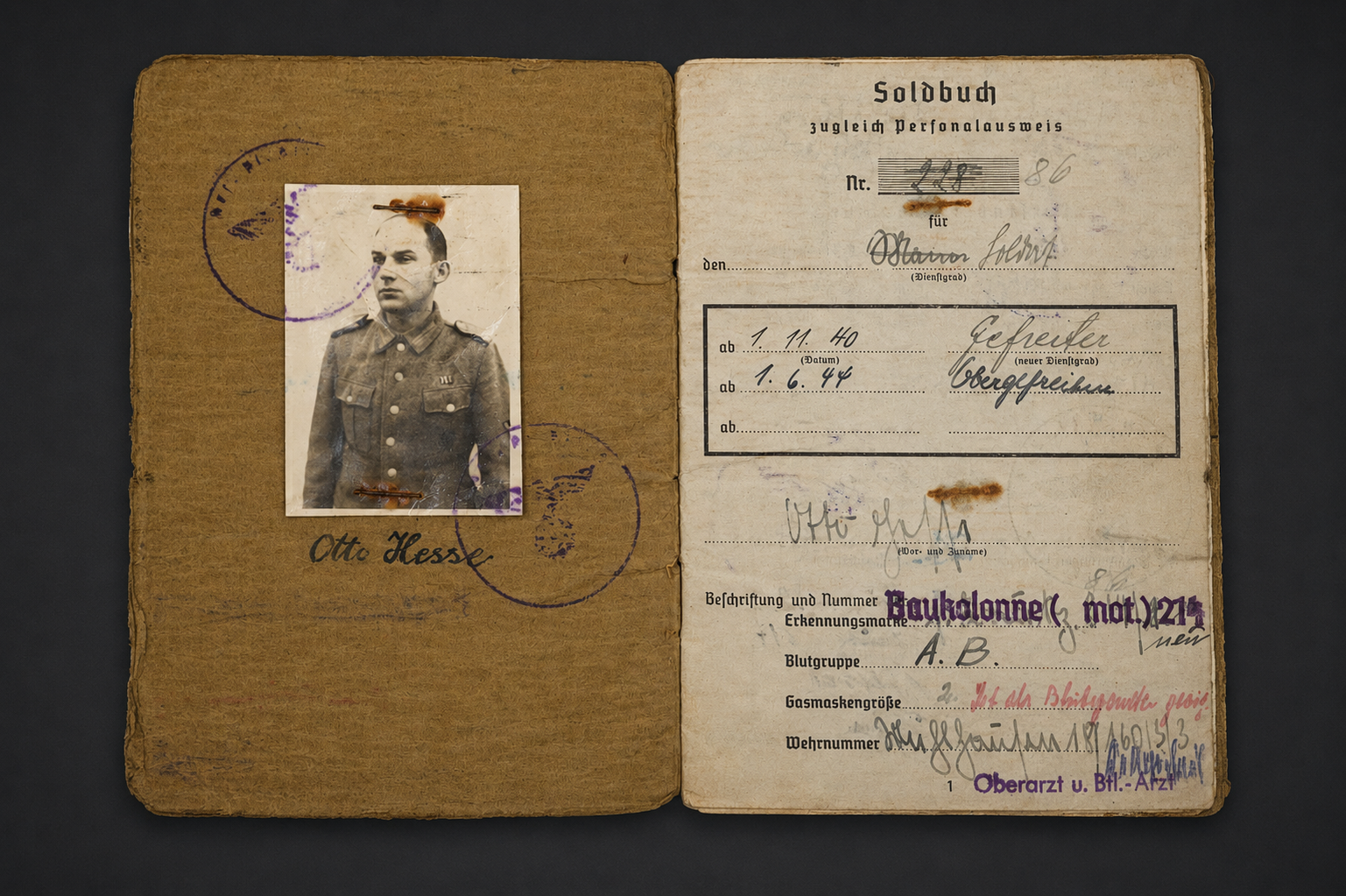
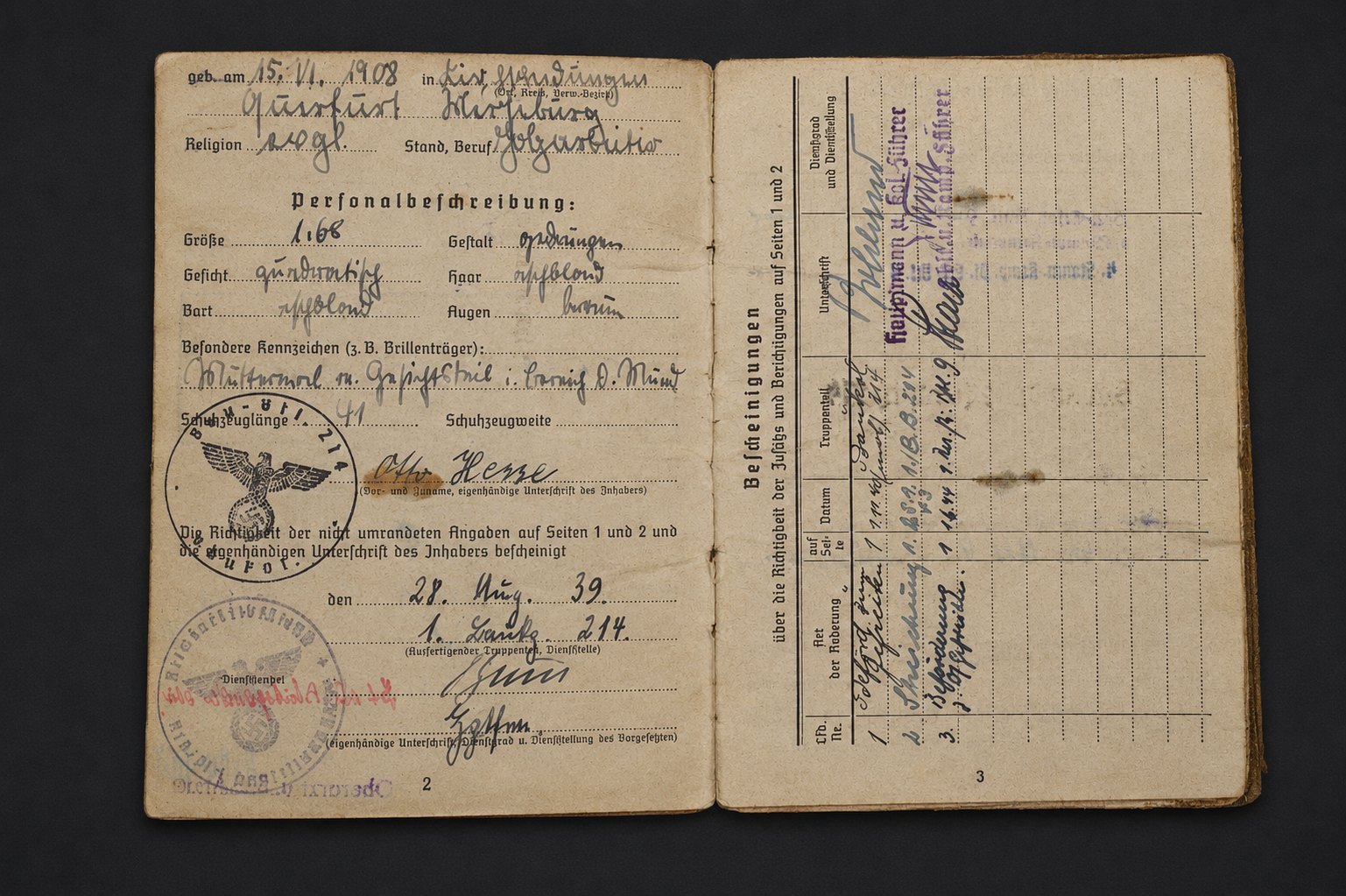
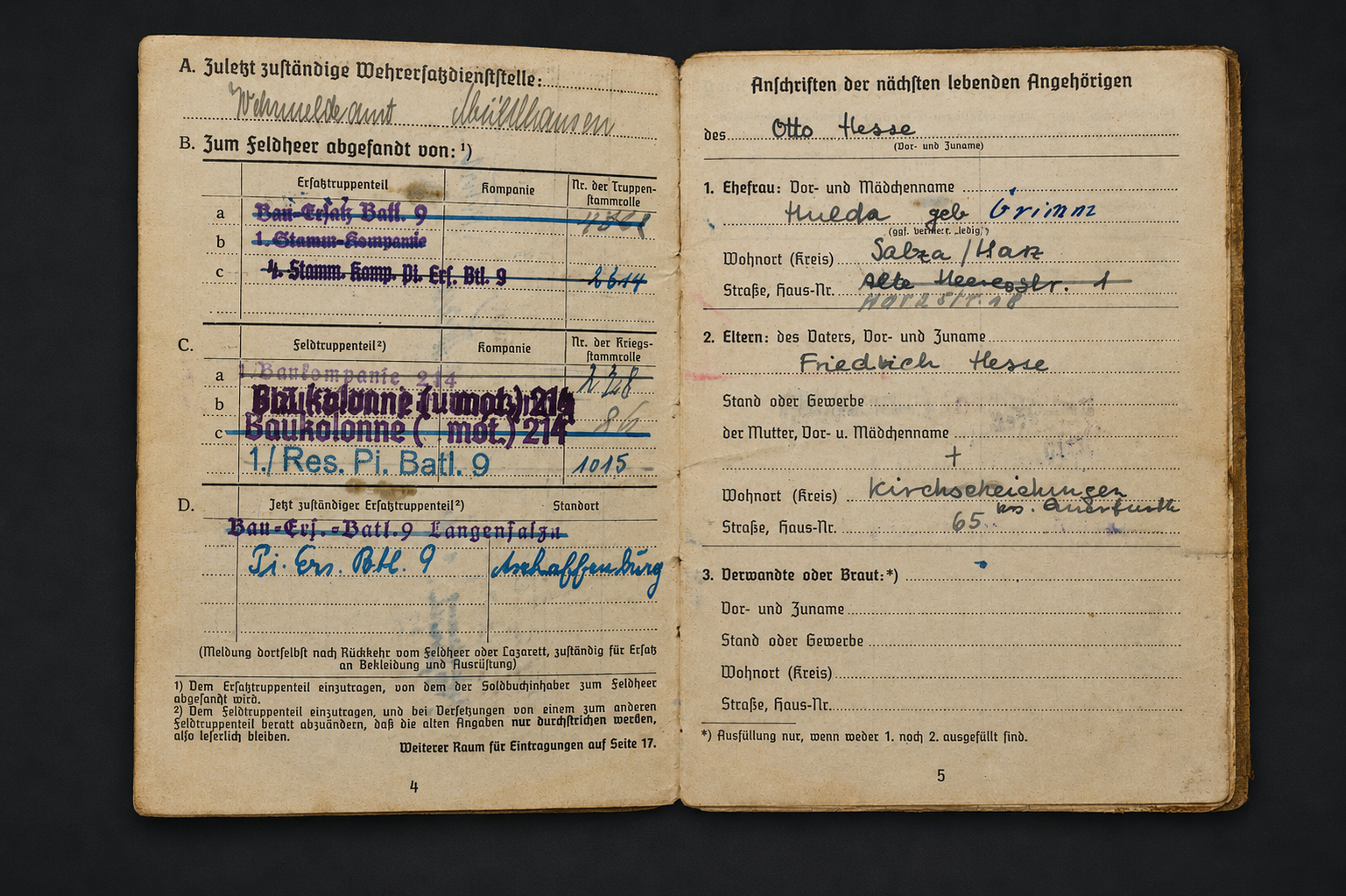
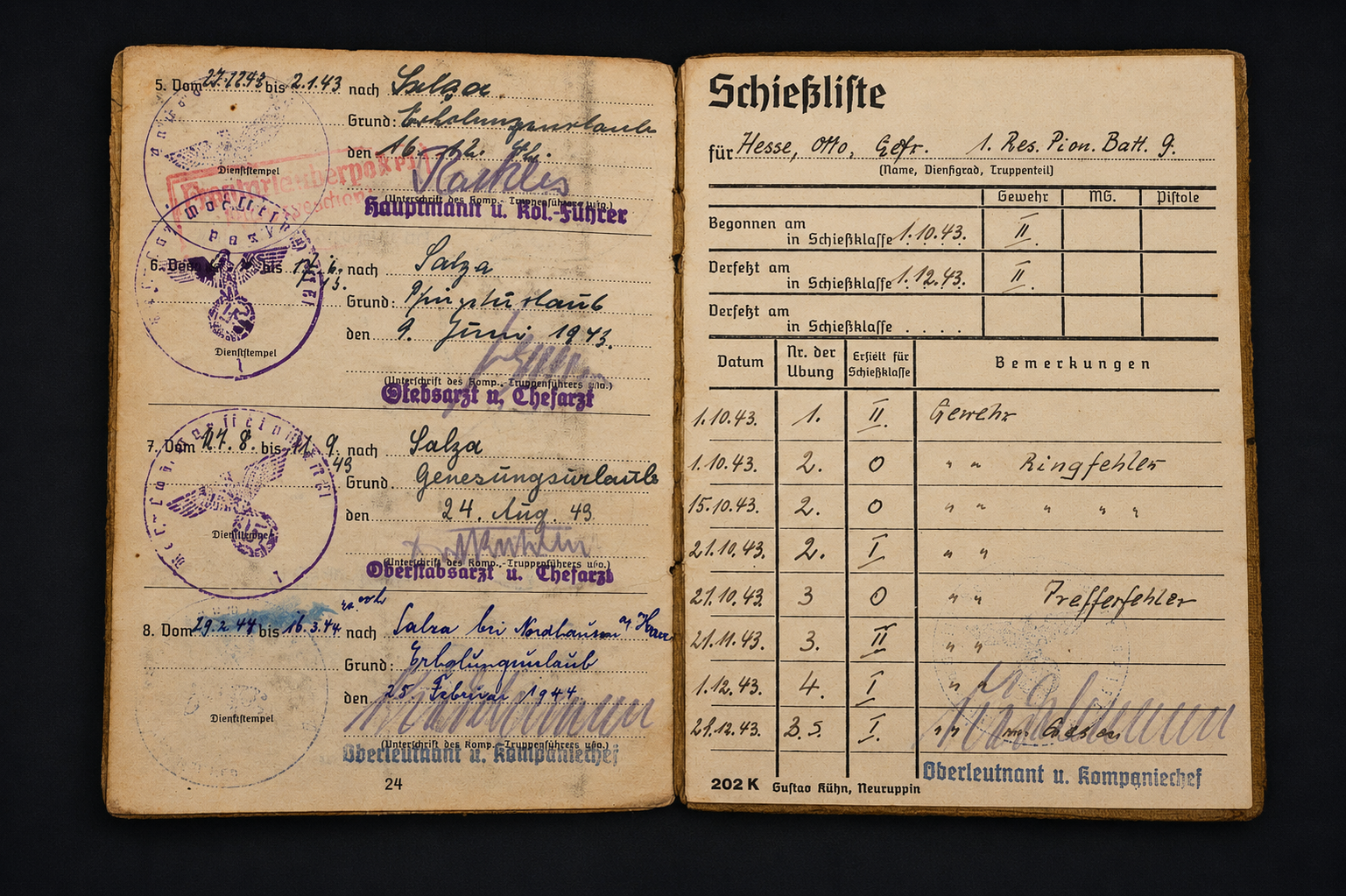
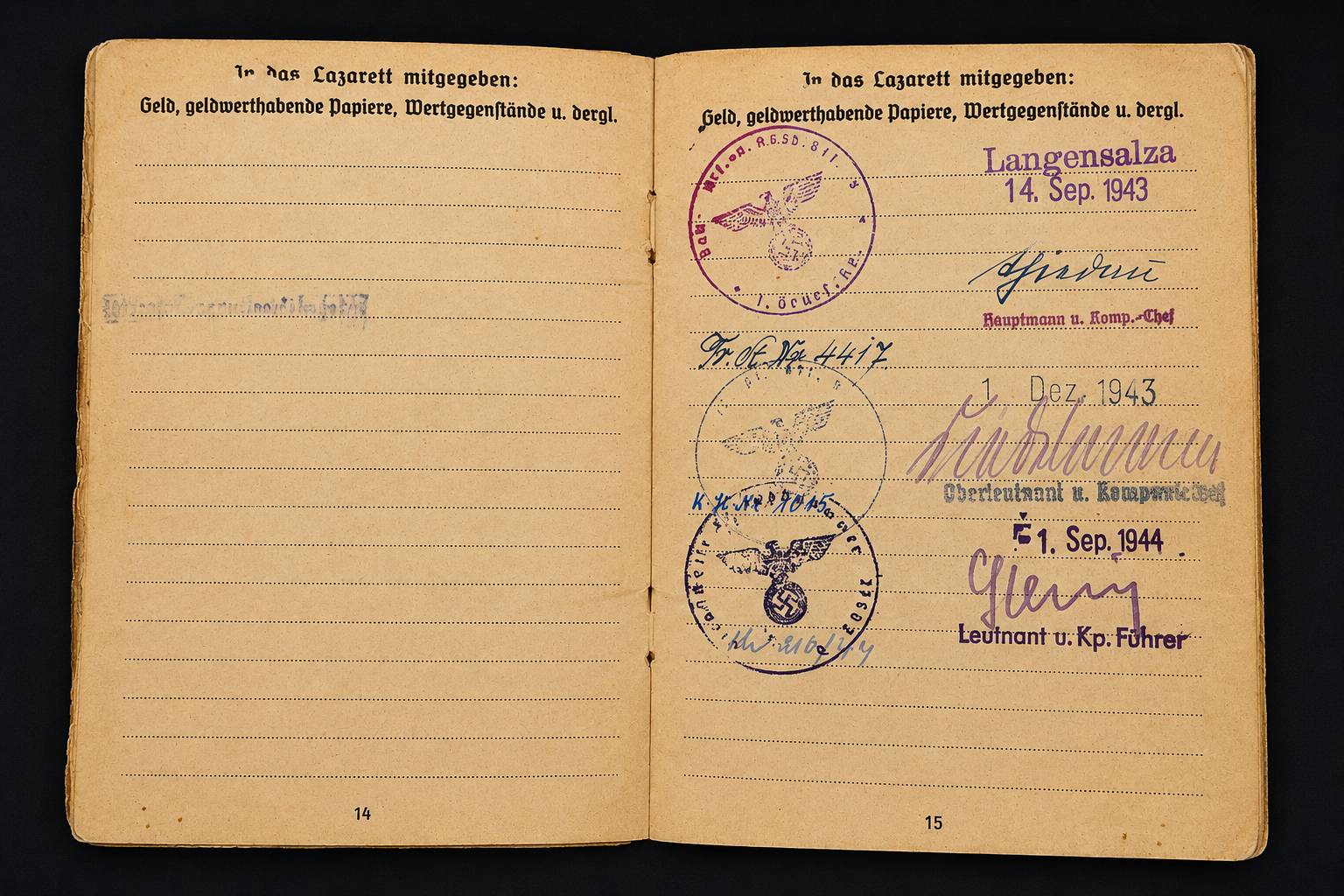
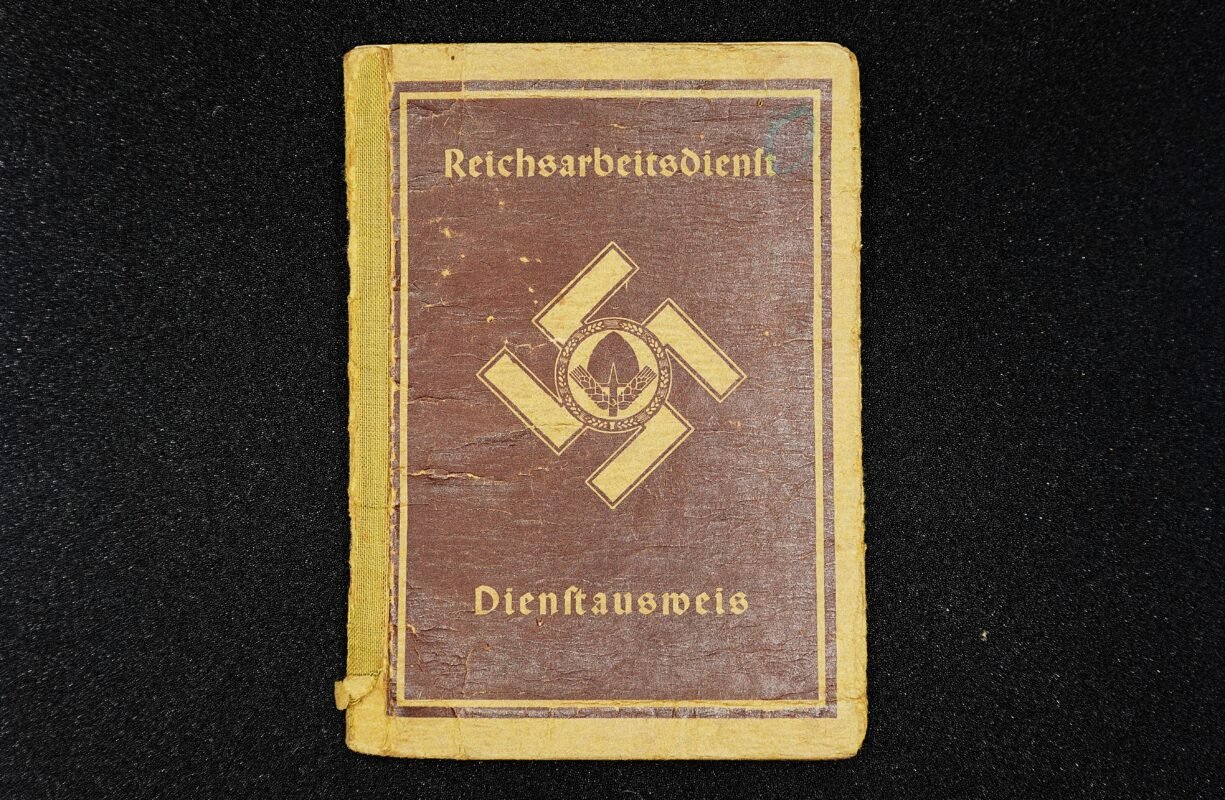
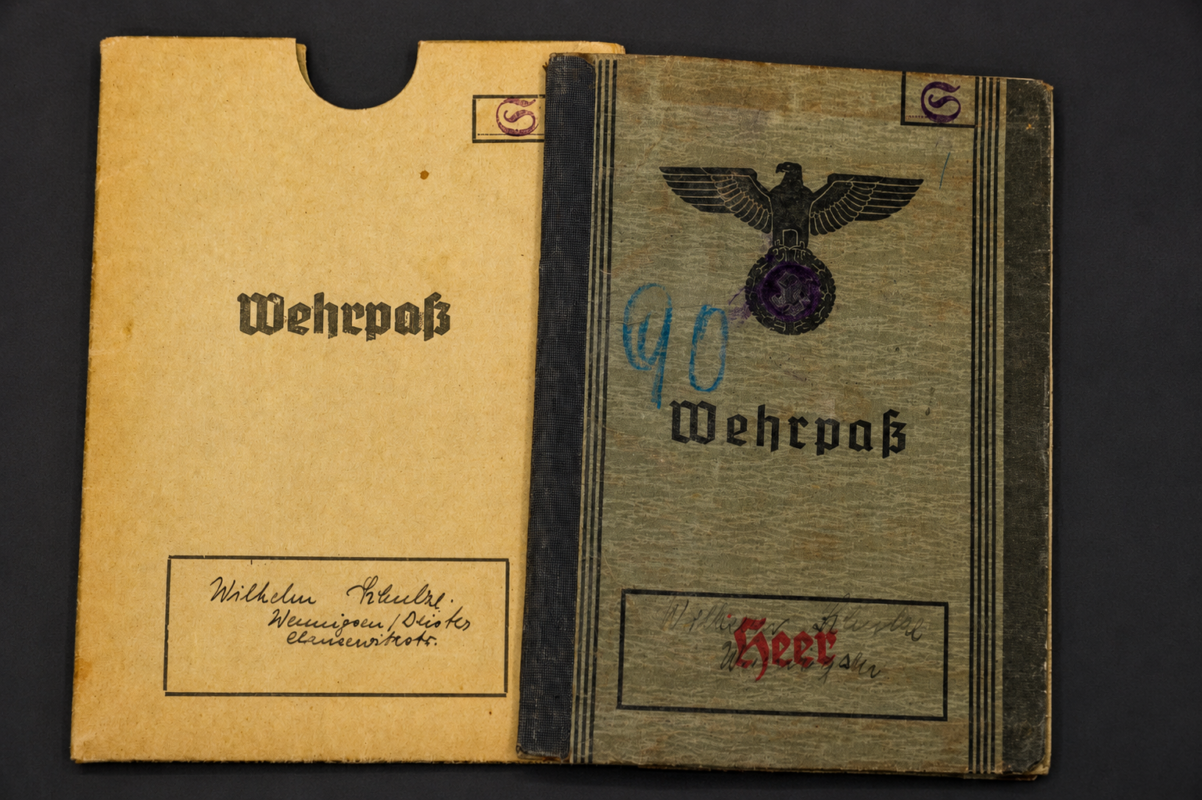
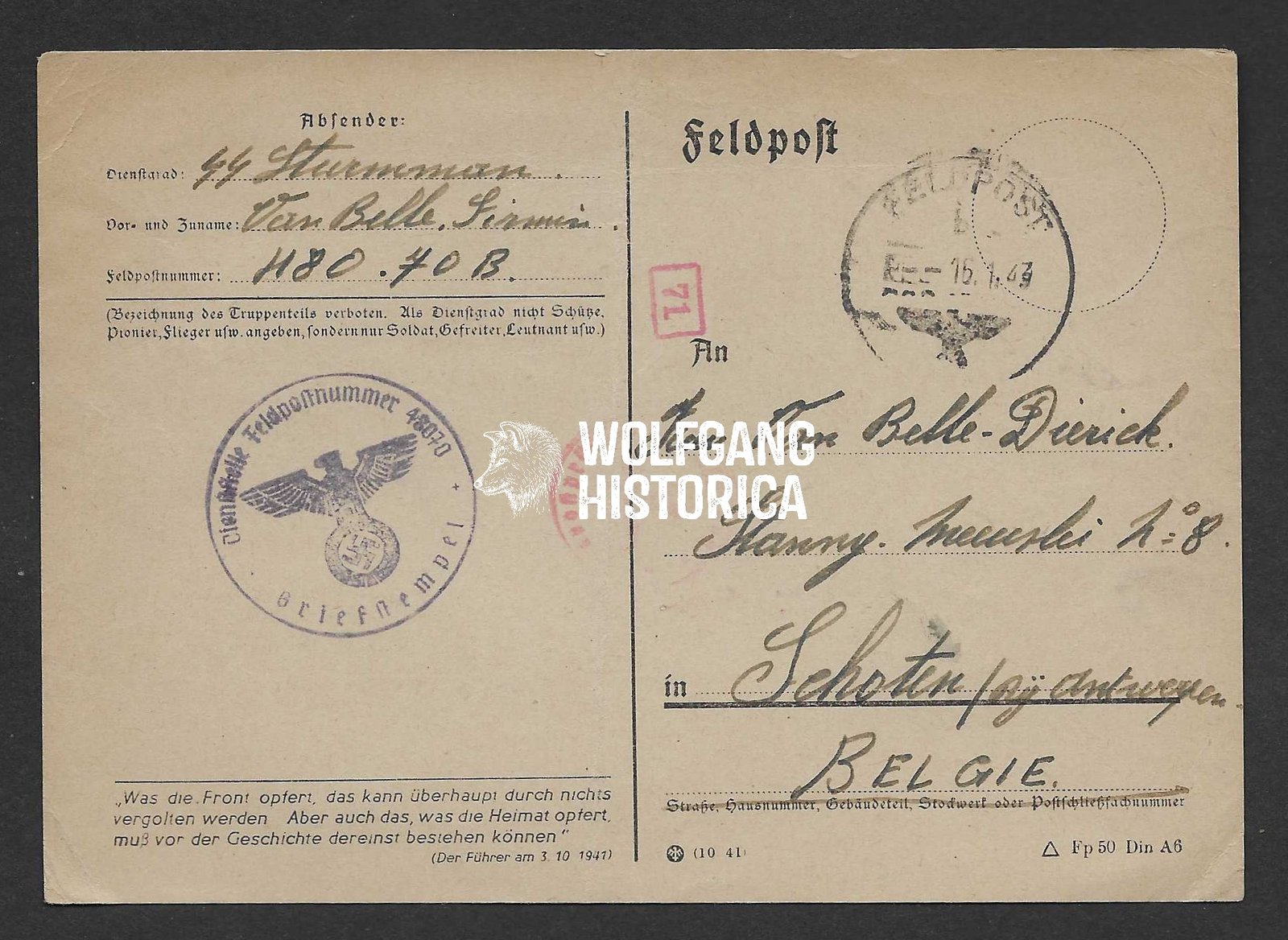
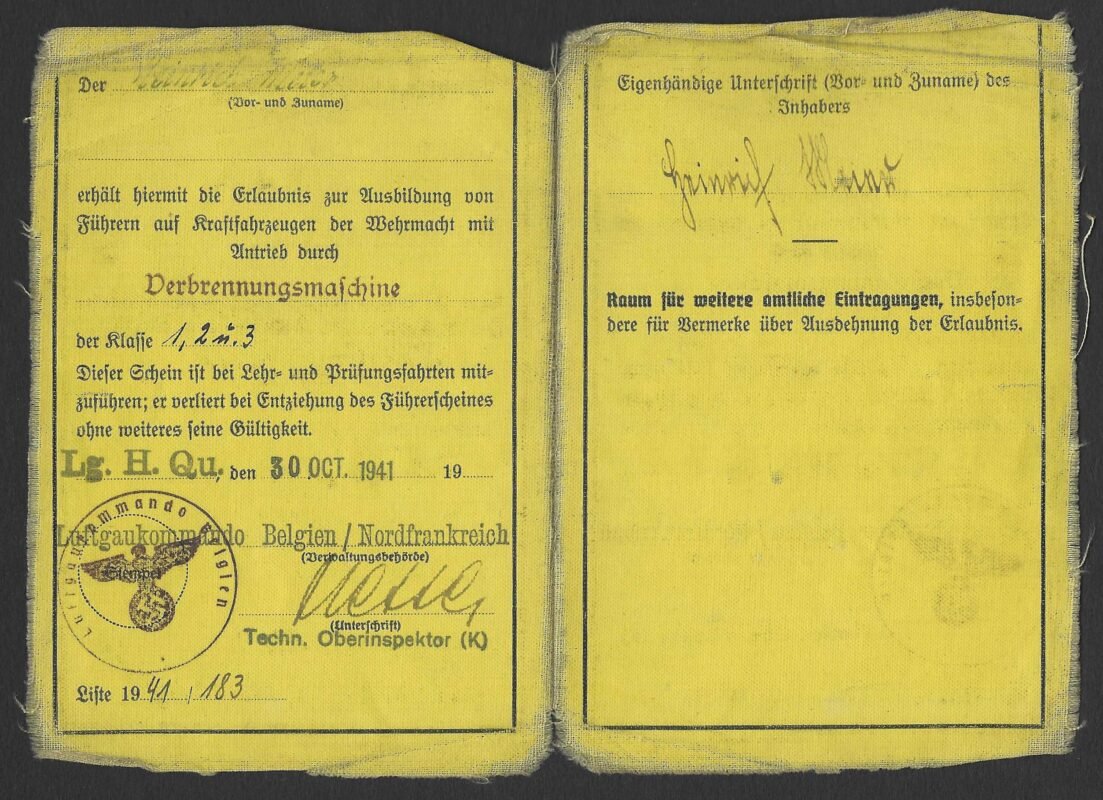
Otto Hesse served in several German Wehrmacht construction and pioneer formations during the Second World War. His early wartime service is connected to Baukompanie / Baukolonne 214, units responsible for military engineering, logistics, road construction, fortification work, and infrastructure support behind advancing German forces.
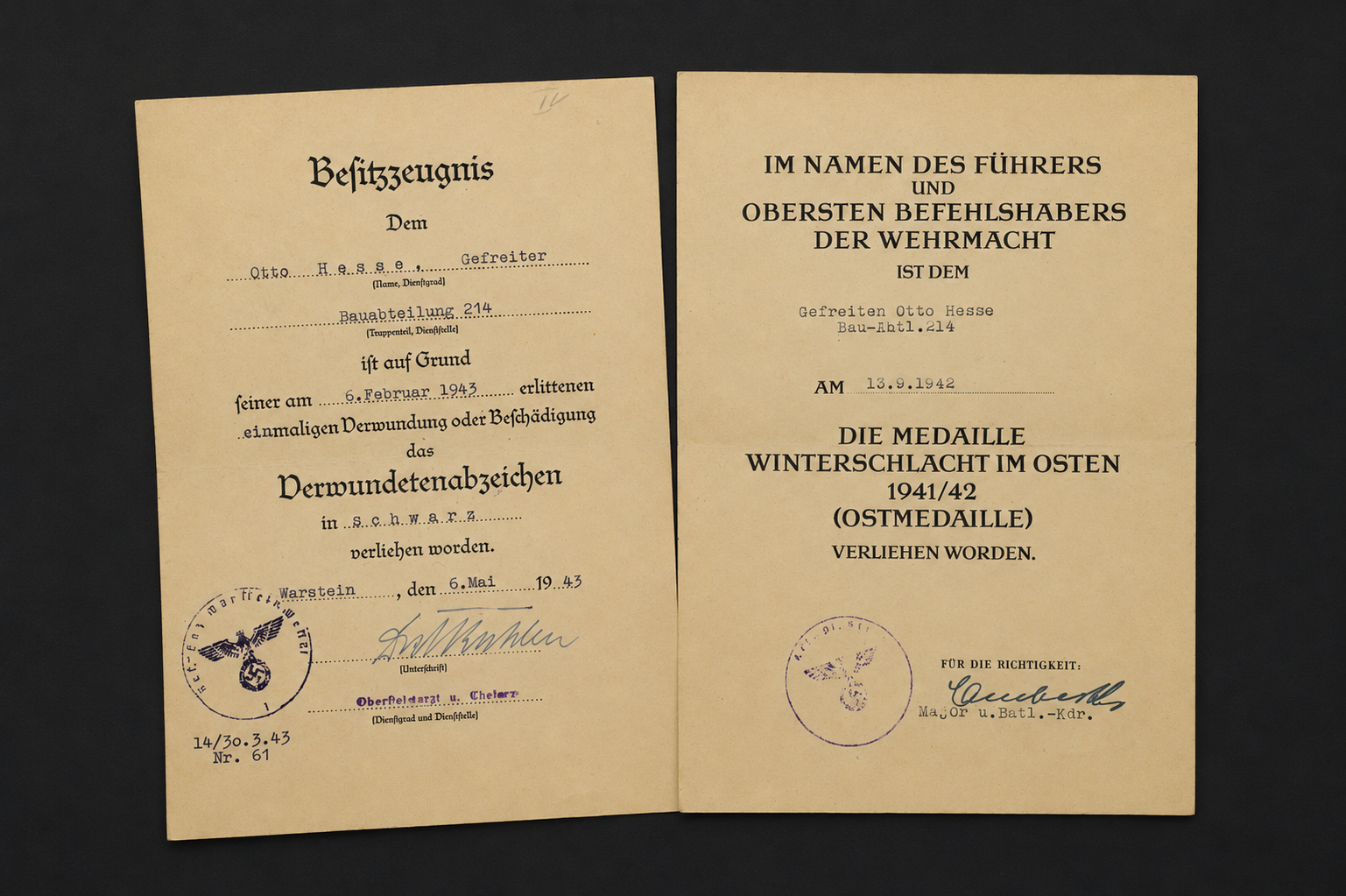
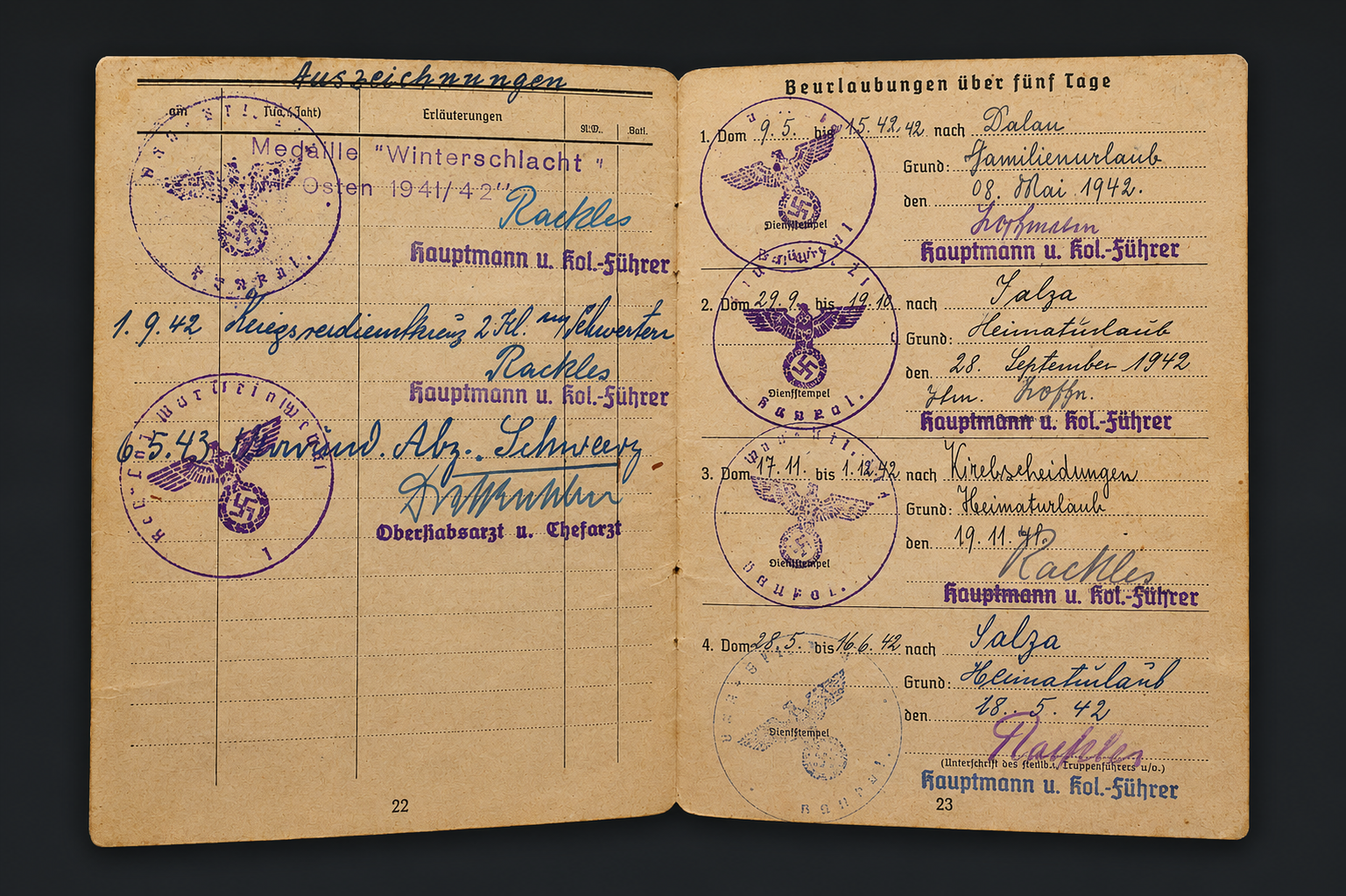
His service on the Eastern Front is confirmed by the award of the Medaille Winterschlacht im Osten 1941/42, commonly known as the “Ostmedaille,” awarded to personnel who endured the brutal winter campaign in Russia during 1941–42.
Hesse also received the Kriegsverdienstkreuz 2. Klasse mit Schwertern, recognizing meritorious wartime service under combat-related conditions, and later the Verwundetenabzeichen in Schwarz for wounds received in action.
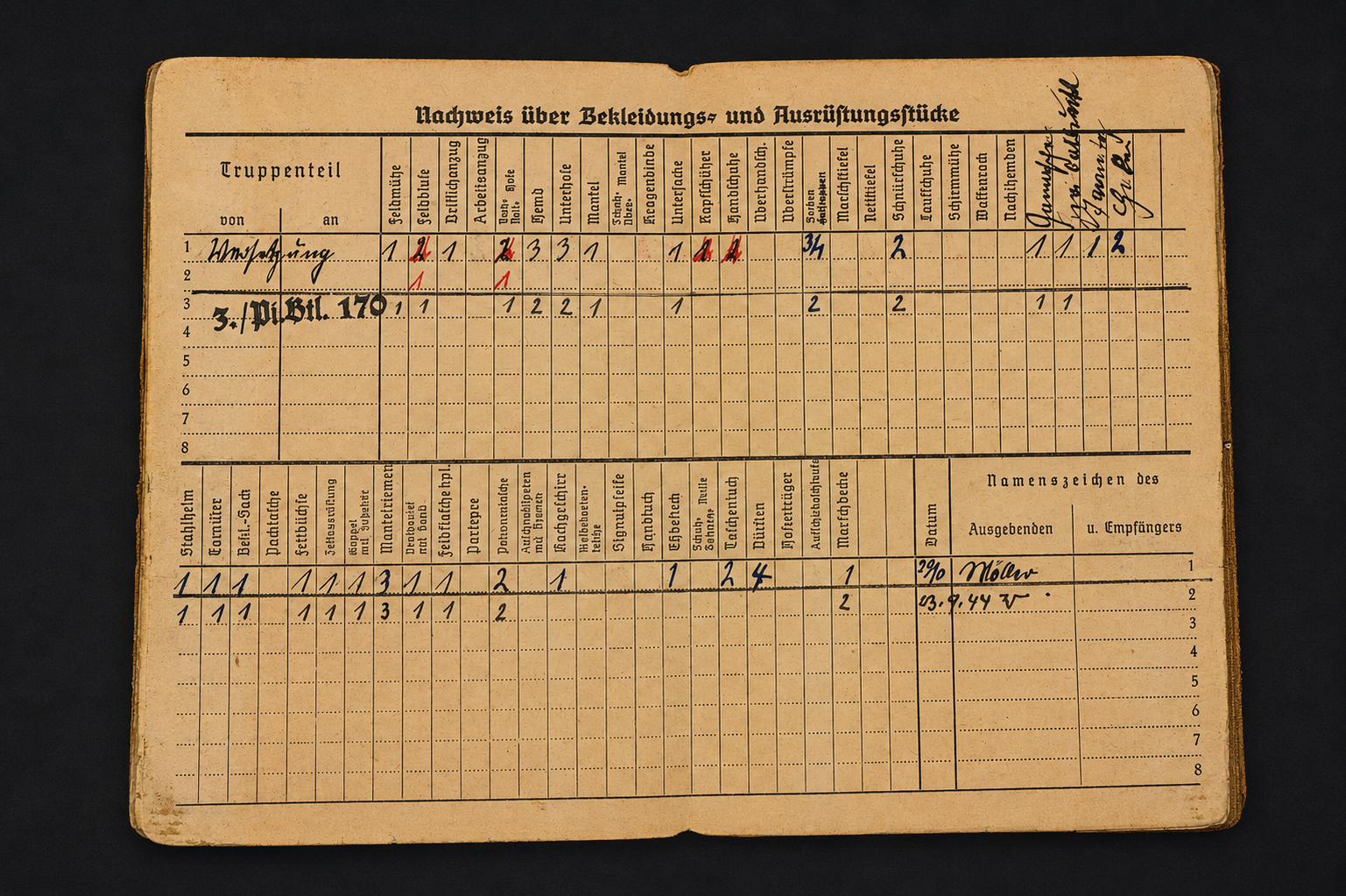
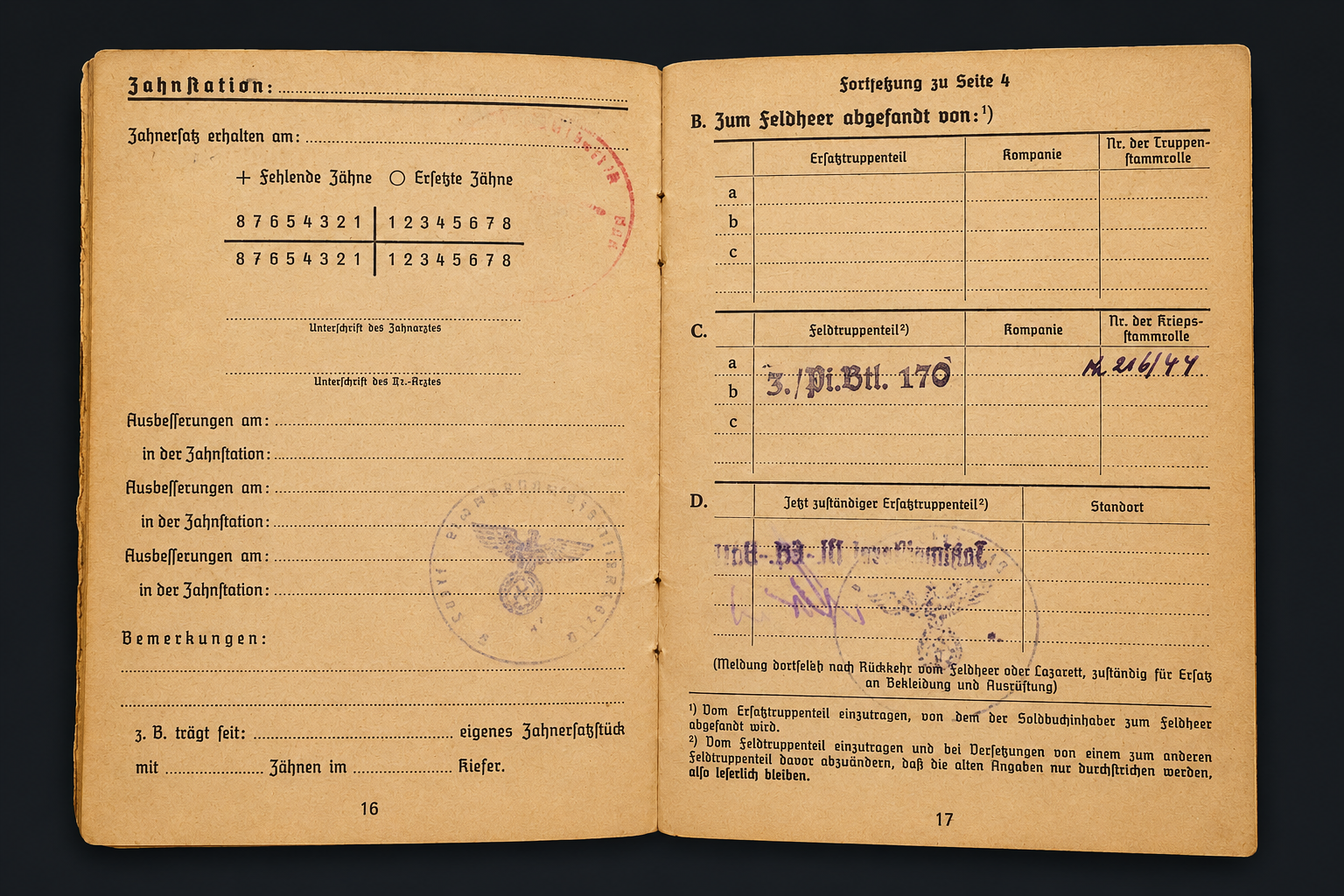
By late 1944, Hesse was serving with Pionier-Kompanie 170 of the 70. Infanterie-Division. This division became heavily involved in the fighting in the occupied Netherlands during the Allied advance following Operation Market Garden and the Battle of the Scheldt.
The 70. Infanterie-Division, sometimes nicknamed the “White Bread Division” due to many troops suffering stomach ailments and dietary restrictions, was deployed in the coastal defense sector around Walcheren, South Beveland, and the Scheldt estuary. The division fought in extremely difficult defensive operations against British and Canadian forces attempting to open the port of Antwerp by clearing German resistance along the Scheldt waterways.
Combat in the region during October and November 1944 was exceptionally intense. German defenders faced heavy artillery bombardments, amphibious assaults, flooded terrain, naval gunfire, and continuous air attacks. Pioneer units played a critical role constructing defenses, demolitions, anti-tank obstacles, minefields, and emergency positions while often fighting directly on the front lines.
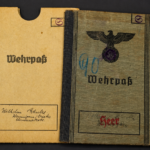
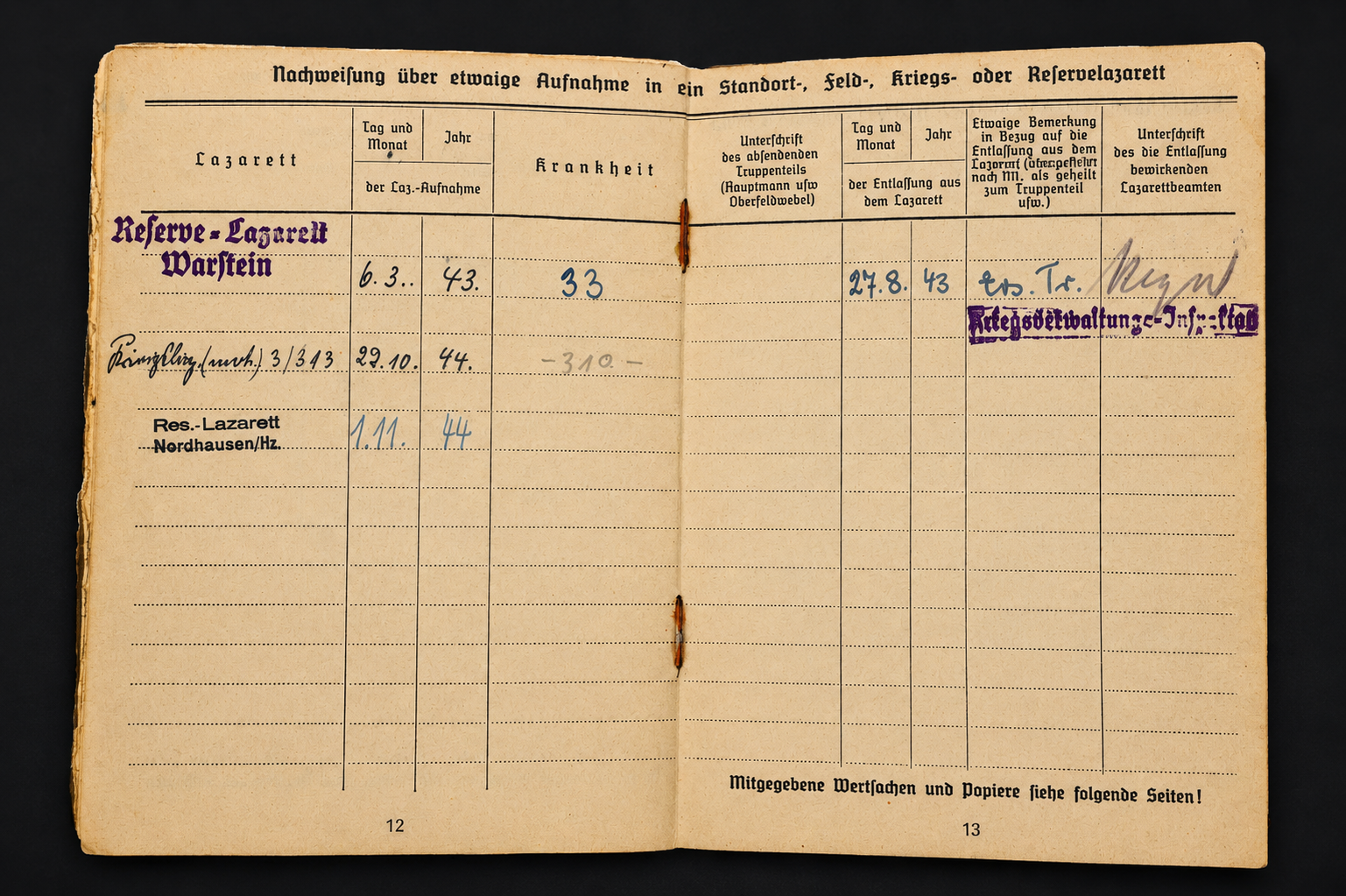
The Soldbuch records a wound code entry from late October 1944 identified as 31a, corresponding to a bullet wound. Given the timing and unit assignment, this wound was very likely sustained during the savage fighting connected to the Battle of the Scheldt and the defense of Walcheren Island.
This grouping represents an excellent and historically significant example of a Wehrmacht pioneer/construction soldier whose service spanned both the Eastern Front and the final defensive battles in the Netherlands during the closing stages of the war.