


WWII Japanese Yosegaki Hinomaru “Good Luck Flag”
€0,01
Original Yosegaki Hinomaru “Good Luck Flag” – Named to Mr. Tadao Hasimoto
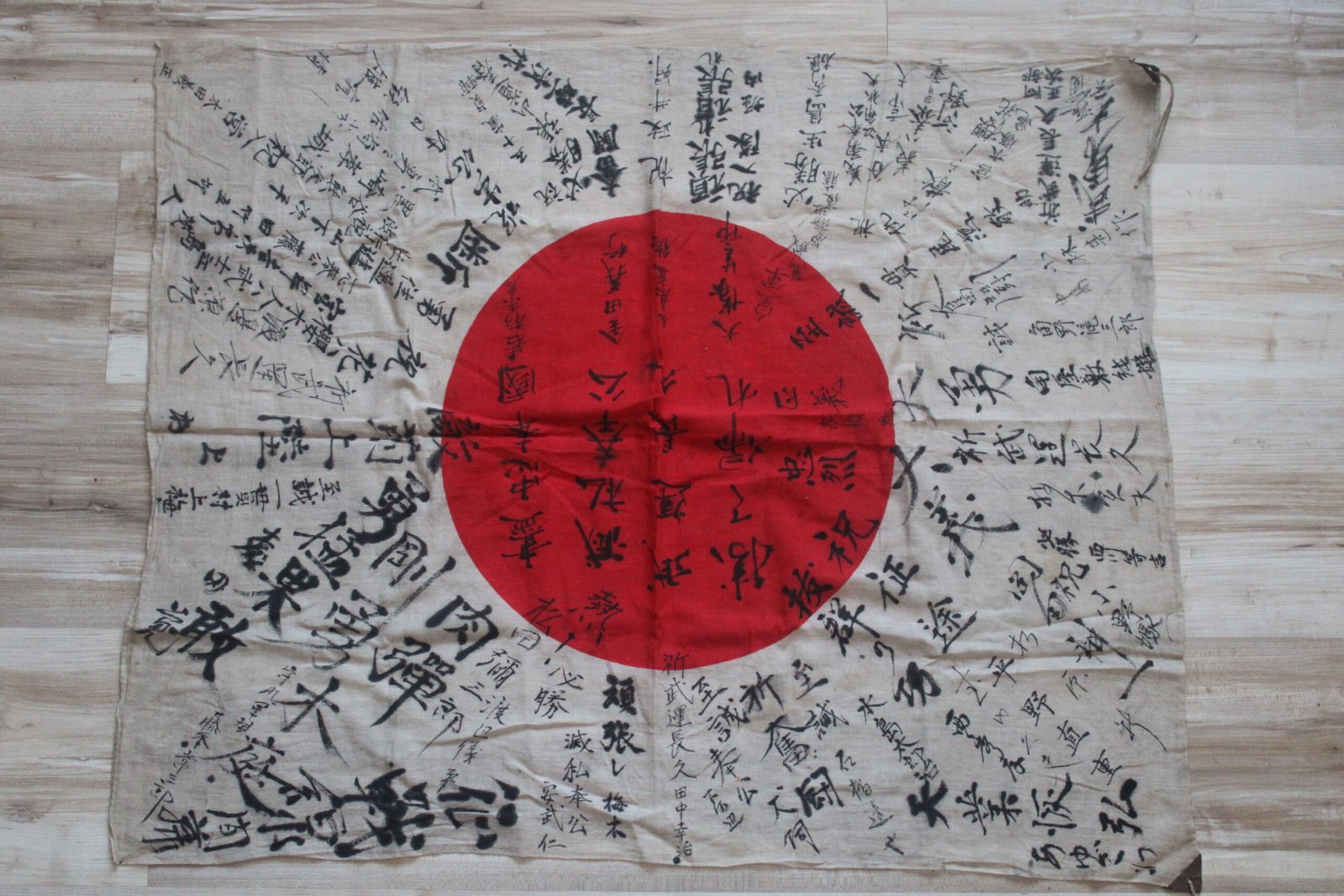
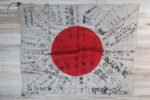
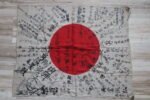
An authentic Yosegaki Hinomaru flag which is filled with numerous signatures and good-luck messages written by family, friends, neighbors, and co-workers, radiating outward from the iconic red sun disc.
-
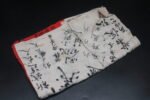
Condition: Strong “been there” combat look, with visible staining, wear, and tears, attesting to genuine field use.
-
Cultural significance: For a Japanese serviceman, such a flag carried immense symbolic and emotional weight, embodying the collective hopes, prayers, and exhortations of those left behind.
Center (inside the red sun)
-
武運長久 (Buun Chōkyū) → “Eternal good fortune in battle.” (dominant central motto)
-
Several vertical name signatures surround this phrase, though brushwork makes them hard to fully identify.
⬆️ Top section (above the red sun)
-
Multiple vertical signatures of individuals.
-
A few common good luck phrases:
-
必勝 (Hisshō) → “Certain victory.”
-
祈武運 (Inoru Buun) → “Prayers for good fortune in war.”
-
➡️ Right section (to the right of the red sun)
-
祈必勝 (Inoru Hisshō) → “Prayers for certain victory.”
-
大日本帝国万歳 (Dai Nippon Teikoku Banzai) → “Long live the Empire of Japan.”
-
Many personal names, often in two-character combinations (typical Japanese surnames):
-
Some examples I can parse: 田中 (Tanaka), 佐藤 (Satō), 山本 (Yamamoto).
-
Several brushstrokes are stylized, but these common surnames appear repeatedly on flags.
-
⬇️ Bottom section (below the red sun)
-
Another cluster of names.
-
Repeated “必勝” (Certain victory) inscriptions.
-
Possible name strings like 高橋 (Takahashi) and 松本 (Matsumoto) appear.
⬅️ Left section (to the left of the red sun)
-
Vertical columns of signatures, most likely from work colleagues or villagers.
-
A clear “必勝” again.
-
Some likely surnames visible: 加藤 (Katō), 林 (Hayashi), 近藤 (Kondō).
✨ Summary of Main Content:
-
Central motto: 武運長久 (“Eternal good fortune in battle”).
-
Supporting slogans: 必勝 (“Certain victory”), 祈必勝 (“Prayers for victory”), 大日本帝国万歳 (“Long live the Empire of Japan”).
-
Surrounding text: Mostly signatures of friends, family, neighbors, or coworkers — names like Tanaka, Satō, Yamamoto, Takahashi, Katō, etc.
Historical Context
The Hinomaru Yosegaki was a deeply personal and traditional gift given to departing Japanese soldiers during WWII. Every name and message inscribed was meant to lend spiritual strength, encourage bravery, and remind the soldier of his duty. It was believed that the combined power of these blessings would protect the owner in combat.
For men far from home, unfolding the flag meant reconnecting with loved ones. In many cases, servicemen left behind locks of hair or fingernail clippings with their families, symbolic tokens in case they did not return.
Collector’s Note
The powerful dedication to national service, is a highly evocative artifact of Imperial Japan’s wartime culture. With its heavy wear and visible age, it represents a genuine battlefield souvenir and a piece of history that once accompanied a soldier into service.
Out of stock
Original Yosegaki Hinomaru “Good Luck Flag” – Named to Mr. Tadao Hasimoto
An authentic Yosegaki Hinomaru flag which is filled with numerous signatures and good-luck messages written by family, friends, neighbors, and co-workers, radiating outward from the iconic red sun disc.
-
Condition: Strong “been there” combat look, with visible staining, wear, and tears, attesting to genuine field use.
-
Cultural significance: For a Japanese serviceman, such a flag carried immense symbolic and emotional weight, embodying the collective hopes, prayers, and exhortations of those left behind.
Center (inside the red sun)
-
武運長久 (Buun Chōkyū) → “Eternal good fortune in battle.” (dominant central motto)
-
Several vertical name signatures surround this phrase, though brushwork makes them hard to fully identify.
⬆️ Top section (above the red sun)
-
Multiple vertical signatures of individuals.
-
A few common good luck phrases:
-
必勝 (Hisshō) → “Certain victory.”
-
祈武運 (Inoru Buun) → “Prayers for good fortune in war.”
-
➡️ Right section (to the right of the red sun)
-
祈必勝 (Inoru Hisshō) → “Prayers for certain victory.”
-
大日本帝国万歳 (Dai Nippon Teikoku Banzai) → “Long live the Empire of Japan.”
-
Many personal names, often in two-character combinations (typical Japanese surnames):
-
Some examples I can parse: 田中 (Tanaka), 佐藤 (Satō), 山本 (Yamamoto).
-
Several brushstrokes are stylized, but these common surnames appear repeatedly on flags.
-
⬇️ Bottom section (below the red sun)
-
Another cluster of names.
-
Repeated “必勝” (Certain victory) inscriptions.
-
Possible name strings like 高橋 (Takahashi) and 松本 (Matsumoto) appear.
⬅️ Left section (to the left of the red sun)
-
Vertical columns of signatures, most likely from work colleagues or villagers.
-
A clear “必勝” again.
-
Some likely surnames visible: 加藤 (Katō), 林 (Hayashi), 近藤 (Kondō).
✨ Summary of Main Content:
-
Central motto: 武運長久 (“Eternal good fortune in battle”).
-
Supporting slogans: 必勝 (“Certain victory”), 祈必勝 (“Prayers for victory”), 大日本帝国万歳 (“Long live the Empire of Japan”).
-
Surrounding text: Mostly signatures of friends, family, neighbors, or coworkers — names like Tanaka, Satō, Yamamoto, Takahashi, Katō, etc.
Historical Context
The Hinomaru Yosegaki was a deeply personal and traditional gift given to departing Japanese soldiers during WWII. Every name and message inscribed was meant to lend spiritual strength, encourage bravery, and remind the soldier of his duty. It was believed that the combined power of these blessings would protect the owner in combat.
For men far from home, unfolding the flag meant reconnecting with loved ones. In many cases, servicemen left behind locks of hair or fingernail clippings with their families, symbolic tokens in case they did not return.
Collector’s Note
The powerful dedication to national service, is a highly evocative artifact of Imperial Japan’s wartime culture. With its heavy wear and visible age, it represents a genuine battlefield souvenir and a piece of history that once accompanied a soldier into service.