WWII Wehrmacht Officer Grouping Oberleutnant – Infanterie-Regiment 503 – KIA Demjansk 1941

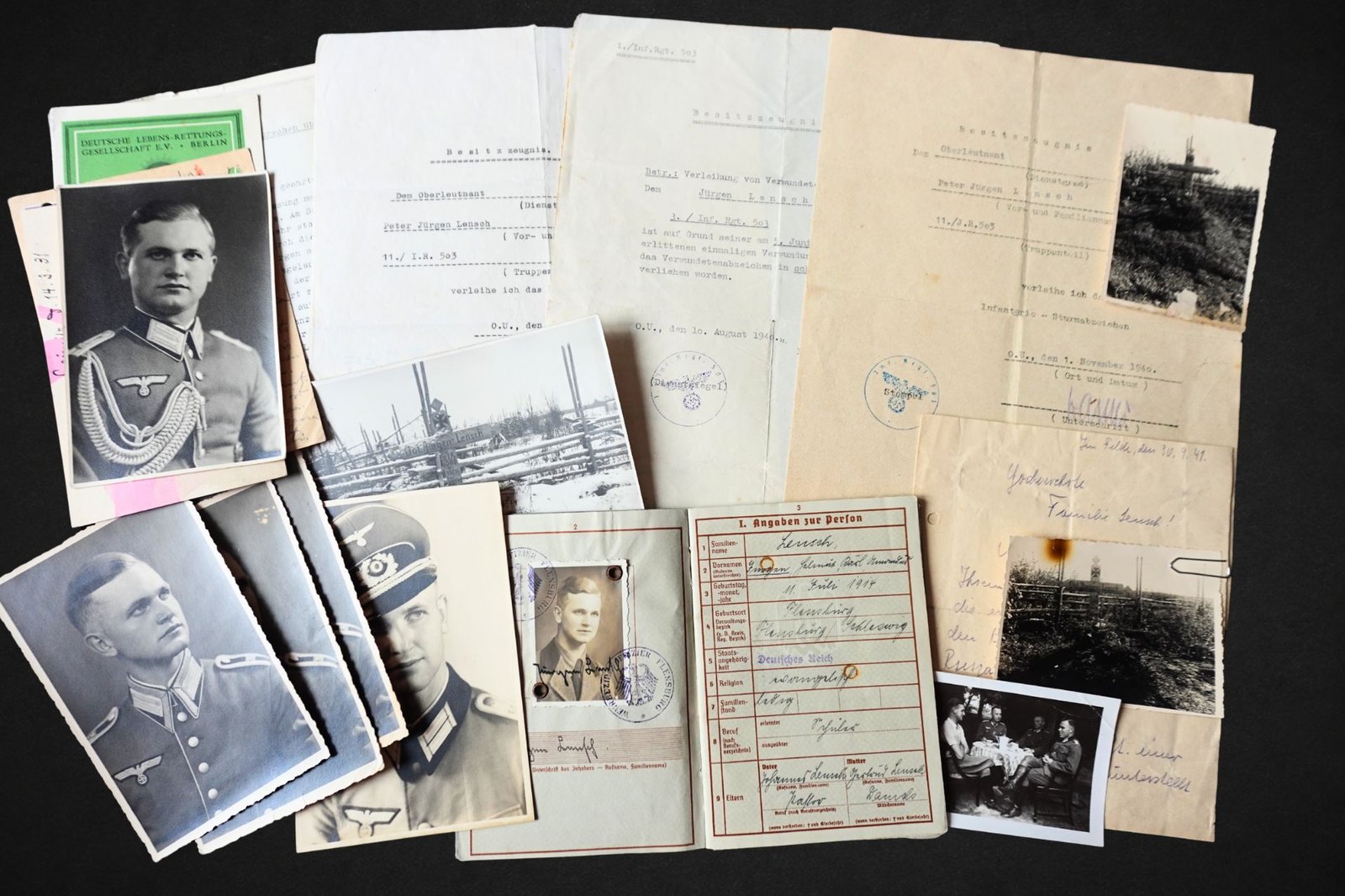
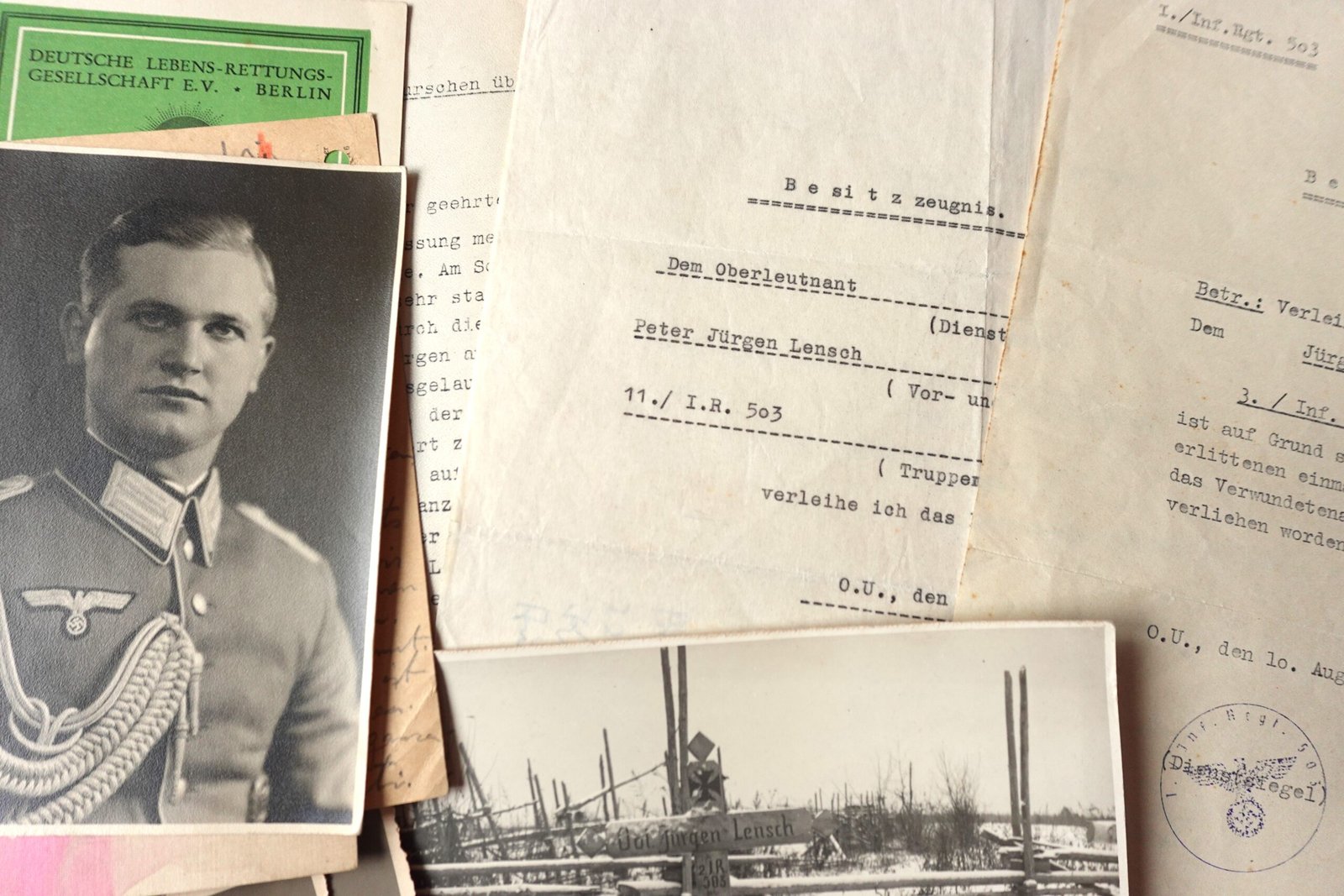
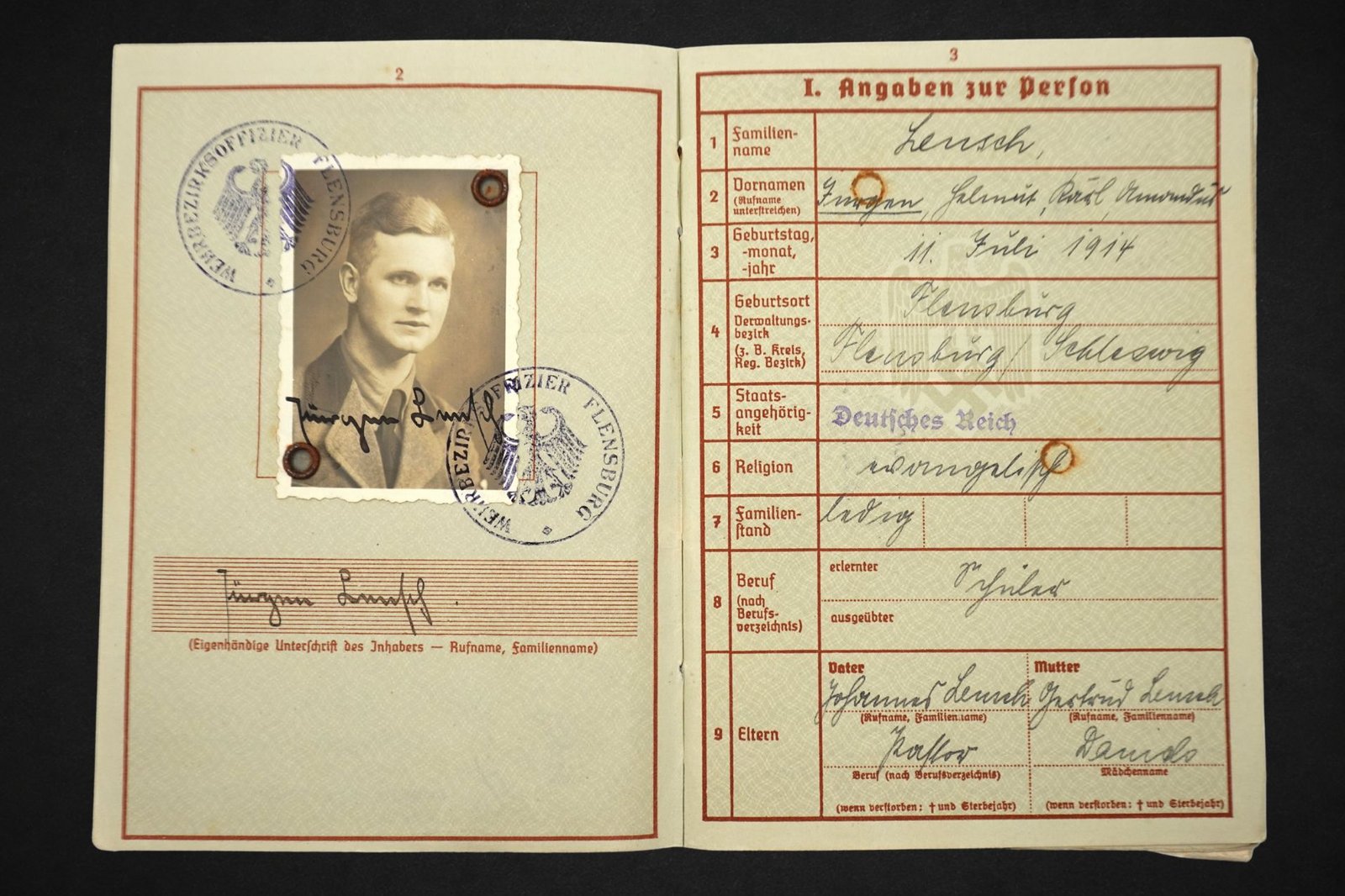
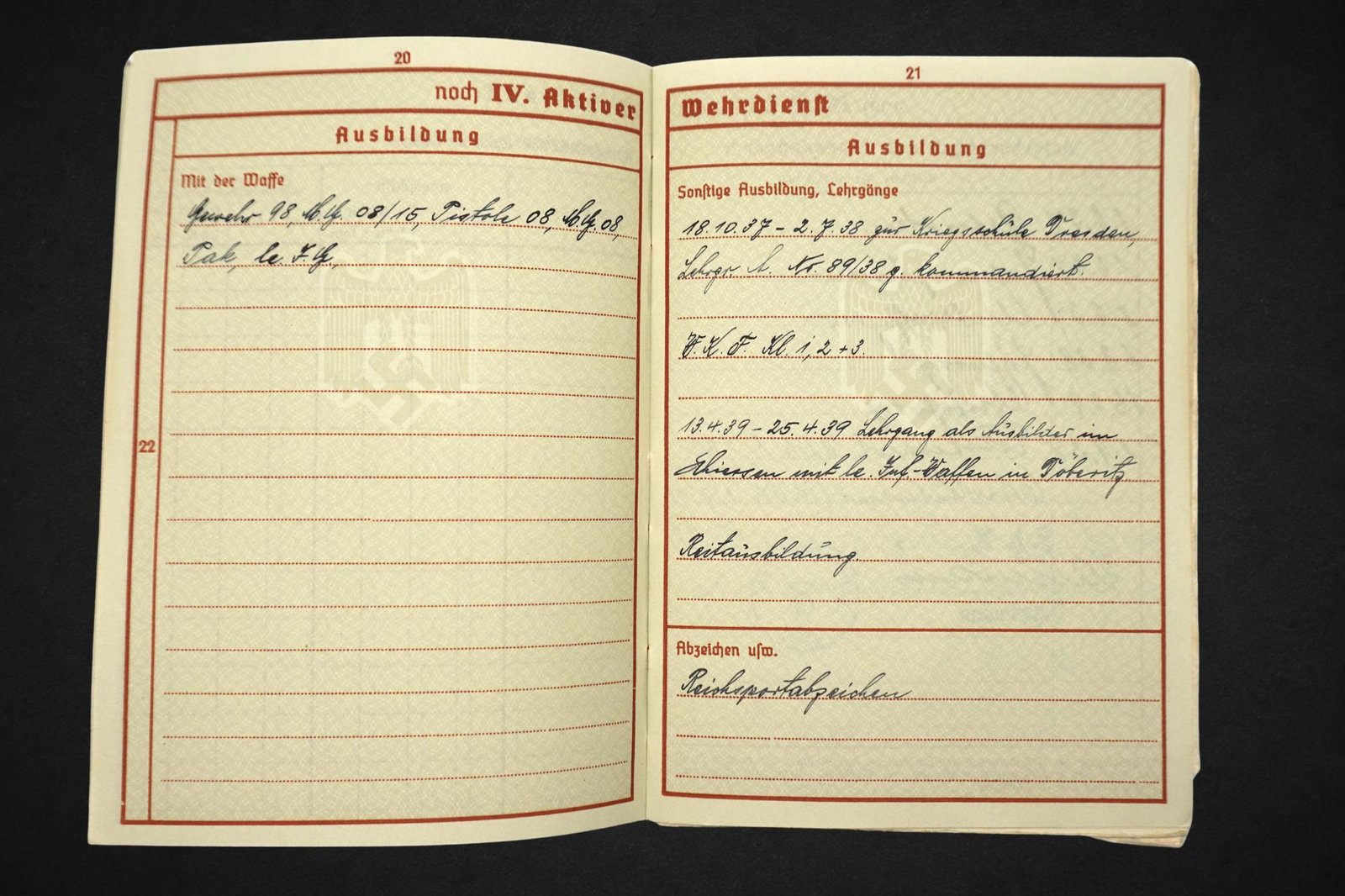
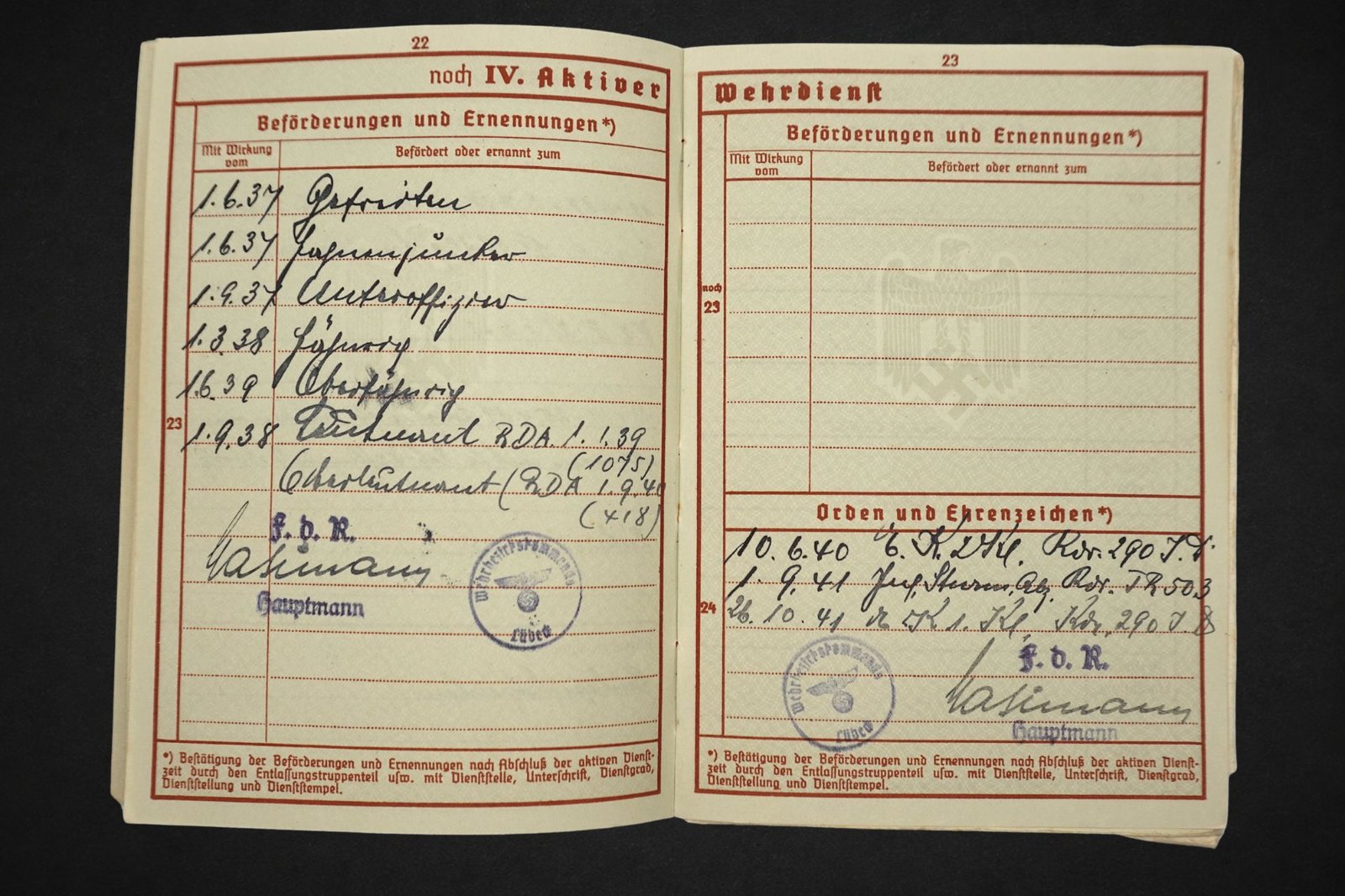
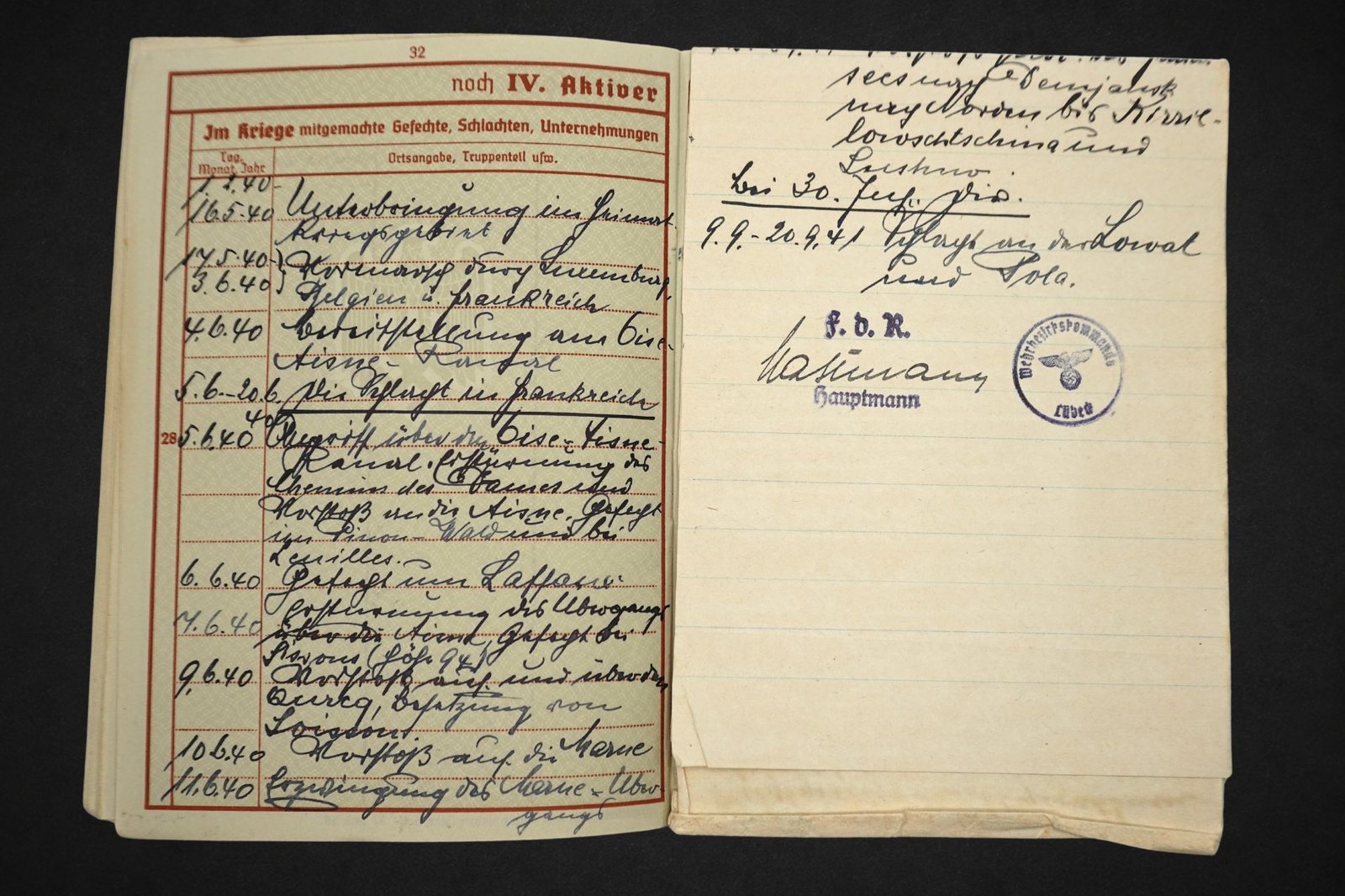
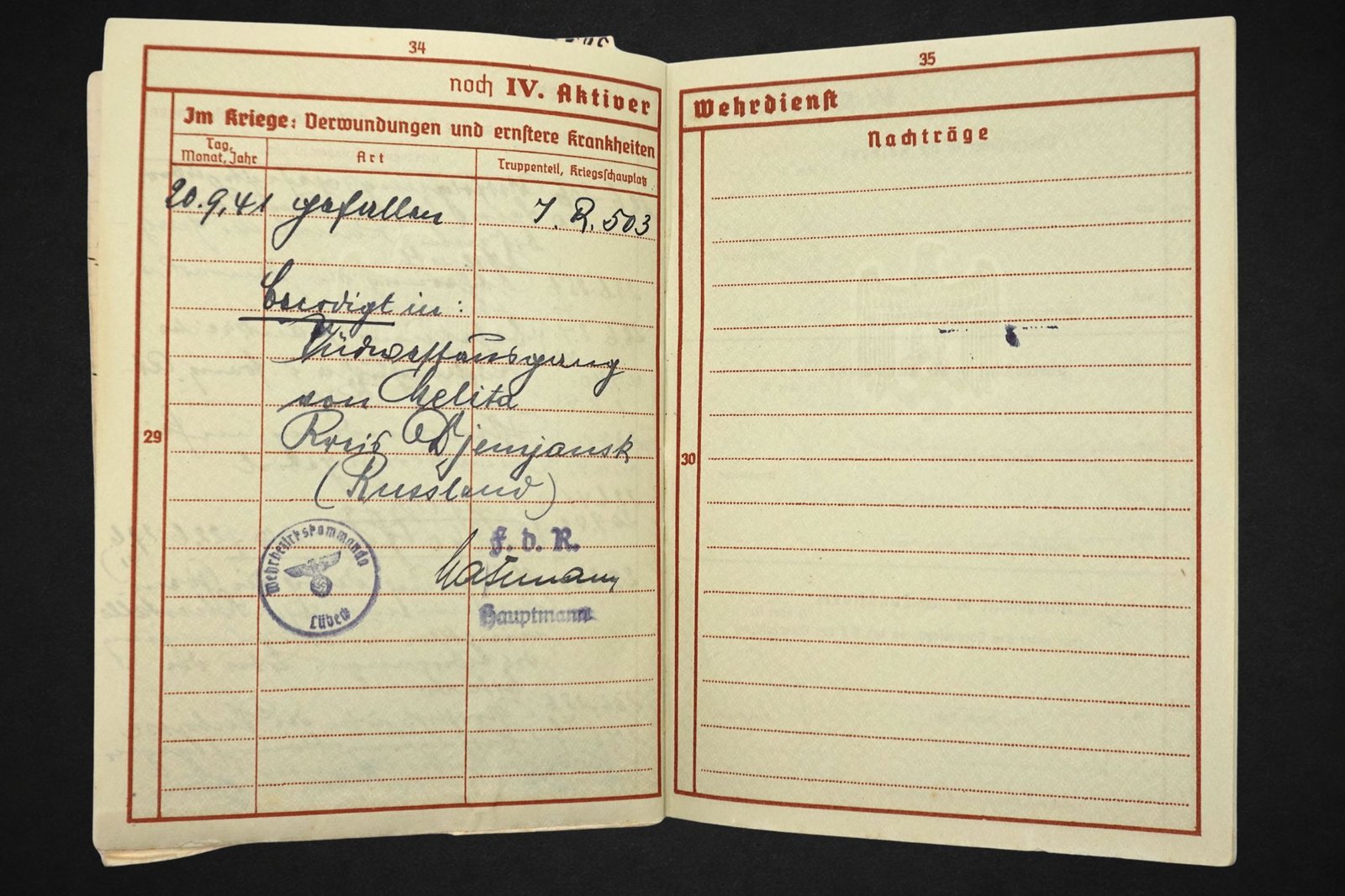
An exceptional and highly personal Wehrmacht officer grouping belonging to Oberleutnant Peter Jürgen Lensch, an infantry officer who served with Infanterie-Regiment 503 of the 290. Infanterie-Division during the early campaigns of the Second World War. The grouping documents his military career from pre-war service through his promotion, combat service in France and Russia, his wounding, award of the Wound Badge and Infantry Assault Badge, and ultimately his death during the Demjansk fighting in September 1941.

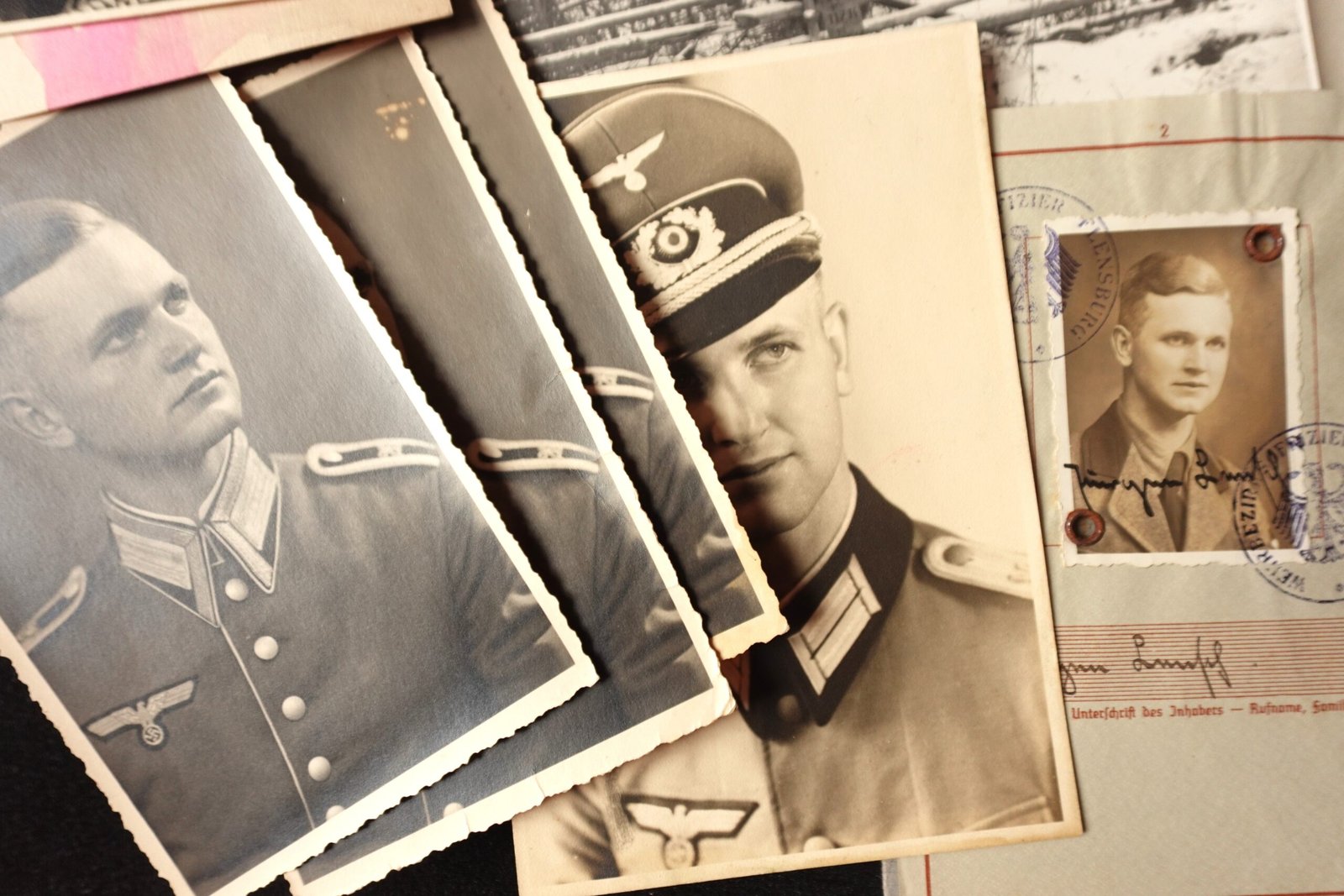
Unlike ordinary document groups, this lot includes official award documents, a complete Wehrpass, original wartime portrait photographs, battlefield grave photographs, personal correspondence, condolence letters, and extensive post-war family research.

Included in the grouping

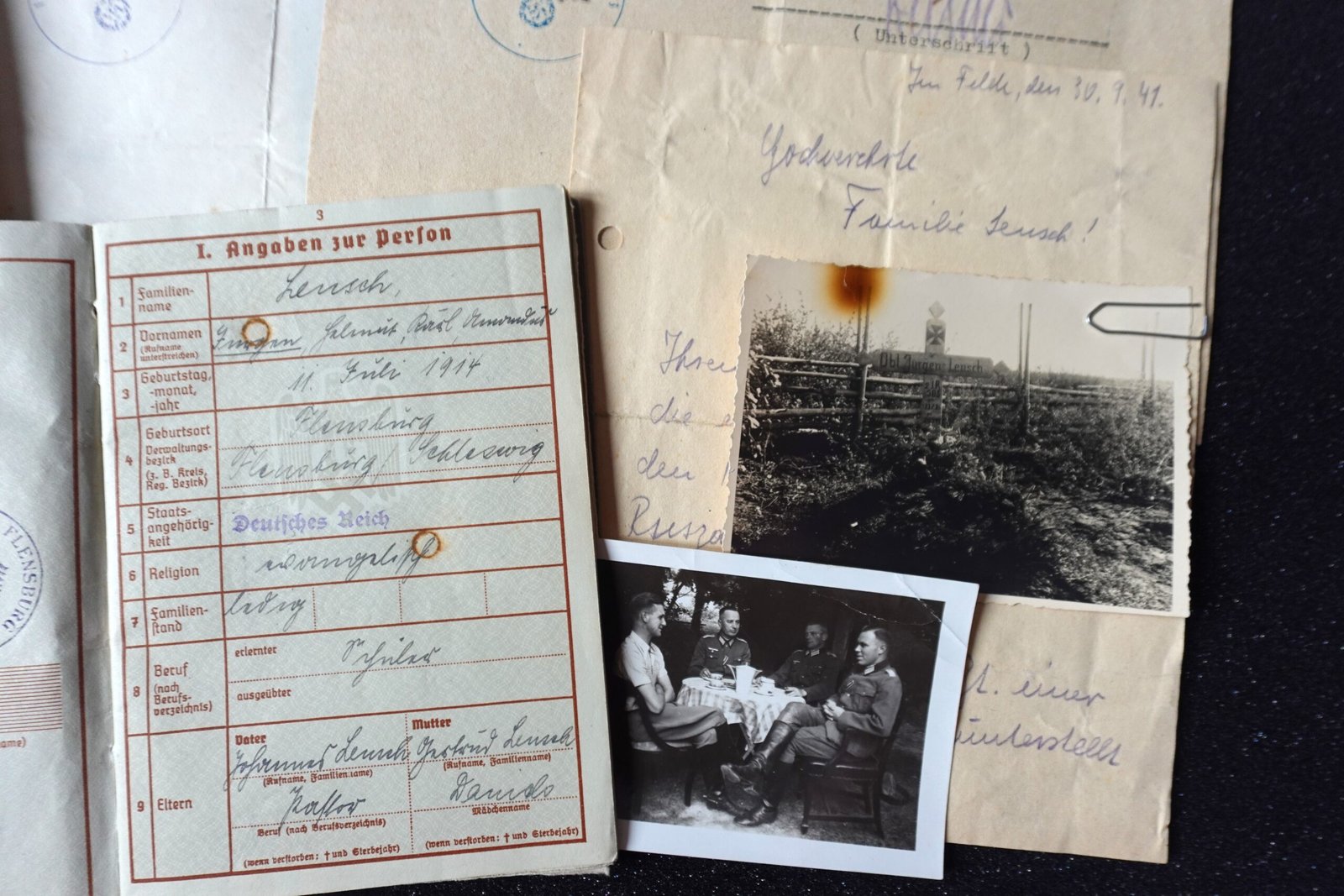
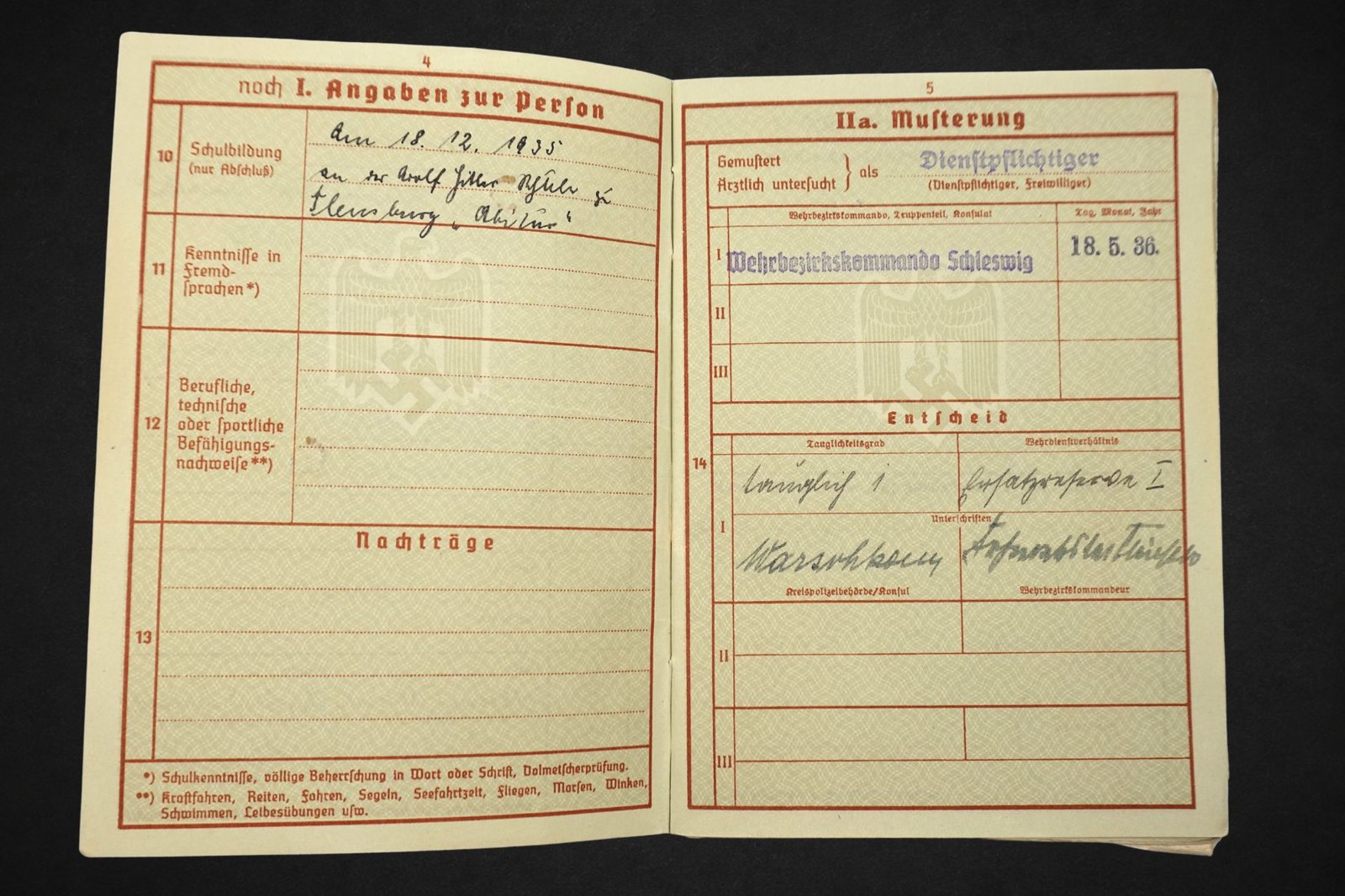
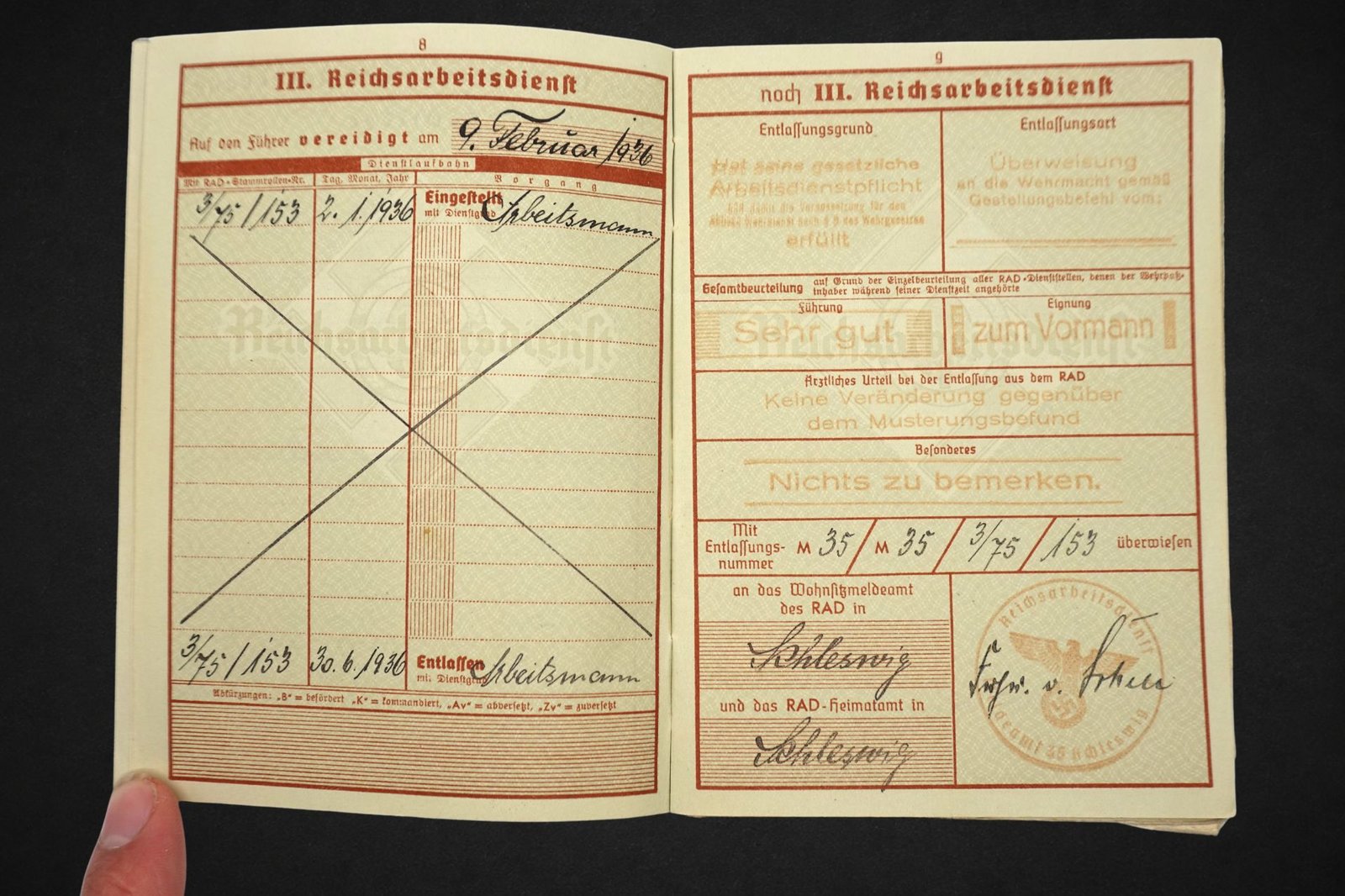
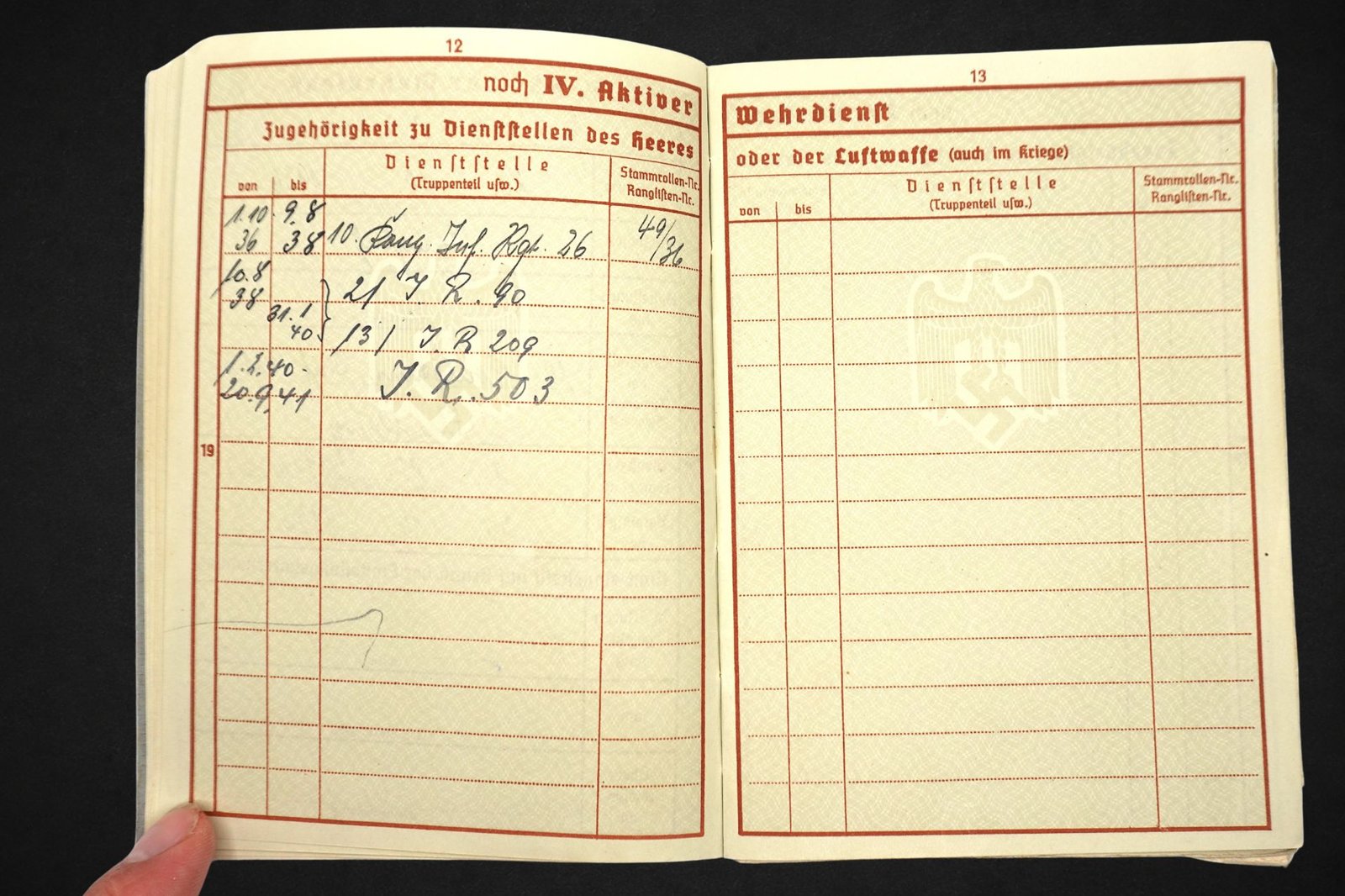
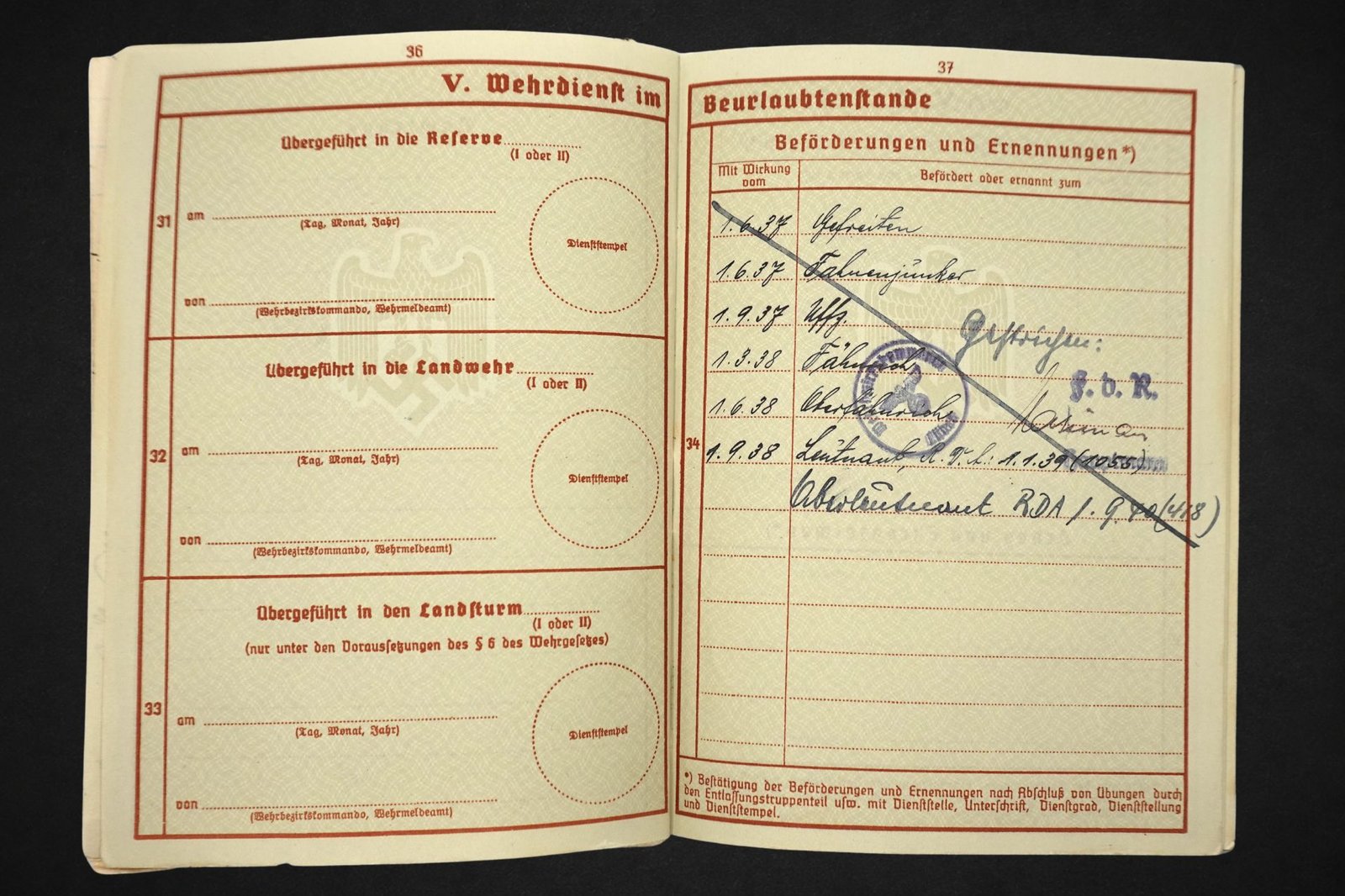
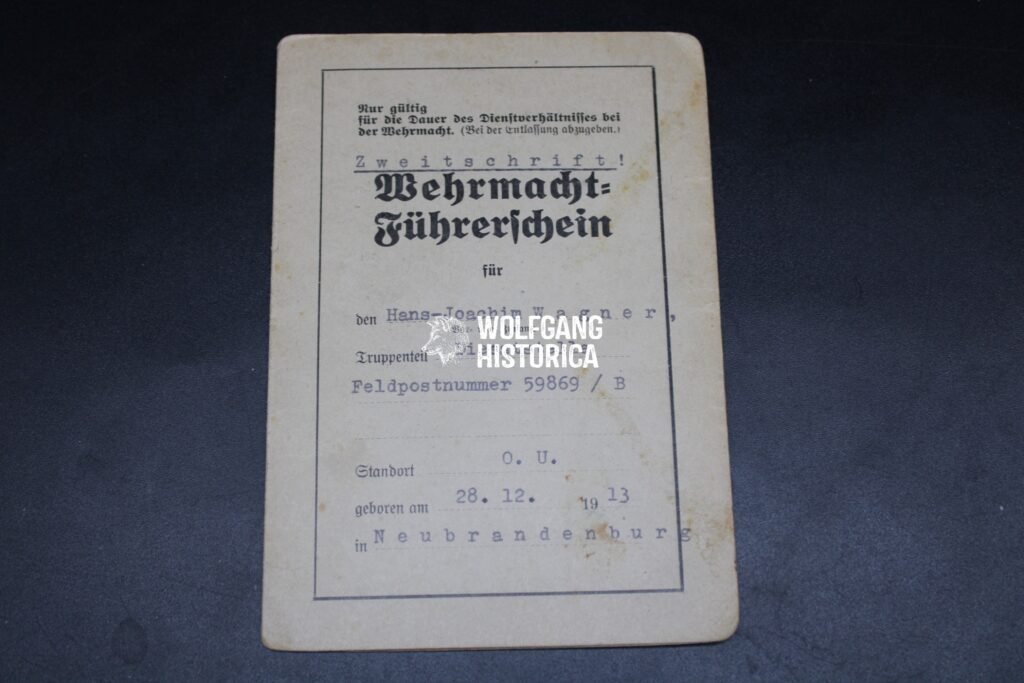
  • Wehrpass – complete with photo
  • Numerous photographs
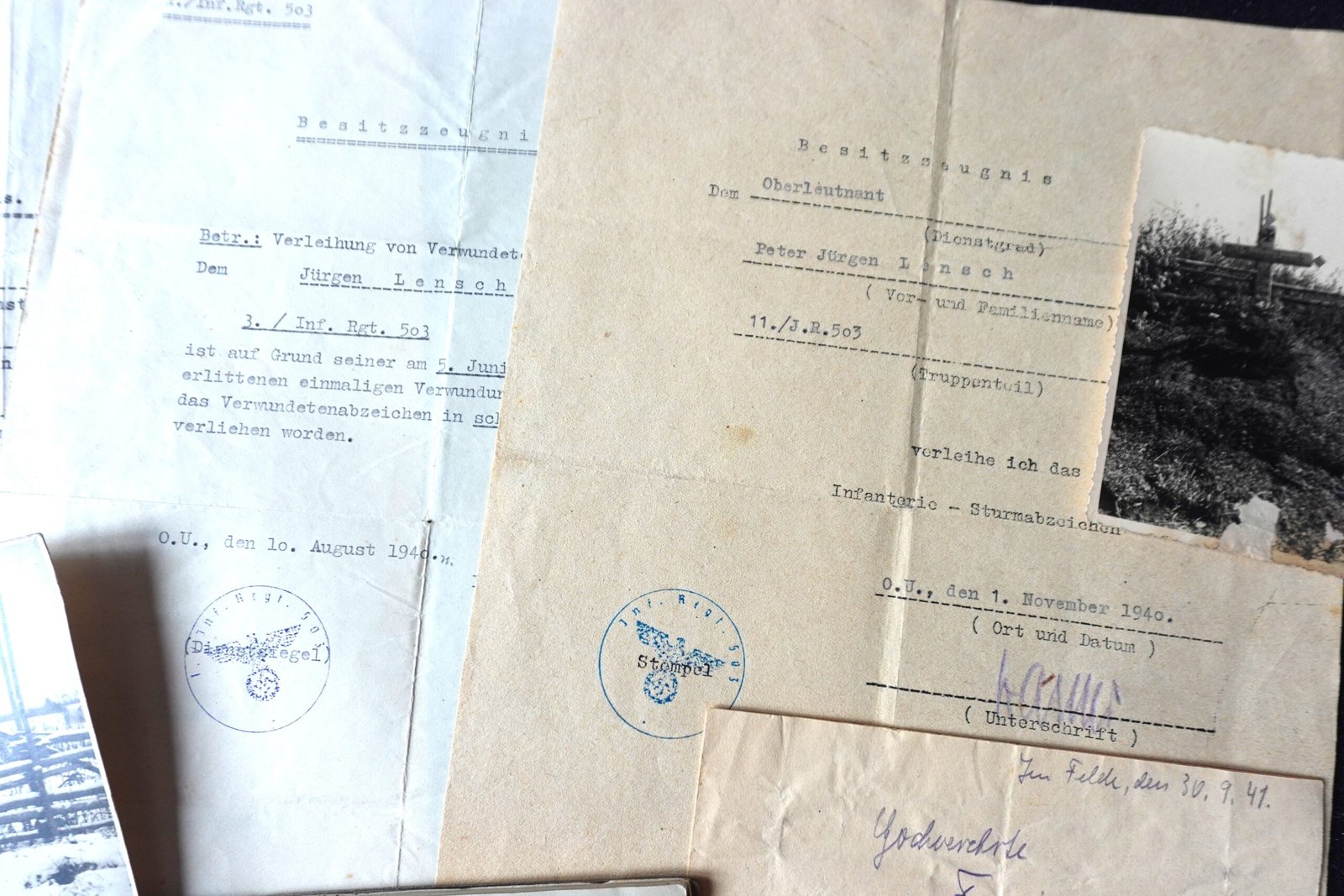
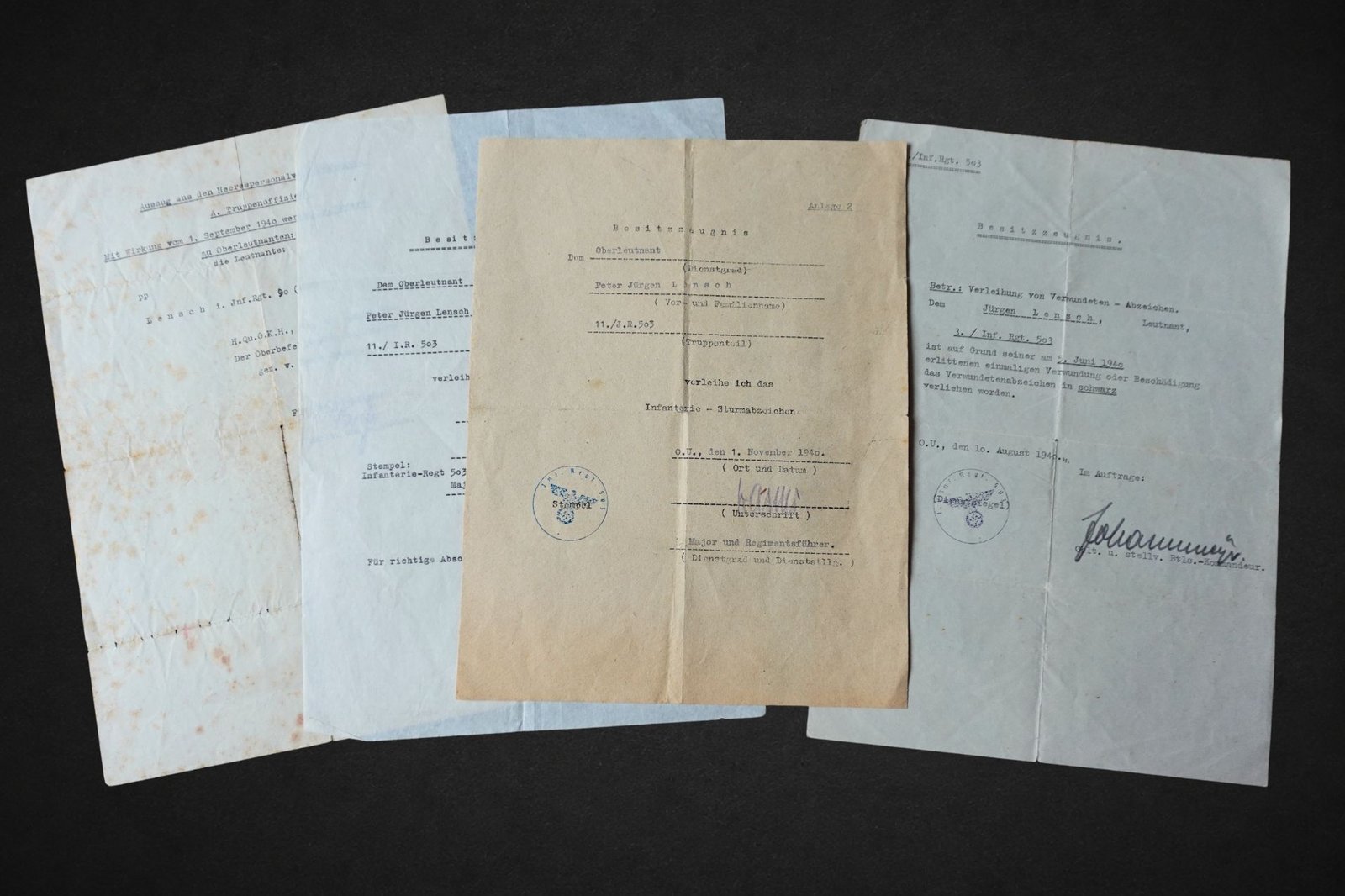
  • Award document for the Verwundetenabzeichen in Schwarz (Black Wound Badge), awarded for wounds received on 5 June 1940 during the French Campaign.
  • Award document for the Infanterie-Sturmabzeichen (Infantry Assault Badge) dated 1 November 1940
  • Promotion notice to Oberleutnant effective 1 September 1940
  • Official correspondence and military paperwork
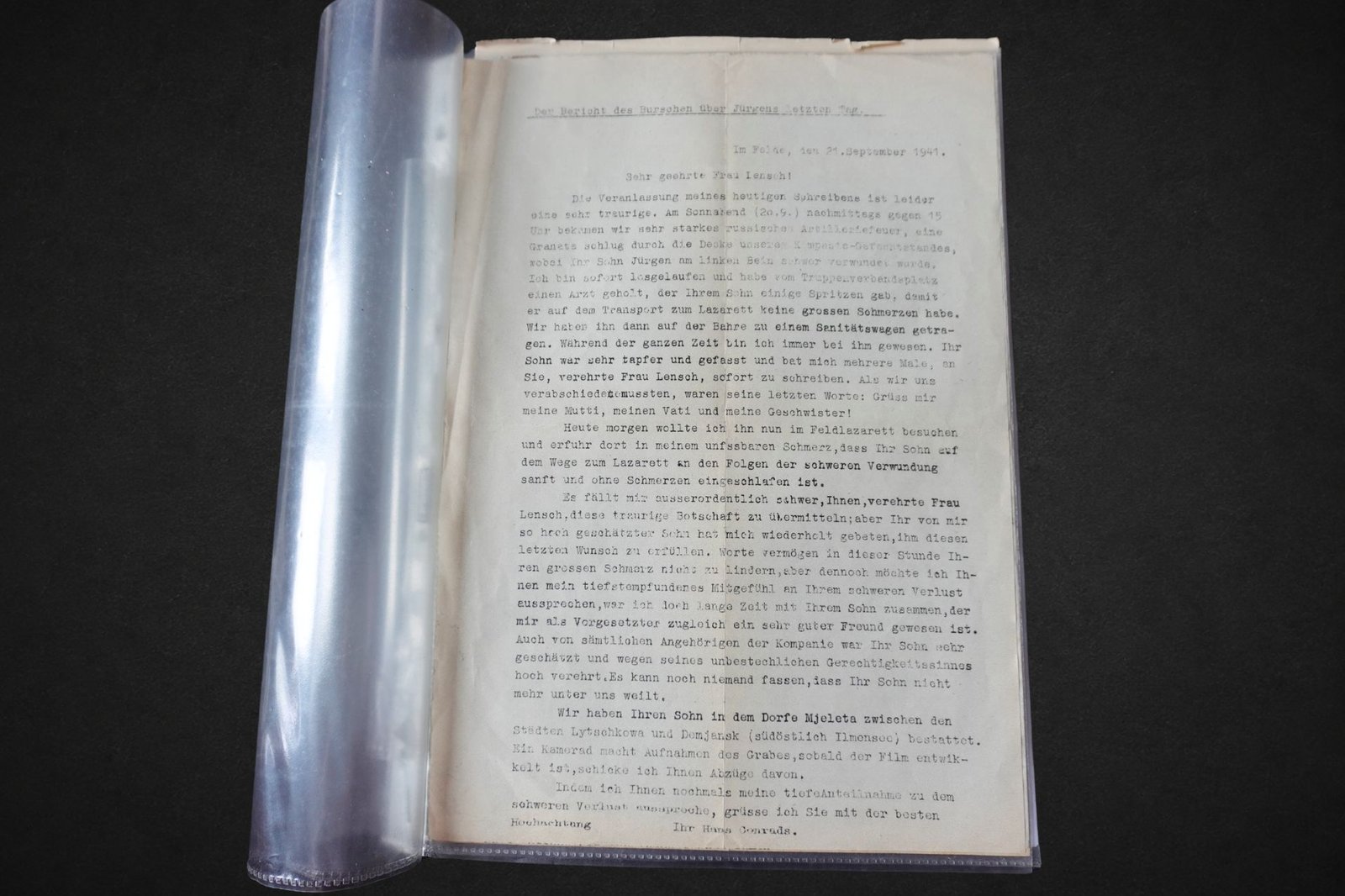
  • Original condolence letter describing his final hours following his fatal wounds
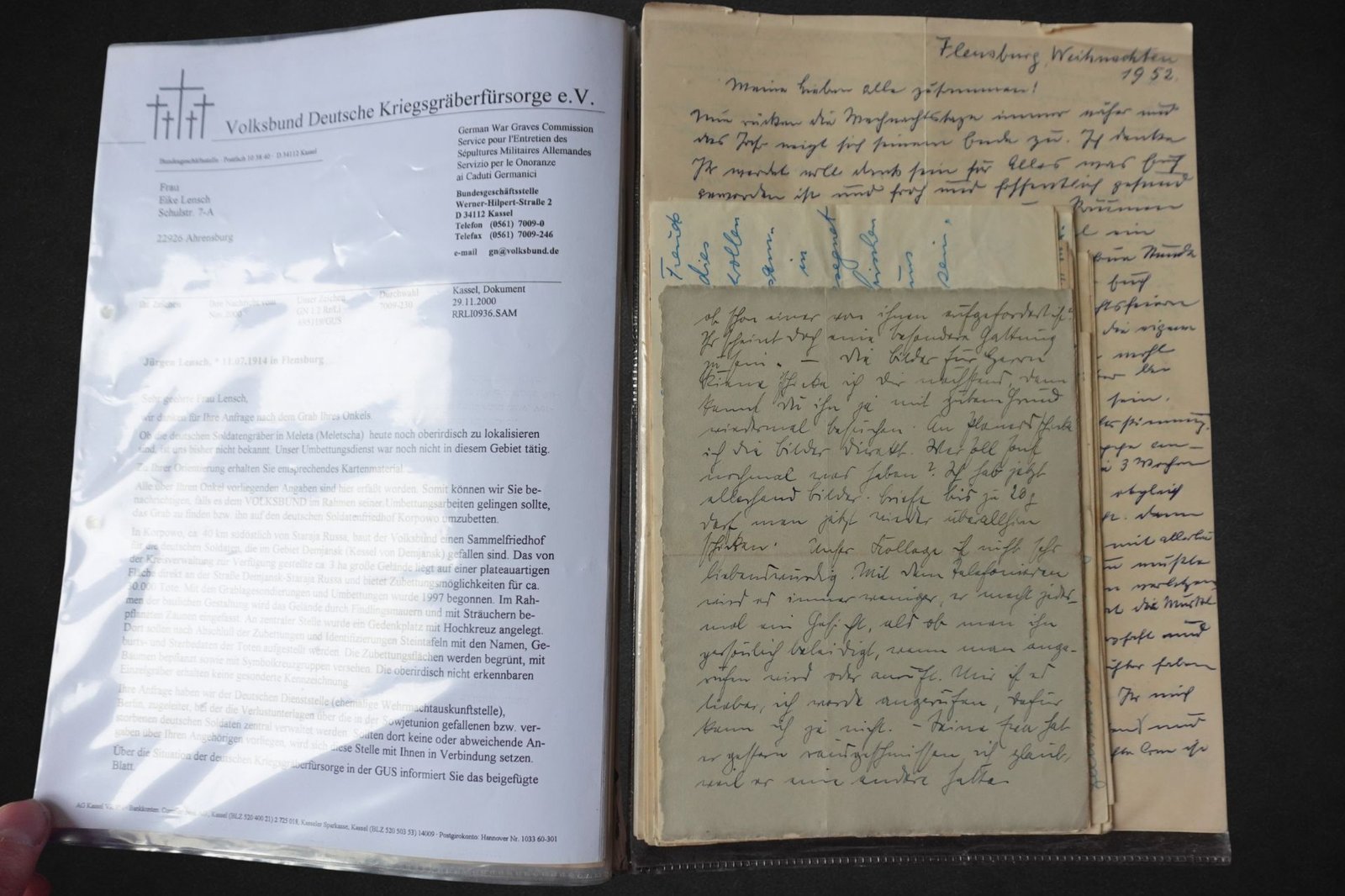
  • Large collection of original wartime family correspondence

Awards

The Wehrpass records an extensive military career including:

  • Eisernes Kreuz 2. Klasse
  • Eisernes Kreuz 1. Klasse
  • Verwundetenabzeichen in Schwarz
  • Infanterie-Sturmabzeichen

The grouping traces Lensch’s participation in some of the most significant early campaigns of the war.

During the Battle of France, he was wounded on 5 June 1940, for which he received the Black Wound Badge. Following his continued frontline service, he earned the Infantry Assault Badge on 1 November 1940, recognizing repeated participation in infantry combat assaults.

He later served with Infanterie-Regiment 503 during the invasion of the Soviet Union. The Wehrpass and accompanying documentation record his service during the advance towards the Demjansk sector.

Killed in Action

One of the most moving parts of the grouping is the original condolence letter sent to his family. It describes how Oberleutnant Lensch was severely wounded during heavy Soviet artillery fire near Demjansk on 20 September 1941. According to the letter, comrades remained beside him until he was evacuated, and his final words were greetings to his mother, father and siblings before he succumbed to his wounds.

The group further includes original photographs of his wartime battlefield grave.

Condition: Overall good, honest wartime condition with expected age-related wear, folds, and minor handling marks consistent with long-term preservation. The documents and photographs remain well preserved and form a complete historical archive.

A remarkable and highly displayable research grouping with excellent historical provenance.

350,00

Out of stock

Out of stock

SKU: 1462617

Details

Statement

Wolfgang Historica is a trusted seller with years of experience and consistently positive reviews. We are always interested in purchasing collections or unique objects and also offer a professional consignment service. Buy with confidence.

Historical Description

An exceptional and highly personal Wehrmacht officer grouping belonging to Oberleutnant Peter Jürgen Lensch, an infantry officer who served with Infanterie-Regiment 503 of the 290. Infanterie-Division during the early campaigns of the Second World War. The grouping documents his military career from pre-war service through his promotion, combat service in France and Russia, his wounding, award of the Wound Badge and Infantry Assault Badge, and ultimately his death during the Demjansk fighting in September 1941.

Unlike ordinary document groups, this lot includes official award documents, a complete Wehrpass, original wartime portrait photographs, battlefield grave photographs, personal correspondence, condolence letters, and extensive post-war family research.

Included in the grouping

  • Wehrpass – complete with photo
  • Numerous photographs
  • Award document for the Verwundetenabzeichen in Schwarz (Black Wound Badge), awarded for wounds received on 5 June 1940 during the French Campaign.
  • Award document for the Infanterie-Sturmabzeichen (Infantry Assault Badge) dated 1 November 1940
  • Promotion notice to Oberleutnant effective 1 September 1940
  • Official correspondence and military paperwork
  • Original condolence letter describing his final hours following his fatal wounds
  • Large collection of original wartime family correspondence

Awards

The Wehrpass records an extensive military career including:

  • Eisernes Kreuz 2. Klasse
  • Eisernes Kreuz 1. Klasse
  • Verwundetenabzeichen in Schwarz
  • Infanterie-Sturmabzeichen

The grouping traces Lensch’s participation in some of the most significant early campaigns of the war.

During the Battle of France, he was wounded on 5 June 1940, for which he received the Black Wound Badge. Following his continued frontline service, he earned the Infantry Assault Badge on 1 November 1940, recognizing repeated participation in infantry combat assaults.

He later served with Infanterie-Regiment 503 during the invasion of the Soviet Union. The Wehrpass and accompanying documentation record his service during the advance towards the Demjansk sector.

Killed in Action

One of the most moving parts of the grouping is the original condolence letter sent to his family. It describes how Oberleutnant Lensch was severely wounded during heavy Soviet artillery fire near Demjansk on 20 September 1941. According to the letter, comrades remained beside him until he was evacuated, and his final words were greetings to his mother, father and siblings before he succumbed to his wounds.

The group further includes original photographs of his wartime battlefield grave.

Condition: Overall good, honest wartime condition with expected age-related wear, folds, and minor handling marks consistent with long-term preservation. The documents and photographs remain well preserved and form a complete historical archive.

A remarkable and highly displayable research grouping with excellent historical provenance.