Belgian Army Visor Cap – Post-Liberation / Early Postwar – Royal Crown Badge
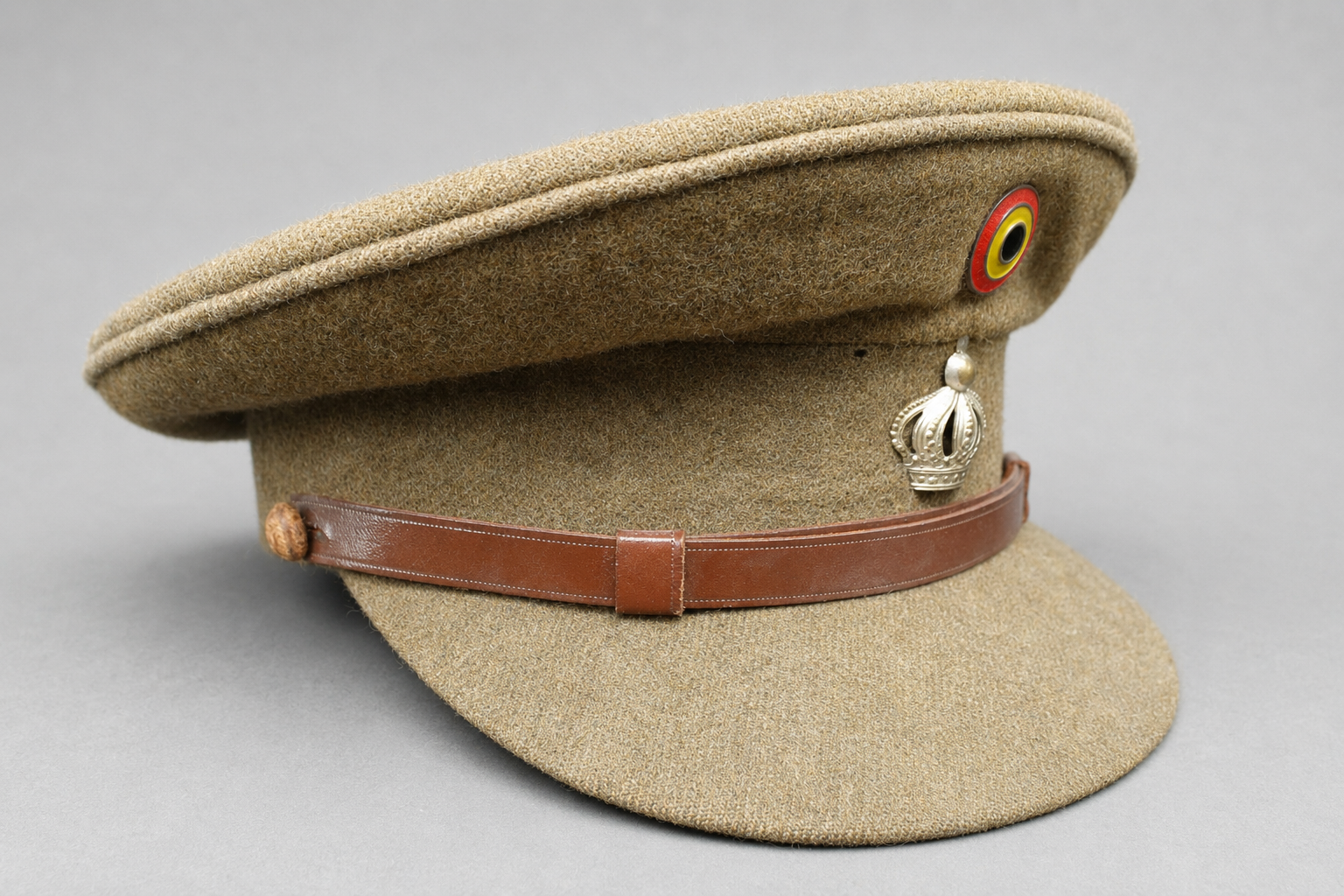
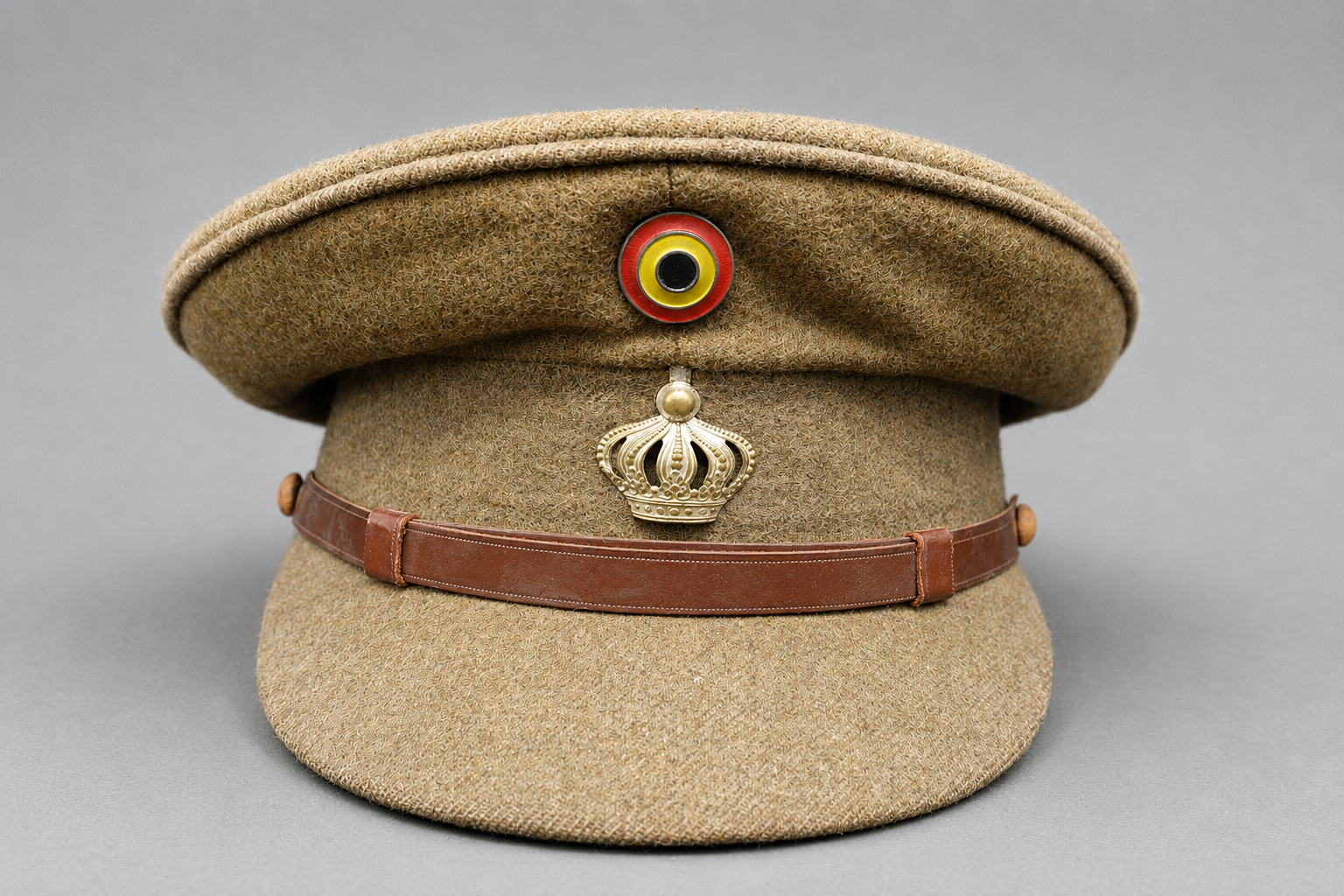
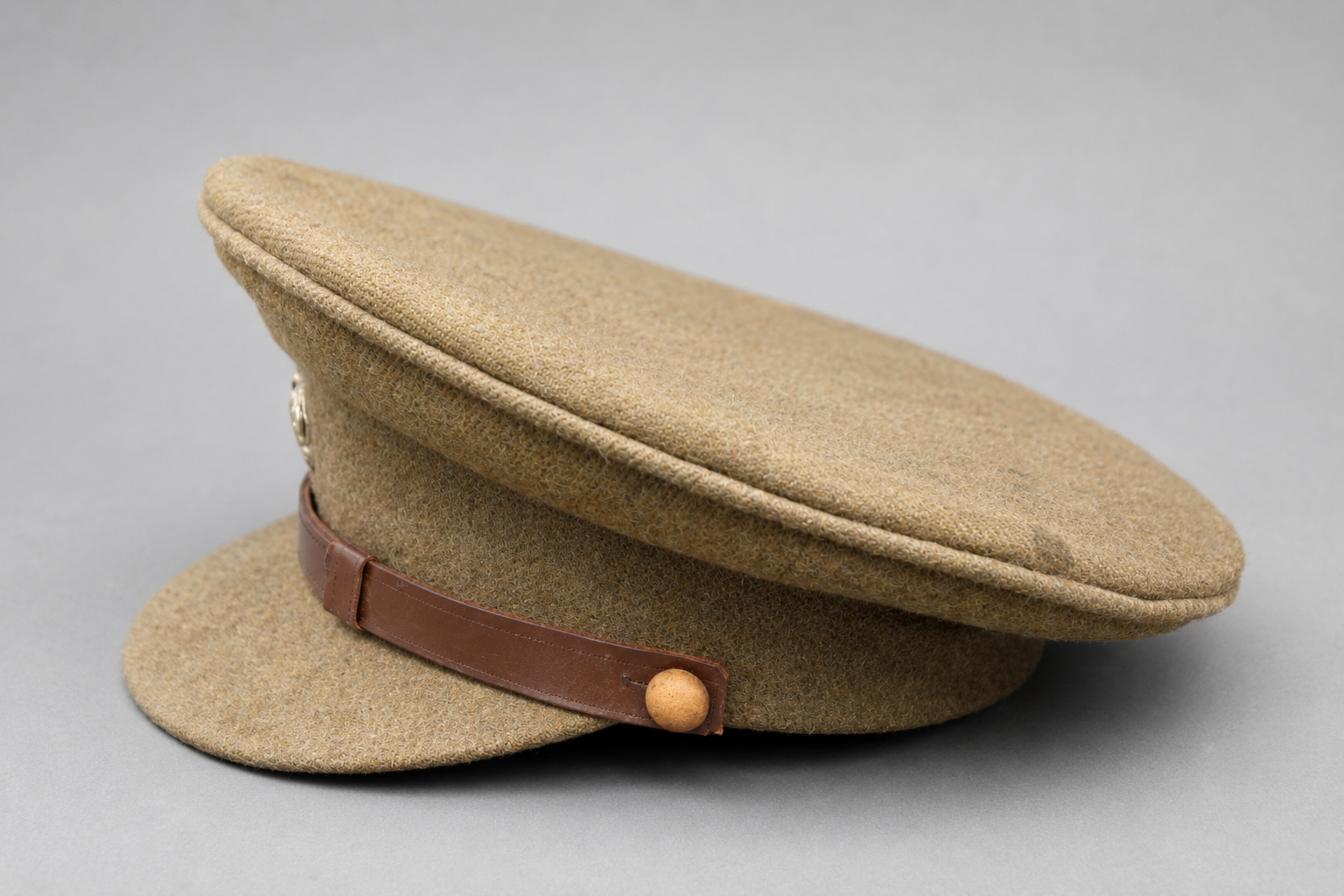
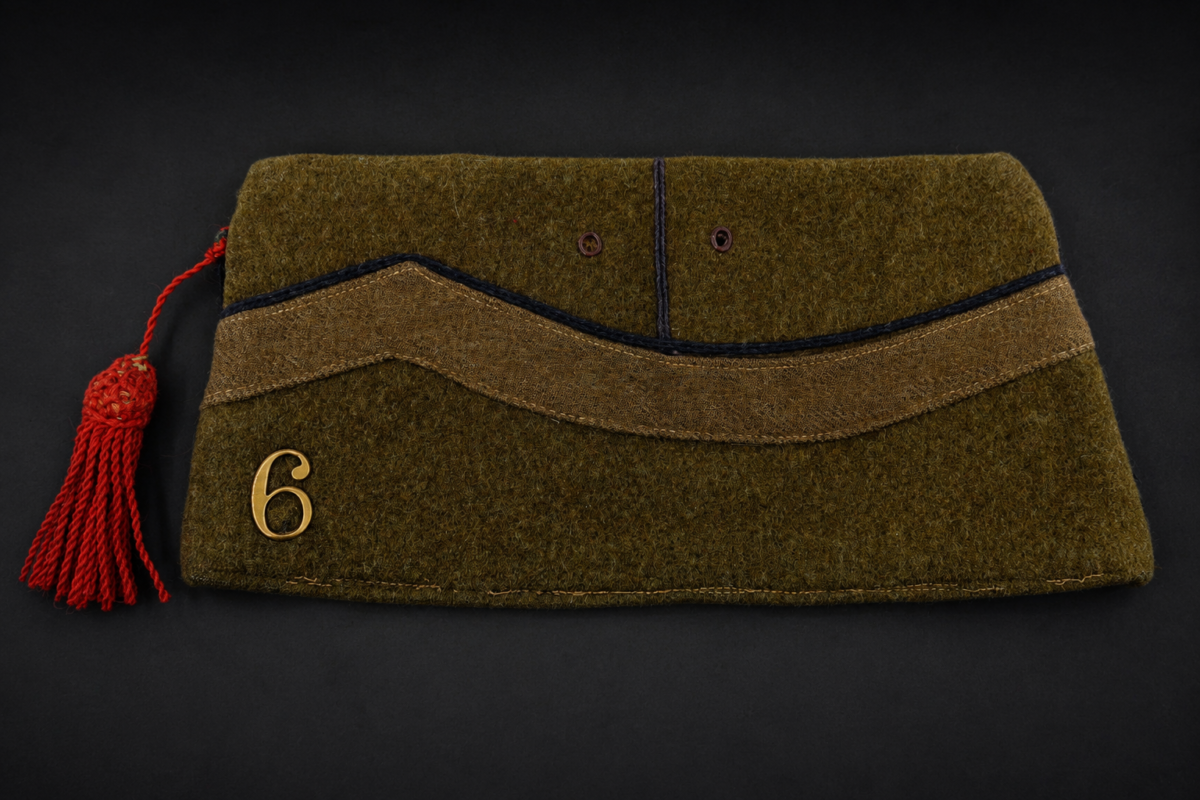
Original Belgian Army visor cap dating to the immediate post-liberation / early post-WWII period, likely manufactured shortly after the liberation of Belgium in 1944–45.
The cap is constructed in classic Belgian khaki wool with a brown leather chinstrap and retains its original Belgian national cockade together with the royal crown insignia to the front. The overall appearance strongly reflects transitional Belgian military headgear used during the rebuilding of the Belgian armed forces following occupation.
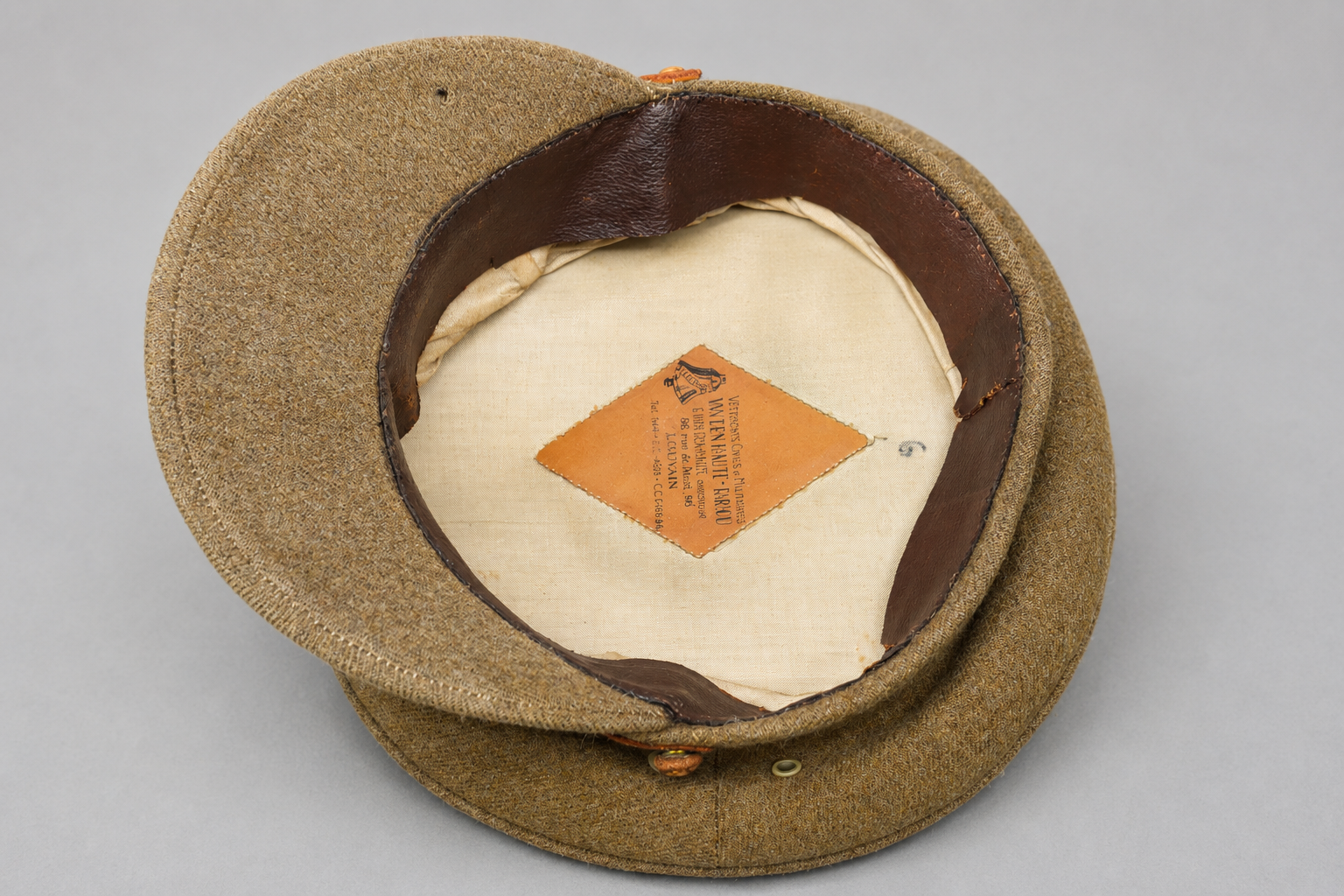
The interior retains its original diamond-shaped retailer/manufacturer label from:
“Vêtements Civils et Militaires Van Den Haute-Rabou” 86 Rue de Diest, Louvain (Leuven)
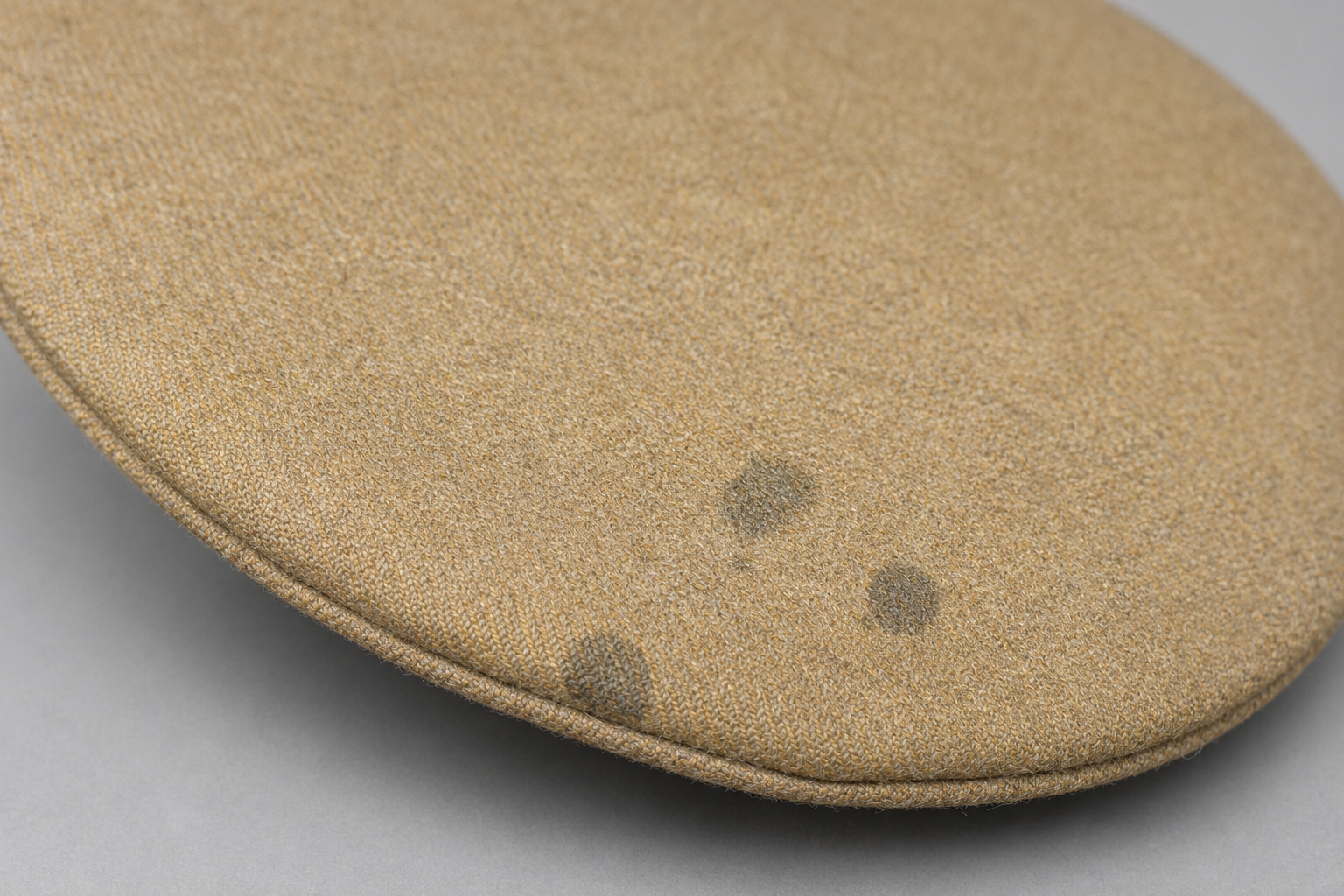
Condition remains very good overall, showing only light age and storage wear. The cap retains an attractive shape and displays very well.
A desirable and increasingly harder-to-find piece of early postwar Belgian military headgear, closely linked to the liberation and reconstruction period of the Belgian Army.
Wolfgang Historica is a trusted seller with years of experience and consistently positive reviews. We are always interested in purchasing collections or unique objects and also offer a professional consignment service. Buy with confidence.
Historical Description
Following the liberation of Belgium in late 1944, the Belgian armed forces underwent rapid reorganization and re-equipment. Many units were reformed using a mixture of:
British military influence and supply
Reused prewar Belgian traditions
Newly manufactured Belgian insignia and uniforms
Caps of this style represent the transitional period between:
The pre-1940 Belgian Army
The reconstituted postwar Belgian military establishment
The royal crown insignia symbolized the restored Belgian state and monarchy after years of German occupation. During this era, Belgian forces participated in:
Occupation duties in Germany
Reconstruction of national defense forces
Integration into early NATO structures in the late 1940s
These liberation and immediate postwar Belgian uniforms are becoming increasingly appreciated by collectors due to their historical connection to the rebuilding of Western Europe after WWII.