

Set Iron Cross 2nd Class Award & Wound Badge Award Document – Reserve-Polizei-Bataillon 2
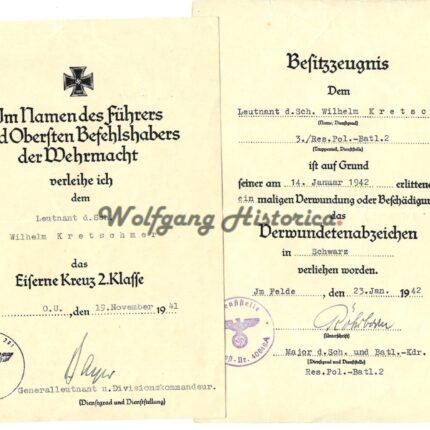
€200,00Set of an Award document for the Eisernes Kreuz 2. Klasse (Iron Cross 2nd Class) & Verwundetenabzeichen in Schwarz (Wound Badge in Black) of Leutnant der Schutzpolizei Wilhelm Kretschmer of the 3. Kompanie/ Reserve-Polizei-Bataillon 2 subordinated to the 281. Sicherungs-Division. He earned the Iron Cross 2nd Class in November 1941 and the Wound Badge in January 1942. Documents signed by Generalleutnant und Divisionskommandeur Friedrich Bayer (died in Soviet captivity) and Major der Schutzpolizei Röhrbein.
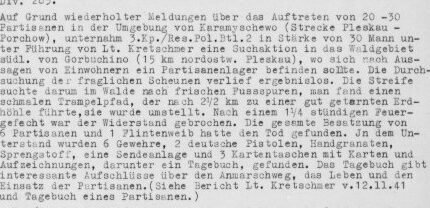
He likely earned it for actions on 12th November. See extra attachment!
Wound Badge in Black Award Document – Reserve-Polizei-Bataillon 131 (403. Sicherungs-Division)
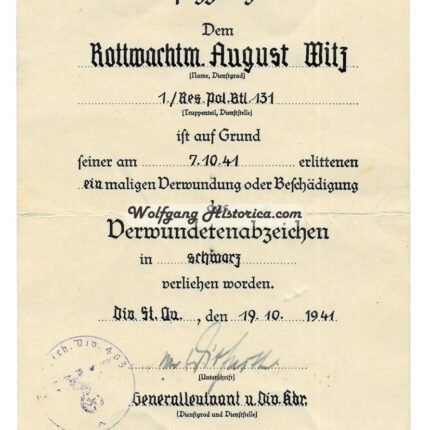
€85,00Award document for the Verwundetenabzeichen in Schwarz (Wound Badge in Black) of Rottwachtmeister August Witz of the 1. Kompanie/ Reserve-Polizei-Bataillon 131 subordinated to the 403. Sicherungs-Division. Earned in October 1941, Signed by Generalleutnant und Divisionskommandeur Wolfgang von Ditfurth (Hanged in 1946 by Russia for war crimes).
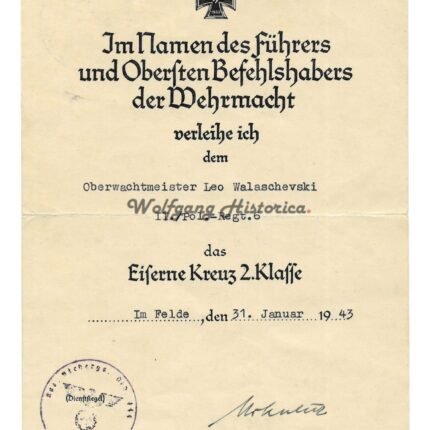
Iron Cross 2nd Class Award Document – Polizei-Regiment 6 (444. Sicherungs-Division)
€100,00Award document for the Eisernes Kreuz 2. Klasse (Iron Cross 2nd Class) of Oberwachtmeister Leo Walaschevski of the II. Bataillon/ Polizei-Regiment 6 subordinated to the 444. Sicherungs-Division. Earned in January 1943, Signed by Generalmajor und Divisionskommandeur Adalbert Mikulicz (DKIG).
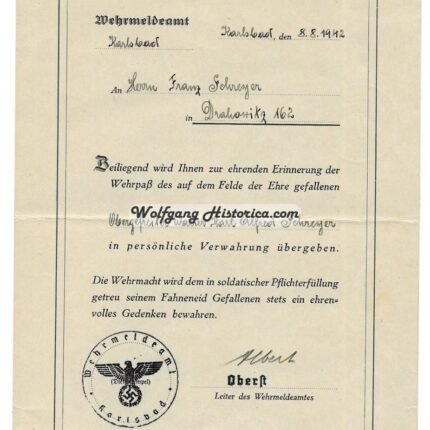
Erinnerungsstück for KIA Soldier of Karlsbad (Pionier-Bataillon 52)
€9,90Small document as Erinnerungsstück for a KIA Soldier of Karlsbad, Drakowitz. The soldier Obergefreiter Walter Karl Schreyer served with Pionier-Bataillon 52.
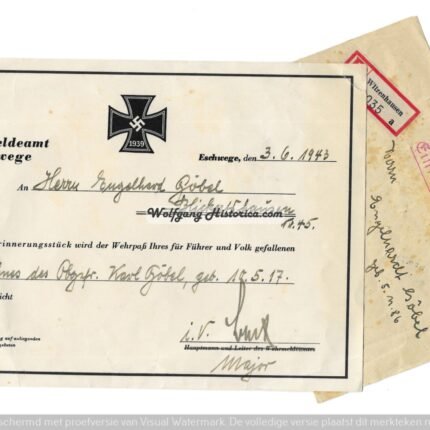
Erinnerungsstück for KIA Soldier of Eschwege
€10,00Small document as Erinnerungsstück for a KIA Soldier of Eschwege, Obergefreiter Karl Göbel?
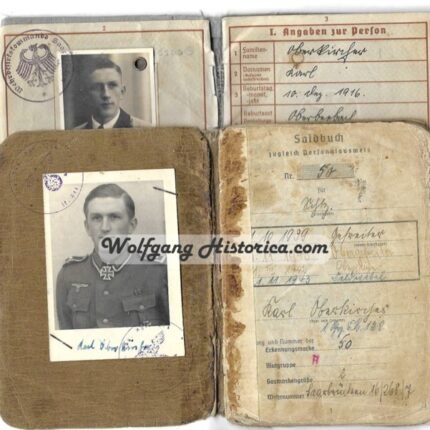
Soldbuch & Wehrpass of Ritterkreuzträger Karl Oberkircher – Gebirgs-Jäger-Regiment 218
€0,01Original Scarce Wehrpass and Soldbuch set of Ritterkreuzträger (Knight’s Cross Holder) Karl Oberkircher! Feldwebel Karl Oberkircher (10.12.1916 † 28.11.1976) earned the Ritterkreuz on October 12, 1943 as Oberjäger und Gruppenführer in the 6. Kompanie/ Gebirgs-Jäger-Regiment 218 of the 7. Gebirgs-Division. Both the Soldbuch and Wehrpass are nicely filled out and carried them both throughout the war (no zweitschrift etc.). A few loose pages and feldpostnumbers that were blackened. Awards entered in the Wehrpass: Schützenabzeichen f. M.G. 36, Infanterie-Sturmabzeichen, Eisernes Kreuz 2. Klasse,Verwundetenabzeichen in Schwarz, Eisernes Kreuz 1. Klasse, Ritterkreuz des Eisernen Kreuzes and Lapplandschild. All awards are also entered in the Soldbuch minus the Schützenabzeichen. Excellent ID Photo in the Soldbuch!
The following newspaper article describes why Oberkircher received the Knight’s Cross…
“Westmärker Receives the Knight’s Cross:
… Oberjäger Karl Oberkircher was born in Oberbexbach (Homburg District) on the 10.12.1916 as the son of miner and farmer Jakob Oberkircher. During a friendly attack in the high North he smashed a breach into an enemy bunker position whilst leading at the head of a Gebirgsjäger assault troop. Then, acting on his own initiative, he was able to roll up the position with just 3 other Gebirgsjäger. In the process he and his men eliminated 6 hostile battle positions and thereby enabled the rest of the Kompanie to capture the enemy trench network.”
This attack took place on the 08.08.1943, when the reinforced Gebirgs-Jäger-Regiment 218 attacked the so-called “Bunker Backbone”, which was located on a commanding piece of terrain. Oberkircher led an assault troop against the so-called “Sukkula” in the first stage of the attack. After overcoming the mine and wire barriers without loss, he and 4 troops attacked a bunker and knocked it out after a brief fight. At this point Oberkircher was supposed to have attacked the trench network towards the right, however he recognized that such a move would be foolish due to the fact that left-adjacent assault troop was pinned down by heavy opposing fire. He thus left part of his squad to cover the right flank and used the remainder to attack towards the left. He would be duly recognized for this feat.”
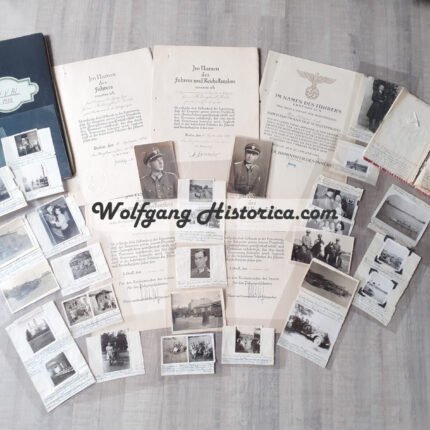
Warsaw Ghetto Uprising Set of Police Officer – Photos & Docs (Himmler Signature)
€0,01Authentic Scarce Set of Photographs, his Wife’s Diary and Promotional Documents of SS-Hauptsturmführer Hans Klingbeil-Zerbe. During the war he served with Reserve-Polizei-Bataillon 63 and I. Bataillon/ SS-Polizei-Regiment 17 als Kompaniechef (Company Commander). In March 1944, he was lastly promoted to SS-Hauptsturmführer (he was promoted to Hauptmann der Schutzpolizei before but afterwards when incorporated into the SS, he received the SS equivalent). His NSDAP-Nummer was 7.489.549 and SS-Nr. 476 907. The I. Bataillon/ SS-Polizei-Regiment 17 was active during the Warsaw Ghetto Uprising (April-May 1943) and Warsaw Uprising (August-October 1944)!
His award documents were handsigned by: Heinrich Himmler, Kurt Daluege (2x) and Joachim Petsch (2x). The set includes stunning photographs that are almost all well-documented with captions incl. names & places!
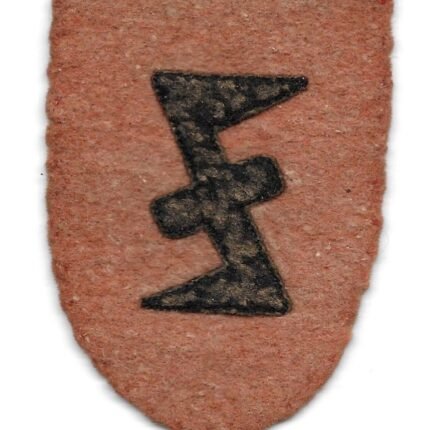
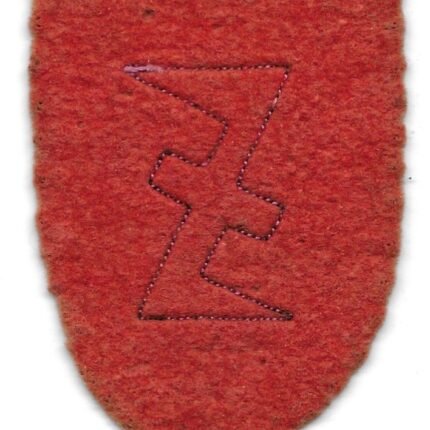
Armbadge Dietse Militie-Zwarte Brigade
€0,01Original Flemish armbadge for the Dietse Militie-Zwarte Brigade
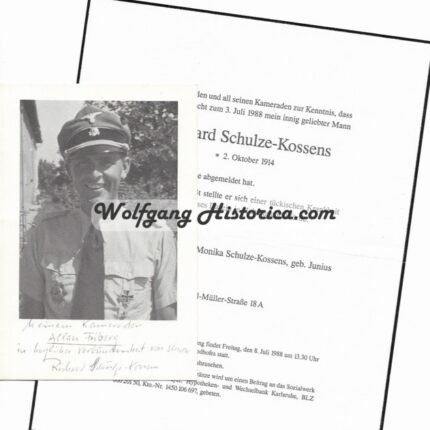
Richard Schulze-Kossens – “LSSAH”, Personal Adjutant of Adolf Hitler & “Hitlerjugend” (DKIG)
€0,01Original Scarce Postwar Signature on a Postwar Photocopy of Richard Schulze-Kossens. SS-Obersturmbannführer Richard Schulze-Kossens (02.10.1914 † 03.07.1988) earned the Deutsches Kreuz in Gold on December 26, 1941 as SS-Hauptsturmführer with the 2. Kompanie/ “Leibstandarte-SS Adolf Hitler”. He also later served as the Personal Adjutant of Adolf Hitler; the SS-Panzer-Grenadier-Regiment 25 of the 12. SS-Panzer-Division “Hitlerjugend” and as Kommandeur of 38. SS-Grenadier-Division “Nibelungen“. Good condition. Comes with original death letter.
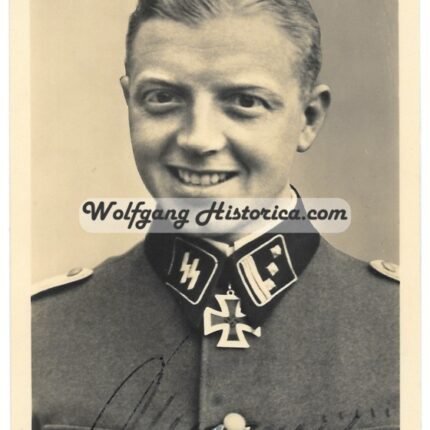
Fritz Klingenberg – SS-Kradschützen-Bataillon “Reich” (Captured Belgrade)
€0,01Original Scarce Wartime Signature on a Hoffmann Postcard of Fritz Klingenberg. SS-Standartenführer Fritz Klingenberg (17.12.1912 † 23.03.1945) earned the Ritterkreuz on May 14, 1941 as SS-Hauptsturmführer und Chef of the 2. Kompanie/ SS-Kradschützen-Bataillon of the SS-Division “Reich”. Good condition. Measuring: Postcardsize.
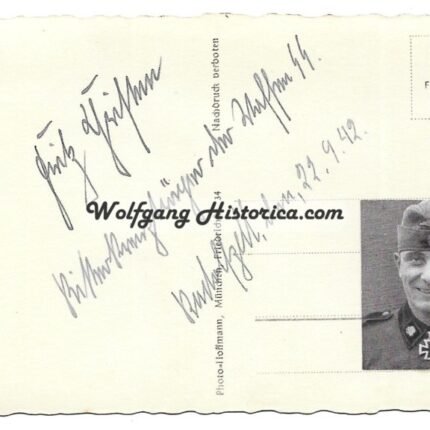
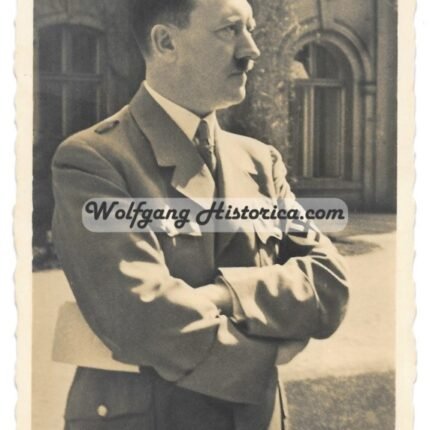
Fritz Christen – SS-Panzerjäger-Abteilung “Totenkopf”
€0,01Original Scarce Wartime Signature (on a Adolf Hitler Hoffmann Postcard) of Fritz Christen. SS-Oberscharführer Fritz Christen (29.06.1921 † 23.09.1995) earned the Ritterkreuz on October 20, 1941 as SS-Sturmmann und Richtschütze in the 2. Kompanie/ SS-Panzerjäger-Abteilung 3 of the 3. SS-Division “Totenkopf”. Good condition. Measuring: Postcardsize.

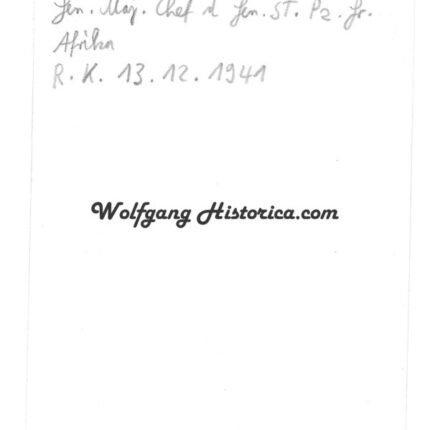
Alfred Gause – Panzergruppe “Afrika” (Stabschef of Erwin Rommel)
€225,00Original Wartime Signature on a Photograph of Alfred Gause. Generalleutnant Alfred Gause (14.02.1896 † 30.09.1967) earned the Ritterkreuz on December 13, 1941 as Generalmajor und Stabschef of the Generalstab d. Panzergruppe “Afrika”. Served as Rommel’s Chief of Staff. Good condition.
“During the Second World War he was a highly valued staff officer. Gause was initially sent to Africa with a large staff by Oberkommando des Heeres (OKH), the German Army High Command, to act as a liaison officer with the Italian high command, Comando Supremo. Gause had specific instructions not to place himself under the command of Erwin Rommel, but did so when Rommel told him categorically that the command of all troops in Africa were vested in him. This was not correct, but Gause acceded to Rommel’s authority, and served as his chief of staff. He proved invaluable to the famous desert commander, who was well known to direct his forces from the front and who frequently would lose touch with his command staff during operations. Gause spent two and a half years serving Rommel in the Afrika Korps. Though initially sent by OKH to keep an eye on the independent commander, they soon developed an excellent working relationship. In December, 1941 Gause was awarded the Knight’s Cross of the Iron Cross. In early May 1943 he was rotated into the officer reserve force, and thus was off the continent when the Axis forces in Africa surrendered. Gause rejoined Rommel in his postings in Italy and Northern France. In September 1944 he became Chief of Staff of the 6th Panzer Army, which he held through the end of November. In April he was assigned to Generalkommando II Armeekorps in Kurland (General staff of Army Corps, Kurland). Alfred Gause was captured by Soviet troops in the Courland Pocket in 1945 and was a prisoner of the Soviets until his release in 1955.” (Source: Wikipedia)
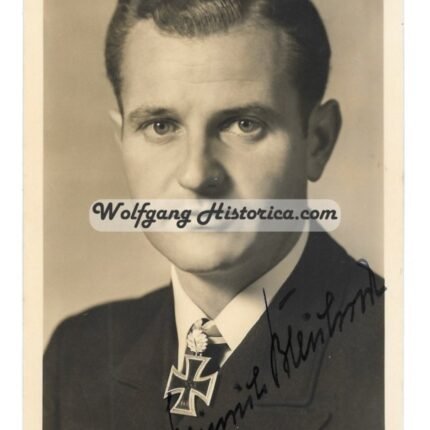
Heinrich Bleichrodt – Commander of “U-48” and “U-109” (Oakleaves)
€220,00Original Wartime Signature on a Hoffmann Postcard of Heinrich Bleichrodt. Korvettenkäpitan Heinrich Bleichrodt (21.10.1909 † 09.01.1977) earned the Ritterkreuz on October 24, 1940 as Kapitänleutnant und Kapitän of Uboot “U-48” and the Eichenlaub on September 23, 1942 as Kapitänleutnant und Kapitän of Uboot “U-109”. Creditted with sinking 25 ships. Good condition.
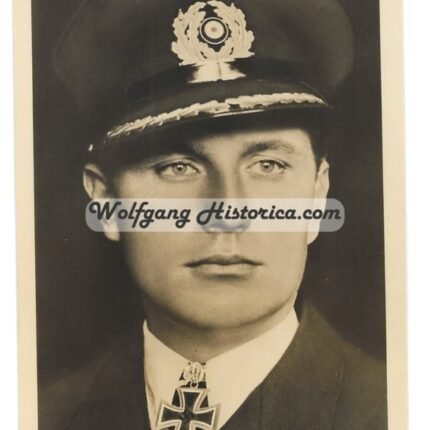
Klaus Scholtz – Commander of U-108 (Credited with sinking 25 ships, Oakleaves)
€0,01Original Scarce Wartime Signature on a Hoffmann Postcard of Klaus Scholtz. Fregattenkäpitan Klaus Scholtz (22.03.1908 † 01.05.1987) earned the Ritterkreuz on December 26, 1941 as Korvettenkapitän und Kapitän of Uboot “U-108” and the Eichenlaub on September 10, 1942 as Korvettenkapitän und Kapitän of Uboot “U-108”. Good condition.
Scholtz joined the Reichsmarine in 1927 as member of “Crew 1927” (the incoming class of 1927) and served in torpedo boats, before transferring to the U-boat arm (U-bootwaffe) in April 1940. From October 1940 he commanded U-108, sinking 25 ships on 8 patrols, for a total of 128,190 tons of Allied shipping, including the British armed merchant cruiser Rajputana. In October 1942 Scholtz formed and took command of 12th U-boat Flotilla based at Bordeaux, France.
In August 1944 the approach of Allied troops meant that the base had to be evacuated. The last U-boats escaped by sea, and Scholtz attempted to lead the remaining men (about 220) back to Germany on foot. They left Bordeaux on 26 August, but were captured on 11 September by American forces in Loire. Scholtz spent the next 18 months in US captivity. (Source: Wikipedia)
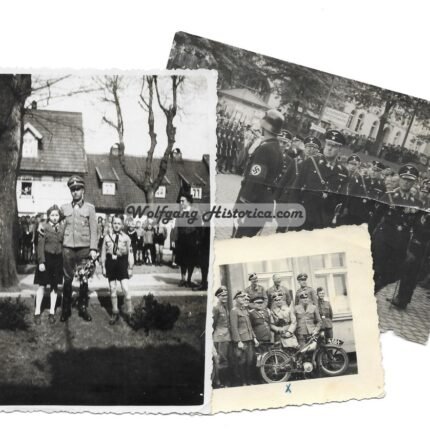
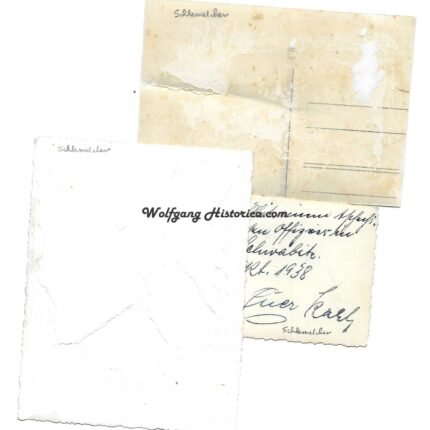
Karl Schlamelcher – SS-Artillerie-Regiment 5 “Wiking”
€0,01Original Wartime 3x Photographs of Karl Schlamelcher. SS-Standartenführer Karl Schlamelcher (21.09.1912 † 28.06.1948) earned the Ritterkreuz on March 1, 1942 as SS-Sturmbannführer und Kommandeur of the III. Abteilung/ SS-Artillerie-Regiment 5 of the 5. SS-Panzer-Division. Good condition.
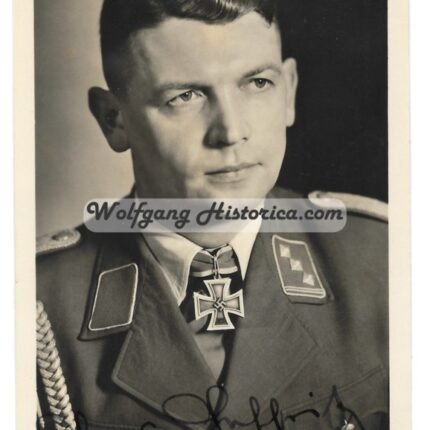
Hans Hoffritz – Infanterie-Regiment 268
€150,00Original Wartime Postcard with Wartime Signature of Hans Hoffritz. Hauptmann Hans Hoffritz (29.04.1914 † 24.10.1974) earned the Ritterkreuz on September 4, 1941 as Feldwebel und Zugführer in the 14. Kompanie/ Infanterie-Regiment 268 of the 113. Infanterie-Division. Good condition. Measuring: Postcardsize.
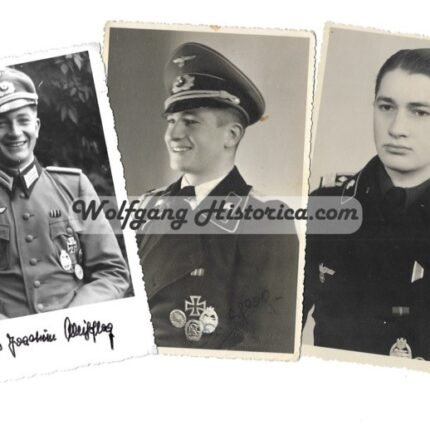
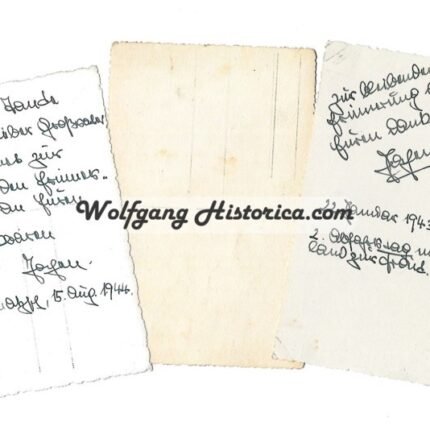
Hans-Joachim Weissflog – Panzer-Regiment 16 (116. Panzer-Division “Windhund”)
€0,01Original Wartime Portraits (3x) with Wartime Signature (2x on Reverse, 1x Front) and 1x Postwar Signature (on Front) of Hans-Joachim Weissflog. Oberleutnant Hans-Joachim Weissflog (24.02.1923 † 11.08.1995) earned the Deutsches Kreuz in Gold on April 28, 1944 as Leutnant in the Panzer-Regiment 16 and the Ritterkreuz on March 5, 1945 as Leutnant und Führer in the Panzer-Regiment 16 of the 116. Panzer-Division “Windhund”. Good condition. Measuring: Postcardsize.
Knight’s Cross: “On the evening of 26.12.1944, at 1830, Weißflog was in position in the woods one kilometre north of Verdenne. He was ordered to take the last 9 Panther tanks of his regiment to spearhead the breakout of the Panzergrenadier-Regiment 60 towards friendly lines. Their first obstacle was the fortified village of Marenne. They managed to crash through the village in a swift advance and exit to the other side without friendly losses. However they were halted here by AT gun fire and were ordered to bypass the enemy by moving through the woods south of Menil. This would mean they’d have to advance 1.5km parallel to the American lines.
Despite hostile enemy fire they managed to reach Menil, but here the two lead Panthers were knocked out. This left the Kampfgruppe in a very exposed position, being surrounded on all sides by the enemy. At this moment Weißflog ordered his remaining tanks to advance towards the enemy positions on their right. Though the area was mined they managed to bull through and crushed six American AT guns.
At this moment three US tanks appeared on the left, however Weißflog and his crew were able to knock them out. With this the way open was clear, and the Kampfgruppe managed to reach the safety of the woods while taking all their wounded with them.
Weißflog, who was wounded for the eleventh time during this attack, thus held the lion’s share of the Kampfgruppe’s salvation. Not only this but he had brought his total of destroyed tanks to 47. He was thus subsequently decorated with the Knight’s Cross.”
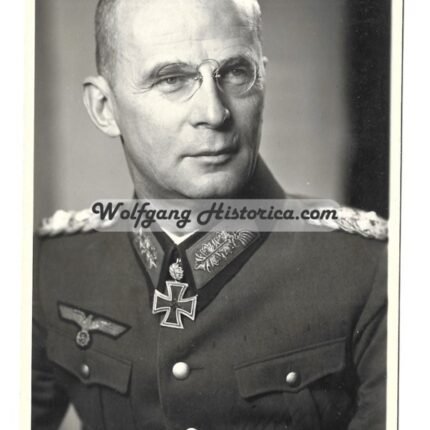
Hans-Georg Reinhardt – 4. Panzer-Division & 3. Panzer-Armee (Swords)
€200,00Original Wartime Portrait with Wartime Signature (largely faded, right corner) of Hans-Georg Reinhardt. Generaloberst Hans-Georg Reinhardt (01.03.1887 † 23.11.1963) earned the Ritterkreuz on October 27, 1939 as Generalleutnant und Kommandeur of the 4. Panzer-Division, the Eichenlaub on February 17, 1942 as General der Panzertruppe und Kommandeur of 3. Panzergruppe and the Schwertern on May 26, 1944 as Generaloberst und Kommandeur of of the 3. Panzer-Armee. Good condition. Measuring: Postcardsize.
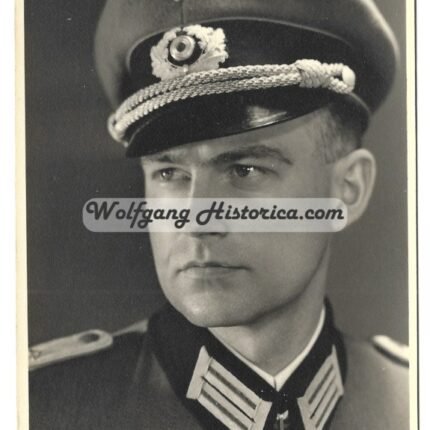
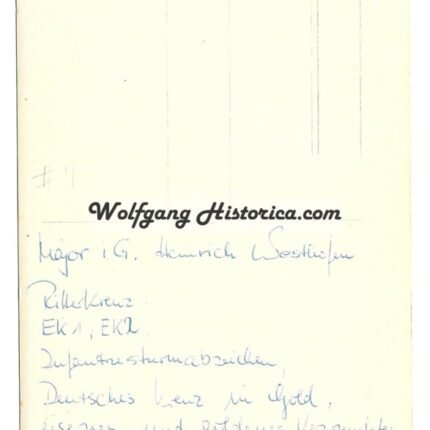
Heinrich Westhofen – Schützen-Regiment 73
€100,00Original Wartime Portrait of Major Heinrich Westhofen (01.03.1914 † 05.12.1959), who earned the Ritterkreuz on March 1, 1942 as Oberleutnant und Chef of the 3. Kompanie/ Schützen-Regiment 73 of the 19. Panzer-Division. Good condition. Measuring: Postcardsize.
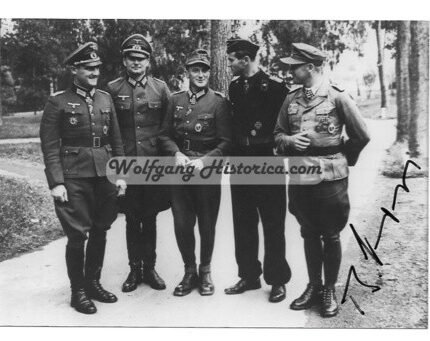
Bruno Kahl – Panzer-Regiment 21 & Panzerjäger-Regiment 656 (Oakleaves)
€0,01Original Postwar Signature on a Postwar Photo of Bruno Kahl. Oberstleutnant Bruno Kahl (23.11.1914 † 27.02.1999) earned the Ritterkreuz on February 8, 1943 as Hauptmann und Kommandeur of the III. Abteilung/ Panzer-Regiment 21 of the 20. Panzer-Division and the Eichenlaub on August 8, 1943 as Major und Kommandeur of the III. Abteilung/ Panzerjäger-Regiment 656. Good condition. Measuring: Postcardsize.

Karl-Heinz Boska – SS-Panzer-Regiment 2 “Das Reich”
€50,00Original Postwar Signature on a Postwar Photo of Karl-Heinz Boska. Karl-Heinz Boska (18.10.1920 † 22.10.2004) earned the Ritterkreuz on December 16, 1943 as SS-Obersturmführer und Adjutant of the II. Abteilung/ SS-Panzer-Regiment 2 of the 2. SS-Panzer-Division “Das Reich”. Good condition.
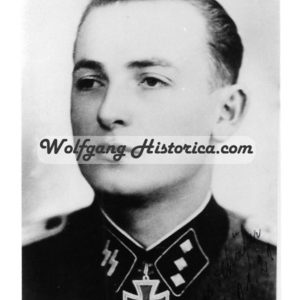
Oskar Schäfer – schwere SS-Panzer-Abteilung 503 (Battle of Berlin, King Tiger!)
€0,01Original Postwar Signature on a Postwar Photo of Oskar Schäfer. SS-Untersturmführer Oskar Schäfer (16.01.1921 † 22.11.2011) earned the Ritterkreuz on April 29, 1945 as SS-Untersturmführer und Führer of the 3. Kompanie/ schwere SS-Panzer-Abteilung 503. Good condition.
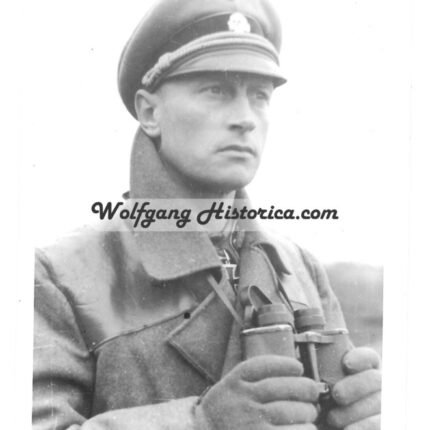
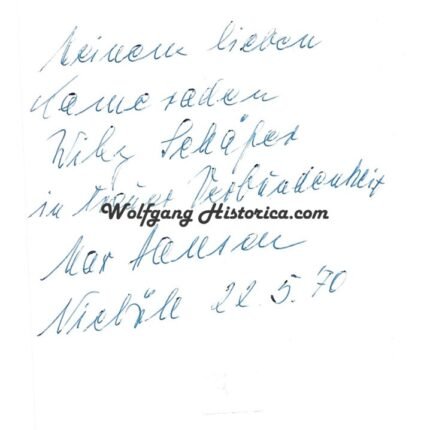
Max Hansen – SS-Panzergrenadier-Regiment 1 “LSSAH” (EL+NKIG)
€150,00Original Postwar Signature on a Postwar Photo of Max Hansen. SS-Standartenführer Max Hansen (31.07.1908 † 07.03.1990) earned the Ritterkreuz on March 18, 1943 as SS-Sturmbannführer und Kommandeur of the II. Bataillon/ SS-Panzergrenadier-Regiment 1, the Eichenlaub on April 17, 1945 as SS-Standartenführer und Kommandeur of the SS-Panzergrenadier-Regiment 1 of the 1. SS-Panzer-Division “LSSAH“ and the Nahkampfspange in Gold on March 12, 1945. Good condition. Measuring: Postcardsize. Dedicated to former comrade.
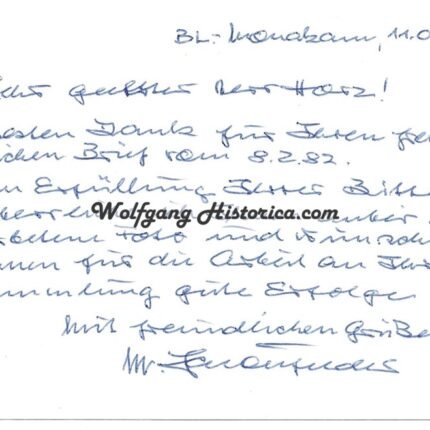
Manfred Schönfelder – 5. SS-Panzer-Division “Wiking”
€35,00Original Postwar Signature on a Postwar Paper of Manfred Schönfelder. SS-Obersturmbannführer Manfred Schönfelder (18.03.1912 † 04.03.1983) earned the Ritterkreuz on February 23, 1944 as SS-Obersturmbannführer und Ia of the 5. SS-Panzer-Division “Wiking”. Good condition. Measuring: Postcardsize.
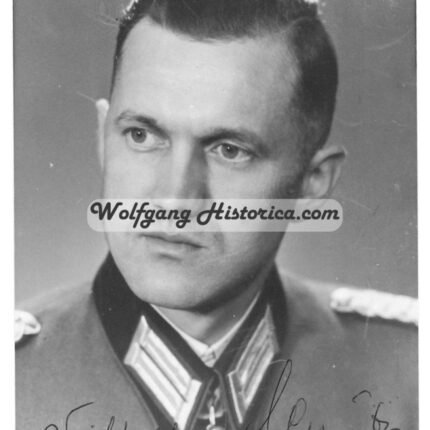
Wilhelm Schlüter – SS-Artillerie-Regiment 54 “Nederland”
€45,00Original Postwar Signature on a Postwar Photo of Wilhelm Schlüter. SS-Sturmbannführer Wilhelm Schlüter (19.10.1915 † 17.11.1991) earned the Ritterkreuz on August 23, 1944 as SS-Sturmbannführer und Major der Schutzpolizei und Führer of the SS-Artillerie-Regiment 54 of the 23. SS-Freiwilligen-Panzer-Grenadier-Division “Nederland”. Good condition. Measuring: Postcardsize.
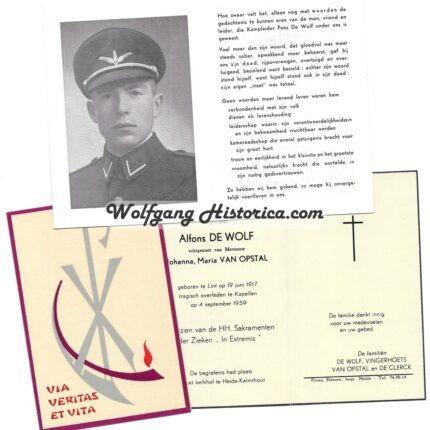
Alfons de Wolf – VAVV – Death Cards (Killed in Accident after the war)
€35,003x Original Death Cards of Alfons de Wolf, who was serving with the VAVV in Flanders. He was killed in an accident after the war. Interesting death card with the VAVV logo and as well a portrait photo of him in VAVV uniform.
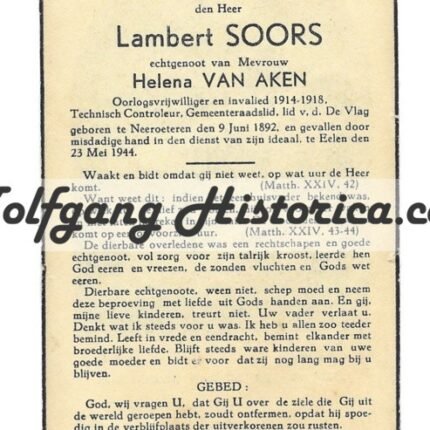
Death Card of Lambert Soors – DeVlag – Murdered in Flanders in May 1944
€35,00Original Death Card of Lambert Soors, who was serving with the DeVlag in Flanders. He was shot and killed in May 1944 in Neeroeteren, Maaseik. He had a son serving on the Eastern Front. More information is available.
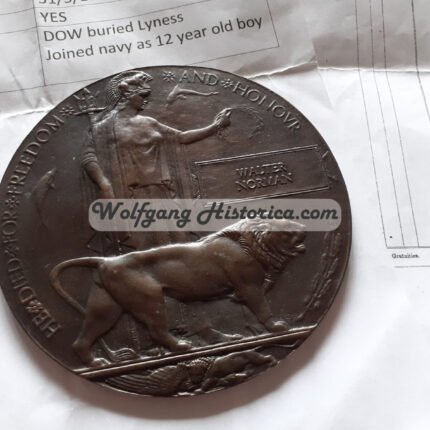
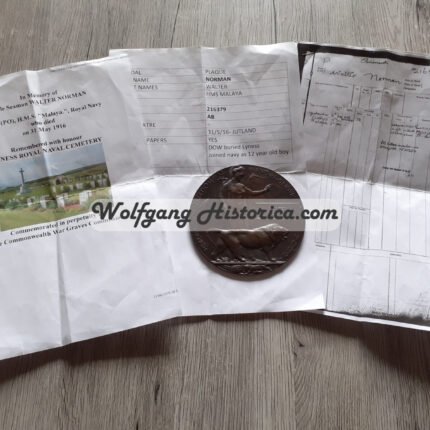
Memorial Plaque (“Death Penny”) Sailor KIA during Battle of Jutland
€0,01Original World War I “Death Penny” (Memorial Plaque) for a sailor (Walter Norman) killed during the Battle of Jutland.

Günther-Eberhardt Wisliceny – SS-Panzergrenadier-Regiment 3 “Deutschland” (Swords + NKIG)
€0,01Original Scarce Postwar Signature on a Postwar Photo of Günther-Eberhardt Wisliceny. SS-Obersturmbannführer Günther-Eberhardt Wisliceny (05.09.1912 † 25.08.1985) earned the Ritterkreuz on July 30, 1943 as SS-Sturmbannführer und Kommandeur of the III. Bataillon/ SS-Panzer-Grenadier-Regiment 3 “Deutschland”, the Eichenlaub on December 26, 1944 as SS-Obersturmbannführer und Kommandeur of the SS-Panzer-Grenadier-Regiment 3 “Deutschland”, the Nahkampfspange in Gold on March 31, 1945 with the SS-Panzer-Grenadier-Regiment 3 “Deutschland” and the Schwertern on May 6, 1945 as SS-Obersturmbannführer und Kommandeur of the SS-Panzer-Grenadier-Regiment 3 “Deutschland” of the 2. SS-Panzer-Division “Das Reich“. Good condition.
From Military Wikia: Wiscliceny enlisted in the SS-Stabswache Berlin in 1933, he was posted in 1938 to the Der Führer Regiment, seeing his first action as a company commander in the Balkans in spring 1941. He spent 1941 to 1943 on the Eastern Front and 1944 in France, fighting in all the battles of the senior SS divisions, and being wounded four times. He was awarded the Knight’s Cross of the Iron Cross for leadership of a battalion during the battles for the Kursk salient in July 1943. He received the Oak Leaves on 27 December 1944, at the Normandy invasion front. The Swords were awarded for his actions in the Ardennes, Hungary and Austria. In 1945 he was handed over by the US Army to the French during investigations into his division’s war crimes at Tulle and Oradour-sur-Glane, but was released in 1951.
His brother Hauptsturmführer Dieter Wisliceny served in the staff of Obersturmbannfuhrer Adolf Eichmann. He was involved in the deportation of the Hungarian Jews in 1944. He was tried for war crimes and executed in Bratislava on 4 May 1948.

Otto Ernst Remer – Grenadier-Regiment “Großdeutschland” (EL)
€0,01Original Postwar Signature on a Postwar Photo of Otto Ernst Remer. Generalmajor Otto Ernst Remer (18.08.1912 † 04.10.1997) earned the Ritterkreuz on May 18, 1943 as Major und Kommandeur of I. Bataillon/ Grenadier-Regiment “Grossdeutschland” and the Eichenlaub on November 12, 1943 as Major und Kommandeur of I. Bataillon/ Grenadier-Regiment “Grossdeutschland”. He played a major role in stopping the 20 July plot in 1944 against Adolf Hitler. He co-founded the Socialist Reich Party in West Germany in the 1950s, and is considered an influential figure in post-war neo-Fascist politics in Germany. Good condition. Postcardsize.
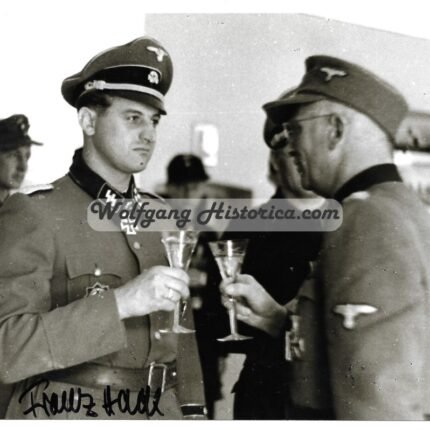
Franz Hack – SS-Panzer-Grenadier-Regiment 10 “Westland” (OL+NKIG)
€0,01Original Postwar Signature on a Postwar Photo of Franz Hack. SS-Obersturmbannführer Franz Hack (03.02.1915 † 09.06.1997) earned the Deutsches Kreuz in Gold on January 8, 1943 as SS-Hauptsturmführer und Kommandeur of III. Bataillon/ SS-Panzer-Grenadier-Regiment “Germania”, the Ritterkreuz on May 14, 1944 as SS-Sturmbannführer und Kommandeur of the II. Bataillon/ SS-Panzer-Grenadier-Regiment “Germania”, the Eichenlaub on April 20, 1945 as SS-Obersturmbannführer und Kommandeur of the SS-Panzer-Grenadier-Regiment 10 “Westland” of the 5. SS-Panzer-Division “Wiking“ and the Nahkampfspange in Gold on May 1, 1945 with the SS-Panzer-Grenadier-Regiment 10 “Westland”. Good condition. Larger size.
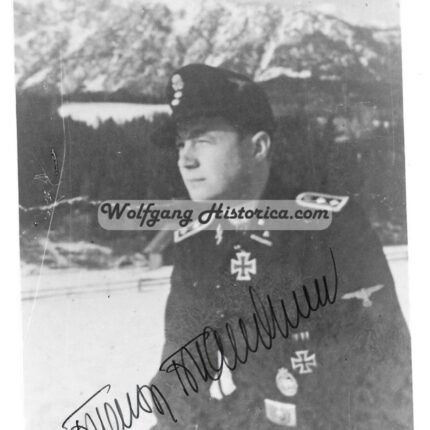
Franz Frauscher – SS-Panzer-Regiment 2 “Das Reich”
€60,00Original Postwar Signature on a Postwar Photo of Franz Frauscher. SS-Hauptscharführer Franz Frauscher (26.02.1920 † 27.06.2009) earned the Ritterkreuz on December 31, 1944 as SS-Hauptscharführer und Zugführer in the 4. Kompanie/ SS-Panzer-Regiment 2 of the 2. SS-Panzer-Division “Das Reich”. Good condition. Measuring: Postcardsize.
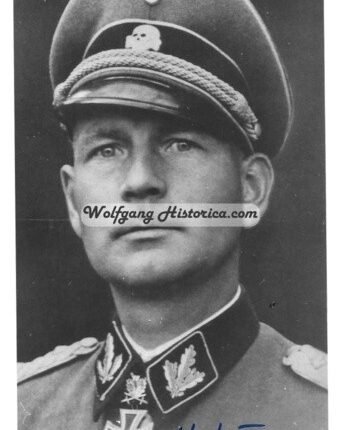
Otto Kumm – Regiment “Der Führer” & Division “Prinz Eugen” (Swords)
€75,00Original Postwar Signature on a Postwar Photo of Otto Kumm. SS-Brigadeführer Otto Kumm (01.10.1909 † 23.03.2004) earned the Ritterkreuz on February 16, 1942 as SS-Obersturmbannführer und Kommandeur of the SS-Infanterie-Regiment “Der Führer”, the Eichenlaub on April 6, 1943 as SS-Obersturmbannführer und Kommandeur of the SS-Panzer-Grenadier-Regiment 4 “Der Führer” of the 2. SS-Panzer-Division “Das Reich“ and the Schwertern on March 17, 1945 as SS-Brigadeführer und Kommandeur of 7. SS-Freiwilligen-Gebirgs-Division “Prinz Eugen”. Good condition. Measuring: Larger as Postcard.
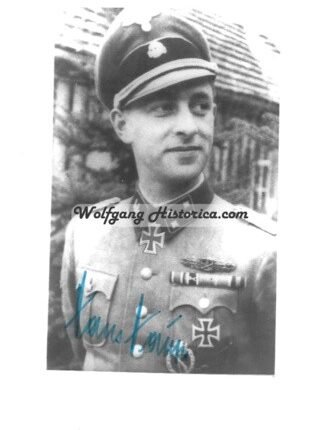
Hans Hauser – SS-Panzer-Grenadier-Regiment 4 “Der Führer”
€45,00Original Postwar Signature on a Postwar Photo of Hans Hauser. SS-Sturmbannführer Hans Hauser (31.01.1916 † 21.11.2001) earned the Ritterkreuz on May 6, 1945 as SS-Sturmbannführer und Kommandeur of the I. Bataillon/ SS-Panzer-Grenadier-Regiment 4 “Der Führer” of the 2. SS-Panzer-Division “Das Reich”. Good condition.
Knight’s Cross: “In March 1945, near the Austrian capital city of Vienna, Sturmbannführer der Waffen-SS Hans Hauser led a small but highly experienced Kampfgruppe into defensive positions in the village of Münchedorf. Their mission was to defend the German homeland and slow the advancing Soviets moving west. Unaware of Hauser’s defenses, 3 unsupported Soviet T-34 tanks approached the German positions. At the foot of the bridge that led into the village, the lead tank was destroyed and made the bridge impassable. The two remaining tanks withdrew under a deluge of small arms fire.
After strengthening their positions, the Kampfgruppe was attacked a second time shortly before midnight. Artillery barrages and Katyusha rockets pulverized the village and defensive positions that killed Hauser’s adjutant and orderly officer. The Soviets launched their second attack, in which another T-34 was destroyed. News came that Hauser’s Kampfgruppe was holding a gap that separated the two SS Regiments Der Führer and Deutschland, both belonging to the 2. SS-Panzer-Division Das Reich. Hauser’s Kampfgruppe was ordered to hold the gap for 3-4 days to prevent a Soviet penetration and allow the Division to regroup.
Knowing the Soviets would attempt to exploit the gap, the defensive positions were reinforced and a third Soviet attack by T-34 tanks successfully thwarted. After repeated but futile Soviet attacks that drained the strength of the German defenders, the Soviets finally managed to gain a foothold on the village of Münchedorf. Completely outnumbered, Hauser’s Kampfgruppe had lost half the village by the fourth day. Having provided the division the time needed to regroup, Hauser was ordered to disengage and withdraw to friendly lines. Reporting to the Der Führer regimental commander, Obersturmbannführer der Waffen-SS Otto Weidinger, Hauser was placed in command of I. Bataillon after his predecessor had been killed in action. Weidinger would subsequently Hauser for the Knight’s Cross in recognition for his gallant stand at Münchedorf.”
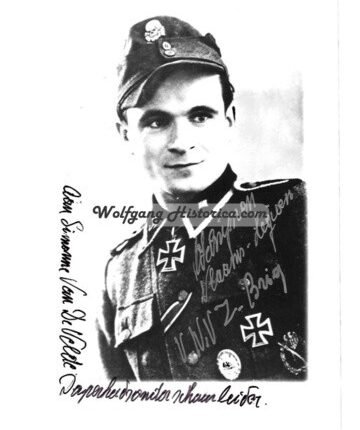
Remi Schrijnen – 6. SS-Freiwilligen-Sturmbrigade “Langemarck”
€35,00Original Postwar Signature on a Postwar Photo of Remi Schrijnen. SS-Unterscharführer Remi Schrijnen (24.12.1921 † 27.07.2006) earned the Ritterkreuz on September 21, 1944 as SS-Sturmmann und Richtschütze in the 6. Kompanie/ 6. SS-Freiwilligen-Sturmbrigade “Langemarck”. Good condition. Signed on front and back.
Knight’s Cross: “On 29.07.1944 Schrijnen was serving as the crew of a Pak 40 in the middle of a major Soviet tank/infantry attack. His position was hit by a heavy artillery barrage, with several rounds impacting just 10 metres behind the gun. Schrijnen was hit by several shell splinters, but the four other crewman all became casualties. Under the weight of the Soviet attack the order was given to withdraw. Schrijnen however disobeyed the order and remained behind to cover his comrades. Despite being wounded, exhausted and vastly outnumbered he was still able to knock out 4 T-34s and 3 IS-2s before his gun was destroyed. Later, counterattacking German forces found Schrijnen unconscious on the battlefield. He would receive the Knight’s Cross for his actions this day as well as for prior successes as an anti-tank gunner.”
Remi Schrijnen – 6. SS-Freiwilligen-Sturmbrigade “Langemarck”
€0,01Original Postwar Signature on a Postwar Photo of Remi Schrijnen. SS-Unterscharführer Remi Schrijnen (24.12.1921 † 27.07.2006) earned the Ritterkreuz on September 21, 1944 as SS-Sturmmann und Richtschütze in the 6. Kompanie/ 6. SS-Freiwilligen-Sturmbrigade “Langemarck”. Good condition. Signed on front and back.
Knight’s Cross: “On 29.07.1944 Schrijnen was serving as the crew of a Pak 40 in the middle of a major Soviet tank/infantry attack. His position was hit by a heavy artillery barrage, with several rounds impacting just 10 metres behind the gun. Schrijnen was hit by several shell splinters, but the four other crewman all became casualties. Under the weight of the Soviet attack the order was given to withdraw. Schrijnen however disobeyed the order and remained behind to cover his comrades. Despite being wounded, exhausted and vastly outnumbered he was still able to knock out 4 T-34s and 3 IS-2s before his gun was destroyed. Later, counterattacking German forces found Schrijnen unconscious on the battlefield. He would receive the Knight’s Cross for his actions this day as well as for prior successes as an anti-tank gunner.”

Alois Schnaubelt – SS-Flak-Abteilung 5 “Wiking”
€35,00Original Postwar Signature on a Postwar Photo of Alois Schnaubelt. SS-Oberscharführer Alois Schnaubelt (16.01.1921-11.12.2012) earned the Ritterkreuz on November 16, 1944, as SS-Unterscharführer und Geschutzführer of a Flak 88 in the 3. Batterie/ SS-Flak-Abteilung 5 “Wiking” of the 5. SS-Panzer-Division “Wiking”. Credited with the destruction of 9 T-34 tanks within 25 minutes. Good condition.
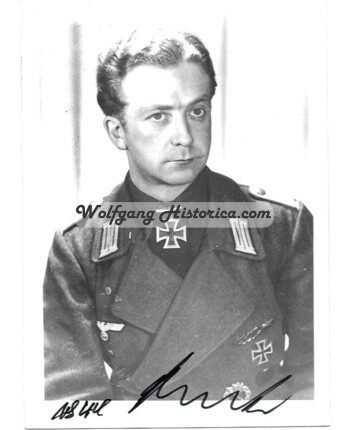
Wolfram Kertz – Kampfgruppe “Bruhn” (Arnhem)
€0,01Original Postwar Signature on a Postwar Photo of Wolfram Kertz. Major Wolfram Kertz (29.07.1916 † 05.05.2009) earned the Ritterkreuz on October 4, 1944 as Oberleutnant und Führer of the 8. Kompanie/ Kampfgruppe “Bruhn” of the II. SS. Panzerkorps. Good condition. Measuring: Postcardsize.
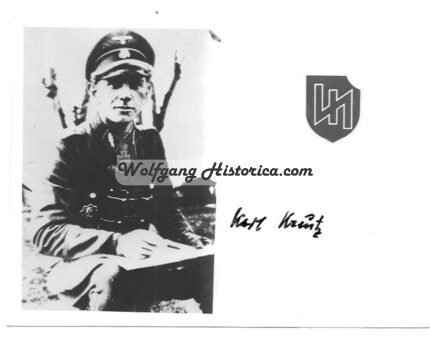
Karl Kreutz – SS-Panzer-Artillerie-Regiment 2 “Das Reich” (Oakleaves)
€45,00Original Postwar Signature on a Postwar Photo of Karl Kreutz. SS-Standartenführer Karl Kreutz (20.09.1909 † 27.07.1997) earned the Ritterkreuz on August 27, 1944 as SS-Standartenführer und Kommandeur of the SS-Panzer-Artillerie-Regiment 2 “Das Reich” and the Eichenlaub on May 6, 1945 as SS-Standartenführer und Kommandeur of the SS-Panzer-Artillerie-Regiment 2 “Das Reich” of the 2. SS-Panzer-Division “Das Reich”. Good condition. Measuring: Postcardsize.
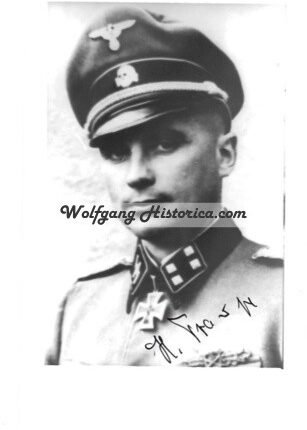
Hans Traupe – SS-Polizei-Grenadier-Regiment 3
€0,01Original Postwar Signature on a Postwar Photo of Hans Traupe. SS-Obersturmbannführer Hans Traupe (04.05.1913 † 23.06.2004) earned the Ritterkreuz on February 23, 1944 as SS-Sturmbannführer und Kommandeur of the I. Bataillon/ SS-Polizei-Grenadier-Regiment 3 of the 4. SS-Polizei-Panzergrenadier-Division. Good condition. Measuring: Postcardsize
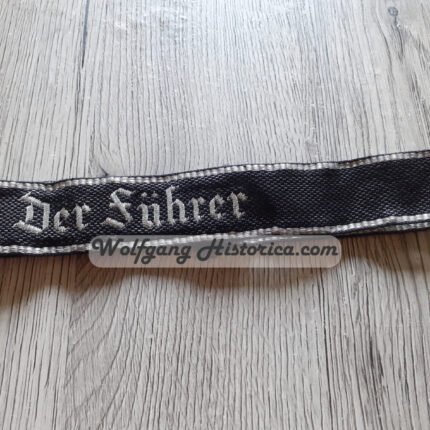
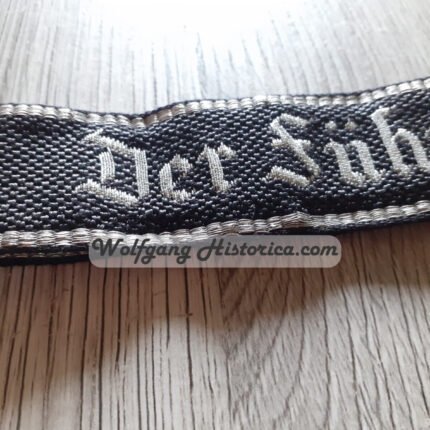
“Der Führer” Flatwire Officers Cufftitle
€0,01Stunning, original Flatwire Officer Cufftitle of the SS-Regiment “Der Führer”. Embroidered Gothic script “Der Führer” in shiny silvery wire threads. Approx. Full Length: 42,5 cm.
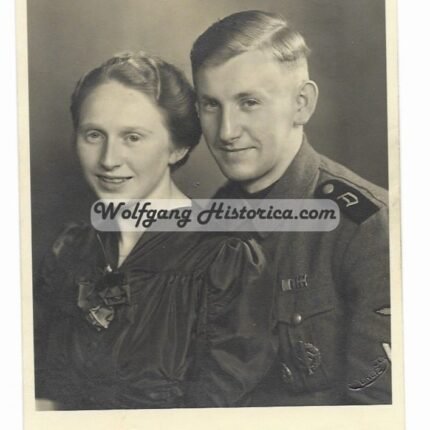
Waffen-SS SS-Sturmmann with “Deutschland” Shoulderboards, Awards & Ribbon Bar
€0,01Beautiful Waffen-SS Portrait of a couple on their engagement, as written on the backside in December 1939, their names are written on the backside: Elfriede Flach (21 1/2 years old) and Walter Meyer (23 years old). Without further research it might be difficult to confirm however I’ve found on Ancestry an SS-Sturmmann Walter Meyer, who belonged to the 11. Kompanie/ SS-Regiment “Deutschland” and was Killed in Action on 16.05.1940 in Zuid-Beveland (Netherlands). He was born 5 April 1917, which makes him 23 at the time of his death in 1940. There’s a big chance it could be him, however it will be difficult to proof.
Next to the “Deutschland” shoulder boards, he also wears the SA Sportabzeichen and DRL Sportabzeichen (as far I can see). He also seems to wear the ribbon bar for the Austrian medal, Sudetenland medal and one Sudetenland +Prague Castle Bar! First time I see it! Postcardsize.

SS “Hitlerjugend” Panzer Studioportrait with Infanterie-Sturmabzeichen
€200,00Original Scarce Wartime Studioportrait of a SS-Unterscharführer wearing the black Panzer wrapper with a “Hitlerjugend” cufftitle. Taken likely after the Normandy Campaign. He’s wearing the Infanterie-Sturmabzeichen (as the “LAH” Panzer Regiment was largely created from the men of the LSSAH Infantry units – so likely he came from the LSSAH), EKII ribbon and also a ribbon bar. Postcardsize.
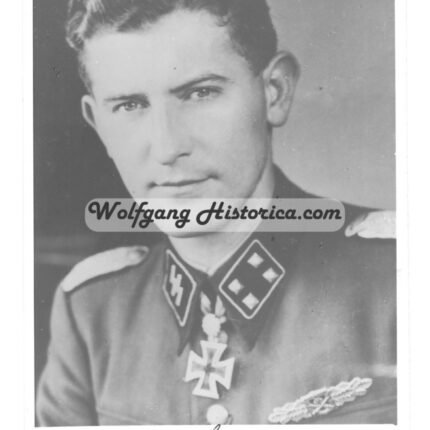
Walter Schmidt – SS-Panzergrenadier-Regiment “Westland” (Oakleaves)
€55,00Original Postwar Signature on a Postwar Photo of Walter Schmidt. SS-Obersturmbannführer Walter Schmidt (28.01.1917 † 28.07.2000) earned the Ritterkreuz on August 4, 1943 as SS-Hauptsturmführer und Kommandeur of the III. Bataillon/ SS-Panzergrenadier-Regiment “Westland” and the Eichenlaub on May 14, 1944 as SS-Hauptsturmführer und und Kommandeur of the III. Bataillon/ SS-Panzergrenadier-Regiment “Westland” of the 5. SS-Panzer-Division “Wiking”. Good condition. Measuring: Postcardsize.
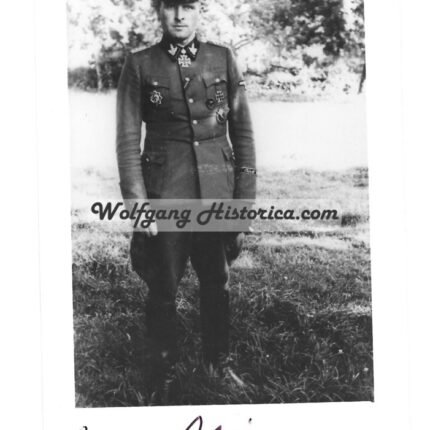
Teddy Wisch – 1. SS-Panzer-Division “Adolf Hitler” (Swords)
€90,00Original Postwar Signature on a Postwar Photo of Theodor “Teddy” Wisch. SS-Brigadeführer und Generalmajor der Waffen-SS Theodor “Teddy” Wisch (13.12.1907 † 11.01.1995) earned the Ritterkreuz on September 15, 1941 as SS-Sturmbannführer und Kommandeur of the II. Bataillon/ “LSSAH”, the Eichenlaub on February 12, 1944 as SS-Brigadeführer und Kommandeur of the 1. SS-Panzer-Division “LSSAH” and the Schwertern on August 30, 1944 as SS-Brigadeführer und Generalmajor der Waffen-SS of 1. SS-Panzer-Division “LSSAH”. Good condition. Measuring: Postcardsize.

Franz-Josef Krombholz – SS-Freiwilligen-Gebirgsjäger-Regiment 14 “Skanderbeg”
€55,00Original Postwar Signature on a Postwar Photo of Franz-Josef Krombholz. SS-Hauptsturmführer Franz-Josef Krombholz (13.08.1920 † 13.12.2000) earned the Deutsches Kreuz in Gold on April 24, 1944 with the SS-Freiwilligen-Gebirgsjäger-Regiment 14 “Skanderbeg” and the Ritterkreuz on March 28, 1945 as SS-Hauptsturmführer und Kommandeur of the III. Bataillon/ SS-Freiwilligen-Gebirgsjäger-Regiment 14 “Skanderbeg” of the 7. SS-Freiwilligen-Gebirgs-Division “Prinz Eugen“. Good condition. Measuring: Postcardsize.
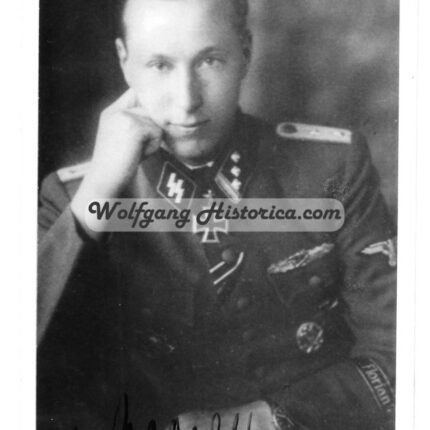
Joachim Boosfeld – 8. SS-Kavallerie-Division “Florian Geyer” (KC + NKIG)
€50,00Original Postwar Signature on a Postwar Photo of Joachim Boosfeld. SS-Hauptsturmführer Joachim Boosfeld (01.06.1922 † 19.06.2015) earned the Deutsches Kreuz in Gold on December 30, 1944, the Nahkampfspange in Gold on February 21, 1945 and the Ritterkreuz on February 21, 1945 as SS-Obersturmführer und Chef of 4. Schwadron/ SS-Kavallerie-Regiment 16 of the 8. SS-Kavallerie-Division “Florian Geyer”. Good condition. Measuring: Postcardsize.
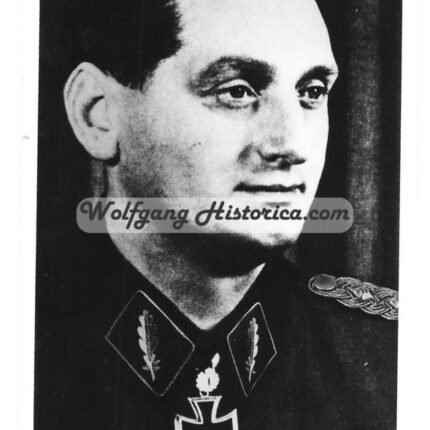
Albert Frey – SS-Panzer-Grenadier-Regiment 1 “LSSAH” (Oakleaves)
€0,01Original Postwar Signature on a Postwar Photo of Albert Frey. SS-Standartenführer Albert Frey (16.02.1913 † 01.09.2003) earned the Deutsches Kreuz in Gold on November 17, 1941 with SS-Infanterie-Regiment “Leibstandarte-SS Adolf Hitler”, the Ritterkreuz on March 3, 1943 as SS-Sturmbannführer und Kommandeur of the I. Bataillon/ SS-Panzer-Grenadier-Regiment 1 “LSSAH” and the Eichenlaub on December 29, 1943 as SS-Obersturmbannführer und Kommandeur of the SS-Panzer-Grenadier-Regiment 1 of the 1. SS-Panzer-Division “LSSAH“. Good condition. Measuring: Postcardsize.