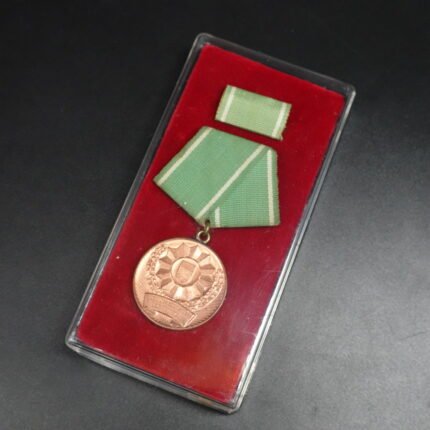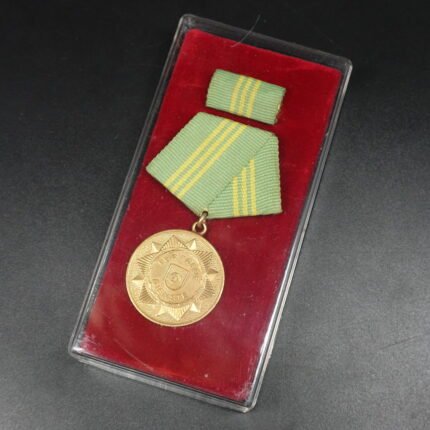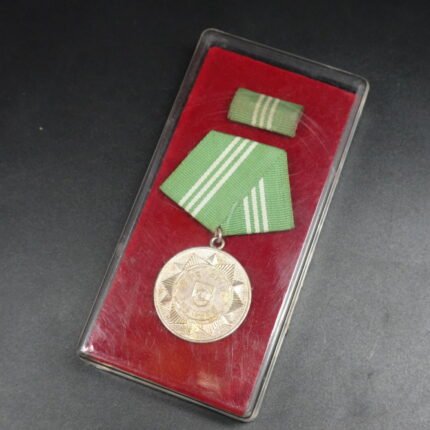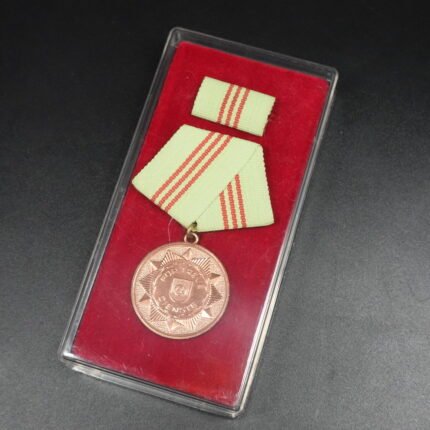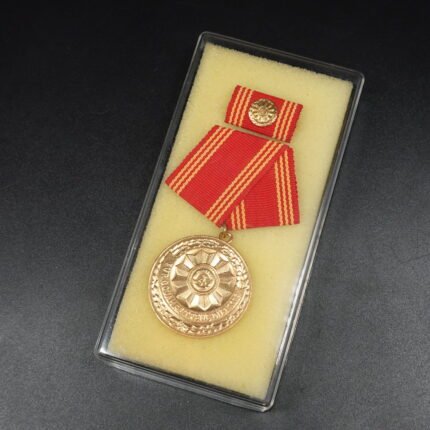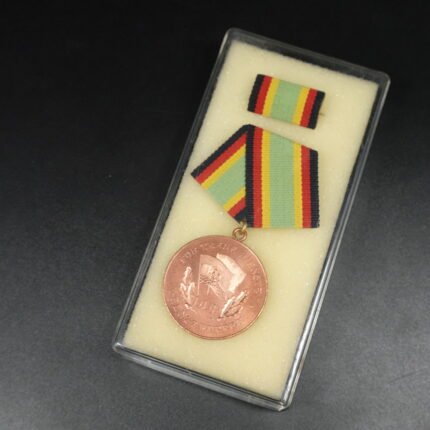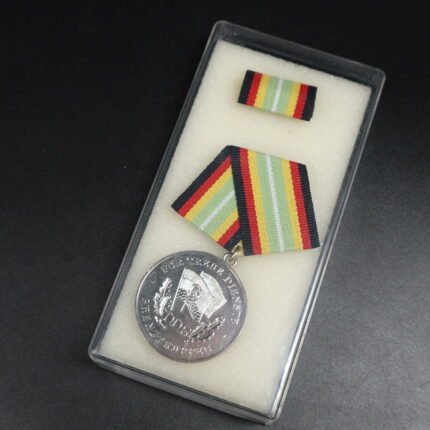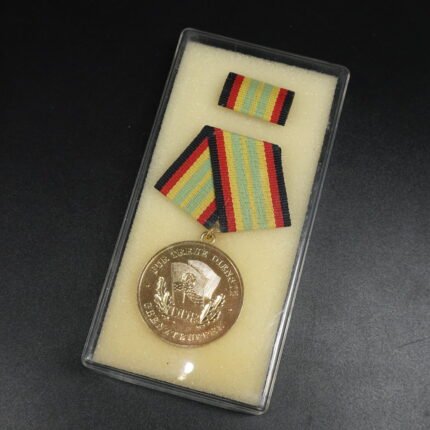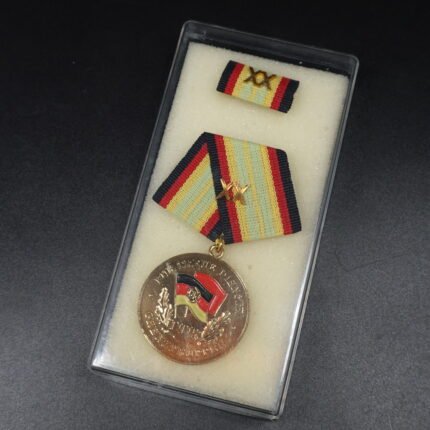

DDR Merit Medal of the National People’s Army – Bronze

20,00

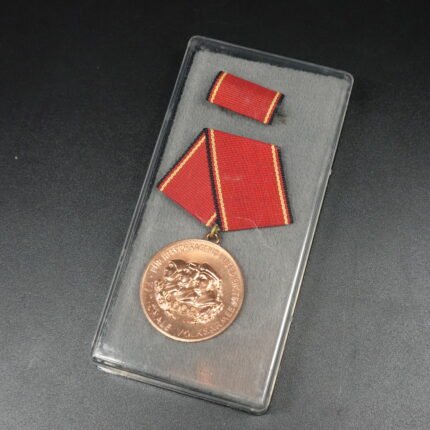
The Merit Medal of the National People’s Army – Bronze is an official decoration of the German Democratic Republic (DDR), awarded to members of the National People’s Army (NVA) for meritorious service and notable achievements.

This bronze class medal represents the entry level within the merit award system, recognizing dedication, performance, and contribution to military duties.


Design & Details

Obverse:

  • Profiles of three servicemen: a soldier, airman, and sailor, symbolizing the land, air, and naval forces

  • Inscription: “FÜR HERVORRAGENDE VERDIENSTE” (For Outstanding Merit)

  • Lower inscription: “NATIONALE VOLKSARMEE”

  • “DDR” beneath the figures

  • Flanked by oak leaves with acorns, symbolizing strength and endurance

Reverse:

  • State coat of arms of the DDR

  • Inscription:
    “FÜR DEN SCHUTZ DER ARBEITER- UND-BAUERN-MACHT”
    (For the protection of the workers’ and farmers’ power)

  • Surrounded by a laurel wreath, representing honor and achievement


Historical Context

The National People’s Army (NVA) was the armed force of East Germany, playing a central role in the Warsaw Pact during the Cold War.

The bronze class medal was awarded to soldiers and personnel who demonstrated commendable service, discipline, and reliability, forming the foundation of the NVA merit award hierarchy (Bronze, Silver, Gold).

Condition: As seen in the images.

A solid and historically relevant DDR military decoration, ideal for collectors of NVA and Cold War memorabilia.

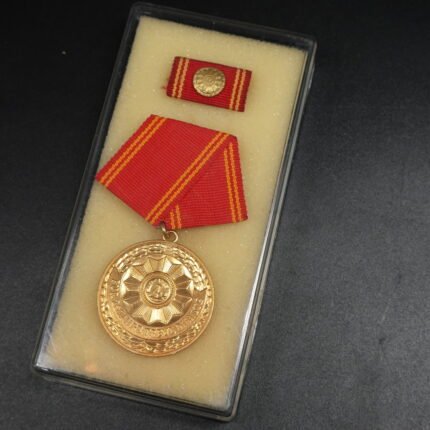
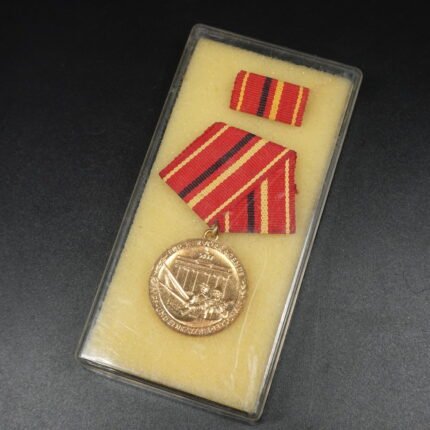
DDR Merit Medal of the Combat Groups of the Working Class – Gold

20,00

The Merit Medal of the Combat Groups of the Working Class – Gold is the highest class of this DDR decoration, awarded to members of the Kampfgruppen der Arbeiterklasse, the paramilitary workers’ militia of East Germany.

This gold class medal represents the highest level of recognition for outstanding merit, dedication, and exemplary service within the organization.


Description

  • Country: German Democratic Republic (East Germany)

  • Organization: Kampfgruppen der Arbeiterklasse (Combat Groups of the Working Class)

  • Class: Gold

  • Type: Merit / Service Award

Design:

  • Obverse typically features socialist imagery and the emblem of the DDR

  • Reverse bears inscription denoting merit (Verdienst)

  • Same design across all classes, distinguished by gold finish


Historical Context

The Kampfgruppen der Arbeiterklasse were a politically significant paramilitary force composed of civilian workers tasked with defending socialist industry and supporting state security.

The gold class medal was awarded to individuals who demonstrated exceptional achievement, leadership, and long-term dedication, placing them among the most distinguished members of the organization.

Condition: As seen in the images.

A top-tier DDR award, highly desirable for collectors of East German militaria and political history.
Note: It is possible you will receive a different backing in the casing, since this is a general stock image I took of the medal but sometimes the backing may vary.

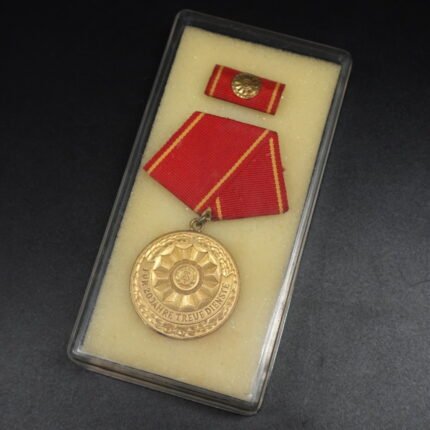
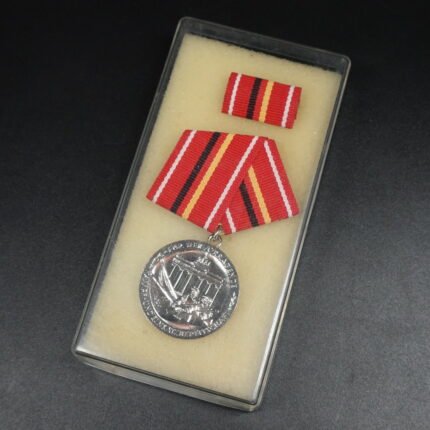
DDR Merit Medal of the Combat Groups of the Working Class – Silver

17,00

The Merit Medal of the Combat Groups of the Working Class – Silver is an official decoration of the German Democratic Republic (DDR), awarded to members of the Kampfgruppen der Arbeiterklasse, the paramilitary workers’ militia.

This silver class medal represents a higher grade of recognition, awarded for notable merit, dedication, and performance within the organization.


Description

  • Country: German Democratic Republic (East Germany)

  • Organization: Kampfgruppen der Arbeiterklasse (Combat Groups of the Working Class)

  • Class: Silver

  • Type: Merit / Service Award

Design:

  • Obverse typically features socialist imagery and DDR state symbolism

  • Reverse bears inscription referring to merit (Verdienst)

  • Identical design to other classes, distinguished by silver finish


Historical Context

The Kampfgruppen der Arbeiterklasse were a key paramilitary force in East Germany, composed mainly of civilian workers tasked with protecting industrial and political infrastructure.

The silver class medal was awarded for higher levels of achievement and commitment, positioned between the bronze and gold classes in the award hierarchy.

Condition: As seen in the images.

A desirable DDR decoration, ideal for collectors of East German paramilitary, political, and Cold War memorabilia.

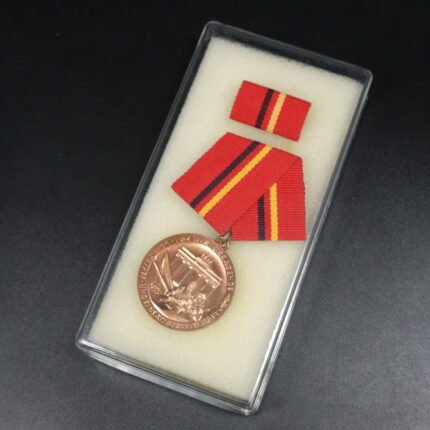
DDR Merit Medal of the Combat Groups of the Working Class – Bronze

15,00

The Merit Medal of the Combat Groups of the Working Class – Bronze is an official decoration of the German Democratic Republic (DDR), awarded to members of the Kampfgruppen der Arbeiterklasse, the paramilitary workers’ militia.

This bronze class medal recognized meritorious service, commitment, and achievements within these politically significant formations.


Description

  • Country: German Democratic Republic (East Germany)

  • Organization: Kampfgruppen der Arbeiterklasse (Combat Groups of the Working Class)

  • Class: Bronze

  • Type: Merit / Service Award

Design:

  • Obverse typically features emblematic socialist imagery, often including workers and state symbols

  • Reverse bears inscription denoting merit (Verdienst)

  • Classic DDR medal style reflecting ideological themes


Historical Context

The Kampfgruppen der Arbeiterklasse were a paramilitary organization composed mainly of factory workers, tasked with protecting socialist industry and supporting internal security during times of unrest.

The bronze class medal was awarded for notable contributions, dedication, and reliability, forming part of a tiered award system (Bronze, Silver, Gold).

Condition: As seen in the images.

A distinctive and collectible DDR medal, ideal for collectors of East German paramilitary and political history memorabilia.

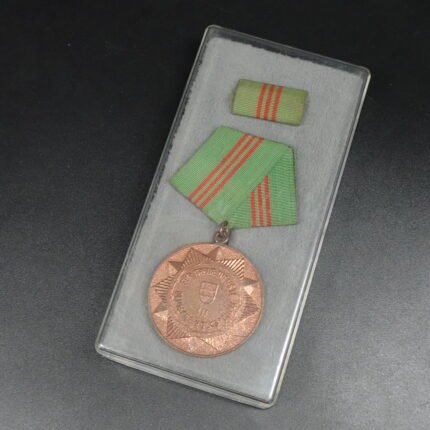
DDR Medal for Distinguished Service in the Armed Organs of the Ministry of the Interior

20,00

The Medal for Distinguished Service in the Armed Organs of the Ministry of the Interior (MdI) is an official decoration of the German Democratic Republic (DDR), awarded to personnel for outstanding performance and merit within the internal security forces.

This award recognized individuals who demonstrated exceptional achievement, dedication, and effectiveness beyond standard service expectations.


Description

  • Country: German Democratic Republic (East Germany)

  • Institution: Ministry of the Interior (Ministerium des Innern – MdI)

  • Type: Merit / Distinguished Service Medal

  • Material: Typically bronze or silvered metal (depending on issue)

Design:

  • Obverse usually features the state emblem of the DDR

  • Reverse bears inscription referring to “ausgezeichnete Leistungen” (distinguished achievements)

  • Clean and formal DDR medal design

Ribbon:

  • Characteristic ribbon associated with MdI awards, often in green tones with contrasting stripes


Historical Context

The armed organs of the MdI included the Volkspolizei, internal troops, and other state security forces responsible for maintaining public order and enforcing government authority during the Cold War.

Unlike long-service medals, this decoration was awarded specifically for merit and performance, highlighting individuals who excelled in their duties or contributed significantly to operational success.

Condition: As seen in the images.

A desirable DDR merit award, ideal for collectors focusing on East German police, internal security forces, and performance-based decorations.

Note: It is possible you will receive a different backing in the casing, since this is a general stock image I took of the medal but sometimes the backing may vary.

DDR Medal for Faithful Service in the Armed Organs of the Ministry of the Interior (15 Years)

15,00

The Medal for Faithful Service in the Armed Organs of the Ministry of the Interior (MdI)15 Years is an official long-service decoration of the German Democratic Republic (DDR).

It was awarded to members of the armed organs of the Ministry of the Interior, including police and internal security units, in recognition of 15 years of loyal and dedicated service.


Description

  • Country: German Democratic Republic (East Germany)

  • Institution: Ministry of the Interior (Ministerium des Innern – MdI)

  • Class: 15 Years (XV)

  • Material: Silver-colored metal

Design:

  • Obverse typically features the national emblem of the DDR

  • Reverse bears inscription denoting faithful service

  • Classic DDR award design

Ribbon:

  • Standard MdI service ribbon in green tones


Historical Context

The armed organs of the MdI included the Volkspolizei and other internal security forces responsible for maintaining order within East Germany during the Cold War.

The 15-year medal represents a significant service milestone, awarded to personnel who demonstrated long-term loyalty, discipline, and commitment within these state institutions.

Condition: As seen in the images.

A solid mid-tier DDR long-service award, ideal for collectors of East German police and internal security memorabilia.

DDR Medal for Faithful Service in the Armed Organs of the Ministry of the Interior (10 Years)

10,00

The Medal for Faithful Service in the Armed Organs of the Ministry of the Interior (MdI)10 Years is an official long-service decoration of the German Democratic Republic (DDR).

It was awarded to members of the armed organs of the Ministry of the Interior, including police and internal security units, in recognition of 10 years of loyal and dedicated service.


Description

  • Country: German Democratic Republic (East Germany)

  • Institution: Ministry of the Interior (Ministerium des Innern – MdI)

  • Class: 10 Years (X)

  • Material: Silver-colored metal

Design:

  • Obverse typically features the national emblem of the DDR

  • Reverse bears inscription denoting faithful service

  • Classic DDR award design

Ribbon:

  • Standard MdI service ribbon in green tones


Historical Context

The armed organs of the MdI included the Volkspolizei and other internal security forces responsible for maintaining order within East Germany during the Cold War.

The 10-year medal represents a significant service milestone, awarded to personnel who demonstrated long-term loyalty, discipline, and commitment within these state institutions.

Condition: As seen in the images.

A solid mid-tier DDR long-service award, ideal for collectors of East German police and internal security memorabilia.

DDR Medal for Faithful Service in the Armed Organs of the Ministry of the Interior (5 Years)

10,00

The Medal for Faithful Service in the Armed Organs of the Ministry of the Interior (MdI)5 Years is an official long-service decoration of the German Democratic Republic (DDR).

It was awarded to members of the armed organs of the Ministry of the Interior, including police and internal security forces, in recognition of 5 years of loyal and disciplined service.


Description

  • Country: German Democratic Republic (East Germany)

  • Institution: Ministry of the Interior (Ministerium des Innern – MdI)

  • Class: 5 Years (V)

  • Material: Silver-colored metal

Design:

  • Obverse typically displays the national emblem of the DDR

  • Reverse bears inscription denoting faithful service

  • Classic DDR award design

Ribbon:

  • Standard MdI service ribbon in green tones


Historical Context

The armed organs of the MdI formed a key part of East Germany’s internal security structure, including the Volkspolizei and other paramilitary units.

The 5-year medal represents an important service milestone, awarded to personnel who demonstrated reliability, loyalty, and commitment during a decade of service in the Cold War era.

Condition: As seen in the images.

A solid and historically relevant DDR decoration, ideal for collectors of East German police and internal security awards.

DDR Medal for Faithful Service in the Armed Organs of the Ministry of the Interior (30 Years)

20,00

The Medal for Faithful Service in the Armed Organs of the Ministry of the Interior (MdI)30 Years is one of the highest long-service decorations awarded in the German Democratic Republic (DDR).

It was granted to members of the armed organs of the Ministry of the Interior in recognition of an exceptional 30 years of loyal and dedicated service, reflecting a full career within East Germany’s internal security system.


Description

  • Country: German Democratic Republic (East Germany)

  • Institution: Ministry of the Interior (Ministerium des Innern – MdI)

  • Class: 30 Years (XXX)

  • Material: Gold-colored metal

Design:

  • Obverse typically features the national emblem of the DDR

  • Reverse bears inscription for faithful service

  • Commonly includes a “30” clasp or device on the ribbon indicating years of service

Ribbon:

  • Often fitted with a numeral device (30)

Historical Context

The armed organs of the MdI included key institutions such as the Volkspolizei and other internal security forces responsible for maintaining order and enforcing state authority during the Cold War.

The 30-year medal represents one of the highest possible service recognitions, awarded only to personnel who completed decades of continuous service, demonstrating exceptional loyalty, discipline, and commitment to the state.

Condition: As seen in the images.

A top-tier DDR decoration, highly desirable for advanced collectors of East German militaria and Ministry of the Interior awards.

DDR Medal for Faithful Service in the Armed Organs of the Ministry of the Interior (25 Years)

15,00

The Medal for Faithful Service in the Armed Organs of the Ministry of the Interior (MdI)25 Years is a senior long-service decoration of the German Democratic Republic (DDR), awarded to personnel who completed a remarkable 25 years of loyal service.

This class represents one of the highest levels of recognition within the MdI long-service award system.


Description

  • Country: German Democratic Republic (East Germany)

  • Institution: Ministry of the Interior (Ministerium des Innern – MdI)

  • Class: 25 Years (XXV)

  • Material: Gold-colored metal

Design:

  • Obverse typically displays the national emblem of the DDR

  • Reverse features inscription referring to faithful service

  • Often accompanied by a “25” device or clasp on the ribbon

Ribbon:

  • May include a numeral device (25) indicating years of service

Historical Context

The armed organs of the MdI encompassed a wide range of internal security forces, including the Volkspolizei and other paramilitary units responsible for maintaining order and state control within East Germany.

The 25-year medal was awarded to long-serving personnel who demonstrated exceptional dedication, loyalty, and endurance throughout decades of service during the Cold War.

Condition: As seen in the images.

A high-ranking and desirable DDR decoration, ideal for advanced collectors of East German militaria and Ministry of the Interior awards.

DDR Medal for Faithful Service in the Armed Organs of the Ministry of the Interior (20 Years)

10,00

The Medal for Faithful Service in the Armed Organs of the Ministry of the Interior (MdI)20 Years is a high-grade long-service decoration of the German Democratic Republic (DDR).

It was awarded to members of the armed organs of the Ministry of the Interior, including police, internal security forces, and other state security units, in recognition of two decades of loyal and disciplined service.


Description

  • Country: German Democratic Republic (East Germany)

  • Institution: Ministry of the Interior (Ministerium des Innern – MdI)

  • Class: 20 Years (XX)

  • Material: Gold-colored metal

Design:

  • Obverse typically features the national emblem of the DDR

  • Reverse bears inscription denoting faithful service in the armed organs

  • Classic DDR state decoration style

Ribbon:

  • Standard MdI long-service ribbon in green tones, associated with internal security services


Historical Context

The armed organs of the MdI included key components of East Germany’s internal security system, such as the Volkspolizei, paramilitary police units, and other state-controlled forces.

The 20-year medal represents one of the highest long-service awards, recognizing personnel who demonstrated enduring loyalty, reliability, and commitment throughout extended service during the Cold War period.

Condition: As seen in the images.

A solid and historically significant DDR decoration, ideal for collectors of East German police, security forces, and Cold War militaria.

DDR Medal for Faithful Service in the People’s Police (5 Years)

20,00

The Medal for Faithful Service in the People’s Police (Volkspolizei)III Class (5 Years) is an early East German decoration awarded for loyal service within the Volkspolizei, the national police force of the German Democratic Republic.

This example dates from the early production period (1955–1959), making it a desirable early Cold War issue.


Description

  • Country: German Democratic Republic (DDR)

  • Institution: Volkspolizei (People’s Police)

  • Class: III Class – 5 Years of Service

  • Period: 1955–1959 issue

  • Material: Bronze-colored metal

Design:

  • Obverse typically features the emblem of the DDR

  • Reverse bears inscription referring to faithful service

  • Early type with characteristic period details

Ribbon:

  • Standard Volkspolizei long service ribbon in green tones


Historical Context

The Volkspolizei was established as the main law enforcement body in East Germany and played a central role in maintaining state control during the early Cold War years.

This III Class medal (5 years) represents the first level of long-service recognition, awarded to personnel who demonstrated loyalty, discipline, and reliability during the formative years of the DDR.

Early examples from 1955–1959 are particularly collectible due to their limited production period and historical significance.

Condition: As seen in the images.

A rare early DDR police decoration, ideal for collectors specializing in Volkspolizei, Cold War history, or East German awards.

DDR Medal for Faithful Service – Border Troops (Bronze, 5 Years)

25,00

The Medal for Faithful Service in the Border Troops of the GDR (Bronze – 5 Years) is an official decoration of the former German Democratic Republic (DDR), awarded to members of the Grenztruppen in recognition of dedicated service.

This bronze class medal represents 5 years of faithful service, forming the foundational level of the DDR Border Troops long-service award system.


Description

  • Origin: German Democratic Republic (East Germany)

  • Branch: Border Troops (Grenztruppen der DDR)

  • Class: Bronze – 5 Years

  • Material: Bronze-colored metal

  • Design:

    • Obverse typically features the national emblem of the GDR

    • Reverse bears inscription denoting faithful service

  • Ribbon: Standard DDR Border Troops service ribbon


Historical Context

The Grenztruppen der DDR were responsible for guarding East Germany’s borders throughout the Cold War. This medal was awarded after five years of service, recognizing discipline, reliability, and commitment within a highly controlled and politically significant military force.

Condition: As seen in the images.

A solid and historically interesting piece, ideal for collectors of DDR and Cold War militaria.

DDR Medal for Faithful Service – Border Troops (Silver, 10 Years)

50,00

The Medal for Faithful Service in the Border Troops of the GDR (Silver – 10 Years) is an official decoration of the former German Democratic Republic (DDR), awarded to members of the Grenztruppen for long and loyal service.

This silver class medal represents 10 years of faithful service, forming the entry level of the long-service award series within the East German Border Troops.


Description

  • Origin: German Democratic Republic (East Germany)

  • Branch: Border Troops (Grenztruppen der DDR)

  • Class: Silver – 10 Years

  • Material: Silver-colored metal

  • Design:

    • Obverse typically displays the emblem of the GDR

    • Reverse bears inscription indicating faithful service

  • Ribbon: Standard DDR Border Troops ribbon


Historical Context

The Grenztruppen der DDR were responsible for securing East Germany’s borders during the Cold War. This medal was awarded to personnel who completed a full decade of service, reflecting commitment, discipline, and reliability within one of the most tightly controlled military organizations of the period.

Condition: As seen in the images.

A solid entry-level long service decoration, ideal for collectors of DDR and Cold War military memorabilia.

DDR Medal for Faithful Service – Border Troops (Gold, 15 Years)

75,00

The Medal for Faithful Service in the Border Troops of the GDR (Silver – 15 Years) is an official decoration of the former German Democratic Republic (DDR), awarded to members of the Grenztruppen in recognition of long and dedicated service.

This gold class medal represents 15 years of faithful service (XV) and forms part of the tiered long-service award system within the East German border forces.


Description

  • Origin: German Democratic Republic (East Germany)

  • Branch: Border Troops (Grenztruppen der DDR)

  • Class: Gold – 15 Years (XV)

  • Material: Gold-colored metal

  • Design:

    • Obverse typically features the national emblem of the GDR

    • Reverse bears inscription denoting faithful service and years of service

  • Ribbon: Standard DDR Border Troops service ribbon


Historical Context

The Grenztruppen der DDR were tasked with guarding East Germany’s borders during the Cold War, including the Berlin Wall. Long-service medals such as this were awarded to personnel who demonstrated loyalty, discipline, and sustained commitment over many years of service.

Condition: As seen in the images.

A solid and historically relevant collectible, ideal for DDR and Cold War militaria enthusiasts.

DDR Medal for Faithful Service – Border Troops (Gold, 20 Years)

100,00

The Medal for Faithful Service in the Border Troops of the GDR (Gold – 20 Years) is an official decoration of the former German Democratic Republic (DDR), awarded to members of the Grenztruppen in recognition of long and dedicated service.

This gold class medal represents 20 years of faithful service, making it one of the higher long-service awards within the East German border forces.


Description

  • Origin: German Democratic Republic (East Germany)

  • Branch: Border Troops (Grenztruppen der DDR)

  • Class: Gold – 20 Years (XX)

  • Material: Gold-colored metal

  • Design:

    • Obverse typically features the emblem of the GDR with military symbolism

    • Reverse includes inscription denoting faithful service

  • Ribbon: Characteristic service ribbon associated with DDR border troops


Historical Context

The Grenztruppen der DDR were responsible for securing East Germany’s borders, including the Berlin Wall during the Cold War. Medals such as this were awarded to personnel who demonstrated loyalty, discipline, and long-term commitment within this highly controlled and politically significant military branch.

Condition: As shown in the images.

A solid and collectible piece of Cold War history, ideal for DDR and military memorabilia collectors.

Saint Helena Medal (Médaille de Sainte-Hélène) (Napoleon)

95,00

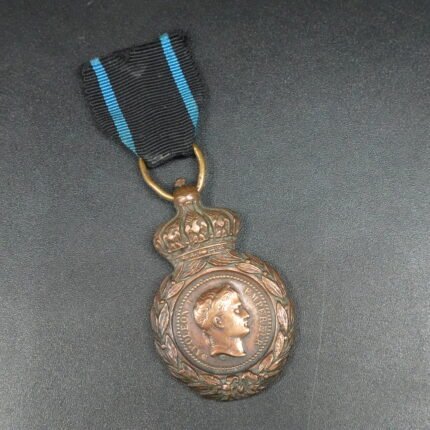
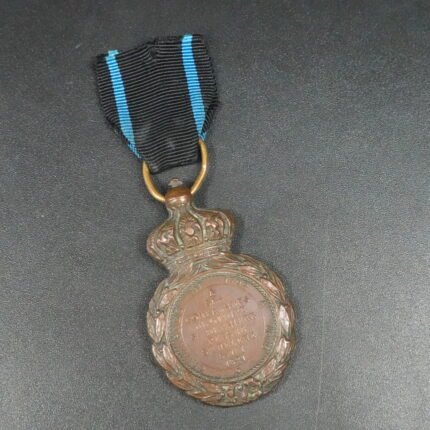
Original Saint Helena Medal (Médaille de Sainte-Hélène). This medal does have a wrong (unidentified) ribbon on it!

The Saint Helena Medal (Médaille de Sainte-Hélène) is a historic French commemorative decoration established by decree on 12 August 1857 by Emperor Napoleon III. It was awarded to all surviving veterans who had served in the French Revolutionary and Napoleonic Wars between 1792 and 1815.

The medal fulfilled a final wish expressed by Napoleon I in his will, written during his exile on Saint Helena in 1821. Funding for the medal came from his personal fortune, ensuring recognition for his former soldiers — the legendary “grognards”, known for their loyalty and enduring bond with the Emperor.


Historical Significance

This decoration represents one of the earliest large-scale veteran recognition medals in Europe:

  • Awarded to approximately 405,000 veterans

  • Around 185,000 medals were officially distributed and recorded

  • Open to soldiers of many nationalities who served under Napoleon, including French, Belgian, Dutch, German, Polish, and Italian veterans

  • Approximately 14,000 Belgian veterans received permission to wear the medal

Some of the last surviving recipients lived well into the late 19th century, making this medal a powerful symbol bridging the Napoleonic era and modern Europe.


Design & Characteristics

Designed by Désiré-Albert Barre, the medal is notable for its robust and distinctive appearance:

  • Material: Thick bronze (nicknamed the “chocolate medal” due to its color)

  • Obverse: Portrait of Napoleon I, surrounded by a laurel wreath

  • Reverse inscription:
    “Campagnes de 1792 à 1815. À ses compagnons de gloire, sa dernière pensée, 5 mai 1821”
    (“Campaigns of 1792 to 1815. To his companions in glory, his last thought, 5 May 1821”)

  • Suspension: Surmounted by the French Imperial crown

The medal was presented in a box bearing a Napoleonic eagle and accompanied by a named diploma.


Ribbon

The decoration is worn on a green ribbon with narrow red stripes, a color scheme later echoed in the French Croix de Guerre 1914–1918.

A highly collectible and historically significant medal, prized by collectors of Napoleonic militaria and early veteran honors.

King Albert I Veterans’ Cross 1909–1934 (Albert I Veteranenkruis)

25,00

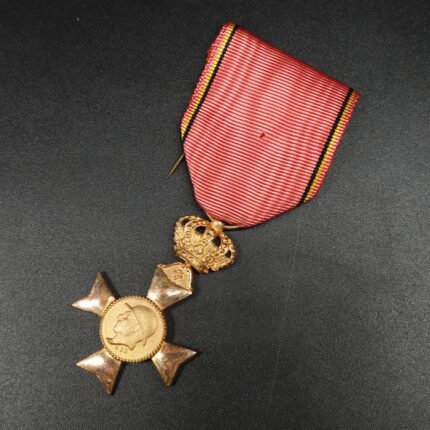
Original King Albert I Veterans’ Cross 1909–1934 (Croix des Vétérans du Roi Albert I / Albert I Veteranenkruis). The King Albert I Veterans’ Cross 1909–1934 is a Belgian commemorative decoration awarded to honor veterans who served under King Albert I, one of Belgium’s most revered wartime monarchs.

Instituted after the reign of King Albert I (1909–1934), this cross was awarded to former members of the Belgian Armed Forces in recognition of their loyal service during his reign, including the crucial years of the First World War.


Purpose & Significance

King Albert I, often referred to as the “Soldier King”, personally led Belgian forces during World War I and became a symbol of national resistance and unity. This decoration commemorates:

  • Military service during his reign (1909–1934)

  • Loyalty to the Belgian crown

  • Participation in one of Belgium’s most defining historical periods


Design & Characteristics

The medal is typically designed as a cross-shaped decoration, rich in royal symbolism:

  • Obverse:
    Features the portrait or effigy of King Albert I, emphasizing his central role as wartime leader

  • Reverse:
    Bears the dates “1909–1934”, marking the full duration of his reign

  • Suspension:
    Usually topped with a royal crown, symbolizing allegiance to the monarchy

  • Ribbon:
    Traditionally incorporates Belgian national colors, reflecting patriotism and service

A meaningful and collectible Belgian decoration, especially valued by collectors of royal and First World War militaria.

Belgian Centenary of National Independence Medal 1830–1930

20,00

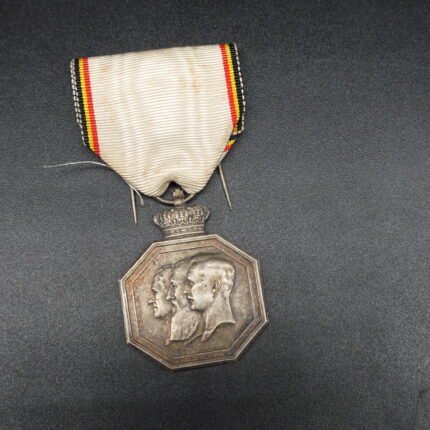
Original Belgian Centenary of National Independence Medal 1830–1930 (Herinneringsmedaille 100 jaar Belgische Onafhankelijkheid 1830–1930) (Médaille Commémorative du Centenaire de l’Indépendance Nationale). The Centenary of National Independence Commemorative Medal 1830–1930 is a Belgian decoration established by Royal Decree on 20 July 1930 to celebrate the 100th anniversary of Belgian independence.

This medal was awarded to members of the Belgian Armed Forces (both active and veterans), as well as to civil servants who had completed at least 20 years of honorable service prior to 1 January 1931. Eligible recipients typically qualified for long-service distinctions such as the Civic Decoration, Military Cross, or Military Decoration.


Design & Characteristics

The medal features a refined and symbolic design:

  • Shape & Material:
    Silvered bronze octagonal medal (32 mm wide, 30 mm high), surmounted by a royal crown, bringing the total height to approximately 41 mm.

  • Obverse:
    Left-facing profiles of three Belgian kings:
    Leopold I, Leopold II, and Albert I, representing a century of monarchy and national development.

  • Reverse:
    The years “1830” and “1930” displayed in two slightly offset rows, overlaid on a background of oak and laurel leaves, symbolizing strength and victory.

Ribbon

The medal is suspended from a 38 mm white moiré silk ribbon featuring the Belgian national colors as narrow edge stripes:

  • Black, Yellow, Red (each approx. 1 mm wide)

A historically rich and elegant commemorative medal, highly sought after by collectors of Belgian history, royal memorabilia, and early 20th-century decorations.

Belgian Deportees’ Cross 1914–1918 (Weggevoerdenkruis) (Price Per Piece)

25,00

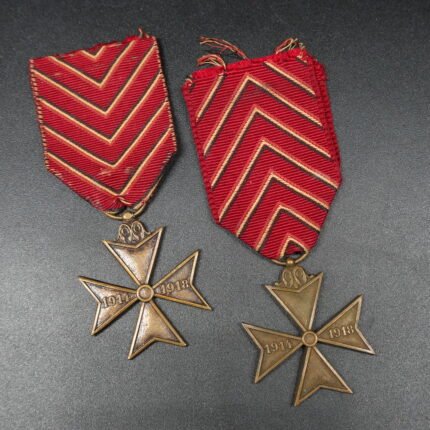
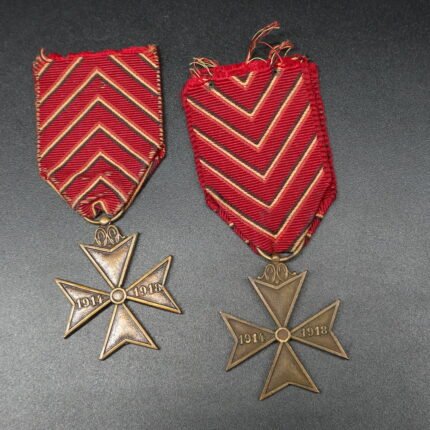
Original Belgian Deportees’ Cross 1914–1918 (Weggevoerdenkruis). The Deportees’ Cross 1914–1918 is a Belgian war decoration established by Royal Decree on 27 November 1922. It was awarded to Belgian civilians who were deported to Germany for forced labour during the First World War, recognizing their suffering and endurance under occupation.

Deportees who died during deportation were not eligible for this cross. Instead, they were posthumously honored with the Order of Leopold II, distinguished by a ribbon bearing a central longitudinal gold stripe.


Award Description

The decoration is a 38 mm wide bronze cross pattée, with identical obverse and reverse designs.

  • The horizontal arms feature the raised inscriptions:

    • “1914” on the right arm

    • “1918” on the left arm

  • The cross is suspended from a ring passing through a suspension loop at the top.

  • It is worn on a 37 mm ribbon (typically in green tones with contrasting stripes), symbolizing hope and the hardships endured during deportation.

A rare and meaningful piece of First World War history, especially valued by collectors focusing on civilian experiences and occupation-era memorabilia.

Note: Price Per Piece!

Belgian Military Decoration for Long Service (Militair Ereteken voor Dienstanciënniteit) (Price Per Piece)

15,00

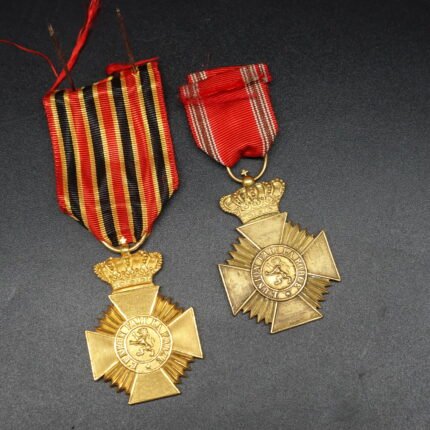
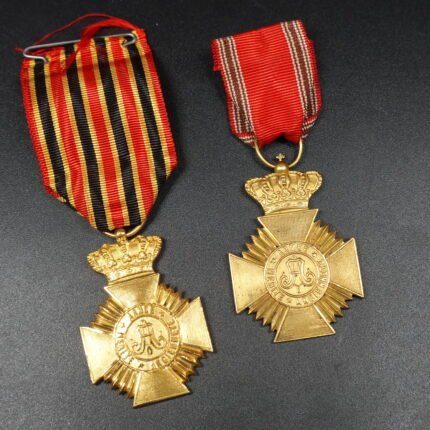
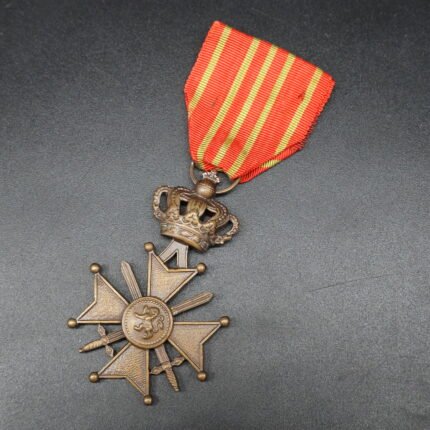
Original Belgian Military Decoration for Long Service (Militair Ereteken voor Dienstanciënniteit / Décoration Militaire). The Military Decoration (Militair Ereteken) is an official Belgian military award established by Royal Decree on 22 December 1873. It is awarded to non-commissioned officers and enlisted personnel and exists in two distinct categories, each recognizing different forms of service.

Informative: Belgian Military Decoration comes in two versions:

1. Long Service (Dienstanciënniteit)

  • Awarded to NCOs and enlisted personnel

  • Second Class: after 10 years of service

  • First Class: after an additional 5 years

  • Not awarded to officers (who instead receive the Military Cross)

2. Exceptional Service / Gallantry (Buitengewone Dienst)

  • Awarded for acts of courage, devotion, or distinguished service

  • Can be granted for a single notable act

  • Also awarded to naval personnel after 20 years of service at sea

  • May exceptionally be awarded in First Class

  • Can be awarded to foreign non-commissioned personnel

All awards are granted by Royal Decree and officially published in the Belgian State Gazette.


Design & Characteristics

The decoration is identical across both categories and classes:

  • Form: Cross pattée with four rays between each arm, surmounted by a royal crown

  • Obverse: Belgian lion with the motto:

    • “L’Union fait la Force” (pre-1952)

    • “L’Union fait la Force – Eendracht maakt macht” (post-1952)

  • Reverse:

    • Pre-1952: Royal monogram (Leopold II, Albert I, or Leopold III) with “Armée Mérite Ancienneté”

    • Post-1952: Belgian lion only


Ribbon Variants

The two categories are distinguished by their ribbons:

  • Long Service:
    17 narrow vertical stripes in Belgian national colors (red, yellow, black), with red on the outer edges

  • Exceptional Service / Gallantry:
    Red ribbon with Belgian tricolor edges (red outermost)

Additional distinctions:

  • First Class: indicated by a chevron on the ribbon

  • Wartime award (Article 4): may include a silver palm with royal monogram


Order of Precedence & Wear

  • Worn after the decorations of the National Orders

  • Takes precedence over the Military Cross (as it was established earlier)

  • If both categories are awarded, the gallantry version takes precedence

  • NCOs promoted to officer rank may continue to wear the decoration until eligible for the Military Cross

A highly collectible and historically important Belgian decoration, valued for both its longevity and its dual recognition of service and bravery.

Note: Price Per Piece! The one with the wrong ribbon (on the right, will be discounted to 10 EUR instead of 15 EUR – if you want this one, add it in the purchase note)

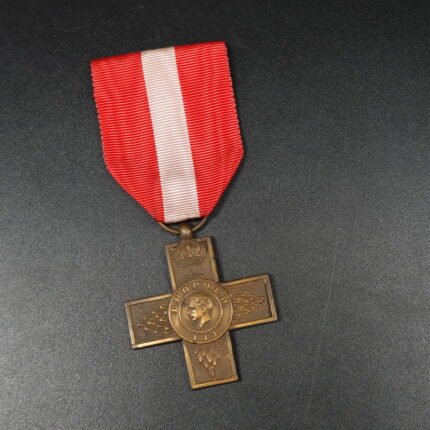
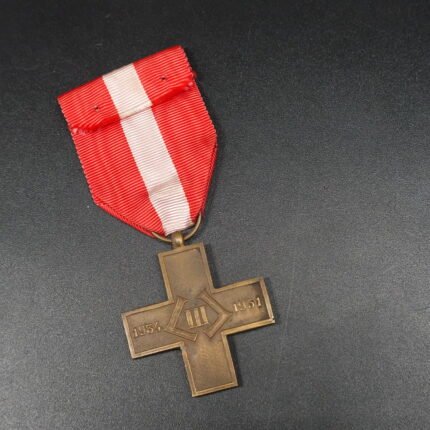
“Leopold III – 1934-1951” Cross Medal

30,00

Original “Leopold III – 1934-1951” Cross Medal. Onofficial award but difficult to find. Condition as seen.

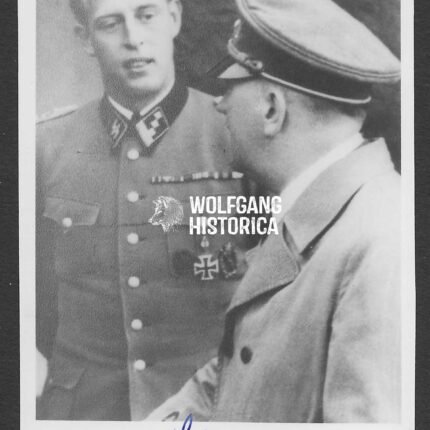
Otto Günsche – Adolf Hitler’s Personal Adjutant (WIA 20 July Plot, Führerbunker)

220,00

Original Postwar Signature on a Postwar Photo of Otto Günsche. SS-Sturmbannführer Otto Günsche (24.09.1917 † 02.10.2003) earned the Verwundetenabzeichen “20. Juli 1944” in Schwarz and was a member of the Leibstandarte-SS Adolf Hitler before he became Adolf Hitler’s personal adjutant. Condition as seen. Postcardsize.

With the end of Nazi Germany imminent, Günsche was tasked by Hitler on 30 April 1945 with ensuring the cremation of his body after his death. That afternoon, he stood guard outside the room in the Führerbunker where Hitler and Eva Braun committed suicide. After waiting a short time, Hitler’s valet, Heinz Linge, opened the study door with Martin Bormann at his side. The two men entered the study with Günsche right behind them. Günsche then left the study and announced that Hitler was dead to a group in the briefing room, which included Joseph Goebbels, General Hans Krebs, and General Wilhelm Burgdorf. Günsche had the table and chairs in the study moved out of the way and blankets were laid out on the floor. Hitler and Braun’s lifeless bodies were then wrapped in blankets. In accordance with Hitler’s prior written and verbal instructions, his and Braun’s bodies were carried up the stairs and through the bunker’s emergency exit to the garden behind the Reich Chancellery to be burned. Having ensured that the corpses were burnt using petrol supplied by Hitler’s chauffeur Erich Kempka, Günsche later left the Führerbunker after midnight on 1 May. On 2 May 1945, Günsche was taken prisoner by Soviet Red Army troops that were encircling the city and flown to Moscow for sharp interrogation by the NKVD.

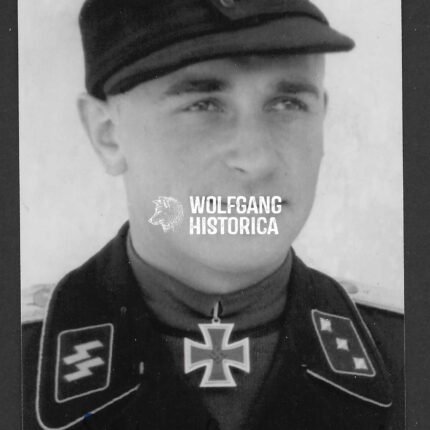
Fritz Langanke – SS-Panzer-Regiment 2 “Das Reich”

0,01

Original Postwar Signature on a Postwar Photo of Fritz Langanke. SS-Obersturmführer Fritz Langanke (15.07.1919 † 10.07.2012) earned the Ritterkreuz des Eisernen Kreuzes on August 27, 1944 as SS-Standarten-Oberjunker und Zugführer of the 2. Kompanie/ SS-Panzer-Regiment 2 of the 2. SS-Panzer-Division “Das Reich“. Condition as seen. Postcardsize.

Knight’s Cross: “SS-Standartenoberjunker Langanke, Zugführer in the II./SS-Pz.Rgt. 2, was separated from his Abteilung along with 3 Panthers on the 28.07.1944. In this time he made the independent decision to rally 300 Heer Grenadiers and launch a breakout attempt on the night of the 29./30.07.1944. Advancing via St. Denis he personally destroyed 13 tanks, 4 anti-tank guns, 8 halftracks and 10 trucks over a series of hard yet successful engagements. Ultimately he managed to make it back to friendly lines while also clearing open the way to freedom for many other units including a self-propelled Flak-Batterie (with five 3.7 cm guns), 2 Grille SPGs, 3 Sturmgeschützen and 29 trucks.”

Belgian Armed Resistance Medal 1940–1945 (Medaille van de Gewapende Weerstand)

30,00

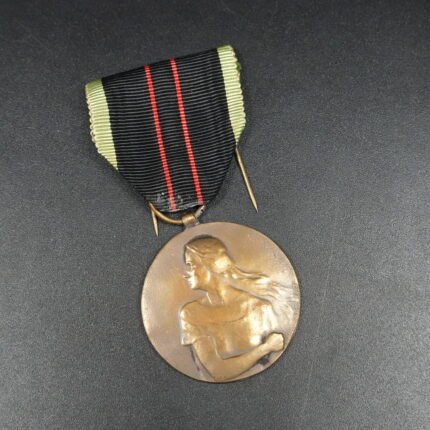
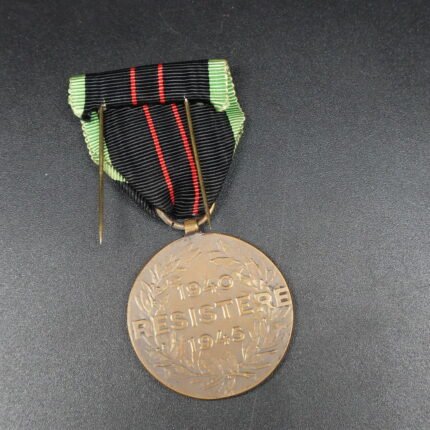
Original Belgian Armed Resistance Medal 1940–1945 (“Medaille van de Gewapende Weerstand”) (Médaille de la Résistance Armée 1940–1945). The Armed Resistance Medal 1940–1945 was a Belgian wartime decoration established by decree of the Prince Regent on 16 February 1946. It was awarded to members of the Belgian Resistance and intelligence agents who took part in armed operations in occupied territory during the Second World War.

The medal could be awarded posthumously, honoring those who lost their lives in the struggle against occupation.


Design & Characteristics

The decoration is a 39 mm round bronze medal, rich in symbolic detail.

Obverse:
A raised image of the left-profile torso of a woman, her gaze turned to the right, her right fist clenched — a powerful symbol of defiance against the will of the occupier.

Reverse:
The inscription: “1940” – “RESISTERE” – “1945” arranged in three lines and surrounded by a laurel wreath running along the full rim of the medal. The Latin word Resistere (“to resist”) emphasizes the spirit of armed resistance.


Ribbon & Symbolism

The medal is suspended from a ring passing through a lateral barrel-shaped suspension at the top. The ribbon colors carry strong symbolic meaning:

  • Green – Hope for liberation

  • Red – Blood shed by resistance fighters

  • Black – The dark days of occupation and the clandestine nature of the resistance

A highly significant and historically charged decoration, essential for collectors of Belgian WWII militaria and resistance memorabilia.

Order of Leopold II (Rank of Officer)

55,00

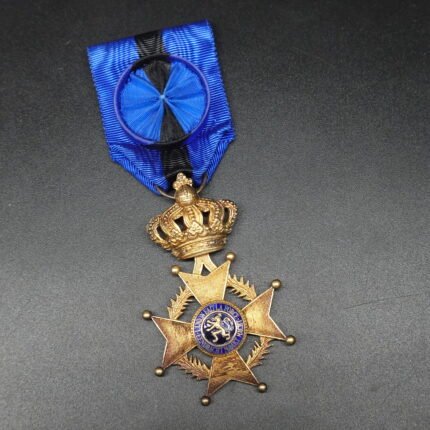
Original Order of Leopold II (Rank of Officer). The Order of Leopold II (French: Ordre de Léopold II) is a Belgian civil order of chivalry, originally established in 1900 by King Leopold II in the Congo Free State, then his personal possession. The order’s motto, “L’Union fait la force” / “Eendracht maakt macht” (“Unity makes strength”), reflects the Belgian national ideal.

Initially awarded for services rendered to Congo and to the sovereign, the order was incorporated into the Belgian honors system after Congo became a Belgian colony in 1908. Following Congo’s independence, the Order of Leopold II remained part of the Belgian national system of honors. Today, it is one of Belgium’s three national orders, alongside the Order of the Crown and the Order of Leopold.

The Order of Leopold II is awarded to civilians and military personnel for distinguished service to the King and as a mark of his personal esteem.


Version Offered: Officer (Officier)

The Officer rank represents a higher class within the Order.

The insignia is worn on the left breast, suspended from a ribbon featuring a rosette, distinguishing it from the Knight class.

Distinctive Characteristics of the Officer Class:

  • Cross of the Order in a superior class grade

  • Suspended from the standard blue ribbon with central black stripe

  • Ribbon fitted with a rosette, indicating Officer rank

  • Worn as a breast decoration

A refined and historically significant decoration, ideal for collectors of Belgian orders and colonial-era honors.

Order of Leopold II (Rank of Knight)

30,00

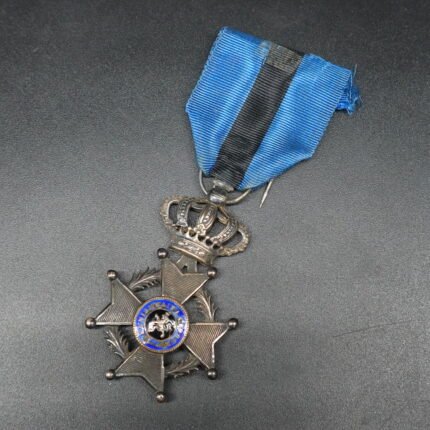
Original Order of Leopold II (Rank of Knight). The Order of Leopold II (French: Ordre de Léopold II) is a Belgian civil order of chivalry, originally established in 1900 by King Leopold II in the Congo Free State, then his personal possession. The order’s motto, “L’Union fait la force” / “Eendracht maakt macht” (“Unity makes strength”), reflects the Belgian national ideal.

Initially awarded for services rendered to Congo and to the sovereign, the order was incorporated into the Belgian honors system after Congo became a Belgian colony in 1908. Following Congo’s independence, the Order of Leopold II remained part of the Belgian national system of honors. Today, it is one of Belgium’s three national orders, alongside the Order of the Crown and the Order of Leopold.

The Order of Leopold II is awarded to civilians and military personnel for distinguished service to the King and as a mark of his personal esteem.


Version Offered: Knight (Ridder)

The Knight wears the insignia on a 37 mm wide ribbon on the left breast.

Distinctive characteristics of the Knight class:

  • Cross in silvered metal (not gilded)

  • Crown suspension in silver

  • Blue ribbon with a central black stripe

  • Worn as a breast decoration

A refined and historically significant decoration, ideal for collectors of Belgian orders and colonial-era honors.

Belgian War Cross 1914–1918 (Oorlogskruis)

20,00

Original Belgian War Cross 1914–1918 (Oorlogskruis). The Belgian War Cross 1914–1918 (Oorlogskruis) is one of Belgium’s most prestigious First World War decorations. It was instituted by Royal Decree on 25 October 1915, inspired by the French Croix de Guerre established earlier that same year.

Awarded exclusively to individual members of the Belgian Army, Navy, and Air Force — and in exceptional cases to foreign Allied servicemen — the War Cross recognized acts of bravery in the face of the enemy.

Beyond gallantry, the decoration was also granted for:

  • Three years of front-line service (five front stripes)

  • Volunteers over 40 or under 16 years of age with at least 18 months of service

  • Escaped prisoners of war who rejoined their unit within three months

  • Soldiers unable to resume combat due to wounds sustained in action

The War Cross could be awarded posthumously. In such cases, the ribbon bears a black enamel bar. Non-commissioned officers and enlisted men who died from wounds received in combat were additionally appointed Knights of the Order of Leopold II with palm and also received the War Cross.

Citation Devices (Ribbon Distinctions)

Recipients mentioned in official dispatches could wear the following devices on the ribbon:

  • Bronze Lion – Mention in Regimental Orders

  • Silver Lion – Mention in Brigade Orders

  • Gold Lion – Mention in Divisional Orders

  • Bronze Palm – Mention in Army Orders

  • Five bronze palms replaced by one silver palm

  • Five silver palms replaced by one gold palm

These devices significantly enhance both the historical and collector value of the decoration.

An essential and highly sought-after piece for collectors of Belgian militaria and First World War decorations.

Belgian Fire Cross (Vuurkruis / Croix du Feu)

15,00

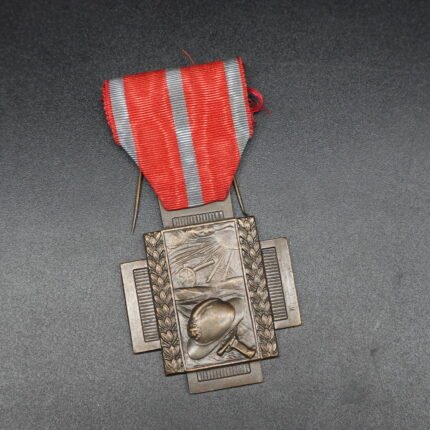
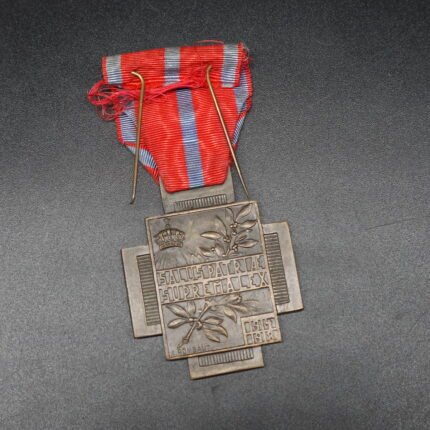
Original Belgian Fire Cross (Vuurkruis / Croix du Feu). The Fire Cross (Vuurkruis / Croix du Feu) is a distinguished Belgian military decoration awarded to holders of the so-called Fire Card, issued to servicemen who spent at least 32 months at the front during the First World War.

The medal was officially instituted by Royal Decree on 6 February 1934. Notably, this decoration could not be awarded posthumously, underscoring its recognition of surviving front-line veterans who endured prolonged combat service.

The decoration features a striking rectangular form with rich symbolic relief details:

  • Obverse:
    At the center is a relief depiction of an abandoned battlefield. In the foreground appear a Belgian World War I helmet, a bayonet, and a howitzer. In the upper right corner, the sun breaks through the clouds — symbolizing hope and victory emerging from the devastation of war.

  • Reverse:
    A large laurel branch stretches diagonally from the lower left to the upper right, intersected by the Latin inscription:
    “SALUS PATRIAE SUPREMA LEX” (“The salvation of the nation is our highest law.”)

    In the upper left corner, a royal crown radiates seven beams downward. In the lower right corner, the years “1914” and “1918” are inscribed one above the other. Beneath the stem of the laurel branch appears the name of the medal’s designer: “A. Rombaut.”

An exceptional and meaningful piece for collectors of Belgian militaria and World War I veteran decorations, representing endurance, sacrifice, and unwavering service at the front.

Belgian Victory Medal 1914–1918 (Overwinningsmedaille) (Price Per Piece)

15,00

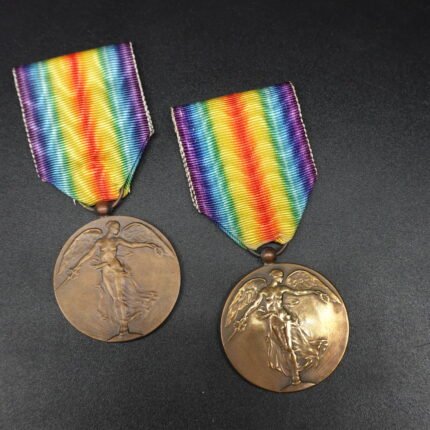
Original Belgian Victory Medal 1914–1918 (“Overwinningsmedaille”) (Inter-Allied Victory Medal / “War for Civilization” Medal) The Belgian Victory Medal 1914–1918, also known as the Inter-Allied Medal 1914–1918 or, after the reverse inscription, the “War for Civilization” Medal, is Belgium’s official Inter-Allied decoration awarded following the Allied victory in the First World War.

Established on 15 July 1919 by King Albert I of the Belgians, this prestigious medal was granted to all members of the mobilized Belgian Army who served between 1 August 1914 and 11 November 1918. Approximately 300,000 to 350,000 veterans received this decoration.

Subsequent decrees extended eligibility to participants in the African campaigns against German colonial forces, as well as civilians who contributed to the war effort, including members of the merchant navy and fishermen.

The medal was worn after the Yser Medal or the Yser Cross in the official order of precedence. In civilian dress, a small ribbon rosette in the medal’s colors was worn in the buttonhole. For formal evening wear, a miniature version of the medal was suspended from a small ribbon or chain. On military uniforms, recipients wore the ribbon bar (baton).

A highly desirable addition for collectors of World War I decorations, Belgian military history, or Inter-Allied commemorative medals.

Note: Price Per Piece!

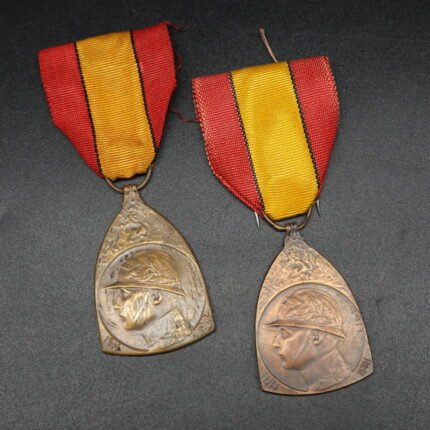
Belgian Commemorative Medal 1914–1918 (Herinneringsmedaille 1914–1918) (Price Per Piece)

15,00

Original Belgian Commemorative Medal 1914–1918 (Herinneringsmedaille 1914–1918). The Herinneringsmedaille 1914–1918 is an official Belgian military decoration awarded to soldiers and civilians who served in the Belgian Armed Forces during the First World War or who rendered distinguished service during the German occupation. This historic decoration honors their courage, sacrifice, and contribution to Belgium’s war effort.

Crafted in bronze-toned metal, the medal features a distinctive triangular design with a rounded lower edge. The obverse displays the profiled portrait of a Belgian soldier wearing the iconic Adrian helmet, surrounded by a wreath of laurel leaves — a classical symbol of honor and victory. The years “1914” and “1918” appear on either side, marking the duration of the Great War.
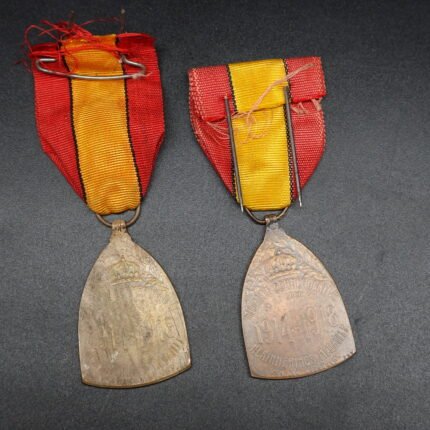
The full-size medal is suspended from a yellow moiré ribbon with a central black stripe and red borders, reflecting the national colors of Belgium.

An excellent addition to any World War I collection, militaria display, or historical archive.

Note: Price Per Piece!

RARE KIA Wehrpass – Panzer-Kompanie 319 (Funklenk) (KIA Liege, Belgium 1944!)

425,00

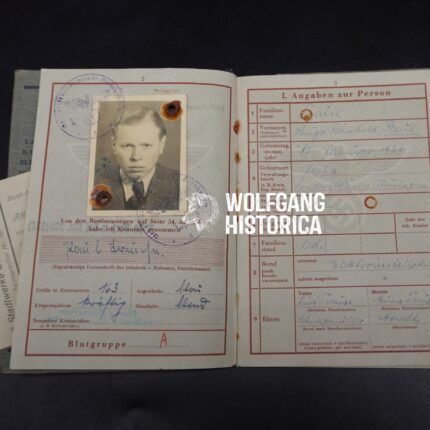
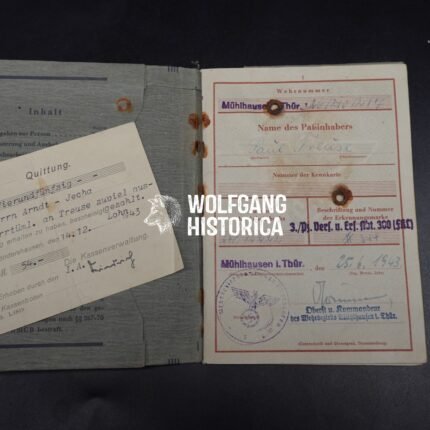
Original Wehrpass of a Schütze Paul Treuse (born 1926), who during the war served with the Panzer-Kompanie 319 (Funklenk) and was only there 2 weeks before he was Killed in Action on September 8, 1944 in Lüttich (Liege/Luik)Belgium. He’s buried inAachen, Waldfriedhof: Block 21d Grab 60.

The Panzer-Kompanie 319 (Funklenk) is rare and scarce unit to find!

  • The unit named Panzer-Kompanie (Funklenk) 319 was a Funklenk (radio-control / remote-control) tank company — i.e., a specialist unit whose role was to operate radio-steered control tanks and remote demolition vehicles. Funklenk companies typically controlled vehicles such as the heavy Borgward IV demolition carrier and the smaller tracked “Goliath” charge, using armored control tanks alongside them.

What “Funklenk” companies were and what they were equipped with

  • Role: Funklenk (Funklenkpanzer / Panzer-Kompanie (Fkl)) units were experimental/specialist formations created to operate radio-steered demolition vehicles and remote demolition charges at the front line. Control tanks (often armoured assault tanks or heavy tanks if available) carried the radio equipment and a crew that remotely drove demolition carriers into close targets, then withdrew them or detonated them.

  • Typical remote demolition vehicles:

    • Borgward IV (B IV) — a large, tracked, remote-controlled demolition carrier capable of carrying a heavy explosive load; commonly paired with control tanks from Funklenk companies.

    • Goliath (Sd.Kfz. 302 / 303) — a much smaller tracked remote-control mine used earlier and in many demolition detachments (often used alongside Borgward vehicles or where smaller charges sufficed).

  • Typical control vehicles: depending on availability Funklenk control vehicles could be:

    • StuG III / StuG variants (commonly used as control vehicles in several Funklenk companies),

    • Panzer IV or even Tiger tanks in some Funklenk companies where heavy radio equipment and range were required — historical examples exist of Funklenk companies equipped or at least provided with Tigers in 1944 (this varied by company and time).

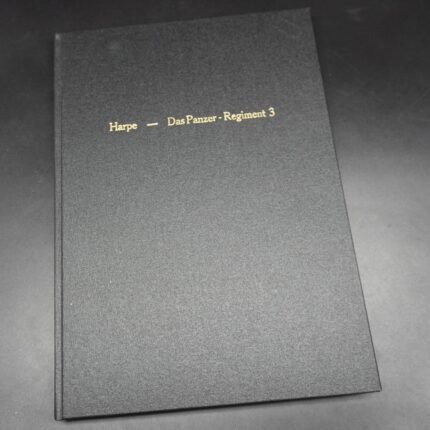
“Harpe – Das Panzer-Regiment 3” Unit History Book

60,00

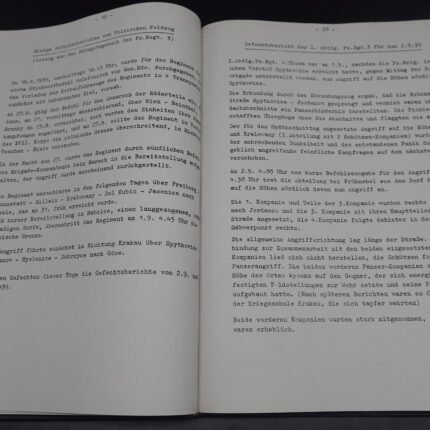
“Harpe – Das Panzer-Regiment 3” Unit History Book. Condition as seen.

Flemish HJ-Vlaanderen “Wat wil de HJ Vlaanderen” Booklet

100,00

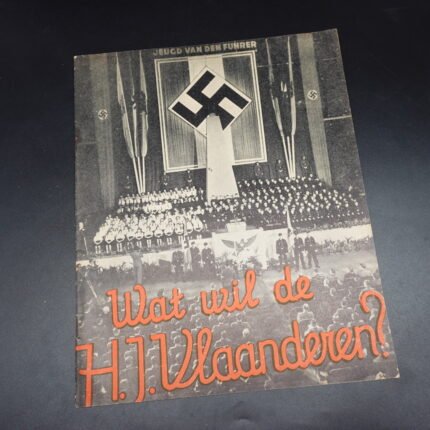
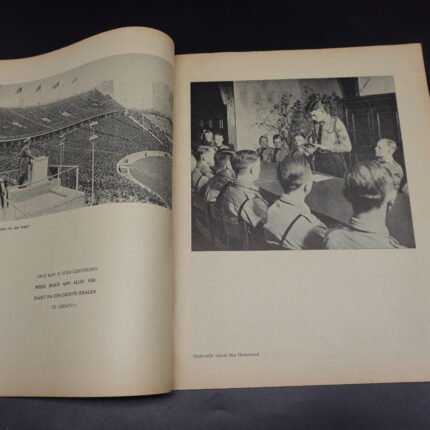
Original Flemish Collaboration “Wat wil de HJ Vlaanderen” Booklet. Complete. Condition as seen.

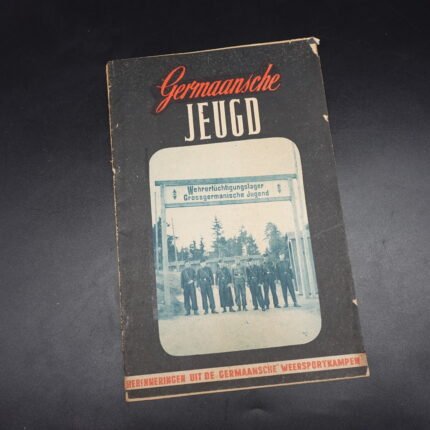
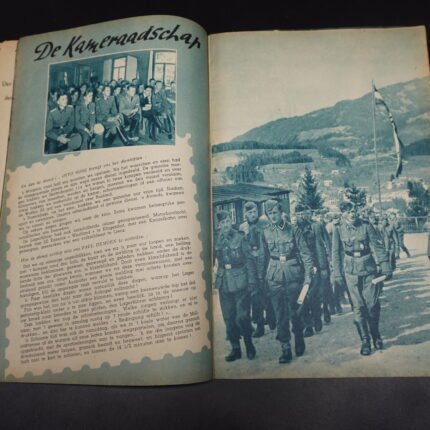
Flemish HJ-Vlaanderen “Germaansche Jeugd” Booklet

75,00

Original Flemish Collaboration “Germaansche Jeugd” Booklet. Complete but the front and reverse is loose. The page I photographed, the photograph on the left, the first W-SS officer is Tony van Dyck! Condition as seen.

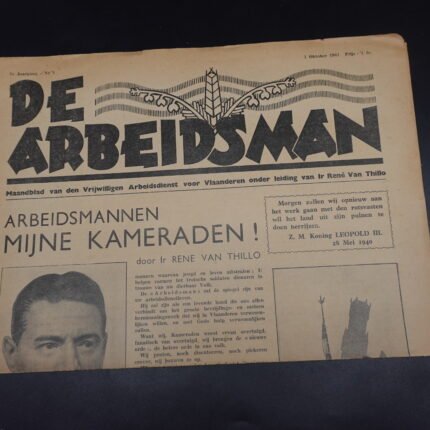
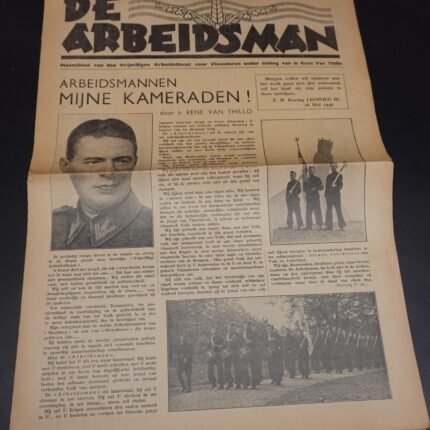
“De Arbeidsman” – VAVV Montly Issue – Oktober 1941

0,01

Original “De Arbeidsman” – VAVV Montly Issue – Oktober 1941. Complete. Condition as seen.

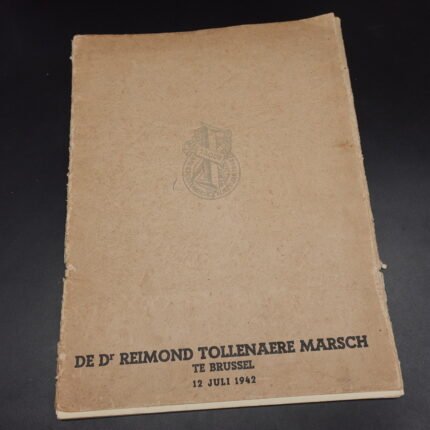
De Dr. Reimond Tollenaere Marsch te Brussel – Folder

0,01

Original “De Dr. Reimond Tollenaere Marsch te Brussel – 12 Juli 1942” Folder. Complete with all pictures but the sides in worn, partial loose condition.

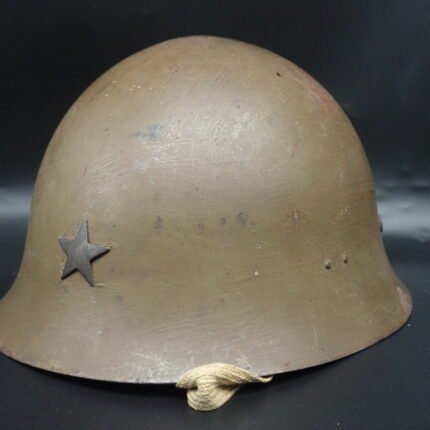
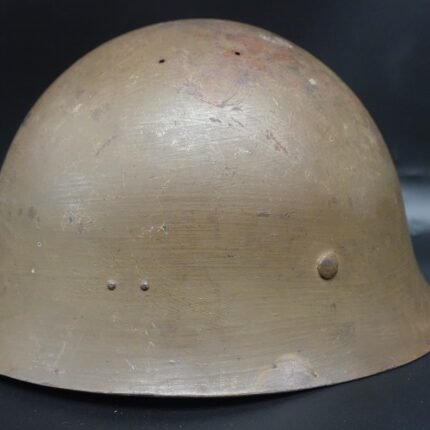
Japanese WWII Type 90 Steel Combat Helmet

995,00

Original WWII Japanese Type 90 combat helmet, which was used from 1930 to 1945 by soldiers of the Imperial Japanese Army. The helmet shell shows some signs of oxidation. In places, the underlayers of bluish paint are visible beneath the brush-applied paint.
The army star is fixed to the front part; it also serves as a rivet. On the rear inner rim of the hull, the kanji 少is stamped into the steel and painted white over it, indicating that it is a small size. Next to it, we can see the Kobe Seiko arsenal logo stamped in the steel (an S in a diamond) as well as a partially visible number.

The kanji indicating the size is also present on the leather band of the headdress. The leather helmet is in good condition. It has canvas compartments containing padding (one of the compartments is now empty) . One of them bears a Japanese army stamp indicating the production date of Showa 15 (1940).

The canvas chin strap is complete

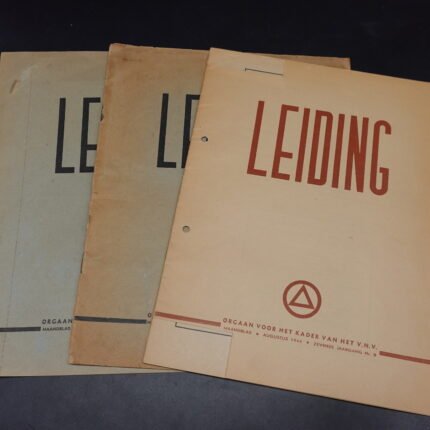
VNV (Vlaamsch Nationaal Verbond) – “Leiding” – Single Issue: AUGUST 1944

40,00

Authentic original issues of “Leiding” published by the Vlaamsch Nationaal Verbond (VNV) during World War II.

Available issues:

  • August 1944

Important condition note:
The very rare August 1944 issue (the last issue printed) shows visible damage, including two cut-outs on the front cover. Please review the photos carefully.

Some issues may have loose pages due to age and paper fragility.

Condition: Sold as shown in the photos. These are original wartime publications and show age-related wear.

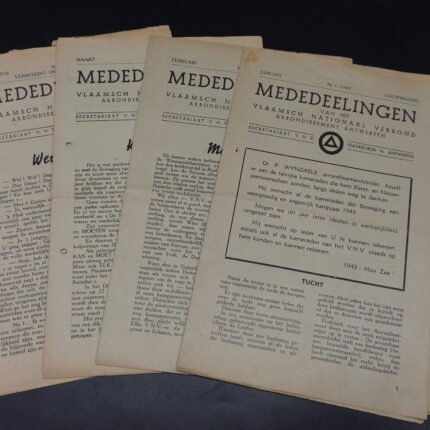
VNV Mededeelingen – 1943 – (Price Per Piece)

40,00

Authentic original issues of “Mededeelingen” published by the Vlaamsch Nationaal Verbond (VNV), dated 1943. Historical World War II–era printed material.

Available issues:

  • No. 1 / 1943

  • No. 4 / 1943

  • No. 6 / 1943

  • No. 16 / 1943

Condition: As shown in the photos. Please review images carefully for details.

Purchase options:

  • Available individually (random issue send)

  • Or as a complete set of 4 issues (Add 4x to Basket)

Price is per piece. If purchasing specific issue numbers, please indicate your desired issue(s) in the order notes. Feel free to contact me if you have any questions regarding condition or availability.

Arbeitsbuch – Dresden (1947-1955)

10,00

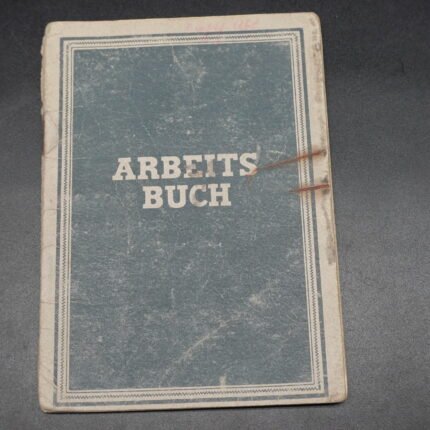
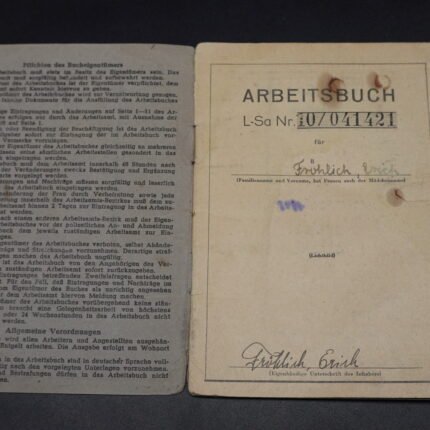
Original Arbeitsbuch – Dresden (1947-1955). Condition as seen.
Pages 12-13 filled with work entries – didn’t photograph that.

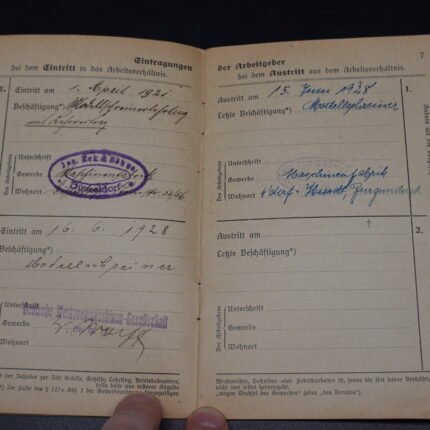
German Arbeitsbuch (1920’s) – Deutsche Werkzeugmaschinen-Gesellschaft

10,00

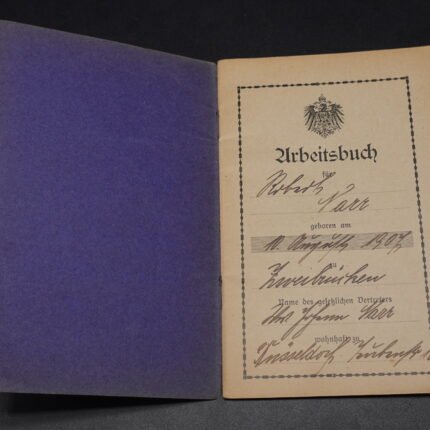
Original German Arbeitsbuch (1920’s) – Deutsche Werkzeugmaschinen-Gesellschaft. Condition as seen.

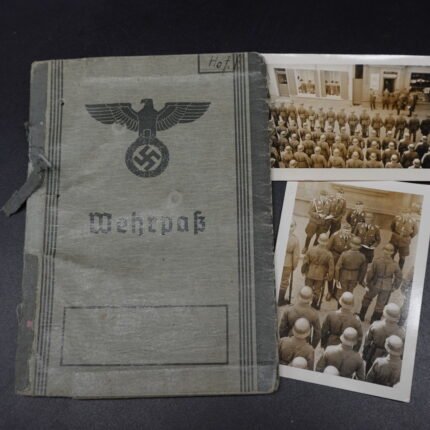
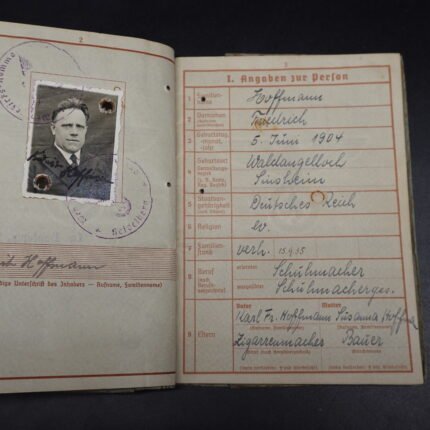
LW Wehrpass – LW-Baukp. & Eisenbahn-Flak-Abt. 416 (Westen 1944!) (1x Award)

95,00

Original Wehrpass of a Luftwaffe Gefreiter serving with Luftwaffe-Bau-Kompanie 2/18/XII and 2/10/XVII and with schwere Flak-Abteilung 271, schwere Eisenbahn-Flak-Abteilung 418 and 416. During his service he earned the Winterschlacht im Osten 1941/42. More interestingly, his unit (Eisb.Flak.Abt.416) served in the West in 1944! Includes 2 photos. Condition as seen.

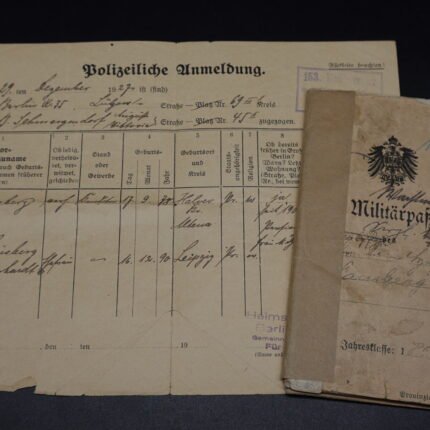
Imperial German WWI Militärpaß – Munitions-Kolonne (Verdun, Ypern.. Earned EK2)

45,00

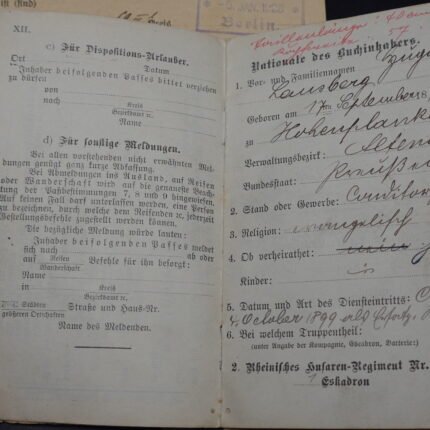
Offered is an original Imperial German Militärpaß issued to Hugo Lansberg, a veteran whose documented service spans the Kaiserreich, the entirety of the First World War, and the immediate postwar period.

Hugo Lansberg was born on 17 September 1878 in Hohenplanken and entered military service in 1899, initially serving with the 1. Eskadron, 2. Rheinisches Husaren-Regiment Nr. 9, reflecting a long pre-war professional military career. With the outbreak of the Great War, Lansberg was deployed on the Western Front and saw extensive frontline service in France, including major combat zones such as Verdun, the Aisne, and Flanders.

Prior to 13.12.1916, he served under the 10. Infanterie-Division. From 13 December 1916 until 12 January 1919, Lansberg served with a leichte Munitions-Kolonne (No. 745), a role critical to sustaining frontline operations under fire. During this period, he rose through the ranks to Non-Commissioned Officer, clearly indicating reliability, experience, and leadership under combat conditions.

Most notably, Lansberg was awarded the Eisernes Kreuz 2. Klasse on 5 May 1917, earned while serving with the light ammunition column—an uncommon and highly desirable detail, as EK2 awards to logistical and support units reflect service under particularly dangerous conditions rather than ceremonial recognition.

Following the armistice, his Militärpaß records continued service from 13 January 1919 with Feldartillerie-Regiment 46, placing him among the transitional forces during the turbulent postwar period.

Highlights:

  • Long pre-war and wartime service (1899–1919)

  • Western Front combat including Verdun

  • EK2 award to an ammunition column soldier

  • Promotion to NCO during wartime

  • Well-documented, continuous service record

A highly attractive Militärpaß with excellent historical depth, combining cavalry origins, frontline Western Front service, an Iron Cross award, and postwar continuity. An outstanding piece for collectors of Imperial German documents, EK recipients, or Western Front veterans.

NSKOV Kriegsopferversorgung Mitgliedskarte (Leipzig)

30,00

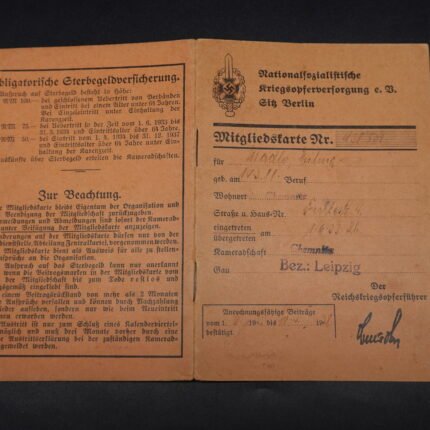
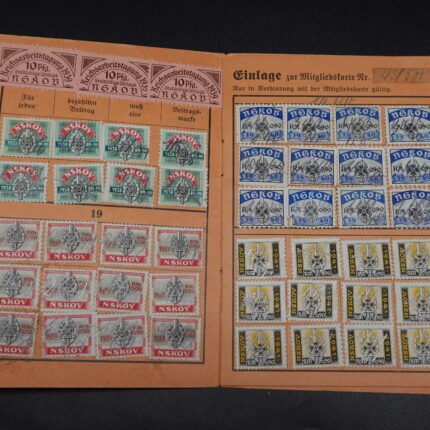
Original Mitgliedskarte (Membership card) of the NSKOV (Nationalsozialistische Kriegsopferversorgung) (National Socialist War Victim’s Care). Gau Leipzig. Complete with stamps. Condition as seen.

DRL-Sportabzeichen in Bronze (Christian Lauer, Nürnberg)

30,00

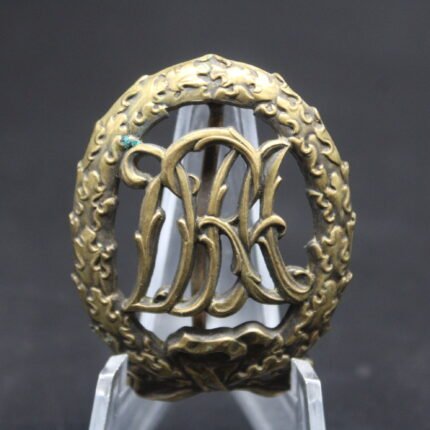
Original DRL-Sportabzeichen in Bronze (DRL-Sportsbadge in Bronze). Maker marked: Christian Lauer, Nürnberg and M.Scha. 33918. Condition as seen.

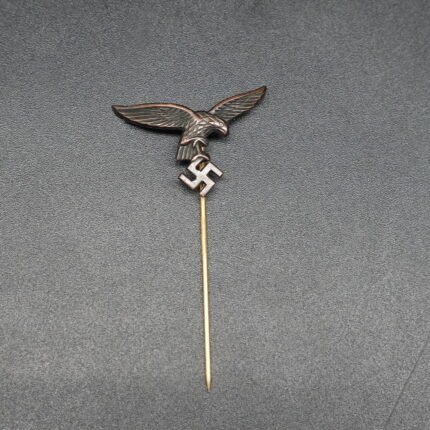
Luftwaffe Civil Stickpin

80,00

Original Luftwaffe (Air Force) civil stickpin. Cupal construction with soldered on pin. Condition as seen.

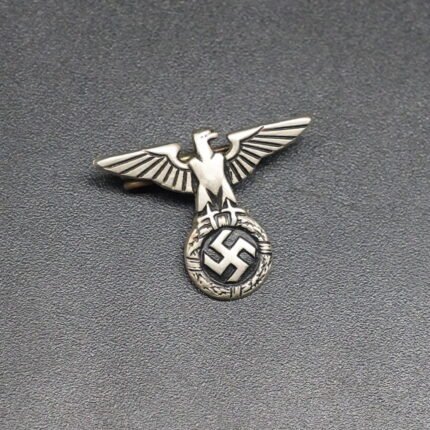
NSDAP (Political Party) Civil Pin (Asmann)

65,00

Original NSDAP (Political Party) civil pin. Cupal construction with soldered on pin. Maker marked with A for Firma Asmann & Sohn, Lüdenscheid and Ges.Gesch. Condition as seen.