


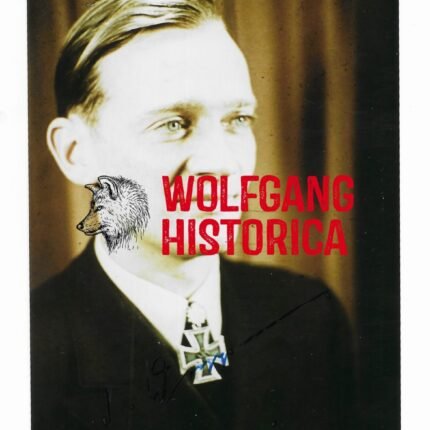
Otto Wuppermann – Schnellboot “S-60” & “S-56” (Eichenlaub)
€35,00Original Postwar Signature on a Postwar Photo of Otto Wuppermann. Oberleutnant zur See Otto Wuppermann (15.12.1916 in Berlin † 15.04.2005 in Osnabrück) earned the Ritterkreuz des Eisernen Kreuzes on August 3, 1941 as Oberleutnant zur See und Kommandant of Schnellboot “S-60” and the Eichenlaub on April 14, 1943 Oberleutnant zur See und Kommandant of Schnellboot “S-56”.
Provenance: This signature comes from one of the largest postwar signature collection I’ve ever commissioned. This collection was started by a Waffen-SS Veteran, Werner H., in the 1950’s until he passed away.
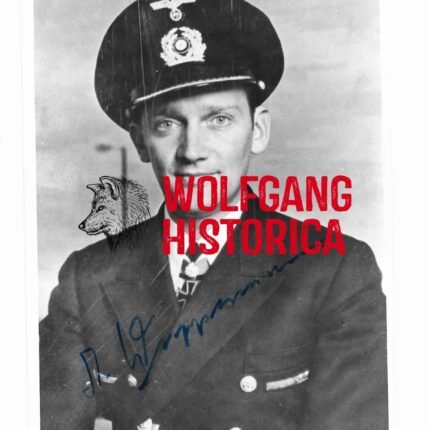
Otto Wuppermann – Schnellboot “S-60” & “S-56” (Eichenlaub)
€0,01Original Postwar Signature on a Postwar Photo of Otto Wuppermann. Oberleutnant zur See Otto Wuppermann (15.12.1916 in Berlin † 15.04.2005 in Osnabrück) earned the Ritterkreuz des Eisernen Kreuzes on August 3, 1941 as Oberleutnant zur See und Kommandant of Schnellboot “S-60” and the Eichenlaub on April 14, 1943 Oberleutnant zur See und Kommandant of Schnellboot “S-56”.
Provenance: This signature comes from one of the largest postwar signature collection I’ve ever commissioned. This collection was started by a Waffen-SS Veteran, Werner H., in the 1950’s until he passed away.
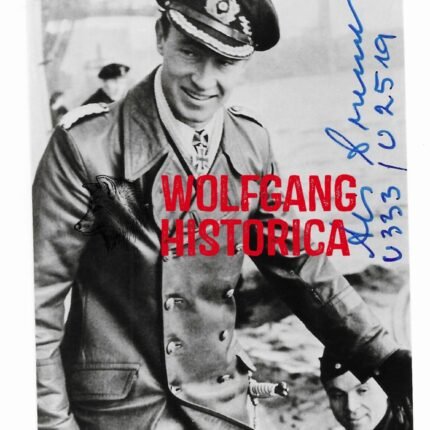
Peter-Erich Cremer – Kommandant of “U-333” (Eichenlaub)
€55,00Original Postwar Signature on a Postwar Photo of Peter-Erich “Ali” Cremer. Korvettenkapitän Peter-Erich Cremer (25.03.1911 † 05.07.1992) earned the Ritterkreuz des Eisernen Kreuzes on June 5, 1942 as Kapitänleutnant und Kommandant of U-333 and the Eichenlaub on December 31, 1944 as Kapitänleutnant und Kommandant of U-96.
Provenance: This signature comes from one of the largest postwar signature collection I’ve ever commissioned. This collection was started by a Waffen-SS Veteran, Werner H., in the 1950’s until he passed away.
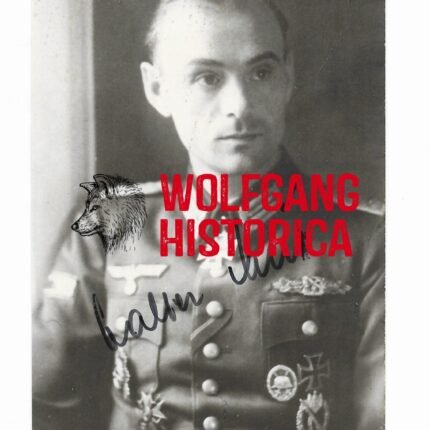
Walter Lux – Grenadier-Regiment 316 (212. Infanterie-Division)
€30,00Original Postwar Signature on a Postwar Photo of Walter Lux. Major Water Lux (24.04.1909 in Eydtkuhnen † 10.05.1984 in Dachau) earned the Deutsches Kreuz in Gold on September 26, 1942 with Infanterie-Regiment 517 and the Ritterkreuz des Eisernen Kreuzes on July 10, 1944 as Major und Führer of the Grenadier-Regiment 316 of the 212. Infanterie-Division.
Provenance: This signature comes from one of the largest postwar signature collection I’ve ever commissioned. This collection was started by a Waffen-SS Veteran, Werner H., in the 1950’s until he passed away.
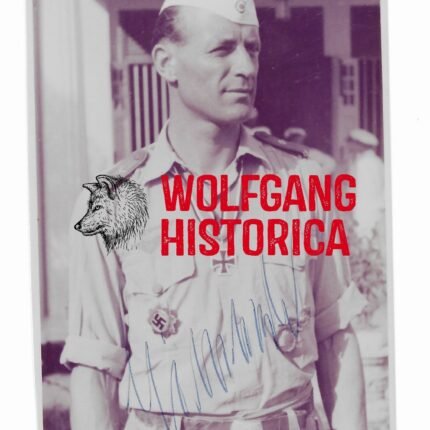
Johann Limbach – Wachoffizier of “U-181”
€55,00Original Postwar Signature on a Postwar Photo of Johann Limbach. Oberleutnant zur See Johann Limbach (09.12.1912 in Krefeld-Uerdingen † 06.03.1993 in Düsseldorf) earned the Ritterkreuz des Eisernen Kreuzes on February 6, 1945 as Oberleutnant zur See und 1. Wachtoffizier of Uboot “U-181”.
Provenance: This signature comes from one of the largest postwar signature collection I’ve ever commissioned. This collection was started by a Waffen-SS Veteran, Werner H., in the 1950’s until he passed away.
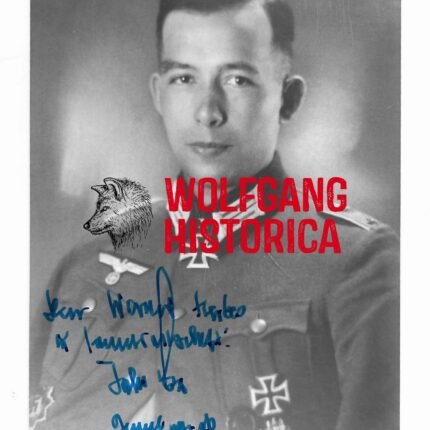
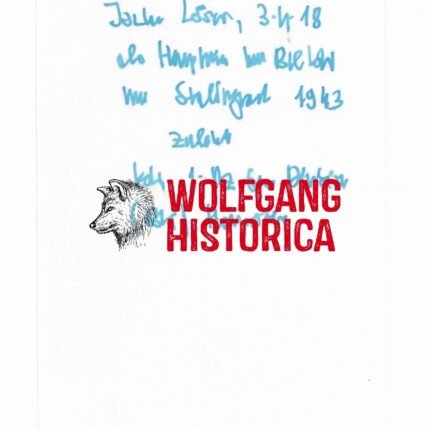
Hans-Joachim Löser – Füsilier-Regiment 230 (76.Inf.Div.) (Stalingrad, On Last Flight to leave Stalingrad!)
€35,00Original Postwar Signature on a Postwar Photo of Hans-Joachim Löser. Hauptmann Hans-Joachim Löser (04.04.1918 in Weimar † 13.02.2001 in Prien) earned the Ritterkreuz des Eisernen Kreuzes on January 20, 1943 as Hauptmann und Kommandeur of the III. Bataillon/ Füsilier-Regiment 230 of the 76. Infanterie-Division. He earned the Ritterkreuz during the Battle for Stalingrad!
During the fighting for the Stalingrad pocket in the winter of 1942/43, Hauptmann Löser especially distinguished himself for his defense of a German main dressing station at Rossoschka. For this he would be decorated with the Knight’s Cross. Hauptmann Löser was severely wounded during the Stalingrad siege and was evacuated on the last flight to leave Stalingrad.
Provenance: This signature comes from one of the largest postwar signature collection I’ve ever commissioned. This collection was started by a Waffen-SS Veteran, Werner H., in the 1950’s until he passed away.

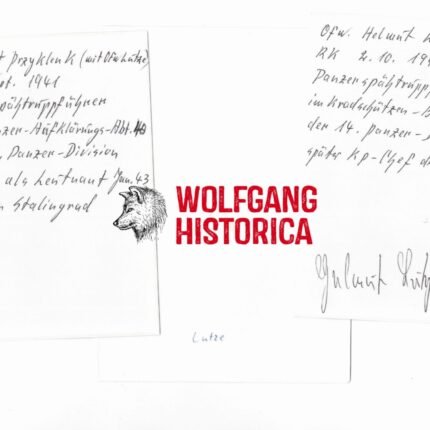
Helmut Lutze – Kradschützen-Bataillon 64 (Stalingrad)
€30,00Original Postwar Signature on a Postwar Photo of Helmut Lutze. Oberfeldwebel Helmut Lutze (05.07.1917 in Zscherben † 29.07.2013 in Planegg-München) earned the Ritterkreuz des Eisernen Kreuzes on October 2, 1942 as Oberfeldwebel in the 1. Kompanie/ Kradschützen-Bataillon 64 of the 14. Panzer-Division. He earned the Ritterkreuz during the Battle for Stalingrad!
Provenance: This signature comes from one of the largest postwar signature collection I’ve ever commissioned. This collection was started by a Waffen-SS Veteran, Werner H., in the 1950’s until he passed away.
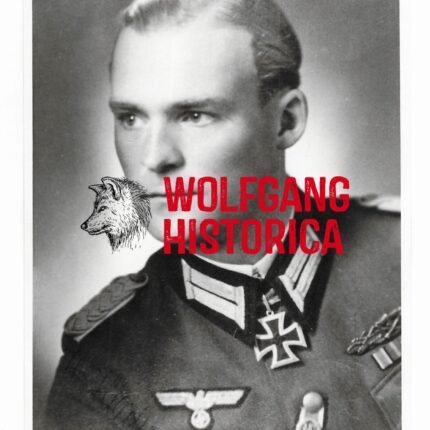
Hugo Laubereau – Grenadier-Regiment 61 (7. Infanterie-Division)
€20,00Original Postwar Signature on a Postwar Photo of Hugo Laubereau. Oberst Hugo Laubereau (20.01.1904 in Offenburg † 18.11.1997 in Regensburg) earned the Ritterkreuz des Eisernen Kreuzes on November 22, 1943 as Oberstleutnant und Kommandeur of the Grenadier-Regiment 61 of the 7. Infanterie-Division.
Provenance: This signature comes from one of the largest postwar signature collection I’ve ever commissioned. This collection was started by a Waffen-SS Veteran, Werner H., in the 1950’s until he passed away.
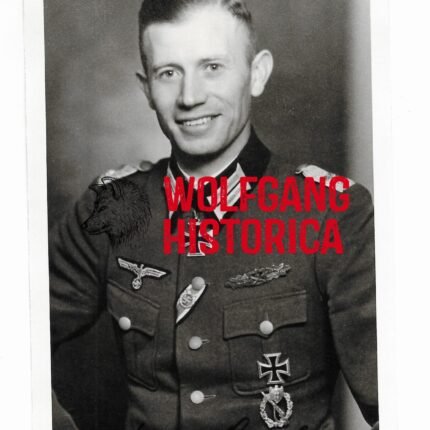
Heinz Laebe – Grenadier-Regiment 44 (11.Infanterie-Division)
€25,00Original Postwar Signature on a Postwar Photo of Heinz Oskar Laebe. Oberst Heinz Laebe (05.02.1913 in Peine † 15.02.1999 in Peine) earned the Ritterkreuz des Eisernen Kreuzes on March 7, 1944 as Major und Kommandeur of the I. Bataillon/ Grenadier-Regiment 44 and the Eichenlaub on April 29, 1945 as Oberst und Kommandeur of the Grenadier-Regiment 44 of the 11. Infanterie-Division.
Provenance: This signature comes from one of the largest postwar signature collection I’ve ever commissioned. This collection was started by a Waffen-SS Veteran, Werner H., in the 1950’s until he passed away.
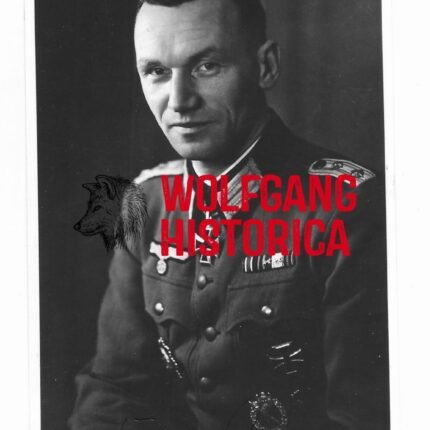
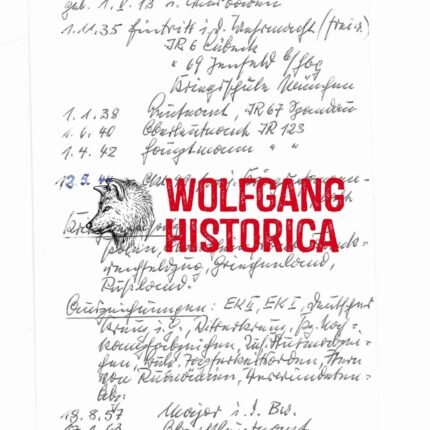
Karl-Otto Leukefeld – Infanterie-Regiment 123 (50.Inf.Div.)
€20,00Original Postwar Signature on a Postwar Photo of Karl-Otto Leukefeld. Hauptmann Karl-Otto Leukefeld (01.05.1913 in Wiesbaden † 24.05.2008 in Celle) earned the Ritterkreuz des Eisernen Kreuzes on October 23, 1941 as Oberleutnant und Chef of the 1. Kompanie/ Infanterie-Regiment 123 of the 50. Infanterie-Division.
Provenance: This signature comes from one of the largest postwar signature collection I’ve ever commissioned. This collection was started by a Waffen-SS Veteran, Werner H., in the 1950’s until he passed away.
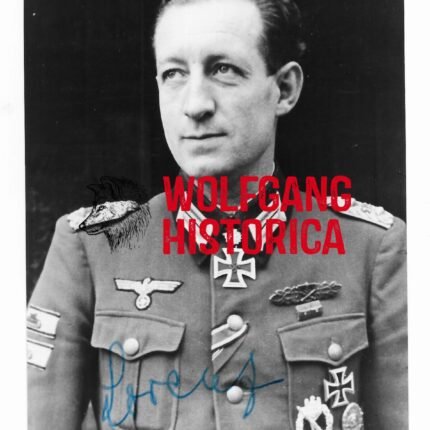
Erich Lorenz – Grenadier-Regiment 287 (96.Inf.Div.) (Eichenlaub & NKIG!)
€45,00Original Postwar Signature on a Postwar Photo of Erich Lorenz. Oberst Erich Lorenz (31.08.1905 in Wattenscheid † 10.12.1984 in Bochum) earned the Ritterkreuz on November 14, 1943 as Major und Kommandeur of the I. Bataillon/ Grenadier-Regiment 287 and the Eichenlaub on May 4, 1944 as Oberstleutnant und Führer of Grenadier-Regiment 287 of the 96. Infanterie-Division. He earned the Nahkampfspange in Gold on March 12, 1945 as Oberst und Kommandeur of Grenadier-Regiment 287!
Provenance: This signature comes from one of the largest postwar signature collection I’ve ever commissioned. This collection was started by a Waffen-SS Veteran, Werner H., in the 1950’s until he passed away.
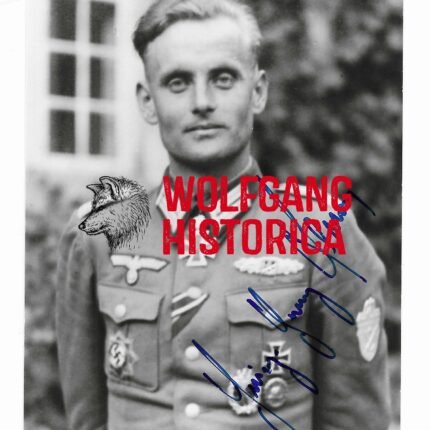
Heinz-Georg Lemm – Füsilier-Regiment 27 (Ardennes) (Schwertern)
€40,00Original Postwar Signature on a Postwar Photo of Heinz-Georg Lemm. Oberstleutnant Heinz-Georg Lemm (01.06.1919 in Schwerin † 17.11.1994 in Ruppichteroth) earned the Deutsches Kreuz in Gold on December 19, 1941 with Infanterie-Regiment 27, the Ritterkreuz on April 14, 1943 as Hauptmann und Kommandeur of I. Bataillon/ Füsilier-Regiment 27 of the 12. Infanterie-Division, the Eichenlaub on July 11, 1944 as Major und Kommandeur of I. Bataillon/ Füsilier-Regiment 27 of the 12. Infanterie-Division and the Schwertern on March 15, 1945 as Oberstleutnant und Kommandeur of Füsilier-Regiment 27 of the 12. Volksgrenadier-Division. He also earned the Nahkampfspange in Silber!
Schwertern: Awarded for the leadership of his Regiment in the battles around Aachen and in the Ardennes Offensive. In this time his unit’s most notable successes were the capture of Eschweiler and part of Stolberg, as well as breaking through the Losheim Gap during the Battle of the Bulge.
Provenance: This signature comes from one of the largest postwar signature collection I’ve ever commissioned. This collection was started by a Waffen-SS Veteran, Werner H., in the 1950’s until he passed away.
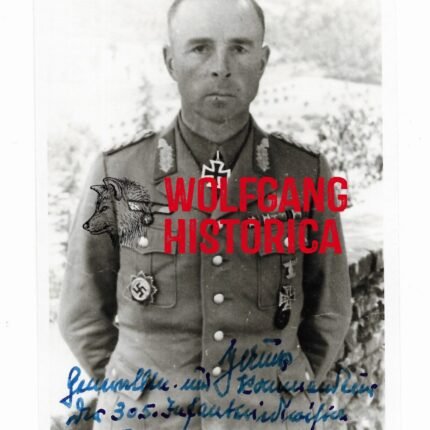
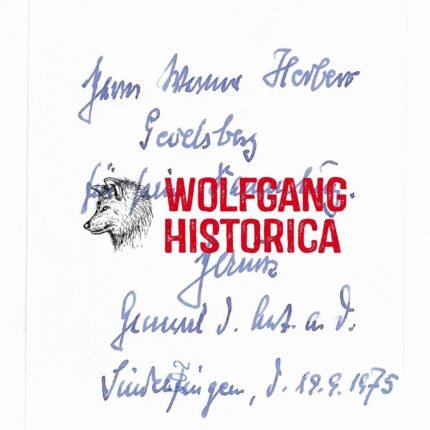
Friedrich-Wilhelm Hauck – 305. Infanterie-Division (Italy)
€55,00Original Postwar Signature on a Postwar Photo of Friedrich-Wilhelm Hauck. Generalleutnant Friedrich-Wilhelm Hauck (10.01.1897 in Breslau † 15.04.1979 in Überlingen) earned the Ritterkreuz des Eisernen Kreuzes on June 11, 1944 as Generalleutnant und Kommandeur of the 305. Infanterie-Division.
Provenance: This signature comes from one of the largest postwar signature collection I’ve ever commissioned. This collection was started by a Waffen-SS Veteran, Werner H., in the 1950’s until he passed away.

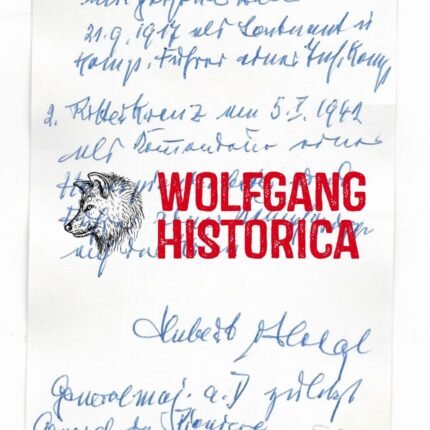
Hubertus-Maria Ritter von Heigl – Pionier-Bataillon 70
€45,00Original Postwar Signature on a Postwar Photo of Hubertus-Maria Ritter von Heigl. Generalmajor Hubertus-Maria Ritten von Heigl (10.11.1897 in Siegenburg † 24.01.1985 in München) earned the Ritterkreuz des Eisernen Kreuzes on January 13, 1942 as Oberstleutnant und Kommandeur of the Pionier-Bataillon 70.
Provenance: This signature comes from one of the largest postwar signature collection I’ve ever commissioned. This collection was started by a Waffen-SS Veteran, Werner H., in the 1950’s until he passed away.

Heinrich Baron von Behr – Panzergrenadier-Regiment 200 (90.Pz.Gren.Div.) (Italy) (Eichenlaub)
€75,00Original Postwar Signature on a Postwar Photo of Heinrich Baron von Behr. Generalmajor Heinrich Baron von Behr (26.06.1902 in Roennen † 14.08.1983 in Bonn) earned the Ritterkreuz des Eisernen Kreuzes on February 23, 1944 as Oberst und Kommandeur of the Grenadier-Regiment 200 and the Eichenlaub on January 9, 1945 as Oberst und Kommandeur of the Panzergrenadier-Regiment 200 of the 90. Panzergrenadier-Division.
Provenance: This signature comes from one of the largest postwar signature collection I’ve ever commissioned. This collection was started by a Waffen-SS Veteran, Werner H., in the 1950’s until he passed away.
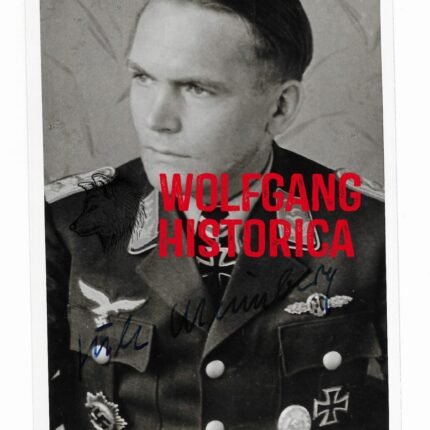
Julius Meimberg – Jagdgeschwader 53
€30,00Original Postwar Signature on a Postwar Photo of Julius Meimberg. Hauptmann Julius Meimberg (11.01.1917 † 17.01.2012) earned the Deutsches Kreuz in Gold on October 29, 1942 as Oberleutnant in the 11. Staffel/ Jagdgeschwader 2 and the Ritterkreuz on October 24, 1944 as Hauptmann und Gruppenkommandeur of the II. Gruppe/ Jagdgeschwader 53 “Pik As”.
Awarded for his wartime successes up to that point. By the end of the war these amounted to about 250 sorties flown, during which he achieved 53 aerial victories in the West.
Provenance: This signature comes from one of the largest postwar signature collection I’ve ever commissioned. This collection was started by a Waffen-SS Veteran, Werner H., in the 1950’s until he passed away.
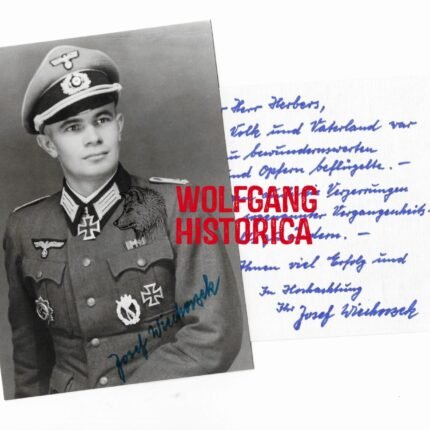
Josef Wiechoczek – Jäger-Regiment 28 (8. Jäger-Division)
€30,00Original Postwar Signature on a Postwar Photo of Josef Wiechoczek. Leutnant Josef Wiechoczek (18.11.1915 in Oberschlesien † 05.01.1999 in Bad Säckingen) earned the Ritterkreuz des Eisernen kreuzes on December 9, 1944 as Leutnant und Führer in the 5. Kompanie/ Jäger-Regiment 28 of the 8. Jäger-Division.
Provenance: This signature comes from one of the largest postwar signature collection I’ve ever commissioned. This collection was started by a Waffen-SS Veteran, Werner H., in the 1950’s until he passed away.
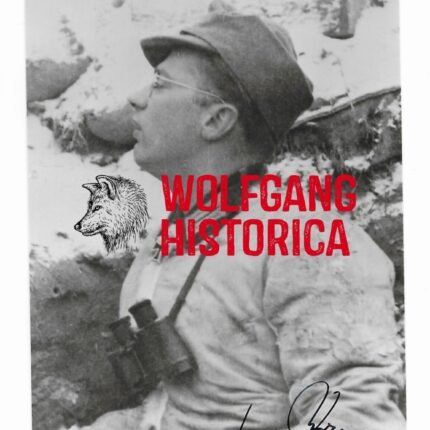
Franz Wipfler – Jäger-Regiment 56 (5. Jäger-Division)
€30,00Original Postwar Signature on a Postwar Photo of Franz Wipfler. Feldwebel Franz Wipfler (24.09.1915 † 17.11.1998) earned the Ritterkreuz des Eisernen kreuzes on May 12, 1942 as Feldwebel und Zugführer in the 11. Kompanie/ Jäger-Regiment 56 of the 5. Jäger-Division.
Provenance: This signature comes from one of the largest postwar signature collection I’ve ever commissioned. This collection was started by a Waffen-SS Veteran, Werner H., in the 1950’s until he passed away.
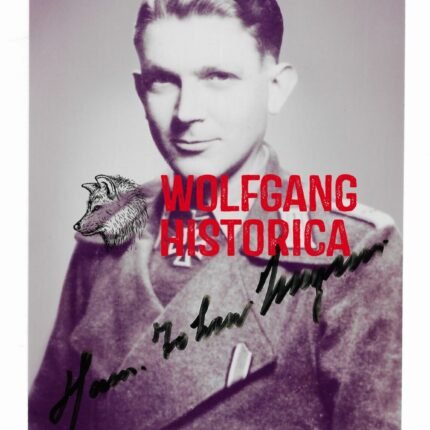
Hans-Joachim Wagner – Sturmgeschütz-Brigade 286
€35,00Original Postwar Signature on a Postwar Photo of Hans-Joachim Wagner. Hauptmann Hans-Joachim Wagner (28.12.1913 in Neubrandenburg † 09.06.1985 in Kiel) earned the Ritterkreuz des Eisernen Kreuzes on January 25, 1945 as Hauptmann with the Sturmgeschütz-Brigade 286.
Provenance: This signature comes from one of the largest postwar signature collection I’ve ever commissioned. This collection was started by a Waffen-SS Veteran, Werner H., in the 1950’s until he passed away.
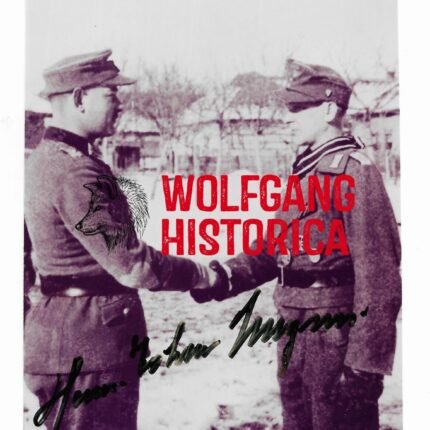
Hans-Joachim Wagner – Sturmgeschütz-Brigade 286
€35,00Original Postwar Signature on a Postwar Photo of Hans-Joachim Wagner. Hauptmann Hans-Joachim Wagner (28.12.1913 in Neubrandenburg † 09.06.1985 in Kiel) earned the Ritterkreuz des Eisernen Kreuzes on January 25, 1945 as Hauptmann with the Sturmgeschütz-Brigade 286.
Provenance: This signature comes from one of the largest postwar signature collection I’ve ever commissioned. This collection was started by a Waffen-SS Veteran, Werner H., in the 1950’s until he passed away.
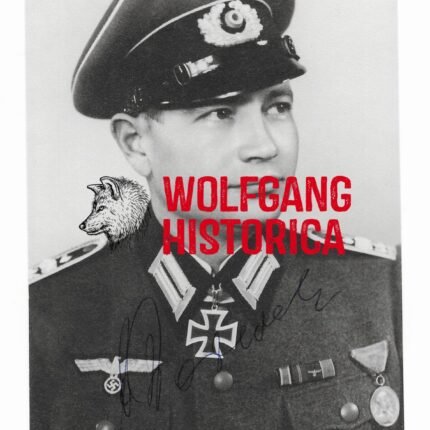
Friedrich-Karl Warwel – Grenadier-Regiment 477 (257.Inf.Div.)
€0,01Original Postwar Signature on a Postwar Photo of Friedrich-Karl Warwel. Stabsfeldwebel Friedrich-Karl Warwel (11.05.1912 in Molthainen † 02.04.1980 in Bomlitz-Benefeld) earned the Ritterkreuz des Eisernen Kreuzes on September 13, 1943 as Stabsfeldwebel und Zugführer in the 14. Kompanie/ Grenadier-Regiment 477 of the 257. Infanterie-Division.
Provenance: This signature comes from one of the largest postwar signature collection I’ve ever commissioned. This collection was started by a Waffen-SS Veteran, Werner H., in the 1950’s until he passed away.

Günter Halm – Panzer-Grenadier-Regiment 104 (15.Pz.Div.)
€25,00Original Postwar Signature on a Postwar Photo of Günter Halm. Leutnant Günter Halm (27.08.1922 † 26.09.2017) earned the Ritterkreuz on July 29, 1942 as Grenadier und Richtschütze in the Pakzug of the Regimentsstabskompanie/ Panzer-Grenadier-Regiment 104 of the 15. Panzer-Division.
Knight’s Cross: “Awarded for his actions at El Alamein on the 21.07.1942. On this day his Pak was attacked by a large Allied tank force (probably the 23rd British tank brigade). The battle opened with his gun shield being badly damaged and the no. 2 loader being wounded. Another hit smashed the gun’s sights. However the gunner, Halm, did not lose his nerve as the hostile tanks got closer. With deadly precision he destroyed 7 Allied tanks in a short time, including a command tank. More tanks were destroyed by the other German defenders, with 96 allied tanks being destroyed in the battle on this day altogether.”
Provenance: This signature comes from one of the largest postwar signature collection I’ve ever commissioned. This collection was started by a Waffen-SS Veteran, Werner H., in the 1950’s until he passed away.

Johannes Wiese – Jagdgeschwader 52 (Eichenlaub)
€45,00Original Postwar Signature on a Postwar Photo of Johannes “Hannes” Wiese. Major Johannes Wiese (07.03.1915 in Breslau † 16.08.1991 in Kirchzarten) earned the Ritterkreuz des Eisernen Kreuzes on January 5, 1943 as Hauptmann und Staffelkapitän of the 2. Staffel/ Jagdgeschwader 52 and the Eichenlaub on March 2, 1944 as Major und Kommandeur of the I. Gruppe/ Jagdgeschwader 52.
Johannes Wiese achieved a total of 133 victories (and 75 unconfirmed) in 480 sorties.
Provenance: This signature comes from one of the largest postwar signature collection I’ve ever commissioned. This collection was started by a Waffen-SS Veteran, Werner H., in the 1950’s until he passed away.

Johannes Wiese – Jagdgeschwader 52 (Eichenlaub)
€45,00Original Postwar Signature on a Postwar Photo of Johannes “Hannes” Wiese. Major Johannes Wiese (07.03.1915 in Breslau † 16.08.1991 in Kirchzarten) earned the Ritterkreuz des Eisernen Kreuzes on January 5, 1943 as Hauptmann und Staffelkapitän of the 2. Staffel/ Jagdgeschwader 52 and the Eichenlaub on March 2, 1944 as Major und Kommandeur of the I. Gruppe/ Jagdgeschwader 52.
Johannes Wiese achieved a total of 133 victories (and 75 unconfirmed) in 480 sorties.
Provenance: This signature comes from one of the largest postwar signature collection I’ve ever commissioned. This collection was started by a Waffen-SS Veteran, Werner H., in the 1950’s until he passed away.

Willi Unger – Jagdgeschwader 3 “Udet”
€25,00Original Postwar Signature on a Postwar Photo of Willi Unger. Leutnant Willi Unger (27.03.1920 † 23.06.2005) earned the Deutsches Kreuz in Gold in August 1944 with the 12. Staffel/ Jagdgeschwader 3 and the Ritterkreuz des Eisernen Kreuzes on October 23, 1944 as Fahnenjunker-Feldwebel und Flugzeugführer in the IV. Gruppe/ Jagdgeschwader 3 “Udet”.
Provenance: This signature comes from one of the largest postwar signature collection I’ve ever commissioned. This collection was started by a Waffen-SS Veteran, Werner H., in the 1950’s until he passed away.
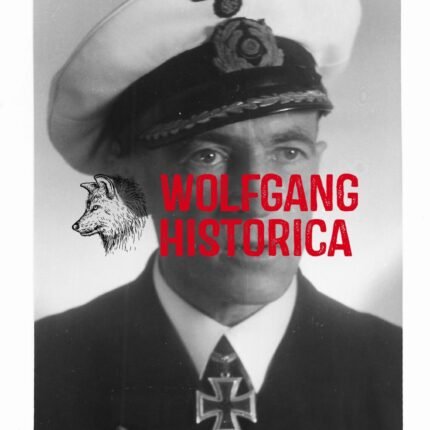
Friedrich Wunderlich – 14. U-Jagdflottille
€0,01Original Postwar Signature on a Postwar Photo of Friedrich Wunderlich. Korvettenkapitän Friedrich Wunderlich (13.08.1891 in Bückeburg † 27.03.1977 in München) earned the Ritterkreuz des Eisernen Kreuzes on June 10, 1944 as Korvettenkapitän z.V. und Chef of the 14. U-Jagdflottille. Good condition.
Provenance: This signature comes from one of the largest postwar signature collection I’ve ever commissioned. This collection was started by a Waffen-SS Veteran, Werner H., in the 1950’s until he passed away.

Günther Viezenz – Grenadier-Regiment 7 (Single handedly destroyed 21 Tanks!)
€55,00Original Postwar Signature on a Postwar Photo of Günther Viezenz. Oberstleutnant Günther Viezenz (01.02.1921 in Göhlenau † 14.01.1999 in Köln) earned the Ritterkreuz des Eisernen Kreuzes on July 1, 1944 as Oberleutnant und Chef of the 10. Kompanie/ Grenadier-Regiment 7 of the 252. Infanterie-Division.
The record-holder of the Tank Destruction Badge was Oberstleutnant Günther Viezenz. He single handedly destroyed 21 enemy tanks with hand held explosives such as a panzerfaust, satchel charge or grenade. He awarded four Tank Destruction Badges in Gold and one in Silver.
Provenance: This signature comes from one of the largest postwar signature collection I’ve ever commissioned. This collection was started by a Waffen-SS Veteran, Werner H., in the 1950’s until he passed away.

Günther Viezenz – Grenadier-Regiment 7 (Single handedly destroyed 21 Tanks!)
€55,00Original Postwar Signature on a Postwar Photo of Günther Viezenz. Oberstleutnant Günther Viezenz (01.02.1921 in Göhlenau † 14.01.1999 in Köln) earned the Ritterkreuz des Eisernen Kreuzes on July 1, 1944 as Oberleutnant und Chef of the 10. Kompanie/ Grenadier-Regiment 7 of the 252. Infanterie-Division.
The record-holder of the Tank Destruction Badge was Oberstleutnant Günther Viezenz. He single handedly destroyed 21 enemy tanks with hand held explosives such as a panzerfaust, satchel charge or grenade. He awarded four Tank Destruction Badges in Gold and one in Silver.
Provenance: This signature comes from one of the largest postwar signature collection I’ve ever commissioned. This collection was started by a Waffen-SS Veteran, Werner H., in the 1950’s until he passed away.
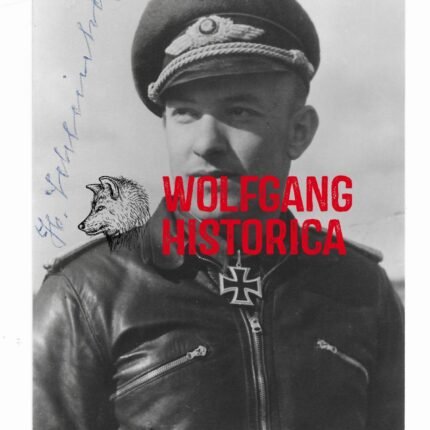
Hermann Schleinhege – Jagdgeschwader 54
€45,00Original Postwar Signature on a Postwar Photo of Hermann Schleinhege. Leutnant Hermann Schleinhege (12.02.1916 in Essen † 11.03.2014 in Soest) earned the Deutsches Kreuz in Gold on March 20, 1944 and the Ritterkreuz des Eisernen Kreuzes on January 28, 1945 as Leutnant und Flugzeugführer in the 8. Staffel/ Jagdgeschwader 54.
Provenance: This signature comes from one of the largest postwar signature collection I’ve ever commissioned. This collection was started by a Waffen-SS Veteran, Werner H., in the 1950’s until he passed away.
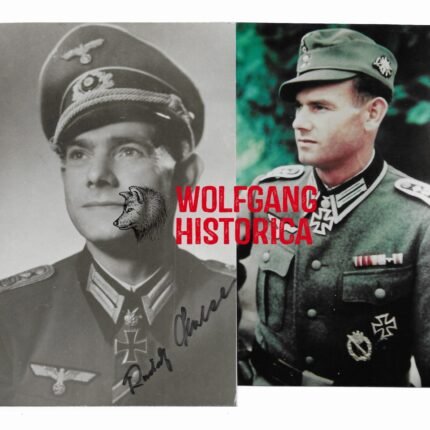
Rudolf Schlee – Gebirgsjäger-Regiment 13 (Eichenlaub)
€45,00Original Postwar Signature on a Postwar Photo of Rudolf Schlee. Oberfeldwebel Rudolf Schlee (10.11.1913 in Ludwigshafen † 19.06.1979 in Ludwigshafen) earned the Ritterkreuz des Eisernen Kreuzes on October 23, 1941 as Oberfeldwebel und Zugführer in the 6. Kompanie/ Gebirgsjäger-Regiment 13 and the Eichenlaub on April 6, 1943 as Oberfeldwebel und Zugführer in the 6. Kompanie/ Gebirgsjäger-Regiment 13 of the 4. Gebirgs-Division.
Provenance: This signature comes from one of the largest postwar signature collection I’ve ever commissioned. This collection was started by a Waffen-SS Veteran, Werner H., in the 1950’s until he passed away.
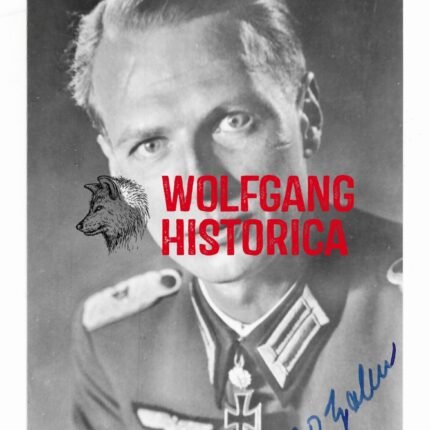
Dr. Eberhard Zahn – Panzerjäger-Abteilung 33 (Eichenlaub)
€25,00Original Postwar Signature on a Postwar Photo of Dr. Eberhard Zahn. Oberstleutnant Dr. Eberhard Zahn (02.01.1910 † 07.02.2010) earned the Ritterkreuz on June 30, 1941 as Leutnant und Zugführer of the 2. Kompanie/ Panzerjäger-Abteilung 33 and the Eichenlaub on March 6, 1943 as Hauptmann und Kompaniechef of the 2. Kompanie/ Panzerjäger-Abteilung 33 of the 15. Panzer-Division.
Provenance: This signature comes from one of the largest postwar signature collection I’ve ever commissioned. This collection was started by a Waffen-SS Veteran, Werner H., in the 1950’s until he passed away.

Arthur Ziegler – Grenadier-Regiment 974 (367.Inf.Div.)
€25,00Original Postwar Signature on a Postwar Photo of Arthur Ziegler. Oberleutnant Arthur Ziegler (1917 † 1987) earned the Ritterkreuz des Eisernen Kreuzes on August 23, 1944 as Oberleutnant und Regimentsadjutant of the Grenadier-Regiment 974 of the 367. Infanterie-Division.
Provenance: This signature comes from one of the largest postwar signature collection I’ve ever commissioned. This collection was started by a Waffen-SS Veteran, Werner H., in the 1950’s until he passed away.

Maxilimian Wirsching – schwere Panzer-Abteilung 507 (Tiger)
€55,00Original Postwar Signature on a Postwar Photo of Maxilimian Wirsching. Maxilimian Wirsching (23.11.1919 in Altenschönbach † 18.04.2004 in Künzelsau) earned the Ritterkreuz des Eisernen Kreuzes on February 7, 1945 as Oberleutnant and Chef of the 2. Kompanie/ schwere Panzer-Abteilung 507 (Tiger). He also earned the Ehrenblattspange des Heeres und Waffen-SS and Panzerkampfabzeichen III. Stufe (Einsatzahl “50”).
Provenance: This signature comes from one of the largest postwar signature collection I’ve ever commissioned. This collection was started by a Waffen-SS Veteran, Werner H., in the 1950’s until he passed away.

Hermann Graf – Jagdgeschwader 52 (Brillanten)
€65,00Original Postwar Signature on a Postwar Photo of Hermann Graf. Oberst Hermann Graf (24.10.1912 in Engen † 04.11.1988 in Engen) earned the Ritterkreuz on January 24, 1942 as Leutnant und Flugzeugführer in the 9. Staffel/ Jagdgeschwader 52 (after 42 aerial victories). Awarded the Eichenlaub on May 17, 1942 as Leutnant und Flugzeugführer in the 9. Staffel/ Jagdgeschwader 52 for 104 aerial victories, the Schwertern on May 19, 1942 as Leutnant und Flugzeugführer in the 9. Staffel/ Jagdgeschwader 52 after achieving 106 aerial victories and the Brillanten on September 16, 1942 as Oberleutnant und Staffelkapitän of the 9. Staffel/ Jagdgeschwader 52 after achieving 172 aerial victories. He also earned Gemeinsames Flugzeugfuhrer-Beobachter Abzeichen mit Brillianten.
Read more about Hermann Graf (Wikipedia).
Provenance: This signature comes from one of the largest postwar signature collection I’ve ever commissioned. This collection was started by a Waffen-SS Veteran, Werner H., in the 1950’s until he passed away.
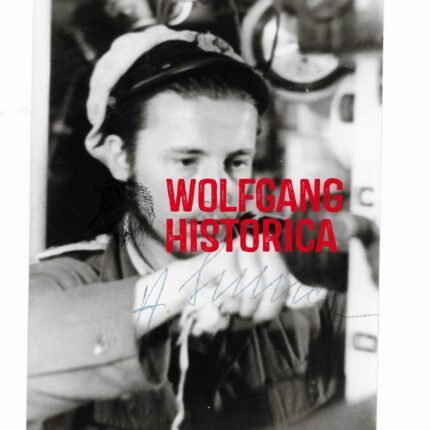
Adalbert Schnee – Kommandant of “U-201” (Eichenlaub)
€0,01Original Postwar Signature on a Postwar Photo of Adalbert Schnee. Korvettenkäpitan Adalbert Schnee (31.12.1913 in Berlin † 04.11.1982 in Hamburg) earned the Ritterkreuz des Eisernen Kreuzes on August 30, 1941 as Oberleutnant zur See und Kommandant of Uboot “U-201” and the Eichenlaub on July 15, 1942 as Kapitänleutnant und Kommandant of Uboot “U-201”.
Provenance: This signature comes from one of the largest postwar signature collection I’ve ever commissioned. This collection was started by a Waffen-SS Veteran, Werner H., in the 1950’s until he passed away.

Otto Ernst Remer – Grenadier-Regiment “Grossdeutschland” (Eichenlaub) (Key Figure Stopping 20 July Plot)
€45,00Original Postwar Signature on a Postwar Photo of Otto Ernst Remer. Generalmajor Otto Ernst Remer (18.08.1912 † 04.10.1997) earned the Ritterkreuz on May 18, 1943 as Major und Kommandeur of I. Bataillon/ Grenadier-Regiment “Grossdeutschland” and the Eichenlaub on November 12, 1943 as Major und Kommandeur of I. Bataillon/ Grenadier-Regiment “Grossdeutschland”. He played a major role in stopping the 20 July plot in 1944 against Adolf Hitler.

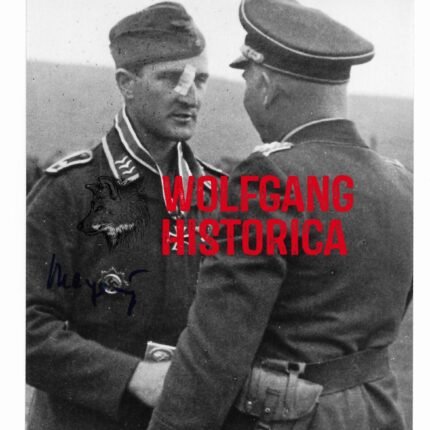
Heinrich Meyering – Schlachtgeschwader 2 “Immelmann”
€30,00Original Postwar Signature on a Postwar Photo of Heinrich Meyering. Leutnant Heinrich Meyering (30.11.1919 in Leer † 13.07.2003 in Lohr) earned the Ritterkreuz des Eisernen Kreuzes on April 6, 1944 as Feldwebel und Flugzeugführer in the 3. Staffel/ Schlachtgeschwader 2 “Immelmann”.
Heinrich Meyering completed a total of 972 combat missions with the Ju 87 and was one of the most successful Stuka pilots in SG-2. Ritterkreuz awarded after flying 895 sorties. He along with his radio operator (Willibald Zipfel) were the only Stuka NCOs to receive the Knight’s Cross. (Source: TracesofWar)
Heinrich Meyering – Schlachtgeschwader 2 “Immelmann”
€30,00Original Postwar Signature on a Postwar Photo of Heinrich Meyering. Leutnant Heinrich Meyering (30.11.1919 in Leer † 13.07.2003 in Lohr) earned the Ritterkreuz des Eisernen Kreuzes on April 6, 1944 as Feldwebel und Flugzeugführer in the 3. Staffel/ Schlachtgeschwader 2 “Immelmann”.
Heinrich Meyering completed a total of 972 combat missions with the Ju 87 and was one of the most successful Stuka pilots in SG-2. Ritterkreuz awarded after flying 895 sorties. He along with his radio operator (Willibald Zipfel) were the only Stuka NCOs to receive the Knight’s Cross. (Source: TracesofWar)
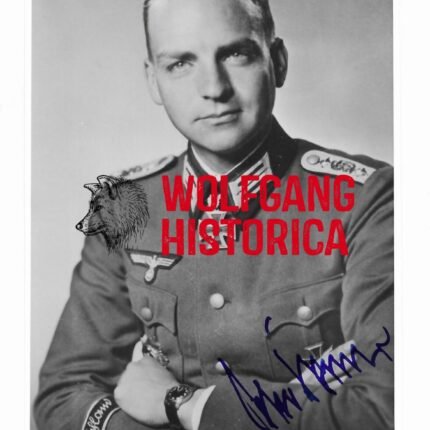
Peter Frantz – Sturmgeschütz-Abteilung “Grossdeutschland” (Eichenlaub)
€0,01Original Postwar Signature on a Postwar Photo of Peter Frantz. Major im Generalstab Peter Frantz (24.07.1917 † 11.03.2001) earned the Ritterkreuz des Eisernen Kreuzes on June 4, 1942 as Oberleutnant und Chef of the 16. Kompanie/ Infanterie-Regiment “Grossdeutschland” and the Eichenlaub on April 14, 1943 as Hauptmann und Kommandeur of the Sturmgeschütz-Abteilung “Grossdeutschland”.
Provenance: This signature comes from one of the largest postwar signature collection I’ve ever commissioned. This collection was started by a Waffen-SS Veteran, Werner H., in the 1950’s until he passed away.
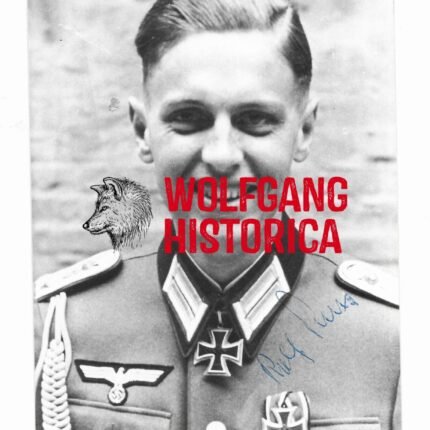
Rolf Truxa – Sturmgeschütz-Abteilung 190
€35,00Original Postwar Signature on a Postwar Photo of Rolf Truxa. Oberleutnant Rolf Truxa (06.06.1921 in Berlin-Schöneberg † 03.02.1983 in Merzig an der Saar) earned the Ritterkreuz des Eisernen Kreuzes on December 17, 1943 as Oberleutnant und Führer of the 2. Batterie/ Sturmgeschütz-Abteilung 190.
“During the German attempt to recapture the city of Newel Oberleutnant Truxa and his Sturmgeschütze had the mission of supporting the infantry of the 252. Infanterie-Division. After overcoming the Soviet minefields the German infantry became pinned down in their efforts to take the high ground at Sui Shmotki. At this point Truxa and his Sturmgeschütze were able to rally the attackers and then proceeded to capture the heights in a sharp, aggressive attack. This enabled the German attack to proceed once again and by evening the Soviets had been pushed back 6 km. Despite the overall failure of the German assault Truxa was nonetheless decorated for the Knight’s Cross for his achievements in the attack.”
Provenance: This signature comes from one of the largest postwar signature collection I’ve ever commissioned. This collection was started by a Waffen-SS Veteran, Werner H., in the 1950’s until he passed away.
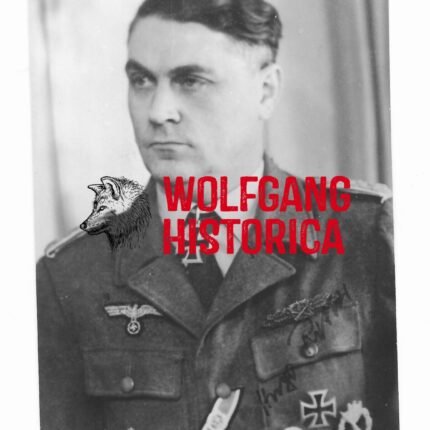

Hugo Ritter – Grenadier-Regiment 529 (299.Inf.Div.)
€20,00Original Postwar Signature on a Postwar Photo of Hugo Ritter. Hauptmann Hugo Ritter (16.01.1911 in Maximiliansaus † 10.05.1989 in Germersheim) earned the Ritterkreuz des Eisernen Kreuzes on February 15, 1945 as Hauptmann und Kommandeur of the II. Bataillon/ Grenadier-Regiment 529 of the 299. Infanterie-Division.
Provenance: This signature comes from one of the largest postwar signature collection I’ve ever commissioned. This collection was started by a Waffen-SS Veteran, Werner H., in the 1950’s until he passed away.
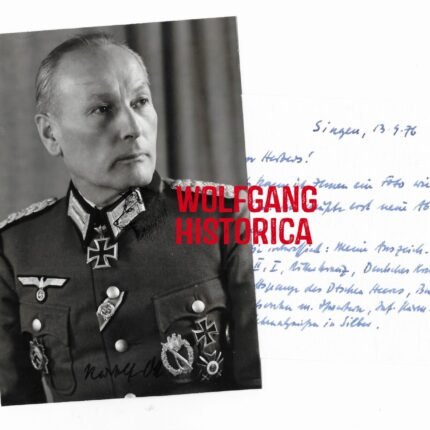
Rudolf Ott – Jäger-Regiment 56 (5.Jäg.Div.)
€45,00Original Postwar Signature on a Postwar Photo of Rudolf Ott. Oberst Rudolf Ott (10.02.1905 in Niedernhall † 19.10.1987 in Singen-Hohentwiel) earned the Ritterkreuz des Eisernen kreuzes on February 28, 1945 as Oberst und Kommandeur of the Jäger-Regiment 56 of the 5. Jäger-Division.
Provenance: This signature comes from one of the largest postwar signature collection I’ve ever commissioned. This collection was started by a Waffen-SS Veteran, Werner H., in the 1950’s until he passed away.
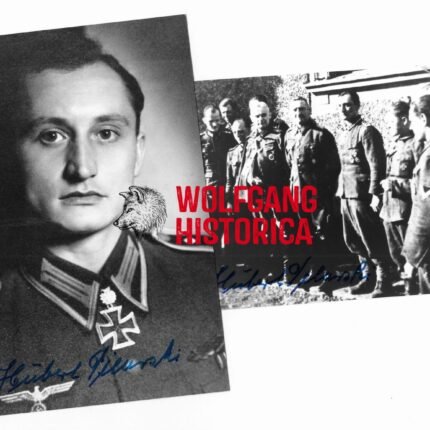
Hubert Pilarski – Grenadier-Regiment 511 & 948 (Eichenlaub)
€35,00Original Postwar Signature on a Postwar Photo (2x) of Hubert Pilarski. Oberfeldwebel Hubert Pilarski (19.10.1913 in Buer † 05.10.1996 in Köln) earned the Ritterkreuz des Eisernen Kreuzes on August 4, 1943 as Oberfeldwebel und Zugführer in the 8. Kompanie/ Grenadier-Regiment 511 of the 293. Infanterie-Division and the Eichenlaub on June 9, 1944 as Oberfeldwebel und Zugführer in the 8. Kompanie/ Grenadier-Regiment 948 of the 359. Infanterie-Division.
Provenance: This signature comes from one of the largest postwar signature collection I’ve ever commissioned. This collection was started by a Waffen-SS Veteran, Werner H., in the 1950’s until he passed away.
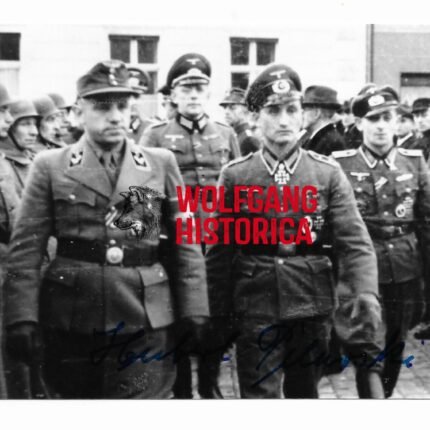
Hubert Pilarski – Grenadier-Regiment 511 & 948 (Eichenlaub)
€20,00Original Postwar Signature on a Postwar Photo of Hubert Pilarski. Oberfeldwebel Hubert Pilarski (19.10.1913 in Buer † 05.10.1996 in Köln) earned the Ritterkreuz des Eisernen Kreuzes on August 4, 1943 as Oberfeldwebel und Zugführer in the 8. Kompanie/ Grenadier-Regiment 511 of the 293. Infanterie-Division and the Eichenlaub on June 9, 1944 as Oberfeldwebel und Zugführer in the 8. Kompanie/ Grenadier-Regiment 948 of the 359. Infanterie-Division.
Provenance: This signature comes from one of the largest postwar signature collection I’ve ever commissioned. This collection was started by a Waffen-SS Veteran, Werner H., in the 1950’s until he passed away.

Hansjürgen Reinicke – schwerer Kreuzer “Prinz Eugen”
€0,01Original Scarce Postwar Signature on a Postwar Photo of Hansjürgen Reinicke. Käpitan zur See Hansjürgen Reinicke (02.07.1914 † 26.12.2005) earned the Ritterkreuz des Eisernen Kreuzes on April 21, 1945 as Kapitän zur See und Kommandant of schwerer Kreuzer “Prinz Eugen”.
Provenance: This signature comes from one of the largest postwar signature collection I’ve ever commissioned. This collection was started by a Waffen-SS Veteran, Werner H., in the 1950’s until he passed away.
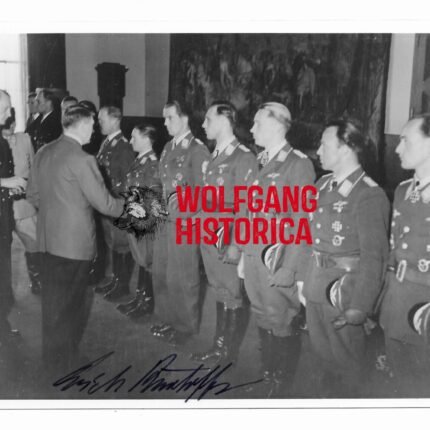
Major Erich Rudorffer – Jagdgeschwader 2 & 54 (Schwertern)
€25,00Original Postwar Signature on a Postwar Photo of Erich Rudorffer. Major Erich Rudorffer (01.11.1917 † 08.04.2016) earned the Deutsches Kreuz in Gold on December 9, 1941 as Leutnant und Flugzeugführer in the 6. Staffel/ Jagdgeschwader 2 “Richthofen”, the Ritterkreuz on May 1, 1941 as Leutnant und Flugzeugführer in the 6. Staffel/ Jagdgeschwader 2 “Richthofen”, the Eichenlaub on April 11, 1944 as Major und Kommandeur of the II. Gruppe/ Jagdgeschwader 54 “Grünherz” and the Schwertern on January 26, 1945 as Major und Kommandeur of the II. Gruppe/ Jagdgeschwader 54 “Grünherz”. Good condition. Postcardsize.
7th highest scoring Ace of the Luftwaffe, achieving 224 victories in over 1000 operational sorties! He also flew the Messerschmitt Me-262 at the end of the war!
Provenance: This signature comes from one of the largest postwar signature collection I’ve ever commissioned. This collection was started by a Waffen-SS Veteran, Werner H., in the 1950’s until he passed away.
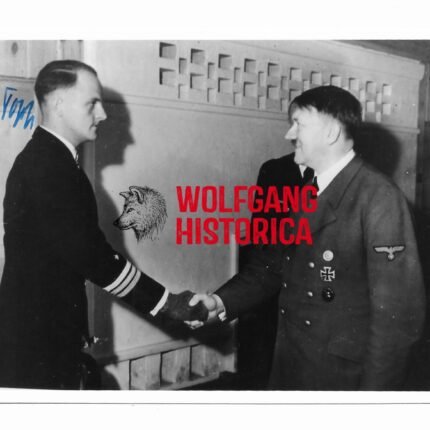
Erich Topp – Kommandant of “U-552” (Schwertern)
€0,01Original Postwar Signature on a Postwar Photo of Erich Topp. Fregattenkäpitan Erich Topp (02.07.1914 † 26.12.2005) earned the Ritterkreuz on June 20, 1941 as Oberleutnant zur See und Kommandant of Uboot “U-552”, the Eichenlaub on April 11, 1942 as Kapitänleutnant und Kommandant of Uboot “U-552” and the Schwertern on August 17, 1942 as Kapitänleutnant und Kommandant of Uboot “U-552”. Good condition.
Provenance: This signature comes from one of the largest postwar signature collection I’ve ever commissioned. This collection was started by a Waffen-SS Veteran, Werner H., in the 1950’s until he passed away.
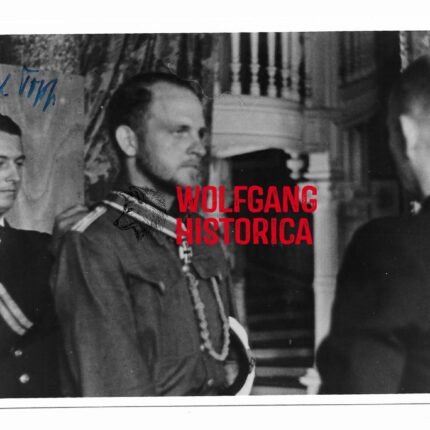
Erich Topp – Kommandant of “U-552” (Schwertern)
€0,01Original Postwar Signature on a Postwar Photo of Erich Topp. Fregattenkäpitan Erich Topp (02.07.1914 † 26.12.2005) earned the Ritterkreuz on June 20, 1941 as Oberleutnant zur See und Kommandant of Uboot “U-552”, the Eichenlaub on April 11, 1942 as Kapitänleutnant und Kommandant of Uboot “U-552” and the Schwertern on August 17, 1942 as Kapitänleutnant und Kommandant of Uboot “U-552”. Good condition.
Provenance: This signature comes from one of the largest postwar signature collection I’ve ever commissioned. This collection was started by a Waffen-SS Veteran, Werner H., in the 1950’s until he passed away.