


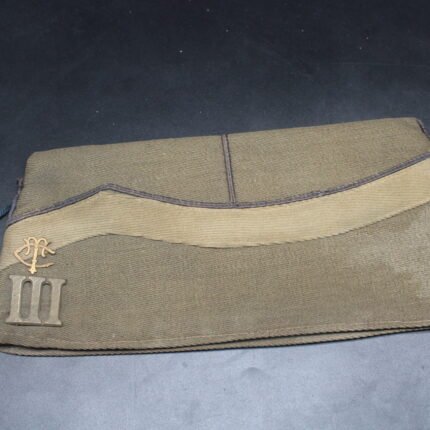
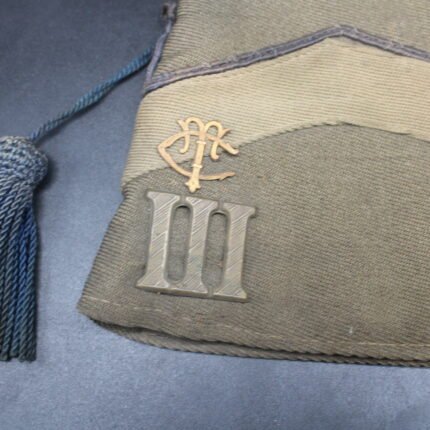
ABL III. Transportskorps Kwartiermuts
€150,00Original Belgian Army Overseas Cap “Kwartiermuts” – III. Transportskorps (c. 1930s)
A fine and original interwar Belgian Army overseas cap, commonly known as a Kwartiermuts, tailor-made for a soldier serving with the III. Transportskorps.
Features
-
Private Purchase Example: Produced by a local tailor shop, as was common practice among Belgian soldiers seeking higher-quality headgear than the standard issue.
-
Unit Identification: The colored piping and unit cyphers clearly identify this cap to the III. Transportskorps, one of the Belgian Army’s logistic and supply formations.
-
Complete Condition: Retains its original tassel, a feature often missing on surviving examples.
Historical Context
The Transportskorps played a vital role in the Belgian Army, providing mobility, supply, and logistical support to frontline units. Units such as the III. Transportskorps were responsible for the movement of men, material, and equipment, ensuring the operational readiness of combat formations. During the 1940 campaign in Belgium, transport units were heavily engaged in the chaotic retreat and evacuation efforts as German forces advanced.
Condition
Well-preserved for its age, with light handling and age wear but no significant damage. The original stitching, piping, and insignia remain intact.
Collector’s Note
Kwartiermutsen linked to specialized branches such as the Transportskorps are significantly rarer than those of line infantry units. This example, tied to the III. Transportskorps, is a scarce and desirable piece of Belgian militaria from the interwar and 1940 campaign period.
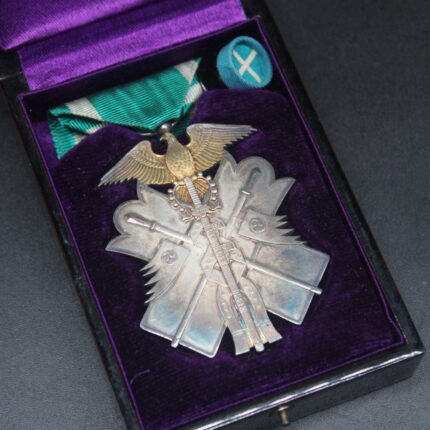
WWII Order of the Golden Kite 7th Class
€145,00Original Order of the Golden Kite, 7th Class – In Case of Issue (1937–1945)
A fine and original example of the Order of the Golden Kite 7th Class, complete with its period presentation case featuring silvered Japanese lettering to the lid.
Award Background:
The Order of the Golden Kite (金鵄勲章, Kinshi Kunshō) was a Japanese military order established in 1890 by Emperor Meiji, awarded exclusively for bravery, leadership, or command in battle. It was conferred upon both officers and enlisted men who distinguished themselves in service to the Empire. The decoration ranked just below the Order of the Rising Sun but carried enormous prestige as a purely military award.
The 7th Class was the lowest grade, typically awarded to enlisted soldiers and non-commissioned officers for acts of valor in combat. Even so, it symbolized personal courage and devotion to duty in the field, often during the campaigns of the Second Sino-Japanese War (1937–45) and the Pacific War.
Award Details:
-
Type: Order of the Golden Kite, 7th Class
-
Period: Shōwa Era, 1937–1945
-
Material: Silvered and gilded construction with fine enamel work (stylized golden kite motif with crossed swords and rays).
-
Case: Original issue case with silvered kanji inscription to the lid.
-
Condition: As seen – light signs of handling and age, case intact.
Historical Context:
The Order of the Golden Kite was abolished in 1947 by the Allied occupation authorities, making surviving wartime-issued examples particularly sought after. Awards from the late 1930s to 1945 are strongly associated with the campaigns in China, Manchuria, and the Pacific theater.
Collector’s Note:
A desirable original and cased example of Japan’s prestigious wartime combat decoration, representing the valor of enlisted soldiers in the Imperial Japanese Army. The presence of the case with silvered characters enhances its value and display appeal.
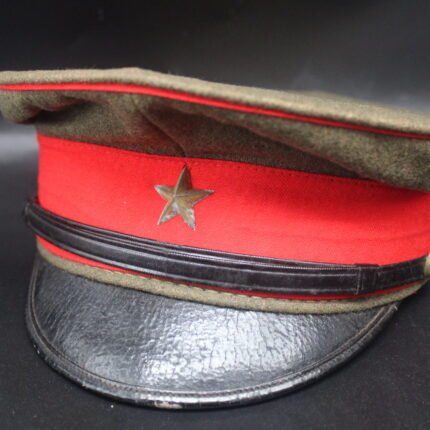
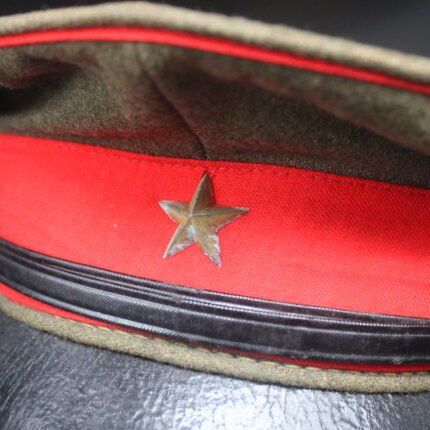
WWII Imperial Japanese Army Visor Cap
€250,00A tailor-made officer’s visor cap crafted from high-quality khaki-colored wool, typical of the pre–WWII uniform style. This design, known as the Type 45 cap, carries the traditional features established in 1913, including the red wool piping and headband along with the low-peaked profile. These elements became standard for officer’s dress and remained in use through the end of the Second World War.
This particular example displays only slight wear and has been beautifully preserved, free from handling damage and without any moth damage. The visor does show age-related cracking, though stable with no risk of further deterioration. Inside, the cap retains its purple silk lining and ersatz leather sweatband, both fully intact.
Collector’s Note
This is a striking and well-preserved example of a Type 45 officer’s visor cap, representing the transitional pre-war and wartime styles. The quality tailoring, intact interior, and large display size make it not only a fine historical artifact but also a centerpiece for any advanced collection of WWII headgear. Among the most beautiful examples we have ever handled.
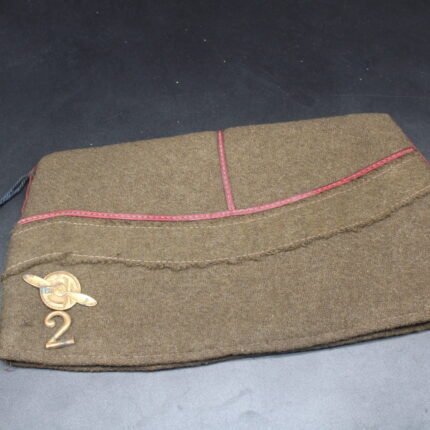
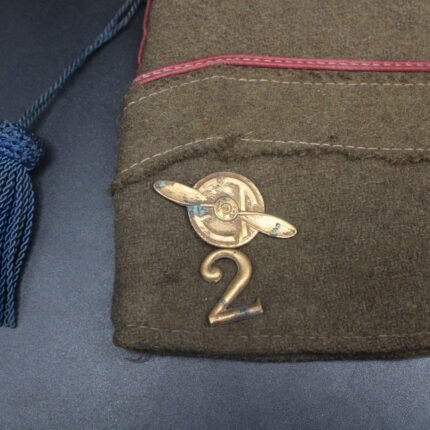
Luchtvaartregiment 2 (Niet-Varend Personeel) Kwartiermuts
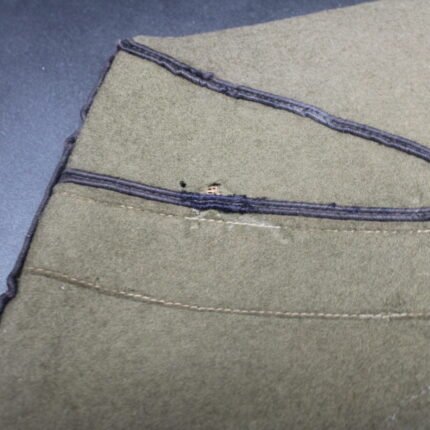
€150,00Original Belgian Army Overseas Cap “Kwartiermuts” – 2e Luchtvaartregiment (Niet-Varend Personeel) (c. 1930s)
A very nice and original interwar Belgian Army overseas cap, known as a “Kwartiermuts”, privately tailored for a soldier of the 2e Luchtvaartregiment (non-flying personnel).
Private Purchase Example: A tailor-made cap, purchased at a local shop rather than issued, as was common for Belgian soldiers in the 1930s.
Unit Identification: The piping and insignia mark this example as belonging to the 2e Luchtvaartregiment, specifically for niet-varend personeel (ground staff/technical personnel). The letters “ET” on the badge are often interpreted as École Technique, though generally accepted today as denoting non-flying personnel within the regiment.
Complete Condition: Rare in this form, the cap still retains its original tassel, a feature often missing on surviving examples.
Condition: Well-preserved, with light age wear but no major damage.
Historical Context
The Belgian Luchtvaartregiment was created in the interwar years as the air arm of the Belgian Army. Within this structure, the 2e Luchtvaartregiment formed one of its core units, with the non-flying personnel (mechanics, armorers, technical specialists) providing essential support for operations.
During the 1940 campaign in Belgium, ground staff of the Luchtvaartregiment were crucial in maintaining and servicing aircraft under severe combat pressure. Despite the rapid German advance, these units ensured the operational readiness of Belgian aircraft until the final days of fighting.
Collector’s Note
A scarce Belgian interwar Kwartiermuts from the 2e Luchtvaartregiment (Niet-Varend Personeel). Complete with its tassel and correct insignia featuring the “ET” cypher, this cap is a desirable piece for collectors of Belgian militaria, particularly those focused on the aviation troops and the 1940 campaign.
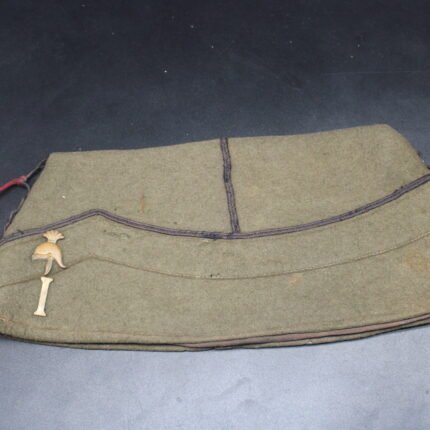
1ste Genie Bataljon Kwartiermuts
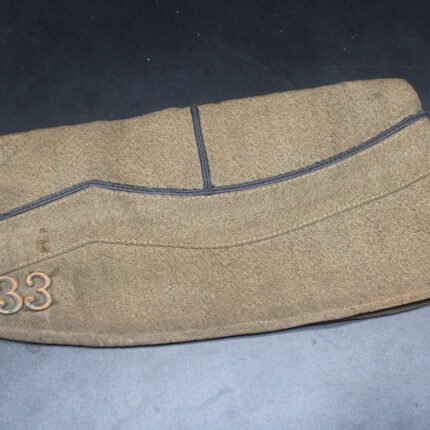
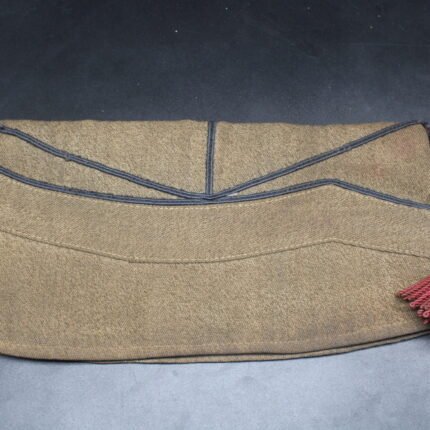
€150,00Original 1930s period Belgian Army overseas cap, known as a “Kwartiermuts”, privately tailored for a soldier of the 1st Genie Bataljon (Engineers).
-
Private Purchase Example: A tailor-made cap, purchased at a local shop rather than issued, as was common for Belgian soldiers in the interwar years.
-
Unit Identification: The piping and cyphers indicate service with the 1st Genie Bataljon, one of the Belgian Army’s specialist engineer formations.
-
Complete Condition: Scarce in this form, the cap still retains its original tassel, a feature often lost over time.
-
Condition: Well-preserved, with light age wear but no major damage.
Historical Context
May 1940 Campaign
-
Night of 9–10 May: Lieutenant Weverbergh’s detachments prepared demolition charges on bridges of the Bilzen–Winterslag railway and over the Hasselt–Genk road and rail line. At 02:30, alarms sounded. Demolition teams were dispatched to bridges over the Demer and Herk, tasked with preparing and holding them until ordered destroyed. By dawn, all charges were in place. Enemy aircraft dropped dummy parachutists, causing confusion.
-
10 May (morning–afternoon): After blowing the assigned bridges, Lt. Weverbergh rejoined the battalion. At noon, orders came to prepare for movement. That evening, 1Gn left Sint-Lambrechts-Herk for Ransberg, while demolition parties remained. Losing radio contact and without orders from the infantry, these teams eventually destroyed the bridges on their own initiative before rejoining the battalion—without losses.
-
11–13 May: From Ransberg, patrols checked the effectiveness of demolitions (e.g. the bridge at Halen). The battalion later moved to Londerzeel.
-
Mid-May: 1Gn was tasked with placing demolition charges along the Willebroek Canal, including at Kapelle-op-den-Bos and Buda. When the British Expeditionary Force (BEF) took over the defense south of Vilvoorde, the battalion handed over charges and moved to Puurs-Kalfort, later preparing further demolitions at Ruisbroek-Windham.
-
15–17 May: After short stays in Puurs, the battalion crossed the Temse bridge with the 1Div and reached Sint-Niklaas, then moved on to the Ghent bridgehead, halting at Drongen. Here, 1Gn took over prepared demolitions on bridges across the Grote Coupure in western Ghent, built a raft on the Ghent–Terneuzen Canal at Meulestede, and was ordered to reorganize “as far as possible” into a cyclist battalion. Tensions arose with local authorities and police over blocking the harbor docks with barges.
-
Late May: The division shifted to the River Lys (Leie) line. 1Gn was trucked to Rollegem-Kapelle. One company built a raft across the Lys to ferry gendarmerie elements. Under artillery fire, the battalion withdrew to Oekene, later to Langemark, where it worked on anti-tank obstacles using railway wagons on the Roeselare–Ypres line, then moved to Hooglede.
-
Final days: As Belgian lines weakened west of Roeselare, 1Gn infantry companies were used as reinforcements:
-
1st Company deployed east of Poelkapelle,
-
2nd Company east of Westrozebeke.
-
On 28 May 1940, while holding these positions, the battalion received word of Belgium’s capitulation. That same day, the men returned to their quarters at Hooglede.
Collector’s Note
A scarce interwar Belgian Army Kwartiermuts from the 1st Genie Bataljon, complete with its tassel and correct unit cyphers. These engineer-marked caps are much harder to encounter than infantry-marked examples, making this a particularly desirable piece for collectors of Belgian militaria from the interwar and 1940 campaign period.
33ste Linieregiment Kwartiermuts
€150,00Original Belgian Army Overseas Cap “Kwartiermuts” – 33rd Line Regiment (c. 1930s)
A very nice and original 1930s period Belgian Army overseas cap, known as a “Kwartiermuts”, privately tailored for a soldier of the 33rd Line Regiment.
-
Private Purchase Example: Unlike standard issue, this is a tailor-made cap, bought at a local uniform shop – a common practice among soldiers of the interwar Belgian Army.
-
Unit Identification: The piping and regimental cyphers clearly denote service with the 33rd Linieregiment.
-
Complete Condition: Particularly desirable as this cap retains its original tassel, a feature which is often missing on surviving examples.
-
Condition: Light wear consistent with age, but overall beautifully preserved, with strong color and shape.
Historical Context
The 33rd Line Regiment (33Li)—whose branch piping and numerals this cap bears—played a notable role in Belgium’s defense during the German invasion of May 1940. Raised in October 1939 at Aalst as a duplicate of the 3rd Line Regiment, it formed part of the 13th Infantry Division, a second-reserve formation. Its ranks were largely older conscripts (classes 1928–1931) and, unlike active units, they often had outdated equipment such as the Belgian Mauser 1889 rifle and French Chauchat light machine guns.
On 10 May 1940, the day the invasion began, the regiment held positions in the Fortified Position of Antwerp (VPA) around Brasschaat, manning trenches behind the new anti-tank ditch linking the old forts. The III Battalion occupied the front line, guarding key approaches like the Bredabaan, with artillery support and additional machine-gun posts at the Schans van Drijhoek.
33Li was tasked with securing demolition points on the northern access roads and fought alongside French elements of the 7th Army moving through Brasschaat toward the Netherlands. In the days that followed, the regiment endured heavy air and artillery attacks; from 16 May German pressure mounted around the Brasschaat camp.
Despite determined resistance, the regiment—together with the division—was ordered to withdraw behind the River Scheldt and then to the Ghent–Terneuzen Canal, where it was merged into a combined formation (33/34Li). After severe bombardments and artillery fire, the line unraveled and the troops fell back westward.
On 28 May 1940, the 33Li, along with the rest of the Belgian Army, laid down arms at the general capitulation.
Collector’s Note
A fine and scarce interwar Belgian Army headdress, complete with tassel and unit insignia. These caps are much harder to find in complete condition compared to wartime German sidecaps, making this an excellent addition to any interwar or 1940 campaign collection.
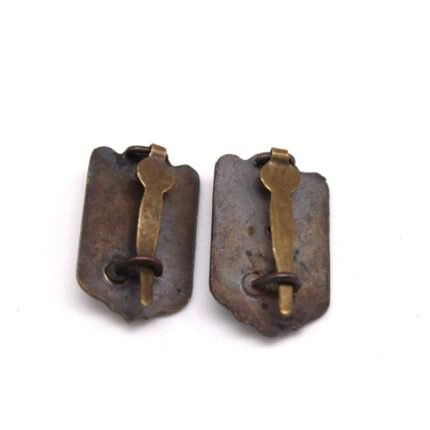
Imperial Japanese Army Military Reservist Badges (Small)
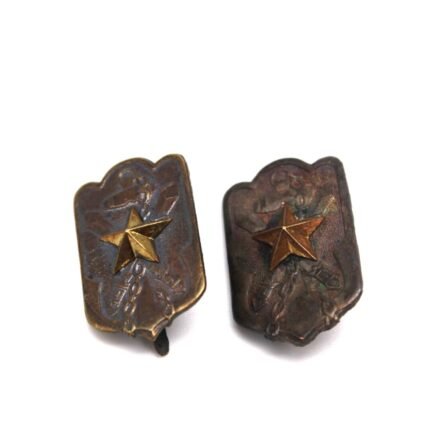
€20,00Original Imperial Japanese Army Military Reservist Badges (small variant). Condition as seen.
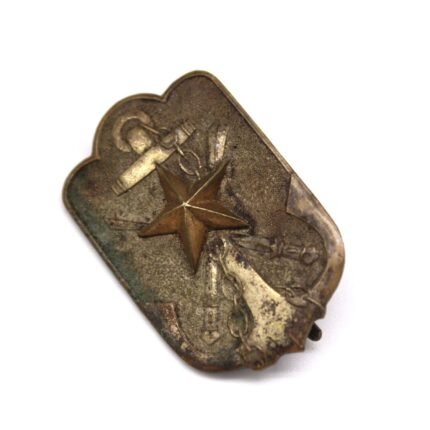
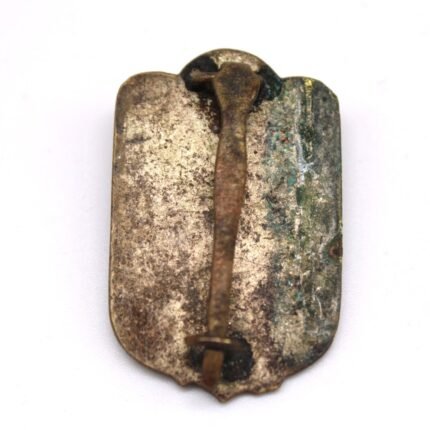
Imperial Japanese Army Military Reservist Badge
€20,00Original Imperial Japanese Army Military Reservist Badge (large variant). Condition as seen.