

An essential and highly sought-after piece for collectors of Belgian militaria and First World War decorations.
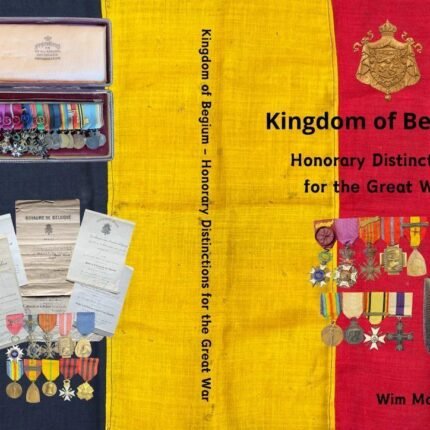
*BACK AVAILABLE / LAST CHANCE* Kingdom of Belgium – Honorary Distinctions for the Great War (Book)
€65,00Kingdom of Belgium – Honorary Distinctions for the Great War
By Wim Martens | Limited Conference Edition | 217 Pages
A highly sought-after reference work dedicated to Belgian First World War honors and decorations. Published to coincide with the XVII European Conference for Phaleristics in Brussels (May–June 2024), this volume provides a comprehensive and meticulously organized overview of official Belgian wartime distinctions.
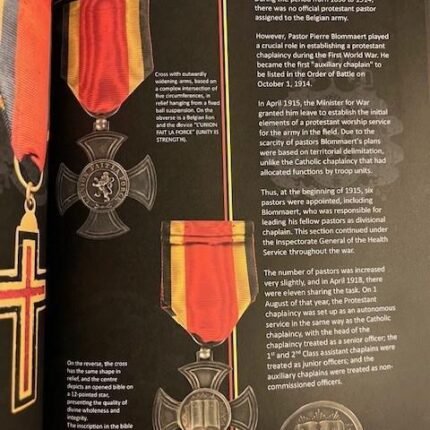
Arranged chronologically by date of institution, the book presents detailed coverage of orders, medals, and decorations, including recognized variants, accompanying certificates, and period imagery of recipients. In addition, select service insignia and several unofficial yet tolerated distinctions are thoughtfully documented, offering a broader perspective valuable to collectors and historians alike.
Richly illustrated and expertly compiled, this 217-page publication serves as both a scholarly reference and a visually engaging catalog of Belgium’s Great War honors system.
Highlights:
-
Complete overview of Belgian WWI honorary distinctions
-
Chronological structure for ease of reference
-
High-quality photographs of medals, variants, and documents
-
Includes service insignia and rare unofficial distinctions
-
Features historical images of decorated individuals
-
Published for a specialized European phaleristics conference
Condition: New
Availability: Very difficult to find — especially outside specialist circles.
An essential addition to any serious phaleristics library or First World War collection.
Note: Shipping prices might not be final to some countries due weight and size!
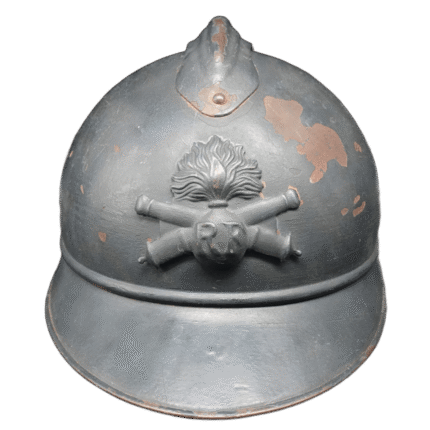
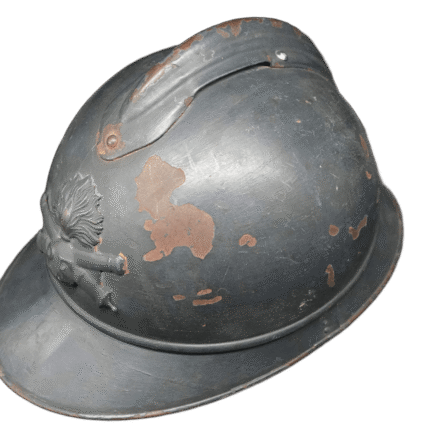
WWI French M15 Adrian Helmet – Artillery
€250,00Original French M15 Adrian World War I helmet for Artillery troops. Helmet is “horizon blue” (bleu horizon), inner helmet made with uniform leftovers! Complete with chin strap. Condition as seen.
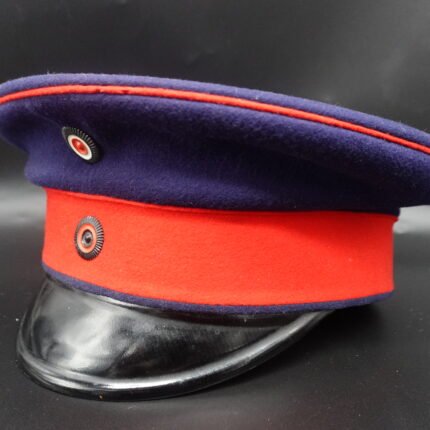
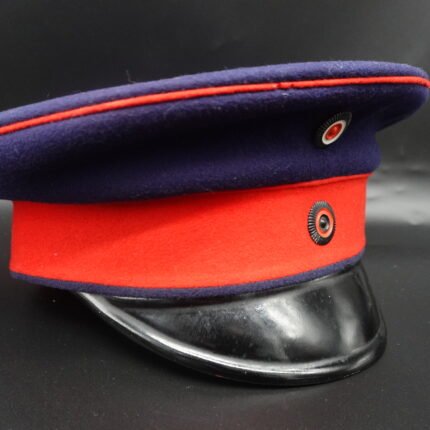
WWI Württemberg Enlisted Visor Cap – Reserve-Infanterie-Regiment 120 (Somme, Verdun, Flanderns!)
€300,00Original enlisted man’s visor cap from the Kingdom of Württemberg, attributed to Reserve Infantry Regiment No. 120, a unit with extensive and active service throughout World War 1.
The cap remains in good, color-fresh condition, with the cloth and trim retaining a pleasing and well-preserved appearance. It shows typical signs of age, including light moth damage and a few very small holes, the most noticeable being a small hole on the reverse within the red band.
Inside, the cap is clearly marked with the wearer’s name “Stemmler” alongside the regimental designation “Res. IR 120”, giving it strong historical authenticity and personal attribution.
Regimental History – Reserve Infanterie-Regiment 120
This regiment saw continuous frontline service across both the Western and Eastern Fronts:
-
Vosges Campaign (Aug–Sept 1914)
Fighting in the Vosges Mountains around Grendelbruch, Saint-Dié, and Saarburg during the early mobile phase of the war. -
Somme Sector (1914–1915)
Deployment near La Boisselle, marking the transition into static trench warfare. -
Eastern Front – Russian Poland (1915)
Engagements at Kolno, the Narew River, and Tykocin during a period of renewed maneuver warfare. -
Return to the Western Front (late 1915)
Operations in Lorraine and the Verdun sector. -
Major Battles of 1916
Participation in heavy fighting at Verdun, Reims, and along the Somme (Ancre sector), reflecting intense attritional warfare. -
Flanders (1916–1918)
Extended service in Belgium, including Wytschaete, Langemarck, and Cambrai—key trench warfare sectors. -
Final Operations (1918)
Fighting in Northern France (Lille, Douai, Oise and Matz sectors) followed by retreat actions toward Lorraine and southeast of Cambrai.
A highly collectible and historically rich example, directly tied to a regiment that fought in many of the defining campaigns of the Great War. The named interior adds an extra layer of research potential and personal connection.
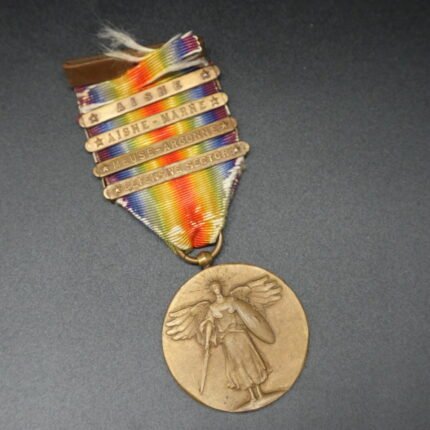
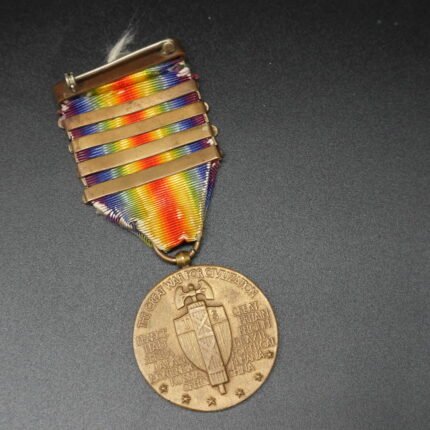
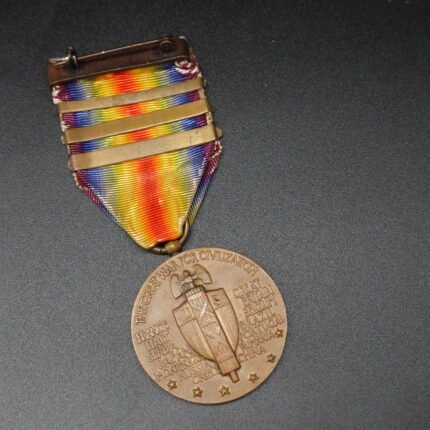
US WWI “Victory Medal” with 4 Frontbars “Aisne-Marne”, “Oisne-Aisne”, “Meuse-Argonne” & “Defensive Sector”
€170,00Original US World War I “Victory Medal” with “Aisne-Marne”, “Oise-Aisne”, “Meuse-Argonne” & “Defensive Sector” frontbars. The medal comes with its period original wrap brooch mechanism. Condition.
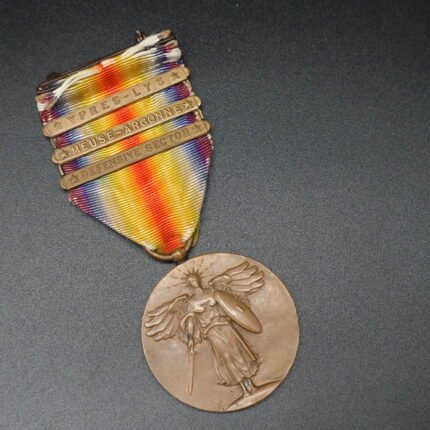
US WWI “Victory Medal” with 3 Frontbars “Ypres-Lys”, “Meuse-Argonne” & “Defensive Sector”
€145,00Original US World War I “Vicory Medal” with “Ypres-Lys”, “Meuse-Argonne” & “Defensive Sector” frontbars. The medal comes with its period original wrap brooch mechanism. Condition.
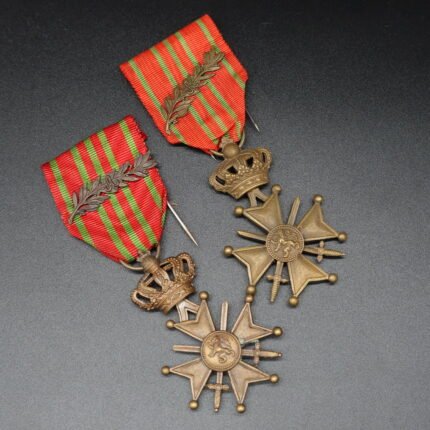
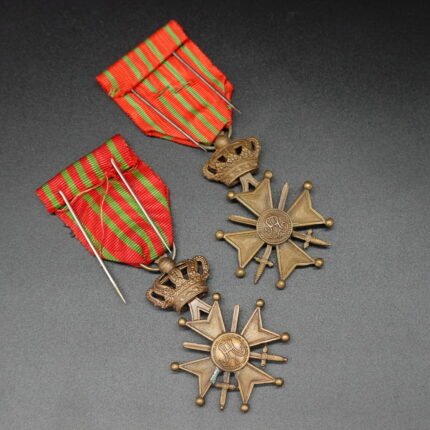
Belgian War Cross 1914–1918 (Oorlogskruis) (Price Per Piece)
€25,00Original Belgian War Cross 1914–1918 (Oorlogskruis) with Palm. The Belgian War Cross 1914–1918 (Oorlogskruis) is one of Belgium’s most prestigious First World War decorations. It was instituted by Royal Decree on 25 October 1915, inspired by the French Croix de Guerre established earlier that same year.
Awarded exclusively to individual members of the Belgian Army, Navy, and Air Force — and in exceptional cases to foreign Allied servicemen — the War Cross recognized acts of bravery in the face of the enemy.
Beyond gallantry, the decoration was also granted for:
-
Three years of front-line service (five front stripes)
-
Volunteers over 40 or under 16 years of age with at least 18 months of service
-
Escaped prisoners of war who rejoined their unit within three months
-
Soldiers unable to resume combat due to wounds sustained in action
The War Cross could be awarded posthumously. In such cases, the ribbon bears a black enamel bar. Non-commissioned officers and enlisted men who died from wounds received in combat were additionally appointed Knights of the Order of Leopold II with palm and also received the War Cross.
Citation Devices (Ribbon Distinctions)
Recipients mentioned in official dispatches could wear the following devices on the ribbon:
-
Bronze Lion – Mention in Regimental Orders
-
Silver Lion – Mention in Brigade Orders
-
Gold Lion – Mention in Divisional Orders
-
Bronze Palm – Mention in Army Orders
-
Five bronze palms replaced by one silver palm
-
Five silver palms replaced by one gold palm
These devices significantly enhance both the historical and collector value of the decoration.
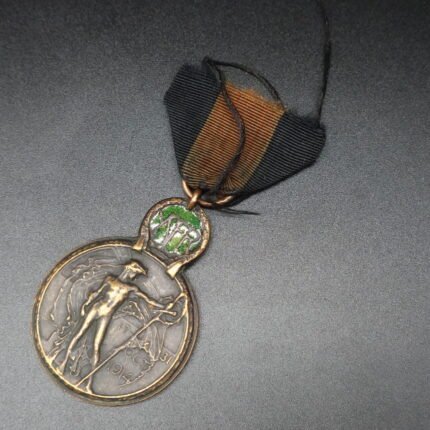
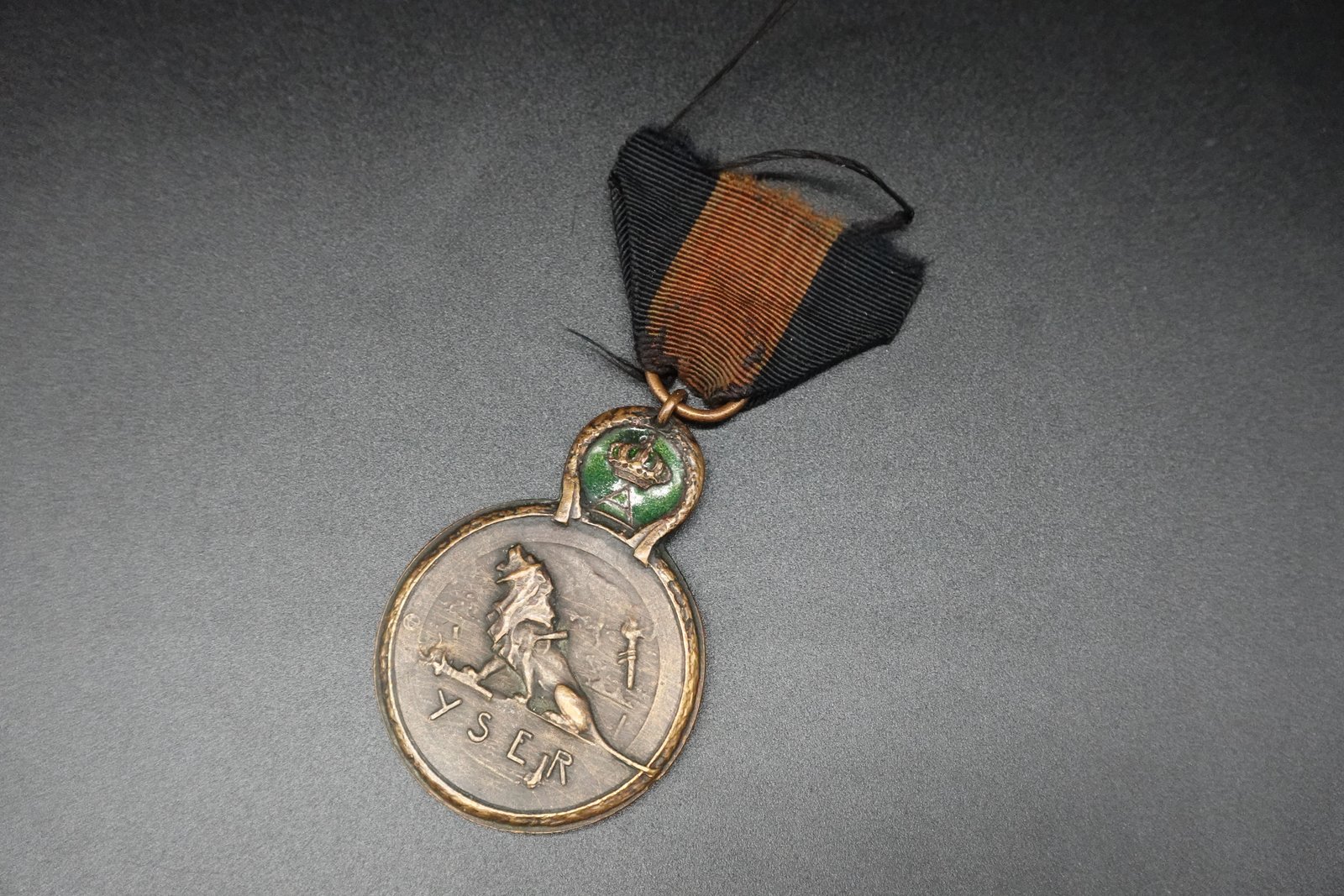
Belgian Yser Medal (Medaille van de IJzer)
€20,00Original Belgian Yser Medal (Medaille van de IJzer / Médaille de l’Yser). The Yser Medal is a Belgian World War I campaign decoration established on 18 October 1918. It was awarded for distinguished service during the Battle of the Yser (17–31 October 1914), where the Belgian Army successfully halted the German advance during the invasion of Belgium.
Award Criteria
The medal was awarded to:
-
Members of the Belgian Armed Forces who fought along the Yser River
-
Personnel who distinguished themselves during the battle
-
Allied foreign soldiers who participated in the engagement
The decoration could also be awarded posthumously.
In the official order of wear, the medal is placed immediately after the War Cross (Croix de Guerre).
Design & Characteristics
-
Material: Bronze with enamel detail
-
Diameter: approx. 35 mm
Obverse:
-
A helmeted nude figure holding a lance, symbolizing resistance and the halting of the German advance
-
Inscription: “17–31 OCT 1914”
-
Green enameled medallion with the inscription: “YSER”
Reverse:
-
A wounded Belgian lion lying on the bank of the Yser River, pierced by an arrow
-
Below: inscription “YSER”
-
Upper medallion: royal crown above the monogram “A” of King Albert I
Ribbon
-
Color: Red silk moiré
-
Edges: Wide black stripes
Symbolism:
-
Red – Blood shed during battle
-
Black – Mourning and sacrifice
Condition: As seen in the images.
A highly significant and iconic Belgian WWI decoration, representing one of the most defensive actions in Belgian military history.
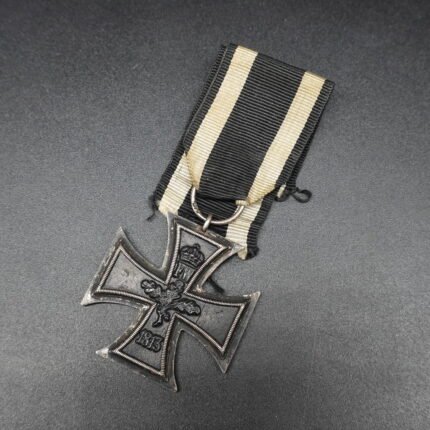
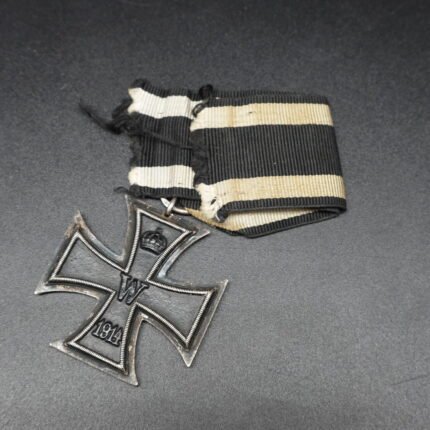
Eisernes Kreuz 2. Klasse (1914) (“K.A.G.” Marked)
€85,00Original Eisernes Kreuz 2. Klasse (1914) (Iron Cross 2nd Class – 1914) on full ribbon and maker marked “K.A.G.”. Comes with ribbon. Condition as seen.
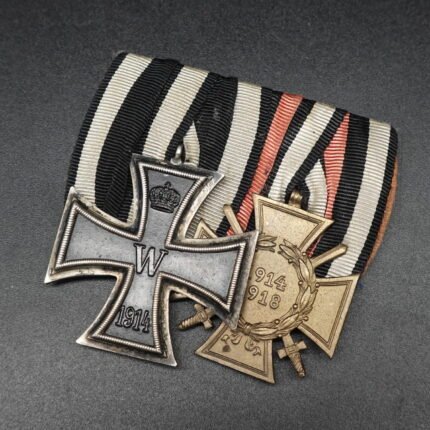
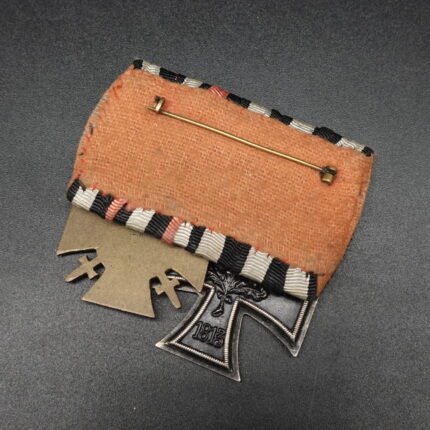
Medalbar: Eisernes Kreuz 2. Klasse (1914) & Ehrenkreuz für Frontkämpfer
€95,00Original Medalbar of the Eisernes Kreuz 2. Klasse (1914) (Iron Cross 2nd Class – 1914) and Ehrenkreuz für Frontkämpfer (Honor Cross for Combatants). Condition as seen.
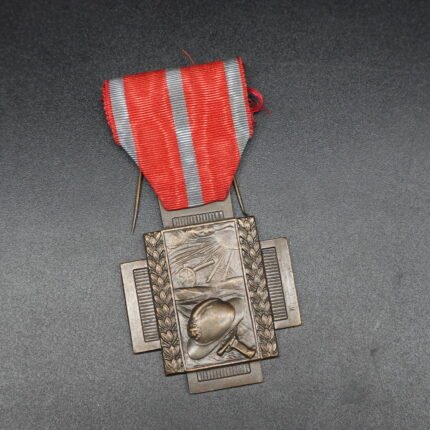
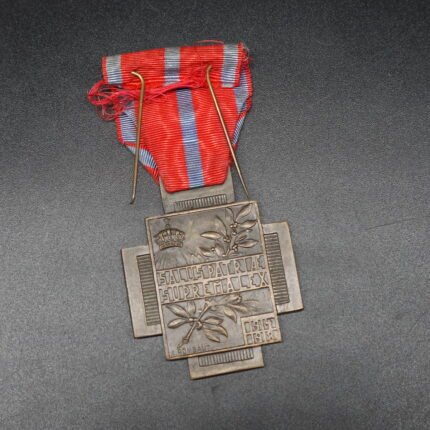
Belgian Fire Cross (Vuurkruis / Croix du Feu)
€15,00Original Belgian Fire Cross (Vuurkruis / Croix du Feu). The Fire Cross (Vuurkruis / Croix du Feu) is a distinguished Belgian military decoration awarded to holders of the so-called Fire Card, issued to servicemen who spent at least 32 months at the front during the First World War.
The medal was officially instituted by Royal Decree on 6 February 1934. Notably, this decoration could not be awarded posthumously, underscoring its recognition of surviving front-line veterans who endured prolonged combat service.
The decoration features a striking rectangular form with rich symbolic relief details:
-
Obverse:
At the center is a relief depiction of an abandoned battlefield. In the foreground appear a Belgian World War I helmet, a bayonet, and a howitzer. In the upper right corner, the sun breaks through the clouds — symbolizing hope and victory emerging from the devastation of war. -
Reverse:
A large laurel branch stretches diagonally from the lower left to the upper right, intersected by the Latin inscription:
“SALUS PATRIAE SUPREMA LEX” (“The salvation of the nation is our highest law.”)In the upper left corner, a royal crown radiates seven beams downward. In the lower right corner, the years “1914” and “1918” are inscribed one above the other. Beneath the stem of the laurel branch appears the name of the medal’s designer: “A. Rombaut.”
An exceptional and meaningful piece for collectors of Belgian militaria and World War I veteran decorations, representing endurance, sacrifice, and unwavering service at the front.
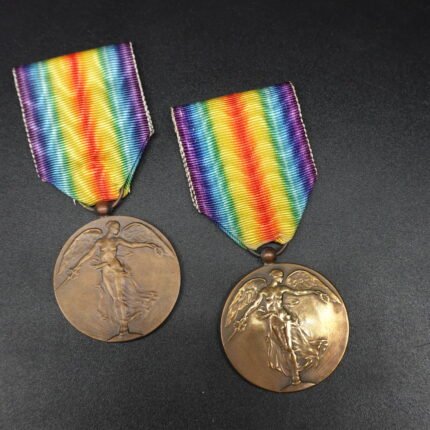
Belgian Victory Medal 1914–1918 (Overwinningsmedaille) (Price Per Piece)
€15,00Original Belgian Victory Medal 1914–1918 (“Overwinningsmedaille”) (Inter-Allied Victory Medal / “War for Civilization” Medal) The Belgian Victory Medal 1914–1918, also known as the Inter-Allied Medal 1914–1918 or, after the reverse inscription, the “War for Civilization” Medal, is Belgium’s official Inter-Allied decoration awarded following the Allied victory in the First World War.
Established on 15 July 1919 by King Albert I of the Belgians, this prestigious medal was granted to all members of the mobilized Belgian Army who served between 1 August 1914 and 11 November 1918. Approximately 300,000 to 350,000 veterans received this decoration.
Subsequent decrees extended eligibility to participants in the African campaigns against German colonial forces, as well as civilians who contributed to the war effort, including members of the merchant navy and fishermen.
The medal was worn after the Yser Medal or the Yser Cross in the official order of precedence. In civilian dress, a small ribbon rosette in the medal’s colors was worn in the buttonhole. For formal evening wear, a miniature version of the medal was suspended from a small ribbon or chain. On military uniforms, recipients wore the ribbon bar (baton).
A highly desirable addition for collectors of World War I decorations, Belgian military history, or Inter-Allied commemorative medals.
Note: Price Per Piece!
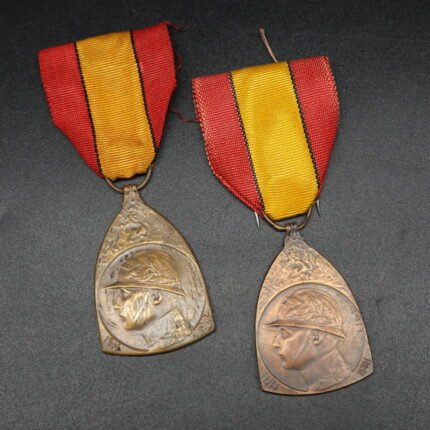
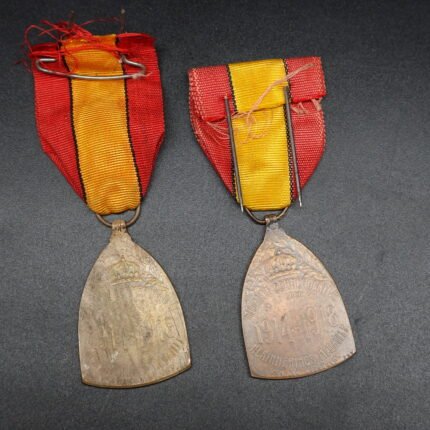
Belgian Commemorative Medal 1914–1918 (Herinneringsmedaille 1914–1918) (Price Per Piece)
€15,00Original Belgian Commemorative Medal 1914–1918 (Herinneringsmedaille 1914–1918). The Herinneringsmedaille 1914–1918 is an official Belgian military decoration awarded to soldiers and civilians who served in the Belgian Armed Forces during the First World War or who rendered distinguished service during the German occupation. This historic decoration honors their courage, sacrifice, and contribution to Belgium’s war effort.
Crafted in bronze-toned metal, the medal features a distinctive triangular design with a rounded lower edge. The obverse displays the profiled portrait of a Belgian soldier wearing the iconic Adrian helmet, surrounded by a wreath of laurel leaves — a classical symbol of honor and victory. The years “1914” and “1918” appear on either side, marking the duration of the Great War.
The full-size medal is suspended from a yellow moiré ribbon with a central black stripe and red borders, reflecting the national colors of Belgium.
An excellent addition to any World War I collection, militaria display, or historical archive.
Note: Price Per Piece!
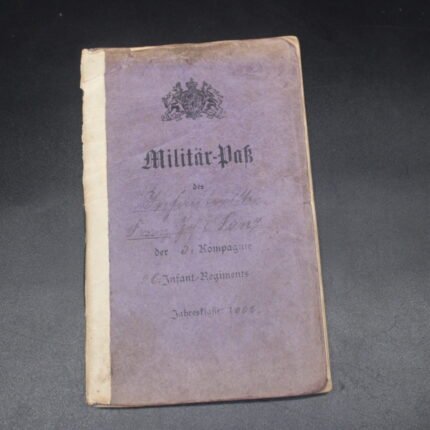

Imperial German WWI Militärpaß – Bayerisches-Reserve-Infanterie-Rgt. 17 (WIA 1918 in France, Earned Prussian EK2)
€45,00Offered is an original Imperial German Militärpaß issued to Franz Josef Lang, a Bavarian infantryman with long pre-war service, extensive frontline combat on the Western Front, and a confirmed Iron Cross 2nd Class award.
Franz Josef Lang was born on 1 May 1881 in Ranzberg and entered the Imperial German Army on 24 October 1902, initially serving with the 5. Kompanie, Infanterie-Regiment Nr. 20. His early enlistment places him among the experienced pre-war soldiers who formed the backbone of the German Army at the outbreak of the First World War.
With the mobilization of 1914, Lang was recalled to active service and assigned to the Bayerisches Infanterie-Regiment Nr. 4. His wartime career continued through multiple frontline infantry formations, including Infanterie-Regiment Nr. 3 and later the Bayerisches Reserve-Infanterie-Regiment Nr. 17. With Reserve Infantry Regiment 17, Lang saw heavy combat service in Flanders and France, placing him squarely in some of the most contested sectors of the Western Front.
On 27 November 1917, Lang was awarded the Preußisches Eisernes Kreuz 2. Klasse, a significant and desirable decoration for a Bavarian soldier, reflecting distinguished service under fire outside his home kingdom.
His Militärpaß further records that on 3 March 1918, Lang was wounded by artillery fire at Mesnil-St-Sevoye, a clear indication of direct exposure to frontline combat during the final, intense phase of the war.
Highlights:
-
Pre-war professional soldier (enlisted 1902)
-
Service in multiple Bavarian frontline infantry regiments
-
Western Front combat in Flanders and France
-
Iron Cross 2nd Class (Prussian award to a Bavarian soldier)
-
Documented combat wound from artillery fire in 1918
A strong, historically rich Militärpaß combining long service, frontline infantry combat, an Iron Cross award, and a recorded wartime wound—an excellent example for collectors of Bavarian units, Western Front veterans, or Iron Cross recipient documents.
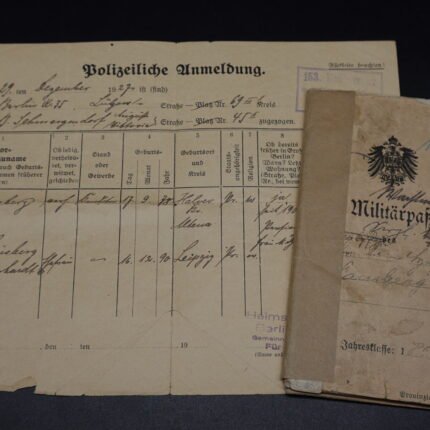
Imperial German WWI Militärpaß – Munitions-Kolonne (Verdun, Ypern.. Earned EK2)
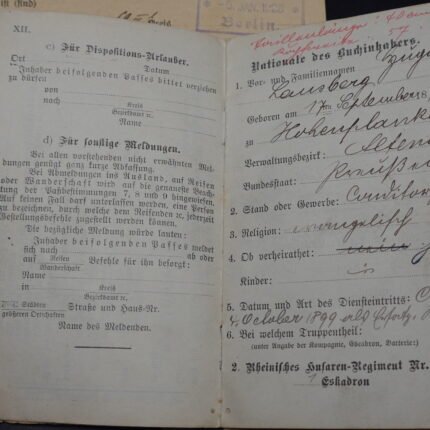
€45,00Offered is an original Imperial German Militärpaß issued to Hugo Lansberg, a veteran whose documented service spans the Kaiserreich, the entirety of the First World War, and the immediate postwar period.
Hugo Lansberg was born on 17 September 1878 in Hohenplanken and entered military service in 1899, initially serving with the 1. Eskadron, 2. Rheinisches Husaren-Regiment Nr. 9, reflecting a long pre-war professional military career. With the outbreak of the Great War, Lansberg was deployed on the Western Front and saw extensive frontline service in France, including major combat zones such as Verdun, the Aisne, and Flanders.
Prior to 13.12.1916, he served under the 10. Infanterie-Division. From 13 December 1916 until 12 January 1919, Lansberg served with a leichte Munitions-Kolonne (No. 745), a role critical to sustaining frontline operations under fire. During this period, he rose through the ranks to Non-Commissioned Officer, clearly indicating reliability, experience, and leadership under combat conditions.
Most notably, Lansberg was awarded the Eisernes Kreuz 2. Klasse on 5 May 1917, earned while serving with the light ammunition column—an uncommon and highly desirable detail, as EK2 awards to logistical and support units reflect service under particularly dangerous conditions rather than ceremonial recognition.
Following the armistice, his Militärpaß records continued service from 13 January 1919 with Feldartillerie-Regiment 46, placing him among the transitional forces during the turbulent postwar period.
Highlights:
-
Long pre-war and wartime service (1899–1919)
-
Western Front combat including Verdun
-
EK2 award to an ammunition column soldier
-
Promotion to NCO during wartime
-
Well-documented, continuous service record
A highly attractive Militärpaß with excellent historical depth, combining cavalry origins, frontline Western Front service, an Iron Cross award, and postwar continuity. An outstanding piece for collectors of Imperial German documents, EK recipients, or Western Front veterans.
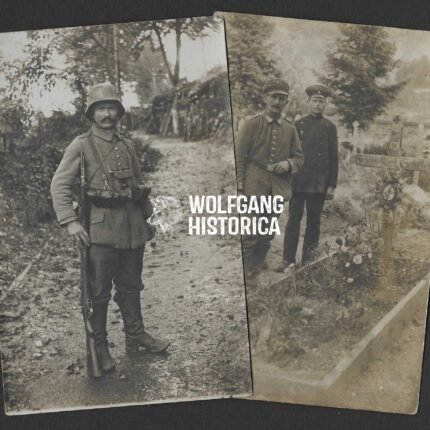
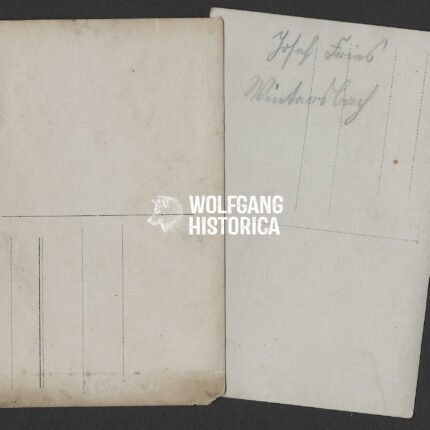
2x Photographs of German World War I Soldiers
€25,00Original 2x Photographs of German World War I Soldiers. Postcardsize. Condition as seen.