


Shop
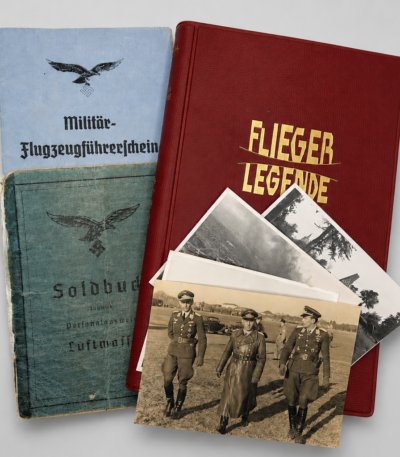
Outstanding Luftwaffe Ritterkreuzträger Soldbuch Grouping to Major Theodor Rossiwall – Spanish Civil War Veteran, Fighter Ace & Knight’s Cross Holder
€3.950,00Exceptional and highly researchable original wartime Luftwaffe Soldbuch grouping belonging to Theodor Rossiwall (12 October 1915 – 11 July 1979), highly decorated Luftwaffe fighter ace, combat pilot, and recipient of the Ritterkreuz des Eisernen Kreuzes.
Rossiwall claimed a total of 19 aerial victories in over 400 combat missions, including 2 victories during the Spanish Civil War while serving with the famous Condor Legion. He is additionally associated with the aerial combat on 20 April 1941 during which RAF top ace Pat Marmaduke Pattle was shot down over Greece/Crete, with Rossiwall and Sophus Baagoe both credited with claims during the engagement.
Born in Vienna, Rossiwall originally joined the Austrian Air Force before being transferred into the Luftwaffe following the Anschluss in 1938. He later served with Jagdgruppe 88 during the Spanish Civil War, where he flew combat missions against Republican forces and achieved two confirmed aerial victories, including a Polikarpov I-16 near Reus on 20 December 1938.
On 1 July 1939, Rossiwall transferred to Zerstörergeschwader 26 (ZG 26). During the Second World War he served extensively as a Bf 110 Zerstörer pilot and Staffelkapitän, later commanding larger formations. Following the loss and capture of Eberhard von Trützschler-d’Elsa in May 1940, Rossiwall assumed command within 5./ZG 26 during the Western Campaign. During the Dunkirk operations of May 1940 he reportedly led aggressive fighter actions against RAF formations, earning a formidable reputation.
He later fought on the Eastern Front, where he claimed additional aerial victories, before commanding II./Nachtjagdgeschwader 4 from January 1942 onward, achieving further successes as a night fighter commander. By March 1943 he had been promoted to Major and later commanded elements of Nachtjagdgeschwader 101. In August 1943 he became commander of the newly reformed Zerstörergeschwader 76, an anti-bomber formation operating Bf 110 aircraft against Allied heavy bombers. During these operations he claimed several B-17 Flying Fortress bombers destroyed. Rossiwall survived the war and passed away on 11 July 1979.
This grouping contains Rossiwall’s first-issue Soldbuch, complete with his original portrait photograph pasted into the rear section of the document. The Soldbuch is extensively filled with wartime entries, unit stamps, leave entries, medical examinations, equipment issue records, and award entries. Since no further entries appear after late 1942, it is highly likely Rossiwall later received a second replacement Soldbuch for continued service.
The grouping additionally includes his original Militär-Flugzeugführerschein, wartime photographs, and accompanying related material.
Awards recorded inside the Soldbuch include:
- Dienstauszeichnung IV. Klasse
- Medalla de la Guerra
- Cruz de Guerra
- Spanienkreuz in Gold mit Schwertern
- Eisernes Kreuz 2. Klasse
- Eisernes Kreuz 1. Klasse
- Ehrenpokal für besondere Leistungen im Luftkrieg
- Frontflugspange in Silber – awarded 25.3.1941
- Verwundetenabzeichen in Bronze – awarded 18.5.1941
- Frontflugspange in Gold – awarded 23.6.1941
- Ritterkreuz des Eisernen Kreuzes – awarded 6.8.1941
- Tapferkeitsabzeichen IV. Klasse, 1. Stufe – awarded 27.4.1942
The Soldbuch itself shows extensive honest wartime wear and service use throughout, with period aging, handling wear, field usage, and numerous official stamps and signatures consistent with active frontline Luftwaffe service.
An exceptional and historically important Luftwaffe fighter ace and Ritterkreuzträger grouping with outstanding research potential, especially desirable due to Rossiwall’s documented Spanish Civil War service, Knight’s Cross award, Ehrenpokal, extensive combat career, and connection to some of the Luftwaffe’s best-known operational units.
Condition as seen.
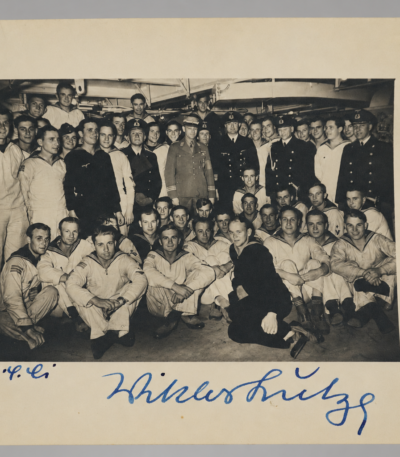
Signed Photo of SA Chief Viktor Lutze Visiting Kriegsmarine Crew – Hoffmann Press Photo
€375,00Original wartime signed photograph depicting SA-Stabschef Viktor Lutze during a visit aboard a Kriegsmarine vessel in Brest.
The image shows Lutze together with a large group of Kriegsmarine sailors and officers aboard ship. The lower front margin bears a bold original ink signature of Viktor Lutze.
Viktor Lutze became Chief of Staff of the Sturmabteilung (SA) in 1934 following the death of Ernst Röhm during the Night of the Long Knives. As leader of the SA, Lutze remained one of the highest-ranking political figures within the Third Reich and frequently appeared at official military and propaganda events throughout the war years. He died on 2 May 1943 following injuries sustained in a serious automobile accident near Potsdam.
Reverse retains the original handwritten period notation: “Besuch des Stabschef der SA Lutze an Bord im Brest.” (“Visit of SA Chief Lutze aboard ship in Brest.”)
Also visible to the reverse is the printed credit line: “Photo-Standardpresse Heinrich Hoffmann Berlin SW 68 – Nachdruck verboten”
A very interesting original Third Reich signed photograph with strong historical and display appeal, especially for collectors of SA, Kriegsmarine, political memorabilia, and wartime autographs.
Condition as seen.
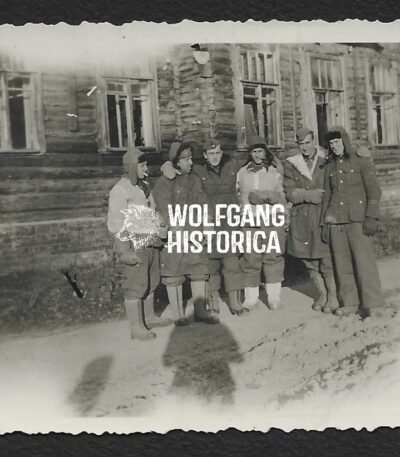
Photograph of Flemish Volunteers of the SS-Freiwilligen-Legion “Flandern” (Names Known!) – Puschkin, 1942
€130,00Original Photograph of Flemish Volunteers of the SS-Freiwilligen-Legion “Flandern”. Names known, taken in Puschkin, 1942! Size: 6x9cm. Condition as seen.
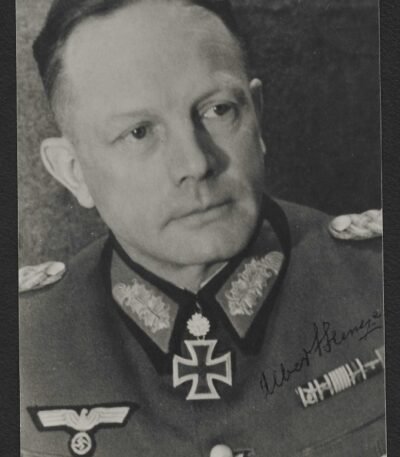
Albert Henze – Panzergrenadier-Regiment 110 & Gruppe Henze (Eichenlaub)
€55,00Original Postwar Signature on a Postwar Photo of Albert Henze. Generalleutnant Albert Henze (07.08.1894 in Kirchhain † 31.03.1979 in Ingolstadt) earned the Deutsches Kreuz in Gold on March 2, 1943 with the Panzergrenadier-Regiment 110, the Ritterkreuz des Eisernen Kreuzes on January 15, 1944 as Oberst und Kommandeur of Panzergrenadier-Regiment 110 and the 11. Panzer-Division and the Eichenlaub on January 21, 1945 as Generalmajor und Kommandeur of the Gruppe Henze / 21. Feld-Division (L). Larger then Postcardsize.
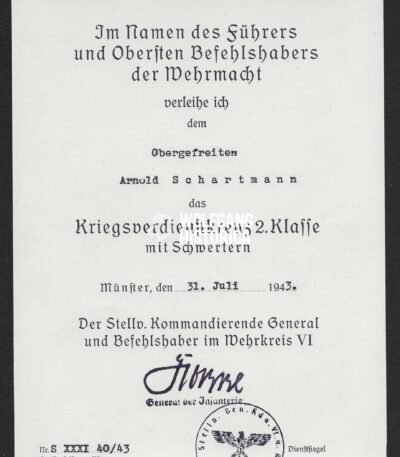
Kriegsverdienstkreuz 2. Klasse mit Schwertern Award Document – Wehrkreis VI
€45,00Original wartime award document for the Kriegsverdienstkreuz 2. Klasse mit Schwertern (War Merit Cross 2nd Class with Swords), awarded to Obergefreiter Arnold Schartmann on 31 July 1943.
The document retains its original signature and official service stamp. The reverse has period tape reinforcement applied to strengthen the paper, as commonly encountered with wartime documents that saw prolonged storage or handling.
A nice original Wehrmacht award document with strong display and research potential, ideal for collectors of German WWII paperwork and award documents.
Condition as seen.
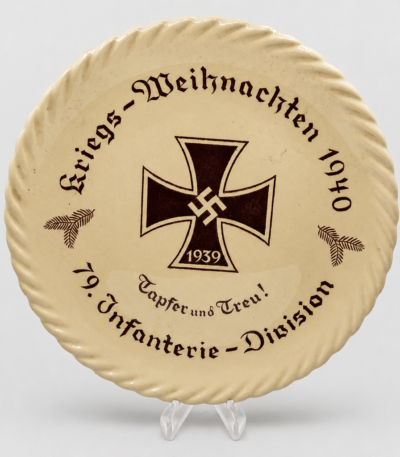
79. Infanterie-Division “Tapfer und Treu” Kriegs-Weihnachten 1940 Porcelain Plate – Villeroy & Boch
€250,00Original “Kriegs-Weihnachten 1940” porcelain commemorative plate for the 79. Infanterie-Division. Manufactured by Villeroy & Boch, Mettlach and measuring approximately 20,5 cm in diameter.
The front displays the divisional designation together with the motto “Tapfer und Treu” and central Iron Cross 1939 design. Reverse retains the original Villeroy & Boch maker mark and suspension cord for wall display.
A very attractive and historical wartime presentation piece with excellent display character. Ideal for collectors of Wehrmacht memorabilia, divisional items, or wartime porcelain.
Condition as seen.
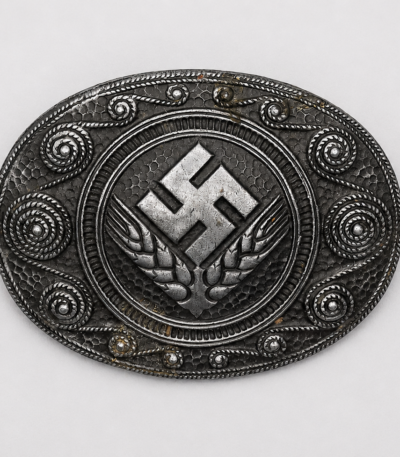
RADwJ Erinnerungsbrosche by Assmann – Zinc Construction – Female Labour Service
€45,00Original RADwJ Erinnerungsbrosche (commemorative brooch) for the Reichsarbeitsdienst der weiblichen Jugend. Manufactured in zinc with detailed silvered finish and complete functional pin assembly to the reverse.
The brooch features an attractive ornate oval design with central swastika and wheat motif. Reverse is marked with the Assmann “A” logo for Assmann & Söhne. The piece retains strong detailing together with an appealing untouched wartime appearance and natural age patina.
A scarce and visually attractive original commemorative brooch connected to the female Reich Labour Service, considerably rarer than standard RADwJ membership badges.
Condition as seen.
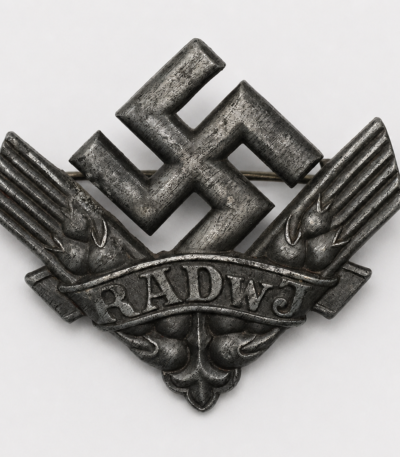
RADwJ Kriegshilfsdienst Insignia Badge – Zinc Construction – Female Labour Service
€45,00Original RADwJ (Reichsarbeitsdienst der weiblichen Jugend) Kriegshilfsdienst insignia badge. Constructed in zinc with darkened wartime finish and complete needle setup to the reverse.
The Kriegshilfsdienst (“War Auxiliary Service”) was introduced during the later war years when female members of the Reich Labour Service were increasingly assigned to support duties connected to the German war effort. These included administrative work, communications, logistics, air raid assistance, and other auxiliary wartime functions. Badges such as this formed part of the organizational insignia worn by members attached to these wartime service branches.
This example retains a very attractive untouched appearance with clear detail to the wheat wreath, swastika, and RADwJ banner. The reverse remains complete and uncleaned, showing honest period wear and age patina. The zinc construction and darkened finish are fully consistent with late wartime production.
A desirable and increasingly harder to find original wartime female Reich Labour Service insignia, ideal for collectors of RAD, Kriegshilfsdienst, political insignia, or Third Reich organizational badges.
Condition as seen.
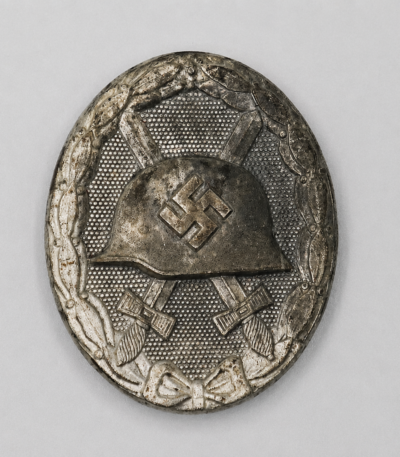
Verwundetenabzeichen in Silber – Wound Badge in Silver – Maker Marked “107” Carl Wild – Zinc Example
€95,00Original WWII German Verwundetenabzeichen in Silber (Wound Badge in Silver), manufactured in zinc and maker marked “107” on the reverse for Carl Wild, Hamburg.
This example retains a very attractive appearance with a pleasing naturally aged patina and a substantial amount of its original silver finish still present, particularly on the helmet, wreath, and crossed swords. The badge shows strong detailing throughout and remains a visually appealing piece.
The reverse setup is fully intact with its original hinge, pin, and catch assembly. The maker mark “107” is clearly visible beneath the hinge.
The Silver Grade Wound Badge was awarded to German servicemen wounded three or four times in combat, or for more severe injuries sustained during active military service.
A solid original wartime example by a desirable maker, featuring excellent overall character and finish retention.
Condition exactly as shown in the photographs.
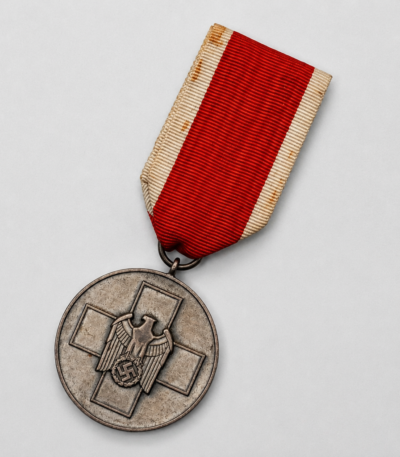
WWII German Medaille für deutsche Volkspflege – Social Welfare Medal with Ribbon
€85,00Original WWII German Medaille für deutsche Volkspflege (Medal for German Social Welfare), complete with its original ribbon.
The medal features the inscription “Medaille für deutsche Volkspflege” on the reverse, while the obverse displays a large cross with national eagle and swastika motif. The piece retains a pleasing silvered finish with honest age patina and light wear consistent with period use and storage.
Instituted to recognize contributions and service within the field of public welfare and social care, the award was presented to individuals who distinguished themselves through charitable, medical, or social service activities.
The medal remains in very good condition overall, with an attractive untouched appearance and original suspension ribbon attached.
Condition exactly as shown in the photographs.
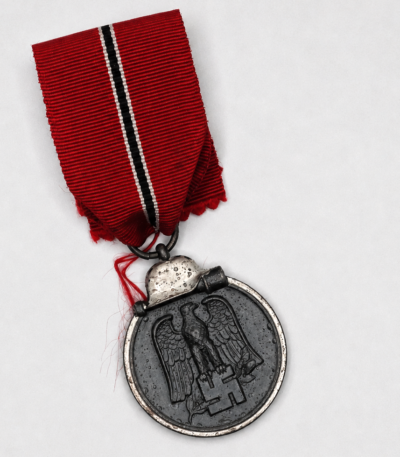
Winterschlacht im Osten 1941/42 Medal – Maker Marked “107” (Carl Wild)
€75,00Original Winterschlacht im Osten 1941/42 Medal (“Ostmedaille”) in well preserved condition. This example is maker marked “107” for Carl Wild, Hamburg, and retains an attractive original finish with clear details throughout. The medal comes complete with its original ribbon and shows honest period wear consistent with age.
A solid untouched wartime example in Near Mint Condition and an excellent addition to any German WWII medal or Eastern Front collection.
Condition exactly as shown in the photographs.
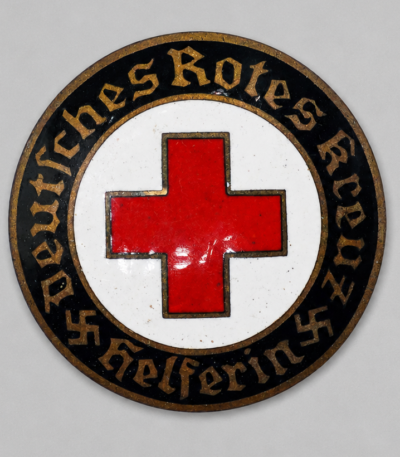
WWII German DRK Helferin Badge – Enamel Red Cross Membership Badge – Ges. Gesch.
€65,00Original WWII German Deutsches Rotes Kreuz (DRK) membership / helper badge featuring the classic red cross design surrounded by the inscription: “Deutsches Rotes Kreuz Helferin”
The badge is manufactured in attractive tombak construction with multi-colored enamel finish and retains its original functional pin assembly to the reverse. Reverse is marked: “GES. GESCH.” for Gesetzlich Geschützt (legally protected design).
The front displays excellent period character with strong original enamel finish to the red, white, and black sections, while the reverse shows untouched age patina consistent with wartime wear and age.
Badges of this type were worn by female DRK nursing and medical auxiliaries who assisted with hospital care, wounded transport, civilian emergency aid, and wartime medical support during the Second World War.
A highly displayable and authentic wartime German Red Cross auxiliary badge with strong visual appeal and excellent collector value.
Condition exactly as shown in the photographs.
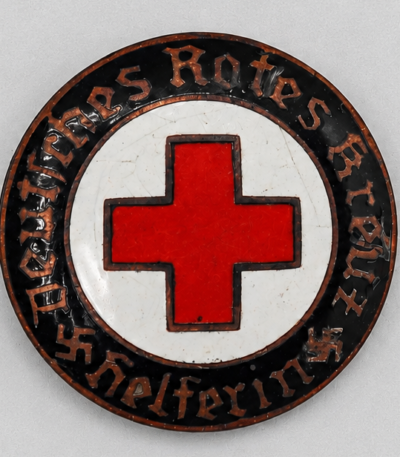
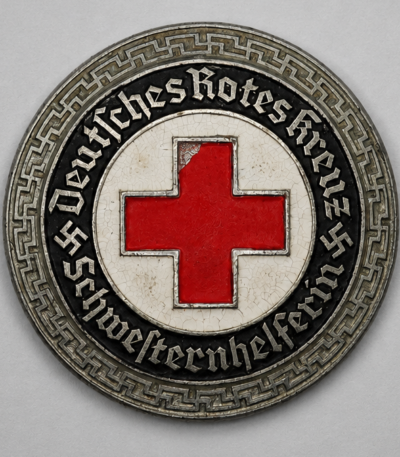
WWII German DRK Schwesterhelferin Badge – Deutsches Rotes Kreuz – Ges. Gesch. Marked
€75,00Original WWII German Deutsches Rotes Kreuz (DRK) badge for a Schwesterhelferin (female Red Cross auxiliary/helper), featuring the classic red enamel cross surrounded by the inscription:
“Deutsches Rotes Kreuz Schwesterhelferin”
The badge is constructed from zinc with a silvered finish and retains its original painted red, white, and black details, rather than enamel. Reverse is complete with functional pin setup and marked:
“GES. GESCH.”
together with the desirable “GB” maker’s logo for Gustav Brehmer, one of the well-known wartime German insignia manufacturers.
These badges were worn by female auxiliary personnel and medical helpers serving within the German Red Cross organization during the Third Reich period. DRK personnel played an important role in wartime medical support, hospital work, transport services, civilian aid, and assistance to wounded soldiers.
Condition is overall good and untouched, showing honest age and wear. The painted finish shows age-related cracking and wear consistent with wartime use, while the reverse displays natural patina and oxidation.
A very displayable and increasingly collectible original WWII German Red Cross item with strong historical character.
Condition exactly as shown in the photographs.
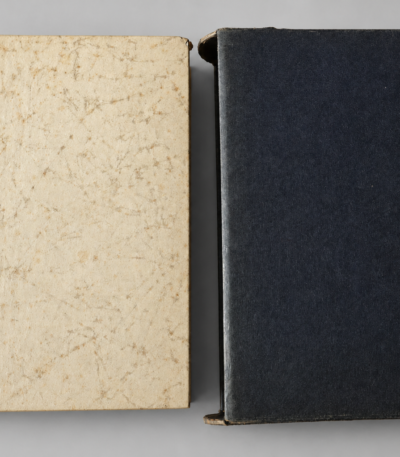
1939 “Mein Kampf” Wedding Edition – Engelskirchen Presentation Copy – Complete Original Slipcase
€255,00Original WWII-era German “Mein Kampf” wedding edition (“Ehestandsausgabe”) published in 1939 by Zentralverlag der NSDAP / Franz Eher Nachf., München. This example is an official municipal presentation copy issued by the town of Engelskirchen and presented to a newly married couple as part of the Third Reich wedding tradition.
The book retains its highly desirable complete original protective slipcase, which is often missing from surviving examples. The dedication page is handwritten in period ink and includes the names of the recipients, the presentation date, and official municipal presentation text.
This edition contains:
- Original portrait of Adolf Hitler
- Gothic-script printing throughout
- Combined two-volume edition in one binding
- 1939 dated title page
- Original decorative hardcover binding
- Complete original slipcase
Wedding editions of “Mein Kampf” were officially distributed by German municipalities to newly married couples during the Third Reich period as ceremonial state gifts. These books served both as propaganda material and symbolic state-issued household items, making them historically significant artifacts of daily life in Nazi Germany.
Condition is overall very good and highly displayable, showing only honest age and storage wear. The binding remains solid, pages are clean, and the original slipcase survives complete.
A historically significant and increasingly difficult-to-find complete wedding edition with strong collector, display, and research appeal.
Condition exactly as shown in the photographs.
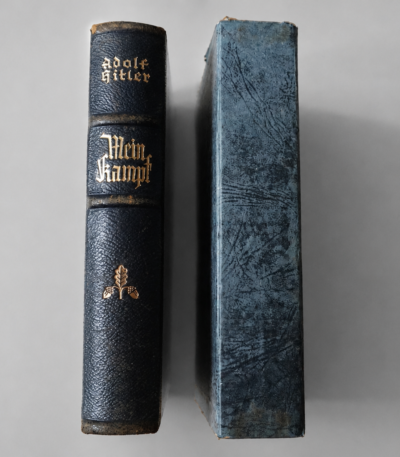
1937 “Mein Kampf” Wedding Edition – City of Bonn Presentation Copy – Slipcase Missing Top Section
€225,00Original pre-war German edition of “Mein Kampf” by Adolf Hitler, published in 1937 by Zentralverlag der NSDAP / Franz Eher Nachf. München. This example is the desirable wedding presentation edition (“Ehestandsausgabe”), officially presented by the City of Bonn to a newly married couple on 16 October 1937.
The book remains complete with its original protective slipcase and retains the official presentation page reading:
“Dem jungvermählten Paare … überreicht von der Stadt Bonn”
The recipient names and date are handwritten in ink, together with the signature of the Oberbürgermeister (mayor).
The “Mein Kampf” wedding editions were commonly presented by German municipalities to newly married couples during the Third Reich period as official state gifts, making these editions historically significant examples of wartime-era propaganda and political publishing.
Condition is overall very good and displayable for its age. The book shows honest storage and handling wear. The original protective slipcase is still present, though the upper/top section of the slipcase is missing. Despite this damage, the slipcase remains displayable and is a desirable surviving accessory often absent from wartime examples.
A historically significant and collectible pre-war German political publication with strong display and research value.
Condition exactly as shown in the photographs.
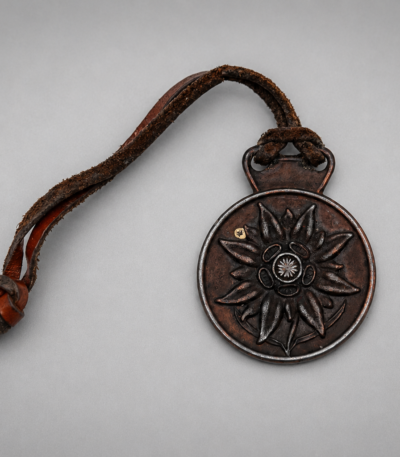
WWII German “Eismeerfront 1942–1943” Commemorative Badge / Tinnie with Leather Hanger
€155,00Original Second World War German commemorative badge / tinnie marked: “Eismeerfront 1942–1943”. A very interesting wartime remembrance piece connected to service on the harsh Arctic Front (Eismeerfront), the northernmost combat theater of the German-Soviet War centered around northern Finland, Lapland, and the Arctic region near Murmansk.
The badge features:
- Front with gothic-style “Eismeerfront 1942–1943” inscription
- Reverse with prominent edelweiss-style design, strongly associated with German mountain and northern troops
- Original leather hanger / suspension strap still attached
- Attractive untouched darkened wartime patina throughout
Constructed in lightweight wartime metal with a suspension loop and period leather attachment, likely intended for wear on personal equipment, a vehicle interior, or as a commemorative keepsake by veterans serving in the Arctic theater.
The Eismeerfront was one of the most brutal operational environments of WWII, with German and Finnish troops facing extreme cold, snow, isolation, and continuous fighting against Soviet forces in the far north.
The piece remains in very good untouched condition showing honest age and wear. The leather hanger displays expected age hardening and surface wear consistent with wartime use and storage. Condition exactly as shown in the photographs.
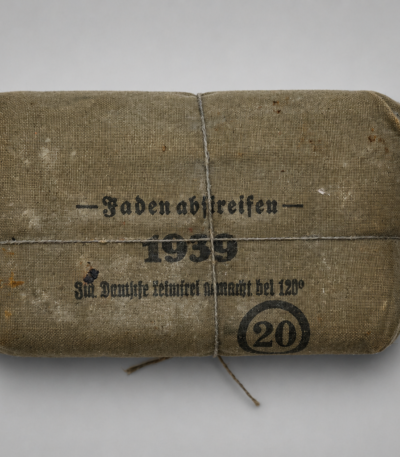
WWII Wehrmacht Verbandpäckchen / First Aid Bandage Pack – 1939 Dated
€20,00Original Second World War German Wehrmacht Verbandpäckchen (field dressing / first aid bandage pack), still retaining its original wartime canvas wrapping and period markings.
This example is clearly 1939 dated, making it an early-war production piece. The exterior retains several visible manufacturer and medical acceptance markings, including:
- “1939” date stamp
- Size marking “20”
- Maker-marked example, produced by Hartmann & Co., Ges. m. b. H., Wien.
- Period German medical supply markings
- Original wartime wrapping cord still present
The package remains unopened and untouched, preserving its original field-issued appearance. Interestingly, traces of what appear to be old blood staining are visible on the exterior wrapping, adding to the authentic battlefield-used character of the piece.
Condition shows honest wartime age, storage wear, staining, and handling exactly as photographed. An untouched and authentic early-war example with excellent display character.
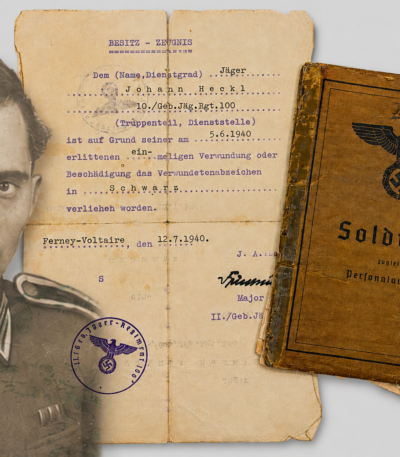
WWII Gebirgsjäger Soldbuch & BWB Award Document – Gebirgsjäger-Regiment 100 Veteran – WIA France 1940 & Private Walther PPK Entry
€275,00Original WWII German Gebirgsjäger Soldbuch grouping belonging to Johann Heckl, born 10 August 1920 in München (Munich), who served with Gebirgsjäger-Regiment 100 during the Second World War.
A highly attractive and researchable mountain troop grouping featuring the soldier’s original Soldbuch, wartime portrait photograph, and an accompanying original Besitz-Zeugnis for the Verwundetenabzeichen in Schwarz (Black Wound Badge) awarded for wounds received during the 1940 Western Campaign.
The Soldbuch records service with:
- 10. Kompanie / Gebirgsjäger-Regiment 100
- Gebirgsjäger-Ersatz-Bataillon 100
- Additional field and replacement formations
Awards Recorded
- Verwundetenabzeichen in Schwarz (Black Wound Badge)
- Medaille zur Erinnerung an den 18. März 1938
- Kriegsverdienstkreuz 2. Klasse mit Schwertern – awarded 20 April 1944
Rank Progression
- Jäger
- Obergefreiter
- Oberjäger
One of the most interesting entries in the Soldbuch is the official authorization allowing Heckl to carry his privately owned:
Walther 7.65 mm pistol
Serial number 161763
as an approved personal service sidearm — a highly desirable and relatively uncommon personalized entry for collectors of Wehrmacht and Gebirgsjäger documentation.
The grouping also documents multiple wartime hospitalizations and combat wounds, including:
- Wounding on 5 June 1940
- Hospitalization in April 1945 for a shrapnel wound to the shoulder
Included in the Grouping
- Original Soldbuch
- Original Black Wound Badge award document
- Wartime portrait photograph
The Soldbuch remains untouched and honest, showing clear wartime use, handling wear, and age throughout.
A very displayable and historically rich Gebirgsjäger grouping with strong collector and research appeal, especially due to the combination of:
- Mountain troop service
- 1940 combat wound documentation
- Original wound badge document
- Late-war hospitalization entries
- Privately owned Walther pistol authorization
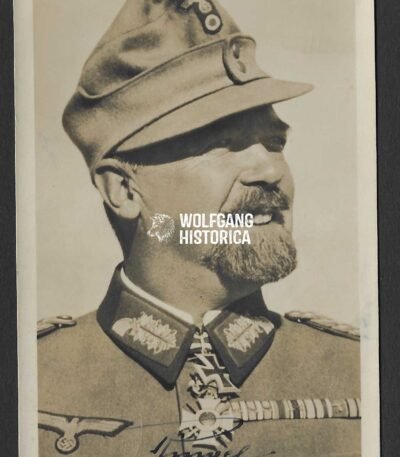
Julius Ringel – 5. Gebirgs-Division (Eichenlaub) (Wartime Signed)
€150,00Original Wartime Signature on a Postcard of Julius Ringel. General der Gebirgstruppe Julius “Papa” Ringel (16.11.1889 † 11.02.1967) was an Austrian general serving in the armed forces of Nazi Germany during the Second World War. He saw service on the Western Front, Eastern Front, and during the Balkan Campaign, and held a number of senior commands, including 3. Gebirgs-Division, 5. Gebirgs-Division, LXIX. Armeekorps, Wehrkreis XI, and Armeekorps Ringel. He earned the Ritterkreuz des Eisernen Kreuzes on June 13, 1941 as Generalmajor und Kommandeur of the 5. Gebirgs-Division, and was later awarded the Eichenlaub on October 25, 1943 as Generalleutnant und Kommandeur of the 5. Gebirgs-Division. Condition as seen. Postcard size.
This is sold on commission!
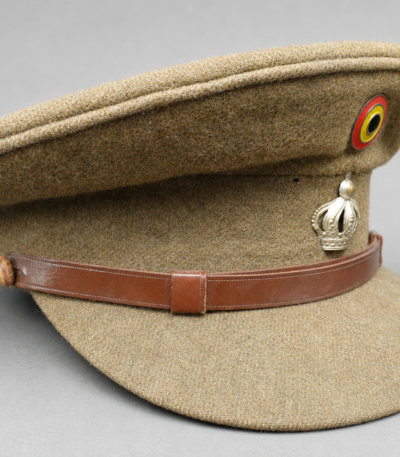
Belgian Army Visor Cap – Post-Liberation / Early Postwar – Royal Crown Badge
€100,00Original Belgian Army visor cap dating to the immediate post-liberation / early post-WWII period, likely manufactured shortly after the liberation of Belgium in 1944–45.
The cap is constructed in classic Belgian khaki wool with a brown leather chinstrap and retains its original Belgian national cockade together with the royal crown insignia to the front. The overall appearance strongly reflects transitional Belgian military headgear used during the rebuilding of the Belgian armed forces following occupation.
The interior retains its original diamond-shaped retailer/manufacturer label from:
“Vêtements Civils et Militaires Van Den Haute-Rabou”
86 Rue de Diest, Louvain (Leuven)
Condition remains very good overall, showing only light age and storage wear. The cap retains an attractive shape and displays very well.
A desirable and increasingly harder-to-find piece of early postwar Belgian military headgear, closely linked to the liberation and reconstruction period of the Belgian Army.
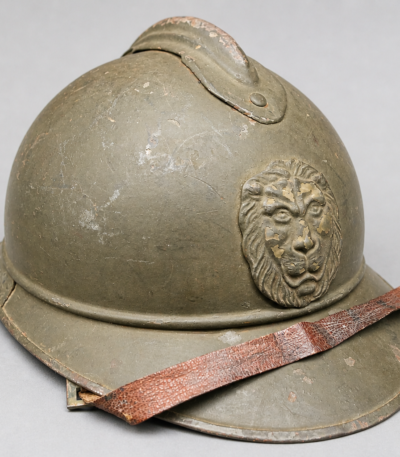
Belgian M15 Adrian Helmet (WWI) – Complete with Chinstrap (Reissued)
€295,00Original Belgian Adrian helmet Model 1915, originally produced during the First World War and later refurbished for continued Belgian military service during the interwar period. Complete with original Belgian lion-head front badge and characteristic comb crest. The helmet retains its period repaint and later upgraded liner/strap configuration, typical of Belgian arsenal refurbishments carried out during the 1920s–1930s.
A genuine and historically interesting example showing both WWI origin and later pre-WWII Belgian military reuse.
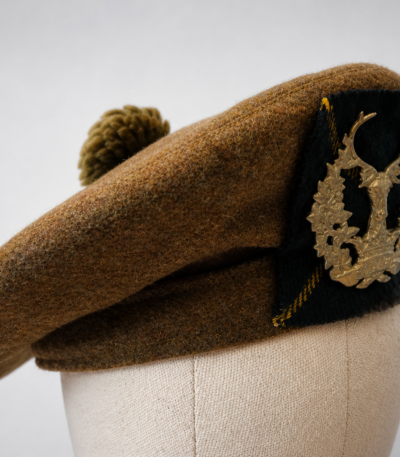
WWII British Gordon Highlanders Tam o’ Shanter – WD 1942 (Dunkirk, El Alamein, Normandy)
€275,00Original WWII-era British Tam o’ Shanter to the Gordon Highlanders, complete with its regimental cap badge mounted on tartan backing.
Details:
- Regiment: Gordon Highlanders
- Type: Tam o’ Shanter (Scottish pattern headdress)
- Badge: Gordon Highlanders cap badge with “BYDAND” motto (correct pattern)
- Origin: British Army issue
Interior markings:
- War Department stamp: “O W↑D 656”
- “W↑D” = War Department property mark
- Letter “O” = 1942 date code
- Blue inventory number: 51224
This confirms the cap as a wartime-issued example, dating to 1942.
Condition:
Good original wartime condition. The cap retains its structure well with honest service wear. Interior stamps remain visible and legible. Badge is securely fitted and period-appropriate.
A genuine WWII Highland regiment piece with clear War Department marking—highly desirable to collectors.
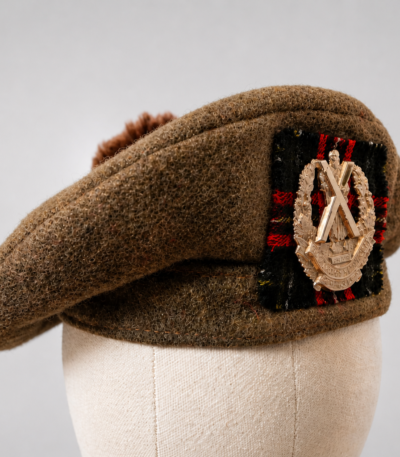
WWII Canadian Tam o’ Shanter – Cameron Highlanders of Ottawa, Brill Bros 1943 (Normandy, Belgium)
€275,00Original WWII Canadian Tam o’ Shanter to the The Cameron Highlanders of Ottawa, complete with original cap badge and wartime maker marking.
Details:
- Unit: Cameron Highlanders of Ottawa
- Type: Tam o’ Shanter (Scottish pattern headdress)
- Badge: Original Cameron Highlanders cap badge mounted on tartan backing
- Maker: Brill Bros.
- Date: 1943
- Size: 7 1/4
The interior is clearly stamped: “BRILL CAP 1943”
Brill Bros. was a known Canadian wartime manufacturer supplying military headgear, and dated examples are increasingly sought after.
Condition:
Very good wartime condition. The tam retains its original shape, badge, and tartan backing. Light service wear and age-related toning, but no major damage. Maker/date stamp remains visible.
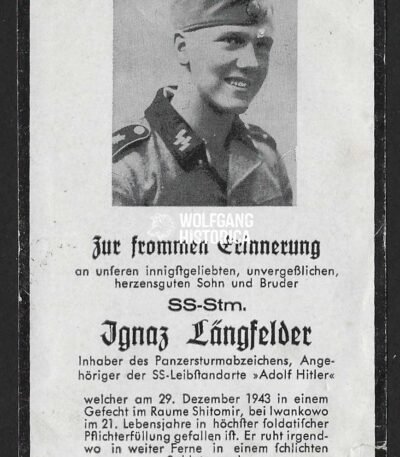
WWII German Waffen-SS Death Card – SS-Sturmmann, LSSAH, KIA Shitomir 1943
€150,00Original WWII German Sterbebild (death card) for Ignaz Längfelder, an SS-Sturmmann of the elite Leibstandarte SS “Adolf Hitler” (LSSAH), killed in action on the Eastern Front in 1943.
Details from the card:
- Name: Ignaz Längfelder
- Rank: SS-Sturmmann
- Unit: Leibstandarte SS “Adolf Hitler” (LSSAH)
- Award: Panzer Assault Badge (Panzersturmabzeichen)
- Killed in action: 29 December 1943
- Location: Shitomir / Iwankowo sector (Ukraine)
- Age: 21
The card notes he fell in combat during heavy fighting in the Shitomir region, part of the winter battles on the Eastern Front.
The reverse features a religious image (after Titian) with devotional text.
Condition:
Good overall condition with typical age wear, slight edge wear, and light handling marks. Fully intact and well preserved.
Additional note:
This individual is the subject of a published family-written book, adding a rare level of personal historical documentation and research potential.
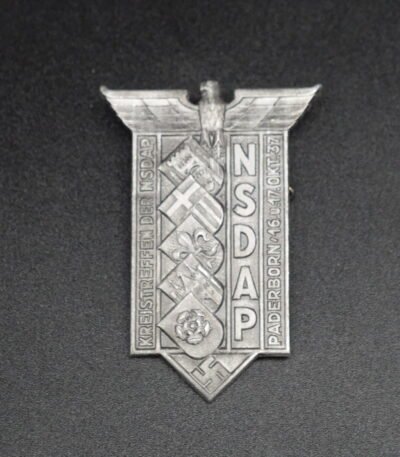
NSDAP Kreistreffen Paderborn 1937 Badge – Steinhauer & Lück, Lüdenscheid (Early Party Tinnie)
€60,00Original NSDAP Kreistreffen badge for the district rally held in Paderborn, 14–16 October 1937.
Die-stamped aluminium construction with a detailed design featuring an eagle above a shield displaying multiple regional coats of arms. Vertical inscription “NSDAP” and side text “Kreistreffen der NSDAP – Paderborn 14–16 Oktober 1937.”
Reverse maker marked Steinhauer & Lück, Lüdenscheid, one of the most well-known and respected producers of Third Reich insignia.
Complete with original pinback.
Condition is very good, with sharp detail, light wear, and a clean, untouched appearance (see images).
A highly attractive and well-designed regional NSDAP event badge, with strong visual appeal and a desirable maker mark.
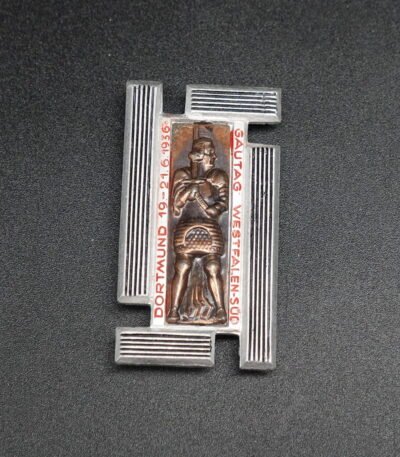
NSDAP Gautag Westfalen-Süd Dortmund 1936 Badge – Steinhauer & Lück, Lüdenscheid (High Quality Design)
€55,00Original NSDAP Gautag badge for Westfalen-Süd, issued for the rally held in Dortmund, 19–21 June 1936.
Die-stamped aluminium construction with an unusually elaborate geometric design, featuring a central medieval armored figure flanked by architectural elements and red-painted vertical inscription:
“Gautag Westfalen-Süd – Dortmund 19–21.6.1936”
Reverse clearly maker marked Steinhauer & Lück, Lüdenscheid, one of the premier badge manufacturers of the period.
Complete with original pinback.
Condition is very good, with strong detail, intact paint, and only light age-related wear. A particularly clean and well-preserved example (see images).
A visually striking and higher-quality Gau rally tinnie, standing out from more typical, simpler designs of the era.
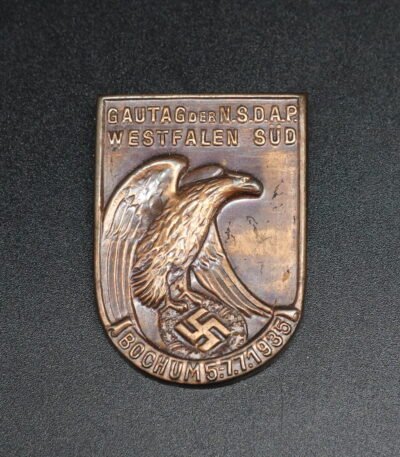
NSDAP Gautag Westfalen-Süd Bochum 1935 Badge – Early Gau Rally Tinnie
€55,00Original NSDAP Gautag badge for Westfalen-Süd, issued for the event held in Bochum, 5–7 July 1935.
Die-stamped construction with bronze-toned finish, featuring a large national eagle clutching a wreath with swastika, surrounded by the inscription:
“Gautag der NSDAP Westfalen Süd – Bochum 5–7.7.1935”
Complete with original pinback.
Condition is good, showing honest age-related wear and patina, with clear detail and legible text (see images).
A classic early-period Gau rally tinnie, representing regional party organization during the consolidation phase of the mid-1930s.
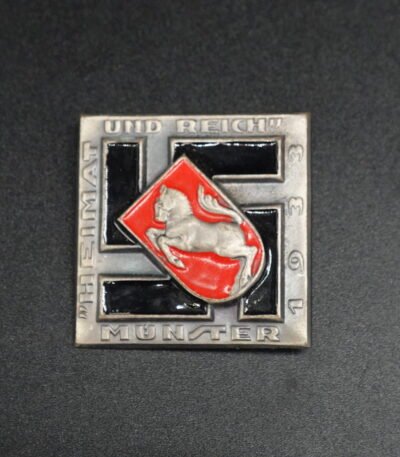
“Heimat und Reich” Münster Tinnie 1933 – Early Third Reich
€65,00Original “Heimat und Reich” tinnie (badge) from Münster, dated 1933.
Die-stamped, silvered metal construction with red and black painted finish, measuring approximately 50 × 50 mm, with vertical pinback to the reverse.
The badge features the inscription “Heimat und Reich 1933 Münster” and incorporates the Westphalian horse within a central shield. The piece retains strong detail and contrast, with typical age-related wear to the painted surfaces (see images).
Large and visually striking example from the early period of the Third Reich. Tinnies of this type were commonly produced for regional events, gatherings, or propaganda-related activities tied to the rapid political consolidation of 1933.
A desirable and collectible early piece, especially with clear regional attribution to Münster.
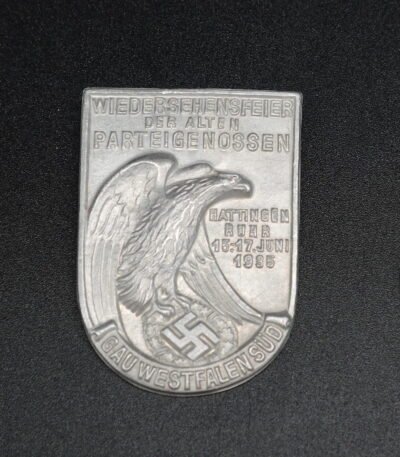
NSDAP “Wiedersehensfeier der Alten Parteigenossen” Hattingen Ruhr 1935 Badge – Sieper & Söhne
€55,00Original NSDAP event badge (tinnie) for the “Wiedersehensfeier der Alten Parteigenossen”, held in Hattingen (Ruhr), 15–17 June 1935, within Gau Westfalen-Süd.
Die-stamped aluminium construction featuring a large national eagle with wreath and swastika, with surrounding inscription. Reverse marked B. Sieper & Söhne, Lüdenscheid, a known and respected maker of Third Reich badges.
Complete with original pinback.
Condition is very good, with sharp detail and light, honest wear consistent with age (see images).
A classic early-period NSDAP Gau event badge, representing regional party organization and early consolidation phase items from 1933–1935.
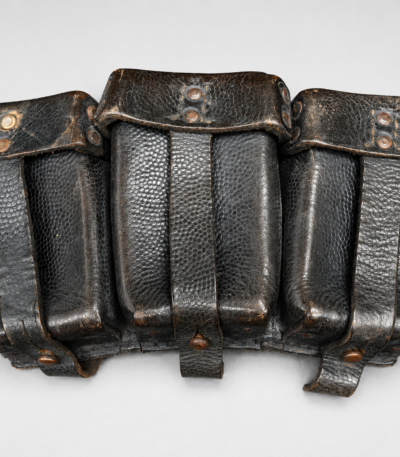
WWII German K98 Ammunition Pouch – RBNr. Numbered, Black Leather (Late War)
€75,00Original WWII German K98 ammunition pouch (Patronentasche), constructed in black pebbled leather and clearly stamped with an RBNr. (Reichsbetriebsnummer) indicating late-war production.
The pouch is (in my opinion, what I can make out!) marked:
RBNr. 0/0570/0033
This code corresponds to:
- Manufacturer: Karl Kühne
- Location: Lüdenscheid, Westfalen
- Industry: Military leather equipment production, including ammunition pouches, straps, and field gear
The RBNr. system was introduced during the war to conceal manufacturer identities, replacing earlier visible maker/date markings. Identified examples like this are especially desirable as they can be traced back to specific firms.
This example features:
- Three-cell K98 configuration (holds 60 rounds total)
- Blackened leather typical of mid-to-late war production
- Original stitching and hardware throughout
- Clear and legible RBNr. stamp
Condition:
Good, honest field-used condition. The leather remains structurally sound with expected wear, light scuffing, and age-related patina. Hardware intact and functional. A well-preserved example of a late-war issued pouch.
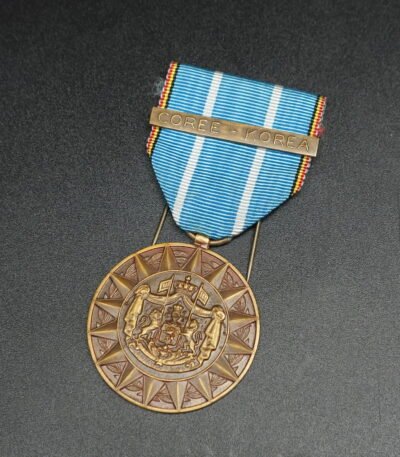
Belgian UN Korea Medal – “Corée–Korea” Clasp (Korean War, 1950–53)
€125,00Original Belgian United Nations Korea Medal, complete with “Corée–Korea” clasp.
Bronze medal featuring the Belgian coat of arms within a radiating star design, suspended from its original ribbon in light blue with white stripes and national edge colors. The medal retains a strong, attractive finish with light, honest wear. The clasp is present and correctly mounted on the ribbon.
Overall condition is very good (see images), with only minor signs of age and use.
A desirable and historically significant decoration awarded to members of the Belgian Armed Forces who served during the Korean War.
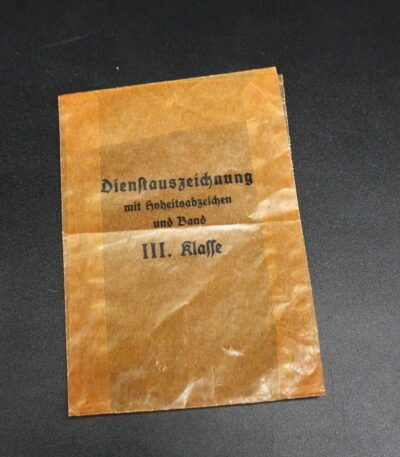
WWII Wehrmacht Dienstauszeichnung Packet – III. Klasse (with Hoheitsabzeichen und Band)
€80,00Original WWII German paper packet for a Dienstauszeichnung (Long Service Award), III. Klasse, marked “mit Hoheitsabzeichen und Band” (with national emblem and ribbon).
This type of packaging was used for Wehrmacht long-service awards, issued to personnel of the Wehrmacht.
Constructed from thin, period waxed paper, typical of wartime award packaging. The packet remains in good, untouched condition, showing expected creasing, handling wear, and age-related discoloration (see images).
Original award packets are often missing, as they were frequently discarded after presentation. As such, surviving examples—especially clearly marked and legible—are increasingly difficult to find.
A desirable accessory piece for completing a Wehrmacht long-service award set or for display alongside period decorations.
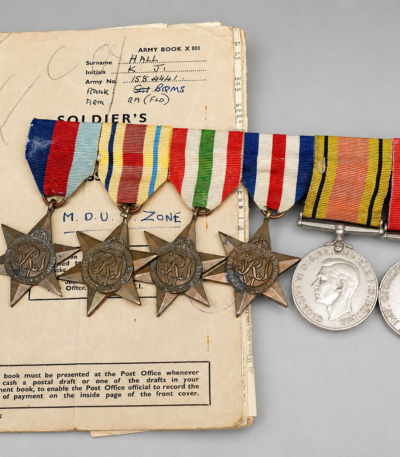
British WWII Mounted Medal Group, 91st Field Royal Artillery (Monte Cassino & Rhine Crossing)
€325,00Authentic British Second World War mounted medal group of six, comprising the 1939–1945 Star, Atlantic Star, Italy Star, France and Germany Star, Defence Medal, and War Medal 1939–1945, mounted as worn on the original bar and accompanied by the Soldier’s Release Book.
The group is attributed to Battery Quartermaster Sergeant Hall, who served with the 91st Field Regiment, Royal Artillery, a Territorial Army unit associated with the 5th Infantry Division. The regiment saw extensive active service throughout the war, providing vital artillery support across multiple major theatres.
The medals include:
- 1939–1945 Star – for early operational service
- Atlantic Star – for service connected to the Battle of the Atlantic
- Italy Star – for service in the Italian Campaign, including the fighting at Battle of Monte Cassino
- France and Germany Star – for service in North-West Europe
- Defence Medal – for non-operational service
- War Medal 1939–1945 – for full-time wartime service
The 91st Field Regiment was mobilised in 1939 and initially deployed to France with the British Expeditionary Force. Following evacuation and reorganisation, it served in the North African campaign before taking part in the Allied advance through Italy, including operations around Monte Cassino. As a field artillery regiment equipped with 25-pounder guns, it played a key role in supporting infantry assaults and engaging enemy positions.
In the later stages of the war, the regiment was deployed to North-West Europe. By March 1945, it was operating under XXX Corps and took part in the Rhine crossing during the final Allied advance into Germany.
The group therefore reflects a highly experienced artillery NCO with confirmed service in:
- North Africa
- Italy (including Monte Cassino)
- North-West Europe (Belgium and Germany)
The medals are mounted as worn on their original bar and display an even, attractive patina. The ribbons show light age-related wear consistent with period use.
Accompanied by the original Soldier’s Release Book, offering strong research potential and clear attribution, significantly enhancing collectibility.
Condition: As shown in photographs.
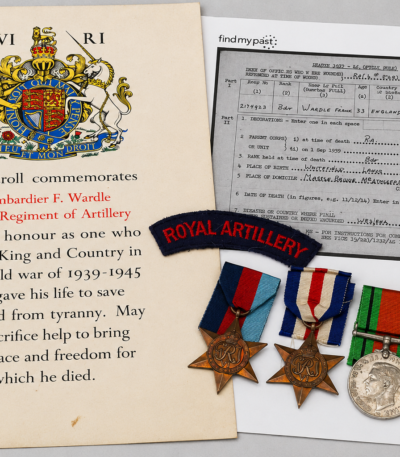
WWII British KIA Medal Group, Royal Horse Artillery, Netherlands 1944 (with Memorial Scroll)
€350,00Authentic British Second World War casualty medal group of four to Bombardier Frank Wardle, 4th Regiment, Royal Horse Artillery, who was killed in action in the Netherlands on 26 October 1944.
The group comprises:
- 1939–1945 Star
- France and Germany Star
- Defence Medal
- War Medal 1939–1945
Together with the original Next of Kin Memorial Scroll, named to Bombardier F. Wardle, Royal Regiment of Artillery, and a period Royal Artillery shoulder title. Also included are supporting research documents confirming service details, unit, and place of burial.
Bombardier Wardle (service number 2127923) served with the 4th Regiment, Royal Horse Artillery, a mobile artillery unit supporting armoured and infantry formations during the Allied campaign in North-West Europe. He was killed in action on 26 October 1944 during the fighting in the Netherlands, a period associated with intense operations following the advance from Normandy and the battles to secure key approaches into Germany.
He is buried at Bergen op Zoom War Cemetery, where many casualties from the autumn 1944 operations in Holland are commemorated.
The medals are original and accompanied by their correct ribbons, showing light age-related wear consistent with period use and storage. The memorial scroll is well preserved and forms a central part of the group, significantly enhancing its historical and commemorative value.
This is a poignant and fully attributable Second World War casualty group to a Royal Horse Artillery soldier, with strong historical context and research potential.
Condition: As shown in photographs.
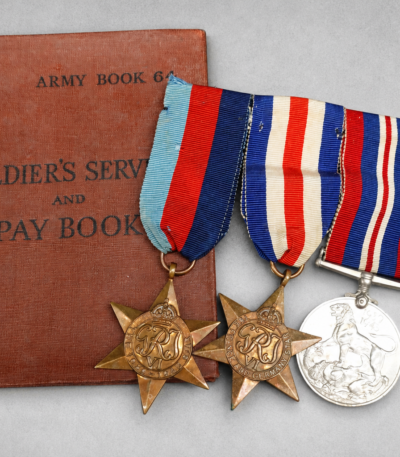
WWII British Medal Group to Royal Engineers Sapper, Normandy 1944, with Service Book (Engine Driver)
€175,00Authentic British Second World War medal group of three, awarded to 14253819 Sapper Walter Clarke, Royal Engineers, comprising the 1939–1945 Star, France and Germany Star, and War Medal 1939–1945, accompanied by his original Army Book 64 (Soldier’s Service and Pay Book).
The group is fully attributable, with the service book confirming Clarke’s personal details, enlistment, trade, and wartime service. He enlisted on 6 August 1942 and was employed as an engine driver, having previously worked as an LMS fireman (locomotive), indicating specialist railway or transport-related skills.
The award of the France and Germany Star confirms operational service in North-West Europe. The service book records his deployment to Normandy on 17 August 1944, placing him in the theatre shortly after the Allied breakout from the Normandy beachhead and during the rapid advance across France.
As a member of the Royal Engineers, Clarke would have been engaged in essential logistical and infrastructure duties, likely including railway operation, transport coordination, and the repair or construction of key supply routes supporting front-line forces. Such roles were critical to maintaining the momentum of Allied operations following the Normandy landings.
The medals are mounted together and display a natural patina, with ribbons showing light age-related wear consistent with period use. The accompanying service book is well preserved and provides valuable insight into the soldier’s background and wartime role.
A solid and fully attributable Royal Engineers group with clear Normandy service and good research potential.
Condition: As shown in photographs.
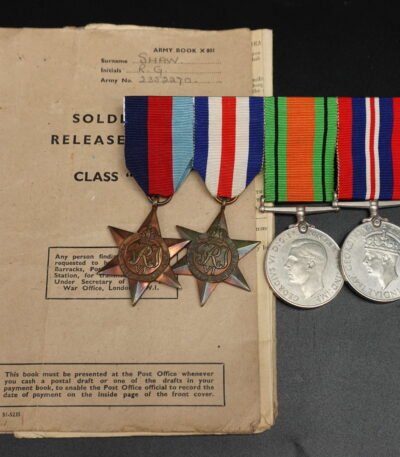
British WWII 4 Medal Mounted Group to Signalman, Royal Signals (France & Germany)
€180,00Authentic British Second World War mounted medal group of four, comprising the 1939–1945 Star, France and Germany Star, Defence Medal, and War Medal 1939–1945, mounted as worn and accompanied by the original Soldier’s Release Book.
The group is attributable to 2352270 Signalman R. G. Shaw, Royal Corps of Signals, with medal entitlement confirmed through service records. Issued to Richard George Shaw, of 93 Cardigan Road, Anlaby, Hull, Yorkshire.
The medals include:
- 1939–1945 Star – for operational service during the war
- France and Germany Star – for service in North-West Europe, likely during the Allied advance following D-Day
- Defence Medal – for non-operational service
- War Medal 1939–1945 – for full-time wartime service
The France and Germany Star confirms operational service in the North-West Europe theatre during 1944–45, a period encompassing the liberation of Western Europe and the final advance into Germany.
Signalman Shaw served in the Royal Signals, responsible for maintaining communications—an essential role in coordinating infantry, artillery, and armoured units during active operations.
The medals are mounted as worn on a period bar and display an even patina. The ribbons show light age-related wear consistent with service.
Condition: As shown in photographs.
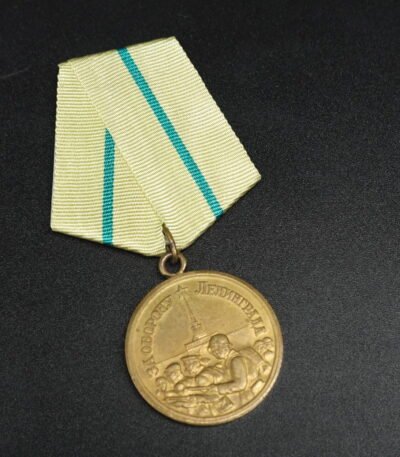
Soviet WWII Campaign Medal “For the Defence of Leningrad”
€55,00Authentic Soviet Medal “For the Defence of Leningrad” (Russian: «ЗА ОБОРОНУ ЛЕНИНГРАДА»), awarded to participants in the prolonged defence of the city during the Siege of Leningrad, one of the most significant and devastating sieges of the Second World War.
The medal is struck in brass and measures 32 mm in diameter with a raised rim. The obverse features a detailed relief composition depicting a group of Soviet soldiers in winter gear advancing with rifles at the ready, symbolizing the दृढ़ resistance of the city’s defenders. Behind them rises the Admiralty building of Leningrad, anchoring the scene geographically. Along the upper circumference runs the inscription “FOR THE DEFENCE OF LENINGRAD” («ЗА ОБОРОНУ ЛЕНИНГРАДА»), with a five-pointed star positioned at the base.
The reverse bears the hammer and sickle emblem above the inscription “FOR OUR SOVIET MOTHERLAND” («ЗА НАШУ СОВЕТСКУЮ РОДИНУ»), consistent with the standard reverse design of Soviet campaign medals.
The medal is suspended from a standard Soviet pentagonal mount, fitted with a 24 mm silk moiré ribbon in olive-green with a central green stripe. The ribbon may show age-related wear such as light soiling, minor staining, and edge fraying, consistent with period use and storage.
Condition: As shown in photographs.
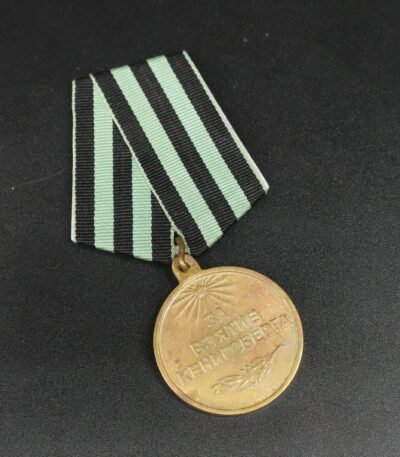
Soviet WWII Campaign Medal “For the Capture of Königsberg”
€55,00Authentic Soviet Medal “For the Capture of Königsberg” (Russian: «ЗА ВЗЯТИЕ КЕНИГСБЕРГА»), awarded to participants of the Battle of Königsberg during the final phase of the Second World War.
The medal is struck in brass and measures 32 mm in diameter, featuring a raised rim. The obverse displays a small five-pointed star with divergent rays at the top. Beneath it is the bold three-line inscription “FOR THE CAPTURE OF KÖNIGSBERG” («ЗА ВЗЯТИЕ КЕНИГСБЕРГА»), with a horizontal laurel branch below symbolizing victory.
The reverse features a plain five-pointed star at the top, with the date “10 APRIL 1945” («10 АПРЕЛЯ 1945») arranged in three lines beneath, marking the fall of Königsberg to Soviet forces.
The medal is suspended from a standard Soviet pentagonal mount, fitted with a 24 mm silk moiré ribbon incorporating narrow green edge stripes and alternating black and green central stripes. The ribbon may show typical age-related wear such as light soiling, minor staining, and edge fraying, consistent with period use and storage.
Condition: As shown in photographs.
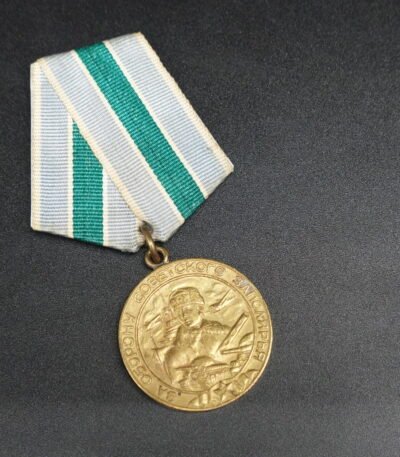
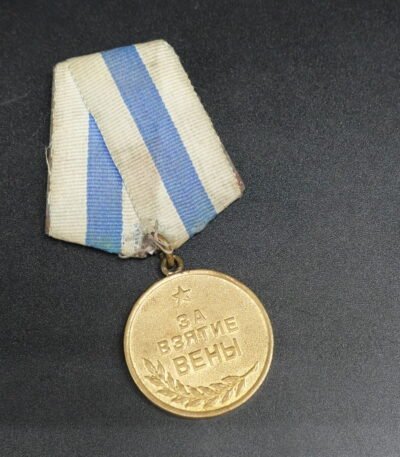
Soviet WWII Campaign Medal “For the Capture of Vienna”
€85,00Authentic Soviet Medal “For the Capture of Vienna” (Russian: «ЗА ВЗЯТИЕ ВЕНЫ»), awarded to participants of the Capture of Vienna during the final stages of the Second World War.
The medal is struck in brass and measures 32 mm in diameter, featuring a raised rim. The obverse has a textured (pebbled) field with a five-pointed star at the top. Beneath it appears the bold three-line inscription “FOR THE CAPTURE OF VIENNA” («ЗА ВЗЯТИЕ ВЕНЫ»). At the bottom, a laurel branch curves upward along the left edge, symbolizing victory and honor.
The reverse displays a plain five-pointed star at the top, with the date “13 APRIL 1945” («13 АПРЕЛЯ 1945») arranged in three lines below, commemorating the fall of Vienna to Soviet forces.
The medal is suspended from a standard Soviet pentagonal mount, fitted with a 24 mm silk moiré ribbon in light blue with a central dark blue stripe (approximately 8 mm wide). The ribbon may show typical age-related wear such as light soiling, minor staining, and edge fraying, consistent with period use and storage.
Condition: As shown in photographs.
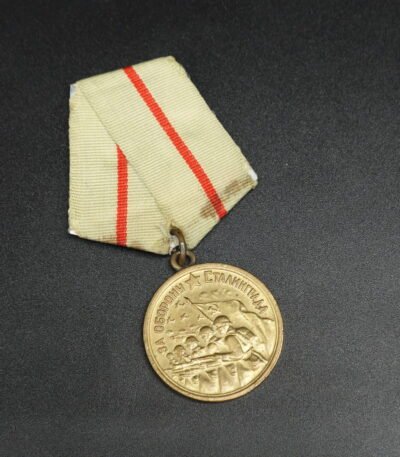
Soviet WWII Campaign Medal “For the Defence of Stalingrad”
€95,00Authentic Soviet Medal “For the Defence of Stalingrad” (Russian: Медаль «За оборону Сталинграда»), awarded for participation in the defence of the city during the pivotal battle of Stalingrad (1942–1943).
The medal is struck in brass and measures 32 mm in diameter with a raised rim. The obverse depicts a dynamic battle scene of five Soviet infantry soldiers advancing with rifles, supported by tanks and aircraft, with a waving Soviet flag above. At the top is a five-pointed star, flanked by the inscription “FOR THE DEFENCE OF STALINGRAD” («ЗА ОБОРОНУ СТАЛИНГРАДА»).
The reverse features the hammer and sickle emblem above the inscription “FOR OUR SOVIET MOTHERLAND” («ЗА НАШУ СОВЕТСКУЮ РОДИНУ»).
The medal is suspended from a standard Soviet pentagonal mount and worn on a 24 mm olive-green silk moiré ribbon with a central red stripe. The ribbon shows age-related wear with light soiling, minor staining, and fraying to the edges, consistent with period use and storage. Overall remains intact and displays well.
Condition: As shown in photographs.
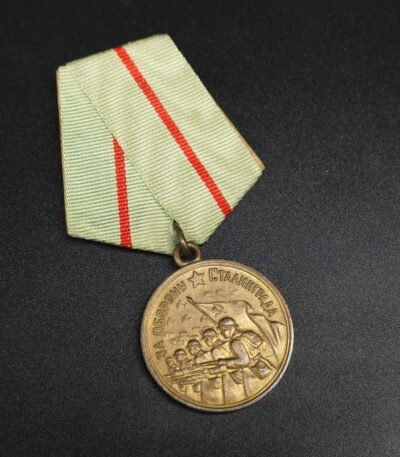
Soviet WWII Campaign Medal “For the Defence of Stalingrad”
€95,00Authentic Soviet Medal “For the Defence of Stalingrad” (Russian: Медаль «За оборону Сталинграда»), awarded for participation in the defence of the city during the pivotal battle of Stalingrad (1942–1943).
The medal is struck in brass and measures 32 mm in diameter with a raised rim. The obverse depicts a dynamic battle scene of five Soviet infantry soldiers advancing with rifles, supported by tanks and aircraft, with a waving Soviet flag above. At the top is a five-pointed star, flanked by the inscription “FOR THE DEFENCE OF STALINGRAD” («ЗА ОБОРОНУ СТАЛИНГРАДА»).
The reverse features the hammer and sickle emblem above the inscription “FOR OUR SOVIET MOTHERLAND” («ЗА НАШУ СОВЕТСКУЮ РОДИНУ»).
The medal is suspended from a standard Soviet pentagonal mount and worn on a 24 mm olive-green silk moiré ribbon with a central red stripe. The ribbon is in overall very nice condition, showing only minimal age-related wear consistent with period use.
Condition: As shown in photographs.
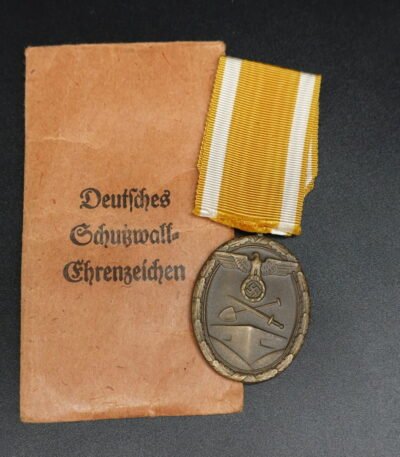
Deutsches Schutzwall-Ehrenzeichen (“Westwall Medal”) with Peter Wilhelm Heb Pouch
€75,00Authentic early example of the Deutsches Schutzwall-Ehrenzeichen (“Westwall Medal”), struck in bronzed buntmetall and preserved in near mint condition. The medal retains a crisp strike with excellent detail across both obverse and reverse. Consistent with all original examples, the medal is unmarked.
Complete with its original and matching issue pouch by Peter Wilhelm Heb, also in outstanding condition with only minimal signs of storage and age.
A highly desirable and complete set, ideal for the advanced collector of German WWII awards.
Condition: Near mint, as shown in photographs.
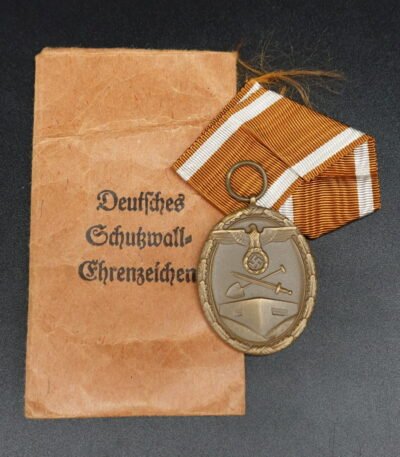
Deutsches Schutzwall-Ehrenzeichen (“Westwall Medal”) with Josef Rössler Pouch
€75,00Authentic early example of the Deutsches Schutzwall-Ehrenzeichen (“Westwall Medal”), struck in bronzed buntmetall and preserved in near mint condition. The medal retains a crisp strike with excellent detail across both obverse and reverse. Consistent with all original examples, the medal is unmarked.
Complete with its original and matching issue pouch by Josef Rössler, Gablonz, also in outstanding condition with only minimal signs of storage and age.
A highly desirable and complete set, ideal for the advanced collector of German WWII awards.
Condition: Near mint, as shown in photographs.
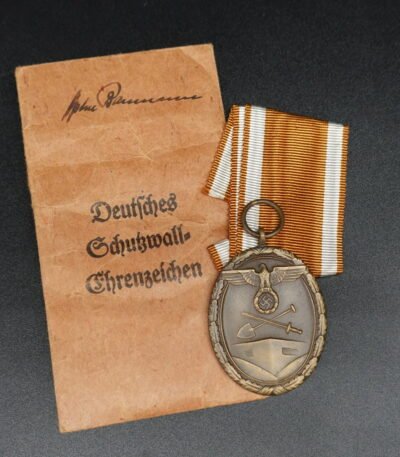
Deutsches Schutzwall-Ehrenzeichen (“Westwall Medal”) with Carl Poelath Pouch
€75,00Authentic early example of the Deutsches Schutzwall-Ehrenzeichen (“Westwall Medal”), struck in bronzed buntmetall and preserved in near mint condition. The medal retains a crisp strike with excellent detail across both obverse and reverse. Consistent with all original examples, the medal is unmarked.
Complete with its original and matching issue pouch by Carl Poellath, Schrobenhausen, also in outstanding condition with only minimal signs of storage and age. The front of the pouch bears period handwritten markings, most likely denoting the original recipient’s name and rank.
A highly desirable and complete set, ideal for the advanced collector of German WWII awards.
Condition: Near mint, as shown in photographs.
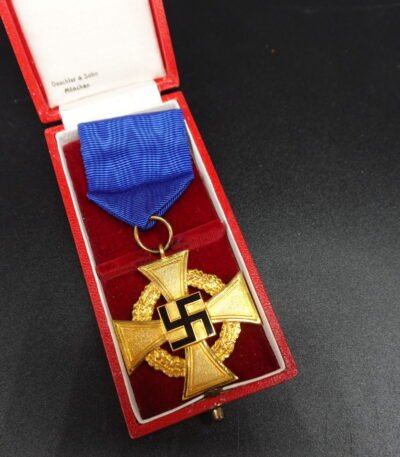
Treudienst-Ehrenzeichen für 40 Jahre – Cased Example by Deschler & Sohn
€130,00Authentic early example of the Treudienst-Ehrenzeichen für 40 Jahre (“40 Years Loyal Service Award”), complete with its original case, and preserved in near mint condition.
The cross retains excellent original finish, with crisp detail throughout and minimal signs of age. The piece is maker marked Deschler & Sohn, one of the most respected manufacturers of the period.
The accompanying case is likewise in outstanding condition, showing only light storage wear. The interior remains clean and well-preserved, providing an excellent presentation for the award.
A highly attractive and complete set, ideal for the advanced collector of German WWII civil decorations.
Condition: Near mint, as shown in photographs.
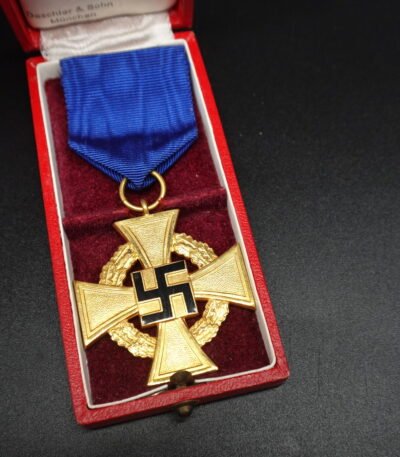
Treudienst-Ehrenzeichen für 40 Jahre – Cased Example by Deschler & Sohn
€130,00Authentic early example of the Treudienst-Ehrenzeichen für 40 Jahre (“40 Years Loyal Service Award”), complete with its original case, and preserved in near mint condition.
The cross retains excellent original finish, with crisp detail throughout and minimal signs of age. The piece is maker marked Deschler & Sohn, one of the most respected manufacturers of the period.
The accompanying case is likewise in outstanding condition, showing only light storage wear. The interior remains clean and well-preserved, providing an excellent presentation for the award.
A highly attractive and complete set, ideal for the advanced collector of German WWII civil decorations.
Condition: Near mint, as shown in photographs.