



Shop
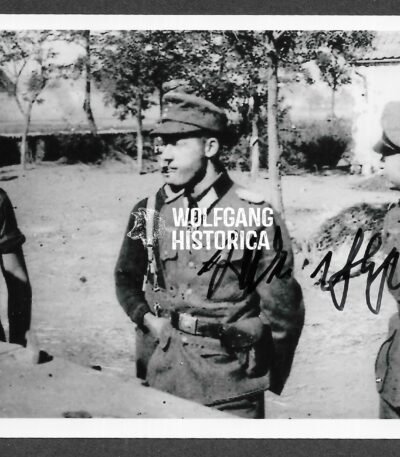
Waldemar von Gaza – Panzergrenadier-Regiment 66 (Schwertern)
€30,00Original Postwar Signature on a Postwar Photo of Waldemar von Gaza
Major Waldemar von Gaza (6 December 1917 – 13 January 2014) was a highly decorated officer of the 13. Panzer-Division, rising to command-level positions in armored infantry units on the Eastern Front. Over the course of the war, he received the Ritterkreuz des Eisernen Kreuzes with Eichenlaub and Schwertern, placing him among the most distinguished recipients of Germany’s highest battlefield awards.
Awards and Decorations
-
Ritterkreuz des Eisernen Kreuzes – 18 September 1942, as Oberleutnant und Chef 2./Panzergrenadier-Regiment 666, 13. Panzer-Division
-
Eichenlaub (Nr. 158) – 18 January 1943, as Hauptmann und Führer of a Kampfgruppe, 13. Panzer-Division
-
Schwerter (Nr. 324) – 3 October 1943, as Major und Führer of Panzergrenadier-Regiment 66, 13. Panzer-Division
-
Other awards included both classes of the Iron Cross and campaign distinctions
Service Highlights
-
Fought throughout the Eastern Front campaigns, earning distinction in combined-arms actions with armored infantry.
-
His leadership of Kampfgruppen during some of the most intense battles of 1942–43 earned him rapid recognition.
-
By 1943, he had risen to regimental command level, where he was awarded the Swords to the Knight’s Cross for continued outstanding leadership in combat.
Item Details
-
Type: Original postwar signed photograph
-
Size: Postcardsize
-
Condition: Good, as seen
Collector’s Note
Waldemar von Gaza’s decorations—Ritterkreuz, Eichenlaub, and Schwerter—mark him as one of the relatively few officers to attain this level of distinction. His signature is sought-after by collectors of panzer and Eastern Front memorabilia, with his long postwar life making his autograph available but still scarce in comparison to other triple recipients.
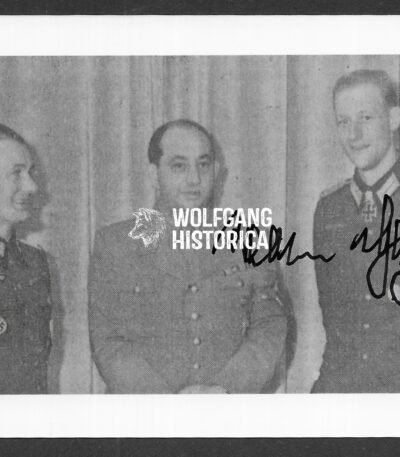
Waldemar von Gaza – Panzergrenadier-Regiment 66 (Schwertern)
€30,00Original Postwar Signature on a Postwar Photo of Waldemar von Gaza
Major Waldemar von Gaza (6 December 1917 – 13 January 2014) was a highly decorated officer of the 13. Panzer-Division, rising to command-level positions in armored infantry units on the Eastern Front. Over the course of the war, he received the Ritterkreuz des Eisernen Kreuzes with Eichenlaub and Schwertern, placing him among the most distinguished recipients of Germany’s highest battlefield awards.
Awards and Decorations
-
Ritterkreuz des Eisernen Kreuzes – 18 September 1942, as Oberleutnant und Chef 2./Panzergrenadier-Regiment 666, 13. Panzer-Division
-
Eichenlaub (Nr. 158) – 18 January 1943, as Hauptmann und Führer of a Kampfgruppe, 13. Panzer-Division
-
Schwerter (Nr. 324) – 3 October 1943, as Major und Führer of Panzergrenadier-Regiment 66, 13. Panzer-Division
-
Other awards included both classes of the Iron Cross and campaign distinctions
Service Highlights
-
Fought throughout the Eastern Front campaigns, earning distinction in combined-arms actions with armored infantry.
-
His leadership of Kampfgruppen during some of the most intense battles of 1942–43 earned him rapid recognition.
-
By 1943, he had risen to regimental command level, where he was awarded the Swords to the Knight’s Cross for continued outstanding leadership in combat.
Item Details
-
Type: Original postwar signed photograph
-
Size: Postcardsize
-
Condition: Good, as seen
Collector’s Note
Waldemar von Gaza’s decorations—Ritterkreuz, Eichenlaub, and Schwerter—mark him as one of the relatively few officers to attain this level of distinction. His signature is sought-after by collectors of panzer and Eastern Front memorabilia, with his long postwar life making his autograph available but still scarce in comparison to other triple recipients.
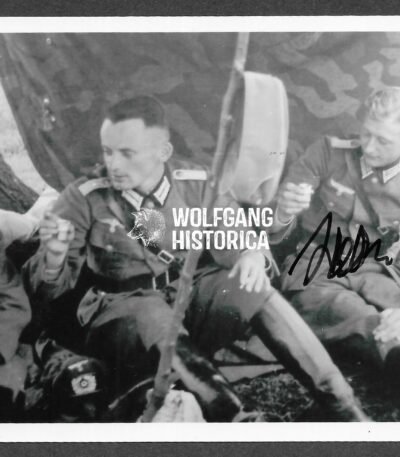
Waldemar von Gaza – Panzergrenadier-Regiment 66 (Schwertern) (A5-Size!)
€30,00Original Postwar Signature on a Postwar Photo of Waldemar von Gaza
Major Waldemar von Gaza (6 December 1917 – 13 January 2014) was a highly decorated officer of the 13. Panzer-Division, rising to command-level positions in armored infantry units on the Eastern Front. Over the course of the war, he received the Ritterkreuz des Eisernen Kreuzes with Eichenlaub and Schwertern, placing him among the most distinguished recipients of Germany’s highest battlefield awards.
Awards and Decorations
-
Ritterkreuz des Eisernen Kreuzes – 18 September 1942, as Oberleutnant und Chef 2./Panzergrenadier-Regiment 666, 13. Panzer-Division
-
Eichenlaub (Nr. 158) – 18 January 1943, as Hauptmann und Führer of a Kampfgruppe, 13. Panzer-Division
-
Schwerter (Nr. 324) – 3 October 1943, as Major und Führer of Panzergrenadier-Regiment 66, 13. Panzer-Division
-
Other awards included both classes of the Iron Cross and campaign distinctions
Service Highlights
-
Fought throughout the Eastern Front campaigns, earning distinction in combined-arms actions with armored infantry.
-
His leadership of Kampfgruppen during some of the most intense battles of 1942–43 earned him rapid recognition.
-
By 1943, he had risen to regimental command level, where he was awarded the Swords to the Knight’s Cross for continued outstanding leadership in combat.
Item Details
-
Type: Original postwar signed photograph
-
Size: Postcardsize
-
Condition: Good, as seen
Collector’s Note
Waldemar von Gaza’s decorations—Ritterkreuz, Eichenlaub, and Schwerter—mark him as one of the relatively few officers to attain this level of distinction. His signature is sought-after by collectors of panzer and Eastern Front memorabilia, with his long postwar life making his autograph available but still scarce in comparison to other triple recipients.
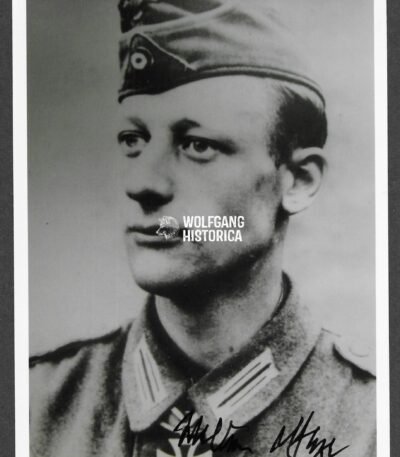
Waldemar von Gaza – Panzergrenadier-Regiment 66 (Schwertern) (A5-Size!)
€30,00Original Postwar Signature on a Postwar Photo of Waldemar von Gaza
Major Waldemar von Gaza (6 December 1917 – 13 January 2014) was a highly decorated officer of the 13. Panzer-Division, rising to command-level positions in armored infantry units on the Eastern Front. Over the course of the war, he received the Ritterkreuz des Eisernen Kreuzes with Eichenlaub and Schwertern, placing him among the most distinguished recipients of Germany’s highest battlefield awards.
Awards and Decorations
-
Ritterkreuz des Eisernen Kreuzes – 18 September 1942, as Oberleutnant und Chef 2./Panzergrenadier-Regiment 666, 13. Panzer-Division
-
Eichenlaub (Nr. 158) – 18 January 1943, as Hauptmann und Führer of a Kampfgruppe, 13. Panzer-Division
-
Schwerter (Nr. 324) – 3 October 1943, as Major und Führer of Panzergrenadier-Regiment 66, 13. Panzer-Division
-
Other awards included both classes of the Iron Cross and campaign distinctions
Service Highlights
-
Fought throughout the Eastern Front campaigns, earning distinction in combined-arms actions with armored infantry.
-
His leadership of Kampfgruppen during some of the most intense battles of 1942–43 earned him rapid recognition.
-
By 1943, he had risen to regimental command level, where he was awarded the Swords to the Knight’s Cross for continued outstanding leadership in combat.
Item Details
-
Type: Original postwar signed photograph
-
Size: A5-size
-
Condition: Good, as seen
Collector’s Note
Waldemar von Gaza’s decorations—Ritterkreuz, Eichenlaub, and Schwerter—mark him as one of the relatively few officers to attain this level of distinction. His signature is sought-after by collectors of panzer and Eastern Front memorabilia, with his long postwar life making his autograph available but still scarce in comparison to other triple recipients.
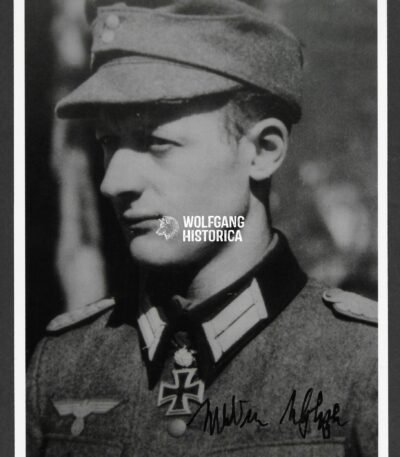
Waldemar von Gaza – Panzergrenadier-Regiment 66 (Schwertern) (A5-Size!)
€30,00Original Postwar Signature on a Postwar Photo of Waldemar von Gaza
Major Waldemar von Gaza (6 December 1917 – 13 January 2014) was a highly decorated officer of the 13. Panzer-Division, rising to command-level positions in armored infantry units on the Eastern Front. Over the course of the war, he received the Ritterkreuz des Eisernen Kreuzes with Eichenlaub and Schwertern, placing him among the most distinguished recipients of Germany’s highest battlefield awards.
Awards and Decorations
-
Ritterkreuz des Eisernen Kreuzes – 18 September 1942, as Oberleutnant und Chef 2./Panzergrenadier-Regiment 666, 13. Panzer-Division
-
Eichenlaub (Nr. 158) – 18 January 1943, as Hauptmann und Führer of a Kampfgruppe, 13. Panzer-Division
-
Schwerter (Nr. 324) – 3 October 1943, as Major und Führer of Panzergrenadier-Regiment 66, 13. Panzer-Division
-
Other awards included both classes of the Iron Cross and campaign distinctions
Service Highlights
-
Fought throughout the Eastern Front campaigns, earning distinction in combined-arms actions with armored infantry.
-
His leadership of Kampfgruppen during some of the most intense battles of 1942–43 earned him rapid recognition.
-
By 1943, he had risen to regimental command level, where he was awarded the Swords to the Knight’s Cross for continued outstanding leadership in combat.
Item Details
-
Type: Original postwar signed photograph
-
Size: A5-size
-
Condition: Good, as seen
Collector’s Note
Waldemar von Gaza’s decorations—Ritterkreuz, Eichenlaub, and Schwerter—mark him as one of the relatively few officers to attain this level of distinction. His signature is sought-after by collectors of panzer and Eastern Front memorabilia, with his long postwar life making his autograph available but still scarce in comparison to other triple recipients.
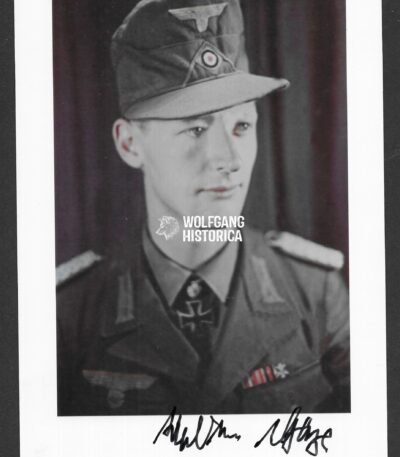
Waldemar von Gaza – Panzergrenadier-Regiment 66 (Schwertern) (A5-Size!)
€30,00Original Postwar Signature on a Postwar Photo of Waldemar von Gaza
Major Waldemar von Gaza (6 December 1917 – 13 January 2014) was a highly decorated officer of the 13. Panzer-Division, rising to command-level positions in armored infantry units on the Eastern Front. Over the course of the war, he received the Ritterkreuz des Eisernen Kreuzes with Eichenlaub and Schwertern, placing him among the most distinguished recipients of Germany’s highest battlefield awards.
Awards and Decorations
-
Ritterkreuz des Eisernen Kreuzes – 18 September 1942, as Oberleutnant und Chef 2./Panzergrenadier-Regiment 666, 13. Panzer-Division
-
Eichenlaub (Nr. 158) – 18 January 1943, as Hauptmann und Führer of a Kampfgruppe, 13. Panzer-Division
-
Schwerter (Nr. 324) – 3 October 1943, as Major und Führer of Panzergrenadier-Regiment 66, 13. Panzer-Division
-
Other awards included both classes of the Iron Cross and campaign distinctions
Service Highlights
-
Fought throughout the Eastern Front campaigns, earning distinction in combined-arms actions with armored infantry.
-
His leadership of Kampfgruppen during some of the most intense battles of 1942–43 earned him rapid recognition.
-
By 1943, he had risen to regimental command level, where he was awarded the Swords to the Knight’s Cross for continued outstanding leadership in combat.
Item Details
-
Type: Original postwar signed photograph
-
Size: A5-size
-
Condition: Good, as seen
Collector’s Note
Waldemar von Gaza’s decorations—Ritterkreuz, Eichenlaub, and Schwerter—mark him as one of the relatively few officers to attain this level of distinction. His signature is sought-after by collectors of panzer and Eastern Front memorabilia, with his long postwar life making his autograph available but still scarce in comparison to other triple recipients.
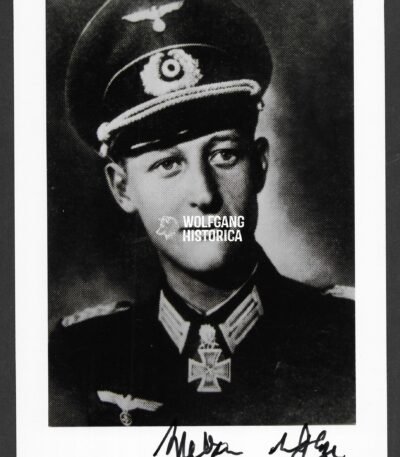
Waldemar von Gaza – Panzergrenadier-Regiment 66 (Schwertern) (A5-Size!)
€30,00Original Postwar Signature on a Postwar Photo of Waldemar von Gaza
Major Waldemar von Gaza (6 December 1917 – 13 January 2014) was a highly decorated officer of the 13. Panzer-Division, rising to command-level positions in armored infantry units on the Eastern Front. Over the course of the war, he received the Ritterkreuz des Eisernen Kreuzes with Eichenlaub and Schwertern, placing him among the most distinguished recipients of Germany’s highest battlefield awards.
Awards and Decorations
-
Ritterkreuz des Eisernen Kreuzes – 18 September 1942, as Oberleutnant und Chef 2./Panzergrenadier-Regiment 666, 13. Panzer-Division
-
Eichenlaub (Nr. 158) – 18 January 1943, as Hauptmann und Führer of a Kampfgruppe, 13. Panzer-Division
-
Schwerter (Nr. 324) – 3 October 1943, as Major und Führer of Panzergrenadier-Regiment 66, 13. Panzer-Division
-
Other awards included both classes of the Iron Cross and campaign distinctions
Service Highlights
-
Fought throughout the Eastern Front campaigns, earning distinction in combined-arms actions with armored infantry.
-
His leadership of Kampfgruppen during some of the most intense battles of 1942–43 earned him rapid recognition.
-
By 1943, he had risen to regimental command level, where he was awarded the Swords to the Knight’s Cross for continued outstanding leadership in combat.
Item Details
-
Type: Original postwar signed photograph
-
Size: A5-size
-
Condition: Good, as seen
Collector’s Note
Waldemar von Gaza’s decorations—Ritterkreuz, Eichenlaub, and Schwerter—mark him as one of the relatively few officers to attain this level of distinction. His signature is sought-after by collectors of panzer and Eastern Front memorabilia, with his long postwar life making his autograph available but still scarce in comparison to other triple recipients.
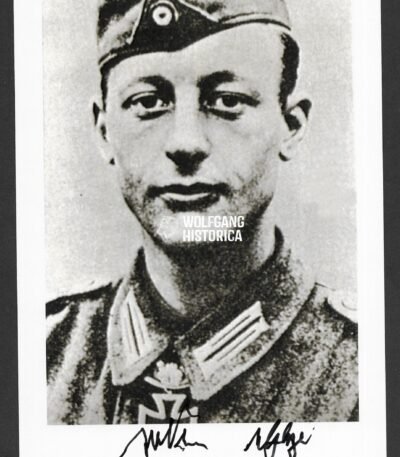
Waldemar von Gaza – Panzergrenadier-Regiment 66 (Schwertern) (A5-Size!)
€30,00Original Postwar Signature on a Postwar Photo of Waldemar von Gaza
Major Waldemar von Gaza (6 December 1917 – 13 January 2014) was a highly decorated officer of the 13. Panzer-Division, rising to command-level positions in armored infantry units on the Eastern Front. Over the course of the war, he received the Ritterkreuz des Eisernen Kreuzes with Eichenlaub and Schwertern, placing him among the most distinguished recipients of Germany’s highest battlefield awards.
Awards and Decorations
-
Ritterkreuz des Eisernen Kreuzes – 18 September 1942, as Oberleutnant und Chef 2./Panzergrenadier-Regiment 666, 13. Panzer-Division
-
Eichenlaub (Nr. 158) – 18 January 1943, as Hauptmann und Führer of a Kampfgruppe, 13. Panzer-Division
-
Schwerter (Nr. 324) – 3 October 1943, as Major und Führer of Panzergrenadier-Regiment 66, 13. Panzer-Division
-
Other awards included both classes of the Iron Cross and campaign distinctions
Service Highlights
-
Fought throughout the Eastern Front campaigns, earning distinction in combined-arms actions with armored infantry.
-
His leadership of Kampfgruppen during some of the most intense battles of 1942–43 earned him rapid recognition.
-
By 1943, he had risen to regimental command level, where he was awarded the Swords to the Knight’s Cross for continued outstanding leadership in combat.
Item Details
-
Type: Original postwar signed photograph
-
Size: A5-size
-
Condition: Good, as seen
Collector’s Note
Waldemar von Gaza’s decorations—Ritterkreuz, Eichenlaub, and Schwerter—mark him as one of the relatively few officers to attain this level of distinction. His signature is sought-after by collectors of panzer and Eastern Front memorabilia, with his long postwar life making his autograph available but still scarce in comparison to other triple recipients.
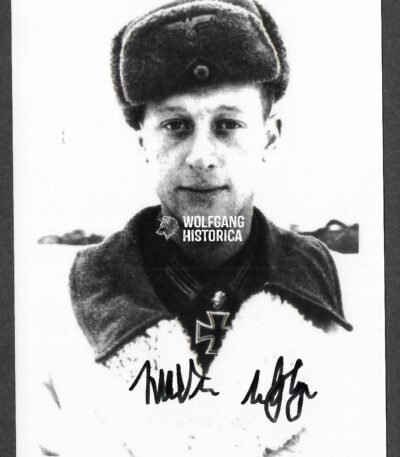
Waldemar von Gaza – Panzergrenadier-Regiment 66 (Schwertern)
€30,00Original Postwar Signature on a Postwar Photo of Waldemar von Gaza
Major Waldemar von Gaza (6 December 1917 – 13 January 2014) was a highly decorated officer of the 13. Panzer-Division, rising to command-level positions in armored infantry units on the Eastern Front. Over the course of the war, he received the Ritterkreuz des Eisernen Kreuzes with Eichenlaub and Schwertern, placing him among the most distinguished recipients of Germany’s highest battlefield awards.
Awards and Decorations
-
Ritterkreuz des Eisernen Kreuzes – 18 September 1942, as Oberleutnant und Chef 2./Panzergrenadier-Regiment 666, 13. Panzer-Division
-
Eichenlaub (Nr. 158) – 18 January 1943, as Hauptmann und Führer of a Kampfgruppe, 13. Panzer-Division
-
Schwerter (Nr. 324) – 3 October 1943, as Major und Führer of Panzergrenadier-Regiment 66, 13. Panzer-Division
-
Other awards included both classes of the Iron Cross and campaign distinctions
Service Highlights
-
Fought throughout the Eastern Front campaigns, earning distinction in combined-arms actions with armored infantry.
-
His leadership of Kampfgruppen during some of the most intense battles of 1942–43 earned him rapid recognition.
-
By 1943, he had risen to regimental command level, where he was awarded the Swords to the Knight’s Cross for continued outstanding leadership in combat.
Item Details
-
Type: Original postwar signed photograph
-
Size: Postcardsize
-
Condition: Good, as seen
Collector’s Note
Waldemar von Gaza’s decorations—Ritterkreuz, Eichenlaub, and Schwerter—mark him as one of the relatively few officers to attain this level of distinction. His signature is sought-after by collectors of panzer and Eastern Front memorabilia, with his long postwar life making his autograph available but still scarce in comparison to other triple recipients.
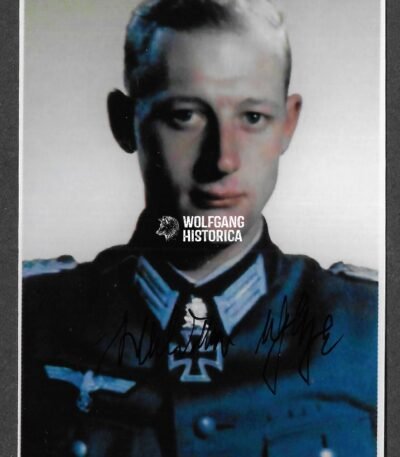
Waldemar von Gaza – Panzergrenadier-Regiment 66 (Schwertern)
€30,00Original Postwar Signature on a Postwar Photo of Waldemar von Gaza
Major Waldemar von Gaza (6 December 1917 – 13 January 2014) was a highly decorated officer of the 13. Panzer-Division, rising to command-level positions in armored infantry units on the Eastern Front. Over the course of the war, he received the Ritterkreuz des Eisernen Kreuzes with Eichenlaub and Schwertern, placing him among the most distinguished recipients of Germany’s highest battlefield awards.
Awards and Decorations
-
Ritterkreuz des Eisernen Kreuzes – 18 September 1942, as Oberleutnant und Chef 2./Panzergrenadier-Regiment 666, 13. Panzer-Division
-
Eichenlaub (Nr. 158) – 18 January 1943, as Hauptmann und Führer of a Kampfgruppe, 13. Panzer-Division
-
Schwerter (Nr. 324) – 3 October 1943, as Major und Führer of Panzergrenadier-Regiment 66, 13. Panzer-Division
-
Other awards included both classes of the Iron Cross and campaign distinctions
Service Highlights
-
Fought throughout the Eastern Front campaigns, earning distinction in combined-arms actions with armored infantry.
-
His leadership of Kampfgruppen during some of the most intense battles of 1942–43 earned him rapid recognition.
-
By 1943, he had risen to regimental command level, where he was awarded the Swords to the Knight’s Cross for continued outstanding leadership in combat.
Item Details
-
Type: Original postwar signed photograph
-
Size: Postcardsize
-
Condition: Good, as seen
Collector’s Note
Waldemar von Gaza’s decorations—Ritterkreuz, Eichenlaub, and Schwerter—mark him as one of the relatively few officers to attain this level of distinction. His signature is sought-after by collectors of panzer and Eastern Front memorabilia, with his long postwar life making his autograph available but still scarce in comparison to other triple recipients.
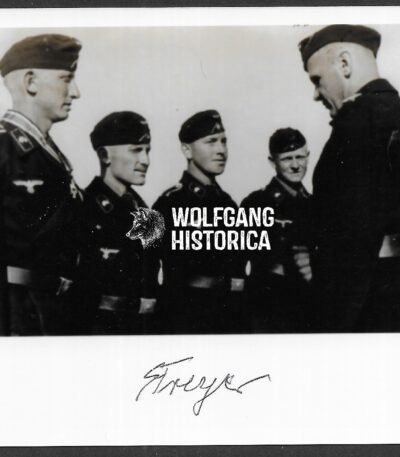
Siegfried Freyer – Panzer-Regiment 24 (24. Panzer-Division)
€25,00Original Postwar Signature on a Postwar Photo of Siegfried Freyer
Wachtmeister Siegfried Freyer (11 February 1917 – 10 May 2014) was a German panzer officer in the 24. Panzer-Division and a recipient of the Ritterkreuz des Eisernen Kreuzes. He earned his Knight’s Cross on 23 July 1942 as Wachtmeister und Zugführer of 4. Kompanie/ Panzer-Regiment 24 for his extraordinary bravery during the heavy urban fighting at Voronezh.
Knight’s Cross Action
On 7 July 1942, during close-quarter fighting in the streets of Voronezh, Soviet armored units attempted to break through the encirclement ring of Freyer’s Kampfgruppe. Acting on his own initiative, Freyer led his platoon in a counterattack and personally destroyed 10 Soviet T-34 tanks in the span of just half an hour. His decisive intervention prevented a breakthrough, stabilized the frontline, and directly enabled the occupation of the city. For this exceptional act of bravery and leadership, he was awarded the Knight’s Cross of the Iron Cross.
Awards and Decorations
-
Ritterkreuz des Eisernen Kreuzes – 23 July 1942 as Wachtmeister und Zugführer, 4./Panzer-Regiment 24, 24. Panzer-Division
-
Iron Cross 2nd Class & 1st Class
-
Other campaign awards
Item Details
-
Type: Original postwar signed photograph
-
Size: Postcardsize
-
Condition: Good, clear autograph
Collector’s Note
Siegfried Freyer’s Knight’s Cross recommendation is one of the most dramatic tank combat citations of the Eastern Front, highlighting his destruction of 10 T-34s in just 30 minutes. His signature is a scarce and desirable addition for collectors of panzer division memorabilia, particularly those focused on the pivotal 1942 campaigns and the battle for Voronezh.
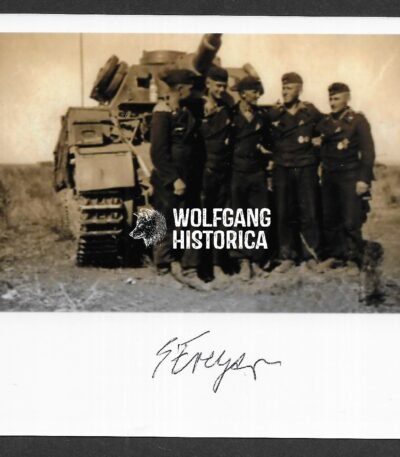
Siegfried Freyer – Panzer-Regiment 24 (24. Panzer-Division)
€25,00Original Postwar Signature on a Postwar Photo of Siegfried Freyer
Wachtmeister Siegfried Freyer (11 February 1917 – 10 May 2014) was a German panzer officer in the 24. Panzer-Division and a recipient of the Ritterkreuz des Eisernen Kreuzes. He earned his Knight’s Cross on 23 July 1942 as Wachtmeister und Zugführer of 4. Kompanie/ Panzer-Regiment 24 for his extraordinary bravery during the heavy urban fighting at Voronezh.
Knight’s Cross Action
On 7 July 1942, during close-quarter fighting in the streets of Voronezh, Soviet armored units attempted to break through the encirclement ring of Freyer’s Kampfgruppe. Acting on his own initiative, Freyer led his platoon in a counterattack and personally destroyed 10 Soviet T-34 tanks in the span of just half an hour. His decisive intervention prevented a breakthrough, stabilized the frontline, and directly enabled the occupation of the city. For this exceptional act of bravery and leadership, he was awarded the Knight’s Cross of the Iron Cross.
Awards and Decorations
-
Ritterkreuz des Eisernen Kreuzes – 23 July 1942 as Wachtmeister und Zugführer, 4./Panzer-Regiment 24, 24. Panzer-Division
-
Iron Cross 2nd Class & 1st Class
-
Other campaign awards
Item Details
-
Type: Original postwar signed photograph
-
Size: Postcardsize
-
Condition: Good, clear autograph
Collector’s Note
Siegfried Freyer’s Knight’s Cross recommendation is one of the most dramatic tank combat citations of the Eastern Front, highlighting his destruction of 10 T-34s in just 30 minutes. His signature is a scarce and desirable addition for collectors of panzer division memorabilia, particularly those focused on the pivotal 1942 campaigns and the battle for Voronezh.
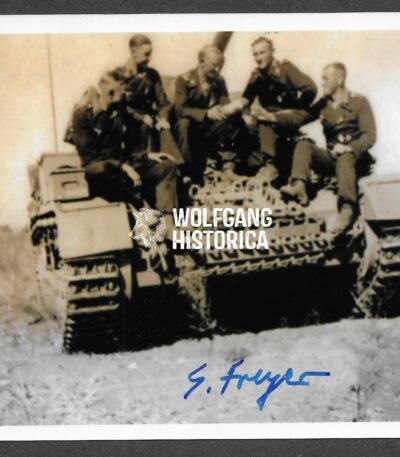
Siegfried Freyer – Panzer-Regiment 24 (24. Panzer-Division)
€25,00Original Postwar Signature on a Postwar Photo of Siegfried Freyer
Wachtmeister Siegfried Freyer (11 February 1917 – 10 May 2014) was a German panzer officer in the 24. Panzer-Division and a recipient of the Ritterkreuz des Eisernen Kreuzes. He earned his Knight’s Cross on 23 July 1942 as Wachtmeister und Zugführer of 4. Kompanie/ Panzer-Regiment 24 for his extraordinary bravery during the heavy urban fighting at Voronezh.
Knight’s Cross Action
On 7 July 1942, during close-quarter fighting in the streets of Voronezh, Soviet armored units attempted to break through the encirclement ring of Freyer’s Kampfgruppe. Acting on his own initiative, Freyer led his platoon in a counterattack and personally destroyed 10 Soviet T-34 tanks in the span of just half an hour. His decisive intervention prevented a breakthrough, stabilized the frontline, and directly enabled the occupation of the city. For this exceptional act of bravery and leadership, he was awarded the Knight’s Cross of the Iron Cross.
Awards and Decorations
-
Ritterkreuz des Eisernen Kreuzes – 23 July 1942 as Wachtmeister und Zugführer, 4./Panzer-Regiment 24, 24. Panzer-Division
-
Iron Cross 2nd Class & 1st Class
-
Other campaign awards
Item Details
-
Type: Original postwar signed photograph
-
Size: Postcardsize
-
Condition: Good, clear autograph
Collector’s Note
Siegfried Freyer’s Knight’s Cross recommendation is one of the most dramatic tank combat citations of the Eastern Front, highlighting his destruction of 10 T-34s in just 30 minutes. His signature is a scarce and desirable addition for collectors of panzer division memorabilia, particularly those focused on the pivotal 1942 campaigns and the battle for Voronezh.
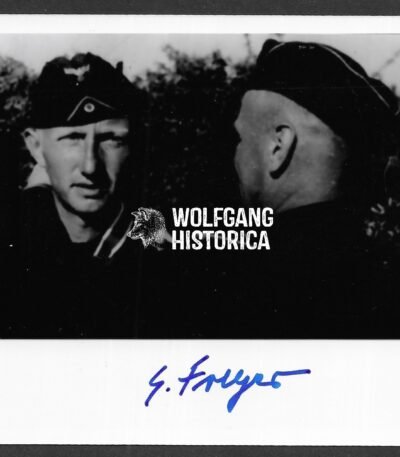
Siegfried Freyer – Panzer-Regiment 24 (24. Panzer-Division)
€25,00Original Postwar Signature on a Postwar Photo of Siegfried Freyer
Wachtmeister Siegfried Freyer (11 February 1917 – 10 May 2014) was a German panzer officer in the 24. Panzer-Division and a recipient of the Ritterkreuz des Eisernen Kreuzes. He earned his Knight’s Cross on 23 July 1942 as Wachtmeister und Zugführer of 4. Kompanie/ Panzer-Regiment 24 for his extraordinary bravery during the heavy urban fighting at Voronezh.
Knight’s Cross Action
On 7 July 1942, during close-quarter fighting in the streets of Voronezh, Soviet armored units attempted to break through the encirclement ring of Freyer’s Kampfgruppe. Acting on his own initiative, Freyer led his platoon in a counterattack and personally destroyed 10 Soviet T-34 tanks in the span of just half an hour. His decisive intervention prevented a breakthrough, stabilized the frontline, and directly enabled the occupation of the city. For this exceptional act of bravery and leadership, he was awarded the Knight’s Cross of the Iron Cross.
Awards and Decorations
-
Ritterkreuz des Eisernen Kreuzes – 23 July 1942 as Wachtmeister und Zugführer, 4./Panzer-Regiment 24, 24. Panzer-Division
-
Iron Cross 2nd Class & 1st Class
-
Other campaign awards
Item Details
-
Type: Original postwar signed photograph
-
Size: Postcardsize
-
Condition: Good, clear autograph
Collector’s Note
Siegfried Freyer’s Knight’s Cross recommendation is one of the most dramatic tank combat citations of the Eastern Front, highlighting his destruction of 10 T-34s in just 30 minutes. His signature is a scarce and desirable addition for collectors of panzer division memorabilia, particularly those focused on the pivotal 1942 campaigns and the battle for Voronezh.
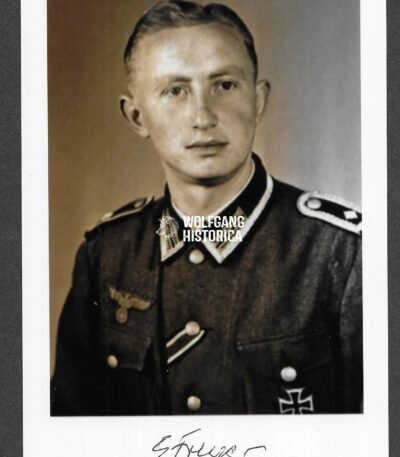
Siegfried Freyer – Panzer-Regiment 24 (24. Panzer-Division)
€25,00Original Postwar Signature on a Postwar Photo of Siegfried Freyer
Wachtmeister Siegfried Freyer (11 February 1917 – 10 May 2014) was a German panzer officer in the 24. Panzer-Division and a recipient of the Ritterkreuz des Eisernen Kreuzes. He earned his Knight’s Cross on 23 July 1942 as Wachtmeister und Zugführer of 4. Kompanie/ Panzer-Regiment 24 for his extraordinary bravery during the heavy urban fighting at Voronezh.
Knight’s Cross Action
On 7 July 1942, during close-quarter fighting in the streets of Voronezh, Soviet armored units attempted to break through the encirclement ring of Freyer’s Kampfgruppe. Acting on his own initiative, Freyer led his platoon in a counterattack and personally destroyed 10 Soviet T-34 tanks in the span of just half an hour. His decisive intervention prevented a breakthrough, stabilized the frontline, and directly enabled the occupation of the city. For this exceptional act of bravery and leadership, he was awarded the Knight’s Cross of the Iron Cross.
Awards and Decorations
-
Ritterkreuz des Eisernen Kreuzes – 23 July 1942 as Wachtmeister und Zugführer, 4./Panzer-Regiment 24, 24. Panzer-Division
-
Iron Cross 2nd Class & 1st Class
-
Other campaign awards
Item Details
-
Type: Original postwar signed photograph
-
Size: Postcardsize
-
Condition: Good, clear autograph
Collector’s Note
Siegfried Freyer’s Knight’s Cross recommendation is one of the most dramatic tank combat citations of the Eastern Front, highlighting his destruction of 10 T-34s in just 30 minutes. His signature is a scarce and desirable addition for collectors of panzer division memorabilia, particularly those focused on the pivotal 1942 campaigns and the battle for Voronezh.
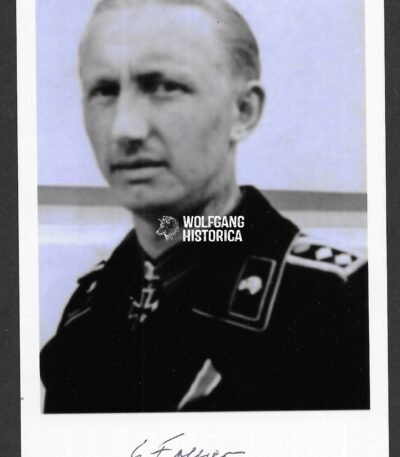
Siegfried Freyer – Panzer-Regiment 24 (24. Panzer-Division)
€25,00Original Postwar Signature on a Postwar Photo of Siegfried Freyer
Wachtmeister Siegfried Freyer (11 February 1917 – 10 May 2014) was a German panzer officer in the 24. Panzer-Division and a recipient of the Ritterkreuz des Eisernen Kreuzes. He earned his Knight’s Cross on 23 July 1942 as Wachtmeister und Zugführer of 4. Kompanie/ Panzer-Regiment 24 for his extraordinary bravery during the heavy urban fighting at Voronezh.
Knight’s Cross Action
On 7 July 1942, during close-quarter fighting in the streets of Voronezh, Soviet armored units attempted to break through the encirclement ring of Freyer’s Kampfgruppe. Acting on his own initiative, Freyer led his platoon in a counterattack and personally destroyed 10 Soviet T-34 tanks in the span of just half an hour. His decisive intervention prevented a breakthrough, stabilized the frontline, and directly enabled the occupation of the city. For this exceptional act of bravery and leadership, he was awarded the Knight’s Cross of the Iron Cross.
Awards and Decorations
-
Ritterkreuz des Eisernen Kreuzes – 23 July 1942 as Wachtmeister und Zugführer, 4./Panzer-Regiment 24, 24. Panzer-Division
-
Iron Cross 2nd Class & 1st Class
-
Other campaign awards
Item Details
-
Type: Original postwar signed photograph
-
Size: Postcardsize
-
Condition: Good, clear autograph
Collector’s Note
Siegfried Freyer’s Knight’s Cross recommendation is one of the most dramatic tank combat citations of the Eastern Front, highlighting his destruction of 10 T-34s in just 30 minutes. His signature is a scarce and desirable addition for collectors of panzer division memorabilia, particularly those focused on the pivotal 1942 campaigns and the battle for Voronezh.
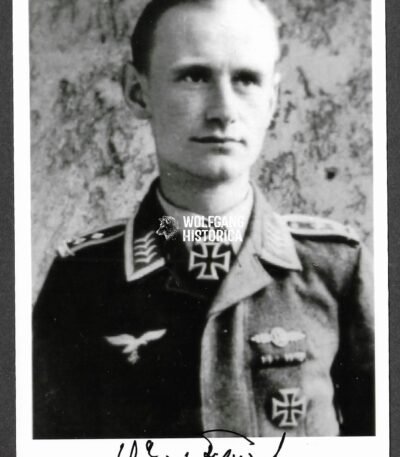
Günther Frenzel – Kampfgeschwader zur besonderen Verwendung 1
€25,00Original Postwar Signature on a Postwar Photo of Günther Frenzel
Leutnant Günther Frenzel (19 March 1919 – 12 March 2011) was a highly decorated Luftwaffe transport and special mission pilot of Kampfgeschwader zur besonderen Verwendung 1 (KG z.b.V. 1). He earned the Ritterkreuz des Eisernen Kreuzes on 23 December 1942 as Feldwebel und Staffelführer of 11. Staffel / KG z.b.V. 1, in recognition of his daring missions and exceptional skill as a transport pilot under the most dangerous conditions.
Awards and Decorations
-
Ritterkreuz des Eisernen Kreuzes – 23 December 1942 as Feldwebel und Staffelführer, 11./KG z.b.V. 1
-
Various campaign and service awards (not detailed here)
Career Highlights
-
~200 Operational Flights: Frenzel accumulated around 200 combat missions, primarily in the Ju-52, often under heavy enemy fire.
-
Stellar Navigation: Volunteered to locate a downed bomber crew deep in enemy territory, successfully navigating by the stars to rescue them.
-
Captured Aircraft Operation: Took part in special operations flying captured Vickers Wellington bombers against Allied fuel depots in the Congo. On one such mission, he even landed at a Belgian-Congo airfield, refueled, and then bombed the same base.
-
Escape from Captivity: Captured during Operation Crusader at Derna airfield, he escaped the same day with his flight mechanic by seizing their Ju-52 under British fire, taking off during a German air attack.
-
Survivor of a Mass Shoot-Down: While flying across the Mediterranean, Frenzel’s transport was the only survivor out of 13 Ju-52s ambushed by British fighters. Despite being badly wounded and his aircraft heavily damaged, he kept it airborne for 45 minutes before crash-landing near the coast, saving all aboard. Field Marshal Albert Kesselring personally visited him in hospital to commend his bravery.
Item Details
-
Type: Postwar signed photograph
-
Size: Postcardsize
-
Condition: Good, with clear signature
Collector’s Note
Frenzel’s service stands out for the audacity and uniqueness of his missions: captured Allied bombers, daring escapes, and survival against overwhelming odds. His signature is a scarce and desirable addition to any collection focusing on Ritterkreuzträger, Luftwaffe transport units, or extraordinary air operations of WWII.
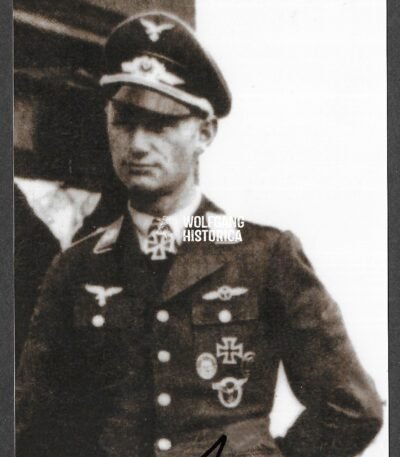
Günther Frenzel – Kampfgeschwader zur besonderen Verwendung 1
€25,00Original Postwar Signature on a Postwar Photo of Günther Frenzel
Leutnant Günther Frenzel (19 March 1919 – 12 March 2011) was a highly decorated Luftwaffe transport and special mission pilot of Kampfgeschwader zur besonderen Verwendung 1 (KG z.b.V. 1). He earned the Ritterkreuz des Eisernen Kreuzes on 23 December 1942 as Feldwebel und Staffelführer of 11. Staffel / KG z.b.V. 1, in recognition of his daring missions and exceptional skill as a transport pilot under the most dangerous conditions.
Awards and Decorations
-
Ritterkreuz des Eisernen Kreuzes – 23 December 1942 as Feldwebel und Staffelführer, 11./KG z.b.V. 1
-
Various campaign and service awards (not detailed here)
Career Highlights
-
~200 Operational Flights: Frenzel accumulated around 200 combat missions, primarily in the Ju-52, often under heavy enemy fire.
-
Stellar Navigation: Volunteered to locate a downed bomber crew deep in enemy territory, successfully navigating by the stars to rescue them.
-
Captured Aircraft Operation: Took part in special operations flying captured Vickers Wellington bombers against Allied fuel depots in the Congo. On one such mission, he even landed at a Belgian-Congo airfield, refueled, and then bombed the same base.
-
Escape from Captivity: Captured during Operation Crusader at Derna airfield, he escaped the same day with his flight mechanic by seizing their Ju-52 under British fire, taking off during a German air attack.
-
Survivor of a Mass Shoot-Down: While flying across the Mediterranean, Frenzel’s transport was the only survivor out of 13 Ju-52s ambushed by British fighters. Despite being badly wounded and his aircraft heavily damaged, he kept it airborne for 45 minutes before crash-landing near the coast, saving all aboard. Field Marshal Albert Kesselring personally visited him in hospital to commend his bravery.
Item Details
-
Type: Postwar signed photograph
-
Size: Postcardsize
-
Condition: Good, with clear signature
Collector’s Note
Frenzel’s service stands out for the audacity and uniqueness of his missions: captured Allied bombers, daring escapes, and survival against overwhelming odds. His signature is a scarce and desirable addition to any collection focusing on Ritterkreuzträger, Luftwaffe transport units, or extraordinary air operations of WWII.
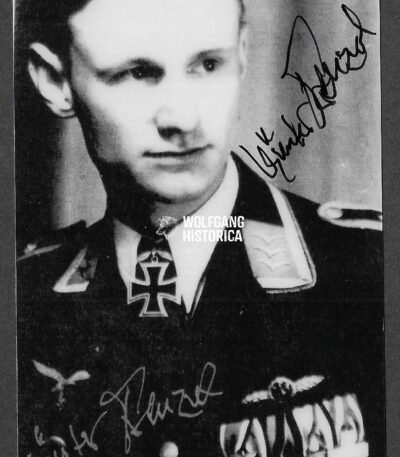
Günther Frenzel – Kampfgeschwader zur besonderen Verwendung 1
€25,00Original Postwar Signature on a Postwar Photo of Günther Frenzel
Leutnant Günther Frenzel (19 March 1919 – 12 March 2011) was a highly decorated Luftwaffe transport and special mission pilot of Kampfgeschwader zur besonderen Verwendung 1 (KG z.b.V. 1). He earned the Ritterkreuz des Eisernen Kreuzes on 23 December 1942 as Feldwebel und Staffelführer of 11. Staffel / KG z.b.V. 1, in recognition of his daring missions and exceptional skill as a transport pilot under the most dangerous conditions.
Awards and Decorations
-
Ritterkreuz des Eisernen Kreuzes – 23 December 1942 as Feldwebel und Staffelführer, 11./KG z.b.V. 1
-
Various campaign and service awards (not detailed here)
Career Highlights
-
~200 Operational Flights: Frenzel accumulated around 200 combat missions, primarily in the Ju-52, often under heavy enemy fire.
-
Stellar Navigation: Volunteered to locate a downed bomber crew deep in enemy territory, successfully navigating by the stars to rescue them.
-
Captured Aircraft Operation: Took part in special operations flying captured Vickers Wellington bombers against Allied fuel depots in the Congo. On one such mission, he even landed at a Belgian-Congo airfield, refueled, and then bombed the same base.
-
Escape from Captivity: Captured during Operation Crusader at Derna airfield, he escaped the same day with his flight mechanic by seizing their Ju-52 under British fire, taking off during a German air attack.
-
Survivor of a Mass Shoot-Down: While flying across the Mediterranean, Frenzel’s transport was the only survivor out of 13 Ju-52s ambushed by British fighters. Despite being badly wounded and his aircraft heavily damaged, he kept it airborne for 45 minutes before crash-landing near the coast, saving all aboard. Field Marshal Albert Kesselring personally visited him in hospital to commend his bravery.
Item Details
-
Type: Postwar signed photograph
-
Size: Postcardsize
-
Condition: Good, with clear signature
Collector’s Note
Frenzel’s service stands out for the audacity and uniqueness of his missions: captured Allied bombers, daring escapes, and survival against overwhelming odds. His signature is a scarce and desirable addition to any collection focusing on Ritterkreuzträger, Luftwaffe transport units, or extraordinary air operations of WWII.
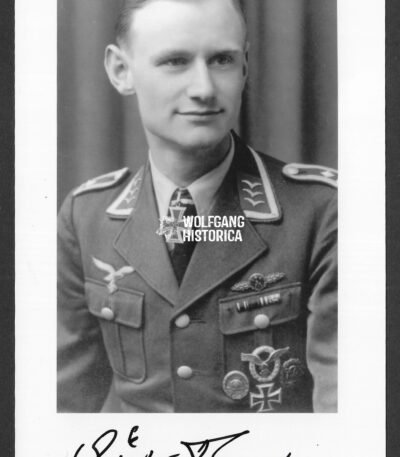
Günther Frenzel – Kampfgeschwader zur besonderen Verwendung 1
€25,00Original Postwar Signature on a Postwar Photo of Günther Frenzel
Leutnant Günther Frenzel (19 March 1919 – 12 March 2011) was a highly decorated Luftwaffe transport and special mission pilot of Kampfgeschwader zur besonderen Verwendung 1 (KG z.b.V. 1). He earned the Ritterkreuz des Eisernen Kreuzes on 23 December 1942 as Feldwebel und Staffelführer of 11. Staffel / KG z.b.V. 1, in recognition of his daring missions and exceptional skill as a transport pilot under the most dangerous conditions.
Awards and Decorations
-
Ritterkreuz des Eisernen Kreuzes – 23 December 1942 as Feldwebel und Staffelführer, 11./KG z.b.V. 1
-
Various campaign and service awards (not detailed here)
Career Highlights
-
~200 Operational Flights: Frenzel accumulated around 200 combat missions, primarily in the Ju-52, often under heavy enemy fire.
-
Stellar Navigation: Volunteered to locate a downed bomber crew deep in enemy territory, successfully navigating by the stars to rescue them.
-
Captured Aircraft Operation: Took part in special operations flying captured Vickers Wellington bombers against Allied fuel depots in the Congo. On one such mission, he even landed at a Belgian-Congo airfield, refueled, and then bombed the same base.
-
Escape from Captivity: Captured during Operation Crusader at Derna airfield, he escaped the same day with his flight mechanic by seizing their Ju-52 under British fire, taking off during a German air attack.
-
Survivor of a Mass Shoot-Down: While flying across the Mediterranean, Frenzel’s transport was the only survivor out of 13 Ju-52s ambushed by British fighters. Despite being badly wounded and his aircraft heavily damaged, he kept it airborne for 45 minutes before crash-landing near the coast, saving all aboard. Field Marshal Albert Kesselring personally visited him in hospital to commend his bravery.
Item Details
-
Type: Postwar signed photograph
-
Size: Postcardsize
-
Condition: Good, with clear signature
Collector’s Note
Frenzel’s service stands out for the audacity and uniqueness of his missions: captured Allied bombers, daring escapes, and survival against overwhelming odds. His signature is a scarce and desirable addition to any collection focusing on Ritterkreuzträger, Luftwaffe transport units, or extraordinary air operations of WWII.
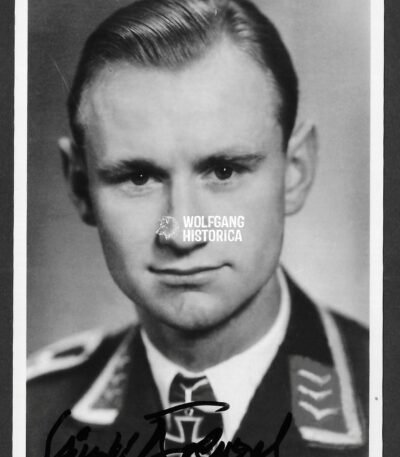
Günther Frenzel – Kampfgeschwader zur besonderen Verwendung 1
€25,00Original Postwar Signature on a Postwar Photo of Günther Frenzel
Leutnant Günther Frenzel (19 March 1919 – 12 March 2011) was a highly decorated Luftwaffe transport and special mission pilot of Kampfgeschwader zur besonderen Verwendung 1 (KG z.b.V. 1). He earned the Ritterkreuz des Eisernen Kreuzes on 23 December 1942 as Feldwebel und Staffelführer of 11. Staffel / KG z.b.V. 1, in recognition of his daring missions and exceptional skill as a transport pilot under the most dangerous conditions.
Awards and Decorations
-
Ritterkreuz des Eisernen Kreuzes – 23 December 1942 as Feldwebel und Staffelführer, 11./KG z.b.V. 1
-
Various campaign and service awards (not detailed here)
Career Highlights
-
~200 Operational Flights: Frenzel accumulated around 200 combat missions, primarily in the Ju-52, often under heavy enemy fire.
-
Stellar Navigation: Volunteered to locate a downed bomber crew deep in enemy territory, successfully navigating by the stars to rescue them.
-
Captured Aircraft Operation: Took part in special operations flying captured Vickers Wellington bombers against Allied fuel depots in the Congo. On one such mission, he even landed at a Belgian-Congo airfield, refueled, and then bombed the same base.
-
Escape from Captivity: Captured during Operation Crusader at Derna airfield, he escaped the same day with his flight mechanic by seizing their Ju-52 under British fire, taking off during a German air attack.
-
Survivor of a Mass Shoot-Down: While flying across the Mediterranean, Frenzel’s transport was the only survivor out of 13 Ju-52s ambushed by British fighters. Despite being badly wounded and his aircraft heavily damaged, he kept it airborne for 45 minutes before crash-landing near the coast, saving all aboard. Field Marshal Albert Kesselring personally visited him in hospital to commend his bravery.
Item Details
-
Type: Postwar signed photograph
-
Size: Postcardsize
-
Condition: Good, with clear signature
Collector’s Note
Frenzel’s service stands out for the audacity and uniqueness of his missions: captured Allied bombers, daring escapes, and survival against overwhelming odds. His signature is a scarce and desirable addition to any collection focusing on Ritterkreuzträger, Luftwaffe transport units, or extraordinary air operations of WWII.
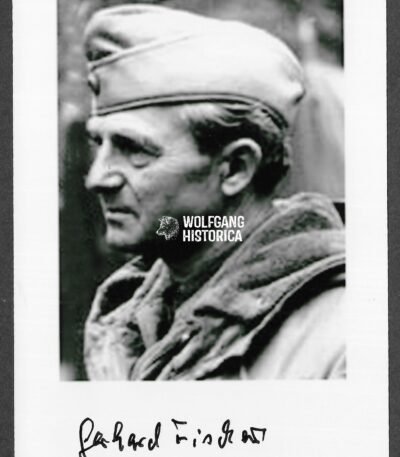
Gerhard Fischer – Panzer-Regiment 23 (23. Panzer-Division)
€25,00Original Postwar Signature on a Postwar Photo of Gerhard Fischer. Major Gerhard Fischer (4 December 1915 – 9 August 2014) was a decorated German Panzer officer of the 23. Panzer-Division during the Second World War. A front-line tank commander, he rose through the ranks to company command and earned high recognition for his leadership and combat achievements on the Eastern Front.
Awards and Decorations
-
Ritterkreuz des Eisernen Kreuzes (Knight’s Cross of the Iron Cross) – 28 December 1943 as Oberleutnant and Chef of 8. Kompanie / Panzer-Regiment 23, 23. Panzer-Division.
-
Panzerkampfabzeichen V. Stufe (Tank Battle Badge, 100 engagements) – Awarded for exceptional front-line service and endurance as a Panzer officer.
Career Highlights
-
Eastern Front Service: Fought in the hard defensive battles of the 23. Panzer-Division, particularly during the retreat phases of 1943.
-
Company Commander: As chief of 8. Kompanie, Fischer distinguished himself by leading his unit with determination in heavy Panzer actions.
-
Ritterkreuz Recognition: Awarded for personal bravery and outstanding leadership in armored combat, making him one of the division’s most noted Panzer officers.
-
Longevity: Survived the war and lived to the age of 98, one of the longest-lived Knight’s Cross holders of the Panzertruppe.
Item Details
-
Type: Postwar signed photograph.
-
Size: Postcardsize.
-
Condition: Good, with a clear and well-preserved autograph.
Collector’s Note
Gerhard Fischer represents the seasoned Panzer officers who endured years of hard fighting on the Eastern Front. His combination of the Ritterkreuz and the rare Panzerkampfabzeichen 100 underlines both his personal courage and his extensive frontline service. A scarce and desirable signature for collectors of Panzer and Ritterkreuz memorabilia.
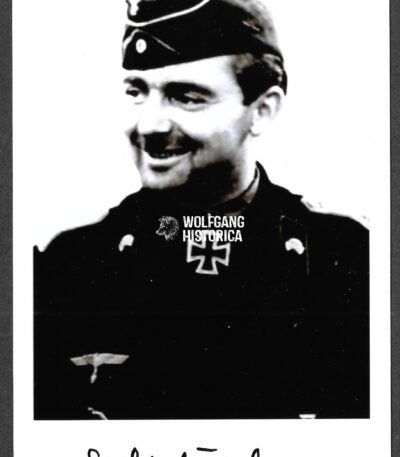
Gerhard Fischer – Panzer-Regiment 23 (23. Panzer-Division)
€25,00Original Postwar Signature on a Postwar Photo of Gerhard Fischer. Major Gerhard Fischer (4 December 1915 – 9 August 2014) was a decorated German Panzer officer of the 23. Panzer-Division during the Second World War. A front-line tank commander, he rose through the ranks to company command and earned high recognition for his leadership and combat achievements on the Eastern Front.
Awards and Decorations
-
Ritterkreuz des Eisernen Kreuzes (Knight’s Cross of the Iron Cross) – 28 December 1943 as Oberleutnant and Chef of 8. Kompanie / Panzer-Regiment 23, 23. Panzer-Division.
-
Panzerkampfabzeichen V. Stufe (Tank Battle Badge, 100 engagements) – Awarded for exceptional front-line service and endurance as a Panzer officer.
Career Highlights
-
Eastern Front Service: Fought in the hard defensive battles of the 23. Panzer-Division, particularly during the retreat phases of 1943.
-
Company Commander: As chief of 8. Kompanie, Fischer distinguished himself by leading his unit with determination in heavy Panzer actions.
-
Ritterkreuz Recognition: Awarded for personal bravery and outstanding leadership in armored combat, making him one of the division’s most noted Panzer officers.
-
Longevity: Survived the war and lived to the age of 98, one of the longest-lived Knight’s Cross holders of the Panzertruppe.
Item Details
-
Type: Postwar signed photograph.
-
Size: Postcardsize.
-
Condition: Good, with a clear and well-preserved autograph.
Collector’s Note
Gerhard Fischer represents the seasoned Panzer officers who endured years of hard fighting on the Eastern Front. His combination of the Ritterkreuz and the rare Panzerkampfabzeichen 100 underlines both his personal courage and his extensive frontline service. A scarce and desirable signature for collectors of Panzer and Ritterkreuz memorabilia.
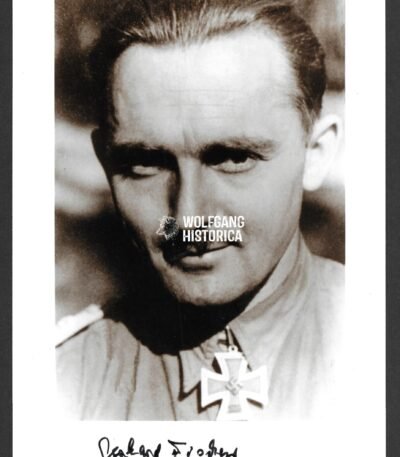
Gerhard Fischer – Panzer-Regiment 23 (23. Panzer-Division)
€25,00Original Postwar Signature on a Postwar Photo of Gerhard Fischer. Major Gerhard Fischer (4 December 1915 – 9 August 2014) was a decorated German Panzer officer of the 23. Panzer-Division during the Second World War. A front-line tank commander, he rose through the ranks to company command and earned high recognition for his leadership and combat achievements on the Eastern Front.
Awards and Decorations
-
Ritterkreuz des Eisernen Kreuzes (Knight’s Cross of the Iron Cross) – 28 December 1943 as Oberleutnant and Chef of 8. Kompanie / Panzer-Regiment 23, 23. Panzer-Division.
-
Panzerkampfabzeichen V. Stufe (Tank Battle Badge, 100 engagements) – Awarded for exceptional front-line service and endurance as a Panzer officer.
Career Highlights
-
Eastern Front Service: Fought in the hard defensive battles of the 23. Panzer-Division, particularly during the retreat phases of 1943.
-
Company Commander: As chief of 8. Kompanie, Fischer distinguished himself by leading his unit with determination in heavy Panzer actions.
-
Ritterkreuz Recognition: Awarded for personal bravery and outstanding leadership in armored combat, making him one of the division’s most noted Panzer officers.
-
Longevity: Survived the war and lived to the age of 98, one of the longest-lived Knight’s Cross holders of the Panzertruppe.
Item Details
-
Type: Postwar signed photograph.
-
Size: A5-size.
-
Condition: Good, with a clear and well-preserved autograph.
Collector’s Note
Gerhard Fischer represents the seasoned Panzer officers who endured years of hard fighting on the Eastern Front. His combination of the Ritterkreuz and the rare Panzerkampfabzeichen 100 underlines both his personal courage and his extensive frontline service. A scarce and desirable signature for collectors of Panzer and Ritterkreuz memorabilia.
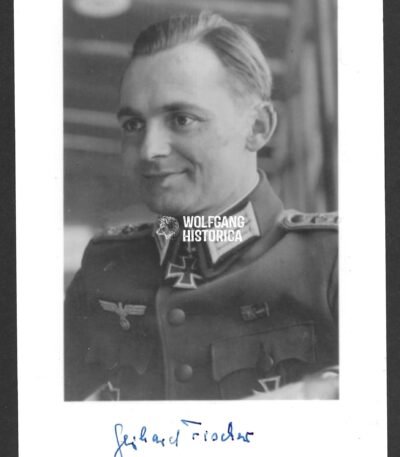
Gerhard Fischer – Panzer-Regiment 23 (23. Panzer-Division)
€25,00Original Postwar Signature on a Postwar Photo of Gerhard Fischer. Major Gerhard Fischer (4 December 1915 – 9 August 2014) was a decorated German Panzer officer of the 23. Panzer-Division during the Second World War. A front-line tank commander, he rose through the ranks to company command and earned high recognition for his leadership and combat achievements on the Eastern Front.
Awards and Decorations
-
Ritterkreuz des Eisernen Kreuzes (Knight’s Cross of the Iron Cross) – 28 December 1943 as Oberleutnant and Chef of 8. Kompanie / Panzer-Regiment 23, 23. Panzer-Division.
-
Panzerkampfabzeichen V. Stufe (Tank Battle Badge, 100 engagements) – Awarded for exceptional front-line service and endurance as a Panzer officer.
Career Highlights
-
Eastern Front Service: Fought in the hard defensive battles of the 23. Panzer-Division, particularly during the retreat phases of 1943.
-
Company Commander: As chief of 8. Kompanie, Fischer distinguished himself by leading his unit with determination in heavy Panzer actions.
-
Ritterkreuz Recognition: Awarded for personal bravery and outstanding leadership in armored combat, making him one of the division’s most noted Panzer officers.
-
Longevity: Survived the war and lived to the age of 98, one of the longest-lived Knight’s Cross holders of the Panzertruppe.
Item Details
-
Type: Postwar signed photograph.
-
Size: A5-size.
-
Condition: Good, with a clear and well-preserved autograph.
Collector’s Note
Gerhard Fischer represents the seasoned Panzer officers who endured years of hard fighting on the Eastern Front. His combination of the Ritterkreuz and the rare Panzerkampfabzeichen 100 underlines both his personal courage and his extensive frontline service. A scarce and desirable signature for collectors of Panzer and Ritterkreuz memorabilia.
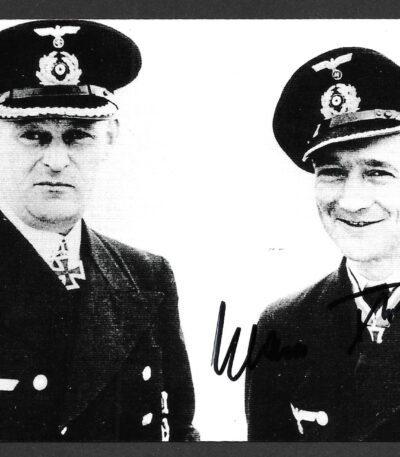
Klaus Feldt – Schnellboot “S-30” & 2. Schnellbootflottille (Eichenlaub)
€25,00Original Postwar Signature on a Postwar Photo of Klaus Feldt. Korvettenkapitän Klaus Feldt (14 April 1912 – 7 September 2010) was a highly decorated Kriegsmarine Schnellboot commander during the Second World War. He earned distinction for his aggressive leadership in fast attack craft operations, particularly in the English Channel and North Sea, commanding both individual boats and flotillas.
Awards and Decorations
-
Ritterkreuz des Eisernen Kreuzes (Knight’s Cross of the Iron Cross) – 13 June 1942 as Oberleutnant zur See and Kommandant of Schnellboot S-30.
-
Eichenlaub (Oak Leaves to the Knight’s Cross) – 1 January 1944 as Korvettenkapitän and Chef of the 2. Schnellbootflottille, in recognition of his continued successes in offensive operations.
Career Highlights
-
Fast Attack Craft Commander: Rose from boat commander (S-30) to flotilla leader, gaining a reputation for bold night attacks against Allied shipping and convoy routes.
-
Channel & North Sea Operations: His leadership in high-risk torpedo boat missions contributed significantly to the Kriegsmarine’s ability to disrupt Allied supply lines.
-
Highly Decorated: One of the few Schnellboot officers to be awarded both the Knight’s Cross and Oak Leaves, a testament to his sustained operational impact.
-
Longevity: Survived the war and lived to the age of 98, making him one of the longest-lived Oak Leaves recipients of the Kriegsmarine.
Item Details
-
Type: Postwar signed photograph.
-
Size: Postcardsize.
-
Condition: Good, clear autograph and preserved photo.
Collector’s Note
Klaus Feldt’s career represents the elite echelon of Schnellboot commanders, men whose daring raids earned them top decorations. His combination of the Ritterkreuz and Eichenlaub places him among the Kriegsmarine’s most successful fast-attack leaders. Signed items from Schnellboot officers are notably scarcer than those of U-boat commanders, making this a particularly desirable piece.
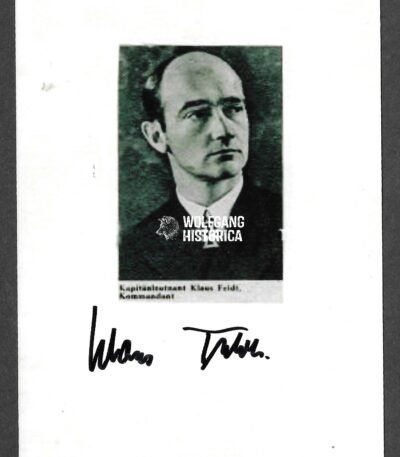
Klaus Feldt – Schnellboot “S-30” & 2. Schnellbootflottille (Eichenlaub)
€25,00Original Postwar Signature on a Postwar Photo of Klaus Feldt. Korvettenkapitän Klaus Feldt (14 April 1912 – 7 September 2010) was a highly decorated Kriegsmarine Schnellboot commander during the Second World War. He earned distinction for his aggressive leadership in fast attack craft operations, particularly in the English Channel and North Sea, commanding both individual boats and flotillas.
Awards and Decorations
-
Ritterkreuz des Eisernen Kreuzes (Knight’s Cross of the Iron Cross) – 13 June 1942 as Oberleutnant zur See and Kommandant of Schnellboot S-30.
-
Eichenlaub (Oak Leaves to the Knight’s Cross) – 1 January 1944 as Korvettenkapitän and Chef of the 2. Schnellbootflottille, in recognition of his continued successes in offensive operations.
Career Highlights
-
Fast Attack Craft Commander: Rose from boat commander (S-30) to flotilla leader, gaining a reputation for bold night attacks against Allied shipping and convoy routes.
-
Channel & North Sea Operations: His leadership in high-risk torpedo boat missions contributed significantly to the Kriegsmarine’s ability to disrupt Allied supply lines.
-
Highly Decorated: One of the few Schnellboot officers to be awarded both the Knight’s Cross and Oak Leaves, a testament to his sustained operational impact.
-
Longevity: Survived the war and lived to the age of 98, making him one of the longest-lived Oak Leaves recipients of the Kriegsmarine.
Item Details
-
Type: Postwar signed photograph.
-
Size: Postcardsize.
-
Condition: Good, clear autograph and preserved photo.
Collector’s Note
Klaus Feldt’s career represents the elite echelon of Schnellboot commanders, men whose daring raids earned them top decorations. His combination of the Ritterkreuz and Eichenlaub places him among the Kriegsmarine’s most successful fast-attack leaders. Signed items from Schnellboot officers are notably scarcer than those of U-boat commanders, making this a particularly desirable piece.
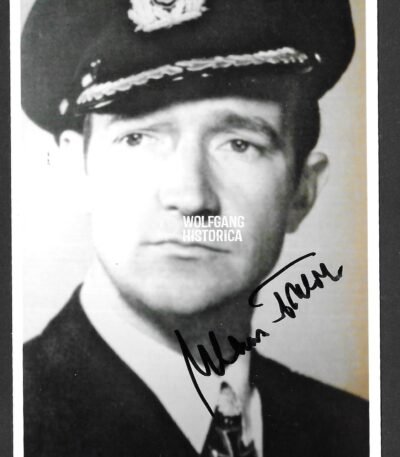
Klaus Feldt – Schnellboot “S-30” & 2. Schnellbootflottille (Eichenlaub)
€25,00Original Postwar Signature on a Postwar Photo of Klaus Feldt. Korvettenkapitän Klaus Feldt (14 April 1912 – 7 September 2010) was a highly decorated Kriegsmarine Schnellboot commander during the Second World War. He earned distinction for his aggressive leadership in fast attack craft operations, particularly in the English Channel and North Sea, commanding both individual boats and flotillas.
Awards and Decorations
-
Ritterkreuz des Eisernen Kreuzes (Knight’s Cross of the Iron Cross) – 13 June 1942 as Oberleutnant zur See and Kommandant of Schnellboot S-30.
-
Eichenlaub (Oak Leaves to the Knight’s Cross) – 1 January 1944 as Korvettenkapitän and Chef of the 2. Schnellbootflottille, in recognition of his continued successes in offensive operations.
Career Highlights
-
Fast Attack Craft Commander: Rose from boat commander (S-30) to flotilla leader, gaining a reputation for bold night attacks against Allied shipping and convoy routes.
-
Channel & North Sea Operations: His leadership in high-risk torpedo boat missions contributed significantly to the Kriegsmarine’s ability to disrupt Allied supply lines.
-
Highly Decorated: One of the few Schnellboot officers to be awarded both the Knight’s Cross and Oak Leaves, a testament to his sustained operational impact.
-
Longevity: Survived the war and lived to the age of 98, making him one of the longest-lived Oak Leaves recipients of the Kriegsmarine.
Item Details
-
Type: Postwar signed photograph.
-
Size: Postcardsize.
-
Condition: Good, clear autograph and preserved photo.
Collector’s Note
Klaus Feldt’s career represents the elite echelon of Schnellboot commanders, men whose daring raids earned them top decorations. His combination of the Ritterkreuz and Eichenlaub places him among the Kriegsmarine’s most successful fast-attack leaders. Signed items from Schnellboot officers are notably scarcer than those of U-boat commanders, making this a particularly desirable piece.
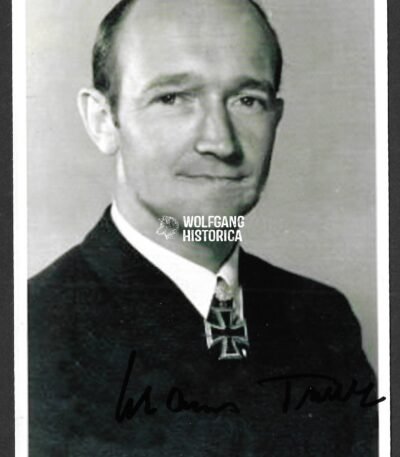
Klaus Feldt – Schnellboot “S-30” & 2. Schnellbootflottille (Eichenlaub)
€25,00Original Postwar Signature on a Postwar Photo of Klaus Feldt. Korvettenkapitän Klaus Feldt (14 April 1912 – 7 September 2010) was a highly decorated Kriegsmarine Schnellboot commander during the Second World War. He earned distinction for his aggressive leadership in fast attack craft operations, particularly in the English Channel and North Sea, commanding both individual boats and flotillas.
Awards and Decorations
-
Ritterkreuz des Eisernen Kreuzes (Knight’s Cross of the Iron Cross) – 13 June 1942 as Oberleutnant zur See and Kommandant of Schnellboot S-30.
-
Eichenlaub (Oak Leaves to the Knight’s Cross) – 1 January 1944 as Korvettenkapitän and Chef of the 2. Schnellbootflottille, in recognition of his continued successes in offensive operations.
Career Highlights
-
Fast Attack Craft Commander: Rose from boat commander (S-30) to flotilla leader, gaining a reputation for bold night attacks against Allied shipping and convoy routes.
-
Channel & North Sea Operations: His leadership in high-risk torpedo boat missions contributed significantly to the Kriegsmarine’s ability to disrupt Allied supply lines.
-
Highly Decorated: One of the few Schnellboot officers to be awarded both the Knight’s Cross and Oak Leaves, a testament to his sustained operational impact.
-
Longevity: Survived the war and lived to the age of 98, making him one of the longest-lived Oak Leaves recipients of the Kriegsmarine.
Item Details
-
Type: Postwar signed photograph.
-
Size: Postcardsize.
-
Condition: Good, clear autograph and preserved photo.
Collector’s Note
Klaus Feldt’s career represents the elite echelon of Schnellboot commanders, men whose daring raids earned them top decorations. His combination of the Ritterkreuz and Eichenlaub places him among the Kriegsmarine’s most successful fast-attack leaders. Signed items from Schnellboot officers are notably scarcer than those of U-boat commanders, making this a particularly desirable piece.
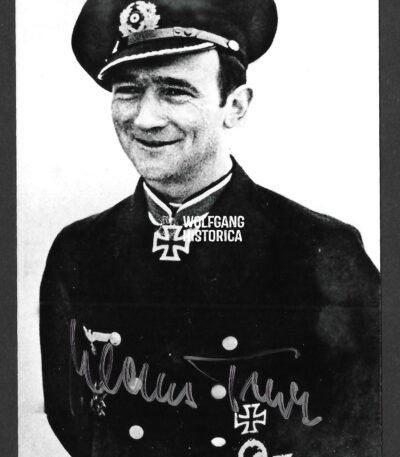
Klaus Feldt – Schnellboot “S-30” & 2. Schnellbootflottille (Eichenlaub)
€25,00Original Postwar Signature on a Postwar Photo of Klaus Feldt. Korvettenkapitän Klaus Feldt (14 April 1912 – 7 September 2010) was a highly decorated Kriegsmarine Schnellboot commander during the Second World War. He earned distinction for his aggressive leadership in fast attack craft operations, particularly in the English Channel and North Sea, commanding both individual boats and flotillas.
Awards and Decorations
-
Ritterkreuz des Eisernen Kreuzes (Knight’s Cross of the Iron Cross) – 13 June 1942 as Oberleutnant zur See and Kommandant of Schnellboot S-30.
-
Eichenlaub (Oak Leaves to the Knight’s Cross) – 1 January 1944 as Korvettenkapitän and Chef of the 2. Schnellbootflottille, in recognition of his continued successes in offensive operations.
Career Highlights
-
Fast Attack Craft Commander: Rose from boat commander (S-30) to flotilla leader, gaining a reputation for bold night attacks against Allied shipping and convoy routes.
-
Channel & North Sea Operations: His leadership in high-risk torpedo boat missions contributed significantly to the Kriegsmarine’s ability to disrupt Allied supply lines.
-
Highly Decorated: One of the few Schnellboot officers to be awarded both the Knight’s Cross and Oak Leaves, a testament to his sustained operational impact.
-
Longevity: Survived the war and lived to the age of 98, making him one of the longest-lived Oak Leaves recipients of the Kriegsmarine.
Item Details
-
Type: Postwar signed photograph.
-
Size: Postcardsize.
-
Condition: Good, clear autograph and preserved photo.
Collector’s Note
Klaus Feldt’s career represents the elite echelon of Schnellboot commanders, men whose daring raids earned them top decorations. His combination of the Ritterkreuz and Eichenlaub places him among the Kriegsmarine’s most successful fast-attack leaders. Signed items from Schnellboot officers are notably scarcer than those of U-boat commanders, making this a particularly desirable piece.
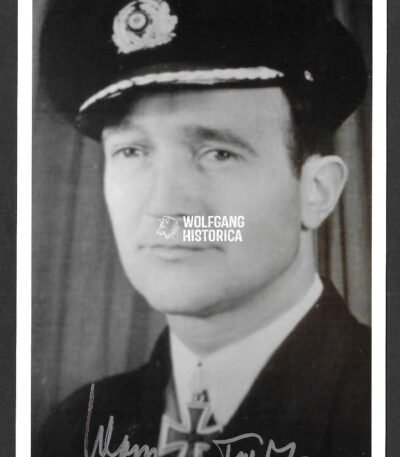
Klaus Feldt – Schnellboot “S-30” & 2. Schnellbootflottille (Eichenlaub)
€25,00Original Postwar Signature on a Postwar Photo of Klaus Feldt. Korvettenkapitän Klaus Feldt (14 April 1912 – 7 September 2010) was a highly decorated Kriegsmarine Schnellboot commander during the Second World War. He earned distinction for his aggressive leadership in fast attack craft operations, particularly in the English Channel and North Sea, commanding both individual boats and flotillas.
Awards and Decorations
-
Ritterkreuz des Eisernen Kreuzes (Knight’s Cross of the Iron Cross) – 13 June 1942 as Oberleutnant zur See and Kommandant of Schnellboot S-30.
-
Eichenlaub (Oak Leaves to the Knight’s Cross) – 1 January 1944 as Korvettenkapitän and Chef of the 2. Schnellbootflottille, in recognition of his continued successes in offensive operations.
Career Highlights
-
Fast Attack Craft Commander: Rose from boat commander (S-30) to flotilla leader, gaining a reputation for bold night attacks against Allied shipping and convoy routes.
-
Channel & North Sea Operations: His leadership in high-risk torpedo boat missions contributed significantly to the Kriegsmarine’s ability to disrupt Allied supply lines.
-
Highly Decorated: One of the few Schnellboot officers to be awarded both the Knight’s Cross and Oak Leaves, a testament to his sustained operational impact.
-
Longevity: Survived the war and lived to the age of 98, making him one of the longest-lived Oak Leaves recipients of the Kriegsmarine.
Item Details
-
Type: Postwar signed photograph.
-
Size: Postcardsize.
-
Condition: Good, clear autograph and preserved photo.
Collector’s Note
Klaus Feldt’s career represents the elite echelon of Schnellboot commanders, men whose daring raids earned them top decorations. His combination of the Ritterkreuz and Eichenlaub places him among the Kriegsmarine’s most successful fast-attack leaders. Signed items from Schnellboot officers are notably scarcer than those of U-boat commanders, making this a particularly desirable piece.
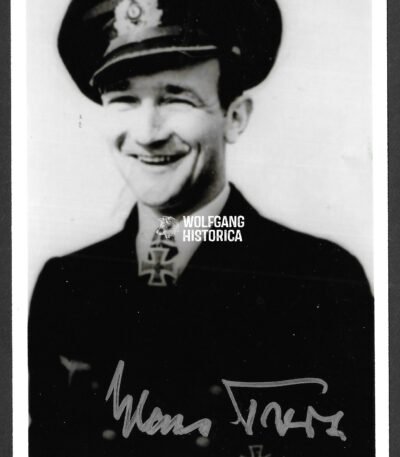
Klaus Feldt – Schnellboot “S-30” & 2. Schnellbootflottille (Eichenlaub)
€25,00Original Postwar Signature on a Postwar Photo of Klaus Feldt. Korvettenkapitän Klaus Feldt (14 April 1912 – 7 September 2010) was a highly decorated Kriegsmarine Schnellboot commander during the Second World War. He earned distinction for his aggressive leadership in fast attack craft operations, particularly in the English Channel and North Sea, commanding both individual boats and flotillas.
Awards and Decorations
-
Ritterkreuz des Eisernen Kreuzes (Knight’s Cross of the Iron Cross) – 13 June 1942 as Oberleutnant zur See and Kommandant of Schnellboot S-30.
-
Eichenlaub (Oak Leaves to the Knight’s Cross) – 1 January 1944 as Korvettenkapitän and Chef of the 2. Schnellbootflottille, in recognition of his continued successes in offensive operations.
Career Highlights
-
Fast Attack Craft Commander: Rose from boat commander (S-30) to flotilla leader, gaining a reputation for bold night attacks against Allied shipping and convoy routes.
-
Channel & North Sea Operations: His leadership in high-risk torpedo boat missions contributed significantly to the Kriegsmarine’s ability to disrupt Allied supply lines.
-
Highly Decorated: One of the few Schnellboot officers to be awarded both the Knight’s Cross and Oak Leaves, a testament to his sustained operational impact.
-
Longevity: Survived the war and lived to the age of 98, making him one of the longest-lived Oak Leaves recipients of the Kriegsmarine.
Item Details
-
Type: Postwar signed photograph.
-
Size: Postcardsize.
-
Condition: Good, clear autograph and preserved photo.
Collector’s Note
Klaus Feldt’s career represents the elite echelon of Schnellboot commanders, men whose daring raids earned them top decorations. His combination of the Ritterkreuz and Eichenlaub places him among the Kriegsmarine’s most successful fast-attack leaders. Signed items from Schnellboot officers are notably scarcer than those of U-boat commanders, making this a particularly desirable piece.
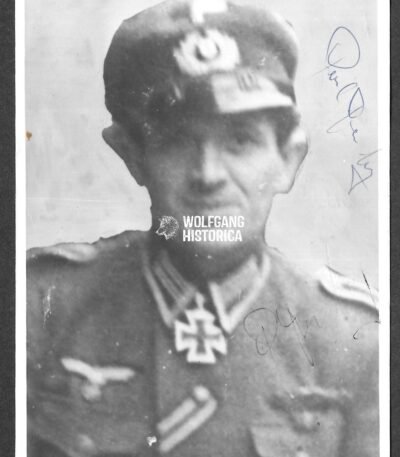
Paul Feiertag – Divisions-Füsilier-Bataillon 96
€25,00Unteroffizier Paul Feiertag (20 August 1916 – 30 November 1999) was a decorated squad leader in the Wehrmacht during the Second World War. He earned the Ritterkreuz des Eisernen Kreuzes on 30 September 1944 as Unteroffizier und Gruppenführer in the 3. Kompanie / Divisions-Füsilier-Bataillon 96 of the 96. Infanterie-Division.
Ritterkreuz Citation:
“… During the heavy fighting along the southern sector of the Eastern Front at the start of this year his Kompanie was halted by heavy enemy fire while in an unclear situation. Unteroffizier Feiertag went to try and make contact with the enemy along with a soldier from his squad. In the process he came into the vicinity of an enemy artillery piece and was able to get to within grenade-throwing distance unnoticed. He threw two hand grenades and utilized the ensuing chaos by eliminating the Soviet gun crew with his machine-pistol. He destroyed the gun itself with a hand grenade. The confusion amongst the enemy gave the Kompanie the chance to storm the enemy positions with a loud ‘Hurra’.
In the ensuing village battle Feiertag once again stood at the spearhead of his Kompanie despite having been shot through the hand and forearm, and he remained in this capacity until the day’s objective had been reached. By knocking out the enemy gun with a machine-pistol and hand grenades he secured his Kompanie’s victory thanks to his ruthless devotion and initiative. After his wound had healed Unteroffizier Feiertag returned to his unit in May of this year, and was once again wounded in July.”
Item Details:
-
Format: Postwar photograph with original signature.
-
Size: Postcard size.
-
Signature: Clear postwar autograph of Ritterkreuzträger Paul Feiertag.
-
Condition: Good; well-preserved example.
Collector’s Note:
Paul Feiertag’s Knight’s Cross exemplifies the frontline heroism of junior leaders in the German Army. His daring destruction of a Soviet artillery gun under fire, even after being wounded, highlights the kind of individual initiative often recognized with the Ritterkreuz. Signed items of NCO-level Knight’s Cross holders are considerably rarer than those of higher-ranking officers, making this piece a desirable addition for serious collectors of Eastern Front memorabilia.
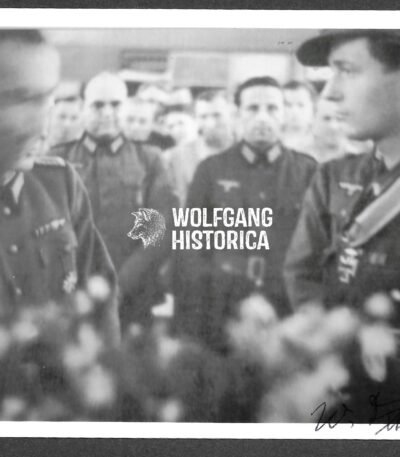
Walter Fasel – Füsilier-Regiment 26 (30. Infanterie-Division)
€15,00Original Postwar Signature on a Postwar Photo of Walter Fasel. Feldwebel Walter Fasel (7 June 1919 – 13 August 2013) was a decorated non-commissioned officer of the Wehrmacht during the Second World War. He earned the Ritterkreuz des Eisernen Kreuzes on 31 August 1943 as Feldwebel und Zugführer of the 14. Kompanie / Füsilier-Regiment 26, part of the 30. Infanterie-Division.
Career Highlights:
-
Served on the Eastern Front with the 30. Infanterie-Division, which fought in some of the toughest defensive battles of the war.
-
As a platoon leader, Fasel distinguished himself during the fighting in 1943, showing exceptional leadership and bravery under extreme conditions.
-
His award of the Knight’s Cross recognized his decisive role in holding critical positions against Soviet attacks.
-
Survived the war and lived to the age of 94, passing away in 2013.
Item Details:
-
Format: Postwar photograph with original signature.
-
Size: Postcard size.
-
Signature: Clear postwar autograph of Ritterkreuzträger Walter Fasel.
-
Condition: Good; well-preserved signature and image.
Collector’s Note:
Walter Fasel represents the decorated frontline NCOs whose leadership often proved decisive in small-unit combat on the Eastern Front. His Knight’s Cross award as a platoon leader reflects both the ferocity of the fighting in 1943 and the importance of junior leaders in the Wehrmacht’s defensive operations. Autographs of such decorated Feldwebel-rank soldiers remain particularly attractive to collectors.
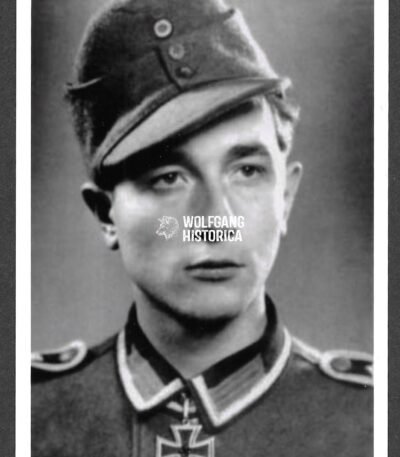
Walter Fasel – Füsilier-Regiment 26 (30. Infanterie-Division)
€15,00Original Postwar Signature on a Postwar Photo of Walter Fasel. Feldwebel Walter Fasel (7 June 1919 – 13 August 2013) was a decorated non-commissioned officer of the Wehrmacht during the Second World War. He earned the Ritterkreuz des Eisernen Kreuzes on 31 August 1943 as Feldwebel und Zugführer of the 14. Kompanie / Füsilier-Regiment 26, part of the 30. Infanterie-Division.
Career Highlights:
-
Served on the Eastern Front with the 30. Infanterie-Division, which fought in some of the toughest defensive battles of the war.
-
As a platoon leader, Fasel distinguished himself during the fighting in 1943, showing exceptional leadership and bravery under extreme conditions.
-
His award of the Knight’s Cross recognized his decisive role in holding critical positions against Soviet attacks.
-
Survived the war and lived to the age of 94, passing away in 2013.
Item Details:
-
Format: Postwar photograph with original signature.
-
Size: Postcard size.
-
Signature: Clear postwar autograph of Ritterkreuzträger Walter Fasel.
-
Condition: Good; well-preserved signature and image.
Collector’s Note:
Walter Fasel represents the decorated frontline NCOs whose leadership often proved decisive in small-unit combat on the Eastern Front. His Knight’s Cross award as a platoon leader reflects both the ferocity of the fighting in 1943 and the importance of junior leaders in the Wehrmacht’s defensive operations. Autographs of such decorated Feldwebel-rank soldiers remain particularly attractive to collectors.
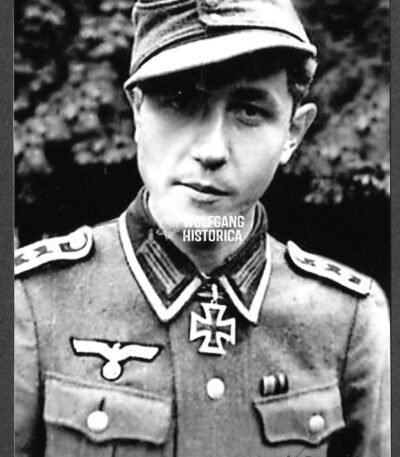
Walter Fasel – Füsilier-Regiment 26 (30. Infanterie-Division)
€15,00Original Postwar Signature on a Postwar Photo of Walter Fasel. Feldwebel Walter Fasel (7 June 1919 – 13 August 2013) was a decorated non-commissioned officer of the Wehrmacht during the Second World War. He earned the Ritterkreuz des Eisernen Kreuzes on 31 August 1943 as Feldwebel und Zugführer of the 14. Kompanie / Füsilier-Regiment 26, part of the 30. Infanterie-Division.
Career Highlights:
-
Served on the Eastern Front with the 30. Infanterie-Division, which fought in some of the toughest defensive battles of the war.
-
As a platoon leader, Fasel distinguished himself during the fighting in 1943, showing exceptional leadership and bravery under extreme conditions.
-
His award of the Knight’s Cross recognized his decisive role in holding critical positions against Soviet attacks.
-
Survived the war and lived to the age of 94, passing away in 2013.
Item Details:
-
Format: Postwar photograph with original signature.
-
Size: Postcard size.
-
Signature: Clear postwar autograph of Ritterkreuzträger Walter Fasel.
-
Condition: Good; well-preserved signature and image.
Collector’s Note:
Walter Fasel represents the decorated frontline NCOs whose leadership often proved decisive in small-unit combat on the Eastern Front. His Knight’s Cross award as a platoon leader reflects both the ferocity of the fighting in 1943 and the importance of junior leaders in the Wehrmacht’s defensive operations. Autographs of such decorated Feldwebel-rank soldiers remain particularly attractive to collectors.
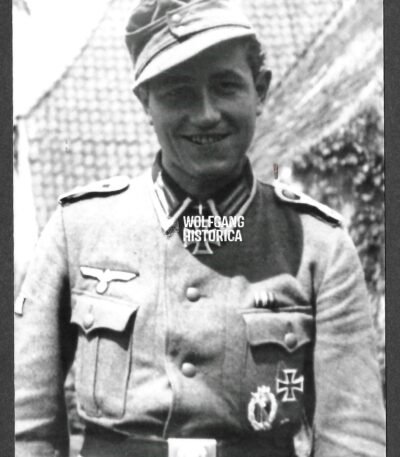
Walter Fasel – Füsilier-Regiment 26 (30. Infanterie-Division)
€15,00Original Postwar Signature on a Postwar Photo of Walter Fasel. Feldwebel Walter Fasel (7 June 1919 – 13 August 2013) was a decorated non-commissioned officer of the Wehrmacht during the Second World War. He earned the Ritterkreuz des Eisernen Kreuzes on 31 August 1943 as Feldwebel und Zugführer of the 14. Kompanie / Füsilier-Regiment 26, part of the 30. Infanterie-Division.
Career Highlights:
-
Served on the Eastern Front with the 30. Infanterie-Division, which fought in some of the toughest defensive battles of the war.
-
As a platoon leader, Fasel distinguished himself during the fighting in 1943, showing exceptional leadership and bravery under extreme conditions.
-
His award of the Knight’s Cross recognized his decisive role in holding critical positions against Soviet attacks.
-
Survived the war and lived to the age of 94, passing away in 2013.
Item Details:
-
Format: Postwar photograph with original signature.
-
Size: Postcard size.
-
Signature: Clear postwar autograph of Ritterkreuzträger Walter Fasel.
-
Condition: Good; well-preserved signature and image.
Collector’s Note:
Walter Fasel represents the decorated frontline NCOs whose leadership often proved decisive in small-unit combat on the Eastern Front. His Knight’s Cross award as a platoon leader reflects both the ferocity of the fighting in 1943 and the importance of junior leaders in the Wehrmacht’s defensive operations. Autographs of such decorated Feldwebel-rank soldiers remain particularly attractive to collectors.
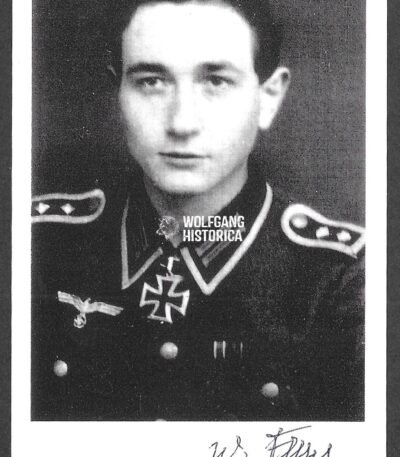
Walter Fasel – Füsilier-Regiment 26 (30. Infanterie-Division)
€15,00Original Postwar Signature on a Postwar Photo of Walter Fasel. Feldwebel Walter Fasel (7 June 1919 – 13 August 2013) was a decorated non-commissioned officer of the Wehrmacht during the Second World War. He earned the Ritterkreuz des Eisernen Kreuzes on 31 August 1943 as Feldwebel und Zugführer of the 14. Kompanie / Füsilier-Regiment 26, part of the 30. Infanterie-Division.
Career Highlights:
-
Served on the Eastern Front with the 30. Infanterie-Division, which fought in some of the toughest defensive battles of the war.
-
As a platoon leader, Fasel distinguished himself during the fighting in 1943, showing exceptional leadership and bravery under extreme conditions.
-
His award of the Knight’s Cross recognized his decisive role in holding critical positions against Soviet attacks.
-
Survived the war and lived to the age of 94, passing away in 2013.
Item Details:
-
Format: Postwar photograph with original signature.
-
Size: Postcard size.
-
Signature: Clear postwar autograph of Ritterkreuzträger Walter Fasel.
-
Condition: Good; well-preserved signature and image.
Collector’s Note:
Walter Fasel represents the decorated frontline NCOs whose leadership often proved decisive in small-unit combat on the Eastern Front. His Knight’s Cross award as a platoon leader reflects both the ferocity of the fighting in 1943 and the importance of junior leaders in the Wehrmacht’s defensive operations. Autographs of such decorated Feldwebel-rank soldiers remain particularly attractive to collectors.
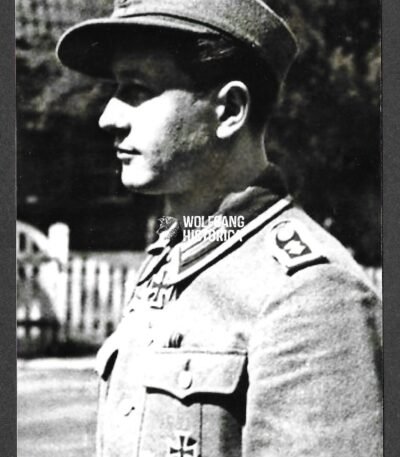
Walter Fasel – Füsilier-Regiment 26 (30. Infanterie-Division)
€15,00Original Postwar Signature on a Postwar Photo of Walter Fasel. Feldwebel Walter Fasel (7 June 1919 – 13 August 2013) was a decorated non-commissioned officer of the Wehrmacht during the Second World War. He earned the Ritterkreuz des Eisernen Kreuzes on 31 August 1943 as Feldwebel und Zugführer of the 14. Kompanie / Füsilier-Regiment 26, part of the 30. Infanterie-Division.
Career Highlights:
-
Served on the Eastern Front with the 30. Infanterie-Division, which fought in some of the toughest defensive battles of the war.
-
As a platoon leader, Fasel distinguished himself during the fighting in 1943, showing exceptional leadership and bravery under extreme conditions.
-
His award of the Knight’s Cross recognized his decisive role in holding critical positions against Soviet attacks.
-
Survived the war and lived to the age of 94, passing away in 2013.
Item Details:
-
Format: Postwar photograph with original signature.
-
Size: Postcard size.
-
Signature: Clear postwar autograph of Ritterkreuzträger Walter Fasel.
-
Condition: Good; well-preserved signature and image.
Collector’s Note:
Walter Fasel represents the decorated frontline NCOs whose leadership often proved decisive in small-unit combat on the Eastern Front. His Knight’s Cross award as a platoon leader reflects both the ferocity of the fighting in 1943 and the importance of junior leaders in the Wehrmacht’s defensive operations. Autographs of such decorated Feldwebel-rank soldiers remain particularly attractive to collectors.
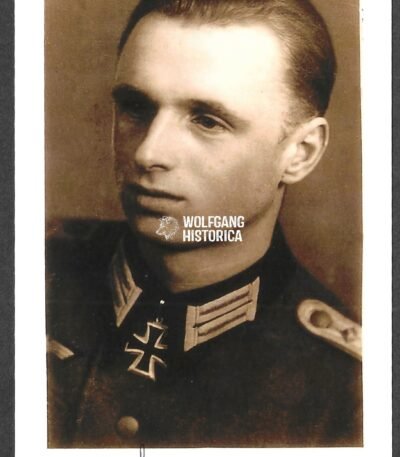
Johannes Eikmeier – Reiter-Regiment 32 (3. Kavallerie-Brigade)
€15,00Original Postwar Signature on a Postwar Photo of Johannes “Hans” Eikmeier. Major Johannes “Hans” Eikmeier (3 December 1918 – 5 September 2012) was a decorated officer of the Wehrmacht during the Second World War who rose to the rank of Major.
-
Deutsches Kreuz in Gold – 25 January 1943, as Oberleutnant in Aufklärungs-Abteilung 120.
-
Ritterkreuz des Eisernen Kreuzes – 30 September 1944, as Rittmeister und Führer of II./ Reiter-Regiment 32, 3. Kavallerie-Brigade.
Career Highlights:
-
Served as a reconnaissance officer and later cavalry commander during the Eastern Front campaigns.
-
Distinguished himself in reconnaissance and combat operations with Aufklärungs-Abteilung 120, earning the German Cross in Gold in early 1943.
-
Awarded the Knight’s Cross in late 1944 for his leadership and bravery commanding II./ Reiter-Regiment 32 during the heavy fighting on the Eastern Front.
-
Survived the war and lived a long postwar life, passing away in 2012 at the age of 93.
Item Details:
-
Format: Postwar photocopy with original signature.
-
Size: Postcard size.
-
Signature: Authentic postwar autograph of Johannes “Hans” Eikmeier.
-
Condition: Good; clear and well-preserved signature on photocopy photo.
Collector’s Note:
Although signed on a photocopy rather than an original wartime photograph, this piece remains a desirable signature of a Ritterkreuzträger who served in both reconnaissance and cavalry formations. Eikmeier’s long life makes his autograph obtainable, yet his dual awards — Deutsches Kreuz in Gold and Ritterkreuz — ensure continued collector interest.
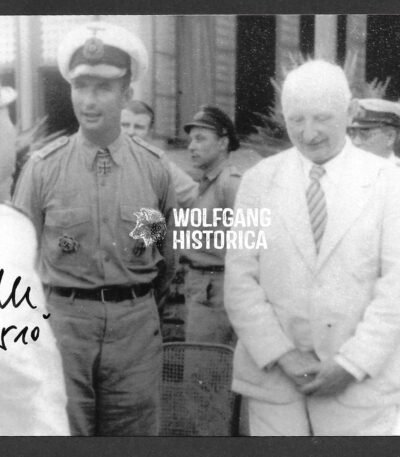
Alfred Eick – Kommandant of “U-510”
€30,00Original Postwar Signature on a Postwar Photo of Alfred Eick. Kapitänleutnant Alfred Eick (9 March 1916 – 12 April 2015) was a decorated U-boat commander in the Kriegsmarine during the Second World War.
-
Ritterkreuz des Eisernen Kreuzes – 31 March 1944, as Oberleutnant zur See und Kommandant of U-510.
Career Highlights:
-
U-Boat Service: Took command of U-510, a Type IXC/40 long-range submarine, in 1943.
-
Successful Patrols: Conducted multiple extended patrols in the Atlantic and Indian Oceans, sinking and damaging a number of Allied merchant vessels.
-
Knight’s Cross: Awarded for his leadership and successes at sea, particularly for his aggressive operations during 1943–44.
-
Postwar Life: Survived the conflict and went on to live until 2015, making him one of the last surviving Ritterkreuz U-boat commanders.
Item Details:
-
Format: Postwar photograph, postcard size.
-
Signature: Clear, authentic postwar autograph of Alfred Eick.
-
Condition: Very good; crisp image with well-preserved signature.
Collector’s Note:
Alfred Eick’s career with U-510 places him among the recognized commanders of Germany’s U-boat arm. Surviving into the 21st century, his signature is both scarce and desirable, especially tied to his Knight’s Cross award as a U-boat commander.
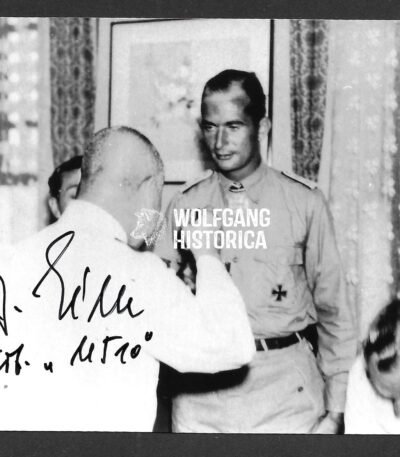
Alfred Eick – Kommandant of “U-510”
€30,00Original Postwar Signature on a Postwar Photo of Alfred Eick. Kapitänleutnant Alfred Eick (9 March 1916 – 12 April 2015) was a decorated U-boat commander in the Kriegsmarine during the Second World War.
-
Ritterkreuz des Eisernen Kreuzes – 31 March 1944, as Oberleutnant zur See und Kommandant of U-510.
Career Highlights:
-
U-Boat Service: Took command of U-510, a Type IXC/40 long-range submarine, in 1943.
-
Successful Patrols: Conducted multiple extended patrols in the Atlantic and Indian Oceans, sinking and damaging a number of Allied merchant vessels.
-
Knight’s Cross: Awarded for his leadership and successes at sea, particularly for his aggressive operations during 1943–44.
-
Postwar Life: Survived the conflict and went on to live until 2015, making him one of the last surviving Ritterkreuz U-boat commanders.
Item Details:
-
Format: Postwar photograph, postcard size.
-
Signature: Clear, authentic postwar autograph of Alfred Eick.
-
Condition: Very good; crisp image with well-preserved signature.
Collector’s Note:
Alfred Eick’s career with U-510 places him among the recognized commanders of Germany’s U-boat arm. Surviving into the 21st century, his signature is both scarce and desirable, especially tied to his Knight’s Cross award as a U-boat commander.
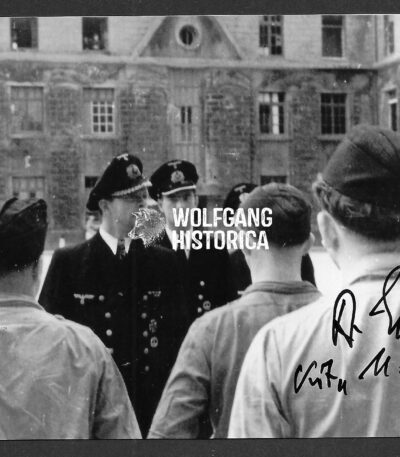
Alfred Eick – Kommandant of “U-510”
€30,00Original Postwar Signature on a Postwar Photo of Alfred Eick. Kapitänleutnant Alfred Eick (9 March 1916 – 12 April 2015) was a decorated U-boat commander in the Kriegsmarine during the Second World War.
-
Ritterkreuz des Eisernen Kreuzes – 31 March 1944, as Oberleutnant zur See und Kommandant of U-510.
Career Highlights:
-
U-Boat Service: Took command of U-510, a Type IXC/40 long-range submarine, in 1943.
-
Successful Patrols: Conducted multiple extended patrols in the Atlantic and Indian Oceans, sinking and damaging a number of Allied merchant vessels.
-
Knight’s Cross: Awarded for his leadership and successes at sea, particularly for his aggressive operations during 1943–44.
-
Postwar Life: Survived the conflict and went on to live until 2015, making him one of the last surviving Ritterkreuz U-boat commanders.
Item Details:
-
Format: Postwar photograph, postcard size.
-
Signature: Clear, authentic postwar autograph of Alfred Eick.
-
Condition: Very good; crisp image with well-preserved signature.
Collector’s Note:
Alfred Eick’s career with U-510 places him among the recognized commanders of Germany’s U-boat arm. Surviving into the 21st century, his signature is both scarce and desirable, especially tied to his Knight’s Cross award as a U-boat commander.
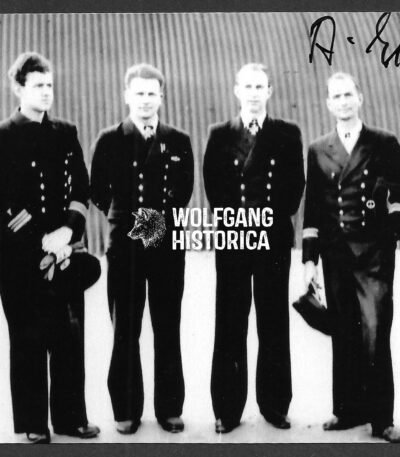
Alfred Eick – Kommandant of “U-510”
€30,00Original Postwar Signature on a Postwar Photo of Alfred Eick. Kapitänleutnant Alfred Eick (9 March 1916 – 12 April 2015) was a decorated U-boat commander in the Kriegsmarine during the Second World War.
-
Ritterkreuz des Eisernen Kreuzes – 31 March 1944, as Oberleutnant zur See und Kommandant of U-510.
Career Highlights:
-
U-Boat Service: Took command of U-510, a Type IXC/40 long-range submarine, in 1943.
-
Successful Patrols: Conducted multiple extended patrols in the Atlantic and Indian Oceans, sinking and damaging a number of Allied merchant vessels.
-
Knight’s Cross: Awarded for his leadership and successes at sea, particularly for his aggressive operations during 1943–44.
-
Postwar Life: Survived the conflict and went on to live until 2015, making him one of the last surviving Ritterkreuz U-boat commanders.
Item Details:
-
Format: Postwar photograph, postcard size.
-
Signature: Clear, authentic postwar autograph of Alfred Eick.
-
Condition: Very good; crisp image with well-preserved signature.
Collector’s Note:
Alfred Eick’s career with U-510 places him among the recognized commanders of Germany’s U-boat arm. Surviving into the 21st century, his signature is both scarce and desirable, especially tied to his Knight’s Cross award as a U-boat commander.
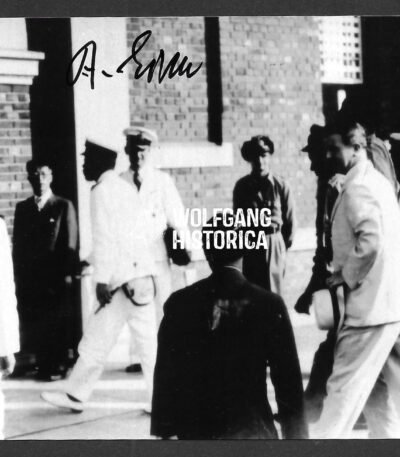
Alfred Eick – Kommandant of “U-510”
€30,00Original Postwar Signature on a Postwar Photo of Alfred Eick. Kapitänleutnant Alfred Eick (9 March 1916 – 12 April 2015) was a decorated U-boat commander in the Kriegsmarine during the Second World War.
-
Ritterkreuz des Eisernen Kreuzes – 31 March 1944, as Oberleutnant zur See und Kommandant of U-510.
Career Highlights:
-
U-Boat Service: Took command of U-510, a Type IXC/40 long-range submarine, in 1943.
-
Successful Patrols: Conducted multiple extended patrols in the Atlantic and Indian Oceans, sinking and damaging a number of Allied merchant vessels.
-
Knight’s Cross: Awarded for his leadership and successes at sea, particularly for his aggressive operations during 1943–44.
-
Postwar Life: Survived the conflict and went on to live until 2015, making him one of the last surviving Ritterkreuz U-boat commanders.
Item Details:
-
Format: Postwar photograph, postcard size.
-
Signature: Clear, authentic postwar autograph of Alfred Eick.
-
Condition: Very good; crisp image with well-preserved signature.
Collector’s Note:
Alfred Eick’s career with U-510 places him among the recognized commanders of Germany’s U-boat arm. Surviving into the 21st century, his signature is both scarce and desirable, especially tied to his Knight’s Cross award as a U-boat commander.
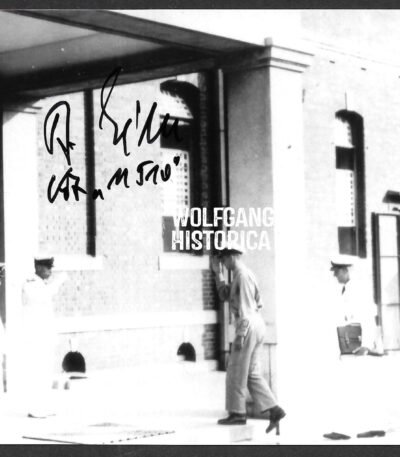
Alfred Eick – Kommandant of “U-510”
€30,00Original Postwar Signature on a Postwar Photo of Alfred Eick. Kapitänleutnant Alfred Eick (9 March 1916 – 12 April 2015) was a decorated U-boat commander in the Kriegsmarine during the Second World War.
-
Ritterkreuz des Eisernen Kreuzes – 31 March 1944, as Oberleutnant zur See und Kommandant of U-510.
Career Highlights:
-
U-Boat Service: Took command of U-510, a Type IXC/40 long-range submarine, in 1943.
-
Successful Patrols: Conducted multiple extended patrols in the Atlantic and Indian Oceans, sinking and damaging a number of Allied merchant vessels.
-
Knight’s Cross: Awarded for his leadership and successes at sea, particularly for his aggressive operations during 1943–44.
-
Postwar Life: Survived the conflict and went on to live until 2015, making him one of the last surviving Ritterkreuz U-boat commanders.
Item Details:
-
Format: Postwar photograph, postcard size.
-
Signature: Clear, authentic postwar autograph of Alfred Eick.
-
Condition: Very good; crisp image with well-preserved signature.
Collector’s Note:
Alfred Eick’s career with U-510 places him among the recognized commanders of Germany’s U-boat arm. Surviving into the 21st century, his signature is both scarce and desirable, especially tied to his Knight’s Cross award as a U-boat commander.
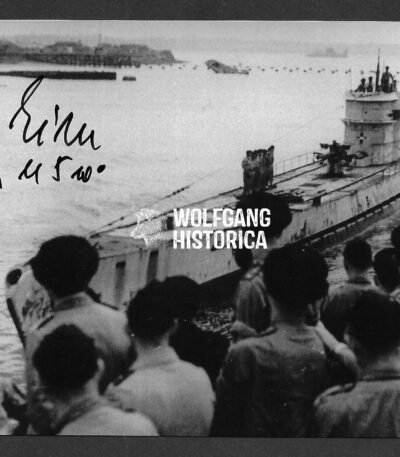
Alfred Eick – Kommandant of “U-510”
€30,00Original Postwar Signature on a Postwar Photo of Alfred Eick. Kapitänleutnant Alfred Eick (9 March 1916 – 12 April 2015) was a decorated U-boat commander in the Kriegsmarine during the Second World War.
-
Ritterkreuz des Eisernen Kreuzes – 31 March 1944, as Oberleutnant zur See und Kommandant of U-510.
Career Highlights:
-
U-Boat Service: Took command of U-510, a Type IXC/40 long-range submarine, in 1943.
-
Successful Patrols: Conducted multiple extended patrols in the Atlantic and Indian Oceans, sinking and damaging a number of Allied merchant vessels.
-
Knight’s Cross: Awarded for his leadership and successes at sea, particularly for his aggressive operations during 1943–44.
-
Postwar Life: Survived the conflict and went on to live until 2015, making him one of the last surviving Ritterkreuz U-boat commanders.
Item Details:
-
Format: Postwar photograph, postcard size.
-
Signature: Clear, authentic postwar autograph of Alfred Eick.
-
Condition: Very good; crisp image with well-preserved signature.
Collector’s Note:
Alfred Eick’s career with U-510 places him among the recognized commanders of Germany’s U-boat arm. Surviving into the 21st century, his signature is both scarce and desirable, especially tied to his Knight’s Cross award as a U-boat commander.
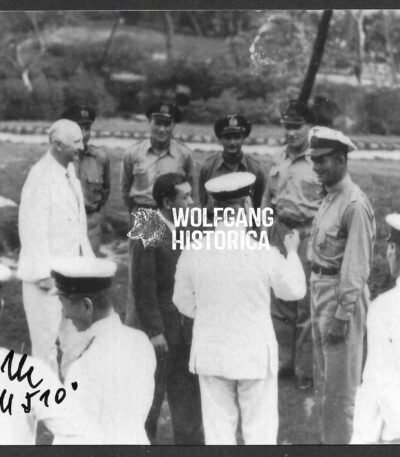
Alfred Eick – Kommandant of “U-510”
€30,00Original Postwar Signature on a Postwar Photo of Alfred Eick. Kapitänleutnant Alfred Eick (9 March 1916 – 12 April 2015) was a decorated U-boat commander in the Kriegsmarine during the Second World War.
-
Ritterkreuz des Eisernen Kreuzes – 31 March 1944, as Oberleutnant zur See und Kommandant of U-510.
Career Highlights:
-
U-Boat Service: Took command of U-510, a Type IXC/40 long-range submarine, in 1943.
-
Successful Patrols: Conducted multiple extended patrols in the Atlantic and Indian Oceans, sinking and damaging a number of Allied merchant vessels.
-
Knight’s Cross: Awarded for his leadership and successes at sea, particularly for his aggressive operations during 1943–44.
-
Postwar Life: Survived the conflict and went on to live until 2015, making him one of the last surviving Ritterkreuz U-boat commanders.
Item Details:
-
Format: Postwar photograph, postcard size.
-
Signature: Clear, authentic postwar autograph of Alfred Eick.
-
Condition: Very good; crisp image with well-preserved signature.
Collector’s Note:
Alfred Eick’s career with U-510 places him among the recognized commanders of Germany’s U-boat arm. Surviving into the 21st century, his signature is both scarce and desirable, especially tied to his Knight’s Cross award as a U-boat commander.